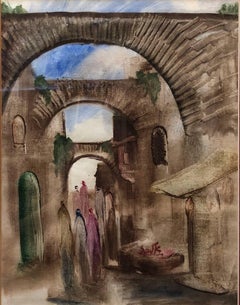
1,107 results for "judaica"
to
61
997
83
902
328
161
133
87
80
51
47
39
38
36
28
28
26
25
25
23
23
21
11
11
11
9
7
6
6
5
3
3
3
3
2
2
2
2
2
1
1
1
1
1
1
1
1
1
1
1
1
38
33
16
14
13
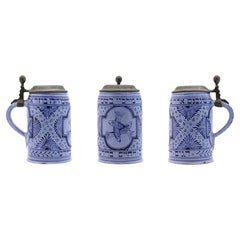
Rare Jewish Purim Drinking Mug, Bohemian, Circa, 1905 Judaica
Located in New York, NY
Rare! Purim Drinking Mug, Bohemian, Circa, 1905
The central fish motif is symbolic of Purim, as this holiday occurs during the Hebrew month of Adar, who zodiacal symbol is fish. Fish also designate abundance, fertility, and good luck.
At top in Hebrew, it says "With the entrance of Adar rejoicing is increased" Continuing at bottom "Luck of Adar, (luck of) fish, " and finally "L'Chayım Bridis, " a toast half in Yiddish ("To life, brothers!").
Drinking utensils specifically associated with Purim are very rare. While a few pewter wine flagons and silver wine cups for Purim are scattered across Jewish museum collections around the world, this is the only known vessel made for drinking beer that was decorated for this holiday.
This stein was likely a unique commission for a beer- loving Bohemian Jew to be used on this festive holiday that encourages mild inebriation
Origin: Bohemian region of the Austro-Hungarian Empire (Czech Republic) Circa, 1905
Artist: "SPJ"
Literature: Jewish Antiques...
Category
Antique Early 1900s Ceramics
Materials
Pewter
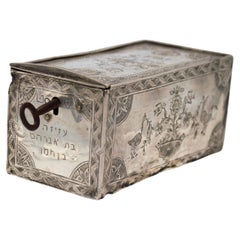
extremely rare Algerian Judaica silver, jewish Dowry box early 19th century
Located in Tel Aviv - Jaffa, IL
Amazing and scarce JUDAICA object, we have here one of the most touching jewish objects we had for a long time, this small silver dowry box was made in Algeria in the early 19th century, it is all covered with symbols of jewish faith and of couples, the sliding lid has 2 flanking birds with hamsa (protective hand) on each side and a flower vase in the middle.
one side shows two flanking lions with a tree in the middle and the other side shows again two big and two small birds with a flower bowl in the middle, front side has a key hole and next to it there is the Hebrew inscription ס״ט״" which says Siman tov or in English "a good sign" it is taken from the wedding blessing, underneath the lock there is another inscription with the name ״עזיזה בת אברהם בן חמו״ which is the name of the bride, her father and her grandfathers name.
the box is full marked a lot of times with the silversmith mark, every side of the box is marked.
this box was probably ordered by the grooms family to hold the jewelry they are giving to the bride as dowry, this type of objects are rare and there are just a few of them on museum collections.
DOWRY (Heb. נְדֻנְיָה), the property a wife brings to her husband at marriage; the Yiddish equivalent, nadn, is from the same root. The custom of nedunyah became clearly defined and institutionalized only in the talmudic period. In biblical times, mohar (מֹהַר), whereby the groom bought his wife from her father (Gen. 24:53; Ex. 22:15–16; Hos. 3:2), was the accepted practice. It was then customary that the groom give the bride gifts, and that she bring certain property to her husband's home upon marriage: slaves, cattle, real estate, etc. (cf. Gen. 24:59–61; 29; Judg. 1:14ff.; I Kings 9:16). Evidence of the custom of nedunyah is to be found in Tobit (7:14; 8:21) and in the Assuan papyri (Cowley, Aramaic, nos. 15, 18). Gradually, mohar was superseded by the ketubbah custom according to which the husband merely assumed the responsibility of compensation to his wife in case he divorced her: he had to pay her 200 zuzim if she had been a virgin at the time of marriage, and 100 zuzim if a widow or divorcée (see *Ketubbah).
By talmudic times, the institution of nedunyah was prevalent; the father gave a dowry to the bride since the daughter was excluded from paternal inheritance. Fifty zuzim (equivalent to the worth of 180 grams of silver) was the minimum amount a father was obliged to give to his daughter (Ket. 6:5). Parents usually gave much more, according to their social standing. Community funds provided the dowry for an orphan or a very poor girl (ibid.; cf. Sh. Ar., YD 251:8). In case of her father's death, the brothers of a minor girl were obliged to give her the minimum dowry, and the court estimated how much her father would have given her above the minimum dowry. The sum was then taken out of the father's estate and given to the daughter upon majority (Ket. 6:6; 68a–69b). In the absence of such an estimate, each daughter was entitled to receive one-tenth of the value of her father's estate in money, or in valuables (Yad, Ishut, 20:4–7; Sh. Ar., EH 113:4). If the father was unable or unwilling to pay the promised dowry at the betrothal ceremony, the groom could refuse to marry his bride (Ket. 13:5; Ket. 108b–109a). Insistence on exact payment of the promised dowry, however, was frowned upon by later rabbinic authorities (Rema to Sh. Ar., EH 2:1). In certain communities it was customary for the groom's father to make a dowry contribution equal to that of the bride's father (Ket. 102b). The dowry, whether given in real estate, slaves, money, or chattel was recorded in the marriage contract (the ketubbah) and in some instances one-third or one-fifth of the actual value of the dowry was added to the sum mentioned in the ketubbah. Based upon a decree enacted by *Simeon b. Shetah (first century C.E.), the Talmud ruled that the husband and his entire property were liable for compensation as stipulated in the ketubbah, either in case he died (when she collected the sum specified in the ketubbah from the heirs) or in case he divorced his wife (Ket. 82b). For the status of the dowry and the husband's rights and obligations, see below. The rabbinic enactments (Takkanot Shum) by R. Jacob *Tam and by the rabbinic synod of the communities of Speyer, Worms, and Mainz (Germany) stipulated that if a woman died...
Category
Antique Mid-19th Century Algerian Tribal Art
Materials
Silver
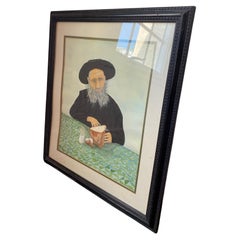
Vintage Judaica Lithograph "Cutting the Challah Bread"
By George Crionas
Located in San Diego, CA
Lithograph print with image entailing to a rabbi cutting challah bread. Stylistically similar to George Crionas. Rare and unexpected piece that commemorates a faithful scene.
Mid-...
Category
Vintage 1960s American Folk Art Prints
Materials
Wood, Paper
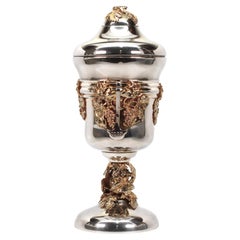
Judaica Sterling Silver Havdalah Compendium Cup by Swed
Located in Mount Kisco, NY
This Havdalah sterling silver compendium was handcrafted in Jerusalem by Dudek Swed of the Swed Master Workshop in the last century. Each creation i...
Category
1990s Israeli Pitchers and Decanters
Materials
Sterling Silver

$6,000 Sale Price
20% Off
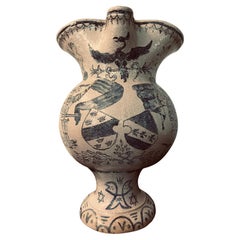
Antique Judaica Wine/ Water Ceramic Large Jug with Allegorical Images
Located in Doha, QA
This remarkable antique ceramic jug, likely from the late 18th century stands as a testament to symbolic craftsmanship and cultural interweaving. Its white-glazed body, adorned with intricate blue hand-painted motifs, showcases a rich tapestry of imagery: two armored knights flank a central coat of arms crowned by a noble eagle, evoking themes of protection, authority, and divine oversight. A sphinx, emblematic of riddles and ancient wisdom, is also depicted- a nod to the Jewish people’s historical sojourn in Egypt and the enduring significance of that epoch in Jewish memory. A goat as representative of the Devil to make Adam and Eve to sin and take a forbidden fruit in Paradise. Clusters of various fruits embellish the design, symbolizing abundance and the promise of the land.
Prominently featured are two Stars of David, affirming a deep connection to Jewish identity and heritage. The jug’s sculpted handle, fashioned as a coiled snake descending toward a human face-possibly representing Adam-recalls the Genesis narrative of the fall, the serpent, and the origins of humanity. This interplay of symbols suggests a narrative arc of struggle, survival, and spiritual endurance, potentially representing the journey of the Jewish people from Eden through exile and beyond.
The jug’s substantial capacity-holding up to five liters of liquid-indicates its intended use for wine or water, both integral to daily life and ritual. Its distinctive shape, featuring a wavy, ornamental opening, hints at Mediterranean origins, likely Spain or Italy, where such design elements were prevalent in ceramic art of the period. This stylistic attribute, coupled with the painted date of 1527, adds another layer to its historical context.
The year 1527 holds significance in Jewish history. In that year, Hayyim ben David Schwartz, a notable Jewish printer, obtained permission to print Hebrew books...
Category
Antique Late 18th Century Spanish Pottery
Materials
Ceramic
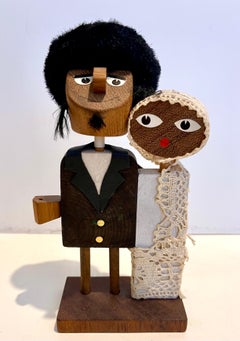
Rare Vintage Hasidic Wedding Jerusalem Wood Judaica Art Sculpture Frank Meisler
By Frank Meisler
Located in Surfside, FL
Rare Vintage unusual piece.
A cute couple, Chassidic bride and groom in their wedding best.
Frank Meisler has sculpted the city of Jerusalem, its walls and buildings culminating in the Temple Mount.
There is a little hole in his hand for the flower that is currently missing but can easily be filled with any small sprig
FRANK MEISLER
Gdansk, Poland - Israel, b. 1929
Frank Meisler (born 1929) is an Israeli architect and sculptor. He was born in Germany, grew up in England, before moving to Israel in 1960. Meisler was born into a Jewish family in Danzig (then in Germany, now Gdańsk in Poland). He was evacuated from Germany by the Kindertransport in August 1939, travelling with 14 other Jewish children via Berlin to the Netherlands and then to Liverpool Street station in London. His parents were arrested three days after his departure, held in the Warsaw Ghetto and later murdered at Auschwitz concentration camp. He was raised by a grandmother, who lived in London. He attended school in Harrow, and then did national service in the Royal Air Force. He studied architecture at the University of Manchester, and was involved in the construction of the Heathrow Airport.
Meisler moved to Israel in 1960, where he has a workshop in the Old City of Jaffa. He makes small Judaica sculptures, and also large public works.
His public works include a memorial to Ben Gurion in Israel, a statue "Eternal Kiev" in Kiev, and a series of Kindertransport memorials: "Kindertransport - the arrival" erected at Liverpool Street station in London in 2006, "Trains to life, trains to death" erected at Friedrichstraße station in Berlin in 2008, "The departure" erected at Gdańsk Główny station in 2009, and "Crossing to life" erected at the Hook of Holland in 2011. Each includes bronze statues of a group of children, with luggage. Known for his whimsical Folk Art, Judaic sculptures he
is a long time denizen of Jaffa along with Ilana Goor. He made large-scale sculptures commemorating various historical figures, including Joseph Stalin, Theodore Roosevelt, Winston Churchill at the 1945 Yalta Conference, and Christopher Columbus. Meisler also worked on a smaller scale, producing menorah, Jerusalem fountains, Jewish figurines...
Category
20th Century Folk Art Sculptures
Materials
Fabric, Wood
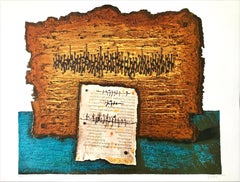
STONE AND SCRIPT Signed Lithograph, Golden Yellow Tablet Ancient Hebrew, Judaica
By Moshe Castel
Located in Union City, NJ
STONE AND SCRIPT by the Israeli artist Moshe Castel (1909-1991) is a limited edition lithograph printed in 12 colors using traditional lithographic techniques on archival Somerset paper 100% acid free. In Stone and Script, a three dimensional relief effect is visible in the black writings and stone tablet achieved by using shades of gray and black with predominate colors of warm golden yellow and turquoise blue. Castel creates a very aesthetically appealing and captivating contemporary arrangement of ancient...
Category
1980s Contemporary Abstract Prints
Materials
Lithograph
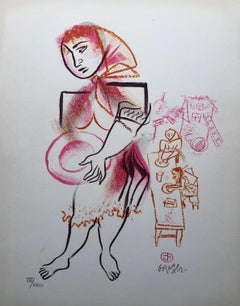
Women, Dishes, Shtetl Americana Judaica Lithograph WPA Social Realist Artist
By William Gropper
Located in Surfside, FL
Hand signed in pencil and numbered with Roman numerals 8/24. A very small edition.
Old Lower East Side of New York or East European Shtetl. Orthodox Jewish Rabbi having a glass of t...
Category
Mid-20th Century Modern Figurative Prints
Materials
Lithograph
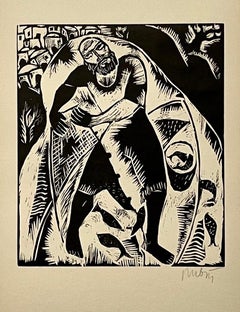
Rare 1923 Cubist Reuven Rubin Woodcut Woodblock Fisherman Print Israeli Judaica
By Reuven Rubin
Located in Surfside, FL
This is from the original first edition 1923 printing. there was a much later edition done after these originals.
These are individually hand signed in pencil by artist as issued.
This listing is for the one print. the other documentation is included here for provenance and is not included in this listing.
The various images inspired by the Jewish Mysticism and rabbis and mystics of jerusalem and Kabbalah is holy, dramatic and optimistic Rubin succeeded to evoke the spirit of life in Israel in those early days.
They are done in a modern art style influenced by German Expressionism, particularly, Ernst Barlach, Ernst Ludwig Kirchner, and Franz Marc, as introduced to Israel by Jakob Steinhardt, Hermann Struck and Joseph Budko.
Reuven Rubin 1893 -1974 was a Romanian-born Israeli painter and Israel's first ambassador to Romania.
Rubin Zelicovich (later Reuven Rubin) was born in Galati to a poor Romanian Jewish Hasidic family. He was the eighth of 13 children. In 1912, he left for Ottoman-ruled Palestine to study art at Bezalel Academy of Art and Design in Jerusalem. Finding himself at odds with the artistic views of the Academy's teachers, he left for Paris, France, in 1913 to pursue his studies at the École Nationale Supérieure des Beaux-Arts. He was of the well known Jewish artists in Paris along with Marc Chagall and Chaim Soutine,
At the outbreak of World War I, he was returned to Romania, where he spent the war years.
In 1921, he traveled to the United States with his friend and fellow artist, Arthur Kolnik. In New York City, the two met artist Alfred Stieglitz, who was instrumental in organizing their first American show at the Anderson Gallery. Following the exhibition, in 1922, they both returned to Europe. In 1923, Rubin emigrated to Mandate Palestine.
Rubin met his wife, Esther, in 1928, aboard a passenger ship to Palestine on his return from a show in New York. She was a Bronx girl who had won a trip to Palestine in a Young Judaea competition. He died in 1974.
Part of the early generation of artists in Israel, Joseph Zaritsky, Arieh Lubin, Reuven Rubin, Sionah Tagger, Pinchas Litvinovsky, Mordecai Ardon, Yitzhak Katz, and Baruch Agadati; These painters depicted the country’s landscapes in the 1920s rebelled against the Bezalel school of Boris Schatz. They sought current styles in Europe that would help portray their own country’s landscape, in keeping with the spirit of the time. Rubin’s Cezannesque landscapes from the 1920s were defined by both a modern and a naive style, portraying the landscape and inhabitants of Israel in a sensitive fashion. His landscape paintings in particular paid special detail to a spiritual, translucent light. His early work bore the influences of Futurism, Vorticism, Cubism and Surrealism.
In Palestine, he became one of the founders of the new Eretz-Yisrael style. Recurring themes in his work were the bible, the prophet, the biblical landscape, folklore and folk art, people, including Yemenite, Hasidic Jews and Arabs. Many of his paintings are sun-bathed depictions of Jerusalem and the Galilee. Rubin might have been influenced by the work of Henri Rousseau whose naice style combined with Eastern nuances, as well as with the neo-Byzantine art to which Rubin had been exposed in his native Romania. In accordance with his integrative style, he signed his works with his first name in Hebrew and his surname in Roman letters.
In 1924, he was the first artist to hold a solo exhibition at the Tower of David, in Jerusalem (later exhibited in Tel Aviv at Gymnasia Herzliya). That year he was elected chairman of the Association of Painters and Sculptors of Palestine. From the 1930s onwards, Rubin designed backdrops for Habima Theater, the Ohel Theater and other theaters.
His biography, published in 1969, is titled My Life - My Art. He died in Tel Aviv in October 1974, after having bequeathed his home on 14 Bialik Street and a core collection of his paintings to the city of Tel Aviv. The Rubin Museum opened in 1983. The director and curator of the museum is his daughter-in-law, Carmela Rubin. Rubin's paintings are now increasingly sought after. At a Sotheby's auction in New York in 2007, his work accounted for six of the ten top lots. Along with Yaacov Agam and Menashe Kadishman he is among Israel's best known artists internationally. Education
1912 Bezalel Academy of Arts and Design, Jerusalem
1913-14 École des Beaux Arts, Paris and Académie Colarossi, Paris
Select Group Exhibitions
Eged - Palestine Painters Group Eged - Palestine Painters Group, Allenby Street, Tel Aviv 1929
Artists: Chana Orloff, Abraham Melnikoff, Rubin, Reuven Nahum Gutman, Sionah Tagger,Arieh Allweil,
Jewish Artists Association, Levant Fair, Tel Aviv, 1929
Artists: Ludwig Blum,Eliyahu Sigad, Shmuel Ovadyahu, Itzhak Frenel Frenkel,Ozer Shabat, Menahem Shemi,
First Exhibition of ''Hever Omanim'' First Exhibition of ''Hever Omanim''
Steimatzky Gallery, Jerusalem
1936
Artists:
Gutman, Nachum Holzman, Shimshon Mokady, Moshe Sima, Miron Rubin, Reuven Steinhardt, Jakob Ben Zvi, Zeev Ziffer, Moshe Allweil, Arieh
Group Exhibition Group Exhibition
Katz Art Gallery, Tel Aviv
1939
Artists:
Avni, Aharon Holzman, Shimshon Gliksberg, Haim Gutman, Nachum Ovadyahu, Shmuel Shorr, Zvi Schwartz, Chaya Streichman, Yehezkel Tagger, Sionah Rubin, Reuven
A Collection of Works by Artists of the Land of Israel A Collection of Works by Artists of the Land of Israel
The Bezalel National Museum, Jerusalem
1940
Artists:
Shemi, Menahem Rubin, Reuven Avni, Aharon Mokady, Moshe Jonas, Ludwig Steinhardt, Jakob Ticho, Anna Krakauer, Leopold Gutman, Nachum Budko, Joseph Ardon, Mordecai Sima, Miron Castel, Moshe Pann, Abel Struck, Hermann Gur Arie, Meir Ben Zvi, Zeev Litvinovsky, Pinchas
Artists in Israel for the Defense, Tel Aviv Museum of Art, Helena Rubinstein Pavilion, Tel Aviv 1967
Artists: Avraham Binder, Motke Blum, (Mordechai) Samuel Bak, Yosl Bergner, Nahum Gilboa, Jean David, Marcel Janco, Lea Nikel, Jacob Pins, Esther Peretz...
Category
1920s Abstract Figurative Prints
Materials
Woodcut
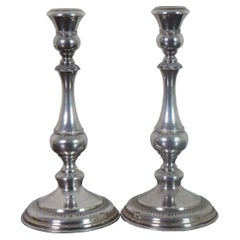
Israeli Ben Zion Sterling Silver Shabbat Candlesticks Candle Holders Judaica
Located in Dayton, OH
Vintage pair of Ben Zion Israel sterling silver candlesticks / Shabbat / holiday candle holders with ornated tapered form and scalloped details. Marked inside cups.
Provenance : J...
Category
Late 20th Century Candlesticks
Materials
Sterling Silver
$1,120 Sale Price / set
30% Off
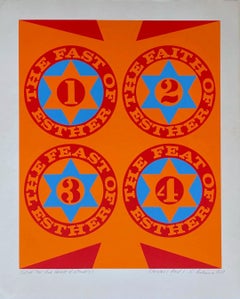
The Four Facets of Esther (I) Silkscreen Rare signed Printers Proof, Judaica
By Robert Indiana
Located in New York, NY
Robert Indiana
Purim: The Four Facets of Esther (I) Sheehan, 36, 1966
Color silkscreen on off white wove paper
Printed by Stephen Poleskie, Chiro...
Category
1960s Pop Art Abstract Prints
Materials
Screen
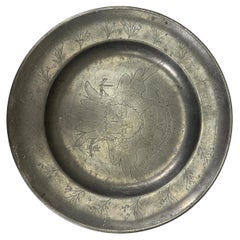
1833 German Pewter Passover Plate – Rare 19th-Century European Folk Art Judaica
Located in New York, NY
This pewter Passover plate, dated 1833, is a rare and exceptional example of 19th-century European Jewish folk art. Crafted in Germany, it featur...
Category
Antique Early 19th Century German Religious Items
Materials
Pewter
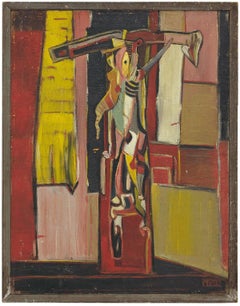
Important "The Victim" Avant Garde 1947 Judaica Expressionist Oil Painting
By Yonia Fain
Located in Surfside, FL
Genre: Avant-Garde
Subject: Abstract
Medium: Oil
Surface: Canvas
Country: Mexico
Dimensions: 25 3/4" x 19 3/4" x 3/4"
Dimensions w/Frame: 27" x 21 1/4"
THE VICTIM
Yonia Fain
Oil, 1947
Although this oil painting’s subject is predominantly abstract, there is a faint echo of a figural shape at its center. A figure wearing Tefillin, An organic form appears to be pinned to a hammer shaped object, reminiscent of a crucifix. This tool may be a reference to one of the Soviet Union’s symbols. Moreover, it is likely a direct reference to the persecution Fain faced as a Russian Jew in Bolshevik Russia. The contrast between colors, geometric lines, and organic curves is indicative of Fain’s collaboration with Diego Rivera, as well as the time he spent in Mexico. The primary hues communicate the hardship the artist underwent and his cathartic ability to reproduce those emotions through paint.
In addition to being a renowned artist and award-winning poet, Yonia Fain is among the few survivors to triumph over the turmoil of the 20th century. Fain’s abundant body of artwork and poetry pays tribute to the hardship many experienced during the Russian Revolution, Nazi invasion of Poland, and World War II. The persecution Fain experienced forced him to immigrate to several countries including China, Mexico, and the United States.
Yonia Fain was born in Russia in 1914. When he was only 10-years-old, he and his family fled from the Bolshevik Revolution to Poland. There he pursued his studies at the Academy of Fine Arts and hoped to continue his education in Paris. He was awarded B.A. and M.F.A. degrees from the University of Poland. In 1939, the artist and his wife Helen moved to Warsaw when the town they lived in, Vilna, became occupied by the Soviet Union. Although they managed to escape the Nazis, Fain was apprehended by Soviet military...
Category
1940s Expressionist Abstract Paintings
Materials
Canvas, Oil
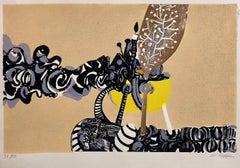
Rare Israeli Surrealist Judaica Abstract Lithograph Naftali Bezem
By Naftali Bezem
Located in Surfside, FL
Fine lithograph on deckle edged French Arches paper. Pencil signed and numbered from edition of 150.
A Surrealist Judaica scene of a bearded man (Rabbi) in a boat with Shabbat candlesticks. with blindstamp from Editions Empreinte in Paris, France. (They published, Jean Michel Folon, Sempe, Raoul Ubac, Raymond Savignac, Cesar, Bengt Lindstrom , Paul Aizpiri and many other modern masters.
Naftali Bezem (Hebrew: נפתלי בזם; born November 27, 1924) is an Israeli painter, muralist, and sculptor.
Bezem was born in Essen, Germany, in 1924. His early adolescence was spent under Nazi oppression, in constant fear for the safety of his parents, who perished in the Holocaust in the Polish Auschwitz concentration camp. Naftali emigrated to Mandate Palestine in 1939, at the age of fourteen with a Youth Aliyah group.
From 1943 to 1946, he studied art at the Bezalel Academy of Art and Design in Jerusalem with Israeli painter Mordecai Ardon. He then spent three years studying in Paris.His most famous public works include a wall relief at Yad Vashem in Jerusalem and the ceiling mural in the main reception room at the President's Residence, Jerusalem.In 1957, Bezem was a co-recipient of the Dizengoff Prize for Painting.
Group Exhibitions
Orit Art Gallery, Tel Aviv
Artists: Yosef Zaritsky, Marcel Janco, Lea Nikel, Robert Baser, Bezem, Michael Druks,
Israeli Painting (Watercolors and Gouache)
Artists:
Pinchas Abramovich, Bezem, Naftali Nachum Gutman, Haim Gliksberg, Mordechai Levanon, Avigdor Stematsky, Avshalom Okashi, Yehiel Krize...
Category
20th Century Modern Figurative Prints
Materials
Lithograph
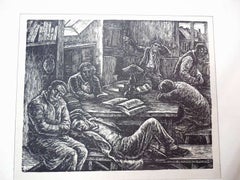
Rare Judaica Shtetl Synagogue interior Study House
By Albert Abramovitz
Located in Surfside, FL
original limited edition woodcut woodblock print great depression era. signed in plate with his monogram and cipher mark. from the 1930s.
Rare Judaic image. the Jewish Study House.
...
Category
1930s Interior Prints
Materials
Woodcut
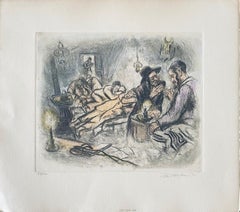
Judaica interior scene etching with hand coloring
By Ira Moskowitz
Located in Surfside, FL
Etching with extensive hand coloring (making it a unique original work of art)
Ira Moskowitz (1912-2001), descendant of a long rabbinical line, was born in Galicia Poland and went w...
Category
20th Century Post-Impressionist Interior Prints
Materials
Etching
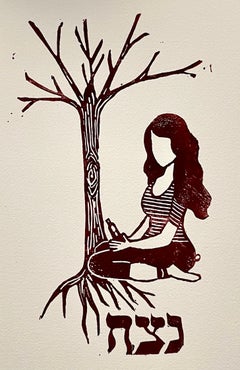
Feminist Judaica Linocut Relief Print Basya Wuensch Kabbalah Sefirot Hebrew Art
Located in Surfside, FL
Basya Wuensch
Sefirot, Netzach (victory, endurance, eternity)
Woman with Tree
2023
Hand printed color linocut on cold pressed watercolor paper
Hand signe...
Category
21st Century and Contemporary Contemporary Figurative Prints
Materials
Linocut
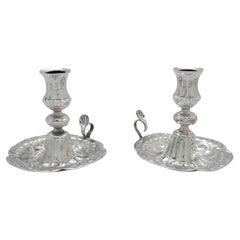
A Pair of 19th Century Russian Judaica Silver Shabbat Sconces
Located in New York, NY
This exquisite pair of 19th-century Russian silver Shabbat sconces embodies both elegance and spiritual reverence, making them a rare and meaningful example of Judaica ceremonial art...
Category
Antique 19th Century Russian Sterling Silver
Materials
Silver
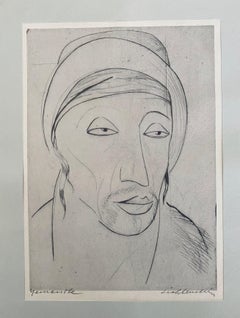
Bezalel School Jerusalem Israeli Judaica Etching
By Isaac Lichtenstein 1
Located in Surfside, FL
YITSKHOK LIKHTENSHTEYN (ISAAC LICHTENSTEIN) (1888-1981) (Icchok, Izrael) was born in Lodz, Poland. Initially he was studying at Yehuda Pen school in Witebsk. In the same school wh...
Category
Early 20th Century Post-Impressionist Drawings and Watercolor Paintings
Materials
Etching
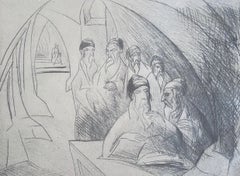
Bezalel School Jerusalem Israeli Judaica Etching
By Isaac Lichtenstein 1
Located in Surfside, FL
YITSKHOK LIKHTENSHTEYN (ISAAC LICHTENSTEIN) (1888-1981) (Icchok, Izrael) was born in Lodz, Poland. Initially he was studying at Yehuda Pen school in Witebsk. In the same school wh...
Category
Early 20th Century Post-Impressionist Drawings and Watercolor Paintings
Materials
Etching
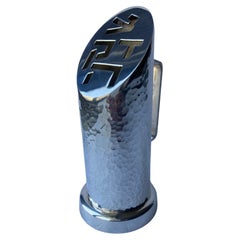
Bier judaica hammered silver Tzedakah Charity box , marked
By Bier
Located in Los Angeles, CA
Jizchak Bier founded in 1950's the Bier Judaica studio, to produce high quality silver judaica .
Category
Late 20th Century Israeli Modern Religious Items
Materials
Silver
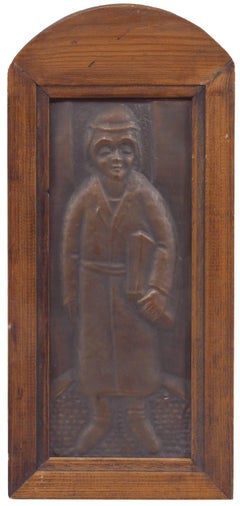
Rare 1940s Copper Repousse Judaica "Shtetl Cheder Boy" Plaque
By Arieh Merzer
Located in Surfside, FL
Arieh Merzer was a prominent Israeli artist and metal worker.
Arie Merzer, an artist who worked in hand-hammered copper, was born in Warsaw, Poland in 1905, the scion of a large Has...
Category
1940s Figurative Sculptures
Materials
Copper
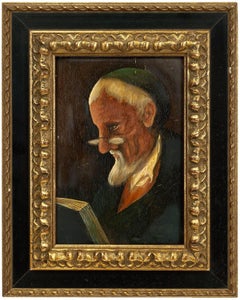
Belgian Modernist Judaica Portrait of a Rabbi
Located in Surfside, FL
Judaica oil painting Rabbi portrait.
Category
20th Century Modern Portrait Paintings
Materials
Canvas, Oil
Gilt Gold
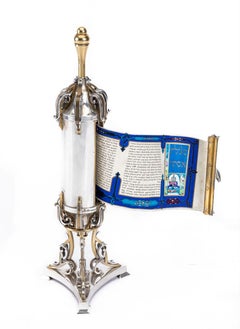
Sterling Silver Beautiful Esther Megillah spectacular Judaica piece
Located in Jerusalem, IL
Partial Gilt Gold and Sterling Silver Megillah with a Superior Illuminated Parchment Scroll of the Esther Megilah. Beautiful artistry clearly evident in this limited edition Megillah...
Category
21st Century and Contemporary Sculptures
Materials
Silver
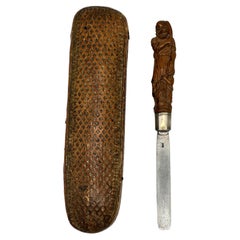
Very Rare 17th century Italian Judaica wood silver Circumcision Knife
Located in Tel Aviv - Jaffa, IL
Here we have this important and very rare example of early Judaica, made in Italy or south Germany, this Circumcision Knife is made from iron, has the guild mark on the blade as used...
Category
Antique 17th Century European Sculptures and Carvings
Materials
Silver, Iron
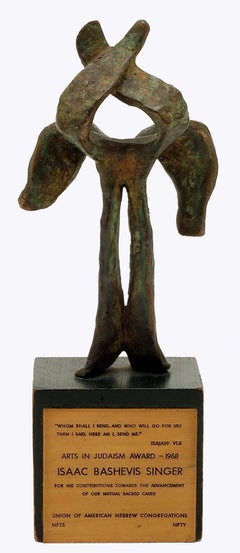
Bronze Sculpture to Isaac Bashevis Singer, Arts in Judaism Award signed Judaica
By Nathaniel Kaz
Located in New York, NY
Nathaniel Kaz
Bronze Sculpture to Isaac Bashevis Singer for Arts in Judaism Award, 1966
Bronze, Square wooden base, Metal tag
Signed and dated "66" to back of bronze portion of the w...
Category
1960s Abstract Expressionist Abstract Sculptures
Materials
Metal, Bronze
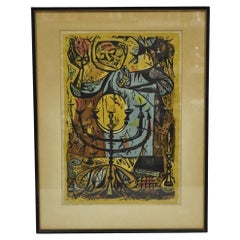
Vintage Irving Amen "Eve of the Sabbath" Woodblock Print Judaica Art, Signed
Located in Philadelphia, PA
Vintage Irving Amen "Eve of the Sabbath" Woodblock Print Judaica Art, Signed. Circa Mid 20th Century. Measurements: 28.5" H x 22" W x 0.5" D. Artwork: 22" H x 15" W.
Category
Mid-20th Century Mid-Century Modern Picture Frames
Materials
Glass, Paper
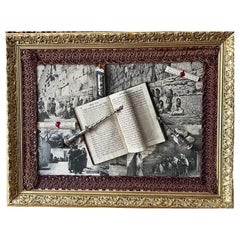
Silver Mezuzah and Torah Pointer Judaica Original Antiquity Art Display 1800s
Located in Doha, QA
This unique item begins with a backdrop of original copper engravings from the early 19th century, depicting the Wailing Wall in Jerusalem, also known as Kotel in Hebrew. In the cent...
Category
Antique 19th Century Austrian Arts and Crafts Religious Items
Materials
Limestone, Sterling Silver
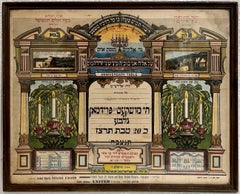
Rare Palestine Antique Hebrew Judaica Yahrzeit Synagogue Sign Memorial Plaque
Located in Surfside, FL
Circa 1890-1920. This Neoclassical, Judaic, Egyptian revival, Orientalist Mizrach sign, was produced in British Mandate Palestine by the chromolithograph process at the beginning of the 20th century. It pictures vignettes of holy places. with a hand written memorial. It was for the Tzedakah charity fund for the century-old institutions in Jerusalem: The great "Torah Center Etz Chaim"; a Free Kitchen for poor children and orphans; the famous Bikur Cholim Hospital with its dispensaries and clinics and the only Home for Incurable Invalids in Eretz Israel. They also worked with Arthur Szyk and Alfred Salzmann.. The A.L. Monsohn Lithographic Press (Monzon Press, Monson Press, דפוס אבן א"ל מאנזאהן, דפוס מונזון) was established in Jerusalem in 1892 by Abraham-Leib (or Avrom-Leyb) Monsohn II (Jerusalem, c.1871-1930) and his brother Moshe-Mordechai (Meyshe-Mordkhe). Sponsored by members of the Hamburger family, the brothers had been sent to Frankfurt, Germany in 1890 to study lithography. Upon returning to Jerusalem in 1892 with a hand press, they established the A.L. Monsohn Lithographic Press in the Old City of Jerusalem. According to the Information Center for Israeli Art A.L. Monsohn "created complex decorations for documents and oriental calendars that combined the tradition of Jewish art with modern printing techniques such as photographic lithography, raised printing and gilding."
The founders of the Monsohn press produced Jewish-themed color postcards, greeting cards, Jewish National Fund stamps, and maps documenting the evolution of the Jewish settlement in Eretz Israel in the nineteenth-twentieth centuries; religious material such as decorative plaques for synagogues, portraits of Old Yishuv rabbis such as Shmuel Salant, Mizrah posters indicating the direction of prayer for synagogues, memorial posters, and posters for Sukkot booths; color frontispieces for books such as Pentateuch volumes and the early song collections of Abraham Zvi Idelsohn (e.g., Shire Zion, Jerusalem 1908); artistic wedding invitations; and labels, packaging and advertisements for the pioneering entrepreneurs of Eretz Israel. The texts appearing in the Monsohn products were in several languages: Hebrew, Arabic, Yiddish, English, German (e.g., a c1920 trilingual Hebrew-English-Arabic "Malaria Danger" broadside warning the public of mosquitoes spreading malaria). Many of the brilliantly colored postcards and maps can be seen online as can the artistic invitations to his children's weddings which Monsohn published in the Jerusalem Hebrew press.
For years, the Monsohn (later, Monson/Monzon) Press was considered the best and most innovative in the country—pioneering in such techniques as gold-embossing and offset printing, among others. Early items for tourists included collections of Flowers of the Holy Land (c. 1910–1918)—pressed local flowers accompanied by scenes from the Eretz Israel countryside and relevant verses from the Bible, edited by Jsac Chagise (or Itzhak Haggis), an immigrant from Vitebsk, and bound in carved olive wood boards. Shortly after World War I Monsohn (now spelled מונזון) used zincography to produce the prints included in the Hebrew Gannenu educational booklets for young children illustrated by Ze'ev Raban of the Bezalel Academy of Art and Design and printed in Jerusalem by Hayim Refael Hakohen (vol. 1, 1919; vols. 2–3, 1920). In 1934 Monsohn moved into the new, western part of Jerusalem, in a shop with four presses and 30 workers, including Abraham-Leib's sons, David, Yosef, Moshe and Shimon, and his daughter Raytse's husband, Abraham Barmacz. The concern did business with all sectors of the city's population, including Arabs, for whom they printed in Arabic. Among their clients were members of the Ginio, Havilio, and Elite families, and Shemen, Dubek, and other renowned national brands, manufacturing products such as wine, candies, oil, and cigarettes. They also printed movie and travel posters, and government posters, postcards and documents, hotel luggage labels...
Category
Early 20th Century Aesthetic Movement More Art
Materials
Lithograph
Oil Painting "The Rabbi" Sensitive Judaica Portrait by Italian American master
By Roberto Lupetti
Located in Surfside, FL
Born in Milan, Italy Lupetti studied at the Royal Academy in Rome where he received classical training and was apprenticed to the school of restoration at the Vatican. At the age of fourteen he was accepted to attend Brera Liceo Artistico, one of the most prestigious art academies in Italy, graduating at age eighteen and then went on to win honors from the Royal Academy of Fine Arts in Rome eventually receiving the degree of Professor of Fine Arts. In Milan, he helped restore the famed La Scala Opera House, and in Rome he earned the right to help in the restoration of the Masters' Works in the Vatican's Sistine Chapel. Following service in WWII, Roberto came to America sponsored by the famous conductor Arturo Toscanini. A painting he did of the maestro was purchased by the San Francisco Art Commission. He moved to San Francisco where he taught at the Art Institute.
As well as decorating churches throughout the U.S., he also painted portraits of such celebrities as Ingrid Bergman, Barbara Stanwyck, and General George Marshall. Roberto Lupetti earned five degrees at the Royal Academy of Fine Arts. Roberto was married to fellow artist Lynn Lupetti...
Category
20th Century Realist Portrait Paintings
Materials
Canvas, Oil

Modernist American Judaica Painting Rabbis in Conversation
By Ervin B. Nussbaum
Located in Surfside, FL
In this painting, Nussbaum portrays Rabbi in lively conversation outside the synagogue in a sketch-like manner without focusing on any specific details. The vibrant colors used in th...
Category
1970s Modern Figurative Paintings
Materials
Paper, Watercolor, Gouache
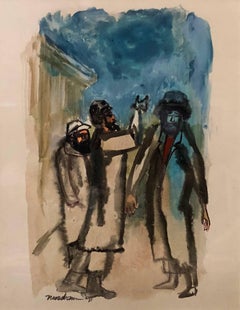
Israeli Surrealist Judaica Abstract Lithograph Naftali Bezem
By Naftali Bezem
Located in Surfside, FL
Naftali Bezem (Hebrew: נפתלי בזם; born November 27, 1924) is an Israeli painter, muralist, and sculptor.
Bezem was born in Essen, Germany, in 1924. His early adolescence was spent...
Category
20th Century Modern Prints and Multiples
Materials
Lithograph

Hebron, 1969 Israeli Judaica Mixed Media Lithograph
By Baruch Nachshon
Located in Surfside, FL
Baruch Nachshon, was born in Mandatory Palestine in 1939, in the city of Haifa.
Nachshon began to paint in early childhood, and developed his relationship to art and to artists throu...
Category
20th Century Modern Landscape Drawings and Watercolors
Materials
Watercolor, Lithograph
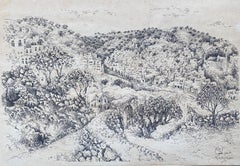
Modernist American Judaica Painting Gaon and his Disciples
By Ervin B. Nussbaum
Located in Surfside, FL
In this painting, Nussbaum portrays a Rabbi, or Rebbe outside the synagogue The vibrant colors used in this painting seem to overlay each other without being previous mixed.
Ervin B...
Category
20th Century American Modern Figurative Paintings
Materials
Oil, Board
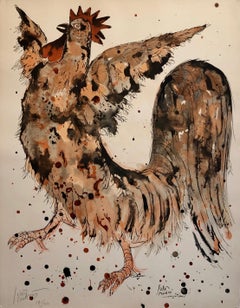
Modern Israeli Lithograph Reuven Rubin Views Of Israel Judaica Crowing Rooster
By Reuven Rubin
Located in Surfside, FL
Lithograph printed by Chez Daniel Jacomet, Paris, France 1960 offset lithograph in colors on Arches, signed in crayon on the justification sheet (this auction is just for the one lithograph pictured as the 1st photo, the justification sheet with the original drawing is just included for provenance and is not part of this sale), on Arches deckle edged paper. limited edition of 250. plate signed and hand signed in pencil.
Israeli views Lithograph by Israeli Master.
Reuven Rubin 1893 -1974 was a Romanian-born Israeli painter and Israel's first ambassador to Romania.
Rubin Zelicovici (later Reuven Rubin) was born in Gala?i to a poor Romanian Jewish Hasidic family. He was the eighth of 13 children. In 1912, he left for Ottoman-ruled Palestine to study art at Bezalel Academy of Art and Design in Jerusalem. Finding himself at odds with the artistic views of the Academy's teachers, he left for Paris, France, in 1913 to pursue his studies at the École Nationale Supérieure des Beaux-Arts. At the outbreak of World War I, he was returned to Romania, where he spent the war years.
In 1921, he traveled to the United States with his friend and fellow artist, Arthur Kolnik, with whom he had shared a studio in Cernovitzu. In New York City, the two met artist Alfred Stieglitz, who was instrumental in organizing their first American show at the Anderson Gallery.Following the exhibition, in 1922, they both returned to Europe. In 1923, Rubin emigrated to Mandate Palestine.
Rubin met his wife, Esther, in 1928, aboard a passenger ship to Palestine on his return from a show in New York. She was a Bronx girl who had won a trip to Palestine in a Young Judea competition. He died in 1974
Artistic career
Joseph Zaritsky...
Category
1960s Modern Figurative Prints
Materials
Lithograph, Offset
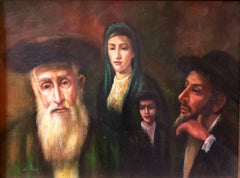
Judaica Miniature Oil Painting Jewish Family Scene
Located in Surfside, FL
Genre: Realism
Subject: Family Portrait
Medium: Oil
Surface: Canvas
Dimensions: 12X14 includes frame
Category
20th Century Realist Figurative Paintings
Materials
Oil, Board
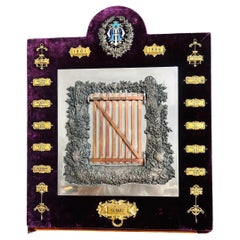
Antique Historical Judaica Freemasonry Memorial Plaque Vienna-Paris 1861-1886
Located in Doha, QA
This is an absolutely rare and one of a kind custom made Plaque represents the History of Jewish People and their acceptance in society and freemasonry through out the world. The Plaque had been hand crafted and designed by August Klein- Purveyor to the Imperial and Royal Court of the Emperor Franz Josef of Austria.
The Revolution of 1848 in the Austrian Empire seen by many Jewish intellectuals as a welcome opportunity to agitate for the emancipation of their community. Generally the social evolution of the Jewish community, the growing number of Jews who wanted to become Masons,their cultural integration, and the progress of the process that would soon lead to their legal emancipation all worked in favor of this change in attitude.
In Austria it all started in 1742, only 25 years after the founding of the Grand Lodge of London and Winchester, the Lodge "Aux Trois Canons” was consecrated in Vienna by a Lodge from Breslau. It was, however, closed only six months later by order of “Empress” Maria Theresa I. Her husband Franz Stephan von Lothringen, (later the German Emperor Franz I...
Category
Antique 19th Century Austrian Biedermeier Historical Memorabilia
Materials
Metal, Silver, Bronze, Enamel
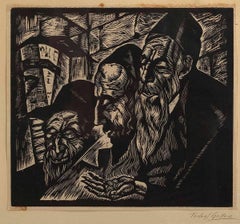
3 Jewish Men Judaica Woodblock Woodcut Engraving Print Chicago 1930s WPA Artist
By Todros Geller
Located in Surfside, FL
Todros Geller (1889 – 1949) was a Jewish American artist and teacher best known as a master printmaker and a leading artist among Chicago’s art community.Geller was born in Vinnytsia, the Russian Empire (now Ukraine) in 1889.[2] He studied art in Odessa and continued his studies after moving to Montreal in 1906 where he immigrated to Canada. He married and moved to Chicago in 1918, where he studied at the School of the Art Institute of Chicago until 1923.
Geller produced paintings, woodcuts, woodcarvings, and etchings. His work focused on Jewish tradition, often including moralistic themes and social commentary, shtetl, ghetto life, and the intersection of Jewish tradition with modern-day Chicago. He regarded art as a tool for social reform and he spent a large part of his career teaching art. His work was commissioned for stained glass windows, bookplates, community centers and Yiddish and English books. He was regarded as a leader in the field of synagogue and religious art. He designed stained glass window for synagogues in Omaha, Fort Worth, Dayton, Stamford, and Chicago Heights. Over the course of his career he illustrated more than 40 books.
In addition to conducting classes in his studio, Geller was head of art at the Jewish People’s Institute (JPI), supervisor of art for the Board of Jewish Education and director of art for the College of Jewish Studies (which became the Spertus Institute for Jewish Learning and Leadership) and taught at Hull House. Many prominent Chicago artists studied drawing and painting under Geller. Geller was a source of inspiration to Aaron Bohrod and Mitchell Siporin...
Category
Early 20th Century Modern Figurative Prints
Materials
Paper, Woodcut
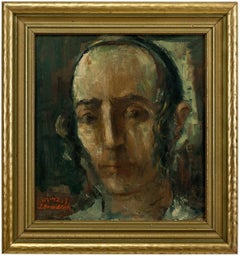
UNTITLED (HASIDIC YOUTH) Israel/Palestine Judaica Painting
By Shmuel Ovadyahu
Located in Surfside, FL
Dimensions w/Frame: 16" x 14"
Shmuel Ovadyahu was born in Ukraine to an orthodox Jewish family, when Shmuel was 7 years old the family moved to Lodz, Poland.
Although Ovadyahu’s el...
Category
20th Century Modern Figurative Paintings
Materials
Oil
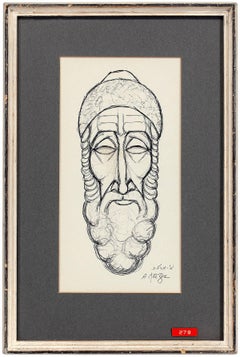
Rare Judaica Drawing Sephardic Rabbi Gentleman, Palestine
By Arieh Merzer
Located in Surfside, FL
Dimensions w/Frame: 17 1/2" x 11 1/2"
Arieh Merzer was a prominent Israeli artist and metal worker.
Arie Merzer, an artist who worked in hand-hammered copper, was born in Warsaw, P...
Category
Early 20th Century Figurative Drawings and Watercolors
Materials
Paper, Ink
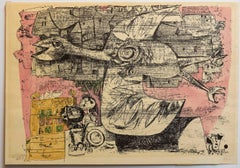
Rare Israeli Judaica Watercolor Painting Over Print Bezem
By Naftali Bezem
Located in Surfside, FL
Naftali Bezem (Hebrew: נפתלי בזם; born November 27, 1924) is an Israeli painter, muralist, and sculptor.
Bezem was born in Essen, Germany, in 1924. His early adolescence was spent under Nazi oppression, in constant fear for the safety of his parents, who perished in the Holocaust in the Polish Auschwitz concentration camp. Naftali emigrated to Mandate Palestine in 1939, at the age of fourteen with a Youth Aliyah group.
From 1943 to 1946, he studied art at the Bezalel Academy of Art and Design in Jerusalem with Israeli painter Mordecai Ardon...
Category
20th Century Modern Figurative Paintings
Materials
Ink, Watercolor
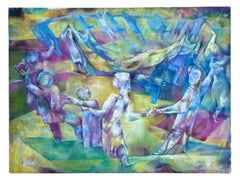
Joseph Wolins WPA Artist Dancing, Torah Modernist Judaica Cubist Oil Painting
By Joseph Wolins
Located in Surfside, FL
Joseph Wolins 1915-1999
Subject: Jewish, Dancing with the Torah (New Torah, Simchat Torah)
Hand signed oil painting
In this painting, Joseph Wolins uses vibrant and complimentary co...
Category
20th Century American Modern Figurative Paintings
Materials
Canvas, Oil
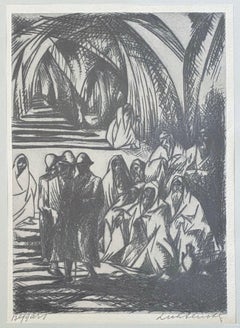
Bezalel School Jerusalem Israeli Judaica Etching - Beggars
By Isaac Lichtenstein 1
Located in Surfside, FL
YITSKHOK LIKHTENSHTEYN (ISAAC LICHTENSTEIN) (1888-1981) (Icchok, Izrael) was born in Lodz, Poland. Initially he was studying at Yehuda Pen school in Witebsk. In the same school wh...
Category
Early 20th Century Post-Impressionist Drawings and Watercolor Paintings
Materials
Etching
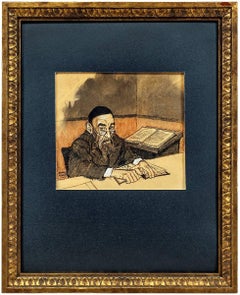
Rabbi at Study, Judaica Watercolor and Ink
By Emanuel Schary
Located in Surfside, FL
EMANUEL SCHARY
Israel, b. 1924, d. 1994
A lively affection for humanity characterizes the work of the Israeli-American artist Emanuel Schary (1924-1994). Working in a range of media,...
Category
Mid-20th Century Modern Mixed Media
Materials
Ink, Mixed Media, Watercolor
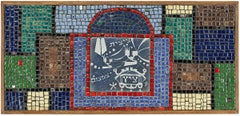
Rare Vintage Judaica Tile Mosaic with Sgraffito Hebrew Calligraphy
By David Holleman
Located in Surfside, FL
Rare Vintage Judaica , extraordinary mosaic with sgraffito decorated ceramic tiles and Hebrew calligraphy by important ceramicist and mosaic artist David Holleman (b. 1927). Hollema...
Category
20th Century Mixed Media
Materials
Mosaic
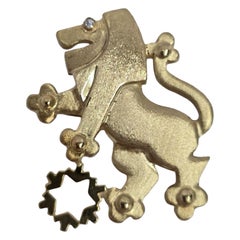
14K Lion of Judah
Star of David Brooch–Pendant with Diamond Eye Royal Judaica
Located in Miami, FL
Inspired by ancient symbols of courage and divine protection, this commanding 14K solid gold Lion of Judah brooch–pendant embodies strength, royalty, and Jewish heritage in one maste...
Category
Vintage 1980s Brooches
Materials
Diamond, 14k Gold
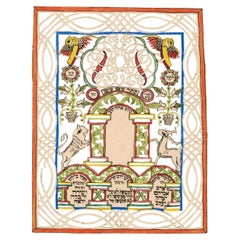
An Important Papercut Amulet for protection of Mother and Child. Judaica
Located in New York, NY
An Important Papercut Amulet for protection of Mother and Child. Artist: David Elias Krieger, Circa, 1900
This delicate item is known as a papercut, which is a type of decorative work that was popular with Jews in Eastern Europe in the 18th and 19th centuries. The condition is quite remarkable, with no tears or repairs, but it has been folded.
This piece, entirely cut and decorated by hand, is an exquisite example of the type of Jewish papercut...
Category
Antique Early 1900s European Religious Items
Materials
Paper
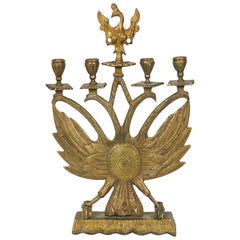
Pair of Italian Renaissance-Style Judaica Eagle Candelabras
Located in Queens, NY
PAIR of Italian Renaissance-style (19th Century) Judaica eagle head design brass candelabras with bird finials (PRICED AS PAIR)
Category
Antique 19th Century Italian Renaissance Candelabras
Materials
Brass
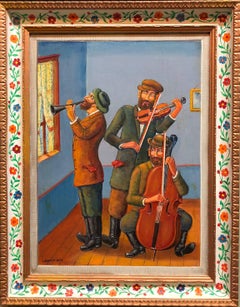
Three Klezmer Musicians Modern Judaica Shtetl Oil Painting WPA Jewish artist
By Maurice Kish
Located in Surfside, FL
Genre: Modern
Subject: Klezmer Musicians
Medium: Oil
Surface: Board, size includes artist decorated frame without frame 16X12
Country: United States
The imagery of Maurice Kish (189...
Category
Mid-20th Century Modern Figurative Paintings
Materials
Oil
RARE WPA ARTIST ISAAC FRIEDLANDER Judaica Drawing 1946
By Isaac Friedlander
Located in Surfside, FL
Artist: Friedlander, Isaac American (1890-1968)
Isac Friedlander Latvian-born American Printmaker, 1890-1968
was born in Mitau, Latvia. He studied art at the Academy of Rome. He...
Category
20th Century American Realist Figurative Drawings and Watercolors
Materials
Charcoal, Pencil
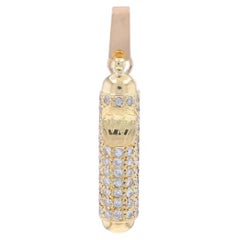
Yellow Gold Diamond Mezuzah Pendant - 18k Round .60ctw Judaica Faith Gift
Located in Greensboro, NC
Metal Content: 18k Yellow Gold & 18k Rose Gold
Stone Information
Natural Diamonds
Carat(s): .60ctw
Cut: Round Brilliant
Color: F - G
Clarity: SI2 - I1
Total Carats: .60ctw
Theme:...
Category
21st Century and Contemporary Pendant Necklaces
Materials
Diamond, 18k Gold, Rose Gold, Yellow Gold
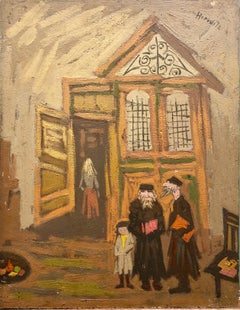
Judaica Oil Painting Jewish Family Interior Shtetl Scene
By Peter Horowitz
Located in Surfside, FL
Peter Horowitz, painter, born 1922, Poland. Lived in Hod Hasharon in Israel.
Studied at the Art Academy, Krakow. died in 2005.
Studies: Art Academy, Cracow. Peter Horowitz was born...
Category
Mid-20th Century Modern Figurative Paintings
Materials
Oil, Board
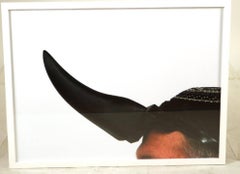
Jews with Horns, Large Scale Provocative Judaica Photograph
By Ken Goldman
Located in Surfside, FL
Contemporary Jewish artist Ken Goldman, born: 1960, Memphis Tenn.
Education: Pratt Institute, Masters of industrial Design, 1985
Brooklyn College, B.A Fine Arts, 1981
Made Aliyah: 1985-member Kibbutz Shluchot
Art in the collection of Mishkan LeOmanut Ein Harod Israel - Wolfson Museum Jerusalem Israel - Rodeph Shalom - Philadelphia Museum of Jewish Art
Shows
2017 - Here Is Your Ketubbah Museum Of Art Ein Harod Israel
2016 - Ima Ilya – Hebrew University Gallery – Jerusalem Israel
2016 - It Was Evening it was Morning – Rishon Le Zion Community gallery Israel
2016 - Jerusalem Biennial select works Leichtag Foundation – San Diego
2015 - Some Body Jewish - solo show - Jewish Museum Of Philadelphia Congregation Rodeph Shalom - Philadelphia
2015 - Rooted in Time - Rishon LeZion City Gallery
2015 - Black and White - Neve Schechter Tel Aviv
2015 - Rooted - Manny Cantor Center - New York
2015 - To Forgive and Remember - Reshaping American Consciousness - Derfner Judaica Museum - New York
2015 - Magenim Jewish Cuts - En Harod Museum of Art Israel
2015 - Fields of Dreams - Living Shmita in the modern world - Yeshiva University Museum New York
2015 - The Second Jerusalem Biennial - The Fine Line- Achim Hasid Gallery - Jerusalem Israel
2015 - The Second Jerusalem Biennial - Ima Iyla'a- Hechal Shlomo Museum -Jerusalem Israel
2015 - Vashti The Untold Story -Neve Schechter Gallery Tel Aviv
2015 - Active Hands - Crafts by Soldiers - Craft in America Museum - California
2014 - Through the Others Eyes - Wolfson Museum - Jerusalem Israel
2014 - Off Label - The Laurie Tisch Gallery - New york - curated by Tobi Kahn
2013 - The first Biennial of Jewish art Jerusalem Israel
2013 - Golden Ghetto of Venice - competition- second prize
2013 - First Prize in Museum of Imajewnation Four Cups of Freedom competition
2012 - First Prize-Cover thy Head - Morris and Sally Justein Heritage Museum - Toronto, Canada
2012 - Portraits of Cain - Ben Gurion University gallery Chaim Maor curator
2010 - Zimmun - Mishkan Le Omanut Ein Harod Israel
2010 - Seduced by the Sacred - Charter Oak Foundation Hartford Ct
2007 - “Kabbalah dolls” chosen and marketed by F.A.O. Schwarz at annual toy auditions.
2006 - City of Jerusalem – competition- original succah model designs - “best in concept”
2003 - Temple Judea Museum - Judith Altman Memorial Judaica Competition - “It Holds Light”- finalist
2001 - “FromWithin” – solo exhibition Mishkan Le Omanut, Museum of Art, Ein Harod, Israel.
1999 – The Philip and Sylvia Spertus Judaica Prize – The Havdalah spice...
Category
21st Century and Contemporary Contemporary Photography
Materials
Digital
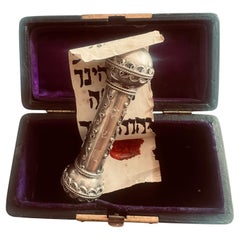
Antique Judaica Sterling Silver Mezuzah with a Scroll in Original Box ca 1890
Located in Doha, QA
This is an outstanding and extremely rare hand crafted, solid sterling silver Mezuzah in the original leather and dark purple velvet box.
It was made in Vienna, Austria between 1890 ...
Category
Antique Late 19th Century Austrian Baroque Religious Items
Materials
Sterling Silver
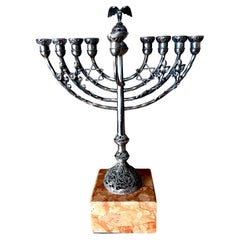
Antique Judaica Silver Menorah with engraved initials Wien C.M.v.R 19th century
Located in Doha, QA
This is an incredibly finely made and one of a kind silver 875 Hanukkah Menorah. Extremely detailed and intricate, it has an eagle on the top, two Stars of David on the left and righ...
Category
Antique 19th Century Austrian Religious Items
Materials
Silver
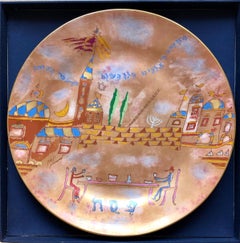
Post Modern Italian Passover Seder Plate Richard Ginori Art Porcelain Judaica
Located in Surfside, FL
Johanan Vitta, painter, born 1941, Jerusalem. Lives in Italy.
Education Firenze, Florence, Italy
He designed the famous La Sinagoga di Firenze poster. The poster features a painterly synagogue it was done for the “Comunita Israelitica"
He has also designed Judaic ritual objects including a menorah that is in a famous museum collection. Arman, Elio Carmi, Eugenio Carmi, Lucio Del Pezzo, Guy De Rougemont, Maurizio Galimberti, David Gerstein, Claude Lalanne, Marino Marinelli, Mimmo Paladino, Arnaldo Pomodoro, Tobia Rava...
Category
1980s Post-Modern Abstract Sculptures
Materials
Porcelain
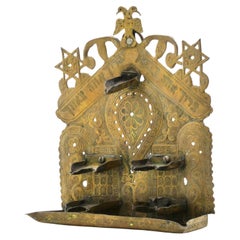
A North African Brass Hanukkah Lamp, Circa 1900 Judaica Menorah
Located in New York, NY
This North African Hanukkah lamp has unique structural characteristics not seen in many Antique Hanukkah lamps.
Engraved on the backplate are many scrolling floral and foliate desi...
Category
Antique Early 1900s Candle Lamps
Materials
Brass
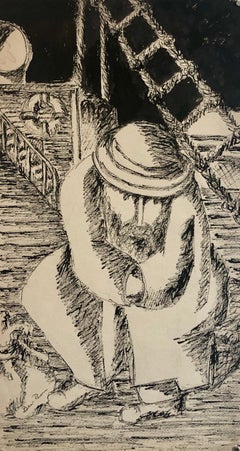
Modernist Judaica Jewish Ink Drawing Painting "New Immigrant" Off the Boat WPA
By Ben-Zion Weinman
Located in Surfside, FL
An ink drawing Judaic painting by modern artist Ben-Zion Weinman. It depicts a portrait of an old Jewish man. Coming over from Europe on a ship crossing. The work is signed "Ben-Zion".
Born in 1897, Ben-Zion Weinman celebrated his European Jewish heritage in his visual works as a sculptor, painter, and printmaker. Influenced by Spinoza, Knut Hamsun, and Wladyslaw Reymont, as well as Hebrew literature, Ben-Zion wrote poetry and essays that, like his visual work, attempt to reveal the deep “connection between man and the divine, and between man and earth.”
An emigrant from the Ukraine, he came to the US in 1920. He wrote fairy tales and poems in Hebrew under the name Benzion Weinman, but when he began painting he dropped his last name and hyphenated his first, saying an artist needed only one name. In 1920 he settled in America, where he found little interest in his writing. He began teaching Hebrew to support himself and then in the early 1930s returned to painting. He used his art to comment on the rise of fascism in Europe, events he felt could not be adequately explored with words. Largely self-taught, Ben-Zion visited the museums of New York City to learn his new trade. His first painting on a large scale, Friday Evening (1933, Jewish Museum, New York), depicts a Sabbath dinner table as recalled from his family home. Ben-Zion supported himself by working odd jobs until the establishment of the Works Progress Administration's Federal Art Project. Under the auspices of the wpa, Ben-Zion thrived and galleries began to show his work. In 1936, after his first one-man show at the Artists' Gallery in New York
Ben-Zion was a founding member of “The Ten: An Independent Group” The Ten” a 1930’s...
Category
1940s American Modern Figurative Paintings
Materials
Watercolor, Gouache
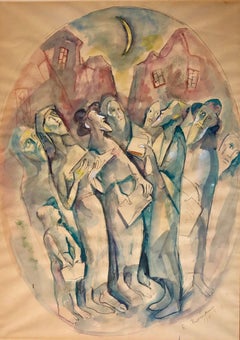
Modernist Watercolor Painting Judaica Kiddush Levana Blessing New Moon
By Emanuel Glicenstein Romano
Located in Surfside, FL
Genre: Judaic prayer scene
Subject: Landscape
Medium: watercolor
Surface: Paper
Country: United States
EMANUEL ROMANO
Rome, Italy, b. 1897, d. 1984
Emanuel Glicenstein Romano was born in Rome, September 23, 1897.
His father Henryk Glicenstein was a sculptor and was living in Rome with his wife Helena (born Hirszenberg) when Emanuel was born his father obtained Italian citizenship and adopted the name Enrico. Emanuel was brought up in Italy, Switzerland, Germany, England and Poland.
In 1926 Emanuel and his father sailed for New York. They briefly visited Chicago. Romano's sister, Beatrice, and mother only joined them in New York years later.
Romano changed his name on his arrival to America and some have erroneously speculated that this was to avoid antisemitic anti Jewish discrimination. In truth, as the son of a highly-regarded artist, Romano changed his name to ensure that any success or recognition he would later attain, would be the result of nothing other than his own merit as an artist, and not on account of his father's fame.
In 1936 Romano was worked for the Federal Art Project creating murals. During and immediately after World War II, Romano created a series of allegorical works depicting graphic holocaust images that were held closely by the family until after his passing. One of these works is now on permanent display in the Florida Holocaust Museum in St. Petersburg Florida.
Emanuel's father died in 1942 in a car accident before they could realize their shared dream of visiting Israel.
In 1944 Romano, having completed his degree at the Pennsylvania Academy of Fine Arts and the Art Institute of Chicago, began teaching at the City College of New York.
Romano moved to Safed, Israel in 1953 and established an art museum in his father's memory, the Glicentein Museum.
COLLECTIONS
Indianapolis Museum of Art
Metropolitan Museum of Art
Boston Fine Arts Museum
Fogg Museum
Musée Nacional de France
Recently his work has been added to the Florida Holocaust Museum collection. His notable works include his holocaust themed allegorical paintings as well as portraits of Marianne Moore, his father and William Carlos Williams...
Category
20th Century American Modern Figurative Paintings
Materials
Paper, Watercolor
Jerusalem Old City Landscape, Expressionist Judaica Israeli Painting
By Andre Elbaz
Located in Surfside, FL
In this painting the artist uses gestural brushstrokes, which causes distortion and exaggeration for emotional effect. Andre Elbaz uses as his subject figures walking in old city Jerusalem.
André Elbaz (born April 26, 1934, El Jadida, Morocco) is a famous Moroccan painter and filmmaker.
Elbaz studied art and theatre in Rabat and Paris from 1950 to 1961. He started painting only at the age of 21, until which age he had been interested mainly in theatre. A few years later, he managed to combine his two passions into a new approach in art-therapy, inventing together with his wife, a psychiatrist, the Pictodrame, which brought him world recognition.
His first exhibition, which was very successful, took place in Casablanca in 1961 and earned him an appointment as Professor at the Beaux-Arts school in Casablanca. Years later, in 1976, he exhibited his paintings at the Tel-Aviv Museum.
In parallel to his career as a painter, Elbaz is also known as a filmmaker. He produced several short films in France, Canada and the United States. One of them, La nuit n'est jamais complète (The night is never complete), won a prize at the "5th Biennale de Paris in 1967". Among the themes chosen for the many films he produced, there was a short one about the Warsaw Ghetto uprising, as well as a series of drawings entitled Seuls (Alone), with texts written by both Elie Wiesel...
Category
20th Century Expressionist Figurative Paintings
Materials
Paper, Gouache