396 results for "frida kahlo"
to
51
312
58
83
68
246
101
36
167
93
47
43
46
Overall Height
to
Overall Width
to
116
102
34
20
19
7
6
3
2
197
139
91
55
47
41
38
38
30
29
28
16
15
13
12
12
10
9
9
8
1
159
236
2
27
21
6
6
25
14
5
35
34
28
28
26
150
99
92
92
65
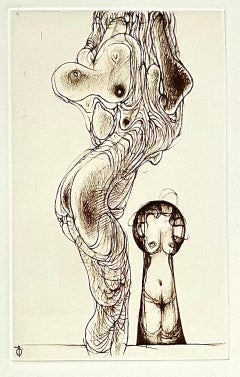
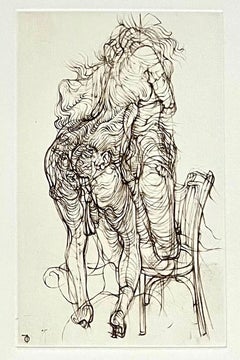
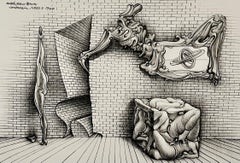
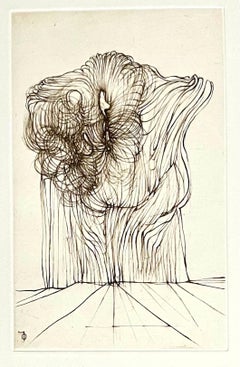
German Surrealist Hans Bellmer Etching Engraving Print Cecile Reims Surrealism
By Hans Bellmer
Located in Surfside, FL
After Hans Bellmer (German, 1902-1975)
Surrealist engraving, etching
after drawings from a 1942 notebook,
engraved in 1974-75 by Cecile Reims
Printed by L'Atelier de Chalcographie du Louvre, Paris,
Having printed monogram lower left in plate, pencil notations verso Editioned from a very small edition of #7/10
'Musee du Louvre' blindstamp.
Dimensions: Sheet 11 X 7.5, Plate size 6.5 X 4
Hans Bellmer ( 1902 – 1975) was a Polish born German artist, best known for his drawings, etchings that illustrates the 1940 edition of Histoire de l’œil, and the life-sized female sculpture mannequin dolls he produced in the mid-1930s. Historians of art and photography also consider him a Surrealist photographer.
Bellmer was born in the city of Kattowitz, then part of the German Empire (now Katowice, Poland). Up until 1926, he worked as a draftsman for his own advertising company.
Bellmer is most famous for the creation of a series of dolls as well as photographs of them. He was influenced in his choice of art form in part by reading the published letters of Oskar Kokoschka (Der Fetisch, 1925) and Surrealism. Bellmer's puppet doll project is also said to have been catalysed by a series of events in his personal life.
Hans Bellmer takes credit for provoking a physical crisis in his father and brings his own artistic creativity into association with childhood insubordination and resentment toward a severe and humorless paternal authority. Perhaps this is one reason for the nearly universal, unquestioning acceptance in the literature of Bellmer's promotion of his art as a struggle against his father, the police, and ultimately, fascism and the state. Events of his personal life also including meeting a beautiful teenage cousin in 1932 (and perhaps other unattainable beauties), attending a performance of Jacques Offenbach's Tales of Hoffmann (in which a man falls tragically in love with an automaton), and receiving a box of his old toys. After these events, he began to actually construct his first dolls. In his works, Bellmer explicitly sexualized the doll as a young girl (his work bears connection to the works of Bathus). Hirschfeld has claimed (without further argumentation) that Bellmer initiated his doll project to oppose the fascism of the Nazi Party by declaring that he would make no work that would support the new German state. Represented by mutated forms and unconventional poses, his dolls (according to this view) were directed specifically at the cult of the perfect body then prominent in Germany.
He visited Paris in 1935 and made contacts there, such as Paul Éluard, but returned to Berlin because his wife Margarete was dying of tuberculosis. He was part of the circle of Surrealist luminaries such as Man Ray, Marcel Duchamp, Max Ernst, Joan Miro, André Masson, René Magritte, Alberto Giacometti and Salvador Dali as well as women artists—such as Frida Kahlo, Dorothea Tanning and Leonora Carrington.
Bellmer produced the first doll in Berlin in 1933. Long since lost, the assemblage can nevertheless be correctly described thanks to approximately two dozen photographs Bellmer took at the time of its construction. Standing about fifty-six inches tall, the doll consisted of a modeled torso made of flax fiber, glue, and plaster; a mask-like head of the same material with glass eyes and a long, unkempt wig; and a pair of legs made from broomsticks or dowel rods. One of these legs terminated in a wooden, club-like foot; the other was encased in a more naturalistic plaster shell, jointed at the knee and ankle. As the project progressed, Bellmer made a second set of hollow plaster legs, with wooden ball joints for the doll's hips and knees. There were no arms to the first sculpture, but Bellmer did fashion or find a single wooden hand, which appears among the assortment of doll parts the artist documented in an untitled photograph of 1934, as well as in several photographs of later work.
Bellmer's 1934 anonymous book, The Doll (Die Puppe), produced and published privately in Germany, contains 10 black-and-white photographs of Bellmer's first doll arranged in a series of "tableaux vivants" (living pictures). The book was not credited to him, as he worked in isolation, and his photographs remained almost unknown in Germany. Yet Bellmer's work was eventually declared "degenerate" (entartete kunst) by the Nazi Party, and he was forced to flee Germany to France in 1938, where Bellmer's work was welcomed by the Surrealists around Andre Breton.
He aided the French Resistance during the war by making fake passports. He was imprisoned in the Camp des Milles prison at Aix-en-Provence, a brickworks camp for German nationals, from September 1939 until the end of the Phoney War in May 1940.
After the war, Bellmer lived the rest of his life in Paris. Bellmer gave up doll-making and spent the following decades creating erotic drawings, etchings, sexually explicit photographs, paintings, and prints of pubescent girls. In 1954, he met Unica Zürn...
Category
20th Century Abstract Prints
Materials
Etching
German Surrealist Hans Bellmer Etching Engraving Print Cecile Reims Surrealism
By Hans Bellmer
Located in Surfside, FL
After Hans Bellmer (German, 1902-1975)
Surrealist engraving, etching
after drawings from a 1942 notebook,
engraved in 1974-75 by Cecile Reims
Printed by L'Atelier de Chalcographie du Louvre, Paris,
Having printed monogram lower left in plate, pencil notations and #7/10 and 'Musee du Louvre' blindstamp verso
Dimensions: Sheet 11 X 7.5, Plate size 6.5 X 4
Hans Bellmer ( 1902 – 1975) was a Polish born German artist, best known for his drawings, etchings that illustrates the 1940 edition of Histoire de l’œil, and the life-sized female sculpture mannequin dolls he produced in the mid-1930s. Historians of art and photography also consider him a Surrealist photographer.
Bellmer was born in the city of Kattowitz, then part of the German Empire (now Katowice, Poland). Up until 1926, he worked as a draftsman for his own advertising company.
Bellmer is most famous for the creation of a series of dolls as well as photographs of them. He was influenced in his choice of art form in part by reading the published letters of Oskar Kokoschka (Der Fetisch, 1925) and Surrealism. Bellmer's puppet doll project is also said to have been catalysed by a series of events in his personal life.
Hans Bellmer takes credit for provoking a physical crisis in his father and brings his own artistic creativity into association with childhood insubordination and resentment toward a severe and humorless paternal authority. Perhaps this is one reason for the nearly universal, unquestioning acceptance in the literature of Bellmer's promotion of his art as a struggle against his father, the police, and ultimately, fascism and the state. Events of his personal life also including meeting a beautiful teenage cousin in 1932 (and perhaps other unattainable beauties), attending a performance of Jacques Offenbach's Tales of Hoffmann (in which a man falls tragically in love with an automaton), and receiving a box of his old toys. After these events, he began to actually construct his first dolls. In his works, Bellmer explicitly sexualized the doll as a young girl (his work bears connection to the works of Bathus). Hirschfeld has claimed (without further argumentation) that Bellmer initiated his doll project to oppose the fascism of the Nazi Party by declaring that he would make no work that would support the new German state. Represented by mutated forms and unconventional poses, his dolls (according to this view) were directed specifically at the cult of the perfect body then prominent in Germany.
He visited Paris in 1935 and made contacts there, such as Paul Éluard, but returned to Berlin because his wife Margarete was dying of tuberculosis. He was part of the circle of Surrealist luminaries such as Man Ray, Marcel Duchamp, Max Ernst, Joan Miro, André Masson, René Magritte, Alberto Giacometti and Salvador Dali as well as women artists—such as Frida Kahlo, Dorothea Tanning and Leonora Carrington.
Bellmer produced the first doll in Berlin in 1933. Long since lost, the assemblage can nevertheless be correctly described thanks to approximately two dozen photographs Bellmer took at the time of its construction. Standing about fifty-six inches tall, the doll consisted of a modeled torso made of flax fiber, glue, and plaster; a mask-like head of the same material with glass eyes and a long, unkempt wig; and a pair of legs made from broomsticks or dowel rods. One of these legs terminated in a wooden, club-like foot; the other was encased in a more naturalistic plaster shell, jointed at the knee and ankle. As the project progressed, Bellmer made a second set of hollow plaster legs, with wooden ball joints for the doll's hips and knees. There were no arms to the first sculpture, but Bellmer did fashion or find a single wooden hand, which appears among the assortment of doll parts the artist documented in an untitled photograph of 1934, as well as in several photographs of later work.
Bellmer's 1934 anonymous book, The Doll (Die Puppe), produced and published privately in Germany, contains 10 black-and-white photographs of Bellmer's first doll arranged in a series of "tableaux vivants" (living pictures). The book was not credited to him, as he worked in isolation, and his photographs remained almost unknown in Germany. Yet Bellmer's work was eventually declared "degenerate" (entartete kunst) by the Nazi Party, and he was forced to flee Germany to France in 1938, where Bellmer's work was welcomed by the Surrealists around Andre Breton.
He aided the French Resistance during the war by making fake passports. He was imprisoned in the Camp des Milles prison at Aix-en-Provence, a brickworks camp for German nationals, from September 1939 until the end of the Phoney War in May 1940.
After the war, Bellmer lived the rest of his life in Paris. Bellmer gave up doll-making and spent the following decades creating erotic drawings, etchings, sexually explicit photographs, paintings, and prints of pubescent girls. In 1954, he met Unica Zürn...
Category
20th Century Abstract Prints
Materials
Etching
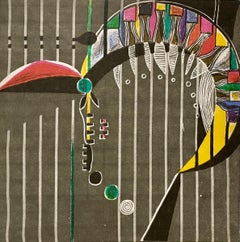
Feminist Surrealist French Abstract Colorful Lithograph Print Myriam Bat Yosef
Located in Surfside, FL
Myriam Bat-Yosef
Surrealist abstract lithograph print in colorful abstract shapes and shades
Hand signed and dated 1971.
sheet measures 9.25 X 9.25 inches
The envelope and the Peter Buch poster is just for provenance and is not included in this sale.
Myriam Bat-Yosef, whose real name is Marion Hellerman, born on January 31, 1931 in Berlin, Germany to a Jewish family from Lithuania, she is an Israeli-Icelandic artist who paints on papers, paintings, fabrics, objects and human beings for performances. Myriam Bat-Yosef currently lives and works in Paris. In 1933, her family fleeing the Nazi Holocaust, Miriam Bat-Yosef emigrates to Palestine and settles in Jaffa. In 1936, she suffers a family tragedy, her father, militant Zionist, is called to fight, still recovering from an operation of appendicitis. The incision will become infected, antibiotics did not exist yet, and her father will die in the hospital after 9 months of suffering.
Myriam and her mother leave Palestine to live in Paris for three years. French is Myriam's first school language. In 1939, still fleeing Nazism, she returned to Palestine, leaving France by the last boat from Marseille. She moved to Tel Aviv with her mother, aunt and maternal grandmother.
In 1940, she began attending the Academy of Fine Arts in Tel Aviv and took her name as an artist, Bat-Yosef, which means Joseph's daughter in Hebrew, as a tribute to her father. In 1946, Myriam graduated as a kindergarten teacher but wanted to be an artist. Her mother enrolled her in an evening school to prepare a diploma of art teacher. At 19, she performs two years of military service in Israel.
In 1952, with a pension of $50 a month that her mother allocated, she went to study at the Beaux-Arts in Paris. To survive, she has several activities while studying. In 1955, she had her first solo exhibition, at the Israeli Club on Wagram Avenue in Paris. Many artists, such as Yaacov Agam, Yehuda Neiman Avigdor Arikha, Raffi Kaiser, Dani Karavan and sculptors Achiam and Shlomo Selinger attended the opening .
In 1956, she enrolled at the School of Fine Arts in Florence. This is where she meets the painter Errô. They share an icy studio in winter. Myriam moves to Milan with friends. She organizes a joint exhibition with Erro, one room each, at the Montenapoleone gallery. Her works are admired by the sculptor Marino Marini and the painters Renato Birolli and Enrico Prampolini. Myriam and Erro exhibit in Rome, Milan, Florence and meet many personalities: Alain Jouffroy and his wife, the painter Manina, Roberto Matta and his wife Malitte, textile artist who was one of the founders of the Pompidou Center. Back in Paris, Myriam and Erro get married, which allows Myriam to avoid being called into the Israeli army during the Suez Canal War.
In 1957, Myriam and her husband went to Iceland. Myriam works in a chocolate factory. Having enough money, she starts producing art again. She exhibited in Reykjavik's first art gallery. She meets the artist Sigridur Bjornsdottir, married to the Swiss painter Dieter Roth .
In 1958, Myriam and her husband leave for Israel. They exhibit in Germany, then in Israel. Back in Paris, the couple became friends with artists of the surrealist movement, such as Victor Brauner, Hans Bellmer, the sculptor Philippe Hiquily, Liliane Lijn, future wife of Takis and photographer Nathalie Waag. Erro and Myriam have a daughter on March 15, 1960, named Tura, after the painter Cosmè Tura, but also close to the Icelandic Thora or the Hebrew Torah. Bat-Yosef’s complex trajectory throughout the 20th century is linked as much to the transnational history of what was for a time called the School of Paris as it is to a certain legacy of Surrealism. Her work features the same idea of resolving antinomies that also defined the spirit of surrealism, and is enhanced with her readings of the Kabbalah and her spiritual grounding in Taoism. However, while there are reasons for her approach to be associated with the process of the ready-made, it is important to consider the immediate intrication of these works with her practice of performance, during which the body itself is also painted – a feminist response to Yves Klein’s Anthropometries (1960) and an echo of the happenings which Jean-Jacques Lebel organised at the time in Paris.
In 1963, Erró told Myriam that if she wants to be a painter, she can not be his wife. Myriam chose to be a painter and the couple divorced in 1964. Since that time, Myriam Bat-Yosef has exhibited in many countries: Europe, United States, Japan, etc.
Although long in the shadows, the work of Myriam Bat-Yosef has been greeted by many artists and personalities: Anaïs Nin, Nancy Huston, André Pieyre of Mandiargues, José Pierre, René de Solier , Jacques Lacarrière, Alain Bosquet, Pierre Restany, Sarane Alexandrian and Surrealist André Breton who, after a visit to her studio, confided to having been intrigued by its phantasmagorical dimension. She was included in the book Pop Art and Beyond: Gender, Race, and Class in the Global Sixties by Mona Hadler and Kalliopi Minioudaki. Extract "World Citizen, Artist of the Pop Era Sarah Wilson; Why do we know so little of Myriam Bat-Yosef, the most important female Israeli artist of the Pop era? Issues of identity and sexuality feature constantly in her work. She exhibited internationally from Reykjavik to Tokyo; she had two shows at Arturo Schwarz’s famous Dada/surrealist gallery in Milan; she participated in feminist art events in Los Angeles. Above all, in 1971, she conceived Total Art, a Pop Gesamtkunstwerk inside and outside the Israel Museum, Jerusalem. Painter, performer, and installation artist, she was also a lover, wife, and mother. Of Lithuanian-Jewish descent, she was close to the family of philosopher Emmanuel Levinas. An émigré in Paris she would repudiate a national passport, participating in Garry Davis’s short-lived “World Citizens” movement. She continues the lineage of women surrealist artists: Valentine Hugo, Leonor Fini, Dorothea Tanning, Leonora Carrington, Unica Zürn, Jane Graverol, Toyen, Alice Rahon...
Category
1970s Surrealist Abstract Prints
Materials
Lithograph
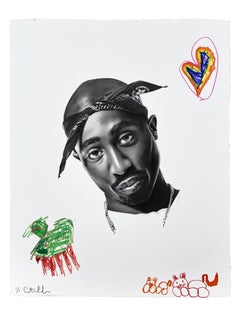
"I DO IT MYSELF" (FRAMED) Portrait Painting 30" x 24" inch by Antonio Pelayo
By Antonio Pelayo
Located in Culver City, CA
"I DO IT MYSELF" (FRAMED) Portrait Painting 30" x 24" inch by Antonio Pelayo
Medium: Marker on paper
Size: 30" x 24" inch
Size framed: 34" x 27.5" inch
From Pelayo VS Pelayo exhib...
Category
21st Century and Contemporary Contemporary Figurative Paintings
Materials
Paper, Ink, Acrylic, Pencil
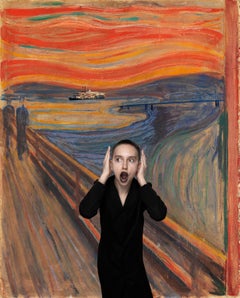
Ode to Munch
s
The Scream
By E2 - Kleinveld
Julien
Located in New Orleans, LA
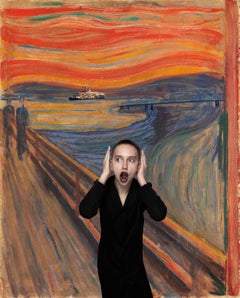
Inspired by Edvard Munch's "The Scream", 1893
Edition 1 of 7 and 2APs
“Ode to Munch’s ‘The Scream’” depicts a non-binary subject trapped in an infinite scream against a New Orleans backdrop. This piece represents the silent pain of gender dysphoria constantly experienced by non-binary people as they traverse a binary world that would rather ignore their existence entirely.
The artists say of their work...
"Everything Changes, the latest phase of our ongoing series In Empathy We Trust, presents odes to iconic images from the Modern and Contemporary art periods. Our artistic process during Everything Changes was heavily influenced by the COVID-19 pandemic and the inescapable upheaval brought about by this once-in-a-lifetime event. This major societal shift alongside ongoing social unrest compelled us to further explore the distorted realities permeating American culture and, consequently, veiling oppression of marginalized communities. With lockdown restrictions disrupting our usual process of gathering for photoshoots, we also began playing with new approaches for our work. As a result, our latest iteration marks a new technique exploration, with completely over-painting atop of select prints, adding an additional layer of distortion to an already-altered reality.
The title for this show takes inspiration from one of our favorite Frida Kahlo quotes: “Nothing is absolute. Everything changes, everything moves, everything revolves, everything flies and goes away.” The pandemic fostered a collective understanding of just how malleable and fragile our reality is. Our perceptions, our personal routines, and our culture as a whole – these realities are never guaranteed stasis, and the only way to move forward is to evolve, both as artists and individuals. The pieces in this show invite viewers to embrace the inevitability of change and the natural discomfort of re-examining their expectations of how a work of art – and by extension, a culture – should look.
The process of creating an e2 image has always involved intense collaboration, and the images here would not be possible without stellar teamwork. We would especially like to thank Cameron Wood for his extensive digital post-production and our wonderful models."
⎯⎯⎯⎯⎯
As the photographic duo E2, New Orleans natives Elizabeth Kleinveld and Epaul Julien...
Category
21st Century and Contemporary Contemporary Figurative Photography
Materials
Archival Pigment
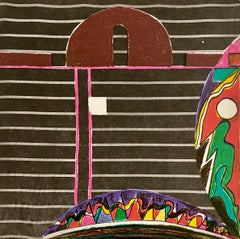
Feminist Surrealist French Abstract Colorful Lithograph Print Myriam Bat Yosef
Located in Surfside, FL
Myriam Bat-Yosef
Surrealist abstract lithograph print in colorful abstract shapes and shades
Hand signed and dated 1971.
sheet measures 9.25 X 9.25 inches
The envelope and the Peter Buch poster is just for provenance and is not included in this sale.
Myriam Bat-Yosef, whose real name is Marion Hellerman, born on January 31, 1931 in Berlin, Germany to a Jewish family from Lithuania, she is an Israeli-Icelandic artist who paints on papers, paintings, fabrics, objects and human beings for performances. Myriam Bat-Yosef currently lives and works in Paris. In 1933, her family fleeing the Nazi Holocaust, Miriam Bat-Yosef emigrates to Palestine and settles in Jaffa. In 1936, she suffers a family tragedy, her father, militant Zionist, is called to fight, still recovering from an operation of appendicitis. The incision will become infected, antibiotics did not exist yet, and her father will die in the hospital after 9 months of suffering.
Myriam and her mother leave Palestine to live in Paris for three years. French is Myriam's first school language. In 1939, still fleeing Nazism, she returned to Palestine, leaving France by the last boat from Marseille. She moved to Tel Aviv with her mother, aunt and maternal grandmother.
In 1940, she began attending the Academy of Fine Arts in Tel Aviv and took her name as an artist, Bat-Yosef, which means Joseph's daughter in Hebrew, as a tribute to her father. In 1946, Myriam graduated as a kindergarten teacher but wanted to be an artist. Her mother enrolled her in an evening school to prepare a diploma of art teacher. At 19, she performs two years of military service in Israel.
In 1952, with a pension of $50 a month that her mother allocated, she went to study at the Beaux-Arts in Paris. To survive, she has several activities while studying. In 1955, she had her first solo exhibition, at the Israeli Club on Wagram Avenue in Paris. Many artists, such as Yaacov Agam, Yehuda Neiman Avigdor Arikha, Raffi Kaiser, Dani Karavan and sculptors Achiam and Shlomo Selinger attended the opening .
In 1956, she enrolled at the School of Fine Arts in Florence. This is where she meets the painter Errô. They share an icy studio in winter. Myriam moves to Milan with friends. She organizes a joint exhibition with Erro, one room each, at the Montenapoleone gallery. Her works are admired by the sculptor Marino Marini and the painters Renato Birolli and Enrico Prampolini. Myriam and Erro exhibit in Rome, Milan, Florence and meet many personalities: Alain Jouffroy and his wife, the painter Manina, Roberto Matta and his wife Malitte, textile artist who was one of the founders of the Pompidou Center. Back in Paris, Myriam and Erro get married, which allows Myriam to avoid being called into the Israeli army during the Suez Canal War.
In 1957, Myriam and her husband went to Iceland. Myriam works in a chocolate factory. Having enough money, she starts producing art again. She exhibited in Reykjavik's first art gallery. She meets the artist Sigridur Bjornsdottir, married to the Swiss painter Dieter Roth .
In 1958, Myriam and her husband leave for Israel. They exhibit in Germany, then in Israel. Back in Paris, the couple became friends with artists of the surrealist movement, such as Victor Brauner, Hans Bellmer, the sculptor Philippe Hiquily, Liliane Lijn, future wife of Takis and photographer Nathalie Waag. Erro and Myriam have a daughter on March 15, 1960, named Tura, after the painter Cosmè Tura, but also close to the Icelandic Thora or the Hebrew Torah. Bat-Yosef’s complex trajectory throughout the 20th century is linked as much to the transnational history of what was for a time called the School of Paris as it is to a certain legacy of Surrealism. Her work features the same idea of resolving antinomies that also defined the spirit of surrealism, and is enhanced with her readings of the Kabbalah and her spiritual grounding in Taoism. However, while there are reasons for her approach to be associated with the process of the ready-made, it is important to consider the immediate intrication of these works with her practice of performance, during which the body itself is also painted – a feminist response to Yves Klein’s Anthropometries (1960) and an echo of the happenings which Jean-Jacques Lebel organised at the time in Paris.
In 1963, Erró told Myriam that if she wants to be a painter, she can not be his wife. Myriam chose to be a painter and the couple divorced in 1964. Since that time, Myriam Bat-Yosef has exhibited in many countries: Europe, United States, Japan, etc.
Although long in the shadows, the work of Myriam Bat-Yosef has been greeted by many artists and personalities: Anaïs Nin, Nancy Huston, André Pieyre of Mandiargues, José Pierre, René de Solier , Jacques Lacarrière, Alain Bosquet, Pierre Restany, Sarane Alexandrian and Surrealist André Breton who, after a visit to her studio, confided to having been intrigued by its phantasmagorical dimension. She was included in the book Pop Art and Beyond: Gender, Race, and Class in the Global Sixties by Mona Hadler and Kalliopi Minioudaki. Extract "World Citizen, Artist of the Pop Era Sarah Wilson; Why do we know so little of Myriam Bat-Yosef, the most important female Israeli artist of the Pop era? Issues of identity and sexuality feature constantly in her work. She exhibited internationally from Reykjavik to Tokyo; she had two shows at Arturo Schwarz’s famous Dada/surrealist gallery in Milan; she participated in feminist art events in Los Angeles. Above all, in 1971, she conceived Total Art, a Pop Gesamtkunstwerk inside and outside the Israel Museum, Jerusalem. Painter, performer, and installation artist, she was also a lover, wife, and mother. Of Lithuanian-Jewish descent, she was close to the family of philosopher Emmanuel Levinas. An émigré in Paris she would repudiate a national passport, participating in Garry Davis’s short-lived “World Citizens” movement. She continues the lineage of women surrealist artists: Valentine Hugo, Leonor Fini, Dorothea Tanning, Leonora Carrington, Unica Zürn, Jane Graverol, Toyen, Alice Rahon...
Category
1970s Surrealist Abstract Prints
Materials
Lithograph
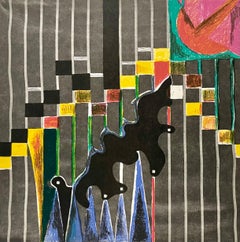
Feminist Surrealist French Abstract Colorful Lithograph Print Myriam Bat Yosef
Located in Surfside, FL
Myriam Bat-Yosef
Surrealist abstract lithograph print in colorful abstract shapes and shades
Hand signed and dated 1971.
sheet measures 9.25 X 9.25 inches
...
Category
1970s Surrealist Abstract Prints
Materials
Lithograph
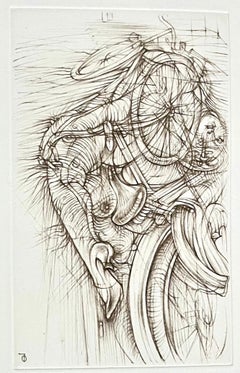
German Surrealist Hans Bellmer Etching Engraving Print Cecile Reims Surrealism
By Hans Bellmer
Located in Surfside, FL
After Hans Bellmer (German, 1902-1975)
Surrealist engraving, etching
after drawings from a 1942 notebook,
engraved in 1974-75 by Cecile Reims
Printed by L'Atelier de Chalcographie du Louvre, Paris,
Having printed monogram lower left in plate, pencil notations verso Editioned from a very small edition of #7/10
'Musee du Louvre' blindstamp.
Dimensions: Sheet 11 X 7.5, Plate size 6.5 X 4
Hans Bellmer ( 1902 – 1975) was a Polish born German artist, best known for his drawings, etchings that illustrates the 1940 edition of Histoire de l’œil, and the life-sized female sculpture mannequin dolls he produced in the mid-1930s. Historians of art and photography also consider him a Surrealist photographer.
Bellmer was born in the city of Kattowitz, then part of the German Empire (now Katowice, Poland). Up until 1926, he worked as a draftsman for his own advertising company.
Bellmer is most famous for the creation of a series of dolls as well as photographs of them. He was influenced in his choice of art form in part by reading the published letters of Oskar Kokoschka (Der Fetisch, 1925) and Surrealism. Bellmer's puppet doll project is also said to have been catalysed by a series of events in his personal life.
Hans Bellmer takes credit for provoking a physical crisis in his father and brings his own artistic creativity into association with childhood insubordination and resentment toward a severe and humorless paternal authority. Perhaps this is one reason for the nearly universal, unquestioning acceptance in the literature of Bellmer's promotion of his art as a struggle against his father, the police, and ultimately, fascism and the state. Events of his personal life also including meeting a beautiful teenage cousin in 1932 (and perhaps other unattainable beauties), attending a performance of Jacques Offenbach's Tales of Hoffmann (in which a man falls tragically in love with an automaton), and receiving a box of his old toys. After these events, he began to actually construct his first dolls. In his works, Bellmer explicitly sexualized the doll as a young girl (his work bears connection to the works of Bathus). Hirschfeld has claimed (without further argumentation) that Bellmer initiated his doll project to oppose the fascism of the Nazi Party by declaring that he would make no work that would support the new German state. Represented by mutated forms and unconventional poses, his dolls (according to this view) were directed specifically at the cult of the perfect body then prominent in Germany.
He visited Paris in 1935 and made contacts there, such as Paul Éluard, but returned to Berlin because his wife Margarete was dying of tuberculosis. He was part of the circle of Surrealist luminaries such as Man Ray, Marcel Duchamp, Max Ernst, Joan Miro, André Masson, René Magritte, Alberto Giacometti and Salvador Dali as well as women artists—such as Frida Kahlo, Dorothea Tanning and Leonora Carrington.
Bellmer produced the first doll in Berlin in 1933. Long since lost, the assemblage can nevertheless be correctly described thanks to approximately two dozen photographs Bellmer took at the time of its construction. Standing about fifty-six inches tall, the doll consisted of a modeled torso made of flax fiber, glue, and plaster; a mask-like head of the same material with glass eyes and a long, unkempt wig; and a pair of legs made from broomsticks or dowel rods. One of these legs terminated in a wooden, club-like foot; the other was encased in a more naturalistic plaster shell, jointed at the knee and ankle. As the project progressed, Bellmer made a second set of hollow plaster legs, with wooden ball joints for the doll's hips and knees. There were no arms to the first sculpture, but Bellmer did fashion or find a single wooden hand, which appears among the assortment of doll parts the artist documented in an untitled photograph of 1934, as well as in several photographs of later work.
Bellmer's 1934 anonymous book, The Doll (Die Puppe), produced and published privately in Germany, contains 10 black-and-white photographs of Bellmer's first doll arranged in a series of "tableaux vivants" (living pictures). The book was not credited to him, as he worked in isolation, and his photographs remained almost unknown in Germany. Yet Bellmer's work was eventually declared "degenerate" (entartete kunst) by the Nazi Party, and he was forced to flee Germany to France in 1938, where Bellmer's work was welcomed by the Surrealists around Andre Breton.
He aided the French Resistance during the war by making fake passports. He was imprisoned in the Camp des Milles prison at Aix-en-Provence, a brickworks camp for German nationals, from September 1939 until the end of the Phoney War in May 1940.
After the war, Bellmer lived the rest of his life in Paris. Bellmer gave up doll-making and spent the following decades creating erotic drawings, etchings, sexually explicit photographs, paintings, and prints of pubescent girls. In 1954, he met Unica Zürn...
Category
20th Century Abstract Prints
Materials
Etching
German Surrealism Abstract Surrealist Lithograph Hans Bellmer
By Hans Bellmer
Located in Surfside, FL
Hans Bellmer German (1902–1975)
Abstract Surrealist Lithograph
Souterrain No. 13 8 1944 Musée Jean Brun
Date: circa 1965
Hand signed and numbered in pencil Edition of 100
Size: 19.5 x 26.5 in.
Hans Bellmer ( 1902 – 1975) was a Polish born German artist, best known for his drawings, etchings that illustrates the 1940 edition of Histoire de l’œil, and the life-sized female sculpture mannequin dolls he produced in the mid-1930s. Historians of art and photography also consider him a Surrealist photographer.
Bellmer was born in the city of Kattowitz, then part of the German Empire (now Katowice, Poland). Up until 1926, he worked as a draftsman for his own advertising company.
Bellmer is most famous for the creation of a series of dolls as well as photographs of them. He was influenced in his choice of art form in part by reading the published letters of Oskar Kokoschka (Der Fetisch, 1925) and Surrealism. Bellmer's puppet doll project is also said to have been catalysed by a series of events in his personal life.
Hans Bellmer takes credit for provoking a physical crisis in his father and brings his own artistic creativity into association with childhood insubordination and resentment toward a severe and humorless paternal authority. Perhaps this is one reason for the nearly universal, unquestioning acceptance in the literature of Bellmer's promotion of his art as a struggle against his father, the police, and ultimately, fascism and the state. Events of his personal life also including meeting a beautiful teenage cousin in 1932 (and perhaps other unattainable beauties), attending a performance of Jacques Offenbach's Tales of Hoffmann (in which a man falls tragically in love with an automaton), and receiving a box of his old toys. After these events, he began to actually construct his first dolls. In his works, Bellmer explicitly sexualized the doll as a young girl (his work bears connection to the works of Bathus). Hirschfeld has claimed (without further argumentation) that Bellmer initiated his doll project to oppose the fascism of the Nazi Party by declaring that he would make no work that would support the new German state. Represented by mutated forms and unconventional poses, his dolls (according to this view) were directed specifically at the cult of the perfect body then prominent in Germany.
He visited Paris in 1935 and made contacts there, such as Paul Éluard, but returned to Berlin because his wife Margarete was dying of tuberculosis. He was part of the circle of Surrealist luminaries such as Man Ray, Marcel Duchamp, Max Ernst, Joan Miro, André Masson, René Magritte, Alberto Giacometti and Salvador Dali as well as women artists—such as Frida Kahlo, Dorothea Tanning and Leonora Carrington.
Bellmer produced the first doll in Berlin in 1933. Long since lost, the assemblage can nevertheless be correctly described thanks to approximately two dozen photographs Bellmer took at the time of its construction. Standing about fifty-six inches tall, the doll consisted of a modeled torso made of flax fiber, glue, and plaster; a mask-like head of the same material with glass eyes and a long, unkempt wig; and a pair of legs made from broomsticks or dowel rods. One of these legs terminated in a wooden, club-like foot; the other was encased in a more naturalistic plaster shell, jointed at the knee and ankle. As the project progressed, Bellmer made a second set of hollow plaster legs, with wooden ball joints for the doll's hips and knees. There were no arms to the first sculpture, but Bellmer did fashion or find a single wooden hand, which appears among the assortment of doll parts the artist documented in an untitled photograph of 1934, as well as in several photographs of later work.
Bellmer's 1934 anonymous book, The Doll (Die Puppe), produced and published privately in Germany, contains 10 black-and-white photographs of Bellmer's first doll arranged in a series of "tableaux vivants" (living pictures). The book was not credited to him, as he worked in isolation, and his photographs remained almost unknown in Germany. Yet Bellmer's work was eventually declared "degenerate" (entartete kunst) by the Nazi Party, and he was forced to flee Germany to France in 1938, where Bellmer's work was welcomed by the Surrealists around Andre Breton.
He aided the French Resistance during the war by making fake passports. He was imprisoned in the Camp des Milles prison at Aix-en-Provence, a brickworks camp for German nationals, from September 1939 until the end of the Phoney War in May 1940.
After the war, Bellmer lived the rest of his life in Paris. Bellmer gave up doll-making and spent the following decades creating erotic drawings, etchings, sexually explicit photographs, paintings, and prints of pubescent girls. In 1954, he met Unica Zürn, who became his companion until her suicide in 1970. He continued working into the 1960s
Cécile Reims (1927) has been drawing the world that surrounds her since her childhood in Lithuania, and subsequently in Paris, Jerusalem, and Barcelona. As a Jew, she had to go into hiding during World War II, and found herself at death’s door when she contracted tubercu- losis. Recovering from the disease, she felt she had to give meaning to her life as a survivor and she experienced a “conversion to art” as one is converted to a religion. Her encounter with the engraver Joseph Hecht in 1945 introduced her to the burin, an unforgiving tool which became her medium of choice. In her early years as an artist, she produced the mysterious Visages d’Espagne, Metamorphoses and Bestiaire de la mort series. But in order to support her work as an artist and to help Fred Deux (1924), whom she married in 1952, she suddenly gave a new twist to her career by turning to the interpretation of others’ work and engraving the drawings made by other artists. Cécile Reims filled this role with good humour and immense talent, as well as secretly collaborating with numerous artists working in the surrealist mode, such as Hans Bellmer, from 1966 to 1975, Salvador Dalí, from 1969 to 1988, Fred Deux, from 1970 to 2008, and Leonor Fini, from 1972 to 1995.
In 2004, the Bibiothèque Nationale de France held an important retrospective devoted to Cécile Reims, suddenly putting into the limelight a figure who had long been kept in the shadows. At that point it became essential to produce a catalogue raisonné of her miniature engravings...
Category
20th Century Abstract Abstract Prints
Materials
Lithograph
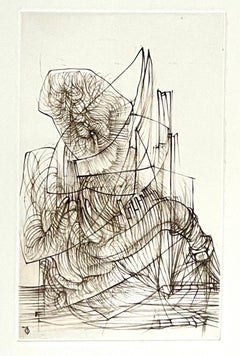
German Surrealist Hans Bellmer Etching Engraving Print Cecile Reims Surrealism
By Hans Bellmer
Located in Surfside, FL
After Hans Bellmer (German, 1902-1975)
Surrealist engraving, etching
after drawings from a 1942 notebook,
engraved in 1974-75 by Cecile Reims
Printed by L'Atelier de Chalcographie du Louvre, Paris,
Having printed monogram lower left in plate, pencil notations and #7/10 and 'Musee du Louvre' blindstamp verso
Dimensions: Sheet 11 X 7.5, Plate size 6.5 X 4
Hans Bellmer ( 1902 – 1975) was a Polish born German artist, best known for his drawings, etchings that illustrates the 1940 edition of Histoire de l’œil, and the life-sized female sculpture mannequin dolls he produced in the mid-1930s. Historians of art and photography also consider him a Surrealist photographer.
Bellmer was born in the city of Kattowitz, then part of the German Empire (now Katowice, Poland). Up until 1926, he worked as a draftsman for his own advertising company.
Bellmer is most famous for the creation of a series of dolls as well as photographs of them. He was influenced in his choice of art form in part by reading the published letters of Oskar Kokoschka (Der Fetisch, 1925) and Surrealism. Bellmer's puppet doll project is also said to have been catalysed by a series of events in his personal life.
Hans Bellmer takes credit for provoking a physical crisis in his father and brings his own artistic creativity into association with childhood insubordination and resentment toward a severe and humorless paternal authority. Perhaps this is one reason for the nearly universal, unquestioning acceptance in the literature of Bellmer's promotion of his art as a struggle against his father, the police, and ultimately, fascism and the state. Events of his personal life also including meeting a beautiful teenage cousin in 1932 (and perhaps other unattainable beauties), attending a performance of Jacques Offenbach's Tales of Hoffmann (in which a man falls tragically in love with an automaton), and receiving a box of his old toys. After these events, he began to actually construct his first dolls. In his works, Bellmer explicitly sexualized the doll as a young girl (his work bears connection to the works of Bathus). Hirschfeld has claimed (without further argumentation) that Bellmer initiated his doll project to oppose the fascism of the Nazi Party by declaring that he would make no work that would support the new German state. Represented by mutated forms and unconventional poses, his dolls (according to this view) were directed specifically at the cult of the perfect body then prominent in Germany.
He visited Paris in 1935 and made contacts there, such as Paul Éluard, but returned to Berlin because his wife Margarete was dying of tuberculosis. He was part of the circle of Surrealist luminaries such as Man Ray, Marcel Duchamp, Max Ernst, Joan Miro, André Masson, René Magritte, Alberto Giacometti and Salvador Dali as well as women artists—such as Frida Kahlo, Dorothea Tanning and Leonora Carrington.
Bellmer produced the first doll in Berlin in 1933. Long since lost, the assemblage can nevertheless be correctly described thanks to approximately two dozen photographs Bellmer took at the time of its construction. Standing about fifty-six inches tall, the doll consisted of a modeled torso made of flax fiber, glue, and plaster; a mask-like head of the same material with glass eyes and a long, unkempt wig; and a pair of legs made from broomsticks or dowel rods. One of these legs terminated in a wooden, club-like foot; the other was encased in a more naturalistic plaster shell, jointed at the knee and ankle. As the project progressed, Bellmer made a second set of hollow plaster legs, with wooden ball joints for the doll's hips and knees. There were no arms to the first sculpture, but Bellmer did fashion or find a single wooden hand, which appears among the assortment of doll parts the artist documented in an untitled photograph of 1934, as well as in several photographs of later work.
Bellmer's 1934 anonymous book, The Doll (Die Puppe), produced and published privately in Germany, contains 10 black-and-white photographs of Bellmer's first doll arranged in a series of "tableaux vivants" (living pictures). The book was not credited to him, as he worked in isolation, and his photographs remained almost unknown in Germany. Yet Bellmer's work was eventually declared "degenerate" (entartete kunst) by the Nazi Party, and he was forced to flee Germany to France in 1938, where Bellmer's work was welcomed by the Surrealists around Andre Breton.
He aided the French Resistance during the war by making fake passports. He was imprisoned in the Camp des Milles prison at Aix-en-Provence, a brickworks camp for German nationals, from September 1939 until the end of the Phoney War in May 1940.
After the war, Bellmer lived the rest of his life in Paris. Bellmer gave up doll-making and spent the following decades creating erotic drawings, etchings, sexually explicit photographs, paintings, and prints of pubescent girls. In 1954, he met Unica Zürn...
Category
20th Century Abstract Prints
Materials
Etching
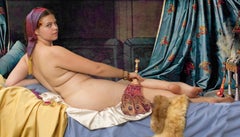
Ode to Ingres
Grand Odalisque
By E2 - Kleinveld
Julien
Located in New Orleans, LA
9.25 x 16 inches - Edition 1 of 7 with 2 APs
JONATHAN FERRARA GALLERY proudly presents The Changing Face of Portraiture, the premier solo exhibition of photography by artistic duo E...
Category
21st Century and Contemporary Contemporary Color Photography
Materials
Archival Pigment
Ode to Ingres
Grand Odalisque
By E2 - Kleinveld
Julien
Located in New Orleans, LA
20.5 x 36 inches - Edition 1 of 3 with 2 APs
JONATHAN FERRARA GALLERY proudly presents The Changing Face of Portraiture, the premier solo exhibition of photography by artistic duo E...
Category
21st Century and Contemporary Contemporary Color Photography
Materials
Archival Pigment
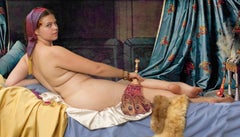
German Surrealist Hans Bellmer Etching Engraving Print Cecile Reims Surrealism
By Hans Bellmer
Located in Surfside, FL
After Hans Bellmer (German, 1902-1975)
Surrealist engraving, etching
after drawings from a 1942 notebook,
engraved in 1974-75 by Cecile Reims
Printed by L'Atelier de Chalcographie du Louvre, Paris,
Having printed monogram lower left in plate, pencil notations verso Editioned from a very small edition of #7/10
'Musee du Louvre' blindstamp.
Dimensions: Sheet 11 X 7.5, Plate size 6.5 X 4
Hans Bellmer ( 1902 – 1975) was a Polish born German artist, best known for his drawings, etchings that illustrates the 1940 edition of Histoire de l’œil, and the life-sized female sculpture mannequin dolls he produced in the mid-1930s. Historians of art and photography also consider him a Surrealist photographer.
Bellmer was born in the city of Kattowitz, then part of the German Empire (now Katowice, Poland). Up until 1926, he worked as a draftsman for his own advertising company.
Bellmer is most famous for the creation of a series of dolls as well as photographs of them. He was influenced in his choice of art form in part by reading the published letters of Oskar Kokoschka (Der Fetisch, 1925) and Surrealism. Bellmer's puppet doll project is also said to have been catalysed by a series of events in his personal life.
Hans Bellmer takes credit for provoking a physical crisis in his father and brings his own artistic creativity into association with childhood insubordination and resentment toward a severe and humorless paternal authority. Perhaps this is one reason for the nearly universal, unquestioning acceptance in the literature of Bellmer's promotion of his art as a struggle against his father, the police, and ultimately, fascism and the state. Events of his personal life also including meeting a beautiful teenage cousin in 1932 (and perhaps other unattainable beauties), attending a performance of Jacques Offenbach's Tales of Hoffmann (in which a man falls tragically in love with an automaton), and receiving a box of his old toys. After these events, he began to actually construct his first dolls. In his works, Bellmer explicitly sexualized the doll as a young girl (his work bears connection to the works of Bathus). Hirschfeld has claimed (without further argumentation) that Bellmer initiated his doll project to oppose the fascism of the Nazi Party by declaring that he would make no work that would support the new German state. Represented by mutated forms and unconventional poses, his dolls (according to this view) were directed specifically at the cult of the perfect body then prominent in Germany.
He visited Paris in 1935 and made contacts there, such as Paul Éluard, but returned to Berlin because his wife Margarete was dying of tuberculosis. He was part of the circle of Surrealist luminaries such as Man Ray, Marcel Duchamp, Max Ernst, Joan Miro, André Masson, René Magritte, Alberto Giacometti and Salvador Dali as well as women artists—such as Frida Kahlo, Dorothea Tanning and Leonora Carrington.
Bellmer produced the first doll in Berlin in 1933. Long since lost, the assemblage can nevertheless be correctly described thanks to approximately two dozen photographs Bellmer took at the time of its construction. Standing about fifty-six inches tall, the doll consisted of a modeled torso made of flax fiber, glue, and plaster; a mask-like head of the same material with glass eyes and a long, unkempt wig; and a pair of legs made from broomsticks or dowel rods. One of these legs terminated in a wooden, club-like foot; the other was encased in a more naturalistic plaster shell, jointed at the knee and ankle. As the project progressed, Bellmer made a second set of hollow plaster legs, with wooden ball joints for the doll's hips and knees. There were no arms to the first sculpture, but Bellmer did fashion or find a single wooden hand, which appears among the assortment of doll parts the artist documented in an untitled photograph of 1934, as well as in several photographs of later work.
Bellmer's 1934 anonymous book, The Doll (Die Puppe), produced and published privately in Germany, contains 10 black-and-white photographs of Bellmer's first doll arranged in a series of "tableaux vivants" (living pictures). The book was not credited to him, as he worked in isolation, and his photographs remained almost unknown in Germany. Yet Bellmer's work was eventually declared "degenerate" (entartete kunst) by the Nazi Party, and he was forced to flee Germany to France in 1938, where Bellmer's work was welcomed by the Surrealists around Andre Breton.
He aided the French Resistance during the war by making fake passports. He was imprisoned in the Camp des Milles prison at Aix-en-Provence, a brickworks camp for German nationals, from September 1939 until the end of the Phoney War in May 1940.
After the war, Bellmer lived the rest of his life in Paris. Bellmer gave up doll-making and spent the following decades creating erotic drawings, etchings, sexually explicit photographs, paintings, and prints of pubescent girls. In 1954, he met Unica Zürn...
Category
20th Century Abstract Prints
Materials
Etching
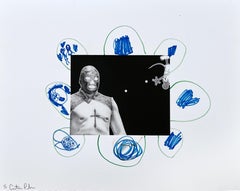
"WHY IS THE SKY BLUE?" (FRAMED) Painting 24" x 30" inch by Antonio Pelayo
By Antonio Pelayo
Located in Culver City, CA
"WHY IS THE SKY BLUE?" (FRAMED) Painting 24" x 30" inch by Antonio Pelayo
Medium: Marker on paper
Size: 24" x 30" inch
Size framed: 27.5" x 34" inch
From Pelayo VS Pelayo exhibiti...
Category
21st Century and Contemporary Contemporary Figurative Paintings
Materials
Paper, Permanent Marker, Pencil
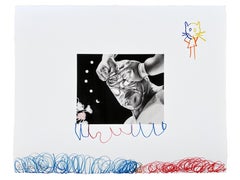
"HOW DO YOU KNOW MY NAME?" (FRAMED) Painting 24" x 30" inch by Antonio Pelayo
By Antonio Pelayo
Located in Culver City, CA
"HOW DO YOU KNOW MY NAME?" (FRAMED) Painting 24" x 30" inch by Antonio Pelayo
Medium: Marker on paper
Size: 24" x 30" inch
Size framed: 27.5" x 34" inch
From Pelayo VS Pelayo exhi...
Category
21st Century and Contemporary Contemporary Figurative Paintings
Materials
Paper, Permanent Marker, Pencil
"I
M NOT TIRED" (FRAMED) Painting 30" x 24" inch by Antonio Pelayo
By Antonio Pelayo
Located in Culver City, CA
"I'M NOT TIRED" (FRAMED) Painting 30" x 24" inch by Antonio Pelayo
Medium: Marker on paper
Size: 30" x 24" inch
Size framed: 34" x 27.5" inch
From Pelayo VS Pelayo exhibition:
The...
Category
21st Century and Contemporary Contemporary Figurative Paintings
Materials
Paper, Ink, Acrylic, Pencil
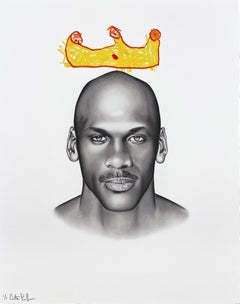
"Reflection " (FRAMED) Print 15" x 15" in by Antonio Pelayo x Isaac Pelayo
By Antonio Pelayo
Located in Culver City, CA
"Reflection " (FRAMED) Print 15" x 15" in by Antonio Pelayo x Isaac Pelayo
Artist Antonio Pelayo, born in Glendale, California, and yet raised for most of his childhood in the Mexic...
Category
21st Century and Contemporary Contemporary Figurative Prints
Materials
Spray Paint, Digital
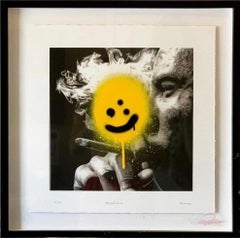
"Dont Belong Here" (FRAMED) Painting 18" x 24" inch by Antonio Pelayo
By Antonio Pelayo
Located in Culver City, CA
"Dont Belong Here" (FRAMED) Painting 18" x 24" inch by Antonio Pelayo
Medium: Pencil on Paper, Acrylic Ink
Paint on Animation Acetate
Size: 18" x 24" inch
Size framed: 20" x ...
Category
21st Century and Contemporary Contemporary Figurative Paintings
Materials
Paper, Ink, Acrylic, Pencil
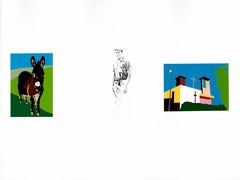
"50" (FRAMED) 50 Cent Portrait Pencil Drawing 17" x 15" inch by Antonio Pelayo
By Antonio Pelayo
Located in Culver City, CA
"50" (FRAMED) 50 Cent Portrait Pencil Drawing 17" x 15" inch by Antonio Pelayo
Medium: Pencil on Paper
Artist Antonio Pelayo, born in Glendale, California, and yet raised for most ...
Category
21st Century and Contemporary Contemporary Figurative Drawings and Water...
Materials
Paper, Pencil
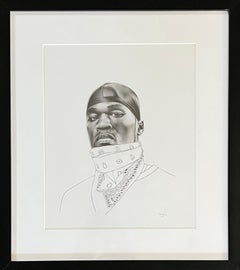
"El Bańo" (FRAMED) Painting 20.5" x 21" inch by Antonio Pelayo
By Antonio Pelayo
Located in Culver City, CA
"El Bańo" (FRAMED) Painting 20.5" x 21" inch by Antonio Pelayo
Medium: Pencil on Paper, Acrylic Ink
Paint on Animation Acetate
Artist Antonio Pelayo, born in Glendale, Calif...
Category
21st Century and Contemporary Contemporary Figurative Paintings
Materials
Paper, Ink, Acrylic, Pencil
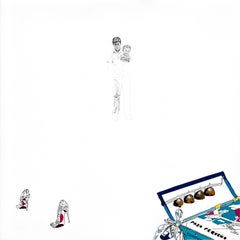
"Conejo" (FRAMED) Painting 14.5" x 20" inch by Antonio Pelayo
By Antonio Pelayo
Located in Culver City, CA
"Conejo" (FRAMED) Painting 14.5" x 20" inch by Antonio Pelayo
Medium: Pencil on Paper, Acrylic Ink
Paint on Animation Acetate
Size: 12" x 17" inch
Size framed: 14.5" x 20" in...
Category
21st Century and Contemporary Contemporary Figurative Paintings
Materials
Paper, Ink, Acrylic, Pencil
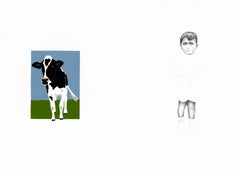
"La Vaca" (FRAMED) Painting 14.5" x 20" inch by Antonio Pelayo
By Antonio Pelayo
Located in Culver City, CA
"La Vaca" (FRAMED) Painting 14.5" x 20" inch by Antonio Pelayo
Medium: Pencil on Paper, Acrylic Ink
Paint on Animation Acetate
Size: 12" x 17" inch
Size framed: 14.5" x 20" i...
Category
21st Century and Contemporary Contemporary Figurative Paintings
Materials
Paper, Ink, Acrylic, Pencil
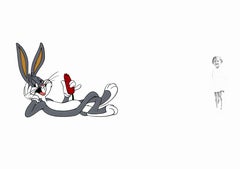
"Calica" (FRAMED) Painting 14.5" x 20" inch by Antonio Pelayo
By Antonio Pelayo
Located in Culver City, CA
"Calica" (FRAMED) Painting 14.5" x 20" inch by Antonio Pelayo
Medium: Pencil on Paper, Acrylic Ink & Paint on Animation Acetate
Size: 12" x 17" inch
Size framed: 14.5" x 20" inch
...
Category
21st Century and Contemporary Contemporary Figurative Paintings
Materials
Paper, Pencil, Ink, Acrylic
"Sueńos Chicos" (FRAMED) Painting 21" x 20.5" inch by Antonio Pelayo
By Antonio Pelayo
Located in Culver City, CA
"Sueńos Chicos" (FRAMED) Painting 21" x 20.5" inch by Antonio Pelayo
Medium: Pencil on Paper. Acrylic Ink & Paint on Animation Acetate
Image size: 15...
Category
21st Century and Contemporary Contemporary Figurative Drawings and Water...
Materials
Ink, Acrylic
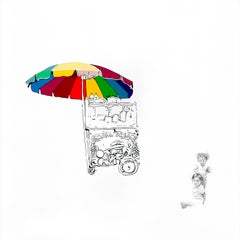
"Della" (FRAMED) Painting 19" x 22" inch by Antonio Pelayo
By Antonio Pelayo
Located in Culver City, CA
"Della" (FRAMED) Painting 19" x 22" inch by Antonio Pelayo
Medium: Acrylic Ink & Paint on Animation Acetate
Size: 13" x 15" inch
Size framed: 19" x 22" inch
Artist Antonio Pelayo,...
Category
21st Century and Contemporary Contemporary Figurative Paintings
Materials
Paper, Ink, Acrylic, Pencil
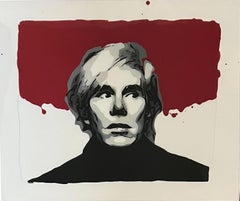
"Untitled 28" (FRAMED) Pencil Drawing 21" x 18" inch by Antonio Pelayo
By Antonio Pelayo
Located in Culver City, CA
"Untitled 28" (FRAMED) Pencil Drawing 21" x 18" inch by Antonio Pelayo
Size unframed: 15.5" x 13.5 inch
Medium: Pencil on Paper
Artist Antonio Pelayo, born in Glendale, California...
Category
21st Century and Contemporary Contemporary Figurative Drawings and Water...
Materials
Paper, Pencil
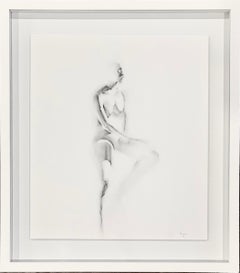

$1,200 Sale Price
20% Off
"Untitled 29" (FRAMED) Pencil Drawing 21" x 18" inch by Antonio Pelayo
By Antonio Pelayo
Located in Culver City, CA
"Untitled 29" (FRAMED) Pencil Drawing 21" x 18" inch by Antonio Pelayo
Size unframed: 15.5" x 13.5" inch
Medium: Pencil on Paper
Artist Antonio Pelayo, born in Glendale, California...
Category
21st Century and Contemporary Contemporary Figurative Drawings and Water...
Materials
Paper, Pencil
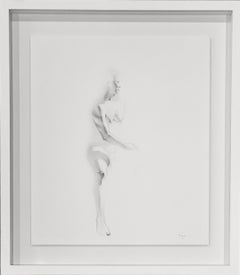
$1,200 Sale Price
20% Off
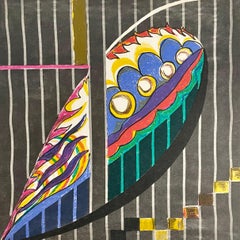
Feminist Surrealist French Abstract Colorful Lithograph Print Myriam Bat Yosef
Located in Surfside, FL
Myriam Bat-Yosef
Surrealist abstract lithograph print in colorful abstract shapes and shades
Hand signed and dated 1971.
sheet measures 9.25 X 9.25 inches
...
Category
1970s Surrealist Abstract Prints
Materials
Lithograph
Ode to Munch
s
The Scream
By E2 - Kleinveld
Julien
Located in New Orleans, LA
Inspired by Edvard Munch's "The Scream", 1893
Edition 1 of 3 with 2APs
“Ode to Munch’s ‘The Scream’” depicts a non-binary subject trapped in an infinite scream against a New Orleans backdrop. This piece represents the silent pain of gender dysphoria constantly experienced by non-binary people as they traverse a binary world that would rather ignore their existence entirely.
The artists say of their work...
"Everything Changes, the latest phase of our ongoing series In Empathy We Trust, presents odes to iconic images from the Modern and Contemporary art periods. Our artistic process during Everything Changes was heavily influenced by the COVID-19 pandemic and the inescapable upheaval brought about by this once-in-a-lifetime event. This major societal shift alongside ongoing social unrest compelled us to further explore the distorted realities permeating American culture and, consequently, veiling oppression of marginalized communities. With lockdown restrictions disrupting our usual process of gathering for photoshoots, we also began playing with new approaches for our work. As a result, our latest iteration marks a new technique exploration, with completely over-painting atop of select prints, adding an additional layer of distortion to an already-altered reality.
The title for this show takes inspiration from one of our favorite Frida Kahlo quotes: “Nothing is absolute. Everything changes, everything moves, everything revolves, everything flies and goes away.” The pandemic fostered a collective understanding of just how malleable and fragile our reality is. Our perceptions, our personal routines, and our culture as a whole – these realities are never guaranteed stasis, and the only way to move forward is to evolve, both as artists and individuals. The pieces in this show invite viewers to embrace the inevitability of change and the natural discomfort of re-examining their expectations of how a work of art – and by extension, a culture – should look.
The process of creating an e2 image has always involved intense collaboration, and the images here would not be possible without stellar teamwork. We would especially like to thank Cameron Wood for his extensive digital post-production and our wonderful models."
⎯⎯⎯⎯⎯
As the photographic duo E2, New Orleans natives Elizabeth Kleinveld and Epaul Julien...
Category
21st Century and Contemporary Contemporary Figurative Photography
Materials
Archival Pigment
Ode to Picasso
s
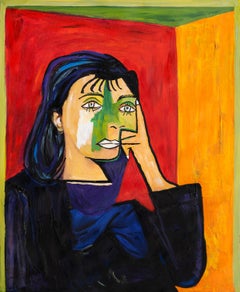
Portrait of Dora Maar
By E2 - Kleinveld
Julien
Located in New Orleans, LA
Inspired by Pablo Picasso's "Portrait of Dora Maar", 1937
Edition 2 of 7 with 2 APs
“Ode to Picasso’s 'Dora Maar’' is a self-portrait of E2 artist Elizabeth Kleinveld as the photographer and artist Dora Maar. Kleinveld was drawn to this particular image of Maar while grieving the death of her father in 2021; she was captivated by the sadness that seems to ooze from the canvas, how the sitter’s melancholia is obscured by the playful color contrast. For E2’s remake, artist E.Paul Julien painted directly over the photographic print of Kleinveld, emphasizing the masking of grief.
The artists say of their work...
"Everything Changes, the latest phase of our ongoing series In Empathy We Trust, presents odes to iconic images from the Modern and Contemporary art periods. Our artistic process during Everything Changes was heavily influenced by the COVID-19 pandemic and the inescapable upheaval brought about by this once-in-a-lifetime event. This major societal shift alongside ongoing social unrest compelled us to further explore the distorted realities permeating American culture and, consequently, veiling oppression of marginalized communities. With lockdown restrictions disrupting our usual process of gathering for photoshoots, we also began playing with new approaches for our work. As a result, our latest iteration marks a new technique exploration, with completely over-painting atop of select prints, adding an additional layer of distortion to an already-altered reality.
The title for this show takes inspiration from one of our favorite Frida Kahlo quotes: “Nothing is absolute. Everything changes, everything moves, everything revolves, everything flies and goes away.” The pandemic fostered a collective understanding of just how malleable and fragile our reality is. Our perceptions, our personal routines, and our culture as a whole – these realities are never guaranteed stasis, and the only way to move forward is to evolve, both as artists and individuals. The pieces in this show invite viewers to embrace the inevitability of change and the natural discomfort of re-examining their expectations of how a work of art – and by extension, a culture – should look.
The process of creating an e2 image has always involved intense collaboration, and the images here would not be possible without stellar teamwork. We would especially like to thank Cameron Wood for his extensive digital post-production and our wonderful models."
⎯⎯⎯⎯⎯
As the photographic duo E2, New Orleans natives Elizabeth Kleinveld and Epaul Julien seek to remake images from art history to reflect their own experience of the contemporary world. Tackling icons from the great masters like Botticelli, Manet, Rembrandt, and Van Eyck, they recast instantly familiar images in a distinctly modern manner, breaking them free from centuries of historical context and placing them firmly in the present.
Kleinveld and Julien...
Category
21st Century and Contemporary Contemporary Figurative Photography
Materials
Archival Pigment
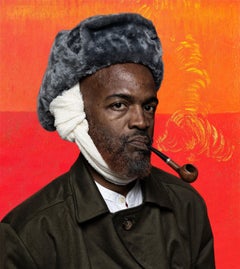
Ode to Van Gogh
s
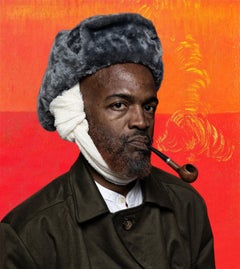
Self-Portrait with Bandaged Ear and Pipe
By E2 - Kleinveld
Julien
Located in New Orleans, LA
Inspired by Vincent Van Gogh's "Self-Portrait with Bandaged Ear and Pipe", 1889
Edition 1 of 3 with 2 APs
"Ode to Van Gogh’s 'Self-Portrait with Bandaged Ear and Pipe’” is a self-portrait of e2 artist E.Paul Julien as the tortured artist. This piece was inspired by Julien’s own struggles with mental health issues during isolation during pandemic lockdown, as he found himself in a place where he could relate to the fragile mindset that Van Gogh experienced through most of his life.
The artists say of their work...
"Everything Changes, the latest phase of our ongoing series In Empathy We Trust, presents odes to iconic images from the Modern and Contemporary art periods. Our artistic process during Everything Changes was heavily influenced by the COVID-19 pandemic and the inescapable upheaval brought about by this once-in-a-lifetime event. This major societal shift alongside ongoing social unrest compelled us to further explore the distorted realities permeating American culture and, consequently, veiling oppression of marginalized communities. With lockdown restrictions disrupting our usual process of gathering for photoshoots, we also began playing with new approaches for our work. As a result, our latest iteration marks a new technique exploration, with completely over-painting atop of select prints, adding an additional layer of distortion to an already-altered reality.
The title for this show takes inspiration from one of our favorite Frida Kahlo quotes: “Nothing is absolute. Everything changes, everything moves, everything revolves, everything flies and goes away.” The pandemic fostered a collective understanding of just how malleable and fragile our reality is. Our perceptions, our personal routines, and our culture as a whole – these realities are never guaranteed stasis, and the only way to move forward is to evolve, both as artists and individuals. The pieces in this show invite viewers to embrace the inevitability of change and the natural discomfort of re-examining their expectations of how a work of art – and by extension, a culture – should look.
The process of creating an e2 image has always involved intense collaboration, and the images here would not be possible without stellar teamwork. We would especially like to thank Cameron Wood for his extensive digital post-production and our wonderful models."
⎯⎯⎯⎯⎯
As the photographic duo E2, New Orleans natives Elizabeth Kleinveld and Epaul Julien...
Category
21st Century and Contemporary Contemporary Figurative Photography
Materials
Archival Pigment
Ode to Picasso
s
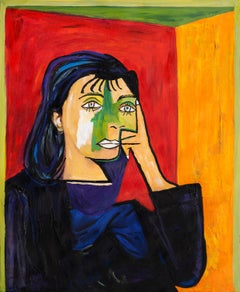
Portrait of Dora Maar
By E2 - Kleinveld
Julien
Located in New Orleans, LA
Inspired by Pablo Picasso's "Portrait of Dora Maar", 1937
Edition 1 of 5 with 2 APs
“Ode to Picasso’s 'Dora Maar’' is a self-portrait of E2 arti...
Category
21st Century and Contemporary Contemporary Figurative Photography
Materials
Archival Pigment
Ode to Van Gogh
s
Self-Portrait with Bandaged Ear and Pipe
By E2 - Kleinveld
Julien
Located in New Orleans, LA
Inspired by Vincent Van Gogh's "Self-Portrait with Bandaged Ear and Pipe", 1889
Edition 1 of 5 with 2 APs
"Ode to Van Gogh’s 'Self-Portrait with Bandaged Ear and Pipe’” is a self-portrait of e2 artist E.Paul Julien as the tortured artist. This piece was inspired by Julien’s own struggles with mental health issues during isolation during pandemic lockdown, as he found himself in a place where he could relate to the fragile mindset that Van Gogh experienced through most of his life.
The artists say of their work...
"Everything Changes, the latest phase of our ongoing series In Empathy We Trust, presents odes to iconic images from the Modern and Contemporary art periods. Our artistic process during Everything Changes was heavily influenced by the COVID-19 pandemic and the inescapable upheaval brought about by this once-in-a-lifetime event. This major societal shift alongside ongoing social unrest compelled us to further explore the distorted realities permeating American culture and, consequently, veiling oppression of marginalized communities. With lockdown restrictions disrupting our usual process of gathering for photoshoots, we also began playing with new approaches for our work. As a result, our latest iteration marks a new technique exploration, with completely over-painting atop of select prints, adding an additional layer of distortion to an already-altered reality.
The title for this show takes inspiration from one of our favorite Frida Kahlo quotes: “Nothing is absolute. Everything changes, everything moves, everything revolves, everything flies and goes away.” The pandemic fostered a collective understanding of just how malleable and fragile our reality is. Our perceptions, our personal routines, and our culture as a whole – these realities are never guaranteed stasis, and the only way to move forward is to evolve, both as artists and individuals. The pieces in this show invite viewers to embrace the inevitability of change and the natural discomfort of re-examining their expectations of how a work of art – and by extension, a culture – should look.
The process of creating an e2 image has always involved intense collaboration, and the images here would not be possible without stellar teamwork. We would especially like to thank Cameron Wood for his extensive digital post-production and our wonderful models."
⎯⎯⎯⎯⎯
As the photographic duo E2, New Orleans natives Elizabeth Kleinveld and Epaul Julien seek to remake images from art history to reflect their own experience of the contemporary world. Tackling icons from the great masters like Botticelli, Manet, Rembrandt, and Van Eyck, they recast instantly familiar images in a distinctly modern manner, breaking them free from centuries of historical context and placing them firmly in the present.
Kleinveld and Julien...
Category
21st Century and Contemporary Contemporary Figurative Photography
Materials
Archival Pigment
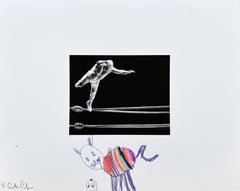
"KITTY" (FRAMED) Painting 24" x 30" inch by Antonio Pelayo
By Antonio Pelayo
Located in Culver City, CA
"KITTY" (FRAMED) Painting 24" x 30" inch by Antonio Pelayo
Medium: Marker on paper
Size: 24" x 30" inch
Size framed: 27.5" x 34" inch
From Pelayo VS Pelayo exhibition:
The exhibit...
Category
21st Century and Contemporary Contemporary Figurative Paintings
Materials
Paper, Permanent Marker, Pencil
"NO WAY JOSE!" (FRAMED) Painting 24" x 30" inch by Antonio Pelayo
By Antonio Pelayo
Located in Culver City, CA
"NO WAY JOSE!" (FRAMED) Painting 24" x 30" inch by Antonio Pelayo
Medium: Marker on paper
Size: 24" x 30" inch
Size framed: 27.5" x 34" inch
From Pelayo VS Pelayo exhibition:
The ...
Category
21st Century and Contemporary Contemporary Figurative Paintings
Materials
Paper, Permanent Marker, Pencil

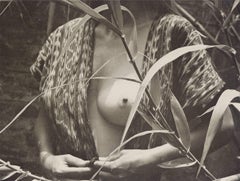
Fruta Prohibida
By Manuel Alvarez Bravo
Located in Santa Monica, CA
Signed in pencil on recto
Manuel Alvarez Bravo was a pioneer of artistic Latin American Photography in the 20th Century and produced a proliferate body ...
Category
Late 20th Century Photography
Materials
Platinum
Price Upon Request