5,908 results for "cubism"

to
2,036
4,092
1,622
4,583
2,908
1,294
1,106
990
765
732
475
369
335
242
232
196
75
69
42
30
15
9
3
2
1
1
324
266
240
94
92
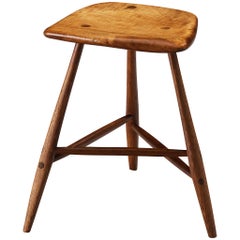
Wharton Esherick Three-Legged Stool in Cottonwood
By Wharton Esherick
Located in Waalwijk, NL
Wharton Esherick, stool, cottonwood, hickory, United States, 1954 This beautiful three-legged stool is a striking example of American designer Wharton Esherick’s oeuvre. The resurge...
Category

Vintage 1950s American Mid-Century Modern Stools

Materials

Hickory

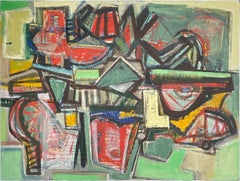
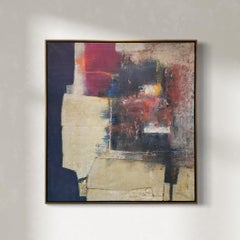
Ozymandias (unique, signed Abstract Expressionist painting by renowned painter)
By Ben Wilson
Located in New York, NY
Ben Wilson Ozymandias, 1989 Oil on masonite board Boldly signed by Ben Wilson on the back 36 × 48 inches Unframed Provenance: acquired from the Estate of Ben Wilson This work is titled "Ozymandias" after the famous sonnet written by Percy Bysshe Shelley (1792-1822). Shelley's poem is one of the most poignant meditations on the fleeting nature of human power and the inevitability of decline. The poem serves as a reminder that time erodes even the most imposing empires and leaders and that the pursuit of lasting fame and control is ultimately futile. Depending on how one views Ben Wilson's Abstract Expressionist painting of "Ozymandias" -- some of the imagery might reveal the head of an angry king and a sickle. Shelley's poem Ozymandias reads: I met a traveler from an antique land...
Category

1980s Abstract Expressionist Abstract Paintings

Materials

Masonite, Oil

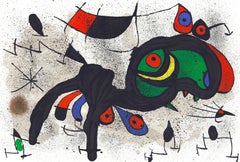
Joan Miro, The Bird Takes Flight, from Derriere le miroir, 1971
By Joan Miró
Located in Southampton, NY
This exquisite lithograph by Joan Miro (1893–1983), titled L'Oiseau s'envole (The Bird Takes Flight), from the folio Derriere le miroir, No. 193-194, originates from the 1971 edition...
Category

1970s Surrealist Abstract Prints

Materials

Lithograph

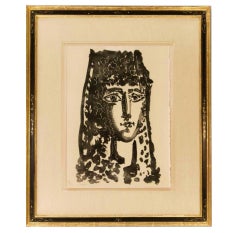
Femme a la Mantille- Carmen, from "Le Carmen des Carmen"
By Pablo Picasso
Located in Laguna Beach, CA
A prolific and tireless innovator of art forms, Pablo Picasso impacted the course of 20th-century art with unparalleled magnitude. Inspired by African and Iberian art and development...
Category

1960s Portrait Prints

Materials

Aquatint

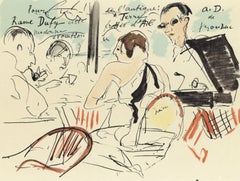
Andre Dunoyer de Segonzac, Eden Roc, from Letter to My Painter Raoul Dufy, 1965
By André Dunoyer de Segonzac
Located in Southampton, NY
This exquisite lithograph by Andre Dunoyer de Segonzac (1884–1974), titled Eden Roc (Eden Roc), from the folio Lettre a mon peintre Raoul Dufy (Letter to My Painter Raoul Dufy), orig...
Category

1960s Modern Figurative Prints

Materials

Lithograph

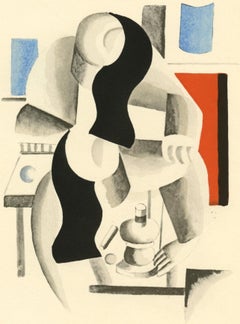
Fernand Leger, Woman with a Vase, 1929 (after)
By Fernand Léger
Located in Southampton, NY
This exquisite lithograph and pochoir after Fernand Leger (1881–1955), titled La Femme au Vase (Woman with a Vase), from the album L'Art Cubiste, Theories et Realisations, Etude Crit...
Category

1920s Cubist Still-life Prints

Materials

Lithograph, Stencil

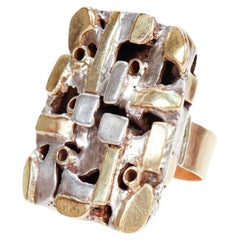
Signed 1970 s Modernist 14k Gold Sterling Silver Cocktail Ring by Resia Schor
Located in Philadelphia, PA
A fine Modernist ring. By the New York City Modernist female goldsmith Resia Schor. In sterling silver and 14k gold. Comprised of a cubist or tableau-l...
Category

Vintage 1970s Modernist Cocktail Rings

Materials

14k Gold, Sterling Silver

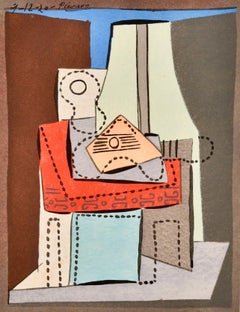
Pablo Picasso, Seated Woman in an Armchair, from Oeuvres 1920-1926 (after)
By Pablo Picasso
Located in Southampton, NY
This exquisite lithograph and pochoir after Pablo Picasso (1881–1973), titled Femme Assise dans un Fauteuil (Seated Woman in an Armchair), from the album, Picasso, Oeuvres 1920-1926, 1926, originates from the 1926 edition published and printed by Editions des Cahiers d'Art, Paris, under the direction of Christian Zervos, Editeur, Paris, December 10, 1926. Femme Assise dans un Fauteuil (Seated Woman in an Armchair) captures Picasso’s evolving exploration of form, movement, and emotion during the mid-1920s—a pivotal period in which he redefined the relationship between classical representation and modern abstraction. With its bold contouring, stylized anatomy, and rhythmic color balance, the composition embodies the harmony between structural precision and sensual fluidity that characterized Picasso’s work in this era. Executed as a lithograph and pochoir on velin paper, this work measures 11 x 8.75 inches. Signed in the plate and unnumbered as issued. The edition exemplifies the refined craftsmanship of Editions des Cahiers d'Art and the technical excellence of Parisian printmaking in the interwar period. Artwork Details: Artist: After Pablo Picasso (1881–1973) Title: Femme Assise dans un Fauteuil (Seated Woman in an Armchair), from the album, Picasso, Oeuvres 1920-1926, 1926 Medium: Lithograph and pochoir on velin paper Dimensions: 11 x 8.75 inches (27.94 x 22.23 cm) Inscription: Signed in the plate and unnumbered as issued Date: 1926 Publisher: Editions des Cahiers d'Art, Paris, under the direction of Christian Zervos, Editeur, Paris Printer: Ducros & Colas, Paris Catalogue raisonne references: Cramer, Patrick. Pablo Picasso, The Illustrated Books: Catalogue Raisonne. Patrick Cramer, 1983, illustration 15; Bloch, Georges. Pablo Picasso: Catalogue of the Printed Graphic Work 1904–1967. Kornfeld & Klipstein, 1968, illustration 56 Condition: Well preserved, consistent with age and medium Provenance: From the album, Picasso, Oeuvres 1920-1926, published and printed by Editions des Cahiers d'Art, Paris, under the direction of Christian Zervos, Editeur, Paris, 1926 Notes: Excerpted from the album (translated from French), This volume was completed to be printed by the Ducros & Colas printing house, 7, rue Croulebarbe in Paris, for the Editions des Cahiers d'Art, on December 10th MCMXXVI, DCC numbered examples, VI on Japon Imperial with an etching by Picasso, numbered from I to VI, L examples on paper by papier de Hollande, Van Gelder, with an etching by Picasso, numbered from VII to LVI, DCXL examples on velin, numbered from LVII to DCC, plus II examples intended for legal deposit. About the Publication: The album Picasso, Oeuvres 1920-1926 was issued in 1926 by Editions des Cahiers d'Art under the direction of Christian Zervos, one of the most influential editors, critics, and publishers of 20th-century modernism. Conceived as both a visual and intellectual tribute to Pablo Picasso’s mastery during a crucial transitional period, the volume presents a series of lithographs and pochoirs that chronicle his stylistic evolution from synthetic Cubism toward a renewed engagement with the human figure. Published in conjunction with the legendary Cahiers d'Art journal, the edition reflects Zervos’s vision of uniting scholarship, craftsmanship, and artistic authenticity in the modern book arts. Each composition was executed by the master printers Ducros & Colas and colored using the pochoir technique, faithfully translating the tonal subtleties and compositional balance of Picasso’s original drawings and gouaches. Completed on December 10, 1926, the edition comprised DCC examples—VI on Japon Imperial, L on Hollande Van Gelder, and DCXL on velin paper, plus II copies reserved for legal deposit—each numbered and printed to exacting standards. The volume stands as one of the earliest major Cahiers d'Art collaborations with Picasso, preceding the monumental Catalogue Raisonne des Oeuvres de Picasso that Zervos would later dedicate his life to producing. Today, Picasso, Oeuvres 1920-1926 remains a cornerstone of interwar art publishing, representing the confluence of avant-garde innovation, technical excellence, and intellectual rigor that defined the Parisian art world of the 1920s. About the Artist: Pablo Picasso (1881–1973) was a Spanish painter, sculptor, printmaker, and ceramicist whose extraordinary vision revolutionized modern art and defined the visual language of the 20th century. A child prodigy from Malaga, Spain, Picasso's career spanned more than seven decades and encompassed an astonishing range of styles and innovations—from the melancholic Blue and romantic Rose periods to his pioneering invention of Cubism with Georges Braque, which shattered conventional notions of perspective and form. Influenced by the bold expressiveness of El Greco, the structure of Cezanne, and the vitality of African and Iberian sculpture, Picasso became a central figure of the Paris avant-garde, working in creative dialogue with contemporaries such as Henri Matisse, Alexander Calder, Alberto Giacometti, Salvador Dali, Joan Miro, Wassily Kandinsky, Marcel Duchamp, and Man Ray. His insatiable experimentation extended across painting, drawing, printmaking, ceramics, and sculpture, forever expanding the boundaries of artistic expression. A master of reinvention, Picasso profoundly shaped generations of artists who followed—from Andy Warhol, Roy Lichtenstein, David Hockney, and Jean-Michel Basquiat to Jeff Koons and Banksy—cementing his status as a timeless cultural icon whose works remain among the most sought after worldwide. His landmark painting Les Femmes d'Alger (Version O) achieved a record-breaking sale of 179,365,000 USD at Christie's, New York, on May 11, 2015, affirming Picasso's enduring legacy as one of the most influential and valuable artists in history. Pablo Picasso Femme Assise dans un Fauteuil (Seated Woman in an Armchair), Picasso Oeuvres 1920-1926, Picasso Zervos Cahiers d'Art, Picasso pochoir...
Category

1920s Cubist Still-life Prints

Materials

Lithograph, Stencil

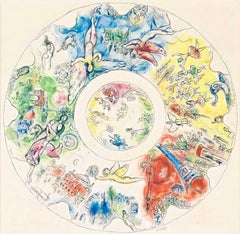
Marc Chagall, The Ceiling of the Paris Opera, 1965 (after)
By Marc Chagall
Located in Southampton, NY
This exquisite lithograph after Marc Chagall (1887–1985), titled Le Plafond de l’Opera de Paris (The Ceiling of the Paris Opera), from the album Le plafond de l’Opera de Paris par Ma...
Category

1960s Expressionist Figurative Prints

Materials

Lithograph

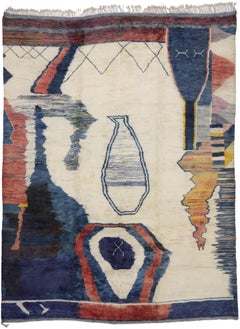
Oversized Berber Moroccan Rug, Wabi-Sabi Meets Abstract Expressionist Style
By Ad Reinhardt, Berber Tribes of Morocco, Fernand Léger, Helen Frankenthaler
Located in Dallas, TX
21140 Oversized Abstract Moroccan Rug, 13'04 x 17'04. Emulating Wabi-Sabi and Abstract Expressionist style, this hand knotted wool oversized Berber Moroccan rug is a captivating vision of woven beauty. The perfectly imperfect tribal design and intense earthy color palette woven into this piece work together creating a bold, expressive look. An allover pattern composed of unusual geometric shapes, short horizontal bands of color, and ambiguous tribal motifs are sporadically dispersed across the beige backdrop. Reflecting elements of Abstract Expressionism and a bold art form, this authentic Berber carpet draws inspiration from Ad Reinhardt, Fernand Leger, Clyfford Still and Helen Frankenthaler. It is truly 'Art You Can Walk On'! Perfect for adding organic textile sensations to living room, family room, bedroom, home office, large library or study, studio, game room, billiards room, playroom, children's area, home theater, large entertaining space, hotel lobby, or a lounge area. Well-suited for a variety of interior styles: Cubism, Orphism, Abstract Expressionism, Fauvism, Surrealism, Futurism, Cubist, Retro, Modernism, Contemporary, Expressionist, Postmodern, Art Moderne, Hygge, Mys, Mysigt, Tribal, Boho Chic, Bohemian, Nomadic, Midcentury Modern, Industrial, Loft, Urban, and Eclectic. Iconic in its styling, this modern Moroccan rug would also complement esoteric ambiences from avant-garde estate homes, contemporary chateaus, and ultramodern coastal villas to luxury ski chalets, exclusive hunting lodges and affluent mountainside manor found in Colorado, Lake Tahoe, Wyoming, or the Adirondacks. Rendered in variegated shades of beige, navy blue, brick red, charcoal, ink blue, gold, rose, mauve, lavender, gray, and light green with other accent colors. Abrash. Hand-knotted wool. Made in Morocco. Berber Tribes of Morocco. Measures: 13'04 x 17'04. Hotel Lobby Size Carpet 13 x 17 Rug...
Category

21st Century and Contemporary Moroccan Expressionist Moroccan and North ...

Materials

Wool

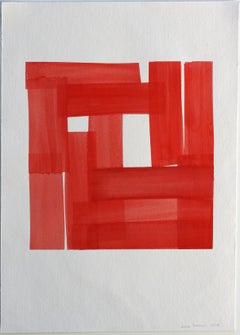
"Squares and Strokes (Cadmium_16)" 2025, gouache on handmade paper, 28 x 20 in.
By Joanne Freeman
Located in New York, NY
Joanne Freeman Squares and Strokes (Cadmium_16), 2025 gouache on handmade paper 28 x 20 in. image: 16 x 16 in. (freem240) My paintings and drawings incorporate elements found in arc...
Category

2010s Abstract Abstract Paintings

Materials

Gouache, Handmade Paper

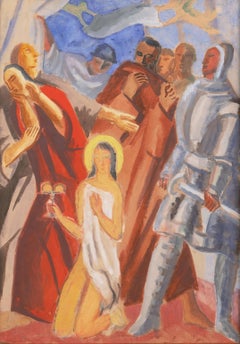
Joan of Arc , Paris, Salon d’Automne, Section d Or, Group of Thirteen, Benezit
By Jais Nielsen
Located in Santa Cruz, CA
'Joan of Arc' (Jeanne d'Arc) by Jais Nielsen, 1923. Paris, Salon d’Automne, Section d'Or, Group of Thirteen, Benezit ---- Signed lower right 'Jais' for Jais Nielsen (Danish, 1885-1...
Category

1920s Post-Impressionist Portrait Paintings

Materials

Gouache, Cardboard

Marc Chagall Color Cliché Editions du Chêne 1947 Framed
By Marc Chagall
Located in Barcelona, ES
Marc Chagall Color Cliché Editions du Chêne 1947 Framed Enter the enchanting world of Marc Chagall with this beautifully crafted color cliché, published by Editions du Chêne in ...
Category

Vintage 1940s French Mid-Century Modern Prints

Materials

Paper

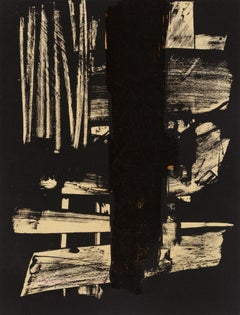
Pierre Soulages, Plate No. 6, from Painters of Today, 1962 (after)
By Pierre Soulages
Located in Southampton, NY
This exquisite heliogravure after Pierre Soulages (1919–2022), titled Planche No. 6 (Plate No. 6), from the folio Pierre Soulages, Peintres d'aujourd'hui (Pierre Soulages, Painters o...
Category

1960s Modern Abstract Prints

Materials

Lithograph

Dreams from the shoreline - B.Schaumann Contemporary architectural Painting
Located in DE
Barber Schaumann is a contemporary artist known for her vibrant, abstract interpretations of the female form. Her work combines bold colors with modern, geometric shapes, blending el...
Category

2010s Contemporary Abstract Paintings

Materials

Canvas, Acrylic

Derain, Figure, Du cubisme (after)
By André Derain
Located in Southampton, NY
Etching, Engraving on vélin du Lana Papiers Spéciaux pure rag paper. Unsigned and unnumbered, as issued. Good Condition. Notes: From the folio, Du Cubisme, 1947. Published by Compagn...
Category

1940s Modern Landscape Prints

Materials

Etching, Engraving

Pichet Têtes
By Pablo Picasso
Located in Paris, FR
Ceramic, 1956 Edition : 500 Publisher : Edition Picasso Catalog : [Ramié 368] White terracotta, oxidized kerosene decoration, white enamel Inscriptions and stamps under the base:...
Category

Mid-20th Century French Mid-Century Modern Pitchers

Materials

Enamel

MECKLENBURG AUTUMN Hand Signed Lithograph, Black Women, African Mask, Quilt
By Romare Bearden
Located in Union City, NJ
MECKLENBURG AUTUMN is an original limited edition color lithograph printed using traditional hand lithography methods on archival Arches printmaking...
Category

1970s Contemporary Portrait Prints

Materials

Lithograph

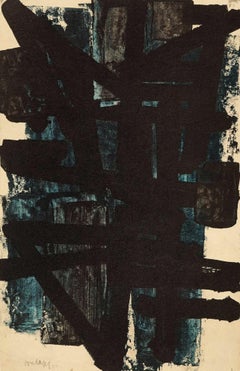
Pierre Soulages, Lithograph No 9, from XXe Siecle, 1959
By Pierre Soulages
Located in Southampton, NY
This exquisite lithograph by Pierre Soulages (1919–2022), titled Lithographie No 9 (Lithograph No 9), from the album XXe Siecle, Nouvelle serie, XXIe Annee, No. 13, Noel 1959, origin...
Category

1950s Modern Abstract Prints

Materials

Lithograph

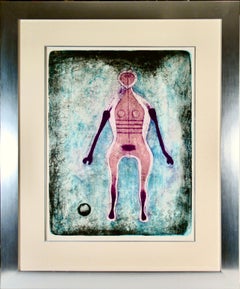
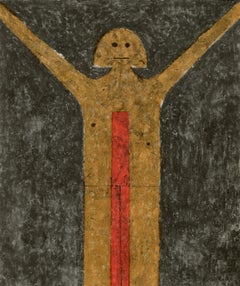
La Negra (The Black Woman)
By Rufino Tamayo
Located in San Francisco, CA
This artwork titled "La Negra (The Black Woman)" from the suite "The Mujeres File" 1969 is an original colors lithograph on B.F.K. Rives paper by renown Mexican artist Rufino Tamayo, 1899-1991. It is hand signed and numbered 150/150 in pencil by the artist. The image size is 26.85 x 21.25 inches, sheet size is 29.5 x 22.15 inches, framed size is 42 x 35 inches. Published by Touchtone Publisher, New York, printed by Ateliers Desjobert, Paris. Referenced and pictured in the artist's catalogue raisonne by Pereda, plate #109 page 107. Custom framed in a wooden silver frame, with silver spacer and fabric matting. It is in excellent condition. About the artist: A native of Oaxaca in Southern Mexico, Rufino Tamayo's father was a shoemaker, and his mother a seamstress. Some accounts state that he was descended from Zapotec Indians, but he was actually 'mestizo' - of mixed indigenous/European ancestry. (Santa Barbara Museum of Art). He began painting at age 11. Orphaned at the age of 12, Tamayo moved to Mexico City, where he was raised by his maternal aunt who owned a wholesale fruit business. In 1917, he entered the San Carlos Academy of Fine Arts, but left soon after to pursue independent study. Four years later, Tamayo was appointed the head designer of the department of ethnographic drawings at the National Museum of Archaeology in Mexico City. There he was surrounded by pre-Colombian objects, an aesthetic inspiration that would play a pivotal role in his life. In his own work, Tamayo integrated the forms and tones of pre-Columbian ceramics into his early still lives and portraits of Mexican men and women. In the early 1920s he also taught art classes in Mexico City's public schools. Despite his involvement in Mexican history, he did not subscribe to the idea of art as nationalistic propaganda. Modern Mexican art at that time was dominated by 'The Three Great Ones' : Diego Rivera, Jose Clemente Orozco, and David Alfaro Siqueros, but Tamayo began to be noted as someone 'new' and different' for his blending of the aesthetics of post Revolutionary Mexico with the vanguard artists of Europe and the United States. After the Mexican Revolution, he focused on creating his own identity in his work, expressing what he thought was the traditional Mexico, and refusing to follow the political trends of his contemporary artists. This caused some to see him as a 'traitor' to the political cause, and he felt it difficult to freely express himself in his art. As a result, he decided to leave Mexico in 1926 and move to New York, along with his friend, the composer Carlos Chavez. The first exhibition of Tamayo's work in the United States was held at the Weyhe Gallery, New York, in that same year. The show was successful, and Tamayo was praised for his 'authentic' status as a Mexican of 'indigenous heritage', and for his internationally appealing Modernist aesthetic. (Santa Barbara Museum of Art). Throughout the late thirties and early forties New York's Valentine Gallery gave him shows. For nine years, beginning in 1938, he taught at the Dalton School in New York. In 1929, some health problems led him to return to Mexico for treatment. While there he took a series of teaching jobs. During this period he became romantically involved with the artist Maria Izquierdo...
Category

Mid-20th Century Modern Figurative Prints

Materials

Lithograph

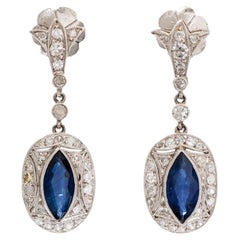
Art Deco Marquise Blue Sapphire and Diamond Drop Earrings Ca. 1925
Located in OVIEDO, AS
Art Deco Marquise Blue Sapphire and Diamond Drop Earrings Ca. 1925 A matching pair of earrings, each set with a marquise shape sapphire in an open back rubover setting, two in total ...
Category

Early 20th Century Spanish Art Deco Drop Earrings

Materials

Diamond, Blue Sapphire, Platinum

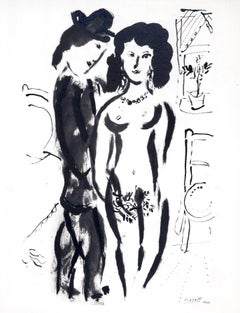
Marc Chagall - Hommage à Julien Cain - Original Lithograph
By Marc Chagall
Located in Collonge Bellerive, Geneve, CH
Marc Chagall - Original Lithograph Frontispiece for André Dunoyer de Segonzac, and Julien Cain. "Humanisme Actif: Mélanges d'Art et de Littérature Offerts à Julien Cain." Paris: H...
Category

1960s Surrealist Figurative Prints

Materials

Lithograph

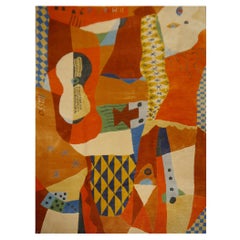
Large Art Line Rug After Pablo Picasso Hand Knotted Wool Excellent Condition
By (after) Pablo Picasso
Located in Lohr, Bavaria, DE
A beautiful vintage design carpet by ART LINE, hand knotted using finest Tibetan wool in 6.6 x 9.6 ft / 300 x 200 cm, Design after Pablo Picasso Cubism is a style in art history that developed from the avant-garde in painting in France around 1906. Well-known founders are Pablo Picasso and Georges Braque. This vintage rug is in excellent condition and a rare piece on the market. The feel is soft and cozy thanks to the use of the fine material. The rug is approx. 1/4-1/3 inch high. Cubistic design carpet hand knotted. Collection: Djoharian Design Colors: Orange, Beige, Blue Pile: Wool Size: 300 x 200 cm Fringe: Yes, on both sides Underfloor heating: Suitable Perfect for loft or Industrial modern rooms...
Category

1990s Nepalese Modern Chinese and East Asian Rugs

Materials

Wool

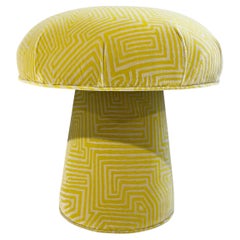
The Forsyth Mushroom Pouf in Dedar Jamu Jungle
Located in SAINT LOUIS, MO
Our Mushroom Pouf is designed by Forsyth and handcrafted in Saint Louis. A cute decorative piece for any room adding natural texture and a bit of whimsy. The perfect ottoman or extra...
Category

2010s American Ottomans and Poufs

Materials

Velvet

Tamayo, Composition, Ediciones Polígrafa, Redfern Gallery (after)
By Rufino Tamayo
Located in Southampton, NY
Lithograph on vélin paper. Unsigned and unnumbered, as issued. Good condition. Notes: From the album, Ediciones Polígrafa, Redfern Gallery, 1979. Published by Redfern Gallery, London...
Category

1970s Modern Abstract Prints

Materials

Lithograph

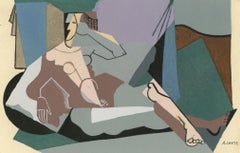
Andre Lhote, Reclining Woman, 1929 (after)
By André Lhote
Located in Southampton, NY
This exquisite lithograph and pochoir after Andre Lhote (1885–1962), titled Femme allongee (Reclining Woman), from the album L'Art Cubiste, Theories et Realisations, Etude Critique (...
Category

1920s Cubist Still-life Prints

Materials

Lithograph, Stencil

"Untitled #296 (Modern), " 1960s Modern Abstract Painting
By Stanley Bate
Located in Westport, CT
This Modern painting by Abstract Expressionist painter Stanley Bate features a textured aesthetic and a deep, colorful palette. Deep blue and red is contrasted by a brighter accents ...
Category

1960s Modern Abstract Paintings

Materials

Canvas, Oil

Passionfroot - Large Original Abstract Expressionism Colorful Painting on Canvas
By Bruce Rubenstein
Located in Los Angeles, CA
The paintings of Bruce Rubenstein seamlessly marry sophistication with affordability. His original art merges the creative attitudes of the two distinct art hot spots of New York and...
Category

21st Century and Contemporary Abstract Mixed Media

Materials

Canvas, Charcoal, Oil Pastel, Mixed Media, Acrylic

1940 s Provence Painting Joyful Green Landscape - Post Impressionist artist
By Louis Bellon
Located in Cirencester, Gloucestershire
Provencal Landscape by Louis Bellon (French 1908-1998) signed and dated 46' From a batch of similar work where most were dated 1942-1947 watercolour painting on paper, unframed meas...
Category

19th Century Post-Impressionist Landscape Paintings

Materials

Watercolor

Marc Chagall, The Offering, from Color of Love, 1958 (after)
By Marc Chagall
Located in Southampton, NY
This exquisite lithograph and pochoir after Marc Chagall (1887–1985), titled L'Offrende (The Offering), from the folio Couleur amour, 13 Aquarelles, Gouaches, Lavis (Color of Love, 1...
Category

1950s Modern Figurative Prints

Materials

Lithograph, Stencil

Abstract Figurative Composition with Flowers and Yellow Ground French Gouache
Located in Cirencester, Gloucestershire
Title: Abstract Figurative Composition with Flowers and Yellow Ground French Gouache Guy Nicod (French 1923 - 2021) Gouache on artist paper, unframed Size: 18 x 21.75 inches (height...
Category

Mid-20th Century Modern Landscape Drawings and Watercolors

Materials

Gouache

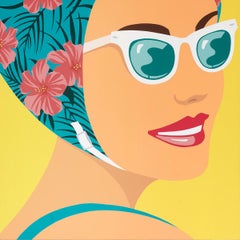
Retro_Pop_Female Portrait/Figurative_Acrylic_James Wolanin, Summer Love
By James Wolanin
Located in Laguna Beach, CA
JAMES WOLANIN "Summer Love" Acrylic & Gloss Varnish on Panel 36 x 36 inches ______________________ James Wolanin’s paintings transport the viewer to an effervescent, candy coated w...
Category

2010s Pop Art Figurative Paintings

Materials

Varnish, Acrylic, Panel

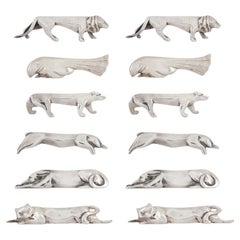
Set of Twelve Plated Silver Animalier Knife Rests by Christofle
By Christofle
Located in London, GB
Set of twelve plated silver animalier knife rests by Christofle French, c. 1930 Bird: height 2cm, width 8cm, depth 2cm Case: height 4.5cm, width...
Category

Early 20th Century French Art Deco More Dining and Entertaining

Materials

Silver Plate

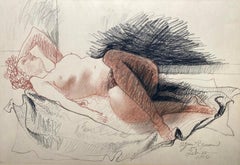
“Reclining Female Nude”
By Byron Browne
Located in Southampton, NY
Original oil pastel on archival paper by the well known American artist, Byron Browne. Signed lower right and dated 1956. Condition is excellent. Recently professionally rematted. Original frame in very good condition. Overall framed measurements are 23.75 by 31.75 inches. Provenance: A Long Island, New York estate. Byron Browne: American (1907-1961) Byron Browne was a leader of the American Avante Garde art movement in the 1930’s and 40’s along with Bolotowsky, Greene, Gorky, and de Kooning. These artists helped pave the way for America, New York in particular, to be seen as a center for art innovation after decades of France being the art center of the world. He had more than 70 solo exhibitions during his lifetime. Browne's early artistic training was conventional, and little about his time at the National Academy of Design (1924-1928) suggested he would depart from the traditional methods in which he was being schooled. Several experiences are identified as being important to his transformation to an abstract artist. In 1927, he and his friend Arshille Gorky visited Albert Gallatin...
Category

1950s Modern Nude Drawings and Watercolors

Materials

Oil Pastel, Archival Paper

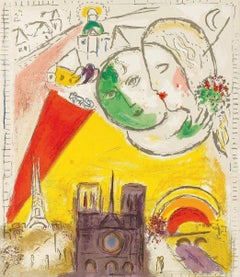
Marc Chagall, The Sunday, from Derriere le miroir, 1954
By Marc Chagall
Located in Southampton, NY
This exquisite lithograph by Marc Chagall (1887–1985), titled Le Dimanche (The Sunday), from the folio Derriere le miroir, No. 67–68, originates from the 1954 edition published by Ma...
Category

1950s Expressionist Landscape Prints

Materials

Lithograph

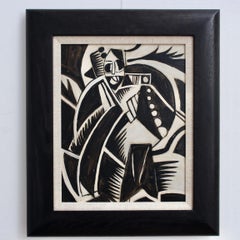
Rare 1923 Cubist Reuven Rubin Woodcut Woodblock Print Israeli Hasidic Judaica
By Reuven Rubin
Located in Surfside, FL
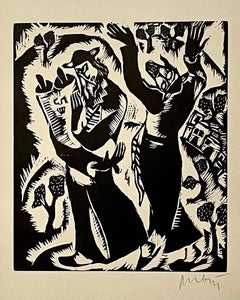
This is from the original first edition 1923 printing. there was a much later edition done after these originals. These are individually hand signed in pencil by artist as issued. This listing is for the one print. the other documentation is included here for provenance and is not included in this listing. The various images inspired by the Jewish Mysticism and rabbis and mystics of jerusalem and Kabbalah is holy, dramatic and optimistic Rubin succeeded to evoke the spirit of life in Israel in those early days. They are done in a modern art style influenced by German Expressionism, particularly, Ernst Barlach, Ernst Ludwig Kirchner, and Franz Marc, as introduced to Israel by Jakob Steinhardt, Hermann Struck and Joseph Budko. Reuven Rubin 1893 -1974 was a Romanian-born Israeli painter and Israel's first ambassador to Romania. Rubin Zelicovich (later Reuven Rubin) was born in Galati to a poor Romanian Jewish Hasidic family. He was the eighth of 13 children. In 1912, he left for Ottoman-ruled Palestine to study art at Bezalel Academy of Art and Design in Jerusalem. Finding himself at odds with the artistic views of the Academy's teachers, he left for Paris, France, in 1913 to pursue his studies at the École Nationale Supérieure des Beaux-Arts. He was of the well known Jewish artists in Paris along with Marc Chagall and Chaim Soutine, At the outbreak of World War I, he was returned to Romania, where he spent the war years. In 1921, he traveled to the United States with his friend and fellow artist, Arthur Kolnik. In New York City, the two met artist Alfred Stieglitz, who was instrumental in organizing their first American show at the Anderson Gallery. Following the exhibition, in 1922, they both returned to Europe. In 1923, Rubin emigrated to Mandate Palestine. Rubin met his wife, Esther, in 1928, aboard a passenger ship to Palestine on his return from a show in New York. She was a Bronx girl who had won a trip to Palestine in a Young Judaea competition. He died in 1974. Part of the early generation of artists in Israel, Joseph Zaritsky, Arieh Lubin, Reuven Rubin, Sionah Tagger, Pinchas Litvinovsky, Mordecai Ardon, Yitzhak Katz, and Baruch Agadati; These painters depicted the country’s landscapes in the 1920s rebelled against the Bezalel school of Boris Schatz. They sought current styles in Europe that would help portray their own country’s landscape, in keeping with the spirit of the time. Rubin’s Cezannesque landscapes from the 1920s were defined by both a modern and a naive style, portraying the landscape and inhabitants of Israel in a sensitive fashion. His landscape paintings in particular paid special detail to a spiritual, translucent light. His early work bore the influences of Futurism, Vorticism, Cubism and Surrealism. In Palestine, he became one of the founders of the new Eretz-Yisrael style. Recurring themes in his work were the bible, the prophet, the biblical landscape, folklore and folk art, people, including Yemenite, Hasidic Jews and Arabs. Many of his paintings are sun-bathed depictions of Jerusalem and the Galilee. Rubin might have been influenced by the work of Henri Rousseau whose naice style combined with Eastern nuances, as well as with the neo-Byzantine art to which Rubin had been exposed in his native Romania. In accordance with his integrative style, he signed his works with his first name in Hebrew and his surname in Roman letters. In 1924, he was the first artist to hold a solo exhibition at the Tower of David, in Jerusalem (later exhibited in Tel Aviv at Gymnasia Herzliya). That year he was elected chairman of the Association of Painters and Sculptors of Palestine. From the 1930s onwards, Rubin designed backdrops for Habima Theater, the Ohel Theater and other theaters. His biography, published in 1969, is titled My Life - My Art. He died in Tel Aviv in October 1974, after having bequeathed his home on 14 Bialik Street and a core collection of his paintings to the city of Tel Aviv. The Rubin Museum opened in 1983. The director and curator of the museum is his daughter-in-law, Carmela Rubin. Rubin's paintings are now increasingly sought after. At a Sotheby's auction in New York in 2007, his work accounted for six of the ten top lots. Along with Yaacov Agam and Menashe Kadishman he is among Israel's best known artists internationally. Education 1912 Bezalel Academy of Arts and Design, Jerusalem 1913-14 École des Beaux Arts, Paris and Académie Colarossi, Paris Select Group Exhibitions Eged - Palestine Painters Group Eged - Palestine Painters Group, Allenby Street, Tel Aviv 1929 Artists: Chana Orloff, Abraham Melnikoff, Rubin, Reuven Nahum Gutman, Sionah Tagger,Arieh Allweil, Jewish Artists Association, Levant Fair, Tel Aviv, 1929 Artists: Ludwig Blum,Eliyahu Sigad, Shmuel Ovadyahu, Itzhak Frenel Frenkel,Ozer Shabat, Menahem Shemi...
Category

1920s Abstract Figurative Prints

Materials

Woodcut

Derain, Port de Collioure, Fauves, Collection Pierre Lévy (after)
By André Derain
Located in Fairfield, CT
Medium: Lithograph on vélin d'Arches paper Year: 1972 Paper Size: 20 x 26 inches Inscription: Signed in the plate and unnumbered, as issued Notes: From the folio, Fauves, VII, Collec...
Category

1970s Fauvist Landscape Prints

Materials

Lithograph

Marc Chagall, The Horseman and the Bird, from Tales of Boccaccio, 1950
By Marc Chagall
Located in Southampton, NY
This exquisite lithograph by Marc Chagall (1887–1985), titled Le Cavalier et l’oiseau (The Horseman and the Bird), from Contes de Boccace, peintures du manuscrit des ducs de Bourgogn...
Category

1950s Expressionist Abstract Prints

Materials

Lithograph

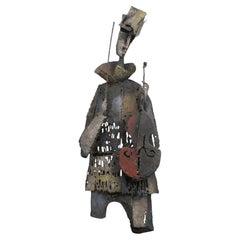
Robert E. Kuhn, American Cubist Wrought Iron Wall Sculpture of a Violinist, 1959
By Robert E. Kuhn
Located in New York, NY
American Cubism Robert E. Kuhn A Violinist Wrought Iron Wall Sculpture Dated 1959 DIMENSONS Height: 33 in (83.82 cm) Width: 12 in (30.48 cm) Depth: 8 in (20.32 cm) MARKINGS Signatur...
Category

Vintage 1950s American Mid-Century Modern Abstract Sculptures

Materials

Wrought Iron

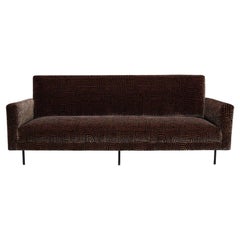
Florence Knoll Sofa in Patterned Dedar Jacquard Velvet, De Coene, Belgium, 1950s
By Dedar, De Coene Frères, Florence Knoll
Located in The Hague, NL
A rare three-seat sofa designed by Florence Knoll for Knoll International and produced by De Coene in the late 1950s. From 1954 onwards, the renowned Belgian manufacturer De Coene pr...
Category

Vintage 1950s Belgian Mid-Century Modern Sofas

Materials

Steel

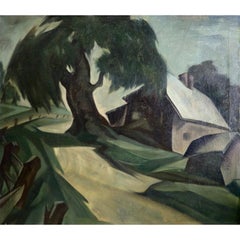
A brooding American modernist landscape painting with a house or outbuilding
Located in Colfax, CA
A nice American modernist landscape painting, dating from the 1940s. This work is on the manner of E. Oscar Thalinger, but does not appear to be signed. The work is unframed, as it...
Category

1940s American Modern Landscape Paintings

Materials

Oil

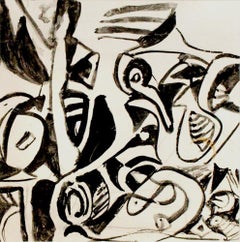
Ca. 1950, Black White Ink Abstraction by Notable Artist Jan Matulka
By Jan Matulka
Located in Chicago, IL
A handsome ca. 1950 black & white Abstraction by important Modernist artist Jan Matulka. Image size: 6" x 6 1/2". Framed size: 12 3/4" x 12 3/4". Born in Prague, Czechoslovakia...
Category

1950s American Modern Abstract Drawings and Watercolors

Materials

Ink, Graphite

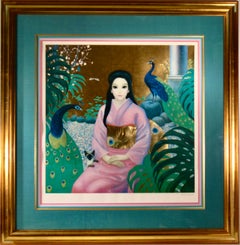
Madame Butterfly
By Margaret Keane
Located in San Francisco, CA
This artwork titled "Madame Butterfly" 1986, is an original color serigraph with gold addition by noted American artist Margaret Keane, 1927-2022. It is hand signed and numbered HH 109/150 in pencil by the artist. The image size is 24 x 24 inches, framed size is 39.5 x 38.5 inches. Custom framed in a wooden gold frame, with green fabric matting, gold color bevel and three different colors fillet. It is in excellent condition, the frame have some minor restorations, barely visible. About the artist. Margaret D. H. Keane was born 1927 in Tennessee, and attributes her deep respect for the Bible and inspirations of her artwork to the relationship with her grandmother. She later became one of Jehovah's Witnesses, which she said changed her life for the better. In the 1960s, Margaret Keane's artwork was sold under the name of her husband, Walter Keane. He locked her in a room and forced her to paint,while taking credit for her work. Conflict over that issue was cited as one of the reasons they divorced. Neither wanting to relinquish rights to the artwork, Walter and Margaret's divorce proceedings went all the way to federal court. At the hearing, Margaret created a painting in front of the judge to prove that she was the artist. Walter declined to paint before the court, citing a sore shoulder. In 1986, the courts sided with her, enabling her to paint under her own name. Her works while living in her husband's shadow tended to depict sad children in a dark setting, but after divorcing, moving to Hawaii, and becoming one of Jehovah's Witnesses, her paintings took on a happier, brighter style. Keane is a fixture in popular culture. Some of her well-known fans over the years have included actresses Joan Crawford and Natalie Wood, whom she painted portraits of; filmmaker Tim Burton, who commissioned Keane to paint Lisa Marie; and animator Craig McCracken, whose characters the Powerpuff Girls are based on Keane's 'waifs'; additionally the Girls' schoolteacher is named "Ms. Keane". Cultural references • The American television comedy show Saturday Night Live once had a skit that featured her work, during the time when it was thought to be by her husband, as a parody of the reaction against modern art (e.g., Cubism or the New York Armory Show). "People don't look like that!" one comedian shrieks, before the picture in question was shown to the camera and audience as the punch line. • In Woody Allen's 1973 comedy Sleeper, the people of the future consider Keane to be one of the greatest artists in history, one of many references mocking the popular culture of the seventies. • Late Night with Conan O'Brien has "bumper" art in her style depicting a glum Conan O'Brien at his desk, next to a dog. • Weird Al Yankovic's song Velvet Elvis, in which the narrator says he needs "no pictures of Mexican kids with those really big eyes or dogs playing poker". • In season 3, episode 20 of 90210 (Women on the Verge), Annie is described as looking "like a Keane painting...
Category

Late 20th Century American Realist Figurative Prints

Materials

Screen

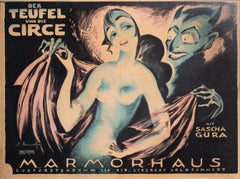
Art Nouveau Poster "Marmorhouse (Der Teufel und Die Circe) by Josef Fenneker
By Josef Fenneker
Located in Palm Beach, FL
The painter, graphic artist, production and set designer, Josef Fenneker, is one of the most important representatives of artistic film posters of the 1910s and 1920s. He was commissioned primarily by Berlin’s Marmorhaus cinema, which was located on Kurfürstendamm and known for its first releases, as well as by Berlin film production...
Category

1920s Expressionist Figurative Prints

Materials

Lithograph

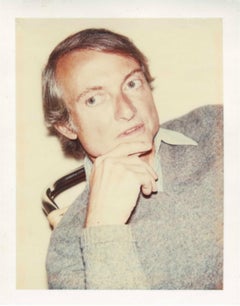
Unique portrait of Roy Lichtenstein, Authenticated by the Andy Warhol Foundation
By Andy Warhol
Located in New York, NY
Andy Warhol Portrait of Roy Lichtenstein, 1975 Polaroid dye-diffusion print Authenticated by the Andy Warhol Foundation for the Visual Arts, bears the Foundation stamp verso Frame included: Framed in white wood frame with UV plexiglass; with die-cut window in the back to show official Warhol Foundation authentication stamp and text Measurements: 9 9/16 x 8 9/16 x 9/16 inches (frame) 3 1/2 x 2 3/4 inches (window) 4.16 x 3.15 inches (Artwork) Authenticated and stamped by the Estate of Andy Warhol/Warhol Foundation for the Visual Arts An impressive piece of Pop Art history! A must-have for fans and collectors of both Andy Warhol and Roy Lichtenstein: This is a unique, authenticated color Polaroid taken by one Pop Art legend, Andy Warhol, of his most formidable contemporary and, in many respects, rival, Roy Lichtenstein. One of only a few portraits Andy Warhol took of Roy Lichtenstein, during one tense photo shoot. Both iconic artists, colleagues and, perhaps lesser known to the public, rivals, would be represented at the time by the renowned Leo Castelli Gallery. The truth is - they were really more rivals than friends. (the rivalry intensified when Warhol, who was working with Walt Disney, discovered that Lichtenstein painted Mickey Mouse before he did!!) Leo Castelli was committed to Roy Lichtenstein, and, it's easy to forget today, wasn't that interested in Warhol as he considered Lichtenstein the greater talent and he could relate better with Roy on a personal level. However, Ivan Karp, who worked at Castelli, was very interested in Warhol, as were some powerful European dealers, as well as many wealthy and influential American and European collectors. That was the start of Warhol's bypassing the traditional gallery model - so that dealers like Castelli could re-discover him after everybody else had. Warhol is known to have taken hundreds of self-portrait polaroid photographs - shoe boxes full - and he took many dozens of images of celebrities like Blondie and Farrah Fawcett. But only a small number of photographic portraits of fellow Pop Art legend Roy Lichtenstein -- each unique,- are known to have appeared on the market over the past half a century - all from the same photo session. This is one of them. There is another Polaroid - from this same (and only) sitting, in the permanent collection of the Getty Museum in California. There really weren't any other collaborations between these two titans, making the resulting portrait from this photo session extraordinary. It is fascinating to study Roy Lichtenstein's face and demeanor in this photograph, in the context of the great sense of competition, but perhaps even greater, albeit uneasy respect, these two larger than life Pop art titans had for each other: Like Leo Castelli, Roy Lichtenstein was Jewish of European descent; whereas Warhol was Catholic and quintessentially American, though also of European (Polish) descent. They were never going to be good friends, but this portrait, perhaps even arranged by Leo Castelli, represents an uneasy acknowledgement there would be room at the top for both of them. Floated, framed with die cut back revealing authentication details, and ready to hang. Measurements: 9 9/16 x 8 9/16 x 9/16 inches (frame) 3 1/2 x 2 3/4 inches (window) 4.16 x 3.15 inches (sheet) Authenticated by the Estate of Andy Warhol/The Andy Warhol Foundation for the Visual Arts. Estate Stamped: Stamped with the Andy Warhol Estate, Warhol Foundation for the Visual Arts stamp, numbered "B 512536P", with the Estate of Andy Warhol stamp and inscribed UP on the reverse. Bears the Warhol Foundation unique inventory number. Roy Lichtenstein Biography Roy Lichtenstein was one of the most influential and innovative artists of the second half of the twentieth century. He is preeminently identified with Pop Art, a movement he helped originate, and his first fully achieved paintings were based on imagery from comic strips and advertisements and rendered in a style mimicking the crude printing processes of newspaper reproduction. These paintings reinvigorated the American art scene and altered the history of modern art. Lichtenstein’s success was matched by his focus and energy, and after his initial triumph in the early 1960s, he went on to create an oeuvre of more than 5,000 paintings, prints, drawings, sculptures, murals and other objects celebrated for their wit and invention. Roy Fox Lichtenstein was born on October 27, 1923, in New York City, the first of two children born to Milton and Beatrice Werner Lichtenstein. Milton Lichtenstein (1893–1946) was a successful real estate broker, and Beatrice Lichtenstein (1896–1991), a homemaker, had trained as a pianist, and she exposed Roy and his sister Rénee to museums, concerts and other aspects of New York culture. Roy showed artistic and musical ability early on: he drew, painted and sculpted as a teenager, and spent many hours in the American Museum of Natural History and the Museum of Modern Art. He played piano and clarinet, and developed an enduring love of jazz, frequenting the nightspots in Midtown to hear it. Lichtenstein attended the Franklin School for Boys, a private junior high and high school, and was graduated in 1940. That summer he studied painting and drawing from the model at the Art Students League of New York with Reginald Marsh. In September he entered Ohio State University (OSU) in Columbus in the College of Education. His early artistic idols were Rembrandt, Daumier and Picasso, and he often said that Guernica (1937; Museo Reina Sofía, Madrid), then on long-term loan to the Museum of Modern Art, was his favorite painting. Even as an undergraduate, Lichtenstein objected to the notion that one set of lines (one person’s drawings) “was considered brilliant, and somebody’s else’s, that may have looked better to you, was considered nothing by almost everyone.”i Lichtenstein’s questioning of accepted canons of taste was encouraged by Hoyt L. Sherman, a teacher whom he maintained was the person who showed him how to see and whose perception-based approach to art shaped his own. In February 1943, Lichtenstein was drafted, and he was sent to Europe in 1945. As part of the infantry, he saw action in France, Belgium and Germany. He made sketches throughout his time in Europe and, after peace was declared there, he intended to study at the Sorbonne. Lichtenstein arrived in Paris in October 1945 and enrolled in classes in French language and civilization, but soon learned that his father was gravely ill. He returned to New York in January 1946, a few weeks before Milton Lichtenstein died. In the spring of that year, Lichtenstein went back to OSU to complete his BFA and in the fall he was invited to join the faculty as an instructor. In June 1949, he married Isabel Wilson Sarisky (1921–80), who worked in a cooperative art gallery in Cleveland where Lichtenstein had exhibited his work. While he was teaching, Lichtenstein worked on his master’s degree, which he received in 1949. During his second stint at OSU, Lichtenstein became closer to Sherman, and began teaching his method on how to organize and unify a composition. Lichtenstein remained appreciative of Sherman’s impact on him. He gave his first son the middle name of “Hoyt,” and in 1994 he donated funds to endow the Hoyt L. Sherman Studio Art Center at OSU. In the late 1940s and early 1950s, Lichtenstein began working in series and his iconography was drawn from printed images. His first sustained theme, intimate paintings and prints in the vein of Paul Klee that poked lyrical fun at medieval knights, castles and maidens, may well have been inspired by a book about the Bayeux Tapestry. Lichtenstein then took an ironic look at nineteenth-century American genre paintings he saw in history books, creating Cubist interpretations of cowboys and Indians spiked with a faux-primitive whimsy. As with his most celebrated Pop paintings of the 1960s, Lichtenstein gravitated toward what he would characterize as the “dumbest” or “worst” visual item he could find and then went on to alter or improve it. In the 1960s, commercial art was considered beneath contempt by the art world; in the early 1950s, with the rise of Abstract Expressionism, nineteenth-century American narrative and genre paintings were at the nadir of their reputation among critics and collectors. Paraphrasing, particularly the paraphrasing of despised images, became a paramount feature of Lichtenstein’s art. Well before finding his signature mode of expression in 1961, Lichtenstein called attention to the artifice of conventions and taste that permeated art and society. What others dismissed as trivial fascinated him as classic and idealized—in his words, “a purely American mythological subject matter.”ii Lichtenstein’s teaching contract at OSU was not renewed for the 1951–52 academic year, and in the autumn of 1951 he and Isabel moved to Cleveland. Isabel Lichtenstein became an interior decorator specializing in modern design, with a clientele drawn from wealthy Cleveland families. Whereas her career blossomed, Lichtenstein did not continue to teach at the university level. He had a series of part-time jobs, including industrial draftsman, furniture designer, window dresser and rendering mechanical dials for an electrical instrument company. In response to these experiences, he introduced quirkily rendered motors, valves and other mechanical elements into his paintings and prints. In 1954, the Lichtensteins’ first son, David, was born; two years later, their second child, Mitchell, followed. Despite the relative lack of interest in his work in Cleveland, Lichtenstein did place his work with New York dealers, which always mattered immensely to him. He had his first solo show at the Carlebach Gallery in New York in 1951, followed by representation with the John Heller Gallery from 1952 to 1957. To reclaim his academic career and get closer to New York, Lichtenstein accepted a position as an assistant professor at the State University of New York at Oswego, in the northern reaches of the state. He was hired to teach industrial design, beginning in September 1957. Oswego turned out to be more geographically and aesthetically isolated than Cleveland ever was, but the move was propitious, for both his art and his career. Lichtenstein broke away from representation to a fully abstract style, applying broad swaths of pigment to the canvas by dragging the paint across its surface with a rag wrapped around his arm. At the same time, Lichtenstein was embedding comic-book characters figures such as Mickey Mouse and Donald Duck in brushy, expressionistic backgrounds. None of the proto-cartoon paintings from this period survive, but several pencil and pastel studies from that time, which he kept, document his intentions. Finally, when he was in Oswego, Lichtenstein met Reginald Neal, the new head of the art department at Douglass College, the women’s college of Rutgers University, in New Brunswick, New Jersey. The school was strengthening and expanding its studio art program, and when Neal needed to add a faculty member to his department, Lichtenstein was invited to apply for the job. Lichtenstein was offered the position of assistant professor, and he began teaching at Douglass in September 1960. At Douglass, Lichtenstein was thrown into a maelstrom of artistic ferment. With New York museums and galleries an hour away, and colleagues Geoffrey Hendricks and Robert Watts at Douglass and Allan Kaprow and George Segal at Rutgers, the environment could not help but galvanize him. In June 1961, Lichtenstein returned to the idea he had fooled around with in Oswego, which was to combine cartoon characters from comic books with abstract backgrounds. But, as Lichtenstein said, “[I]t occurred to me to do it by mimicking the cartoon style without the paint texture, calligraphic line, modulation—all the things involved in expressionism.”iii Most famously, Lichtenstein appropriated the Benday dots, the minute mechanical patterning used in commercial engraving, to convey texture and gradations of color—a stylistic language synonymous with his subject matter. The dots became a trademark device forever identified with Lichtenstein and Pop Art. Lichtenstein may not have calibrated the depth of his breakthrough immediately but he did realize that the flat affect and deadpan presentation of the comic-strip panel blown up and reorganized in the Sherman-inflected way “was just so much more compelling”iv than the gestural abstraction he had been practicing. Among the first extant paintings in this new mode—based on comic strips and illustrations from advertisements—were Popeye and Look Mickey, which were swiftly followed by The Engagement Ring, Girl with Ball and Step-on Can with Leg. Kaprow recognized the energy and radicalism of these canvases and arranged for Lichtenstein to show them to Ivan Karp, director of the Leo Castelli Gallery. Castelli was New York’s leading dealer in contemporary art, and he had staged landmark exhibitions of Jasper Johns and Robert Rauschenberg in 1958 and Frank Stella in 1960. Karp was immediately attracted to Lichtenstein’s paintings, but Castelli was slower to make a decision, partly on account of the paintings’ plebeian roots in commercial art, but also because, unknown to Lichtenstein, two other artists had recently come to his attention—Andy Warhol and James Rosenquist—and Castelli was only ready for one of them. After some deliberation, Castelli chose to represent Lichtenstein, and the first exhibition of the comic-book paintings was held at the gallery from February 10 to March 3, 1962. The show sold out and made Lichtenstein notorious. By the time of Lichtenstein’s second solo exhibition at Castelli in September 1963, his work had been showcased in museums and galleries around the country. He was usually grouped with Johns, Rauschenberg, Warhol, Rosenquist, Segal, Jim Dine, Claes Oldenburg, Robert Indiana and Tom Wesselmann. Taken together, their work was viewed as a slap in the face to Abstract Expressionism and, indeed, the Pop artists shifted attention away from many members of the New York School. With the advent of critical and commercial success, Lichtenstein made significant changes in his life and continued to investigate new possibilities in his art. After separating from his wife, he moved from New Jersey to Manhattan in 1963; in 1964, he resigned from his teaching position at Douglass to concentrate exclusively on his work. The artist also ventured beyond comic book subjects, essaying paintings based on oils by Cézanne, Mondrian and Picasso, as well as still lifes and landscapes. Lichtenstein became a prolific printmaker and expanded into sculpture, which he had not attempted since the mid-1950s, and in both two- and three-dimensional pieces, he employed a host of industrial or “non-art” materials, and designed mass-produced editioned objects that were less expensive than traditional paintings and sculpture. Participating in one such project—the American Supermarket show in 1964 at the Paul Bianchini Gallery, for which he designed a shopping bag—Lichtenstein met Dorothy Herzka (b. 1939), a gallery employee, whom he married in 1968. The late 1960s also saw Lichtenstein’s first museum surveys: in 1967 the Pasadena Art Museum initiated a traveling retrospective, in 1968 the Stedelijk Musem in Amsterdam presented his first European retrospective, and in 1969 he had his first New York retrospective, at the Solomon R. Guggenheim Museum. Wanting to grow, Lichtenstein turned away from the comic book subjects that had brought him prominence. In the late 1960s his work became less narrative and more abstract, as he continued to meditate on the nature of the art enterprise itself. He began to explore and deconstruct the notion of brushstrokes—the building blocks of Western painting. Brushstrokes are conventionally conceived as vehicles of expression, but Lichtenstein made them into a subject. Modern artists have typically maintained that the subject of a painting is painting itself. Lichtenstein took this idea one imaginative step further: a compositional element could serve as the subject matter of a work and make that bromide ring true. The search for new forms and sources was even more emphatic after 1970, when Roy and Dorothy Lichtenstein bought property in Southampton, New York, and made it their primary residence. During the fertile decade of the 1970s, Lichtenstein probed an aspect of perception that had steadily preoccupied him: how easily the unreal is validated as the real because viewers have accepted so many visual conceptions that they don’t analyze what they see. In the Mirror series, he dealt with light and shadow upon glass, and in the Entablature series, he considered the same phenomena by abstracting such Beaux-Art architectural elements as cornices, dentils, capitals and columns. Similarly, Lichtenstein created pioneering painted bronze sculpture that subverted the medium’s conventional three-dimensionality and permanence. The bronze forms were as flat and thin as possible, more related to line than volume, and they portrayed the most fugitive sensations—curls of steam, rays of light and reflections on glass. The steam, the reflections and the shadow were signs for themselves that would immediately be recognized as such by any viewer. Another entire panoply of works produced during the 1970s were complex encounters with Cubism, Futurism, Purism, Surrealism and Expressionism. Lichtenstein expanded his palette beyond red, blue, yellow, black, white and green, and invented and combined forms. He was not merely isolating found images, but juxtaposing, overlapping, fragmenting and recomposing them. In the words of art historian Jack Cowart, Lichtenstein’s virtuosic compositions were “a rich dialogue of forms—all intuitively modified and released from their nominal sources.”v In the early 1980s, which coincided with re-establishing a studio in New York City, Lichtenstein was also at the apex of a busy mural career. In the 1960s and 1970s, he had completed four murals; between 1983 and 1990, he created five. He also completed major commissions for public sculptures in Miami Beach, Columbus, Minneapolis, Paris, Barcelona and Singapore. Lichtenstein created three major series in the 1990s, each emblematic of his ongoing interest in solving pictorial problems. The Interiors, mural-sized canvases inspired by a miniscule advertisement in an Italian telephone...
Category

1970s Pop Art Portrait Photography

Materials

Polaroid

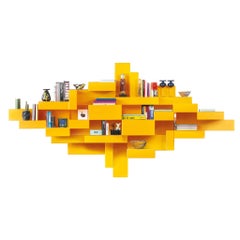
Yellow Primitive Bookshelf by Studio Nucleo, Made in Italy
Located in Beverly Hills, CA
The Primitive bookshelf was one of the strongest and most iconic products designed by Studio Nucleo. Initially made as a limited-edition product, t...
Category

2010s Italian Modern Bookcases

Materials

Plastic

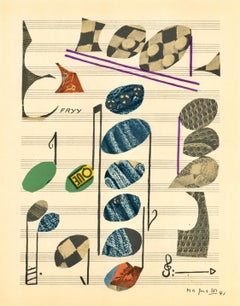
Alberto Magnelli, Music, from XXe Siecle, 1971
By Alberto Magnelli
Located in Southampton, NY
This exquisite lithograph by Alberto Magnelli (1888–1971), titled Musique (Music), from the album XXe Siecle, Nouvelle serie, XXXIIIe Annee, No. 37, Decembre 1971, originates from th...
Category

1970s Modern Abstract Prints

Materials

Lithograph

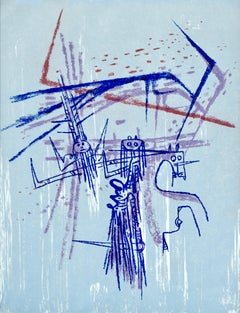
Wifredo Lam, Figures in the Night, from XXe Siecle, 1963
By Wifredo Lam
Located in Southampton, NY
This exquisite lithograph by Wifredo Lam (1902–1982), titled Personnages dans la nuit (Figures in the Night), from the album XXe Siecle, Nouvelle serie, XXVe Annee N°22, Noel 1963, o...
Category

1960s Modern Abstract Prints

Materials

Lithograph

Marc Chagall, The Lovers, from Color of Love, 1958 (after)
By Marc Chagall
Located in Southampton, NY
This exquisite lithograph and pochoir after Marc Chagall (1887–1985), titled Les Amoureux (The Lovers), from the folio Couleur amour, 13 Aquarelles, Gouaches, Lavis (Color of Love, 1...
Category

1950s Modern Figurative Prints

Materials

Lithograph, Stencil

Morning Dew - Large Original Abstract Expressionism Painting on Canvas
By Bruce Rubenstein
Located in Los Angeles, CA
The paintings of Bruce Rubenstein seamlessly marry sophistication with affordability. His original art merges the creative attitudes of the two distinct art hot spots of New York and...
Category

21st Century and Contemporary Abstract Mixed Media

Materials

Canvas, Charcoal, Oil Pastel, Mixed Media, Acrylic

Portrait of Future Man , German School
Located in London, GB
'Portrait of Future Man', oil on board, Berlin School, (circa 1960s). A thoroughly modern portrait clearly in the style of Italian Futurist, Fortunato Depero (1892-1960). Futurism co...
Category

1960s Futurist Abstract Paintings

Materials

Oil, Board

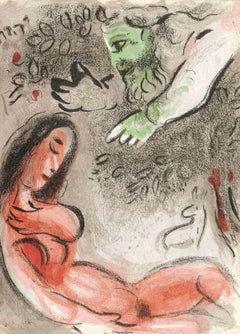
Marc Chagall, Eve Cursed by God, from Drawings for the Bible, 1956
By Marc Chagall
Located in Southampton, NY
This exquisite lithograph by Marc Chagall (1887–1985), titled Eve maudite par Dieu (Eve Cursed by God), from Marc Chagall, Dessins Pour La Bible (Drawings for the Bible), Verve: Revue Artistique et Litteraire, Vol. VIII, No. 33–34, originates from the September 1956 issue published by Editions de la revue Verve, Paris, under the direction of Teriade, Editeur, Paris, and printed by Mourlot Freres, Paris, 1956. This emotionally charged composition depicts the moment of divine judgment following the fall of man, capturing both the sorrow and the spiritual gravity of Eve’s curse. Through his luminous lines and expressive symbolism, Chagall transforms this ancient scene into a universal meditation on loss, forgiveness, and the eternal bond between humanity and the divine. The work exemplifies Chagall’s mastery of merging sacred narrative and human emotion, rendered with poetic tenderness and transcendent light. The piece forms part of Chagall’s celebrated series of lithographs and drawings created for Dessins Pour La Bible, a monumental project uniting art, scripture, and mysticism in one of the artist’s most important achievements. Executed as a lithograph on velin du Marais paper, this work measures 14 x 10.5 inches (35.56 x 26.67 cm). Unsigned and unnumbered as issued. The edition exemplifies the superb craftsmanship of the Mourlot Freres atelier, renowned for its collaborations with the greatest modern masters of the 20th century. Artwork Details: Artist: Marc Chagall (1887–1985) Title: Eve maudite par Dieu (Eve Cursed by God), from Marc Chagall, Dessins Pour La Bible (Drawings for the Bible), Verve: Revue Artistique et Litteraire, Vol. VIII, No. 33–34, September 1956 Medium: Lithograph on velin du Marais paper Dimensions: 14 x 10.5 inches (35.56 x 26.67 cm) Inscription: Unsigned and unnumbered as issued Date: 1956 Publisher: Editions de la revue Verve, Paris, under the direction of Teriade, Editeur, Paris Printer: Mourlot Freres, Paris Catalogue raisonne references: Cain, Julien, and Fernand Mourlot. Chagall Lithographe. Andre Sauret, Editeur, 1960, illustrations 117–46. Cramer, Patrick, and Meret Meyer. Marc Chagall: Catalogue Raisonne Des Livres Illustrés. P. Cramer ed., 1995, illustration 25. Condition: Well preserved, consistent with age and medium Provenance: From Marc Chagall, Dessins Pour La Bible (Drawings for the Bible), Verve: Revue Artistique et Litteraire, Vol. VIII, No. 33–34, published by Editions de la revue Verve, Paris, 1956 Notes: Excerpted from the album (translated from French), This double issue of Verve is dedicated to the full reproduction in heliogravure of the one hundred-five plates etched by Marc Chagall, between 1930 and 1955, for the illustration of the Bible. The artist composed especially for the present work, sixteen lithographs in color and twelve in black, as well as the cover and the title page. This volume was completed and printed on September 10, 1956, by the Master Printers Draeger Freres for heliogravure, and by Mourlot Freres for lithography. About the Publication: Marc Chagall, Dessins Pour La Bible (Drawings for the Bible), published as Verve Vol. VIII, No. 33–34 in September 1956, represents one of the crowning achievements of Chagall’s lifelong dialogue with the sacred. Conceived and directed by the visionary publisher Teriade and printed by the master lithographers Mourlot Freres, the issue features thirty-four color lithographs and numerous black-and-white drawings inspired by biblical figures and stories. Chagall’s works for this edition unite text and image in a luminous meditation on divine creation, moral struggle, and spiritual renewal, imbued with his signature dreamlike symbolism and radiant color. Produced in postwar Paris, this landmark publication reaffirmed the enduring union of art and faith, establishing Dessins Pour La Bible as one of the most important illustrated works of the 20th century. About the Artist: Marc Chagall (1887–1985) was a Belarus-born French painter, printmaker, and designer whose visionary imagination, radiant color, and deeply poetic symbolism made him one of the most beloved and influential artists of the 20th century. Rooted in the imagery of his Jewish heritage and the memories of his childhood in Vitebsk, Chagall’s art wove together themes of faith, love, folklore, and fantasy with a dreamlike modern sensibility. His unique style—merging elements of Cubism, Fauvism, Expressionism, and Surrealism—defied categorization, transforming ordinary scenes into lyrical meditations on memory and emotion. Influenced by Russian icon painting, medieval religious art, and the modern innovations of artists such as Pablo Picasso, Henri Matisse, and Georges Braque, Chagall developed a profoundly personal visual language filled with floating figures, vibrant animals, musicians, and lovers that symbolized the transcendent power of imagination and love. During his early years in Paris, he became an integral part of the Ecole de Paris circle, forming friendships with Amedeo Modigliani, Fernand Leger, and Sonia Delaunay, and his creative spirit resonated with that of his peers and successors—Alexander Calder, Alberto Giacometti, Salvador Dali, Joan Miro, Wassily Kandinsky, Marcel Duchamp, and Man Ray—artists who, like Chagall, sought to push the boundaries of perception, emotion, and form. Over a prolific career that spanned painting, printmaking, stained glass, ceramics, and stage design, Chagall brought an unparalleled poetic sensibility to modern art, infusing even the most abstract subjects with human warmth and spiritual depth. His works are held in the most prestigious museums around the world, including the Museum of Modern Art, the Centre Pompidou, the Tate, and the Guggenheim, where they continue to inspire generations of artists and collectors. The highest price ever paid for a Marc Chagall artwork is approximately $28.5 million USD, achieved in 2017 at Sotheby’s New York for Les Amoureux (1928). Marc Chagall Eve...
Category

1950s Expressionist Figurative Prints

Materials

Lithograph

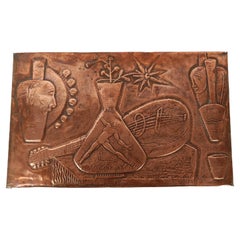
Mid-20th Century Italian Copper Sculpture Panel in Cubist Style, 50s
Located in Roma, IT
I offer for sale a copper sculpture panel made in Italy around the middle of the 20th century through the artisanal technique of metal embossing. Purchased during the dismemberment o...
Category

Mid-20th Century Italian Mid-Century Modern Wall-mounted Sculptures

Materials

Copper

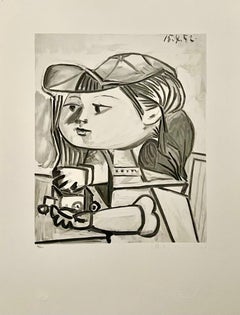
Pablo Picasso Estate Hand Signed Cubist Lithograph Abstract Girl Portrait Tete
By Pablo Picasso
Located in Surfside, FL
Pablo Picasso (after) "Buste de Petite Fille" limited edition print on Arches paper, Hand signed by Marina Picasso lower right and numbered 144/500 lower left From the estate of Pa...
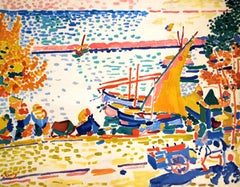
Category

20th Century Modern Abstract Prints

Materials

Lithograph

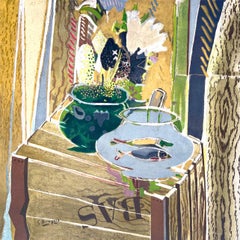
L aquarium sur la caisse, Une Aventure méthodique, Georges Braque
By Georges Braque
Located in Southampton, NY
Lithograph on vélin d'Arches paper. Inscription: Unsigned and unnumbered. Good condition. Notes: From the folio, Une Aventure méthodique, 1950; published by Fernand Mourlot, Paris, a...
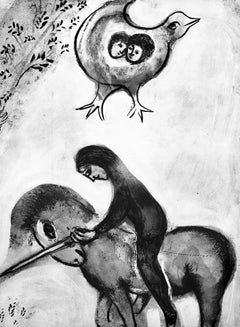
Category

1950s Modern Abstract Prints

Materials

Lithograph

Marc Chagall, Untitled, from The Lithographs of Chagall, 1969
By Marc Chagall
Located in Southampton, NY
This exquisite lithograph by Marc Chagall (1887–1985), titled Sans titre (Untitled), from the album The Lithographs of Chagall, Volume III, originates from the 1969 edition published...
Category

1960s Expressionist Figurative Prints

Materials

Lithograph

Fernand Leger, Mechanical Elements, 1929 (after)
By Fernand Léger
Located in Southampton, NY
This exquisite lithograph and pochoir after Fernand Leger (1881–1955), titled Elements mecaniques (Mechanical Elements), from the album L'Art Cubiste, Theories et Realisations, Etude...
Category

1920s Cubist Still-life Prints

Materials

Lithograph, Stencil

St Mark s Square, Venice , Paris, Post-Impressionist, Charlottenborg Palace
By Victor Isbrand
Located in Santa Cruz, CA
Signed lower right, 'V. Isbrand' for Victor Isbrand (Danish, 1897-1989) and titled, 'Venedig' (Venice). Precocious as a child, Victor Isbrand painted professionally from a young age...
Category

1940s Post-Impressionist Landscape Drawings and Watercolors

Materials

Paper, Watercolor, Cardboard

Rene Magritte, The Indiscreet Jewels, from XXe Siecle, 1963
By René Magritte
Located in Southampton, NY
This exquisite lithograph by Rene Magritte (1898–1967), titled Les Bijoux indiscrets (The Indiscreet Jewels), from the album XXe Siecle, Nouvelle serie, XXVe Annee N°22, Noel 1963, o...
Category

1960s Surrealist Figurative Prints

Materials

Lithograph

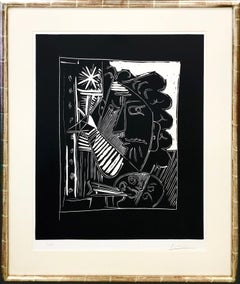
LE PEINTRE A LA PALETTE (BLOCH 1153)
By Pablo Picasso
Located in Aventura, FL
Linocut on Arches wove paper. Hand signed and numbered by the artist in pencil. Image size 25 x 20.75 inches. Sheet size 29.6 x 24.5 inches. Frame size approx 34.5 x 29.5 inches. Pri...
Category

1960s Cubist Animal Prints

Materials

Paper, Linocut

Still Thinking About These?

All Recently Viewed