384 results for "gobelins"
to
51
214
161
214
108
60
59
58
51
38
36
35
22
21
21
16
15
12
11
11
10
10
10
9
8
8
7
7
5
5
5
3
3
3
2
2
2
2
1
1
1
1
1
1
1
18
15
10
9
8
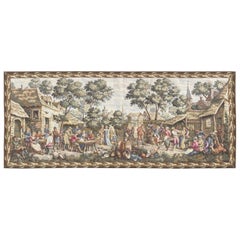
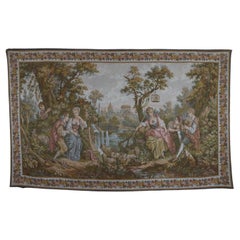
French Vintage Tapestry Gallant Scene by JP Paris Panneaux Gobelins
By JP Paris Panneaux Gobelins
Located in Barntrup, DE
French Vintage Tapestry Gallant Scene by JP Paris Panneaux Gobelins from the late 20th century.
A beautiful French tapestry in Aubusson style, within a flower border featuring a gall...
Category
Vintage 1970s French Rococo Tapestries
Materials
Fabric, Cotton
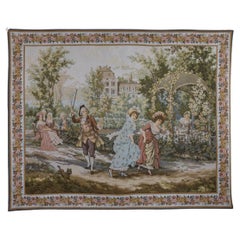
1960s Vintage French Wall Tapestry of Wine Harvest Scene by JP Paris Gobelin
By JP Paris Panneaux Gobelins
Located in COLMAR, FR
This vintage French wall tapestry beautifully merges Renaissance-inspired imagery with the refined graphic style of the 1960s. Printed on thick woven cotton, it portrays a lively win...
Category
Vintage 1960s French Renaissance Tapestries
Materials
Metal
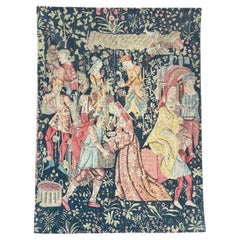
The Royal Vista: Louis XIV Gobelins-Style Tapestry of Château Neuf Saint-Germain
By Charles Le Brun, Gobelins Royal Manufactory
Located in Dallas, TX
73692 New Gobelins Inspired Tapestry, 06'00 x 07'03. Steeped in regal grandeur and Louis XIV style, this handwoven wool Gobelins-inspired tapestry evokes the splendor and exclusivity of the French court at its zenith. Inspired by the iconic series The Months or Royal Residences, originally woven at the legendary Gobelins Workshop for the Sun King himself, this piece channels the vision of Charles Le Brun, the master artist whose designs defined the opulence of the French Baroque. To own such an exceptional tapestry is to partake in a lineage of privilege, artistry, and refinement once reserved for royalty and the aristocratic elite—a woven emblem of status and cultivated taste.
The composition centers on the Château Neuf...
Category
21st Century and Contemporary Chinese Louis XIV Western European Rugs
Materials
Wool
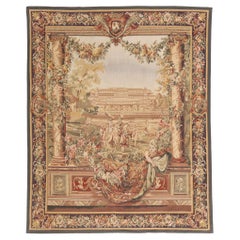
1030 - Vintage French Jaquar
Gobelin
Style Tapestry
Located in Paris, FR
1030 - Beautiful French Jaquar ( Gobelin )style tapestry, with nice romantic design and beautiful colors, mechanical Jaquar fabric with wool woven.
Category
Vintage 1950s French Aubusson Tapestries
Materials
Wool
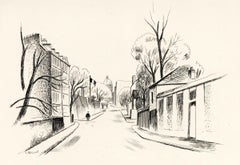
"De la Sante aux Gobelins" original etching
By Louis Neillot
Located in Henderson, NV
Medium: original etching. This impression on Canson et Montgolfier wove paper was printed in 1937 in an edition of 500 for the "Paris 1937" portfolio. Printed at the atelier of Jean-...
Category
1930s Prints and Multiples
Materials
Etching
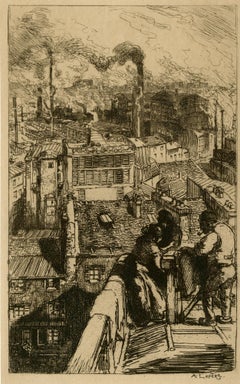
Les Quartier des Gobelins
By Auguste Lepère
Located in Middletown, NY
Paris: Gazette des Beaux Arts, 1896. Etching with aquatint on cream laid paper, 7 7/8 x 4 7/8 (200 x 125 mm), full margins. Edition of roughly 750. In good condition with uniform ton...
Category
Late 19th Century French School Landscape Prints
Materials
Laid Paper, Etching, Aquatint
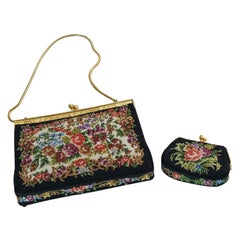
French Vintage Gobelin Set of Clutch Handbag and Coin Purse, circa 1920
Located in Frankfurt am Main, DE
Vintage Gobelin set of clutch handbag and coin purse, black base with floral embroidery on both sides, enameled brass frame and chain strap. The interior is lined in black silk with ...
Category
Early 20th Century French Art Nouveau Cabinets
Materials
Tapestry
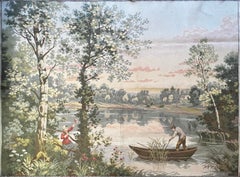
Nice French Jaquar Gobelin Aubusson Style Tapestry
Located in Saint Ouen, FR
Beautiful French tapestry with nice design of the party in town, and beautiful colors, mechanical Jaquar manufacturing with wool and cotton.
✨✨✨
"Experience the epitome of luxury an...
Category
Late 20th Century French Aubusson Tapestries
Materials
Cotton
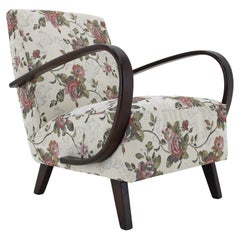
1950s Jindrich Halabala Restored Gobelin Armchair, Czechoslovakia
By Jindřich Halabala
Located in Praha, CZ
- Newly upholstered
- The wooden parts have been refurbished
- The seat height is 44cm
Category
Vintage 1950s Czech Mid-Century Modern Armchairs
Materials
Fabric, Wood
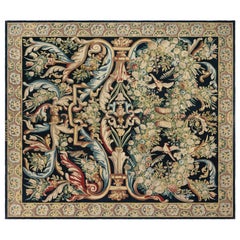
Doris Leslie Blau Antique French Gobelins Tapestry Rug
Located in New York, NY
Antique French Gobelins Tapestry Rug
Size: 11'8" × 13'5" (355 × 408 cm)
This magnificent 18th-century French Gobelins tapestry rug exemplifies the height of Louis XIV-era craftsmansh...
Category
Antique Early 18th Century French Western European Rugs
Materials
Other
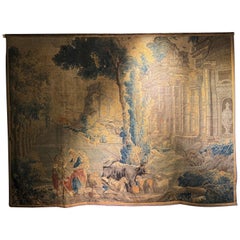
17th century Antique Aubusson/Gobelin tapestry, France Architectural land, silk
Located in Berlin, DE
17th century Antique Aubusson/Gobelin tapestry, France Architectural landscape, silk
Antique Museal Aubosson tapestry made of silk and partly wool. Very fine and antique design. Dep...
Category
Antique 17th Century French Baroque Western European Rugs
Materials
Wool, Silk
French Vintage Tapestry Wall Hanging Gallant Scene
By JP Paris Panneaux Gobelins
Located in Barntrup, DE
French Vintage Tapestry Gallant Scene by JP Paris Panneaux Gobelins from the late 20th century.
A beautiful French tapestry, wall hanging in Aubusson style, within a flower border fe...
Category
Vintage 1970s French Rococo Tapestries
Materials
Fabric, Cotton
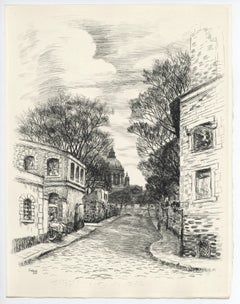
"Sante aux Gobelins" original etching
By Jean Frélaut
Located in Henderson, NV
Medium: original etching. This impression on Canson et Montgolfier wove paper was printed in 1937 in an edition of 500 for the "Paris 1937" portfolio. Printed at the atelier of Jean-...
Category
1930s Prints and Multiples
Materials
Etching
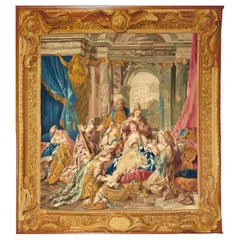
Tapestry Royal Manufacture of Aubusson, Louis XVI period 1738 at the Gobelins
By Aubusson Manufacture
Located in Madrid, ES
Tapestry from the Royal Manufacture of Aubusson, Louis XVI period , made in 1738 at the Gobelins
One panel from a series of Gobelins tapestries depicting the History of Esther, illustrating Esther seated and attended by handmaidens, one washing her feet in golden basin, another fastening a bracelet, another offering a mirror, all observed by Mordecai, woven in the workshop of Michele Audran after a design by J. F. de Troy.
The Toilet of Esther c.1778-85.Royal Collection Trust-Queens Audience Chamber
Windsor Castle
The Sketches for the Esther Cycle by Jean-François de Troy (1736)
“and the maid was fair and beautiful; whom Mor’decai, ..., took for his own daughter.” (Est. 2:7)
A supple and undulating genius, both a flattering portraitist and a prolix history painter, as well as a brilliant genre painter, in a gallant or worldly vein, Jean-François de Troy (Paris, 1679 – Rome, 1752), solicited, although he had passed the threshold of old age, a new royal commission up to his ambitions. To obtain it, he submitted – successfully - for the approval of the Bâtiments du roi (administration), seven modelli painted in 1736 with his usual alacrity.
Inspired by one of the most novelistic texts of the Old Testament, the Book of Esther, these sketches in a rapid and virtuoso manner were transformed by the artist, between 1737 and 1740 into large cartoons intended to serve as models for the weavers of the Gobelins factory. Showing undeniable ease and skill in the composition in perfect harmony with the sensitivities of the times, the tapestry set met with great success.
The Story of Esther perfectly corresponded to the plan of the Bâtiments du roi to renew the repertoire of tapestry models used for the weavers of the royal factories while it also conformed to the tastes of Louis XV’s subjects for a fantastical Orient, the set for a dramatic tale in which splendour, love and death were combined. Indeed, no tapestry set was woven in France during the 18th century as often as that of Esther.
The series of modelli painted by de Troy during the year 1736 looks to the history of French painting and decoration under Louis XV as much as it does the history of the Gobelins. It probably counts among the most important rococo pictorial groups to have remained in private hands. First the Biblical source illustrated by De Troy which constitutes the base of one of the richest iconographical traditions of Western art will be considered. Then the circumstances and specific character of French civilisation during the reigns of Louis XIV and Louis XV which contributed to making the theme of Esther a relevant subject, both attractive to contemporaries and remarkably in line with the sensitivities of the time will be elucidated.
An examination of the exceptional series of sketches united here, the cartoons and the tapestries that they anticipate as well as a study of their reception will close this essay. The Book of Esther: A scriptural source at the source of rich iconography.
The origin of the Esther tapestry set by Jean-François de Troy – origin and creation of a masterpiece
According to the evidence of one of the artist’s early biographers, the chevalier de Valory, author of a posthumous elegy of the master, read at the Académie royale de peinture et de sculpture on 6 February 1762, it was apparently due to early16 rivalry with François Lemoyne (1688-1737), his younger colleague who had precisely just been appointed First Painter to the King in 1736, that had encouraged François de Troy to seek a commission allowing him to show off his ease and his promptitude at the expense of a rival who was notoriously laborious: “M. De Troy, retaining some resentment of the kind of disadvantage which he believed to have suffered compared with his emulator looked to regain some territory by making use of the facility his rival did not possess.
Lemoyne was excessively long in the creation of his works,and M. De Troy of a rare celerity: consequently, with this particular talent, the latter offered to the court to make paintings appropriate to be executed at the Gobelins Factory; and it is to this circumstance that we owe the beautiful series of the Story of Esther, which would be sufficient alone to give him a great reputation.”17 Beyond the suspicion inspired by the topos, which still constitutes, more or less, a tale of rivalries between artists in ancient literature, there is probably some truth in what Valory reports although A.-J. Dezalier d’Argenville (who indicates rather spitefully that de Troy did not hesitate to “cut prices” to impose himself, benefitting from the productivity assured by the unlikely rapidity of his brush)18 proves to be more evasive: “As he looked to busy himself, he had offered to make the paintings that serve as models for the King’s tapestries cheaply: which did not please his colleagues.
He was given a choice of two tapestry series to be made and he took the Story of Esther and that of Jason”.19 Whether or not the choice was actually left to de Troy (which would appear rather casual on the royal administration’s part all the same), it seems likely that the artist, whose contemporaries extol his “fire”, as the faculty of invention was then called, must have ardently aspired to the possibility of using on a very large scale the “creative genius” with which Dezallier d’Argenville credits him. The decoration of the private apartments, the fashion for which Louis XV had promoted at Versailles and Fontainebleau, offered little opportunity to excel in this area. Other than painting for altarpieces, only tapestries could allow comparison with Lemoyne who had been granted – unfortunately for him – a major decoration: the enormous ceiling of the Hercules Room at Versailles. Favoured by the recent improvement in France’s financial situation, the revival of patronage offered de Troy a commission fitting for him, in a field in which, however, he had hardly any experience.
Anxious to renew the repertoire of models available to the Gobelins factory, the Duc d’Antin, surintendant des Bâtiments du roi from 1708 to 1736 followed by his successor, Philibert Orry comte de Vignory, gave him the task of producing seven large cartoons inspired by the Book of Esther corresponding to the brilliant sketches or modelli which de Troy had produced in one go, or almost (very few preparatory drawings can in fact be linked to the Esther cycle and all seem to be at the execution stage of the cartoons).20 Subjected to the approval of the Administration des Bâtiments according to the procedure in use for projects being planned for the Gobelins, sketches made rapidly during 1736 were approved and the project launched immediately. Thereupon came the news of François Lemoyne’s death, who, ground down by work and a victim of his private torment, committed suicide on 4 June 1737.
Against all expectations, de Troy did not replace his rival in the position of First Painter (which remained vacant until the appointment of Charles Coypel in January 1747), which would perhaps have made him too obviously the beneficiary of the drama. The awarding of the position of Director of the French Academy in Rome came to console him while he had already produced (or he was in the process of finishing), in Paris, three of the seven cartoons of the cycle (The Fainting of Esther finished in 1737 and the Toilet and Coronation of Esther, both finished in 1738).
De Troy, we can see, did not follow the order of the narrative but began with the subjects which apparently offered the least difficulty because he had already depicted them, or because they fall into a strong pictorial tradition (such is the case especially for the Fainting of Esther). He had hardly settled at the Palazzo Mancini in August 1738, when his first task which awaited the new director of the French Academy naturally consisted of honouring the royal commission and finishing without delay the final cartoons of the Story of Esther after the sketches he must have taken with him. As prompt as ever, de Troy discharged himself of the execution of the four remaining cartoons in only two years, by beginning with the largest format which allowed him to strike the imagination and to impose himself as soon as he arrived on the Roman stage: the Triumph of Mor’decai which was finished in 1739 (like Esther’s Banquet).
The following year, the Mor’decai's Disdain and The Sentencing of Haman were brought to an end in the same Neo-Venetian style, obviously tributary to Veronese with its choice of “open” monumental architecture which is characteristic of the entire cycle.21 The series, it should be noted, was almost augmented with some additional scenes in the mid 1740s. Indeed, the first tapestry set finished at the Gobelins in 1744 proved to be unsuitable for the arrangement of the Dauphine’s apartments at Versailles for which it had been intended to decorate the walls the following year (cf infra). Informed of this, de Troy, considering that the story of Esther offered “several good subjects,” immediately offered to illustrate one or new subject among those “which could appear to be the most interesting”.
The directeur des Bâtiments Orry, who managed the State’s accounts, obviously judged it less costly to have one of the tapestries widened to fill in the end of the Dauphine’s bedroom,22 which has probably deprived us of very original compositions, because de Troy had already illustrated the most famous themes, those that benefitted from a strongly established iconographical tradition and from which it was not easy to deviate
The Tapestry Set of the Story of Esther
Placed on the tapestry looms of the Gobelins at the end of the 1730s in Michel Audran’s workshop, the cycle created by de Troy aroused true infatuation. The few hundred tapestries made between 1738 and 1797 – all in high-warp tapestry and woven in wool and silk except for four in low-warp made in Neilson’s workshop – show the impressive success of a tapestry set that was without any doubt the most frequently woven of the 18th century in France.
29 Only three cartoons had been delivered by de Troy in 1738 when the first tapestry set was begun by Audran under the expert eye of Jean-Baptiste Oudry to whom the Directeur général des bâtiments, Philibert Orry had assigned the (weekly) supervision of the weaving. During the summer of 1738, the piece of the Fainting of Esther, which Oudry judged to be admirable, was finished.
During the winter of 1742, Oudry informed Orry that about two ells of the Triumph of Mor’decai had been made “with no faults”,that the Coronation of Esther was finished and that the Esther at her Toilet “a very gracious tapestry” was “a little over half” finished. Exhibited at Versailles in 1743, these two last pieces were admired by Louis XV and the Court.
On 3 December 1744, the set of seven tapestries was finally delivered to the Garde Meuble. It was intended, the honour was not slight, to decorate the apartments of the Infanta Maria Teresa Rafaela of Spain whose marriage to the young Dauphin Louis-Ferdinand had been fixed for the following year (it took place on 23 February 1745). Apparently it was thought that the theme of Esther the biblical heroine and wife of a foreign sovereign was appropriate for the apartments of the Spanish Dauphine.
As early as the month of March, the architect Ange-Jacques Gabriel informed de Troy that her grand cabinet was decorated with the “Esther tapestry set” specifying however that “for lack of two small or one large piece, we have not been able to decorate the end of the room”. This difficulty led immediately to the Banquet episode being woven a second time in two parts (they were delivered to the Garde-Meuble on 30 December 1746) to garnish the panels on each side of the bed of the Dauphine who would hardly enjoy them (she died on 22 July 1746 and the decoration was installed for the new Dauphine Maria Josepha of Saxony).
The appearance of the set’s remarkable border, which imitated a richly sculpted wooden frame, should be mentioned. Conceived in 1738 by the ornamentalist Pierre Josse-Perrot and used in the later weavings until 1768, it tended to reinforce the resolutely painterly appearance of the tapestry set which, in this regard, pushed the art of tapestry as far as its ultimate mimetic possibilities. With the exception of Mor’decai's Disdain which had been removed earlier, the “editio princeps” of the story of Esther (from then on in nine pieces) remained at Versailles until the Revolution. Of the eight surviving tapestries, four are at the chateau of Compiègne and four belong today to the Mobilier National. No less than seven tapestry sets reputed to be complete (one of them in fact only had six tapestries) would be produced officially at the Gobelins up to 1772.
Literature:
1- The Œuvres mêlées of an emulator of Racine, the Abbé Augustin NADAL thus include an Esther. Divertissement spiritual which is exactly contemporary with Jean François de Troy’s cycle since it was performed in 1735 and published in Paris three years later.
2-Le Siècle de Louis XIV, 1751, 1785 ed., p. 96-97 for French ed.
3- Lemoyne and de Troy had been obliged to share the First Prize in the competition organised in 1727 between the most prominent history painters of the Académie Royale.
4- Mémoires…, pub. L. DUSSIEUX et al., 1854, II, p.265.
5-The fact that de Troy, at the risk of falling out with his colleagues, did not hesitate to make use of prices in order to convince the new directeur des Bâtiments Philibert Orry, is confirmed by Mariette who adds tersely “it caused much shouting” (pub. 1851-1860, II, p. 103).
6- Abrégé de la vie des plus fameux peintres…, ed. 1762, IV, p. 368-369 20 Early comments on the painter are inclined to present him as a kind of “pure painter”, doing without the medium of drawing, a few intermediary studies between the Esther sketches and the large cartoons at the Louvre nevertheless show that de Troy used red chalk (see in the catalogue, the notice for the Meal of Esther and Ahasuerus under the entry drawing) to change one or other figure.
7-C. GASTINEL-COURAL (cat. exp. PARIS, 1985, p. 9-13) as well as the article by J. VITTET, exh. cat. LA ROCHE-GUYON, 2001, p. 51-55.
8-The Hermitage in St. Petersburg conserves five tapestries of these two royal gifts whose provenance still awaits elucidation (as far as we are aware). In 1766, the Grand Marshal of Russia, Count Razumovski (or Razamowski), acquired the Fainting and the Banquet extracted from the sixth weaving (J. VITTET, 2001, p. 53).
9- Lettres écrites de Suisse, d’Italie…,quoted by J. VITTET, op. cit., p. 54.
10-The tapestry set remained in the hands of a branch of the Hapsburg-Lorraine family until 1933 (ibid. P. 54).
11-Quoted by Chr. LERIBAULT, 2002, p. 97, note 269.
12-Y. CANTAREL-BESSON, 1992, p. 241.
Catalogue
The Esther at her Toilet
Oil on canvas, 57 x 51 cm Provenance: Painted in 1736 at the same time as the six other modelli of the Story of Esther intended to be presented, for approval, to the direction des Bâtiments du Roi; perhaps identifiable among a lot of sketches by Jean-François de Troy in the post mortem inventory of the amateur, historian and critic Claude-Henri Watelet (1718-1786) drawn up on 13 January 1786 and following days (A.N. T 978, n° 30) then in the sale of the property of the deceased, Paris, 12 June 1786, n° 33; Paris, François Marcille Collection (who owned a series of six sketches from which the Triumph of Mor’decai was missing, see infra); Paris, Marcille Sale, Hôtel Drouot, 12-13 January 1857, n° 36; Asnières, Mme de Chavanne de Palmassy ( ?) collection; Paris, Galerie Cailleux; Paris, Humbert de Wendel collection (acquired from the Galerie Cailleux in 1928); by inheritance in the same family; Paris, Sotheby’s, 23 June 2011, n° 61. In order not to add unnecessarily to the technical commentary on each work, the catalogue raisonné by Chr. Leribault which contains a substantial bibliography on the series should be referred to. The other bibliographical references only concern the publications and exhibitions to have appeared and been presented more recently. Bibliography and Exhibitions: Chr. LERIBAULT, 2002, n° P. 247 (repr.); E. LIMARDO DATURI, 2004, p. 28; Exh. cat. NANTES, 2011, p. 138, n° 34, referred to in note 1; Sotheby’s catalogue, Tableaux anciens et du XIXe siècle, 23 June 2011, n° 61 (repr.).
Related Works:
Tapestry cartoon: The cartoon (oil on canvas, 329 x 320 cm), the third made by the artist in Paris after the sketches had been approved by the direction des Bâtiments, is in the Louvre (Inv. 8315). It previously bore the painter’s signature and the date 1738 (inscriptions which are found on the tapestries). The royal administration paid 1600 livres for it on 21 June 1738 and it was exhibited at the Salon in the year of its creation.
Summary Biography
1679 (27 January): Baptism in Paris (Parish of St. Nicolas du Chardonnet) of Jean-François de Troy, son of the painter François de Troy and Jeanne Cotelle, sister of the painter Jean II Cotelle.
1696-1698: Studies (apparently rather turbulent) at the Académie royale de peinture et de sculpture.
1698-1708: First trip to Italy. Is obliged to leave Rome in January 1711 after a tempestuous affair (a duel?), de Troy extends the traditional Roman experience as a pensionnaire at the Académie de France by also visiting Tuscany where he stays for a long time, Venice (his art in face has a strongly Venetian character) and Genoa.
1708: De Troy (whose father had been elected Director of the Académie royale de peinture et de sculpture on 7 July) is agréé and immediately received at the Académie with Apollo and Diana Piercing with their Arrows the Children of Niobe (Montpellier, Musée Fabre) on 28 July.
1710: First royal commission, paid for on 10 May (a sketch representing “the Promotion of the Order of the Holy Spirit” for the tapestry series of the History of the King).
1716: Jean-François de Troy is elected Assistant Professor at the Academy.
1720: He is appointed Professor.
1723: The artist creates the double portrait of Louis XV...
Category
Antique Early 18th Century French Baroque Western European Rugs
Materials
Wool, Silk
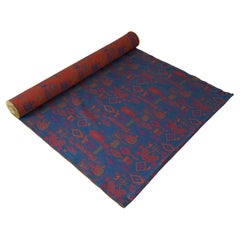
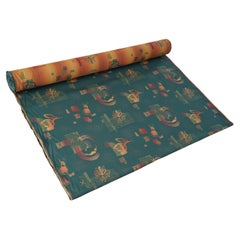
Vintage Gobelin Upholstery Fabric in Various Blue
Red Colors, Late 20th C
Located in Odense, DK
Wonderful vintage gobelin fabric with Art Nouveau ornaments in a mix of cotton & viscose. Beautiful color combination: blue, orange, red and purple colo...
Category
Late 20th Century Art Deco Curtains and Valances
Materials
Cotton
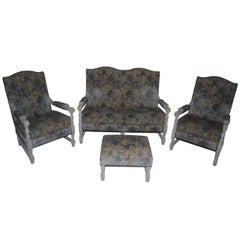
20th Century Four-Piece Gobelin Salon Set
Located in Casteren, NL
20th century four-piece Gobelin salon set.
Couch, two chairs, one footstool.
Originates in France, circa 1960.
Category
Mid-20th Century French Living Room Sets
Materials
Beech

$5,111 / set
Vintage Gobelin Upholstery Fabric in Various Green
Orange Colors, Late 20th C
Located in Odense, DK
Wonderful vintage gobelin fabric with Art Nouveau ornaments in a mix of cotton & viscose. Beautiful color combination: green, orange, red and purple col...
Category
Late 20th Century Art Deco Curtains and Valances
Materials
Cotton
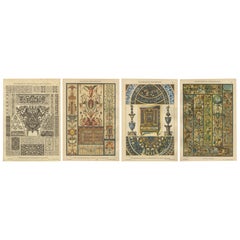
Set of 4 Renaissance Design Prints by H. Dolmetsch – Gobelins, Enamels and More
Located in Langweer, NL
Set of 4 Renaissance Design Prints by H. Dolmetsch – Gobelins, Enamels, and More
This stunning group of four antique prints captures the vibrant decorative arts of the Renaissance t...
Category
Antique 1880s Prints
Materials
Paper
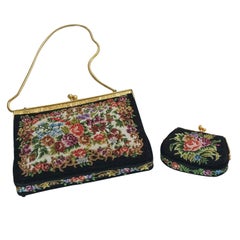
French Vintage Gobelin Set of Clutch Handbag and Coin Purse, circa 1920
Located in Frankfurt am Main, DE
Vintage Gobelin set of clutch handbag and coin purse, black base with floral embroidery on both sides, enameled brass frame and chain strap. The interior is lined in black silk with ...
Category
Early 20th Century French Art Nouveau Cabinets
Materials
Tapestry
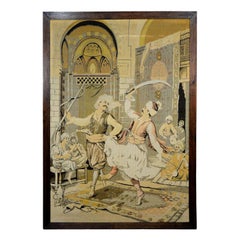
Very Large Gobelin with Dancing Turkish Dervishes, circa 1900
Located in Berghuelen, DE
Very Large Gobelin with Dancing Turkish Dervishes, circa 1900
A large Gobelin with Turkish dervishes dancing the sabre danc. It is framed in oakwood, Germany circa 1900.
Please con...
Category
Early 20th Century German Rustic Decorative Art
Materials
Tapestry, Wood
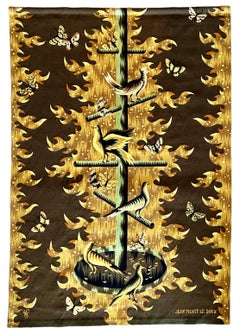
Art Deco French Modernist Handmade Aubusson Gobelin Tapestry Jean Picart Le Doux
By Jean Picart Le Doux
Located in Surfside, FL
Jean Picart Le Doux, French (1902 - 1982)
"Au Rendez Vous Des Oiseaux"
Larger handmade wool Aubusson tapisserie
Produced by Maison M. Berthaut Aubusson Atelier, France. Signed Lower left corner woven with firm's monogram and lower right with artists full name.
Bears stitched label attached en verso.
Original documents included with the lot.
Measures 71-1/2" x 50".
Jean Picart Le Doux, born in Paris in 1902 and died in 1982, was a French painter and painter-cartonnier the revival of contemporary flat weave tapestry. He is the son of the painter Charles Picart Le Doux (1881-1959). His first tapestry dating from 1943 after winning the Grand Prix of the theater poster exhibition in the imaging. He met Jean Lurcat and, and Marc Saint-Saëns,and together they founded the Association of painters cardboard tapestry in 1947. In 1950, he comes up with the idea for the Alliance Graphique Internationale, during the meeting with exhibitors of an exhibition of their work in Basel, Switzerland along with two other French designers Jean Jacques Colin and Nathan, and two Swiss graphic designers, Fritz Buhler and Donald Brown. AGI is officially founded November 22, 1952 and Picart Le Doux will be its first president.
Picart Le Doux was a French artist noted for his role in the revival of contemporary hand woven Aubusson tapestry. Picart Le Doux's first tapestry cartoon was a diptych entitled The Four Seasons. Made in 1943...
Category
Mid-20th Century Modern More Art
Materials
Wool
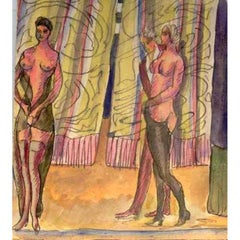
Gobelin. 1943, paper, mixed technique, 11.9x10.6 cm
Located in Riga, LV
Adolfs Zardins
(1890 08 II Riga, Latvia – 1967 07 II Jurmala, Latvia), painter.
Only in 1990 his relatives give his artistic heritage to publicity.
“I am 58, and in five Years my c...
Category
1940s Abstract Nude Drawings and Watercolors
Materials
Paper
$769 Sale Price
20% Off
ORIGINAL INK UNIQUE PIECE GEORGES MATHIEU MANUFACTURE DES GOBELINS
By Georges Mathieu
Located in Tel Aviv - Jaffa, IL
Original ink on paper
Hand signed
Unique piece
Manufacture Nationale des Gobelins
Category
1960s Abstract Abstract Drawings and Watercolors
Materials
Ink

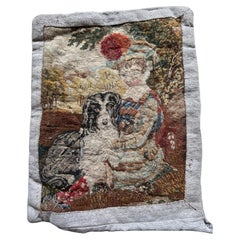
Antique Gobelin Pillow Featuring 18th-Century Tapestry Fragment
Located in Hamburg, DE
Immerse yourself in the charm of the 18th century with this exquisite antique pillow, crafted from a fragment of a historical Gobelin tapestry. This unique piece showcases a delightful scene of a child with his dog, intricately woven and full of character. The tapestry fragment, despite having a few holes, has been lovingly hand-stitched onto an old linen pillow, preserving its beauty and historical significance.
Gobelins, named after the renowned Gobelins Manufactory in Paris, were highly prized in the 18th century for their detailed and vibrant tapestry work. These tapestries were often commissioned by royalty and the elite to decorate palaces and grand homes, featuring intricate scenes from mythology, history, and everyday life. The craftsmanship involved in creating a Gobelin tapestry was exceptional, with skilled artisans spending months, sometimes years, to complete a single piece.
The fragment used in this pillow is a testament to the exceptional artistry of the Gobelins weavers. It depicts a charming scene of a child with his loyal dog, rendered with remarkable detail and expression. Despite the presence of some holes, which add to its antique charm, the tapestry fragment remains a beautiful and evocative piece of art. It has been carefully hand-sewn onto an old linen pillow, enhancing its historical authenticity and ensuring its preservation.
This antique Gobelin pillow...
Category
Antique 18th Century Louis XVI Pillows and Throws
Materials
Textile, Linen
Antique Audran "Mois Grotesques" Gobelins Pictorial Panel Tapestry - Rug
Kilim
Located in Long Island City, NY
Handwoven in wool and originating from France, this 2x11 French Gobelins pictorial tapestry from the early 18th Century is a rare and special new curation from Rug & Kilim—"Mois Grot...
Category
Antique 1720s French Western European Rugs
Materials
Wool
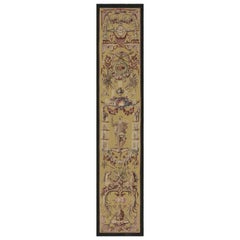
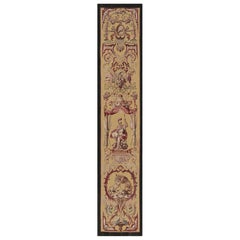
Antique Audran "Mois Grotesques" Gobelins Pictorial Panel Tapestry - Rug
Kilim
Located in Long Island City, NY
Handwoven in wool and originating from France, this 2x11 French Gobelins pictorial tapestry from the early 18th Century is a rare and special new curation from Rug & Kilim—"Mois Grot...
Category
Antique 1720s French Western European Rugs
Materials
Wool
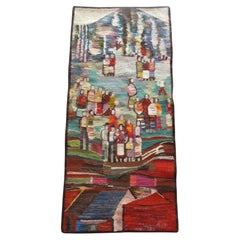
Tapestry of the Polish Artist Piotr Grabowski Hand Woven Gobelin, 1980s
By Piotr Grabowski
Located in Firenze, FI
Vintage Handwoven wool tapestry designed by Polish Artist Piotr Grabowski
and handwoven by Szczakiel Elfryda and distributed in 1980s by Cepelia. Cepelia was a Polish foundation for...
Category
Vintage 1980s Polish Western European Rugs
Materials
Wool
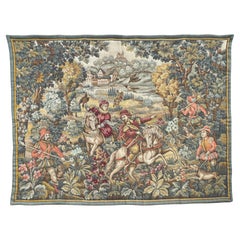
Vintage Aubusson Style French Jacquard Halluin Tapestry c1940s
By Aubusson Manufacture, Gobelins Royal Manufactory
Located in Bad Säckingen, DE
This vintage French jacquard tapestry, probably crafted in the 1940s in the Aubusson style, showcases a richly detailed hunting scene. Woven in Halluin, a region renowned for its tex...
Category
Vintage 1940s French Rococo Tapestries
Materials
Wool
Pair of late 20th Century French Gobelins-Style Verdure Tapestry Panels
Located in Dallas, TX
Bring color and pastoral charm to a hallway, bedroom, or stair landing with this pair of decorative French tapestry panels. Woven in Flanders circa 1980 in the Gobelins manner, each ...
Category
Late 20th Century French Tapestries
Materials
Tapestry
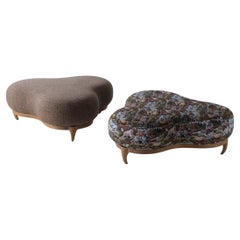
Modulair Brown Dogs Gobelin Pouf in Solid Walnut Base
By Nigel Coates, Fratelli Boffi
Located in Lentate sul Seveso, Monza e Brianza
Upholstered pouf defined by curvy and sinous lines. The base is proposed in walnut wood while covering can be chosen between brown melange chinè or Gobelin with hunting dogs picture...
Category
2010s Italian Ottomans and Poufs
Materials
Fabric, Wood, Walnut
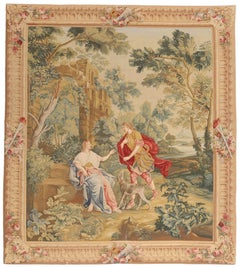
Vintage Chinese Aubusson Tapestry with Zephyrus and Flora Ovid’s Metamorphoses
By Gobelins Royal Manufactory
Located in Dallas, TX
79231 Vintage Chinese Aubusson Tapestry, 08'07 x 09'07. Woven in homage to the allegorical splendor of 18th-century France, this handwoven wool vintage Chinese Aubusson tapestry is a...
Category
Mid-20th Century Chinese Aubusson Chinese and East Asian Rugs
Materials
Wool
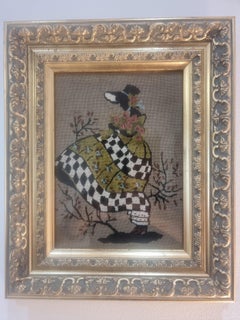
Girl With Flowers Wiehler Handmade Gobelin Tapestry Green Brown Beige White Pink
Located in Sofia, BG
Wiehler Handmade Gobelin Tapestry by Maestro Vera Petrova - Sapundjieva, Bulgarian artist 1912 - 1985
About the artwork
TECHNIQUE: Wiehler Handmade Gobe...
Category
1940s Romantic More Art
Materials
Tapestry
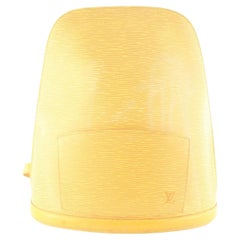
Louis Vuitton Yellow Epi Leather Gobelin Medium Backpack 6LV117K
By Louis Vuitton
Located in Dix hills, NY
Date Code/Serial Number: N/A
Made In: France
Measurements: Length: 12" Width: 6" Height: 14"
Shoulder Handle Drop: 15"
Handle Drop: "
OVERALL GOOD CONDITION
( 7/10 or B )...
Category
21st Century and Contemporary Backpacks
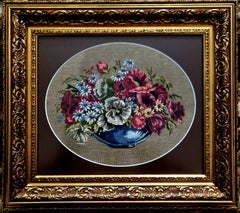
Flowers Still Life Wiehler Handmade Gobelin Tapestry Green Red Beige White Pink
Located in Sofia, BG
Flowers - Still Life
Wiehler Handmade Gobelin Tapestry by Maestro Vera Petrova - Sapundjieva, Bulgarian artist 1912 - 1985
About the artwork
TECHNIQUE...
Category
1940s Romantic More Art
Materials
Tapestry
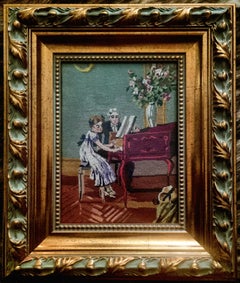
Piano Lesson Wiehler Handmade Gobelin Tapestry Brown White Pink Blue Black Grey
Located in Sofia, BG
Piano Lesson
Wiehler Handmade Gobelin Tapestry by Maestro Vera Petrova - Sapundjieva, Bulgarian artist 1912 - 1985
About the artwork
TECHNIQUE: Wiehle...
Category
1940s Romantic More Art
Materials
Tapestry
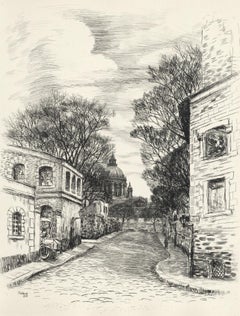
De la Sante aux Gobelins, A La gloire à Paris, Jean Frélaut
By Jean Frélaut
Located in Southampton, NY
Etching on vélin Canson et Montgolfier paper. Unsigned and unnumbered, as issued. Good condition. Published by L'Imprimerie Daragnès, Paris; printed by Jean Gabriel Daragnès, Paris, ...
Category
1930s Modern Landscape Prints
Materials
Etching
$716 Sale Price
20% Off
Summer Landscape - Wiehler Handmade Gobelin Tapestry Green Red Beige White Pink
Located in Sofia, BG
Summer Landscape
Wiehler Handmade Gobelin Tapestry by Maestro Vera Petrova - Sapundjieva, Bulgarian artist 1912 - 1985
About the artwork
TECHNIQUE: Wie...
Category
1940s Romantic More Art
Materials
Tapestry
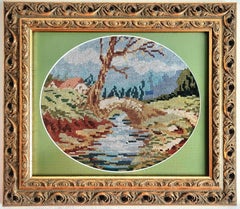
The Lake - Wiehler Handmade Gobelin Tapestry Green Red Beige White Pink
Located in Sofia, BG
The lake - Landscape 1942
Wiehler Handmade Gobelin Tapestry by Maestro Vera Petrova - Sapundjieva, Bulgarian artist 1912 - 1985
About the artwork
TECH...
Category
1940s Romantic More Art
Materials
Tapestry
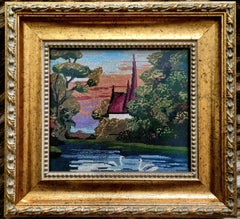
Blue Ocean - Wiehler Handmade Gobelin Tapestry Brown White Pink Blue Black Grey
Located in Sofia, BG
Blue Ocean
Wiehler Handmade Gobelin Tapestry by Maestro Vera Petrova - Sapundjieva, Bulgarian artist 1912 - 1985
About the artwork
TECHNIQUE: Wiehler H...
Category
1930s Romantic More Art
Materials
Tapestry
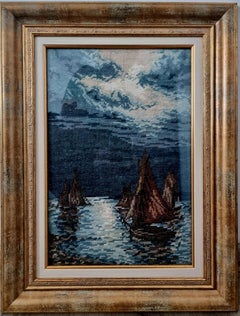
Louis XIV Style Antique French Aubusson Verdure Tapestry, Venus and Adonis
By Peter Paul Rubens, Francesco Albani, Gobelins Royal Manufactory
Located in Dallas, TX
Mid-18th Century Antique French Aubusson Verdure Tapestry, Venus and Adonis Wall Hanging 13'09 x 09'05. A rare jewel from the heart of 18th-century France, this handwoven wool and silk Aubusson verdure tapestry offers more than aesthetic beauty—it is a portal to a bygone era of aristocratic grandeur and mythological reverence. Woven by master artisans whose skill and devotion were reserved for the noble elite, this extraordinary tapestry captures the romantic tragedy of Venus and Adonis in a style that pays homage to the great Italian Baroque painters—Francesco Albani...
Category
Antique Mid-18th Century French Aubusson Western European Rugs
Materials
Wool, Silk
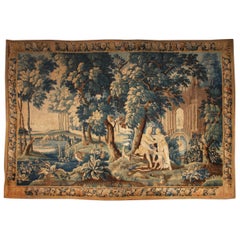
Holy Woman - Wiehler Handmade Gobelin Tapestry Brown White Pink Blue Black Grey
Located in Sofia, BG
Holy Woman
Wiehler Handmade Gobelin Tapestry by Maestro Vera Petrova - Sapundjieva, Bulgarian artist 1912 - 1985
About the artwork
TECHNIQUE: Wiehler ...
Category
1930s Romantic More Art
Materials
Tapestry
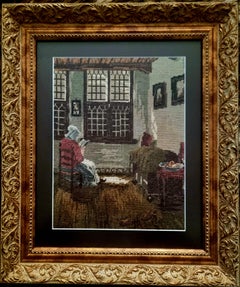
The Lake House - Wiehler Handmade Gobelin Tapestry Green Red Beige White Pink
Located in Sofia, BG
The lake house - Landscape
Wiehler Handmade Gobelin Tapestry by Maestro Vera Petrova - Sapundjieva, Bulgarian artist 1912 - 1985
About the artwork
TECH...
Category
1940s Romantic More Art
Materials
Tapestry
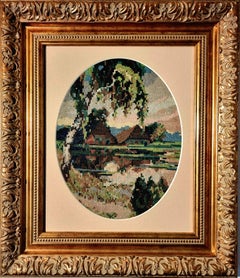
My Cat - Wiehler Handmade Gobelin Tapestry Green Red Beige White Pink
Located in Sofia, BG
My Cat
Wiehler Handmade Gobelin Tapestry by Maestro Vera Petrova - Sapundjieva, Bulgarian artist 1912 - 1985
About the artwork
TECHNIQUE: Wiehler Handm...
Category
1940s Romantic More Art
Materials
Tapestry
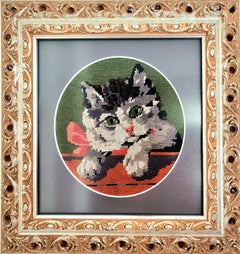
Gobelin in Six Parts Woven Battle with Horses in Red Blue Grey In Stock
Located in Utrecht, NL
Gobelin in Six Parts Woven Battle with Horses in Red Blue Grey In Stock
Gerti Bierenbroodspot is a leading Dutch painter, sculptor, writer and p...
Category
21st Century and Contemporary Contemporary More Art
Materials
Fabric
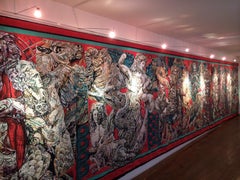
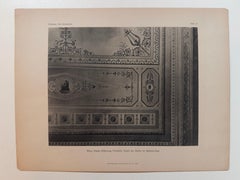
Plate 22:"Vienna, Palais Erzherzog Friedrich, detail of ceiling in Gobelin Hall"
Located in New York, NY
This photogravure is the twenty second plate presented in Josef Folnesics publication "Alte Innenräume österreichischer Schlösser, Paläste und Wohnhäuser" (Old interiors of Austrian ...
Category
1920s Academic Black and White Photography
Materials
Photogravure
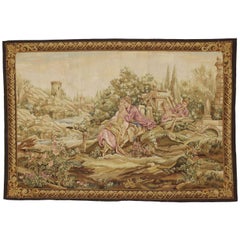
The Pastoral Embrace: A Luxury French Rococo Handwoven Tapestry
By Gobelins Royal Manufactory, François Boucher
Located in Dallas, TX
73697 Francois Boucher Reproduction Rococo Tapestry, 04'00 x 06'00. Inspired by the poetic elegance of The Noble Pastoral Series (1755) by François Boucher, this handwoven wool tapestry captures the languid sophistication and soft sensuality of the Rococo era. The enchanting scene unfolds as an ode to idyllic romance — two youthful couples intertwined within a countryside dreamscape, where beauty and leisure reign supreme. Every precious thread pays homage to 18th-century France’s most celebrated painter of intimacy and grace, reimagining his vision for the discerning collector who seeks both heritage and refinement.
At the heart of this pastoral reverie, a shepherd gently instructs his beloved shepherdess in the delicate art of the flute, their figures bathed in warm, honeyed light. Across the romantic scene, another young pair reclines amid moss and marble ruins, lost in music and affection. The exclusive masterpiece evokes the charm of French salon art — an era when love was theatrical, nature idealized, and every moment rendered a painting.
Surrounding the figures, the landscape blossoms with meticulous artistry: roses, wildflowers, and verdant foliage cascade across the tapestry, framing the lovers in a world untouched by time. Rolling hills, distant towers, and the soft shimmer of water evoke a sense of pastoral poetry, where nature and romance harmonize in eternal spring. The Rococo border, rendered in shades of soft gold and ochre, adds a stately rhythm to the composition — an elegant frame for the symphony of color within.
While newly woven, this exquisite work of art is an heirloom in spirit — a refined reproduction that revives the opulence of Versailles and the spirit of Boucher’s atelier. For today’s connoisseur, it offers the romance of 18th-century France without the fragility of age, bridging past and present through impeccable craftsmanship. Displayed in a grand salon, library, or private suite, The Pastoral Courtship transforms any interior into a sanctuary of poetic elegance and cultivated charm.
Francois Boucher Reproduction Tapestry Noble Pastorale...
Category
21st Century and Contemporary Chinese Romantic Western European Rugs
Materials
Wool
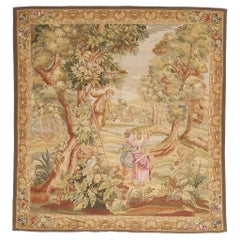
The Cherry Harvest: A Louis XIV Style Tapestry of Rococo Romance
By Gobelins Royal Manufactory, François Boucher
Located in Dallas, TX
73700 Francois Boucher Reproduction Tapestry, 07'04 X 07'05. Drawing inspiration from François Boucher’s La Cueillette des Cerises (The Cherry Picking, Paris, 1703–1770), this handwo...
Category
21st Century and Contemporary Chinese Aubusson Chinese and East Asian Rugs
Materials
Wool
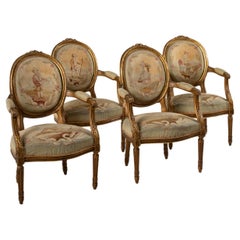
Set of Four 18th Century French Louis XVI Period Giltwood and Aubusson Armchairs
Located in Fayetteville, AR
This set of four French Louis XVI period gilt wood armchairs boasts their original Aubusson tapestry seats and backs featuring four different pastoral figures on the seat backs and d...
Category
Antique Late 18th Century French Louis XVI Armchairs
Materials
Tapestry, Giltwood
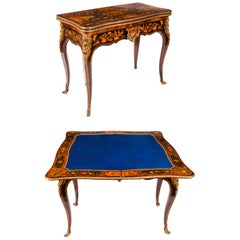
Antique French Louis Revival Floral Marquetry Console / Card Table 19thCentury
Located in London, GB
This is a beautiful antique French Louis XV Revival ormolu mounted king wood, burr walnut and floral marquetry shaped rectangular console / card table, circa 1870 in date.
The shape...
Category
Antique 1870s French Louis XV Card Tables and Tea Tables
Materials
Walnut
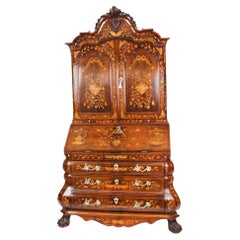
Antique Walnut Dutch Marquetry Bureau Cabinet Bookcase 18th Century
Located in London, GB
This is an important antique Dutch walnut and marquetry bureau bookcase, circa 1780 in date.
It has been made from the finest burr walnut w...
Category
Antique 1780s Dutch Bookcases
Materials
Walnut
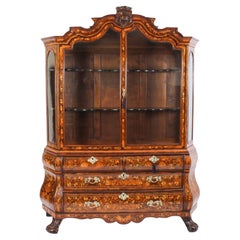
Antique Dutch Marquetry Inlaid Walnut Display Cabinet Vitrine 18th Century
Located in London, GB
This is a beautiful antique late 18th Century Dutch walnut and marquetry inlaid display cabinet dating from circa 1780.
The cabinet is superbly inlaid all over with the most wonder...
Category
Antique 1780s Cabinets
Materials
Walnut
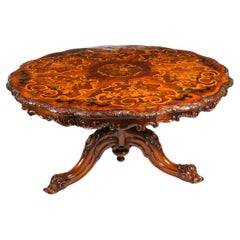
Antique 4ft 6" diam Burr Walnut Marquetry Dining / Center Table 1860s
Located in London, GB
This is a fine and rare antique English mid Victorian, burr walnut, ebonised and fruitwood marquetry, centre table, in the manner of Edward Holmes Baldock and circa 1860 in date.
The shaped segmentally veneered circular top is beautifully marquetry inlaid with assorted flowers within shaped cartouches and features a beautiful scrolled foliate carved edge.
It sits on a cabochon and acanthus-wrapped baluster column with three cabochon-embedded, foliate-scrolled, rocaille-carved outswept legs, with clasped feet and recessed castors.
It is extremely versatile and can be placed in your hallway, living room, dining room, or reception.
Condition:
In excellent condition having been beautifully cleaned, polished and waxed in our workshops, please see photos for confirmation.
Dimensions in cm:
Height 74 x Width 145 x Depth 145
Dimensions in inches:
Height 2 foot, 5 inches x Width 4 foot, 9 inches x Depth 4 foot, 9 inches
In 1805 Baldock's name first appears as the freehold owner of 7 Hanway Street, London. Over the years he expanded his premises. By 1840 his property in this street comprised nos 1 and 2, both with back premises, and in addition he owned a yard and no. 3, which he let. It was in 1 and 2 Hanway Street that he carried on business up to 1843 when he retired, selling his stock and moving to a fashionable residential address, Hyde Park Place. According to one 19th-century source, the business was taken over by Frederick Litchfield's father. He was buried in St Pancras Church, Euston, where he is commemorated by a marble memorial tablet on the north wall, dedicated jointly to him and Mary Frances Westoby.
In 1805 he described himself as dealer in china and glass. By 1821 he was styled in the Post Office Directories as antique furniture and ornamental china dealer, and in 1826 he described his activities in a bill heading as ‘buying, selling, exchanging and valuing China, Cabinets, Screens, Bronzes etc.’. Though Baldock's business consisted primarily in dealing in antique porcelain and furniture — largely foreign — he repaired, remodelled and altered existing furniture. He also produced designs for new pieces and had them made.
In 1836 Baldock sold French eighteenth-century furniture to Lady Stafford (Countess of Sutherland) for Dunrobin Castle, and in 1842 Scotland’s leading country house architect, William Burns, recommended to his patron O. Tyndall Bruce of Falkland House that ‘for Cabinets and China, do not omit going to Baldock’s Hanway Street, Oxford Street… which is the first place in London’.
In 1841 the Duke of Buccleuch was sent drawings of bedroom furniture as well as working drawings of an octagonal table, a bookcase and three stalls. A design of a table in the Buccleuch papers which is annotated ‘No. 3 Amboyna wood ground with coloured flowers’ is almost certainly the preliminary sketch for a table which was later made. Robert Byng (1764-1847) and George Newport, 2nd Earl of Bradford were also customers of Baldock’s. In 1840 he supplied a two encoignures with slab tops to the latter (one illus. FHS Newsletter (February 2017, p. 5). A pair of china cabinets...
Category
Antique 1860s Dining Room Tables
Materials
Walnut
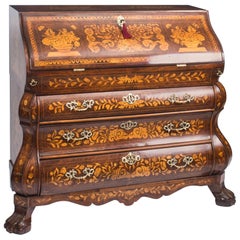
18th Century Dutch Burr Walnut Floral Marquetry Bureau
Located in London, GB
This is a wonderful antique late 18th century Dutch burr walnut and marquetry bombe' bureau.
It has been accomplished in burr walnut, with exquisite hand cut floral marquetry typica...
Category
Antique 1780s Dutch Secretaires
Materials
Walnut
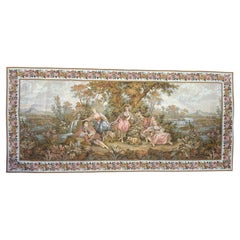
Nice vintage French Aubusson Style Jacquard Tapestry « Gallant meeting »
By Jules Pansu
Located in Saint Ouen, FR
Exquisite French tapestry from the mid-20th century, featuring a beautiful design titled « Rendez-vous galant » ( Gallant meeting ) and nice colours, woven at renowned Jules Pansu wo...
Category
Mid-20th Century French Aubusson Tapestries
Materials
Wool, Cotton, Acrylic
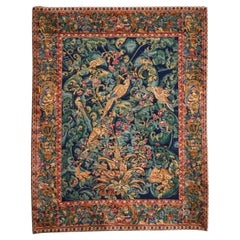
Mid Century Wall Tapestry with Birds, Animals and Foliage Belgium 1960s
Located in Meer, VAN
Mid Century Wall Tapestry with Birds, Animals and Foliage Belgium 1960s
A wonderful mid century Belgian wall tapestry with birds. Great colors and design, with wonderful detailed de...
Category
Mid-20th Century Belgian Mid-Century Modern Tapestries
Materials
Fabric
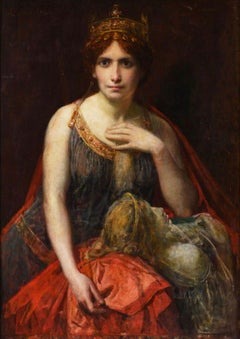
Fine 19th Century French Symbolist Oil Painting Portrait of Mythological Queen
Located in Cirencester, Gloucestershire
The Queen
by Diogène Ulysse Napoléon Maillart (French, 1840 – 1926) *see notes below
oil painting on canvas, framed
canvas: 42 x 30 inches
framed: 45 x 33 inches
condition: overall v...
Category
Late 19th Century Symbolist Figurative Paintings
Materials
Canvas, Oil
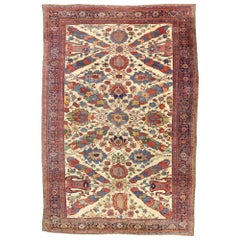
1880s Antique Persian Ziegler Mahal Sultanabad Rug, Hotel Lobby Size Carpet
Located in Dallas, TX
75660, antique Persian Ziegler Mahal Sultanabad rug, Palace size Persian rug. This antique Persian Ziegler Mahal showcases a classic Sultanabad...
Category
Antique Late 19th Century Persian Arts and Crafts Persian Rugs
Materials
Wool
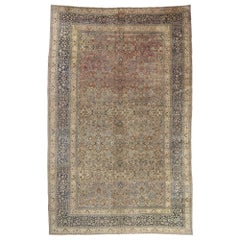
Oversized Antique Persian Mashhad Rug, Hotel Lobby Size Carpet
Located in Dallas, TX
73829 antique Persian Mashhad rug with Renaissance Regency, 13'06 x 21'00. With naturalistic architectural elements and an opulent color scheme, this hand-knotted wool antique antique Persian Mashhad palace size rug embodies a combination of Renaissance Regency and Tudor style. The all-over floral pattern is composed of elegant palmettes, leafy tendrils, acanthus scrolls, curved sickle leaves, and floral sprays connected by an arabesque flow of undulating vines. A well-balanced proportion of florals and all-over curvilinear design delivers an essence of tranquility forms creating a lovely rhythmic effect. Gentle waves of abrash sweep across the field, enhancing the depth to the elaborate blossoms and swirling vinery highlighting the time-softened colors and its intimate patina. With its commitment to tradition and heart full of whimsy, this antique Persian Mahhad rug can enliven nearly any opulent period-interior with color and vitality. Perfect for a great room, wine cellar, executive suite, conservatory, state room, royal suite, hotel lobby, music room, living room, dining room, drawing room, private library, golf locker room, billiards room, clubhouse, large home office, master retreat, private Chambers, studio, study, loft, lounge, entertainment parlor, trophy room, large bedroom, or formal sitting room. Well-suited for a wide range of interior styles: Dutch Renaissance, Arabian, Islamic, Louis XIV, Louis XI, Louis XV, Rococo, Chippendale, Regal, Aubusson, Baroque, Renaissance, Old World, Traditional, Eclectic, European, and Savonnerie inspired interiors with Gobelins or Beauvais style. Whether in a formal setting with elaborate furnishings or in an Ottoman style interior, this antique palace size rug...
Category
Early 20th Century Persian Art Nouveau Persian Rugs
Materials
Wool
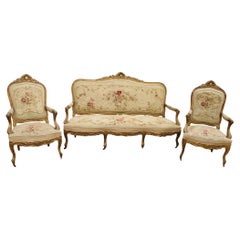
1870
s Antique French Giltwood Aubusson Salon Set, Settee and Fauteuils
Located in Dallas, TX
Take a timeless, bespoke design, mix in a dash of romantic connotations to get this worn-in bucolic charm aesthetic. Invite the beauty of Louis XV style into your home with this Giltwood Aubusson Tapestry three piece salon suite from the French Napoleon III period. Upholstered with hand-woven Aubusson tapestry and carved giltwood, this Late 19th Century three piece salon suite includes a settee and two matching armchairs. The settee and Fauteuil (armchair) are supported by turned tapering legs, padded armrests, and cartouche-shaped backs. Please take into consideration these pieces are from the 1870's as a result some frame work and reupholstery may be required.
All facets of this 3-piece set collectively entwine to form the striking and grand charm of a textile that is worthy to depict the tender, emotive, and vibrant details of humans and histories, no longer known. The historic worth far exceeds any damage that comes with centuries of wear. In any event, it is simply amazing. If you adore timeworn treasure, this antique parlor set...
Category
Antique Late 19th Century French Napoleon III Settees
Materials
Wool, Tapestry, Giltwood
Vintage French Aubusson Rug with Regal Romantic Rococo Style
Located in Dallas, TX
77610, vintage French Aubusson rug with Regal Romantic Rococo style. Flourishing in technique and trend from the middle of the 17th century...
Category
Late 20th Century French Aubusson Western European Rugs
Materials
Wool