68 results for "josé clemente orozco"
to
3
65
3
23
3
35
25
1
23
7
12
10
16
Overall Height
to
Overall Width
to
20
11
9
4
3
2
1
1
1
1
27
14
13
9
6
6
5
4
3
3
2
2
1
1
1
1
1
1
1
1
1
2
54
11
1
1
6
5
1
7
4
4
3
1
9
5
4
3
3
21
20
10
9
8
SCARCE EARLY OROZCO - CABEZA DE MUJER -
By Jose Clemente Orozco
Located in Santa Monica, CA
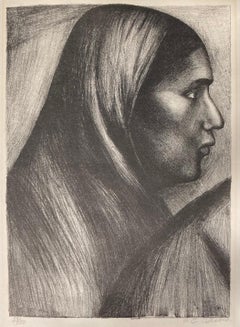
JOSE CLEMENTE OROZCO (1883 – 1949)
CABEZA DE MUJER, ( Woman's Head: Mexican Woman) 1929 (Orozco 9)
Lithograph, signed and numbered 23/50. in pencil. Pri...
Category
1920s Realist Figurative Prints
Materials
Lithograph
Women
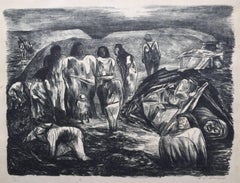
By Jose Clemente Orozco
Located in Santa Monica, CA
JOSE CLEMENTE OROZCO (1893 – 1949)
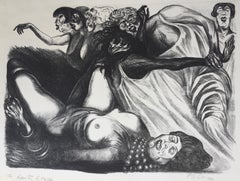
WOMEN, 1934 ( Orozco 25)
Lithograph, One of 127 signed & unnumbered impressions, (total printed 255)
Printer Jesus Arteaga. Image 12 1/2 x 17 inches, sheet 17 x 23 inches.
Large sheet. top sheet edge with deckle edge and with some remnants of old old tape. Some slight mat burn verso., just a hint on the recto.
This impression is also dedicated to Rosita Boyce by Clemente Orozco - (the Artist's Son) in 1961
From "Jose Clemente Orozco - Graphic Work" by Clemente Orozco, University of Texas Press, 2004.
"The image is a detail of the Mural "Contemporary World" in the Palace of Fine Arts, Mexico City.
The mural depicts "the real prostitution of power is implied by prostitutes fighting for survival. in a game of exuberance and decadence. The theme of women, especially prostitutes, has a special significance in Orozco's work, from his early watercolors to this fresco.."
This print is related to Orozco's MACHINES also on 1stdibs offered by this dealer.
Mexican Prints...
Category
1930s Modern Figurative Prints
Materials
Lithograph
MACHINES
By Jose Clemente Orozco
Located in Santa Monica, CA
JOSE CLEMENTE OROZCO (Mexican, 1883-1949)
MACHINES, (aka Dos cabezas y Maquinas, Dos Cabezas, Maquinas) 1935 (Orozco 26)
Lithograph. Image 12 x 17 inches. Full margins, sheet 16 x 2...
Category
1930s Modern Figurative Prints
Materials
Lithograph
PROLETARIANS
By Jose Clemente Orozco
Located in Santa Monica, CA
JOSE CLEMENTE OROZCO (1893 - 1949)
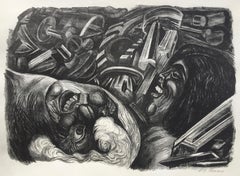
PROLETARIANS (aka Basurero, Scavengers ) 1935 (Orozco 27)
lithograph, One of 88 signed and numbered of a total edition of 133, (+ 42 unnumbered a...
Category
1930s Other Art Style Figurative Prints
Materials
Lithograph
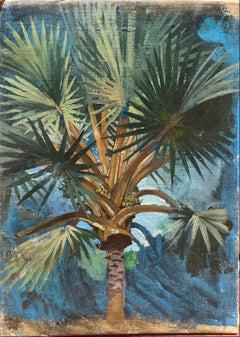
Oil Landscape of Palm Tree
Located in Fredericksburg, VA
This painting was bought from the artist's estate in Woodberry, CT and is signed verso. Eugene Savage studied at the Chicago Art Institute, the American Academy in Rome, and received his Masters of Art at Yale University. He taught at Yale for almost 30 years in Art and Architecture. Eugene Savage had many latin influences such as Diego Rivera and José Clemente Orozco. In the 1940s he spent his time painting Hawaiian murals of people and of more abstract Hawaiian...
Category
Mid-19th Century Abstract Expressionist Abstract Paintings
Materials
Canvas, Oil
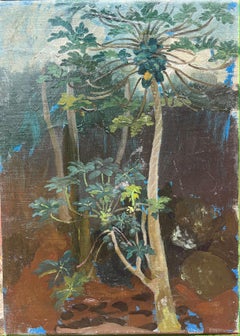
Oil Landscape of Hawaiian Forest Interior
Located in Fredericksburg, VA
This painting was bought from the artist's estate in Woodberry, CT and is signed verso. Eugene Savage studied at the Chicago Art Institute, the American Academy in Rome, and received his Masters of Art at Yale University. He taught at Yale for almost 30 years in Art and Architecture. Eugene Savage had many latin influences such as Diego Rivera and José Clemente Orozco. In the 1940s he spent his time painting Hawaiian murals of people and of more abstract Hawaiian...
Category
Mid-19th Century Expressionist Abstract Paintings
Materials
Canvas, Oil
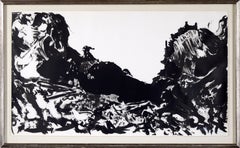
"Machu Pichu" - Black and Grey Lithograph #10/200
By David Alfaro Siqueiros
Located in Soquel, CA
"Machu Pichu" - Black and Grey Lithograph #10/200
Bold black and grey lithograph by David Alfaro Sequeiros (Mexican, 1896-1974). This piece is a high contrast, abstracted landscape....
Category
1940s Contemporary Figurative Prints
Materials
Paper, Lithograph
UNTITLED
By Raul Anguiano
Located in Dallas, TX
Raul Anguiano. Untitled. Mexico. Signed and dated 1974, Technique: Lithography. Size: 26 x 32 inches.
Anguiano is a renowned Mexican painter who was born in Guadalajara on February 26th, 1915, and died in Mexico City on January 13th, 2006. In his works you can see subjects related to rural and indigenous Mexico, festivals, traditions, religion and landscapes. In 1922 he collaborated with Diego Rivera and joined the group of Mexican muralists...
Category
1770s Prints and Multiples
Materials
Lithograph
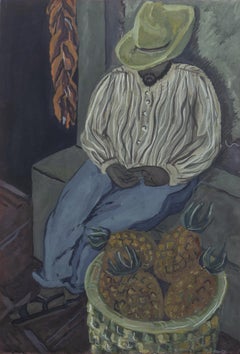
Pedro, Pineapple Seller
, WPA, California, Orozco, Rivera, MMA, GGIE, ASL, NY
Located in Santa Cruz, CA
Signed lower right, 'A. Sottosanti' for Angelo Anthony Sottosanti (American, 1917-2004); additionally signed, verso, titled, 'Pedro of Tehuan Tepee, Mexico' and painted circa 1940.
...
Category
1940s Figurative Drawings and Watercolors
Materials
Paper, Gouache
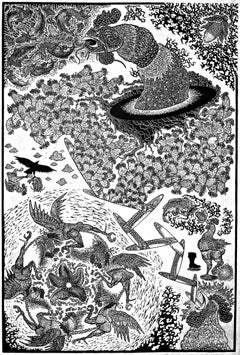
"American Halo IV" Linocut print
By Jesse Shaw
Located in Philadelphia, PA
linocut, edition of 15
This artwork measures 36"h x 24"w and ships unframed.
Bio // Jesse Shaw (b.1980) is a printmaker from Tennessee primarily working in relief prints carved from linoleum blocks. His work is based in the narrative, satirical, political, and social commentary tradition of the graphic print. Jesse is currently working on a series of fifty prints depicting the epic story of America. Prints from his “American Epic” series of linocut prints...
Category
21st Century and Contemporary Contemporary More Prints
Materials
Linocut, Archival Paper
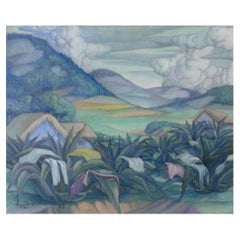
Alfonso Pena Important Mexican Muralist Painting, Drying Laundry, Mexico
Located in Phoenix, AZ
Beautiful Mexican landscape painting by Alfonso Pena
Oil on canvas created 1963. Mexican subject.
Excellent condition, unframed.
Measures: 19 3/4" H x 24 ...
Category
1960s Abstract Paintings
Materials
Canvas
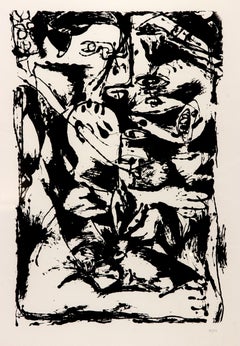
Untitled - Expression no. 2 - Screen Print After Jackson Pollock - 1964
By Jackson Pollock
Located in Roma, IT
JACKSON POLLOCK (American, 1912-1956)
Untitled, CR1093 (after painting Number 9, CR340), 1951–printed 1964
Screenprint, on Strathmore wove paper, numbered in pencil lower left, and with the Estate of Jackson Pollock 1964 blindstamp lower left(?)
From the second posthumous printing of 50 authorized by his widow, Lee Krasner in 1964 (there was also a lifetime edition of 25)
Published by Bernard Steffen...
Category
1960s Abstract Expressionist Abstract Prints
Materials
Screen
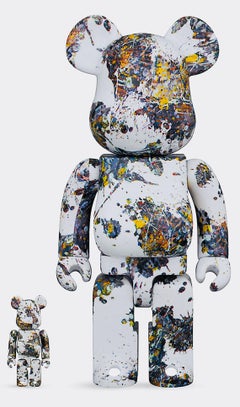
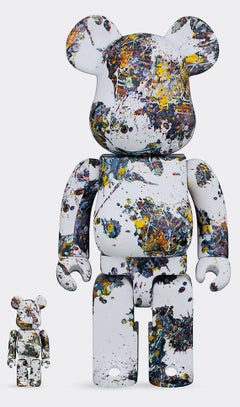
Jackson Pollock Bearbrick 400% figure (Jackson Pollock BE@RBRICK)
By Jackson Pollock
Located in NEW YORK, NY
Jackson Pollock 400% & 100% Bearbrick Vinyl Figure (set of 2):
A rare highly collectible Bearbrick Jackson Pollock statue piece, splattered from head to toe in Pollock’s signature a...
Category
21st Century and Contemporary Contemporary Figurative Sculptures
Materials
Resin, Vinyl
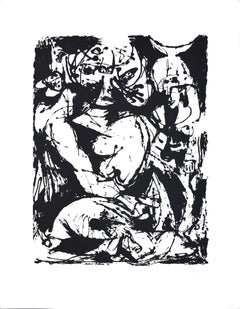
Untitled, CR1095 (after painting Number 22, CR344), 1951, printed 1964
By Jackson Pollock
Located in Roma, IT
JACKSON POLLOCK (American, 1912-1956)
Untitled, CR1095 (after painting Number 22, CR344), 1951, printed 1964
Screenprint, on Strathmore wove paper, numbered 49/50 in pencil lower left, and with the Estate of Jackson Pollock 1964 blindstamp lower left
From the posthumous printing of 50 authorized by his widow, Lee Krasner, in 1964 (there was also a lifetime edition of 25)
Published by Bernard Steffen...
Category
1960s Abstract Expressionist Abstract Prints
Materials
Screen
Jose by Luis Jimenez
By Luis Jiménez
Located in Phoenix, AZ
Jose 1986
Color lithograph 23/30
23 × 34 in 58.4 × 86.4 cm.
SHIPPING CHARGES INCLUDE SHIPPING, PACKAGING & INSURANCE
Luis Jimenez 1940 - 2006
Luis Jiménez was born in El Paso, Te...
Category
1980s Contemporary Animal Prints
Materials
Lithograph
"Tierra Roja" from the "Mexican suite"
By David Alfaro Siqueiros
Located in San Francisco, CA
This artwork titled "Tierra Roja" from "The Mexican Suite" is an original colors lithograph on Arches paper by renown Mexican artist David Alfaro Siqueiros...
Category
Mid-20th Century Modern Landscape Prints
Materials
Lithograph
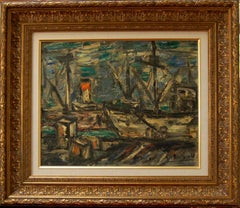
Freight Dock
By John Rockwell
Located in San Francisco, CA
This artwork titled "Freight Dock" is an original oil on canvas by noted American artist John Rockwell, 1902-1960 It is signed at the lower right corner by the artist, and also signe...
Category
1950s Impressionist Figurative Paintings
Materials
Oil
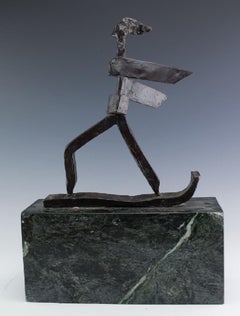
Kinetic Bronze Expressionist Sculpture Skier or Surfer Modernist Sporting Figure
Located in Surfside, FL
Vintage stylized figural sculpture by J James Akston (1898-1983 Poland/New York/Florida) Crafted of cast bronze with a rich dark brown patina. A sports figure, depicting a snow skii...
Category
Mid-20th Century Surrealist Abstract Sculptures
Materials
Marble, Bronze
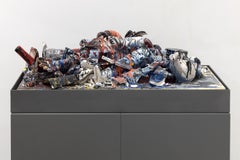
Los Caballos en la Conquista
By Walead Beshty
Located in Palm Desert, CA
"Los Caballos en la Conquista (Horses in the Conquest)" is a Contemporary abstract Ceramica Suro slip cast remnants, glaze, and firing plate sculpture by Walead Beshty in 2013. The a...
Category
21st Century and Contemporary Contemporary Abstract Sculptures
Materials
Ceramic, Glaze
Jackson Pollock Bearbrick 400% Companion (Jackson Pollock BE@RBRICK)
Located in NEW YORK, NY
Jackson Pollock 400% & 100% Bearbrick Vinyl Figure (set of 2):
A rare highly collectible Bearbrick Jackson Pollock statue piece, splattered from head to toe in Pollock’s signature art; includes a recreation of the artist’s signature located on the verso along with a trademarked stamp from the Estate of Pollock-Krasner. New and housed in its original collector’s box.
Medium: Vinyl Figurine. Year: 2020.
Dimensions of larger figurine: 11 x 5 inches.
Condition: New in its original packaging.
Published by Medicom from a sold out limited series of unknown.
Further Background
BE@RBRICKs are a form of collectible toy that resemble a cross between LEGO and well, a bear. These block-style figurines boast teddy bear-style heads that have become an integral pillar of the collectible toy scene. In fact, it wouldn’t be so far-fetched to say that it almost single-handedly carved out the fad of toy collecting in modern times, treading the very fine line between toy and art. Since its inception, BE@RBRICKs have become one of the most recognizable characters in the world, and some of the most sought after.
Jackson Pollock was one of the most famous Post-War American artists. A pioneer of Abstract Expressionism, Pollock’s drip paintings ushered in a new era of non-representational art. “It doesn't make much difference how the paint is put on as long as something has been said,” he once remarked. “Technique is just a means of arriving at a statement.” Born Paul Jackson Pollock on January 28, 1912 in Cody, WY, he studied painting at the Manual Arts High School in Los Angeles during the late 1920s, where he befriended Philip Guston. In the fall of 1930, Pollock moved to New York where he studied under the Regionalist painter Thomas Hart Benton at the Art Students League. Joining the WPA in 1937, Pollock painted murals around the country in a style reminiscent both of Benton and the Mexican muralist José Clemente Orozco. After the WPA program ended, Pollock took on a number of odd jobs and began producing Surrealist works related to those of Joan Miró. An early champion of his work, Peggy Guggenheim hosted Pollock’s first solo show at her gallery Art of This Century in 1943. The paintings that emerged from his Long Island studio during the late 1940s came to exemplify his entire career. Works such as Blue Poles (1952), generated enormous media attention, and turned Pollock into a celebrity beyond the scope of the art world. At the age of 44, his celebrated career was cut short when the artist died in a car accident involving his mistress Ruth Kligman, on August 11, 1956 in East Hampton, NY. He was survived by his wife the painter Lee Krasner. In 2006, Pollock’s No. 5 (1948) was sold by David Geffen...
Category
21st Century and Contemporary Pop Art Figurative Sculptures
Materials
Resin, Vinyl
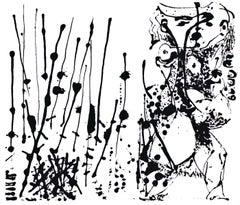
Untitled - Expression no. 1 - Screen Print After Jackson Pollock - 1964
By Jackson Pollock
Located in Roma, IT
JACKSON POLLOCK (American, 1912-1956)
Untitled, CR1091 (After Painting Number 7, CR324), 1951, printed 1964
Screenprint, on Strathmore wove paper, numbered in pencil lower left, and with the Estate of Jackson Pollock 1964 blindstamp lower left
From the second posthumous printing of 50 authorized by his widow, Lee Krasner in 1964 (there was also a lifetime edition of 25)
Published by Bernard Steffen...
Category
1960s Abstract Expressionist Abstract Prints
Materials
Screen
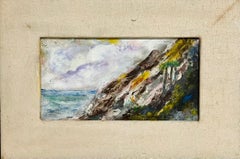
Modernist Impasto Painting Mountain with Ocean Landscape J. James Akston
Located in Surfside, FL
J. James Akston
Mountain Landscape by ocean
Acrylic on Board
Frame: 11.5 x 16.
Image: 5 X 9.5
Joseph James Akston was a Polish American sculptor, painter, known for surrealist abstract painting and Aubusson (for Les Ateliers Pinton Frères, tapisserie, Aubusson) tapestry artist. Born in Warsaw, Poland in 1898 he died in Palm Beach Florida in 1983. During the 1960s and '70s the entrepreneur-artist James Joseph Akston adopted a unique Surreal Expressionist style in order to present his private primordial universe and lampoon its denizens, a ribald cast of animal creatures with human foibles. A successful industrialist, he began his career with General Motors foreign operations and then started his own business.
Intermittently he studied painting, first with Jerry Farnsworth in North Truro (Mass.) and then with Jose Clemente Orozco in Mexico. In the early 1960s Akston became publisher-editor of a group of art publications which included The Magazine Arts. Initially an abstract expressionist, Akston had one-man exhibitions at the New York Convention Center and the Corcoran Museum in Washington. Since 2015 the record price for this artist at auction is $12,575 USD for Spheres Aux Triangles Aubusson Tapestry, sold at Bonhams New York in 2019.
He was a Graduate of Georgetown University. He sat on the board of the Norton Museum.
Exhibitions
1976 Hokin Gallery
1966 Gallery 63 NYC
1960 Gallery 63 Rome , Italy
Select Public Collections
National Museum, Wshington DC
Boca Museum of Art
Whitney Museum of Art, NYC
Museum of Modern Art, NYC
Museum of African Art Washington DC (Now part of Smithsonian Museum)
Bibliography: 1962 Art...
Category
Mid-20th Century American Modern Landscape Paintings
Materials
Oil
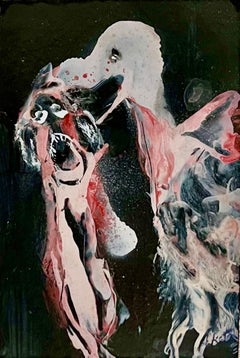
Surrealist Painting, Birds of Prey with Fish J. James Akston
Located in Surfside, FL
J. James Akston
Surrealism, Bird with Fish, marine scene
Acrylic on Board
Frame: 9.75 X 8
Image: 4.5 X 3.25
Joseph James Akston was a Polish American sculptor, painter, known for surrealist abstract painting and Aubusson (for Les Ateliers Pinton Frères, tapisserie, Aubusson) tapestry artist. Born in Warsaw, Poland in 1898 he died in Palm Beach Florida in 1983. During the 1960s and '70s the entrepreneur-artist James Joseph Akston adopted a unique Surreal Expressionist style in order to present his private primordial universe and lampoon its denizens, a ribald cast of animal creatures with human foibles. A successful industrialist, he began his career with General Motors foreign operations and then started his own business.
Intermittently he studied painting, first with Jerry Farnsworth in North Truro (Mass.) and then with Jose Clemente Orozco in Mexico. In the early 1960s Akston became publisher-editor of a group of art publications which included The Magazine Arts. Initially an abstract expressionist, Akston had one-man exhibitions at the New York Convention Center and the Corcoran Museum in Washington. Since 2015 the record price for this artist at auction is $12,575 USD for Spheres Aux Triangles Aubusson Tapestry, sold at Bonhams New York in 2019.
He was a Graduate of Georgetown University. He sat on the board of the Norton Museum.
Exhibitions
1976 Hokin Gallery
1966 Gallery 63 NYC
1960 Gallery 63 Rome , Italy
Select Public Collections
National Museum, Wshington DC
Boca Museum of Art
Whitney Museum of Art, NYC
Museum of Modern Art, NYC
Museum of African Art Washington DC (Now part of Smithsonian Museum)
Bibliography: 1962 Art...
Category
Mid-20th Century Surrealist Abstract Paintings
Materials
Acrylic
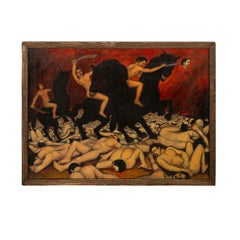
Oil Painting Puerto Rican Outsider Latin American Art "Horsemen of Apocalypse"
By Juan De Prey
Located in Portland, OR
A most unusual oil on canvas painting, by the Latin American artist Juan De' Prey (1904-1962), "The horsemen of the Apocalypse", dated 1932.
De'Prey worked mainly New York, this mos...
Category
1930s Outsider Art Paintings
Materials
Canvas, Oil
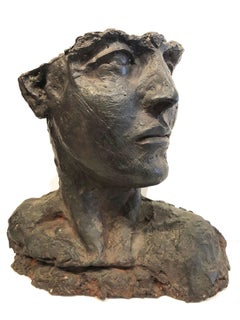
Bust Of A Woman Roberto Cortazar
By Roberto Cortazar
Located in Lake Worth Beach, FL
Bust of a Woman, bronze sculptue.
Bronze with dark brown patina signed on the back R. Cortazar 1/9.
Originally from Tapachula, Chiapas Mexico, he was b...
Category
1990s Modern Figurative Sculptures
Materials
Bronze
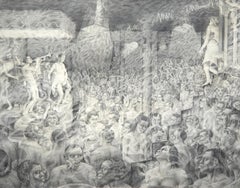
Night Life 2
Located in Palm Desert, CA
A drawing by Irving Norman. "Night Life 2" is a social surrealist drawing, graphite on paper in black and white by Post-War artist Irving Norman. The...
Category
Mid-20th Century Post-War Figurative Drawings and Watercolors
Materials
Graphite
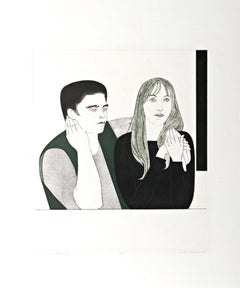
The Young Couple (Cole 141) Etching and Aquatint signed by top figurative artist
By Will Barnet
Located in New York, NY
The Young Couple (Cole 141), 1971
Color etching and aquatint. Signed. Titled. Numbered
Pencil signed, titled and numbered 209/225 on the front
Catalogue Raisonne: Cole, 141
Unframed
...
Category
1970s Pop Art Figurative Prints
Materials
Etching, Aquatint
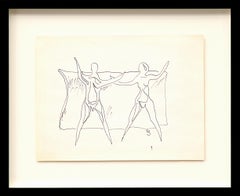
1970s Semi-Abstract Ink Drawing – Two Figures, American Modern Black Pen Art
Located in Denver, CO
This striking vintage pen-and-ink drawing, Untitled (Two Figures), was created in the 1970s by acclaimed American modernist artist Edgar Britton (1901–1982). Rendered in bold black i...
Category
20th Century Abstract Figurative Drawings and Watercolors
Materials
Pen
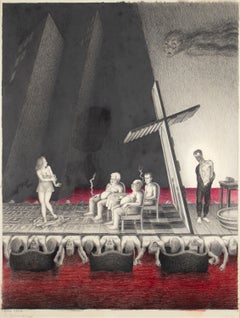
Striptease
By Irving Norman
Located in Palm Desert, CA
A drawing by Irving Norman. "Striptease" is a macabre cultural commentary drawing, pencil and color pencil on paper executed in a dark palette of blacks, grays, and reds by social su...
Category
Mid-20th Century American Modern Figurative Drawings and Watercolors
Materials
Pencil, Color Pencil
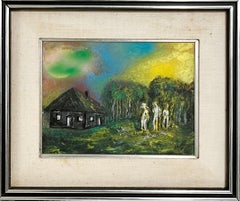
1970
s Mod Surrealist Day Glo Fluorescent Acrylic Painting J. James Akston
Located in Surfside, FL
J. James Akston
Surrealism, Village scene (Mexico)
Acrylic on Board
Frame: 15 X 18
Image: 9 X 12
Joseph James Akston was a Polish American sculptor, painter, known for surrealist abstract painting and Aubusson (for Les Ateliers Pinton Frères, tapisserie, Aubusson) tapestry artist. Born in Warsaw, Poland in 1898 he died in Palm Beach Florida in 1983. During the 1960s and '70s the entrepreneur-artist James Joseph Akston adopted a unique Surreal Expressionist style in order to present his private primordial universe and lampoon its denizens, a ribald cast of animal creatures with human foibles. A successful industrialist, he began his career with General Motors foreign operations and then started his own business.
Intermittently he studied painting, first with Jerry Farnsworth in North Truro (Mass.) and then with Jose Clemente Orozco in Mexico. In the early 1960s Akston became publisher-editor of a group of art publications which included The Magazine Arts. Initially an abstract expressionist, Akston had one-man exhibitions at the New York Convention Center and the Corcoran Museum in Washington. Since 2015 the record price for this artist at auction is $12,575 USD for Spheres Aux Triangles Aubusson Tapestry, sold at Bonhams New York in 2019.
He was a Graduate of Georgetown University. He sat on the board of the Norton Museum.
Exhibitions
1976 Hokin Gallery
1966 Gallery 63 NYC
1960 Gallery 63 Rome , Italy
Select Public Collections
National Museum, Wshington DC
Boca Museum of Art
Whitney Museum of Art, NYC
Museum of Modern Art, NYC
Museum of African Art Washington DC (Now part of Smithsonian Museum)
Bibliography: 1962 Art...
Category
1970s Surrealist Abstract Paintings
Materials
Acrylic
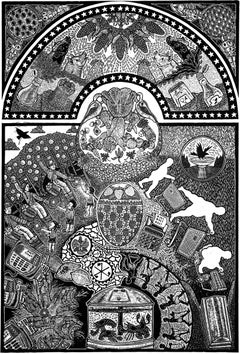
American Consumerism I
By Jesse Shaw
Located in Philadelphia, PA
linocut, edition of 15
The artwork is shipped unframed and measures 36in x 24in. Please message us directly if you are interested in custom framing for your print.
Bio // Jesse Sha...
Category
21st Century and Contemporary Contemporary Abstract Prints
Materials
Linocut
American Street Scene
By Irving Norman
Located in Palm Desert, CA
A painting by Irving Norman. "American Street Scene" is a macabre social surrealism city scape, oil on canvas in a bold palette of reds, blues, and yellows by artist Irving Norman. T...
Category
Mid-20th Century Post-War Figurative Paintings
Materials
Canvas, Oil
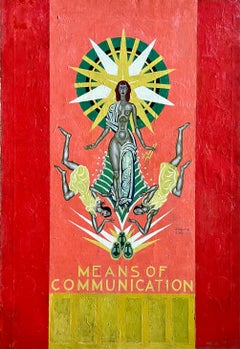
NYC 1939 World
s Fair Mural Study American Scene WPA Modern Mid 20th Century
Located in New York, NY
NYC 1939 World's Fair Mural Study American Scene WPA Modern Mid 20th Century
Eugene Savage (1883 – 1978)
1939 World’s Fair Mural Study
45 x 30 inches
Oil on Canvas
Signed lower right
The painting is part of a 1,000 piece collection of art and objects from the 1939 World’s Fair. The collection as a whole is available.
Savage created the mural for the facade of the Communications Building. An image of the completed mural, along with a published postcard, is part of the listing. Note the center top female figure, she resembles the figure in the offered painting.
BIO
Eugene Francis Savage was born in Covington, Indiana 1883. He underwent various forms of art training in the early years. He was a pupil of The Corcoran Gallery and The Art Institute of Chicago, and was later awarded a fellowship to study in Rome at The American Academy.
While under the spell of that ancient city the young artist began to render historic figures that were suitable for the classic style needed for mural painting in the traditional manor. During this period he was able to study and observe Roman and Greek sculpture, although much of the academic training was accomplished by using plaster casts along with the incorporation of live models. This method survived and was used efficiently throughout Europe and the United States.
After leaving the Academy, Savage was commissioned to paint numerous murals throughout the United States and Europe. This artist received acclaim for the works he produced while under commissions from various sources. This young master was a contemporary of Mexican muralists David Alfaro Siqueiros (1896-1974), Jose Clemente Orozco (1883-1949) and Diego Rivera (1886-1957). In this period he was to show the influence of his contemporaries in formulating a modern style. Savage also played a vital role in the WPA Federal Art program, and he was a member of The Mural Art Guild..
Savage was elected an associate member of The National Academy of Design in 1924 and a full member in 1926. From 1947, he held a professorship at Yale University where he taught mural painting, and some of his students went on to significant positions.
By this time the artist had painted large-scale murals at Columbia, Yale University, Buffalo N.Y., Dallas, Texas, Chicago, Indiana, along with other commissioned works. He also achieved recognition for a series of murals commissioned by the Matson Shipping Line and completed around 1940. For this commission, Savage made many exacting studies of customs and folkways of the Hawaiian natives. However, the award-winning murals were not installed as planned but were put in storage during the war years when the ships were used for troop transportation and were in danger of attack.
However the mural images were reproduced and distributed by the shipping company including nine of the mural scenes that were made into lithographed menu covers in 1948. The American Institute of Graphic Arts awarded certificates of excellence for their graphic production, and the Smithsonian Institute exhibited the works in 1949. Today Savages' Hawaiian Art production is held in high regard by collectors of Hawaiian nostalgia.
In later years the artist focused his attention on a theme that dealt with the customs and tribal traditions of the Seminole Indians of Florida. He produced many variations of this theme throughout his lifetime, and the pictures were usually modest scale easel paintings, precise and carefully delineated. Many of these pictures incorporate Surrealistic elements and show some minor stylistic influences of the painters Kay Sage...
Category
1930s American Modern Figurative Paintings
Materials
Canvas, Oil
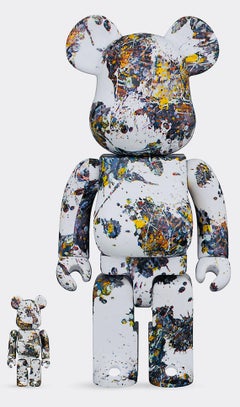
Jackson Pollock Bearbrick 400% (Jackson Pollock BE@RBRICK)
Located in NEW YORK, NY
Jackson Pollock 400% & 100% Bearbrick Vinyl Figure (set of 2):
A rare highly collectible Bearbrick Jackson Pollock statue piece, splattered from head to toe in Pollock’s signature a...
Category
21st Century and Contemporary Abstract Figurative Sculptures
Materials
Resin, Vinyl
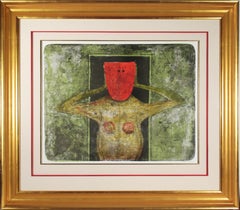
Mascara Roja
By Rufino Tamayo
Located in San Francisco, CA
This artwork titled "Mascara Roja" 1969 is an original colors lithograph on B.F.K. Rives paper by renown Mexican artist Rufino Tamayo, 1899-1991. It is hand signed and inscribed H.C. (Hors Commerce) in pencil by the artist. The image size is 21 x 27.25 inches, framed size is 37.25 x 42 inches. Published by Touchtone Publisher, New York, printed by Ateliers Desjobert, Paris. Referenced and pictured in the artist's catalogue raisonne by Pereda, plate #124. Custom framed in a wooden gold leaf frame, with gold and red spacer and fabric matting. It is in excellent condition.
About the artist:
A native of Oaxaca in Southern Mexico, Rufino Tamayo's father was a shoemaker, and his mother a seamstress. Some accounts state that he was descended from Zapotec Indians, but he was actually 'mestizo' - of mixed indigenous/European ancestry. (Santa Barbara Museum of Art). He began painting at age 11. Orphaned at the age of 12, Tamayo moved to Mexico City, where he was raised by his maternal aunt who owned a wholesale fruit business.
In 1917, he entered the San Carlos Academy of Fine Arts, but left soon after to pursue independent study. Four years later, Tamayo was appointed the head designer of the department of ethnographic drawings at the National Museum of Archaeology in Mexico City. There he was surrounded by pre-Colombian objects, an aesthetic inspiration that would play a pivotal role in his life. In his own work, Tamayo integrated the forms and tones of pre-Columbian ceramics into his early still lives and portraits of Mexican men and women.
In the early 1920s he also taught art classes in Mexico City's public schools. Despite his involvement in Mexican history, he did not subscribe to the idea of art as nationalistic propaganda. Modern Mexican art at that time was dominated by 'The Three Great Ones' : Diego Rivera, Jose Clemente Orozco, and David Alfaro Siqueros, but Tamayo began to be noted as someone 'new' and different' for his blending of the aesthetics of post Revolutionary Mexico with the vanguard artists of Europe and the United States.
After the Mexican Revolution, he focused on creating his own identity in his work, expressing what he thought was the traditional Mexico, and refusing to follow the political trends of his contemporary artists. This caused some to see him as a 'traitor' to the political cause, and he felt it difficult to freely express himself in his art. As a result, he decided to leave Mexico in 1926 and move to New York, along with his friend, the composer Carlos Chavez. The first exhibition of Tamayo's work in the United States was held at the Weyhe Gallery, New York, in that same year. The show was successful, and Tamayo was praised for his 'authentic' status as a Mexican of 'indigenous heritage', and for his internationally appealing Modernist aesthetic. (Santa Barbara Museum of Art).
Throughout the late thirties and early forties New York's Valentine Gallery gave him shows. For nine years, beginning in 1938, he taught at the Dalton School in New York.
In 1929, some health problems led him to return to Mexico for treatment. While there he took a series of teaching jobs. During this period he became romantically involved with the artist Maria Izquierdo...
Category
Mid-20th Century Modern Figurative Prints
Materials
Lithograph
American Animals II
By Jesse Shaw
Located in Philadelphia, PA
linocut, edition of 15
The artwork measures 36in x 24in and ships unframed. Please message us directly if you are interested in custom framing for your print.
Bio // Jesse Shaw (b....
Category
21st Century and Contemporary Contemporary Animal Prints
Materials
Linocut
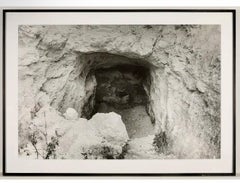
Los Carpinteros Cuban Art Photograph Tuneles Populares Silver Gelatin Photo
By Los Carpinteros
Located in Surfside, FL
Los Carpinteros (Cuban, 1992-present).
Silver gelatin print photograph, large format.
From the series "Tuneles Populares" (The People's Tunnels)
1999
Edition 1/5
Provenance: Bliss Fi...
Category
1990s Conceptual Landscape Photography
Materials
Silver Gelatin
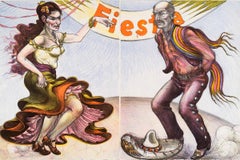
Fiesta by Luis Jimenez (Diptych) Stone Lithograph
By Luis Jiménez
Located in Phoenix, AZ
Artist: Luis Jimenez, American (1940 - 2006)
Title: Fiesta (Diptych)
Year: 1986
Medium: Two Lithographs on Arches, signed and numbered in pencil
Edition: 76
Size: 34 x 24 in. (86.36 ...
Category
1980s Contemporary Figurative Prints
Materials
Lithograph
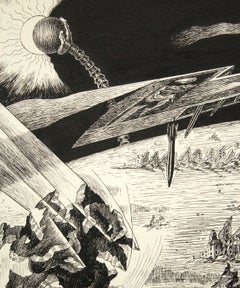
Shrapnel
Located in Palm Desert, CA
A drawing by Irving Norman. "Shrapnel" is a social surrealist drawing, pen and ink on artists board in black and white by Post-War artist Irving Norm...
Category
20th Century Post-War Landscape Drawings and Watercolors
Materials
Ink
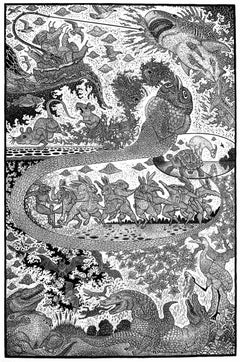
American Landscape
By Jesse Shaw
Located in Philadelphia, PA
linocut, edition of 15
This artwork measures 36"h x 24"w and ships unframed.
Bio // Jesse Shaw (b.1980) is a printmaker from Tennessee primarily working in relief prints carved fro...
Category
21st Century and Contemporary Contemporary More Prints
Materials
Linocut
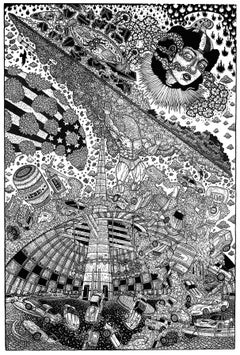
American Ghosts
By Jesse Shaw
Located in Philadelphia, PA
linocut, edition of 15
The artwork measures 36"h x 24"w and ships unframed.
Bio // Jesse Shaw (b.1980) is a printmaker from Tennessee primarily working in relief prints carved from...
Category
21st Century and Contemporary Contemporary Figurative Prints
Materials
Linocut
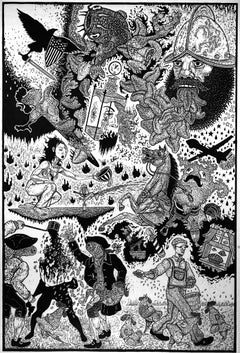
Bacchanal
By Irving Norman
Located in Palm Desert, CA
A painting by Irving Norman. "Bacchanal" is a macabre social surrealism painting, oil on canvas in a dark palette of reds, blues, and blacks by artist Irving Norman. The artwork is u...
Category
Mid-20th Century Post-War Figurative Paintings
Materials
Canvas, Oil
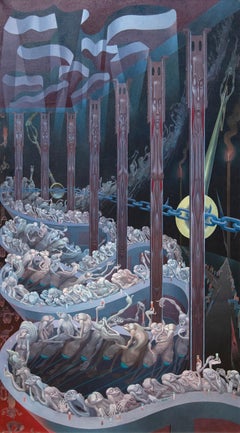

$125,000
Mexican Modernist Kite Painting, Stencil, Woodcut Print Hand Signed
By Francisco Toledo
Located in Surfside, FL
Francisco Benjamín López Toledo (born July 17, 1940, Juchitán, Oaxaca) is a Mexican painter, sculptor, and graphic artist. He studied at the Escuela de Bellas Artes de Oaxaca and the Centro Superior de Artes Aplicadas del Instituto Nacional de Bellas Artes, Mexico, where he studied graphic arts with Guillermo Silva Santamaria...
Category
21st Century and Contemporary Modern Mixed Media
Materials
Paint, Woodcut, Stencil
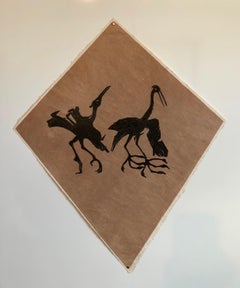
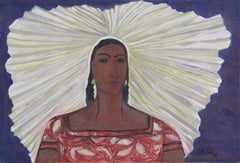
Tehuantepec Woman
, WPA, California, Oaxaca, Rivera, GGIE, ASL, NY MoMA
Located in Santa Cruz, CA
Signed lower right, 'Sottosanti' for Angelo Anthony Sottosanti (American, 1917-2004) and dated 1941.
A dramatic Modernist study of a Tehuantepec woman from Oaxaca shown wearing the ...
Category
1940s Figurative Drawings and Watercolors
Materials
Paper, Gouache
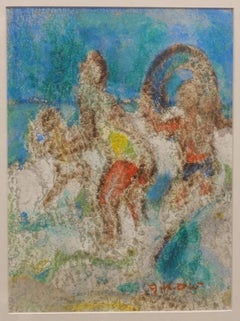
Modernist Beach Scene Painting, Playing Ball in Surf, WPA Jewish Woman Artist
By Ruth Gikow
Located in Surfside, FL
Modernist beach scene; signed lower right; image size is 11.5 x 8.5 inches, framed it measures
Ruth Gikow (January 6, 1915 Ukraine - 1982 New York City) was an Important American Jewish woman visual artist known primarily for her work as a genre painter. Her paintings often depict human figures interacting with an urban environment.
Ruth Gikow was born in 1915 in the Ukraine. Her father, Boris, was a photographer and her mother was named Lena. In 1920 she emigrated to New York City due to civil war and pogroms against the Jewish community. The pilgrimage took around two years. Once in New York City, the Gikow family found themselves in poverty, rather than the middle-class comfort they enjoyed in Ukraine. Ruth Gikow's skill was prominent even in youth, as she excelled in drawing in elementary school and entered Washington Irving High School at age thirteen in which she furthered her art prowess.
Later, she studied at the Cooper Union Art School, where she studied under school director Austin Purvis, Jr. and regional artist John Steuart Curry. In her second year of Art School, she was awarded a scholarship which she used to work with fellow painter Raphael Soyer.
She joined the New York City WPA Federal Art Project in 1935, where she was allowed to dedicate herself to her artwork full-time. In 1939, inspired by the muralists Diego Rivera and José Clemente Orozco, she applied and later won a commission to paint murals for Bronx Hospital, Rockefeller Center and the New York World's Fair. After the events of Pearl Harbor and once the Federal Arts Project was abandoned, Gikow's murals were sought after by New York department stores wishing to commission wall paintings. Gikow became disillusioned with mural painting due to the commercial aspect of these commissions.
With other associates, she founded the American Serigraph Society (along with Anthony Velonis, Lena Gurr, Robert Gwathmey, Leonard Pytlak, Harry Shoulberg, Russell Twiggs...
Category
1960s American Modern Figurative Paintings
Materials
Paint, Paper
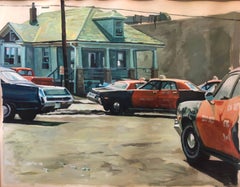
1980s Vintage American Street Scene Painting, Landscape with Taxi Cabs
By Val Lewton
Located in Surfside, FL
Val Edwin Lewton (May 23, 1937 – April 24, 2015) was a painter and museum exhibition designer. As an artist, he created Realist acrylic paintings and watercolors of urban and suburban scenes, predominantly in the Washington, D.C., area, where he lived and exhibited.
Val Lewton was born May 23, 1937, in Santa Monica, California. His father, also named Val Lewton, produced a string of successful and influential B movies for RKO Pictures, including Cat People (1942) and I Walked with a Zombie (1943). His mother, Ruth Knapp, was a painter and teacher of autistic children.
He graduated in 1959 from Whitman College in Walla Walla, Washington, and earned a master's degree in fine arts from Claremont University in 1962. After moving to Washington, D.C., he served on the staff of the Smithsonian American Art Museum for 32 years, simultaneously maintaining a career as a painter in his own right.
Lewton died in 2015s oon afterwards, exhibitions of his paintings were planned for the Katzen Arts Center (June 17 – August 13, 2017) and Addison/Ripley Fine Art (June 3 – July 8, 2017).
Chiefly known for his landscapes, Lewton generally depicted cities and suburbs with a detached, impersonal sensibility. Writing about his watercolors in Arts magazine in 1980, Harry Rand observed, “Either by implication or statement, personalities are absent from Lewton’s work; there is hardly a sense of the lives that move through those spaces he describes.” The critic compared the artist to Fairfield Porter, Edward Hopper, and Charles Sheeler.
Lewton painted from a young age. On a family trip to the Museum of Modern Art in New York City, he discovered the work of Henri Matisse, an encounter that permanently influenced his artistic vision. In the early 1960s, Lewton lived in southern California and taught art classes at the University of California Riverside. During this period, he was inspired by the paintings of Roger Kuntz...
Category
1980s Photorealist Landscape Paintings
Materials
Acrylic, Archival Paper
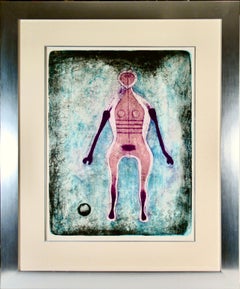
La Negra (The Black Woman)
By Rufino Tamayo
Located in San Francisco, CA
This artwork titled "La Negra (The Black Woman)" from the suite "The Mujeres File" 1969 is an original colors lithograph on B.F.K. Rives paper by renown Mexican artist Rufino Tamayo, 1899-1991. It is hand signed and numbered 150/150 in pencil by the artist. The image size is 26.85 x 21.25 inches, sheet size is 29.5 x 22.15 inches, framed size is 42 x 35 inches. Published by Touchtone Publisher, New York, printed by Ateliers Desjobert, Paris. Referenced and pictured in the artist's catalogue raisonne by Pereda, plate #109 page 107. Custom framed in a wooden silver frame, with silver spacer and fabric matting. It is in excellent condition.
About the artist:
A native of Oaxaca in Southern Mexico, Rufino Tamayo's father was a shoemaker, and his mother a seamstress. Some accounts state that he was descended from Zapotec Indians, but he was actually 'mestizo' - of mixed indigenous/European ancestry. (Santa Barbara Museum of Art). He began painting at age 11. Orphaned at the age of 12, Tamayo moved to Mexico City, where he was raised by his maternal aunt who owned a wholesale fruit business.
In 1917, he entered the San Carlos Academy of Fine Arts, but left soon after to pursue independent study. Four years later, Tamayo was appointed the head designer of the department of ethnographic drawings at the National Museum of Archaeology in Mexico City. There he was surrounded by pre-Colombian objects, an aesthetic inspiration that would play a pivotal role in his life. In his own work, Tamayo integrated the forms and tones of pre-Columbian ceramics into his early still lives and portraits of Mexican men and women.
In the early 1920s he also taught art classes in Mexico City's public schools. Despite his involvement in Mexican history, he did not subscribe to the idea of art as nationalistic propaganda. Modern Mexican art at that time was dominated by 'The Three Great Ones' : Diego Rivera, Jose Clemente Orozco, and David Alfaro Siqueros, but Tamayo began to be noted as someone 'new' and different' for his blending of the aesthetics of post Revolutionary Mexico with the vanguard artists of Europe and the United States.
After the Mexican Revolution, he focused on creating his own identity in his work, expressing what he thought was the traditional Mexico, and refusing to follow the political trends of his contemporary artists. This caused some to see him as a 'traitor' to the political cause, and he felt it difficult to freely express himself in his art. As a result, he decided to leave Mexico in 1926 and move to New York, along with his friend, the composer Carlos Chavez. The first exhibition of Tamayo's work in the United States was held at the Weyhe Gallery, New York, in that same year. The show was successful, and Tamayo was praised for his 'authentic' status as a Mexican of 'indigenous heritage', and for his internationally appealing Modernist aesthetic. (Santa Barbara Museum of Art).
Throughout the late thirties and early forties New York's Valentine Gallery gave him shows. For nine years, beginning in 1938, he taught at the Dalton School in New York.
In 1929, some health problems led him to return to Mexico for treatment. While there he took a series of teaching jobs. During this period he became romantically involved with the artist Maria Izquierdo...
Category
Mid-20th Century Modern Figurative Prints
Materials
Lithograph
Large Mexican Figurative Expressionist Lithograph Women Juan Sebastian Barbera
Located in Surfside, FL
Juan Sebastian Barbera (Spanish, Born 1964 )
Litho on Guarro Paper
Titled : La Comision (from the Los Conjuros Suite)
Circa, 1994.
Hand signed in pencil lower right with edition size number 62 / 75.
Frame: 38" X 46"
Image: 22" X 30"
Juan Sebastián Barberá Durón Plastic artist Cd. de México 1964 Son of the great musical artist Luisa Duron, Mexican harpsichordist, daughter of pianists Jesús Durón Ruiz and Julia Crespo considered a pioneer of the movement and musical flourishing of the Renaissance and Baroque periods and the initiator of the harpsichord school in Mexico .he grew up in an almost Renaissance environment, among artists and under the main protection of the baroque music of Bach and Hotteterre, Couperin and Scarlatti , among others. Since a very young age, he had a great talent for drawing, painting and sculpture and at the age of ten he won the National School contest of art. From there on, he studied painting and engraving with significant teachers, and was dedicated in a very clear way to the plastic arts from the age of 17 years, after a mystical trip to India. He continued his studies at the academy of San Carlos...
Category
20th Century Abstract Expressionist Figurative Prints
Materials
Lithograph
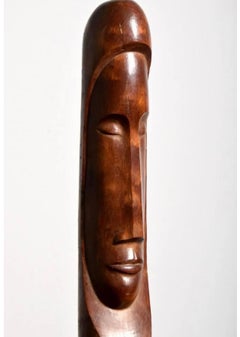
Cuban Master Florencio Gelabert Sculpture Large Wood Carving Bust Man Portrait
Located in Surfside, FL
Florencio Gelabert Y Perez (Cuban, 1904-1995)
Hand carved, signed; 1979
Materials: Cuban wood (mahogany?)
Dimensions 23 X 4 X 4 inches
Label affixed to underside: National Registry of Cultural Assets of the Republic of Cuba Ministry of Culture.
Provenance: Art Master Collection, Miami, Florida.
Florencio Gelabert, with a style reminiscent of Art Deco and Art Nouveau in a Latin American Expressionist stylization. Carved wood sculpture. Depicts a modernist stylized form of a man in a streamline moderne style.
José Florencio Gelabert Pérez (Caibarien, 1904 - Havana, 1995) Cuban musician, sculptor, draftsman and teacher. He graduated from the San Alejandro National Academy of Fine Arts in 1934. He received numerous awards, mentions and recognitions in Fine Arts Halls and Circles. His works are in the permanent collection of the National Museum of Fine Arts. Florencio Gelabert is a renowned sculptor, who made more than twenty solo exhibitions beginning in 1929, several in the National Museum of Fine Arts, and participated in more than thirty collectives in Cuba, Spain and Brazil, the latter in the Sao Paulo Biennial. he traveled from Caibarién to Santa Clara in 1928 to audition to enter the famous San Alejandro Fine Arts School in Havana. He obtained one of the five vacancies. Already in the Cuban capital, he combined fine arts and music. When he graduated, he became a professor in San Alejandro and the academy’s principal in 1960.
With a calling common to wood sculptors –which began with his primary school carving carpentry classes and the active life of his home town’s shipyards, his chisels and gouges feverishly turned mahogany, “ácana” and ebony into female heads with black African features dating back to 1930.
In 1938 he used his savings to explore Europe: France (Paris, Marseilles), Italy (Naples, Rome, Florence, and Venice), Belgium (Malina). His encounter with the works by Aristide Maillol, Auguste Rodin, Ossip Zadkine, Constantin Brancusi and even with Wifredo Lam, who was also born in another Cuban coastal area, Sagua la Grande, and his encounter with the nude marble David sculpture...
Category
1970s Art Deco Figurative Sculptures
Materials
Wood
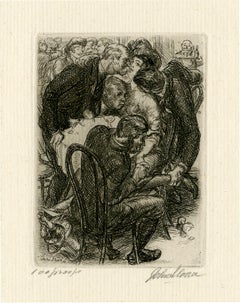
New Year’s Eve and Adam
By John Sloan
Located in Myrtle Beach, SC
John Sloan, 'New Year's Eve and Adam', etching, 1918, edition 100, (only 85 printed), Morse 190. Signed, titled and annotated '100 proofs' in pencil. Signed and dated in the plate, l...
Category
1910s Ashcan School Figurative Prints
Materials
Etching
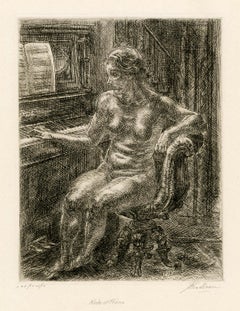
Nude at Piano
By John Sloan
Located in Myrtle Beach, SC
John Sloan, 'Nude at Piano', 1933, etching, edition 100, (only 85 printed), Morse 265. Signed, titled and annotated '100 proofs' in pencil. Signed and dated in the plate, lower right...
Category
1930s Ashcan School Nude Prints
Materials
Etching
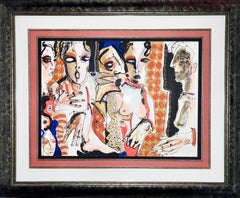
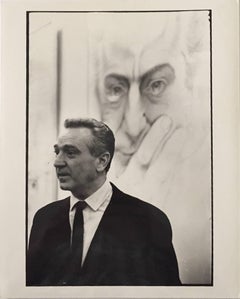
Bernard Pfriem
By Fred McDarrah
Located in Surfside, FL
Bernard Pfriem (09/07/1916 - 03/07/1996) was born in Cleveland, Ohio. He was most well-known for his large-scale hyper-realistic drawings of the human figure. Pfriem lived in Mexico...
Category
20th Century Black and White Photography
Materials
Photographic Paper
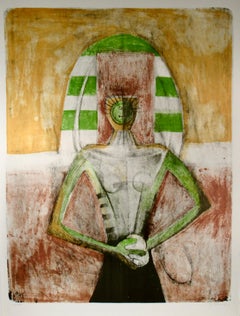
Carnavalesque
By Rufino Tamayo
Located in San Francisco, CA
This artwork titled "Carnavalesque" from the suite "The Mujeres File" 1969 is an original colors lithograph on BFK Rives paper by renown Mexican artist Rufino Tamayo, 1899-1991. It i...
Category
Mid-20th Century Modern Figurative Prints
Materials
Lithograph
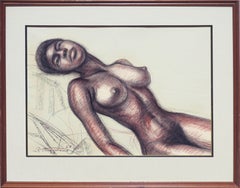
Mid Century Nude Figure Study of a Black Woman
By Raul Anguiano
Located in Soquel, CA
Compelling mid century nude figure study of a black woman reclining by Raul Anguiano (Mexican/American, 1915-2006), 1968. Signed and dated lower left hand corner "R. Anguiano." Presented in wood frame under plexiglass. Image size: 25"H x 34"W. Framed size: 35"H x 43.75"W.
Raúl Anguiano was born in Guadalajara, Jalisco, on February 26th, 1915. He started drawing cubist pictures at the age of 5, taking as his first models movie stars, as Mary Pickford, Pola Negri and Charlie Chaplin. Anguiano first artistic influence or aesthetic emotion came from the Holy Family by Rafael Sanzio.
At the age of 12, Anguiano attended Guadalajara's Free School of Painting under the tuition of Ixca Farias. From 1928 to 1933, he studied with the Master painter José Vizcarra, the disciple of Santiago Rebull and José Salomé Piña, and organised the group "Young Painters of Jalisco" with other artists. During this period, Anguiano worked with different kinds of models: workmen, employees and a few intellectuals like Pita Amor.
In 1934 Anguiano moved to Mexico City. He began teaching in primary schools and taught drawing and painting at La Esmeralda academy and the UNAM School of Art.
Anguiano was a member of the Mexican Artistic Renaissance movement which was started in the 1920's by the Mexican School of Art in which he belonged. This renaissance began with the San Carlos Academy movement -- among whose leaders were Ignacio Asúnsolo and Jose Clemente Orozco -- and which emerged out of the students' and teachers' discontent with the traditional paintings methods (academicism), and the close contact that the young artists had with the problems of Mexico and its people, explaining the marked critical realism to the painters of the time, including Anguiano himself.
The same year, Anguiano received a commission to paint his first mural, Socialist Education, a 70 meters fresco located at A. Carrillo School in Mexico City. Other works followed, including Mayan rituals (oils on canvas and wood), for the Mayan Hall in the National Museum of Anthropology, and Trilogy of Nationality (acrylic on canvas and wood), for the Attorney General's Office.
In 1936 he moved into his surrealist period, which lasted almost a decade. He painted circus performers and prostitutes. The most notable among his works of the time are: The Madame (gouche, 1936), The Clown's Daughter (oil, 1940), the Pink Circus Artist and the Grey Circus Artist (oil, 1941). Also during this period, Anguiano produced a series of drawings based on his dreams, with cold tones and silver-greys predominating.
In 1937 Anguiano joined the Revolutionary Writers and Artists League. Together, with Alfredo Zalce and Pablo O'Higgins, he was also a founding member of the Popular Graphics Workshop, where artists practised a graphic style based on Mexico's folk traditions. This was due to the powerful influence of the recently discovered Jose Guadalupe Posada and Goya.
Raúl Anguiano belonged to the so-called "Third Generation" of post-revolutionary painters, along with Juan O'Gorman, Jorge González Camarena...
Category
1960s Realist Nude Paintings
Materials
Paper, Conté, Charcoal
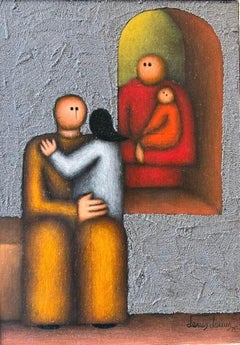
$4,400 Sale Price
20% Off
Untitled, Family in an Interior, Mexican 20th Century, Oil and sand on board
By Jesus Mariano Leuus
Located in New York, NY
Leuus’s interest in art began at a young age, and he later moved to Guadalajara, where he attended the Escuela de Artes Plásticas. This formal training in the traditions of Mexican a...
Category
1970s Contemporary Figurative Paintings
Materials
Mixed Media, Oil, Board
"Mujer Con Sombrero" Large lithograph
By Rufino Tamayo
Located in San Francisco, CA
This artwork titled "Mujer Con Sombrero (Woman with Hat)" 1972 is a large original colors lithograph on Arches paper by renown Mexican artist Rufino Tamayo, 1899-1991. It is hand signed and numbered 81/100. in pencil by the artist. The artwork size 36.35 x 25.85 inches, sheet size is 37.25 x 26.25 inches, framed size is 52.25 x 40.5 inches. Published by Transworld Art, New York , Printed by Bank Street Atelier, New York. Referenced and pictured in the artist's catalogue raisonne by Pereda, plate #132 page 123. Custom framed in a wooden black and silver frame, with silver bevel and fabric matting. It is in excellent condition.
About the artist:
A native of Oaxaca in Southern Mexico, Rufino Tamayo's father was a shoemaker, and his mother a seamstress. Some accounts state that he was descended from Zapotec Indians, but he was actually 'mestizo' - of mixed indigenous/European ancestry. (Santa Barbara Museum of Art). He began painting at age 11. Orphaned at the age of 12, Tamayo moved to Mexico City, where he was raised by his maternal aunt who owned a wholesale fruit business.
In 1917, he entered the San Carlos Academy of Fine Arts, but left soon after to pursue independent study. Four years later, Tamayo was appointed the head designer of the department of ethnographic drawings at the National Museum of Archaeology in Mexico City. There he was surrounded by pre-Colombian objects, an aesthetic inspiration that would play a pivotal role in his life. In his own work, Tamayo integrated the forms and tones of pre-Columbian ceramics into his early still lives and portraits of Mexican men and women.
In the early 1920s he also taught art classes in Mexico City's public schools. Despite his involvement in Mexican history, he did not subscribe to the idea of art as nationalistic propaganda. Modern Mexican art at that time was dominated by 'The Three Great Ones' : Diego Rivera, Jose Clemente Orozco, and David Alfaro Siqueros, but Tamayo began to be noted as someone 'new' and different' for his blending of the aesthetics of post Revolutionary Mexico with the vanguard artists of Europe and the United States.
After the Mexican Revolution, he focused on creating his own identity in his work, expressing what he thought was the traditional Mexico, and refusing to follow the political trends of his contemporary artists. This caused some to see him as a 'traitor' to the political cause, and he felt it difficult to freely express himself in his art. As a result, he decided to leave Mexico in 1926 and move to New York, along with his friend, the composer Carlos Chavez. The first exhibition of Tamayo's work in the United States was held at the Weyhe Gallery, New York, in that same year. The show was successful, and Tamayo was praised for his 'authentic' status as a Mexican of 'indigenous heritage', and for his internationally appealing Modernist aesthetic. (Santa Barbara Museum of Art).
Throughout the late thirties and early forties New York's Valentine Gallery gave him shows. For nine years, beginning in 1938, he taught at the Dalton School in New York.
In 1929, some health problems led him to return to Mexico for treatment. While there he took a series of teaching jobs. During this period he became romantically involved with the artist Maria Izquierdo...
Category
Mid-20th Century Modern Figurative Prints
Materials
Lithograph
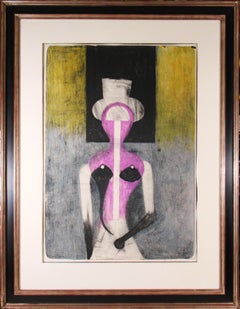
Venus Noir
By Rufino Tamayo
Located in San Francisco, CA
This artwork titled "venus Noir" from the suite "The Mujeres File" 1969 is an original colors lithograph on BFK Rives paper by renown Mexican artist Rufino Tamayo, 1899-1991. It is h...
Category
Mid-20th Century Modern Figurative Prints
Materials
Lithograph
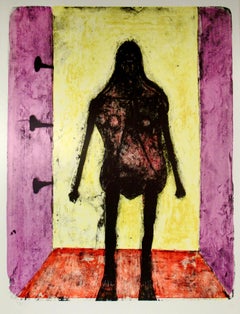
Cabeza con Pajaros
By Rufino Tamayo
Located in San Francisco, CA
This artwork titled "Cabeza con Pajaros" 1958, is an original colors lithograph on Wove paper by renown Mexican artist Rufino Tamayo, 1899-1991. It is hand signed and numbered 273/30...
Category
Mid-20th Century Modern Figurative Prints
Materials
Lithograph

Los Carpinteros Cuban Art Photograph Tuneles Populares Silver Gelatin Photo
By Los Carpinteros
Located in Surfside, FL
Los Carpinteros (Cuban, 1992-present).
Silver gelatin print photograph, large format.
From the series "Tuneles Populares" (The People's Tunnels)
1999
Edition 1/5
Provenance: Bliss Fi...
Category
1990s Conceptual Landscape Photography
Materials
Silver Gelatin
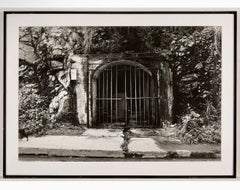
Torso de Mujer
By Rufino Tamayo
Located in San Francisco, CA
This artwork titled "Torso de Mujer (Torso de Femmee)" from the suite "The Mujeres File" 1969 is an original colors lithograph on Wove paper by renown Mexican artist Rufino Tamayo, 1899-1991. It is hand signed and inscribed H.C. (Hors Commerce) in pencil by the artist. The image size is 26.85 x 21 inches, framed size is 40.75 x 33 inches. Published by Touchtone Publisher, New York, printed by Ateliers Desjobert, Paris. Referenced and pictured in the artist's catalogue raisonne by Pereda, plate #108 page 107. Custom framed in a wooden gold frame, with gold bevel and light beige fabric matting. It is in excellent condition.
About the artist:
A native of Oaxaca in Southern Mexico, Rufino Tamayo's father was a shoemaker, and his mother a seamstress. Some accounts state that he was descended from Zapotec Indians, but he was actually 'mestizo' - of mixed indigenous/European ancestry. (Santa Barbara Museum of Art). He began painting at age 11. Orphaned at the age of 12, Tamayo moved to Mexico City, where he was raised by his maternal aunt who owned a wholesale fruit business.
In 1917, he entered the San Carlos Academy of Fine Arts, but left soon after to pursue independent study. Four years later, Tamayo was appointed the head designer of the department of ethnographic drawings at the National Museum of Archaeology in Mexico City. There he was surrounded by pre-Colombian objects, an aesthetic inspiration that would play a pivotal role in his life. In his own work, Tamayo integrated the forms and tones of pre-Columbian ceramics...
Category
Mid-20th Century Modern Figurative Prints
Materials
Lithograph