160 results for "jackie kennedy"
to
16
80
22
20
15
22
Overall Width
to
Overall Height
to
1
104
54
1
2
9
32
44
4
79
23
20
7
2
1
84
50
23
69
42
27
24
24
17
16
12
12
10
10
8
8
7
6
6
6
5
4
3
58
47
38
33
29
22
22
12
10
8
15
37
86
74
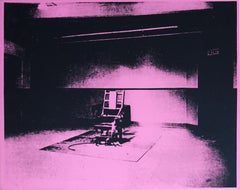
Denied Andy Warhol Pink Electric Chair Painting by Charles Lutz
By Charles Lutz
Located in Brooklyn, NY
Denied Warhol Pink Electric Chair Painting by Charles Lutz
Silkscreen and acrylic on linen with the Denied stamp of the Andy Warhol Art Authentication Board.
22 x 28" inches
2008
Lutz's 2007 ''Warhol Denied'' series gained international attention calling into question the importance of originality or lack thereof in the work of Andy Warhol. The authentication/denial process of the [[Andy Warhol Art Authentication Board]] was used to create value by submitting recreations of Warhol works for judgment with the full intention for the works to be formally marked "DENIED". The final product of the conceptual project being "officially denied" "Warhol" paintings authored by Lutz.
Based on a press photo painted by Pop Artist Andy Warhol in early 1960's, this is likely one of the most iconic images from his Death and Disaster Series. The Death and Disaster Series was a dark view of the time's media and death culture. This was a departure from Warhol's Campbell's Soup Cans and portraits of Jackie Kennedy, Marilyn Monroe, Liz Taylor, and Marlon Brando in that these were images of the deaths of everyday people- one could say their "15 minutes of fame" as Warhol coined...
Category
Early 2000s Contemporary Still-life Paintings
Materials
Acrylic, Linen

American Ballet Theatre at the Kennedy White House in 1962 - Set of 4 8 x 10
s
By Jack Mitchell
Located in Senoia, GA
Set of three 8 x 10" vintage silver gelatin photographs of the historic visit by the American Ballet Theatre to Washington D.C. for a performance of "Billy the Kid" in the East Room of the White House on May 22, 1962 Visible in photos you can see JFK shaking lead dancer John Kriza's hand, and in another you see Jackie Kennedy and First Lady of the Ivory Coast, Marie-Thérèse Houphouët-Boigny, also Eugene Loring and composer Aaron Copland...
Category
1960s Pop Art Black and White Photography
Materials
Silver Gelatin

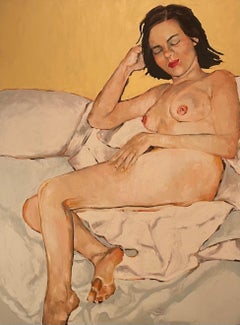
"Relaxation" - Realsim Expressionist Figurative Painting of a Happy Young Woman
By Shana Wilson
Located in Carmel, CA
Shana Wilson (Canadian, born 1966)
"Relaxation" 2012
Oil Paint, Canvas, Stretcher Bars
The artist signed the back of the painting.
"Relaxation" by Shana Wilson is a 48" x 36" contem...
Category
2010s Expressionist Figurative Paintings
Materials
Canvas, Oil, Stretcher Bars
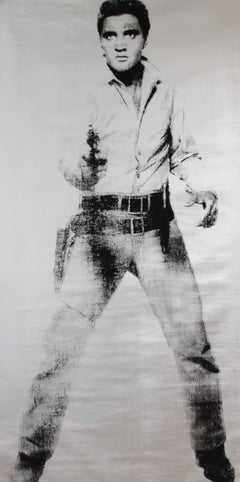
"Elvis", Denied Andy Warhol Silver
Black Pop Art Painting by Charles Lutz
By Charles Lutz
Located in Brooklyn, NY
Elvis, Metallic Silver and Black Full Length Silkscreen Painting by Charles Lutz
Silkscreen and silver enamel painted on vintage 1960's era linen with Artist's Denied stamp of the Andy Warhol Art Authentication Board.
82" x 40" inches
2010
Lutz's 2007 ''Warhol Denied'' series gained international attention by calling into question the importance of originality or lack thereof in the work of Andy Warhol. The authentication/denial process of the [[Andy Warhol Art Authentication Board]] was used to create value by submitting recreations of Warhol works for judgment with the full intention for the works to be formally marked "DENIED". The final product of the conceptual project being "officially denied" "Warhol" paintings authored by Lutz.
Based on the full-length Elvis Presley paintings by Pop Artist Andy Warhol in 1964, this is likely one of his most iconic images, next to Campbell's Soup Cans and portraits of Jackie Kennedy, Marilyn Monroe, Liz Taylor, and Marlon Brando. This is the rarest of the Elvis works from the series, as Lutz sourced a vintage roll of 1960's primed artist linen which was used for this one Elvis. The silkscreen, like Warhol's embraced imperfections, like the slight double image printing of the Elvis image.
Lutz received his BFA in Painting and Art History from Pratt Institute and studied Human Dissection and Anatomy at Columbia University, New York. Lutz's work deals with perceptions and value structures, specifically the idea of the transference of values. Lutz's most recently presented an installation of new sculptures dealing with consumerism at Frank Lloyd Wright's Fallingwater House in 2022.
Lutz's 2007 Warhol Denied series received international attention calling into question the importance of originality in a work of art. The valuation process (authentication or denial) of the Andy Warhol Art Authentication Board was used by the artist to create value by submitting recreations of Warhol works for judgment, with the full intention for the works to be formally marked "DENIED" of their authenticity. The final product of this conceptual project is "Officially DENIED" "Warhol" paintings authored by Lutz.
Later in 2013, Lutz went on to do one of his largest public installations to date. At the 100th Anniversary of Marcel Duchamp's groundbreaking and controversial Armory Show, Lutz was asked by the curator of Armory Focus: USA and former Director of The Andy Warhol Museum, Eric Shiner to create a site-specific installation representing the US. The installation "Babel" (based on Pieter Bruegel's famous painting) consisted of 1500 cardboard replicas of Warhol's Brillo Box (Stockholm Type) stacked 20 ft tall. All 1500 boxes were then given to the public freely, debasing the Brillo Box as an art commodity by removing its value, in addition to debasing its willing consumers.
Elvis was "the greatest cultural force in the Twentieth Century. He introduced the beat to everything, and he changed everything - music, language, clothes, it's a whole new social revolution." Leonard Bernstein in: Exh. Cat., Boston, The Institute of Contemporary Art and traveling, Elvis + Marilyn 2 x Immortal, 1994-97, p. 9.
Andy Warhol "quite simply changed how we all see the world around us." Kynaston McShine in: Exh. Cat., New York, Museum of Modern Art (and traveling), Andy Warhol: Retrospective, 1996, p. 13.
In the summer of 1963 Elvis Presley was just twenty-eight years old but already a legend of his time. During the preceding seven years - since Heartbreak Hotel became the biggest-selling record of 1956 - he had recorded seventeen number-one singles and seven number-one albums; starred in eleven films, countless national TV appearances, tours, and live performances; earned tens of millions of dollars; and was instantly recognized across the globe. The undisputed King of Rock and Roll, Elvis was the biggest star alive: a cultural phenomenon of mythic proportions apparently no longer confined to the man alone. As the eminent composer Leonard Bernstein put it, Elvis was "the greatest cultural force in the Twentieth Century. He introduced the beat to everything, and he changed everything - music, language, clothes, it's a whole new social revolution." (Exh. Cat., Boston, The Institute of Contemporary Art (and traveling), Elvis + Marilyn 2 x Immortal, 1994, p. 9).
In the summer of 1963 Andy Warhol was thirty-four years old and transforming the parameters of visual culture in America. The focus of his signature silkscreen was leveled at subjects he brilliantly perceived as the most important concerns of day to day contemporary life. By appropriating the visual vernacular of consumer culture and multiplying readymade images gleaned from newspapers, magazines and advertising, he turned a mirror onto the contradictions behind quotidian existence. Above all else he was obsessed with themes of celebrity and death, executing intensely multifaceted and complex works in series that continue to resound with universal relevance. His unprecedented practice re-presented how society viewed itself, simultaneously reinforcing and radically undermining the collective psychology of popular culture. He epitomized the tide of change that swept through the 1960s and, as Kynaston McShine has concisely stated, "He quite simply changed how we all see the world around us." (Exh. Cat., New York, Museum of Modern Art (and traveling), Andy Warhol: Retrospective, 1996, p. 13).
Thus in the summer of 1963 there could not have been a more perfect alignment of artist and subject than Warhol and Elvis. Perhaps the most famous depiction of the biggest superstar by the original superstar artist, Double Elvis is a historic paradigm of Pop Art from a breath-taking moment in Art History. With devastating immediacy and efficiency, Warhol's canvas seduces our view with a stunning aesthetic and confronts our experience with a sophisticated array of thematic content. Not only is there all of Elvis, man and legend, but we are also presented with the specter of death, staring at us down the barrel of a gun; and the lone cowboy, confronting the great frontier and the American dream. The spray painted silver screen denotes the glamour and glory of cinema, the artificiality of fantasy, and the idea of a mirror that reveals our own reality back to us. At the same time, Warhol's replication of Elvis' image as a double stands as metaphor for the means and effects of mass-media and its inherent potential to manipulate and condition. These thematic strata function in simultaneous concert to deliver a work of phenomenal conceptual brilliance. The portrait of a man, the portrait of a country, and the portrait of a time, Double Elvis is an indisputable icon for our age.
The source image was a publicity still for the movie Flaming Star, starring Presley as the character Pacer Burton and directed by Don Siegel in 1960. The film was originally intended as a vehicle for Marlon Brando and produced by David Weisbart, who had made James Dean's Rebel Without a Cause in 1955. It was the first of two Twentieth Century Fox productions Presley was contracted to by his manager Colonel Tom Parker, determined to make the singer a movie star. For the compulsive movie-fan Warhol, the sheer power of Elvis wielding a revolver as the reluctant gunslinger presented the zenith of subject matter: ultimate celebrity invested with the ultimate power to issue death. Warhol's Elvis is physically larger than life and wears the expression that catapulted him into a million hearts: inexplicably and all at once fearful and resolute; vulnerable and predatory; innocent and explicit. It is the look of David Halberstam's observation that "Elvis Presley was an American original, the rebel as mother's boy, alternately sweet and sullen, ready on demand to be either respectable or rebellious." (Exh. Cat., Boston, Op. Cit.). Indeed, amidst Warhol's art there is only one other subject whose character so ethereally defies categorization and who so acutely conflated total fame with the inevitability of mortality. In Warhol's work, only Elvis and Marilyn harness a pictorial magnetism of mythic proportions.
With Marilyn Monroe, whom Warhol depicted immediately after her premature death in August 1962, he discovered a memento mori to unite the obsessions driving his career: glamour, beauty, fame, and death. As a star of the silver screen and the definitive international sex symbol, Marilyn epitomized the unattainable essence of superstardom that Warhol craved. Just as there was no question in 1963, there remains still none today that the male equivalent to Marilyn is Elvis. However, despite his famous 1968 adage, "If you want to know all about Andy Warhol, just look at the surface of my paintings" Warhol's fascination held purpose far beyond mere idolization. As Rainer Crone explained in 1970, Warhol was interested in movie stars above all else because they were "people who could justifiably be seen as the nearest thing to representatives of mass culture." (Rainer Crone, Andy Warhol, New York, 1970, p. 22). Warhol was singularly drawn to the idols of Elvis and Marilyn, as he was to Marlon Brando and Liz Taylor, because he implicitly understood the concurrence between the projection of their image and the projection of their brand. Some years after the present work he wrote, "In the early days of film, fans used to idolize a whole star - they would take one star and love everything about that star...So you should always have a product that's not just 'you.' An actress should count up her plays and movies and a model should count up her photographs and a writer should count up his words and an artist should count up his pictures so you always know exactly what you're worth, and you don't get stuck thinking your product is you and your fame, and your aura." (Andy Warhol, The Philosophy of Andy Warhol (From A to B and Back Again), San Diego, New York and London, 1977, p. 86).
The film stars of the late 1950s and early 1960s that most obsessed Warhol embodied tectonic shifts in wider cultural and societal values. In 1971 John Coplans argued that Warhol was transfixed by the subject of Elvis, and to a lesser degree by Marlon Brando and James Dean, because they were "authentically creative, and not merely products of Hollywood's fantasy or commercialism. All three had originative lives, and therefore are strong personalities; all three raised - at one level or another - important questions as to the quality of life in America and the nature of its freedoms. Implicit in their attitude is a condemnation of society and its ways; they project an image of the necessity for the individual to search for his own future, not passively, but aggressively, with commitment and passion." (John Coplans, "Andy Warhol and Elvis Presley," Studio International, vol. 181, no. 930, February 1971, pp. 51-52). However, while Warhol unquestionably adored these idols as transformative heralds, the suggestion that his paintings of Elvis are uncritical of a generated public image issued for mass consumption fails to appreciate the acuity of his specific re-presentation of the King.
As with Marilyn, Liz and Marlon, Warhol instinctively understood the Elvis brand as an industrialized construct, designed for mass consumption like a Coca-Cola bottle or Campbell's Soup Can, and radically revealed it as a precisely composed non-reality. Of course Elvis offered Warhol the biggest brand of all, and he accentuates this by choosing a manifestly contrived version of Elvis-the-film-star, rather than the raw genius of Elvis as performing Rock n' Roll pioneer. A few months prior to the present work he had silkscreened Elvis' brooding visage in a small cycle of works based on a simple headshot, including Red Elvis, but the absence of context in these works minimizes the critical potency that is so present in Double Elvis. With Double Elvis we are confronted by a figure so familiar to us, yet playing a role relating to violence and death that is entirely at odds with the associations entrenched with the singer's renowned love songs. Although we may think this version of Elvis makes sense, it is the overwhelming power of the totemic cipher of the Elvis legend that means we might not even question why he is pointing a gun rather than a guitar. Thus Warhol interrogates the limits of the popular visual vernacular, posing vital questions of collective perception and cognition in contemporary society.
The notion that this self-determinedly iconic painting shows an artificial paradigm is compounded by Warhol's enlistment of a reflective metallic surface, a treatment he reserved for his most important portraits of Elvis, Marilyn, Marlon and Liz. Here the synthetic chemical silver paint becomes allegory for the manufacture of the Elvis product, and directly anticipates the artist's 1968 statement: "Everything is sort of artificial. I don't know where the artificial stops and the real starts. The artificial fascinates me, the bright and shiny..." (Artist quoted in Exh. Cat., Stockholm, Moderna Museet and traveling, Andy Warhol, 1968, n.p.). At the same time, the shiny silver paint of Double Elvis unquestionably denotes the glamour of the silver screen and the attractive fantasies of cinema. At exactly this time in the summer of 1963 Warhol bought his first movie camera and produced his first films such as Sleep, Kiss and Tarzan and Jane Regained. Although the absence of plot or narrative convention in these movies was a purposely anti-Hollywood gesture, the unattainability of classic movie stardom still held profound allure and resonance for Warhol. He remained a celebrity and film fanatic, and it was exactly this addiction that so qualifies his sensational critique of the industry machinations behind the stars he adored.
Double Elvis was executed less than eighteen months after he had created 32 Campbell's Soup Cans for his immortal show at the Ferus Gallery, Los Angeles in July and August 1962, and which is famously housed in the Museum of Modern Art, New York. In the intervening period he had produced the series Dollar Bills, Coca-Cola Bottles, Suicides, Disasters, and Silver Electric Chairs, all in addition to the portrait cycles of Marilyn and Liz. This explosive outpouring of astonishing artistic invention stands as definitive testament to Warhol's aptitude to seize the most potent images of his time. He recognized that not only the product itself, but also the means of consumption - in this case society's abandoned deification of Elvis - was symptomatic of a new mode of existence. As Heiner Bastian has precisely summated: "the aura of utterly affirmative idolization already stands as a stereotype of a 'consumer-goods style' expression of an American way of life and of the mass-media culture of a nation." (Exh. Cat., Berlin, Neue Nationalgalerie (and traveling), Andy Warhol: Retrospective, 2001, p. 28).
For Warhol, the act of image replication and multiplication anaesthetized the effect of the subject, and while he had undermined the potency of wealth in 200 One Dollar Bills, and cheated the terror of death by electric chair in Silver Disaster # 6, the proliferation of Elvis here emasculates a prefabricated version of character authenticity. Here the cinematic quality of variety within unity is apparent in the degrees to which Presley's arm and gun become less visible to the left of the canvas. The sense of movement is further enhanced by a sense of receding depth as the viewer is presented with the ghost like repetition of the figure in the left of the canvas, a 'jump effect' in the screening process that would be replicated in the multiple Elvis paintings. The seriality of the image heightens the sense of a moving image, displayed for us like the unwinding of a reel of film.
Elvis was central to Warhol's legendary solo exhibition organized by Irving Blum at the Ferus Gallery in the Fall of 1963 - the show having been conceived around the Elvis paintings since at least May of that year. A well-known installation photograph shows the present work prominently presented among the constant reel of canvases, designed to fill the space as a filmic diorama. While the Elvis canvases...
Category
21st Century and Contemporary Pop Art Figurative Paintings
Materials
Enamel
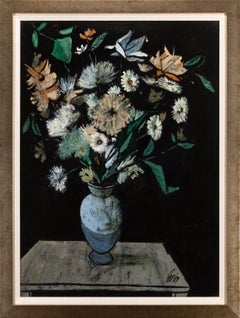
Charles Levier "Le Vase Bleu" Signed Large Framed Midcentury Oil on Canvas
By Charles Levier
Located in Miami, FL
CHARLES LEVIER – "LE VASE BLEU"
Oil on Canvas ⚜ Signed Lower Right & Verso ⚜ Professionally Framed
A RARE MIDCENTURY STILL LIFE WITH HISTORICAL DEPTH
A striking floral still life by...
Category
1960s Modern Still-life Paintings
Materials
Oil
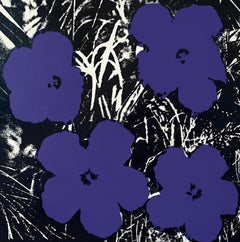
Denied Andy Warhol Flowers Violet Purple 48 x48" Pop Art Painting Charles Lutz
By Charles Lutz
Located in Brooklyn, NY
Denied Warhol Flowers, (Violet/Purple) Silkscreen Painting by Charles Lutz
Silkscreen and acrylic on canvas with the artist's Denied stamp of the Andy Warhol Art Authentication Board...
Category
Early 2000s Pop Art Still-life Paintings
Materials
Canvas, Acrylic
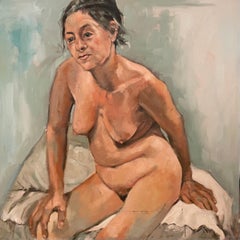
"Morning Light" - Contemporary Realist Figurative Nude of a Woman Sitting
By Shana Wilson
Located in Carmel, CA
Shana Wilson (Canadian, born 1966)
"Morning Light" 2012
Oil paint on wood panel
The artist signed the back of the painting.
About the Artist:
Shana Wilson, born in Edmonton in 1966,...
Category
2010s Realist Figurative Paintings
Materials
Oil, Wood Panel
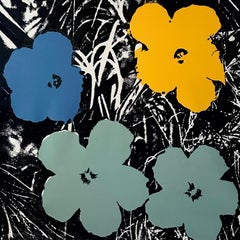
Denied Andy Warhol Flowers Yellow Blue 48 x48" Pop Art Painting Charles Lutz
By Charles Lutz
Located in Brooklyn, NY
Denied Warhol Flowers, (Violet/Purple) Silkscreen Painting by Charles Lutz
Silkscreen and acrylic on canvas with the artist's Denied stamp of the Andy Warhol Art Authentication Board...
Category
Early 2000s Pop Art Still-life Paintings
Materials
Canvas, Acrylic
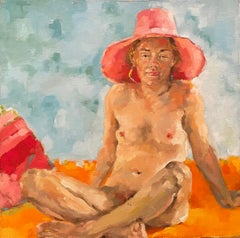
"Pink Hat" - Contemporary Realist Figurative Nude of a Woman at the Beach
By Shana Wilson
Located in Carmel, CA
Shana Wilson (Canadian, born 1966)
"Pink Hat" 2012
Oil paint, canvas, stretcher bars
The artist signed the back of the painting.
About the Artist:
Shana Wilson, born in Edmonton in ...
Category
2010s Realist Nude Paintings
Materials
Oil, Canvas, Stretcher Bars
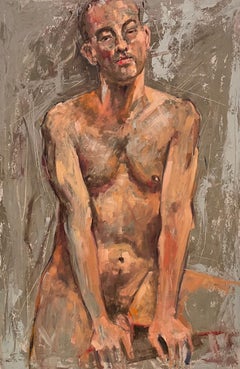
"Seated Young Man" - Figurative Realist Nude Oil Painting with Earth Tones
By Shana Wilson
Located in Carmel, CA
Shana Wilson (Canadian, born 1966)
"Seated Young Man" 2015
Oil paint on cradled wood board
The artist signed the back of the painting.
About the Artist:
Shana Wilson, born in Edmont...
Category
2010s Realist Nude Paintings
Materials
Oil, Wood Panel, Stretcher Bars
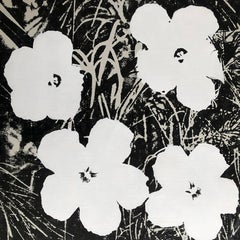
Denied Andy Warhol Flowers White 14" Silkscreen linen Painting by Charles Lutz
By Charles Lutz
Located in Brooklyn, NY
Denied Warhol Flowers, (White) Silkscreen Linen Painting by Charles Lutz
Silkscreen and acrylic on linen with Denied stamp of the Andy Warhol Art Authentication Board.
14 x 14" inches
2008
Lutz's 2007 ''Warhol Denied...
Category
21st Century and Contemporary Contemporary Paintings
Materials
Linen, Acrylic
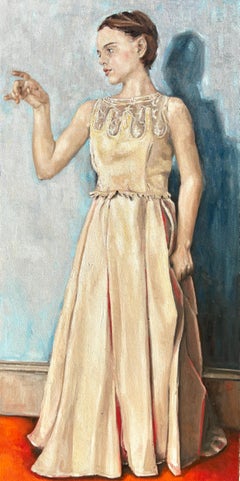
"Woman in White" - Large Modern Realism Expressionist Figurative Artwork
By Shana Wilson
Located in Carmel, CA
Shana Wilson (Canadian, born 1966)
"Woman in White" 2011
Oil paint on canvas, stretcher bars
The artist signed the back of the painting.
About the Artist:
Shana Wilson, born in Edmo...
Category
2010s Realist Figurative Paintings
Materials
Canvas, Oil, Stretcher Bars
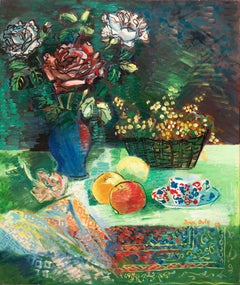
Nature morte au panier de mimosa by Jean Dufy - Still life painting
By Jean Dufy
Located in London, GB
*PLEASE NOTE UK BUYERS WILL ONLY PAY 5% VAT ON THIS PURCHASE. Once an order is placed we will arrange the VAT of 20% to be reduced to 5%
Nature morte au panier de mimosa by Jean Duf...
Category
1920s Still-life Paintings
Materials
Canvas, Oil
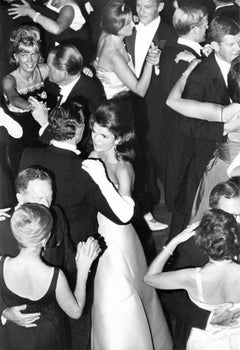
Lawrence Fried - Jackie Kennedy, Photography 1965, Printed After
By Lawrence Fried
Located in Stamford, CT
Gelatin-silver print
Golden Trumpet Ball, Boston, 24th September 1965.
Available Sizes:
12" x 16” Edition of 25
16” x 20” Edition of 25
20" x 24” Edition of 25
30” x 40” Edition of...
Category
2010s Contemporary Black and White Photography
Materials
Silver Gelatin
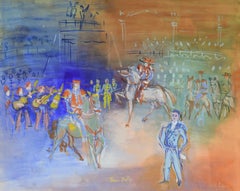
Parade Mexicaine by JEAN DUFY - Modern, Animals, Colourful, Fauve, Gouache
By Jean Dufy
Located in London, GB
Parade Mexicaine by Jean Dufy (1888-1964)
Gouache on Ingres paper
45.1 x 55.6 cm (17³/₄ x 21⁷/₈ inches)
Signed Jean Dufy lower centre
Executed circa 1948-1950
Provenance
Galerie Kät...
Category
1940s Fauvist Paintings
Materials
Gouache
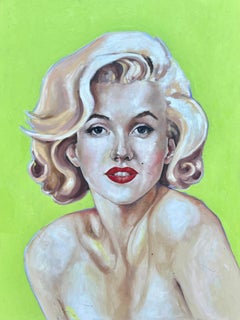
"Marilyn Monroe" - Contemporary Realism Portrait of Marilyn Monroe - Oil on Wood
By Shana Wilson
Located in Carmel, CA
Shana Wilson (Canadian, born 1966)
"Marilyn Monroe" 2012
Oil Paint, cradled wood board
The artist signed the back of the painting.
About the Artist:
Shan...
Category
2010s Realist Portrait Paintings
Materials
Oil, Wood Panel, Stretcher Bars
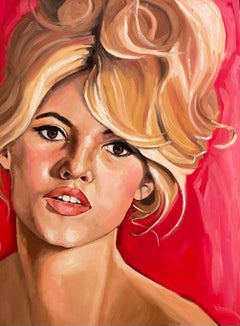
"Ringo Starr" - Contemporary Realism Celebrity Portrait Painting of Ringo Starr
By Shana Wilson
Located in Carmel, CA
Shana Wilson (Canadian, born 1966)
"Ringo Starr" 2012
Oil paint on cradled wood panel
The artist signed the back of the painting.
About the Artist:
Shana Wilson, born in Edmonton in...
Category
2010s Realist Portrait Paintings
Materials
Oil, Wood Panel, Stretcher Bars
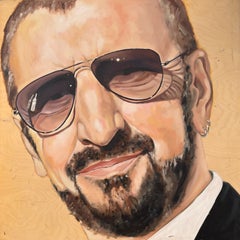
"Bardot" - Contemporary Realism Portrait of Bardot over Red - Oil Painting
By Shana Wilson
Located in Carmel, CA
Shana Wilson (Canadian, born 1966)
"Bardot" 2012
Oil Paint, Cradled Panel Board, Wire
The artist signed the back of the painting.
"Bardot," a 40" x 30" oil on panel by Shana Wilson,...
Category
2010s Contemporary Portrait Paintings
Materials
Wire
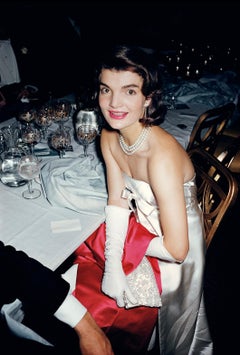
Jackie K 1961 - Slim Aarons Estate Stamped
By Slim Aarons
Located in London, GB
Jackie K 1961 - Slim Aarons Estate Stamped
Jacqueline Kennedy (Jackie Onassis) (1929 – 1994) wife of Senator Jack Kennedy at an ‘April in Paris’ ball.
20 x 16" inches / 51 x 41 cm ...
Category
1960s Modern Color Photography
Materials
Archival Pigment

Jackie K Slim Aarons Estate Stamped Print
By Slim Aarons
Located in London, GB
Jackie K
Jacqueline Kennedy (Jackie Onassis) (1929 – 1994) wife of Senator Jack Kennedy at an ‘April in Paris’ ball.
20 x 24" paper size
Estate Stam...
Category
1950s Modern Color Photography
Materials
Archival Pigment, Color
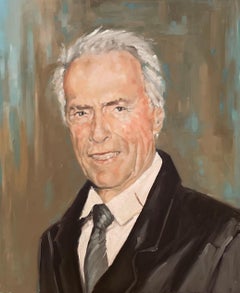
"Clint Eastwood" - Contemporary Realist Figurative Portrait with Earth Tones
By Shana Wilson
Located in Carmel, CA
Shana Wilson (Canadian, born 1966)
"Clint Eastwood" 2015
Oil paint on cradled wood board
The artist signed the back of the painting.
About the Artist:
Sh...
Category
2010s Realist Portrait Paintings
Materials
Oil, Wood Panel, Stretcher Bars
"Vanessa Paradis" - Contemporary Realism Portrait of a Woman in Pink Clothing
By Shana Wilson
Located in Carmel, CA
Shana Wilson (Canadian, born 1966)
"Vanessa Paradis" 2015
Oil paint, canvas, stretcher bars
The artist signed the back of the painting.
About the Artist:
Shana Wilson, born in Edmon...
Category
2010s Realist Portrait Paintings
Materials
Canvas, Oil, Stretcher Bars
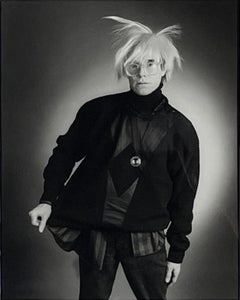
Portrait of Andy Warhol, hand signed by BOTH Andy Warhol and Christopher Makos
Located in New York, NY
Christopher Makos, Andy Warhol
Portrait of Andy Warhol taken by photographer Christopher Makos
(Hand signed by BOTH Andy Warhol and Christopher Makos...
Category
1980s Pop Art Portrait Photography
Materials
Silver Gelatin
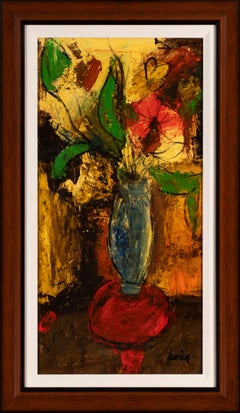
Charles Levier Oil Painting, Signed Midcentury Floral Still Life, Framed c. 1955
By Charles Levier
Located in Miami, FL
CHARLES LEVIER – UNTITLED [BOUQUET SUR TABLE ROUGE]
Oil on Canvas ⚜ Signed Lower Right ⚜ Custom Conservation Frame ⚜ Provenance Label on Verso
A VIBRANT MIDCENTURY FLORAL STILL LIFE...
Category
1950s Modern Still-life Paintings
Materials
Canvas, Oil, Other Medium
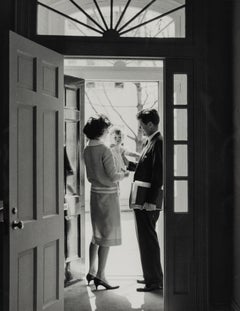
JFK with Jackie and Caroline in the Doorway of his Georgetown Home
By Jacques Lowe
Located in New York, NY
This photograph of JFK, Jackie O, and Caroline Kennedy taken by Jacques Lowe is offered by CLAMP in New York City.
Category
1950s Contemporary Photography
Materials
Silver Gelatin
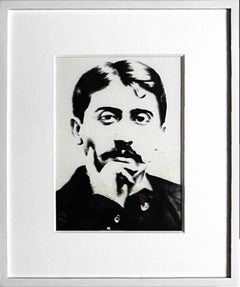
Marcel Proust, Unique Acetate delivered by Andy Warhol to Chromacomp Inc. Framed
By Otto Wegener
Located in New York, NY
Intended for Andy Warhol
Marcel Proust, ca. 1976
Acetate positive acquired directly from Chromacomp, Inc. Andy Warhol's printer in the 1970s.
Derivative on acetate, based on a photo by Otto Wegener...
Category
1970s Pop Art Portrait Photography
Materials
Photographic Film
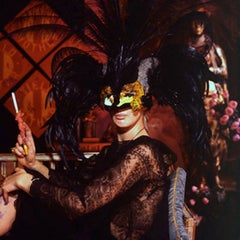
Slim Aarons: Tiger Morse (Slim Aarons Estate Edition)
By Slim Aarons
Located in Los Angeles, CA
Tiger Morse sits in her shop, 'A la Carte' in New York, 1964.
Andy Warhol star and fashion designer Joan "Tiger" Morse is pictured here with her signature black lace and a feathered mask, with a cigarette and long holder. She was a regular at Max's Kansas City, a society girl turned radical designer and creative dropout.
She frequently lied about her past, and her biography remains a bit mysterious. She has been called “La Passionaria of the dropout subculture.” She would say, “I work all day and I swing all night." Her celebrity clients ran the gamut from Jackie Kennedy to Frank Zappa.
She was known for only using manmade materials, including vinyl, Mylar, sequins, and electric lights. Her pop designs include the Love / Hate dress, which said "Love" on the front and "Hate" on the back.
Tiger was in two Andy Warhol factory films, Tiger Morse, 1967 and **** (Four Stars). She was the subject of Tiger Morse, while **** also featured Tiger, Edie Sedgwick, Nico, and Ultra Violet. Her designs can be seen on the cover of the "We're Only In It For The Money" album, which parodies The Beatles Sargent...
Category
1960s American Realist Portrait Photography
Materials
Lambda
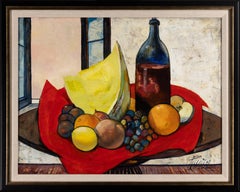
Charles Levier “La Nappe” Signed Oil on Canvas Still Life with Melon c. 1965
By Charles Levier
Located in Miami, FL
CHARLES LEVIER – “LA NAPPE”
Oil on Canvas ⚜ Signed Lower Right & Verso ⚜ Custom Conservation Frame
A BRIGHTLY STAGED MIDCENTURY STILL LIFE BURSTING WITH COLOR & FORM
“La Nappe” is a...
Category
1960s Modern Still-life Paintings
Materials
Canvas, Oil
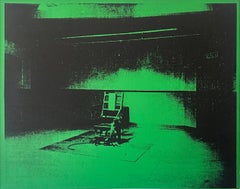
Denied Andy Warhol Green Electric Chair Painting by Charles Lutz
By Charles Lutz
Located in Brooklyn, NY
Denied Warhol Green Electric Chair Painting by Charles Lutz
Silkscreen and acrylic on linen with the Denied stamp of the Andy Warhol Art Authentication Board.
22 x 28" inches
2008
L...
Category
Early 2000s Contemporary Still-life Paintings
Materials
Linen, Acrylic
Book Box Una Grande Storia Italiana Valentino Garavani, Hand Signed and Numbered
Located in New York, NY
Valentino
Large: Hand signed and numbered Monograph (gift book) in elegant Clamshell Box
Una Grande Storia Italiana Valentino Garavani (Hand Signed and Numbered Collectors Edition),...
Category
Early 2000s Contemporary More Art
Materials
Mixed Media, Permanent Marker, Lithograph, Offset, Board
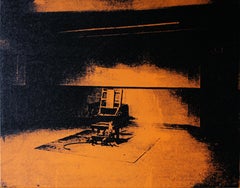
Denied Andy Warhol Orange Electric Chair Painting by Charles Lutz
By Charles Lutz
Located in Brooklyn, NY
Denied Warhol Orange Electric Chair Painting by Charles Lutz
Silkscreen and acrylic on linen with the Denied stamp of the Andy Warhol Art Authentication Board.
22 x 28" inches
2008
Lutz's 2007 ''Warhol Denied'' series gained international attention calling into question the importance of originality or lack thereof in the work of Andy Warhol. The authentication/denial process of the [[Andy Warhol Art Authentication Board]] was used to create value by submitting recreations of Warhol works for judgment with the full intention for the works to be formally marked "DENIED". The final product of the conceptual project being "officially denied" "Warhol" paintings authored by Lutz.
Based on a press photo painted by Pop Artist Andy Warhol in early 1960's, this is likely one of the most iconic images from his Death and Disaster Series. The Death and Disaster Series was a dark view of the time's media and death culture. This was a departure from Warhol's Campbell's Soup Cans and portraits of Jackie Kennedy, Marilyn Monroe, Liz Taylor, and Marlon Brando in that these were images of the deaths of everyday people- one could say their "15 minutes of fame" as Warhol coined...
Category
Early 2000s Contemporary Still-life Paintings
Materials
Acrylic
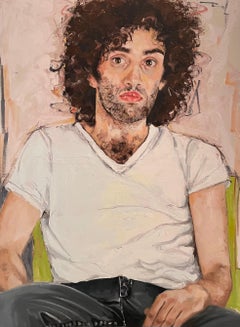
"Young Man Seated" - Original Figurative Artwork of a Man with Curly Black Hair
By Shana Wilson
Located in Carmel, CA
Shana Wilson (Canadian, born 1966)
"Young Man Seated" 2016
Oil paint on canvas, stretcher bars
The artist signed the back of the painting.
This stunning ...
Category
2010s Contemporary Figurative Paintings
Materials
Canvas, Oil, Stretcher Bars
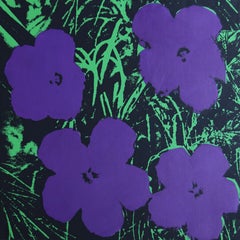
Denied Andy Warhol Flowers (Violet / Purple) Painting by Charles Lutz
By Charles Lutz
Located in Brooklyn, NY
Denied Warhol Flowers, (Violet/Purple) Silkscreen Painting by Charles Lutz
Silkscreen and acrylic on canvas with Denied stamp of the Andy Warhol Art Authentication Board.
24 x 24" in...
Category
Early 2000s Pop Art Still-life Paintings
Materials
Acrylic, Canvas
Denied Andy Warhol Flowers White/Green linen Painting by Charles Lutz
By Charles Lutz
Located in Brooklyn, NY
Denied Warhol Flowers, (White & Green) Silkscreen Linen Painting by Charles Lutz
Silkscreen and acrylic on linen with Denied stamp of the Andy Warhol Art Authentication Board.
24 x 24" inches
2008
Lutz's 2007 ''Warhol Denied...
Category
21st Century and Contemporary Contemporary Paintings
Materials
Linen, Acrylic
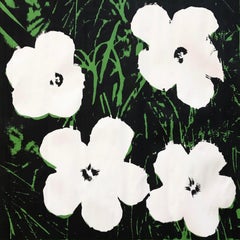
Pop Art Aspen Road Sign D
arcangelo Silkscreen Chiron Press Vintage Art Poster
Located in Surfside, FL
Allan D'Arcangelo (American/New York, 1930-1998),
"Aspen Center of Contemporary Art",
1967
silkscreen, hand signed in pencil, dated, numbered "45/200" and blind stamped "Chiron Press, New York, NY"
32 in. x 24 in.
Allan D'Arcangelo (1930-1998) was an American artist and printmaker, best known for his paintings of highways and road signs that border on pop art and minimalism, precisionism, Abstract illusionism and hard-edge painting, and also surrealism. His subject matter is distinctly American and evokes, at times, a cautious outlook on the future of this country. Allan D'Arcangelo was the son of Italian immigrants. He studied at the University of Buffalo from 1948–1953, where he got his bachelor's degree in history. After college, he moved to Manhattan and picked up his studies again at the New School of Social Research and the City University of New York, City College. At this time, he encountered Abstract Expressionist painters who were in vogue at the moment. After joining the army in the mid 1950s, he used the GI Bill to study painting at Mexico City College from 1957–59, driving there over 12 days in an old bakery truck retrofitted as a camper. However, he returned to New York in 1959, in search of the unique American experience. It was at this time that his painting took on a cool sensibility reminiscent of Roy Lichtenstein and Andy Warhol. His interests engaged with the environment, anti-Vietnam War protests, and the commodification and objectification of female sexuality. D'Arcangelo first achieved recognition in 1962, when he was invited to contribute an etching to The International Anthology of Contemporary Engraving: America Discovered; his first solo exhibition came the next year, at the Thiebaud Gallery in New York City. In 1965 he contributed three screenprints to Original Edition's 11 Pop Artists portfolio. By the 1970s, D'Arcangelo had received significant recognition in the art world. He was well known for his paintings of quintessentially American highways and infrastructure, and in 1971 was commissioned by the Department of the Interior to paint the Grand Coulee Dam in Washington state. However, his sense of morality always trumped his interest in art world fame. In 1975, he decided to quit the gallery that had been representing him for years, Marlborough Gallery, because of the way they handled Mark Rothko legacy.
D'Arcangelo rejected Abstract Expressionism, though his early work has a painterly and somewhat expressive feel. He quickly turned to a style of art that seemed to border on Pop Art and Minimalism, Precisionism and Hard-Edge painting. Evidently, he didn't fit neatly in the category of Pop Art, though he shared subjects (women, signs, Superman) and techniques (stencil, assemblage) with these artists.He turned to expansive, if detached scenes of the American highway. These paintings are reminiscent of Giorgio de Chirico-though perhaps not as interested in isolation-and Salvador Dali-though there is a stronger interest in the present and disinterest in the past. These paintings also have a sharp quality that is reminiscent of the precisionist style, or more specifically, Charles Sheeler. 1950s, Before D'Arcangelo returned to New York, his style was roughly figurative and reminiscent of folk art. During the early 1960s, Allan D'Arcangelo was linked with Pop Art. "Marilyn" (1962) depicts an illustrative head and shoulders on which the facial features are marked by lettered slits to be "fitted" with the eyebrows, eyes, nose and mouth which appear off to the right in the composition. In "Madonna and Child," (1963) the featureless faces of Jackie Kennedy and Caroline are ringed with haloes, enough to make their status as contemporary icons perfectly clear.
Select Exhibitions:
Fischbach Gallery, New York,
Ileana Sonnabend Gallery, Paris,
Gallery Müller, Stuttgart, Germany
Hans Neuendorf Gallery, Hamburg, Germany
Dwan Gallery...
Category
1960s Pop Art Abstract Prints
Materials
Lithograph, Screen
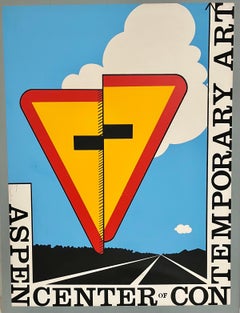
Rare Original 1967 Minimalist Mod Pop Art Allan D
Arcangelo Unique Ink Drawing
Located in Surfside, FL
Allan D'Arcangelo (American/New York, 1930-1998),
1967 Cloud and Tree
Note affixed to back
Frame: 16 X 19
Image: 14 X 17
Hand signed in pencil and dated lower right 1967, titled bot...
Category
1960s Pop Art Landscape Drawings and Watercolors
Materials
Paper, Ink
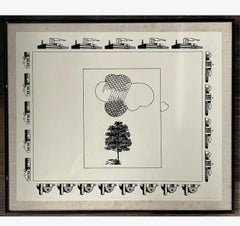
Denied Andy Warhol Flowers 5x5" on linen White Pop Art Painting by Charles Lutz
By Charles Lutz
Located in Brooklyn, NY
Denied Warhol Flowers, (White) Silkscreen Painting by Charles Lutz
Silkscreen and acrylic on canvas with Denied stamp of the Andy Warhol Art Authentication Board.
5 x 5" inches
2008
...
Category
Early 2000s Pop Art Still-life Paintings
Materials
Canvas, Acrylic
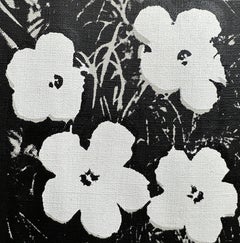
Denied Andy Warhol Flowers White/ Red Silkscreen linen Painting by Charles Lutz
By Charles Lutz
Located in Brooklyn, NY
Denied Warhol Flowers, (White & Red) Silkscreen Linen Painting by Charles Lutz
Silkscreen and acrylic on linen with Denied stamp of the Andy Warhol Art Authentication Board.
24 x 24" inches
2008
Lutz's 2007 ''Warhol Denied...
Category
21st Century and Contemporary Contemporary Paintings
Materials
Linen, Acrylic
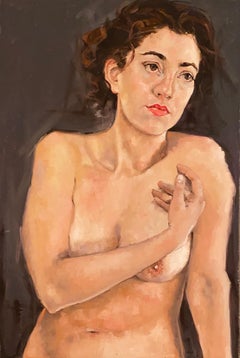
"Standing Young Woman" - Nude Brunette Gorgeous Young Model - Black Background
By Shana Wilson
Located in Carmel, CA
Shana Wilson (Canadian, born 1966)
"Standing Young Woman" 2015
Oil Paint, Canvas, Stretcher Bars
The artist signed the back of the painting.
Shana Wilson, born in Edmonton in 1966, ...
Category
2010s Expressionist Nude Paintings
Materials
Oil, Canvas, Stretcher Bars
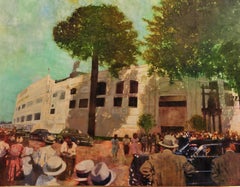
Comisky Park Stadium
By Bernie Fuchs
Located in Fort Washington, PA
Painting for a poster, Comisky Park, Chicago White Sox Stadium 1985.
Illustrator's Works Defined an Era: Bernie Fuchs, 76
By Adam Bernstein
Washington Post Staff Writer
Saturday, September 19, 2009
Bernie Fuchs, 76, an illustrator whose influential work for magazines ranging from Cosmopolitan to Sports Illustrated seamlessly blended qualities of traditional narrative with hints of abstract composition, died of esophageal cancer Sept. 17 at a care facility in Fairfield, Conn. He lived in nearby Westport.
Mr. Fuchs was adept at balancing art and commerce. He met the needs of mass-circulation magazines accustomed to Norman Rockwell-style realism, but he injected a fresh vitality and impressionism that became hugely popular and transformed the illustration field. He even experimented with bold designs based on the abstract expressionism movement popularized by painters Jackson Pollock and Willem de Kooning.
One vivid example, commissioned by McCall's magazine in the late 1950s, was a portrait of two young couples relaxing in a small room after dinner. One man is lying on the ground, his head nestled on a woman's lap and smoking a cigarette as she strokes his hair.
While the image has the control and realism of Rockwell, it also has several more dynamic features taken from avant-garde techniques: the vigorous brush strokes; the tilted horizon that heightens a sense of drama; a lampshade in the foreground that appears slightly distorted; and, most strikingly, the placement of the couples in the distance instead of being the center of the picture.
"Bernie combined the best of both worlds," said illustrator Murray Tinkelman, who directs the University of Hartford's master of fine arts program and chairs the New York-based Society of Illustrators' hall of fame committee. "He became the most emulated and imitated illustrator in the field through the 1980s . . . when the vogue turned to more decorative, whimsical, punkier illustrations that were influenced by underground cartoons like those of Robert Crumb."
Mr. Fuchs entered the hall of fame in 1975. He was among the youngest inductees on a roster that includes Rockwell, N.C. Wyeth, Winslow Homer and John James Audubon.
Bernard Leo Fuchs was born Oct. 19, 1932, in the coal mining town of O'Fallon, Ill., and his father soon abandoned the family. As a young man, Mr. Fuchs enjoyed drawing characters from Walt Disney movies...
Category
1980s Other Art Style Paintings
Materials
Canvas, Oil