6,892 results for "surrealism"

to
1,627
2,393
1,431
1,210
850
1,008
Overall Width
to
Overall Height
to
1
12
3,241
3,637
5
3
75
96
137
417
841
656
323
135
1,949
1,830
851
673
296
230
95
67
33
12
11
7
7
3,777
2,207
700
2,516
1,568
873
798
674
626
478
383
299
265
238
180
169
163
144
125
116
102
95
86
2,441
1,685
1,338
1,198
1,136
516
201
190
177
146
1,137
858
4,770
1,846
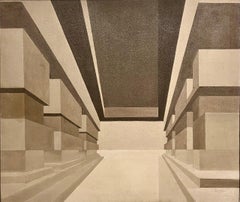
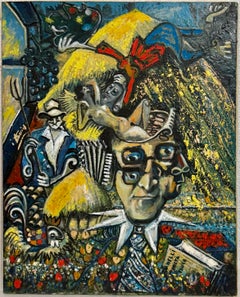
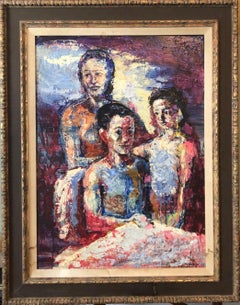
Venezuelan Surrealism Architectural Oil Painting Emerio Lunar Latin American Art
Located in Surfside, FL
Provenance: Galeria Durban Cesar Segnini, Caracas Venezuela. Emerio Dario Lunar was born on January 27, 1940 in Cabimas, Zulia state. Self-taught in painting, makes primary educati...
Category

1980s Surrealist Figurative Paintings

Materials

Canvas, Oil

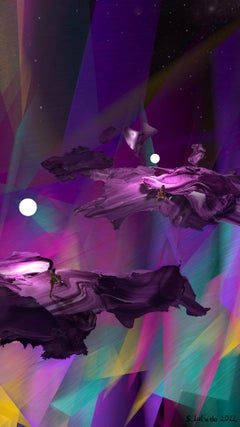
Sciences Du Futur (Catharsism, Brush Strokes, Surrealism, ~30% OFF LIST PRICE)
Located in Kansas City, MO
Archival Pigment Print on Linen Year: 2022 Size: 19.6 x 11.8 inches Signed and titled by hand COA provided The style reflects the need for constant self-perfection and development, ...
Category

2010s Contemporary Portrait Prints

Materials

Linen, Archival Pigment

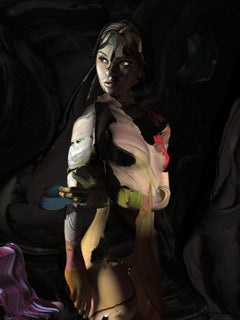
Tour de Lumière (Catharsism, Brush Strokes, Surrealism, ~35% OFF LIST PRICE)
Located in Kansas City, MO
Archival Pigment Print on Linen Year: 2022 Size: 33.4 x 25.5 inches Signed and titled by hand COA provided The style reflects the need for constant self-perfection and development, ...
Category

2010s Contemporary Portrait Prints

Materials

Linen, Archival Pigment

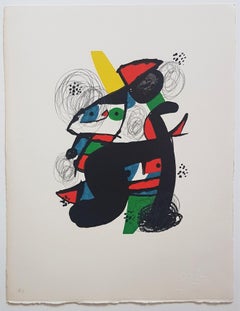
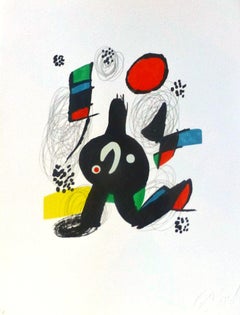
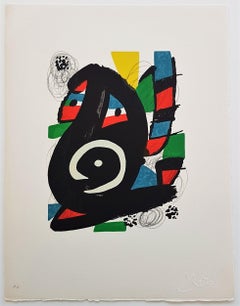
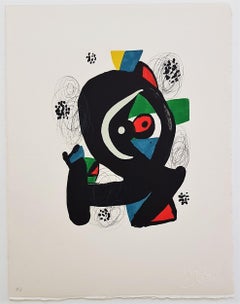
La Mélodie Acide - 11 (Surrealism, Colorful, Modern, ~26% OFF LIMITED TIME ONLY)
By Joan Miró
Located in Kansas City, MO
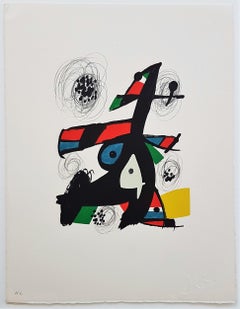
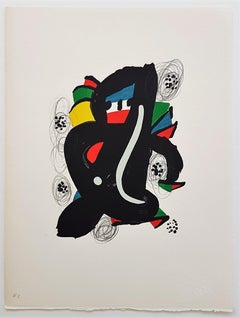
Joan Miró La Mélodie Acide - 11 Color lithograph Year: 1980 Edition: 1500 Artist Dry Stamp lower right, Annotated "H.C" (hors commerce) in pencil lower left Size: 8.2 × 6.6 on 12.9...
Category

1980s Surrealist Abstract Prints

Materials

Lithograph

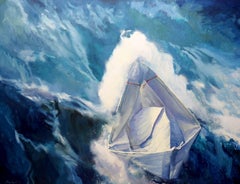
Storm, Surrealism, Canvas Art, Original oil Painting, One of a Kind
Located in Granada Hills, CA
Artist: Varvarov Anatoly Viktorovich Title: Storm, Sise: 53x69 inches, (135x175 cm) Medium: Oil on Canvas Hand painted, original, one of a kind. If you're looking for a piece that w...
Category

2010s Impressionist Landscape Paintings

Materials

Canvas, Oil

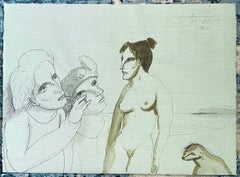
Modern Figurative Surrealism Watercolor Painting, Drawing - Women On The Beach
By Gary Hansmann
Located in Surfside, FL
Gary Hansmann (1947-2008) was active/lived in California. He is known for abstract, Surrealism figure painting. Gary William Hansmann was born Dec. 4, 1940, in San Diego to Ethel May...
Category

Late 20th Century Surrealist Figurative Paintings

Materials

Paper, India Ink, Watercolor

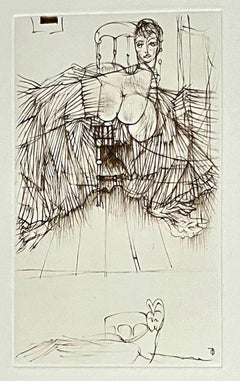
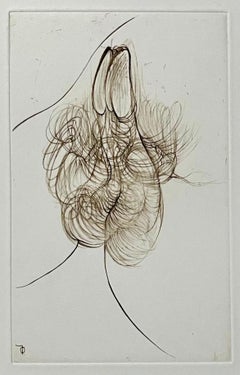
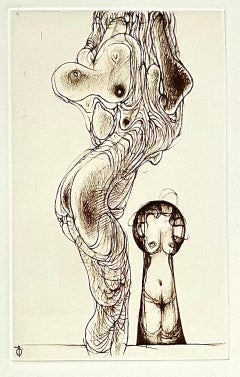
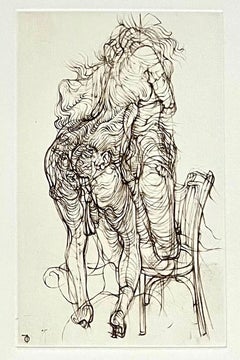
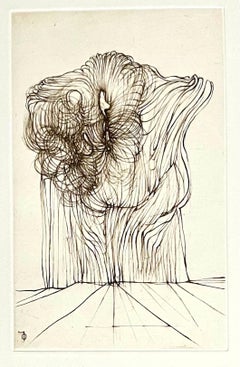
German Surrealist Hans Bellmer Etching Engraving Print Cecile Reims Surrealism
By Hans Bellmer
Located in Surfside, FL
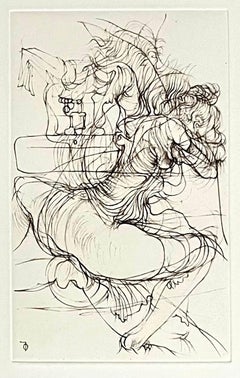
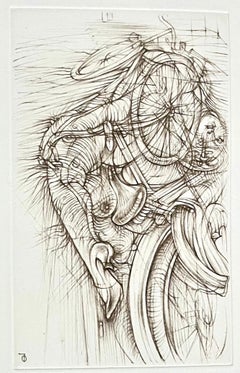
After Hans Bellmer (German, 1902-1975) Surrealist engraving, etching after drawings from a 1942 notebook, engraved in 1974-75 by Cecile Reims Printed by L'Atelier de Chalcographie du Louvre, Paris, Having printed monogram lower left in plate, pencil notations verso Editioned from a very small edition of #7/10 and 'Musee du Louvre' blindstamp. Dimensions: Sheet 11 X 7.5, Plate size 6.5 X 4 Hans Bellmer ( 1902 – 1975) was a Polish born German artist, best known for his drawings, etchings that illustrates the 1940 edition of Histoire de l’œil, and the life-sized female sculpture mannequin dolls he produced in the mid-1930s. Historians of art and photography also consider him a Surrealist photographer. Bellmer was born in the city of Kattowitz, then part of the German Empire (now Katowice, Poland). Up until 1926, he worked as a draftsman for his own advertising company. Bellmer is most famous for the creation of a series of dolls as well as photographs of them. He was influenced in his choice of art form in part by reading the published letters of Oskar Kokoschka (Der Fetisch, 1925) and Surrealism. Bellmer's puppet doll project is also said to have been catalysed by a series of events in his personal life. Hans Bellmer takes credit for provoking a physical crisis in his father and brings his own artistic creativity into association with childhood insubordination and resentment toward a severe and humorless paternal authority. Perhaps this is one reason for the nearly universal, unquestioning acceptance in the literature of Bellmer's promotion of his art as a struggle against his father, the police, and ultimately, fascism and the state. Events of his personal life also including meeting a beautiful teenage cousin in 1932 (and perhaps other unattainable beauties), attending a performance of Jacques Offenbach's Tales of Hoffmann (in which a man falls tragically in love with an automaton), and receiving a box of his old toys. After these events, he began to actually construct his first dolls. In his works, Bellmer explicitly sexualized the doll as a young girl (his work bears connection to the works of Bathus). Hirschfeld has claimed (without further argumentation) that Bellmer initiated his doll project to oppose the fascism of the Nazi Party by declaring that he would make no work that would support the new German state. Represented by mutated forms and unconventional poses, his dolls (according to this view) were directed specifically at the cult of the perfect body then prominent in Germany. He visited Paris in 1935 and made contacts there, such as Paul Éluard, but returned to Berlin because his wife Margarete was dying of tuberculosis. He was part of the circle of Surrealist luminaries such as Man Ray, Marcel Duchamp, Max Ernst, Joan Miro, André Masson, René Magritte, Alberto Giacometti and Salvador Dali as well as women artists—such as Frida Kahlo, Dorothea Tanning and Leonora Carrington. Bellmer produced the first doll in Berlin in 1933. Long since lost, the assemblage can nevertheless be correctly described thanks to approximately two dozen photographs Bellmer took at the time of its construction. Standing about fifty-six inches tall, the doll consisted of a modeled torso made of flax fiber, glue, and plaster; a mask-like head of the same material with glass eyes and a long, unkempt wig; and a pair of legs made from broomsticks or dowel rods. One of these legs terminated in a wooden, club-like foot; the other was encased in a more naturalistic plaster shell, jointed at the knee and ankle. As the project progressed, Bellmer made a second set of hollow plaster legs, with wooden ball joints for the doll's hips and knees. There were no arms to the first sculpture, but Bellmer did fashion or find a single wooden hand, which appears among the assortment of doll parts the artist documented in an untitled photograph of 1934, as well as in several photographs of later work. Bellmer's 1934 anonymous book, The Doll (Die Puppe), produced and published privately in Germany, contains 10 black-and-white photographs of Bellmer's first doll arranged in a series of "tableaux vivants" (living pictures). The book was not credited to him, as he worked in isolation, and his photographs remained almost unknown in Germany. Yet Bellmer's work was eventually declared "degenerate" (entartete kunst) by the Nazi Party, and he was forced to flee Germany to France in 1938, where Bellmer's work was welcomed by the Surrealists around Andre Breton. He aided the French Resistance during the war by making fake passports. He was imprisoned in the Camp des Milles prison at Aix-en-Provence, a brickworks camp for German nationals, from September 1939 until the end of the Phoney War in May 1940. After the war, Bellmer lived the rest of his life in Paris. Bellmer gave up doll-making and spent the following decades creating erotic drawings, etchings, sexually explicit photographs, paintings, and prints of pubescent girls. In 1954, he met Unica Zürn...
Category

20th Century Abstract Prints

Materials

Etching

La Mélodie Acide - 7 (Surrealism, Colorful, Modern, ~26% OFF LIMITED TIME ONLY)
By Joan Miró
Located in Kansas City, MO
Joan Miró La Mélodie Acide - 7 Color lithograph Year: 1980 Edition: 1500 Artist Dry Stamp lower right, Annotated "H.C" (hors commerce) in pencil lower left Size: 8.2 × 6.6 on 12.9 ...
Category

1980s Surrealist Prints and Multiples

Materials

Lithograph

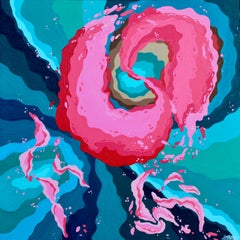
Notation (surrealism, hard edge, colorful art, color field, contemporary art)
Located in Kansas City, MO
JB Nearsy Notation 2017 Acrylic on Canvas Size: 30x30x1.5in Signed by hand COA provided Ref.: 924802-1776 -------------- Tags: surrealism, hard edge, colorful art, contemporary art...
Category

2010s Surrealist Abstract Paintings

Materials

Canvas, Acrylic

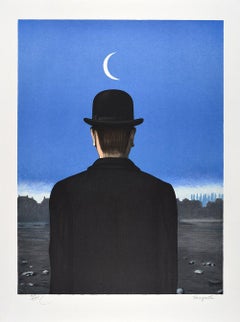
RENÉ MAGRITTE Le Maître d École - 1955 Limited edition Lithograph - Surrealism
By (after) René Magritte
Located in Madrid, Madrid
LE MAÎTRE D'ÉCOLE, 1955 (THE SCHOOLMASTER) Date of creation: 2010 Medium: Lithograph on BFK Rives Paper Edition: 275 Size: 60 x 45 cm Observations: Lithograph on BFK Rives paper plat...
Category

Mid-20th Century Surrealist Figurative Prints

Materials

Lithograph

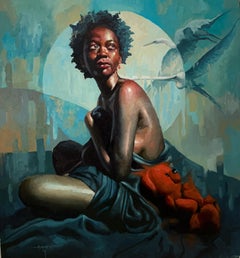
Odd Tales From an Old Flame -21st Century, Contemporary, Figurative, Surrealism
Located in Ibadan, Oyo
A dream spills open like an old book without words— Its pages breathe smoke and feathered wings, keys that unlock nothing, clocks that refuse to tell time. In the half-light, a figur...
Category

21st Century and Contemporary Expressionist Portrait Paintings

Materials

Linen, Oil

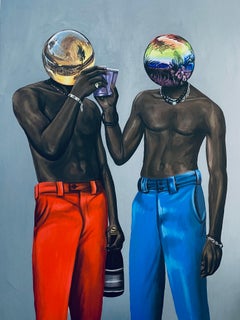
Roister - 21st Century, Surrealism, Young Men Making Cheers to Good Life
Located in Ibadan, Oyo
Shipping Procedure Ships in a well-protected tube from Nigeria This work is unique, not a print or other type of copy. Accompanied by a Certificate of Authenticity. About Artist Bor...
Category

21st Century and Contemporary Surrealist Figurative Paintings

Materials

Canvas, Acrylic

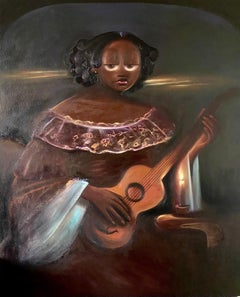
Priscilla At Dusk - 21st Century, Surrealism, Africa Woman with Guitar, Musical
Located in Ibadan, Oyo
Shipping Procedure Ships in a well-protected tube from Nigeria This work is unique, not a print or other type of copy. Accompanied by a Certificate of Authenticity. About Artist Bor...
Category

21st Century and Contemporary Surrealist Figurative Paintings

Materials

Canvas, Oil

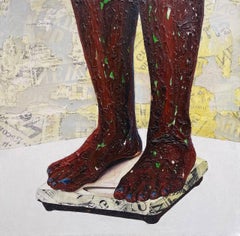
More Than The Scale - 21st Century, Contemporary, Surrealism, Modern Mixed Media
Located in Ibadan, Oyo
Shipping Procedure Ships in a well-protected tube from Nigeria This work is unique; this is not a print or other type of copy. Accompanied by a Certificate of Authenticity (Issued by...
Category

21st Century and Contemporary Contemporary Portrait Paintings

Materials

Canvas, Paper, Oil, Acrylic

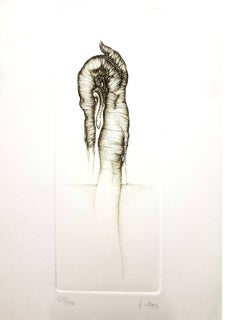
German Surrealist Hans Bellmer Etching Engraving Print Cecile Reims Surrealism
By Hans Bellmer
Located in Surfside, FL
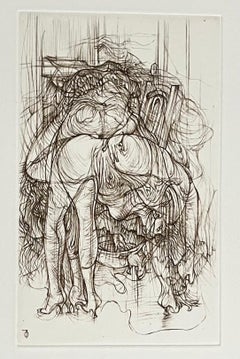
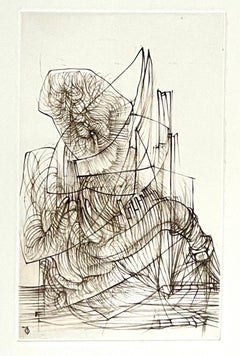
After Hans Bellmer (German, 1902-1975) Surrealist engraving, etching after drawings from a 1942 notebook, engraved in 1974-75 by Cecile Reims Printed by L'Atelier de Chalcographie du Louvre, Paris, Having printed monogram lower left in plate, pencil notations and #7/10 and 'Musee du Louvre' blindstamp verso Dimensions: Sheet 11 X 7.5, Plate size 6.5 X 4 Hans Bellmer ( 1902 – 1975) was a Polish born German artist, best known for his drawings, etchings that illustrates the 1940 edition of Histoire de l’œil, and the life-sized female sculpture mannequin dolls he produced in the mid-1930s. Historians of art and photography also consider him a Surrealist photographer. Bellmer was born in the city of Kattowitz, then part of the German Empire (now Katowice, Poland). Up until 1926, he worked as a draftsman for his own advertising company. Bellmer is most famous for the creation of a series of dolls as well as photographs of them. He was influenced in his choice of art form in part by reading the published letters of Oskar Kokoschka (Der Fetisch, 1925) and Surrealism. Bellmer's puppet doll project is also said to have been catalysed by a series of events in his personal life. Hans Bellmer takes credit for provoking a physical crisis in his father and brings his own artistic creativity into association with childhood insubordination and resentment toward a severe and humorless paternal authority. Perhaps this is one reason for the nearly universal, unquestioning acceptance in the literature of Bellmer's promotion of his art as a struggle against his father, the police, and ultimately, fascism and the state. Events of his personal life also including meeting a beautiful teenage cousin in 1932 (and perhaps other unattainable beauties), attending a performance of Jacques Offenbach's Tales of Hoffmann (in which a man falls tragically in love with an automaton), and receiving a box of his old toys. After these events, he began to actually construct his first dolls. In his works, Bellmer explicitly sexualized the doll as a young girl (his work bears connection to the works of Bathus). Hirschfeld has claimed (without further argumentation) that Bellmer initiated his doll project to oppose the fascism of the Nazi Party by declaring that he would make no work that would support the new German state. Represented by mutated forms and unconventional poses, his dolls (according to this view) were directed specifically at the cult of the perfect body then prominent in Germany. He visited Paris in 1935 and made contacts there, such as Paul Éluard, but returned to Berlin because his wife Margarete was dying of tuberculosis. He was part of the circle of Surrealist luminaries such as Man Ray, Marcel Duchamp, Max Ernst, Joan Miro, André Masson, René Magritte, Alberto Giacometti and Salvador Dali as well as women artists—such as Frida Kahlo, Dorothea Tanning and Leonora Carrington. Bellmer produced the first doll in Berlin in 1933. Long since lost, the assemblage can nevertheless be correctly described thanks to approximately two dozen photographs Bellmer took at the time of its construction. Standing about fifty-six inches tall, the doll consisted of a modeled torso made of flax fiber, glue, and plaster; a mask-like head of the same material with glass eyes and a long, unkempt wig; and a pair of legs made from broomsticks or dowel rods. One of these legs terminated in a wooden, club-like foot; the other was encased in a more naturalistic plaster shell, jointed at the knee and ankle. As the project progressed, Bellmer made a second set of hollow plaster legs, with wooden ball joints for the doll's hips and knees. There were no arms to the first sculpture, but Bellmer did fashion or find a single wooden hand, which appears among the assortment of doll parts the artist documented in an untitled photograph of 1934, as well as in several photographs of later work. Bellmer's 1934 anonymous book, The Doll (Die Puppe), produced and published privately in Germany, contains 10 black-and-white photographs of Bellmer's first doll arranged in a series of "tableaux vivants" (living pictures). The book was not credited to him, as he worked in isolation, and his photographs remained almost unknown in Germany. Yet Bellmer's work was eventually declared "degenerate" (entartete kunst) by the Nazi Party, and he was forced to flee Germany to France in 1938, where Bellmer's work was welcomed by the Surrealists around Andre Breton. He aided the French Resistance during the war by making fake passports. He was imprisoned in the Camp des Milles prison at Aix-en-Provence, a brickworks camp for German nationals, from September 1939 until the end of the Phoney War in May 1940. After the war, Bellmer lived the rest of his life in Paris. Bellmer gave up doll-making and spent the following decades creating erotic drawings, etchings, sexually explicit photographs, paintings, and prints of pubescent girls. In 1954, he met Unica Zürn...
Category

20th Century Abstract Prints

Materials

Etching

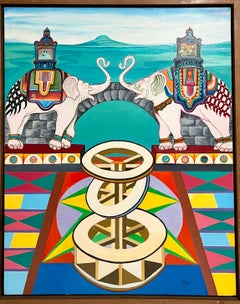
2002 Vibrant Elephants Oil on Canvas Painting Christine McGinnis Surrealism Art
By Christine McGinnis
Located in Surfside, FL
Christine McGinnis LaPelle (American, 1937-2019) "Guardians of the Rings" Frame: 32" X 26" Image: 30" X 24" Christine McGinnis LaPelle, award winning artist, co-owner of Rodger LaPelle Galleries, artist and printmaker. McGinnis was the wife of fellow artist and printmaker, Rodger LaPelle. Together for over 60 years, they paved a way of life for new and upcoming artists in the Philadelphia arts community. A carriage house in Germantown in Awbury Arboretum was their home for over 50 years where Christine painted in her studio there. This was from the estate exhibition of the Rodger LaPelle Galleries, Philadelphia, PA, Entirely Absurd. Rodger LaPelle and his wife Christine McGinnis first emerged on the Philadelphia art scene by establishing a fine art printing studio. Here, they employed local artists and recent PAFA and art school graduates, ultimately founding the Rodger LaPelle Galleries in 1980. Representing such artists as David Lynch, Peter Paone, Paul Wunderlich, and Tom Palmore, among many others, the gallery established a distinct presence in the Philadelphia artistic community by offering works characterized by an absurdist surrealist aesthetic, often vacillating between the darkly surreal and hilariously nonsensical. Sci fi, robots, comets, space and animals all figured in this colorful jumble of surrealism, fantastic realism and whimsy. RobitSuch works transport their viewers to places unfamiliar, perhaps haunting, revealing the artists' strange and disturbing impulses. Artists who have exhibited at the Rodger LaPelle Galleries in Philadelphia include Rolland Becerra, Jimmy Bellew, Rachel Bess, and Alex Cohen. Additional artists who have shown their work there are Nick D'Angelo, Robert Waddington, Fred Danziger, Christine Cathers Donohue, and Bruce Evans. Other artists include James Farrah, David Febland, James Feehan, Clark Fox, Santiago Galeas, Reza Ghanad, Jason Godeke, Heather Godlewski, Paul Gorka, and Red Grooms. The gallery has also featured Allan Grow, Sandra Hoffman, Simon Huelsbeck, Sarah Hunter, Paul Kane, Jenny Kanzler, Brian Keeler, Judith Lamb, Terrence Laragione, Jeanine Leclaire, and David Leonard. David Lynch, Michael Cole...
Category

Early 2000s Contemporary Animal Paintings

Materials

Canvas, Oil

French Surrealist Lithograph Legendary Mime Marcel Marceau Third Eye Surrealism
By Marcel Marceau
Located in Surfside, FL
Le Troisième Oeil (The Third Eye) Lithograph on Arches paper Hand signed and numbered 1981 Dimensions: 21.5 X 30 inches Marcel Marceau (French: born Marcel Mangel; 1923 – 2007) was ...
Category

1980s Surrealist Figurative Prints

Materials

Lithograph

Victorious Nude Man on Naked Road in New Mexico - Gay Interest Surrealism
By Mitchell Funk
Located in Miami, FL
Man conquers nature and expresses a victorious gesture to an endless landscape with billowing clouds. A quest for meaning for the individual could be another theme this image. The ...
Category

1970s Surrealist Nude Photography

Materials

Archival Ink, Archival Paper, Archival Pigment

You can not express yourself because we have a democracy, Figurative Surrealism
By Ashot Yan
Located in Granada Hills, CA
Figurative Surrealism Original Painting Artist: Ashot Yan Work: Original Oil Painting, Handmade Artwork, One of a Kind Medium: Oil on Linen, Year: 2023 Style: Figurative Surrealism, ...
Category

2010s Surrealist Figurative Paintings

Materials

Canvas, Oil

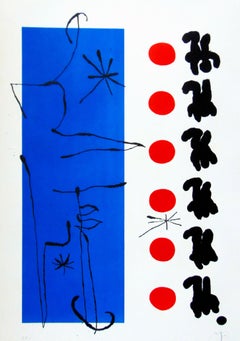
Red and Blue Rouge et bleu - Surrealism Spanish
By Joan Miró
Located in London, GB
This original lithograph in colours is hand signed in pencil by the artist "Miró" at the lower right margin It is also hand numbered in pencil, from the edition of 100 at the lower l...
Category

1960s Surrealist Abstract Prints

Materials

Lithograph

Lithograph Belgian American Surrealism WPA Modernist Karl Fortess Surrealist Art
Located in Surfside, FL
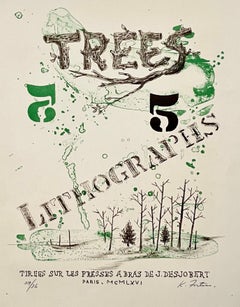
Karl Eugene Fortess (1907-1993) Original color lithographs on BFK Rives paper, 1966, Hand signed and numbered 29/36 in pencil, Sheet size 20.5 x 15 inches. Karl E. Fortess (1907-1993) was a painter, printmaker and teacher, of Boston, Massachusetts and Woodstock, N.Y. Fortess was born in Antwerp, Belgium on October 13, 1907, and became an American citizen in 1923. He studied at the Art Institute of Chicago, the Art Students League in New York, and the Woodstock School of Painting with Yasuo Kuniyoshi. In 1937 the Works Progress Administration sent him and several other artists to Alaska to document the towns, villages, and remote wilderness landscapes (Pemberton, “Alaska art museum collects WPA’s Depression works from the territory,” Columbia Daily Tribune, November 9, 2003). Trains, trucks, and industrial buildings were what Karl Fortess envisioned when the Public Works of Art Project suggested that he depict “the American Scene.” His work bears the influence of Surrealism, Russsian Constructivist art and Cubism. He was part of a circle of left leaning artists loosley involved with the WPA which included Sol Wilson, Isaac Soyer, Louis Lozowick, Abraham Harriton, Ben Shahn, William Gropper, Nahum Tschacbasov, Morris Shulman, Yasuo Kuniyoshi, Louis Slobodkin, Adolf Dehn, Le Corbusier and Louis Schanker. Karl Fortress taught at the Art Students League, Brooklyn Museum Art School, Louisiana State University, Fort Wright College, and Boston University School of Fine and Applied Arts. He was a member of the Artists Equity Association, Society of American Graphic Artists, American Association of University Professors, and the British Film Institute. He was awarded the Guggenheim Fellowship in 1946, was named an Associate of the National Academy of Design in 1960 and elected to full Academician in 1971. Fortess taught at many different schools, including Boston University School of Fine Art, where he also created an archive of interviews with more than two hundred and fifty contemporary American painters, sculptors, and graphic artists including many with with artists associated with the Woodstock, N.Y. art community. Among the interviewees are Kenneth Armitage, Will Barnet, Romare Bearden, George Biddle, James Brooks, Adolph Dehn, Jane Freilicher, Julian Levi, Alice Neel, Larry Rivers, Moses Soyer, Dorothy Varian...
Category

Mid-20th Century Surrealist Landscape Prints

Materials

Lithograph

Lithograph Belgian American Surrealism WPA Modernist Karl Fortess Surrealist Art
Located in Surfside, FL
Karl Eugene Fortess (1907-1993) Original color lithographs on BFK Rives paper, 1966, Hand signed and numbered 29/36 in pencil, Sheet size 20.5 x 15 inches. Karl E. Fortess (1907-1993) was a painter, printmaker and teacher, of Boston, Massachusetts and Woodstock, N.Y. Fortess was born in Antwerp, Belgium on October 13, 1907, and became an American citizen in 1923. He studied at the Art Institute of Chicago, the Art Students League in New York, and the Woodstock School of Painting with Yasuo Kuniyoshi. In 1937 the Works Progress Administration sent him and several other artists to Alaska to document the towns, villages, and remote wilderness landscapes (Pemberton, “Alaska art museum collects WPA’s Depression works from the territory,” Columbia Daily Tribune, November 9, 2003). Trains, trucks, and industrial buildings were what Karl Fortess envisioned when the Public Works of Art Project suggested that he depict “the American Scene.” His work bears the influence of Surrealism, Russsian Constructivist art and Cubism. He was part of a circle of left leaning artists loosley involved with the WPA which included Sol Wilson, Isaac Soyer, Louis Lozowick, Abraham Harriton, Ben Shahn, William Gropper, Nahum Tschacbasov, Morris Shulman, Yasuo Kuniyoshi, Louis Slobodkin, Adolf Dehn, Le Corbusier and Louis Schanker. Karl Fortress taught at the Art Students League, Brooklyn Museum Art School, Louisiana State University, Fort Wright College, and Boston University School of Fine and Applied Arts. He was a member of the Artists Equity Association, Society of American Graphic Artists, American Association of University Professors, and the British Film Institute. He was awarded the Guggenheim Fellowship in 1946, was named an Associate of the National Academy of Design in 1960 and elected to full Academician in 1971. Fortess taught at many different schools, including Boston University School of Fine Art, where he also created an archive of interviews with more than two hundred and fifty contemporary American painters, sculptors, and graphic artists including many with with artists associated with the Woodstock, N.Y. art community. Among the interviewees are Kenneth Armitage, Will Barnet, Romare Bearden, George Biddle, James Brooks, Adolph Dehn, Jane Freilicher, Julian Levi, Alice Neel, Larry Rivers, Moses Soyer, Dorothy Varian...
Category

Mid-20th Century Surrealist Landscape Prints

Materials

Lithograph

Keepers of Time, Surrealism, Original oil Painting, Ready to Hang
Located in Granada Hills, CA
Artist: Oleg Kateryniuk Work: Original oil painting, handmade artwork, one of a kind Medium: Oil on Canvas Year: 2023 Style: Contemporary Art Title: Keepers of Time Size: 43.5" x 3...
Category

2010s Impressionist Figurative Paintings

Materials

Canvas, Oil

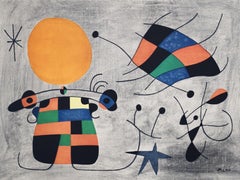
The Smile of the Flamboyant Wings - Surrealism Spanish 1954
By Joan Miró
Located in London, GB
This lithograph in colours is hand signed in pencil by the artist "Miró" at lower right corner. It is also hand numbered in pencil 199 from the edition of 400, at the lower left cor...
Category

1950s Surrealist Abstract Prints

Materials

Lithograph

1970s Modernist Swiss Colorful Surrealism Signed Dada Lithograph Andre Thomkins
By André Thomkins
Located in Surfside, FL
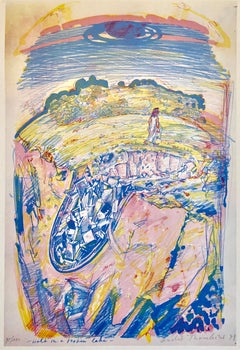
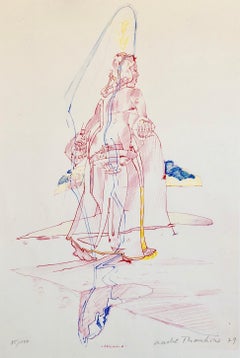
This one is titled "Walk in a Broken Lake" and depicts a surreal figure of a robed woman walking in an abstract landscape in yellow, green, red and blue with a Salvador Dali esque quality about it. Published by Edition Hansjörg Mayer, Stuttgart They published concrete poetry and art books by Mark Boyle, Richard Hamilton, Dorothy Iannone, John Latham, Tom Phillips, Dieter Roth, André Thompkins and Emmett Williams, to name just a few. André Thomkins (1930 - 1985) was a Swiss painter, illustrator, and poet. He attended art-school, taught by Max von Moos, 1947 – 1949 and the Académie de la Grande Chaumière, Paris, France, 1950. From 1952, he lived in Germany and taught at the Kunstakademie Düsseldorf between 1971 and 1973. Thomkins painted and drew ironic and fantastic pictures influenced by surrealism and dadaism. Together with Dieter Roth and Daniel Spoerri he prepared works of Eat Art. He also was a writer of palindromes. His friends and collaborators included Daniel Spoerri, Dieter Roth, George Brecht, Richard Hamilton and Karl Gerstner, Thomkins gained a reputation as an ‘artist’s artist’, and is considered one of the most important Swiss artists of the second half of the twentieth century.He died in 1985. His work is currently represented by Hauser & Wirth Zurich, Switzerland. Select group exhibitions: 2018 Kunsthalle Krems, 'Pablo Picasso. Arshile Gorky, Andy Warhol. Sculptures and Works on Paper. Hubert Looser Collection', Krems, Austria 2017 Kunsthandel Wolfgang Werner, 'Martin Barré, Karl Otto Götz, Ernst Wilhelm Nay, André Thomkins', Berlin, Germany 2013 Fabian & Claude Walter Galerie, 'Schweizer Avantgarde Kunst nach 1940', Zurich, Switzerland 2009 The Modern Institute, 'Thomas Houseago, Dieter Roth, Andre Thomkins', Glasgow, England Museum of Modern Art, 'Compass in Hand: Selections from the Judith Rothschild Collection', NYC 2004 Kunsthandel Wolfgang Werner, 'Arman, Baumeister, Götz, Graubner, Tàpies, Thomkins', Berlin, Germany 1994 Kunstmuseum Solothurn, 'Eine Schenkung. Grafik von Eduardo Chillida, Antoni Tàpies, Alexander Calder, Jean Dubuffet, Ben Nicholson, Giacometti, Tinguely, Thomkins', Solothurn, Switzerland 1992 Galerie Littmann, Tinguely zu Ehren. A Tribute to Jean Tinguely. Hommage à Tinguely, Basel, 1988 Museum Ludwig, 'Uebrigens sterben immer die anderen. Marcel Duchamp und die Avantgarde seit 1950', Cologne, Germany 1987 Aargauer Kunsthaus, 'Otto Grimm. Marc-Antoine Fehr. Christoph Gredinger', Aarau, Switzerland Cercle Municipal, 'Art contemporain suisse. Collection de la Banque du Gothard', Luxembourg, 1985 Centre national d'art et de culture Georges Pompidou, 'Livres d'artistes', Paris, France Rathaus, 'Claude Sandoz – Hans Schärer...
Category

1970s Surrealist Figurative Prints

Materials

Lithograph, Offset

La Mélodie Acide - 8 (Surrealism, Colorful, Modern, ~26% OFF LIMITED TIME ONLY)
By Joan Miró
Located in Kansas City, MO
Joan Miró La Mélodie Acide - 8 Color lithograph Year: 1980 Edition: 1500 Artist Dry Stamp lower right, Annotated "H.C" (hors commerce) in pencil lower left Size: 8.2 × 6.6 on 12.9 ...
Category

1980s Surrealist Figurative Prints

Materials

Lithograph

1970s Modernist Swiss Colorful Surrealism Signed Dada Lithograph Andre Thomkins
By André Thomkins
Located in Surfside, FL
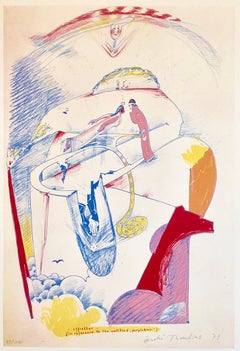
This one is titled "Offsetter, in reference to the untitled, purple hair" It depicts what looks like a ski slope and a Niki de Saint Phalle type coiled snake. in pink, blue, red and yellow colors. Published by Edition Hansjörg Mayer, Stuttgart They published concrete poetry and art books by Mark Boyle, Richard Hamilton, Dorothy Iannone, John Latham, Tom Phillips, Dieter Roth, André Thompkins and Emmett Williams, to name just a few. André Thomkins (1930 - 1985) was a Swiss painter, illustrator, and poet. He attended art-school, taught by Max von Moos, 1947 – 1949 and the Académie de la Grande Chaumière, Paris, France, 1950. From 1952, he lived in Germany and taught at the Kunstakademie Düsseldorf between 1971 and 1973. Thomkins painted and drew ironic and fantastic pictures influenced by surrealism and dadaism. Together with Dieter Roth and Daniel Spoerri he prepared works of Eat Art. He also was a writer of palindromes. His friends and collaborators included Daniel Spoerri, Dieter Roth, George Brecht, Richard Hamilton and Karl Gerstner, Thomkins gained a reputation as an ‘artist’s artist’, and is considered one of the most important Swiss artists of the second half of the twentieth century.He died in 1985. His work is currently represented by Hauser & Wirth Zurich, Switzerland. Select group exhibitions: 2018 Kunsthalle Krems, 'Pablo Picasso. Arshile Gorky, Andy Warhol. Sculptures and Works on Paper. Hubert Looser Collection', Krems, Austria 2017 Kunsthandel Wolfgang Werner, 'Martin Barré, Karl Otto Götz, Ernst Wilhelm Nay, André Thomkins', Berlin, Germany 2013 Fabian & Claude Walter Galerie, 'Schweizer Avantgarde Kunst nach 1940', Zurich, Switzerland 2009 The Modern Institute, 'Thomas Houseago...
Category

1970s Dada Figurative Prints

Materials

Lithograph, Offset

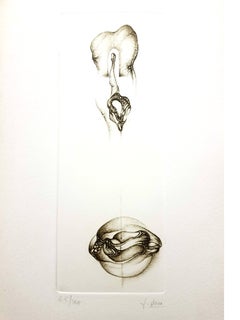
German Surrealist Hans Bellmer Etching Engraving Print Cecile Reims Surrealism
By Hans Bellmer
Located in Surfside, FL
After Hans Bellmer (German, 1902-1975) Surrealist engraving, etching after drawings from a 1942 notebook, engraved in 1974-75 by Cecile Reims Printed by L'Atelier de Chalcographie du Louvre, Paris, Having printed monogram lower left in plate, pencil notations and #7/10 and 'Musee du Louvre' blindstamp verso Dimensions: Sheet 11 X 7.5, Plate size 6.5 X 4 Hans Bellmer ( 1902 – 1975) was a Polish born German artist, best known for his drawings, etchings that illustrates the 1940 edition of Histoire de l’œil, and the life-sized female sculpture mannequin dolls he produced in the mid-1930s. Historians of art and photography also consider him a Surrealist photographer. Bellmer was born in the city of Kattowitz, then part of the German Empire (now Katowice, Poland). Up until 1926, he worked as a draftsman for his own advertising company. Bellmer is most famous for the creation of a series of dolls as well as photographs of them. He was influenced in his choice of art form in part by reading the published letters of Oskar Kokoschka (Der Fetisch, 1925) and Surrealism. Bellmer's puppet doll project is also said to have been catalysed by a series of events in his personal life. Hans Bellmer takes credit for provoking a physical crisis in his father and brings his own artistic creativity into association with childhood insubordination and resentment toward a severe and humorless paternal authority. Perhaps this is one reason for the nearly universal, unquestioning acceptance in the literature of Bellmer's promotion of his art as a struggle against his father, the police, and ultimately, fascism and the state. Events of his personal life also including meeting a beautiful teenage cousin in 1932 (and perhaps other unattainable beauties), attending a performance of Jacques Offenbach's Tales of Hoffmann (in which a man falls tragically in love with an automaton), and receiving a box of his old toys. After these events, he began to actually construct his first dolls. In his works, Bellmer explicitly sexualized the doll as a young girl (his work bears connection to the works of Bathus). Hirschfeld has claimed (without further argumentation) that Bellmer initiated his doll project to oppose the fascism of the Nazi Party by declaring that he would make no work that would support the new German state. Represented by mutated forms and unconventional poses, his dolls (according to this view) were directed specifically at the cult of the perfect body then prominent in Germany. He visited Paris in 1935 and made contacts there, such as Paul Éluard, but returned to Berlin because his wife Margarete was dying of tuberculosis. He was part of the circle of Surrealist luminaries such as Man Ray, Marcel Duchamp, Max Ernst, Joan Miro, André Masson, René Magritte, Alberto Giacometti and Salvador Dali as well as women artists—such as Frida Kahlo, Dorothea Tanning and Leonora Carrington. Bellmer produced the first doll in Berlin in 1933. Long since lost, the assemblage can nevertheless be correctly described thanks to approximately two dozen photographs Bellmer took at the time of its construction. Standing about fifty-six inches tall, the doll consisted of a modeled torso made of flax fiber, glue, and plaster; a mask-like head of the same material with glass eyes and a long, unkempt wig; and a pair of legs made from broomsticks or dowel rods. One of these legs terminated in a wooden, club-like foot; the other was encased in a more naturalistic plaster shell, jointed at the knee and ankle. As the project progressed, Bellmer made a second set of hollow plaster legs, with wooden ball joints for the doll's hips and knees. There were no arms to the first sculpture, but Bellmer did fashion or find a single wooden hand, which appears among the assortment of doll parts the artist documented in an untitled photograph of 1934, as well as in several photographs of later work. Bellmer's 1934 anonymous book, The Doll (Die Puppe), produced and published privately in Germany, contains 10 black-and-white photographs of Bellmer's first doll arranged in a series of "tableaux vivants" (living pictures). The book was not credited to him, as he worked in isolation, and his photographs remained almost unknown in Germany. Yet Bellmer's work was eventually declared "degenerate" (entartete kunst) by the Nazi Party, and he was forced to flee Germany to France in 1938, where Bellmer's work was welcomed by the Surrealists around Andre Breton. He aided the French Resistance during the war by making fake passports. He was imprisoned in the Camp des Milles prison at Aix-en-Provence, a brickworks camp for German nationals, from September 1939 until the end of the Phoney War in May 1940. After the war, Bellmer lived the rest of his life in Paris. Bellmer gave up doll-making and spent the following decades creating erotic drawings, etchings, sexually explicit photographs, paintings, and prints of pubescent girls. In 1954, he met Unica Zürn...
Category

20th Century Abstract Prints

Materials

Etching

German Surrealist Hans Bellmer Etching Engraving Print Cecile Reims Surrealism
By Hans Bellmer
Located in Surfside, FL
After Hans Bellmer (German, 1902-1975) Surrealist engraving, etching after drawings from a 1942 notebook, engraved in 1974-75 by Cecile Reims Printed by L'Atelier de Chalcographie du Louvre, Paris, Having printed monogram lower left in plate, pencil notations and #7/10 and 'Musee du Louvre' blindstamp verso Dimensions: Sheet 11 X 7.5, Plate size 6.5 X 4 Hans Bellmer ( 1902 – 1975) was a Polish born German artist, best known for his drawings, etchings that illustrates the 1940 edition of Histoire de l’œil, and the life-sized female sculpture mannequin dolls he produced in the mid-1930s. Historians of art and photography also consider him a Surrealist photographer. Bellmer was born in the city of Kattowitz, then part of the German Empire (now Katowice, Poland). Up until 1926, he worked as a draftsman for his own advertising company. Bellmer is most famous for the creation of a series of dolls as well as photographs of them. He was influenced in his choice of art form in part by reading the published letters of Oskar Kokoschka (Der Fetisch, 1925) and Surrealism. Bellmer's puppet doll project is also said to have been catalysed by a series of events in his personal life. Hans Bellmer takes credit for provoking a physical crisis in his father and brings his own artistic creativity into association with childhood insubordination and resentment toward a severe and humorless paternal authority. Perhaps this is one reason for the nearly universal, unquestioning acceptance in the literature of Bellmer's promotion of his art as a struggle against his father, the police, and ultimately, fascism and the state. Events of his personal life also including meeting a beautiful teenage cousin in 1932 (and perhaps other unattainable beauties), attending a performance of Jacques Offenbach's Tales of Hoffmann (in which a man falls tragically in love with an automaton), and receiving a box of his old toys. After these events, he began to actually construct his first dolls. In his works, Bellmer explicitly sexualized the doll as a young girl (his work bears connection to the works of Bathus). Hirschfeld has claimed (without further argumentation) that Bellmer initiated his doll project to oppose the fascism of the Nazi Party by declaring that he would make no work that would support the new German state. Represented by mutated forms and unconventional poses, his dolls (according to this view) were directed specifically at the cult of the perfect body then prominent in Germany. He visited Paris in 1935 and made contacts there, such as Paul Éluard, but returned to Berlin because his wife Margarete was dying of tuberculosis. He was part of the circle of Surrealist luminaries such as Man Ray, Marcel Duchamp, Max Ernst, Joan Miro, André Masson, René Magritte, Alberto Giacometti and Salvador Dali as well as women artists—such as Frida Kahlo, Dorothea Tanning and Leonora Carrington. Bellmer produced the first doll in Berlin in 1933. Long since lost, the assemblage can nevertheless be correctly described thanks to approximately two dozen photographs Bellmer took at the time of its construction. Standing about fifty-six inches tall, the doll consisted of a modeled torso made of flax fiber, glue, and plaster; a mask-like head of the same material with glass eyes and a long, unkempt wig; and a pair of legs made from broomsticks or dowel rods. One of these legs terminated in a wooden, club-like foot; the other was encased in a more naturalistic plaster shell, jointed at the knee and ankle. As the project progressed, Bellmer made a second set of hollow plaster legs, with wooden ball joints for the doll's hips and knees. There were no arms to the first sculpture, but Bellmer did fashion or find a single wooden hand, which appears among the assortment of doll parts the artist documented in an untitled photograph of 1934, as well as in several photographs of later work. Bellmer's 1934 anonymous book, The Doll (Die Puppe), produced and published privately in Germany, contains 10 black-and-white photographs of Bellmer's first doll arranged in a series of "tableaux vivants" (living pictures). The book was not credited to him, as he worked in isolation, and his photographs remained almost unknown in Germany. Yet Bellmer's work was eventually declared "degenerate" (entartete kunst) by the Nazi Party, and he was forced to flee Germany to France in 1938, where Bellmer's work was welcomed by the Surrealists around Andre Breton. He aided the French Resistance during the war by making fake passports. He was imprisoned in the Camp des Milles prison at Aix-en-Provence, a brickworks camp for German nationals, from September 1939 until the end of the Phoney War in May 1940. After the war, Bellmer lived the rest of his life in Paris. Bellmer gave up doll-making and spent the following decades creating erotic drawings, etchings, sexually explicit photographs, paintings, and prints of pubescent girls. In 1954, he met Unica Zürn...
Category

20th Century Abstract Prints

Materials

Etching

Gold in Me - 21st Century, Contemporary, Surrealism, Portrait, Modern, Women
Located in Ibadan, Oyo
Shipping Procedure Ships in a well-protected tube from Nigeria This work is unique, not a print or other type of copy. Accompanied by a Certificate of Authenticity. About Artist Ami...
Category

21st Century and Contemporary Contemporary Portrait Paintings

Materials

Canvas, Acrylic

La Mélodie Acide - 5 (Surrealism, Colorful, Modern, ~26% OFF LIMITED TIME ONLY)
By Joan Miró
Located in Kansas City, MO
Joan Miró La Mélodie Acide - 5 Color lithograph Year: 1980 Edition: 1500 Artist Dry Stamp lower right, Annotated "H.C" (hors commerce) in pencil lower left Size: 8.2 × 6.6 on 12.9 ...
Category

1980s Surrealist Figurative Prints

Materials

Lithograph

La Mélodie Acide - 14 (Surrealism, Colorful, Modern, ~26% OFF LIMITED TIME ONLY)
By Joan Miró
Located in Kansas City, MO
Joan Miró La Mélodie Acide - 14 Color lithograph Year: 1980 Edition: 1500 Artist Dry Stamp lower right, Annotated "H.C" (hors commerce) in pencil lower left Size: 8.2 × 6.6 on 12.9...
Category

1980s Surrealist Prints and Multiples

Materials

Lithograph

"Sea of Dreams" - Surrealism, still life, animals, vegetables - Arcimboldo
By Guy Robinson
Located in Atlanta, GA
"Sea of Dreams" features hues of blue, pink, yellow, orange, green, and black. Guy Robinson is inspired by the work of Paul Klee, Albrecht Durer and Giuseppe Arcimboldo. Atlanta bas...
Category

2010s Surrealist Still-life Paintings

Materials

Linen, Oil

Blush – original surrealism wildlife painting for sale - contemporary artwork
Located in London, Chelsea
We offer complimentary worldwide shipping and cover all tariffs and import taxes for this artwork. This exceptional artwork is currently on display and available for sale at Signet C...
Category

21st Century and Contemporary Surrealist Landscape Paintings

Materials

Canvas, Acrylic

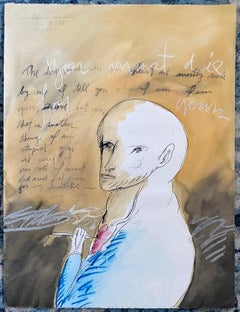
Modern Figurative Surrealism Watercolor, Drawing - "You Must Die For Yours"
By Gary Hansmann
Located in Surfside, FL
On heavy Arches deckle edged paper. This combines text or poetry in calligraphy on the side. Gary Hansmann (1947-2008) was active/lived in California. He is known for abstract, Surr...
Category

1980s Surrealist Figurative Paintings

Materials

Paper, India Ink, Watercolor

German Surrealist Hans Bellmer Etching Engraving Print Cecile Reims Surrealism
By Hans Bellmer
Located in Surfside, FL
After Hans Bellmer (German, 1902-1975) Surrealist engraving, etching after drawings from a 1942 notebook, engraved in 1974-75 by Cecile Reims Printed by L'Atelier de Chalcographie du Louvre, Paris, Having printed monogram lower left in plate, pencil notations verso Editioned from a very small edition of #7/10 'Musee du Louvre' blindstamp. Dimensions: Sheet 11 X 7.5, Plate size 6.5 X 4 Hans Bellmer ( 1902 – 1975) was a Polish born German artist, best known for his drawings, etchings that illustrates the 1940 edition of Histoire de l’œil, and the life-sized female sculpture mannequin dolls he produced in the mid-1930s. Historians of art and photography also consider him a Surrealist photographer. Bellmer was born in the city of Kattowitz, then part of the German Empire (now Katowice, Poland). Up until 1926, he worked as a draftsman for his own advertising company. Bellmer is most famous for the creation of a series of dolls as well as photographs of them. He was influenced in his choice of art form in part by reading the published letters of Oskar Kokoschka (Der Fetisch, 1925) and Surrealism. Bellmer's puppet doll project is also said to have been catalysed by a series of events in his personal life. Hans Bellmer takes credit for provoking a physical crisis in his father and brings his own artistic creativity into association with childhood insubordination and resentment toward a severe and humorless paternal authority. Perhaps this is one reason for the nearly universal, unquestioning acceptance in the literature of Bellmer's promotion of his art as a struggle against his father, the police, and ultimately, fascism and the state. Events of his personal life also including meeting a beautiful teenage cousin in 1932 (and perhaps other unattainable beauties), attending a performance of Jacques Offenbach's Tales of Hoffmann (in which a man falls tragically in love with an automaton), and receiving a box of his old toys. After these events, he began to actually construct his first dolls. In his works, Bellmer explicitly sexualized the doll as a young girl (his work bears connection to the works of Bathus). Hirschfeld has claimed (without further argumentation) that Bellmer initiated his doll project to oppose the fascism of the Nazi Party by declaring that he would make no work that would support the new German state. Represented by mutated forms and unconventional poses, his dolls (according to this view) were directed specifically at the cult of the perfect body then prominent in Germany. He visited Paris in 1935 and made contacts there, such as Paul Éluard, but returned to Berlin because his wife Margarete was dying of tuberculosis. He was part of the circle of Surrealist luminaries such as Man Ray, Marcel Duchamp, Max Ernst, Joan Miro, André Masson, René Magritte, Alberto Giacometti and Salvador Dali as well as women artists—such as Frida Kahlo, Dorothea Tanning and Leonora Carrington. Bellmer produced the first doll in Berlin in 1933. Long since lost, the assemblage can nevertheless be correctly described thanks to approximately two dozen photographs Bellmer took at the time of its construction. Standing about fifty-six inches tall, the doll consisted of a modeled torso made of flax fiber, glue, and plaster; a mask-like head of the same material with glass eyes and a long, unkempt wig; and a pair of legs made from broomsticks or dowel rods. One of these legs terminated in a wooden, club-like foot; the other was encased in a more naturalistic plaster shell, jointed at the knee and ankle. As the project progressed, Bellmer made a second set of hollow plaster legs, with wooden ball joints for the doll's hips and knees. There were no arms to the first sculpture, but Bellmer did fashion or find a single wooden hand, which appears among the assortment of doll parts the artist documented in an untitled photograph of 1934, as well as in several photographs of later work. Bellmer's 1934 anonymous book, The Doll (Die Puppe), produced and published privately in Germany, contains 10 black-and-white photographs of Bellmer's first doll arranged in a series of "tableaux vivants" (living pictures). The book was not credited to him, as he worked in isolation, and his photographs remained almost unknown in Germany. Yet Bellmer's work was eventually declared "degenerate" (entartete kunst) by the Nazi Party, and he was forced to flee Germany to France in 1938, where Bellmer's work was welcomed by the Surrealists around Andre Breton. He aided the French Resistance during the war by making fake passports. He was imprisoned in the Camp des Milles prison at Aix-en-Provence, a brickworks camp for German nationals, from September 1939 until the end of the Phoney War in May 1940. After the war, Bellmer lived the rest of his life in Paris. Bellmer gave up doll-making and spent the following decades creating erotic drawings, etchings, sexually explicit photographs, paintings, and prints of pubescent girls. In 1954, he met Unica Zürn...
Category

20th Century Abstract Prints

Materials

Etching

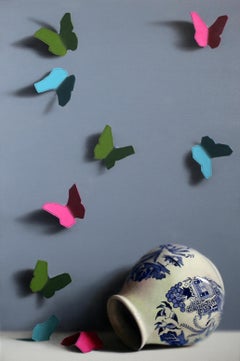
Cobalt Pot 2 - original still life surrealism painting - contemporary art
Located in London, Chelsea
We offer complimentary worldwide shipping and cover all tariffs and import taxes for this artwork. This exceptional artwork is currently on display and available for sale at Signet C...
Category

21st Century and Contemporary Surrealist Still-life Paintings

Materials

Canvas, Oil

German Surrealist Hans Bellmer Etching Engraving Print Cecile Reims Surrealism
By Hans Bellmer
Located in Surfside, FL
After Hans Bellmer (German, 1902-1975) Surrealist engraving, etching after drawings from a 1942 notebook, engraved in 1974-75 by Cecile Reims Printed by L'Atelier de Chalcographie du Louvre, Paris, Having printed monogram lower left in plate, pencil notations and #7/10 and 'Musee du Louvre' blindstamp verso Dimensions: Sheet 11 X 7.5, Plate size 6.5 X 4 Hans Bellmer ( 1902 – 1975) was a Polish born German artist, best known for his drawings, etchings that illustrates the 1940 edition of Histoire de l’œil, and the life-sized female sculpture mannequin dolls he produced in the mid-1930s. Historians of art and photography also consider him a Surrealist photographer. Bellmer was born in the city of Kattowitz, then part of the German Empire (now Katowice, Poland). Up until 1926, he worked as a draftsman for his own advertising company. Bellmer is most famous for the creation of a series of dolls as well as photographs of them. He was influenced in his choice of art form in part by reading the published letters of Oskar Kokoschka (Der Fetisch, 1925) and Surrealism. Bellmer's puppet doll project is also said to have been catalysed by a series of events in his personal life. Hans Bellmer takes credit for provoking a physical crisis in his father and brings his own artistic creativity into association with childhood insubordination and resentment toward a severe and humorless paternal authority. Perhaps this is one reason for the nearly universal, unquestioning acceptance in the literature of Bellmer's promotion of his art as a struggle against his father, the police, and ultimately, fascism and the state. Events of his personal life also including meeting a beautiful teenage cousin in 1932 (and perhaps other unattainable beauties), attending a performance of Jacques Offenbach's Tales of Hoffmann (in which a man falls tragically in love with an automaton), and receiving a box of his old toys. After these events, he began to actually construct his first dolls. In his works, Bellmer explicitly sexualized the doll as a young girl (his work bears connection to the works of Bathus). Hirschfeld has claimed (without further argumentation) that Bellmer initiated his doll project to oppose the fascism of the Nazi Party by declaring that he would make no work that would support the new German state. Represented by mutated forms and unconventional poses, his dolls (according to this view) were directed specifically at the cult of the perfect body then prominent in Germany. He visited Paris in 1935 and made contacts there, such as Paul Éluard, but returned to Berlin because his wife Margarete was dying of tuberculosis. He was part of the circle of Surrealist luminaries such as Man Ray, Marcel Duchamp, Max Ernst, Joan Miro, André Masson, René Magritte, Alberto Giacometti and Salvador Dali as well as women artists—such as Frida Kahlo, Dorothea Tanning and Leonora Carrington. Bellmer produced the first doll in Berlin in 1933. Long since lost, the assemblage can nevertheless be correctly described thanks to approximately two dozen photographs Bellmer took at the time of its construction. Standing about fifty-six inches tall, the doll consisted of a modeled torso made of flax fiber, glue, and plaster; a mask-like head of the same material with glass eyes and a long, unkempt wig; and a pair of legs made from broomsticks or dowel rods. One of these legs terminated in a wooden, club-like foot; the other was encased in a more naturalistic plaster shell, jointed at the knee and ankle. As the project progressed, Bellmer made a second set of hollow plaster legs, with wooden ball joints for the doll's hips and knees. There were no arms to the first sculpture, but Bellmer did fashion or find a single wooden hand, which appears among the assortment of doll parts the artist documented in an untitled photograph of 1934, as well as in several photographs of later work. Bellmer's 1934 anonymous book, The Doll (Die Puppe), produced and published privately in Germany, contains 10 black-and-white photographs of Bellmer's first doll arranged in a series of "tableaux vivants" (living pictures). The book was not credited to him, as he worked in isolation, and his photographs remained almost unknown in Germany. Yet Bellmer's work was eventually declared "degenerate" (entartete kunst) by the Nazi Party, and he was forced to flee Germany to France in 1938, where Bellmer's work was welcomed by the Surrealists around Andre Breton. He aided the French Resistance during the war by making fake passports. He was imprisoned in the Camp des Milles prison at Aix-en-Provence, a brickworks camp for German nationals, from September 1939 until the end of the Phoney War in May 1940. After the war, Bellmer lived the rest of his life in Paris. Bellmer gave up doll-making and spent the following decades creating erotic drawings, etchings, sexually explicit photographs, paintings, and prints of pubescent girls. In 1954, he met Unica Zürn...
Category

20th Century Abstract Prints

Materials

Etching

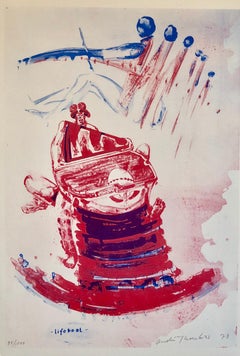
1970s Modernist Swiss Colorful Surrealism Signed Dada Lithograph Andre Thomkins
By André Thomkins
Located in Surfside, FL
This one is titled Lifeboat and depicts a boat in red and blue with a futurist Allen Jones type figure above it. Published by Edition Hansjörg Mayer, Stuttgart They published concrete poetry and art books by Mark Boyle, Richard Hamilton, Dorothy Iannone, John Latham, Tom Phillips, Dieter Roth, André Thompkins and Emmett Williams, to name just a few. André Thomkins (1930 - 1985) was a Swiss painter, illustrator, and poet. He attended art-school, taught by Max von Moos, 1947 – 1949 and the Académie de la Grande Chaumière, Paris, France, 1950. From 1952, he lived in Germany and taught at the Kunstakademie Düsseldorf between 1971 and 1973. Thomkins painted and drew ironic and fantastic pictures influenced by surrealism and dadaism. Together with Dieter Roth and Daniel Spoerri he prepared works of Eat Art. He also was a writer of palindromes. His friends and collaborators included Daniel Spoerri, Dieter Roth, George Brecht, Richard Hamilton and Karl Gerstner, Thomkins gained a reputation as an ‘artist’s artist’, and is considered one of the most important Swiss artists of the second half of the twentieth century.He died in 1985. His work is currently represented by Hauser & Wirth Zurich, Switzerland. Select group exhibitions: 2018 Kunsthalle Krems, 'Pablo Picasso. Arshile Gorky, Andy Warhol. Sculptures and Works on Paper. Hubert Looser Collection', Krems, Austria 2017 Kunsthandel Wolfgang Werner, 'Martin Barré, Karl Otto Götz, Ernst Wilhelm Nay, André Thomkins', Berlin, Germany 2013 Fabian & Claude Walter Galerie, 'Schweizer Avantgarde Kunst nach 1940', Zurich, Switzerland 2009 The Modern Institute, 'Thomas...
Category

1970s Dada Figurative Prints

Materials

Lithograph, Offset

La Mélodie Acide - 2 (Surrealism, Colorful, Modern, ~26% OFF LIMITED TIME ONLY)
By Joan Miró
Located in Kansas City, MO
Joan Miró La Mélodie Acide - 2 Color lithograph Year: 1980 Edition: 1500 Artist Dry Stamp lower right, Annotated "H.C" (hors commerce) in pencil lower left Size: 8.2 × 6.6 on 12.9 ...
Category

1980s Abstract Expressionist Prints and Multiples

Materials

Lithograph

1970s Modernist Swiss Colorful Surrealism Signed Dada Lithograph Andre Thomkins
By André Thomkins
Located in Surfside, FL
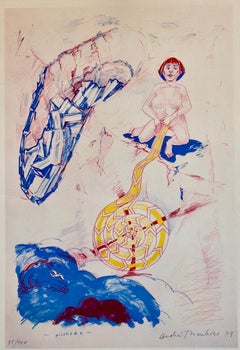
This one is titled "Pissnake" It depicts a nude woman with a Niki de Saint Phalle style coiled snake. in pink, blue, red and yellow colors. Published by Edition Hansjörg Mayer, Stuttgart They published concrete poetry and art books by Mark Boyle, Richard Hamilton, Dorothy Iannone, John Latham, Tom Phillips, Dieter Roth, André Thompkins and Emmett Williams, to name just a few. André Thomkins (1930 - 1985) was a Swiss painter, illustrator, and poet. He attended art-school, taught by Max von Moos, 1947 – 1949 and the Académie de la Grande Chaumière, Paris, France, 1950. From 1952, he lived in Germany and taught at the Kunstakademie Düsseldorf between 1971 and 1973. Thomkins painted and drew ironic and fantastic pictures influenced by surrealism and dadaism. Together with Dieter Roth and Daniel Spoerri he prepared works of Eat Art. He also was a writer of palindromes. His friends and collaborators included Daniel Spoerri, Dieter Roth, George Brecht, Richard Hamilton and Karl Gerstner, Thomkins gained a reputation as an ‘artist’s artist’, and is considered one of the most important Swiss artists of the second half of the twentieth century.He died in 1985. His work is currently represented by Hauser & Wirth Zurich, Switzerland. Select group exhibitions: 2018 Kunsthalle Krems, 'Pablo Picasso. Arshile Gorky, Andy Warhol. Sculptures and Works on Paper. Hubert Looser Collection', Krems, Austria 2017 Kunsthandel Wolfgang Werner, 'Martin Barré, Karl Otto Götz, Ernst Wilhelm Nay, André Thomkins', Berlin, Germany 2013 Fabian & Claude Walter Galerie, 'Schweizer Avantgarde Kunst nach 1940', Zurich, Switzerland 2009 The Modern Institute, 'Thomas Houseago, Dieter Roth, Andre Thomkins', Glasgow, England Museum of Modern Art, 'Compass in Hand: Selections from the Judith Rothschild Collection', NYC 2004 Kunsthandel Wolfgang Werner, 'Arman, Baumeister, Götz, Graubner, Tàpies, Thomkins', Berlin, Germany 1994 Kunstmuseum Solothurn, 'Eine Schenkung. Grafik von Eduardo Chillida, Antoni Tàpies, Alexander Calder, Jean Dubuffet, Ben Nicholson, Giacometti, Tinguely, Thomkins', Solothurn, Switzerland 1992 Galerie Littmann, Tinguely zu Ehren. A Tribute to Jean Tinguely. Hommage à Tinguely, Basel, 1988 Museum Ludwig, 'Uebrigens sterben immer die anderen. Marcel Duchamp und die Avantgarde seit 1950', Cologne, Germany 1987 Aargauer Kunsthaus, 'Otto Grimm. Marc-Antoine Fehr. Christoph Gredinger', Aarau, Switzerland Cercle Municipal, 'Art contemporain suisse. Collection de la Banque du Gothard', Luxembourg, 1985 Centre national d'art et de culture Georges Pompidou, 'Livres d'artistes', Paris, France Rathaus, 'Claude Sandoz – Hans Schärer...
Category

1970s Dada Figurative Prints

Materials

Lithograph, Offset

La Mélodie Acide - 6 (Surrealism, Colorful, Modern, ~26% OFF LIMITED TIME ONLY)
By Joan Miró
Located in Kansas City, MO
Joan Miró La Mélodie Acide - 6 Color lithograph Year: 1980 Edition: 1500 Artist Dry Stamp lower right, Annotated "H.C" (hors commerce) in pencil lower left Size: 8.2 × 6.6 on 12.9 ...
Category

1980s Surrealist Prints and Multiples

Materials

Lithograph

Italian American Surrealist Oil Painting Ivo David Trilogia Chromatic Surrealism
Located in Surfside, FL
Trilogia Homage to Orazio Tanelli (Italian poet) Hand signed middle left and titled extensively and signed and dated verso. 1991 Dimensions: 30 X 24 inches. A painter and poet born ...
Category

1990s Surrealist Figurative Paintings

Materials

Canvas, Oil

Suite of four prints by Henri Goetz abstract colorful geometric surrealism
By Henri Goetz
Located in New York, NY
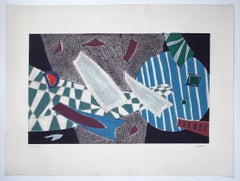
Set of four abstract, surrealist compositions in rich blue, green, purple, turquoise, grey, navy and black. Henri Goetz Suite of four etchings with carborundum on Arches wove paper...
Category

1970s Surrealist Abstract Prints

Materials

Etching

1970s Modernist Swiss Colorful Surrealism Signed Dada Lithograph Andre Thomkins
By André Thomkins
Located in Surfside, FL
This one is titled "Halemaid" and depicts a surreal figure of a robed woman in yellow red and blue with a Salvador Dali esque quality about it. Published by Edition Hansjörg Mayer, Stuttgart They published concrete poetry and art books by Mark Boyle, Richard Hamilton, Dorothy Iannone, John Latham, Tom Phillips, Dieter Roth, André Thompkins and Emmett Williams, to name just a few. André Thomkins (1930 - 1985) was a Swiss painter, illustrator, and poet. He attended art-school, taught by Max von Moos, 1947 – 1949 and the Académie de la Grande Chaumière, Paris, France, 1950. From 1952, he lived in Germany and taught at the Kunstakademie Düsseldorf between 1971 and 1973. Thomkins painted and drew ironic and fantastic pictures influenced by surrealism and dadaism. Together with Dieter Roth and Daniel Spoerri he prepared works of Eat Art. He also was a writer of palindromes. His friends and collaborators included Daniel Spoerri, Dieter Roth, George Brecht, Richard Hamilton and Karl Gerstner, Thomkins gained a reputation as an ‘artist’s artist’, and is considered one of the most important Swiss artists of the second half of the twentieth century.He died in 1985. His work is currently represented by Hauser & Wirth Zurich, Switzerland. Select group exhibitions: 2018 Kunsthalle Krems, 'Pablo Picasso. Arshile Gorky, Andy Warhol. Sculptures and Works on Paper. Hubert Looser Collection', Krems, Austria 2017 Kunsthandel Wolfgang Werner, 'Martin Barré, Karl Otto Götz, Ernst Wilhelm Nay, André Thomkins', Berlin, Germany 2013 Fabian & Claude Walter Galerie, 'Schweizer Avantgarde Kunst nach 1940', Zurich, Switzerland 2009 The Modern Institute, 'Thomas Houseago, Dieter Roth, Andre Thomkins', Glasgow, England Museum of Modern Art, 'Compass in Hand: Selections from the Judith Rothschild Collection', NYC 2004 Kunsthandel Wolfgang Werner, 'Arman, Baumeister, Götz, Graubner, Tàpies, Thomkins', Berlin, Germany 1994 Kunstmuseum Solothurn, 'Eine Schenkung. Grafik von Eduardo Chillida, Antoni Tàpies, Alexander Calder, Jean Dubuffet, Ben Nicholson, Giacometti, Tinguely, Thomkins', Solothurn, Switzerland 1992 Galerie Littmann, Tinguely zu Ehren. A Tribute to Jean Tinguely. Hommage à Tinguely, Basel, 1988 Museum Ludwig, 'Uebrigens sterben immer die anderen. Marcel Duchamp und die Avantgarde seit 1950', Cologne, Germany 1987 Aargauer Kunsthaus, 'Otto Grimm. Marc-Antoine Fehr. Christoph Gredinger', Aarau, Switzerland Cercle Municipal, 'Art contemporain suisse. Collection de la Banque du Gothard', Luxembourg, 1985 Centre national d'art et de culture Georges Pompidou, 'Livres d'artistes', Paris, France Rathaus, 'Claude Sandoz – Hans Schärer...
Category

1970s Surrealist Figurative Prints

Materials

Lithograph, Offset

La Mélodie Acide - 9 (Surrealism, Colorful, Modern, ~26% OFF LIMITED TIME ONLY)
By Joan Miró
Located in Kansas City, MO
Joan Miró La Mélodie Acide - 9 Color lithograph Year: 1980 Edition: 1500 Artist Dry Stamp lower right, Annotated "H.C" (hors commerce) in pencil lower left Size: 8.2 × 6.6 on 12.9 ...
Category

1980s Abstract Expressionist Prints and Multiples

Materials

Lithograph

German Surrealist Hans Bellmer Etching Engraving Print Cecile Reims Surrealism
By Hans Bellmer
Located in Surfside, FL
After Hans Bellmer (German, 1902-1975) Surrealist engraving, etching after drawings from a 1942 notebook, engraved in 1974-75 by Cecile Reims Printed by L'Atelier de Chalcographie du Louvre, Paris, Having printed monogram lower left in plate, pencil notations verso Editioned from a very small edition of #7/10 'Musee du Louvre' blindstamp. Dimensions: Sheet 11 X 7.5, Plate size 6.5 X 4 Hans Bellmer ( 1902 – 1975) was a Polish born German artist, best known for his drawings, etchings that illustrates the 1940 edition of Histoire de l’œil, and the life-sized female sculpture mannequin dolls he produced in the mid-1930s. Historians of art and photography also consider him a Surrealist photographer. Bellmer was born in the city of Kattowitz, then part of the German Empire (now Katowice, Poland). Up until 1926, he worked as a draftsman for his own advertising company. Bellmer is most famous for the creation of a series of dolls as well as photographs of them. He was influenced in his choice of art form in part by reading the published letters of Oskar Kokoschka (Der Fetisch, 1925) and Surrealism. Bellmer's puppet doll project is also said to have been catalysed by a series of events in his personal life. Hans Bellmer takes credit for provoking a physical crisis in his father and brings his own artistic creativity into association with childhood insubordination and resentment toward a severe and humorless paternal authority. Perhaps this is one reason for the nearly universal, unquestioning acceptance in the literature of Bellmer's promotion of his art as a struggle against his father, the police, and ultimately, fascism and the state. Events of his personal life also including meeting a beautiful teenage cousin in 1932 (and perhaps other unattainable beauties), attending a performance of Jacques Offenbach's Tales of Hoffmann (in which a man falls tragically in love with an automaton), and receiving a box of his old toys. After these events, he began to actually construct his first dolls. In his works, Bellmer explicitly sexualized the doll as a young girl (his work bears connection to the works of Bathus). Hirschfeld has claimed (without further argumentation) that Bellmer initiated his doll project to oppose the fascism of the Nazi Party by declaring that he would make no work that would support the new German state. Represented by mutated forms and unconventional poses, his dolls (according to this view) were directed specifically at the cult of the perfect body then prominent in Germany. He visited Paris in 1935 and made contacts there, such as Paul Éluard, but returned to Berlin because his wife Margarete was dying of tuberculosis. He was part of the circle of Surrealist luminaries such as Man Ray, Marcel Duchamp, Max Ernst, Joan Miro, André Masson, René Magritte, Alberto Giacometti and Salvador Dali as well as women artists—such as Frida Kahlo, Dorothea Tanning and Leonora Carrington. Bellmer produced the first doll in Berlin in 1933. Long since lost, the assemblage can nevertheless be correctly described thanks to approximately two dozen photographs Bellmer took at the time of its construction. Standing about fifty-six inches tall, the doll consisted of a modeled torso made of flax fiber, glue, and plaster; a mask-like head of the same material with glass eyes and a long, unkempt wig; and a pair of legs made from broomsticks or dowel rods. One of these legs terminated in a wooden, club-like foot; the other was encased in a more naturalistic plaster shell, jointed at the knee and ankle. As the project progressed, Bellmer made a second set of hollow plaster legs, with wooden ball joints for the doll's hips and knees. There were no arms to the first sculpture, but Bellmer did fashion or find a single wooden hand, which appears among the assortment of doll parts the artist documented in an untitled photograph of 1934, as well as in several photographs of later work. Bellmer's 1934 anonymous book, The Doll (Die Puppe), produced and published privately in Germany, contains 10 black-and-white photographs of Bellmer's first doll arranged in a series of "tableaux vivants" (living pictures). The book was not credited to him, as he worked in isolation, and his photographs remained almost unknown in Germany. Yet Bellmer's work was eventually declared "degenerate" (entartete kunst) by the Nazi Party, and he was forced to flee Germany to France in 1938, where Bellmer's work was welcomed by the Surrealists around Andre Breton. He aided the French Resistance during the war by making fake passports. He was imprisoned in the Camp des Milles prison at Aix-en-Provence, a brickworks camp for German nationals, from September 1939 until the end of the Phoney War in May 1940. After the war, Bellmer lived the rest of his life in Paris. Bellmer gave up doll-making and spent the following decades creating erotic drawings, etchings, sexually explicit photographs, paintings, and prints of pubescent girls. In 1954, he met Unica Zürn...
Category

20th Century Abstract Prints

Materials

Etching

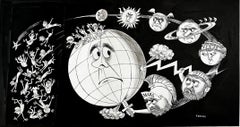
Apocalypse, Catastrophic Destruction of the World, Surrealism - Life Magazine
Located in Miami, FL
Apocalypse in 1962? At the height of the Cold War, Life Magazine commissions an illustration that describes the world's end by means other than a nuclear war with Russia. Richard Erdoes brilliantly illustrates the work with his highly stylized painting technique. My favorite part of the work is on the left side showing a group of people packed together as they fall into oblivion. A clear reference would be Hieronymus Bosch's "The Last Judgment " Once Again the World Ends." Illustration published in Life Magazine, Feb. 9, 1962 Signed in lower right image. Unframed Richard Erdoes (Hungarian Erdős, German Erdös; July 7, 1912 – July 16, 2008) was an American artist, photographer, illustrator and author. Early life Erdoes was born in Frankfurt,[1] to Maria Josefa Schrom on July 7, 1912. His father, Richárd Erdős Sr., was a Jewish Hungarian opera singer who had died a few weeks earlier in Budapest on June 9, 1912.[2] After his birth, his mother lived with her sister, the Viennese actress Leopoldine ("Poldi") Sangora,[3] He described himself as "equal parts Austrian, Hungarian and German, as well as equal parts Catholic, Protestant and Jew..."[4] Career He was a student at the Berlin Academy of Art in 1933, when Adolf Hitler came to power. He was involved in a small underground paper where he published anti-Hitler political cartoons which attracted the attention of the Nazi regime. He fled Germany with a price on his head. Back in Vienna, he continued his training at the Kunstgewerbeschule, now the University of Applied Arts, Vienna.[5] He also wrote and illustrated children's books and worked as a caricaturist for Tag and Stunde, anti-Nazi newspapers. After the Anschluss of Austria in 1938 he fled again, first to Paris, where he studied at the Academie de la Grande Chaumiere, and then London, England before journeying to the United States. He married his first wife, fellow artist Elsie Schulhof (d. xxxx) in London, shortly before their arrival in New York City. In New York City, Erdoes enjoyed a long career as a commercial artist, and was known for his highly detailed, whimsical drawings. He created illustrations for such magazines as Stage, Fortune, Pageant, Gourmet, Harper's Bazaar, Sports Illustrated, The New York Times, Time, National Geographic and Life Magazine, where he met his second wife, Jean Sternbergh (d. 1995) who was an art director there. The couple married in 1951 and had three children.[6] Erdoes also illustrated many children's books. An assignment for Life in 1967 took Erdoes to the Pine Ridge Indian Reservation for the first time, and marked the beginning of the work for which he would be best known. Erdoes was fascinated by Native American culture, outraged at the conditions on the reservation and deeply moved by the Civil Rights Movement that was raging at the time. He wrote histories, collections of Native American stories...
Category

1960s Surrealist Figurative Drawings and Watercolors

Materials

Mixed Media, Gouache, Board, Illustration Board
Original poster for the 1972 exhibition of Victor Brauner in Paris - Surrealism
By Victor Brauner
Located in PARIS, FR
Beautiful poster for the exhibition of the Museum of Modern Art in Paris dedicated to Victor Brauner (1903-1966), a singular figure of surrealism, grouping more than one hundred works, paintings and drawings, in 1972. Victor Brauner was a Romanian painter...
Category

1970s Prints and Multiples

Materials

Paper, Lithograph

German Surrealist Hans Bellmer Etching Engraving Print Cecile Reims Surrealism
By Hans Bellmer
Located in Surfside, FL
After Hans Bellmer (German, 1902-1975) Surrealist engraving, etching after drawings from a 1942 notebook, engraved in 1974-75 by Cecile Reims Printed by L'Atelier de Chalcographie du Louvre, Paris, Having printed monogram lower left in plate, pencil notations and #7/10 and 'Musee du Louvre' blindstamp verso Dimensions: Sheet 11 X 7.5, Plate size 6.5 X 4 Hans Bellmer ( 1902 – 1975) was a Polish born German artist, best known for his drawings, etchings that illustrates the 1940 edition of Histoire de l’œil, and the life-sized female sculpture mannequin dolls he produced in the mid-1930s. Historians of art and photography also consider him a Surrealist photographer. Bellmer was born in the city of Kattowitz, then part of the German Empire (now Katowice, Poland). Up until 1926, he worked as a draftsman for his own advertising company. Bellmer is most famous for the creation of a series of dolls as well as photographs of them. He was influenced in his choice of art form in part by reading the published letters of Oskar Kokoschka (Der Fetisch, 1925) and Surrealism. Bellmer's puppet doll project is also said to have been catalysed by a series of events in his personal life. Hans Bellmer takes credit for provoking a physical crisis in his father and brings his own artistic creativity into association with childhood insubordination and resentment toward a severe and humorless paternal authority. Perhaps this is one reason for the nearly universal, unquestioning acceptance in the literature of Bellmer's promotion of his art as a struggle against his father, the police, and ultimately, fascism and the state. Events of his personal life also including meeting a beautiful teenage cousin in 1932 (and perhaps other unattainable beauties), attending a performance of Jacques Offenbach's Tales of Hoffmann (in which a man falls tragically in love with an automaton), and receiving a box of his old toys. After these events, he began to actually construct his first dolls. In his works, Bellmer explicitly sexualized the doll as a young girl (his work bears connection to the works of Bathus). Hirschfeld has claimed (without further argumentation) that Bellmer initiated his doll project to oppose the fascism of the Nazi Party by declaring that he would make no work that would support the new German state. Represented by mutated forms and unconventional poses, his dolls (according to this view) were directed specifically at the cult of the perfect body then prominent in Germany. He visited Paris in 1935 and made contacts there, such as Paul Éluard, but returned to Berlin because his wife Margarete was dying of tuberculosis. He was part of the circle of Surrealist luminaries such as Man Ray, Marcel Duchamp, Max Ernst, Joan Miro, André Masson, René Magritte, Alberto Giacometti and Salvador Dali as well as women artists—such as Frida Kahlo, Dorothea Tanning and Leonora Carrington. Bellmer produced the first doll in Berlin in 1933. Long since lost, the assemblage can nevertheless be correctly described thanks to approximately two dozen photographs Bellmer took at the time of its construction. Standing about fifty-six inches tall, the doll consisted of a modeled torso made of flax fiber, glue, and plaster; a mask-like head of the same material with glass eyes and a long, unkempt wig; and a pair of legs made from broomsticks or dowel rods. One of these legs terminated in a wooden, club-like foot; the other was encased in a more naturalistic plaster shell, jointed at the knee and ankle. As the project progressed, Bellmer made a second set of hollow plaster legs, with wooden ball joints for the doll's hips and knees. There were no arms to the first sculpture, but Bellmer did fashion or find a single wooden hand, which appears among the assortment of doll parts the artist documented in an untitled photograph of 1934, as well as in several photographs of later work. Bellmer's 1934 anonymous book, The Doll (Die Puppe), produced and published privately in Germany, contains 10 black-and-white photographs of Bellmer's first doll arranged in a series of "tableaux vivants" (living pictures). The book was not credited to him, as he worked in isolation, and his photographs remained almost unknown in Germany. Yet Bellmer's work was eventually declared "degenerate" (entartete kunst) by the Nazi Party, and he was forced to flee Germany to France in 1938, where Bellmer's work was welcomed by the Surrealists around Andre Breton. He aided the French Resistance during the war by making fake passports. He was imprisoned in the Camp des Milles prison at Aix-en-Provence, a brickworks camp for German nationals, from September 1939 until the end of the Phoney War in May 1940. After the war, Bellmer lived the rest of his life in Paris. Bellmer gave up doll-making and spent the following decades creating erotic drawings, etchings, sexually explicit photographs, paintings, and prints of pubescent girls. In 1954, he met Unica Zürn...
Category

20th Century Abstract Prints

Materials

Etching

Untitled - Unique Photo-based Collage, Surrealism, Nude Woman, Space
Located in Denton, TX
This surrealist photo-based collage is one of a kind. The collage features a nude woman standing on a bowl of lemons, reaching out to a pair of bi...
Category

Early 2000s Contemporary Mixed Media

Materials

Mixed Media

In Front of my Town - Belgian Surrealism Cityscape
By Paul Delvaux
Located in London, GB
This original lithograph is hand signed by the artist in pencil "P. Delvaux" at the lower right margin. It is also hand numbered in pencil from the edition of 75, at the lower left m...
Category

1960s Surrealist More Prints

Materials

Lithograph

German Surrealist Hans Bellmer Etching Engraving Print Cecile Reims Surrealism
By Hans Bellmer
Located in Surfside, FL
After Hans Bellmer (German, 1902-1975) Surrealist engraving, etching after drawings from a 1942 notebook, engraved in 1974-75 by Cecile Reims Printed by L'Atelier de Chalcographie du Louvre, Paris, Having printed monogram lower left in plate, pencil notations verso Editioned from a very small edition of #7/10 'Musee du Louvre' blindstamp. Dimensions: Sheet 11 X 7.5, Plate size 6.5 X 4 Hans Bellmer ( 1902 – 1975) was a Polish born German artist, best known for his drawings, etchings that illustrates the 1940 edition of Histoire de l’œil, and the life-sized female sculpture mannequin dolls he produced in the mid-1930s. Historians of art and photography also consider him a Surrealist photographer. Bellmer was born in the city of Kattowitz, then part of the German Empire (now Katowice, Poland). Up until 1926, he worked as a draftsman for his own advertising company. Bellmer is most famous for the creation of a series of dolls as well as photographs of them. He was influenced in his choice of art form in part by reading the published letters of Oskar Kokoschka (Der Fetisch, 1925) and Surrealism. Bellmer's puppet doll project is also said to have been catalysed by a series of events in his personal life. Hans Bellmer takes credit for provoking a physical crisis in his father and brings his own artistic creativity into association with childhood insubordination and resentment toward a severe and humorless paternal authority. Perhaps this is one reason for the nearly universal, unquestioning acceptance in the literature of Bellmer's promotion of his art as a struggle against his father, the police, and ultimately, fascism and the state. Events of his personal life also including meeting a beautiful teenage cousin in 1932 (and perhaps other unattainable beauties), attending a performance of Jacques Offenbach's Tales of Hoffmann (in which a man falls tragically in love with an automaton), and receiving a box of his old toys. After these events, he began to actually construct his first dolls. In his works, Bellmer explicitly sexualized the doll as a young girl (his work bears connection to the works of Bathus). Hirschfeld has claimed (without further argumentation) that Bellmer initiated his doll project to oppose the fascism of the Nazi Party by declaring that he would make no work that would support the new German state. Represented by mutated forms and unconventional poses, his dolls (according to this view) were directed specifically at the cult of the perfect body then prominent in Germany. He visited Paris in 1935 and made contacts there, such as Paul Éluard, but returned to Berlin because his wife Margarete was dying of tuberculosis. He was part of the circle of Surrealist luminaries such as Man Ray, Marcel Duchamp, Max Ernst, Joan Miro, André Masson, René Magritte, Alberto Giacometti and Salvador Dali as well as women artists—such as Frida Kahlo, Dorothea Tanning and Leonora Carrington. Bellmer produced the first doll in Berlin in 1933. Long since lost, the assemblage can nevertheless be correctly described thanks to approximately two dozen photographs Bellmer took at the time of its construction. Standing about fifty-six inches tall, the doll consisted of a modeled torso made of flax fiber, glue, and plaster; a mask-like head of the same material with glass eyes and a long, unkempt wig; and a pair of legs made from broomsticks or dowel rods. One of these legs terminated in a wooden, club-like foot; the other was encased in a more naturalistic plaster shell, jointed at the knee and ankle. As the project progressed, Bellmer made a second set of hollow plaster legs, with wooden ball joints for the doll's hips and knees. There were no arms to the first sculpture, but Bellmer did fashion or find a single wooden hand, which appears among the assortment of doll parts the artist documented in an untitled photograph of 1934, as well as in several photographs of later work. Bellmer's 1934 anonymous book, The Doll (Die Puppe), produced and published privately in Germany, contains 10 black-and-white photographs of Bellmer's first doll arranged in a series of "tableaux vivants" (living pictures). The book was not credited to him, as he worked in isolation, and his photographs remained almost unknown in Germany. Yet Bellmer's work was eventually declared "degenerate" (entartete kunst) by the Nazi Party, and he was forced to flee Germany to France in 1938, where Bellmer's work was welcomed by the Surrealists around Andre Breton. He aided the French Resistance during the war by making fake passports. He was imprisoned in the Camp des Milles prison at Aix-en-Provence, a brickworks camp for German nationals, from September 1939 until the end of the Phoney War in May 1940. After the war, Bellmer lived the rest of his life in Paris. Bellmer gave up doll-making and spent the following decades creating erotic drawings, etchings, sexually explicit photographs, paintings, and prints of pubescent girls. In 1954, he met Unica Zürn...
Category

20th Century Abstract Prints

Materials

Etching

Family Portrait, Large Surrealist Oil Painting Mother, Children, Neo Surrealism
Located in Surfside, FL
Hand signed lower right and dated 1958 Hank Laventhol (1927–2001) was an American painter and master print maker. He worked in painting, graphics, scul...
Category

1950s Surrealist Figurative Paintings

Materials

Oil, Board

Fred Deux - Grey Surrealism V - Signed Original Etching
By Fred Deux
Located in Collonge Bellerive, Geneve, CH
Fred Deux - Grey V - Signed Original Etching Signed and Numbered Edition of 100 Dimensions: 24 x 14 cm Fred Deux Fred Deux, illustrator, oral poet, writer, and, under the pseudonym Jean Douassot, author of a cult book, La Gana, was a singular artist who cannot be categorised in terms of art fashions and trends. This autodidact, born in the basement of a large house in Boulogne-Billancourt to a working-class family, constantly had to overcome, as he would say. “He had to overcome”: overcome the basement walls to access the life which called him and burnt inside him. Overcome the barriers between the arts, moving from drawing to the written word, and from the page to the tape recorder, in the face of which he recounted stories to himself in a sort of endless reverie, constantly exploring the unknown in him. Overcoming and being overcome: gradually immersing himself in drawing, so that it was life itself which overcame him and surrendered to him. Timeline 1924 Born in Boulogne-Billancourt, Paris. The Deux family lived in the basement of a building close to the Seine that was often flooded. These living conditions formed the biographical core around in which the artist would develop his work as a future writer and artist. 1942 Deux worked in a factory as an electrician and night guard. 1943 Deux becomes part of the FTP group to resist against the factory. And then joined the Maquis du Doubs. 1945 At the liberation, Deux joined the Moroccan Goumier, and took part of the campaigns of Vosges, Alsace and Germany. 1947 Returned to France. Installation in Marseille. Worked in an important library that belonged to the family of his wife. 1948 Discovered Breton, Bataille, Cendrars, Peret, Sade... and founded the sub-group of Surrealists in Marseille and formed a link with the literary magazine of Marseille, Cahiers du Sud Encounters the works of Paul Klee. He begins creating his first stains with paint for bicycle and impressions (fabric and ink). At the same time, he begins to take notes for what would become "Les Rats", first version of "La Gana". 1951 Meets Cecile Reims...
Category

1970s Surrealist Still-life Prints

Materials

Etching

Fred Deux - Grey Surrealism VI - Signed Original Etching
By Fred Deux
Located in Collonge Bellerive, Geneve, CH
Fred Deux - Grey VI - Signed Original Etching Signed and Numbered Edition of 100 Dimensions: 24 x 14 cm Fred Deux Fred Deux, illustrator, oral poet, writer, and, under the pseudon...
Category

1970s Surrealist Still-life Prints

Materials

Etching

Fred Deux - Grey Surrealism II - Signed Original Etching
By Fred Deux
Located in Collonge Bellerive, Geneve, CH
Fred Deux - Grey I - Signed Original Etching Signed and Numbered Edition of 100 Dimensions: 24 x 14 cm Fred Deux Fred Deux, illustrator, oral poet, writer, and, under the pseudonym Jean Douassot, author of a cult book, La Gana, was a singular artist who cannot be categorised in terms of art fashions and trends. This autodidact, born in the basement of a large house in Boulogne-Billancourt to a working-class family, constantly had to overcome, as he would say. “He had to overcome”: overcome the basement walls to access the life which called him and burnt inside him. Overcome the barriers between the arts, moving from drawing to the written word, and from the page to the tape recorder, in the face of which he recounted stories to himself in a sort of endless reverie, constantly exploring the unknown in him. Overcoming and being overcome: gradually immersing himself in drawing, so that it was life itself which overcame him and surrendered to him. Timeline 1924 Born in Boulogne-Billancourt, Paris. The Deux family lived in the basement of a building close to the Seine that was often flooded. These living conditions formed the biographical core around in which the artist would develop his work as a future writer and artist. 1942 Deux worked in a factory as an electrician and night guard. 1943 Deux becomes part of the FTP group to resist against the factory. And then joined the Maquis du Doubs. 1945 At the liberation, Deux joined the Moroccan Goumier, and took part of the campaigns of Vosges, Alsace and Germany. 1947 Returned to France. Installation in Marseille. Worked in an important library that belonged to the family of his wife. 1948 Discovered Breton, Bataille, Cendrars, Peret, Sade... and founded the sub-group of Surrealists in Marseille and formed a link with the literary magazine of Marseille, Cahiers du Sud Encounters the works of Paul Klee. He begins creating his first stains with paint for bicycle and impressions (fabric and ink). At the same time, he begins to take notes for what would become "Les Rats", first version of "La Gana". 1951 Meets Cecile Reims...
Category

1970s Surrealist Still-life Prints

Materials

Etching

American School New York City Abstract Magic Surrealism Ocean Fish Painting
By Barry Johnson
Located in Buffalo, NY
American school abstract painting. Watercolor on paper, circa 1960. Unsigned. Image size, 12"L x 9"H.
Category

1960s Abstract Expressionist Abstract Paintings

Materials

Canvas, Watercolor, Gouache

An Old Jew, from: My Life - Russian French Berlin Jewish Surrealism Mein Leben
By Marc Chagall
Located in London, GB
This original etching and drypoint is hand signed in pencil by the artist "Marc Chagall" at the lower right margin. It is also hand numbered in pencil from the edition of 110, at th...
Category

1920s Surrealist Figurative Prints

Materials

Drypoint, Etching

Scrappy (car wreck girl yellow dress toy surrealism scale nostalgia vintage)
By Rudolf Kosow
Located in Quebec, Quebec
keywords; surrealism, humour, uncanny, yellow dress, little girl, car wreck, car incident, earth tones, oil painting, figurative painting, strangeness, conte...
Category

2010s Surrealist Figurative Paintings

Materials

Canvas, Oil

Still Thinking About These?

All Recently Viewed