31 results for ""hank willis thomas""
to
9
11
7
11
1
1
Overall Width
to
Overall Height
to
9
22
9
8
6
4
2
1
14
8
1
3
3
2
2
2
2
2
1
1
1
1
1
1
1
1
1
1
1
1
1
18
10
10
9
6
8
5
1
1
30
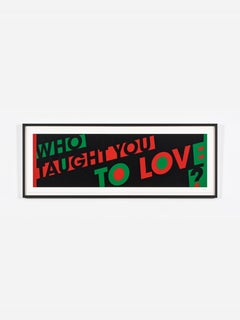
Hank Willis Thomas Who Taught You to Love? Signed and Numbered Print
By Hank Willis Thomas
Located in Draper, UT
11.4in x 33.5in
Unframed 9-layer screenprint on Somerset Tub Sized 600gsm paper.
Finished with Individually signature, dated and numbered.
For American conceptual artist Hank Willis...
Category
2010s Pop Art More Prints
Materials
Screen
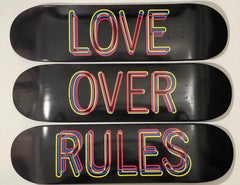
Hank Willis Thomas Love Over Rules Silk Screen Printed Skateboards Set of Three
By Hank Willis Thomas
Located in Draper, UT
Conceptual artist Hank Willis Thomas uses photography to explore issues of identity, history, race, and class. Inspired by the works of Carrie Mae Wee...
Category
2010s Contemporary Mixed Media
Materials
Wood, Acrylic, Screen
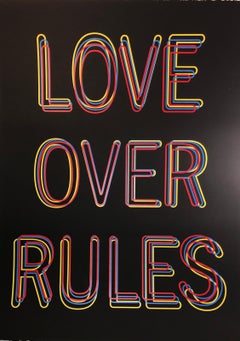
Hank Willis Thomas Love Over Rules Silk Screen Print Edition Of 100 Embossed
By Hank Willis Thomas
Located in Draper, UT
YEAR
2020
CLASSIFICATION:
Limited edition
MEDIUM TYPE:
Print
MEDIUM/MATERIALS:
Thick Stock Black Fine Art Paper with Deckled Edges
CATEGORIES:
Embossed Paper / Silkscreen / Pop and ...
Category
2010s Pop Art More Prints
Materials
Screen
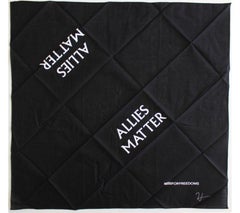
Allies Matter (SIGNED Bandana)
By Hank Willis Thomas
Located in Washington , DC, DC
Released as a limited timed released where they were only sold for about a month. Only a small number of these were hand signed. Would look great framed. Comes folded as issued in or...
Category
21st Century and Contemporary Contemporary More Art
Materials
Cotton, Screen
$2,800 Sale Price
20% Off
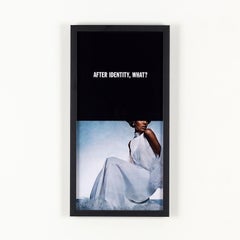
After Identity, What?
By Hank Willis Thomas
Located in Toronto, Ontario
Hank Willis Thomas (b. 1976) is an American conceptual artist renowned for his thought-provoking works that examine the intersection of race, identity, and commodity in pop culture.
...
Category
2010s Contemporary Figurative Prints
Materials
C Print
Faith Ringgold, Slavery, from Letter from Birmingham City Jail, 2007
By Faith Ringgold
Located in Southampton, NY
This exquisite silkscreen by Faith Ringgold (1930–2024), titled Slavery, from the folio Letter from Birmingham City Jail, originates from the 2007 edition published by The Limited Ed...
Category
Early 2000s Expressionist Figurative Prints
Materials
Screen


$4,796 Sale Price
20% Off
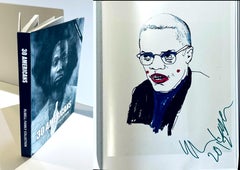
Art book: 30 Americans artists (hand signed and dated by Glenn Ligon)
By Glenn Ligon
Located in New York, NY
Glenn Ligon
30 Americans Rubell Family Collection (hand signed and dated by Glenn Ligon), 2012
Hardback monograph with no dust jacket as issued (hand signed and dated by Glenn Ligon)
Hand signed and dated 2012 by Glenn Ligon
11 1/2 × 9 × 1 1/4 inches
Provenance
Hand signed by Glenn Ligon at the opening reception for the present owner (see included documentation)
Makes a fantastic gift!
This hardback monograph with illustrated boards was published on the occasion of the exhibition at Luhring Augustine Gallery in NY from October 26 to December 8, 2012.
Hand signed and dated 2012 by Glenn Ligon for the present owner
From its inception in the 1960s, the Rubell Collection has been able to boast a particularly fine range of African-American art. Recent New York exhibitions inspired the Rubell family to mount an exhibition of their holdings in this area, reproduced here in 30 Americans. With a late addition to this exhibition, there are in fact 31 artists: Nina Chanel Abney, John Bankston, Jean-Michel Basquiat, Mark Bradford, Iona Rozeal Brown, Nick Cave, Robert Colescott, Noah Davis, Leonard Drew, Renée Green, David Hammons, Barkley L. Hendricks, Rashid Johnson, Glenn Ligon, Kalup Linzy, Kerry James Marshall, Rodney McMillian, Wangechi Mutu, William Pope L., Gary Simmons, Xaviera Simmons, Lorna Simpson, Shinique Smith...
Category
2010s Contemporary More Art
Materials
Paper, Mixed Media, Permanent Marker, Lithograph, Offset
Faith Ringgold, Police Brutality Viewed Thru Stained Glass, 2007
By Faith Ringgold
Located in Southampton, NY
This exquisite silkscreen by Faith Ringgold (1930–2024), titled Police Brutality Viewed Thru Stained Glass, from the folio Letter from Birmingham City J...
Category
Early 2000s Expressionist Figurative Prints
Materials
Screen

$4,796 Sale Price
20% Off
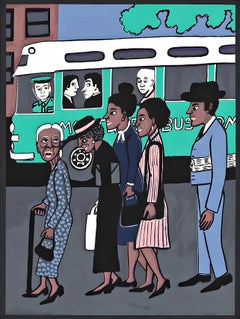
Faith Ringgold, Montgomery Bus Boycott, Letter from Birmingham City Jail, 2007
By Faith Ringgold
Located in Southampton, NY
This exquisite silkscreen by Faith Ringgold (1930–2024), titled Montgomery Bus Boycott, from the folio Letter from Birmingham City Jail, originates from the 2007 edition published by...
Category
Early 2000s Expressionist Figurative Prints
Materials
Screen
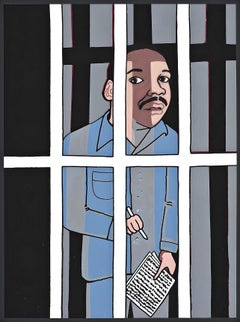
Faith Ringgold, A letter From Martin Luther King, 2007
By Faith Ringgold
Located in Southampton, NY
This exquisite silkscreen by Faith Ringgold (1930–2024), titled A Letter From Martin Luther King, from the folio Letter from Birmingham City Jail, origi...
Category
Early 2000s Expressionist Figurative Prints
Materials
Screen
$4,796 Sale Price
20% Off
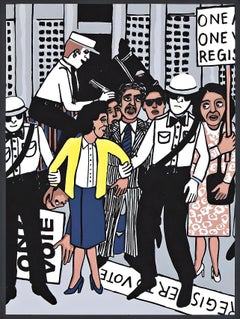
Faith Ringgold, The Right to Vote, from Letter from Birmingham City Jail, 2007
By Faith Ringgold
Located in Southampton, NY
This exquisite silkscreen by Faith Ringgold (1930–2024), titled The Right to Vote, from the folio Letter from Birmingham City Jail, originates from the 2007 edition published by The ...
Category
Early 2000s Expressionist Figurative Prints
Materials
Screen
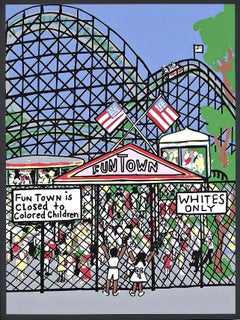
Faith Ringgold, For Whites Only, from Letter from Birmingham City Jail, 2007
By Faith Ringgold
Located in Southampton, NY
This exquisite silkscreen by Faith Ringgold (1930–2024), titled For Whites Only, from the folio Letter from Birmingham City Jail, originates from the 2007 edition published by The Li...
Category
Early 2000s Expressionist Figurative Prints
Materials
Screen
$4,796 Sale Price
20% Off
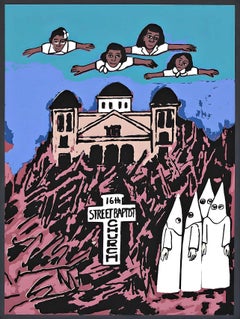
Faith Ringgold, Four Little Girls Bombed in a Church, 2007
By Faith Ringgold
Located in Southampton, NY
This exquisite silkscreen by Faith Ringgold (1930–2024), titled Four Little Girls Bombed in a Church, from the folio Letter from Birmingham City Jail, originates from the 2007 editio...
Category
Early 2000s Expressionist Figurative Prints
Materials
Screen
$4,796 Sale Price
20% Off
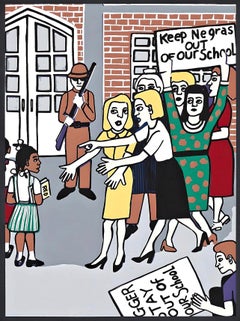
Faith Ringgold, Brown Versus Board of Education 1954, 2007
By Faith Ringgold
Located in Southampton, NY
This exquisite silkscreen by Faith Ringgold (1930–2024), titled Brown Versus Board of Education 1954, from the folio Letter from Birmingham City Jail, o...
Category
Early 2000s Expressionist Figurative Prints
Materials
Screen
$4,796 Sale Price
20% Off
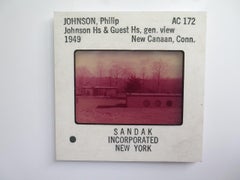
Richard Klein, Johnson Hs.
Guest Hs. General View (2024), Ed 2/3, replica
Located in Darien, CT
In the mid 1990s Richard Klein started working with found glass objects, including bottles, drinking glasses, ashtrays, and eyeglasses. Initially, Klein rejected any object with commercial or advertising content, but in 2015 he became fascinated with the promotional content that was screen printed on ashtrays from the 1950s, 1960s and early 1970s. This period was before smoking was looked at as being primarily a negative habit, and iconic American businesses, including Howard Johnson’s, International House of Pancakes (iHop) and Holiday Inn, all produced promotional ashtrays printed with their graphic identity.
By the time Klein became interested in these objects, the businesses had either ceased to exist, or had changed their logos, and many of their signature buildings, which where examples of classic, “Pop” roadside architecture, has been torn down or repurposed. The artist wanted to connect the glass objects with the business’s sites that were still recognizable and spoke of their history, so he began researching where original buildings still stood.
Klein then embarked on a series of road trips to photograph these sites with the intention of combining the photographs with the promotional glass objects. This led him to as far south as Maryland and as far north as upstate New York from his home in Connecticut.
Johnson Hs. & Guest Hs. is an exact replica of an art history slide made in the 1950s picturing Philip Johnson’s Glass House. The slide has been replicated digitally on a much larger scale (23” x 23”) and like the original is made of a cardboard mount that contains a color transparency. The original slide is faded from years of use and most of the color, other than red, has been bleached out.
Richard Klein is a Connecticut-based artist, independent curator and writer. As an artist, he has exhibited widely, including the Neuberger Museum of Art at SUNY Purchase; Caren Golden Fine Art, New York; the John Michael Kohler Arts Center, Sheboygan, WI; Hales Gallery, London; Gavlak Gallery, Palm Beach, FL; deCordova Sculpture Park and Museum, Lincoln, MA; James Barron Art, Kent, CT; The Portland Institute of Contemporary Art (PICA), Portland, OR; Schoolhouse Gallery, Provincetown, MA; Stephan Stoyanov Gallery, NY; Katonah Museum of Art, Katonah, NY; Brattleboro Museum and Art Center, Brattleboro, VT; Ortega y Gasset Projects, Brooklyn, NY; Exhibit by Alberson Tulsa, OK; Incident Report/Flow Chart Foundation, Hudson, NY; ICEHOUSE Project Space, Sharon, CT; Kenise Barnes Fine Art in Kent, CT and with ODETTA Gallery at the Equity Gallery in New York City..
Reviews of his work have appeared in Two Coats of Paint, Whitehot Magazine, The New York Times, Sculpture Magazine, Art in America, and The New Yorker. In the summer of 2024 he will be the first Artist-In-Residence at Peck Ledge Light...
Category
2010s Dada Still-life Sculptures
Materials
Photographic Film, Film, Archival Paper, Digital, Wood
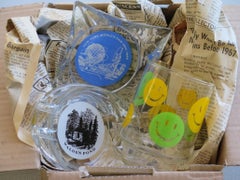
Richard Klein, American Glassware, 2010-2024, Found and altered objects
Located in Darien, CT
In the mid 1990s Richard Klein started working with found glass objects, including bottles, drinking glasses, ashtrays, and eyeglasses. Initially, Klein rejected any object with commercial or advertising content, but in 2015 he became fascinated with the promotional content that was screen printed on ashtrays from the 1950s, 1960s and early 1970s. This period was before smoking was looked at as being primarily a negative habit, and iconic American businesses, including Howard Johnson’s, International House of Pancakes (iHop) and Holiday Inn, all produced promotional ashtrays printed with their graphic identity.
By the time Klein became interested in these objects, the businesses had either ceased to exist, or had changed their logos, and many of their signature buildings, which where examples of classic, “Pop” roadside architecture, has been torn down or repurposed. The artist wanted to connect the glass objects with the business’s sites that were still recognizable and spoke of their history, so he began researching where original buildings still stood.
Klein then embarked on a series of road trips to photograph these sites with the intention of combining the photographs with the promotional glass objects. This led him to as far south as Maryland and as far north as upstate New York from his home in Connecticut.
American Glassware (2010-present) which is presented in a small, wall-mounted vitrine. American Glassware is composed of three glass objects: a “souvenir” Walden Pond ashtray made by me as a multiple; a real souvenir ashtray from the 1964-65 New York World’s Fair; and an authentic “Happy Face” drinking glass from the same era. They are all nestled in crumpled, vintage newspaper from 1967, and are presented together in a dilapidated cardboard box, as if they have been found in someone’s attic or basement. Once again, in a similar manner to the Glass House Ashtray, versions of his Walden Pond ashtray (Walden Pond Souvenir) have been injected into the collectable stream of tag sales and flea markets, creating a souvenir that never existed. The ashtray is screenprinted with an image of Thoreau’s cabin on Walden Pond as pictured on the title page of his book Walden, or Life in the Woods (1854). (The original illustration was created by Thoreau’s sister, Sophia.) Walden Pond Souvenir was originally produced for the 2010 exhibition Renovating Walden at the Tufts University Art Gallery in Medford, MA.
Richard Klein is a Connecticut-based artist, independent curator and writer. As an artist, he has exhibited widely, including the Neuberger Museum of Art at SUNY Purchase; Caren Golden Fine Art, New York; the John Michael Kohler Arts Center, Sheboygan, WI; Hales Gallery, London; Gavlak Gallery, Palm Beach, FL; deCordova Sculpture Park and Museum, Lincoln, MA; James Barron Art, Kent, CT; The Portland Institute of Contemporary Art (PICA), Portland, OR; Schoolhouse Gallery, Provincetown, MA; Stephan Stoyanov Gallery, NY; Katonah Museum of Art, Katonah, NY; Brattleboro Museum and Art Center, Brattleboro, VT; Ortega y Gasset Projects, Brooklyn, NY; Exhibit by Alberson Tulsa, OK; Incident Report/Flow Chart Foundation, Hudson, NY; ICEHOUSE Project Space, Sharon, CT; Kenise Barnes Fine Art in Kent, CT and with ODETTA Gallery at the Equity Gallery in New York City..
Reviews of his work have appeared in Two Coats of Paint, Whitehot Magazine, The New York Times, Sculpture Magazine, Art in America, and The New Yorker. In the summer of 2024 he will be the first Artist-In-Residence at Peck Ledge Light...
Category
2010s Assemblage Still-life Sculptures
Materials
Metal
Richard Klein, Expo 67, 2017, Found and altered objects assemblage
Located in Darien, CT
In the mid 1990s Richard Klein started working with found glass objects, including bottles, drinking glasses, ashtrays, and eyeglasses. Initially, Klein rejected any object with commercial or advertising content, but in 2015 he became fascinated with the promotional content that was screen printed on ashtrays from the 1950s, 1960s and early 1970s. This period was before smoking was looked at as being primarily a negative habit, and iconic American businesses, including Howard Johnson’s, International House of Pancakes (iHop) and Holiday Inn, all produced promotional ashtrays printed with their graphic identity.
By the time Klein became interested in these objects, the businesses had either ceased to exist, or had changed their logos, and many of their signature buildings, which where examples of classic, “Pop” roadside architecture, has been torn down or repurposed. The artist wanted to connect the glass objects with the business’s sites that were still recognizable and spoke of their history, so he began researching where original buildings still stood.
Klein then embarked on a series of road trips to photograph these sites with the intention of combining the photographs with the promotional glass objects. This led him to as far south as Maryland and as far north as upstate New York from his home in Connecticut.
In the case of Holiday Inn, it wasn’t their buildings, but their iconic illuminated sign that appeared on ashtrays, so he sought out a standing example of the sign he could photograph.
As it turned out all had been removed years before from the hotels' properties and the only working example was indoors at the Henry Ford Museum in Dearborn, Michigan. He did, however, find out that there was one still standing, surprisingly, in Beruit, Lebanon. He found an image of it on the web and used it to make Holiday Inn (Beruit).
In 1973 Holiday Inn changed their tagline from “The Nations Innkeeper” to “The World’s Innkeeper” as they expanded overseas, including the Mideast. For the hotel chain it was bad timing: the disastrous Lebanese civil war began in 1975. In the war, the different Lebanese militias involved in the conflict, including the Nasserites, Christian Phalangists, and the Lebanese National Movement engaged in what came to be called “The Battle of the Hotels” where they each occupied a major high-rise hotel in central Beruit. The Phalangists commanded the Holiday Inn, which they used to fire with both light arms and heavier weapons at the militias in neighboring hotels.
Klein used the photo of the heavily damaged Holiday Inn sign as I thought it spoke in a curious, offhanded way about American cultural imperialism in juxtaposition with an ashtray that proclaimed Holiday Inn to be “The World’s Innkeeper.” In the work Holiday Inn (Nocturne) the artist utilized a found, 35mm slide of a Holiday Inn sign at night at an unknown location as the basis of the photograph in the work.
Richard Klein is a Connecticut-based artist, independent curator and writer. As an artist, he has exhibited widely, including the Neuberger Museum of Art at SUNY Purchase; Caren Golden Fine Art, New York; the John Michael Kohler Arts Center, Sheboygan, WI; Hales Gallery, London; Gavlak Gallery, Palm Beach, FL; deCordova Sculpture Park and Museum, Lincoln, MA; James Barron Art, Kent, CT; The Portland Institute of Contemporary Art (PICA), Portland, OR; Schoolhouse Gallery, Provincetown, MA; Stephan Stoyanov Gallery, NY; Katonah Museum of Art, Katonah, NY; Brattleboro Museum and Art Center, Brattleboro, VT; Ortega y Gasset Projects, Brooklyn, NY; Exhibit by Alberson Tulsa, OK; Incident Report/Flow Chart Foundation, Hudson, NY; ICEHOUSE Project Space, Sharon, CT; Kenise Barnes Fine Art in Kent, CT and with ODETTA Gallery at the Equity Gallery in New York City..
Reviews of his work have appeared in Two Coats of Paint, Whitehot Magazine, The New York Times, Sculpture Magazine, Art in America, and The New Yorker. In the summer of 2024 he will be the first Artist-In-Residence at Peck Ledge Light...
Category
2010s Assemblage Still-life Sculptures
Materials
Metal
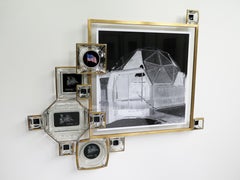
Richard Klein, iHop II, 2018, Found and altered objects assemblage
Located in Darien, CT
In the mid 1990s Richard Klein started working with found glass objects, including bottles, drinking glasses, ashtrays, and eyeglasses. Initially, Klein rejected any object with commercial or advertising content, but in 2015 he became fascinated with the promotional content that was screen printed on ashtrays from the 1950s, 1960s and early 1970s. This period was before smoking was looked at as being primarily a negative habit, and iconic American businesses, including Howard Johnson’s, International House of Pancakes (iHop) and Holiday Inn, all produced promotional ashtrays printed with their graphic identity.
By the time Klein became interested in these objects, the businesses had either ceased to exist, or had changed their logos, and many of their signature buildings, which where examples of classic, “Pop” roadside architecture, has been torn down or repurposed. The artist wanted to connect the glass objects with the business’s sites that were still recognizable and spoke of their history, so he began researching where original buildings still stood.
Klein then embarked on a series of road trips to photograph these sites with the intention of combining the photographs with the promotional glass objects. This led him to as far south as Maryland and as far north as upstate New York from his home in Connecticut.
In the case of Holiday Inn, it wasn’t their buildings, but their iconic illuminated sign that appeared on ashtrays, so he sought out a standing example of the sign he could photograph.
As it turned out all had been removed years before from the hotels' properties and the only working example was indoors at the Henry Ford Museum in Dearborn, Michigan. He did, however, find out that there was one still standing, surprisingly, in Beruit, Lebanon. He found an image of it on the web and used it to make Holiday Inn (Beruit).
In 1973 Holiday Inn changed their tagline from “The Nations Innkeeper” to “The World’s Innkeeper” as they expanded overseas, including the Mideast. For the hotel chain it was bad timing: the disastrous Lebanese civil war began in 1975. In the war, the different Lebanese militias involved in the conflict, including the Nasserites, Christian Phalangists, and the Lebanese National Movement engaged in what came to be called “The Battle of the Hotels” where they each occupied a major high-rise hotel in central Beruit. The Phalangists commanded the Holiday Inn, which they used to fire with both light arms and heavier weapons at the militias in neighboring hotels.
Klein used the photo of the heavily damaged Holiday Inn sign as I thought it spoke in a curious, offhanded way about American cultural imperialism in juxtaposition with an ashtray that proclaimed Holiday Inn to be “The World’s Innkeeper.” In the work Holiday Inn (Nocturne) the artist utilized a found, 35mm slide of a Holiday Inn sign at night at an unknown location as the basis of the photograph in the work.
Richard Klein is a Connecticut-based artist, independent curator and writer. As an artist, he has exhibited widely, including the Neuberger Museum of Art at SUNY Purchase; Caren Golden Fine Art, New York; the John Michael Kohler Arts Center, Sheboygan, WI; Hales Gallery, London; Gavlak Gallery, Palm Beach, FL; deCordova Sculpture Park and Museum, Lincoln, MA; James Barron Art, Kent, CT; The Portland Institute of Contemporary Art (PICA), Portland, OR; Schoolhouse Gallery, Provincetown, MA; Stephan Stoyanov Gallery, NY; Katonah Museum of Art, Katonah, NY; Brattleboro Museum and Art Center, Brattleboro, VT; Ortega y Gasset Projects, Brooklyn, NY; Exhibit by Alberson Tulsa, OK; Incident Report/Flow Chart Foundation, Hudson, NY; ICEHOUSE Project Space, Sharon, CT; Kenise Barnes Fine Art in Kent, CT and with ODETTA Gallery at the Equity Gallery in New York City..
Reviews of his work have appeared in Two Coats of Paint, Whitehot Magazine, The New York Times, Sculpture Magazine, Art in America, and The New Yorker. In the summer of 2024 he will be the first Artist-In-Residence at Peck Ledge Light...
Category
2010s Assemblage Still-life Sculptures
Materials
Metal
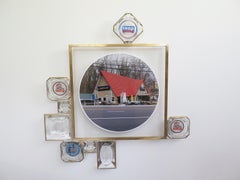
Surrealist Spray Paint Painting Mixed Media Rosie Palm Mason Rader Pop Art
Located in Surfside, FL
"Rosie Palm" 1995 by Mason Rader
A graduate of the L. Jeffrey Selznick School of Film Preservation at the George Eastman House in Rochester NY with a Bach...
Category
1990s Pop Art Abstract Paintings
Materials
Mixed Media, Spray Paint
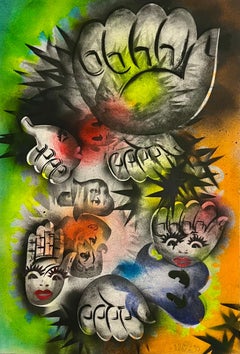
Meschac Gaba Inkjet Pigment Print Photograph African Conceptual Art Dollar Bill
Located in Surfside, FL
Meschac Gaba (Benin, 1961- )
Artist with American Inspiration: 4 World Financial Center, 2004, Meschac Gaba, pigmented inkjet print,
Hand signed, dated and inscribed '15 des 30 Artiste d'inspiration Americaine' verso.
Dimensions: approximately 17 1/2 x 42 1/2 in. (sheet), 19 x 44 in. (frame)
Meshac Gaba employs an intervention on an American dollar bill in Artist with American Inspiration: 4 World Financial Center, swapping out our stately eagle for his smiling face portrait. One of Gaba’s sculptures appears on the left as well.
Meschac Gaba (born 1961) is a Beninese conceptual artist based in Rotterdam and Cotonou. His installations of everyday objects whimsically juxtapose African and Western cultural identities and commerce. He is best known for The Museum of Contemporary African Art 1997–2002, an autobiographical 12-room installation acquired and displayed by the Tate Modern in 2013. He has also exhibited at the Studio Museum in Harlem and at the 2003 Venice Biennale.
Meshac Gaba was born in Cotonou, Benin, in 1961. He had drifted from his training as a painter until a bag of decommissioned money cut into confetti led him to make paintings with the material. 1981-1985 He was a student at the artist studio of Zossou Gratien, Cotonou, Benin.
Gaba became known for his installations of everyday objects that whimsically juxtapose African and Western cultural identities and commerce.
He held a residency at the Amsterdam Rijksakademie in 1996 for two years. In the absence of opportunities to display his work in the city, he set out over the next five years to make his own museum. This piece became his seminal The Museum of Contemporary African Art 1997–2002, which consists of 12 rooms (some based on museum function and others personal) filled with objects made by Gaba. Throughout the exhibition ran a vein of confessional narrative about the artist's art travails between Africa and Europe The wedding room, which he made while in love, holds mementos as museum artifacts from Gaba's wedding to the Dutch curator Alexandra van Dongen in 2000 at the Amsterdam Stedelijk Museum. The Library room holds art...
Category
Early 2000s Contemporary Figurative Prints
Materials
Inkjet
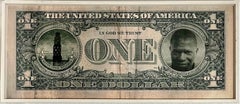
Abstract Surrealist Spray Paint Mixed Media Painting Jungle Swelter Mason Rader
Located in Surfside, FL
"Jungle Swelter" 1995 by Mason Rader
A graduate of the L. Jeffrey Selznick School of Film Preservation at the George Eastman House in Rochester NY with a ...
Category
1990s Abstract Paintings
Materials
Mixed Media, Spray Paint
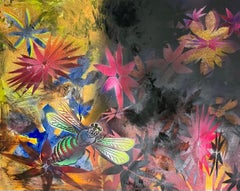
Surrealist Spray Paint Mixed Media Snowfall Aurora Borealis Mason Rader Paintin
Located in Surfside, FL
"Snow Fall on Aurora Borealis" 1994 by Mason Rader
A graduate of the L. Jeffrey Selznick School of Film Preservation at the George Eastman House in Roches...
Category
1990s Surrealist Abstract Paintings
Materials
Mixed Media, Spray Paint
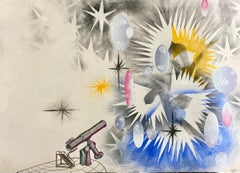
Richard Klein, McDonalds (El Nino), 2024, Found and altered objects assemblage
Located in Darien, CT
In the mid 1990s Richard Klein started working with found glass objects, including bottles, drinking glasses, ashtrays, and eyeglasses. Initially, Klein rejected any object with commercial or advertising content, but in 2015 he became fascinated with the promotional content that was screen printed on ashtrays from the 1950s, 1960s and early 1970s. This period was before smoking was looked at as being primarily a negative habit, and iconic American businesses, including Howard Johnson’s, International House of Pancakes (iHop) and Holiday Inn, all produced promotional ashtrays printed with their graphic identity.
By the time Klein became interested in these objects, the businesses had either ceased to exist, or had changed their logos, and many of their signature buildings, which where examples of classic, “Pop” roadside architecture, has been torn down or repurposed. The artist wanted to connect the glass objects with the business’s sites that were still recognizable and spoke of their history, so he began researching where original buildings still stood.
Klein then embarked on a series of road trips to photograph these sites with the intention of combining the photographs with the promotional glass objects. This led him to as far south as Maryland and as far north as upstate New York from his home in Connecticut.
In the case of Holiday Inn, it wasn’t their buildings, but their iconic illuminated sign that appeared on ashtrays, so he sought out a standing example of the sign he could photograph.
As it turned out all had been removed years before from the hotels' properties and the only working example was indoors at the Henry Ford Museum in Dearborn, Michigan. He did, however, find out that there was one still standing, surprisingly, in Beruit, Lebanon. He found an image of it on the web and used it to make Holiday Inn (Beruit).
In 1973 Holiday Inn changed their tagline from “The Nations Innkeeper” to “The World’s Innkeeper” as they expanded overseas, including the Mideast. For the hotel chain it was bad timing: the disastrous Lebanese civil war began in 1975. In the war, the different Lebanese militias involved in the conflict, including the Nasserites, Christian Phalangists, and the Lebanese National Movement engaged in what came to be called “The Battle of the Hotels” where they each occupied a major high-rise hotel in central Beruit. The Phalangists commanded the Holiday Inn, which they used to fire with both light arms and heavier weapons at the militias in neighboring hotels.
Klein used the photo of the heavily damaged Holiday Inn sign as I thought it spoke in a curious, offhanded way about American cultural imperialism in juxtaposition with an ashtray that proclaimed Holiday Inn to be “The World’s Innkeeper.” In the work Holiday Inn (Nocturne) the artist utilized a found, 35mm slide of a Holiday Inn sign at night at an unknown location as the basis of the photograph in the work.
Richard Klein is a Connecticut-based artist, independent curator and writer. As an artist, he has exhibited widely, including the Neuberger Museum of Art at SUNY Purchase; Caren Golden Fine Art, New York; the John Michael Kohler Arts Center, Sheboygan, WI; Hales Gallery, London; Gavlak Gallery, Palm Beach, FL; deCordova Sculpture Park and Museum, Lincoln, MA; James Barron Art, Kent, CT; The Portland Institute of Contemporary Art (PICA), Portland, OR; Schoolhouse Gallery, Provincetown, MA; Stephan Stoyanov Gallery, NY; Katonah Museum of Art, Katonah, NY; Brattleboro Museum and Art Center, Brattleboro, VT; Ortega y Gasset Projects, Brooklyn, NY; Exhibit by Alberson Tulsa, OK; Incident Report/Flow Chart Foundation, Hudson, NY; ICEHOUSE Project Space, Sharon, CT; Kenise Barnes Fine Art in Kent, CT and with ODETTA Gallery at the Equity Gallery in New York City..
Reviews of his work have appeared in Two Coats of Paint, Whitehot Magazine, The New York Times, Sculpture Magazine, Art in America, and The New Yorker. In the summer of 2024 he will be the first Artist-In-Residence at Peck Ledge Light...
Category
2010s Assemblage Still-life Sculptures
Materials
Metal
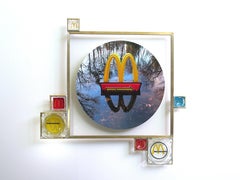
Richard Klein, Holiday Inn Nocturne, 2020, Found and altered objects assemblage
Located in Darien, CT
In the mid 1990s Richard Klein started working with found glass objects, including bottles, drinking glasses, ashtrays, and eyeglasses. Initially, Klein rejected any object with commercial or advertising content, but in 2015 he became fascinated with the promotional content that was screen printed on ashtrays from the 1950s, 1960s and early 1970s. This period was before smoking was looked at as being primarily a negative habit, and iconic American businesses, including Howard Johnson’s, International House of Pancakes (iHop) and Holiday Inn, all produced promotional ashtrays printed with their graphic identity.
By the time Klein became interested in these objects, the businesses had either ceased to exist, or had changed their logos, and many of their signature buildings, which where examples of classic, “Pop” roadside architecture, has been torn down or repurposed. The artist wanted to connect the glass objects with the business’s sites that were still recognizable and spoke of their history, so he began researching where original buildings still stood.
Klein then embarked on a series of road trips to photograph these sites with the intention of combining the photographs with the promotional glass objects. This led him to as far south as Maryland and as far north as upstate New York from his home in Connecticut.
In the case of Holiday Inn, it wasn’t their buildings, but their iconic illuminated sign that appeared on ashtrays, so he sought out a standing example of the sign he could photograph.
As it turned out all had been removed years before from the hotels' properties and the only working example was indoors at the Henry Ford Museum in Dearborn, Michigan. He did, however, find out that there was one still standing, surprisingly, in Beruit, Lebanon. He found an image of it on the web and used it to make Holiday Inn (Beruit).
In 1973 Holiday Inn changed their tagline from “The Nations Innkeeper” to “The World’s Innkeeper” as they expanded overseas, including the Mideast. For the hotel chain it was bad timing: the disastrous Lebanese civil war began in 1975. In the war, the different Lebanese militias involved in the conflict, including the Nasserites, Christian Phalangists, and the Lebanese National Movement engaged in what came to be called “The Battle of the Hotels” where they each occupied a major high-rise hotel in central Beruit. The Phalangists commanded the Holiday Inn, which they used to fire with both light arms and heavier weapons at the militias in neighboring hotels.
Klein used the photo of the heavily damaged Holiday Inn sign as I thought it spoke in a curious, offhanded way about American cultural imperialism in juxtaposition with an ashtray that proclaimed Holiday Inn to be “The World’s Innkeeper.” In the work Holiday Inn (Nocturne) the artist utilized a found, 35mm slide of a Holiday Inn sign at night at an unknown location as the basis of the photograph in the work.
Richard Klein is a Connecticut-based artist, independent curator and writer. As an artist, he has exhibited widely, including the Neuberger Museum of Art at SUNY Purchase; Caren Golden Fine Art, New York; the John Michael Kohler Arts Center, Sheboygan, WI; Hales Gallery, London; Gavlak Gallery, Palm Beach, FL; deCordova Sculpture Park and Museum, Lincoln, MA; James Barron Art, Kent, CT; The Portland Institute of Contemporary Art (PICA), Portland, OR; Schoolhouse Gallery, Provincetown, MA; Stephan Stoyanov Gallery, NY; Katonah Museum of Art, Katonah, NY; Brattleboro Museum and Art Center, Brattleboro, VT; Ortega y Gasset Projects, Brooklyn, NY; Exhibit by Alberson Tulsa, OK; Incident Report/Flow Chart Foundation, Hudson, NY; ICEHOUSE Project Space, Sharon, CT; Kenise Barnes Fine Art in Kent, CT and with ODETTA Gallery at the Equity Gallery in New York City..
Reviews of his work have appeared in Two Coats of Paint, Whitehot Magazine, The New York Times, Sculpture Magazine, Art in America, and The New Yorker. In the summer of 2024 he will be the first Artist-In-Residence at Peck Ledge Light...
Category
2010s Assemblage Still-life Sculptures
Materials
Metal
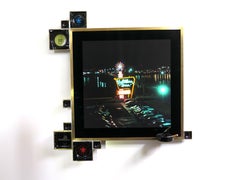
Richard Klein, Holiday Inn Beirut, 2017, Found and altered objects assemblage
Located in Darien, CT
In the mid 1990s Richard Klein started working with found glass objects, including bottles, drinking glasses, ashtrays, and eyeglasses. Initially, Klein rejected any object with commercial or advertising content, but in 2015 he became fascinated with the promotional content that was screen printed on ashtrays from the 1950s, 1960s and early 1970s. This period was before smoking was looked at as being primarily a negative habit, and iconic American businesses, including Howard Johnson’s, International House of Pancakes (iHop) and Holiday Inn, all produced promotional ashtrays printed with their graphic identity.
By the time Klein became interested in these objects, the businesses had either ceased to exist, or had changed their logos, and many of their signature buildings, which where examples of classic, “Pop” roadside architecture, has been torn down or repurposed. The artist wanted to connect the glass objects with the business’s sites that were still recognizable and spoke of their history, so he began researching where original buildings still stood.
Klein then embarked on a series of road trips to photograph these sites with the intention of combining the photographs with the promotional glass objects. This led him to as far south as Maryland and as far north as upstate New York from his home in Connecticut.
In the case of Holiday Inn, it wasn’t their buildings, but their iconic illuminated sign that appeared on ashtrays, so he sought out a standing example of the sign he could photograph.
As it turned out all had been removed years before from the hotels' properties and the only working example was indoors at the Henry Ford Museum in Dearborn, Michigan. He did, however, find out that there was one still standing, surprisingly, in Beruit, Lebanon. He found an image of it on the web and used it to make Holiday Inn (Beruit).
In 1973 Holiday Inn changed their tagline from “The Nations Innkeeper” to “The World’s Innkeeper” as they expanded overseas, including the Mideast. For the hotel chain it was bad timing: the disastrous Lebanese civil war began in 1975. In the war, the different Lebanese militias involved in the conflict, including the Nasserites, Christian Phalangists, and the Lebanese National Movement engaged in what came to be called “The Battle of the Hotels” where they each occupied a major high-rise hotel in central Beruit. The Phalangists commanded the Holiday Inn, which they used to fire with both light arms and heavier weapons at the militias in neighboring hotels.
Klein used the photo of the heavily damaged Holiday Inn sign as I thought it spoke in a curious, offhanded way about American cultural imperialism in juxtaposition with an ashtray that proclaimed Holiday Inn to be “The World’s Innkeeper.” In the work Holiday Inn (Nocturne) the artist utilized a found, 35mm slide of a Holiday Inn sign at night at an unknown location as the basis of the photograph in the work.
Richard Klein is a Connecticut-based artist, independent curator and writer. As an artist, he has exhibited widely, including the Neuberger Museum of Art at SUNY Purchase; Caren Golden Fine Art, New York; the John Michael Kohler Arts Center, Sheboygan, WI; Hales Gallery, London; Gavlak Gallery, Palm Beach, FL; deCordova Sculpture Park and Museum, Lincoln, MA; James Barron Art, Kent, CT; The Portland Institute of Contemporary Art (PICA), Portland, OR; Schoolhouse Gallery, Provincetown, MA; Stephan Stoyanov Gallery, NY; Katonah Museum of Art, Katonah, NY; Brattleboro Museum and Art Center, Brattleboro, VT; Ortega y Gasset Projects, Brooklyn, NY; Exhibit by Alberson Tulsa, OK; Incident Report/Flow Chart Foundation, Hudson, NY; ICEHOUSE Project Space, Sharon, CT; Kenise Barnes Fine Art in Kent, CT and with ODETTA Gallery at the Equity Gallery in New York City..
Reviews of his work have appeared in Two Coats of Paint, Whitehot Magazine, The New York Times, Sculpture Magazine, Art in America, and The New Yorker. In the summer of 2024 he will be the first Artist-In-Residence at Peck Ledge Light...
Category
2010s Assemblage Still-life Sculptures
Materials
Metal
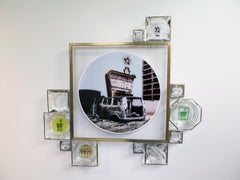
Abstract Surrealist Spray Paint Mixed Media The Dump Mason Rader
Located in Surfside, FL
"The Dump" 1994 by Mason Rader
A graduate of the L. Jeffrey Selznick School of Film Preservation at the George Eastman House in Rochester NY with a Bachel...
Category
1990s Contemporary Abstract Paintings
Materials
Mixed Media, Spray Paint, Acrylic
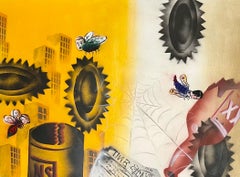
Abstract Surrealist Spray Paint Mixed Media The Web Mason Rader
Located in Surfside, FL
"The Web" 1995 by Mason Rader
A graduate of the L. Jeffrey Selznick School of Film Preservation at the George Eastman House in Rochester NY with a Bachelo...
Category
1990s Surrealist Abstract Paintings
Materials
Mixed Media, Spray Paint, Acrylic
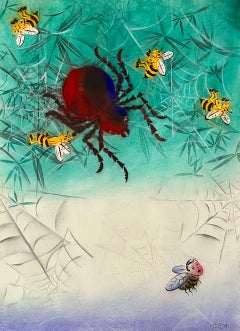
Abstract Surrealist Spray Paint Mixed Media Painting Mason Rader Outsider Art
Located in Surfside, FL
"Over Seer" 1995 by Mason Rader
A graduate of the L. Jeffrey Selznick School of Film Preservation at the George Eastman House in Rochester NY with a Bache...
Category
1990s Abstract Paintings
Materials
Mixed Media, Spray Paint
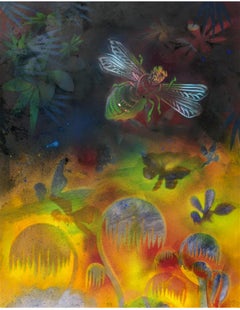
Surrealist Spray Paint Painting Mixed Media Rope Burn Mason Rader Street Art
Located in Surfside, FL
"Rope Burn" 1995 by Mason Rader
A graduate of the L. Jeffrey Selznick School of Film Preservation at the George Eastman House in Rochester NY with a Bache...
Category
1990s Street Art Abstract Paintings
Materials
Mixed Media, Spray Paint, Acrylic
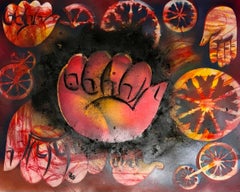
Contemporary Surrealist Spray Paint Painting Mixed Media, The Trap, Mason Rader
Located in Surfside, FL
"The Trap" 1995 by Mason Rader
A graduate of the L. Jeffrey Selznick School of Film Preservation at the George Eastman House in Rochester NY with a Bachel...
Category
1990s Pop Art Abstract Paintings
Materials
Mixed Media, Spray Paint
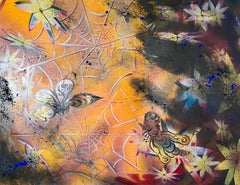
Outsider Art Abstract Surrealist Spray Paint Mixed Media Painting Mason Rader
Located in Surfside, FL
"Tin Can Hands" 1995 by Mason Rader
A graduate of the L. Jeffrey Selznick School of Film Preservation at the George Eastman House in Rochester NY with a B...
Category
1990s Outsider Art Abstract Paintings
Materials
Mixed Media, Spray Paint