454 results for "cubism"

to
24
278
90
67
8
10
Overall Width
to
Overall Height
to
12
343
99
6
13
22
58
26
28
21
8
4
2
106
82
75
24
15
9
8
4
2
1
225
221
7
189
102
102
70
61
59
42
30
22
14
13
11
10
9
8
7
7
7
6
5
194
192
183
161
81
82
39
16
16
9
136
35
270
179
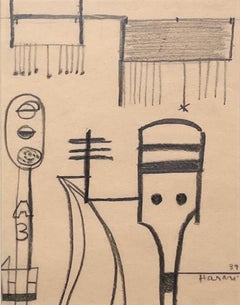
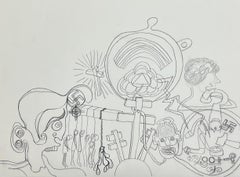
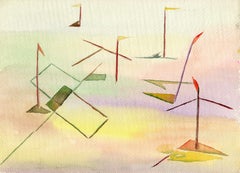
A 1930s Modern Abstract Drawing of Railroad Switching Signals by Hananiah Harari
By Hananiah Harari
Located in Chicago, IL
A Striking 1930s Modern Abstract Drawing of Railroad Switching Signals by Notable New York Avant Garde Artist, Hannah Harari (Am. 1912-2000). Graphite on paper, dating from 1939. A...
Category

Mid-20th Century Surrealist Abstract Drawings and Watercolors

Materials

Paper, Graphite

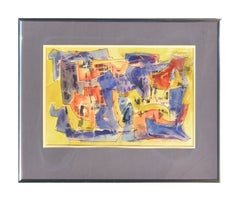
Purple Yellow Modern Urban Abstract
By Carl E. Schwartz
Located in Soquel, CA
Modern and bright urban abstract in yellow & purple by Carl E. Schwartz (American, 1935-2014), c.1970s. Signed "Schwartz" lower right. Presented in a silver metal frame. Image size: ...
Category

1970s Abstract Expressionist Abstract Drawings and Watercolors

Materials

Paper, Ink, Watercolor

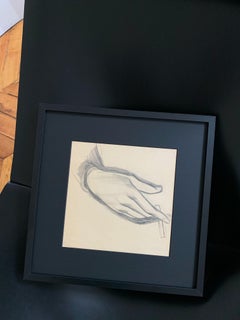
Study of a hand holding a cigarette, circa 1930, pencil on paper
By Raymonde Heudebert
Located in PARIS, FR
Raymonde Heudebert 1905-1991) Study of a hand holding a cigarette Pencil on paper Annotated “Jean de Vogué” on the back Dimensions of the drawing : 26 x 27 cm Dimensions of the frame...
Category

1930s Figurative Drawings and Watercolors

Materials

Pencil

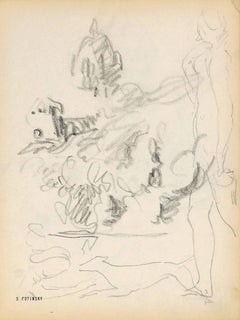
Sketch - Original Ink by Serge Fontinsky - Mid-20th Century
By Serge Fontinsky
Located in Roma, IT
Sketch is an original china ink drawing realized by Serge Fontinsky (1887-1971) in the half of the 20th Century. Good conditions, minor cosmetic wear. Hand-signed on the lower mar...
Category

Mid-20th Century Modern Figurative Drawings and Watercolors

Materials

Ink

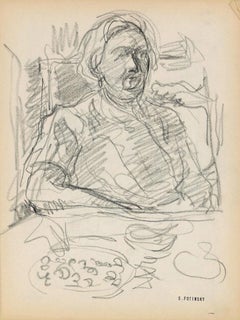
Sketch - Original Pencil by Serge Fontinsky - Mid-20th Century
By Serge Fontinsky
Located in Roma, IT
Sketch is an original sketch pencil drawing realized by Serge Fontinsky (1887-1971) in the half of the 20th Century. Good conditions, minor cosmetic wear. Hand-signed on the lower...
Category

Mid-20th Century Modern Figurative Drawings and Watercolors

Materials

Pencil

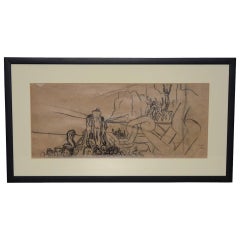
Jean Carlu "Breaking the Chains" Original Charcoal on Paper c.1920s
By Jean Carlu
Located in San Francisco, CA
Jean Carlu (French, 1900-1997) "Breaking the Chains" Original Charcoal on Paper c.1920s Rare original work by noted French poster artist Jean Carlu. A fine example of his interest ...
Category

Early 20th Century Art Deco Figurative Drawings and Watercolors

Materials

Paper, Charcoal

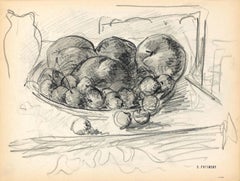
Fruit Basket - Original Pencil by Serge Fontinsky - Mid-20th Century
By Serge Fontinsky
Located in Roma, IT
Fruit basket is an original sketch pencil drawing realized by Serge Fontinsky (1887-1971) in the half of the 20th Century. Good conditions, minor cosmetic wear. Hand-signed on the...
Category

Mid-20th Century Modern Figurative Drawings and Watercolors

Materials

Pencil

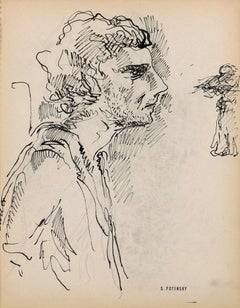
Portrait - Original China Ink by Serge Fontinsky - Mid-20th Century
By Serge Fontinsky
Located in Roma, IT
Portrait is an original china ink drawing realized by Serge Fontinsky (1887-1971) in the half of the 20th Century. Good conditions, minor cosmetic wear. Hand-signed on the lower m...
Category

Mid-20th Century Modern Figurative Drawings and Watercolors

Materials

Ink

Sketch - Pencil by Serge Fontinsky - Mid-20th Century
By Serge Fontinsky
Located in Roma, IT
Sketch is an original sketch pencil drawing realized by Serge Fontinsky (1887-1971) in the half of the 20th Century. Good conditions, minor cosmetic wear. Hand-signed on the lower...
Category

Mid-20th Century Modern Figurative Drawings and Watercolors

Materials

Pencil

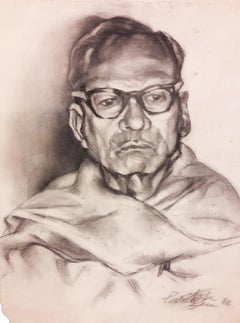
Thinker Bengali Man Charcoal Paper, Black White Paritosh Sen"In Stock"
By Paritosh Sen
Located in Kolkata, West Bengal
Paritosh Sen - Untitled - 30 x 22 inches (unframed size) Charcoal on paper Inclusive of shipment in a roll form.The work comes with a certificate signed by the artist himself. An il...
Category

1980s Modern Figurative Paintings

Materials

Paper, Charcoal

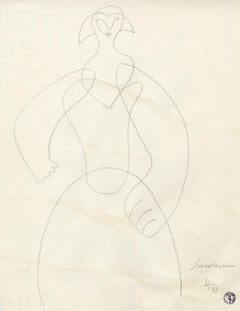
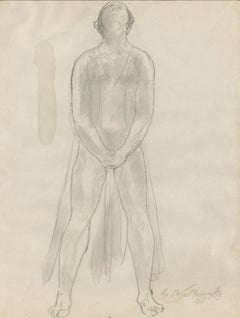
Untitled (Standing Woman)
By Léopold Survage
Located in Fairlawn, OH
Leopold Survage (1879-1968) Untitled (Woman Standing) Graphite on paper, 1933 Signed in pencil by the artist: Survage Signed with the estate stamp lower right Signed in pencil "LS" f...
Category

1930s Cubist Nude Drawings and Watercolors

Materials

Graphite

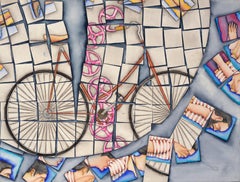
"La Birula de Nenuca" The Bicycle of Nenuca - Original Watercolor Painting
Located in Soquel, CA
"La Birula de Nenuca" The Bicycle of Nenuca - Original Watercolor Painting. Contemporary surrealist painting by Marco Antonio Bustamante Underwood (Mexican, b. 1959 d. 2024). This c...
Category

1980s Post-War Figurative Drawings and Watercolors

Materials

Paper, Watercolor

After the Storm , Carmel, California, Paris, Académie Julian, New York, AIC
Located in Santa Cruz, CA
'After the Storm' by Herbert Lewis. Carmel, California, Paris, Académie Julian, New York, Art Institute of Chicago ----- Signed lower right, 'Herbert Lewis' (American, 1893-1962) and inscribed 'Caques 1928 and Tucson 1950'. Born in Chicago, Illinois, Herbert Taylor Lewis was known as a painter of abstracts, still lives and figure studies painted with a vivid palette in a bold Modernist style. Lewis first studied at the Art Institute of Chicago and the Chicago Academy of Fine Arts, and, subsequently, in Europe including at the Académie Julian in Paris during the birth of Modernism and Cubism in the early part of the 20th century. Upon his return to the United State, he kept a studio in New York City for several years but, by 1920, was living and painting in Arizona. In the late 1920s and 1930s, Lewis was working as an art instructor at Rockford College, Illinois, and, from 1943 to 1954, was a resident of Tucson. By the early 1930s, he lived part time in California...
Category

1950s Landscape Drawings and Watercolors

Materials

Paper, Gouache, Fiberboard, Watercolor
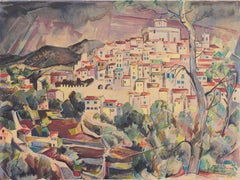
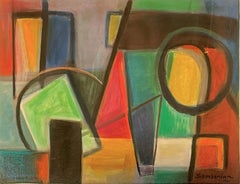
"Colorful Geometric Abstraction, " Simon Samsonian, Armenian Artist
Located in New York, NY
Simon Samsonian (1912 - 2003) Colorful Geometric Abstraction, 1981 Oil on paper 16 x 22 inches Signed and dated lower right Provenance: Estate of the artist This survivor of the Armenian genocide wound up in a Cairo orphanage in 1927. He rose to fame as one of Egypt’s great modernists, but after moving to Long Island late in life he withdrew into anonymity. Now his compelling story is being told. Art historians are finally beginning to realize that the power of abstraction in its early years was a zeitgeist not limited to the major European centers of the avant-garde — Paris, Munich, and Moscow — but one that quickly rippled to major cities throughout the world. Within a few decades that original shock of a new vision had inspired thousands of artists from different cultures — particularly those the Middle East — whose translations were not slavish imitations of works by seminal figures like Picasso, Braque, Malevich, and Kandinsky but creative variants colored by their respective cultures. This essay focuses on an extraordinary Armenian artist, his harrowing survival of the genocide, his rise to fame in Cairo, and his creation of a unique style of abstraction. Art historians have typically formed a chorus that teaches the history of abstraction like this: Just before and during the World War I era, several avant-garde artists emerged to create shockingly different new forms by which artists could express themselves. In Paris, Picasso and Braque broke out with cubism, quickly followed by Mondrian. In Moscow, Malevich created Suprematism, the ultimate hard-edge geometric abstraction. And in Munich, Kandinsky emerged as the father of Abstract Expressionism. Within these few short years a zeitgeist was sensed throughout the art world. American pioneers, too — particularly Stanton Macdonald-Wright and Morgan Russell — felt this explosive freedom of expression. When Europe was recovering after World War I it became clear that Paris would retain its title as capitol of the art world, lasting through the Roaring Twenties and even through the Great Depression. But the end of World War II changed everything. A parallel war had been won by a group of irascible young Abstract Expressionists in New York — led by Pollock, Rothko, DeKooning, and Kline. No sooner had Paris been liberated from the Germans than Picasso, Matisse, Breton, and Duchamp surrendered to the Americans. From that point on New York would be the epicenter of the art world. But a lens that focuses myopically on the war between the avant-garde of Paris and New York misses the wider narrative of multiple aesthetic modernities that developed in the several decades following World War I. For Armenian artists the matter is even more complex owing to the genocide of 1915 where more than 1.5 million people — seventy-five percent of Armenians in the Ottoman Empire — were massacred. Those not shot on the spot were sent on death marches through the Mesopotamian desert without food or water. Frequently, the marchers were stripped and forced to walk naked under the scorching sun until they dropped dead. As a child Samsonian witnessed the murder of his parents and most of the members of his family. Soon thereafter, his older sister, Anahid, quickly shepherded him into a line of children being rescued by Greek nuns. But they became separated and he lost her, too. He was sent to a Greek orphanage in Smyrna (now Izmir), on Turkey’s west coast. Because he only knew his first name, the orphanage gave him a last name based on the place where they found him — Samsun — a major port on Turkey’s north coast on the Black Sea. His birth date was unknown, too. According to Samsonian’s vague recollections he assumed he was about three or four years old at the onset of the genocide, which would place his birth year in 1911 or 1912. In 1922, when Samsonian was about 10, the Turks ended their war with the Greeks by putting Smyrna to the torch in what has been called the “Catastrophe of Smyrna.” Once again, the child was on the run, escaping the fire and slaughter. He found temporary refuge in Constantinople, but within a year that major port would fall to the Turks, too, and become renamed as Istanbul. This time, Samsonian was whisked away to an orphanage in Greece founded by the American charity, Near East Relief — which is credited with saving so many Armenian orphans that the American historian Howard M. Sachar said it “quite literally kept an entire nation alive. Any understanding of Samsonian’s approach to modernism requires careful consideration of the impact of his early years because his art is inseparable from the anguish he experienced. In 1927, when he was a teenager, he was transferred to Cairo, Egypt, then a cosmopolitan city hosting a sizable portion of the Armenian diaspora. There he lived with thirty-two other children on the top floor of the Kalousdian Armenian School. Upon graduating in 1932 he won a scholarship to attend the Leonardo da Vinci Art Institute — an Italian art school in Cairo — where he won first prize in final examinations among one hundred students. He found work with an Armenian lithographic printer and he returned to the Kalousdian Armenian School to teach drawing. In 1939 he married one of his students, Lucy Guendimian. The Cairo in which Samsonian matured as an artist was home to many prominent art collectors after World War I. In this receptive environment Samsonian exhibited widely and won many awards. Beginning in 1937 and for the next thirty years he exhibited annually at the prestigious Le Salon du Caire hosted by the Société les Amis de l’Art (founded in 1921). After World War II he hit his stride as a modernist in Cairo, counting among his peers other artists of the Armenian diaspora such as Onnig Avedissian, Achod Zorian, Gregoire Meguerdichian, Hagop Hagopian...
Category

1980s Abstract Geometric Abstract Drawings and Watercolors

Materials

Paper, Oil

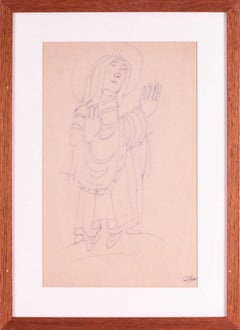
Early 20th Century French Fauvist drawing by Andre Derain of a Saint
By André Derain
Located in Petworth, West Sussex
Andre Derain (French, 1880 – 1954) Saint Black crayon Signed with atelier stamp (lower right) 15.1/8 x 9.1/2 in. (38.3 x 24 cm.) André Derain (10 June 1880 – 8 September 1954) was a...
Category

20th Century Fauvist Figurative Drawings and Watercolors

Materials

Paper, Crayon

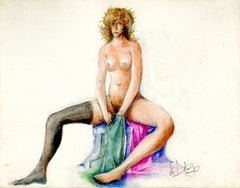
Seated Female Nude (Devora)
By Julio de Diego
Located in Fairlawn, OH
Seated Female Nude (Devora) Watercolor on paper, c. 1970 Signed in pencil lower right (see photo) A folio from the artist's sketchbook. Done while the artist was in Florida. Conditio...
Category

1970s American Modern Nude Drawings and Watercolors

Materials

Watercolor

Early 20th Century drawing of a nude by French Fauvist artist Andre Derain
By André Derain
Located in Petworth, West Sussex
Andre Derain (French, 1880 – 1954) A nude looking up Pencil on paper Signed with atelier stamp (lower right) 16.1/2 x 9.1/8 in. (41.1 x 23.1 cm.) André Derain (10 June 1880 – 8 Sept...
Category

Early 20th Century Fauvist Nude Drawings and Watercolors

Materials

Paper, Pencil

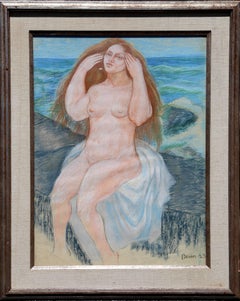
Seated Nude, Modern Pastel Drawing on Paper by Ben Benn
By Ben Benn
Located in Long Island City, NY
Artist: Ben Benn, Polish/American (1884 - 1983) Title: Seated Nude Year: 1923 Medium: Pastel on Paper, signed and dated l.r. Size: 24 x 18 in. (60.96 x 45.72 ...
Category

1920s Modern Nude Drawings and Watercolors

Materials

Pastel

Untitled
By Fannie Hillsmith
Located in Fairlawn, OH
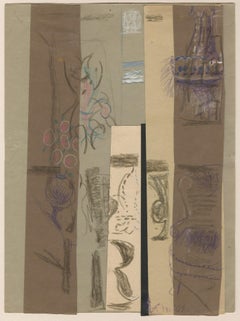
Untitled Collage and crayon drawing, 1967 Signed and dated lower center (see photo) Condition: Small imperfections from the creative process Small tear on the left sheet edge (repai...
Category

1960s Abstract Abstract Drawings and Watercolors

Materials

Crayon

"In Foreign Parts" Eugene Higgins, Southwestern Pueblo, Modern Figurative
By Eugene Higgins
Located in New York, NY
Eugene Higgins In Foreign Parts, circa 1913 Signed lower right Watercolor on paper Sight 17 x 13 inches Born William Victor Higgins in 1884 to a Shelbyville, Indiana farm family where the only art Victor was aware of as a child was his father's love of flowers. "He loved their forms and their colors, and he tended his garden as a painter might work a canvas." At the age of nine, Victor met a young artist who traveled the Indiana countryside painting advertisements on the sides of barns. He purchased paints and brushes so the young Higgins could practice his own artwork on the inside of his father's barn. He also taught Victor about art museums and especially about the new Chicago Art Institute. This information never left the young artist, and he saved his allowance until his father allowed him at the age of fifteen to attend Chicago Art Institute. He worked a variety of jobs to finance his studies both there and at the Academy of Fine Arts. Victor Higgins traveled to New York in 1908, where he met Robert Henri, who became a significant influence by depicting every-day scenes and stressing the importance of the spirit and sense of place as important factors in painting. Higgins was also greatly affected by the New York Armory Modernism Show of Marsden Hartley in 1913. While Victor Higgins was in Chicago he met former mayor and avid collector Carter H. Harrison who was to prove instrumental in the growth of Higgins career for several years. Harrison agreed to support Higgins for four years to go to Paris and Munich and paint and study in the great museums in Europe. While at the Academie de la Grande Chaumier in Paris (1910-1914) he met Walter Ufer, who was another Chicago artist being sponsored by Carter Harrison. This meeting was not only a life-long friendship, but the beginning of a great change in the way Higgins looked at "American" art. He decided that America needed it's own authentic style rather than the 19th Century classic style he was taught in Europe. Very soon after returning to Chicago in 1914, Harrison sent him and Walter Ufer on a painting trip to Taos, New Mexico for a year in exchange for paintings. Higgins made other similar agreements and was able to support himself with his painting. This trip was a life-changing experience and introduced Higgins to the authentic America he had been looking for. In 1914 Taos was an isolated village about twelve hours from Santa Fe on an impossible dirt road. But the colorful life of the pueblo people and the natural beauty drew a collection of artists who became the Taos art colony, from which the Taos Society of Artists was founded in 1915. Victor Higgins became a permanent resident within a year of his arrival and a member of the society in 1917, exhibiting with Jane Peterson in 1925 and with Wayman Adams and Janet Scudder in 1927. The members would travel around the country introducing the Southwest scenes with great success. He remained a member until the Society's dissolution in 1927. Higgins was the youngest member of the group of seven. Other members were Joseph Henry Sharp, Bert Phillips...
Category

1910s American Modern Figurative Drawings and Watercolors

Materials

Paper, Watercolor

Gorges of the Tarn, France , New York Armory, Ashcan School, ASL, AIC, NYMoMA
By Arthur B. Davies
Located in Santa Cruz, CA
Titled lower right, 'Gorges of the Tarn' and painted circa 1905. American Master's Gallery label, verso, with artist's name, 'A. B. Davies' for Arthur Bowen Davies (American, 1862-1...
Category

Early 1900s Landscape Drawings and Watercolors

Materials

Paper, Watercolor

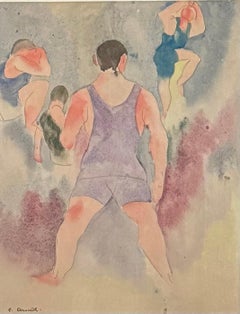
"Bathers" American Scene Social Realism 20th Century Modernism Ashcan Fauvism
By Charles Demuth
Located in New York, NY
"Bathers" American Scene Social Realism 20th Century Modernism Ashcan Fauvism Charles Demuth (1883-1935) "Bathers" 10 1/2 x 8 1/4 inches watercolor on paper, c. 1930 Signed lower le...
Category

1930s American Modern Figurative Drawings and Watercolors

Materials

Paper, Watercolor

Original 1970 s French
Located in Cirencester, Gloucestershire
Artist: Claude Lagouche (French 1943-2020) Claude Lagouche was born January 2, 1943 in Naves, died January 16, 2020. He quickly gained recognition for his talent and his work, exh...
Category

Mid-20th Century Abstract Abstract Paintings

Materials

Color Pencil

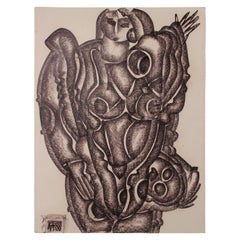
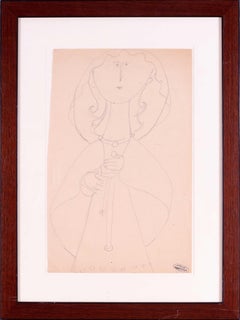
Abstract Cubist Charcoal Drawing of a Standing Woman
By Valery Kleveroy (Klever)
Located in Houston, TX
Black and white portrait of a woman done in a style that combines abstraction and cubism, much like the work of Fernand Leger. Signed and dated in lower left corner. Artist Biography: Valery Kleverov was born in Engels, Russian Federation, Soviet Union June 28, 1939 the son of a fighter test pilot in the Soviet Air Force. He exhibited an independent, rebellious, and highly artistic temperament from a young age. Conscription into the Red Army at the standard age of (18) was first and last straw in the young artist’s battle with the State, he lasted only a few months before making an unauthorized parachute jump over a forest to go permanently AWOL. After 3 weeks hiding in the woods, he eventually made his way to Leningrad, dropped his first name and the “ov” from the end of his name and began his life as the underground artist known as “KLEVER”. He fell in with a close-knit group of young anti-authoritarian rebels who eventually became known to the world as the “Non-Conformists”, a small gang of free thinkers mainly from Leningrad and Moscow who rebelled against State control of artistic expression and of free thought. In the Soviet Union, not only religion was outlawed - art, literature, music and dance were all subject to heavy censorship and state oversight. Among paintings historical, religious, abstract, anti-Soviet and erotic subjects were all against the law. From 1966 to 1977 Klever made a reputation for himself as one of the non-conformists most overtly critical of the Soviet state. Many of his paintings from this period can be described as nothing less than heroic- they are truly remarkable visual essays on the evils of the national security/surveillance state, propaganda and manipulation of cultural symbols, suppression of artistic and religious freedom, revisionist history, and unfilled promises for the future. All of them were painted stored and exhibited not only at great risk to the artist and his associates, but also to anybody who sought to view them. In spite of the secrecy, the KGB discovered the existence of these pieces and began to follow Klever’s every move. There were surprise visits to his studio, harassment wherever he went, friends and family being questioned all a direct result of his determination to express himself artistically against Soviet control. From this time forward Klever had an exhibit which was open for viewing at all times inside the apartment of Bob Kashilohov as part of a network which paralleled the Samizdat network for sharing of forbidden literature. Klever was arrested for his participation in the most important non- conformist exhibitions which took place during his time there. These were the Bulldozer Exhibition in Moscow, 1974, (so named because the KGB bulldozed the exhibition and destroyed much of the work) and the Nevski Dom exhibition in Leningrad, 1975. These exhibitions represented some of the early cracks in the foundations of the Soviet state’s control over the population’s basic aspirations for economic, personal and creative freedom that ended with collapse in 1991. Repercussions of the Bulldozer exhibition were that some of the painters were arrested or even killed. Approximately 70 artists were arrested, including Klever. Media outcry in the west allowed most of the artists to be released within a week. Two weeks later another exhibition was allowed to proceed and became known as “Half Day of Freedom” in the Soviet Union. The Nevsky exhibition caused a huge sensation and was a watershed moment in the cultural history of the Soviet Union. People lined up for 30 blocks long over the course of the two week exhibition to see the forbidden works. Klever showed a large collection of explicit anti-Soviet paintings...
Category

20th Century Abstract Abstract Drawings and Watercolors

Materials

Carbon Pencil, Charcoal

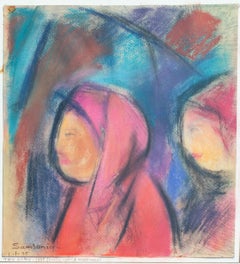
Modernist Simon Samsonian, Two Sisters Mixed Media
Located in New York, NY
Simon Samsonian (1912-2003) Two Sisters, 1995 Poster color and mixed media on paper Sight size: 16 1/2 x 14 3/4 in. Framed: 26 x 23 1/2 x 1 in. Signed ...
Category

1990s Abstract Impressionist Portrait Drawings and Watercolors

Materials

Paper, Pastel, Mixed Media

Early 20th Century French Fauvist drawing by Andre Derain of a lady in a dress
By André Derain
Located in Petworth, West Sussex
Andre Derain (French, 1880 – 1954) Lady in a dress Pencil on paper Signed with atelier stamp (lower right) 14.5/8 x 9.3/8 in. (37 x 23 cm.) André Derain (10 June 1880 – 8 September ...
Category

Early 20th Century Fauvist Figurative Drawings and Watercolors

Materials

Paper, Pencil

Isadora Duncan
By Abraham Walkowitz
Located in Fairlawn, OH
Isadora Duncan Graphite with grey wash on paper mounted to cardstock Signed and dated in pencil lower right (see photo) Provenance: Charlotte Bergman, f...
Category

1910s American Modern Figurative Drawings and Watercolors

Materials

Graphite

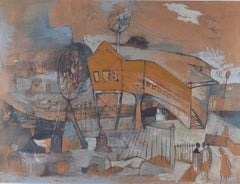
Gwyneth Johnstone: The Railway Bridge Modern British Art watercolour
By Gwyneth Johnstone
Located in London, GB
To see our other Modern British Art, scroll down to "More from this Seller" and below it click on "See all from this Seller" - or send us a message if you cannot find the artist you want. Gwyneth...
Category

Mid-20th Century Modern Landscape Drawings and Watercolors

Materials

Mixed Media

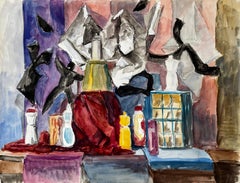
French Cubist Still Life With Bottles Draped Cloth And Abstract Background
Located in Cirencester, Gloucestershire
Title: French Cubist Still Life With Bottles Draped Cloth And Abstract Background Guy Nicod (French 1923 - 2021) Watercolour on artist paper, unframed Size: 19.75 x 25.5 inches (hei...
Category

Mid-20th Century Modern Landscape Drawings and Watercolors

Materials

Watercolor

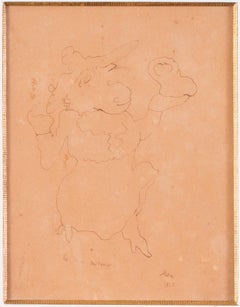
La Dame Queteuse
By Jean Cocteau
Located in Petworth, West Sussex
Jean Cocteau (French, 1889-1963) La Dame Queteuse Ink on paper Signed, inscribed and dated `La Dame Queteuse Jean 1922’ (below) 10.1/4 x 7.7/8 in. (26 x 20 cm...
Category

Early 20th Century Surrealist Figurative Drawings and Watercolors

Materials

Paper, Ink

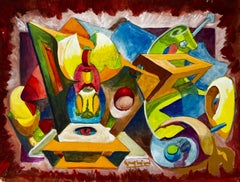
Abstract Cubist Still Life with Blue Vase and Yellow Forms French Gouache
Located in Cirencester, Gloucestershire
Title: Abstract Cubist Still Life with Blue Vase and Yellow Forms French Gouache Guy Nicod (French 1923 - 2021) Signed, lower edge Gouache on artist paper, unframed Size: 15.75 x 19...
Category

Mid-20th Century Modern Landscape Drawings and Watercolors

Materials

Gouache

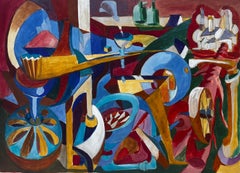
Cubist Gouache Still Life With Bottles Glasses Table And Musical Instruments
Located in Cirencester, Gloucestershire
Title: Cubist Gouache Still Life With Bottles Glasses Table And Musical Instruments Guy Nicod (French 1923 - 2021) Gouache on artist paper, unframed Size: 19.25 x 26.25 inches (heig...
Category

Mid-20th Century Modern Landscape Drawings and Watercolors

Materials

Gouache

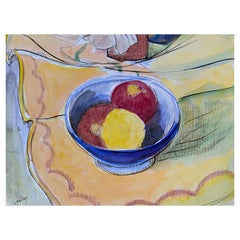
1940 s French Fruit Still Life, Post Impressionist Artist
Located in Cirencester, Gloucestershire
Still Life Signed by Louis Bellon (French 1908-1998) From a batch of similar work where most were dated 1942-1947 watercolour painting on paper, unframed measurements: 10 x 12.75 in...
Category

Mid-20th Century Still-life Drawings and Watercolors

Materials

Acrylic

French Neo-Impressionist Pointillist Abstract Mid 20th Century Signed Painting
By Louis Bellon
Located in Cirencester, Gloucestershire
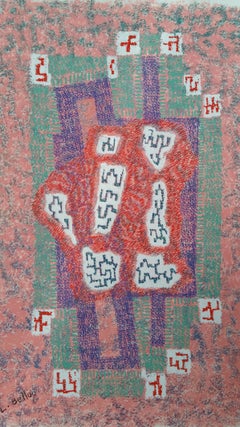
Pointillist Large Abstract Design by Louis Bellon (French 1908-1998) signed lower left in the image gouache painting on paper, unframed measurements: 16.5 x 10 inches (overall the sh...
Category

Mid-20th Century Pointillist Abstract Paintings

Materials

Watercolor, Gouache

Surrealist landscape with organic shapes
By Charles Harris ( Beni Kosh )
Located in Fairlawn, OH
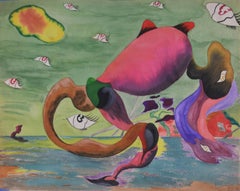
Surrealist landscape with organic shapes Watercolor on paper, 1960-1970 Signed CE Harris lower right corner (see photo) Stamped with the artist’s estate stamp verso (see photo) Reference: Beni Kosh Collection Estate Stamp #705 Provenance: Estate of the artist A wonderful example by one of the few African American Surrealist painters. “An African-American born Charles E. Harris, the name under which he painted until the early 1960s when he took the name of Kosh. His paintings span the period 1949-71, and reflect abstract and surreal figurative subjects which include Cleveland street scenes, jazz clubs, and depictions of Christ.” Courtesy of Rachel Davis Fine Art “Beni E. Kosh was born as Charles Elmer Harris, in Cleveland Ohio. He changed his name in the 1960’s, which translates to “Son of Ethiopia”. He rarely exhibited or sold his work and was affiliated with the African-American artists’ “Sho-nuff Art Group” and the Karamu House and studied under Cleveland artist Paul Travis. His style is very diverse and he experimented with Cubism, portraiture and abstractions in series. His paintings span from 1949 – 1971, and reflect abstract and surreal figurative subjects, which include Cleveland street scenes, jazz clubs, and depictions of Christ. He received little recognition during his lifetime and was only “rediscovered” literally days after his death when hundreds of his paintings were rescued by an art dealer.” (Courtesy Pennsylvania Art...
Category

20th Century Surrealist Abstract Drawings and Watercolors

Materials

Watercolor

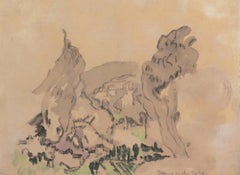
Landscape with buildings and trees
By Leon Kelly
Located in Fairlawn, OH
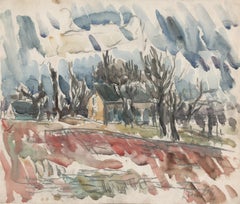
Landscape with buildings and trees Watercolor on paper, c. 1930's Signed in pencil lower right (see photo) Provenance: Estate of the artist Condition: Excellent Sheet size: 9 3/8 x 1...
Category

1930s American Modern Landscape Drawings and Watercolors

Materials

Watercolor

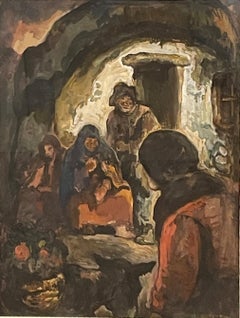
Surrealist landscape with animal and figures
By Charles Harris ( Beni Kosh )
Located in Fairlawn, OH
Surrealist landscape with doorway, animal and figures Watercolor on heavy paper, n.d. Unsigned Stamped with the artist's estate stamp (see photo) Provenance: Estate of the artist R...
Category

Late 20th Century Surrealist Landscape Drawings and Watercolors

Materials

Watercolor

Self Portrait
By Sándor Bortnyik
Located in London, GB
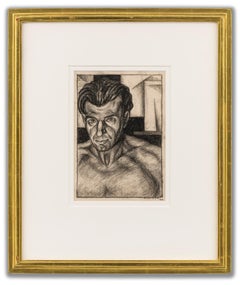
Charcoal on paper, signed and dated (lower right), 33cm x 24cm, (66cm x 56cm framed). The work is framed behind UV glass and stepped gilded frame. Bortnyik was a painter and graphi...
Category

1910s Bauhaus Portrait Drawings and Watercolors

Materials

Paper, Charcoal

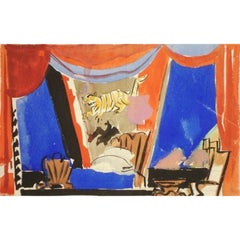
Scenography contract opera theater. * 1930s, paper, mixed technique, 15x24cm
Located in Riga, LV
Romans Suta Born on April 28, 1896 in the vicinity of Cesis (Latvia), died on July 14, 1944 in Tbilisi (Georgia), rehabilitated posthumously. Painter, graphic artist, decorative a...
Category

1930s Abstract Interior Drawings and Watercolors

Materials

Paper

Mlle. Jeanne at the Window, No. II
By Benjamin G. Benno
Located in Fairlawn, OH
Mlle. Jeanne at the Window, No. II Charcoal on paper, 1933 Signed and dated lower right (see photo) Illustrated: Gustafson, Zimmerli Museum, 1988, "Benjamin Benno: A Retrospective Ex...
Category

1930s Surrealist Abstract Drawings and Watercolors

Materials

Charcoal

Nude signed Arno Breker
Located in Pasadena, CA
Arno Breker is an artist supported by the Nazi regime and a German sculptor whose neoclassical works meet the military aesthetic of the regime. Breker was ...
Category

Mid-20th Century Modern Figurative Drawings and Watercolors

Materials

Color Pencil

Seated Nude
By August F. Biehle
Located in Fairlawn, OH
Seated Nude Match Stick ink drawing, c. 1925 Signed by the artist in pencil lower right: A. Biehle Created at the Kakoon Arts Club, Cleveland. Influenced by friend and fellow artist...
Category

1920s American Modern Nude Drawings and Watercolors

Materials

Ink

Untitled (Abstraction)
By Charles Harris ( Beni Kosh )
Located in Fairlawn, OH
aka Beni Kosh Untitled (Abstraction) Watercolor on paper, 1970's Unsigned Ben Kosh Estate Stamp verso, No. 754 Condition: Very good Sheet size: 10 5/8 x 14 9/16 inches Provenance: Estate the Artist Bingham & Vance, Shaker Heights...
Category

1970s Abstract Abstract Drawings and Watercolors

Materials

Watercolor

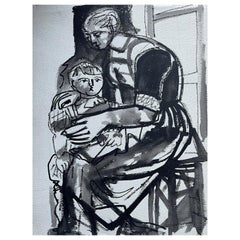
Carlos Carnero Large Original Painting, Fernand Leger Assistant
Located in Cirencester, Gloucestershire
"Mother & Child" by Carlos Carnero (Uruguay/ French 1922-1980) signed verso watercolour/ gouache paint on parchment paper 25.5 x 20 inches provenance: the artists estate, Paris Fi...
Category

Mid-20th Century Figurative Drawings and Watercolors

Materials

Acrylic

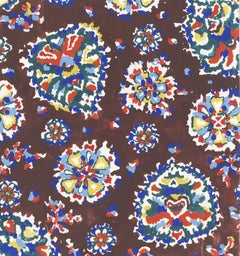
Untitled Fabric Design
By Arthur Litt
Located in Fairlawn, OH
Untitled Fabric Design Gouache on paper, 1920-1935 Signed with the Atelier Stamp verso (see photo) Numbered with the Atelier Litt Archive number verso (see photo) No. 37365 ...
Category

1930s Abstract Abstract Drawings and Watercolors

Materials

Gouache

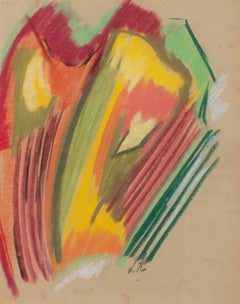
Untitled
By Leon Kelly
Located in Fairlawn, OH
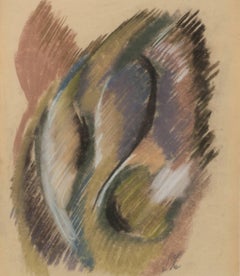
Untitled Pastel on paper, 1922 Signed with the artist's initials in pencil Provenance: Estate of the artist Francis M. Nauman (label) Private collection, NY A very early abstract/cubist work by Kelly. Created while the artist was studying with Arthur Carles in Philadelphia. Leon Kelly (October 21, 1901 – June 28, 1982) was an American artist born in Philadelphia, PA. He is most well known for his contributions to American Surrealism, but his work also encompassed styles such as Cubism, Social Realism, and Abstraction. Reclusive by nature, a character trait that became more exaggerated in the 1940s and later, Kelly's work reflects his determination not to be limited by the trends of his time. His large output of paintings is complemented by a prolific number of drawings that span his career of 50 years. Some of the collections where his work is represented are: The Metropolitan Museum in New York, The Whitney Museum of American Art, the Museum of Modern Art, the Philadelphia Museum of Art, and Boston Public Library. Biography Kelly was born in 1901 at home at 1533 Newkirk Street, Philadelphia, PA. He was the only child of Elizabeth (née Stevenson) and Pantaleon L. Kelly. The family resided in Philadelphia where Pantaleon and two of his cousins owned Kelly Brothers, a successful tailoring business. The prosperity of the firm enabled his father to purchase a 144-acre farm in Bucks County PA in 1902, which he named "Rural Retreat" It was here that Pantaleon took Leon to spend every weekend away from the pressures of business and from the disappointments in his failing marriage. Idyllic and peaceful memories of the farm stayed with Leon and embued his work with a love of nature that emerged later in the Lunar Series, in Return and Departure, and in the insect imagery of his Surrealist work. "If anything," he once said,"I am a Pantheist and see a spirit in everything, the grass, the rocks, everything." At thirteen, Leon left school and began private painting lessons with Albert Jean Adolphe, a teacher at the School of Industrial Art (now the University of the Arts) in Philadelphia. He learned technique by copying the works of the old masters and visiting the Philadelphia Zoo, where he would draw animals. Drawings done in 1916 and 1917 of elephants, snakes and antelope, as well as copies of old master paintings by Holbein and Michelangelo, heralded an impressive emerging talent. In 1917, he studied sculpture with Alexander Portnoff but his studies came to an abrupt halt with the start of World War I. Being too young to enlist, he joined the Quartermaster Corp at the Army Depot in Philadelphia, where he served for more than a year loading ships with supplies and, along with other artists, working on drawings for camouflage. By 1920, the family's fortunes drastically changed. His father's business had failed due to the introduction of ready made clothing and his marriage, unhappy from the beginning, dissolved. Broken by circumstance Pantaleon left Philadelphia to begin a wandering existence looking for work leaving Leon to support his mother and grandmother. He found a job in 1920 at the Freihofer Baking Company where he worked nights for the next four years. Under these circumstances Leon continued to develop his skills in drawing and painting and learned of the revolutionary developments in art that were taking place in Paris. During the day he was granted permission to study anatomy at the Philadelphia School of Osteopathy where he dissected a cadaver and perfected his knowledge of the human figure. He also met and studied etching with Earl Horter, a well known illustrator, who had amassed a significant collection of modern art which included work by Brancusi, Matisse, and Cubist works by Picasso and Braque. Among the artists around Horter was Arthur Carles, a charismatic and controversial painter who taught at the Pennsylvania Academy of Fine Arts. Leon enrolled in the Academy in 1922, becoming what Carles described as, "his best student". In the next three years Leon work ranged from academic studies of plaster casts, to pointillism, to landscapes of Fairmount Park in Philadelphia, as well as a series of pastels showing influences from Matisse to Picasso. Clearly influenced by Earl Horter's collection and Arthur Carles he mastered analytical cubism in works such as The Three Pears, 1923 and 1925 experimented with Purism in Moon Behind the Italian House. In 1925 Kelly was awarded a Cresson Scholarship and on June 14 he left for Europe. Paris The first trip to Europe lasted for approximately three and a half months and introduced Kelly to a culture and place where he felt he belonged. Though he returned to the Academy in the Fall, he left for Europe again a few months later to begin a four-year stay in Paris. He moved into an apartment at 19 rue Daguerre in Paris and began an existence intellectually rich but in creature comforts, very poor. "I kept a cinderblock over the drain in the kitchen sink to keep the rats out of the apartment" he once explained. He frequented the cafes making acquaintances with Henry Miller, James Joyce and the critic Félix Fénéon as well as others. His days were split between copying old master paintings in the Louvre and pursuing modernist ideas that were swirling through the work of all the artists around him. The Lake, 1926 and Interior of the Studio, 1927, now in the Newark Museum. Patrons during this time were the police official Leon Zamaran, a collector of Courbets, Lautrecs and others, who began collecting Kelly's work. Another was Alfred Barnes of the Barnes Collection in Philadelphia. In 1929 Kelly married a young French woman, Henriette D'Erfurth. She appears frequently in paintings and drawings done between 1928 and the early 1930s. Philadelphia The stock market crash of 1929 made it impossible to continue living in Paris and Kelly and Henriette returned to Philadelphia in 1930. He rented a studio on Thompson Street and began working and participating in shows in the city's galleries. Work from 1930 to 1940 showed continuing influences and experimentation with the themes and techniques acquired in Paris as well as a brief foray into Social Realism. The Little Gallery of Contemporary Art purchased the Absinthe Drinker...
Category

1920s Abstract Abstract Drawings and Watercolors

Materials

Pastel

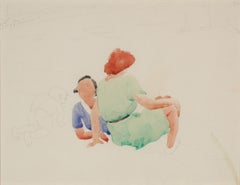
Two Women and a Child on the Beach at Provincetown
By Charles Demuth
Located in Fairlawn, OH
Two Women and a Child on the Beach at Provincetown Unsigned. Watercolor on paper, c. 1934 A beautiful Provincetown beach scene, included in the catalogue raisonne. Please see Babcoc...
Category

1930s American Modern Drawings and Watercolor Paintings

Materials

Watercolor

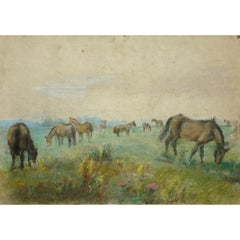
Horse grazing. 1950s. Paper, pastel. 29.5x42.3 cm
By Aleksandra Belcova
Located in Riga, LV
Aleksandra Belcova (1892-1981) Studied at the Art School in Penza (1912-1917), State Free Art Workshops in Petrograd with N. Altman (1918-1919). Together with her husband Romans S...
Category

1950s Realist Animal Drawings and Watercolors

Materials

Paper, Pastel

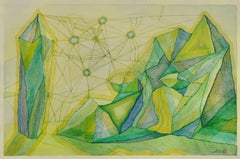
Cobwebs and Rocks
By Benjamin G. Benno
Located in Fairlawn, OH
Cobwebs and Rocks Watercolor, 1940 Signed, dated, and copyrighted lower right Exhibited: Zimmerli Art Museum, Benjamin Benno: Retrospective Exhibition, 1988 Illustrated: Gustafson, Zimmerli Museum: Benjamin Benno: Retrospective Exhibition, 1988 Color Plate 14 copy copy of the catalog accompanies the watercolor Condition: excellent Image size: 14 3/4 x 21 inches Provenance: Estate of the Artist Ruth O...
Category

1940s Surrealist Abstract Drawings and Watercolors

Materials

Watercolor

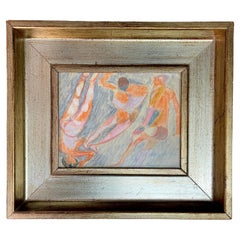
Period Italian Fausto Pirandello Signed Abstract Pastel
By Fausto Calogero Pirandello
Located in Roma, IT
Important work by one of the greatest artists of the Italian artistic avant-garde Fausto Pirandello It depicts one of his iconic subjects ‘Bathers’ with three characters depicted in...
Category

Mid-20th Century Abstract Figurative Paintings

Materials

Wood, Paper, Pastel

Untitled
By Leon Kelly
Located in Fairlawn, OH
Untitled Pastel on paper, 1922 Initialed lower right (see photo) Exhibited: Francis Nauman, Leon Kelly: Draftsman Extraordinaire, New York, April 4 - May 23, 2014. Condition: Excell...
Category

20th Century American Modern Abstract Drawings and Watercolors

Materials

Pastel

Lower East Side Crowd
By Abraham Walkowitz
Located in Fairlawn, OH
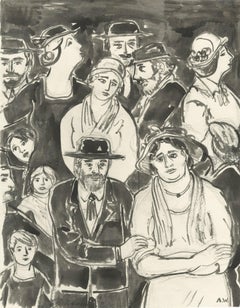
Lower East Side Crowd Ink and ink wash on paper, c. 1910 Signed in ink lower center edge (see photo) Signed with the initials lower right corner (see p...
Category

1910s American Modern Figurative Drawings and Watercolors

Materials

Ink

Irene Rice Pereira Modernist Gouache Drawing Painting Abstract Expressionist Art
By Irene Rice Pereira
Located in Surfside, FL
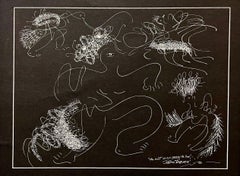
Irene Rice Pereira, Mixed Media on Paper (American, 1902-1971) Titled "The East Wind Carries the Seed" Hand signed l.r. "I. Rice Pereira". Paper: 14.1/8"h x 18.25"w Irene Rice Pe...
Category

Mid-20th Century Abstract Expressionist Abstract Paintings

Materials

Paper, Gouache

Fleurs et Papillons - Fauvist Flowers Watercolor Gouache by Raoul Dufy
By Raoul Dufy
Located in Marlow, Buckinghamshire
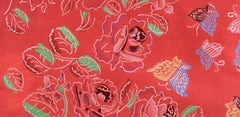
Botanical watercolour and gouache on paper circa 1920 by French fauvist painter Raoul Dufy. The work depicts flowers in red and butterflies in blues, yellows, black and white. This work was executed by Dufy as a fabric design. Dimensions: Framed: 17"x27" Unframed: 10"x20" Provenance: Private collection of works by Raoul Dufy for Bianchini Ferier Bianchini Ferrier Collection - Christie's London - July 2001 SF Fall Show Raoul Dufy was one of a family of nine children, including five sisters and a younger brother, Jean Dufy, also destined to become a painter. Their father was an accountant in the employ of a major company in Le Havre. The Dufy family was musically gifted: his father was an organist, as was his brother Léon, and his youngest brother Gaston was an accomplished flautist who later worked as a music critic in Paris. Raoul Dufy's studies were interrupted at the age of 14, when he had to contribute to the family income. He took a job with an importer of Brazilian coffee, but still found time from 1892 to attend evening courses in drawing and composition at the local college of fine arts under Charles Marie Lhullier, former teacher of Othon Friesz and Georges Braque. He spent his free time in museums, admiring the paintings of Eugène Boudin in Le Havre and The Justice of Trajan in Rouen. A municipal scholarship enabled him to leave for Paris in 1900, where he lodged initially with Othon Friesz. He was accepted by the École des Beaux-Arts, where he studied under Léon Bonnat, whose innate conservatism prompted Dufy to remark later that it was 'good to be at the Beaux-Arts providing one knew one could leave'. And leave he did, four years later, embarking with friends and fellow students on the rounds of the major Paris galleries - Ambroise Vollard, Durand-Ruel, Eugène Blot and Berheim-Jeune. For Dufy and his contemporaries, Impressionism represented a rejection of sterile academism in favour of the open-air canvases of Manet, the light and bright colours of the Impressionists, and, beyond them, the daringly innovative work of Gauguin and Van Gogh, Seurat, Cézanne, Toulouse-Lautrec and others. Dufy was an out-and-out individualist, however, and was not tempted to imitate any of these artists. He produced, between 1935 and 1937, Fée Electricité (Spirit of Electricity), the emblem for the French utilities company Electricité de France (EDF). Dufy visited the USA for the first time in 1937, as a member of the Carnegie Prize jury. In 1940, the outbreak of war (and his increasingly rheumatic condition) persuaded him to settle in Nice. When he eventually returned to Paris 10 years later, his rheumatism had become so debilitating that he immediately left for Boston to follow a course of pioneering anti-cortisone treatment. He continued working, however, spending time first in Harvard and then in New York City before moving to the drier climate of Tucson, Arizona. The cortisone treatment was by and large unsuccessful, although he did recover the use of his fingers. He returned to Paris in 1951 and decided to settle in Forcalquier, where the climate was more clement. Within a short time, however, he was wheelchair-bound. He died in Forcalquier in March 1953 and was buried in Cimiez. Between 1895 and 1898, Raoul Dufy painted watercolours of landscapes near his native Le Havre and around Honfleur and Falaise. By the turn of the century, however, he was already painting certain subjects that were to become hallmarks of his work - flag-decked Parisian cityscapes, Normandy beaches teeming with visitors, regattas and the like, including one of his better-known early works, Landing Stage at Ste-Adresse. By 1905-1906 Friesz, Braque, Matisse, Derain, Vlaminck, Van Dongen and Rouault were described collectively as Fauves (the wild beasts). What they had in common was a desire to innovate, but they felt constrained nonetheless to meet formally to set out the guiding principles of what promised to be a new 'movement'. Dufy quickly established that those principles were acceptable; moreover, he was most impressed by one particular painting by Henri Matisse ( Luxury, Calm and Voluptuousness) which, to Dufy, embodied both novelty and a sense of artistic freedom. Dufy promptly aligned himself with the Fauves. Together with Albert Marquet in particular, he spent his time travelling the Normandy coast and painting views similar...
Category

1920s Fauvist Still-life Drawings and Watercolors

Materials

Paper, Watercolor, Gouache

Untitled Fabric Design
By Arthur Litt
Located in Fairlawn, OH
Untitled Fabric Design Gouache on paper, 1920-1935 Signed with the Atelier Stamp verso (see photo) Numbered with the Atelier Litt Archive number verso (see photo) No. 24680 Co...
Category

1930s Abstract Abstract Drawings and Watercolors

Materials

Gouache

Untitled Fabric Design
By Arthur Litt
Located in Fairlawn, OH
Untitled Fabric Design Gouache on paper, 1920-1935 Signed with the Atelier Stamp verso (see photo) Numbered with the Atelier Litt Archive number verso (see photo)No. 26190 Con...
Category

1930s Abstract Abstract Drawings and Watercolors

Materials

Gouache

"Squares and Strokes (Cad_22)" 2025, gouache on handmade paper, 28 x 20 in.
By Joanne Freeman
Located in New York, NY
Joanne Freeman Squares and Strokes (Cad_22), 2025 gouache on handmade paper 28 x 20 in. image: 22 x 14 in. (freem238) My paintings and drawings incorporate elements found in archite...
Category

2010s Abstract Abstract Paintings

Materials

Gouache, Handmade Paper

Erotic graphic IV. 1930, ink on paper, 27.5x24 cm
Located in Riga, LV
Romans Suta Born on April 28, 1896 in the vicinity of Cesis (Latvia), died on July 14, 1944 in Tbilisi (Georgia), rehabilitated posthumously. Painter, graphic artist, decorative and stage designer, art critic and theoretician. Studied at the J. Madernieks' Art Studio (1913), Riga City Art School (1913-1915), and Penza Art School (1915 -1917). A prominent figure and active protagonist of modernist trends in Latvian art. Travels to Berlin and Paris, where he made the acquaintance of A. Ozanfant, Le Corbusier, and others. The influences of Cubism and Constructivism. A member of the Riga Artists' Group (1920-1924) and the Riga Graphic Artists' Society. Painter of still lifes and figural compositions. After the first experiments in Modernism, he turned to a more realistic manner of representation. The initiator and developer of a national constructive style, especially in interior design; the founder of Baltars creative workshop for porcelain painting (1924-1928); a designer and painter at Kuznetsov...
Category

1930s Minimalist Nude Drawings and Watercolors

Materials

Paper, Ink

"Three Medusas, " Eugene Berman, Surrealism, Greek Still Life
By Eugene Berman
Located in New York, NY
Eugene Gustavovitch Berman (1899 - 1972) Three Medusas, 1968 Watercolor on paper 12 x 9 1/2 inches Initialed and dated lower right Provenance: Larcada Gallery, New York Frank Oehlsc...
Category

1960s Surrealist Still-life Drawings and Watercolors

Materials

Paper, Watercolor

Costume sketch for ballet "Don Quixote" , * 1931, paper, mixed media, 21x15.5 cm
Located in Riga, LV
Romans Suta Born on April 28, 1896 in the vicinity of Cesis (Latvia), died on July 14, 1944 in Tbilisi (Georgia), rehabilitated posthumously. Painter, graphic artist, decorative and stage designer, art critic and theoretician. Studied at the J. Madernieks' Art Studio (1913), Riga City Art School (1913-1915), and Penza Art School (1915 -1917). A prominent figure and active protagonist of modernist trends in Latvian art. Travels to Berlin and Paris, where he made the acquaintance of A. Ozanfant, Le Corbusier, and others. The influences of Cubism and Constructivism. A member of the Riga Artists' Group (1920-1924) and the Riga Graphic Artists' Society. Painter of still lifes and figural compositions. After the first experiments in Modernism, he turned to a more realistic manner of representation. The initiator and developer of a national constructive style, especially in interior design; the founder of Baltars creative workshop for porcelain painting (1924-1928); a designer and painter at Kuznetsov...
Category

1930s Modern Figurative Drawings and Watercolors

Materials

Paper, Mixed Media

Still Thinking About These?

All Recently Viewed