2,949 results for "belgian "

to
486
454
435
598
560
902
Overall Width
to
Overall Height
to
33
226
839
1,851
30
30
47
36
26
78
60
37
51
42
8
732
725
260
163
140
91
59
57
46
21
20
15
12
2
1,253
1,188
486
794
414
285
209
191
184
148
121
104
87
82
72
61
61
59
56
54
51
51
46
2,557
1,717
1,478
1,382
786
54
43
41
39
39
994
538
1,629
1,172
XXVIII (White Painting ENW5), Oil on Canvas by Richard Allen, 1995 circa
By Richard Allen
Located in Kingsclere, GB
XXVIII (White Painting ENW5), Oil on Canvas by Richard Allen, 1995 circa Additional information: Medium: Oil on canvas 61 x 61 cm 24 1/8 x 24 1/8 in With Estate stamp on overlap Richard Allen was an Abstract artist of the 20th century who worked across painting, graphic and technological media. Allen was born in Worcester in 1933. Influenced by his father, he attended Shropshire Institute of Agriculture where he studied for a National Diploma. From there he became aware of what he considered his “irrational” yet unshakeable interest in art, since the College shared buildings with Worcester School of Art. Upon the advice of his window-cleaner Bob, Allen decided to apply to the School. Whilst in Worcester he attended Geoffrey Whiting...
Category

20th Century Abstract Paintings

Materials

Canvas

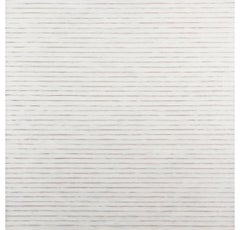
XXIX / ENW27 (White Painting), Oil on Canvas by Richard Allen, 1995 circa
By Richard Allen
Located in Kingsclere, GB
XXIX / ENW27 (White Painting), Oil on Canvas by Richard Allen, 1995 circa Additional information: Medium: Oil on canvas 61 x 61 cm 24 x 24 in Signed and titled on the overlap Richard Allen was an Abstract artist of the 20th century who worked across painting, graphic and technological media. Allen was born in Worcester in 1933. Influenced by his father, he attended Shropshire Institute of Agriculture where he studied for a National Diploma. From there he became aware of what he considered his “irrational” yet unshakeable interest in art, since the College shared buildings with Worcester School of Art. Upon the advice of his window-cleaner Bob, Allen decided to apply to the School. Whilst in Worcester he attended Geoffrey Whiting’s pottery course. Allen took national service in 1952 during the Korean War, serving as an engineer. He returned to Worcester in 1954 to study for his A levels and NDD, after which he attended Bath Academy of Art, Corsham, in 1957. He embraced Bath's unconventional teaching of that time and developed a keen interest in abstract painting. In 1959, his last year at Bath, he was commissioned to make a 15 x 9 foot abstract mosaic for a Wiltshire college, in which the first signs of Allen's grid construction, and blocks of colour within a grid, are seen to appear. In 1960 he won an Italian Government Scholarship in Art to study in Ravenna. After only three months in Ravenna, working on restoration of Byzantine mosaics, he moved to the more lively city of Milan in which he worked with large-scale mosaic production. These commercialised mosaics informed his later works, and Allen considers his time in Milan to be one of fruitful cultural interaction. He married fellow Bath Academy of Art student Eve Laurens the next year, and began teaching part time. He taught at Croydon College of Art for eight years, during which time he began working on his Op Art paintings and was awarded the title of Commonwealth Scholar in Art and Architecture. The scholarship gave him the opportunity to study in the Indian Institute for Advanced Studies in Shimla for a year, during which he was able to travel India extensively. During his time in London Allen worked alongside such figures as Bridget Riley and Bruce McLean, their commitment to artistic professionalism informing his own identity as an artist. Allen started experimenting with line, colour, optical effects and the relationship between art and science. His Op Art works relied upon Interferometry, allowing him to lay grid lines over paintings to create visual manipulations. In 1967 he had his first solo exhibition at the University of Sussex. In 1971 he was invited by Malcolm Hughes to join the Matrix group of artists, whose exhibition opened at the Arnolfini Gallery that year which led to a further exhibition at the Whitechapel gallery the following year. The Matrix group was concerned with Systematic painting, which worked to create images that consciously reveal their own methods of construction. This led to his involvement with the Systems movement in music, with performances often accompanying the openings of System exhibitions. Concern with systems informed Allen’s work throughout his life. In 1972 Allen returned to graphic works, namely making large-scale charcoal pieces on canvas. His work at this time was still very much based on the grid and cross. His work was included in the Hayward gallery British painting Exhibition in the mid 1970s, and was also displayed in a solo exhibition at the London Institute of Contemporary Arts. Allen moved to Jersey in 1977, where he continued working with charcoal and exhibiting internationally. The minimalist exhibition ‘Fundamental Painting’ in Amsterdam, 1975, inspired Allen to put together a similar English exhibition. His position on the Committee of the Art Information Registry/Air and Space, enabled him to work on this. The exhibition was held in the Air Gallery in Charing Cross and led to his curation of Fundamental Painting exhibitions in Holland, Belgium, France and Italy. In 1991 he returned to England and began working on his "white paintings", having not worked with colour for twenty years, which were to be his last works. Shortly after his wife Eve died in 1997 he was diagnosed with Motor Neuron Disease. Allen began working with specially adapted computer software...
Category

20th Century Abstract Paintings

Materials

Canvas

ENMXI (White Painting), Oil on Canvas by Richard Allen, 1995 circa
By Richard Allen
Located in Kingsclere, GB
ENMXI (White Painting), Oil on Canvas by Richard Allen, 1995 circa Additional information: Medium: Oil on canvas 61 x 61 cm 24 x 24 in With Estate stamp on the overlap Richard Allen was an Abstract artist of the 20th century who worked across painting, graphic and technological media. Allen was born in Worcester in 1933. Influenced by his father, he attended Shropshire Institute of Agriculture where he studied for a National Diploma. From there he became aware of what he considered his “irrational” yet unshakeable interest in art, since the College shared buildings with Worcester School of Art. Upon the advice of his window-cleaner Bob, Allen decided to apply to the School. Whilst in Worcester he attended Geoffrey Whiting...
Category

20th Century Abstract Paintings

Materials

Canvas

EN24, Oil on Canvas Abstract Painting by Richard Allen
By Richard Allen
Located in Kingsclere, GB
EN24, Oil on Canvas Abstract Painting by Richard Allen Additional information: Medium: Oil on canvas 78.5 x 78.5 cm 30 7/8 x 30 7/8 in Richard Allen was an Abstract artist of the 2...
Category

20th Century Abstract Paintings

Materials

Canvas

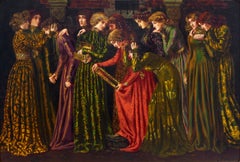
The Twelve Princesses
By Gustave-Max Stevens
Located in New Orleans, LA
The greatest triumph of the artist’s career, this extraordinary and monumental oil on canvas by Gustave-Max Stevens perfectly represents the highly detailed compositions and richly h...
Category

Late 19th Century Academic Figurative Paintings

Materials

Canvas, Oil

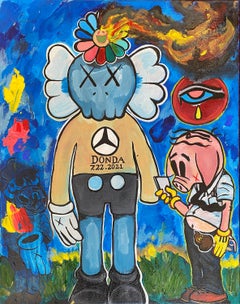
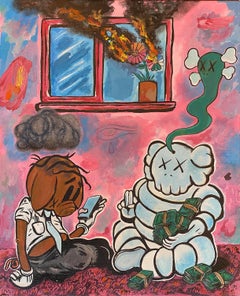
DONDA Shirt
By Bipolar Holiday
Located in Missouri, MO
Signed, Dated, Titled Verso BIO: Daniel Jefferson AKA "Bipolar Holiday" is a self-taught street artist. A native of St. Louis, he grew up in North St. Louis County in the cities of Normandy and Hazelwood. By the age of 3, he was drawing and painting alongside his father and together they shared studios and collaborations into his mid-20s. His father grew up in Tupelo, Mississippi and his mother in St. Louis. Expounding on his family history, Holiday speaks of his Quaker and Native American ancestry - along with his father, who is black, and his mother who is white - as forming his multiracial identity and upbringing. He expresses “not always fitting in,” - being neither “this nor that” - and residing on the margins between the social constructs of race. This emotional state is reflected in his artistic output. He cautions us to see that, while the subject matter of his work is not always a direct depiction of his experience of race, his existence as a person of color propels him and bears directly on his artistic focus and choice of materials, along with the application and gesture in each work. Anger and sadness are part of it – also love, joy, pride and humility. The artist often signs his work with a mark inspired by the ancient Egyptian Eye of Horas – a symbol of power, protection, and health. Throughout his career, Bipolar Holiday has been both a solo practitioner and a collaborator. Tagging as King Dee and later Melo, he worked variously in the St. Louis area from the mid- 1990s to early 2000s. In the 1990s, he painted with the then St. Louis-based graffiti artist Nick Miller and his crew. Choice spots ranged from free standing concrete walls on abandoned property to temporary fencing along construction sites. The artist's compositions contained expressive line and figural elements – human faces, eyes – and the ethereal and allegorical – angel, devil motifs, etc. Later, he moved his artistic focus to a more studio-based form starting in the early 2000s. Holiday had his first show alongside his father’s work at Urbis-Orbis Gallery in downtown St. Louis in 2003. Coming full circle, he occasionally works in a few items of collage or spontaneous marks made by his daughter during her early childhood. Bipolar Holiday has exhibited his work both locally and globally including St. Louis, New York, Grand Rapids and Antwerp. In 2019, he was featured in a four-page spread of JMG Lifestyle Magazine and a large-scale work whet to the Isabis Art Expo in 2019. St. Louis Magazine listed “Bipolar Holiday: Kyoto Girls” when the Walker-Cunningham Fine Art pop-up exhibit was named to the A-List in July 2020. Holiday's work can be found in numerous private and public collections. He lives in St. Louis City...
Category

21st Century and Contemporary American Modern Figurative Paintings

Materials

Canvas, Acrylic

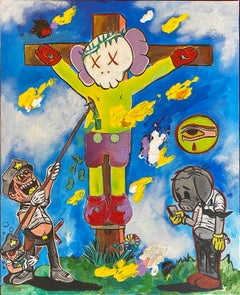
Forgive Them Nigo
By Bipolar Holiday
Located in Missouri, MO
Signed, Dated, Titled Verso BIO: Daniel Jefferson AKA "Bipolar Holiday" is a self-taught street artist. A native of St. Louis, he grew up in North St. Louis County in the cities of Normandy and Hazelwood. By the age of 3, he was drawing and painting alongside his father and together they shared studios and collaborations into his mid-20s. His father grew up in Tupelo, Mississippi and his mother in St. Louis. Expounding on his family history, Holiday speaks of his Quaker and Native American ancestry - along with his father, who is black, and his mother who is white - as forming his multiracial identity and upbringing. He expresses “not always fitting in,” - being neither “this nor that” - and residing on the margins between the social constructs of race. This emotional state is reflected in his artistic output. He cautions us to see that, while the subject matter of his work is not always a direct depiction of his experience of race, his existence as a person of color propels him and bears directly on his artistic focus and choice of materials, along with the application and gesture in each work. Anger and sadness are part of it – also love, joy, pride and humility. The artist often signs his work with a mark inspired by the ancient Egyptian Eye of Horas – a symbol of power, protection, and health. Throughout his career, Bipolar Holiday has been both a solo practitioner and a collaborator. Tagging as King Dee and later Melo, he worked variously in the St. Louis area from the mid- 1990s to early 2000s. In the 1990s, he painted with the then St. Louis-based graffiti artist Nick Miller and his crew. Choice spots ranged from free standing concrete walls on abandoned property to temporary fencing along construction sites. The artist's compositions contained expressive line and figural elements – human faces, eyes – and the ethereal and allegorical – angel, devil motifs, etc. Later, he moved his artistic focus to a more studio-based form starting in the early 2000s. Holiday had his first show alongside his father’s work at Urbis-Orbis Gallery in downtown St. Louis in 2003. Coming full circle, he occasionally works in a few items of collage or spontaneous marks made by his daughter during her early childhood. Bipolar Holiday has exhibited his work both locally and globally including St. Louis, New York, Grand Rapids and Antwerp. In 2019, he was featured in a four-page spread of JMG Lifestyle Magazine and a large-scale work whet to the Isabis Art Expo in 2019. St. Louis Magazine listed “Bipolar Holiday: Kyoto Girls” when the Walker-Cunningham Fine Art pop-up exhibit was named to the A-List in July 2020. Holiday's work can be found in numerous private and public collections. He lives in St. Louis City...
Category

21st Century and Contemporary American Modern Figurative Paintings

Materials

Canvas, Acrylic

Wise Man Say
By Bipolar Holiday
Located in Missouri, MO
Signed, Dated, Titled Verso BIO: Daniel Jefferson AKA "Bipolar Holiday" is a self-taught street artist. A native of St. Louis, he grew up in North St. Louis County in the cities of Normandy and Hazelwood. By the age of 3, he was drawing and painting alongside his father and together they shared studios and collaborations into his mid-20s. His father grew up in Tupelo, Mississippi and his mother in St. Louis. Expounding on his family history, Holiday speaks of his Quaker and Native American ancestry - along with his father, who is black, and his mother who is white - as forming his multiracial identity and upbringing. He expresses “not always fitting in,” - being neither “this nor that” - and residing on the margins between the social constructs of race. This emotional state is reflected in his artistic output. He cautions us to see that, while the subject matter of his work is not always a direct depiction of his experience of race, his existence as a person of color propels him and bears directly on his artistic focus and choice of materials, along with the application and gesture in each work. Anger and sadness are part of it – also love, joy, pride and humility. The artist often signs his work with a mark inspired by the ancient Egyptian Eye of Horas – a symbol of power, protection, and health. Throughout his career, Bipolar Holiday has been both a solo practitioner and a collaborator. Tagging as King Dee and later Melo, he worked variously in the St. Louis area from the mid- 1990s to early 2000s. In the 1990s, he painted with the then St. Louis-based graffiti artist Nick Miller and his crew. Choice spots ranged from free standing concrete walls on abandoned property to temporary fencing along construction sites. The artist's compositions contained expressive line and figural elements – human faces, eyes – and the ethereal and allegorical – angel, devil motifs, etc. Later, he moved his artistic focus to a more studio-based form starting in the early 2000s. Holiday had his first show alongside his father’s work at Urbis-Orbis Gallery in downtown St. Louis in 2003. Coming full circle, he occasionally works in a few items of collage or spontaneous marks made by his daughter during her early childhood. Bipolar Holiday has exhibited his work both locally and globally including St. Louis, New York, Grand Rapids and Antwerp. In 2019, he was featured in a four-page spread of JMG Lifestyle Magazine and a large-scale work whet to the Isabis Art Expo in 2019. St. Louis Magazine listed “Bipolar Holiday: Kyoto Girls” when the Walker-Cunningham Fine Art pop-up exhibit was named to the A-List in July 2020. Holiday's work can be found in numerous private and public collections. He lives in St. Louis City...
Category

21st Century and Contemporary American Modern Figurative Paintings

Materials

Canvas, Acrylic

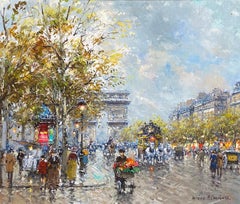
Avenue des Champs-Elysses, Paris
By Antoine Blanchard
Located in Missouri, MO
Antoine Blanchard (French 1910-1988) "Avenue des Champs-Elysses, Paris" Oil on Canvas Signed approx 18 x 22 (site) approx 26.5 x 30 (framed) Antoine Blanchard (c.1910-1988) was a prolific and successful Neo-Impressionist painter who specialized in nostalgic scenes of Fin de Siècle Paris. Inspired by the subjects as well as the success of earlier painters of Parisian life like E. Galien Laloue (1854-1941), Edouard Cortès (1882-1969), Jean Béraud (1849-1935) and Luigi Loir (1845-1916), Blanchard painted hundreds of views of the “City of Light.” In the late 1950s, his street scenes were exported to the United States and the United Kingdom, where they were sold briskly to collectors. By the1960s, Blanchard paintings were bringing several hundred dollars in galleries, so while they were not inexpensive, they were affordable to collectors who loved Parisian scenes but who could not afford the works of Cortes or one of the other French painters known for their views of Paris in Belle Époque. Eventually Blanchard’s more delicate, feathery pastel-toned scenes of rain-swept Paris became sought after in their own right and, when he died, he was considered the last of what the dealers described as the École de Paris or “School of Paris” painters. The most salient fact about the life and career of the painter Antoine Blanchard was that he was actually born Marcel Masson, the son of a furniture maker who lived in the scenic Loire Valley, south of Paris, where the French nobility had their chateaus. The date that is usually given for Blanchard’s birth is November 15, 1910. However, there has been some speculation that he was born even later, perhaps in 1918, but some of the facts of his life have always been clouded by early biographies that claimed even earlier dates for his birth, so that he would seem to be seen as a contemporary of the famous Belle Époque painters rather than a post-war interpreter of Paris. Blanchard grew up in the hardscrabble years following the First World War. Because he was artistically talented, he was sent first to the nearby city of Blois, the capital of the Loir-et-Cher Département, for artistic training and then to the École des Beaux-Arts in Rennes, on the Brittany peninsula, where he received a classical art education. By some accounts Blanchard also studied in Paris, where the historic École des Beaux-Arts is located, but the depth of his study and the style of his earliest work will require further research. Marcel Masson was married in 1939, as war clouds gathered on the French horizon. He was drafted for service in the French Army and participated in the short and futile struggle against the invading German Panzers before returning to his family and his art during the Nazi occupation. A daughter, Nicole, was born in 1944 with a second daughter, Eveline, who eventually came to the United States, following in 1946. Masson’s early art career was interrupted, first by World War II and later by the necessity of keeping his father’s workshop running in the years after his death. By the late 1940s, though, Masson returned to his art and moved to Paris in order to further his career. Exactly when Marcel Masson adopted the pseudonym Antoine Blanchard is not known, nor are we aware of his motivations for adopting a nom de plume, but the practice was not unusual for French painters. In most cases a pseudonym was adopted because the artist had contractual obligations with more than one agent or dealer. Another motivation could be to obscure the scope of a sizable artistic production. Dealers in that era also liked to keep an artist under their thumb, so a pseudonym was a way for Blanchard’s dealers to tuck him away, out of the sight of their competitors. Like many painters before him Masson may have initially painted different subjects under different names. Marcel Masson neé Blanchard would have been well aware that the famous and prolific French painter E. Galien Laloue (1854-1941) painted under no less than four names – three pseudonyms in addition to name he was christened with – and so the adoption of another name was probably not seen as a liability to him. However, he apparently never took the step to register his pseudonym, which was possible in France, to legally restrict its use. In any event, by the 1950s Marcel Masson had become “Antoine Blanchard,” a painter of Parisian views. With the aging Edouard Cortès (1882-1969) as a model, Blanchard began to specialize in romanticized scenes of la ville des lumières, or the “City of Light.” However, instead of painting contemporary Paris, the crowded metropolis of his own time, which he may have felt was lacking in romance, he chose to look at the French capital through the rear-view mirror. So Blanchard became known for his depictions of the hurly-burly life of Paris in the Belle Époque. For inspiration, he is said to have collected old sepia-toned postcards of life in La Belle Époque (“The Beautiul Era”), the long period of peace and relative prosperity between the end of the Franco-Prussian War and the horrors of the Paris Commune in 1871 and the start of the mass bloodshed of the First World War in August of 1914. In addition, however, the paintings of Loir, Baraud, Laloue and Cortès could be found and studied in the flea markets of Paris as well as the auctions at the l’Hôtel Drouot. Reminders of the Belle Epoch were thus all around Blanchard, and of course the architecture that he painted had survived the Second World War intact, because Paris was spared bombing or a siege by the allies. Soon he was painting the horse-drawn omnibuses that took turn-of-the-century Parisians on longer trips throughout the city as well as the tradesmen, children and fashionably dressed ladies that populated Baron Haussmann’s Grand Boulevards. Blanchard’s early work was clearly modeled after the paintings of Edouard Cortès, but he was always his own man and never a slavish copyist. These paintings were darker in palette than the later Blanchard paintings most American collectors have become familiar with, and his red and blue tones were often bolder than those of Cortès. He never adopted the heavy “impasto,” the build-up of paint on the highlights of Cortes’ work, leaving that artistic trademark to the master. Blanchard’s brushwork was painterly, but the buildings in the paintings were always well rendered, for he had an excellent command of composition and perspective. By the late 1950s, agents began to purchase Blanchard’s paintings and then to export them to the United States, selling them to commercial galleries in far away Houston, Los Angeles, San Francisco, Chicago and New York. By the early 1960s, his work was already well known enough to be in reproduced by print publishers and the Donald Art Company published a number of popular prints that are now often mistaken for original paintings. By the end of the 1960s, Blanchard had begun to develop his own mature style by employing a lighter, brighter, palette and a deft, almost calligraphic style of brushwork. This helped him step out of Cortès’ shadow and become a sought-after painter in his own right. Blanchard worked through agents, essentially brokers, who purchased his work and created a demand for it in the United States and Canada. By the 1970s Blanchard’s paintings were being sold by galleries across the United States, and the American market absorbed virtually all of his work. In 1969, with the passing of Edouard Cortès, he became the last of the long series of prolific French painters of Parisian life. Blanchard’s later works were usually daylight scenes, with Paris seen awash in rain or with a mantle of soft snow, and so collectors no longer confused him with Cortes, whose Parisian clock seemed to always be set at twilight. These paintings were rendered in softer, pastel tones and he used his brush with a light touch. These qualities gave Blanchard’s work of the 1970s and 1980s a lighter, more decorative appearance. In the late 1970s, the French agent Paul Larde published a lavish book that was claimed to be an authorized biography of Antoine Blanchard by his “exclusive” dealer. Today, this book is almost impossible to find, because it was apparently the subject of a lawsuit in France. Some of the information in the Larde book was contested and found to be inaccurate and so it was withdrawn from publication. One claim that Larde made was that Blanchard’s production was extremely limited. While he was not as prolific as Cortès or Laloue, he was a hard-working painter who managed to supply a long list of galleries with his work. He produced thousands of paintings during his career. When the motivation for a monograph is marketing rather than art history, accuracy and detail can be swept aside by exaggeration, hyperbole and claims of exclusivity that were meant to discourage collectors or galleries from buying Blanchard’s from other representatives. Blanchard’s legitimate paintings were sold by several agents, who dealt directly with the artist, at least one of whom was American, one Austrian and a few French dealers. The details of Antoine Blanchard’s life are not well known because he never sought the limelight. He was content to work in his studio and ship his paintings to his agents who sold them abroad. Eventually both his daughters – Nicole and Evelyn – followed in his footsteps and became painters themselves. Evelyn (1946-2008) was savvy enough to adopt the Blanchard nom de plume, and she began painting street scenes that closely resembled her father’s later work. Antoine Blanchard passed away in 1988, leaving hundreds of paintings of Belle Époque Paris– the Notre Dame Cathedral, the Opera, the Arc de Triomphe and Place Concorde – as his lasting legacy. Notes on the Authentication of Antoine Blanchard’s Paintings: The vast majority of Blanchard’s paintings were smaller works, which were sent to the United States in tubes and stretched and framed by the galleries that sold them. Virtually all of these Blanchards were painted in European centimeter sizes, which convert to 13” x 18” or 18” x 21 1/2?, but on very rare occasions he painted much larger works in American sizes – such as 24” x 36” – on commission for dealers such as Howard Morseburg in Los Angeles or the dapper Wally Findlay, who had a chain of galleries. The first way to assess the authenticity of a Blanchard...
Category

Mid-20th Century Impressionist Landscape Paintings

Materials

Canvas, Oil

Read More