41 results for "canaletto"

to
7
9
2
10
7
13
Overall Width
to
Overall Height
to
15
6
4
16
2
1
1
15
16
5
3
2
1
34
7
26
12
9
7
3
2
2
2
2
1
1
1
1
1
1
1
1
1
1
1
41
40
23
19
4
5
4
3
2
1
33
7
34
7
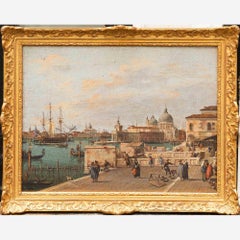
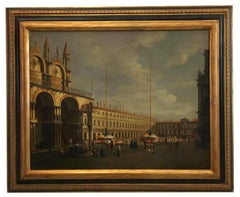
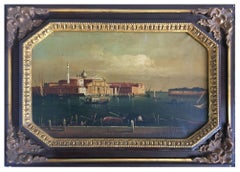
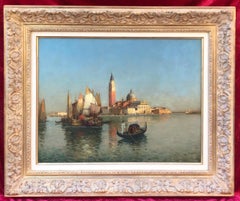
View of St. Mark Square - Oil Paint on Canvas - Late 18th century
By Giovanni Antonio Canal (Canaletto)
Located in Roma, IT
View of St. Mark Square is an original old master artwork realized in the late 18th century by artist of the School of Giovanni Antonio Canal (C...
Category

Late 18th Century Modern Landscape Paintings

Materials

Canvas, Oil

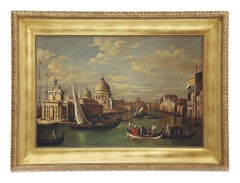
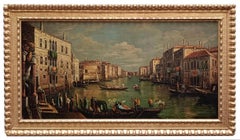
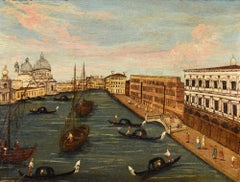
View of Riva degli Schiavoni - Oil Painting - Late 18th century
By Giovanni Antonio Canal (Canaletto)
Located in Roma, IT
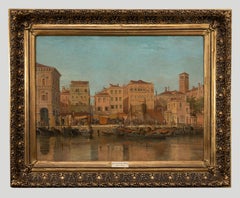
View of Riva degli Schiavoni is an original old master artwork realized in the late 18th century by a follower of the School of the italian painter Canaletto. Oil on canvas. An imp...
Category

Late 18th Century Modern Figurative Paintings

Materials

Oil, Canvas

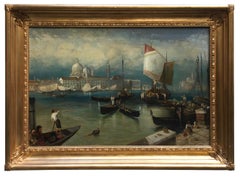
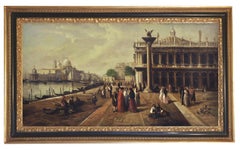
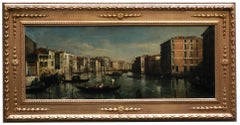
VENICE -In the Manner of Canaletto- Italian Landscape Oil on Canvas Painting
By Mario De Angeli
Located in Napoli, IT
Venice - Mario De Angeli - Italia 2009 - Oil on canvas cm. 80x120. Gold leaf gilded wooden frame ext. mis. cm.100x140 Mario De Angeli's canvas is an extraordinary work of Italian l...
Category

Early 2000s Old Masters Landscape Paintings

Materials

Gold Leaf

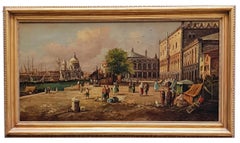
VENICE- In the Manner of Canaletto - Oil On Canvas Italian Landscape Painting
By Giancarlo Gorini
Located in Napoli, IT
Venice - Giancarlo Gorini Italia 2004 - Oil on canvas cm.80x120 Giancarlo Gorini's canvas is an extraordinary work of Italian landscape painting. It is inspired by the landscape pai...
Category

Early 2000s Italian School Landscape Paintings

Materials

Canvas, Oil

VENICE-In the Manner of Canaletto - Italian Landscape Oil on Canvas Painting
By Mario De Angeli
Located in Napoli, IT
Venice - Mario De Angeli - Italia 2008 - Oil on canvas cm. 60x120. Mario De Angeli's canvas is an extraordinary work of Italian landscape painting. They are inspired by the landsc...
Category

Early 2000s Italian School Landscape Paintings

Materials

Gold Leaf

VENICE - In the Manner of Canaletto -Italian Landscape Oil on Canvas Painting
By Mario De Angeli
Located in Napoli, IT
Venice - Mario De Angeli - Italia 2006 - Oil on canvas cm. 70x90. Mario De Angeli's canvas is an extraordinary work of Italian landscape painting. They are inspired by the landscap...
Category

Early 2000s Old Masters Landscape Paintings

Materials

Canvas, Oil

VENICE - In the Manner of Canaletto -Italian Landscape Oil on Canvas Painting
By Mario De Angeli
Located in Napoli, IT
Venice - Mario De Angeli - Italia 2008 - Oil on canvas cm. 75x150. Mario De Angeli's canvas is an extraordinary work of Italian landscape painting. They are inspired by the landsc...
Category

Early 2000s Italian School Landscape Paintings

Materials

Gold Leaf

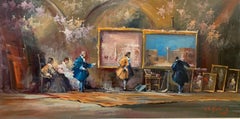
The Studio Of Canaletto - Figurative Painting by Norberto Martini
Located in Carmel, CA
Norberto Martini (1940-2007) From his studio on the Arno, dressed in a three-piece suit, Martini brought his experiences of his time singing opera coupled with being a devout Catholi...
Category

2010s Contemporary Figurative Paintings

Materials

Canvas, Oil

VENICE -In the Manner of Canaletto- Oil On Canvas Italian Landscape Painting
By Giancarlo Gorini
Located in Napoli, IT
Venice - Giancarlo Gorini Italia 2002 - Oil on canvas cm.50x100 Gold leaf gilded wooden frameavailable on request Giancarlo Gorini's canvas is an extraordinary work of Italian lan...
Category

Early 2000s Old Masters Landscape Paintings

Materials

Canvas, Oil

VENICE - In the Manner of Canaletto - Italian Landscape Oil on Canvas Painting
By Giancarlo Gorini
Located in Napoli, IT
VENICE - Italian landscape oil on canvas painting cm.38x61 by Giancarlo Gorini, Italy 2006. Giancarlo Gorini's canvas is an extraordinary work of Italian landscape painting. It is in...
Category

Early 2000s Italian School Landscape Paintings

Materials

Canvas, Oil

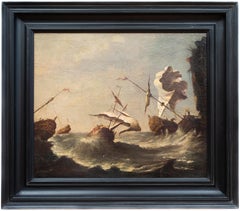
Shipping in Stormy Waters, Attributed to Italian Artist Francesco Guardi
By Francesco Guardi
Located in Stockholm, SE
The splendour of the tragic sea Francesco Guardi and maritime painting in Venetian art No Venetian painter was a stranger to the sea. After all, Venice was not only one of the most prominent ports of the Mediterranean, but indeed a city literally submerged in the ocean from time to time. Curiously however, the famous Venetian school of painting showed little interest in maritime motifs, favouring scenes from the iconic architecture of the city rather than seascapes. That is why this painting is a particularly interesting window into not only the painter Francesco Guardi himself – but to the significance of the element of water in art history, in absence as well as in the centre of attention. Whether it be calm, sunny days with stunning views of the palaces alongside the canals of Venice or – more rarely – stormy shipwrecking tragedies at sea, water as a unifying element is integral to the works of painter Francesco Guardi (1712–1793). During his lifetime, Venetian art saw many of its greatest triumphs with names like Tiepolo or Canaletto gaining international recognition and firmly establishing Venice as one of the most vibrant artistic communities of Europe. While the city itself already in the 18th century was something of an early tourist spot where aristocrats and high society visited on their grand tour or travels, the artists too contributed to the fame and their work spread the image of Venice as the city of romance and leisure to an international audience, many of whom could never visit in person. Still today, the iconic image of Venice with its whimsical array of palaces, churches and other historic buildings is much influenced by these artists, many of whom have stood the test of time like very well and remain some of the most beloved in all of art history. It was not primarily subtility, intellectual meanings or moral ideals that the Venetian art tried to capture; instead it was the sheer vibrancy of life and the fast-paced city with crumbling palaces and festive people that made this atmosphere so special. Of course, Venice could count painters in most genres among its residents, from portraiture to religious motifs, history painting and much else. Still, it is the Vedutas and views of the city that seems to have etched itself into our memory more than anything else, not least in the tradition of Canaletto who was perhaps the undisputed master of all Venetian painters. Born into his profession, Francesco lived and breathed painting all his life. His father, the painter Domenico Guardi (1678–1716) died when Francesco was just a small child, yet both he and his brothers Niccolò and Gian Antonio continued in their fathers’ footsteps. The Guardi family belonged to the nobility and originated from the mountainous area of Trentino, not far from the Alps. The brothers worked together on more challenging commissions and supported each other in the manner typical of family workshops or networks of artists. Their sister Maria Cecilia married no other than the artist Giovanni Battista Tiepolo himself, linking the family to the most renowned Venetian name of the time. During almost a decade, Guardi worked in the studio of Michele Giovanni Marieschi, sometimes simply known as Michiel, a painted similar in both style and motif. Canaletto is, however, the artist Guardi is most often compared to since they shared a mutual fascination for depicting the architecture and cityscape of Venice. During the course of his career, Guardi tried his hand in many different genres. He was as swift in painting landscapes, Vedutas of Venice, sacred motifs, interiors and architectural compositions as he was in a number of other motifs. His style is typical of the Venetian school but also distinct and personal once we look a little closer. There is an absolute certainty in the composition, the choice of which sometimes feels like that of a carefully calculated photograph – yet it is also very painterly, in the best sense of the word: fluid, bold, sensitive and full of character. The brushwork is rapid, intense, seemingly careless and extraordinarily minute at the same time; fresh and planned in a very enjoyable mixture. His interiors often capture the breath-taking spacious glamour of the palaces and all their exquisite decor. He usually constructed the motif through remarkably simple, almost spontaneous yet intuitively precise strokes and shapes. The result was a festive, high-spirited atmospheric quality, far away from the sterile and exact likeness that other painters fell victim to when trying to copy Canaletto. The painting here has nothing of the city of Venice in it. On the contrary, we seem to be transported far away into the solitary ocean, with no architecture, nothing to hold on to – only the roaring sea and the dangerous cliffs upon which the ships are just moments away from being crushed upon. It is a maritime composition evoking both Flemish and Italian precursors, in the proud tradition of maritime painting that for centuries formed a crucial part of our visual culture. This genre of painting is today curiously overlooked, compared to how esteemed and meaningful it was when our relationship to the sea was far more natural than it is today. When both people and goods travelled by water, and many nations and cities – Venice among them – depended entirely on sea fare, the existential connection to the ocean was much more natural and integrated into the imagination. The schools and traditions of maritime art are as manifold as there are countries connected to the sea, and all reflect the need to process the dangers and wonders of the ocean. It could symbolize opportunity, the exciting prospects of a new countries and adventures, prospering trade, beautiful scenery as well as war and tragedy, loss of life, danger and doom. To say that water is ambivalent in nature is an understatement, and these many layers were something that artists explored in the most wondrous ways. Perhaps it takes a bit more time for the modern eye to identify the different nuances and qualities of historic maritime paintings, they may on first impression seem hard to differentiate from each other. But when allowing these motifs to unfold and tell stories of the sea in both fiction and reality – or somewhere in between – we are awarded with an understanding of how the oceans truly built our world. In Guardi’s interpretation, we see an almost theatrically arranged shipwrecking scene. No less than five ships are depicted right in the moment of utter disaster. Caught in a violent storm, the waves have driven them to a shore of sharp cliffs and if not swallowed by the waves, crushing against the cliffs seems to be the only outcome. The large wooden ships are impressively decorated with elaborate sculpture, and in fact relics already during Guardi’s lifetime. They are in fact typical of Dutch and Flemish 17th century ships, giving us a clue to where he got the inspiration from. Guardi must have seen examples of Flemish maritime art, that made him curious about these particular motifs. One is reminded of Flemish painters like Willem van de Velde and Ludolf Backhuysen, and this very painting has indeed been mistakenly attributed to Matthieu van Plattenberg...
Category

18th Century Old Masters Landscape Paintings

Materials

Canvas, Oil

Venice, Santa Maria della Salute from the Cannaregio Canal , Large Venetian Oil
Located in Santa Cruz, CA
'Venice, Santa Maria della Salute from the Cannaregio Canal' by Peter Götz Pallmann. Large Venetian Oil ----- Signed lower right, 'P. G. Pallmann'...
Category

1950s Landscape Paintings

Materials

Oil, Masonite

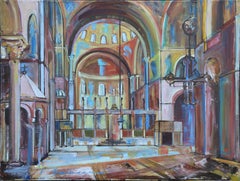
SAN MARCO INTERIOR original painting oil/canvas Paula Craioveanu
By Paula Craioveanu
Located in Forest Hills, NY
"San Marco Interior", original, unique painting, 60x80cm / 23.5x27.5in Shipped stretched ready for display by airmail. This oil painting of the Interior of San Marco Church in Venic...
Category

2010s Contemporary Interior Paintings

Materials

Canvas, Oil

Portrait of a senior naval officer, c. 1750s
By Thomas Hudson
Located in Henley-on-Thames, England
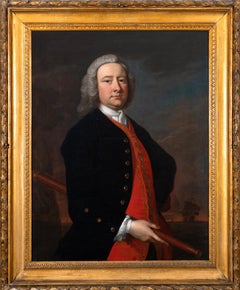
Thomas Hudson (Devon 1701 - London 1779) Portrait of a senior naval officer, c. 1750s Probably a captain or admiral; half-length, holding a telescope, with a warship beyond Oil on canvas 91.3 x 71.1 cm.; (within frame) 114.3 x 93.8 cm. (Unsigned) Provenance: Christie’s, London, 22 November 1985, lot 105 (as Thomas Hudson); Private collection, United Kingdom; Haynes Fine Art, Broadway, Worcestershire; Where acquired, private collection, United States, 16 August 1988; Neal Auction, New Orleans, 14 September 2025, lot 302 (as Attributed to Thomas Hudson); Where acquired by Haveron Fine Art. Literature: Bridgeman Art Library, The Bridgeman Art Library (London: The Library, 1995), p. 89 Christie’s, London, Important English Pictures (London: Christie’s, 22 November 1985) Archival: Witt Library, Courtauld Institute of Art (no. 061487); Heinz Archive and Library, National Portrait Gallery, 1725-50, Thomas Hudson: Men Authentic (1) (Box) This attractive and quintessential half-length is exemplary of Hudson’s leading portrait practice, produced at the height of his decade-long dominance over the London market beginning in 1749. Typical of Hudson's 1750s output, the portrait was likely made after his five-week visit to Rome and Naples, and bares the stylistic merits of this continental excursion. Indeed, the trip seemed to fortify a gradual refinement of Hudson’s technique: namely the emphasis of directional brushstrokes, which sensitively follow the contours of the facial features. The resulting feathery quality is combined here with a striking chiaroscuro effect, which Hudson borrowed directly from Rembrandt. Amalgamating the rich colouring of the Rococo with a mannered Baroque posing, Hudson renders the senior naval officer with a characteristic presence. Resting one hand assuredly at his hip, the finely worked telescope illustrates the officer’s seniority; the warship sailing on the horizon beyond provides further indication of his commanding rank. The telescope is held by a hand modelled with sculptural poise, and the typically Van Dyck manner (seen elsewhere, e.g. Princess Amelia Sophia Eleonore of Great Britain, YCBA B2001.2.246) further illustrates Hudson's studied grounding. Despite the apparent stylistic placement of the work, an earlier date is possible, since the officer wears civilian clothes and not the naval officer’s uniform first introduced in 1747 (which officers afterwards invariably chose to be shown in). The officer has previously been suggested as Edward Henry Sartorius, of the prominent naval Sartorius family; however, this identification is improbable on biographical and documentary grounds. Hudson was regularly commissioned by leading naval officers, and produced highly satisfactory portraits praised for their great likeness and genteel swagger. He charged 24 guineas for a standard 50 x 40 inch half-length in the 1750s period, and the present work (somewhat smaller in size) would have cost not much less. Comparable works include those of Admirals of the Fleet George Anson, 1st Baron Anson, and Sir John Norris; Admiral Sir George Pocock; Admiral Sir Peter Warren; Vice-Admiral The Honourable John Byng; and Rear-Admiral Richard Tyrrell. The present portrait is particularly similar in composition to Hudson’s Portrait of a Flag Officer of The White Squadron, which similarly employs the narrative device of a telescope held at a dynamic angle across the composition, with a warship to the left side of the officer’s retracted arm. Thomas Hudson (Devon 1701 - London 1799) Thomas Hudson rose to become the leading British portraitist of the mid-18th century, albeit in close competition with his Scottish counterpart Allan Ramsay. Born in Devon, Hudson studied alongside George Knapton under Jonathan Richardson the Elder (marrying his daughter in 1725, expressly against Richardson’s wishes), and inherited a dignified formality jointly derived from Van Loo. His work is first recorded in 1728, and between 1730-40 he practised in Bath and the West Country, where in addition to portrait commissions, he was employed to retouch and reline old pictures. He returned permanently to London thereafter, and devised a series of stock poses to which he would return with variation throughout his career. Beginning in 1745 with the death of Richardson and the departure of Van Loo, Hudson became the city’s most successful portraitist, and embarked on ambitious defining works such as his Portrait of Theodore Jacobsen ‒ not drastically unlike the continental heights of Pompeo Batoni in conception. Profiting from his success, he relocated from Lincoln’s Inn Fields to a house in Great Queen Street previously inhabited by Van Loo, and one door down from Kneller’s old rooms. An exceptionally productive period began in 1749 which lasted until the late 1750s. Among this output were highly praised portraits of the Prince and Princess of Wales, commissions for most of the preeminent aristocrats, and superlative group portraits including Benn’s Club of Aldermen, and those of the Thistlethwayte, Marlborough and Radcliffe families. Hudson relocated to King Street, Covent Garden, operating a prolific studio operation which resulted in some four hundred paintings ‒ of which at least eighty were engraved. A prodigious assembly of young pupils included Sir Joshua Reynolds (1740-3), Joseph Wright of Derby (1751-3, 1756), Richard Cosway, John Hamilton Mortimer, and the drapery painters Joseph and Alexander van Aken (also employed by Ramsay). As one later reviewer expressed: ‘Hudson, his art may well display to sight / Who gave Mankind a Reynolds and a Wright’ (Miles, ‘Introduction’). The ambitious young Reynolds made many drawings from classical statuary under Hudson’s instruction, and wrote home that, ‘While doing this I am the happiest creature Alive (sic.)’ (Sweetser, p.12). However, he was later dismissed from his pupilage some two years prematurely for refusing to carry a painting to Van Aken’s studio in the rain. It was at this point that Reynolds returned to Plymouth (Devonport), and produced some thirty portraits of the local gentry (including one example presently owned by Haveron Fine Art). Hudson was one of a number of artists who congregated in Old Slaughter’s Coffee House, alongside Hogarth, Ramsay, Hayman, and Rysbrack. Together they supported Thomas Coram’s Foundling Hospital, of which they each belonged to the 600 governors (in whom Hudson met many of his future clients), and promoted the building as London’s first public space of artistic exhibition. He visited the Netherlands and France for five weeks in 1748 accompanied by St Martin’s Lane colleagues, and was arrested with Hogarth for making drawings of the Bastille fortifications. He afterwards stayed in Rome and Naples in 1752 with Roubiliac, meeting Reynolds twice on the return journey. He returned to England and bought a house at Cross Deep, Twickenham (upstream from Pope’s villa), and made an effective museum of the space. He lived there with his second wife, a wealthy widow named Mrs Fynes. Having been involved with early attempts to establish a royal academy of the arts, Hudson exhibited at the Society of Arts in 1761 and 1766, although he had effectively retired from painting by the latter date. His last painting was in 1767, and he died at Twickenham in January 1779 aged seventy-eight. Hudson was also exceptional for the extensive collection of artworks which he amassed during his lifetime. The collection was thoroughly impressive in extent, and included outstanding Old Masters: Breughel, Canaletto, van Dyck, Hals, Holbein, Kneller, Lely, Michelangelo, Parmigianino, Poussin, Raphael, Rembrandt, Rubens, Tintoretto, Titian, Vasari, and Velázquez. His earliest recorded purchase was in 1741, and he spent heavily at the sale of his father-in-law, even buying works jointly with Van Aken. Likewise, at the posthumous 1750 sale of Van Aken, Hudson spent £215 on the second day (nearly half that day’s sale total). As a pupil, Reynolds had been sent to bid for Hudson in Lord Oxford’s sale of 1742, and proudly recalled having been greeted with a handshake by Hudson’s friend Pope at another picture sale. Hudson also collected extensively from within his own generation, acquiring works by contemporaries including Gainsborough, Reynolds, Richardson, Rysbrack, Vanderbank, and his predecessor Van Loo. Following his death, the works were dispersed in two sales at Messrs. Langford, with the finer works sold at Christie’s in 1785 after the death of his second wife. However, his connoisseurship was not without flaw ‒ having outbid Benjamin Wilson for a Rembrandt drawing, Wilson etched and printed a new ‘Rembrandt’ plate...
Category

1750s Old Masters Portrait Paintings

Materials

Oil

View of Venice - Oil on Canvas Late 19th Century
Located in Roma, IT
View of Venice is an original oil on canvas realized in the late 19th Century by a Master of Italian School. On the reverse: label with inscribed “E. Mareis” The painting represent...
Category

Late 19th Century Modern Figurative Paintings

Materials

Oil

View Venice Landscape Tironi 18th Century Paint Oil on canvas Old master Italy
Located in Riva del Garda, IT
Francesco Tironi (Venice, circa 1745 - 1797) View of Venice with the entrance to Cannaregio oil on canvas 59 x 75 cm with frame 72 x 88 cm Work accompanied by a descriptive n...
Category

18th Century Old Masters Paintings

Materials

Oil

Venetian Capriccio Landscape Painting, Oil on Canvas, Circa 1777
By Gaetano Vetturali (Lucca, 1701-1783)
Located in Stockholm, SE
A Venetian capriccio view with classical architectural ruins and in the background the church of San Giorgio Maggiore and the Church of Santa Maria della Salute next to the Grand Can...
Category

1770s Old Masters Landscape Paintings

Materials

Canvas, Oil

Emmanuel Costa Riverside Town Landscape Painting
By Emmanuel Costa
Located in New York, NY
Attributed to Emmanuel Costa (French, 1833-1921) Untitled, c. Late 19th century Oil on wood panel 9 1/2 x 13 1/4 in. Framed: 14 x 18 x 1 1/4 in. Signed lower right: Costa Emmanuel B...
Category

Late 19th Century French School Landscape Paintings

Materials

Oil, Wood Panel

The Valley of the River Severn with a distant view of Shrewsbury
By Richard Wilson
Located in London, GB
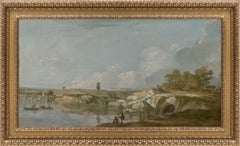
Oil on canvas 20 x 37 ¼ inches; 50.8 x 94.6 cm Framed dimensions: 67.5 x 110.5 cm Not signed c.1744-1745 Collections: Possibly John Charles Middleton (1757-1793); Revd Frederick M...
Category

18th Century Old Masters Landscape Paintings

Materials

Canvas, Oil

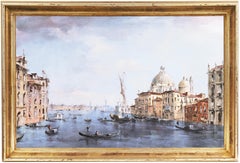
View Venice Grand Canal See Landscape 18th Century Paint Oil on canvas Venice
Located in Riva del Garda, IT
Vedutist painter of the 18th century View of Venice with the Grand Canal, the Punta della Dogana with the Basilica of Santa Maria della Salute on the left, the Palazzo Della Zecca wi...
Category

18th Century Old Masters Paintings

Materials

Oil

Macbeth and the Three Witches a Painting on Panel by Francesco Zuccarelli
By Francesco Zuccarelli
Located in PARIS, FR
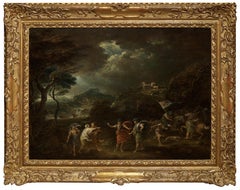
This painting, created during Zuccarelli's stay in England, represents the decisive moment when Macbeth, together with Banquo, meets the three witches who announce that he will be Ki...
Category

1760s Old Masters Landscape Paintings

Materials

Oil, Wood Panel

Portrait of a Lady
By Francesco Guardi
Located in Paris, Île-de-France
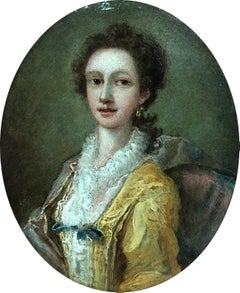
Francesco GUARDI (1712-1793) Portrait of a Lady Oil on copper 5 1/8 x 4 3/8 in 13 x 11 cm Unsigned Provenance Private collection, France We are pleased to present an exceptional...
Category

Mid-18th Century Old Masters Portrait Paintings

Materials

Copper

Georgian Victorian Marine Oil Painting Shipping Scene possibly Isle of Wight
By William Anderson
Located in ludlow, GB
Georgian or early Victorian Marine Oil on Panel of busy shipping scene with figures on Harbour, possibly the Isle of Wight A rare gem of a painting, a Georgian era oil painting sho...
Category

Late 18th Century Landscape Paintings

Materials

Oil

A View of Venice, Henri Duvieux, Paris 1855 – 1902, French Painter, Signed
By Henri Duvieux
Located in Knokke, BE
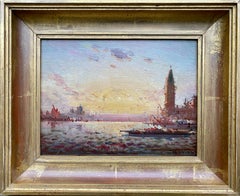
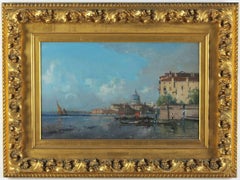
"A View of Venice" Duvieux Henri Paris 1855 – 1902 French Painter Signature: Signed bottom right Medium: Oil on canvas Dimensions: Image size 24,5 x 32,...
Category

Late 19th Century Impressionist Landscape Paintings

Materials

Canvas, Oil

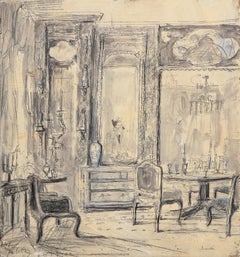
Dining Room of Ann Getty, 2880 Broadway, San Francisco
By Pierre Bergian
Located in New York, NY
Patron of the arts and sciences Ann Getty (1941–2020) brought the same bounteousness to her interiors as she did to her philanthropy, most notably at the 191...
Category

21st Century and Contemporary Interior Paintings

Materials

Oil, Wood Panel, Pencil

VENICE - Gianluca Gorini - Italian Landscape Oil on Canvas Painting
By Giancarlo Gorini
Located in Napoli, IT
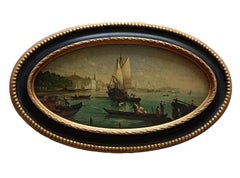
VENICE - Italian landscape oil on canvas oval painting cm.44x74 by Giancarlo Gorini, Italy 2002. Gold gilded wooden frame available o...
Category

Early 2000s Old Masters Landscape Paintings

Materials

Canvas, Oil

Antonio Joli (Venetian painter) - 18th century landscape painting - Architecture
Located in Varmo, IT
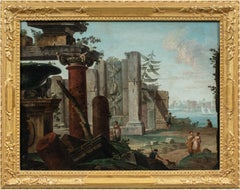
Antonio Joli (Modena 1700 - Naples 1777) - Architectural Capriccio with Ruins and Figures. 54 x 69 cm unframed, 74 x 89 cm with frame. Ancient oil painting on canvas, in a carved w...
Category

Late 18th Century Rococo Figurative Paintings

Materials

Canvas, Oil

Vue De Venise
By Henri Duvieux
Located in Sheffield, MA
Henri Duvieux French, 1855 – 1920 Vue De Venise Oil on canvas 15 ¾ in. by 25 ½ in. W/frame 25 ¾ by 35 ½ in. Signed lower right Henri Duvieux was an ar...
Category

1880s Post-Impressionist Landscape Paintings

Materials

Oil

VENICE - Giancarlo Gorini - Italian school - Oil on Canvas Landscape
By Giancarlo Gorini
Located in Napoli, IT
Venice - Giancarlo Gorini Italia 2002 - Oil on canvas cm.50x130 Giancarlo Gorini's canvas is an extraordinary work of Italian landscape painting. It is inspired by the paintings of ...
Category

Early 2000s Italian School Landscape Paintings

Materials

Canvas, Oil

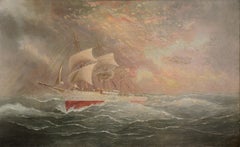
Coast Guard Cutter with Cannons Spanish-American War Maritime Original Oil
Located in Soquel, CA
Turn of 20th Century Spanish-American War Coast Guard Cutter with Cannons Original Oil Painting A fine example of maritime ship portraiture oil painting of a Coast Guard Cutter with cannons under sails during the Spanish American War by renowned Nautical British/American painter Captain William Lindsay Challoner (British/American 1852-1901), 1901. Auction values Luminous and striking painting with seaman unfurling sails heading into rough waters. Challoner served as captain of a naval vessel (Coast Guard Cutter) during the Spanish-American War. Here he is depicted on the deck of the ship while seamen scramble aloft on the rigging during a gale. The captain stands tall before the cannons at the ready to fend off intruders. His paintings are rare and highly prized by museums and Nautical collectors alike. Signed: Lower right corner "W. Challoner" Not framed Dated: "1910" Provenance: A local Monterey Bay area estate find. Condition: Professionally restored (conservation report available) Image size: 27.75"H x 47.38"W William Lindsay Challoner lived the peripatetic life of a mariner, spending much of his time at sea, and in ports such as New Orleans and San Francisco, California. He was born in Bedminster, England, and attended the York Naval Academy. In 1880, Challoner married Mary Cadogan. That same year, the couple immigrated to Argentina and then New Orleans. They had one son, William Lindsay Challoner, Jr. Lloyd’s Lists record Challoner as master aboard J.P. Macheca, a “Clipper Schooner” running bananas from Jamaica during the mid-1880s. The clipper also raced at the Southern Yacht Club in New Orleans. As is often the case, Challoner’s middle name is misspelled as “Lindsey” in J.P. Macheca & Co. records. He is also said to have served as captain for vessels in the Morgan Line. Painting was at first an avocation for Challoner, but his draftsmanship and handling of paint suggest academic training. He may also have learned to make precise topographical drawings at the York Naval Academy. Many of his ship portraits are in the English tradition, notably followers of Samuel Walker, a leading English maritime artist in the 1850s. Like his Liverpool counterparts, Challoner used receding linear and atmospheric perspective to focus on the crisp portraits of specific ships. At their best, his canvases are highly finished, a style that imitates the Venetian tradition of topographical city views associated with Giovanni Antonio Canal, also known as Canaletto. However, Challoner’s restrained bravura paint handling also may bear witness to the influence of the French Impressionists. Challoner seems to have arrived in New Orleans about 1880. He advertised in the press and exhibited at the Creole Art Gallery and Grunewald’s Music Store in New Orleans. In 1887, Challoner moved to San Francisco, where he exhibited his maritime scenes at the Mechanic’s Institute and became a U.S. citizen. He may have been back in New Orleans after 1891, and served as captain of a naval vessel during the Spanish-American War. His art clients tended to be men involved in the shipping industry—ship owners and commission merchants, along with professional clubs and maritime benevolent societies. Challoner’s principal competition in New Orleans was August Norieri, a talented ship portraitist and painter of marines. While Norieri lived hand-to-mouth, Challoner drew a handsome salary working as a ship captain, presumably until shortly before his death at the age of 49. Securing the commission for painting the newly founded New Orleans Yacht Club suggests that Challoner was held in higher regard as an artist than Norieri. The two artists together met the market demand for ship portraiture and marine views in the port city, as had Edward Arnold and James Guy...
Category

Early 1900s American Impressionist Figurative Paintings

Materials

Linen, Oil, Stretcher Bars

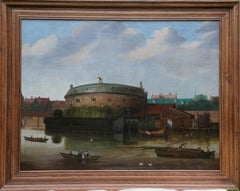
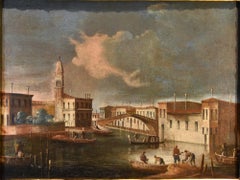
River Scene with Boats and Rotunda Building - Dutch 18th/19thC art oil painting
Located in Hagley, England
This very interesting 18th/19th century Dutch oil painting is attributed to circle or follower of Bernardo Bellotto who was renowned for painting elaborate representations of archite...
Category

Early 1800s Old Masters Landscape Paintings

Materials

Oil

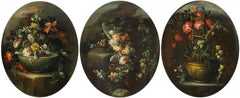
Still Lives Triptych - Oil on Canvas attr. to F. Guardi - Late 18th Century
By Francesco Guardi
Located in Roma, IT
This is a wonderful Guardi's Triptyc, composed by three oval oil painted panels attributed by some of most reputable scholars to the Venetian old master Francesco Guardi (1712-1793)....
Category

Late 18th Century Still-life Paintings

Materials

Canvas, Oil

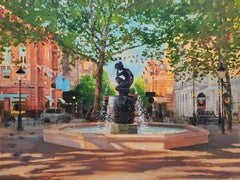
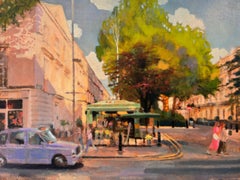
Sloane Square with Statue – original cityscape oil painting – contemporary art
By Alex Rennie
Located in London, Chelsea
We offer complimentary worldwide shipping and cover all tariffs and import taxes for this artwork. This exceptional artwork is currently on display and available for sale at Signet C...
Category

21st Century and Contemporary Impressionist Landscape Paintings

Materials

Linen, Oil

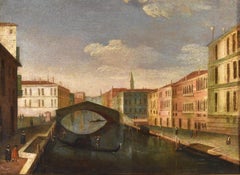
Venice Landscape See Tironi Paint 18th Century Oil on canvas Old master Water
Located in Riva del Garda, IT
Francesco Tironi (Venice, circa 1745 - 1797) View of Venice with the Church of S. Geremia and the Ponte delle Guglie oil on canvas 59 x 75 cm. - with frame 72 x 88 cm. Work a...
Category

18th Century Old Masters Paintings

Materials

Oil

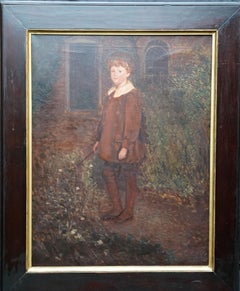
Portrait of a Young Boy in Garden - British Edwardian Slade School oil painting
Located in Hagley, England
This very interesting British Edwardian portrait oil painting is by noted Slade School artist Algernon Cecil Newton. Newton became primarily a landscape artist and exhibited numerous...
Category

Early 1900s Realist Portrait Paintings

Materials

Oil

Wellington Square in Bloom -original cityscape oil painting-contemporary Art
By Alex Rennie
Located in London, Chelsea
We offer complimentary worldwide shipping and cover all tariffs and import taxes for this artwork. This exceptional artwork is currently on display and available for sale at Signet C...
Category

21st Century and Contemporary Impressionist Landscape Paintings

Materials

Linen, Oil

Venice See Landscape Bella 18th Century Paint Oil on canvas Old master Italy
Located in Riva del Garda, IT
Gabriele Bella (Venice 1730 – Venice 1799) attributed View of Venice with the Guglie bridge (or the Cannaregio bridge, as it was formerly called) circa 1750/60 oil on canvas, ...
Category

18th Century Old Masters Paintings

Materials

Oil

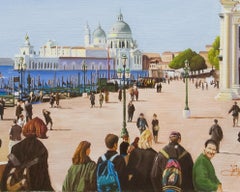
A Holiday in Venice American Realist, Landscape, People in Venice Italy
Located in Houston, TX
A Holiday in Venice is painted in the style of American Realism. The painting is a Representational Italian landscape which is the Plaza San Marco in Venice. This realist painti...
Category

2010s American Realist Landscape Paintings

Materials

Oil, Wood Panel

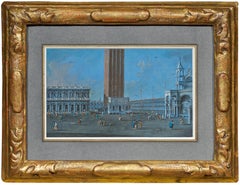
View of Piazza San Marco, a tempera signed by Giacomo Guardi (1764 - 1835)
Located in PARIS, FR
Signed and localized on the verso : "Vedute di parte dalla Piazza dif.a alla Loggetta e cam panil parte della Zecca ed in lontan Proc.e vechie e parte della chiesa punto preso vic...
Category

Early 19th Century Old Masters Landscape Drawings and Watercolors

Materials

Tempera

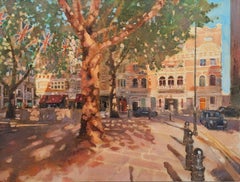
Sloane Square -original cityscape oil painting-contemporary artwork
By Alex Rennie
Located in London, Chelsea
We offer complimentary worldwide shipping and cover all tariffs and import taxes for this artwork. This exceptional artwork is currently on display and available for sale at Signet C...
Category

21st Century and Contemporary Impressionist Landscape Paintings

Materials

Linen, Oil

View of Venice
Located in Saint-Ouen, FR
AUGUSTE BOUVARD 1882-1956 Pseudo : Mard ALDINE View of Venice with characters Oil on canvas signed low right "Aldine" Framed by Gault (Paris Fbg St-Honoré) Dim canvas : 50 X 65 cm D...
Category

1930s Academic Landscape Paintings

Materials

Oil

Read More