1,158 results for "surrealism"

to
66
333
206
303
181
135
Overall Width
to
Overall Height
to
136
1,022
10
19
9
6
9
49
8
838
65
42
12
9
2
1
455
453
249
385
258
120
103
99
93
65
50
49
45
42
39
37
33
33
30
23
23
21
20
528
386
303
215
212
513
142
66
32
26
118
193
882
271
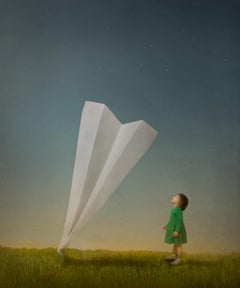
"Flight Risk" illustrative photography, surrealism, paper airplane motif
By Andrew Pinkham
Located in Philadelphia, PA
This piece titled "Flight Risk" is a limited edition photographic print by Andrew Pinkham and is made from archival pigment on cotton rag. This piece measures 20"h x 20"w unframed an...
Category

21st Century and Contemporary Surrealist Figurative Photography

Materials

Rag Paper, Archival Pigment

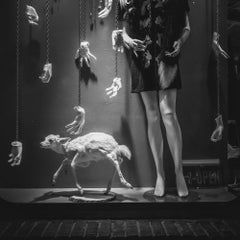
Williamsburg Window, Brooklyn - Surrealism Window Photography White Dog Hands
By Morgan Silk
Located in Brighton, GB
'Williamsburg Window, Brooklyn NY' is a black and white archival inkjet print by Morgan Silk. It is available in this size of 14.5" x 14.5" in a limited edition of 20. A surreal s...
Category

21st Century and Contemporary Modern Black and White Photography

Materials

Archival Ink, Photographic Paper, Black and White, Color

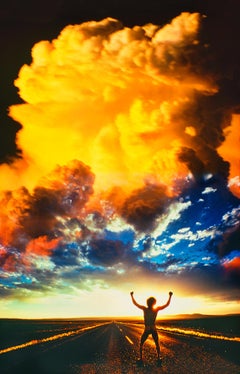
Victorious Nude Man on Naked Road in New Mexico - Gay Interest Surrealism
By Mitchell Funk
Located in Miami, FL
Man conquers nature and expresses a victorious gesture to an endless landscape with billowing clouds. A quest for meaning for the individual could be another theme this image. The ...
Category

1970s Surrealist Nude Photography

Materials

Archival Ink, Archival Paper, Archival Pigment

Untitled - Unique Photo-based Collage, Surrealism, Nude Woman, Space
Located in Denton, TX
This surrealist photo-based collage is one of a kind. The collage features a nude woman standing on a bowl of lemons, reaching out to a pair of bi...
Category

Early 2000s Contemporary Mixed Media

Materials

Mixed Media

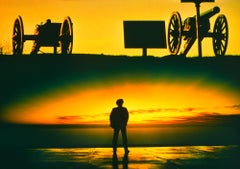
The Cannons of Vicksburg - Civil War on My Mind Surrealism
By Mitchell Funk
Located in Miami, FL
A silhouetted man looks out to infinity and ponders the buried memories on the hallowed grounds of Vicksburg. He is seen in silhouette in the bottom half of the composition. The top half shows two Civil War...
Category

1970s Surrealist Landscape Photography

Materials

Archival Ink, Archival Paper, Archival Pigment

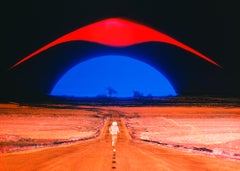
Sci-fi Single Man, Surreal Road to Destiny, Camera 35 Cover - Surrealism -
By Mitchell Funk
Located in Miami, FL
Signed, dated, numbered 4/15 recto, unframed, printed later, other sizes available, Printed on Hahnemühle Fine Art paper Cover Camera 35 Magazine Aug/Sept 1976
Category

1970s Surrealist Landscape Photography

Materials

Photographic Paper, Archival Ink, Archival Paper, Archival Pigment

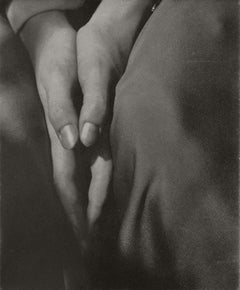
Alfred Stieglitz, Hands, Dorothy Norman, 1947 (after)
By Alfred Stieglitz
Located in Southampton, NY
This exquisite halftone print after Alfred Stieglitz (1864–1946), titled Hands, Dorothy Norman, originates from the 1947 folio Stieglitz Memorial Portfolio, 1864–1946. Published by T...
Category

1940s American Modern Figurative Prints

Materials

Offset

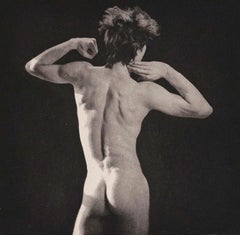
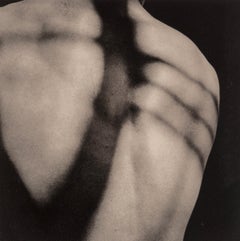
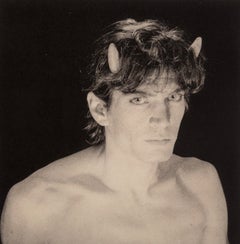
Robert Mapplethorpe, Back View of Male Nude, from A Season in Hell, 1986 (after)
By Robert Mapplethorpe
Located in Southampton, NY
This exquisite photogravure after Robert Mapplethorpe (1946–1989), titled Back View of Male Nude, from the folio A Season in Hell, originates from the 1986 edition published by The L...
Category

1980s Contemporary Figurative Photography

Materials

Photogravure

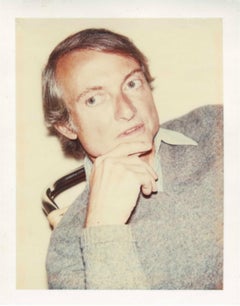
Unique portrait of Roy Lichtenstein, Authenticated by the Andy Warhol Foundation
By Andy Warhol
Located in New York, NY
Andy Warhol Portrait of Roy Lichtenstein, 1975 Polaroid dye-diffusion print Authenticated by the Andy Warhol Foundation for the Visual Arts, bears the Foundation stamp verso Frame included: Framed in white wood frame with UV plexiglass; with die-cut window in the back to show official Warhol Foundation authentication stamp and text Measurements: 9 9/16 x 8 9/16 x 9/16 inches (frame) 3 1/2 x 2 3/4 inches (window) 4.16 x 3.15 inches (Artwork) Authenticated and stamped by the Estate of Andy Warhol/Warhol Foundation for the Visual Arts An impressive piece of Pop Art history! A must-have for fans and collectors of both Andy Warhol and Roy Lichtenstein: This is a unique, authenticated color Polaroid taken by one Pop Art legend, Andy Warhol, of his most formidable contemporary and, in many respects, rival, Roy Lichtenstein. One of only a few portraits Andy Warhol took of Roy Lichtenstein, during one tense photo shoot. Both iconic artists, colleagues and, perhaps lesser known to the public, rivals, would be represented at the time by the renowned Leo Castelli Gallery. The truth is - they were really more rivals than friends. (the rivalry intensified when Warhol, who was working with Walt Disney, discovered that Lichtenstein painted Mickey Mouse before he did!!) Leo Castelli was committed to Roy Lichtenstein, and, it's easy to forget today, wasn't that interested in Warhol as he considered Lichtenstein the greater talent and he could relate better with Roy on a personal level. However, Ivan Karp, who worked at Castelli, was very interested in Warhol, as were some powerful European dealers, as well as many wealthy and influential American and European collectors. That was the start of Warhol's bypassing the traditional gallery model - so that dealers like Castelli could re-discover him after everybody else had. Warhol is known to have taken hundreds of self-portrait polaroid photographs - shoe boxes full - and he took many dozens of images of celebrities like Blondie and Farrah Fawcett. But only a small number of photographic portraits of fellow Pop Art legend Roy Lichtenstein -- each unique,- are known to have appeared on the market over the past half a century - all from the same photo session. This is one of them. There is another Polaroid - from this same (and only) sitting, in the permanent collection of the Getty Museum in California. There really weren't any other collaborations between these two titans, making the resulting portrait from this photo session extraordinary. It is fascinating to study Roy Lichtenstein's face and demeanor in this photograph, in the context of the great sense of competition, but perhaps even greater, albeit uneasy respect, these two larger than life Pop art titans had for each other: Like Leo Castelli, Roy Lichtenstein was Jewish of European descent; whereas Warhol was Catholic and quintessentially American, though also of European (Polish) descent. They were never going to be good friends, but this portrait, perhaps even arranged by Leo Castelli, represents an uneasy acknowledgement there would be room at the top for both of them. Floated, framed with die cut back revealing authentication details, and ready to hang. Measurements: 9 9/16 x 8 9/16 x 9/16 inches (frame) 3 1/2 x 2 3/4 inches (window) 4.16 x 3.15 inches (sheet) Authenticated by the Estate of Andy Warhol/The Andy Warhol Foundation for the Visual Arts. Estate Stamped: Stamped with the Andy Warhol Estate, Warhol Foundation for the Visual Arts stamp, numbered "B 512536P", with the Estate of Andy Warhol stamp and inscribed UP on the reverse. Bears the Warhol Foundation unique inventory number. Roy Lichtenstein Biography Roy Lichtenstein was one of the most influential and innovative artists of the second half of the twentieth century. He is preeminently identified with Pop Art, a movement he helped originate, and his first fully achieved paintings were based on imagery from comic strips and advertisements and rendered in a style mimicking the crude printing processes of newspaper reproduction. These paintings reinvigorated the American art scene and altered the history of modern art. Lichtenstein’s success was matched by his focus and energy, and after his initial triumph in the early 1960s, he went on to create an oeuvre of more than 5,000 paintings, prints, drawings, sculptures, murals and other objects celebrated for their wit and invention. Roy Fox Lichtenstein was born on October 27, 1923, in New York City, the first of two children born to Milton and Beatrice Werner Lichtenstein. Milton Lichtenstein (1893–1946) was a successful real estate broker, and Beatrice Lichtenstein (1896–1991), a homemaker, had trained as a pianist, and she exposed Roy and his sister Rénee to museums, concerts and other aspects of New York culture. Roy showed artistic and musical ability early on: he drew, painted and sculpted as a teenager, and spent many hours in the American Museum of Natural History and the Museum of Modern Art. He played piano and clarinet, and developed an enduring love of jazz, frequenting the nightspots in Midtown to hear it. Lichtenstein attended the Franklin School for Boys, a private junior high and high school, and was graduated in 1940. That summer he studied painting and drawing from the model at the Art Students League of New York with Reginald Marsh. In September he entered Ohio State University (OSU) in Columbus in the College of Education. His early artistic idols were Rembrandt, Daumier and Picasso, and he often said that Guernica (1937; Museo Reina Sofía, Madrid), then on long-term loan to the Museum of Modern Art, was his favorite painting. Even as an undergraduate, Lichtenstein objected to the notion that one set of lines (one person’s drawings) “was considered brilliant, and somebody’s else’s, that may have looked better to you, was considered nothing by almost everyone.”i Lichtenstein’s questioning of accepted canons of taste was encouraged by Hoyt L. Sherman, a teacher whom he maintained was the person who showed him how to see and whose perception-based approach to art shaped his own. In February 1943, Lichtenstein was drafted, and he was sent to Europe in 1945. As part of the infantry, he saw action in France, Belgium and Germany. He made sketches throughout his time in Europe and, after peace was declared there, he intended to study at the Sorbonne. Lichtenstein arrived in Paris in October 1945 and enrolled in classes in French language and civilization, but soon learned that his father was gravely ill. He returned to New York in January 1946, a few weeks before Milton Lichtenstein died. In the spring of that year, Lichtenstein went back to OSU to complete his BFA and in the fall he was invited to join the faculty as an instructor. In June 1949, he married Isabel Wilson Sarisky (1921–80), who worked in a cooperative art gallery in Cleveland where Lichtenstein had exhibited his work. While he was teaching, Lichtenstein worked on his master’s degree, which he received in 1949. During his second stint at OSU, Lichtenstein became closer to Sherman, and began teaching his method on how to organize and unify a composition. Lichtenstein remained appreciative of Sherman’s impact on him. He gave his first son the middle name of “Hoyt,” and in 1994 he donated funds to endow the Hoyt L. Sherman Studio Art Center at OSU. In the late 1940s and early 1950s, Lichtenstein began working in series and his iconography was drawn from printed images. His first sustained theme, intimate paintings and prints in the vein of Paul Klee that poked lyrical fun at medieval knights, castles and maidens, may well have been inspired by a book about the Bayeux Tapestry. Lichtenstein then took an ironic look at nineteenth-century American genre paintings he saw in history books, creating Cubist interpretations of cowboys and Indians spiked with a faux-primitive whimsy. As with his most celebrated Pop paintings of the 1960s, Lichtenstein gravitated toward what he would characterize as the “dumbest” or “worst” visual item he could find and then went on to alter or improve it. In the 1960s, commercial art was considered beneath contempt by the art world; in the early 1950s, with the rise of Abstract Expressionism, nineteenth-century American narrative and genre paintings were at the nadir of their reputation among critics and collectors. Paraphrasing, particularly the paraphrasing of despised images, became a paramount feature of Lichtenstein’s art. Well before finding his signature mode of expression in 1961, Lichtenstein called attention to the artifice of conventions and taste that permeated art and society. What others dismissed as trivial fascinated him as classic and idealized—in his words, “a purely American mythological subject matter.”ii Lichtenstein’s teaching contract at OSU was not renewed for the 1951–52 academic year, and in the autumn of 1951 he and Isabel moved to Cleveland. Isabel Lichtenstein became an interior decorator specializing in modern design, with a clientele drawn from wealthy Cleveland families. Whereas her career blossomed, Lichtenstein did not continue to teach at the university level. He had a series of part-time jobs, including industrial draftsman, furniture designer, window dresser and rendering mechanical dials for an electrical instrument company. In response to these experiences, he introduced quirkily rendered motors, valves and other mechanical elements into his paintings and prints. In 1954, the Lichtensteins’ first son, David, was born; two years later, their second child, Mitchell, followed. Despite the relative lack of interest in his work in Cleveland, Lichtenstein did place his work with New York dealers, which always mattered immensely to him. He had his first solo show at the Carlebach Gallery in New York in 1951, followed by representation with the John Heller Gallery from 1952 to 1957. To reclaim his academic career and get closer to New York, Lichtenstein accepted a position as an assistant professor at the State University of New York at Oswego, in the northern reaches of the state. He was hired to teach industrial design, beginning in September 1957. Oswego turned out to be more geographically and aesthetically isolated than Cleveland ever was, but the move was propitious, for both his art and his career. Lichtenstein broke away from representation to a fully abstract style, applying broad swaths of pigment to the canvas by dragging the paint across its surface with a rag wrapped around his arm. At the same time, Lichtenstein was embedding comic-book characters figures such as Mickey Mouse and Donald Duck in brushy, expressionistic backgrounds. None of the proto-cartoon paintings from this period survive, but several pencil and pastel studies from that time, which he kept, document his intentions. Finally, when he was in Oswego, Lichtenstein met Reginald Neal, the new head of the art department at Douglass College, the women’s college of Rutgers University, in New Brunswick, New Jersey. The school was strengthening and expanding its studio art program, and when Neal needed to add a faculty member to his department, Lichtenstein was invited to apply for the job. Lichtenstein was offered the position of assistant professor, and he began teaching at Douglass in September 1960. At Douglass, Lichtenstein was thrown into a maelstrom of artistic ferment. With New York museums and galleries an hour away, and colleagues Geoffrey Hendricks and Robert Watts at Douglass and Allan Kaprow and George Segal at Rutgers, the environment could not help but galvanize him. In June 1961, Lichtenstein returned to the idea he had fooled around with in Oswego, which was to combine cartoon characters from comic books with abstract backgrounds. But, as Lichtenstein said, “[I]t occurred to me to do it by mimicking the cartoon style without the paint texture, calligraphic line, modulation—all the things involved in expressionism.”iii Most famously, Lichtenstein appropriated the Benday dots, the minute mechanical patterning used in commercial engraving, to convey texture and gradations of color—a stylistic language synonymous with his subject matter. The dots became a trademark device forever identified with Lichtenstein and Pop Art. Lichtenstein may not have calibrated the depth of his breakthrough immediately but he did realize that the flat affect and deadpan presentation of the comic-strip panel blown up and reorganized in the Sherman-inflected way “was just so much more compelling”iv than the gestural abstraction he had been practicing. Among the first extant paintings in this new mode—based on comic strips and illustrations from advertisements—were Popeye and Look Mickey, which were swiftly followed by The Engagement Ring, Girl with Ball and Step-on Can with Leg. Kaprow recognized the energy and radicalism of these canvases and arranged for Lichtenstein to show them to Ivan Karp, director of the Leo Castelli Gallery. Castelli was New York’s leading dealer in contemporary art, and he had staged landmark exhibitions of Jasper Johns and Robert Rauschenberg in 1958 and Frank Stella in 1960. Karp was immediately attracted to Lichtenstein’s paintings, but Castelli was slower to make a decision, partly on account of the paintings’ plebeian roots in commercial art, but also because, unknown to Lichtenstein, two other artists had recently come to his attention—Andy Warhol and James Rosenquist—and Castelli was only ready for one of them. After some deliberation, Castelli chose to represent Lichtenstein, and the first exhibition of the comic-book paintings was held at the gallery from February 10 to March 3, 1962. The show sold out and made Lichtenstein notorious. By the time of Lichtenstein’s second solo exhibition at Castelli in September 1963, his work had been showcased in museums and galleries around the country. He was usually grouped with Johns, Rauschenberg, Warhol, Rosenquist, Segal, Jim Dine, Claes Oldenburg, Robert Indiana and Tom Wesselmann. Taken together, their work was viewed as a slap in the face to Abstract Expressionism and, indeed, the Pop artists shifted attention away from many members of the New York School. With the advent of critical and commercial success, Lichtenstein made significant changes in his life and continued to investigate new possibilities in his art. After separating from his wife, he moved from New Jersey to Manhattan in 1963; in 1964, he resigned from his teaching position at Douglass to concentrate exclusively on his work. The artist also ventured beyond comic book subjects, essaying paintings based on oils by Cézanne, Mondrian and Picasso, as well as still lifes and landscapes. Lichtenstein became a prolific printmaker and expanded into sculpture, which he had not attempted since the mid-1950s, and in both two- and three-dimensional pieces, he employed a host of industrial or “non-art” materials, and designed mass-produced editioned objects that were less expensive than traditional paintings and sculpture. Participating in one such project—the American Supermarket show in 1964 at the Paul Bianchini Gallery, for which he designed a shopping bag—Lichtenstein met Dorothy Herzka (b. 1939), a gallery employee, whom he married in 1968. The late 1960s also saw Lichtenstein’s first museum surveys: in 1967 the Pasadena Art Museum initiated a traveling retrospective, in 1968 the Stedelijk Musem in Amsterdam presented his first European retrospective, and in 1969 he had his first New York retrospective, at the Solomon R. Guggenheim Museum. Wanting to grow, Lichtenstein turned away from the comic book subjects that had brought him prominence. In the late 1960s his work became less narrative and more abstract, as he continued to meditate on the nature of the art enterprise itself. He began to explore and deconstruct the notion of brushstrokes—the building blocks of Western painting. Brushstrokes are conventionally conceived as vehicles of expression, but Lichtenstein made them into a subject. Modern artists have typically maintained that the subject of a painting is painting itself. Lichtenstein took this idea one imaginative step further: a compositional element could serve as the subject matter of a work and make that bromide ring true. The search for new forms and sources was even more emphatic after 1970, when Roy and Dorothy Lichtenstein bought property in Southampton, New York, and made it their primary residence. During the fertile decade of the 1970s, Lichtenstein probed an aspect of perception that had steadily preoccupied him: how easily the unreal is validated as the real because viewers have accepted so many visual conceptions that they don’t analyze what they see. In the Mirror series, he dealt with light and shadow upon glass, and in the Entablature series, he considered the same phenomena by abstracting such Beaux-Art architectural elements as cornices, dentils, capitals and columns. Similarly, Lichtenstein created pioneering painted bronze sculpture that subverted the medium’s conventional three-dimensionality and permanence. The bronze forms were as flat and thin as possible, more related to line than volume, and they portrayed the most fugitive sensations—curls of steam, rays of light and reflections on glass. The steam, the reflections and the shadow were signs for themselves that would immediately be recognized as such by any viewer. Another entire panoply of works produced during the 1970s were complex encounters with Cubism, Futurism, Purism, Surrealism and Expressionism. Lichtenstein expanded his palette beyond red, blue, yellow, black, white and green, and invented and combined forms. He was not merely isolating found images, but juxtaposing, overlapping, fragmenting and recomposing them. In the words of art historian Jack Cowart, Lichtenstein’s virtuosic compositions were “a rich dialogue of forms—all intuitively modified and released from their nominal sources.”v In the early 1980s, which coincided with re-establishing a studio in New York City, Lichtenstein was also at the apex of a busy mural career. In the 1960s and 1970s, he had completed four murals; between 1983 and 1990, he created five. He also completed major commissions for public sculptures in Miami Beach, Columbus, Minneapolis, Paris, Barcelona and Singapore. Lichtenstein created three major series in the 1990s, each emblematic of his ongoing interest in solving pictorial problems. The Interiors, mural-sized canvases inspired by a miniscule advertisement in an Italian telephone...
Category

1970s Pop Art Portrait Photography

Materials

Polaroid

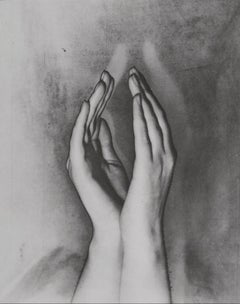
Erwin Blumenfeld, Solarized Hands, Electa Editrice, 1981 (after)
By Erwin Blumenfeld
Located in Southampton, NY
This exquisite heliogravure after Erwin Blumenfeld (1897–1969), titled Solarized Hands, originates from the 1981 folio Erwin Blumenfeld, Electa Editrice Portfolios. Published by Grup...
Category

1980s Modern Figurative Photography

Materials

Offset

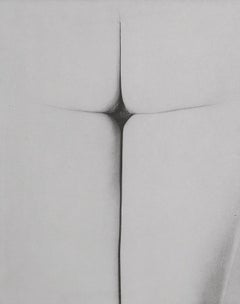
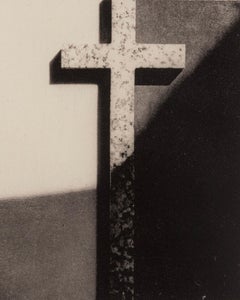
Erwin Blumenfeld, The Devil s Cross, from Electa Editrice, 1981 (after)
By Erwin Blumenfeld
Located in Southampton, NY
This exquisite heliogravure after Erwin Blumenfeld (1897–1969), titled The Devil's Cross, originates from the 1981 folio Erwin Blumenfeld, Electa Editrice Portfolios. Published by Gr...
Category

1980s Modern Nude Photography

Materials

Lithograph

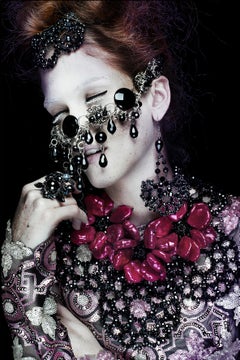
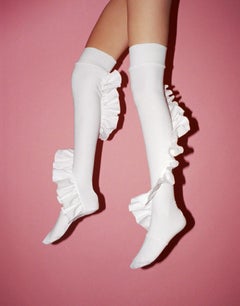
Precious, Portrait. Limited edition fashion color photograph.
By Lèa Bon
Located in Miami Beach, FL
Dreams and fantasies from the past and present are portrayed by Léa Bon’s subjects, which she uses as her own personal dolls. Léa Bon work is a profound exploration of dreams and fa...
Category

2010s Contemporary Color Photography

Materials

Photographic Paper, Color, Archival Pigment

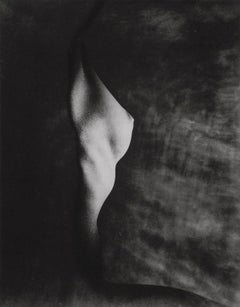
Erwin Blumenfeld, Profile of Bust, Electa Editrice, 1981 (after)
By Erwin Blumenfeld
Located in Southampton, NY
This exquisite heliogravure after Erwin Blumenfeld (1897–1969), titled Profile of Bust, originates from the 1981 folio Erwin Blumenfeld, Electa Editrice Portfolios. Published by Grup...
Category

1980s Modern Nude Photography

Materials

Offset

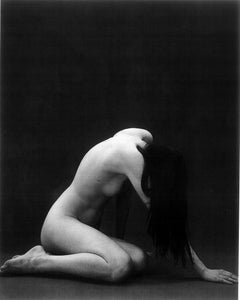
She Disappeared into Complete Silence (AD14558) - large abstract photograph
By Mona Kuhn
Located in San Francisco, CA
In the series 'She Disappeared into Complete Silence' (2014) Mona Kuhn takes a new direction into abstraction. She turns to a highly austere and restrained reductionist geometry and distilled formal purity, connecting the interior to the exterior, the visible to the hidden. These reflections cause one to linger, as they merge to create a dynamic equilibrium of tension, spaces and rythms. AD14558 (She Disappeared into Complete Silence) 60" x 45" / 152cm x 114cm edition of 8 + 2AP 40" x 30" / 102cm x 76cm edition of 8 + 2AP limited edition photograph is printed under artist supervision and accompanied by signed artist certificate: artist signature labels are 8x10 in size signed, editioned, dated and titled by the artist, and stamped for authenticity label __________________ About the artist Acclaimed for her contemporary depictions, Kuhn is considered a leading artist in the world of figurative discourse. Throughout a career spanning more than twenty years, the underlying theme of her work is her reflection on humanity’s longing for spiritual connection and solidarity. As she solidified her photographic style, Kuhn created a notable approach to the nude by developing friendships with her subjects, and employing a range of playful visual strategies that use natural light and minimalist settings to evoke a sublime sense of comfort between the human figure and its environment. Her work is natural, restful, and a reinterpretation of the nude in the canon of contemporary art. For the past two decades, the Los-Angeles based artist's works have been shown steadily, revealing an astonishing consistency in technique, of subject and of purpose. In 2001, Kuhn’s photographs were first seen by an influential audience during the exhibition at Charles Cowles Gallery in Chelsea, New York. Kuhn’s distinct aesthetic has propelled her as one of the most collectible contemporary art photographers—her work is in private and public collections worldwide and she is represented by galleries across the United States, Europe and Asia. Kuhn was born in São Paulo, Brazil, in 1969, of German descent. In 1989, Kuhn moved to the US and earned her BA from The Ohio State University, before furthering her studies at the San Francisco Art Institute. She is currently an independent scholar at The Getty Research Institute in Los Angeles. Occasionally, Mona teaches at UCLA and the Art Center College of Design in Pasadena. Mona Kuhn’s first monograph, Photographs, was debuted by Steidl in 2004; followed by Evidence (2007), Native (2010), Bordeaux Series (2011), Private (2014), and She Disappeared into Complete Silence (2018/19). In addition, Kuhn's monograph titled Bushes and Succulents has been published by Stanley/Barker Editions, with a debut at Jeu de Paume in Paris, In 2021, Thames & Hudson published a career retrospective titled Works. Kuhn's most recent publication Kings Road with Steidl accompanies a multi-dimensional museum traveling exhibition shown in Europe and the US. Mona Kuhn’s work is in private and public collections worldwide, including The J. Paul Getty Museum, Los Angeles County Museum of Art, The Hammer Museum, Perez Art Museum Miami, Museum of Fine Arts, Houston, and the Kiyosato Museum in Japan. Kuhn's work has been exhibited at The Louvre Museum and Le Bal in Paris; The Whitechapel Gallery and Royal Academy of Arts in London; Musée de l’Elysée in Switzerland; Leopold Museum in Vienna Austria, The Polygon Gallery in Vancouver Canada, Taipei Fine Arts Museum in Taiwan and Australian Centre for Photography. Mona Kuhn lives and works in Los Angeles. __________________ Solo Exhibitions 2025 Mona Kuhn: Works, Museum of Contemporary Art, Malaga, Spain 2024 Mona Kuhn: The Schindler House, A Love Affair, Galerie XII, Los Angeles Mona Kuhn: Between Modernism and Surrealism, Houk Gallery, New York, NY 2023 Mona Kuhn: Kings Road, Galerie XII, Paris, France Mona Kuhn: Kings Road, Kunsthaus-Göttingen, Germany Mona Kuhn: Kings Road, Jackson Fine Art, Atlanta 2022 Mona Kuhn: 835 Kings Road, Art, Design & Architecture Museum, Santa Barbara 2021 Mona Kuhn: Works, Galerie XII, Paris Mona Kuhn: Works, Edwynn Houk Gallery, New York Mona Kuhn: Works, Flowers Gallery, London Mona Kuhn: Works, Galerie XII, Los Angeles + Paris + Shanghai Mona Kuhn: 835 Kings Road, Art, Design and Architecture Museum, Santa Barbara 2020 Still Light, Jardin du Bra'haus, Montée du Château, Clervaux, Luxembourg Mona Kuhn: Early Depictions, Flowers Gallery, London Mona Kuhn: Intimate, UP Gallery, Taipei, Taiwan 2019 Bushes and Succulents, Euqinom Gallery, San Francisco Mona Kuhn: She Disappeared, Jackson Fine Art, Atlanta Mona Kuhn: Experimental, Fruit Factory, Durham Triangle, North Carolina 2018 Mona Kuhn: New Works, Part II, Galerie Catherine Hug, Paris, France 2017 Mona Kuhn: The First Chapter, Euqinom Projects, San Francisco, California 2016 Mona Kuhn: New Works, Galerie Catherine Hug, Paris, France Acido Dorado, Galeria Pilar Serra, Madrid, Spain Mona Kuhn: New Works, Euqinom Gallery, San Francisco, California 2015 Private, Ravestijn Gallery, Amsterdam, The Netherlands Private, Galerie Ernst Hilger, Vienna, Austria 2014 Acido Dorado, Edwynn Houk Gallery, New York Acido Dorado, Flowers Gallery, London, UK Private, Jackson Fine Art, Atlanta, Georgia 2012 Bordeaux Series, Galerie Particuliere, Paris, France Native, Galeria Pilar Serra, Madrid, Spain Bordeaux Series, Jackson Fine Art, Atlanta, Georgia Bordeaux, Flowers Gallery, New York Native, Brancolini Grimaldi, Florence, Italy 2011 Bordeaux, Flowers Gallery, London, UK 2010 Native, Flowers Gallery, London, UK Native, Flowers Gallery, New York 2009 Native, M+B Gallery, Los Angeles, California Native, Jackson Fine Art, Atlanta, Georgia 2008 Evidence, Jarach Gallery, Venice, Italy 2007 Evidence, Scott Nichols Gallery, San Francisco, California Evidence, Charles Cowles Gallery, New York Mona Kuhn, Estiarte Gallery, Madrid, Spain Evidence, Jackson Fine Art, Atlanta, Georgia Less Than Innocent, M+B Gallery, Los Angeles, California 2005 Mona Kuhn – Recent Color Work, Charles Cowles Gallery, New York Mona Kuhn-Close, Jackson Fine Art, Atlanta, Georgia Unbounded Youth, Fahey/Klein Gallery, Los Angeles, California 2004 Mona Kuhn-Color, Camerawork, Berlin, Germany New Work, G. Gibson Gallery, Seattle, Washington Corporeal Space, Galerie F5.6, Munique, Germany Mona Kuhn - Color Photographs, Scott Nichols Gallery, San Francisco, California Still Memory, PhotoEye...
Category

21st Century and Contemporary Contemporary Black and White Photography

Materials

Photographic Film, Photographic Paper, Silver Gelatin

Infrahumana. Portrait. Limited edition color photograph.
By Lèa Bon
Located in Miami Beach, FL
Dreams and fantasies from the past and present are portrayed by Léa Bon’s subjects, which she uses as her own personal dolls. Léa Bon work is a profound exploration of dreams and fa...
Category

2010s Contemporary Color Photography

Materials

Photographic Paper, Color, Archival Pigment

Erwin Blumenfeld, Nude Behind a Wet Veil, Electa Editrice, 1981 (after)
By Erwin Blumenfeld
Located in Southampton, NY
This exquisite heliogravure after Erwin Blumenfeld (1897–1969), titled Nude Behind a Wet Veil, originates from the 1981 folio Erwin Blumenfeld, Electa Editrice Portfolios. Published ...
Category

1980s Modern Nude Photography

Materials

Offset

New Orleans, LA, 1995
By Bill Phelps
Located in Hudson, NY
Through light and shadow, a gaze, a mindset, Bill Phelps fourth solo show at the Robin Rice Gallery VISITOR inspires the imagination. About life, about being, eye and heart his great...
Category

21st Century and Contemporary Modern Figurative Photography

Materials

Archival Pigment

"Viki" Photography 29.5" x 24" in Edition of 15 by Kseniya Vashchenko
By Kseniya Vashchenko
Located in Culver City, CA
"Viki" Photography 29.5" x 24" in Edition of 15 by Kseniya Vashchenko Not framed. Ships rolled in tube. Signed and numbered by the artist. Comes with COA issued by the Artist Avail...
Category

21st Century and Contemporary Contemporary Black and White Photography

Materials

Digital Pigment

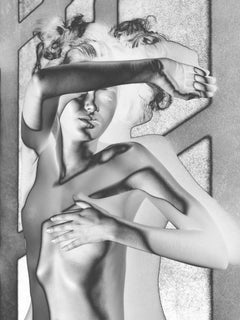
Erwin Blumenfeld, Torso, Solarized, Electa Editrice (after)
By Erwin Blumenfeld
Located in Southampton, NY
This exquisite heliogravure after Erwin Blumenfeld (1897–1969), titled Torso, Solarized, originates from the 1981 folio Erwin Blumenfeld, Electa Editrice Portfolios. Published by Gru...
Category

1980s Modern Nude Photography

Materials

Offset

Between II, Photography, Limited Edition
Located in München, BY
Limited Edition of 3 Framed size 70 x 100 cm All works are Archival Pigment prints, floating in an all black wooden frame behind museums glass.  More sizes on request. Sara Punt's w...
Category

2010s Contemporary Black and White Photography

Materials

Archival Pigment

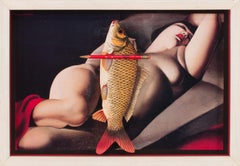
"Lempicka" 3D Mixed Media Collage by Michaele Vollbracht, Shadow Box Frame
By Michaele Vollbracht
Located in Miami, FL
MICHAELE VOLLBRECHT – "TDE LEMPICKA" ⚜ Mixed Media Collage ⚜ Artist’s Signature Incorporated on Pencil ⚜ Shadow Box Frame A BOLD JUXTAPOSITION OF EROTICISM, OBJECTS, AND ART HISTORI...
Category

1990s Pop Art Nude Photography

Materials

Mixed Media, Magazine Paper, Pencil

She Disappeared into Complete Silence (AD6754) - monochromatic desert photograph
By Mona Kuhn
Located in San Francisco, CA
In the series 'She Disappeared into Complete Silence' (2014) Mona Kuhn takes a new direction into abstraction. She turns to a highly austere and restrained reductionist geometry and distilled formal purity, connecting the interior to the exterior, the visible to the hidden. These reflections cause one to linger, as they merge to create a dynamic equilibrium of tension, spaces and rythms. AD6754 (She Disappeared into Complete Silence) 45" x 60" / 114cm x 152cm edition of 8 + 2AP 30" x 40" / 76cm x 102cm edition of 8 + 2AP limited edition photograph printed under artist supervision + accompanied by signed artist certificate: artist signature labels are 8x10 in size signed, editioned, dated and titled by the artist, and stamped for authenticity label __________________ About the artist Acclaimed for her contemporary depictions, Kuhn is considered a leading artist in the world of figurative discourse. Throughout a career spanning more than twenty years, the underlying theme of her work is her reflection on humanity’s longing for spiritual connection and solidarity. As she solidified her photographic style, Kuhn created a notable approach to the nude by developing friendships with her subjects, and employing a range of playful visual strategies that use natural light and minimalist settings to evoke a sublime sense of comfort between the human figure and its environment. Her work is natural, restful, and a reinterpretation of the nude in the canon of contemporary art. For the past two decades, the Los-Angeles based artist's works have been shown steadily, revealing an astonishing consistency in technique, of subject and of purpose. In 2001, Kuhn’s photographs were first seen by an influential audience during the exhibition at Charles Cowles Gallery in Chelsea, New York. Kuhn’s distinct aesthetic has propelled her as one of the most collectible contemporary art photographers—her work is in private and public collections worldwide and she is represented by galleries across the United States, Europe and Asia. Kuhn was born in São Paulo, Brazil, in 1969, of German descent. In 1989, Kuhn moved to the US and earned her BA from The Ohio State University, before furthering her studies at the San Francisco Art Institute. She is currently an independent scholar at The Getty Research Institute in Los Angeles. Occasionally, Mona teaches at UCLA and the Art Center College of Design in Pasadena. Mona Kuhn’s first monograph, Photographs, was debuted by Steidl in 2004; followed by Evidence (2007), Native (2010), Bordeaux Series (2011), Private (2014), and She Disappeared into Complete Silence (2018/19). In addition, Stanley/Barker Editions published Kuhn's Bushes and Succulents (2018) with a debut at Musee Jeu de Paume in Paris in 2019. Thames & Hudson published a career retrospective titled Works. Kuhn's most recent publication Kings Road with Steidl accompanies a multi-dimensional museum exhibition in Germany and the US. Mona Kuhn’s work is in private and public collections worldwide, including The J. Paul Getty Museum, the Los Angeles County Museum of Art, The Hammer Museum, the Perez Art Museum in Miami, the Museum of Fine Arts, Houston, and the Kiyosato Museum in Japan. Kuhn's work has been exhibited at The Louvre Museum and Le Bal in Paris, The Whitechapel Gallery and Royal Academy of Arts in London, Musée de l’Elysée in Switzerland, Leopold Museum in Vienna Austria, The Polygon Gallery in Vancouver Canada, Australian Centre for Photography and Taipei Fine Arts Museum in Taiwan. Mona Kuhn currently lives and works in Los Angeles. __________________ Solo Exhibitions 2024 Mona Kuhn: Between Modernism and Surrealism, Houk Gallery, New York, NY 2023 Mona Kuhn: Kings Road, Galerie XII, Paris, France Mona Kuhn: Kings Road, Kunsthaus-Göttingen, Germany Mona Kuhn: Kings Road, Jackson Fine Art...
Category

21st Century and Contemporary Contemporary Color Photography

Materials

Photographic Film, Photographic Paper, Silver Gelatin

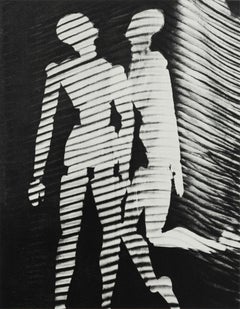
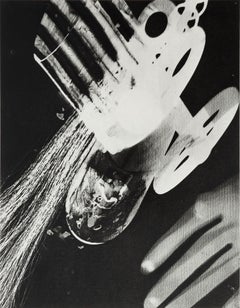
Man Ray, Rayograph, from Electa Editrice, 1980 (after)
By Man Ray
Located in Southampton, NY
This exquisite heliogravure after Man Ray (1890–1976), titled Rayograph, originates from the 1980 folio Man Ray, Electa Editrice Portfolios. Published by Gruppo Editoriale Electra, Milano, and printed by Gruppo Editoriale Electra, Milano, 1980. This image exemplifies Man Ray’s pioneering “rayograph” technique—a cameraless photographic process in which objects were placed directly onto photosensitive paper and exposed to light, creating luminous abstract compositions that fused chance, intuition, and surrealist invention. Through this groundbreaking process, Man Ray transformed photography into pure visual poetry, redefining its potential as a form of modern art. Executed as a heliogravure on velin paper, this work measures 15.75 x 11.75 inches. Unsigned and unnumbered as issued. The edition exemplifies the refined craftsmanship of Gruppo Editoriale Electra, Milano. Artwork Details: Artist: After Man Ray (1890–1976) Title: Rayograph Medium: Heliogravure on velin paper Dimensions: 15.75 x 11.75 inches (40.01 x 29.84 cm) Inscription: Unsigned and unnumbered as issued Date: 1980 Publisher: Gruppo Editoriale Electra, Milano Printer: Gruppo Editoriale Electra, Milano Condition: Well preserved, consistent with age and medium Provenance: From the folio Man Ray, Electa Editrice Portfolios, published and printed by Gruppo Editoriale Electra, Milano, 1980 Notes: Excerpted from the folio (translated from Italian), Limited edition of M examples, drawn in heliogravure on special paper, designed specifically for the Portfolios Electa. Gruppo Editoriale Electra/Milan. Printed in Italy. About the Publication: The Man Ray, Electa Editrice Portfolio (1980) was published by Gruppo Editoriale Electra in Milan as part of the distinguished Electa Portfolios series, which celebrated the masters of 20th-century photography through the artisanal process of heliogravure printing. This edition was dedicated to Man Ray’s seminal body of photographic work from 1920 to 1934—an era in which he redefined modern image-making through technical invention, surrealist experimentation, and intellectual daring. Produced in collaboration with leading photographic historians and Italian master printers, the portfolio was printed on specially manufactured velin paper designed exclusively for the Electa Portfolios, ensuring tonal precision and textural depth true to the artist’s originals. The publication represents one of the most refined posthumous tributes to Man Ray’s legacy, combining Italian craftsmanship with avant-garde vision to preserve the luminous complexity of his photographs. Created with the same devotion to innovation and elegance that characterized Man Ray’s own practice, this edition remains an important intersection of fine art publishing and modernist history. About the Artist: Man Ray (1890–1976) was an American-born painter, sculptor, photographer, filmmaker, and conceptual visionary whose radical imagination and technical innovation transformed modern art and established him as one of the leading figures of the 20th century. Born Emmanuel Radnitzky in Philadelphia, he became a central force in both the Dada and Surrealist movements, defying artistic boundaries and redefining the relationship between art, technology, and the unconscious. After early involvement in New York’s avant-garde with Francis Picabia and Marcel Duchamp, Man Ray moved to Paris in 1921, where he joined a revolutionary circle of artists including Pablo Picasso, Alexander Calder, Alberto Giacometti, Salvador Dali, Joan Miro, Wassily Kandinsky, and Marcel Duchamp. There, he pioneered the “rayograph,” or photogram—a cameraless photographic technique that used light and shadow to create ethereal abstract compositions—and produced some of the most iconic images in art history, including Le Violon d’Ingres (1924) and Noire et Blanche (1926). His photography, distinguished by its fusion of elegance, surrealism, and psychological depth, captured the essence of modernist Paris and immortalized creative icons such as Kiki de Montparnasse, Gertrude Stein, and James Joyce. At the same time, Man Ray’s experimental films, including Le Retour a la Raison (1923) and L’Etoile de mer (1928), and his sculptural works like The Gift (1921) and Object to Be Destroyed (1923), expanded the possibilities of art itself, transforming ordinary objects into symbols of mystery and desire. His conceptual approach—viewing art as an idea rather than an object—anticipated later movements such as Pop Art, Minimalism, and Conceptual Art, profoundly influencing artists like Andy Warhol, Robert Rauschenberg, Jasper Johns, and Joseph Beuys, as well as photographers Helmut Newton, Guy Bourdin, Cindy Sherman, and Richard Avedon. Even in exile during World War II, while working in Los Angeles, he continued to innovate, blending Surrealist fantasy with the luminosity of the California landscape before returning to Paris, where he spent his final decades refining his poetic, intellectual, and sensuous vision. Exhibited in major institutions such as the Museum of Modern Art, the Tate Modern, and the Centre Pompidou, Man Ray’s work remains foundational to modern art history—bridging painting, photography, film, and sculpture in a body of work that continues to shape the language of visual culture. Standing alongside Pablo Picasso, Alexander Calder, Alberto Giacometti, Salvador Dali, Joan Miro, Wassily Kandinsky, and Marcel Duchamp, Man Ray endures as one of the most original and influential artists of the modern era. His highest auction record was achieved by Noire et Blanche (1926), which sold for 3.13 million USD at Christie’s, Paris, on November 9, 2017, confirming his status as a timeless innovator whose genius continues to inspire artists, collectors, and dreamers worldwide. Man Ray Rayograph...
Category

1980s Surrealist Figurative Photography

Materials

Lithograph

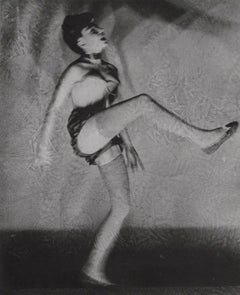
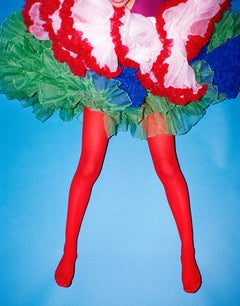
Erwin Blumenfeld, Can-can Dancer, New York Electa Editrice, 1981 (after)
By Erwin Blumenfeld
Located in Southampton, NY
This exquisite heliogravure after Erwin Blumenfeld (1897–1969), titled Can-can Dancer, New York, originates from the 1981 folio Erwin Blumenfeld, Electa Editrice Portfolios. Publishe...
Category

1980s Modern Figurative Photography

Materials

Offset

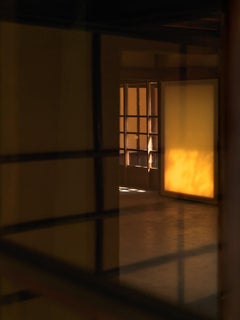
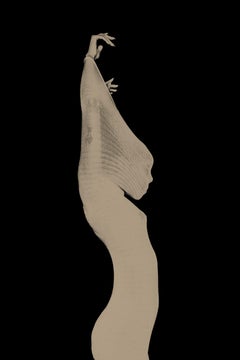
Spectral (Kings Road) - unique solarized gelatin silver artist print
By Mona Kuhn
Located in San Francisco, CA
In Kings Road (2022) Mona Kuhn lyrically reconsiders the realms of time and space within the midcentury architectural elements of the iconic Schindler House in Los Angeles. Built by Austrian architect Rudolph M. Schindler in 1922, the house was both a social and design experiment and an avant-garde hub for intellectuals and artists in the 1920s and ’30s. The body of works incorporates chromogenic color prints, reflecting vignettes and materials of the building's emotional architecture, juxtaposition with unique solarized gelatin silver prints capturing traces of an ethereal human presence. Spectral (2022) Kings Road: A Rudolph Schindler House 30" x 40" / 76cm x 102cm /edition of 12 15" x 20" / 38cm x 56cm / edition of 12 limited edition solarization photograph printed by the artist + accompanied by signed artist certificate: artist signature label (8x10") signed/editioned/dated/titled by the artist + stamped for authenticity label is placed centered on verso of the mounted print __________________ About the artist Acclaimed for her contemporary depictions, Kuhn is considered a leading artist in the world of figurative discourse. Throughout a career spanning more than twenty years, the underlying theme of her work is her reflection on humanity’s longing for spiritual connection and solidarity. As she solidified her photographic style, Kuhn created a notable approach to the nude by developing friendships with her subjects, and employing a range of playful visual strategies that use natural light and minimalist settings to evoke a sublime sense of comfort between the human figure and its environment. Her work is natural, restful, and a reinterpretation of the nude in the canon of contemporary art. For the past two decades, the Los-Angeles based artist's works have been shown steadily, revealing an astonishing consistency in technique, of subject and of purpose. In 2001, Kuhn’s photographs were first seen by an influential audience during the exhibition at Charles Cowles Gallery in Chelsea, New York. Kuhn’s distinct aesthetic has propelled her as one of the most collectible contemporary art photographers—her work is in private and public collections worldwide and she is represented by galleries across the United States, Europe and Asia. Kuhn was born in São Paulo, Brazil, in 1969, of German descent. In 1989, Kuhn moved to the US and earned her BA from The Ohio State University, before furthering her studies at the San Francisco Art Institute. She is currently an independent scholar at The Getty Research Institute in Los Angeles. Occasionally, Mona teaches at UCLA and the Art Center College of Design in Pasadena. Kuhn’s first monograph, Photographs, was debuted by Steidl in 2004; followed by Evidence (2007), Native (2010), Bordeaux Series (2011), Private (2014), and She Disappeared into Complete Silence (2018/19). In addition, Stanley/Barker Editions published Kuhn's Bushes & Succulents in 2018. In 2021, Thames & Hudson published a career retrospective titled Works. Kuhn's most recent publication Kings Road (2022) with Steidl accompanies a multi-dimensional museum traveling exhibition shown in Europe and the US. Mona Kuhn’s work is in private and public collections worldwide, including The J. Paul Getty Museum, Los Angeles County Museum of Art, The Hammer Museum, Perez Art Museum Miami, Museum of Fine Arts, Houston, and the Kiyosato Museum in Japan. Kuhn's work has been exhibited at The Louvre Museum and Le Bal in Paris; The Whitechapel Gallery and Royal Academy of Arts in London; Musée de l’Elysée in Switzerland; Leopold Museum in Vienna Austria, The Polygon Gallery in Vancouver Canada, Taipei Fine Arts Museum in Taiwan and Australian Centre for Photography. Mona Kuhn lives and works in Los Angeles. __________________ Solo Exhibitions 2025 Mona Kuhn: Y Tu Desnudo será Un Gran Poema, Museum of Contemporary Art, Malaga, Spain Mona Kuhn: Kings Road, Lianzhou Museum of Photography, China 2024 Mona Kuhn: The Schindler House, A Love Affair, Galerie XII...
Category

21st Century and Contemporary Contemporary Portrait Photography

Materials

Photographic Film, Photographic Paper, Silver Gelatin

Pulse (Kings Road) - observations at the Schindler House in Los Angeles
By Mona Kuhn
Located in San Francisco, CA
Original large format photographic print from Mona Kuhn's series Kings Road, ephemeral observations of interiors, vignettes and details captured at Rudolph Schindler's iconic LA home. In Kings Road (2022) Mona Kuhn lyrically reconsiders the realms of time and space within the midcentury architectural elements of the iconic Schindler House in Los Angeles. Built by Austrian architect Rudolph M. Schindler in 1922, the house was both a social and design experiment and an avant-garde hub for intellectuals and artists in the 1920s and ’30s. The body of work this individual photo is from incorporates chromogenic color prints, reflecting vignettes and materials of the building's emotional architecture, juxtaposition with unique solarized gelatin silver prints capturing traces of an ethereal human presence. The exhibition Kings Road has been shown in Santa Barbara, Paris, Göttingen an Lianzhou. Read more about Mona Kuhn in a recent Introspective Magazine feature - see 1stDibs page footer below Pulse (2022) Kings Road: A Rudolph Schindler House 60" x 45" / 152cm x 114cm / edition of 3 40" x 30" / 102cm x 76cm /edition of 12 limited edition photograph printed under artist supervision + accompanied by signed artist certificate: artist signature label (8x10") signed/editioned/dated/titled by the artist + stamped for authenticity label is placed centered on verso of the mounted print __________________ About the artist Acclaimed for her contemporary depictions, Kuhn is considered a leading artist in the world of figurative discourse. Throughout a career spanning more than twenty years, the underlying theme of her work is her reflection on humanity’s longing for spiritual connection and solidarity. As she solidified her photographic style, Kuhn created a notable approach to the nude by developing friendships with her subjects, and employing a range of playful visual strategies that use natural light and minimalist settings to evoke a sublime sense of comfort between the human figure and its environment. Her work is natural, restful, and a reinterpretation of the nude in the canon of contemporary art. For the past two decades, the Los-Angeles based artist's works have been shown steadily, revealing an astonishing consistency in technique, of subject and of purpose. In 2001, Kuhn’s photographs were first seen by an influential audience during the exhibition at Charles Cowles Gallery in Chelsea, New York. Kuhn’s distinct aesthetic has propelled her as one of the most collectible contemporary art photographers—her work is in private and public collections worldwide and she is represented by galleries across the United States, Europe and Asia. Kuhn was born in São Paulo, Brazil, in 1969, of German descent. In 1989, Kuhn moved to the US and earned her BA from The Ohio State University, before furthering her studies at the San Francisco Art Institute. She is currently an independent scholar at The Getty Research Institute in Los Angeles. Occasionally, Mona teaches at UCLA and the Art Center College of Design in Pasadena. Kuhn’s first monograph, Photographs, was debuted by Steidl in 2004; followed by Evidence (2007), Native (2010), Bordeaux Series (2011), Private (2014), and She Disappeared into Complete Silence (2018/19). In addition, Stanley/Barker Editions published Kuhn's Bushes & Succulents in 2018. In 2021, Thames & Hudson published a career retrospective titled Works. Kuhn's most recent publication Kings Road (2022) with Steidl accompanies a multi-dimensional museum traveling exhibition shown in Europe and the US. Mona Kuhn’s work is in private and public collections worldwide, including The J. Paul Getty Museum, Los Angeles County Museum of Art, The Hammer Museum, Perez Art Museum Miami, Museum of Fine Arts, Houston, and the Kiyosato Museum in Japan. Kuhn's work has been exhibited at The Louvre Museum and Le Bal in Paris; The Whitechapel Gallery and Royal Academy of Arts in London; Musée de l’Elysée in Switzerland; Leopold Museum in Vienna Austria, The Polygon Gallery in Vancouver Canada, Taipei Fine Arts Museum in Taiwan and Australian Centre for Photography. Mona Kuhn lives and works in Los Angeles. __________________ Solo Exhibitions 2025 Mona Kuhn: Y Tu Desnudo será Un Gran Poema, Museum of Contemporary Art, Malaga, Spain Mona Kuhn: Kings Road, Lianzhou Museum of Photography, China 2024 Mona Kuhn: The Schindler House, A Love Affair, Galerie XII...
Category

21st Century and Contemporary Contemporary Color Photography

Materials

Photographic Paper, C Print

"Velum" Black White Photography 39" x 31" in Ed. of 7 by Kseniya Vashchenko
By Kseniya Vashchenko
Located in Culver City, CA
"Velum" Black & White Photography 39" x 31" in Ed. of 7 by Kseniya Vashchenko Signed and numbered by the artist. Comes with COA issued by the Artist Not framed. Ships rolled in tube...
Category

21st Century and Contemporary Contemporary Black and White Photography

Materials

Digital Pigment

Man Ray, Rayograph to the Skein of Wool, from Electa Editrice, 1980 (after)
By Man Ray
Located in Southampton, NY
This exquisite heliogravure after Man Ray (1890–1976), titled Rayograph to the Skein of Wool, originates from the 1980 folio Man Ray, Electa Editrice Portfolios. Published by Gruppo Editoriale Electra, Milano, and printed by Gruppo Editoriale Electra, Milano, 1980. This work exemplifies Man Ray’s invention of the “rayograph,” a cameraless photographic technique in which objects are placed directly on light-sensitive paper and exposed to light. The resulting image, both abstract and tangible, transforms a simple skein of wool into a mysterious interplay of light, form, and shadow. The composition captures the poetic essence of Man Ray’s Surrealist experimentation—an alchemy of chance and precision that fuses everyday materials with pure visual abstraction. Executed as a heliogravure on velin paper, this work measures 15.75 x 11.75 inches. Unsigned and unnumbered as issued. The edition exemplifies the refined craftsmanship of Gruppo Editoriale Electra, Milano. Artwork Details: Artist: After Man Ray (1890–1976) Title: Rayograph to the Skein of Wool Medium: Heliogravure on velin paper Dimensions: 15.75 x 11.75 inches (40.01 x 29.84 cm) Inscription: Unsigned and unnumbered as issued Date: 1980 Publisher: Gruppo Editoriale Electra, Milano Printer: Gruppo Editoriale Electra, Milano Condition: Well preserved, consistent with age and medium Provenance: From the folio Man Ray, Electa Editrice Portfolios, published and printed by Gruppo Editoriale Electra, Milano, 1980 Notes: Excerpted from the folio (translated from Italian), Limited edition of M examples, drawn in heliogravure on special paper, designed specifically for the Portfolios Electa. Gruppo Editoriale Electra/Milan. Printed in Italy. About the Publication: The Man Ray, Electa Editrice Portfolio (1980) was published by Gruppo Editoriale Electra in Milan as part of the distinguished Electa Portfolios series, which celebrated the masters of 20th-century photography through the artisanal process of heliogravure printing. This edition was dedicated to Man Ray’s seminal body of photographic work from 1920 to 1934—an era in which he redefined modern image-making through technical invention, surrealist experimentation, and intellectual daring. Produced in collaboration with leading photographic historians and Italian master printers, the portfolio was printed on specially manufactured velin paper designed exclusively for the Electa Portfolios, ensuring tonal precision and textural depth true to the artist’s originals. The publication represents one of the most refined posthumous tributes to Man Ray’s legacy, combining Italian craftsmanship with avant-garde vision to preserve the luminous complexity of his photographs. Created with the same devotion to innovation and elegance that characterized Man Ray’s own practice, this edition remains an important intersection of fine art publishing and modernist history. About the Artist: Man Ray (1890–1976) was an American-born painter, sculptor, photographer, filmmaker, and conceptual visionary whose radical imagination and technical innovation transformed modern art and established him as one of the leading figures of the 20th century. Born Emmanuel Radnitzky in Philadelphia, he became a central force in both the Dada and Surrealist movements, defying artistic boundaries and redefining the relationship between art, technology, and the unconscious. After early involvement in New York’s avant-garde with Francis Picabia and Marcel Duchamp, Man Ray moved to Paris in 1921, where he joined a revolutionary circle of artists including Pablo Picasso, Alexander Calder, Alberto Giacometti, Salvador Dali, Joan Miro, Wassily Kandinsky, and Marcel Duchamp. There, he pioneered the “rayograph,” or photogram—a cameraless photographic technique that used light and shadow to create ethereal abstract compositions—and produced some of the most iconic images in art history, including Le Violon d’Ingres (1924) and Noire et Blanche (1926). His photography, distinguished by its fusion of elegance, surrealism, and psychological depth, captured the essence of modernist Paris and immortalized creative icons such as Kiki de Montparnasse, Gertrude Stein, and James Joyce. At the same time, Man Ray’s experimental films, including Le Retour a la Raison (1923) and L’Etoile de mer (1928), and his sculptural works like The Gift (1921) and Object to Be Destroyed (1923), expanded the possibilities of art itself, transforming ordinary objects into symbols of mystery and desire. His conceptual approach—viewing art as an idea rather than an object—anticipated later movements such as Pop Art, Minimalism, and Conceptual Art, profoundly influencing artists like Andy Warhol, Robert Rauschenberg, Jasper Johns, and Joseph Beuys, as well as photographers Helmut Newton, Guy Bourdin, Cindy Sherman, and Richard Avedon. Even in exile during World War II, while working in Los Angeles, he continued to innovate, blending Surrealist fantasy with the luminosity of the California landscape before returning to Paris, where he spent his final decades refining his poetic, intellectual, and sensuous vision. Exhibited in major institutions such as the Museum of Modern Art, the Tate Modern, and the Centre Pompidou, Man Ray’s work remains foundational to modern art history—bridging painting, photography, film, and sculpture in a body of work that continues to shape the language of visual culture. Standing alongside Pablo Picasso, Alexander Calder, Alberto Giacometti, Salvador Dali, Joan Miro, Wassily Kandinsky, and Marcel Duchamp, Man Ray endures as one of the most original and influential artists of the modern era. His highest auction record was achieved by Noire et Blanche (1926), which sold for 3.13 million USD at Christie’s, Paris, on November 9, 2017, confirming his status as a timeless innovator whose genius continues to inspire artists, collectors, and dreamers worldwide. Man Ray Rayograph...
Category

1980s Surrealist Figurative Photography

Materials

Lithograph

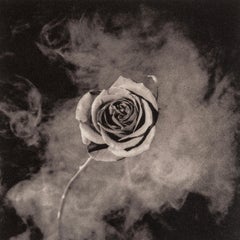
Robert Mapplethorpe, Rose with Smoke, from A Season in Hell, 1986 (after)
By Robert Mapplethorpe
Located in Southampton, NY
This exquisite photogravure after Robert Mapplethorpe (1946–1989), titled Rose with Smoke, from the folio A Season in Hell, originates from the 1986 edition published by The Limited ...
Category

1980s Contemporary Still-life Photography

Materials

Photogravure

Man Ray, Rayograph, from Electa Editrice, 1980 (after)
By Man Ray
Located in Southampton, NY
This exquisite heliogravure after Man Ray (1890–1976), titled Rayograph, originates from the 1980 folio Man Ray, Electa Editrice Portfolios. Published by Gruppo Editoriale Electra, Milano, and printed by Gruppo Editoriale Electra, Milano, 1980. This image exemplifies Man Ray’s pioneering “rayograph” technique—a cameraless photographic process in which objects were placed directly onto photosensitive paper and exposed to light, creating luminous abstract compositions that fused chance, intuition, and surrealist invention. Through this groundbreaking process, Man Ray transformed photography into pure visual poetry, redefining its potential as a form of modern art. Executed as a heliogravure on velin paper, this work measures 15.75 x 11.75 inches. Unsigned and unnumbered as issued. The edition exemplifies the refined craftsmanship of Gruppo Editoriale Electra, Milano. Artwork Details: Artist: After Man Ray (1890–1976) Title: Rayograph Medium: Heliogravure on velin paper Dimensions: 15.75 x 11.75 inches (40.01 x 29.84 cm) Inscription: Unsigned and unnumbered as issued Date: 1980 Publisher: Gruppo Editoriale Electra, Milano Printer: Gruppo Editoriale Electra, Milano Condition: Well preserved, consistent with age and medium Provenance: From the folio Man Ray, Electa Editrice Portfolios, published and printed by Gruppo Editoriale Electra, Milano, 1980 Notes: Excerpted from the folio (translated from Italian), Limited edition of M examples, drawn in heliogravure on special paper, designed specifically for the Portfolios Electa. Gruppo Editoriale Electra/Milan. Printed in Italy. About the Publication: The Man Ray, Electa Editrice Portfolio (1980) was published by Gruppo Editoriale Electra in Milan as part of the distinguished Electa Portfolios series, which celebrated the masters of 20th-century photography through the artisanal process of heliogravure printing. This edition was dedicated to Man Ray’s seminal body of photographic work from 1920 to 1934—an era in which he redefined modern image-making through technical invention, surrealist experimentation, and intellectual daring. Produced in collaboration with leading photographic historians and Italian master printers, the portfolio was printed on specially manufactured velin paper designed exclusively for the Electa Portfolios, ensuring tonal precision and textural depth true to the artist’s originals. The publication represents one of the most refined posthumous tributes to Man Ray’s legacy, combining Italian craftsmanship with avant-garde vision to preserve the luminous complexity of his photographs. Created with the same devotion to innovation and elegance that characterized Man Ray’s own practice, this edition remains an important intersection of fine art publishing and modernist history. About the Artist: Man Ray (1890–1976) was an American-born painter, sculptor, photographer, filmmaker, and conceptual visionary whose radical imagination and technical innovation transformed modern art and established him as one of the leading figures of the 20th century. Born Emmanuel Radnitzky in Philadelphia, he became a central force in both the Dada and Surrealist movements, defying artistic boundaries and redefining the relationship between art, technology, and the unconscious. After early involvement in New York’s avant-garde with Francis Picabia and Marcel Duchamp, Man Ray moved to Paris in 1921, where he joined a revolutionary circle of artists including Pablo Picasso, Alexander Calder, Alberto Giacometti, Salvador Dali, Joan Miro, Wassily Kandinsky, and Marcel Duchamp. There, he pioneered the “rayograph,” or photogram—a cameraless photographic technique that used light and shadow to create ethereal abstract compositions—and produced some of the most iconic images in art history, including Le Violon d’Ingres (1924) and Noire et Blanche (1926). His photography, distinguished by its fusion of elegance, surrealism, and psychological depth, captured the essence of modernist Paris and immortalized creative icons such as Kiki de Montparnasse, Gertrude Stein, and James Joyce. At the same time, Man Ray’s experimental films, including Le Retour a la Raison (1923) and L’Etoile de mer (1928), and his sculptural works like The Gift (1921) and Object to Be Destroyed (1923), expanded the possibilities of art itself, transforming ordinary objects into symbols of mystery and desire. His conceptual approach—viewing art as an idea rather than an object—anticipated later movements such as Pop Art, Minimalism, and Conceptual Art, profoundly influencing artists like Andy Warhol, Robert Rauschenberg, Jasper Johns, and Joseph Beuys, as well as photographers Helmut Newton, Guy Bourdin, Cindy Sherman, and Richard Avedon. Even in exile during World War II, while working in Los Angeles, he continued to innovate, blending Surrealist fantasy with the luminosity of the California landscape before returning to Paris, where he spent his final decades refining his poetic, intellectual, and sensuous vision. Exhibited in major institutions such as the Museum of Modern Art, the Tate Modern, and the Centre Pompidou, Man Ray’s work remains foundational to modern art history—bridging painting, photography, film, and sculpture in a body of work that continues to shape the language of visual culture. Standing alongside Pablo Picasso, Alexander Calder, Alberto Giacometti, Salvador Dali, Joan Miro, Wassily Kandinsky, and Marcel Duchamp, Man Ray endures as one of the most original and influential artists of the modern era. His highest auction record was achieved by Noire et Blanche (1926), which sold for 3.13 million USD at Christie’s, Paris, on November 9, 2017, confirming his status as a timeless innovator whose genius continues to inspire artists, collectors, and dreamers worldwide. Man Ray Rayograph...
Category

1980s Surrealist Figurative Photography

Materials

Lithograph

Occult Games #3, Portrait. Limited edition fashion color photograph.
By Lèa Bon
Located in Miami Beach, FL
Dreams and fantasies from the past and present are portrayed by Léa Bon’s subjects, which she uses as her own personal dolls. Léa Bon work is a profound exploration of dreams and fa...
Category

2010s Contemporary Color Photography

Materials

Photographic Paper, Color, Archival Pigment

Untitled Michelle 35
Located in New York, NY
ABOUT THIS ARTIST: Through his hundreds of vibrant photographic collages, his sculptural nudes in his recent series For A Good Time and his frequent editorial work for magazines such...
Category

2010s Figurative Photography

Materials

Photographic Paper

"Zwei" Black White Photography 31" x 39" in Ed. of 7 by Kseniya Vashchenko
By Kseniya Vashchenko
Located in Culver City, CA
"Zwei" Black & White Photography 31" x 39" in Ed. of 7 by Kseniya Vashchenko Signed and numbered by the artist. Comes with COA issued by the Artist Not framed. ...
Category

21st Century and Contemporary Contemporary Black and White Photography

Materials

Digital Pigment

Robert Mapplethorpe, Hand in Fire, from A Season in Hell, 1986 (after)
By Robert Mapplethorpe
Located in Southampton, NY
This exquisite photogravure after Robert Mapplethorpe (1946–1989), titled Hand in Fire, from the folio A Season in Hell, originates from the 1986 edition published by The Limited Edi...
Category

1980s Contemporary Figurative Photography

Materials

Photogravure

"Vulnerable" Nude Photography 39" x 31" in Edition of 7 by Kseniya Vashchenko
By Kseniya Vashchenko
Located in Culver City, CA
"Vulnerable" Nude Photography 39" x 31" in Edition of 7 by Kseniya Vashchenko Signed and numbered by the artist. Comes with COA issued by the Artist Not framed. Ships rolled in tube...
Category

21st Century and Contemporary Contemporary Black and White Photography

Materials

Digital Pigment

Robert Mapplethorpe, Self-Portrait, from A Season in Hell, 1986 (after)
By Robert Mapplethorpe
Located in Southampton, NY
This exquisite photogravure after Robert Mapplethorpe (1946–1989), titled Self-Portrait, from the folio A Season in Hell, originates from the 1986 edition published by The Limited Ed...
Category

1980s Contemporary Figurative Photography

Materials

Photogravure

Untitled Kara 4
Located in New York, NY
ABOUT THIS ARTIST: Through his hundreds of vibrant photographic collages, his sculptural nudes in his recent series For A Good Time and his frequent editorial work for magazines such...
Category

2010s Figurative Photography

Materials

Photographic Paper

Fundamentals (Kings Road) - observations at the Schindler House in Los Angeles
By Mona Kuhn
Located in San Francisco, CA
In Kings Road (2022) Mona Kuhn lyrically reconsiders the realms of time and space within the architectural elements of the Schindler House in Los Angeles. Built by Austrian architect Rudolph M. Schindler in 1922, the house was both a social and design experiment and an avant-garde hub for intellectuals and artists in the 1920s and ’30s. Fundamentals (2022) Kings Road: A Rudolph Schindler House 45" x 60" / 114cm x 152cm / edition of 3 30" x 40" / 76cm x 102cm /edition of 12 limited edition photograph printed under artist supervision + accompanied by signed artist certificate: artist signature label (8x10") signed/editioned/dated/titled by the artist + stamped for authenticity label is placed centered on verso of the mounted print __________________ About the artist Acclaimed for her contemporary depictions, Kuhn is considered a leading artist in the world of figurative discourse. Throughout a career spanning more than twenty years, the underlying theme of her work is her reflection on humanity’s longing for spiritual connection and solidarity. As she solidified her photographic style, Kuhn created a notable approach to the nude by developing friendships with her subjects, and employing a range of playful visual strategies that use natural light and minimalist settings to evoke a sublime sense of comfort between the human figure and its environment. Her work is natural, restful, and a reinterpretation of the nude in the canon of contemporary art. For the past two decades, the Los-Angeles based artist's works have been shown steadily, revealing an astonishing consistency in technique, of subject and of purpose. In 2001, Kuhn’s photographs were first seen by an influential audience during the exhibition at Charles Cowles Gallery in Chelsea, New York. Kuhn’s distinct aesthetic has propelled her as one of the most collectible contemporary art photographers—her work is in private and public collections worldwide and she is represented by galleries across the United States, Europe and Asia. Kuhn was born in São Paulo, Brazil, in 1969, of German descent. In 1989, Kuhn moved to the US and earned her BA from The Ohio State University, before furthering her studies at the San Francisco Art Institute. She is currently an independent scholar at The Getty Research Institute in Los Angeles. Occasionally, Mona teaches at UCLA and the Art Center College of Design in Pasadena. Kuhn’s first monograph, Photographs, was debuted by Steidl in 2004; followed by Evidence (2007), Native (2010), Bordeaux Series (2011), Private (2014), and She Disappeared into Complete Silence (2018/19). In addition, Stanley/Barker Editions published Kuhn's Bushes & Succulents in 2018. In 2021, Thames & Hudson published a career retrospective titled Works. Kuhn's most recent publication Kings Road (2022) with Steidl accompanies a multi-dimensional museum traveling exhibition shown in Europe and the US. Mona Kuhn’s work is in private and public collections worldwide, including The J. Paul Getty Museum, Los Angeles County Museum of Art, The Hammer Museum, Perez Art Museum Miami, Museum of Fine Arts, Houston, and the Kiyosato Museum in Japan. Kuhn's work has been exhibited at The Louvre Museum and Le Bal in Paris; The Whitechapel Gallery and Royal Academy of Arts in London; Musée de l’Elysée in Switzerland; Leopold Museum in Vienna Austria, The Polygon Gallery in Vancouver Canada, Taipei Fine Arts Museum in Taiwan and Australian Centre for Photography...
Category

21st Century and Contemporary Contemporary Color Photography

Materials

Photographic Film, Photographic Paper, C Print

Untitled Kara 49
Located in New York, NY
ABOUT THIS ARTIST: Through his hundreds of vibrant photographic collages, his sculptural nudes in his recent series For A Good Time and his frequent editorial work for magazines such...
Category

2010s Figurative Photography

Materials

Photographic Paper

Occult Games #4. Portrait. Limited edition fashion color photograph.
By Lèa Bon
Located in Miami Beach, FL
Dreams and fantasies from the past and present are portrayed by Léa Bon’s subjects, which she uses as her own personal dolls. Léa Bon work is a profound exploration of dreams and fa...
Category

2010s Contemporary Color Photography

Materials

Photographic Paper, Color, Archival Pigment

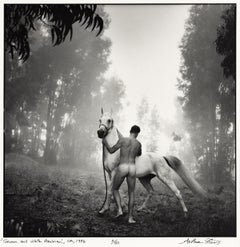
Groom with the White Arabian, CA, Black and White Nude Male with Horse Tress
By Arthur Tress
Located in New York, NY
Groom with the White Arabian, CA, Black and White Nude Male with Horse Tress 1996 Signed, titled, dated, and numbered in ink, recto Gelatin silver print (Edition of 50) 14.75 x 1...
Category

1990s Contemporary Photography

Materials

Silver Gelatin

Escaping self, Photography, Limited Edition
Located in München, BY
Limited Edition of 3 Framed size 70 x 100 cm All works are Archival Pigment prints, floating in an all black wooden frame behind museums glass.  More sizes on request. Sara Punt's w...
Category

2010s Contemporary Black and White Photography

Materials

Archival Pigment

Untitled Sita 31
Located in New York, NY
ABOUT THIS ARTIST: Through his hundreds of vibrant photographic collages, his sculptural nudes in his recent series For A Good Time and his frequent editorial work for magazines such...
Category

2010s Figurative Photography

Materials

Photographic Paper

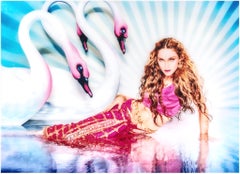
Madonna: Mythical Swans, Rolling Stone Magazine Portfolio, David LaChapelle
By David LaChapelle
Located in Fairfield, CT
Artist: David LaChapelle (1963) Title: Mythical Swans: Madonna, New York, Rolling Stone, 1998 Year: 1998 Medium: ​Chromogenic print, front-mounted to acrylic, flush-mounted to alumin...
Category

1990s Pop Art Color Photography

Materials

C Print

Man Ray, Untitled, from Electa Editrice, 1980 (after)
By Man Ray
Located in Southampton, NY
This exquisite heliogravure after Man Ray (1890–1976), titled Untitled, originates from the 1980 folio Man Ray, Electa Editrice Portfolios. Published by Gruppo Editoriale Electra, Mi...
Category

1980s Surrealist Figurative Photography

Materials

Lithograph

"Muse" Photography 39" x 31" in Edition of 7 by Kseniya Vashchenko
By Kseniya Vashchenko
Located in Culver City, CA
"Muse" Photography 39" x 31" in Edition of 7 by Kseniya Vashchenko Not framed. Ships rolled in tube. Signed and numbered by the artist. Comes with COA issued by the Artist Availabl...
Category

21st Century and Contemporary Contemporary Black and White Photography

Materials

Digital Pigment

Erwin Blumenfeld, Solarized Nude, Electa Editrice, 1981 (after)
By Erwin Blumenfeld
Located in Southampton, NY
This exquisite heliogravure after Erwin Blumenfeld (1897–1969), titled Solarized Nude, originates from the 1981 folio Erwin Blumenfeld, Electa Editrice Portfolios. Published by Grupp...
Category

1980s Modern Nude Photography

Materials

Offset

Le Baiser – Marianne Maric, Body, Woman, Nude, Kiss, Sculpture, Paris, Artwork
Located in Zurich, CH
Marianne MARIĆ (*1982, France) Le Baiser, 2015 Silver gelatin print Image 62 x 92 cm (24 3/8 x 36 1/4 in.) Sheet 92 x 108 cm (36 1/4 x 42 1/2 in.) Edition of 5, plus 2 AP; Ed. no. 5/...
Category

2010s Contemporary Nude Photography

Materials

Silver Gelatin

Man Ray, Fashion Photography, Partial Solarization, 1980 (after)
By Man Ray
Located in Southampton, NY
This exquisite heliogravure after Man Ray (1890–1976), titled Fashion Photography, Partial Solarization, originates from the 1980 folio Man Ray, Electa Editrice Portfolios. Published...
Category

1980s Surrealist Figurative Photography

Materials

Lithograph

Alfred Stieglitz, Equivalent, Series 107, 1947 (after)
By Alfred Stieglitz
Located in Southampton, NY
This exquisite halftone print after Alfred Stieglitz (1864–1946), titled Equivalent, Series 107, originates from the 1947 folio Stieglitz Memorial Portfolio, 1864–1946. Published by ...
Category

1940s American Modern Landscape Photography

Materials

Offset

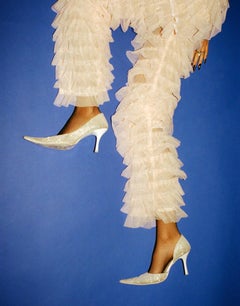
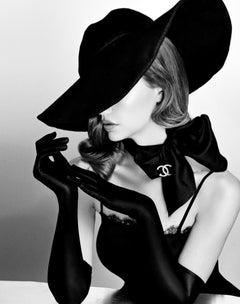
"Chanel Lady" Portrait Photography 40" x 30" in Ed. of 15 by Viktorija Pashuta
By Viktorija Pashuta
Located in Culver City, CA
"Chanel Lady" Portrait Photography 40" x 30" in Ed. of 15 by Viktorija Pashuta 2018 HD Acrylic Print The photograph is first mounted on the metallic print to the 1/4" clear acrylic sheet, it is then finished with a 1/8" Black Sintra mounted to the back. The clear acrylic magnifies the beauty of the image printed onto the metallic paper which has a luminous appearance. Signed and numbered by the artist Comes with COA issued by the artist Latvian born Viktorija Pashuta is internationally published and award winning fashion and art photographer gaining momentum and notoriety in Southern California. With visual cues rooted in dance and music, and fashion passion stemming from her European upbringing, her images are sensual, sultry, yet powerful. Viktorija’s work is known for so called ‘color therapy’ – where she uses saturated and vibrant colors to achieve the effect of fashion surrealism. Her images are very feminine and empowering at the same time to celebrate the essence of a woman. Her work has been published in such magazines as RUNWAY (USA), GQ, Esquire, VISION (China), Prestige International (France), Essence (USA), Estetica (USA), Nylon Guys, Vogue (Italia), Tchad (Canada), Fashizblack (France), Highlights (UK), CULTURE (Australia), shooting celebrity covers for Healthy Living Magazine, Runway, Orlando Style, Justine and more. Her celebrity work includes Paris Hilton, Kathy Griffin...
Category

21st Century and Contemporary Contemporary Portrait Photography

Materials

Plexiglass, Digital Pigment

"Viki" Photography 39" x 31" in Edition of 7 by Kseniya Vashchenko
By Kseniya Vashchenko
Located in Culver City, CA
"Viki" Photography 39" x 31" in Edition of 7 by Kseniya Vashchenko Signed and numbered by the artist. Comes with COA issued by the Artist Not framed. Ships rolled in tube. Availab...
Category

21st Century and Contemporary Contemporary Black and White Photography

Materials

Digital Pigment

Silver Gelatin Photograph Hand Signed Photo Pablo Picasso Profile Lucien Clergue
By Lucien Clergue
Located in Surfside, FL
Lucien Clergue (FRENCH, 1934 - 2014) Gelatin silver photographic print depicting Pablo Picasso with a frog or turtle. Mougins, 1968 Hand signed by the artist with hand written descr...
Category

20th Century Modern Black and White Photography

Materials

Silver Gelatin

"Kam für mich" Black White Photography 29.5x24 Ed 1/15 by Kseniya Vashchenko
By Kseniya Vashchenko
Located in Culver City, CA
"Kam für mich" Black & White Photography 29.5x24' Ed 1/15 by Kseniya Vashchenko Not framed. Ships rolled in tube. Signed and numbered by the artist. Comes with COA issued by the Ar...
Category

21st Century and Contemporary Contemporary Black and White Photography

Materials

Digital Pigment

Susan Carrying Willie - Figurative Black White Photograph, 12/25
By Graham Nash
Located in Soquel, CA
Wonderfully evocative figurative (archival digital photograph, limited edition giclee) by Graham Nash (American, b. 1942) of abstracted, pixelated photograph of his then wife Susan and baby Willie titled "Susan Carrying Willie '80". #12/25. Titled, signed and dated '89. Stamp and signed on verso. Condition: Excellent. Unframed. Image size: 18.33"H x 22.50"W. Size including border: 22.25"H x 22.50"W. While best known as a founding member of the rock band Crosby, Stills, Nash, and (sometimes) Young, Nash also developed a parallel career as a photographer, collector, and pioneer of digital imaging. Nash's photographs include revealing portraits of family and friends, images of life on the road, still lifes and landscapes, street photographs, bad credit people, and a unique series of self-portraits which often shows him reflected in windows and mirrors. His photography establishes Nash as a masterful visual artist with a keen eye for moments and scenes not immediately available to the common eye. In 2006, fifty years of Graham Nash's photographic images were shown in his first solo museum exhibition, Eye to Eye: Photographs by Graham Nash, at San Diego's Museum of Photographic Arts. MoPA Director Arthur Ollman...
Category

1980s Realist Figurative Photography

Materials

Archival Ink, Rag Paper

"Die Stille" Photography 39" x 31" in Edition of 7 by Kseniya Vashchenko
By Kseniya Vashchenko
Located in Culver City, CA
"Die Stille" Photography 39" x 31" in Edition of 7 by Kseniya Vashchenko Signed and numbered by the artist. Comes with COA issued by the Artist Not framed. Ships rolled in tube. A...
Category

21st Century and Contemporary Contemporary Black and White Photography

Materials

Digital Pigment

"Muse" Photography 49" x 39" in Edition of 3 by Kseniya Vashchenko
By Kseniya Vashchenko
Located in Culver City, CA
"Muse" Photography 49" x 39" in Edition of 3 by Kseniya Vashchenko Signed and numbered by the artist. Comes with COA issued by the Artist Not framed. Ships rolled in tube. Availab...
Category

21st Century and Contemporary Contemporary Black and White Photography

Materials

Digital Pigment

Robert Mapplethorpe, Cross IV, from A Season in Hell, 1986 (after)
By Robert Mapplethorpe
Located in Southampton, NY
This exquisite photogravure after Robert Mapplethorpe (1946–1989), titled Cross IV, from the folio A Season in Hell, originates from the 1986 edition published by The Limited Edition...
Category

1980s Contemporary Still-life Photography

Materials

Photogravure

Robert Mapplethorpe, Vibert s Back, from A Season in Hell, 1986 (after)
By Robert Mapplethorpe
Located in Southampton, NY
This exquisite photogravure after Robert Mapplethorpe (1946–1989), titled Vibert's Back, from the folio A Season in Hell, originates from the 1986 edition published by The Limited Ed...
Category

1980s Contemporary Figurative Photography

Materials

Photogravure

Lipstick in mouth by Tyler Shields (photograph framed)
By Tyler Shields
Located in New York City, NY
Los Angeles-based photographer Tyler Shields seeks “beauty in chaos,” capturing both young models and celebrities such as Lindsay Lohan and Mischa Barton. His polished editorial imag...
Category

2010s Contemporary Portrait Photography

Materials

Plexiglass, Archival Paper, C Print

Still Thinking About These?

All Recently Viewed