2,642 results for "cubism"

to
1,717
1,561
662
268
95
38
Overall Width
to
Overall Height
to
1,017
486
274
155
122
50
24
17
15
13
2
265
236
70
70
51
8
2,529
105
4
20
102
178
131
636
782
365
138
26
1,840
696
80
990
556
518
421
370
291
233
221
116
64
59
58
58
57
56
54
52
44
39
34
2,104
209
181
175
84
164
362
2,100
488
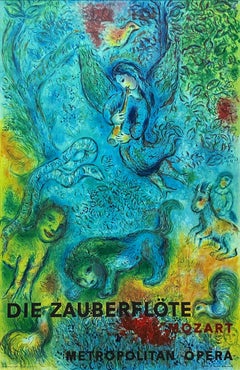
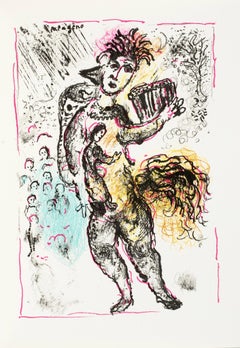
Chagall, Die Zauberflöte (Mourlot CS. 38), The Metropolitan Opera (after)
By Marc Chagall
Located in Fairfield, CT
Title: Die Zauberflöte (Mourlot CS. 38), The Metropolitan Opera Year: 1973 Medium: Lithograph on wove paper Size: 39.5 x 25.75 inches Notes: From the opening of Mozart's 'The Magic F...
Category

1970s Expressionist Landscape Prints

Materials

Lithograph

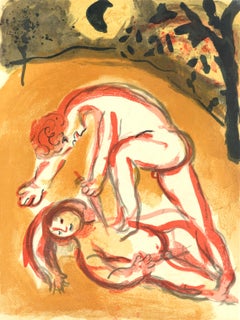
Marc Chagall, Cain and Abel, from Drawings for the Bible, 1956
By Marc Chagall
Located in Southampton, NY
This exquisite lithograph by Marc Chagall (1887–1985), titled Cain et Abel (Cain and Abel), from Marc Chagall, Dessins Pour La Bible (Drawings for the Bible), Verve: Revue Artistique...
Category

1950s Expressionist Figurative Prints

Materials

Lithograph

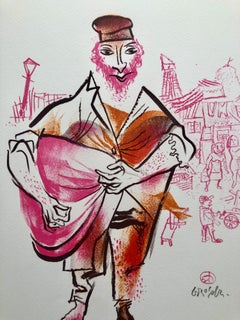
Jewish Shtetl Peddlar Americana Judaica Lithograph WPA Yiddish Social Realist
By William Gropper
Located in Surfside, FL
Hand signed in pencil and numbered with Roman numerals 8/24. A very small edition. Old Lower East Side of New York or East European Shtetl. Jewish Shtetl Peddler Merchant. humorous ...
Category

Mid-20th Century Modern Figurative Prints

Materials

Lithograph

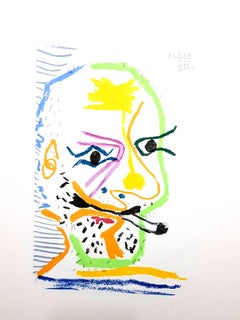
Le Goût de Bonheur: one plate (Smoking Portrait )
By (after) Pablo Picasso
Located in Collonge Bellerive, Geneve, CH
Artist: Pablo Picasso (after) Medium: lithograph, Arches paper Portfolio: Le Goût de Bonheur Year: 1970 Edition: Total of 1998 copies (666 each in German, French and English) Sheet S...
Category

1960s Modern Figurative Prints

Materials

Lithograph

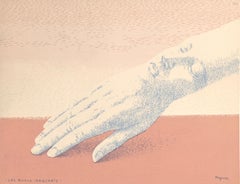
Rene Magritte, The Indiscreet Jewels, from San Lazzaro et ses Amis, 1975 (after)
By René Magritte
Located in Southampton, NY
This exquisite lithograph after Rene Magritte (1898–1967), titled Les Bijoux indiscrets (The Indiscreet Jewels), from the album San Lazzaro et ses Amis, Hommage au fondateur de la re...
Category

1970s Surrealist Figurative Prints

Materials

Lithograph

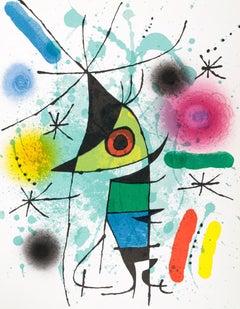
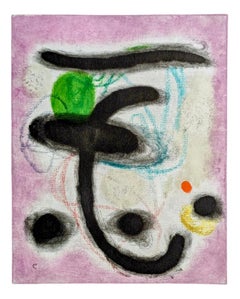
Original Lithograph X, from Miro Lithographs II, Maeght Publisher by Joan Miró
By Joan Miró
Located in Milwaukee, WI
"Original Lithograph X" is an original color lithograph by Joan Miro, published in "Miro Lithographs II, Maeght Publisher" in 1975. It depicts Miro's signature biomorphic abstract st...
Category

1970s Abstract Abstract Prints

Materials

Lithograph

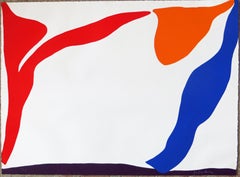
Red, Orange, Blue, Purple
By Raymond Parker
Located in San Francisco, CA
Artist: Raymond Parker – American (1922-1990) Title: Red, Orange, Blue, Purple Year: 1969 Medium: Color Lithograph Sight size: 22.25 x 30 inches. Sheet size: 22.25 x 30 inches Sig...
Category

1960s Abstract Expressionist Abstract Prints

Materials

Color, Lithograph

French Abstract Surrealist Color Lithograph Andre Masson
By André Masson
Located in Surfside, FL
Published Benincasa Carmine. Edizioni SEAT, Torino, Italy. Offset directly from the original plates. Limited edition. This is not hand signed or numbered. Signature in the printing p...
Category

20th Century Surrealist Abstract Prints

Materials

Lithograph, Offset

The New Cable British Modern Mid 20th Century Vorticist European Vorticism Woman
By Sybil Andrews
Located in New York, NY
The New Cable British Modern Mid 20th Century Vorticist European Vorticism Woman Sybil Andrews CPE (British/Canadian, 1898-1992) "The New Cable," 1931 12 x 16 1/2 inches Color linocut Signed, titled, inscribed 'Second State', and numbered 13/60 in pencil Framed: 19 x 24 inches Literature: Coppel Sa17 Illustrated on page 10 of the catalog The proposed edition of the first state of the Giant Cable was 50, but only 30 impressions were pulled. Andrews removed the blue background for the second state, which was published under the title The New Cable in an edition of 60. BIO Sybil Andrews was a printmaker, painter, graphic artist and educator who was born in Bury St. Edmonds, Suffolk, England. She moved to London (England) in 1922. In 1947, she emigrated to Campbell River (Vancouver Island) British Columbia, Canada, where she worked, taught and lived for the rest of her life. She died at a hospital in Victoria (B.C.) Her mediums were the colour linocut (1) (most famous), etching, posters, pastels, ink, watercolour, monoprint and oil. Her subjects were human activity (at work, sports, travel, etc.), figures, animals, genre, allegory, architecture and landscape. Her style was Art Deco (see AskART styles), Futurism, Cubism and Vorticism (2). Her work is identified by a simple format, clean lines, distortion, vivid colours, drama and rhythm. Quote: "The colour linocut was just the medium for me, being interested in dynamics and ideas and patterns... It is impossible to be fussy with lines, you have to simplify, you are forced to simplify your idea to its fundamentals." Andrews produced 76 linocuts in her life, of which 43 were made from 1929 to 1939, which is considered to be her best period. John Hassall's art correspondence course (1918) was the beginning of her formal art education. She went from there to Heatherley's School of Fine Art (London/1922) where she studied under Henry Massey (see AskART) and met artistic partner Cyril Power (see AskART). At the same time, she studied independently with sculptor Henri Glicenstein (see AskART) who taught her drypoint etching and to draw from life. She also attended the Grosvenor School of Modern Art (1925). Iain McNab (1890-1967) was Principal and Claude Flight (3) (see AskART) an instructor who had a great influence on her choice of linocut as a primary medium. Some of his other students and her associates were Edith Lawrence (1890-1973), Lill Tschudi (1911-2001), Eileen Mayo (see AskART) and William Greengrass (1896-1970). After emigrating to Canada she taught art continuously until a month before her death. She was elected a member of the Canadian Painters - Etchers Society (after 1976 the Print and Drawing Council of Canada) in 1951. She began exhibiting her work in 1921.In 1929 she was included in "The First Exhibition of British Linocuts...
Category

1930s Modern Figurative Prints

Materials

Linocut

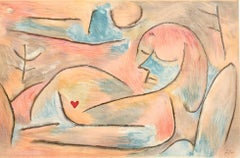
Paul Klee, Winter Sleep, from Verve, Revue Artistique, 1938
By Paul Klee
Located in Southampton, NY
This exquisite lithograph by Paul Klee (1879–1940), titled Sommeil d’hiver (Winter Sleep), from Verve, Revue Artistique et Litteraire, Vol. I, No. 3, originates from the 1938 issue p...
Category

1930s Modern Abstract Prints

Materials

Lithograph

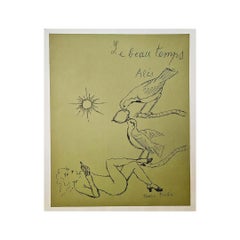
1950 original poster by Francis Picabia - Le Beau Temps in Alès
By Francis Picabia
Located in PARIS, FR
Poster printed in lithography after a drawing by Francis Picabia, designed for the opening in May 1950 of the bookstore (owned by Pierre-André Benoît) ...
Category

1950s Dada Prints and Multiples

Materials

Paper, Lithograph

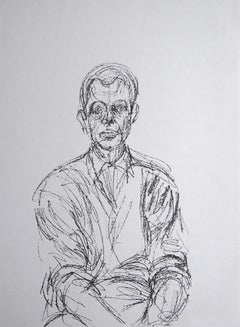
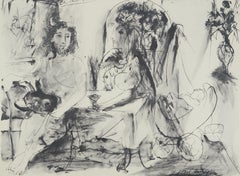
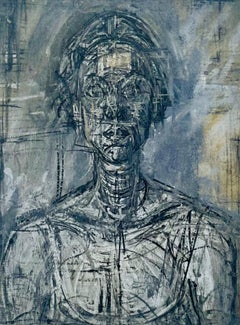
Alberto Giacometti - Bust of a Seated Man lithograph, 1961
By Alberto Giacometti
Located in Pembroke Pines, FL
Artist: Alberto Giacometti Title: 'Bust of a Seated Man' Year: 1961 Medium: Original Lithograph on vélin paper Dimensions: 15in. by 11in. Edition: From the rare limited edition Refer...
Category

1960s Contemporary Prints and Multiples

Materials

Lithograph

Georges Braque, Composition, L édition de tête (after)
By Georges Braque
Located in Southampton, NY
Lithograph on vélin de Lana paper. Inscription: Unsigned and unnumbered, as issued. Good condition, with centerfold, as issued. Notes: From the folio, tête edition, Consacré a George...
Category

1960s Modern Abstract Prints

Materials

Lithograph

Marc Chagall, Romeo and Juliet, The Ceiling of the Paris Opera, 1965 (after)
By Marc Chagall
Located in Southampton, NY
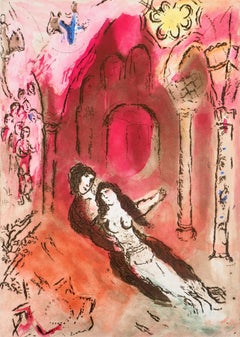
This exquisite lithograph after Marc Chagall (1887–1985), titled Romeo et Juliette (Romeo and Juliet), from the album Le plafond de l’Opera de Paris par Marc Chagall (The Ceiling of the Paris Opera by Marc Chagall), originates from the 1965 edition published by Andre Sauret, Editeur, Monte Carlo, rendered by Charles Sorlier, Paris, and printed by Mourlot Freres, Paris, October 6, 1965. This romantic and luminous composition pays homage to Charles Gounod’s opera Romeo et Juliette, one of the works celebrated in Chagall’s magnificent ceiling design for the Palais Garnier. Romeo et Juliette radiates with the tenderness, tragedy, and transcendent beauty of Shakespeare’s tale, reimagined through Chagall’s poetic symbolism and vivid color. Floating lovers, celestial forms, and musical motifs intertwine in a lyrical vision of eternal love and harmony, reflecting the artist’s lifelong fascination with the union of art, music, and emotion. The composition captures the very spirit of Gounod’s music—lyrical, passionate, and filled with grace. Executed as a lithograph on velin paper, this work measures 13 x 9.5 inches (33.02 x 24.13 cm). Unsigned and unnumbered as issued. The edition exemplifies the technical mastery of the Mourlot Freres atelier and the enduring collaboration between Marc Chagall and Charles Sorlier. Artwork Details: Artist: After Marc Chagall (1887–1985) Title: Romeo et Juliette (Romeo and Juliet), from Le plafond de l’Opera de Paris par Marc Chagall (The Ceiling of the Paris Opera by Marc Chagall) Medium: Lithograph on velin paper Dimensions: 13 x 9.5 inches (33.02 x 24.13 cm) Inscription: Unsigned and unnumbered as issued Date: 1965 Publisher: Andre Sauret, Editeur, Monte Carlo Rendered by: Charles Sorlier, Paris Printer: Mourlot Freres, Paris Catalogue raisonne references: Cain, Julien, and Fernand Mourlot. Chagall Lithographe III, 1962–1968. Andre Sauret, Editeur, 1969, illustration 434. Cramer, Patrick, and Meret Meyer. Marc Chagall: Catalogue Raisonne Des Livres Illustres. P. Cramer ed., 1995, illustration 61. Condition: Well preserved, consistent with age and medium Provenance: From the album Le plafond de l’Opera de Paris par Marc Chagall (The Ceiling of the Paris Opera by Marc Chagall), published by Andre Sauret, Editeur, Monte Carlo, October 6, 1965, in an edition of V̅ Notes: Excerpted from the album, This work could not have been made without the valuable collaboration of Madame Marc Chagall to whom we extend our warmest thanks. This work, made by Andre Sauret, was completed to print on October 6, 1965 on the presses of l’imprimerie du Lion in Paris. Jacques Lassaigne’s texts were composed by hand in Romain du Roi in the workshops of l’imprimerie nationale. The VI color lithographies and all the black and white drawings were set on stone by Charles Sorlier, based on Marc Chagall’s original models. The original lithography and color lithographs were drawn on the presses of Mourlot Freres. The binding is by Maurice Busenhart in Lausanne. About the Publication: Le plafond de l’Opera de Paris par Marc Chagall (The Ceiling of the Paris Opera by Marc Chagall), published in October 1965 by Andre Sauret, Editeur, Monte Carlo, commemorates one of the most ambitious and celebrated artistic commissions of the 20th century. Created under the direction of Charles Sorlier, the album documents Chagall’s magnificent ceiling design for the Palais Garnier in Paris, unveiled in 1964. The publication includes color lithographs based on the artist’s preparatory studies and painted maquettes, executed with exceptional fidelity by Mourlot Freres. Chagall’s ceiling—divided into segments representing musical masters such as Mozart, Wagner, Berlioz, Ravel, and Debussy—blends myth, music, and emotion into a vibrant celestial composition. The album captures this visionary synthesis through luminous lithography, allowing viewers to experience the grandeur and intimacy of the artist’s monumental work. Produced with the collaboration of Madame Marc Chagall, Charles Sorlier, and Fernand Mourlot, and printed with the precision and artistry for which Andre Sauret’s editions were renowned, this publication stands as both a tribute to Chagall’s genius and a celebration of French art’s enduring dialogue between tradition, innovation, and the divine. About the Artist: Marc Chagall (1887–1985) was a Belarus-born French painter, printmaker, and designer whose visionary imagination, radiant color, and deeply poetic symbolism made him one of the most beloved and influential artists of the 20th century. Rooted in the imagery of his Jewish heritage and the memories of his childhood in Vitebsk, Chagall’s art wove together themes of faith, love, folklore, and fantasy with a dreamlike modern sensibility. His unique style—merging elements of Cubism, Fauvism, Expressionism, and Surrealism—defied categorization, transforming ordinary scenes into lyrical meditations on memory and emotion. Influenced by Russian icon painting, medieval religious art, and the modern innovations of artists such as Pablo Picasso, Henri Matisse, and Georges Braque, Chagall developed a profoundly personal visual language filled with floating figures, vibrant animals, musicians, and lovers that symbolized the transcendent power of imagination and love. During his early years in Paris, he became an integral part of the Ecole de Paris circle, forming friendships with Amedeo Modigliani, Fernand Leger, and Sonia Delaunay, and his creative spirit resonated with that of his peers and successors—Alexander Calder, Alberto Giacometti, Salvador Dali, Joan Miro, Wassily Kandinsky, Marcel Duchamp, and Man Ray—artists who, like Chagall, sought to push the boundaries of perception, emotion, and form. Over a prolific career that spanned painting, printmaking, stained glass, ceramics, and stage design, Chagall brought an unparalleled poetic sensibility to modern art, infusing even the most abstract subjects with human warmth and spiritual depth. His works are held in the most prestigious museums around the world, including the Museum of Modern Art, the Centre Pompidou, the Tate, and the Guggenheim, where they continue to inspire generations of artists and collectors. The highest price ever paid for a Marc Chagall artwork is approximately $28.5 million USD, achieved in 2017 at Sotheby’s New York for Les Amoureux (1928). Marc Chagall Romeo...
Category

1960s Expressionist Figurative Prints

Materials

Lithograph

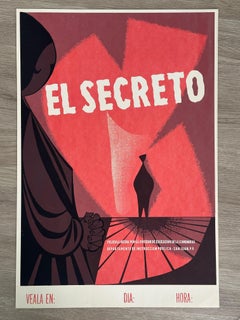
El Secreto Movie poster Puerto Rican artist Puerto Rico
Located in Wilton Manors, FL
José Meléndez Contreras Naguabo, P.R., 1921 - Bayamón, P.R., 1998 Biography Details Painter and printmaker. He began his art studies in 1936 with Carmelita González Córdoba, a stu...
Category

Mid-20th Century More Prints

Materials

Lithograph

Joan Miro, Untitled, from Tarragona Tapestry, 1972 (after)
By Joan Miró
Located in Southampton, NY
This exquisite lithograph after Joan Miro (1893–1983), titled Sans titre (Untitled), from the folio Tapis De Tarragona (Tarragona Tapestry), illustrations, Joan Miro, 1972, originate...
Category

1970s Modern Abstract Prints

Materials

Lithograph

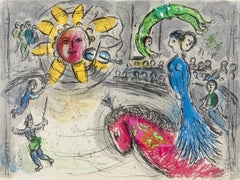
Marc Chagall, Circus in the Sun, from Derriere le miroir, 1979
By Marc Chagall
Located in Southampton, NY
This exquisite lithograph by Marc Chagall (1887–1985), titled Cirque au Soleil (Circus in the Sun), from the folio Derriere le miroir, No. 235, originates from the 1979 edition publi...
Category

1970s Expressionist Figurative Prints

Materials

Lithograph

Composition (Mourlot 668-677), La Féerie et Le Royaume, Marc Chagall
By Marc Chagall
Located in Southampton, NY
Lithograph on vélin d’Arches paper. Unsigned and unnumbered, as issued. Good condition. Notes: From the folio, La Féerie et Le Royaume, Lithographies Originales de Marc Chagall, 1972...
Category

1970s Modern Figurative Prints

Materials

Lithograph

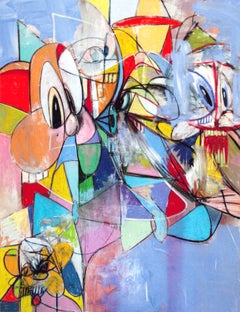
George Condo, Anthropology, from Drawing Paintings, 2011 (after)
By George Condo
Located in Southampton, NY
This exquisite four color process archival pigment print after George Condo (born 1957), titled Anthropology, from the folio George Condo, Drawing Paintings, originates from the 2011...
Category

2010s Contemporary Figurative Prints

Materials

Archival Pigment

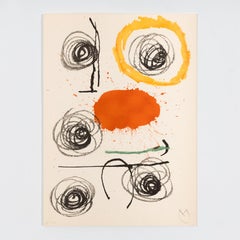
Litografia Original II
By Joan Miró
Located in Kansas City, MO
Joan Miró Litografia Original II Color Lithograph Year: 1975 Size: 12.5 × 9.6 inches Catalogue Raisonné: Queneau, Miro Lithographe II, 1952-1963, p.35 Publisher: Maeght Editeur, Pari...
Category

1970s Abstract Expressionist Abstract Prints

Materials

Lithograph

Pablo Picasso, Young Faun, Woman and Child, from The Double Flute, 1967 (after)
By Pablo Picasso
Located in Southampton, NY
This exquisite lithograph and pochoir after Pablo Picasso (1881–1973), titled Jeune faune, femme et enfant (Young Faun, Woman and Child), from the folio Picasso, La flute double, 16 ...
Category

1960s Cubist Figurative Prints

Materials

Lithograph, Stencil

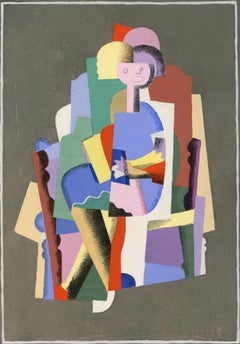
Georges Valmier, Seated Woman, 1929 (after)
By Georges Valmier
Located in Southampton, NY
This exquisite lithograph and pochoir after Georges Valmier (1885–1937), titled Femme assise (Seated Woman), from the album L'Art Cubiste, Theories et Realisations, Etude Critique (C...
Category

1920s Cubist Still-life Prints

Materials

Lithograph, Stencil

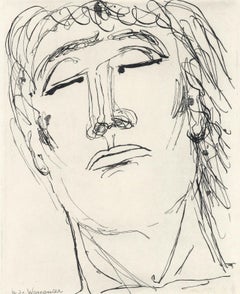
Henri de Waroquier, Untitled, from Alternation, 1946
Located in Southampton, NY
This exquisite etching by Henri de Waroquier (1881–1970), titled Sans titre (Untitled), from the album Alternance (Alternation), originates from the 1946 edition published by Le Gerb...
Category

1940s Modern Landscape Prints

Materials

Engraving

Composition - Original Lithograph after F. Léger - 20th Century
By (after) Fernand Léger
Located in Roma, IT
Composition is an original lithograph on paper realized by Fernand Léger (1881-1955). Very good conditions except for some little foxings. Sheet dimension: 23.5 x 26 On both sides...
Category

20th Century Cubist Figurative Prints

Materials

Lithograph

Marc Chagall - Homage to Marc Chagall - Original Lithograph
By Marc Chagall
Located in Collonge Bellerive, Geneve, CH
Marc Chagall Original Lithograph 1969 From the revue XXe Siecle, edition of 12,000 Unsigned, as issued Dimensions: 32 x 24 Condition : Excellent Reference: Mourlot 572 Marc Chagall (born in 1887) Marc Chagall was born in Belarus in 1887 and developed an early interest in art. After studying painting, in 1907 he left Russia for Paris, where he lived in an artist colony on the city’s outskirts. Fusing his own personal, dreamlike imagery with hints of the fauvism and cubism popular in France at the time, Chagall created his most lasting work—including I and the Village (1911)—some of which would be featured in the Salon des Indépendants exhibitions. After returning to Vitebsk for a visit in 1914, the outbreak of WWI trapped Chagall in Russia. He returned to France in 1923 but was forced to flee the country and Nazi persecution during WWII. Finding asylum in the U.S., Chagall became involved in set and costume design before returning to France in 1948. In his later years, he experimented with new art forms and was commissioned to produce numerous large-scale works. Chagall died in St.-Paul-de-Vence in 1985. The Village Marc Chagall was born in a small Hassidic community on the outskirts of Vitebsk, Belarus, on July 7, 1887. His father was a fishmonger, and his mother ran a small sundries shop in the village. As a child, Chagall attended the Jewish elementary school, where he studied Hebrew and the Bible, before later attending the Russian public school. He began to learn the fundamentals of drawing during this time, but perhaps more importantly, he absorbed the world around him, storing away the imagery and themes that would feature largely in most of his later work. At age 19 Chagall enrolled at a private, all-Jewish art school and began his formal education in painting, studying briefly with portrait artist Yehuda Pen. However, he left the school after several months, moving to St. Petersburg in 1907 to study at the Imperial Society for the Protection of Fine Arts. The following year, he enrolled at the Svanseva School, studying with set designer Léon Bakst, whose work had been featured in Sergei Diaghilev's Ballets Russes. This early experience would prove important to Chagall’s later career as well. Despite this formal instruction, and the widespread popularity of realism in Russia at the time, Chagall was already establishing his own personal style, which featured a more dreamlike unreality and the people, places and imagery that were close to his heart. Some examples from this period are his Window Vitebsk (1908) and My Fianceé with Black Gloves (1909), which pictured Bella Rosenfeld, to whom he had recently become engaged. The Beehive Despite his romance with Bella, in 1911 an allowance from Russian parliament member and art patron Maxim Binaver enabled Chagall to move to Paris, France. After settling briefly in the Montparnasse neighborhood, Chagall moved further afield to an artist colony known as La Ruche (“The Beehive”), where he began to work side by side with abstract painters such as Amedeo Modigliani and Fernand Léger as well as the avant-garde poet Guillaume Apollinaire. At their urging, and under the influence of the wildly popular fauvism and cubism, Chagall lightened his palette and pushed his style ever further from reality. I and the Village (1911) and Homage to Apollinaire (1912) are among his early Parisian works, widely considered to be his most successful and representative period. Though his work stood stylistically apart from his cubist contemporaries, from 1912 to 1914 Chagall exhibited several paintings at the annual Salon des Indépendants exhibition, where works by the likes of Juan Gris, Marcel Duchamp and Robert Delaunay were causing a stir in the Paris art world. Chagall’s popularity began to spread beyond La Ruche, and in May 1914 he traveled to Berlin to help organize his first solo exhibition, at Der Sturm Gallery. Chagall remained in the city until the highly acclaimed show opened that June. He then returned to Vitebsk, unaware of the fateful events to come. War, Peace and Revolution In August 1914 the outbreak of World War I precluded Chagall’s plans to return to Paris. The conflict did little to stem the flow of his creative output, however, instead merely giving him direct access to the childhood scenes so essential to his work, as seen in paintings such as Jew in Green (1914) and Over Vitebsk (1914). His paintings from this period also occasionally featured images of the war’s impact on the region, as with Wounded Soldier (1914) and Marching (1915). But despite the hardships of life during wartime, this would also prove to be a joyful period for Chagall. In July 1915 he married Bella, and she gave birth to a daughter, Ida, the following year. Their appearance in works such as Birthday (1915), Bella and Ida by the Window (1917) and several of his “Lovers” paintings give a glimpse of the island of domestic bliss that was Chagall’s amidst the chaos. To avoid military service and stay with his new family, Chagall took a position as a clerk in the Ministry of War Economy in St. Petersburg. While there he began work on his autobiography and also immersed himself in the local art scene, befriending novelist Boris Pasternak, among others. He also exhibited his work in the city and soon gained considerable recognition. That notoriety would prove important in the aftermath of the 1917 Russian Revolution when he was appointed as the Commissar of Fine Arts in Vitebsk. In his new post, Chagall undertook various projects in the region, including the 1919 founding of the Academy of the Arts. Despite these endeavors, differences among his colleagues eventually disillusioned Chagall. In 1920 he relinquished his position and moved his family to Moscow, the post-revolution capital of Russia. In Moscow, Chagall was soon commissioned to create sets and costumes for various productions at the Moscow State Yiddish Theater, where he would paint a series of murals titled Introduction to the Jewish Theater as well. In 1921, Chagall also found work as a teacher at a school for war orphans. By 1922, however, Chagall found that his art had fallen out of favor, and seeking new horizons he left Russia for good. Flight After a brief stay in Berlin, where he unsuccessfully sought to recover the work exhibited at Der Sturm before the war, Chagall moved his family to Paris in September 1923. Shortly after their arrival, he was commissioned by art dealer and publisher Ambroise Vollard to produce a series of etchings for a new edition of Nikolai Gogol's 1842 novel Dead Souls. Two years later Chagall began work on an illustrated edition of Jean de la Fontaine’s Fables, and in 1930 he created etchings for an illustrated edition of the Old Testament, for which he traveled to Palestine to conduct research. Chagall’s work during this period brought him new success as an artist and enabled him to travel throughout Europe in the 1930s. He also published his autobiography, My Life (1931), and in 1933 received a retrospective at the Kunsthalle in Basel, Switzerland. But at the same time that Chagall’s popularity was spreading, so, too, was the threat of Fascism and Nazism. Singled out during the cultural "cleansing" undertaken by the Nazis in Germany, Chagall’s work was ordered removed from museums throughout the country. Several pieces were subsequently burned, and others were featured in a 1937 exhibition of “degenerate art” held in Munich. Chagall’s angst regarding these troubling events and the persecution of Jews in general can be seen in his 1938 painting White Crucifixion. With the eruption of World War II, Chagall and his family moved to the Loire region before moving farther south to Marseilles following the invasion of France. They found a more certain refuge when, in 1941, Chagall’s name was added by the director of the Museum of Modern Art (MOMA) in New York City to a list of artists and intellectuals deemed most at risk from the Nazis’ anti-Jewish campaign. Chagall and his family would be among the more than 2,000 who received visas and escaped this way. Haunted Harbors Arriving in New York City in June 1941, Chagall discovered that he was already a well-known artist there and, despite a language barrier, soon became a part of the exiled European artist community. The following year he was commissioned by choreographer Léonide Massine to design sets and costumes for the ballet Aleko, based on Alexander Pushkin’s “The Gypsies” and set to the music of Pyotr Ilyich Tchaikovsky. But even as he settled into the safety of his temporary home, Chagall’s thoughts were frequently consumed by the fate befalling the Jews of Europe and the destruction of Russia, as paintings such as The Yellow Crucifixion...
Category

1960s Surrealist Figurative Prints

Materials

Lithograph

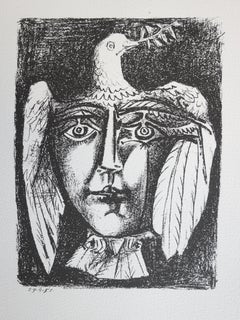
Pablo Picasso, Face of Peace, from The Face of Peace by Picasso and Eluard, 1951
By Pablo Picasso
Located in Southampton, NY
This exquisite lithograph by Pablo Picasso (1881–1973), titled Visage de la Paix (Face of Peace), from the album Le Visage de la Paix par Picasso et Eluard (The Face of Peace by Pica...
Category

1950s Modern Figurative Prints

Materials

Lithograph

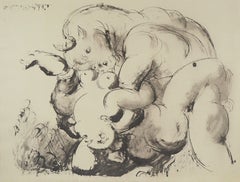
Pablo Picasso, Minotaur and Nude, from The Double Flute, 1967 (after)
By Pablo Picasso
Located in Southampton, NY
This exquisite lithograph and pochoir after Pablo Picasso (1881–1973), titled Minotaure et nue (Minotaur and Nude), from the folio Picasso, La flute double, 16 Dessins, Aquarelles La...
Category

1960s Cubist Figurative Prints

Materials

Lithograph, Stencil

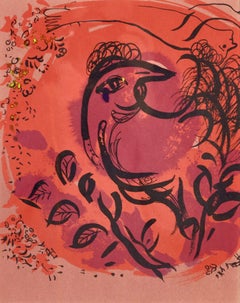
Marc Chagall, Bouquet with Bird, from The Lithographs of Chagall, 1960
By Marc Chagall
Located in Southampton, NY
This exquisite lithograph by Marc Chagall (1887–1985), titled Bouquet à l’Oiseau (Bouquet with Bird), from the album The Lithographs of Chagall, Volume I, originates from the 1960 ed...
Category

1960s Expressionist Figurative Prints

Materials

Lithograph

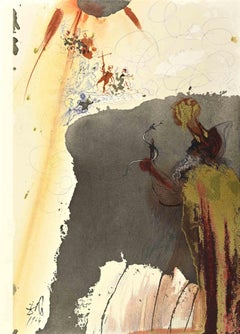
De Petra Exivit Aqua - Lithograph - 1964
By Salvador Dalí­
Located in Roma, IT
De Petra Exivit Aqua is a Color lithograph on heavy rag paper realized in 1964. It is part of Biblia Sacra vulgatæ edition is published by Rizzoli-Mediolani b...
Category

1960s Surrealist More Prints

Materials

Lithograph

Alphabet Pour Adultes (Alphabet For Adults) Silkscreen, lithograph Signed Framed
By Man Ray
Located in New York, NY
Man Ray Alphabet Pour Adultes (Alphabet For Adults), 1970 Silkscreen in colors and lithograph on paper mounted on wood veneer mounted on card stock. Hand Signed. Numbered. Dated. Ha...
Category

1970s Surrealist Figurative Prints

Materials

Mixed Media, Pencil, Lithograph, Screen
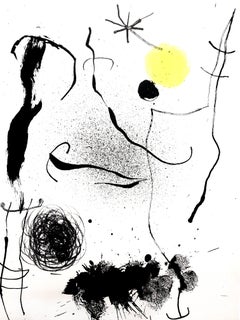
Joan Miro - Original Colorful Lithograph
By Joan Miró
Located in Collonge Bellerive, Geneve, CH
Joan Miro - Moon Bird, Sun Bird - Original Lithograph 1964 From the journal "XXe Siecle" Unsigned edition of unknown size Dimensions: 32 x 24 cm Publisher: G. di San Lazzaro. Refere...
Category

1960s Abstract Abstract Prints

Materials

Lithograph

Saul Steinberg, Composition, L édition de tête (after)
By Saul Steinberg
Located in Southampton, NY
Lithograph on vélin de Lana paper. Inscription: Unsigned and unnumbered, as issued. Good condition. Notes: From the folio, tête edition, Consacré a Steinberg, Derrière le miroir, N° ...
Category

1960s Modern Landscape Prints

Materials

Lithograph

Striking original 1969 poster was by Pablo Picasso Apollinaire en académicien
By Pablo Picasso
Located in PARIS, FR
This striking original 1969 poster was created by Pablo Picasso for the exhibition Apollinaire en académicien, held at the Bibliothèque Nationale in Paris from October 22 to November...
Category

1960s Prints and Multiples

Materials

Linen, Paper, Lithograph

Henri Laurens, Apollo, from Verve, Revue Artistique, 1953
By Henri Laurens
Located in Southampton, NY
This exquisite lithograph by Henri Laurens (1885–1954), titled Apollon (Apollo), from Verve, Revue Artistique et Litteraire, Vol. VII, No. 27–28, originates from the 1953 issue publi...
Category

1950s Modern Landscape Prints

Materials

Lithograph

Louis Marcoussis, Still Life with Guitar, 1929 (after)
By Louis Marcoussis
Located in Southampton, NY
This exquisite lithograph and pochoir after Louis Marcoussis (1878–1941), titled Nature morte avec guitare (Still Life with Guitar), from the album L'Art Cubiste, Theories et Realisa...
Category

1920s Cubist Still-life Prints

Materials

Lithograph, Stencil

Grenade (Cramer 51; Kornfeld 121), Paroles peintes I, Marc Chagall
By Marc Chagall
Located in Southampton, NY
Etching on vélin Johannot d’Arches paper. Inscription: Unsigned and unnumbered, as issued. Good condition. Notes: From the album, Paroles peintes I, 1962. Published by Éditions O. La...
Category

1960s Modern Landscape Prints

Materials

Etching

Andre Derain, The Bathers, from Verve, Revue Artistique et Litteraire, 1940
By André Derain
Located in Southampton, NY
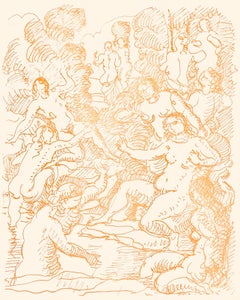
This exquisite lithograph by Andre Derain (1880–1954), titled Les Baigneuses (The Bathers), from Verve, Revue Artistique et Litteraire, Vol. II, No. 8, originates from the 1940 issue...
Category

1940s Modern Landscape Prints

Materials

Lithograph

Marc Chagall, Moses II, from Drawings for the Bible, 1956
By Marc Chagall
Located in Southampton, NY
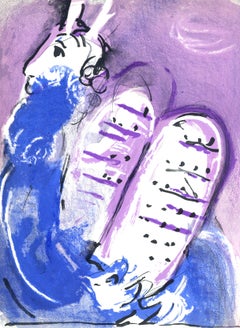
This exquisite lithograph by Marc Chagall (1887–1985), titled Moise II (Moses II), from Marc Chagall, Dessins Pour La Bible (Drawings for the Bible), Verve: Revue Artistique et Litte...
Category

1950s Expressionist Figurative Prints

Materials

Lithograph

Marc Chagall, The Painter and the Donkey, from Derriere le miroir, 1969
By Marc Chagall
Located in Southampton, NY
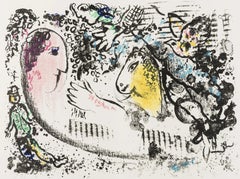
This exquisite lithograph by Marc Chagall (1887–1985), titled Le Peintre et l’Ane (The Painter and the Donkey), from the folio Derriere le miroir, No. 182, originates from the 1969 e...
Category

1960s Expressionist Figurative Prints

Materials

Lithograph

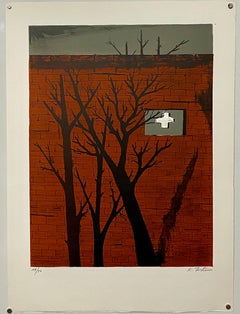
Lithograph Belgian American Surrealism WPA Modernist Karl Fortess Surrealist Art
Located in Surfside, FL
Karl Eugene Fortess (1907-1993) Original color lithographs on BFK Rives paper, 1966, Hand signed and numbered 29/36 in pencil, Sheet size 20.5 x 15 inches. Karl E. Fortess (1907-1993) was a painter, printmaker and teacher, of Boston, Massachusetts and Woodstock, N.Y. Fortess was born in Antwerp, Belgium on October 13, 1907, and became an American citizen in 1923. He studied at the Art Institute of Chicago, the Art Students League in New York, and the Woodstock School of Painting with Yasuo Kuniyoshi. In 1937 the Works Progress Administration sent him and several other artists to Alaska to document the towns, villages, and remote wilderness landscapes (Pemberton, “Alaska art museum collects WPA’s Depression works from the territory,” Columbia Daily Tribune, November 9, 2003). Trains, trucks, and industrial buildings were what Karl Fortess envisioned when the Public Works of Art Project suggested that he depict “the American Scene.” His work bears the influence of Surrealism, Russsian Constructivist art and Cubism. He was part of a circle of left leaning artists loosley involved with the WPA which included Sol Wilson, Isaac Soyer, Louis Lozowick, Abraham Harriton, Ben Shahn, William Gropper, Nahum Tschacbasov, Morris Shulman, Yasuo Kuniyoshi, Louis Slobodkin, Adolf Dehn, Le Corbusier and Louis Schanker. Karl Fortress taught at the Art Students League, Brooklyn Museum Art School, Louisiana State University, Fort Wright College, and Boston University School of Fine and Applied Arts. He was a member of the Artists Equity Association, Society of American Graphic Artists, American Association of University Professors, and the British Film Institute. He was awarded the Guggenheim Fellowship in 1946, was named an Associate of the National Academy of Design in 1960 and elected to full Academician in 1971. Fortess taught at many different schools, including Boston University School of Fine Art, where he also created an archive of interviews with more than two hundred and fifty contemporary American painters, sculptors, and graphic artists including many with with artists associated with the Woodstock, N.Y. art community. Among the interviewees are Kenneth Armitage, Will Barnet, Romare Bearden, George Biddle, James Brooks, Adolph Dehn, Jane Freilicher, Julian Levi, Alice Neel, Larry Rivers, Moses Soyer, Dorothy Varian...
Category

Mid-20th Century Surrealist Landscape Prints

Materials

Lithograph

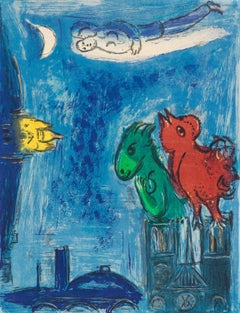
Marc Chagall, The Monsters of Notre-Dame, from Derriere le miroir, 1954
By Marc Chagall
Located in Southampton, NY
This exquisite lithograph by Marc Chagall (1887–1985), titled Les Monstres de Notre-Dame (The Monsters of Notre-Dame), from the folio Derriere le miroir, No. 67–68, originates from t...
Category

1950s Expressionist Landscape Prints

Materials

Lithograph

Joan Miro, Lithograph XI, from Lithographs I, 1972
By Joan Miró
Located in Southampton, NY
This exquisite lithograph by Joan Miro (1893–1983), titled Lithograph XI, from the album Joan Miro Lithographs, Volume I, originates from the 1972 edition published by Tudor Publishi...
Category

1970s Surrealist Abstract Prints

Materials

Lithograph

Giacometti, Composition, Derrière le miroir (after)
By Alberto Giacometti
Located in Southampton, NY
Lithograph on vélin paper. Inscription: Unsigned and unnumbered, as issued. Good condition. Notes: From Derrière le miroir, N° 117, 1959. Published by Aimé Maeght, Éditeur, Paris; pr...
Category

1950s Modern Landscape Prints

Materials

Lithograph

Rrose Sélavy in Wilson-Lincoln System Lenticular print (Schwarz 344) Signed 8/60
By Marcel Duchamp
Located in New York, NY
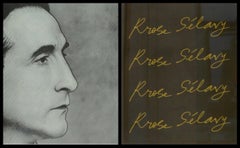
Marcel Duchamp and by Takiguchi Rrose Sélavy (Marcel Duchamp) in Wilson-Lincoln System (Schwarz, 344), 1967 Lenticular print on thin white board. Hand signed by Marcel Duchamp. Date, title and number on label verso. 12 7/10 × 10 1/10 inches Edition 8/60 Hand-signed by artist, Hand signed by Marcel Duchamp in blue ink recto. Sticker label verso bears printed title, edition number, year and description. Printed by Shuzo Takiguchi, published in Tokyo. Catalogue Raisonne Reference: "The Complete Works of Marcel Duchamp" by Arturo Schwarz, Plate 344 Provenance: This was part of the Deluxe Artist portfolio, "To and From Rrose Sélavy"; this will be the first time the work has been separated from the portfolio Please refer to the attached video to see this 3-D piece in person Eager to share Marcel Duchamp with Japanese audiences, Shuzo Takiguchi - a Japanese-born poet, critic, and artist with ties to Surrealist circles, assembled an international portfolio of graphic works by various artists with strong ties to Duchamp, to accompany the deluxe version of his monograph, "To and From Rrose Sélavy (aka Marcel Duchamp)." The present work - Takiguchi's own piece, a lenticular double portrait - combines Rrose Sélavy's signature with Man Ray's 1930 profile of Duchamp. Its subject, Marcel Duchamp, then signed this work in pencil. Its title, "Rrose Sélavy in the Wilson-Lincoln System", refers to Duchamp's Green Box note describing a two-way, changeable portrait of presidents Abraham Lincoln and Woodrow Wilson. Rrose Selavy is, famously, Marcel Duchamp's pseudonym and alter ego. Duchamp died before Takiguchi's book was completed, so this print is one of the very last graphic works that has been hand signed by Marcel Duchamp. It was published in Japan, and is a very elusive work stateside. Another edition of this work is in the permanent collection of the Museum of Modern Art. The National Portrait Gallery and other major institutional collections. This work is fully referenced in the catalogue raisonne "The Complete Works of Marcel Duchamp" by Arturo Schwarz, Plate 344, describing the work as follows: "Rrose Selavy in the Wilson Lincoln System (a double image plastic plate with, on the background, Man Ray's portrait of Duchamp, and superimposed,, Rrose Selavy's autograph signature repeated four times, signed lower right in blue ink: Marcel Duchamp, an original embossed print...." More about Marcel Duchamp: Henri-Robert-Marcel Duchamp was born July 28, 1887, near Blainville, France. In 1904, he joined his artist brothers, Jacques Villon and Raymond Duchamp-Villon, in Paris, where he studied painting at the Académie Julian until 1905. Duchamp’s early works were Post-Impressionist in style. He exhibited for the first time in 1909 at the Salon des Indépendants and the Salon d’Automne in Paris. His paintings of 1911 were directly related to Cubism but emphasized successive images of a single body in motion. In 1912, he painted the definitive version of Nude Descending a Staircase; this was shown at the Salon de la Section d’Or of that same year and subsequently created great controversy at the Armory Show in New York in 1913. Duchamp’s radical and iconoclastic ideas predated the founding of the Dada movement in Zurich in 1916. By 1913, he had abandoned traditional painting and drawing for various experimental forms, including mechanical drawings, studies, and notations that would be incorporated in a major work, The Bride Stripped Bare by Her Bachelors, Even (1915–23; also known as The Large Glass). In 1914, Duchamp introduced his readymades—common objects, sometimes altered, presented as works of art—which had a revolutionary impact upon many painters and sculptors. In 1915, Duchamp traveled to New York, where his circle included Katherine Dreier and Man Ray, with whom he founded the Société Anonyme in 1920, as well as Louise and Walter Arensberg, Francis Picabia, and other avant-garde figures. After playing chess avidly for nine months in Buenos Aires, Duchamp returned to France in the summer of 1919 and associated with the Dada group in Paris. In New York in 1920, he made his first motor-driven constructions and invented Rrose Sélavy, his feminine alter ego. Duchamp moved back to Paris in 1923 and seemed to have abandoned art...
Category

1960s Surrealist Figurative Prints

Materials

Plastic, Mixed Media, Board, Pencil, Lenticular
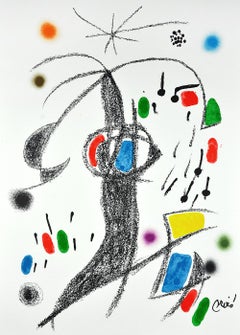
Joan Miró - MARAVILLAS CON VARIACIONES... Lithograph Contemporary Art Abstract
By Joan Miró
Located in Madrid, Madrid
Joan Miró - Maravillas con variaciones acrósticas en el jardín de Miró XIX Date of creation: 1975 Medium: Lithograph on Gvarro paper Edition: 1500 Size: 49,5 x 35,5 cm Observations: ...
Category

1970s Abstract Abstract Prints

Materials

Paper, Lithograph

Fernand Leger, Plate 29, from Circus, 1950
By Fernand Léger
Located in Southampton, NY
This exquisite lithograph by Fernand Leger (1881–1955), titled Planche 29 (Plate 29), from the album Cirque, Lithographies Originales (Circus, Original Lithographs), originates from ...
Category

1950s Modern Landscape Prints

Materials

Lithograph

Braque, Pélias et Nélée, Œdipe roi de Sophocle (after)
By Georges Braque
Located in Southampton, NY
Lithograph on grand vélin d'Arches pur chiffon spécialement fabriqués paper. Inscription: signed in the plate and unnumbered, as issued. Good condition. Notes: from the folio, Œdipe ...
Category

1980s Modern Landscape Prints

Materials

Lithograph

Fernand Leger, Plate 56, from Circus, 1950
By Fernand Léger
Located in Southampton, NY
This exquisite lithograph by Fernand Leger (1881–1955), titled Planche 56 (Plate 56), from the album Cirque, Lithographies Originales (Circus, Original Lithographs), originates from ...
Category

1950s Modern Landscape Prints

Materials

Lithograph

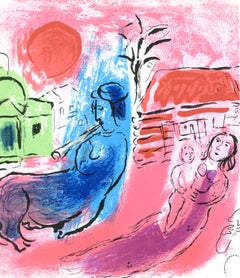
Marc Chagall, Motherhood with Centaur, from Chagall, 1957
By Marc Chagall
Located in Southampton, NY
This exquisite lithograph by Marc Chagall (1887–1985), titled Maternite au Centaure (Motherhood with Centaur), from the album Chagall, originates fro...
Category

1950s Expressionist Figurative Prints

Materials

Lithograph

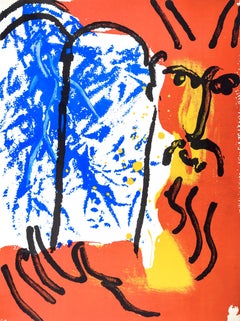
Marc Chagall, Moses I, from Drawings for the Bible, 1956
By Marc Chagall
Located in Southampton, NY
This exquisite lithograph by Marc Chagall (1887–1985), titled Moise I (Moses I), from Marc Chagall, Dessins Pour La Bible (Drawings for the Bible), Verve: Revue Artistique et Littera...
Category

1950s Expressionist Figurative Prints

Materials

Lithograph

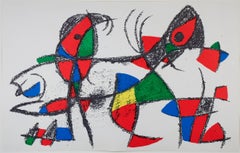
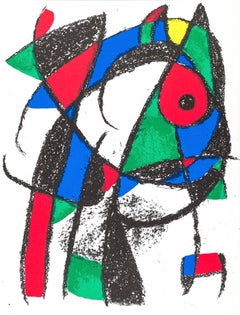
Joan Miro, Lithograph I, from Lithographs II, 1975
By Joan Miró
Located in Southampton, NY
This exquisite lithograph by Joan Miro (1893–1983), titled Lithograph I, from the album Joan Miro Lithographs, Volume II, originates from the 1975 edition published by Leon Amiel, Ne...
Category

1970s Surrealist Abstract Prints

Materials

Lithograph

Obra Inèdita Recent X
By Joan Miró
Located in Toronto, Ontario
Joan Miró is one of the greatest artists of the 20th century. He is renowned internationally as a painter, sculptor, printmaker, and ceramicist. Miró’s works, which were at the int...
Category

1960s Surrealist Abstract Prints

Materials

Lithograph

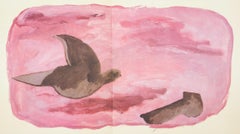
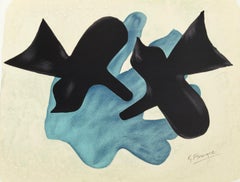
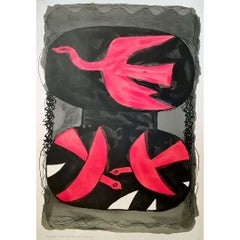
Circa 1960 original poster by Georges Braque - Trois Oiseaux
By Georges Braque
Located in PARIS, FR
The circa 1960 original poster by Georges Braque, titled Trois Oiseaux, is a classic representation of the artist's distinctive style. Braque, one of the pioneers of Cubism alongside...
Category

1960s Prints and Multiples

Materials

Paper, Lithograph

Joan Miro, Seated Woman II/II, from Women, 1965
By Joan Miró
Located in Southampton, NY
This exquisite heliogravure by Joan Miro (1893–1983), titled Femme Assise II/II (Seated Woman II/II), from the folio Joan Miro, Femmes (Women), originates from the 1965 edition publi...
Category

1960s Modern Abstract Prints

Materials

Lithograph

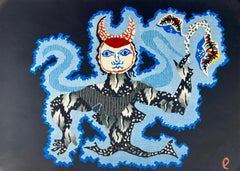
Jean Lurcat, The Virgo, from The Signs of the Zodiac, 1959
By Jean Lurçat
Located in Southampton, NY
This exquisite lithograph and pochoir by Jean Lurcat (1892–1966), titled La Vierge (The Virgo), from the folio Les Signes du Zodiaque (The Signs of the Zodiac), originates from the 1...
Category

1950s Modern Landscape Prints

Materials

Lithograph

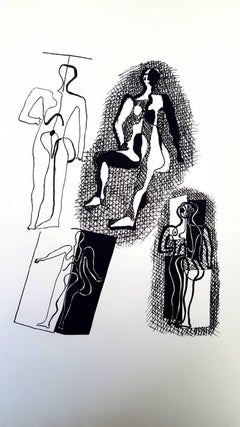
Composition (Cramer 36; Bloch 360; Horodisch A6), Non Vouloir, Pablo Picasso
By Pablo Picasso
Located in Southampton, NY
Zincograph on Vélin Bouffant paper. Unsigned and unnumbered, as issued. Good condition. Notes: From the volume, Non Vouloir, 1942. Published by Éditions Jeanne Bucher, Paris; printed...
Category

1940s Cubist Figurative Prints

Materials

Etching

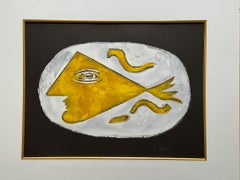
Profil Grec - original modern lithograph by classical modernist Georges Braque
By Georges Braque
Located in Hamburg, DE
"Profil Grec" is a color lithograph by famous French cubist artist Georges Braque, around 1962. This color lithograph on Veélin-Arches is from the editor Armand Israel and a limited...
Category

Mid-20th Century Cubist Still-life Prints

Materials

Paper, Lithograph

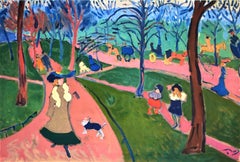
Derain, Hyde Park, Fauves, Collection Pierre Lévy (after)
By André Derain
Located in Fairfield, CT
Medium: Lithograph on vélin d'Arches paper Year: 1972 Paper Size: 20 x 26 inches Inscription: Signed in the plate and unnumbered, as issued Notes: From the folio, Fauves, VII, Collec...
Category

1970s Fauvist Landscape Prints

Materials

Lithograph

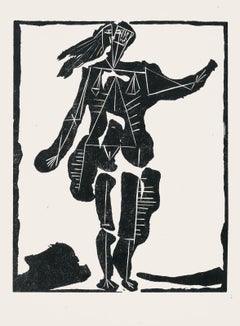
Pablo Picasso (after) Helene Chez Archimede - Wood Engraving
By (after) Pablo Picasso
Located in Collonge Bellerive, Geneve, CH
Pablo Picasso (after) Helene Chez Archimede Medium: engraved on wood by Georges Aubert Dimensions: 44 x 33 cm Portfolio: Helen Chez Archimede Year: 1955 Edition: 240 (Here it is on...
Category

1950s Modern Figurative Prints

Materials

Wood, Archival Paper, Engraving

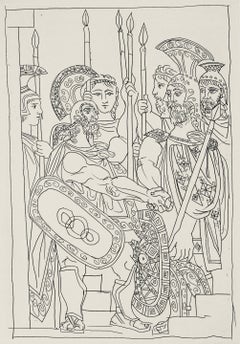
Accord entre les Athéniens et les Spartiates, la paix (Bloch 267-272; C. 24)
By Pablo Picasso
Located in Southampton, NY
Etching on vélin de Rives BFK paper. Paper Size: 11.5 x 9 inches. Inscription: Unsigned and unnumbered, as issued. Notes: From the album, Lysistrata, 1934. Published by The Limited E...
Category

1930s Cubist Abstract Prints

Materials

Etching

Still Thinking About These?

All Recently Viewed