2,645 results for "surrealism"

to
1,195
1,257
696
394
212
86
Overall Width
to
Overall Height
to
958
553
308
269
172
50
47
8
5
3
3
3
198
151
140
136
75
11
2,261
373
3
2
61
48
69
348
635
560
213
29
1,960
603
56
1,033
666
493
399
314
250
250
193
119
72
71
70
59
59
57
53
40
39
37
37
1,635
400
394
168
138
331
371
1,898
672
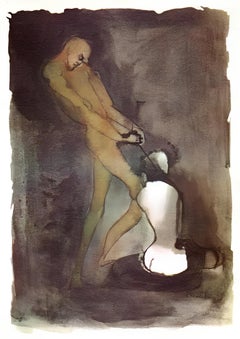
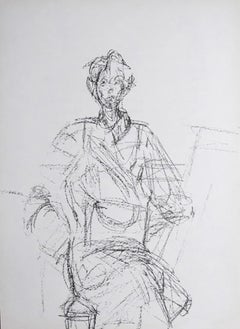
Francois Auguste Rene Rodin, Untitled, from The Varende, 1944 (after)
By Auguste Rodin
Located in Southampton, NY
This exquisite lithograph after Francois Auguste Rene Rodin (1840–1917), titled Sans titre (Untitled), from the folio La Varende, Rodin (La Varende, Rodin), originates from the 1944 ...
Category

1940s Modern Figurative Prints

Materials

Lithograph, Stencil

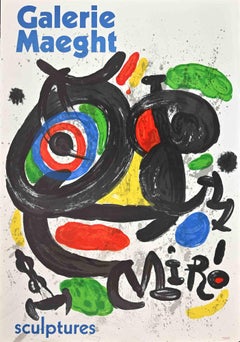
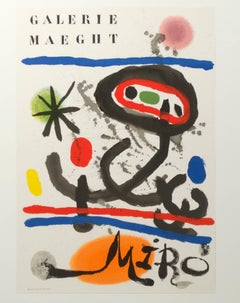
Vintage Poster Exhibition Galerie Maeght-Lithograph/Offset after J. Mirò-1978
By (after) Joan Miró
Located in Roma, IT
Vintage Poster Exhibition Galerie Maeght is a vintage Lithograph and Offset poster realized after Joan Mirò (1893-1983) in 1978. Good conditions. Joan Miró i Ferrà (20 April 1893 –...
Category

1970s Surrealist Abstract Prints

Materials

Lithograph, Offset

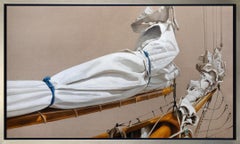
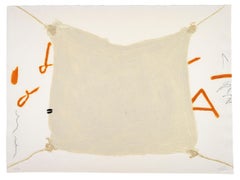
"Magic Carpet Sail, " Framed Limited Edition Giclee Print, 18" x 30"
By Michel Brosseau
Located in Westport, CT
This realistic nautical limited edition print by Michel Brosseau captures the folded and tied white sails of a boat. The subject is rendered realistically with a flat light umber bac...
Category

2010s Realist Landscape Prints

Materials

Digital, Giclée

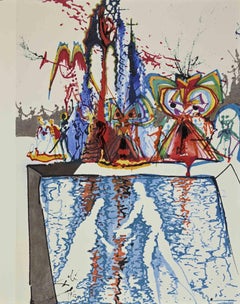
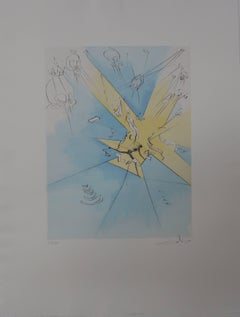
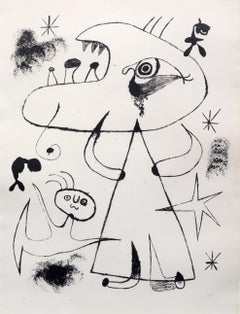
Act IV, Scene III - From “Romeo and Juliet” - Lithograph-1975
By Salvador Dalí­
Located in Roma, IT
Act IV, Scene III - From “Romeo and Juliet”  is an artwork realized  in 1975. Mixed colored lithograph. Signed and dated in plate on the left right  margin. Perfect conditions. Th...
Category

1970s Surrealist More Prints

Materials

Lithograph

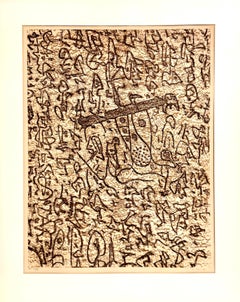
Max Ernst Dada Surrealist Hand Signed Lithograph Poster for a Jewish Museum
By Max Ernst
Located in Surfside, FL
Max Ernst (German, American, 1891-1976) Color lithograph Titled, "Poster For The Jewish Museum" 1966 Hand signed lower right Hand numbered HC I/XVII Dimensions: 34.75 x 28.5 sight 25 X 19.25 Max Ernst (German 1891 – 1976) was a German-born painter, sculptor, printmaker, graphic artist, and poet. A prolific artist, Ernst was a primary pioneer of the Dada movement and surrealism in Europe. He had no formal artistic training, but his experimental attitude toward the making of art resulted in his invention of frottage—a technique that uses pencil rubbings of textured objects and relief surfaces to create images—and grattage, an analogous technique in which paint is scraped across canvas to reveal the imprints of the objects placed beneath. Max Ernst showed for the first time in 1912 at the Galerie Feldman in Cologne. At the Sonderbund exhibition of that year in Cologne he saw the work of Paul Cezanne, Edvard Munch, Pablo Picasso, Paul Gauguin and Vincent van Gogh. In 1913 he met Guillaume Apollinaire and Robert Delaunay and traveled to Paris. Ernst participated that same year in the Erste deutsche Herbstsalon. In 1914 he met Jean Arp in Cologne who was to become a lifelong friend. In 1921 Ernst exhibited at the Galerie au Sans Pareil in Paris. He was involved in Surrealist activities in the early 1920s with Paul Eluard and André Breton. His work was exhibited that year together with that of the Das Junge Rheinland group, at Galerie Feldman in Cologne, and then in several group exhibitions in 1913. In his paintings of this period, Ernst adopted an ironic style that juxtaposed grotesque elements alongside Cubist and Expressionist motifs. Ernst fought in world war I. Several German Expressionist painters died in action during the war, among them August Macke and Franz Marc. In 1918, Ernst was demobilised and returned to Cologne. He soon married art history student Luise Straus, of Jewish ancestry, whom he had met in 1914. In 1919, he visited Paul Klee in Munich and studied paintings by Giorgio de Chirico. In the same year, inspired by de Chirico and mail-order catalogues, teaching-aide manuals and similar sources, he produced his first collage works (notably Fiat modes, a portfolio of lithographs), a technique which later dominated his artistic pursuits. Also in 1919, Ernst, social activist Johannes Theodor Baargeld and several colleagues founded the Cologne Dada group. In 1919–20, Ernst and Baargeld published various short-lived magazines such as Der Strom, die Schammade and organised Dada exhibitions. Ernst and Luise's son Ulrich Jimmy Ernst was born on 24 June 1920; he later would also become a painter. In 1921, he met Paul Éluard, who became a lifelong friend. Éluard bought two of Ernst's paintings (Celebes and Oedipus Rex) and selected six collages to illustrate his poetry collection Répétitions. A year later the two collaborated on Les malheurs des immortels and then with André Breton, whom Ernst met in 1921, on the magazine Littérature. Ernst developed a fascination with birds which was prevalent in his work. His alter ego in paintings, which he called Loplop, was a bird. He suggested that this alter-ego was an extension of himself stemming from an early confusion of birds and humans. In 1927, he married Marie-Berthe Aurenche and it is thought his relationship with her may have inspired the erotic subject matter of The Kiss and other works of that year. He collaborated with Joan Miro on designs for Sergei Diaghilev Ballet that same year. The following year the artist collaborated with Salvador Dali and the Surrealist Luis Bunuel on the film L'Age d'or. His first American show was held at the Julien Levy Gallery, New York, in 1932. In 1936 Ernst was represented in Fantastic Art, Dada, Surrealism at the Museum of Modern Art in New York. Ernst began to sculpt in 1934 and spent time with Alberto Giacometti. In 1938, the American heiress and artistic patron Peggy Guggenheim acquired a number of Max Ernst's works, which she displayed in her new gallery in London. Ernst and Guggenheim were married from 1942 to 1946. In September 1939, the outbreak of World War II caused Ernst, being German, to be interned as an "undesirable foreigner" in Camp des Milles, near Aix-en-Provence, along with fellow surrealist, Hans Bellmer, who had recently emigrated to Paris. He had been living with his lover and fellow surrealist painter, Leonora Carrington who, not knowing whether he would return, saw no option but to sell their house to repay their debts and leave for Spain. Thanks to the intercession of Paul Éluard and other friends, including the journalist Varian Fry, he was released a few weeks later. Soon after the German occupation of France, he was arrested again, this time by the Gestapo, but managed to escape to America with the help of Fry and Peggy Guggenheim, a member of a wealthy American art collecting family. Ernst and Peggy Guggenheim arrived in the United States in 1941 and were married at the end of the year. Along with other artists and friends (Marcel Duchamp and Marc Chagall) who had fled from the war and lived in New York City, Ernst helped inspire the development of abstract expressionism. His marriage to Guggenheim did not last. In October 1946 he married American surrealist painter Dorothea Tanning in a double ceremony with Man Ray and Juliet P. Browner in Beverly Hills, California. The couple made their home in Sedona, Arizona from 1946 to 1953. He and Tanning hosted intellectuals and European artists such as Henri Cartier-Bresson and Yves Tanguy. Sedona proved an inspiration for the artists and for Ernst, who compiled his book Beyond Painting and completed his sculptural masterpiece Capricorn while living in Sedona. As a result of the book and its publicity, Ernst began to achieve financial success. From the 1950s he lived mainly in France. In 1954 he was awarded the Grand Prize for painting at the Venice Biennale. In 2005, "Max Ernst: A Retrospective" opened at the Metropolitan Museum of Art. Contemporary artist tapestries have had their true believers. He produced a tapestry for Gloria Ross...
Category

1960s Surrealist Abstract Prints

Materials

Lithograph

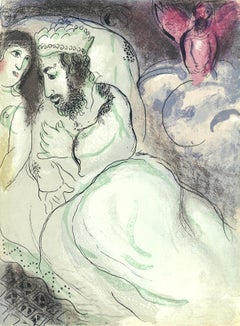
Marc Chagall, Sarah and Abimelech, from Drawings for the Bible, 1956
By Marc Chagall
Located in Southampton, NY
This exquisite lithograph by Marc Chagall (1887–1985), titled Sara et Abimelech (Sarah and Abimelech), from Marc Chagall, Dessins Pour La Bible (Drawings for the Bible), Verve: Revue...
Category

1950s Expressionist Figurative Prints

Materials

Lithograph

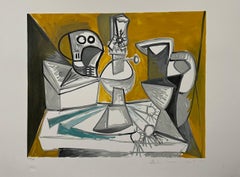
Pablo Picasso Estate Hand Signed Lithograph Abstract Cubist Composition
By Pablo Picasso
Located in Surfside, FL
Pablo Picasso (after) "Tete De Mort, Lampe, Cruches Et Poireaux" limited edition print on Arches paper, Hand signed by Marina Picasso lower right and numbered 318/500 lower left Fr...
Category

20th Century Modern Abstract Prints

Materials

Lithograph

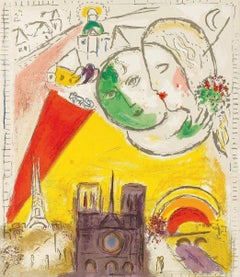
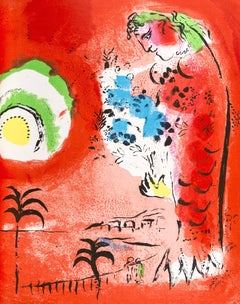
Marc Chagall, The Sunday, from Derriere le miroir, 1954
By Marc Chagall
Located in Southampton, NY
This exquisite lithograph by Marc Chagall (1887–1985), titled Le Dimanche (The Sunday), from the folio Derriere le miroir, No. 67–68, originates from the 1954 edition published by Ma...
Category

1950s Expressionist Landscape Prints

Materials

Lithograph

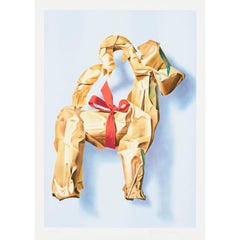
Wrapped Christmas Goat
By Yrjö Edelmann
Located in Malmo, SE
Unframed. Edition of 375 ex. Free shipment worldwide. Reality or fantasy? What is the difference between fantasy and fact, between night and day, between torment and transports of d...
Category

Early 2000s Photorealist Figurative Prints

Materials

Giclée

Feu sous L eau (Fire Under Water) —Mid-century Modernism, Atelier 17
By Stanley William Hayter
Located in Myrtle Beach, SC
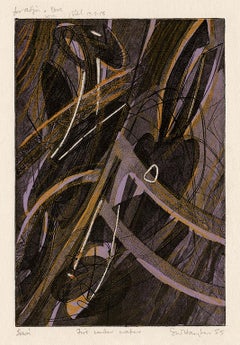
Stanley William Hayter, 'Feu sous L'eau (Fire Under Water)', color engraving, soft-ground etching and scorper with yellow silkscreen, 1955, edition 50 plus 10 artist proofs, Black & Moorhead 221. Signed, titled 'Fire Under Water', dated and annotated 'Essai' in pencil. Dedicated in the artist’s hand 'for Adja & Dove WH Bill 17–5–55' in the top margin. A superb, richly inked impression with fresh colors, on heavy, cream wove paper; wide margins (2 1/2 to 3 7/8 inches), in excellent condition. One of 10 artist’s proofs. Image size 10 3/16 x 7 inches; sheet size 18 1/8 x 12 1/4 inches. Matted to museum standards, unframed. ABOUT THIS WORK In 1950 Hayter returned to Paris and reopened Atelier 17. Works such as 'Fire Under Water' reveal newfound influences, such as that of the Ardèche area of southern France, where he acquired a house in 1951 and frequently visited. Hayter took great interest in the flowing Escoutay River, an experience that parallels the artist and co-director of Atelier 17 Krishna Reddy’s interest in depicting water. While some forms in this print evoke the natural world, the palette of contrasting tones of purple, yellow, black, and white reflects Hayter’s belief in using color intuitively to express emotions and evoke feelings. The sharp white relief lines from the paper and the textural effects realized through soft-ground etching operate in tandem with the sweeping curves and bold colors to give the composition a sense of vitality and dynamism. —edited from the Metropolitan Museum of Art Published by 'La Jeune Gravure Contemporaine', Paris. Impressions of this work are in the following collections: British Museum, Metropolitan Museum of Art, National Gallery of Art. ABOUT THE ARTIST Stanley William Hayter (1901-1988) was a British painter and printmaker associated in the 1930s with Surrealism and from 1940 onward with Abstract Expressionism. Regarded as one of the most significant printmakers of the 20th century, Hayter founded the legendary Atelier 17 studio in Paris, now known as Atelier Contrepoint. Among the artists he is credited with influencing are Pablo Picasso, Alberto Giacometti, Joan Miró, Alexander Calder, and Marc Chagall. The hallmark of the workshop was its egalitarian structure, breaking sharply with the traditional French engraving studios by insisting on a cooperative approach to labor and technical discoveries. In 1929 Hayter was introduced to Surrealism by Yves Tanguy and André Masson, who, with other Surrealists, worked with Hayter at Atelier 17. The often violent imagery of Hayter’s Surrealist period was stimulated in part by his passionate response to the Spanish Civil War and the rise of Fascism. He organized portfolios of graphic works to raise funds for the Spanish cause, including Solidarité (Paris, 1938), a portfolio of seven prints, one of them by Picasso. Hayter frequently exhibited with the Surrealists during the 1930s but left the movement when Paul Eluard was expelled. Eluard’s poem Facile Proie (1939) was written in response to a set of Hayter’s engravings. Other writers with whom Hayter collaborated included Samuel Beckett and Georges Hugnet. Hayter joined the exile of the Parisian avant-garde in 1939, moving with his second wife, the American sculptor Helen Phillips...
Category

1950s Abstract Expressionist Abstract Prints

Materials

Engraving, Etching

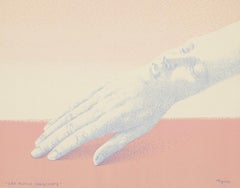
Rene Magritte, Gemstones, 1968 (after)
By René Magritte
Located in Southampton, NY
This exquisite lithograph after Rene Magritte (1898–1967), titled Pierreries (Gemstones), from the folio Les Enfants Trouves de Magritte (The Found Children of Magritte), 1968, origi...
Category

1960s Surrealist Animal Prints

Materials

Lithograph

Joy Limited edition print of surrealistic collage with portrait of a woman
By Maria Rivans
Located in Utrecht, NL
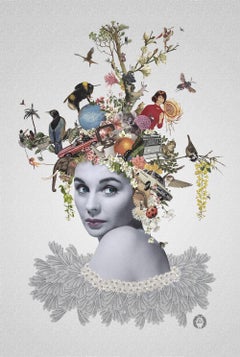
Maria Rivans is a contemporary British artist, known for her scrapbook-style collage aesthetic. A mash-up of Surrealism meets Pop-Art, Rivans’s work re-ap...
Category

2010s Contemporary Figurative Prints

Materials

Paper, Mixed Media

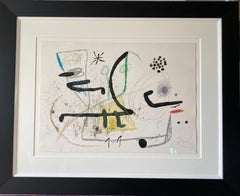
Joan Miró - MARAVILLAS CON VARIACIONES... Lithograph Contemporary Art Abstract
By Joan Miró
Located in Madrid, Madrid
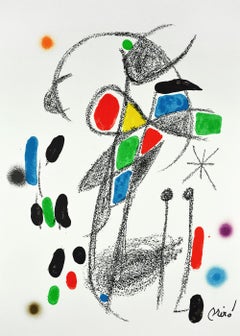
Joan Miró - Maravillas con variaciones acrósticas en el jardín de Miró XVIII Date of creation: 1975 Medium: Lithograph on Gvarro paper Edition: 1500 Size: 49,5 x 35,5 cm Observations...
Category

1970s Abstract Abstract Prints

Materials

Lithograph

Marc Chagall, Moses I, from Drawings for the Bible, 1956
By Marc Chagall
Located in Southampton, NY
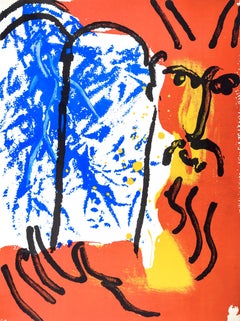
This exquisite lithograph by Marc Chagall (1887–1985), titled Moise I (Moses I), from Marc Chagall, Dessins Pour La Bible (Drawings for the Bible), Verve: Revue Artistique et Littera...
Category

1950s Expressionist Figurative Prints

Materials

Lithograph

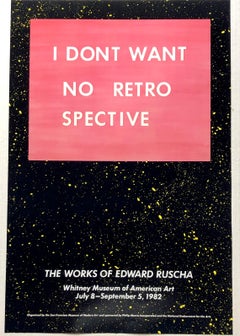
Ed Ruscha I Don t Want No Retrospective (program)
By Ed Ruscha
Located in NEW YORK, NY
Ed Ruscha ‘I DON'T WANT NO RETRO SPECTIVE’: Vintage original, historic 1982 exhibition program to Ed Ruscha’s first major museum retrospective(s): “THE WORKS OF EDWARD RUSCHA”: Sa...
Category

1980s Pop Art More Art

Materials

Offset

Leonor Fini, Untitled, from The Story of O, 1962
By Leonor Fini
Located in Southampton, NY
This exquisite lithograph, titled Sans titre, after Leonor Fini, from the folio L'Histoire d'O (The Story of O), 1962, was published and printed by La Compagnie des Vibliophiles, au ...
Category

1960s Modern Figurative Prints

Materials

Lithograph

Joan Miro "Maravillas con Variaciones Acrosticas en el Jardin de Miro"
By Joan Miró
Located in Hinsdale, IL
JOAN MIRO (1893 – 1983) Maravillas con Variaciones Acrosticas en el Jardin de Miro Lithograph in colors on Arches paper c. 1975 Signed in pencil by artist, lower margin Impression...
Category

1970s Abstract Abstract Prints

Materials

Lithograph

Pablo Picasso Estate Hand Signed Lithograph "Femme Couchee"
By Pablo Picasso
Located in Surfside, FL
Pablo Picasso (after) "Femme Couchee" limited edition print on Arches paper, Hand signed by Marina Picasso lower right and numbered 296/500 lower left From the estate of Pablo Pica...
Category

20th Century Modern Abstract Prints

Materials

Lithograph

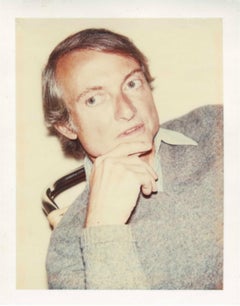
Unique portrait of Roy Lichtenstein, Authenticated by the Andy Warhol Foundation
By Andy Warhol
Located in New York, NY
Andy Warhol Portrait of Roy Lichtenstein, 1975 Polaroid dye-diffusion print Authenticated by the Andy Warhol Foundation for the Visual Arts, bears the Foundation stamp verso Frame included: Framed in white wood frame with UV plexiglass; with die-cut window in the back to show official Warhol Foundation authentication stamp and text Measurements: 9 9/16 x 8 9/16 x 9/16 inches (frame) 3 1/2 x 2 3/4 inches (window) 4.16 x 3.15 inches (Artwork) Authenticated and stamped by the Estate of Andy Warhol/Warhol Foundation for the Visual Arts An impressive piece of Pop Art history! A must-have for fans and collectors of both Andy Warhol and Roy Lichtenstein: This is a unique, authenticated color Polaroid taken by one Pop Art legend, Andy Warhol, of his most formidable contemporary and, in many respects, rival, Roy Lichtenstein. One of only a few portraits Andy Warhol took of Roy Lichtenstein, during one tense photo shoot. Both iconic artists, colleagues and, perhaps lesser known to the public, rivals, would be represented at the time by the renowned Leo Castelli Gallery. The truth is - they were really more rivals than friends. (the rivalry intensified when Warhol, who was working with Walt Disney, discovered that Lichtenstein painted Mickey Mouse before he did!!) Leo Castelli was committed to Roy Lichtenstein, and, it's easy to forget today, wasn't that interested in Warhol as he considered Lichtenstein the greater talent and he could relate better with Roy on a personal level. However, Ivan Karp, who worked at Castelli, was very interested in Warhol, as were some powerful European dealers, as well as many wealthy and influential American and European collectors. That was the start of Warhol's bypassing the traditional gallery model - so that dealers like Castelli could re-discover him after everybody else had. Warhol is known to have taken hundreds of self-portrait polaroid photographs - shoe boxes full - and he took many dozens of images of celebrities like Blondie and Farrah Fawcett. But only a small number of photographic portraits of fellow Pop Art legend Roy Lichtenstein -- each unique,- are known to have appeared on the market over the past half a century - all from the same photo session. This is one of them. There is another Polaroid - from this same (and only) sitting, in the permanent collection of the Getty Museum in California. There really weren't any other collaborations between these two titans, making the resulting portrait from this photo session extraordinary. It is fascinating to study Roy Lichtenstein's face and demeanor in this photograph, in the context of the great sense of competition, but perhaps even greater, albeit uneasy respect, these two larger than life Pop art titans had for each other: Like Leo Castelli, Roy Lichtenstein was Jewish of European descent; whereas Warhol was Catholic and quintessentially American, though also of European (Polish) descent. They were never going to be good friends, but this portrait, perhaps even arranged by Leo Castelli, represents an uneasy acknowledgement there would be room at the top for both of them. Floated, framed with die cut back revealing authentication details, and ready to hang. Measurements: 9 9/16 x 8 9/16 x 9/16 inches (frame) 3 1/2 x 2 3/4 inches (window) 4.16 x 3.15 inches (sheet) Authenticated by the Estate of Andy Warhol/The Andy Warhol Foundation for the Visual Arts. Estate Stamped: Stamped with the Andy Warhol Estate, Warhol Foundation for the Visual Arts stamp, numbered "B 512536P", with the Estate of Andy Warhol stamp and inscribed UP on the reverse. Bears the Warhol Foundation unique inventory number. Roy Lichtenstein Biography Roy Lichtenstein was one of the most influential and innovative artists of the second half of the twentieth century. He is preeminently identified with Pop Art, a movement he helped originate, and his first fully achieved paintings were based on imagery from comic strips and advertisements and rendered in a style mimicking the crude printing processes of newspaper reproduction. These paintings reinvigorated the American art scene and altered the history of modern art. Lichtenstein’s success was matched by his focus and energy, and after his initial triumph in the early 1960s, he went on to create an oeuvre of more than 5,000 paintings, prints, drawings, sculptures, murals and other objects celebrated for their wit and invention. Roy Fox Lichtenstein was born on October 27, 1923, in New York City, the first of two children born to Milton and Beatrice Werner Lichtenstein. Milton Lichtenstein (1893–1946) was a successful real estate broker, and Beatrice Lichtenstein (1896–1991), a homemaker, had trained as a pianist, and she exposed Roy and his sister Rénee to museums, concerts and other aspects of New York culture. Roy showed artistic and musical ability early on: he drew, painted and sculpted as a teenager, and spent many hours in the American Museum of Natural History and the Museum of Modern Art. He played piano and clarinet, and developed an enduring love of jazz, frequenting the nightspots in Midtown to hear it. Lichtenstein attended the Franklin School for Boys, a private junior high and high school, and was graduated in 1940. That summer he studied painting and drawing from the model at the Art Students League of New York with Reginald Marsh. In September he entered Ohio State University (OSU) in Columbus in the College of Education. His early artistic idols were Rembrandt, Daumier and Picasso, and he often said that Guernica (1937; Museo Reina Sofía, Madrid), then on long-term loan to the Museum of Modern Art, was his favorite painting. Even as an undergraduate, Lichtenstein objected to the notion that one set of lines (one person’s drawings) “was considered brilliant, and somebody’s else’s, that may have looked better to you, was considered nothing by almost everyone.”i Lichtenstein’s questioning of accepted canons of taste was encouraged by Hoyt L. Sherman, a teacher whom he maintained was the person who showed him how to see and whose perception-based approach to art shaped his own. In February 1943, Lichtenstein was drafted, and he was sent to Europe in 1945. As part of the infantry, he saw action in France, Belgium and Germany. He made sketches throughout his time in Europe and, after peace was declared there, he intended to study at the Sorbonne. Lichtenstein arrived in Paris in October 1945 and enrolled in classes in French language and civilization, but soon learned that his father was gravely ill. He returned to New York in January 1946, a few weeks before Milton Lichtenstein died. In the spring of that year, Lichtenstein went back to OSU to complete his BFA and in the fall he was invited to join the faculty as an instructor. In June 1949, he married Isabel Wilson Sarisky (1921–80), who worked in a cooperative art gallery in Cleveland where Lichtenstein had exhibited his work. While he was teaching, Lichtenstein worked on his master’s degree, which he received in 1949. During his second stint at OSU, Lichtenstein became closer to Sherman, and began teaching his method on how to organize and unify a composition. Lichtenstein remained appreciative of Sherman’s impact on him. He gave his first son the middle name of “Hoyt,” and in 1994 he donated funds to endow the Hoyt L. Sherman Studio Art Center at OSU. In the late 1940s and early 1950s, Lichtenstein began working in series and his iconography was drawn from printed images. His first sustained theme, intimate paintings and prints in the vein of Paul Klee that poked lyrical fun at medieval knights, castles and maidens, may well have been inspired by a book about the Bayeux Tapestry. Lichtenstein then took an ironic look at nineteenth-century American genre paintings he saw in history books, creating Cubist interpretations of cowboys and Indians spiked with a faux-primitive whimsy. As with his most celebrated Pop paintings of the 1960s, Lichtenstein gravitated toward what he would characterize as the “dumbest” or “worst” visual item he could find and then went on to alter or improve it. In the 1960s, commercial art was considered beneath contempt by the art world; in the early 1950s, with the rise of Abstract Expressionism, nineteenth-century American narrative and genre paintings were at the nadir of their reputation among critics and collectors. Paraphrasing, particularly the paraphrasing of despised images, became a paramount feature of Lichtenstein’s art. Well before finding his signature mode of expression in 1961, Lichtenstein called attention to the artifice of conventions and taste that permeated art and society. What others dismissed as trivial fascinated him as classic and idealized—in his words, “a purely American mythological subject matter.”ii Lichtenstein’s teaching contract at OSU was not renewed for the 1951–52 academic year, and in the autumn of 1951 he and Isabel moved to Cleveland. Isabel Lichtenstein became an interior decorator specializing in modern design, with a clientele drawn from wealthy Cleveland families. Whereas her career blossomed, Lichtenstein did not continue to teach at the university level. He had a series of part-time jobs, including industrial draftsman, furniture designer, window dresser and rendering mechanical dials for an electrical instrument company. In response to these experiences, he introduced quirkily rendered motors, valves and other mechanical elements into his paintings and prints. In 1954, the Lichtensteins’ first son, David, was born; two years later, their second child, Mitchell, followed. Despite the relative lack of interest in his work in Cleveland, Lichtenstein did place his work with New York dealers, which always mattered immensely to him. He had his first solo show at the Carlebach Gallery in New York in 1951, followed by representation with the John Heller Gallery from 1952 to 1957. To reclaim his academic career and get closer to New York, Lichtenstein accepted a position as an assistant professor at the State University of New York at Oswego, in the northern reaches of the state. He was hired to teach industrial design, beginning in September 1957. Oswego turned out to be more geographically and aesthetically isolated than Cleveland ever was, but the move was propitious, for both his art and his career. Lichtenstein broke away from representation to a fully abstract style, applying broad swaths of pigment to the canvas by dragging the paint across its surface with a rag wrapped around his arm. At the same time, Lichtenstein was embedding comic-book characters figures such as Mickey Mouse and Donald Duck in brushy, expressionistic backgrounds. None of the proto-cartoon paintings from this period survive, but several pencil and pastel studies from that time, which he kept, document his intentions. Finally, when he was in Oswego, Lichtenstein met Reginald Neal, the new head of the art department at Douglass College, the women’s college of Rutgers University, in New Brunswick, New Jersey. The school was strengthening and expanding its studio art program, and when Neal needed to add a faculty member to his department, Lichtenstein was invited to apply for the job. Lichtenstein was offered the position of assistant professor, and he began teaching at Douglass in September 1960. At Douglass, Lichtenstein was thrown into a maelstrom of artistic ferment. With New York museums and galleries an hour away, and colleagues Geoffrey Hendricks and Robert Watts at Douglass and Allan Kaprow and George Segal at Rutgers, the environment could not help but galvanize him. In June 1961, Lichtenstein returned to the idea he had fooled around with in Oswego, which was to combine cartoon characters from comic books with abstract backgrounds. But, as Lichtenstein said, “[I]t occurred to me to do it by mimicking the cartoon style without the paint texture, calligraphic line, modulation—all the things involved in expressionism.”iii Most famously, Lichtenstein appropriated the Benday dots, the minute mechanical patterning used in commercial engraving, to convey texture and gradations of color—a stylistic language synonymous with his subject matter. The dots became a trademark device forever identified with Lichtenstein and Pop Art. Lichtenstein may not have calibrated the depth of his breakthrough immediately but he did realize that the flat affect and deadpan presentation of the comic-strip panel blown up and reorganized in the Sherman-inflected way “was just so much more compelling”iv than the gestural abstraction he had been practicing. Among the first extant paintings in this new mode—based on comic strips and illustrations from advertisements—were Popeye and Look Mickey, which were swiftly followed by The Engagement Ring, Girl with Ball and Step-on Can with Leg. Kaprow recognized the energy and radicalism of these canvases and arranged for Lichtenstein to show them to Ivan Karp, director of the Leo Castelli Gallery. Castelli was New York’s leading dealer in contemporary art, and he had staged landmark exhibitions of Jasper Johns and Robert Rauschenberg in 1958 and Frank Stella in 1960. Karp was immediately attracted to Lichtenstein’s paintings, but Castelli was slower to make a decision, partly on account of the paintings’ plebeian roots in commercial art, but also because, unknown to Lichtenstein, two other artists had recently come to his attention—Andy Warhol and James Rosenquist—and Castelli was only ready for one of them. After some deliberation, Castelli chose to represent Lichtenstein, and the first exhibition of the comic-book paintings was held at the gallery from February 10 to March 3, 1962. The show sold out and made Lichtenstein notorious. By the time of Lichtenstein’s second solo exhibition at Castelli in September 1963, his work had been showcased in museums and galleries around the country. He was usually grouped with Johns, Rauschenberg, Warhol, Rosenquist, Segal, Jim Dine, Claes Oldenburg, Robert Indiana and Tom Wesselmann. Taken together, their work was viewed as a slap in the face to Abstract Expressionism and, indeed, the Pop artists shifted attention away from many members of the New York School. With the advent of critical and commercial success, Lichtenstein made significant changes in his life and continued to investigate new possibilities in his art. After separating from his wife, he moved from New Jersey to Manhattan in 1963; in 1964, he resigned from his teaching position at Douglass to concentrate exclusively on his work. The artist also ventured beyond comic book subjects, essaying paintings based on oils by Cézanne, Mondrian and Picasso, as well as still lifes and landscapes. Lichtenstein became a prolific printmaker and expanded into sculpture, which he had not attempted since the mid-1950s, and in both two- and three-dimensional pieces, he employed a host of industrial or “non-art” materials, and designed mass-produced editioned objects that were less expensive than traditional paintings and sculpture. Participating in one such project—the American Supermarket show in 1964 at the Paul Bianchini Gallery, for which he designed a shopping bag—Lichtenstein met Dorothy Herzka (b. 1939), a gallery employee, whom he married in 1968. The late 1960s also saw Lichtenstein’s first museum surveys: in 1967 the Pasadena Art Museum initiated a traveling retrospective, in 1968 the Stedelijk Musem in Amsterdam presented his first European retrospective, and in 1969 he had his first New York retrospective, at the Solomon R. Guggenheim Museum. Wanting to grow, Lichtenstein turned away from the comic book subjects that had brought him prominence. In the late 1960s his work became less narrative and more abstract, as he continued to meditate on the nature of the art enterprise itself. He began to explore and deconstruct the notion of brushstrokes—the building blocks of Western painting. Brushstrokes are conventionally conceived as vehicles of expression, but Lichtenstein made them into a subject. Modern artists have typically maintained that the subject of a painting is painting itself. Lichtenstein took this idea one imaginative step further: a compositional element could serve as the subject matter of a work and make that bromide ring true. The search for new forms and sources was even more emphatic after 1970, when Roy and Dorothy Lichtenstein bought property in Southampton, New York, and made it their primary residence. During the fertile decade of the 1970s, Lichtenstein probed an aspect of perception that had steadily preoccupied him: how easily the unreal is validated as the real because viewers have accepted so many visual conceptions that they don’t analyze what they see. In the Mirror series, he dealt with light and shadow upon glass, and in the Entablature series, he considered the same phenomena by abstracting such Beaux-Art architectural elements as cornices, dentils, capitals and columns. Similarly, Lichtenstein created pioneering painted bronze sculpture that subverted the medium’s conventional three-dimensionality and permanence. The bronze forms were as flat and thin as possible, more related to line than volume, and they portrayed the most fugitive sensations—curls of steam, rays of light and reflections on glass. The steam, the reflections and the shadow were signs for themselves that would immediately be recognized as such by any viewer. Another entire panoply of works produced during the 1970s were complex encounters with Cubism, Futurism, Purism, Surrealism and Expressionism. Lichtenstein expanded his palette beyond red, blue, yellow, black, white and green, and invented and combined forms. He was not merely isolating found images, but juxtaposing, overlapping, fragmenting and recomposing them. In the words of art historian Jack Cowart, Lichtenstein’s virtuosic compositions were “a rich dialogue of forms—all intuitively modified and released from their nominal sources.”v In the early 1980s, which coincided with re-establishing a studio in New York City, Lichtenstein was also at the apex of a busy mural career. In the 1960s and 1970s, he had completed four murals; between 1983 and 1990, he created five. He also completed major commissions for public sculptures in Miami Beach, Columbus, Minneapolis, Paris, Barcelona and Singapore. Lichtenstein created three major series in the 1990s, each emblematic of his ongoing interest in solving pictorial problems. The Interiors, mural-sized canvases inspired by a miniscule advertisement in an Italian telephone...
Category

1970s Pop Art Portrait Photography

Materials

Polaroid

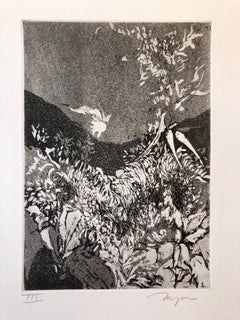
Surrealist Figurative Aquatint Etching California Modernist Sculptor Artist
By Jack Zajac
Located in Surfside, FL
Jack Zajac, American, born 1929 1964 Etching and aquatint hand printed on Fabriano paper, pencil signed and editioned. Edition Roman Numeral III Image: 12 9/16 x 8 5/8 in. (31.9 x 2...
Category

1960s Surrealist Figurative Prints

Materials

Etching, Aquatint

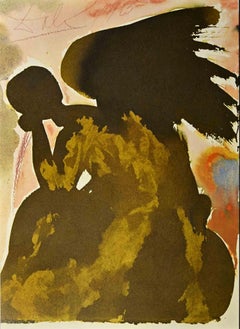
Inter Filios Dei Affuit Etiam Satan - Lithograph - 1964
By Salvador Dalí­
Located in Roma, IT
Holy Bible -  Inter Filios Dei Affuit Etiam Satan is Color lithograph on heavy rag paper realized in 1964. It is part of Biblia Sacra vulgatæ edition is published by Rizzoli-Mediolan...
Category

1960s Surrealist More Prints

Materials

Lithograph

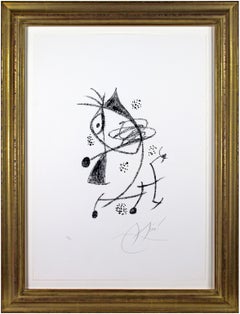
Maravillas con variaciones acrósticas en el jardín de Miró, 1975, (VI/XV)
By Joan Miró
Located in Milwaukee, WI
Joan Miró produced this original color lithograph especially for Rafael Alberti's text 'Maravillas con Variaciones Acrósticas en el Jardín de Miró' (Wonders with Acrostic Variations ...
Category

Late 20th Century Prints and Multiples

Materials

Lithograph

Rene Magritte, The Indiscreet Jewels, from XXe Siecle, 1963
By René Magritte
Located in Southampton, NY
This exquisite lithograph by Rene Magritte (1898–1967), titled Les Bijoux indiscrets (The Indiscreet Jewels), from the album XXe Siecle, Nouvelle serie, XXVe Annee N°22, Noel 1963, o...
Category

1960s Surrealist Figurative Prints

Materials

Lithograph

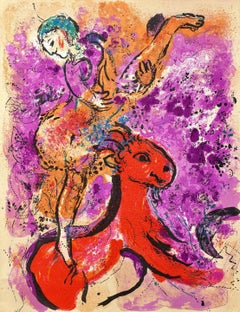
Marc Chagall, The Horsewoman with the Red Horse, from XXe Siecle, 1957
By Marc Chagall
Located in Southampton, NY
This exquisite lithograph and pochoir by Marc Chagall (1887–1985), titled L'ecuyere au cheval rouge (The Horsewoman with the Red Horse), from the album XXe Siecle, Nouvelle serie No....
Category

1950s Expressionist Figurative Prints

Materials

Lithograph

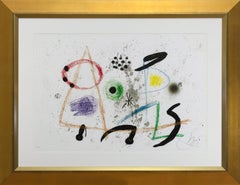
From Maravillas con Variaciones Acrosticas en el Jardin de Miro (VII/XV)
By Joan Miró
Located in Milwaukee, WI
Very rare lithograph, signed by Joan Miro. Edition: VII/XV. Framed in museum-quality, archival materials, including a 23K gold moulding. Reference: Miro: Lithographs. Volumes 1-4. ...
Category

1970s Abstract Prints

Materials

Lithograph

"Vineyard Haven Dinghy, " Framed Limited Edition Giclee Print, 45" x 60"
By Michel Brosseau
Located in Westport, CT
This realistic nautical limited edition print by Michel Brosseau captures a view of a small white dinghy boat tied to a dock. Two ores rest inside the small boat, which is surrounded...
Category

2010s Realist Landscape Prints

Materials

Digital, Giclée

Ecce Homo - Lithograph - 1964
By Salvador Dalí­
Located in Roma, IT
Ecce homo is a Color lithograph on heavy rag paper realized in 1964. It is part of Biblia Sacra vulgatæ edition is published by Rizzoli-Mediolani between 1967 and 1969. Signed and d...
Category

1960s Surrealist Figurative Prints

Materials

Lithograph

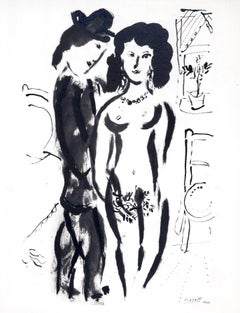
Marc Chagall, The Lovers, from Color of Love, 1958 (after)
By Marc Chagall
Located in Southampton, NY
This exquisite lithograph and pochoir after Marc Chagall (1887–1985), titled Les Amoureux (The Lovers), from the folio Couleur amour, 13 Aquarelles, Gouaches, Lavis (Color of Love, 1...
Category

1950s Modern Figurative Prints

Materials

Lithograph, Stencil

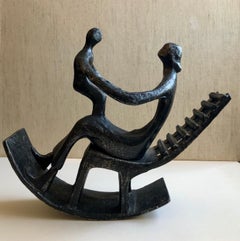
In the style of Henry Moore, Mother and Child in Rocking Chair
Located in Surfside, FL
This is a cast metal sculpture of a woman and child, mother and baby in a rocking chair. It has a patina on a white metal. Not sure if it is steel or aluminum. It is and older vintage piece and has wear to patina where it sits and rocks on table. It is not signed or numbered and there is no foundry mark. Hence it is being sold as being after or in the manner of Henry Moore. Henry Spencer Moore (1898 – 1986) Moore was born in Castleford, the son of a coal miner. He became well-known through his carved marble and larger-scale abstract cast bronze sculptures, and was instrumental in introducing a particular form of modernism to the United Kingdom later endowing the Henry Moore Foundation, which continues to support education and promotion of the arts. After the Great War, Moore received an ex-serviceman's grant to continue his education and in 1919 he became a student at the Leeds School of Art (now Leeds College of Art), which set up a sculpture studio especially for him. At the college, he met Barbara Hepworth, a fellow student who would also become a well-known British sculptor, and began a friendship and gentle professional rivalry that lasted for many years. In Leeds, Moore also had access to the modernist works in the collection of Sir Michael Sadler, the University Vice-Chancellor, which had a pronounced effect on his development. In 1921, Moore won a scholarship to study at the Royal College of Art in London, along with Hepworth and other Yorkshire contemporaries. While in London, Moore extended his knowledge of primitive art and sculpture, studying the ethnographic collections at the Victoria and Albert Museum and the British Museum. Moore's familiarity with primitivism and the influence of sculptors such as Constantin Brâncuși, Jacob Epstein, Henri Gaudier-Brzeska and Frank Dobson led him to the method of direct carving, in which imperfections in the material and marks left by tools became part of the finished sculpture. After Moore married, the couple moved to a studio in Hampstead at 11a Parkhill Road NW3, joining a small colony of avant-garde artists who were taking root there. Shortly afterward, Hepworth and her second husband Ben Nicholson moved into a studio around the corner from Moore, while Naum Gabo, Roland Penrose, Cecil Stephenson and the art critic Herbert Read also lived in the area (Read referred to the area as "a nest of gentle artists"). This led to a rapid cross-fertilization of ideas that Read would publicise, helping to raise Moore's public profile. The area was also a stopping-off point for many refugee artists, architects and designers from continental Europe en route to America—some of whom would later commission works from Moore. In 1932, after six year's teaching at the Royal College, Moore took up a post as the Head of the Department of Sculpture at the Chelsea School of Art. Artistically, Moore, Hepworth and other members of The Seven and Five Society would develop steadily more abstract work, partly influenced by their frequent trips to Paris and their contact with leading progressive artists, notably Pablo Picasso, Georges Braque, Jean Arp and Alberto Giacometti. Moore flirted with Surrealism, joining Paul Nash's modern art movement "Unit One", in 1933. In 1934, Moore visited Spain; he visited the cave of Altamira (which he described as the "Royal Academy of Cave Painting"), Madrid, Toledo and Pamplona. Moore made his first visit to America when a retrospective exhibition of his work opened at the Museum of Modern Art in New York City.[28] Before the war, Moore had been approached by educator Henry Morris, who was trying to reform education with his concept of the Village College. Morris had engaged Walter Gropius as the architect for his second village college at Impington near Cambridge, and he wanted Moore to design a major public sculpture for the site. In the 1950s, Moore began to receive increasingly significant commissions. He exhibited Reclining Figure: Festival at the Festival of Britain in 1951, and in 1958 produced a large marble reclining figure for the UNESCO building in Paris. With many more public works of art, the scale of Moore's sculptures grew significantly and he started to employ an increasing number of assistants to work with him at Much Hadham, including Anthony Caro and Richard Wentworth. Moore produced at least three significant examples of architectural sculpture during his career. In 1928, despite his own self-described "extreme reservations", he accepted his first public commission for West Wind for the London Underground Building at 55 Broadway in London, joining the company of Jacob Epstein and Eric Gill. At an introductory speech in New York City for an exhibition of one of the finest modernist sculptors, Alberto Giacometti, Sartre spoke of "The beginning and the end of history...
Category

1950s Modern Abstract Prints

Materials

Metal

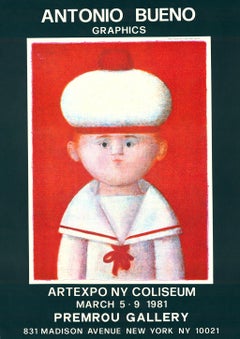
Antonio Bueno - Original 1981 "Art Expo NY Coliseum" Exhibition Poster
By Antonio Bueno
Located in Winterswijk, NL
"Art Expo NY Coliseum" by Antonio Bueno is an original color lithograph poster from 1981, created for the famous New York exhibition. This Italian lithograph features a portrait orie...
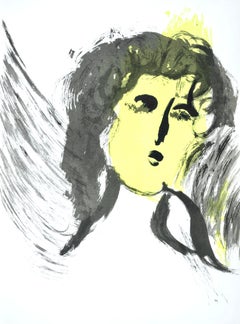
Category

20th Century More Prints

Materials

Paper

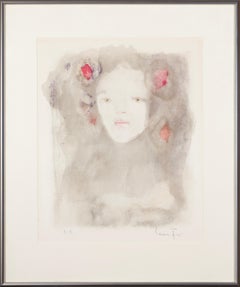
Face and Flowers
By Leonor Fini
Located in Columbia, MO
Leonor Fini was born in Argentina in 1907 but travelled and lived in Europe with her mother from a young age. By 1931, she was in Paris, in the full swing of the Surrealist movement....
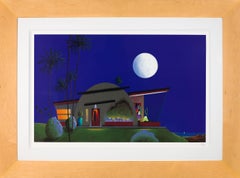
Category

20th Century Surrealist Portrait Drawings and Watercolors

Materials

Etching

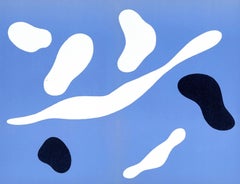
Hans Jean Arp, Composition on a Blue Background, from Derriere le miroir, 1949
Located in Southampton, NY
This exquisite lithograph by Hans Jean Arp (1886–1966), titled Composition sur fond bleu (Composition on a Blue Background), from the folio Derriere le miroir, L’art abstrait, No. 21...
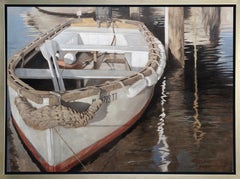
Category

1940s Modern Abstract Prints

Materials

Lithograph

Marc Chagall, The Accordionist, from Chagall, 1957
By Marc Chagall
Located in Southampton, NY
This exquisite lithograph by Marc Chagall (1887–1985), titled L’Accordeoniste (The Accordionist), from the album Chagall, originates from the 1957 edition published by Maeght Editeur...
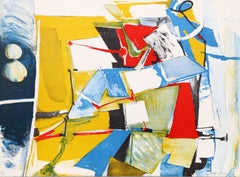
Category

1950s Expressionist Figurative Prints

Materials

Lithograph

Marc Chagall, The Creation, from Drawings for the Bible, 1956
By Marc Chagall
Located in Southampton, NY
This exquisite lithograph by Marc Chagall (1887–1985), titled Creation (The Creation), from Marc Chagall, Dessins Pour La Bible (Drawings for the Bible), Verve: Revue Artistique et Litteraire, Vol. VIII, No. 33–34, originates from the September 1956 issue published by Editions de la revue Verve, Paris, under the direction of Teriade, Editeur, Paris, and printed by Mourlot Freres, Paris, 1956. This visionary composition depicts the divine act of creation, evoking the genesis of light, life, and spirit through Chagall’s radiant imagination and poetic symbolism. The flowing forms and luminous harmonies reflect the unity between the divine and the natural world—a theme central to Chagall’s lifelong spiritual vision. Infused with movement and transcendence, the work transforms the biblical narrative into a lyrical meditation on the origin of existence and the creative essence of faith. The piece forms part of Chagall’s celebrated series of lithographs and drawings created for Dessins Pour La Bible, a monumental project uniting art, scripture, and mysticism in one of the artist’s most important achievements. Executed as a lithograph on velin du Marais paper, this work measures 14 x 10.5 inches (35.56 x 26.67 cm). Unsigned and unnumbered as issued. The edition exemplifies the superb craftsmanship of the Mourlot Freres atelier, renowned for its collaborations with the greatest modern masters of the 20th century. Artwork Details: Artist: Marc Chagall (1887–1985) Title: Creation (The Creation), from Marc Chagall, Dessins Pour La Bible (Drawings for the Bible), Verve: Revue Artistique et Litteraire, Vol. VIII, No. 33–34, September 1956 Medium: Lithograph on velin du Marais paper Dimensions: 14 x 10.5 inches (35.56 x 26.67 cm) Inscription: Unsigned and unnumbered as issued Date: 1956 Publisher: Editions de la revue Verve, Paris, under the direction of Teriade, Editeur, Paris Printer: Mourlot Freres, Paris Catalogue raisonne references: Cain, Julien, and Fernand Mourlot. Chagall Lithographe. Andre Sauret, Editeur, 1960, illustrations 117–46. Cramer, Patrick, and Meret Meyer. Marc Chagall: Catalogue Raisonne Des Livres Illustrés. P. Cramer ed., 1995, illustration 25. Condition: Well preserved, consistent with age and medium Provenance: From Marc Chagall, Dessins Pour La Bible (Drawings for the Bible), Verve: Revue Artistique et Litteraire, Vol. VIII, No. 33–34, published by Editions de la revue Verve, Paris, 1956 Notes: Excerpted from the album (translated from French), This double issue of Verve is dedicated to the full reproduction in heliogravure of the one hundred-five plates etched by Marc Chagall, between 1930 and 1955, for the illustration of the Bible. The artist composed especially for the present work, sixteen lithographs in color and twelve in black, as well as the cover and the title page. This volume was completed and printed on September 10, 1956, by the Master Printers Draeger Freres for heliogravure, and by Mourlot Freres for lithography. About the Publication: Marc Chagall, Dessins Pour La Bible (Drawings for the Bible), published as Verve Vol. VIII, No. 33–34 in September 1956, represents one of the crowning achievements of Chagall’s lifelong dialogue with the sacred. Conceived and directed by the visionary publisher Teriade and printed by the master lithographers Mourlot Freres, the issue features thirty-four color lithographs and numerous black-and-white drawings inspired by biblical figures and stories. Chagall’s works for this edition unite text and image in a luminous meditation on divine creation, moral struggle, and spiritual renewal, imbued with his signature dreamlike symbolism and radiant color. Produced in postwar Paris, this landmark publication reaffirmed the enduring union of art and faith, establishing Dessins Pour La Bible as one of the most important illustrated works of the 20th century. About the Artist: Marc Chagall (1887–1985) was a Belarus-born French painter, printmaker, and designer whose visionary imagination, radiant color, and deeply poetic symbolism made him one of the most beloved and influential artists of the 20th century. Rooted in the imagery of his Jewish heritage and the memories of his childhood in Vitebsk, Chagall’s art wove together themes of faith, love, folklore, and fantasy with a dreamlike modern sensibility. His unique style—merging elements of Cubism, Fauvism, Expressionism, and Surrealism—defied categorization, transforming ordinary scenes into lyrical meditations on memory and emotion. Influenced by Russian icon painting, medieval religious art, and the modern innovations of artists such as Pablo Picasso, Henri Matisse, and Georges Braque, Chagall developed a profoundly personal visual language filled with floating figures, vibrant animals, musicians, and lovers that symbolized the transcendent power of imagination and love. During his early years in Paris, he became an integral part of the Ecole de Paris circle, forming friendships with Amedeo Modigliani, Fernand Leger, and Sonia Delaunay, and his creative spirit resonated with that of his peers and successors—Alexander Calder, Alberto Giacometti, Salvador Dali, Joan Miro, Wassily Kandinsky, Marcel Duchamp, and Man Ray—artists who, like Chagall, sought to push the boundaries of perception, emotion, and form. Over a prolific career that spanned painting, printmaking, stained glass, ceramics, and stage design, Chagall brought an unparalleled poetic sensibility to modern art, infusing even the most abstract subjects with human warmth and spiritual depth. His works are held in the most prestigious museums around the world, including the Museum of Modern Art, the Centre Pompidou, the Tate, and the Guggenheim, where they continue to inspire generations of artists and collectors. The highest price ever paid for a Marc Chagall artwork is approximately $28.5 million USD, achieved in 2017 at Sotheby’s New York for Les Amoureux (1928). Marc Chagall Creation...
Category

1950s Expressionist Figurative Prints

Materials

Lithograph

Marc Chagall, The Angel, from Drawings for the Bible, 1956
By Marc Chagall
Located in Southampton, NY
This exquisite lithograph by Marc Chagall (1887–1985), titled L'Ange (The Angel), from Marc Chagall, Dessins Pour La Bible (Drawings for the Bible), Verve: Revue Artistique et Litter...
Category

1950s Expressionist Figurative Prints

Materials

Lithograph

The Art of Modern Living
By René Lalonde
Located in Greenwich, CT
The Art of Modern Living is a digital pigment print on paper, image size 24 x 38.5 inches and framed in a contemporary light wood frame. Signed 'RENÉ LALONDE' lower right and annotat...
Category

21st Century and Contemporary Contemporary Prints and Multiples

Materials

Paper, Digital Pigment

"Vineyard Haven Dinghy, " Framed Limited Edition Giclee Print, 24" x 32"
By Michel Brosseau
Located in Westport, CT
This realistic nautical limited edition print by Michel Brosseau captures a view of a small white dinghy boat tied to a dock. Two ores rest inside the small boat, which is surrounded...
Category

2010s Realist Landscape Prints

Materials

Digital, Giclée

Jasha Green, Abstract 9 Lithograph, circa 1976
By Jasha Green
Located in Long Island City, NY
This lithograph was created by American artist Jasha Green (1923-2006). Known for his abstract expressionist vision, some of his prints also show his appreciation for op art and surrealism...
Category

1970s Abstract Expressionist Abstract Prints

Materials

Lithograph

Paris L Opera Le Plafond Romeo and Juliet Place de la Concorde Lt Ed Lithograph
By Marc Chagall
Located in New York, NY
Marc Chagall Paris L' Opera Le Plafond, Romeo and Juliet at Place de la Concorde and Arc de Triomphe, 1965 Original poster on wove paper Unsigned Limited Edition of 5000 24 3/4 × 38 ...
Category

1960s Modern Figurative Prints

Materials

Lithograph

Salvador Dali "The Old Hippie"
By Salvador Dalí­
Located in Boston, MA
Artist: Dali, Salvador Title: The Old Hippie Series: The Hippies Date: 1969 Medium: drypoint with added color Signature: Pencil signed Edition: I...
Category

1960s Surrealist Prints and Multiples

Materials

Drypoint

Tamayo, Composition, Ediciones Polígrafa, Redfern Gallery (after)
By Rufino Tamayo
Located in Southampton, NY
Lithograph on vélin paper. Unsigned and unnumbered, as issued. Good condition. Notes: From the album, Ediciones Polígrafa, Redfern Gallery, 1979. Published by Redfern Gallery, London...
Category

1970s Modern Abstract Prints

Materials

Lithograph

Artist Proof by Philippe Henri Noyer
Located in Pasadena, CA
This lithograph is hand signed and marked EA (epreuve d'artiste) artiste proof in English which means that it is the first the artist made. Philippe Noyer was born in June of 1917 in Lyon, France. He studied at the Ecole des Roches, and afterwards Beaux Arts School of Lyon. He then moved to Paris where he studied at the Paul Colin School of Art and experienced Surrealism. His painting career took off in 1943 when he met Paris art dealer...
Category

Late 20th Century Art Deco Prints and Multiples

Materials

Lithograph

A Shattering Entrance upon the American Stage - orignal etching - signed - 1974
By Salvador Dalí­
Located in Paris, IDF
Salvador Dali A Shattering Entrance upon the American Stage Original etching and stencil Handsigned in the right corner with the blind stamp of the editor in the left corner On B...
Category

1970s Surrealist Figurative Prints

Materials

Etching, Stencil

Composition (Mourlot 668-677), La Féerie et Le Royaume, Marc Chagall
By Marc Chagall
Located in Southampton, NY
Lithograph on vélin d’Arches paper. Unsigned and unnumbered, as issued. Good condition. Notes: From the folio, La Féerie et Le Royaume, Lithographies Originales de Marc Chagall, 1972...
Category

1970s Modern Figurative Prints

Materials

Lithograph

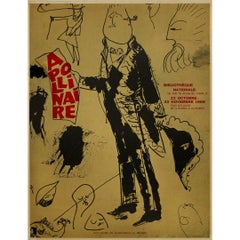
Striking original 1969 poster was by Pablo Picasso Apollinaire en académicien
By Pablo Picasso
Located in PARIS, FR
This striking original 1969 poster was created by Pablo Picasso for the exhibition Apollinaire en académicien, held at the Bibliothèque Nationale in Paris from October 22 to November...
Category

1960s Prints and Multiples

Materials

Linen, Paper, Lithograph

Joan Miro "Cartones " Original Color Lithograph Hand Signed and Framed, 1965
By Joan Miró
Located in Plainview, NY
Joan Miró (Spanish, 1893–1983) Cartones, 1965 Original color lithograph on paper Hand-signed in green crayon by Miró Dimensions: Printed by Mourlot, Paris Published by Pierre Matiss...
Category

20th Century Surrealist Abstract Prints

Materials

Lithograph

Salvador Dalí­, "L amour sacré de Gala", original etching, hand colored, signed
By Salvador Dalí­
Located in Chatsworth, CA
Salvador Dalí "L'amour sacré de Gala" (The Sacred Love of Gala) from After 50 Years of Surrealism Original etching with hand coloring, ha...
Category

1970s Modern Figurative Prints

Materials

Etching

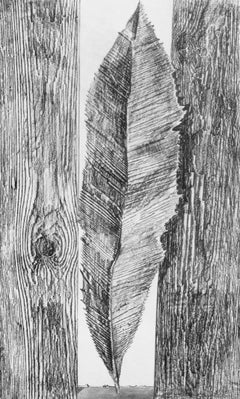
Ernst, Composition (Spies/Leppien 222), Histoire Naturelle (after)
By Max Ernst
Located in Southampton, NY
Collotype from frottage on vélin paper. Unsigned and unnumbered, as issued. Good condition. Notes: From the album, Max Ernst, Histoire Naturelle, 1972. Published and printed by Verla...
Category

1970s Surrealist Landscape Prints

Materials

Lithograph

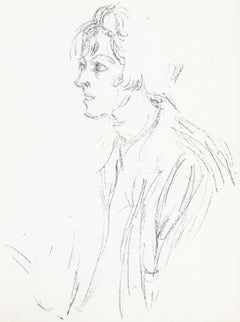
Giacometti, Composition, Derrière le miroir (after)
By Alberto Giacometti
Located in Southampton, NY
Lithograph on vélin paper. Inscription: Unsigned and unnumbered, as issued. Good condition. Notes: From Derrière le miroir, N° 148, 1964. Published by Aimé Maeght, Éditeur, Paris; pr...
Category

1960s Modern Abstract Prints

Materials

Lithograph

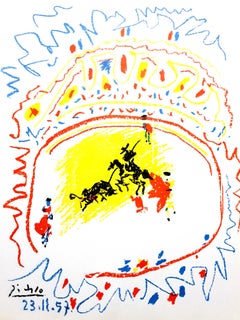
Pablo Picasso - La Petite Corrida - Original Lithograph
By Pablo Picasso
Located in Collonge Bellerive, Geneve, CH
Pablo Picasso - Original Lithograph La Petite Corrida (The Small Bullfight) 1958 Edition of 2000, unsigned Published in the journal XXe Siecle Dimens...
Category

1950s Modern Figurative Prints

Materials

Lithograph

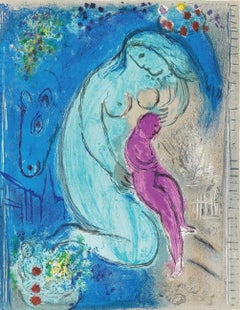
Marc Chagall, Flower Quay, from Derriere le miroir, 1954
By Marc Chagall
Located in Southampton, NY
This exquisite lithograph by Marc Chagall (1887–1985), titled Quai de fleurs (Flower Quay), from the folio Derriere le miroir, No. 67–68, originates from the 1954 edition published b...
Category

1950s Expressionist Landscape Prints

Materials

Lithograph

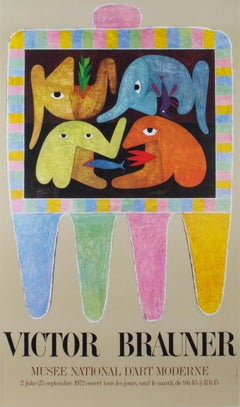
"Musee National d Art Moderne, " Framed Exhibition Poster by Victor Brauner
By Victor Brauner
Located in Milwaukee, WI
"Musee National d'Art Moderne" is a po ster by Victor Brauner for an exhibition of his work in Paris. It features abstracted heads in yellow, orange, and blue, with a border in pastel pink, green, blue, and yellow. It is framed with gold moulding. 33 1/2" x 19 5/8" art 40 1/2" x 26" frame Victor Brauner was born in Piatra Neamt, in 1903, and died in Paris, in 1966. He was the son of a timber manufacturer from Piatra Neamt who settled in Vienna with his family for a few years. It is there that young Victor attended the elementary school. When his family returned to the country (1914), he continued his studies at the evangelical school in Braila; he began to be interested in zoology in that period. He attended the Art School in Bucharest (1919-1921) and H. Igiroseanu’s private school of painting. He visited Falticeni and Balcic and started painting landscapes à la Cézanne. Then, as he testified himself, he went through all the stages: "Dadaist, Abstractionist, Expressionist". On September 26, 1924, the Mozart Galleries in Bucharest hosted his first personal exhibition. In that period he met poet Ilarie Voronca, together with whom he founded the "15HP" magazine. It was in this magazine that Brauner published the manifesto "The pictopoetry" and the article "The surrationalism". He painted and exhibited "Christ at the Cabaret" (in the manner of Graosz) and "The Girl in the Factory" (in the manner of Holder). He participated to the "Contemporanul" exhibition (November 1924). In 1925 he undertook his first journey to Paris, from where he returned in 1927. In the period 1928-1931 he was a contributor of the "Unu" magazine (an avant-garde periodical of Dadaist and Surrealist conceptions), which published reproductions of most of his paintings and graphic works: "clear drawings and portraits made by Victor Brauner to his friends, poets and writers" (Jaques Lessaigne - "Painters I Knew"). In 1930 he settled in Paris, where he met Brancusi, who initiated him into the photographic art. In that same period he became a friend of the Romanian poet Benjamin Fondane and met Yves Tanguil, who would later introduce him to the circle of the Surrealists. He lived on Moulin Vert St., in the same building as Giacometti and Tanguil. He painted "Self-portrait with a plucked eye", a premonitory theme. In 1933, Andre Breton opened Brauner’s first personal exhibition in Paris, at the Pierre Gallery. The theme of the eye was omnipresent: "Mr. K’s power of concentration" and "The strange case of Mr. K" are paintings that Andre Breton compared with Alfred de Jarry’s play "Ubu Roi", "a huge, caricature-like satire of the bourgeoisie". In 1935 he returned to Bucharest. He joined the ranks of the Communist Party for a short while, without a very firm conviction. On April 7, 1935, he opened a new personal exhibition at the Mozart Galleries. Sasa Pana wrote about it in his autobiographical novel "Born in 02": "April 7, 1935… An exhibition surrealist in character. The catalogue shows 16 paintings; they are accompanied by verses, surrealist images that are exquisite by their bizarreness - they are perhaps the creations of automatic dictation and they certainly bear no connection to the painting itself. They are written in French, but their colorful taste remains in the Romanian translation too. The exhibition brought about many interesting articles and takings of position regarding Surrealism in arts and literature." Another remark about Brauner’s participation to Surrealist exhibitions: "Despite its appearance of abstract formula,… this trend is a point a transition to the art that is to come." (R. Trost, in the"Rampa" of April 14, 1935) In the "Cuvantul liber" of April 20, 1935, Miron Paraschivescu wrote in the article "Victor Brauner’s exhibition": "In contrast to what one may see, for instance, in the neighboring exhibition halls, Victor Brauner’s painting means integration, an attitude that is a social one, as far as art allows it. For V. Brauner takes attitude through the very character and ideology of his art." On April 27, he created the illustrations for Gelu Naum’s poetry collection - "The Incendiary Traveler" and "The Freedom to Sleep on the Forehead". In 1938 he returned to France. On August 28 he lost his left eye in a violent argument between Dominguez and Esteban Frances. Brauner attempted to protect Esteban and was hit by a glass thrown by Dominguez: the premonition became true. That same year, he met Jaqueline Abraham, who was to become his wife. He created a series of paintings called "lycanthropic" or sometimes "chimeras". He left Paris in 1940, together with Pierre Malbille. He lived for a while in Perpignan, at Robert Rius’, then at Cant-Blage (Eastern Pyrenees) and at Saint Feliu d’Amont, where he was forcibly secluded. However, he kept in touch with the Surrealists that had taken refuge in Marseille. In 1941, he was granted the permission to settle in Marseille. Seriously ill, he was hospitalized at the "Paradis" clinic. He painted "Prelude to a civilization" (now in the Gelman collection). After the war, he took part to the Venice biannual exhibition; he traveled to Italy. In 1959, he settled in the workshop on Lepic St. In 1961 he traveled to Italy again. He settled in Varengeville, where he spent most of his time working. In 1965 he created an ensemble of object-paintings full of inventiveness and vivacity, grouped under the titles "Mythologie" and "Fêtes des mères...
Category

1970s Abstract Abstract Prints

Materials

Color

Alberto Giacometti Nu Assis original lithograph, 1961
By Alberto Giacometti
Located in Pembroke Pines, FL
Artist: Alberto Giacometti Title: 'Nu Assis' Year: 1961 Medium: Original Lithograph on vélin paper Dimensions: 15in. by 11in. Edition: From the rare limited edition Reference : Lust,...
Category

1960s Contemporary Prints and Multiples

Materials

Lithograph

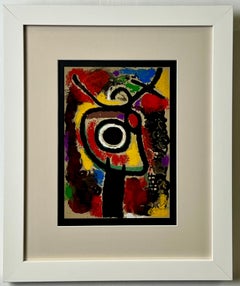
Abstract color lithograph 20th century poster
By Joan Miró
Located in Milwaukee, WI
"Galerie Maeght Miro" is an original color lithograph poster with art by Joan Miro. It was printed by Maeght Editeur Imprimeur in 1970. The poster showcase...
Category

1970s Surrealist Abstract Prints

Materials

Lithograph

Mélika
By Leonor Fini
Located in Columbia, MO
Leonor Fini was born in Argentina in 1907 but travelled and lived in Europe with her mother from a young age. By 1931, she was in Paris, in the full swing of the Surrealist movement....
Category

20th Century Surrealist Portrait Prints

Materials

Paper, Etching

Mocador Lligat - Antoni Tàpies, Surrealism, Abstract art, Prints, Etching
By Antoni Tàpies
Located in London, GB
Signed in pencil, numbered from the edition of 75. (Galfetti 289).
Category

1970s Abstract Abstract Prints

Materials

Etching

Barcelona: XXV - Joan Miró, Print, Lithograph, Surrealism, Fauvism, Figurative
By Joan Miró
Located in London, GB
Lithograph. From the 'Barcelona Series'. Signed and dated in pencil, numbered from the edition of 5. Printed in 1944 on Torras Juvinya paper. Publ...
Category

1930s Surrealist Figurative Prints

Materials

Lithograph

Marc Chagall, The Bay of Angels, from The Lithographs of Chagall, 1960
By Marc Chagall
Located in Southampton, NY
This exquisite lithograph by Marc Chagall (1887–1985), titled La Baie des Anges (The Bay of Angels), from the album The Lithographs of Chagall, Volume I, originates from the 1960 edi...
Category

1960s Expressionist Figurative Prints

Materials

Lithograph

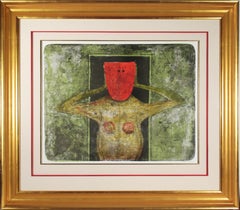
Mascara Roja
By Rufino Tamayo
Located in San Francisco, CA
This artwork titled "Mascara Roja" 1969 is an original colors lithograph on B.F.K. Rives paper by renown Mexican artist Rufino Tamayo, 1899-1991. It is hand signed and inscribed H.C. (Hors Commerce) in pencil by the artist. The image size is 21 x 27.25 inches, framed size is 37.25 x 42 inches. Published by Touchtone Publisher, New York, printed by Ateliers Desjobert, Paris. Referenced and pictured in the artist's catalogue raisonne by Pereda, plate #124. Custom framed in a wooden gold leaf frame, with gold and red spacer and fabric matting. It is in excellent condition. About the artist: A native of Oaxaca in Southern Mexico, Rufino Tamayo's father was a shoemaker, and his mother a seamstress. Some accounts state that he was descended from Zapotec Indians, but he was actually 'mestizo' - of mixed indigenous/European ancestry. (Santa Barbara Museum of Art). He began painting at age 11. Orphaned at the age of 12, Tamayo moved to Mexico City, where he was raised by his maternal aunt who owned a wholesale fruit business. In 1917, he entered the San Carlos Academy of Fine Arts, but left soon after to pursue independent study. Four years later, Tamayo was appointed the head designer of the department of ethnographic drawings at the National Museum of Archaeology in Mexico City. There he was surrounded by pre-Colombian objects, an aesthetic inspiration that would play a pivotal role in his life. In his own work, Tamayo integrated the forms and tones of pre-Columbian ceramics into his early still lives and portraits of Mexican men and women. In the early 1920s he also taught art classes in Mexico City's public schools. Despite his involvement in Mexican history, he did not subscribe to the idea of art as nationalistic propaganda. Modern Mexican art at that time was dominated by 'The Three Great Ones' : Diego Rivera, Jose Clemente Orozco, and David Alfaro Siqueros, but Tamayo began to be noted as someone 'new' and different' for his blending of the aesthetics of post Revolutionary Mexico with the vanguard artists of Europe and the United States. After the Mexican Revolution, he focused on creating his own identity in his work, expressing what he thought was the traditional Mexico, and refusing to follow the political trends of his contemporary artists. This caused some to see him as a 'traitor' to the political cause, and he felt it difficult to freely express himself in his art. As a result, he decided to leave Mexico in 1926 and move to New York, along with his friend, the composer Carlos Chavez. The first exhibition of Tamayo's work in the United States was held at the Weyhe Gallery, New York, in that same year. The show was successful, and Tamayo was praised for his 'authentic' status as a Mexican of 'indigenous heritage', and for his internationally appealing Modernist aesthetic. (Santa Barbara Museum of Art). Throughout the late thirties and early forties New York's Valentine Gallery gave him shows. For nine years, beginning in 1938, he taught at the Dalton School in New York. In 1929, some health problems led him to return to Mexico for treatment. While there he took a series of teaching jobs. During this period he became romantically involved with the artist Maria Izquierdo...
Category

Mid-20th Century Modern Figurative Prints

Materials

Lithograph

Francois Auguste Rene Rodin, Untitled, from Twelve Watercolors, 1920 (after)
By Auguste Rodin
Located in Southampton, NY
This exquisite lithograph after Francois Auguste Rene Rodin (1840–1917), titled Sans titre (Untitled), from the folio Douze aquarelles de Auguste Rodin (Twelve Watercolors by Auguste...
Category

1920s Modern Figurative Prints

Materials

Lithograph, Stencil