18,124 results for "american "

to
3,285
4,621
3,146
4,941
3,095
2,251
Overall Width
to
Overall Height
to
3,010
2,924
2,826
2,459
707
568
259
220
151
147
109
109
41
41
413
307
237
201
171
99
547
12,785
4,689
48
148
343
547
565
489
1,369
3,130
2,880
1,327
85
10,174
6,585
1,167
5,981
2,953
2,082
1,825
1,619
1,565
964
913
910
861
799
683
621
580
566
532
511
502
440
405
6,368
3,332
3,152
2,528
1,350
2,822
5,524
15,498
2,309
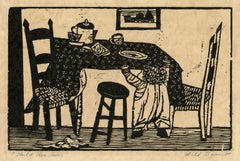
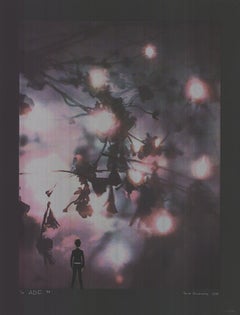
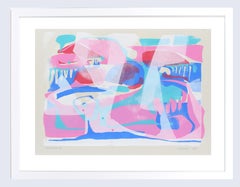
Abstract Print African American Female Artist Wilhelmina Godfrey "Yesterday"
By Wilhelmina McAlpin Godfrey
Located in Buffalo, NY
A bright and gorgeous print by well listed artist Wilhelmina Godfrey. This work is titled "Yesterday" and was executed in 1989. Her pieces are quite rare and this Summer The Benjaman Gallery...
Category

1980s Abstract Abstract Prints

Materials

Lithograph

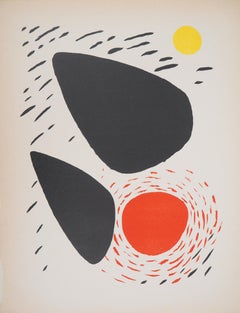
Rocks and Sun - Original lithograph - Mourlot, 1952
By Alexander Calder
Located in Paris, IDF
Alexander Calder Rocks and Sun, 1952 Original Lithograph (3 color stones) Printed in Mourlot workshop On vellum 31 x 24 cm (c. 12,2 x 9,5 in) Edited by San Lazzaro in 1952 Very goo...
Category

1950s American Modern Abstract Prints

Materials

Lithograph

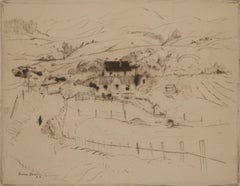
Early 20th Century Signed Etching By Armin Carl Hansen -- Valley Farm
By Armin Hansen
Located in Soquel, CA
Signed 1926 Armin Carl Hansen Etching and Drypoint of Central Coast California Valley Farm Wonderful etching and drypoint of Valley Farm signed and titled by Armin Carl Hansen (Amer...
Category

1920s American Impressionist Landscape Prints

Materials

Laid Paper, Etching

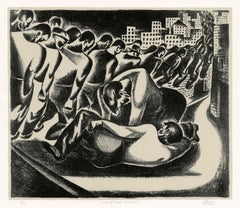
Unemployed Marchers — American Modernism, WPA
By Leon Bibel
Located in Myrtle Beach, SC
Leon Bibel, 'Unemployed Marchers', 2-color lithograph, c. 1938, edition 25. Signed, titled, and numbered '2/25' in pencil. A fine, richly-inked impression on off-white, wove paper, w...
Category

1930s American Modern Figurative Prints

Materials

Lithograph

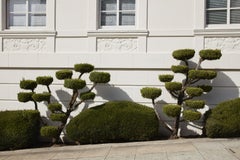
Topiary II - large format photograph of ornamental shaped sidewalk trees
By Frank Schott
Located in San Francisco, CA
large scale photogaph from a series of photographic observances capturing the antics of urban gardening and whimsical botanical art of topiaries' green minimalism TOPIARY II by Fran...
Category

21st Century and Contemporary Contemporary Color Photography

Materials

Archival Paper, Photographic Paper, Archival Pigment, Archival Ink, Giclée

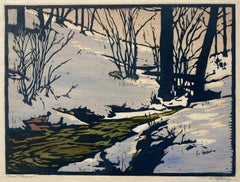
THE THAW
By William Seltzer Rice
Located in Santa Monica, CA
WILLIAM SELTZER RICE (1873 - 1963) THE THAW c 1915-20 Color woodcut, signed and titled in pencil. Image 8 7/8 x 12 inches, sheet 10 3/4 x 14 3/8 inches. On textured fibrous paper. V...
Category

1910s American Modern Landscape Prints

Materials

Color, Woodcut

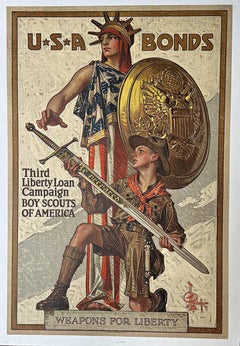
Original USA BONDS Weapons for Liberty WW1 Third Liberty Loan vintage poster
By Joseph Christian Leyendecker
Located in Spokane, WA
Original vintage World War I poster. U.S.A. bonds: Third Liberty Loan campaign: Boy Scouts of America. Depicted: Boy Scout handing a sword inscribed "Be prepared" to a stylized warri...
Category

1910s Art Deco Portrait Prints

Materials

Lithograph

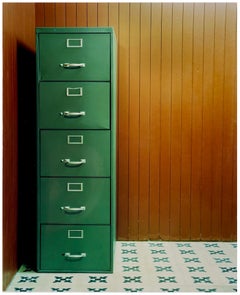
Bunker Filing Cabinet, Ho Chi Minh City - Vintage Interior Color Photography
By Richard Heeps
Located in Cambridge, GB
This gun metal grey filing cabinet stands in the corner of a mid-century wood panelled bunker office. This interior artwork was photographed in Ho Chi Minh City, and is part of Richa...
Category

2010s Contemporary Color Photography

Materials

Photographic Paper, C Print, Color, Silver Gelatin

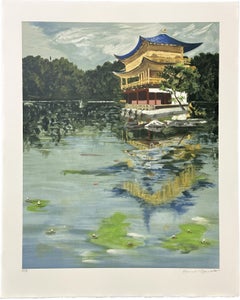
San Francisco Golden Pavilion Signed Limited Edition Lithograph
By Tony Bennett
Located in Rochester Hills, MI
Tony Bennett Title: San Francisco Golden Pavilion Lithograph Signed and Marked PP  2/10 ( Printers Proof ) Paper Size: 30" x 24" inches Image Size : 25" x 20" inches Published By : Atelier E. Ettinger Gallery Anthony Dominick Benedetto, known professionally as Tony Bennett, is an American singer of traditional pop standards, big band, show tunes, and jazz. He is also a painter, having created works under his birth name that are on permanent public display in several institutions. Whether he is performing as Tony Bennett or painting as Anthony Benedetto...
Category

1990s American Impressionist Landscape Prints

Materials

Lithograph

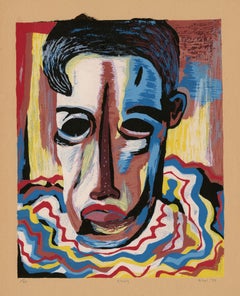
Clown — WPA American Expressionism
By Leon Bibel
Located in Myrtle Beach, SC
Leon Bibel, 'Clown', color serigraph, 1939, edition 20. Signed, dated, titled, and numbered '/20' in pencil. A fine, richly-inked, painterly impression, with fresh colors, on buff la...
Category

1930s American Modern Figurative Prints

Materials

Screen

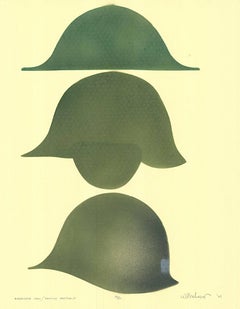
William Paul Morehouse - "American Icon" - colour screen print
Located in Winterswijk, NL
Colour screen-print. Hand-signed, numbered or labelled, dated, titled. A beautiful artwork that looks good in every room and especially in the living room or bedroom. Can be frame...
Category

20th Century Contemporary Prints and Multiples

Materials

Paper, Screen

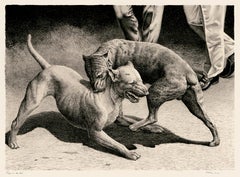
Pups in the Pit — American Realism
Located in Myrtle Beach, SC
William Wind McKim, 'Pups in the Pit', lithograph, 1967, edition c. 50. Signed and titled in pencil. A fine, richly-inked impression, on cream wove paper, with full margins (1 1/8 to...
Category

1940s American Realist Animal Prints

Materials

Lithograph

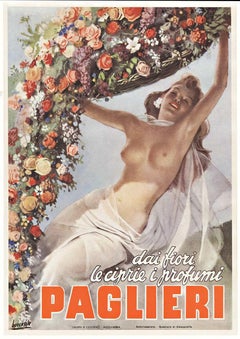
Paglieri dai Fiori le Cipri I Profumi
By Gino Boccasile
Located in Spokane, WA
Original vintage poster: Paglieri dai fiori le Cipri i Profumi. Italian artist: Gino Boccasile (1901 - 1952). Size: 13.25" x 19". Archival linen backed authentic Italian post...
Category

1940s American Realist Nude Prints

Materials

Offset

SELVAGGIA Signed Lithograph, Robed Figure, Bird, Surrealism, Latin American
By Norma Bessouet
Located in Union City, NJ
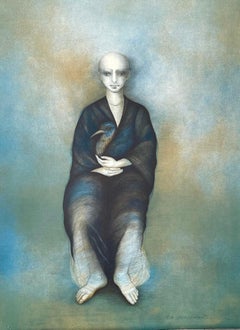
SELVAGGIA is an original hand drawn limited edition lithograph by the Argentine woman artist Norma Bessouet printed using hand lithography techniques on Arches paper, 10% acid free. SELVAGGIA is unframed, in mint condition, full bleed image, hand torn edges, signed in pencil by Ms. Bessouet. Print size - 28.5 x 20.5 inches, unframed, excellent condition, pencil signed by Norma Bessouet Edition size - 150, plus proofs Year printed - 1986 Printer - J K Fine Art Editions Co. NYC Bessouet, born in Argentina, schooled in Argentina, London and in Italy, where she was able to look to the works of the Old Masters for inspiration. She refers to the artists of the Italian quattrocento along with Velazquez and El Greco as her muses, and traces of these historic artists shine through in her paintings. Her work is in numerous private and public collections throughout the world. Bessouet's art focused primarily around portraits, domesticity and the female nude. In the original print, SELVAGGIA, Norma Bessouet merges certain Latin American strands of literary magic realism with Surrealism and presents a portrait of an androgynous seated figure, with bald head, serene facial expression, wearing a full length ombre shaded robe, cradling a large, long-beak bird. Ms. Bessouet's sensitive, masterly drawing expresses a fantasy doll...
Category

1980s Surrealist Portrait Prints

Materials

Lithograph

A Shattering Entrance upon the American Stage
By Salvador Dalí­
Located in OPOLE, PL
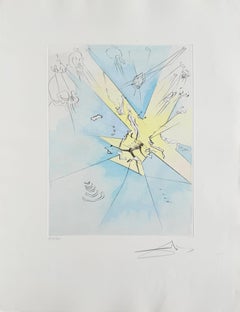
Salvador Dali (1904-1989) - A Shattering Entrance upon the American Stage Drypoint etching with stencil from 1973. Editon A 55/195 on Arches paper. Dimensions of work: 65.4 x 50.4...
Category

1970s Modern More Prints

Materials

Drypoint, Etching

Verdi — American Modernism - Italian Opera Composer
By Paul Landacre
Located in Myrtle Beach, SC
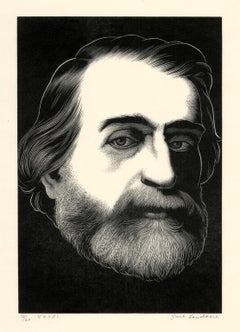
Paul Landacre, 'Verdi', wood engraving, 1936, edition 60, (only 14 printed), Wien 188. Signed, titled, and numbered '10/60' in pencil. A fine impression, on cream, laid Japan paper, ...
Category

1930s American Modern Portrait Prints

Materials

Woodcut

THE MILKY WAY CIRCLE (Limited Edition of Only 30 Prints)
By Mauro Oliveira
Located in LOS ANGELES, CA
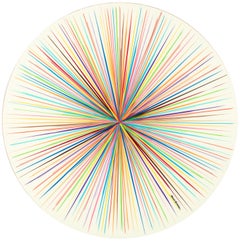
**STORE CLOSURE - UP TO 80% OFF - TAKE ADVANTAGE OF IT** ***EVERYTHING MUST GO BY DECEMBER 31ST!*** >>The artist is moving to a new full time venture in 2026<< _________...
Category

21st Century and Contemporary Abstract Abstract Prints

Materials

Canvas

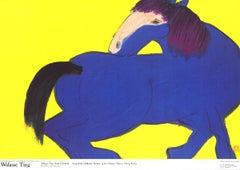
Walasse Ting Blue Horse
By Walasse Ting
Located in Brooklyn, NY
Walasse Ting was a Chinese American artists renowned for the use of vibrant colors, evident in this limited edition large scale “Blue Horse”. ??Oversized poster. Published by Yves Ri...
Category

1990s Contemporary Prints and Multiples

Materials

Offset

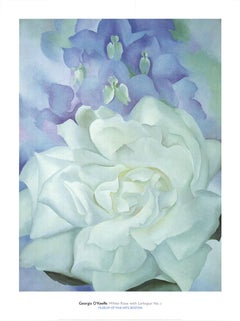
O Keeffe White Rose with Larkspur No.2 Offset Print, 40x30 Inches, Unframed
By Georgia O Keeffe
Located in Brooklyn, NY
This stunning reproduction of Georgia O'Keeffe's painting titled White Rose with Larkspur No.2 is a captivating piece created for the Museum of Fine Arts, Boston. Published by The Mc...
Category

Early 2000s Modern Prints and Multiples

Materials

Offset

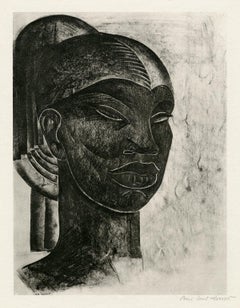
Portrait of an African Woman — 1920s Modernism
By Boris Lovet-Lorski
Located in Myrtle Beach, SC
Boris Lovet-Lorski, Untitled (Portrait of an African Woman), lithograph, edition 250, 1929. Signed and numbered 13 in pencil. Number 13 of Volume 2, a series of 10 lithographs publis...
Category

1920s Art Deco Figurative Prints

Materials

Lithograph

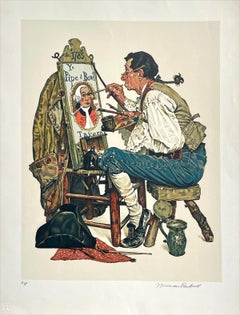
YE PIPE AND BOWL Signed Lithograph Colonial Sign Painter, American Illustration
By Norman Rockwell
Located in Union City, NJ
Artist: Norman Rockwell, American (1894 - 1978) Title: Ye Pipe and Bowl Year: 1976 Medium: Hand Drawn Lithograph on Arches paper, 100% acid free, hand signed in pencil by Norman Rock...
Category

1970s Realist Portrait Prints

Materials

Lithograph

Child Reaching — 1940s American Modernism
By Will Barnet
Located in Myrtle Beach, SC
Will barnet, 'Child Reaching', woodcut, 1940, edition 25, Cole 82. Signed and titled in pencil. A fine, black impression, on fibrous Japan paper, with full margins (5/8 to 1 3/4 inch...
Category

1940s American Modern Figurative Prints

Materials

Woodcut

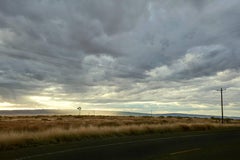
Marfa ( Texas ) - large format photograph of dramatic clouds over endless fields
By Frank Schott
Located in San Francisco, CA
Marfa ( Texas ) by Frank Schott country road view in West Texas, from a series of impressions captured in Marfa, Texas, longtime residence of minimalist artist Donald Judd 48 x 72 i...
Category

21st Century and Contemporary Contemporary Landscape Photography

Materials

Archival Ink, Archival Paper, Photographic Paper, Giclée

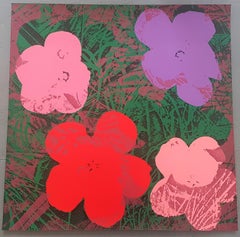
Flowers (Pink, Red, Purple Hues - Pop Art) (~65% OFF LIST PRICE, LIMITED TIME)
By Jurgen Kuhl
Located in Kansas City, MO
Jürgen Kuhl Flowers (Pink, Red, Purple Hues - Pop Art) 2010-2020 Color Silkscreen Size: 32.8 × 32.8 inches Unsigned COA Provided About Jurgen Kuhl: In Cologne, the city of art ...
Category

2010s Pop Art Prints and Multiples

Materials

Screen

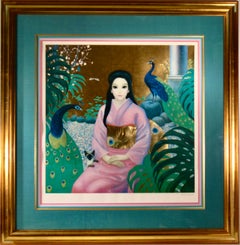
Madame Butterfly
By Margaret Keane
Located in San Francisco, CA
This artwork titled "Madame Butterfly" 1986, is an original color serigraph with gold addition by noted American artist Margaret Keane, 1927-2022. It is hand signed and numbered HH 109/150 in pencil by the artist. The image size is 24 x 24 inches, framed size is 39.5 x 38.5 inches. Custom framed in a wooden gold frame, with green fabric matting, gold color bevel and three different colors fillet. It is in excellent condition, the frame have some minor restorations, barely visible. About the artist. Margaret D. H. Keane was born 1927 in Tennessee, and attributes her deep respect for the Bible and inspirations of her artwork to the relationship with her grandmother. She later became one of Jehovah's Witnesses, which she said changed her life for the better. In the 1960s, Margaret Keane's artwork was sold under the name of her husband, Walter Keane. He locked her in a room and forced her to paint,while taking credit for her work. Conflict over that issue was cited as one of the reasons they divorced. Neither wanting to relinquish rights to the artwork, Walter and Margaret's divorce proceedings went all the way to federal court. At the hearing, Margaret created a painting in front of the judge to prove that she was the artist. Walter declined to paint before the court, citing a sore shoulder. In 1986, the courts sided with her, enabling her to paint under her own name. Her works while living in her husband's shadow tended to depict sad children in a dark setting, but after divorcing, moving to Hawaii, and becoming one of Jehovah's Witnesses, her paintings took on a happier, brighter style. Keane is a fixture in popular culture. Some of her well-known fans over the years have included actresses Joan Crawford and Natalie Wood, whom she painted portraits of; filmmaker Tim Burton, who commissioned Keane to paint Lisa Marie; and animator Craig McCracken, whose characters the Powerpuff Girls are based on Keane's 'waifs'; additionally the Girls' schoolteacher is named "Ms. Keane". Cultural references • The American television comedy show Saturday Night Live once had a skit that featured her work, during the time when it was thought to be by her husband, as a parody of the reaction against modern art (e.g., Cubism or the New York Armory Show). "People don't look like that!" one comedian shrieks, before the picture in question was shown to the camera and audience as the punch line. • In Woody Allen's 1973 comedy Sleeper, the people of the future consider Keane to be one of the greatest artists in history, one of many references mocking the popular culture of the seventies. • Late Night with Conan O'Brien has "bumper" art in her style depicting a glum Conan O'Brien at his desk, next to a dog. • Weird Al Yankovic's song Velvet Elvis, in which the narrator says he needs "no pictures of Mexican kids with those really big eyes or dogs playing poker". • In season 3, episode 20 of 90210 (Women on the Verge), Annie is described as looking "like a Keane painting...
Category

Late 20th Century American Realist Figurative Prints

Materials

Screen

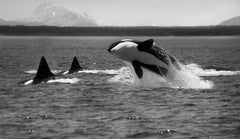
"Orca Breach" 30x50, Black and White Killer Whale Orca Photography, Photograph
By Shane Russeck
Located in Los Angeles, CA
"Orca Breach"- 2017 Salish Sea 30x50 Edition of 10 Signed and numbered by artist Printed on archival paper and using archival inks Shane Russeck has built a reputation for capturi...
Category

21st Century and Contemporary Black and White Photography

Materials

Archival Pigment

Jon Carsman Faded Glory 1977 Signed Limited Edition Screen Print
By Jon Carsman
Located in Rochester Hills, MI
Jon Carsman Faded Glory - 1978 Print - Silkscreen, on Arches archival paper 34¼'' x 24'' inches Edition: signed in pencil and marked 156/100 image size 20" x 30" inches “Jon Cars...
Category

1970s American Realist Landscape Prints

Materials

Screen

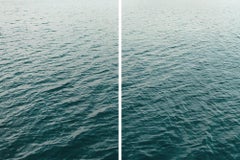
Seascape XVIII Diptych - large scale abstract monochromatic ocean water surface
By Frank Schott
Located in San Francisco, CA
Large format abstract photograph diptych of mesmerizing water surface and ephemeral abstract ripple patterns from a series of photographic works capturing the monochromatic oceanic b...
Category

21st Century and Contemporary Contemporary Color Photography

Materials

Archival Paper, Photographic Paper, Giclée, Archival Pigment

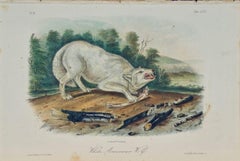
"White American Wolf" an Audubon Hand Colored by J.T. Bowen Lithograph
By John James Audubon
Located in Alamo, CA
This is an original 19th century John James Audubon hand-colored quadruped lithograph entitled "White American Wolf", No. 15, Plate LXXII, from Audubon's "Quadrupeds of North America...
Category

Mid-19th Century Naturalistic Animal Prints

Materials

Lithograph

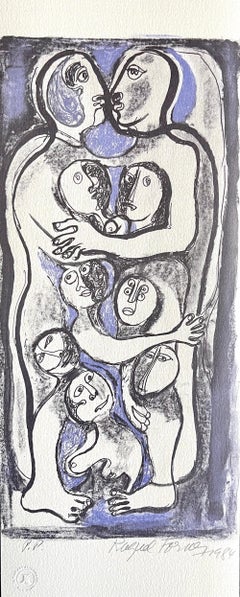
FAMILY Signed Lithograph Abstract Portrait, People, Latin American Woman Artist
By Raquel Forner
Located in Union City, NJ
Raquel Forner (1902-1988) Argentine woman painter and printmaker born in Buenos Aires in 1902 and died in the same city in 1988, regarded as one of the best Argentine female painters...
Category

1980s Expressionist Portrait Prints

Materials

Lithograph

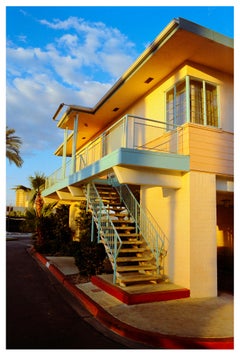
Algiers Apartments, Las Vegas - Mid-Century American Architecture Photograph
By Richard Heeps
Located in Cambridge, GB
Algiers Motel Apartments, photograph from Richard Heeps' Dream in Color series. This visually arresting artwork captures the essence of a sunbathed, mid-century modern apartment str...
Category

Early 2000s Contemporary Color Photography

Materials

Photographic Paper, C Print, Color, Silver Gelatin

Meditation and Minou
By Will Barnet
Located in Buffalo, NY
Artist: Will Barnet, American (1911 - 2012) Title: Meditation and Minou Year: 1980 Medium: Lithograph and Serigraph on BFK Rives, signed and numbered in pencil Edition: 40/150
Category

1970s American Realist Figurative Prints

Materials

Archival Paper, Lithograph

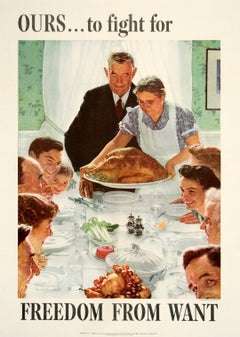
Original American Poster 1943 by Norman Rockwell - Freedom from Want
By Norman Rockwell
Located in Boca Raton, FL
Norman Rockwell was a well-known illustrator and painter who was best known for his many magazine covers created mainly for the Saturday Evening Post. During World War ll he created ...
Category

1940s Prints and Multiples

Materials

Lithograph

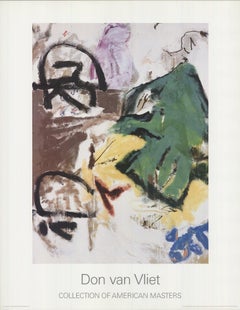
Parapliers the Willow Dipped
Located in Brooklyn, NY
Parapliers the Willow Dipped by Van Vliet, better known as Captain Beefheart from The Mothers of Invention, is part of the Collection of American Masters at the Nordfallen Museum in ...
Category

Late 20th Century Contemporary Abstract Prints

Materials

Offset

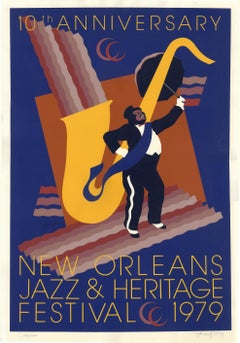
10th Anniversary New Orleans Jazz and Heritage Festival Poster - 1979
Located in New Orleans, LA
10th Anniversary New Orleans Jazz and Heritage Festival Poster, 1979 by John Martinez Fifth in the series by John Martinez. The grand marshal returns for the Jazz Festival's 10th anniversary; as does the "cut paper" technique first seen in the 1977 poster...
Category

1970s Contemporary More Prints

Materials

Screen

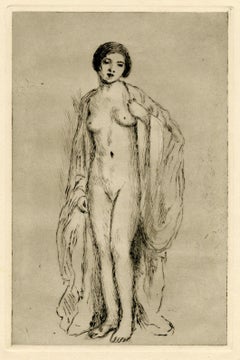
Standing Female Nude
By Frederick Carl Frieseke
Located in Fairlawn, OH
Standing Female Nude Drypoint, c. 1910 Unsigned Estate authentication on verso (see photo) Estate authentication verso by Frances Frieseke Kilmer (Mrs. Kenton Kilmer, 1914-1998) (see photo) Probably depicts the artist's wife, the artist's favorite model Extremely rare original drypoint by Frieseke Printed with selective inking to highlight the figure Condition: excellent Image/Plate size: 10 x 6 5/8 inches Frame size: 19 1/4 x 15 3/4 inches Provenance: Estate of the Artist By descent to his daughter Frances Hirschl & Adler Gallery, Stock No. APG 1106.3D-B (see photo) Biography Frederick Carl Frieseke was born on April 7, 1874, in Owosso, Michigan. After studying for a short while at the Art Institute of Chicago and the Art Students League in New York, Frieseke left for France in 1898, and almost all of his career was spent as an expatriate, with ties to the United States maintained through his New York dealer, William MacBeth, and by occasional visits to America. Following the pattern of innumerable young Americans, he enrolled at the Academie Julian where he studied with Benjamin Constant (1845-1902) and Jean-Paul Laurens (1838-1921). He appears to have had at least brief contact with and to have been influenced by James McNeill Whistler, who had recently opened his Academie Carmen in Paris. By 1900 Frieseke was spending summers in the town of Giverny, made famous by the residence of Monet and subsequently by other artists, among them many Americans. In 1906, the year after his marriage to Sarah O'Bryan, he leased a house once occupied by the American Impressionist Theodore Robinson. Although the property was adjacent to Monet's, Frieseke had only limited contact with the French master. Instead he apparently found Pierre Auguste Renoir the most influential of all the Impressionists. Frieseke's Giverny house and garden, as settings for a series of female models, provided nearly all of his subject matter for the next thirty years, although in 1930 he made a series of watercolors of Florida scenes remembered from his childhood and painted some Swiss landscapes. After World War I, the artist and his family settled in Normandy. Frieseke's career falls roughly into three stages. In the first, figures most clearly show his academic training and draughtsmanship. Gradually these evolve into the most common images of the next decade, comprised of loosely-applied blotches of bright color. The vast majority of these show their subjects in the garden, standing among the flowers, taking tea, or just basking in the sun. Others include models in colorful, light-filled interiors. In Frieseke's latest paintings, the figures very often appear indoors, their forms are given greater solidity, and the brushwork is less broken. At the height of his career, in the 1910s and early 1920s, Frieseke was perhaps the most popular of all living American artists. He received numerous awards and medals and saw his work purchased by private collectors and major museums. Decades after the initial introduction of Impressionism by Monet and his contemporaries, Frieseke assumed this style for his work, choosing to ignore the newer artistic movements of the early twentieth century. Nevertheless, his paintings were acclaimed in both the United States and in Europe. In 1904 he won a silver medal at the St. Louis Universal Exposition and a gold medal at Munich. He was elected a member of the Société National des Beaux Arts in 1908 and the National Academy of Design in 1912. Seventeen of his canvases were featured at the Venice Biennale in 1909 and he won the Grand Prize at the Panama-Pacific International Exposition in 1915. He was commissioned to execute several murals, including one for the New York store of John Wanamaker, one of his most loyal patrons. He died on August 28, 1939, at his home in Normandy, in the town of Le Mesnil sur Blangy. In the decades following his death, however, after artistic tastes had changed considerably, his work was nearly forgotten until it received renewed attention as interest in American Impressionism grew in the 1960s Courtesy National Gallery of Art, Washington Etchings by Frederick Carl Frieseke include The Balcony and Standing Female Nude. Frieseke was an American Impressionist painter who was popular in the 1910s and 1920s. Etchings by Frederick Carl Frieseke: The Balcony: An etching by Frieseke from 1904 Standing Female Nude Other paintings by Frederick Carl Frieseke: The Garden Parasol...
Category

1910s American Impressionist Nude Prints

Materials

Drypoint

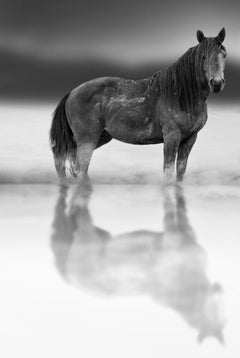
48x36 Black and White Photography Wild Horses Mustang Unsigned Horse Mustangs
By Shane Russeck
Located in Los Angeles, CA
This is a contemporary black and white photograph of a American Wild Mustang. "They represent the ultimate expression of American freedom" 36 x 48 (Only 3 unsigned prints were prin...
Category

21st Century and Contemporary Black and White Photography

Materials

Archival Pigment

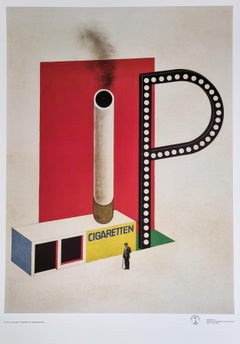
Sale and Marketing Kiosk for P Cigarettes (Bauhaus) (20% OFF + Free Shipping)
By Herbert Bayer
Located in Kansas City, MO
Herbert Bayer Sale and Marketing Kiosk for P Cigarettes (Verkauf- und Werbekiosk, Zigarettenmarke P ), 1924 Offset Lithograph Year: 1994 Size: 33.2 × 23.2 inches Publisher: Bauhaus A...
Category

1920s Bauhaus Prints and Multiples

Materials

Lithograph

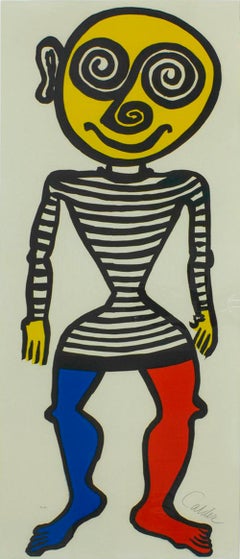
Puppet Man, E. A
By Alexander Calder
Located in Miami Beach, FL
"Puppet Man, 1960. By Alexander Calder. "E.A" Written in pencil by the artist The "E.A." designation on the print likely indicates it's an artist's proof, o...
Category

1960s Abstract Geometric Portrait Prints

Materials

Archival Paper, Lithograph

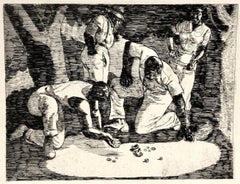
Irving Guyer, Roll Them Bones, Depression-era African-American men at craps
By Irving Guyer
Located in New York, NY
An American Depression-Era subject of African-American men playing craps by Irving Guyer.. (Craps is a game of chance that required neither skill nor strategy. The object is to predi...
Category

1930s Ashcan School Figurative Prints

Materials

Etching

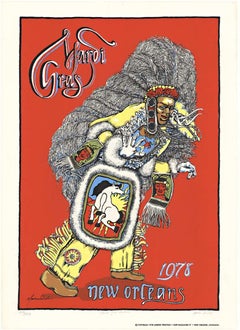
Original Mardi Gras New Orleans 1978 festival serigraph poster
Located in Spokane, WA
Original Mardi Gras, New Orleans, 1978 linen-backed poster. Dressed up in what would be an American Indian costume with full headgear, he is holding a shield with a horse on it. Indian decoration on the footwear. Signed and numbered. I believe this has to deal with Big Chief leading his Congo Nation Mardi Gras Indian group. Zulu Parade. Many of the original Mardi Gras jazz posters...
Category

1970s American Modern Figurative Prints

Materials

Screen

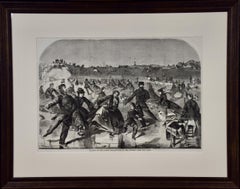
"Skating on Ladies Pond Central Park": Winslow Homer 19th C. Woodcut Engraving
By Winslow Homer
Located in Alamo, CA
This Winslow Homer woodcut engraving entitled "Skating on the Ladies' Skating-Pond in Central Park, New York", was published in Harper's Weekly in the January 28, 1860 edition. It depicts a large number of men, women and children skating on a recently opened pond in Central Park. At the time of publication of this engraving, Central Park was in the early stages of construction. This engraving documents the very early appearance of Frederick Law Olmstead and Calvert Vaux's masterpiece of landscape design. According to Olmsted, the park was "of great importance as the first real Park made in this century – a democratic development of the highest significance". The people of New York were very proud of the plans for their park. It was stated at the time: "Our Park, which is progressing very satisfactorily under the management of the Commissioners, will undoubtedly be, one of these days, one of the finest place of the kind in the world...Those who saw the Park before the engineers went to work on it are amazed at the beautiful sites which have been contrived with such unpromising materials; all fair persons believe that the enterprise is managed with honesty and good taste." Skating was rapidly rising in national popularity in part due to the opening of Central Park’s lake to skaters on a Sunday in December 1858 with 300 participants. The following Sunday it attracted ten thousand skaters. By Christmas Day, a reported 50,000 people came to the park, most of them to skate. There were rules governing who could use the skating pond. “The Ladies’ Pond...
Category

1870s American Impressionist Landscape Prints

Materials

Engraving, Woodcut

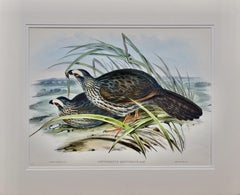
White Eye-browed Partridges: Hand-colored Folio-sized Bird Lithograph by Gould
By John Gould
Located in Alamo, CA
This is a 19th century hand-colored folio-sized lithograph entitled "Dendrortyx Leucophrys" (White Eye-browed Partridges) by John Gould, published in his monograph 'A Monograph of the Odontophorinae, or Partridges of America' in London between 1844-1850. Reportedly only 250 copies were printed. The print depicts two partridges, one standing and the other lying apparently on sand, surrounded by high grass. A landscape of plants and possibly water is seen in the background. This beautiful hand-colored lithograph is presented in a double cream-colored mat. There is one tiny spot in the left lower corner, faint spots in the right upper print and mild toning about the periphery which is covered by the mat. It is otherwise in excellent condition. It is accompanied by the original text page. John Gould (1841-1881) was an English contemporary of the American John James Audubon. Gould published his first illustrated book on birds in 1831 entitled "A Century of Birds from the Himalaya Mountains", followed by "Ramphastidae" and "Birds of Europe". He then extended the scope of his travels and research to include Australia, New Zealand and New Guinea, drawing birds in their natural habitat. Artists, such as his wife Elizabeth Gould, Henry Richter and Edward Lear, transferred his drawings to hand printed and hand colored stone lithographs, which are known for their beauty, detail and accuracy. As well as an exceptional and prolific artist, Gould was an outstanding scientific naturalist. In approximately 50 years he created approximately 3,000 lithographs of birds...
Category

1840s Naturalistic Animal Prints

Materials

Lithograph

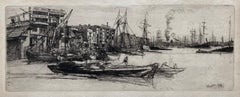
Thames Warehouses
By James Abbott McNeill Whistler
Located in Santa Monica, CA
JAMES McNEILL WHISTLER (American 1834–1903 London) THAMES WAREHOUSES, 1859 (K 38 ii/ii; Glascow 46 iv/v; Mansfield 37) Etching and drypoint on fine thin laid paper. Plate: 3 × 8 i...
Category

1850s Impressionist Landscape Prints

Materials

Drypoint, Etching

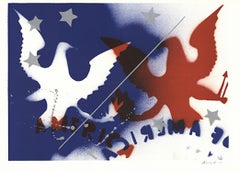
America
Located in Winterswijk, NL
Color lithograph on Arches laid paper Hand signed In great condition Minimal marginal defects
Category

20th Century Prints and Multiples

Materials

Handmade Paper, Lithograph

America
America
$274 Sale Price
20% Off
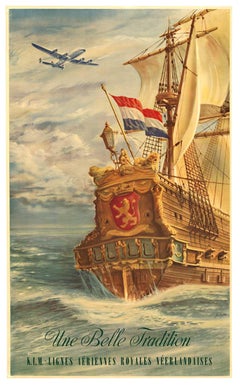
Original K.L.M. - Lignes Aeriennes Royales Netherlands vintage travel poster
Located in Spokane, WA
Rare original vintage poster for KLM Royal Dutch Airlines. This version has the Constellation flying in the sky behind an old sailing schooner. Great ...
Category

1950s American Modern Landscape Prints

Materials

Lithograph

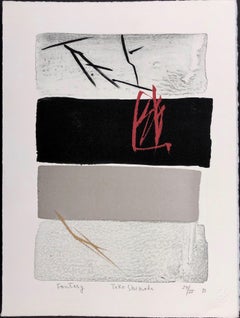
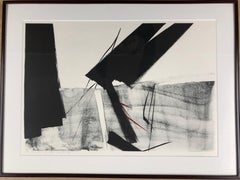
Fantasy, Japanese, limited edition lithograph, black, white, red, signed, titled
By Toko Shinoda
Located in Santa Fe, NM
Fantasy, Japanese, limited edition lithograph, black, white, red, signed, titled Shinoda's works have been collected by public galleries and museums, including the Museum of Modern Art, Solomon R. Guggenheim Museum, Brooklyn Museum and Metropolitan Museum (all in New York City), the National Museum of Modern Art in Tokyo, the British Museum in London, the Art Institute of Chicago, Arthur M. Sackler Gallery of the Smithsonian in Washington, D.C., the Singapore Art Museum, the National Museum of Singapore, the Kröller-Müller Museum in Otterlo, Netherlands, the Albright–Knox Art Gallery in Buffalo, New York, the Cincinnati Art Museum, and the Yale University Art Gallery in New Haven, Connecticut. New York Times Obituary, March 3, 2021 by Margalit Fox, Alex Traub contributed reporting. Toko Shinoda, one of the foremost Japanese artists of the 20th century, whose work married the ancient serenity of calligraphy with the modernist urgency of Abstract Expressionism, died on Monday at a hospital in Tokyo. She was 107. Her death was announced by her gallerist in the United States. A painter and printmaker, Ms. Shinoda attained international renown at midcentury and remained sought after by major museums and galleries worldwide for more than five decades. Her work has been exhibited at, among other places, the Metropolitan Museum of Art and the Museum of Modern Art in New York; the Art Institute of Chicago; the British Museum; and the National Museum of Modern Art in Tokyo. Private collectors include the Japanese imperial family. Writing about a 1998 exhibition of Ms. Shinoda’s work at a London gallery, the British newspaper The Independent called it “elegant, minimal and very, very composed,” adding, “Her roots as a calligrapher are clear, as are her connections with American art of the 1950s, but she is quite obviously a major artist in her own right.” As a painter, Ms. Shinoda worked primarily in sumi ink, a solid form of ink, made from soot pressed into sticks, that has been used in Asia for centuries. Rubbed on a wet stone to release their pigment, the sticks yield a subtle ink that, because it is quickly imbibed by paper, is strikingly ephemeral. The sumi artist must make each brush stroke with all due deliberation, as the nature of the medium precludes the possibility of reworking even a single line. “The color of the ink which is produced by this method is a very delicate one,” Ms. Shinoda told The Business Times of Singapore in 2014. “It is thus necessary to finish one’s work very quickly. So the composition must be determined in my mind before I pick up the brush. Then, as they say, the painting just falls off the brush.” Ms. Shinoda painted almost entirely in gradations of black, with occasional sepias and filmy blues. The ink sticks she used had been made for the great sumi artists of the past, some as long as 500 years ago. Her line — fluid, elegant, impeccably placed — owed much to calligraphy. She had been rigorously trained in that discipline from the time she was a child, but she had begun to push against its confines when she was still very young. Deeply influenced by American Abstract Expressionists like Jackson Pollock, Mark Rothko and Robert Motherwell, whose work she encountered when she lived in New York in the late 1950s, Ms. Shinoda shunned representation. “If I have a definite idea, why paint it?,” she asked in an interview with United Press International in 1980. “It’s already understood and accepted. A stand of bamboo is more beautiful than a painting could be. Mount Fuji is more striking than any possible imitation.” Spare and quietly powerful, making abundant use of white space, Ms. Shinoda’s paintings are done on traditional Chinese and Japanese papers, or on backgrounds of gold, silver or platinum leaf. Often asymmetrical, they can overlay a stark geometric shape with the barest calligraphic strokes. The combined effect appears to catch and hold something evanescent — “as elusive as the memory of a pleasant scent or the movement of wind,” as she said in a 1996 interview. Ms. Shinoda’s work also included lithographs; three-dimensional pieces of wood and other materials; and murals in public spaces, including a series made for the Zojoji Temple in Tokyo. The fifth of seven children of a prosperous family, Ms. Shinoda was born on March 28, 1913, in Dalian, in Manchuria, where her father, Raijiro, managed a tobacco plant. Her mother, Joko, was a homemaker. The family returned to Japan when she was a baby, settling in Gifu, midway between Kyoto and Tokyo. One of her father’s uncles, a sculptor and calligrapher, had been an official seal carver to the Meiji emperor. He conveyed his love of art and poetry to Toko’s father, who in turn passed it to Toko. “My upbringing was a very traditional one, with relatives living with my parents,” she said in the U.P.I. interview. “In a scholarly atmosphere, I grew up knowing I wanted to make these things, to be an artist.” She began studying calligraphy at 6, learning, hour by hour, impeccable mastery over line. But by the time she was a teenager, she had begun to seek an artistic outlet that she felt calligraphy, with its centuries-old conventions, could not afford. “I got tired of it and decided to try my own style,” Ms. Shinoda told Time magazine in 1983. “My father always scolded me for being naughty and departing from the traditional way, but I had to do it.” Moving to Tokyo as a young adult, Ms. Shinoda became celebrated throughout Japan as one of the country’s finest living calligraphers, at the time a signal honor for a woman. She had her first solo show in 1940, at a Tokyo gallery. During World War II, when she forsook the city for the countryside near Mount Fuji, she earned her living as a calligrapher, but by the mid-1940s she had started experimenting with abstraction. In 1954 she began to achieve renown outside Japan with her inclusion in an exhibition of Japanese calligraphy at MoMA. In 1956, she traveled to New York. At the time, unmarried Japanese women could obtain only three-month visas for travel abroad, but through zealous renewals, Ms. Shinoda managed to remain for two years. She met many of the titans of Abstract Expressionism there, and she became captivated by their work. “When I was in New York in the ’50s, I was often included in activities with those artists, people like Mark Rothko, Jackson Pollock, Motherwell and so forth,” she said in a 1998 interview with The Business Times. “They were very generous people, and I was often invited to visit their studios, where we would share ideas and opinions on our work. It was a great experience being together with people who shared common feelings.” During this period, Ms. Shinoda’s work was sold in the United States by Betty Parsons, the New York dealer who represented Pollock, Rothko and many of their contemporaries. Returning to Japan, Ms. Shinoda began to fuse calligraphy and the Expressionist aesthetic in earnest. The result was, in the words of The Plain Dealer of Cleveland in 1997, “an art of elegant simplicity and high drama.” Among Ms. Shinoda’s many honors, she was depicted, in 2016, on a Japanese postage stamp. She is the only Japanese artist to be so honored during her lifetime. No immediate family members survive. When she was quite young and determined to pursue a life making art, Ms. Shinoda made the decision to forgo the path that seemed foreordained for women of her generation. “I never married and have no children,” she told The Japan Times in 2017. “And I suppose that it sounds strange to think that my paintings are in place of them — of course they are not the same thing at all. But I do say, when paintings that I have made years ago are brought back into my consciousness, it seems like an old friend, or even a part of me, has come back to see me.” Works of a Woman's Hand Toko Shinoda bases new abstractions on ancient calligraphy Down a winding side street in the Aoyama district, western Tokyo. into a chunky white apartment building, then up in an elevator small enough to make a handful of Western passengers friends or enemies for life. At the end of a hall on the fourth floor, to the right, stands a plain brown door. To be admitted is to go through the looking glass. Sayonara today. Hello (Konichiwa) yesterday and tomorrow. Toko Shinoda, 70, lives and works here. She can be, when she chooses, on e of Japans foremost calligraphers, master of an intricate manner of writing that traces its lines back some 3,000 years to ancient China. She is also an avant-garde artist of international renown, whose abstract paintings and lithographs rest in museums around the world. These diverse talents do not seem to belong in the same epoch. Yet they have somehow converged in this diminutive woman who appears in her tiny foyer, offering slippers and ritual bows of greeting. She looks like someone too proper to chip a teacup, never mind revolutionize an old and hallowed art form She wears a blue and white kimono of her own design. Its patterns, she explains, are from Edo, meaning the period of the Tokugawa shoguns, before her city was renamed Tokyo in 1868. Her black hair is pulled back from her face, which is virtually free of lines and wrinkles. except for the gold-rimmed spectacles perched low on her nose (this visionary is apparently nearsighted). Shinoda could have stepped directly from a 19th century Meji print. Her surroundings convey a similar sense of old aesthetics, a retreat in the midst of a modern, frenetic city. The noise of the heavy traffic on a nearby elevated highway sounds at this height like distant surf. delicate bamboo shades filter the daylight. The color arrangement is restful: low ceilings of exposed wood, off-white walls, pastel rugs of blue, green and gray. It all feels so quintessentially Japanese that Shinoda’s opening remarks come as a surprise. She points out (through a translator) that she was not born in Japan at all but in Darien, Manchuria. Her father had been posted there to manage a tobacco company under the aegis of the occupying Japanese forces, which seized the region from Russia in 1905. She says,”People born in foreign places are very free in their thinking, not restricted” But since her family went back to Japan in 1915, when she was two, she could hardly remember much about a liberated childhood? She answers,”I think that if my mother had remained in Japan, she would have been an ordinary Japanese housewife. Going to Manchuria, she was able to assert her own personality, and that left its mark on me.” Evidently so. She wears her obi low on the hips, masculine style. The Porcelain aloofness she displays in photographs shatters in person. Her speech is forceful, her expression animated and her laugh both throaty and infectious. The hand she brings to her mouth to cover her amusement (a traditional female gesture of modesty) does not stand a chance. Her father also made a strong impression on the fifth of his seven children:”He came from a very old family, and he was quite strict in some ways and quite liberal in others.” He owned one of the first three bicycles ever imported to Japan and tinkered with it constantly He also decided that his little daughter would undergo rigorous training in a procrustean antiquity. “I was forced to study from age six on to learn calligraphy,” Shinoda says, The young girl dutifully memorized and copied the accepted models. In one sense, her father had pushed her in a promising direction, one of the few professional fields in Japan open to females. Included among the ancient terms that had evolved around calligraphy was onnade, or woman's writing. Heresy lay ahead. By the time she was 15, she had already been through nine years of intensive discipline, “I got tired of it and decided to try my own style. My father always scolded me for being naughty and departing from the traditional way, but I had to do it.” She produces a brush and a piece of paper to demonstrate the nature of her rebellion. “This is kawa, the accepted calligraphic character for river,” she says, deftly sketching three short vertical strokes. “But I wanted to use more than three lines to show the force of the river.” Her brush flows across the white page, leaving a recognizable river behind, also flowing.” The simple kawa in the traditional language was not enough for me. I wanted to find a new symbol to express the word river.” Her conviction grew that ink could convey the ineffable, the feeling, "as she says, of wind blowing softly.” Another demonstration. She goes to the sliding wooden door of an anteroom and disappears in back of it; the only trace of her is a triangular swatch of the right sleeve of her kimono, which she has arranged for that purpose. A realization dawns. The task of this artist is to paint that three sided pattern so that the invisible woman attached to it will be manifest to all viewers. Gen, painted especially for TIME, shows Shinoda’s theory in practice. She calls the work “my conception of Japan in visual terms.” A dark swath at the left, punctuated by red, stands for history. In the center sits a Chinese character gen, which means in the present or actuality. A blank pattern at the right suggests an unknown future. Once out of school, Shinoda struck off on a path significantly at odds with her culture. She recognized marriage for what it could mean to her career (“a restriction”) and decided against it. There was a living to be earned by doing traditional calligraphy:she used her free time to paint her variations. In 1940 a Tokyo gallery exhibited her work. (Fourteen years would pass before she got a second show.)War came, and bad times for nearly everyone, including the aspiring artist , who retreated to a rural area near Mount Fuji and traded her kimonos for eggs. In 1954 Shinoda’s work was included in a group exhibit at New York City’s Museum of Modern Art. Two years later, she overcame bureaucratic obstacles to visit the U.S.. Unmarried Japanese women are allowed visas for only three months, patiently applying for two-month extensions, one at a time, Shinoda managed to travel the country for two years. She pulls out a scrapbook from this period. Leafing through it, she suddenly raises a hand and touches her cheek:”How young I looked!” An inspection is called for. The woman in the grainy, yellowing newspaper photograph could easily be the on e sitting in this room. Told this, she nods and smiles. No translation necessary. Her sojourn in the U.S. proved to be crucial in the recognition and development of Shinoda’s art. Celebrities such as actor Charles Laughton and John Lewis of the Modern Jazz Quartet bought her paintings and spread the good word. She also saw the works of the abstract expressionists, then the rage of the New York City art world, and realized that these Western artists, coming out of an utterly different tradition, were struggling toward the same goal that had obsessed her. Once she was back home, her work slowly made her famous. Although Shinoda has used many materials (fabric, stainless steel, ceramics, cement), brush and ink remain her principal means of expression. She had said, “As long as I am devoted to the creation of new forms, I can draw even with muddy water.” Fortunately, she does not have to. She points with evident pride to her ink stone, a velvety black slab of rock, with an indented basin, that is roughly a foot across and two feet long. It is more than 300 years old. Every working morning, Shinoda pours about a third of a pint of water into it, then selects an ink stick from her extensive collection, some dating back to China’s Ming dynasty. Pressing stick against stone, she begins rubbing. Slowly, the dried ink dissolves in the water and becomes ready for the brush. So two batches of sumi (India ink) are exactly alike; something old, something new. She uses color sparingly. Her clear preference is black and all its gradations. “In some paintings, sumi expresses blue better than blue.” It is time to go downstairs to the living quarters. A niece, divorced and her daughter,10,stay here with Shinoda; the artist who felt forced to renounce family and domesticity at the outset of her career seems welcome to it now. Sake is offered, poured into small cedar boxes and happily accepted. Hold carefully. Drink from a corner. Ambrosial. And just right for the surroundings and the hostess. A conservative renegade; a liberal traditionalist; a woman steeped in the male-dominated conventions that she consistently opposed. Her trail blazing accomplishments are analogous to Picasso’s. When she says goodbye, she bows. --by Paul Gray...
Category

1990s Contemporary Abstract Prints

Materials

Lithograph

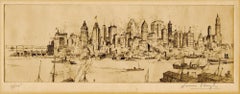
New York Skyline
By Louis H. Ruyl
Located in Middletown, NY
Etching with drypoint on cream wove paper with deckle edges, 4 3/8 x 12 3/4 inches (233 x 323 mm); sheet 9 1/2 x 15 3/4 inches (240 x 338 mm), full margins. Signed and numbered 4/75 ...
Category

Early 20th Century American Modern Landscape Prints

Materials

Handmade Paper, Etching, Drypoint

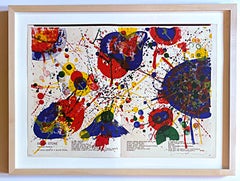
Sam Francis, Karel Appel Walasse Ting, lithographs, hand signed, 85/100 Framed
By Sam Francis
Located in New York, NY
From the rare, fully signed edition of One Cent Life - only 100 examples were hand signed by the artists. Exceptional provenance from Robert Indiana's estate. Sam Francis, Karel App...
Category

1960s Abstract Expressionist Abstract Prints

Materials

Lithograph

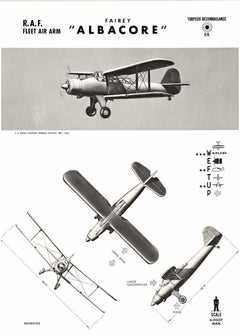
Original Fairey "Albacore" U. S. Naval vintage training poster
Located in Spokane, WA
Original linen-backed U.S. Naval Aviation Training Division, Dec., 1942 poster for the Fairey "Albacore" aircraft. Linen-backed and in very good condi...
Category

1940s American Realist More Prints

Materials

Offset

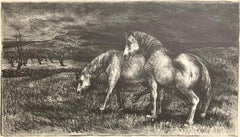
Reginald Wilson, Horses
By Reginald Wilson
Located in New York, NY
Although this work is titled Horses. It nice to think it could be (Horses in a Field in Woodstock, NY), but it was printed by Will Barnet at the Art Students League, about 1938, and Wilson, who visited Woodstock with Arnold Blanche...
Category

1930s American Modern Animal Prints

Materials

Lithograph

Edingsville Offset Lithograph Print, Pop Art, 1990, Unframed, 15.75x19
By Jasper Johns
Located in Brooklyn, NY
This reproduction of Edingsville by renowned American artist Jasper Johns, published by Edition 5 in Germany, offers a faithful and striking representation of the original artwork. J...
Category

1990s Pop Art Prints and Multiples

Materials

Offset

Through The Ages by Toko Shinoda, black and white signed lithograph calligraphy
By Toko Shinoda
Located in Santa Fe, NM
Through The Ages by Toko Shinoda, black and white signed lithograph calligraphy 11/35 obituary published by CNN March 2021 Celebra...
Category

1990s Contemporary Abstract Prints

Materials

Lithograph

Swansea American Dance Festival 1999 Limited Edition Screenprint
Located in Brooklyn, NY
This striking print, designed by renowned artist Ena Swansea for the American Dance Festival in 1999, is a captivating piece that embodies the dynamic energy and grace of dance. The ...
Category

1990s Contemporary Landscape Prints

Materials

Screen

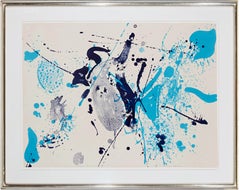
Sam Francis, Blue-Violet, Lithograph, Stanford University Museum, Signed, Framed
By Sam Francis
Located in New York, NY
Sam Francis Blue-Violet (Lembark, L, 32), exhibited at Stanford University Art Museum, 1963 Color lithograph on Rives BFK paper with deckled edges Lithograph in blue-violet on Rives ...
Category

1960s Abstract Expressionist Abstract Prints

Materials

Lithograph

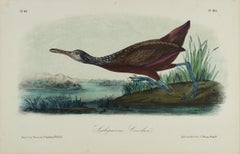
Scolopaceous Courlan: An Original 19th C. Audubon Hand-colored Bird Lithograph
By John James Audubon
Located in Alamo, CA
This is an original 19th century John James Audubon hand-colored lithograph entitled "Scolopaceous Courlan", No. 63, Plate 312 from Audubon's "Birds of America, lithographed, printed...
Category

Mid-19th Century Naturalistic Animal Prints

Materials

Lithograph

Summer Gold, American Modern Lithograph by Millard Sheets
By Millard Sheets
Located in Long Island City, NY
Artist: Millard Owen Sheets, American (1907 - 1989) Title: Summer Gold Medium: Lithograph, signed and numbered in pencil Edition: 250, 5 HC Image S...
Category

1970s American Modern Animal Prints

Materials

Lithograph

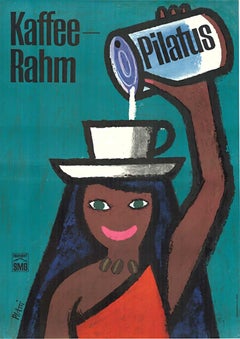
Original Kaffee-Rahm, Swiss vintage coffee poster
Located in Spokane, WA
Original Swiss Kaffee Rahm Pilatus ; Swiss coffee cream poster. Linen backed. The coffee-colored woman poises with a coffee cup on her head, pouring s...
Category

1950s American Modern Figurative Prints

Materials

Lithograph

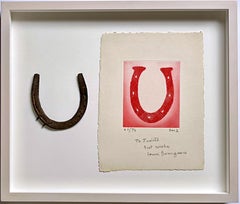
Louise Bourgeois - Horseshoe (with accompanying horseshoe), for Judith Solodkin
By Louise Bourgeois
Located in New York, NY
Engraving by Louise Bourgeois, 2002, hand signed, numbered and inscribed to her longtime printer Judith Solodkin of Solo Impressions, accompanied by an actual horseshoe gifted by the...
Category

Early 2000s Abstract Mixed Media

Materials

Metal

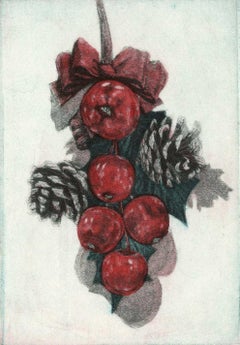
Christmas Pine Cones, festive printed image has the feel of a watercolor wash.
By Frederick Mershimer
Located in New Orleans, LA
This Holiday wreath adorns the door of a Brooklyn Mansion Frederick Mershimer (American, b. 1958) Moody, mysterious, majestic – these are some of the ways to describe the mezzotint...
Category

1990s American Modern Landscape Prints

Materials

Mezzotint