2,642 results for "cubism"

to
1,717
1,561
662
268
95
38
Overall Width
to
Overall Height
to
1,017
486
274
155
122
50
24
17
15
13
2
265
236
70
70
51
8
2,529
105
4
20
102
178
131
636
782
365
138
26
1,840
696
80
990
556
518
421
370
291
233
221
116
64
59
58
58
57
56
54
52
44
39
34
2,104
209
181
175
84
164
362
2,100
488
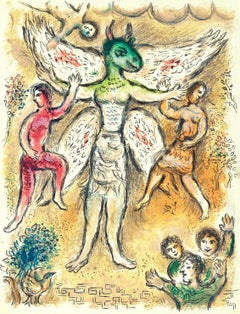
Marc Chagall, The Bed of Odysseus, from Homer, The Odyssey, 1989 (after)
By Marc Chagall
Located in Southampton, NY
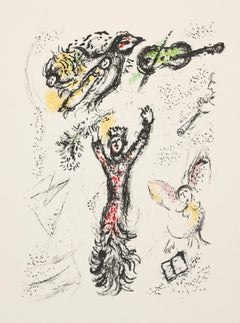
This exquisite lithograph after Marc Chagall (1887–1985), titled Das Bett des Odysseus (The Bed of Odysseus), from Homer, Die Odyssee (The Odyssey), originates from the 1989 German-l...
Category

1980s Expressionist Figurative Prints

Materials

Lithograph

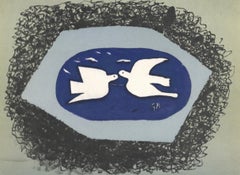
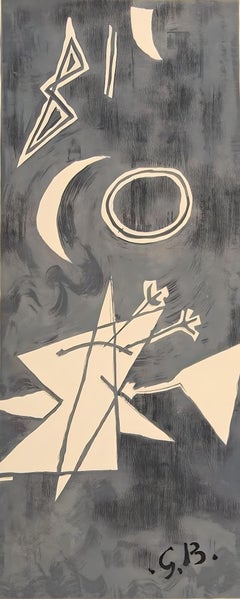
Braque, Composition, Derrière le miroir (after)
By Georges Braque
Located in Southampton, NY
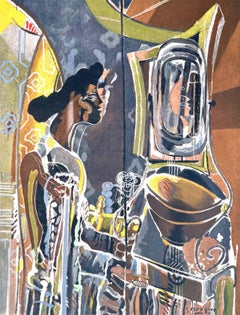
Lithograph on vélin paper. Inscription: Unsigned and unnumbered, as issued. Good condition. Notes: From Derrière le miroir, N° 166, 1967. Published by Aimé Maeght, Éditeur, Paris; pr...
Category

1960s Modern Abstract Prints

Materials

Lithograph

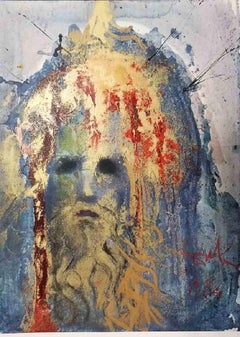
Nabuchodonosor Rex Babulonis - Lithograph - 1967/69
By Salvador Dalí­
Located in Roma, IT
Nabuchodonosor Rex Babulonis ("Nebucchadenezzar King Of Babylon") is an artwork realized in 1964. It is part of Biblia Sacra vulgatæ editionis published by Rizzoli-Mediolani between...
Category

1960s Surrealist Figurative Prints

Materials

Lithograph

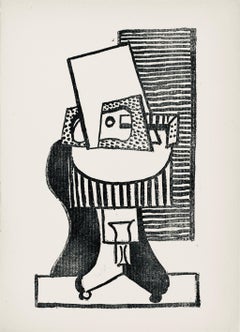
Picasso, Composition (Horodisch: N° D5; Orozco N° 17), Feu de Joie (after)
By Pablo Picasso
Located in Southampton, NY
Woodcut engraving on Vergé Bouffant paper. Unsigned and unnumbered, as issued. Good condition. Notes: From the volume, Feu de Joie, 1920. Published and printed by Au Sans Pareil, édi...
Category

1920s Cubist Figurative Prints

Materials

Woodcut

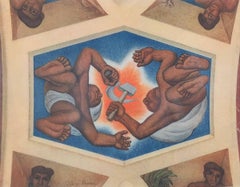
Chapel of the Agricultural School, Chapingo (Ceiling Detail, Workers)
By (after) Diego Rivera
Located in Missouri, MO
(after) Diego Rivera "Chapel of the Agricultural School, Chapingo" (Ceiling Detail, Workers) 1933 from the portfolio "Frescoes of Diego Rivera" Published by the Museum of Modern Art, NY Size with the Matt: 18.5 x 13.5 inches Hand-Signed by the Artist Diego Rivera was born on December 13, 1886 in the mountain town of Guanajuato in Mexico. His mother was an ardent Catholic and his father was a rich and aristocratic revolutionary fighter and an atheist. Little Diego decided in favor of atheism. He swore his family had to leave Guanajuato when he was six because of his diatribes against the Church. When he was eleven he attended the San Carlos Academy of Fine Arts; his real teacher was Jose Posada...
Category

1930s Modern Figurative Prints

Materials

Lithograph

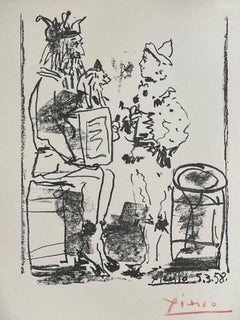
Spanish Modern Art by Pablo Picasso - Saltimbanques
By Pablo Picasso
Located in Paris, IDF
Saltimbanques by Pablo Picasso (1881-1973), lithography on paper signed & dated on the plate on March 5 1958 and countersigned in red, used as frontispiece for the book “Souvenirs d’un Collectionneur”, E.-A. (Épreuve d’Atelier...
Category

1950s Cubist Portrait Prints

Materials

Paper, Lithograph

French Abstract Surrealist Color Lithograph Andre Masson
By André Masson
Located in Surfside, FL
Published Benincasa Carmine. Edizioni SEAT, Torino, Italy. Offset directly from the original plates. Limited edition. This is not hand signed or numbered. Signature in the printing p...
Category

20th Century Surrealist Abstract Prints

Materials

Lithograph, Offset

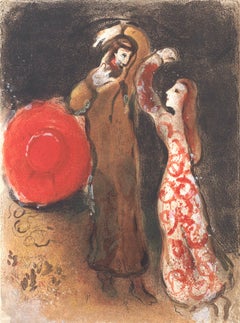
Marc Chagall, The Meeting of Ruth and Boaz, from Drawings for the Bible, 1956
By Marc Chagall
Located in Southampton, NY
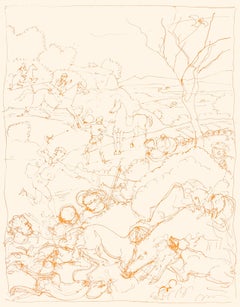
This exquisite lithograph by Marc Chagall (1887–1985), titled Rencontre de Ruth et de Booz (The Meeting of Ruth and Boaz), from Marc Chagall, Dessins Pour La Bible (Drawings for the ...
Category

1950s Expressionist Figurative Prints

Materials

Lithograph

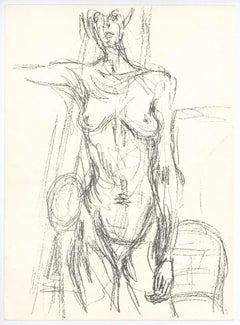
Alberto Giacometti, Nu original lithograph, 1961
By Alberto Giacometti
Located in Pembroke Pines, FL
Artist: Alberto Giacometti Title: 'Nu' Year: 1961 Medium: Original Lithograph on vélin paper Dimensions: 15in. by 11in. Edition: From the rare limited edition Reference : Lust, 148-1...
Category

1960s Contemporary Prints and Multiples

Materials

Lithograph

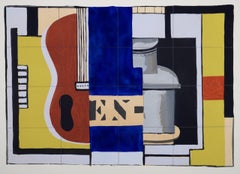
Léger L encrier, Dix Reproductions (after)
By Fernand Léger
Located in Southampton, NY
Lithograph on vélin d'Arches paper. Unsigned and unnumbered, as issued. Good Condition; never framed or matted. Notes: From the folio, Dix Reproductions, 1933. Published by Editions ...
Category

1930s Modern Landscape Prints

Materials

Lithograph

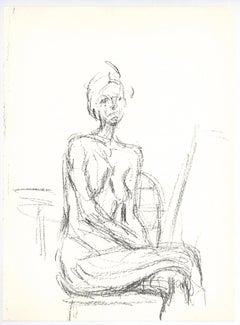
Alberto Giacometti Nu Assis original lithograph, 1961
By Alberto Giacometti
Located in Pembroke Pines, FL
Artist: Alberto Giacometti Title: 'Nu Assis' Year: 1961 Medium: Original Lithograph on vélin paper Dimensions: 15in. by 11in. Edition: From the rare limited edition Reference : Lust,...
Category

1960s Contemporary Prints and Multiples

Materials

Lithograph

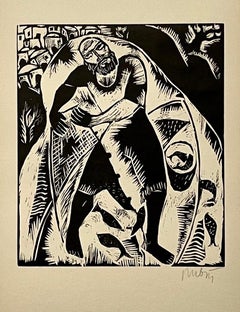
Rare 1923 Cubist Reuven Rubin Woodcut Woodblock Fisherman Print Israeli Judaica
By Reuven Rubin
Located in Surfside, FL
This is from the original first edition 1923 printing. there was a much later edition done after these originals. These are individually hand signed in pencil by artist as issued. This listing is for the one print. the other documentation is included here for provenance and is not included in this listing. The various images inspired by the Jewish Mysticism and rabbis and mystics of jerusalem and Kabbalah is holy, dramatic and optimistic Rubin succeeded to evoke the spirit of life in Israel in those early days. They are done in a modern art style influenced by German Expressionism, particularly, Ernst Barlach, Ernst Ludwig Kirchner, and Franz Marc, as introduced to Israel by Jakob Steinhardt, Hermann Struck and Joseph Budko. Reuven Rubin 1893 -1974 was a Romanian-born Israeli painter and Israel's first ambassador to Romania. Rubin Zelicovich (later Reuven Rubin) was born in Galati to a poor Romanian Jewish Hasidic family. He was the eighth of 13 children. In 1912, he left for Ottoman-ruled Palestine to study art at Bezalel Academy of Art and Design in Jerusalem. Finding himself at odds with the artistic views of the Academy's teachers, he left for Paris, France, in 1913 to pursue his studies at the École Nationale Supérieure des Beaux-Arts. He was of the well known Jewish artists in Paris along with Marc Chagall and Chaim Soutine, At the outbreak of World War I, he was returned to Romania, where he spent the war years. In 1921, he traveled to the United States with his friend and fellow artist, Arthur Kolnik. In New York City, the two met artist Alfred Stieglitz, who was instrumental in organizing their first American show at the Anderson Gallery. Following the exhibition, in 1922, they both returned to Europe. In 1923, Rubin emigrated to Mandate Palestine. Rubin met his wife, Esther, in 1928, aboard a passenger ship to Palestine on his return from a show in New York. She was a Bronx girl who had won a trip to Palestine in a Young Judaea competition. He died in 1974. Part of the early generation of artists in Israel, Joseph Zaritsky, Arieh Lubin, Reuven Rubin, Sionah Tagger, Pinchas Litvinovsky, Mordecai Ardon, Yitzhak Katz, and Baruch Agadati; These painters depicted the country’s landscapes in the 1920s rebelled against the Bezalel school of Boris Schatz. They sought current styles in Europe that would help portray their own country’s landscape, in keeping with the spirit of the time. Rubin’s Cezannesque landscapes from the 1920s were defined by both a modern and a naive style, portraying the landscape and inhabitants of Israel in a sensitive fashion. His landscape paintings in particular paid special detail to a spiritual, translucent light. His early work bore the influences of Futurism, Vorticism, Cubism and Surrealism. In Palestine, he became one of the founders of the new Eretz-Yisrael style. Recurring themes in his work were the bible, the prophet, the biblical landscape, folklore and folk art, people, including Yemenite, Hasidic Jews and Arabs. Many of his paintings are sun-bathed depictions of Jerusalem and the Galilee. Rubin might have been influenced by the work of Henri Rousseau whose naice style combined with Eastern nuances, as well as with the neo-Byzantine art to which Rubin had been exposed in his native Romania. In accordance with his integrative style, he signed his works with his first name in Hebrew and his surname in Roman letters. In 1924, he was the first artist to hold a solo exhibition at the Tower of David, in Jerusalem (later exhibited in Tel Aviv at Gymnasia Herzliya). That year he was elected chairman of the Association of Painters and Sculptors of Palestine. From the 1930s onwards, Rubin designed backdrops for Habima Theater, the Ohel Theater and other theaters. His biography, published in 1969, is titled My Life - My Art. He died in Tel Aviv in October 1974, after having bequeathed his home on 14 Bialik Street and a core collection of his paintings to the city of Tel Aviv. The Rubin Museum opened in 1983. The director and curator of the museum is his daughter-in-law, Carmela Rubin. Rubin's paintings are now increasingly sought after. At a Sotheby's auction in New York in 2007, his work accounted for six of the ten top lots. Along with Yaacov Agam and Menashe Kadishman he is among Israel's best known artists internationally. Education 1912 Bezalel Academy of Arts and Design, Jerusalem 1913-14 École des Beaux Arts, Paris and Académie Colarossi, Paris Select Group Exhibitions Eged - Palestine Painters Group Eged - Palestine Painters Group, Allenby Street, Tel Aviv 1929 Artists: Chana Orloff, Abraham Melnikoff, Rubin, Reuven Nahum Gutman, Sionah Tagger,Arieh Allweil, Jewish Artists Association, Levant Fair, Tel Aviv, 1929 Artists: Ludwig Blum,Eliyahu Sigad, Shmuel Ovadyahu, Itzhak Frenel Frenkel,Ozer Shabat, Menahem Shemi, First Exhibition of ''Hever Omanim'' First Exhibition of ''Hever Omanim'' Steimatzky Gallery, Jerusalem 1936 Artists: Gutman, Nachum Holzman, Shimshon Mokady, Moshe Sima, Miron Rubin, Reuven Steinhardt, Jakob Ben Zvi, Zeev Ziffer, Moshe Allweil, Arieh Group Exhibition Group Exhibition Katz Art Gallery, Tel Aviv 1939 Artists: Avni, Aharon Holzman, Shimshon Gliksberg, Haim Gutman, Nachum Ovadyahu, Shmuel Shorr, Zvi Schwartz, Chaya Streichman, Yehezkel Tagger, Sionah Rubin, Reuven A Collection of Works by Artists of the Land of Israel A Collection of Works by Artists of the Land of Israel The Bezalel National Museum, Jerusalem 1940 Artists: Shemi, Menahem Rubin, Reuven Avni, Aharon Mokady, Moshe Jonas, Ludwig Steinhardt, Jakob Ticho, Anna Krakauer, Leopold Gutman, Nachum Budko, Joseph Ardon, Mordecai Sima, Miron Castel, Moshe Pann, Abel Struck, Hermann Gur Arie, Meir Ben Zvi, Zeev Litvinovsky, Pinchas Artists in Israel for the Defense, Tel Aviv Museum of Art, Helena Rubinstein Pavilion, Tel Aviv 1967 Artists: Avraham Binder, Motke Blum, (Mordechai) Samuel Bak, Yosl Bergner, Nahum Gilboa, Jean David, Marcel Janco, Lea Nikel, Jacob Pins, Esther Peretz...
Category

1920s Abstract Figurative Prints

Materials

Woodcut

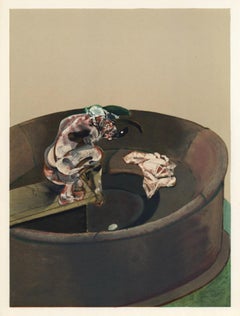
Francis Bacon Portrait of George Dyer Crouching color lithograph, 1966 (After)
By (after) Francis Bacon
Located in Pembroke Pines, FL
Lithograph on vélin paper. Inscription: Unsigned and unnumbered. Good condition. Notes: From Derrière le miroir, N° 162. Published by Aimé Maeght, Éditeur, Paris; printed by Éditions...
Category

1960s Contemporary Prints and Multiples

Materials

Lithograph

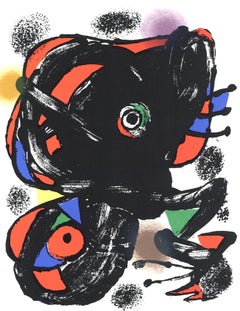
Joan Miro, Number 46, from XXe siecle, 1976
By Joan Miró
Located in Southampton, NY
This exquisite lithograph by Joan Miro (1893–1983), titled Numéro 46 (Number 46), from the album XXe Siecle, Nouvelle serie, XXXVIIIe Annee, No. 46, originates from the 1976 edition ...
Category

1970s Surrealist Abstract Prints

Materials

Lithograph

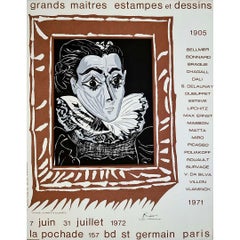
1972 original exhibition poster at La Pochade in Paris - Pablo Picasso
By Pablo Picasso
Located in PARIS, FR
This elegant and iconic 1972 original poster was created to promote the Grands Maîtres Estampes et Dessins exhibition held at La Pochade, a renowned Parisian gallery located at 157 B...
Category

1970s Prints and Multiples

Materials

Paper, Lithograph

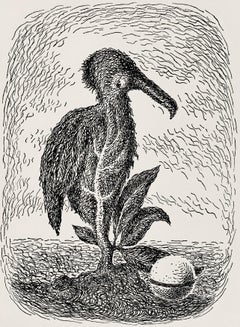
Magritte, Composition, Les chants de Maldoror (after)
By René Magritte
Located in Southampton, NY
Lithograph on vélin papier pur chiffon paper. Paper Size: 10 x 7.375 inches. Inscription: Unsigned and unnumbered, as issued. Notes: From the album, Les chants de Maldoror, illustrat...
Category

1940s Surrealist Figurative Prints

Materials

Lithograph

Deux Filles (Two Girls) II
By (after) Marie Laurencin
Located in San Francisco, CA
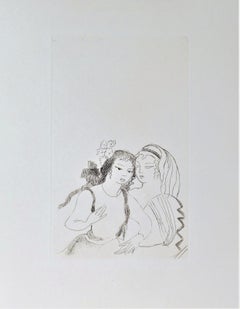
This artwork "Deux Filles (Two Girls) c.1940 is an etching on Wove paper after French artist Marie Laurencin, 1883-1956. It is unsigned as issue. This is a posthumous impression from the canceled plate. The image size is 4.75 x 5.5 inches, plate mark size is 9 x 5.5 inches, sheet size is 12.85 x 9.65 inches. It is in excellent condition. About the artist: Marie Laurencin, intimate of Braque, Picasso, Matisse and Appollinaire, was born in 1883. She held a celebrated place in the early part of the 20th century during a period when Art exploded with genius. She lived in the Montmartre District of Paris and became part of the circle revolving around the Steins. Though her early portraits show the imprint of the Fauves and Cubists, her romantic and delicate temperament asserted itself against these schools. She was prim, conservative and always wore a kitchen apron...
Category

Mid-20th Century Impressionist Figurative Prints

Materials

Etching

Southside Sync
Located in Kansas City, MO
David Morris Southside Sync Digital Painting on Archival Paper Year: 2023 Size: 24x24in Edition: 15 Signed, numbered and dated by hand on label to be attached verso COA provided Ref....
Category

2010s Modern Abstract Prints

Materials

Archival Paper, Archival Pigment

Southside Sync
$2,299 Sale Price
41% Off
Charles Lapicque, Fantastic Figure, from XXe siecle, 1974
By Charles Lapicque
Located in Southampton, NY
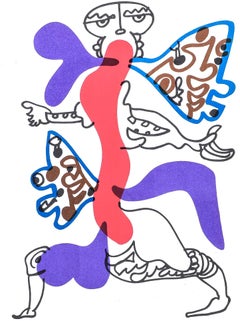
This exquisite lithograph by Charles Lapicque (1898–1988), titled Figure fantastique (Fantastic Figure), from the album XXe siecle, Nouvelle serie, XXXVIe Annee, No. 42, originates f...
Category

1970s Modern Figurative Prints

Materials

Lithograph

Juan Gris, The Pipe, from Au Soleil du Plafond, 1955 (after)
By Juan Gris
Located in Southampton, NY
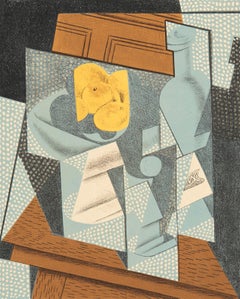
This exquisite lithograph after Juan Gris (1887–1927), titled La Pipe (The Pipe), from the folio Au Soleil du Plafond (In the Sunlight of the Ceiling), originates from the 1955 editi...
Category

1950s Cubist Abstract Prints

Materials

Lithograph

Giacometti, Composition, Derrière le miroir (after)
By Alberto Giacometti
Located in Southampton, NY
Lithograph on vélin paper. Inscription: Unsigned and unnumbered, as issued. Good condition. Notes: From Derrière le miroir, N° 94-95, 1957. Published by Aimé Maeght, Éditeur, Paris; ...
Category

1950s Modern Abstract Prints

Materials

Lithograph

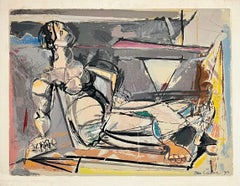
American Modernist Cubist Lithograph Screenprint "Reclining Woman" Max Weber
By Max Weber
Located in Surfside, FL
Reclining Cubist Nude Woman Max Weber (April 18, 1881 – October 4, 1961) was a Jewish-American painter and one of the first American Cubist painters who, in later life, turned to mo...
Category

Mid-20th Century Cubist Abstract Prints

Materials

Screen

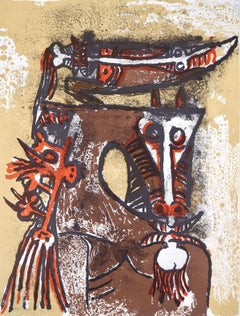
Wifredo Lam, The Horse Woman, from XXe siecle, 1979
By Wifredo Lam
Located in Southampton, NY
This exquisite lithograph by Wifredo Lam (1902–1982), titled La Femme Cheval (The Horse Woman), from the album XXe siecle, Numero special, Wifredo Lam, Nouvelle serie, XLIe Annee, No...
Category

1970s Op Art Abstract Prints

Materials

Lithograph

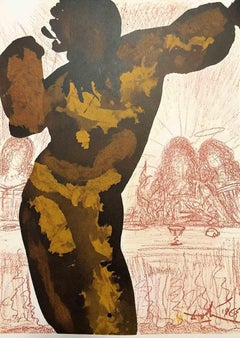
Et Post Buccellam Introivit in Eum Satanas - Lithograph - 1967
By Salvador Dalí­
Located in Roma, IT
Et post buccellam introivit in eum satanas ("And after the Morsel, Satan entered into him") is an artwork realized in 1965. Color lithograph on heavy rag paper. 49 x 35 cm. It is part of Biblia Sacra vulgatæ editionis published by Rizzoli-Mediolani between 1967 and 1969. Signed and dated in plate on the lower right margin. Perfect conditions. This popular artwork...
Category

1960s Contemporary Figurative Prints

Materials

Lithograph

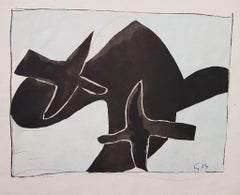
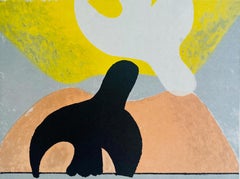
The Black Birds - Lithograph After Georges Braque - 1958
By (after) Georges Braque
Located in Roma, IT
The Black Birds is a lithograph published by Maeght after an original composition by Georges Braque in 1958. Braque authorized and selected certain works to be reproduced by his tru...
Category

1950s Contemporary Abstract Prints

Materials

Lithograph

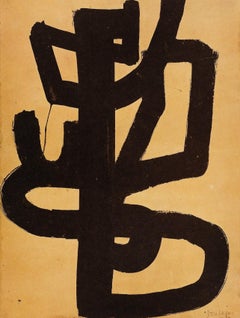
Pierre Soulages, Plate No. 1, from Painters of Today, 1962 (after)
By Pierre Soulages
Located in Southampton, NY
This exquisite heliogravure after Pierre Soulages (1919–2022), titled Planche No. 1 (Plate No. 1), from the folio Pierre Soulages, Peintres d'aujourd'hui (Pierre Soulages, Painters o...
Category

1960s Modern Abstract Prints

Materials

Lithograph

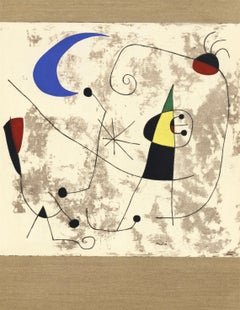
Joan Miro, Figures, from XXe Siecle, 1957
By Joan Miró
Located in Southampton, NY
This exquisite lithograph and pochoir by Joan Miro (1893–1983), titled Personnages (Figures), from the album XXe Siecle, Nouvelle serie, No. 8 (double), Janvier 1957, originates from...
Category

1950s Surrealist Abstract Prints

Materials

Lithograph

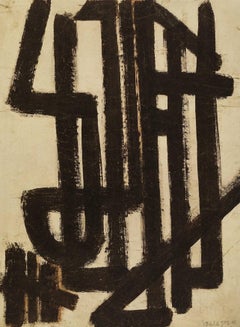
Pierre Soulages, Plate No. 3, from Painters of Today, 1962 (after)
By Pierre Soulages
Located in Southampton, NY
This exquisite heliogravure after Pierre Soulages (1919–2022), titled Planche No. 3 (Plate No. 3), from the folio Pierre Soulages, Peintres d'aujourd'hui (Pierre Soulages, Painters o...
Category

1960s Modern Abstract Prints

Materials

Lithograph

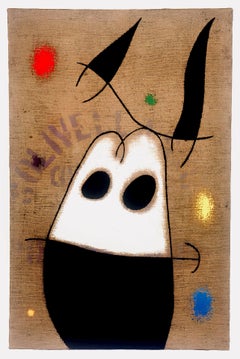
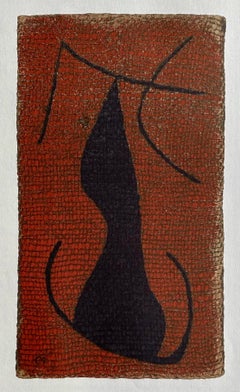
Joan Miro, Woman and Bird IX/X, from Women, 1965
By Joan Miró
Located in Southampton, NY
This exquisite heliogravure by Joan Miro (1893–1983), titled Femme et Oiseau IX/X (Woman and Bird IX/X), from the folio Joan Miro, Femmes (Women), originates from the 1965 edition pu...
Category

1960s Modern Abstract Prints

Materials

Lithograph

Marc Chagall, The Lovers Bouquet, from The Painters My Friends, 1965 (after)
By Marc Chagall
Located in Southampton, NY
This exquisite lithograph after Marc Chagall (1887–1985), titled Le Bouquet d'amoureux (The Lovers' Bouquet), from the folio Les Peintres mes amis (The Painters My Friends), originat...
Category

1960s Modern Landscape Prints

Materials

Lithograph

Marc Chagall - The Red Rider - Original Lithograph
By Marc Chagall
Located in Collonge Bellerive, Geneve, CH
Marc Chagall - Original Lithograph The Red Rider From the unsigned, unnumbered lithograph printed in the literary review XXe Siecle 1957 See Mourlot 191 Dimensions: 32 x 24 cm Publisher: G. di San Lazzaro. Marc Chagall (born in 1887) Marc Chagall was born in Belarus in 1887 and developed an early interest in art. After studying painting, in 1907 he left Russia for Paris, where he lived in an artist colony on the city’s outskirts. Fusing his own personal, dreamlike imagery with hints of the fauvism and cubism popular in France at the time, Chagall created his most lasting work—including I and the Village (1911)—some of which would be featured in the Salon des Indépendants exhibitions. After returning to Vitebsk for a visit in 1914, the outbreak of WWI trapped Chagall in Russia. He returned to France in 1923 but was forced to flee the country and Nazi persecution during WWII. Finding asylum in the U.S., Chagall became involved in set and costume design before returning to France in 1948. In his later years, he experimented with new art forms and was commissioned to produce numerous large-scale works. Chagall died in St.-Paul-de-Vence in 1985. The Village Marc Chagall was born in a small Hassidic community on the outskirts of Vitebsk, Belarus, on July 7, 1887. His father was a fishmonger, and his mother ran a small sundries shop in the village. As a child, Chagall attended the Jewish elementary school, where he studied Hebrew and the Bible, before later attending the Russian public school. He began to learn the fundamentals of drawing during this time, but perhaps more importantly, he absorbed the world around him, storing away the imagery and themes that would feature largely in most of his later work. At age 19 Chagall enrolled at a private, all-Jewish art school and began his formal education in painting, studying briefly with portrait artist Yehuda Pen. However, he left the school after several months, moving to St. Petersburg in 1907 to study at the Imperial Society for the Protection of Fine Arts. The following year, he enrolled at the Svanseva School, studying with set designer Léon Bakst, whose work had been featured in Sergei Diaghilev's Ballets Russes. This early experience would prove important to Chagall’s later career as well. Despite this formal instruction, and the widespread popularity of realism in Russia at the time, Chagall was already establishing his own personal style, which featured a more dreamlike unreality and the people, places and imagery that were close to his heart. Some examples from this period are his Window Vitebsk (1908) and My Fianceé with Black Gloves (1909), which pictured Bella Rosenfeld, to whom he had recently become engaged. The Beehive Despite his romance with Bella, in 1911 an allowance from Russian parliament member and art patron Maxim Binaver enabled Chagall to move to Paris, France. After settling briefly in the Montparnasse neighborhood, Chagall moved further afield to an artist colony known as La Ruche (“The Beehive”), where he began to work side by side with abstract painters such as Amedeo Modigliani and Fernand Léger as well as the avant-garde poet Guillaume Apollinaire. At their urging, and under the influence of the wildly popular fauvism and cubism, Chagall lightened his palette and pushed his style ever further from reality. I and the Village (1911) and Homage to Apollinaire (1912) are among his early Parisian works, widely considered to be his most successful and representative period. Though his work stood stylistically apart from his cubist contemporaries, from 1912 to 1914 Chagall exhibited several paintings at the annual Salon des Indépendants exhibition, where works by the likes of Juan Gris, Marcel Duchamp and Robert Delaunay were causing a stir in the Paris art world. Chagall’s popularity began to spread beyond La Ruche, and in May 1914 he traveled to Berlin to help organize his first solo exhibition, at Der Sturm Gallery. Chagall remained in the city until the highly acclaimed show opened that June. He then returned to Vitebsk, unaware of the fateful events to come. War, Peace and Revolution In August 1914 the outbreak of World War I precluded Chagall’s plans to return to Paris. The conflict did little to stem the flow of his creative output, however, instead merely giving him direct access to the childhood scenes so essential to his work, as seen in paintings such as Jew in Green (1914) and Over Vitebsk (1914). His paintings from this period also occasionally featured images of the war’s impact on the region, as with Wounded Soldier (1914) and Marching (1915). But despite the hardships of life during wartime, this would also prove to be a joyful period for Chagall. In July 1915 he married Bella, and she gave birth to a daughter, Ida, the following year. Their appearance in works such as Birthday (1915), Bella and Ida by the Window (1917) and several of his “Lovers” paintings give a glimpse of the island of domestic bliss that was Chagall’s amidst the chaos. To avoid military service and stay with his new family, Chagall took a position as a clerk in the Ministry of War Economy in St. Petersburg. While there he began work on his autobiography and also immersed himself in the local art scene, befriending novelist Boris Pasternak, among others. He also exhibited his work in the city and soon gained considerable recognition. That notoriety would prove important in the aftermath of the 1917 Russian Revolution when he was appointed as the Commissar of Fine Arts in Vitebsk. In his new post, Chagall undertook various projects in the region, including the 1919 founding of the Academy of the Arts. Despite these endeavors, differences among his colleagues eventually disillusioned Chagall. In 1920 he relinquished his position and moved his family to Moscow, the post-revolution capital of Russia. In Moscow, Chagall was soon commissioned to create sets and costumes for various productions at the Moscow State Yiddish Theater, where he would paint a series of murals titled Introduction to the Jewish Theater as well. In 1921, Chagall also found work as a teacher at a school for war orphans. By 1922, however, Chagall found that his art had fallen out of favor, and seeking new horizons he left Russia for good. Flight After a brief stay in Berlin, where he unsuccessfully sought to recover the work exhibited at Der Sturm before the war, Chagall moved his family to Paris in September 1923. Shortly after their arrival, he was commissioned by art dealer and publisher Ambroise Vollard to produce a series of etchings for a new edition of Nikolai Gogol's 1842 novel Dead Souls. Two years later Chagall began work on an illustrated edition of Jean de la Fontaine’s Fables, and in 1930 he created etchings for an illustrated edition of the Old Testament, for which he traveled to Palestine to conduct research. Chagall’s work during this period brought him new success as an artist and enabled him to travel throughout Europe in the 1930s. He also published his autobiography, My Life (1931), and in 1933 received a retrospective at the Kunsthalle in Basel, Switzerland. But at the same time that Chagall’s popularity was spreading, so, too, was the threat of Fascism and Nazism. Singled out during the cultural "cleansing" undertaken by the Nazis in Germany, Chagall’s work was ordered removed from museums throughout the country. Several pieces were subsequently burned, and others were featured in a 1937 exhibition of “degenerate art” held in Munich. Chagall’s angst regarding these troubling events and the persecution of Jews in general can be seen in his 1938 painting White Crucifixion. With the eruption of World War II, Chagall and his family moved to the Loire region before moving farther south to Marseilles following the invasion of France. They found a more certain refuge when, in 1941, Chagall’s name was added by the director of the Museum of Modern Art (MOMA) in New York City to a list of artists and intellectuals deemed most at risk from the Nazis’ anti-Jewish campaign. Chagall and his family would be among the more than 2,000 who received visas and escaped this way. Haunted Harbors Arriving in New York City in June 1941, Chagall discovered that he was already a well-known artist there and, despite a language barrier, soon became a part of the exiled European artist community. The following year he was commissioned by choreographer Léonide Massine to design sets and costumes for the ballet Aleko, based on Alexander Pushkin’s “The Gypsies” and set to the music of Pyotr Ilyich Tchaikovsky. But even as he settled into the safety of his temporary home, Chagall’s thoughts were frequently consumed by the fate befalling the Jews of Europe and the destruction of Russia, as paintings such as The Yellow Crucifixion...
Category

1950s Surrealist Figurative Prints

Materials

Lithograph

Rene Magritte, A Bombardon Releases its Bouquet of Flames, 1968 (after)
By René Magritte
Located in Southampton, NY
This exquisite lithograph after Rene Magritte (1898–1967), titled Un Bombardon Libere son Bouquet de Flammes (A Bombardon Releases its Bouquet of Flames), from the folio Les Enfants Trouves de Magritte (The Found Children of Magritte), 1968, originates from the edition published by A.C. Mazo et Cie, Paris, and printed by Mourlot Freres, Paris, on November 20, 1968. The work embodies Magrittes sustained inquiry into semiotics and visual epistemology, translating his characteristic strategies of displacement, symbolic inversion, and conceptual ambiguity into an image that operates as both a poetic metaphor and a philosophical proposition concerning the instability of meaning. Executed as a lithograph on grand velin dArches paper, this work measures 17.5 x 23.5 inches (44.5 x 59.7 cm). Signed in the plate by the artist; hand signed by Fernand Mourlot, Editeur. The edition exemplifies the technical mastery of the Mourlot atelier. Artwork Details: Artist: After Rene Magritte (1898–1967) Title: Un Bombardon Libere son Bouquet de Flammes (A Bombardon Releases its Bouquet of Flames), from the folio Les Enfants Trouves de Magritte (The Found Children of Magritte) Medium: Lithograph on grand velin dArches paper Dimensions: 17.5 x 23.5 inches (44.5 x 59.7 cm) Inscription: Signed in the plate by the artist; hand signed by Fernand Mourlot, Editeur Date: 1968 Publisher: A.C. Mazo et Cie, Paris Printer: Mourlot Freres, Paris Catalogue Raisonne: Magritte, Rene, et al. Rene Magritte: Catalogue Raisonne, Vol. 3. Menil Foundation; Philip Wilson Publishers; Distributed in the USA and Canada by Rizzoli International, 1992, nos. 791–792 and 1056; vol. 5, p. 218, Bibliography entry 68.28. Condition: Well preserved, consistent with age and medium Provenance: From the folio Les Enfants Trouves de Magritte, 1968 Notes: Excerpted from the folio (translated from French), Finished printing in Paris on November 20, 1968, on the presses of Mourlot, for the lithographs. The unpublished text by Louis Scutenaire was composed in Elzevir Casion corps 28 and printed by Fequet et Baudier, typographers. The unpublished compositions numbered from I to IV were specially made by Rene Magritte for this album. The compositions of the Enchanted Domain, are the renderings of the eight paintings of the mural of the Casino de Knokke. They were printed with the benevolent authorization of Mr. Gustave J. Nellens. Justification of the draw, this album was taken from CCCL examples on grand velin dArches numbered from I to CCCL, plus a few examples for collaborators and assistants. About the Publication: Les Enfants Trouves de Magritte (The Found Children of Magritte), published in 1968 by A.C. Mazo et Cie, Paris, represents one of the most significant late life print projects devoted to Rene Magrittes work. Conceived as both a literary and visual tribute, the folio pairs texts by the Belgian writer Louis Scutenaire, Magrittes close friend and fellow Surrealist, with lithographic interpretations produced at the Mourlot atelier, the premier lithographic workshop of twentieth century France. The album includes compositions by Magritte alongside lithographic renderings of the celebrated Enchanted Domain mural from the Casino de Knokke, printed with the authorization of Gustave J. Nellens, who commissioned the original mural. Issued in a single edition of CCCL examples on grand velin dArches, the folio stands as a testament to the collaboration between artist, writer, publisher, and master printer, and remains one of the most culturally important Surrealist print albums of the post war era. About the Artist: Rene Magritte (1898–1967) was a Belgian Surrealist painter whose visionary, intellectual, and poetic imagery redefined twentieth century art and forever changed how the world perceives reality and illusion. Celebrated for his calm precision and thought provoking juxtapositions of ordinary objects in extraordinary contexts, Magritte used painting as a philosophical tool, transforming the everyday into visual paradoxes that challenged the boundaries between what is seen and what is known. Born in Lessines, Belgium, and trained at the Academie Royale des Beaux Arts in Brussels, he absorbed early influences from Cubism, Futurism, and Symbolism before embracing Surrealism, where he found his true voice. In Paris, he became part of the avant garde circle that included Pablo Picasso, Alexander Calder, Alberto Giacometti, Salvador Dali, Joan Miro, Wassily Kandinsky, Marcel Duchamp, and Man Ray—all artists whose radical ideas helped him forge his distinctive synthesis of logic and mystery. Unlike Dalis dream...
Category

1960s Surrealist Landscape Prints

Materials

Lithograph

Femme à sa toilette, Une Aventure méthodique, Georges Braque
By Georges Braque
Located in Southampton, NY
Lithograph on vélin d'Arches paper. Inscription: Unsigned and unnumbered. Good condition. Notes: From the folio, Une Aventure méthodique, 1950; published by Fernand Mourlot, Paris, a...
Category

1950s Modern Abstract Prints

Materials

Lithograph

Hands, Mid Century mod Surrealist mixed media Signed/N (Gemini 20 Anselmino 61)
By Man Ray
Located in New York, NY
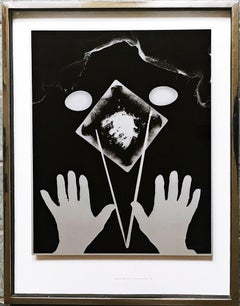
MAN RAY Hands, 1966 Silkscreen on Plexiglass Published by Gemini GEL Measurements: Image: 20"h x 16"w sheet plexi: 25.5"h x 19.5"w overall (with frame): 26.75"h x 20.75"w. Edition ...
Category

1960s Surrealist Abstract Prints

Materials

Screen, Plexiglass

Equis Allegory, Surrealist Hand-Colored Lithograph by Alvin Carl Hollingsworth
By Alvin C. Hollingsworth
Located in Long Island City, NY
Alvin Carl Hollingsworth, American (1928 - 2000) - Equis Allegory, Year: circa 1960, Medium: Hand painted Lithograph on paper, signed in the plate lower right, Size: 11 x 15.5 in....
Category

1960s Surrealist Figurative Prints

Materials

Lithograph

Composition (Mourlot 668-677), La Féerie et Le Royaume, Marc Chagall
By Marc Chagall
Located in Southampton, NY
Lithograph on vélin d’Arches paper. Unsigned and unnumbered, as issued. Good condition. Notes: From the folio, La Féerie et Le Royaume, Lithographies Originales de Marc Chagall, 1972...
Category

1970s Modern Figurative Prints

Materials

Lithograph

Andre Derain, The Great Hunt, from Verve, Revue Artistique et Litteraire, 1940
By André Derain
Located in Southampton, NY
This exquisite lithograph by Andre Derain (1880–1954), titled La Grande Chasse (The Great Hunt), from Verve, Revue Artistique et Litteraire, Vol. II, No. 8, originates from the 1940 ...
Category

1940s Modern Landscape Prints

Materials

Lithograph

Georges Braque, Profile of a Woman, 1972 (after)
By Georges Braque
Located in Southampton, NY
This exquisite lithograph after Georges Braque (1882–1963), titled Profil de femme (Profile of a Woman), originates from the 1972 edition published by Editions A. C. Mazo et Cie., Pa...
Category

1970s Cubist Abstract Prints

Materials

Lithograph

Pablo Picasso Estate Hand Signed Lithograph "Enfant Dejeunant"
By Pablo Picasso
Located in Surfside, FL
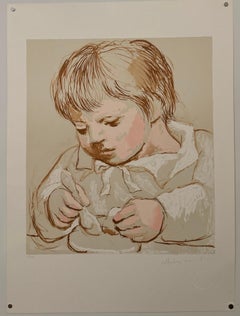
Pablo Picasso (after) "Enfant Dejeunant" limited edition print on Arches paper, Hand signed by Marina Picasso lower right and numbered 121/500 lower left From the estate of Pablo Pi...
Category

1980s Modern Abstract Prints

Materials

Lithograph

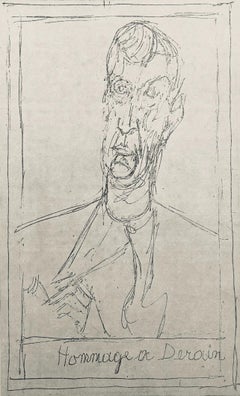
Marcel Gromaire, Homage to Dufy, from Letter to My Painter Raoul Dufy, 1965
By Marcel Gromaire
Located in Southampton, NY
This exquisite lithograph by Marcel Gromaire (1892–1971), titled Hommage a Dufy (Homage to Dufy), from the folio Lettre a mon peintre Raoul Dufy (Letter to My Painter Raoul Dufy), or...
Category

1960s Cubist Figurative Prints

Materials

Lithograph

Braque, Composition, Derrière le miroir (after)
By Georges Braque
Located in Southampton, NY
Lithograph on vélin paper. Inscription: Unsigned and unnumbered, as issued. Good condition. Notes: From Derrière le miroir, N° 117, 1959. Published by Aimé Maeght, Éditeur, Paris; pr...
Category

1950s Modern Abstract Prints

Materials

Lithograph

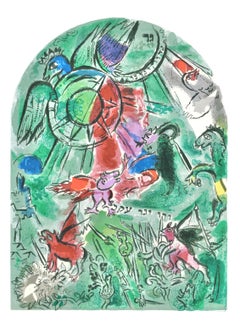
Marc Chagall, Tribe of Gad, from The Jerusalem Windows, 1962 (after)
By Marc Chagall
Located in Southampton, NY
This exquisite lithograph after Marc Chagall (1887–1985), titled Tribe of Gad, from the album Marc Chagall, The Jerusalem Windows, originates from the 1962 edition published by Andre Sauret, Editeur, Paris, and printed by Mourlot Freres, Paris, June 7, 1962. This magnificent composition reflects Chagall’s profound engagement with the spiritual and symbolic language of the Hebrew Bible, celebrating the Tribe of Gad as an embodiment of courage, strength, and divine protection. Tribe of Gad radiates with Chagall’s signature dreamlike palette—deep blues, glowing yellows, and translucent reds—creating an atmosphere of sacred harmony and lyrical movement. The work exemplifies the artist’s ability to merge ancient narratives with modern visual poetry, transforming his spiritual reflections into radiant visions of light and color that transcend time and tradition. Executed as a lithograph on velin paper, this work measures 15 x 11 inches (38.1 x 27.94 cm). Unsigned and unnumbered as issued. The edition exemplifies the exceptional craftsmanship of the Mourlot Freres atelier, renowned for its collaboration with the most important modern artists of the 20th century. Artwork Details: Artist: After Marc Chagall (1887–1985) Title: Tribe of Gad, from Marc Chagall, The Jerusalem Windows Medium: Lithograph on velin paper Dimensions: 15 x 11 inches (38.1 x 27.94 cm) Inscription: Unsigned and unnumbered as issued Date: 1962 Publisher: Andre Sauret, Editeur, Paris Printer: Mourlot Freres, Paris Condition: Well preserved, consistent with age and medium Provenance: From the album Marc Chagall, The Jerusalem Windows, published by Andre Sauret, Editeur, Paris, June 7, 1962 Notes: Excerpted from the album, This album, which was compiled by Andre Sauret, was completed on June 7, 1962. The texts by Jean Leymarie were composed by hand in "Romain du roi" and were printed by The Imprimerie Nationale de France. The thirty-six preparatory color designs, some of which are in twenty colors, were transferred to the stones by Charles Sorlier under the direction of Marc Chagall. These designs and the two original lithographs by Marc Chagall were printed by Mourlot Freres. The other reproductions and the binding are by Draeger Freres. About the Publication: Marc Chagall, The Jerusalem Windows (Les Vitraux de Jerusalem), published in 1962 by Andre Sauret, Editeur, Paris, stands as one of the artist’s most celebrated illustrated albums and a cornerstone of modern printmaking. The publication documents Chagall’s monumental stained-glass windows created for the synagogue of the Hadassah-Hebrew University Medical Center in Jerusalem—an artistic and spiritual masterpiece dedicated to the twelve tribes of Israel. Conceived in collaboration with master printer Charles Sorlier and the renowned Mourlot Freres atelier, the album compiles the artist’s original color studies through vibrant lithography, achieving a remarkable luminosity that mirrors the glowing transparency of stained glass. The accompanying text by art historian Jean Leymarie offers profound insights into Chagall’s vision, faith, and symbolism. Completed on June 7, 1962, this edition embodies the union of fine art, craftsmanship, and devotion, capturing the transcendent beauty of Chagall’s windows and their universal message of peace and faith. About the Artist: Marc Chagall (1887–1985) was a Belarus-born French painter, printmaker, and designer whose visionary imagination, radiant color, and deeply poetic symbolism made him one of the most beloved and influential artists of the 20th century. Rooted in the imagery of his Jewish heritage and the memories of his childhood in Vitebsk, Chagall’s art wove together themes of faith, love, folklore, and fantasy with a dreamlike modern sensibility. His unique style—merging elements of Cubism, Fauvism, Expressionism, and Surrealism—defied categorization, transforming ordinary scenes into lyrical meditations on memory and emotion. Influenced by Russian icon painting, medieval religious art, and the modern innovations of artists such as Pablo Picasso, Henri Matisse, and Georges Braque, Chagall developed a profoundly personal visual language filled with floating figures, vibrant animals, musicians, and lovers that symbolized the transcendent power of imagination and love. During his early years in Paris, he became an integral part of the Ecole de Paris circle, forming friendships with Amedeo Modigliani, Fernand Leger, and Sonia Delaunay, and his creative spirit resonated with that of his peers and successors—Alexander Calder, Alberto Giacometti, Salvador Dali, Joan Miro, Wassily Kandinsky, Marcel Duchamp, and Man Ray—artists who, like Chagall, sought to push the boundaries of perception, emotion, and form. Over a prolific career that spanned painting, printmaking, stained glass, ceramics, and stage design, Chagall brought an unparalleled poetic sensibility to modern art, infusing even the most abstract subjects with human warmth and spiritual depth. His works are held in the most prestigious museums around the world, including the Museum of Modern Art, the Centre Pompidou, the Tate, and the Guggenheim, where they continue to inspire generations of artists and collectors. The highest price ever paid for a Marc Chagall artwork is approximately $28.5 million USD, achieved in 2017 at Sotheby’s New York for Les Amoureux (1928). Marc Chagall Tribe of Gad, Chagall Jerusalem Windows...
Category

1960s Expressionist Figurative Prints

Materials

Lithograph

Joan Miro, Woman and Bird I/X, from Women, 1965
By Joan Miró
Located in Southampton, NY
This exquisite heliogravure by Joan Miro (1893–1983), titled Femme et Oiseau I/X (Woman and Bird I/X), from the folio Joan Miro, Femmes (Women), originates from the 1965 edition publ...
Category

1960s Modern Abstract Prints

Materials

Lithograph

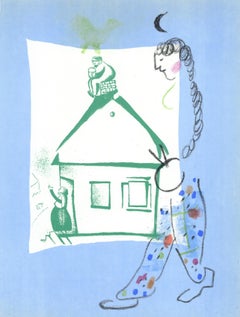
Marc Chagall, The House of My Village, from The Lithographs of Chagall, 1960
By Marc Chagall
Located in Southampton, NY
This exquisite lithograph by Marc Chagall (1887–1985), titled La Maison de Mon Village (The House of My Village), from the album The Lithographs of Chagall, Volume I, originates from...
Category

1960s Expressionist Figurative Prints

Materials

Lithograph

George Condo, Pink and Yellow Sweep, from Drawing Paintings, 2011 (after)
By George Condo
Located in Southampton, NY
This exquisite four color process archival pigment print after George Condo (born 1957), titled Pink and Yellow Sweep, from the folio George Condo, Drawing Paintings, originates from...
Category

2010s Contemporary Figurative Prints

Materials

Archival Pigment

Braque, Ciel gris II, Derrière le miroir (after)
By Georges Braque
Located in Southampton, NY
Lithograph on vélin paper. Inscription: Unsigned and unnumbered, as issued. Good condition. Notes: From Derrière le miroir, N° 115, 1959. Published by Aimé Maeght, Éditeur, Paris; pr...
Category

1950s Modern Abstract Prints

Materials

Lithograph

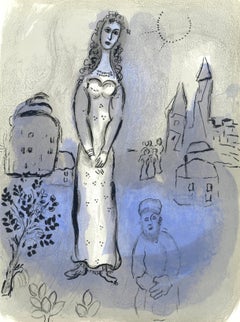
Marc Chagall, Esther, from Drawings for the Bible, 1956
By Marc Chagall
Located in Southampton, NY
This exquisite lithograph by Marc Chagall (1887–1985), titled Esther, from Marc Chagall, Dessins Pour La Bible (Drawings for the Bible), Verve: Revue Artistique et Litteraire, Vol. VIII, No. 33–34, originates from the September 1956 issue published by Editions de la revue Verve, Paris, under the direction of Teriade, Editeur, Paris, and printed by Mourlot Freres, Paris, 1956. This graceful and expressive composition depicts Queen Esther, the courageous biblical heroine whose faith and wisdom saved her people. Through delicate linework and luminous imagery, Chagall conveys the quiet strength and divine purpose embodied in Esther’s story, transforming the narrative into a meditation on courage, morality, and spiritual grace. The work exemplifies Chagall’s poetic vision, blending the sacred and the human in a harmonious fusion of devotion and beauty. The piece forms part of Chagall’s celebrated series of lithographs and drawings created for Dessins Pour La Bible, a monumental project uniting art, scripture, and mysticism in one of the artist’s most important achievements. Executed as a lithograph on velin du Marais paper, this work measures 14 x 10.5 inches (35.56 x 26.67 cm). Unsigned and unnumbered as issued. The edition exemplifies the superb craftsmanship of the Mourlot Freres atelier, renowned for its collaborations with the greatest modern masters of the 20th century. Artwork Details: Artist: Marc Chagall (1887–1985) Title: Esther, from Marc Chagall, Dessins Pour La Bible (Drawings for the Bible), Verve: Revue Artistique et Litteraire, Vol. VIII, No. 33–34, September 1956 Medium: Lithograph on velin du Marais paper Dimensions: 14 x 10.5 inches (35.56 x 26.67 cm) Inscription: Unsigned and unnumbered as issued Date: 1956 Publisher: Editions de la revue Verve, Paris, under the direction of Teriade, Editeur, Paris Printer: Mourlot Freres, Paris Catalogue raisonne references: Cain, Julien, and Fernand Mourlot. Chagall Lithographe. Andre Sauret, Editeur, 1960, illustrations 117–46. Cramer, Patrick, and Meret Meyer. Marc Chagall: Catalogue Raisonne Des Livres Illustrés. P. Cramer ed., 1995, illustration 25. Condition: Well preserved, consistent with age and medium Provenance: From Marc Chagall, Dessins Pour La Bible (Drawings for the Bible), Verve: Revue Artistique et Litteraire, Vol. VIII, No. 33–34, published by Editions de la revue Verve, Paris, 1956 Notes: Excerpted from the album (translated from French), This double issue of Verve is dedicated to the full reproduction in heliogravure of the one hundred-five plates etched by Marc Chagall, between 1930 and 1955, for the illustration of the Bible. The artist composed especially for the present work, sixteen lithographs in color and twelve in black, as well as the cover and the title page. This volume was completed and printed on September 10, 1956, by the Master Printers Draeger Freres for heliogravure, and by Mourlot Freres for lithography. About the Publication: Marc Chagall, Dessins Pour La Bible (Drawings for the Bible), published as Verve Vol. VIII, No. 33–34 in September 1956, represents one of the crowning achievements of Chagall’s lifelong dialogue with the sacred. Conceived and directed by the visionary publisher Teriade and printed by the master lithographers Mourlot Freres, the issue features thirty-four color lithographs and numerous black-and-white drawings inspired by biblical figures and stories. Chagall’s works for this edition unite text and image in a luminous meditation on divine creation, moral struggle, and spiritual renewal, imbued with his signature dreamlike symbolism and radiant color. Produced in postwar Paris, this landmark publication reaffirmed the enduring union of art and faith, establishing Dessins Pour La Bible as one of the most important illustrated works of the 20th century. About the Artist: Marc Chagall (1887–1985) was a Belarus-born French painter, printmaker, and designer whose visionary imagination, radiant color, and deeply poetic symbolism made him one of the most beloved and influential artists of the 20th century. Rooted in the imagery of his Jewish heritage and the memories of his childhood in Vitebsk, Chagall’s art wove together themes of faith, love, folklore, and fantasy with a dreamlike modern sensibility. His unique style—merging elements of Cubism, Fauvism, Expressionism, and Surrealism—defied categorization, transforming ordinary scenes into lyrical meditations on memory and emotion. Influenced by Russian icon painting, medieval religious art, and the modern innovations of artists such as Pablo Picasso, Henri Matisse, and Georges Braque, Chagall developed a profoundly personal visual language filled with floating figures, vibrant animals, musicians, and lovers that symbolized the transcendent power of imagination and love. During his early years in Paris, he became an integral part of the Ecole de Paris circle, forming friendships with Amedeo Modigliani, Fernand Leger, and Sonia Delaunay, and his creative spirit resonated with that of his peers and successors—Alexander Calder, Alberto Giacometti, Salvador Dali, Joan Miro, Wassily Kandinsky, Marcel Duchamp, and Man Ray—artists who, like Chagall, sought to push the boundaries of perception, emotion, and form. Over a prolific career that spanned painting, printmaking, stained glass, ceramics, and stage design, Chagall brought an unparalleled poetic sensibility to modern art, infusing even the most abstract subjects with human warmth and spiritual depth. His works are held in the most prestigious museums around the world, including the Museum of Modern Art, the Centre Pompidou, the Tate, and the Guggenheim, where they continue to inspire generations of artists and collectors. The highest price ever paid for a Marc Chagall artwork is approximately $28.5 million USD, achieved in 2017 at Sotheby’s New York for Les Amoureux (1928). Marc Chagall Esther...
Category

1950s Expressionist Figurative Prints

Materials

Lithograph

Alberto Giacometti, Nude in Profile, from Derriere le miroir, 1956 (after)
By Alberto Giacometti
Located in Southampton, NY
This exquisite etching after Alberto Giacometti (1901–1966), titled Nu de Profil (Nude in Profile), from the folio Derriere le miroir, 10 Ans d'Edition 1946-1956, No. 92-93, originates from the 1956 edition published by Maeght Editeur, Paris, and printed by Atelier Crommelynck, Paris, 1956. This work exemplifies Giacometti’s mastery of line and existential sensitivity, capturing the fragility, grace, and introspection that define his vision of the human form. Executed as an etching, cuivre rayé apres tirage on velin paper, this work measures 15 x 11 inches overall; 12.2 x 2.17 inches image size. Unsigned and unnumbered as issued. The edition exemplifies the superb craftsmanship of Atelier Crommelynck, Paris. Artwork Details: Artist: After Alberto Giacometti (1901–1966) Title: Nu de Profil (Nude in Profile), from the folio Derriere le miroir, 10 Ans d'Edition 1946-1956, No. 92-93 Medium: Etching, cuivre rayé apres tirage on velin paper Dimensions: 15 x 11 inches, overall; 12.2 x 2.17 inches, image size (38.1 x 27.94 cm; 31 x 5.5 cm) Inscription: Unsigned and unnumbered as issued Date: 1956 Publisher: Maeght Editeur, Paris Printer: Atelier Crommelynck, Paris Condition: Well preserved, consistent with age and medium Provenance: From the folio Derriere le miroir, 10 Ans d'Edition 1946-1956, No. 92-93, published by Maeght Editeur, Paris; printed by Atelier Crommelynck, Paris, 1956 Notes: Excerpted from the folio (translated from French), This catalogue, forming a special issue of Derriere le miroir, was completed in October 1956 on the presses of Draeger Freres on behalf of Aime Maeght, Editeur. The original lithographs of Miro, Chagall and Bazaine were shot by Mourlot Freres. The eaux-fortes rayees of Miro and Giacometti were shot by Crommelynck. Raoul Ubac composed and pulled the engraved wood from the cover. The photographs of Braque's reproduced works are by Mr. Routhier. Those of the other artists of Y. Hervochon. About the Publication: Derriere le miroir (Behind the Mirror) was one of the most important art publications of the 20th century, created and published by Maeght Editeur in Paris from 1946 to 1982. Founded by the visionary art dealer and publisher Aime Maeght, the series served as both an exhibition catalogue and a work of art in its own right, uniting original lithographs by leading modern and contemporary artists with critical essays, poetry, and design of the highest quality. Printed by master lithographers such as Mourlot Freres and Arte, Derriere le miroir became synonymous with the artistic vanguard of postwar Europe. Each issue was devoted to a single artist or theme and published to accompany exhibitions at the Galerie Maeght in Paris, featuring works by Pablo Picasso, Henri Matisse, Georges Braque, Joan Miro, Marc Chagall, Alexander Calder, Fernand Leger, and Alberto Giacometti, among others. The publication reflected Maeght's belief that art should be both accessible and elevated—an ideal realized through its luxurious production values, meticulous printing, and collaboration with the greatest creative minds of its time. About the Artist: Alberto Giacometti (1901–1966) was a Swiss sculptor, painter, and draughtsman whose hauntingly elongated figures and existential vision redefined modern art and made him one of the most influential artists of the 20th century. Born in Borgonovo, Switzerland, into an artistic family—his father, Giovanni Giacometti, was a noted Post-Impressionist—he was immersed in art from an early age before studying in Geneva and moving to Paris in 1922, where he became part of the city’s avant-garde alongside Pablo Picasso, Alexander Calder, Salvador Dali, Joan Miro, Wassily Kandinsky, Marcel Duchamp, and Man Ray. In the 1920s and 1930s, Giacometti explored Cubism and Surrealism, creating symbolic and dreamlike sculptures such as Suspended Ball (1930–31) and The Palace at 4 A.M. (1932), which reflected the influence of Dali, Duchamp, and Man Ray. By the 1940s, he abandoned Surrealism to pursue a deeply personal exploration of the human condition, developing his iconic attenuated figures that embodied both fragility and resilience. His signature sculptures—L’Homme qui marche I (Walking Man I), Femme debout, and Le Chariot—expressed the isolation, endurance, and vulnerability of modern existence, echoing the existential philosophy of Jean-Paul Sartre and Simone de Beauvoir. Giacometti’s figures, stripped of mass yet monumental in spirit, symbolized humanity’s search for meaning in a postwar world, while his paintings and drawings—portraits of his brother Diego, his wife Annette, and his friends—captured the psychological depth of perception with trembling, repetitive lines that blurred the boundary between body and soul. His friendships with Picasso, Calder, Miro, and Kandinsky shaped his understanding of form, motion, and space, while his philosophical engagement with Duchamp and Man Ray deepened his inquiry into the nature of reality and perception. Working obsessively in his modest Montparnasse studio, Giacometti pursued art as an existential act—destroying and rebuilding his figures in an endless search for truth. His influence on postwar art was immense, shaping the work of Henry Moore, Francis Bacon, Louise Bourgeois, Lucian Freud, and later contemporary sculptors such as Antony Gormley and Anselm Kiefer. His aesthetic also resonated beyond sculpture, influencing fashion, photography, and architecture through his vision of form, isolation, and proportion. Giacometti’s work is represented in major museum collections including MoMA, the Tate Modern, and the Centre Pompidou, and continues to inspire artists, collectors, and thinkers worldwide. Standing alongside Pablo Picasso, Alexander Calder, Salvador Dali, Joan Miro, Wassily Kandinsky, Marcel Duchamp, and Man Ray, Giacometti remains a towering figure in modern art—a sculptor-philosopher who transformed the human form into a universal symbol of resilience and reflection. His highest auction record was achieved by L’Homme qui marche I (Walking Man I), which sold for 141.3 million USD at Sotheby’s, London, on February 3, 2010, reaffirming Alberto Giacometti’s enduring legacy as one of the most visionary, profound, and collectible artists in the history of modern art. After Alberto Giacometti Nu de Profil 1956, Giacometti Derriere le miroir No. 92-93, Giacometti etching...
Category

1950s Modern Abstract Prints

Materials

Etching

Henri Laurens, Sirens, from XXe siecle, 1938
By Henri Laurens
Located in Southampton, NY
This exquisite linocut by Henri Laurens (1885–1954), titled Sirenes (Sirens), from the album XXe siecle, Chroniques du jour, 13 rue Valette (5e), Directeur G. di San Lazzaro, Sommair...
Category

1930s Modern Abstract Prints

Materials

Linocut

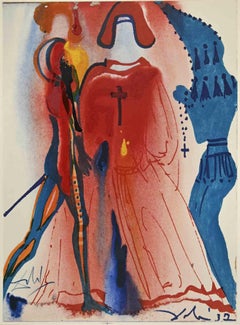
Act III, Scene I - From “Romeo and Juliet” - Lithograph - 1975
By Salvador Dalí­
Located in Roma, IT
Act III, Scene I - From “Romeo and Juliet”  is an artwork realized in 1975. Mixed colored lithograph. Signed and dated in plate on the lower right  margin. Perfect conditions. P...
Category

1970s Surrealist More Prints

Materials

Lithograph

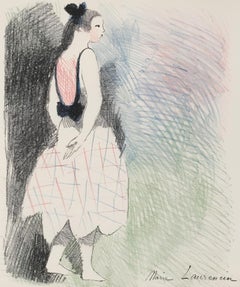
Marie Laurencin, All Persons More Than a Mile High Leave the Court, 1930
By Marie Laurencin
Located in Southampton, NY
This exquisite lithograph by Marie Laurencin (1883–1956), titled Toutes les personnes a plus d'un mile de haut Quitter la Cour (All Persons More Than a Mile High Leave the Court), fr...
Category

1930s Modern Figurative Prints

Materials

Lithograph

Joan Miro, Woman V/VI, from Women, 1965
By Joan Miró
Located in Southampton, NY
This exquisite heliogravure by Joan Miro (1893–1983), titled Femme V/VI (Woman V/VI), from the folio Joan Miro, Femmes (Women), originates from the 1965 edition published and printed...
Category

1960s Modern Abstract Prints

Materials

Lithograph

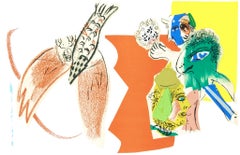
Marc Chagall, Dream at the Circus, from XXe Siecle, 1966
By Marc Chagall
Located in Southampton, NY
This exquisite lithograph by Marc Chagall (1887–1985), titled Reve au cirque (Dream at the Circus), from the album XXe Siecle, Nouvelle serie, XXVIIIe Annee N°26, Mai 1966, originate...
Category

1960s Expressionist Abstract Prints

Materials

Lithograph

Fernand Leger, Plate 93, from Circus, 1950
By Fernand Léger
Located in Southampton, NY
This exquisite lithograph by Fernand Leger (1881–1955), titled Planche 93 (Plate 93), from the album Cirque, Lithographies Originales (Circus, Original Lithographs), originates from ...
Category

1950s Modern Landscape Prints

Materials

Lithograph

Marc Chagall - Original Lithograph
By Marc Chagall
Located in Collonge Bellerive, Geneve, CH
Marc Chagall Original Lithograph 1963 Dimensions: 32 x 24 cm Reference: Chagall Lithographe 1957-1962. VOLUME II. Condition : Excellent Marc Chagall (born in 1887) Marc Chagall was born in Belarus in 1887 and developed an early interest in art. After studying painting, in 1907 he left Russia for Paris, where he lived in an artist colony on the city’s outskirts. Fusing his own personal, dreamlike imagery with hints of the fauvism and cubism popular in France at the time, Chagall created his most lasting work—including I and the Village (1911)—some of which would be featured in the Salon des Indépendants exhibitions. After returning to Vitebsk for a visit in 1914, the outbreak of WWI trapped Chagall in Russia. He returned to France in 1923 but was forced to flee the country and Nazi persecution during WWII. Finding asylum in the U.S., Chagall became involved in set and costume design before returning to France in 1948. In his later years, he experimented with new art forms and was commissioned to produce numerous large-scale works. Chagall died in St.-Paul-de-Vence in 1985. The Village Marc Chagall was born in a small Hassidic community on the outskirts of Vitebsk, Belarus, on July 7, 1887. His father was a fishmonger, and his mother ran a small sundries shop in the village. As a child, Chagall attended the Jewish elementary school, where he studied Hebrew and the Bible, before later attending the Russian public school. He began to learn the fundamentals of drawing during this time, but perhaps more importantly, he absorbed the world around him, storing away the imagery and themes that would feature largely in most of his later work. At age 19 Chagall enrolled at a private, all-Jewish art school and began his formal education in painting, studying briefly with portrait artist Yehuda Pen. However, he left the school after several months, moving to St. Petersburg in 1907 to study at the Imperial Society for the Protection of Fine Arts. The following year, he enrolled at the Svanseva School, studying with set designer Léon Bakst, whose work had been featured in Sergei Diaghilev's Ballets Russes. This early experience would prove important to Chagall’s later career as well. Despite this formal instruction, and the widespread popularity of realism in Russia at the time, Chagall was already establishing his own personal style, which featured a more dreamlike unreality and the people, places and imagery that were close to his heart. Some examples from this period are his Window Vitebsk (1908) and My Fianceé with Black Gloves (1909), which pictured Bella Rosenfeld, to whom he had recently become engaged. The Beehive Despite his romance with Bella, in 1911 an allowance from Russian parliament member and art patron Maxim Binaver enabled Chagall to move to Paris, France. After settling briefly in the Montparnasse neighborhood, Chagall moved further afield to an artist colony known as La Ruche (“The Beehive”), where he began to work side by side with abstract painters such as Amedeo Modigliani and Fernand Léger as well as the avant-garde poet Guillaume Apollinaire. At their urging, and under the influence of the wildly popular fauvism and cubism, Chagall lightened his palette and pushed his style ever further from reality. I and the Village (1911) and Homage to Apollinaire (1912) are among his early Parisian works, widely considered to be his most successful and representative period. Though his work stood stylistically apart from his cubist contemporaries, from 1912 to 1914 Chagall exhibited several paintings at the annual Salon des Indépendants exhibition, where works by the likes of Juan Gris, Marcel Duchamp and Robert Delaunay were causing a stir in the Paris art world. Chagall’s popularity began to spread beyond La Ruche, and in May 1914 he traveled to Berlin to help organize his first solo exhibition, at Der Sturm Gallery. Chagall remained in the city until the highly acclaimed show opened that June. He then returned to Vitebsk, unaware of the fateful events to come. War, Peace and Revolution In August 1914 the outbreak of World War I precluded Chagall’s plans to return to Paris. The conflict did little to stem the flow of his creative output, however, instead merely giving him direct access to the childhood scenes so essential to his work, as seen in paintings such as Jew in Green (1914) and Over Vitebsk (1914). His paintings from this period also occasionally featured images of the war’s impact on the region, as with Wounded Soldier (1914) and Marching (1915). But despite the hardships of life during wartime, this would also prove to be a joyful period for Chagall. In July 1915 he married Bella, and she gave birth to a daughter, Ida, the following year. Their appearance in works such as Birthday (1915), Bella and Ida by the Window (1917) and several of his “Lovers” paintings give a glimpse of the island of domestic bliss that was Chagall’s amidst the chaos. To avoid military service and stay with his new family, Chagall took a position as a clerk in the Ministry of War Economy in St. Petersburg. While there he began work on his autobiography and also immersed himself in the local art scene, befriending novelist Boris Pasternak, among others. He also exhibited his work in the city and soon gained considerable recognition. That notoriety would prove important in the aftermath of the 1917 Russian Revolution when he was appointed as the Commissar of Fine Arts in Vitebsk. In his new post, Chagall undertook various projects in the region, including the 1919 founding of the Academy of the Arts. Despite these endeavors, differences among his colleagues eventually disillusioned Chagall. In 1920 he relinquished his position and moved his family to Moscow, the post-revolution capital of Russia. In Moscow, Chagall was soon commissioned to create sets and costumes for various productions at the Moscow State Yiddish Theater...
Category

1960s Surrealist Figurative Prints

Materials

Lithograph

Masken (Masks) — German Expressionism, Bauhaus
By Lyonel Feininger
Located in Myrtle Beach, SC
Lyonel Feininger, 'Masken (Masks)' also 'Carnival Masks', woodcut, 1920, proofs only. Prasse W193. Signed and titled in pencil. Annotated '1973', the artist’s inventory number. A fin...
Category

1920s Bauhaus Abstract Prints

Materials

Woodcut

Zwei Frauen (Two Women) /// German Expressionism Karl Schmidt-Rottluff Woodcut
By Karl Schmidt-Rottluff
Located in Saint Augustine, FL
Artist: Karl Schmidt-Rottluff (German, 1884-1976) Title: "Zwei Frauen (Two Women)" Portfolio: Das Spiel Christa vom Schmerz der Schönheit des Weibes (The Play Christa from the Pain of the Beauty of the Woman) *Issued unsigned Year: 1918 Medium: Original Woodcut Engraving on wove paper Limited edition: Unknown Printer: Fritz Voigt, Berlin, Germany Publisher: Verlag Die Aktion, Berlin, Germany Reference: Schapire No. 222, page 45; Jentsch No. 35. Rifkind No. 2563; Lang No. 300; Reed No. 118 Overall size with attached page: 8.5" x 10.63" Sheet size: 8.5" x 5.38" Image size: 6.5" x 3.63" Condition: Toning to sheet (as normal). A few tiny pinholes in right margin. In very good condition Very rare Notes: Provenance: private collection - Oxnard, CA. Comes from a complete originally bound 48 page folio with 9 original woodcut engravings by Schmidt-Rottluff. Text by Alfred Brust. Presently attached to its accompanying page. The cover and title pages in pictures are not included, only for reference/provenance. There is an example of this work in the permanent collection of the Brücke Museum, Berlin, Germany. Biography: Karl Schmidt-Rottluff (born December 1, 1884, Rottluff, near Chemnitz, Germany—died August 9, 1976, West Berlin [now Berlin]), German painter and printmaker who was noted for his Expressionist landscapes and nudes. In 1905 Schmidt-Rottluff began to study architecture in Dresden, Germany, where he and his friend Erich Heckel met Ernst Ludwig Kirchner and Fritz Bleyl...
Category

1910s Expressionist Figurative Prints

Materials

Engraving, Woodcut

Beaudin, Composition, André Beaudin, Verve: Revue Artistique (after)
By Andre Beaudin
Located in Southampton, NY
Lithograph on vélin des Papeteries du Marais paper. Inscription: Unsigned and unnumbered, as issued. Good condition. Notes: From the volume, André Beaudin, Verve: Revue Artistique et...
Category

1960s Modern Figurative Prints

Materials

Lithograph

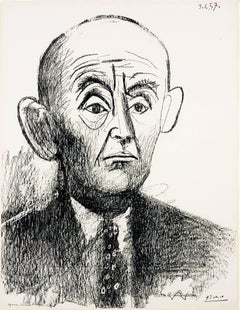
Portrait de D. H. Kahnweiler I
By Pablo Picasso
Located in Fairlawn, OH
Portrait de D. H. Kahnweiler I Lithograph, 1957 Estate Signature Stamp lower right Provenance: Picasso Estate Marina Picasso, her stamp on reverse Annotated in ...
Category

1950s French School Portrait Prints

Materials

Lithograph

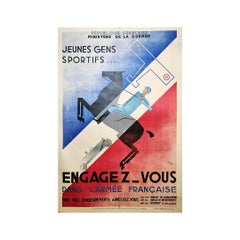
Original poster made Jean Carlu for joining the French army - Art Déco
By Jean Carlu
Located in PARIS, FR
Original poster made Jean Carlu 🇫🇷 (1900-1997) a French advertising designer and poster artist for the Ministry of War, to invite "young sportsmen to join the French army." He beg...
Category

1930s Art Deco Prints and Multiples

Materials

Linen, Paper, Lithograph

Still Thinking About These?

All Recently Viewed