1,780 results for "cubist"

to
895
901
340
329
123
51
Overall Width
to
Overall Height
to
655
81
78
53
44
25
14
14
11
112
80
71
64
42
1
6
1,714
59
6
37
107
153
80
391
417
211
110
47
1
1,179
535
23
778
459
380
322
297
265
172
154
83
59
57
55
53
41
40
33
33
31
29
28
1,272
246
163
120
63
200
295
1,306
382
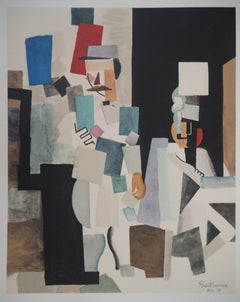
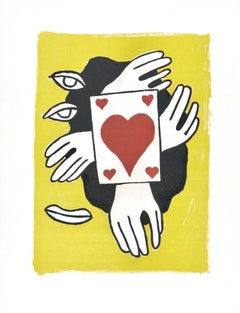
Fernand Leger, Acrobats and Musicians, from Derriere le Miroir, 1960 (after)
By Fernand Léger
Located in Southampton, NY
This exquisite lithograph after Fernand Leger (1881–1955), titled Acrobates et musiciens (Acrobats and Musicians), originates from the 1960 folio Derriere le Miroir, No. 119, Poetes, peintres, sculpteurs (Poets, Painters, Sculptors), published by Maeght Editeur, Paris, under the direction of Aime Maeght, and printed by Mourlot Freres, Paris. Acrobates et musiciens exemplifies Leger’s dynamic integration of human movement, geometric rhythm, and vibrant color—hallmarks of his post-Cubist visual language. The composition celebrates modern vitality and the harmony of mechanized and organic forms, capturing the artist’s enduring fascination with energy, structure, and the human figure in motion. Executed on velin paper, this lithograph measures 15 x 22 inches (38.1 x 55.9 cm), with centerfold, as issued. Signed in the plate, as issued. The edition reflects the exceptional quality and craftsmanship of the Maeght and Mourlot collaborations, translating Leger’s bold visual vocabulary into a masterful graphic work. Artwork Details: Artist: After Fernand Leger (1881–1955) Title: Acrobates et musiciens (Acrobats and Musicians), from Derriere le Miroir, No. 119, Poetes, peintres, sculpteurs (Poets, Painters, Sculptors), 1960 Medium: Lithograph on velin paper Dimensions: 15 x 22 inches (38.1 x 55.9 cm), with centerfold, as issued Inscription: Signed in the plate, as issued Date: 1960 Publisher: Maeght Editeur, Paris Printer: Mourlot Freres, Paris Catalogue raisonne reference: Leger, Fernand, and Lawrence Saphire. Fernand Leger: The Complete Graphic Work. Blue Moon Press, 1978, illustration 270 Condition: Well preserved, consistent with age and medium Provenance: From the 1960 folio Derriere le Miroir, No. 119, Poetes, peintres, sculpteurs (Poets, Painters, Sculptors), published by Maeght Editeur, Paris About the Publication: Derriere le Miroir (translated as "Behind the Mirror") was an iconic French art periodical published from 1946 to 1982 by Maeght Editeur, one of the most influential art publishers of the 20th century. Founded by Aime Maeght in Paris, the publication was conceived as a visual and literary collaboration between leading modern artists, poets, and critics. Each issue functioned as both an exhibition catalogue and a work of art in itself—featuring original lithographs printed directly from the artists' stones or plates, alongside essays, poems, and critical commentary. Over the course of 36 years, Derriere le Miroir produced more than 250 issues and showcased an extraordinary roster of artists including Henri Matisse, Marc Chagall, Joan Miro, Georges Braque, Alexander Calder, Fernand Leger, Pierre Bonnard, Alberto Giacometti, Eduardo Chillida, Ellsworth Kelly, Francis Bacon, Paul Rebeyrolle, Claude Garache, Antoni Tapies, Bram van Velde, Pierre Alechinsky, Pol Bury, Shusaku Arakawa, and Gerard Titus-Carmel. Printed in the ateliers of Mourlot, Arte, and Imprimerie Moderne du Lion, the periodical set new standards for quality in color lithography, combining fine art printing with elegant typography and poetic text. Beyond its visual brilliance, Derriere le Miroir also became a cultural chronicle of postwar European modernism. Each issue coincided with exhibitions held at Galerie Maeght, providing a collectible and widely accessible record of groundbreaking shows. Its integration of image, text, and philosophy created a dialogue between art and literature that elevated the modern art book to new aesthetic heights. Today, Derriere le Miroir remains one of the most sought-after and historically significant art publications, prized by collectors and scholars alike for its craftsmanship, influence, and its role in defining the visual language of 20th-century modernism. The Maeght Foundation in Saint-Paul-de-Vence continues to honor this legacy through exhibitions and archival preservation of the series, affirming Derriere le Miroir's enduring place in the history of modern art and fine art publishing. About the Artist: Fernand Leger (1881–1955) was a French painter, sculptor, and filmmaker whose bold, mechanized aesthetic made him one of the most influential figures of modern art. A pioneer of Cubism alongside Pablo Picasso and Georges Braque, Leger developed a distinctive style that celebrated modern life through rhythmic forms, tubular figures, and vibrant color contrasts. His compositions combined industrial precision with human warmth, reflecting both the dynamism and optimism of the 20th century. Influenced by and in dialogue with leading artists such as Henri Matisse, Alexander Calder, Marc Chagall, Alberto Giacometti, Salvador Dali, Joan Miro, Wassily Kandinsky, Marcel Duchamp, and Man Ray, Leger bridged the gap between Cubism, abstraction, and the rise of modern design. His work extended into murals, sculpture, and film, uniting fine art with architecture and everyday life. Represented in major museums worldwide—including MoMA, the Guggenheim, the Centre Pompidou, and the Tate—Leger’s art continues to captivate collectors for its clarity, structure, and vitality. The highest price ever paid for a Fernand Leger artwork is approximately $70 million USD, achieved in 2012 at Christie's New York for Contraste de formes (1913). Fernand Leger Acrobates et musiciens, Leger Derriere le Miroir, Leger Maeght Editeur Paris, Leger Mourlot...
Category

1960s Cubist Figurative Prints

Materials

Lithograph

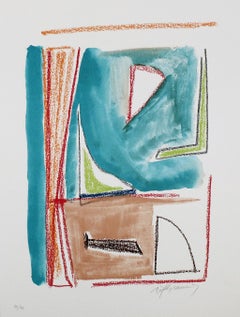
Albert Rafols Casamada - ESTRUCTURES 2 Spanish Abstraction Contemporary Art
By Albert Rafols Casamada
Located in Madrid, Madrid
Albert Rafols Casamada - ESTRUCTURES 2 Date of creation: 2006 Medium: Lithograph on paper Edition: 75 Size: 41 x 31 cm Observations: Condition: In very good conditions and never fram...
Category

2010s Modern Abstract Prints

Materials

Lithograph

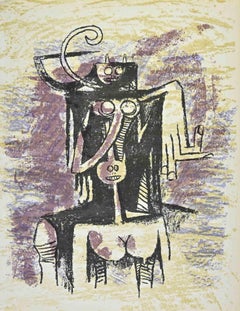
Untitled - Lithograph by Wifredo Lam - 1974
By Wifredo Lam
Located in Roma, IT
Untitled  is a lithograph realized by the Cuban Surrealist artist Wifredo Lam (1902-1982). This is a color lithograph on wove paper, properly edited...
Category

1970s Surrealist Figurative Prints

Materials

Lithograph

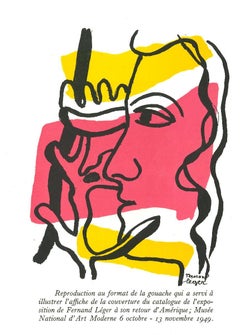
Composition - Lithograph after Fernand Leger - 1982
By Fernand Léger
Located in Roma, IT
Leger Composition is a lithograph realized after Fernand Leger for the volume "A la même pierre, Fernand Mourlot Lithographe", publihed by Pierre Bor...
Category

1980s Cubist Figurative Prints

Materials

Lithograph

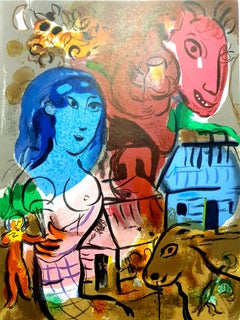
Marc Chagall - Homage to Marc Chagall - Original Lithograph
By Marc Chagall
Located in Collonge Bellerive, Geneve, CH
Marc Chagall Original Lithograph 1969 From the revue XXe Siecle, edition of 12,000 Unsigned, as issued Dimensions: 32 x 24 Condition : Excellent Reference: Mourlot 572 Marc Chagall (born in 1887) Marc Chagall was born in Belarus in 1887 and developed an early interest in art. After studying painting, in 1907 he left Russia for Paris, where he lived in an artist colony on the city’s outskirts. Fusing his own personal, dreamlike imagery with hints of the fauvism and cubism popular in France at the time, Chagall created his most lasting work—including I and the Village (1911)—some of which would be featured in the Salon des Indépendants exhibitions. After returning to Vitebsk for a visit in 1914, the outbreak of WWI trapped Chagall in Russia. He returned to France in 1923 but was forced to flee the country and Nazi persecution during WWII. Finding asylum in the U.S., Chagall became involved in set and costume design before returning to France in 1948. In his later years, he experimented with new art forms and was commissioned to produce numerous large-scale works. Chagall died in St.-Paul-de-Vence in 1985. The Village Marc Chagall was born in a small Hassidic community on the outskirts of Vitebsk, Belarus, on July 7, 1887. His father was a fishmonger, and his mother ran a small sundries shop in the village. As a child, Chagall attended the Jewish elementary school, where he studied Hebrew and the Bible, before later attending the Russian public school. He began to learn the fundamentals of drawing during this time, but perhaps more importantly, he absorbed the world around him, storing away the imagery and themes that would feature largely in most of his later work. At age 19 Chagall enrolled at a private, all-Jewish art school and began his formal education in painting, studying briefly with portrait artist Yehuda Pen. However, he left the school after several months, moving to St. Petersburg in 1907 to study at the Imperial Society for the Protection of Fine Arts. The following year, he enrolled at the Svanseva School, studying with set designer Léon Bakst, whose work had been featured in Sergei Diaghilev's Ballets Russes. This early experience would prove important to Chagall’s later career as well. Despite this formal instruction, and the widespread popularity of realism in Russia at the time, Chagall was already establishing his own personal style, which featured a more dreamlike unreality and the people, places and imagery that were close to his heart. Some examples from this period are his Window Vitebsk (1908) and My Fianceé with Black Gloves (1909), which pictured Bella Rosenfeld, to whom he had recently become engaged. The Beehive Despite his romance with Bella, in 1911 an allowance from Russian parliament member and art patron Maxim Binaver enabled Chagall to move to Paris, France. After settling briefly in the Montparnasse neighborhood, Chagall moved further afield to an artist colony known as La Ruche (“The Beehive”), where he began to work side by side with abstract painters such as Amedeo Modigliani and Fernand Léger as well as the avant-garde poet Guillaume Apollinaire. At their urging, and under the influence of the wildly popular fauvism and cubism, Chagall lightened his palette and pushed his style ever further from reality. I and the Village (1911) and Homage to Apollinaire (1912) are among his early Parisian works, widely considered to be his most successful and representative period. Though his work stood stylistically apart from his cubist contemporaries, from 1912 to 1914 Chagall exhibited several paintings at the annual Salon des Indépendants exhibition, where works by the likes of Juan Gris, Marcel Duchamp and Robert Delaunay were causing a stir in the Paris art world. Chagall’s popularity began to spread beyond La Ruche, and in May 1914 he traveled to Berlin to help organize his first solo exhibition, at Der Sturm Gallery. Chagall remained in the city until the highly acclaimed show opened that June. He then returned to Vitebsk, unaware of the fateful events to come. War, Peace and Revolution In August 1914 the outbreak of World War I precluded Chagall’s plans to return to Paris. The conflict did little to stem the flow of his creative output, however, instead merely giving him direct access to the childhood scenes so essential to his work, as seen in paintings such as Jew in Green (1914) and Over Vitebsk (1914). His paintings from this period also occasionally featured images of the war’s impact on the region, as with Wounded Soldier (1914) and Marching (1915). But despite the hardships of life during wartime, this would also prove to be a joyful period for Chagall. In July 1915 he married Bella, and she gave birth to a daughter, Ida, the following year. Their appearance in works such as Birthday (1915), Bella and Ida by the Window (1917) and several of his “Lovers” paintings give a glimpse of the island of domestic bliss that was Chagall’s amidst the chaos. To avoid military service and stay with his new family, Chagall took a position as a clerk in the Ministry of War Economy in St. Petersburg. While there he began work on his autobiography and also immersed himself in the local art scene, befriending novelist Boris Pasternak, among others. He also exhibited his work in the city and soon gained considerable recognition. That notoriety would prove important in the aftermath of the 1917 Russian Revolution when he was appointed as the Commissar of Fine Arts in Vitebsk. In his new post, Chagall undertook various projects in the region, including the 1919 founding of the Academy of the Arts. Despite these endeavors, differences among his colleagues eventually disillusioned Chagall. In 1920 he relinquished his position and moved his family to Moscow, the post-revolution capital of Russia. In Moscow, Chagall was soon commissioned to create sets and costumes for various productions at the Moscow State Yiddish Theater, where he would paint a series of murals titled Introduction to the Jewish Theater as well. In 1921, Chagall also found work as a teacher at a school for war orphans. By 1922, however, Chagall found that his art had fallen out of favor, and seeking new horizons he left Russia for good. Flight After a brief stay in Berlin, where he unsuccessfully sought to recover the work exhibited at Der Sturm before the war, Chagall moved his family to Paris in September 1923. Shortly after their arrival, he was commissioned by art dealer and publisher Ambroise Vollard to produce a series of etchings for a new edition of Nikolai Gogol's 1842 novel Dead Souls. Two years later Chagall began work on an illustrated edition of Jean de la Fontaine’s Fables, and in 1930 he created etchings for an illustrated edition of the Old Testament, for which he traveled to Palestine to conduct research. Chagall’s work during this period brought him new success as an artist and enabled him to travel throughout Europe in the 1930s. He also published his autobiography, My Life (1931), and in 1933 received a retrospective at the Kunsthalle in Basel, Switzerland. But at the same time that Chagall’s popularity was spreading, so, too, was the threat of Fascism and Nazism. Singled out during the cultural "cleansing" undertaken by the Nazis in Germany, Chagall’s work was ordered removed from museums throughout the country. Several pieces were subsequently burned, and others were featured in a 1937 exhibition of “degenerate art” held in Munich. Chagall’s angst regarding these troubling events and the persecution of Jews in general can be seen in his 1938 painting White Crucifixion. With the eruption of World War II, Chagall and his family moved to the Loire region before moving farther south to Marseilles following the invasion of France. They found a more certain refuge when, in 1941, Chagall’s name was added by the director of the Museum of Modern Art (MOMA) in New York City to a list of artists and intellectuals deemed most at risk from the Nazis’ anti-Jewish campaign. Chagall and his family would be among the more than 2,000 who received visas and escaped this way. Haunted Harbors Arriving in New York City in June 1941, Chagall discovered that he was already a well-known artist there and, despite a language barrier, soon became a part of the exiled European artist community. The following year he was commissioned by choreographer Léonide Massine to design sets and costumes for the ballet Aleko, based on Alexander Pushkin’s “The Gypsies” and set to the music of Pyotr Ilyich Tchaikovsky. But even as he settled into the safety of his temporary home, Chagall’s thoughts were frequently consumed by the fate befalling the Jews of Europe and the destruction of Russia, as paintings such as The Yellow Crucifixion...
Category

1960s Surrealist Figurative Prints

Materials

Lithograph

Fernand Leger, Plate 29, from Circus, 1950
By Fernand Léger
Located in Southampton, NY
This exquisite lithograph by Fernand Leger (1881–1955), titled Planche 29 (Plate 29), from the album Cirque, Lithographies Originales (Circus, Original Lithographs), originates from ...
Category

1950s Modern Landscape Prints

Materials

Lithograph

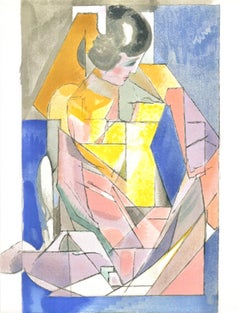
Jacques Villon, Portrait of a Young Girl, 1973 (after)
By Jacques Villon
Located in Southampton, NY
This exquisite lithograph after Jacques Villon (1875–1963), titled Portrait d'une jeune fille (Portrait of a Young Girl), originates from the 1972 edition published by Editions A. C....
Category

1970s Cubist Abstract Prints

Materials

Lithograph

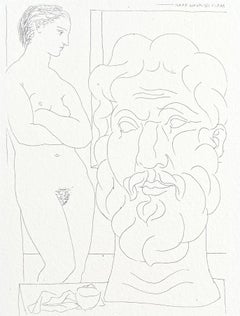
Picasso, Modèle et Grande Tête Sculptée (after)
By Pablo Picasso
Located in Fairfield, CT
Artist: After Pablo Picasso (1881-1973) Title: Modèle et Grande Tête Sculptée (after Bloch 170) Year: 1992 Medium: Reproduced from the original edition using the grain Autotype halft...
Category

1990s Cubist Nude Prints

Materials

Lithograph

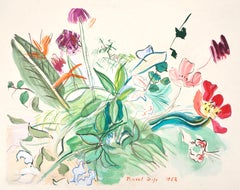
Raoul Dufy, Flowers, from Esprit de la fleur et du fruit, 1954 (after)
By Raoul Dufy
Located in Southampton, NY
This exquisite lithograph after Raoul Dufy (1877–1953), titled Fleurs (Flowers), from the folio Eaux-de-vie, Esprit de la fleur et du fruit (Spirits, Essence of the Flower and the Fr...
Category

1950s Modern Landscape Prints

Materials

Lithograph, Stencil

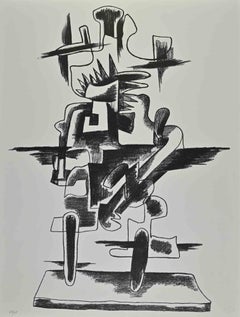
Composition - Lithograph by Ossip Zadkine - mid-20th Century
By Ossip Zadkine
Located in Roma, IT
Composition is a lithograph, realized by  Ossip Zadkine Stamped in the lower right. Numbered, edition 37/65 Good conditions The artwork represents an abstract composition through...
Category

Mid-20th Century Cubist More Prints

Materials

Lithograph

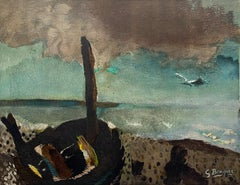
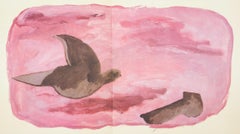
Georges Braque, Seascape with Seagull, from Varengeville, 1968 (after)
By Georges Braque
Located in Southampton, NY
This exquisite lithograph after Georges Braque (1882–1963), titled Marine a la Mouette (Seascape with Seagull), originates from the 1968 folio Varengeville, published by Maeght Edite...
Category

1960s Cubist Abstract Prints

Materials

Lithograph

Pougny, Composition, Pougny, dix linogravures originales, 1914-1920 (after)
By Jean Pougny
Located in Southampton, NY
Linocut on vélin vergé ancien paper. Unsigned and unnumbered, as issued. Good condition. Notes: From the folio, Pougny, dix linogravures originales, 1964. Published by Au Vent d'Arle...
Category

1960s Cubist Abstract Prints

Materials

Linocut

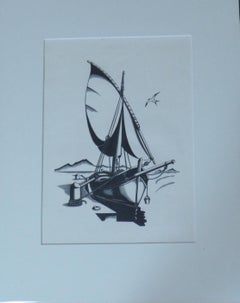
Mediterranean Calm
Located in Bournemouth, Dorset
Mediterranean Calm Image: 25.0 x 18.2 cm Mount: 37.8 x 29.8 cm Wood engraving 1932 Condition: Slight foxing One of Fourteen Wood Engravings, from drawings made on Orient Line Cruises by Robert...
Category

1930s Modern Figurative Prints

Materials

Wood, Engraving

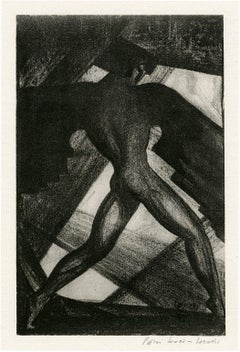
Untitled (Nike) — 1920s Modernism
By Boris Lovet-Lorski
Located in Myrtle Beach, SC
Boris Lovet-Lorski, Untitled (Nike), lithograph, edition 250, 1929. Signed and numbered 1 in pencil. Number 1 of Volume 1, a series of 10 lithographs in each of 2 portfolios, publish...
Category

1920s Art Deco Figurative Prints

Materials

Lithograph

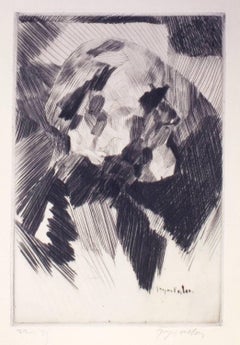
Portrait of E.D.
By Jacques Villon
Located in Chicago, IL
This impression is signed and numbered 24/25. The references for this work are: Auberty & Perussaux 191 and Ginestet & Pouillon E. 277. This is one of Jacques Villon’s great 1913...
Category

1910s Cubist Portrait Prints

Materials

Drypoint

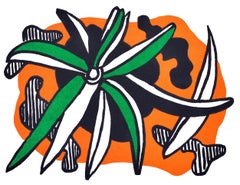
Fernand Leger, Green Leaves and Orange Background, from XXe siecle, 1971 (after)
By Fernand Léger
Located in Southampton, NY
This exquisite lithograph after Fernand Leger (1881–1955), titled Feuilles vertes et fond orange (Green Leaves and Orange Background), from the album XXe Siecle, numero special hors abonnement, Cahiers d'art publies sous la direction de G. di San Lazzaro, Hommage a Fernand Leger, originates from the 1971 edition published by Societe Internationale d'Art XXe siecle, Paris, under the direction of Gualtieri di San Lazzaro, editeur, Paris, and printed by Mourlot Freres, Paris, 1971. Feuilles vertes et fond orange exemplifies Leger’s mastery of modern form and color, uniting bold geometry and organic vitality in a celebration of rhythm, balance, and the harmony between nature and mechanized abstraction. Executed as a lithograph on velin paper, this work measures 9.75 x 12.5 inches. Unsigned and unnumbered, as issued. The edition exemplifies the superb craftsmanship of Mourlot Freres, Paris. Artwork Details: Artist: After Fernand Leger (1881–1955) Title: Feuilles vertes et fond orange (Green Leaves and Orange Background), from the album XXe Siecle, numero special hors abonnement, Cahiers d'art publies sous la direction de G. di San Lazzaro, Hommage a Fernand Leger Medium: Lithograph on velin paper Dimensions: 9.75 x 12.5 inches (24.77 x 31.75 cm) Inscription: Unsigned and unnumbered, as issued Date: 1971 Publisher: Societe Internationale d'Art XXe siecle, Paris, under the direction of Gualtieri di San Lazzaro, editeur, Paris Printer: Mourlot Freres, Paris Catalogue raisonne reference: Leger, Fernand, and Lawrence Saphire. Fernand Leger: The Complete Graphic Work. Blue Moon Press, 1978, illustration 120. Condition: Well preserved, consistent with age and medium Provenance: From the album XXe Siecle, numero special hors abonnement, Cahiers d'art publies sous la direction de G. di San Lazzaro, Hommage a Fernand Leger, published by Societe Internationale d'Art XXe siecle, Paris; printed by Mourlot Freres, Paris, 1971 About the Publication: Gualtieri di San Lazzaro's XXe Siecle (Twentieth Century) was one of the most influential art journals of the modern era, founded in Paris in 1938 as a platform for the greatest painters, sculptors, and writers of the 20th century. San Lazzaro, a visionary editor, critic, and champion of modernism, believed that art and literature should coexist as expressions of a shared human imagination. Under his direction, XXe Siecle became a cultural bridge between Europe and the wider world, publishing special issues devoted to leading figures such as Picasso, Matisse, Chagall, Braque, Calder, Miro, Kandinsky, and Leger. Each edition combined essays by renowned critics and poets with original lithographs printed by the foremost ateliers of Paris, London, and New York, including Mourlot, Curwen, and Universal Graphics, creating a uniquely rich dialogue between text and image. Through XXe Siecle, San Lazzaro preserved the creative spirit of the avant-garde during and after World War II, championing freedom of expression and the evolution of abstraction, surrealism, and modern thought. Over nearly four decades, the journal shaped international taste and defined the intellectual landscape of postwar art publishing. Today, XXe Siecle remains celebrated for its extraordinary synthesis of art, literature, and design, an enduring testament to Gualtieri di San Lazzaro's belief that the visual arts are the soul of the modern age. About the Artist: Fernand Leger (1881–1955) was a French painter, sculptor, and filmmaker whose pioneering fusion of modern life, mechanization, and visual abstraction made him one of the most influential artists of the 20th century. Emerging from the Cubist movement, Leger developed a highly personal style distinguished by bold contrasts, cylindrical forms, and rhythmic compositions that celebrated the beauty of industrial progress and the vitality of modern urban life. Deeply influenced by the innovations of Paul Cezanne and the structural experimentation of Pablo Picasso and Georges Braque, Leger transformed Cubism’s fragmented perspective into a dynamic, machine-age aesthetic that bridged fine art, architecture, and design. His work often depicted workers, machinery, and everyday objects as monumental symbols of harmony between humanity and technology, reflecting both his optimism for modernity and his belief in the democratization of art. During his career, Leger was part of an extraordinary artistic circle that included Henri Matisse, Marc Chagall, Alexander Calder, Alberto Giacometti, Salvador Dali, Joan Miro, Wassily Kandinsky, Marcel Duchamp, and Man Ray—visionaries who shared his commitment to pushing the boundaries of artistic form and expression. A leading figure in the international avant-garde, Leger also explored large-scale murals, public art, and film, expanding the reach of modern art beyond the gallery. His works are represented in major museum collections worldwide, including the Museum of Modern Art, the Centre Pompidou, the Tate, and the Guggenheim, where they continue to inspire admiration for their bold geometry, humanist vision, and timeless modernity. The highest price ever paid for a Fernand Leger artwork is approximately $70 million USD, achieved in 2017 at Christie's New York for Contraste de formes (1913). Fernand Leger Feuilles vertes et fond orange, Leger Green Leaves and Orange Background, Leger 1971 XXe siecle, Leger Mourlot...
Category

1970s Cubist Landscape Prints

Materials

Lithograph

Projets de Pégase, Paroles peintes I, Alberto Magnelli
By Alberto Magnelli
Located in Southampton, NY
Etching on vélin Johannot d’Arches paper. Inscription: Unsigned and unnumbered, as issued. Good condition. Notes: From the album, Paroles peintes I, 1962. Published by Éditions O. La...
Category

1960s Modern Landscape Prints

Materials

Etching

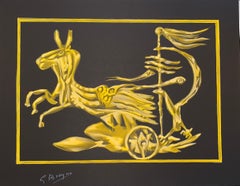
Le Char De Médée - after Georges Braque - Lithograph - 1988 - Figurative Print
By (after) Georges Braque
Located in Sint-Truiden, BE
Color lithograph after a gouache by Georges Braque from the edition of 398 published by Armand & Georges Israel in 1988. Printed signature. Artwork entirely made in France: from th...
Category

1980s Cubist Figurative Prints

Materials

Lithograph

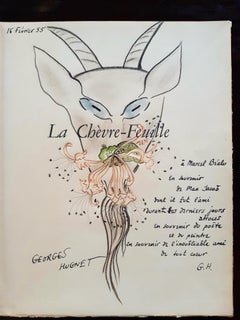
La Chèvre-Feuille - Illustrations by Pablo Picasso and G. Hugnet - 1943
By Pablo Picasso
Located in Roma, IT
La Chèvre-Feuille is an original Modern Rare book illustrated by Pablo Picasso and written by Georges Hugnet (11 July 1906 – 26 June 1974) in 1943 . Origina...
Category

1940s Cubist More Art

Materials

Etching

Acheloos - after Georges Braque - Lithograph - 1988 - Figurative Print
By (after) Georges Braque
Located in Sint-Truiden, BE
Color lithograph after a gouache by Georges Braque from the edition of 398 published by Armand & Georges Israel in 1988. Printed signature. Artwork en...
Category

1980s Cubist Figurative Prints

Materials

Lithograph

Human Faces Abstract Collection - HFC 9 - Limited Edition Textured Canvas Print
By Irena Orlov
Located in Los Angeles, CA
Human Faces Abstract Collection - HFC 9 - Limited Edition Textured Canvas Print Faces Abstract Collection by Irena Orlov Introducing "Abstract Cubist Portrait - Human Faces Abstrac...
Category

2010s Cubist Portrait Paintings

Materials

Canvas, Paint, Cotton Canvas, Mixed Media, Acrylic, Digital, Inkjet, Giclée
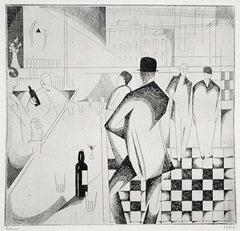
Bar en Pennsylvania, 1914
By Jean-Emile Laboureur
Located in New York, NY
Jean-Emile Laboureur (1877-1943), Bar en Pennsylvanie, etching, 1914. Signed in pencil lower left and numbered 21/35 lower right [also signed and dated lower in the plate lower left]...
Category

1910s Cubist Interior Prints

Materials

Etching

Boréade - after Georges Braque - Lithograph - 1988 - Figurative Print
By (after) Georges Braque
Located in Sint-Truiden, BE
Color lithograph after a gouache by Georges Braque from the edition of 398 published by Armand & Georges Israel in 1988. Printed signature. Artwork en...
Category

1980s Cubist Figurative Prints

Materials

Lithograph

Phaeton - after Georges Braque - Lithograph - 1988 - Figurative Print
By (after) Georges Braque
Located in Sint-Truiden, BE
Color lithograph after a gouache by Georges Braque from the edition of 398 published by Armand & Georges Israel in 1988. Printed signature. Artwork en...
Category

1980s Cubist Figurative Prints

Materials

Lithograph

Nature Morte au Pot de Grès - Lithograph by Pablo Picasso - 1947
By Pablo Picasso
Located in Roma, IT
Hand signed in red pencil and numbered. Dated in plate. Edition 14/50. On Arches Wove Paper. Excellent condition. Reference: Bloch n.443; Mourlot 86.
Category

1940s Cubist Figurative Prints

Materials

Paper, Lithograph

Maurice Utrillo, Toward Franconville, 1956 (after)
By Maurice Utrillo
Located in Southampton, NY
This exquisite lithograph after Maurice Utrillo (1883–1955), titled Vers Franconville (Toward Franconville), from the album Eloge de Maurice Utrillo (In Praise of Maurice Utrillo), originates from the 1956 edition published by Editions d'Art Manuel Bruker, Paris, and printed by Mourlot Freres, Paris, June 5, 1956. The work embodies Utrillos mastery of atmospheric mood, architectural clarity, and emotional restraint, distilling the quiet poetry and introspective spirit that define his modernist vision. Executed as a lithograph on papier velin Vidalon blanc, fabrique au Moulin de Vidalon, Canson paper, this work measures 13.18 x 21.1 inches (33.5 x 53.6 cm), with centerfold as issued. Unsigned and unnumbered, as issued. The edition exemplifies the refined craftsmanship of Mourlot Freres, Paris. Artwork Details: Artist: After Maurice Utrillo (1883–1955) Title: Vers Franconville (Toward Franconville), from the album Eloge de Maurice Utrillo (In Praise of Maurice Utrillo) Medium: Lithograph on papier velin Vidalon blanc, fabrique au Moulin de Vidalon, Canson paper Dimensions: 13.18 x 21.1 inches (33.5 x 53.6 cm), with centerfold as issued Inscription: Unsigned and unnumbered, as issued Date: June 5, 1956 Publisher: Editions d'Art Manuel Bruker, Paris Printer: Mourlot Freres, Paris Condition: Well preserved, consistent with age and medium Provenance: From the album Eloge de Maurice Utrillo (In Praise of Maurice Utrillo), published by Editions d'Art Manuel Bruker, Paris; printed by Mourlot Freres, Paris, June 5, 1956 Notes: Excerpted from the album (translated from French), This album was completed and printed on June 5, 1956 on the presses of madame Jean-Gabriel Daragnes for typography and by the Mourlot Freres for lithographs. It was shot on Vidalon blanc. Two hundred numbered examples from I to CC, including the first XX with a suite on velin paper of the Marais. It has been attached to each example a simulated fac of the Sonnet d'Utrillo: "Lyric art...
Category

1950s Post-Impressionist Landscape Prints

Materials

Lithograph

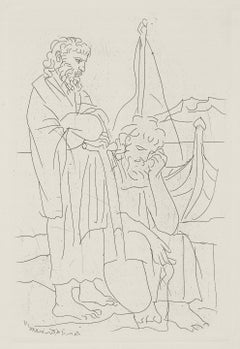
Deux vieux au bord de la mer avec une pelle et une barque (B. 267-272; C. 24)
By Pablo Picasso
Located in Southampton, NY
Etching on vélin de Rives BFK paper. Paper Size: 11.5 x 9 inches. Inscription: Unsigned and unnumbered, as issued. Notes: From the album, Lysistrata, 1934. Published by The Limited E...
Category

1930s Cubist Abstract Prints

Materials

Etching

Georges Braque, Composition, L édition de tête (after)
By Georges Braque
Located in Southampton, NY
Lithograph on vélin de Lana paper. Inscription: Unsigned and unnumbered, as issued. Good condition, with centerfold, as issued. Notes: From the folio, tête edition, Consacré a George...
Category

1960s Modern Abstract Prints

Materials

Lithograph

Henri Laurens, Still Life, from XXe Siecle, 1956 (after)
By Henri Laurens
Located in Southampton, NY
This exquisite lithograph and pochoir after Henri Laurens (1885–1954), titled Nature morte (Still Life), from the album XXe Siecle, Nouvelle serie N°6 (double), Janvier 1956, origina...
Category

1950s Cubist Still-life Prints

Materials

Lithograph

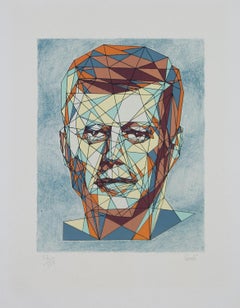
Portrait of John F. Kennedy
Located in Paonia, CO
Portrait of Kennedy by Cemeli is an original lithograph, limited edition number 52 out of 150 and pencil signed by the artist. Kennedy is portrayed as a sculptured multi-colored hea...
Category

1960s Cubist Portrait Prints

Materials

Lithograph

National Day - Lithograph, Mourlot
By Roger de la Fresnaye
Located in Paris, IDF
Roger de la Fresnaye National Day Stone lithograph after a painting Printed in Mourlot workshop Printed signature in the plate On Arches vellum 65 x 50 cm (c. 26 x 20 inch) Excelle...
Category

1960s Cubist Figurative Prints

Materials

Lithograph

Georges Braque, Les champs, from Varengeville, 1968 (after)
By Georges Braque
Located in Southampton, NY
This exquisite lithograph after Georges Braque (1882–1963), titled Les champs (The Fields), originates from the 1968 folio Varengeville, published by Maeght Editeur, Paris, and print...
Category

1960s Cubist Abstract Prints

Materials

Lithograph

Untitled (Nude Dancer) — 1920s Modernism
By Boris Lovet-Lorski
Located in Myrtle Beach, SC
Boris Lovet-Lorski, 'Untitled (Nude Dancer)', lithograph, edition 250, 1929. Signed and numbered 12 in pencil. Number 12 of Volume 2, a series of 10 lithogr...
Category

1920s Art Deco Nude Prints

Materials

Lithograph

Jacques Villon, The Worlds, from XXe siecle, 1959
By Jacques Villon
Located in Southampton, NY
This exquisite lithograph by Jacques Villon (1875–1963), titled Les Mondes (The Worlds), from the album XXe siecle, Nouvelle serie, XXIe Annee, No. 12, Mai-Juin 1959, originates from...
Category

1950s Cubist Figurative Prints

Materials

Lithograph

Raoul Dufy, The Birds, from Letter to My Painter Raoul Dufy, 1965 (after)
By Raoul Dufy
Located in Southampton, NY
This exquisite lithograph after Raoul Dufy (1877–1953), titled Les Oiseaux (The Birds), from the folio Lettre a mon peintre Raoul Dufy (Letter to My Painter Raoul Dufy), originates f...
Category

1960s Fauvist Figurative Prints

Materials

Lithograph

Pablo Picasso, Reclining Man and Seated Woman, The Double Flute, 1967 (after)
By Pablo Picasso
Located in Southampton, NY
This exquisite lithograph and pochoir after Pablo Picasso (1881–1973), titled Homme couche et femme assise (Reclining Man and Seated Woman), from the folio Picasso, La flute double, ...
Category

1960s Cubist Figurative Prints

Materials

Lithograph, Stencil

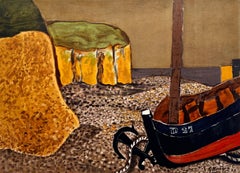
Georges Braque, The Boat D-27, from Varengeville, 1968 (after)
By Georges Braque
Located in Southampton, NY
This exquisite lithograph after Georges Braque (1882–1963), titled La barque D-27 (The Boat D-27), originates from the 1968 folio Varengeville, published by Maeght Editeur, Paris, an...
Category

1960s Cubist Abstract Prints

Materials

Lithograph

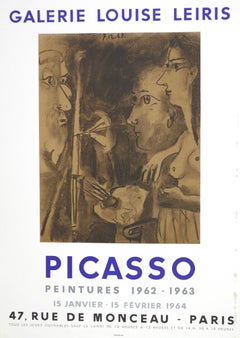
Picasso Vintage Exhibition Poster in Paris - 1964
By Pablo Picasso
Located in Roma, IT
Picasso Exhibition Poster in Paris - 1964 is a rare and precious print of Pablo Picasso's exhibition held at Galerie Louise Leiris, Paris, 1964. Offset and photolithographed poster ...
Category

1960s Cubist Figurative Prints

Materials

Lithograph, Offset

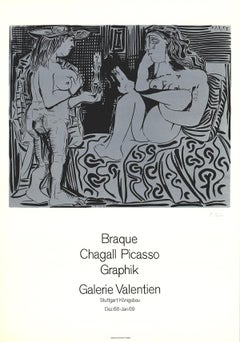
Picasso-Galerie Valentien-Lithograph Vintage
By Pablo Picasso
Located in Brooklyn, NY
This lithograph was produced for the Braque-Chagall-Picasso Graphik exhibition held at Galerie Valentien in Stuttgart Königsbau from December 1968 to January 1969. The lithograph is ...
Category

20th Century Cubist Prints and Multiples

Materials

Lithograph

Braque, Pélias et Nélée, Œdipe roi de Sophocle (after)
By Georges Braque
Located in Southampton, NY
Lithograph on grand vélin d'Arches pur chiffon spécialement fabriqués paper. Inscription: signed in the plate and unnumbered, as issued. Good condition. Notes: from the folio, Œdipe ...
Category

1980s Modern Landscape Prints

Materials

Lithograph

Georges Braque, Landscape, from Varengeville, 1968 (after)
By Georges Braque
Located in Southampton, NY
This exquisite lithograph after Georges Braque (1882–1963), titled Paysage (Landscape), originates from the 1968 folio Varengeville, published by Maeght Editeur, Paris, and printed b...
Category

1960s Cubist Abstract Prints

Materials

Lithograph

Reading Man - Original lithograph (Mourlot)
By Jacques Villon
Located in Paris, IDF
Jacques VILLON Reading Man, 1962 Original lithograph (Mourlot workshop) Printed signature in the plate On tinted vellum 32 x 24 cm (c. 13 x 10 in) Excellent condition
Category

1960s Cubist Figurative Prints

Materials

Lithograph

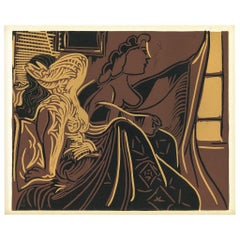
Deux Femmes Près de la Fenetre - Linocut Print after Pablo Picasso - 1959
By Pablo Picasso
Located in Roma, IT
Deux Femmes près de la fenetre is a linocut print realized in smaller size after a linocut by Pablo Picasso of 1959 . Very good conditi...
Category

1950s Cubist Figurative Prints

Materials

Paper, Linocut

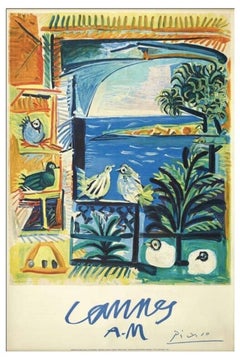
Cannes AM After Pablo Picasso
By Pablo Picasso
Located in Dubai, Dubai
Cannes AM After Pablo Picasso Pablo Picasso was a Spanish painter, sculptor, and co-founder of the Cubist movement, which revolutionized European painting and sculpture in the earl...
Category

1960s Contemporary Landscape Prints

Materials

Stone

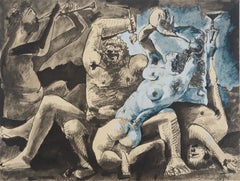
Pablo Picasso, Bacchanal, from The Double Flute, 1967 (after)
By Pablo Picasso
Located in Southampton, NY
This exquisite lithograph and pochoir after Pablo Picasso (1881–1973), titled Bacchanale (Bacchanal), from the folio Picasso, La flute double, 16 Dessins, Aquarelles Lavis (The Doubl...
Category

1960s Cubist Figurative Prints

Materials

Lithograph, Stencil

Pablo Picasso Head of a Man in Broken Lines (Plate XXXIV), from Carmen
By Pablo Picasso
Located in Washington, DC
Artist: Pablo Picasso Title: Head of a Man in Broken Lines (Plate XXXIV) Portfolio: Carmen Medium: Original etching on Montval wove paper Year: 1949 Edition: 289 Frame Size: 21" x 18...
Category

1940s Cubist Portrait Prints

Materials

Etching

Picador et Taureau - Linocut Reproduction After Pablo Picasso - 1962
By Pablo Picasso
Located in Roma, IT
Picador et Taureau is a linocut reproduction realized in smaller size after a linocut by Pablo Picasso of 1959. Good conditions, except for very minor foxing on edges. Not signed. ...
Category

1960s Cubist Figurative Prints

Materials

Linocut

Braque, Paysage, Varengeville (after)
By Georges Braque
Located in Fairfield, CT
Medium: Lithograph on vélin paper, hinged on archival support sheet, as issued Year: 1968 Paper Size: 13 x 16 inches; image size: 4.375 x 13.75 inches Inscription: Signed in the plat...
Category

1960s Cubist Landscape Prints

Materials

Lithograph

Chariot of the Sun
By (after) Georges Braque
Located in Paris, IDF
after Georges BRAQUE Char of the Sun MEDIUM : Lithograph PRINTER : Atelier Art-Litho EDITOR : Armand ISRAEL, Paris SIGNATURE : Printed LIMITED : 399 copies unumbered PAPER : Arches ...
Category

Late 20th Century Cubist Figurative Prints

Materials

Lithograph

Pablo Picasso, Study for Man with Sheep, from The Double Flute, 1967 (after)
By Pablo Picasso
Located in Southampton, NY
This exquisite lithograph and pochoir after Pablo Picasso (1881–1973), titled Etude pour l’homme au mouton (Study for Man with Sheep), from the folio Picasso, La flute double, 16 Des...
Category

1960s Cubist Figurative Prints

Materials

Lithograph, Stencil

Rendez-Vous — Early 20th-Century Modernism
By Boris Lovet-Lorski
Located in Myrtle Beach, SC
Boris Lovet-Lorski, Untitled (Rendez-Vous), lithograph, edition 250, 1929. Signed in pencil. Signed in the stone, lower right. From a suite of 10 lithographs published by the artist ...
Category

1920s American Modern Nude Prints

Materials

Lithograph

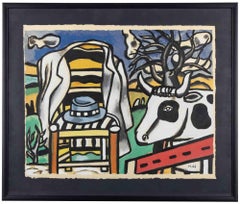
La Vache et la Chaise - Lithograph after Fernand Léger - 1959
By Fernand Léger
Located in Roma, IT
Lithograph realized after Fernand Léger in 1959, on Richard de Bas paper. Monogrammed in the plate. It belongs to the suite "Contrastes", printed by Daniel Jacomet and published by...
Category

1950s Cubist Figurative Prints

Materials

Lithograph

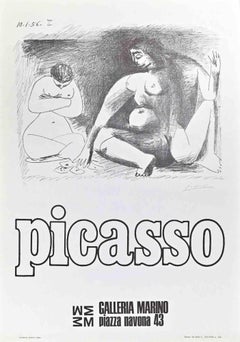
Picasso Poster Exhibition after Pablo Picasso - 1976
By Pablo Picasso
Located in Roma, IT
Picasso Poster is an offset  poster about an exhibition of Pablo Picasso's graphic works at Marino Gallery in Rome Piazza Navona. Limited edition of 1.000. Signed in the plate. Ex...
Category

1970s Cubist More Prints

Materials

Offset

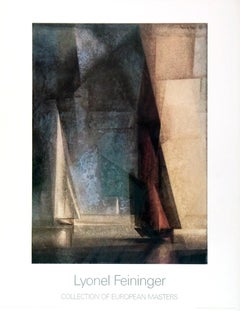
Lyonel Feininger Stiller Tag am Meer Ill 1985- Vintage
By Lyonel Feininger
Located in Brooklyn, NY
This poster, part of the European Masters series published by Achenbach GMBH in 1985, was created for an exhibition at the Museum of Art in Düsseldorf, Germany, specifically for the ...
Category

1980s Modern Prints and Multiples

Materials

Offset

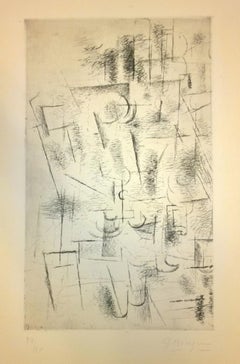
Composition (Nature Morte aux Verres V11)- Etching by G. Braque - 1950 (1912)
By Georges Braque
Located in Roma, IT
Etching with drypoint, 1912, on Arches wove paper, a fine impression printing with plate tone and much burr, hand signed and numbered. Eiditon of 50 prints (there were also ten  hors...
Category

1950s Cubist Figurative Prints

Materials

Etching

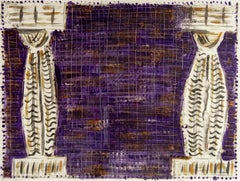
Two Columns by Michael Hurson framed abstract with greco roman pillars on stage
By Michael Hurson
Located in New York, NY
In this unique Michael Hurson monotype, stylized Greco-Roman pillars flank a plane of crosshatched and dotted texture in black, brown, and purple ink. The...
Category

1980s Abstract Figurative Prints

Materials

Monoprint, Monotype

Fernand Leger, Plate 92, from Circus, 1950
By Fernand Léger
Located in Southampton, NY
This exquisite lithograph by Fernand Leger (1881–1955), titled Planche 92 (Plate 92), from the album Cirque, Lithographies Originales (Circus, Original Lithographs), originates from ...
Category

1950s Modern Landscape Prints

Materials

Lithograph

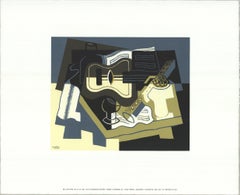
Juan Gris Guitar and Clarinet 1991- Serigraph Vintage
By Juan Gris
Located in Brooklyn, NY
This high-quality serigraph reproduces Juan Gris’s Guitar and Clarinet, one of the artist’s elegant explorations of musical still-life motifs central to his mature Cubist period. Printed in Italy on 250g fine art paper with deckled edges and published by Silvio Zamorani...
Category

1990s Cubist Prints and Multiples

Materials

Screen

Max Ernst, Homage to San Lazzaro, from San Lazzaro et ses Amis, 1975
By Max Ernst
Located in Southampton, NY
This exquisite lithograph by Max Ernst (1891–1976), titled Hommage a San Lazzaro (Homage to San Lazzaro), from the album San Lazzaro et ses Amis, Hommage au fondateur de la revue XXe...
Category

1970s Constructivist Figurative Prints

Materials

Lithograph

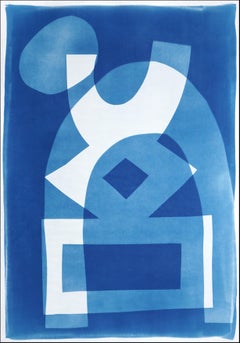
House on a Hill, Brutalist Architecture, Monotype Cyanotype on Paper, Blue Tones
By Kind of Cyan
Located in Barcelona, ES
This is an exclusive handprinted unique cyanotype that takes its inspiration from the mid-century modern shapes and the desert modernism movement. It's made by layering paper cutouts...
Category

2010s Analytic Cubist Landscape Prints

Materials

Paper, Monotype

Still Thinking About These?

All Recently Viewed