879 results for "antiquity"

to
105
753
112
14
163
276
314
126
147
77
49
35
18
14
15
6
13
14
9
12
1
58
44
38
26
25
21
13
6
5
5
4
4
3
1
1
1
1
364
253
232
213
128
443
406
553
231
174
169
125
Height
to
Width
to
879
804
860
31
18
17
13
9
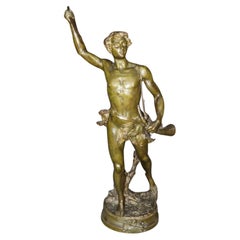
Adrien Étienne Gaudez Figural Bronze Sculpture Acteon" Man Hunting with Spear
By Adrien Étienne Gaudez
Located in Swedesboro, NJ
This exquisite bronze sculpture by Adrien Étienne Gaudez (French, 1845–1902) captures the mythological figure of Actéon, the famed hunter from classical antiquity. Gaudez, a celebrat...
Category

Vintage 1920s French Art Nouveau Figurative Sculptures

Materials

Bronze

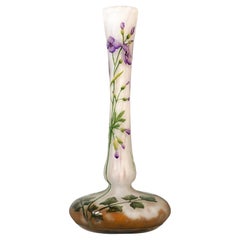
Art Nouveau Cameo Single Vase Julienne Des Dames , Daum Nancy, France, Ca. 1910
By Daum
Located in Vienna, AT
Baluster-shaped vase, bulbous body on a flush base with a long, slender trumpet-shaped neck, colourless glass with flaky white, brown and green powder inclusions, exterior highly etc...
Category

Vintage 1910s French Art Nouveau Glass

Materials

Glass

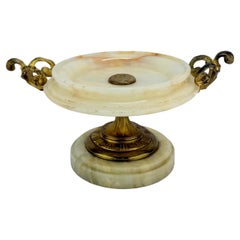
19th Century French Neoclassical Onyx Bronze Ormolu Mounted Tazza Grand Tour
Located in Atlanta, GA
A late 19th to early 20th-century French neoclassical onyx and gilt bronze tazza, likely produced in the Empire revival period. This finely crafted ornamental compote features a circ...
Category

Antique 19th Century French Grand Tour Decorative Bowls

Materials

Onyx, Bronze

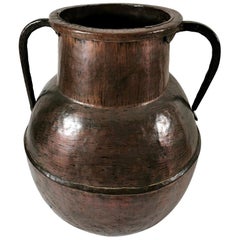
18th Century French Huge Copper Water Container
Located in Prato, Tuscany
We kindly suggest you read the whole description, because with it we try to give you detailed technical and historical information to guarantee the authenticity of our objects. The c...
Category

Antique Early 18th Century French Country Jars

Materials

Copper

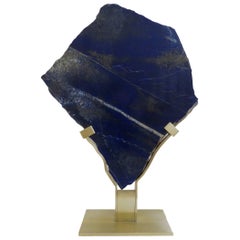
Lapis Lazuli Natural Shape Sculpture in Metallic Brush Base
By Pietra Gallery
Located in Polanco, CDMX
Lapis Lazuli is a deep blue metamorphic rock used as a semi-precious stone that has been prized since antiquity for its intense color. It is a combination of lazurite, main constitu...
Category

21st Century and Contemporary Afghan Organic Modern Natural Specimens

Materials

Lapis Lazuli

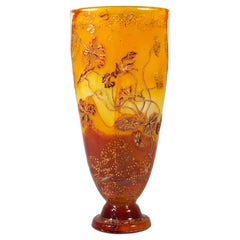
Large Émile Gallé Art Nouveau Vase Orchidées Abeille , Nancy, France, Ca 1890
By Émile Gallé
Located in Vienna, AT
Excellent early Art Nouveau cup-shaped vase: Conical body pressed into an oval cross-section on a bell-shaped, curved round base, colorless thick-walled glass with milky white opale...
Category

Antique 1890s French Art Nouveau Glass

Materials

Glass

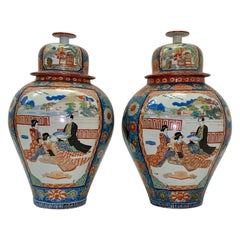
19th Century Large Japanese Imari Ginger Jars
Located in Montclair, NY
A large and very fine condition pair of antique Japanese Imari Ginger jars from the second half of the 19th century. Each is 12 inches in diameter and...
Category

Antique 1860s Ceramics

Materials

Ceramic

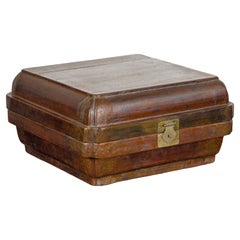
Qing Dynasty Hinged Box with Brass Hardware and Weathered Patina
Located in Yonkers, NY
A Qing Dynasty period hinged wooden box from the 19th century with brass hardware and nicely weathered patina. Crafted during the Qing Dynasty in the 19th century, this wooden box ca...
Category

Antique 19th Century Chinese Qing Decorative Boxes

Materials

Brass

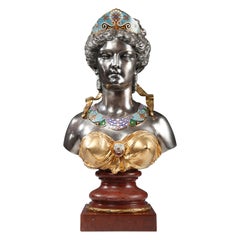
Neo-Greek Bronze Bust by E. Cornu and G. Viot Cie, France, Circa 1867
By Eugène Cornu
Located in PARIS, FR
Signed Machauld et Eug. Cornu – G. Viot et Cie Fondeurs Bust of a Greek goddess, made entirely of silvered bronze and gilded bronze. The tiara and collar necklace ornating the bust are finely decorated with stylized floral motifs of polychrome champlevé enamel. It rests on a molded base and square plinth made in red griotte marble. The sculptor Eugène Cornu (1827-1899), installed in Paris at N.29 rue Popincourt, after having worked as a designer and then director for the renowned company Tahan, worked closely with the « Compagnie des Marbres Onyx...
Category

Antique 1860s French Greek Revival Busts

Materials

Griotte Marble, Enamel, Bronze

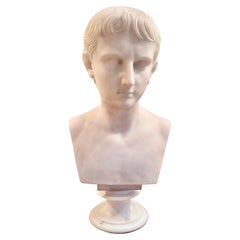
Italian Grand Tour White Marble Bust of Augustus Caesar
Located in Bradenton, FL
19th century Italian Grand Tour white marble bust of Augustus Caesar. Bust sits on a round white marble pedestal base. Augustus was Julius Caesar's great-nephew, and the first Roman ...
Category

Antique 19th Century Italian Grand Tour Busts

Materials

Marble

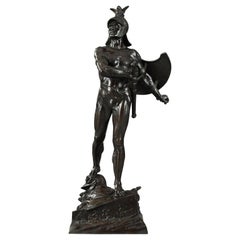
Late 19th Century Bronze Sculpture The Warrior by Auguste de Wever
By Auguste de Wever
Located in Paris, FR
Large patinated bronze figure of an Antiquity warrior. He is set on a base decorated with battle scenes, marked: Les Chasseurs Éclaireurs de Bruxelles à leur Lt Colonel O. Tahon 1870...
Category

Antique Late 19th Century Belgian Art Nouveau Figurative Sculptures

Materials

Bronze

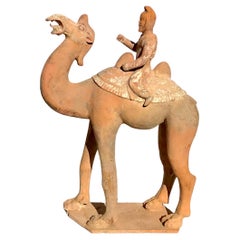
Large Tang Dynasty Bactrian Camel And Rider Pottery Sculpture
Located in Dallas, TX
Large Tang Dynasty Painted Pottery Camel w/ Rider Tang Dynasty (618-907) Approx. 28.75 x 20 x 10.5 A TL test existed when in Weisbrods hands but is not available due to loss. Plea...
Category

Antique 15th Century and Earlier Chinese Tang Animal Sculptures

Materials

Pottery

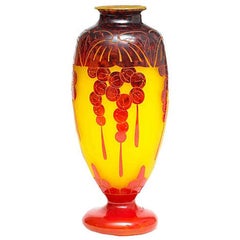
Vase, Le Verre Francais
By Le Verre Francais
Located in Pompano Beach, FL
An overlaid and etched glass vase, bell flower motif, Le Verre Francais, circa 1930.
Category

Vintage 1930s Vases

Vase, Le Verre Francais
$6,900 Sale Price
30% Off
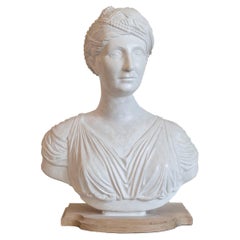
19th Century Italian Neoclassical Plaster Bust of a Roman Woman
Located in Atlanta, GA
This elegant 19th-century Italian Neoclassical bust captures the timeless beauty and grace of a Roman woman, rendered in plaster with exquisite attention to detail. The subject’s ser...
Category

Antique 19th Century Italian Neoclassical Busts

Materials

Plaster

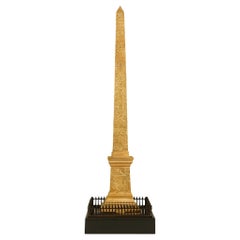
French 19th century Ormolu, Bronze and Marble statue of the Luxor Obelisk
Located in West Palm Beach, FL
A handsome and most impressive French 19th century Neo-Classical st. Grand Tour Period Ormolu, patinated Bronze and Black Belgian marble statue of the Luxor Obelisk. This exceptional...
Category

Antique 19th Century French Grand Tour Figurative Sculptures

Materials

Belgian Black Marble, Bronze, Ormolu

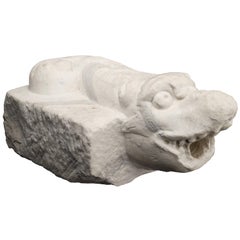
Italian Ancient Marble Sculpture Fountain, Late 16th Century
Located in Milano, IT
Sea monster Carrara marble mouth fountain Italy, late 16th century It measures 13.8 x 31.5 x 18.9 in (35 x 80 x 48 cm) State of conservation: some small evident gaps and widespread signs of wear due to outdoor exposure. The gray marks crossing it do not come from restoration, but are rather the natural veins of the marble. This work has some morphological characteristics typically associated with the iconography of the sea monster: an elongated muzzle, sharp teeth, protruding eyes, elongated ears, and a coiled serpent's tail. An in-depth series of studies on artistic depictions of the sea monster attempted to verify how this symbol evolved in antiquity in the European and Mediterranean contexts and how it gradually changed its image and function over time. The iconography itself is mutable and imaginative and its history is rich with cultural and artistic exchange, as well as the overlapping of ideas. This occurred so much that it is difficult to accurately pinpoint the "types" that satisfactorily represent its various developments. However, we can try to summarize the main figures, starting from the biblical Leviathan and the marine creature that swallowed Jonah (in the Christian version, this figure was to become a whale or a "big fish", the “ketos mega”, translation of the Hebrew “dag gadol”). Other specimens ranged from the dragons mentioned in the Iliad (which were winged and had legs) to "ketos” (also from Greek mythology), the terrifying being from whose Latinized name (“cetus”) derives the word "cetacean". See J. Boardman, “Very Like a Whale” - Classical Sea Monsters, in Monsters and Demons in the Ancient and Medieval Worlds, in Papers presented in Honor of Edith Porada, Mainz am Rhein 1987, pp. 73-84). In Italy the monster underwent yet further variations: it can be found in Etruscan art on the front of some sarcophagi representing the companion of souls, while among the Romans we find the “Pistrice” (cited by Plinio in Naturalis Historia PLIN., Nat., II 9, 8 and by Virgilio in Eneide: VERG., Aen., III, 427), which appeared in the shape of a stylized hippocampus or a very large monstrous cetacean and evolved into a hideous being with a dragon's head and long webbed fins. During the Middle Ages, the sea monster was the object of new transformations: at this time, it is often winged, the head is stretched like a crocodile, the front legs are often very sharp fins - sometimes real paws - until the image merges with dragons, the typical figures of medieval visionary spirituality widely found throughout Europe (on this topic and much more, see: Baltrušaitis, J., Il Medioevo fantastico. Antichità ed esotismi nell’arte gotica, Gli Adelphi 1997). In Italy during the 15th and 16th centuries, the revival of classicism - representative of the humanistic and Renaissance periods - led to a different reading of these "creatures". Indeed, the sea monster was also to find widespread use as an isolated decorative motif, especially in numerous fountains and sculptures where dolphins or sea monsters were used as a characterizing element linked to water (on this theme see: Chet Van Duzer, Sea Monsters on Medieval and Renaissance Maps, London, The British library, 2013). From the morphological point of view, the "sea monsters" of this period are mostly depicted as hybrid figures, in which the body of a mythological or real being (a hippocampus, a sea snake, a dolphin), is joined to a head with a rather indistinct appearance. It was usually characterized by large upright ears, an elongated snout, sharp teeth and globular, protruding eyes; a complex and indefinite figure, both from the symbolic point of view and from that of its genesis. The work we are examining is placed as a cross between the medieval sea serpent and the Renaissance dolphin, with stylistic features which recall the snake as often used in heraldry (such as the "snake" depicted in the coat of arms of the Visconti - the lords and then dukes of Milan between 1277 and 1447 - and which, for some, may be derived from the representations of the “Pistrice” that swallowed Jonah). In the search for sources, Renaissance cartography and in particular woodcuts should not be neglected. See for example the monsters of Olaus Magnus, from the editions of the “Historia de gentibus septentrionalibus” (“History of the peoples of the north”) and the natural histories of Conrad Gesner, Ulisse...
Category

Antique 16th Century Italian Renaissance Animal Sculptures

Materials

Carrara Marble

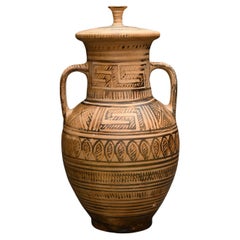
Ancient Greek Geometric Pottery Amphora and Lid
Located in Los Angeles, CA
This amphora is a well formed example of the Geometric period, decorated in dark brown slip with horizontal bands. The bands include short vertical lines, a blind lozenge chain, hatc...
Category

Antique 15th Century and Earlier Greek Classical Greek Vases

Materials

Terracotta

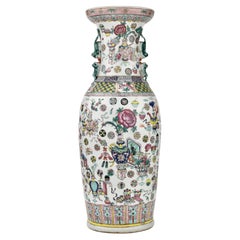
A Large Enameled Famille Rose Vase, Qing Period, 19th century
Located in seoul, KR
Chinese famille rose vase, decorated with 'One Hundred Antiquities' design, paired with Fu-lion handles. (Have two in pairs. If you would like to purchase as a set, please send me a ...
Category

Antique 19th Century East Asian Qing Vases

Materials

Ceramic, Porcelain

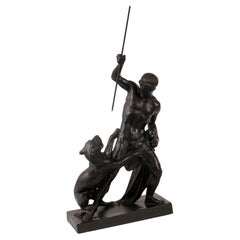
19th Century Bronze Sculpture, Panther Hunter, Denmark, Jerichau/ P. Ipsen
By Jens Adolf Jerichau
Located in Dresden, DE
Black terracotta Denmark, second half of the 19th century Height 54 cm, width 25 cm, depth 12 cm Marked: P. Ipsen, Kjøbenhavn / Eneret 290 Black terracotta figure depicting a young ...
Category

Antique Late 19th Century Danish Neoclassical Figurative Sculptures

Materials

Terracotta

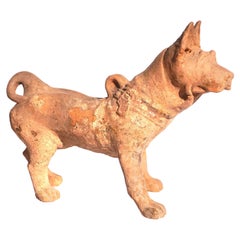
Large Han Dynasty Pottery Sculpture of a Dog TL Tested
Located in Dallas, TX
Han Dynasty life size Terracotta sculpture of a dog. TL Tested Buried in a tomb for thousands of years; this mingqi companion has decided to come back and accompany the living. I’m actually taking a liking to this pup; most probably a fierce pit bull...
Category

Antique 15th Century and Earlier Chinese Han Animal Sculptures

Materials

Terracotta

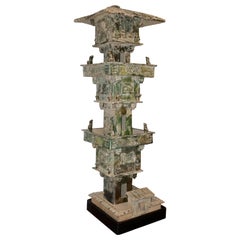
Han Dynasty Green Glazed Archers Watch Tower Oxford TL Tested
Located in Dallas, TX
Monumental Pottery Watch Tower in Green Glaze; Han Dynasty (2016 BC -AD 220) Earthenware three-storied pavilion from the Eastern Han Dynasty. Each of the...
Category

Antique 15th Century and Earlier Chinese Han Ceramics

Materials

Terracotta

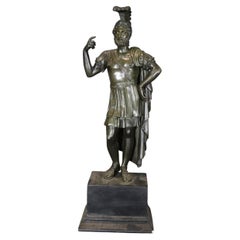
Very Intricate Cast Bronze Statue of a Roman Standing Proudly
Located in Swedesboro, NJ
Presenting a distinguished and finely cast Roman bronze statue on a wooden base, an exceptional decorative piece echoing the grandeur, symbolism, and disciplined elegance of classica...
Category

Vintage 1920s Neoclassical Revival Figurative Sculptures

Materials

Bronze

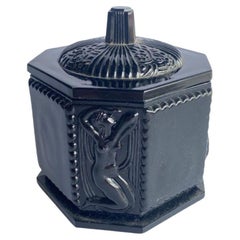
Art Deco Black Amethyst Tiara Glass Vanity Jar with Nude Woman
Located in Van Nuys, CA
This antique 1920's classical black amethyst hexagon shaped Tiara Glass vanity jar presents a captivating blend of elegance and antiquity. Crafted with meticulous detail, the jar fea...
Category

Vintage 1920s American Mid-Century Modern Jewelry Boxes

Materials

Art Glass

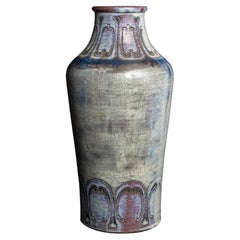
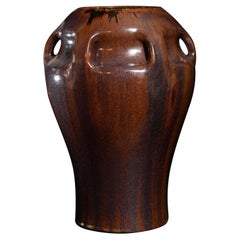
Art Nouveau Craquelure Stoneware Vase by Auguste Delaherche
By Auguste Delaherche
Located in Palm Beach, FL
Model #1990. Auguste Delaherche turned the science of experimentation in ceramic ware into an art form. Coming from a long tradition of potters in the Beauvais region of France datin...
Category

Antique 1880s French Art Nouveau Vases

Materials

Stoneware

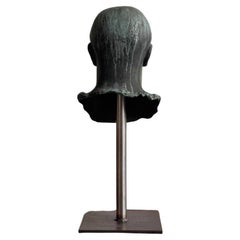
Oxidized bronze head on a metal stand. Copenhagen, Denmark, Late 19th Century
Located in København K, 84
The anonymous oxidized bronze head on a metal stand, dating from the late 19th century and currently housed in Copenhagen, Denmark, exemplifies the era's fascination with classical f...
Category

Antique Late 19th Century Danish Busts

Materials

Bronze

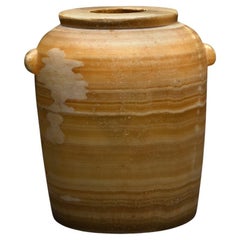
Ancient Egyptian Alabaster Storage Jar
Located in Los Angeles, CA
A large, and very fine barrel-shaped jar of alabster with well defined bands of creme and caramel highlights. Twin vestigial lug handles are located on each side below a wide disc ri...
Category

Antique 15th Century and Earlier Egyptian Egyptian Vases

Materials

Alabaster

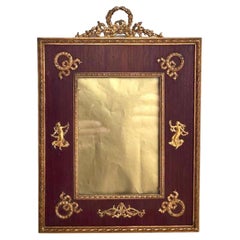
Awesome Antique Photo Frame in Gilt Bronze Mahogany, 19th Century
Located in Bastogne, BE
Antique frame for photos. Bronze with gilding, Mahogany. Louis XVI style. 1880s, 19th century, France. The antique bronze frame with g...
Category

Antique 1880s French Picture Frames

Materials

Bronze

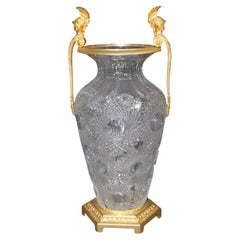
Cut Crystal Bronze Ormolu Vase Manner of Baccarat with Roman Figural Gladiators
By Baker Knapp Tubbs
Located in Swedesboro, NJ
This exquisite cut crystal and bronze ormolu vase, in the manner of Baccarat, showcases the timeless elegance and craftsmanship of 19th-century French decorative arts. The body of th...
Category

Vintage 1980s French Neoclassical Revival Vases

Materials

Crystal, Bronze

Art Nouveau Purple Hare s Fur Glaze Stoneware Vase by Auguste Delaherche
By Auguste Delaherche
Located in Palm Beach, FL
Model #6674. Auguste Delaherche turned the science of experimentation in ceramic ware into an art form. Coming from a long tradition of potters in the Beauvais region of France datin...
Category

Antique 1880s French Art Nouveau Vases

Materials

Stoneware

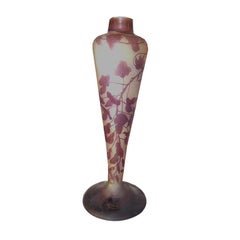
Emile Galle Art Deco Vase
By Émile Gallé
Located in Pompano Beach, FL
Emile Galle Art Deco Vase in grey glass overlaid in purple and cut with pendant sweet peas; signed Galle in cameo after a star.
Category

Early 20th Century French Vases

Emile Galle Art Deco Vase
$2,000 Sale Price
21% Off
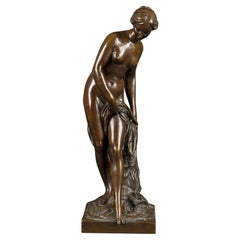
« La Baigneuse » ou « La Nymphe prenant son bain » (1757)
By Étienne Maurice Falconet
Located in Ixelles, BE
Étienne-Maurice Falconet (1716-1791), "The Bather" or "The Nymph Bathing" (1757) Artistic Explanation: The Nymph Bathing is a masterpiece of 18th-century French sculpture, created...
Category

Antique 1750s French Baroque Figurative Sculptures

Materials

Bronze

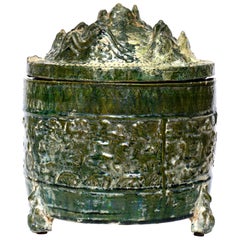
Han Dynasty Glazed Hill Jar
Located in Dallas, TX
Han earthenware celedon glazed hill jar The hill jar represents the five sacred mountains which is the path between the earth and Paradise. The mountains are...
Category

Antique 15th Century and Earlier Chinese Han Jars

Materials

Pottery

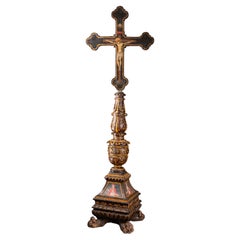
renaissance wooden candelabrum and painted cross - Umbria, 16th century
Located in Bruxelles, BE
Base of a carved wooden candelabrum, polychrome and gilded; cross painted on both sides. Umbria or Tuscany, 16th century 136 x 43,5 x 30 cm (The cross and the base of the candelabrum were later assembled) The base of the candelabrum is intricately carved and adorned with polychrome and gilded finishes. The shafts take on the shape of balusters reminiscent of ancient columns, feature ornate foliage decorations, garlands and winged cherub faces. The feet are crafted in the likeness of lion paws. The base is further embellished with depictions of four saint martyrs, among them Saint Barbara and Saint Catherine of Alexandria. The plasticity of the figures, outlined with strong contour lines, the clear and vibrant colors, are stylistic elements linked to the Umbrian tradition of the sixteenth century.The precisely defined and elegant drawing, along with the clear color palette applied with refined chiaroscuro modulations, became the signature of a style that would leave a lasting mark on the era to come. This is exemplified by a preference for vibrant, multicolored images, accentuated in this case by the use of red and pink in the saint's attire. A notable addition, introduced later, is a polylobed cross painted on both sides. On one side, the Crucifixion is vividly portrayed:The treatment of the corpus itself is in line with High Medieval practice, emphasizing pathos by showing Jesus dead, his arms sagging from the weight of the body. The upper section displaying a pelican pecks at her breast to feed her young with her own blood; a symbol of the sacrifice of Christ on the cross whose body and blood similarly nourishes the celebrant during Mass. The lower part depicts Golgotha. On the reverse side, the Resurrection is artistically presented in a Renaissance iconography, reminiscent of the renowned composition painted by Piero della Francesca, now housed in the Civic Museum of Sansepolcro. In terms of composition, with the frontal depiction of Christ holding the banner, this motif became particularly widespread in central Italy, spanning from Tuscany to Umbria throughout the 16th century.. The double-sided construction suggests that it may also have been carried in liturgical processions. In Umbria from the 14th century, the use of portable crosses painted on both sides had become a widespread practice, aimed at satisfying the monastic clientele that had significantly increased following the establishment of new religious communities. The earliest surviving Tuscan painted crucifix represent Christ as Christus Triumphans, or the “Triumphant Christ” with his head up and eyes open. This form was supplanted in the 13th century with the Christus Patiens, or “Suffering Christ” type who is shown often with his head fallen on his shoulder and his eyes closed, as In our cross. The iconography of the suffering Christ appears to have developed out of a new interest in Christ’s human nature, the development of the feast of Corpus Christi and with increased importance given to the Eucharist. The process of humanizing the figure of Christ reaches its peak with the abandonment of all the previous expressive conventions in favor of more realistic details we can observe in this Crucifix, such as the swollen belly, the arms stretched to the limit of muscle tearing, the body falling heavily forward, the abundant blood on the wounds, and the cross firmly embedded in the rock of Calvary. It's worth noting that Renaissance candelabra...
Category

Antique 16th Century Italian Renaissance Figurative Sculptures

Materials

Wood, Giltwood

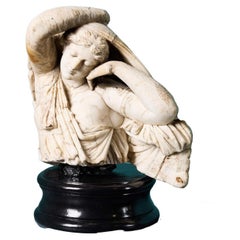
Antique Marble Statue of the Sleeping Ariadne
Located in Wormelow, Herefordshire
This late Georgian antique marble statue is after the antique, depicting a scale fragment of the eminent 2nd century statue ‘Sleeping Ariadne’. C...
Category

Antique Late 18th Century English Neoclassical Busts

Materials

Marble, Statuary Marble

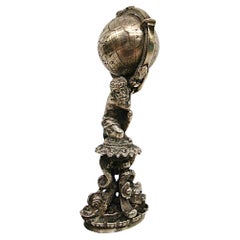
Antique God Atlas Sterling Silver Figural Wax Seal Stamper. German 19-Century.
Located in Buenos Aires, Olivos
Antique God Atlas Sterling Silver Figural Wax Seal Stamper. Rara Antique, circa 1850, wax seal stamp. Moldelled as the God Atlas (Greek Mythology). The globe rotates. Museum quality...
Category

Antique 19th Century German Classical Greek Paperweights

Materials

Silver, Sterling Silver

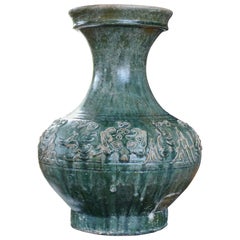
Large Han Dynasty Hu Green Glazed Mythical Beasts Vessel
Located in Dallas, TX
A large and decorative Chinese green-glazed pottery hu vase. Han dynasty (206 BC - 220 AD). The compressed globular body encircled by eight mystical beasts of monkeys, Rabbits, de...
Category

Antique 15th Century and Earlier Chinese Han Vases

Materials

Pottery

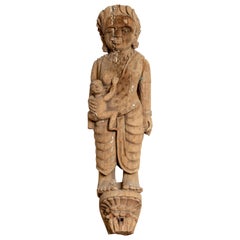
Hand Carved Indian Temple Carving Statue from Gujarat Depicting Mother and Child
Located in Yonkers, NY
An Indian early 20th century hand carved architectural temple carving from Gujarat, depicting a mother and her child with nicely weathered patina. Crafted in the Western portion of India, in the culturally rich state of Gujarat, this early 20th-century hand-carved temple sculpture captures the tender bond between a mother and her child. The mother, adorned with a delicate headdress and detailed clothing and jewelry, stands in a dignified, frontal position. Her small child, clinging affectionately to her flank and grasping her dress, turns his head back towards us, a big smile illuminating his face. This heartwarming scene is beautifully rendered with a keen attention to detail, showcasing the artisan's skill and devotion. The sculpture's nicely weathered patina, along with traces of polychrome, lends it an air of antiquity and authenticity. The piece's unfinished back hints at its original architectural context, meant to be viewed from the front as it adorned a sacred space. Ideal for a variety of settings, this temple carving will enliven any wall, bringing a touch of historical and cultural depth to your home. Its charming depiction of maternal love, combined with its rich textures and colors, makes it a captivating focal point. Whether displayed in a living room, hallway, or study, this early 20th-century Indian temple carving...
Category

Early 20th Century Indian Sculptures and Carvings

Materials

Wood

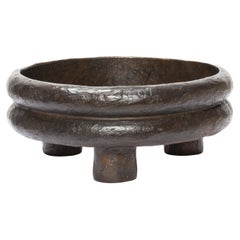
Bronze Bowl Stephane Parmentier for Giobagnara Scala Bronze Round Bowl (Low)
By Stephane Parmentier, Giobagnara
Located in New York, NY
Short Scala Bronze Bowl -- Stephane Parmentier x Giobagnara Available only in burnished sandblasted bronze, brown or black. Embracing sleek designs and beautiful materials, the Ste...
Category

21st Century and Contemporary Italian Decorative Bowls

Materials

Bronze

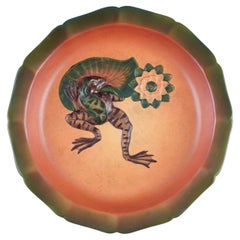
P. Ipsen s, Denmark. Circular bowl with frog in hand-painted glazed ceramic.
Located in København, Copenhagen
Pre-owned goods are exempt from import duties for U.S. customers. Therefore, no import tariffs will be applicable to your purchase. P. Ipsen's, Denmark. Circular bowl with a frog i...
Category

Vintage 1920s Danish Art Nouveau Decorative Bowls

Materials

Ceramic

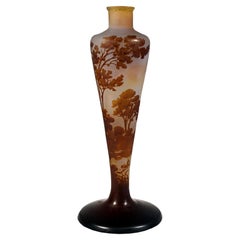
Émile Gallé Art Nouveau Cameo Vase, Seascape Decor, France, circa 1904
By Émile Gallé
Located in Vienna, AT
Baluster-shaped vase body on a wide, round base, conical wall that widens upwards, on slightly sloping shoulders a short, narrow neck with a slightly flared mouth edge, colorless gla...
Category

Antique Early 1900s French Art Nouveau Glass

Materials

Glass

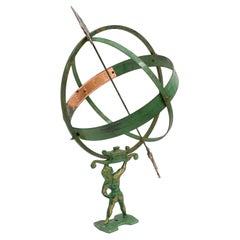
Attr. Sune Rooth Swedish Iron Copper Armillary Atlas Sundial 20th C.
By Sune Rooth
Located in Norwalk, CT
Presenting a captivating and sculptural patinated bronze sundial, a testament to the artistry of Swedish sculptor Sune Rooth (1903-1981). This exceptional piece transcends mere timek...
Category

20th Century Swedish Figurative Sculptures

Materials

Copper, Iron

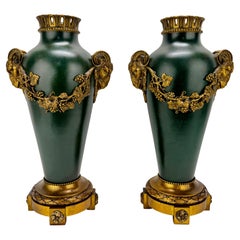
Pr, French Empire Revival Patinated Gilt-Bronze Vases by Fumière et Cie, Paris
Located in Atlanta, GA
Pair of French Empire Revival Patinated and Gilt-Bronze Vases by Fumière et Cie, Paris Stamped “FUMIÈRE / TRIBAUT / SUCCr / 12 RUE DE L'ÉCHAUDÉ / PARIS” France, late 19th to early 20...
Category

Antique Late 19th Century French Empire Revival Urns

Materials

Bronze

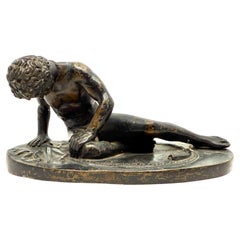
Grand Tour Neoclassical Bronze of “The Dying Gaul”
Located in Palm Springs, CA
A nice little bronze Grand Tour souvenir bronze of the Dying Gaul a famous sculpture of antiquity preserved in Rome. This bronze has nice detail. The patina is worn in some places and it is in estate found condition. We haven’t tried to clean or polish it. Some patina loss minor nicks and surfaces scratches, please see the detailed photos. For this interested this from Wikipedia about the original sculpture: The Dying Gaul, also called The Dying Galatian[2] (Italian: Galata Morente) or The Dying Gladiator, is an ancient Roman marble semi-recumbent statue now in the Capitoline Museums in Rome. It is a copy of a now lost Greek sculpture from the Hellenistic period (323–31 BC) thought to have been made in bronze.[3] The original may have been commissioned at some time between 230 and 220 BC by Attalus I of Pergamon to celebrate his victory over the Galatians, the Celtic or Gaulish people of parts of Anatolia. The original sculptor is believed to have been Epigonus, a court sculptor of the Attalid dynasty of Pergamon. Until the 20th century, the marble statue was usually known as The Dying Gladiator, on the assumption that it depicted a wounded gladiator in a Roman amphitheatre.[4] However, in the mid-19th century it was re-identified as a Gaul or Galatian and the present name "Dying Gaul" gradually achieved popular acceptance. The identification as a "barbarian" was evidenced for the figure's neck torc, thick hair and moustache, weapons and shield carved on the floor, and a type of Gallic carnyx between his legs.[5] Description The white marble statue, which may originally have been painted, depicts a wounded, slumped Gaulish or Galatian Celt, shown with remarkable realism and pathos, particularly as regards the face. A bleeding sword puncture is visible in his lower right chest. The warrior is represented with characteristic Celtic hairstyle and moustache with a Celtic torc...
Category

Early 20th Century Italian Figurative Sculptures

Materials

Bronze

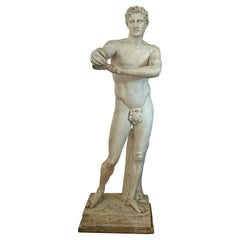
Lifesize Plaster Statue of a Greek Athlete or Apoxyomenos
Located in Essex, MA
A Lifesize Late 19th Century to Early 20th Century Plaster and Composition Cast from the Vatican Original of Apoxyomenos, The Scraping Athlete. Originally found in Trastevere in 184...
Category

Antique Late 19th Century Italian Classical Greek Figurative Sculptures

Materials

Plaster

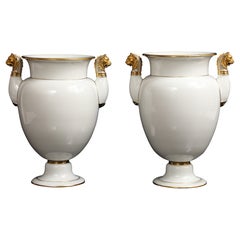
A Pair of Sevres Porcelain White Ground 24K Gold vases w Lion Head Handles
By Manufacture Nationale de Sèvres
Located in New York, NY
A Fine pair of Neoclassical/Empire white ground porcelain and 24K Gilt Decorated vases with Double Lion head Handles, produced by the Manufacture Nationale de Sèvres, each marked ben...
Category

Antique 1850s Neoclassical Vases

Materials

Gold

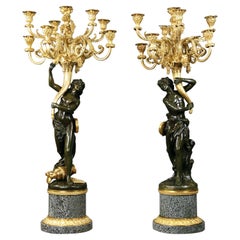
Wonderful Pair of Late 19th Century Two Tone Bronze Candelabra after Clodion
By Claude Michel Clodion
Located in Long Island City, NY
A Very Fine Pair of Late 19th Century Two Tone Bronze Nine Light Candelabra After Clodion After Clodion Each cast as a female and a male figure from a bacchanale upholding eight scroll branches with a central branch in the form of a quiver, on a bronze mounted circular base of granite. Claude Michael Clodion, [1738-1814], was the son-in-law of sculptor Augustin Pajou; he trained in Paris in the workshops of Lambert Sigisbert Adam, his maternal uncle and Jean-Baptiste Pigalle, the most successful sculptor of the time. After winning the Prix de Rome, he moved to Italy, sharing a studio with Jean-Antoine Houdon and studying antique, Renaissance, and Baroque sculpture. In 1771 Clodion returned to Paris, where he continued to produce mostly in terracotta. He also worked with his brothers in other media, decorating objects...
Category

Antique Late 19th Century French Belle Époque Table Lamps

Materials

Granite, Bronze, Ormolu

Art Nouveau Shell Pattern Stoneware Vase by Auguste Delaherche
By Auguste Delaherche
Located in Palm Beach, FL
This early vase provides a rare glimpse into the making of a master. Auguste Delaherche turned the science of experimentation in ceramic ware into an art form. Coming from a long tra...
Category

Antique 1880s French Art Nouveau Vases

Materials

Stoneware

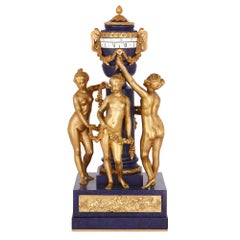
Antique French Gilt Bronze and Lapis Lazuli Mantel Clock after Falconet
By Étienne Maurice Falconet
Located in London, GB
French sculptor Etienne-Maurice Falconet (1716-1791) is the inspiration for this beautiful, sumptuous mantel clock. His clock, crafted in the late 18th Century and now on display at the Louvre Museum, caused such a stir when it was exhibited over 100 years later, at the Great Exhibition in Paris in 1900 that one reviewer claimed that it "attracted so much admiration from the crowds gathered around that the pressure was sufficient at times to endanger its safety." As well as this famed 'Three Graces...
Category

Antique 19th Century French Louis XVI Mantel Clocks

Materials

Lapis Lazuli, Ormolu, Bronze

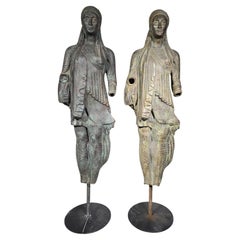
Large Greek bronze sculpture from the Achaean period 150 cm
Located in Madrid, ES
Title: Pair of Bronze Sculptures of the Kore of Peplos - Early 20th Century with Modern Bases Product Overview: This exquisite pair of bronze sculptures is a faithful reproduction o...
Category

Vintage 1940s Figurative Sculptures

Materials

Bronze

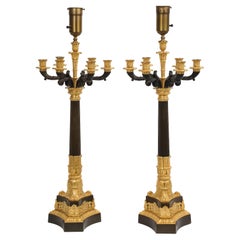
Pair of Empire Period French Ormolu and Patinated Bronze Multi-Arm Candelabra
Located in New York, NY
A striking and finely cast pair of French Empire period multi-arm candelabra, dating to the early 1800's, executed in a sophisticated combination of ormolu and patinated bronze and n...
Category

Antique 1820s French Empire Candelabras

Materials

Bronze

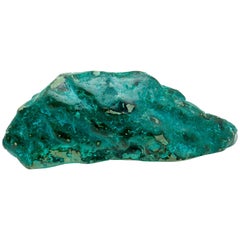
Malachite-Chrysocolla Specimen Large
Located in New York, NY
Richly marbled chrysocolla-malachite specimen with a vibrant emerald color. The beautiful blue-green of chrysocolla has made it a prized gemstone in ornamental use since antiquity.
Category

21st Century and Contemporary American Natural Specimens

Materials

Malachite, Multi-gemstone

Pre-Columbian Chimu Terracotta Figural Vessel with Stirrup Spout, Peru
Located in West Hollywood, CA
This remarkable Pre-Columbian Chimu terracotta vessel is a striking example of ancient Andean ceramic artistry, originating from coastal Peru and dating to approximately 900–1470 AD. The vessel features a distinctive multi-chambered form with a traditional stirrup spout, a hallmark of Chimu pottery...
Category

Antique 15th Century and Earlier Peruvian Pre-Columbian Vases

Materials

Terracotta, Pottery

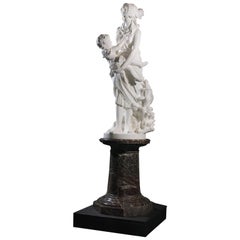
‘Mosè Salvato Dalle Acque’. An Important Marble Group By Pietro Bazzanti
By Pietro Bazzanti
Located in Brighton, West Sussex
Pietro Bazzanti (Italian, 1825-1895) - ‘Mosè Salvato Dalle Acque’. An Important Exhibition Florentine Marble Group of Moses Rescued from the Waters, on a carved Rosso Levanto Pedest...
Category

Antique Late 19th Century Italian Figurative Sculptures

Materials

Marble

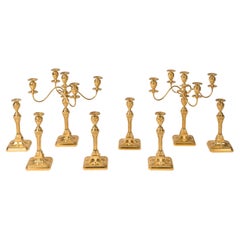
Set of Eight Neoclassical Gilt Metal Candlesticks with Candelabra, Circa 1900
Located in London, GB
A Set of Eight Neo-Classical Candlesticks With Convertible Components A large set of eight gilt metal candlesticks with a pair of removable candelabra attachments comprising of five...
Category

Antique 19th Century English Candlesticks

Materials

Metal

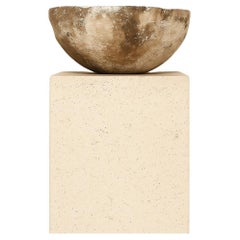
4th Century Nabatean Bowl - Medium
By George Lamiè
Located in Atlanta, GA
An ode to inversion, the Reversed Nabatean Bowl by Maison Lamiè turns ancient form on its head—literally. Inspired by the ceramic language of the Nabatean tribes of the 4th century B...
Category

2010s American Organic Modern Decorative Bowls

Materials

Clay, Plaster, Paper

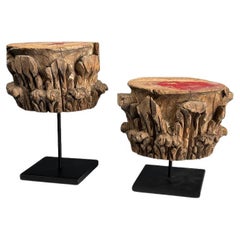
Decorative Antique Wooden Stands – Pair of Carved Corinthian Capitals
Located in Lincoln, GB
Decorative Antique Wooden Stands – Pair of Carved Corinthian Capitals This striking pair of antique carved Corinthian capitals has been repurposed into decorative wooden stands, moun...
Category

Antique 18th Century Mounted Objects

Materials

Wood

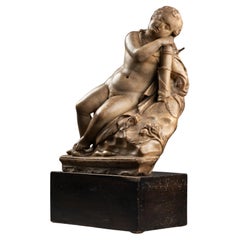
Sleeping Eros - Rome, 16th century
Located in Bruxelles, BE
Sleeping Eros Rome, 16th century
 Carrara marble, on a wooden base
 of an ancient collection 31 × 44 x 17 cm Carved from a fine block of Carrara marble, this sculpture depicts Eros ...
Category

Antique 16th Century Italian Renaissance Figurative Sculptures

Materials

Carrara Marble

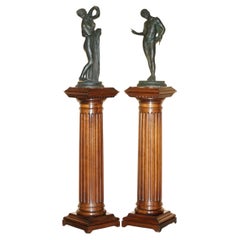
PAIR OF SOMMER FOUNDRY NARCISSUS VENUS CALLIPYGIAN BRONZE STATUES PEDESTALSs
By Fonderia Sommer Napoli
Located in West Sussex, Pulborough
Royal House Antiques Royal House Antiques is delighted to offer for sale this museum quality pair of Sommer Foundry Naples Verdigris Bronze statues of Narcissus & Venus Callipygian ...
Category

Antique 19th Century Italian Victorian Figurative Sculptures

Materials

Bronze

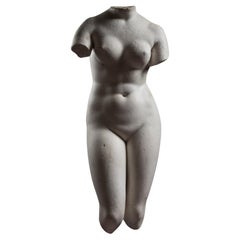
Venus Pudica (Medici-type) - 18th century, Italy
Located in Bruxelles, BE
Monumental sculpture representing the Venus Pudica (Medici-type) 18th Century Italian (Rome) White marble Based on a model from Antiquity, the Medici Venus, currently in the Uffizi ...
Category

Antique Early 18th Century Italian Grand Tour Figurative Sculptures

Materials

Marble

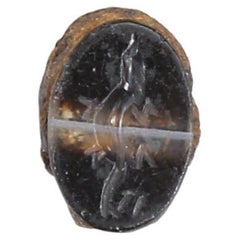
Original Antique (3rd Century AD) Roman Carved Agate Intaglio
Located in BENSENVILLE, IL
Intaglio is a technique which dates back to antiquity and is still in use today. Images are carved or engraved in gemstones leaving a hollow impression in the untouched background. T...
Category

Antique 15th Century and Earlier Italian More Furniture and Collectibles

Materials

Agate

Still Thinking About These?

All Recently Viewed