648 results for "ikat"

to
42
Width
to
Length
to
549
95
4
140
20
9
2
1
22
73
553
15
53
2
1
1
3
2
2
641
491
297
74
3
582
23
648
598
619
625
514
453
55
50
96
29
13
11
2
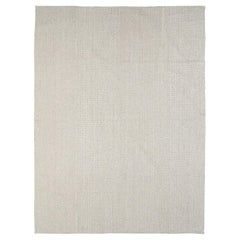
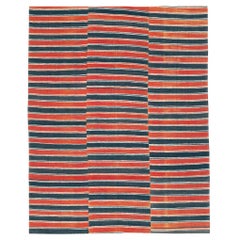
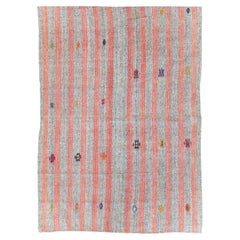
Mid-20th Century Handmade Turkish Flat-Weave Kilim Room Size Carpet
Located in New York, NY
A vintage Turkish flat-weave Kilim room size carpet handmade during the mid-20th century. Measures: 9' 0" x 12' 2" Flat-weave rugs carpets: Knotted pile rugs are just on...
Category

Mid-20th Century Turkish Modern Turkish Rugs

Materials

Wool

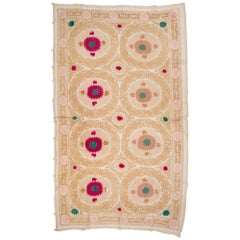
Decorative Large mid 20th C. Suzani from Uzbekistan
Located in Istanbul, TR
Uzbek Suzani, a captivating textile art form originating from Central Asia, embodies a rich tapestry of culture and craftsmanship. The word "suzani" translates to "needlework" in Per...
Category

Mid-20th Century Uzbek Suzani Central Asian Rugs

Materials

Cotton

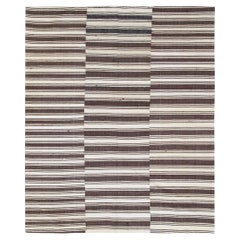
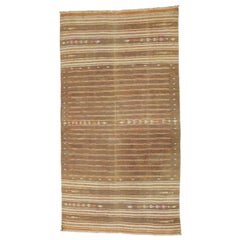
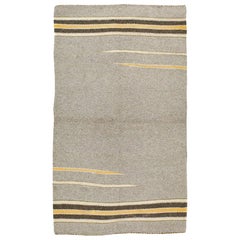
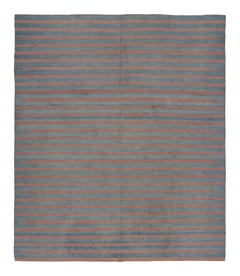
Mid-20th Century Turkish Flat-Weave Kilim Accent Rug in Brown, Cream, Black
Located in New York, NY
A vintage Turkish flat-weave Kilim accent rug handmade during the mid-20th century with an offset horizontally striped pattern in shades of brown, cream, and black. Measures: 6' 2...
Category

Mid-20th Century Turkish Modern Turkish Rugs

Materials

Wool

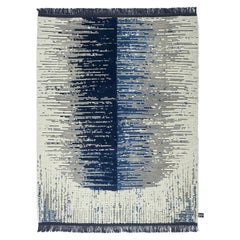
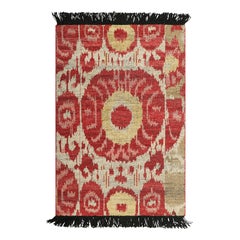
cc-tapis New Japan Standard Rug by Chiara Andreatti
By cc-tapis, Chiara Andreatti
Located in Brooklyn, NY
Hand knotted in the cc-tapis atelier in Kathmandu, Nepal. The rug is made with a cotton weave and a Himalayan wool pile, coming from the areas surrounding the atelier. Created with a...
Category

21st Century and Contemporary Nepalese Modern Western European Rugs

Materials

Cotton

Red Black Mid-20th Century Handmade Turkish Flat-Weave Kilim Accent Rug
Located in New York, NY
A vintage Turkish flat-weave Kilim accent rug handmade during the mid-20th century with an asymmetrical horizontally striped design in shades of red and black. Measures: 5' 9" x 7...
Category

Mid-20th Century Turkish Modern Turkish Rugs

Materials

Wool

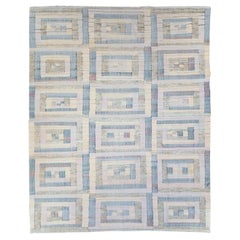
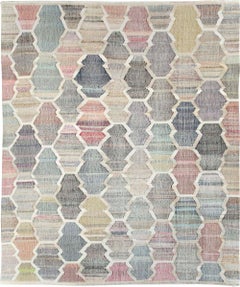
Swedish Inspired Contemporary Handmade Turkish Flat-Weave Kilim Large Carpet
Located in New York, NY
A modern Turkish flat-weave Kilim large room size carpet handmade during the 21st century inspired by vintage Swedish / Scandinavian Kilims from the mid-20th century period. Measu...
Category

21st Century and Contemporary Turkish Scandinavian Modern Turkish Rugs

Materials

Wool

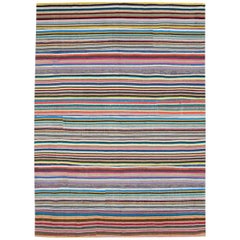
Contemporary Handmade Turkish Flat-Weave Kilim Colorful Room Size Carpet
Located in New York, NY
A modern Turkish flat-weave Kilim room size rug handmade during the 21st century with a colorful horizontally striped pattern. A statement piece with its bright and whimsical colors....
Category

21st Century and Contemporary Turkish Modern Turkish Rugs

Materials

Wool

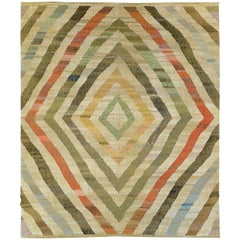
Contemporary Handmade Turkish Flat-Weave Kilim Large Geometric Room Size Carpet
Located in New York, NY
A modern Turkish flat-weave Kilim large room size carpet handmade during the 21st century with a geometric large scale diamond-shaped pattern in earth tones with an overall khaki gre...
Category

21st Century and Contemporary Turkish Modern Turkish Rugs

Materials

Wool

Mid-20th Century Handmade Turkish Flat-Weave Kilim Accent Carpet
Located in New York, NY
A vintage Turkish flat-weave Kilim accent carpet handmade during the mid-20th century. Measures: 6' 10" x 9' 7" Flat-weave rugs carpets: Knotted pile rugs are just one small part of a vast universe of textile techniques suitable for heavy use. If you can imagine it, some weaver has tried it out. Pieces can be roughly divided into those reversible from the start and those never, or at least not initially, reversible. Thus, kilims are considered reversible, while everything else is not. Kilims are tapestry woven rugs with both sides the same, in either slit technique where colors change, or with various methods of avoiding slits. Slit tapestry weave goes back to ancient times and Coptic Egyptian weavers used it for ornaments on garments and larger wall hangings. Slits can be avoided by dovetailing of colors (warp sharing) or by interlocking the wefts. The Navajo weavers of the Southwest practice the first while the Fine shawl weavers of Kashmir and Kerman employed the second. Interlocking produces a one-faced fabric, with smooth and rough, ridged faces. The typical Turkish, Caucasian, or Persian rustic Kilim shows slits, but never long ones. Aubusson French carpets are also slit tapestries and the long color transitions are sewn up as part of the regular maintenance. Some kilims are very Fine. The best antique urban Sehna (Senna) kilims on wool, cotton or silk warps approximate the comparable rugs in refinement and are the most desirable of all Persian kilims. Although the various flatweave techniques are usually expressed in geometric, simple, often repeating, patterns, Sehna kilims demonstrate that even the most intricate designs can be effectively rendered in flat-stich. The term ‘Kilim’ has been extended to cover any pileless, weft-faced heavy textile. Thus, the sectioned and joined northeastern Persian horizontally striped wool rugs are called ‘kilims’. So are the plain-weave end finishes of pile rugs. All these are weft-faced, weft patterned flatweaves. These sectioned pieces are woven not on a frame loom, but one steadied by the weaver at one end and with the warps fastened down at the other. Only relatively recent have these tribal pieces become available. They are used as floorcoverings, hangings, room dividers, furniture covers. They are mostly bitonal in shades of natural dark brown and beige. Some more recent pieces show weaver innovations with ikat and moire effects. Work proceeds quickly and a skilled weaver can complete a thirty foot strip in almost no time. Wefts, the elements added as weaving progresses, play an essential part in what is a flatweave. The best-known example of an extra-weft, wrapping technique is on Caucasian and tribal Persian Soumaks, where a pattern weft wraps around the fixed warp, changing as weaving progresses. Soumaks can be large carpets, Kuba in the Caucasus, small bag faces (Caucasian and Persian Shah Savan saddle bags), or cover scatter rugs (Persian Afshars). The Soumak technique is fast, and a weaver can work much more quickly than tying knots. The left-over wefts are cut off on the back, so the front and back are initially different. As a Soumak on the floor gets used, these weft yarns wear away and the two sides converge although the exact texture remains distinct. There are other ways of pattern by weft. Often on smaller tribal pieces, the pattern weft(s) is (are) part of the weft structure, moving in an out, and holding the whole thing together. These wefts can be complementary or added (supplementary), continuous across the flatweave or cut off as they travel unneeded across the verso. Supplementary weft flatweaves are often very compact and substantial. The nomadic Turkmen and Balouch tribes employ both supplementary and complementary weft techniques on their pieces. Supplementary wefts are often raised on the recto (front) while complementary wefts are flat to the surface. Tribal Kurds employ this extra-wefting technique. The Balouch of Pakistan use complementary wefts almost exclusively on their small woven paraphernalia like salt bags. Flatweave techniques may be combined on a single piece. Afshar rugs employ plain-weave end strips, preceded by Soumak bands, with pile sections between. The large Bakhtiari saddlebags feature Soumak work, pile “islands” an areas of plain-weave. Qashqai rugs and kilims frequently displays checkerboard end strips in continuous, complementary wefting. Another distinct flatweave type is the jajim (jijim, cecim) in which a pattern is added with colored wefts as the weaving of the plain-weave ground progresses. Here the wefts are discontinuous and the pattern stands proud from the voided ground. Often made in two pieces on narrow looms and edge-sewn together, these may have geometric patterns. The term ‘jajim’ also refers to the assembled warp-faced strip and stripe covers from the Shah Savan of northwest Persia, the pattern is defined by warps alone, usually in plain stripes, but sometimes in designs of ladders, snakes, human figures and various animals. Here the color changing warps are continuous. Most are wool, a few are silk. Better to call these something else. Indian ‘Dhurries’ are all cotton kilims and ‘shatrangis’ employ wool wefts on cotton warps. Dhurries are slitless. The cotton texture is more appropriate to the humid and warm climate of the Indian subcontinent. Modern Dhurries...
Category

Mid-20th Century Turkish Tribal Turkish Rugs

Materials

Wool

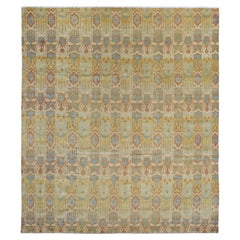
Floral Deco Blue Green Gold Wool Rug 10 x11 6
By Amara Rugs
Located in Torrance, CA
This stunning hand-knotted wool rug showcases a vibrant and contemporary take on traditional textile motifs, with an allover ikat-inspired design rendered in an earthy palette of yel...
Category

21st Century and Contemporary Asian Art Deco Central Asian Rugs

Materials

Wool

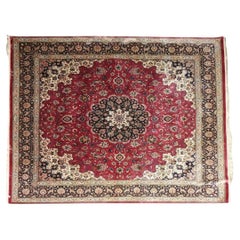
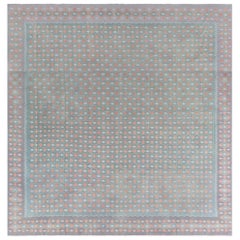
Very fine Persian Silk Ghom Rug - 6.6 6.6
Located in Newmanstown, PA
Very fine Persian Rug Qum 700 Knots per inch, Size 6.6 x 6.6 Iran Qum Ziaee Silk and Silk foundation. Around 4,000,000 knots tied by hand one by one. It tak...
Category

1990s Persian Persian Rugs

Materials

Silk

Modern Hand-Knotted Silk Rug by Doris Leslie Blau
Located in New York, NY
Modern Hand-Knotted Silk Rug by Doris Leslie Blau Size: 9'0" × 12'1" (274 × 368 cm) A striking interpretation of traditional textile patterns, this modern hand-knotted silk rug (N128...
Category

21st Century and Contemporary Tibetan Modern Chinese and East Asian Rugs

Materials

Silk

Doris Leslie Blau Large Vintage Indian Dhurrie Rug
Located in New York, NY
Large Vintage Indian Dhurrie rug Size: 19'5" × 20'2" (591 × 614 cm) A celebration of symmetry and color harmony, this vintage Indian Dhurrie rug features a bold and distinctive geome...
Category

Mid-20th Century Indian Mid-Century Modern Indian Rugs

Materials

Wool

Mid-20th Century Handmade Turkish Flat-Weave Kilim Accent Carpet
Located in New York, NY
A vintage Turkish flat-weave Kilim accent carpet handmade during the mid-20th century. Measures: 5' 9" x 7' 10" Flat-weave Rugs Carpets: Knotted pile rugs are just one s...
Category

Mid-20th Century Turkish Modern Turkish Rugs

Materials

Wool

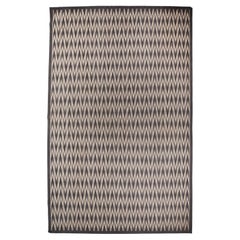
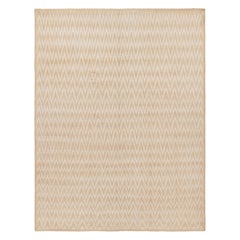
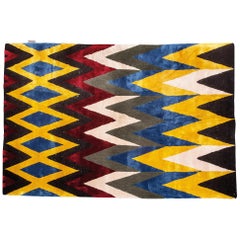
Madeline Weinrib Flatweave Cotton Rug 8 x 11 6"
By Madeline Weinrib
Located in New York, NY
A contemporary flat-weave cotton rug by textile designer Madeline Weinrib, part of her Amagansett collection. Handwoven in India, the rug features a jagged pattern resembling an ikat...
Category

21st Century and Contemporary Indian Indian Rugs

Materials

Cotton

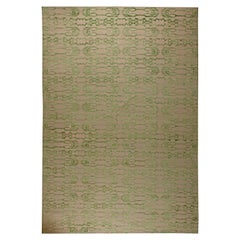
Extra-Large Modern Tibetan Rug in Silk and Wool by Doris Leslie Blau
Located in New York, NY
Extra-Large Modern Tibetan Rug in Silk and Wool – A Textural Statement in Green and Beige by Doris Leslie Blau. Size: 15'0" × 26'0" (457 × 792 cm). Bring understated luxury and visua...
Category

21st Century and Contemporary Tibetan Modern Chinese and East Asian Rugs

Materials

Wool, Silk

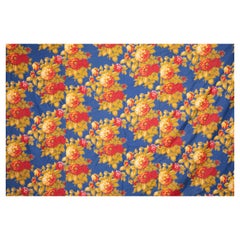
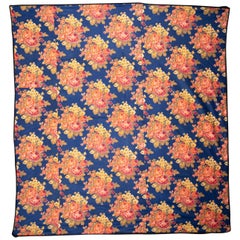
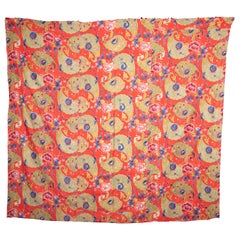
Russian Roller Printed Cotton Fabric Panel, Mid-20th Century or Earlier
Located in Istanbul, TR
These type of Russian prints that are also called 'trade cloth' since they were made for Central Asian markets. They were used to make blankets and dresses, and also used for the lin...
Category

Mid-20th Century Russian Mid-Century Modern Russian and Scandinavian Rugs

Materials

Cotton

Contemporary Handmade Persian Flat-Weave Kilim Accent Rug
Located in New York, NY
A modern Persian flat-weave Kilim accent rug handmade during the 21st century. Measures: 3' 5" x 6' 8" Flat-weave rugs carpets: Knotted pile rugs are just one small part of a vast universe of textile techniques suitable for heavy use. If you can imagine it, some weaver has tried it out. Pieces can be roughly divided into those reversible from the start and those never, or at least not initially, reversible. Thus, kilims are considered reversible, while everything else is not. Kilims are tapestry woven rugs with both sides the same, in either slit technique where colors change, or with various methods of avoiding slits. Slit tapestry weave goes back to ancient times and Coptic Egyptian...
Category

21st Century and Contemporary Persian Modern Persian Rugs

Materials

Wool

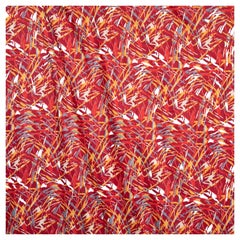
Russian Roller Printed Cotton Fabric Panel, Mid-20th Century or Earlier
Located in Istanbul, TR
These type of Russian prints that are also called 'trade cloth' since they were made for Central Asian markets. They were used to make blankets and dresses, and also used for the lin...
Category

Mid-20th Century Russian Mid-Century Modern Russian and Scandinavian Rugs

Materials

Cotton

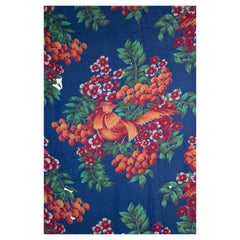
Russian Printed Cotton Fabric Panel, Mid-20th Century or Earlier
Located in Istanbul, TR
These type of Russian prints that are also called 'trade cloth' since they were made for Central Asian markets. They were used to make blankets and dresses, and also used for the lin...
Category

Mid-20th Century Russian Russian and Scandinavian Rugs

Materials

Cotton

Russian Roller Printed Cotton Fabric Panel, Mid-20th Century or Earlier
Located in Istanbul, TR
These type of Russian prints that are also called 'trade cloth' since they were made for Central Asian markets. They were used to make blankets and dresses, and also used for the lin...
Category

Mid-20th Century Russian Mid-Century Modern Russian and Scandinavian Rugs

Materials

Cotton

Russian Roller Printed Cotton Fabric Panel, Mid-20th Century or Earlier
Located in Istanbul, TR
These type of Russian prints that are also called 'trade cloth' since they were made for Central Asian markets. They were used to make blankets and dresses, and also used for the lin...
Category

Mid-20th Century Russian Mid-Century Modern Russian and Scandinavian Rugs

Materials

Cotton

Russian Roller Printed Cotton Fabric Panel, Mid-20th Century or Earlier
Located in Istanbul, TR
These type of Russian prints that are also called 'trade cloth' since they were made for Central Asian markets. They were used to make blankets and dresses, and also used for the lin...
Category

Mid-20th Century Russian Mid-Century Modern Russian and Scandinavian Rugs

Materials

Cotton

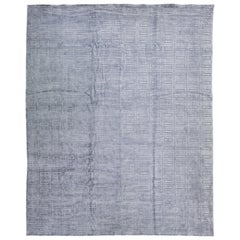
Comtemporary Handmade Wool Silk Rug with Gray Geometric Pattern
Located in Norwalk, CT
Beautiful modern Ikat hand-knotted wool rug with a gray-silver color field. This piece has a gorgeous all-over geometric pattern design. This rug measures: 12'1" x 14'9". Our r...
Category

2010s Indian Art Deco Central Asian Rugs

Materials

Wool, Silk

Antique Persian Yazd Silk Textile with "Tree of Life" Embroidery - Rug Kilim
Located in Long Island City, NY
Handwoven in all silk and originating circa 1880-1890, this 4x6 textile is an exceptionally rare late 19th-century work. It stands as a pinnacle of Persian craftsmanship, uniquely d...
Category

Antique 1880s Uzbek Central Asian Rugs

Materials

Silk

Mid-20th Century Handmade Persian Flat-Weave Kilim Room Size Carpet
Located in New York, NY
A vintage Persian flat-weave Kilim room size carpet handmade during the mid-20th century. Measures: 8' 5" x 12' 0" Flat-weave Rugs Carpets: Knotted pile rugs are just on...
Category

Mid-20th Century Persian Modern Persian Rugs

Materials

Wool

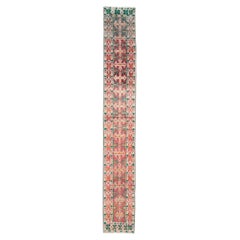
Early 20th Century Handmade East Turkestan Pomegranate Khotan Runner
Located in New York, NY
An antique East Turkestan Khotan rug in runner format with a pomegranate design handmade during the mid-20th century. Measures: 2' 2" x 7' 6" Central Asian Rugs Carpets: Central Asia is a vast area stretching from Northeastern Persia to western China, and from northern Afghanistan to the southern edge of Russia. The carpets can be usefully divided into three groups: the nomadic Turkmen rugs of Turkmenistan, northern Afghanistan, and northeastern Persia; the non-Turkmen tribal pieces from Kazakhstan, Uzbekistan, and Kirghizstan; and the urban creations of Khotan, Yarkand, and Kashgar, oasis cities of Western China (Xinjiang Province). Commercially, the most important group is from Khotan, the easternmost of the Chinese Turkestan cities. The craft of rug weaving is primarily in the hands of Muslim Uighurs. Khotan carpets mix purely Central Asian design themes with Chinese elements. Native Khotan devices include pomegranate trees, upright flowers, round medallions, and yellow or red grounds. Chinese motives include triangular fretwork corners, swastika fretwork, and Yun-Tsao Tou (clouds and rain) diagonally striped polychrome borders. Cotton foundations, asymmetrical (Persian) knots, and medium weaves are standard. Some vintage Khotan are in horizontal, pictorial layouts with multiple various vases and plants. Saphs (multiple prayer niche panel carpets) are also a Khotan specialty. Others employ stepped and layered lozenge medallions, singly or in pairs. Still others, almost all antique, feature a stylized version of the allover Persian Herati design. Many of the oldest pieces employ brown wool wefts. Antique and vintage Khotans are almost always in the k’ang (double square) layout, conforming to the local household plans. Only relatively recently has the 6’ by 12’ or 7’ by 16’ format been replaced by the 9’ by 12’ size. As a result, an antique room size Khotan carpet is very uncommon. Reds are cinnamon, tomato and rust, never wine reds, crimson, or scarlet. Yarkand, farther west on the old Silk Road specializes in multi-medallion long carpets while Kashgar, farthest west and most under Persian influence, has traditionally knotted allover pattern pieces with finer weaves, often with silk piles, and enriched with medal thread, on cotton foundations. Extant Kashgars go back to the 17th century, but the carpet craft in Chinese Turkestan must be much older as fragments have been recovered from local tombs of the early C.E. period. Kashgars are the rarest of all East Turkestan rugs. Most available vintage East Turkestan carpets are interwar Khotans, many with pleasingly soft decorative palettes. The non-Turkmen nomads include the Kazakh, Kirghiz, Uzbek, and Karakalpak groups. Like the Turkmen, they were once all seasonally migratory, dwelling in round felt tents (yurts), but have been settled, at least partially, in the villages, and have taken up crafts and agriculture instead of sheep herding. As a result, carpet production has transitioned from domestic tent use to commercial sale, but the roots of long traditions are still evident. The Uzbeks weave...
Category

Early 20th Century East Turkestani Modern Central Asian Rugs

Materials

Wool

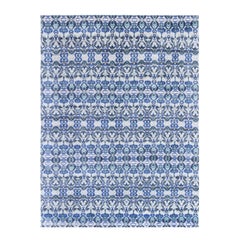
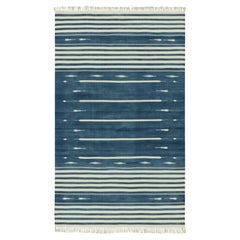
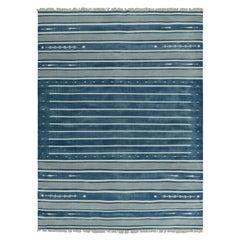
Rug Kilim’s Contemporary Dhurrie Rug in Blue and White Stripes
By Rug Kilim
Located in Long Island City, NY
This contemporary 5x8 Dhurrie flat weave is an exciting new entry in Rug & Kilim’s esteemed custom-capable collection. Handwoven in cotton, it’s a modern take on antique and vintage ...
Category

2010s Indian Modern Indian Rugs

Materials

Cotton

Mid-20th Century Handmade Turkish Flat-Weave Kilim Room Size Carpet
Located in New York, NY
A vintage Turkish flat-weave Kilim room size carpet handmade during the mid-20th century. Measures: 10' 1" x 14' 0" Flat-weave rugs carpets: Knotted pile rugs are just one small part of a vast universe of textile techniques suitable for heavy use. If you can imagine it, some weaver has tried it out. Pieces can be roughly divided into those reversible from the start and those never, or at least not initially, reversible. Thus, kilims are considered reversible, while everything else is not. Kilims are tapestry woven rugs with both sides the same, in either slit technique where colors change, or with various methods of avoiding slits. Slit tapestry weave goes back to ancient times and Coptic Egyptian weavers used it for ornaments on garments and larger wall hangings. Slits can be avoided by dovetailing of colors (warp sharing) or by interlocking the wefts. The Navajo weavers of the Southwest practice the first while the fine shawl weavers of Kashmir and Kerman employed the second. Interlocking produces a one-faced fabric, with smooth and rough, ridged faces. The typical Turkish, Caucasian, or Persian rustic kilim shows slits, but never long ones. Aubusson French carpets are also slit tapestries and the long color transitions are sewn up as part of the regular maintenance. Some kilims are very fine. The best antique urban Sehna (Senna) kilims on wool, cotton or silk warps approximate the comparable rugs in refinement and are the most desirable of all Persian kilims. Although the various flatweave techniques are usually expressed in geometric, simple, often repeating, patterns, Sehna kilims demonstrate that even the most intricate designs can be effectively rendered in flat-stich. The term ‘kilim’ has been extended to cover any pileless, weft-faced heavy textile. Thus, the sectioned and joined northeastern Persian horizontally striped wool rugs are called ‘kilims’. So are the plain-weave end finishes of pile rugs. All these are weft-faced, weft patterned flatweaves. These sectioned pieces are woven not on a frame loom, but one steadied by the weaver at one end and with the warps fastened down at the other. Only relatively recent have these tribal pieces become available. They are used as floorcoverings, hangings, room dividers, furniture covers. They are mostly bitonal in shades of natural dark brown and beige. Some more recent pieces show weaver innovations with ikat and moire effects. Work proceeds quickly and a skilled weaver can complete a thirty foot strip in almost no time. Wefts, the elements added as weaving progresses, play an essential part in what is a flatweave. The best-known example of an extra-weft, wrapping technique is on Caucasian and tribal Persian Soumaks, where a pattern weft wraps around the fixed warp, changing as weaving progresses. Soumaks can be large carpets, Kuba in the Caucasus, small bag faces (Caucasian and Persian Shah Savan saddle bags), or cover scatter rugs (Persian Afshars). The Soumak technique is fast, and a weaver can work much more quickly than tying knots. The left-over wefts are cut off on the back, so the front and back are initially different. As a Soumak on the floor gets used, these weft yarns wear away and the two sides converge although the exact texture remains distinct. There are other ways of pattern by weft. Often on smaller tribal pieces, the pattern weft(s) is (are) part of the weft structure, moving in an out, and holding the whole thing together. These wefts can be complementary or added (supplementary), continuous across the flatweave or cut off as they travel unneeded across the verso. Supplementary weft flatweaves are often very compact and substantial. The nomadic Turkmen and Balouch tribes employ both supplementary and complementary weft techniques on their pieces. Supplementary wefts are often raised on the recto (front) while complementary wefts are flat to the surface. Tribal Kurds employ this extra-wefting technique. The Balouch of Pakistan use complementary wefts almost exclusively on their small woven paraphernalia like salt bags. Flatweave techniques may be combined on a single piece. Afshar rugs employ plain-weave end strips, preceded by Soumak bands, with pile sections between. The large Bakhtiari saddlebags feature Soumak work, pile “islands” an areas of plain-weave. Qashqai rugs and kilims frequently displays checkerboard end strips in continuous, complementary wefting. Another distinct flatweave type is the jajim (jijim, cecim) in which a pattern is added with colored wefts as the weaving of the plain-weave ground progresses. Here the wefts are discontinuous and the pattern stands proud from the voided ground. Often made in two pieces on narrow looms and edge-sewn together, these may have geometric patterns. The term ‘jajim’ also refers to the assembled warp-faced strip and stripe covers from the Shah Savan of northwest Persia, the pattern is defined by warps alone, usually in plain stripes, but sometimes in designs of ladders, snakes, human figures and various animals. Here the color changing warps are continuous. Most are wool, a few are silk. Better to call these something else. Indian ‘Dhurries’ are all cotton kilims and ‘shatrangis’ employ wool wefts on cotton warps. Dhurries are slitless. The cotton texture is more appropriate to the humid and warm climate of the Indian subcontinent. Modern Dhurries...
Category

Mid-20th Century Turkish Modern Turkish Rugs

Materials

Wool

Tribal Mid-20th Century Handmade Turkish Flat-Weave Kilim Throw Rug
Located in New York, NY
A vintage Turkish flat-weave Kilim throw rug handmade during the mid-20th century with a tribal design. Measures: 3' 6" x 5' 0" Flat-weave Rugs Carpets: Knotted pile rug...
Category

Mid-20th Century Turkish Tribal Turkish Rugs

Materials

Wool

Contemporary Turkish Flat-Weave Kilim Large Room Size Carpet
Located in New York, NY
A modern Turkish flat-weave Kilim large room size carpet handmade during the 21st century. Measures: 13' 2" x 16' 6" Flat-weave rugs carpets: Knotted pile rugs are just one small part of a vast universe of textile techniques suitable for heavy use. If you can imagine it, some weaver has tried it out. Pieces can be roughly divided into those reversible from the start and those never, or at least not initially, reversible. Thus, kilims are considered reversible, while everything else is not. Kilims are tapestry woven rugs with both sides the same, in either slit technique where colors change, or with various methods of avoiding slits. Slit tapestry weave goes back to ancient times and Coptic...
Category

21st Century and Contemporary Turkish Modern Turkish Rugs

Materials

Wool

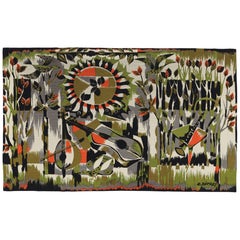
Vintage Jean Claude Bissery Pictorial Tapestry “Musique champêtre” Rug Kilim
Located in Long Island City, NY
This 3x5 vintage Aubusson tapestry is a rare and special new curation from Rug & Kilim—a signed mid-century original by French artist Jean Claude Bissery, entitled “Musique champêtre...
Category

Vintage 1960s French Aubusson Western European Rugs

Materials

Wool

Contemporary Handmade Turkish Flat-Weave Kilim Large Geometric Room Size Carpet
Located in New York, NY
A modern Turkish flat-weave Kilim large room size carpet handmade during the 21st century with a large-scale geometric contemporary pattern in ruby red. Measures: 13' 6" x 16' 5" ...
Category

21st Century and Contemporary Turkish Modern Turkish Rugs

Materials

Wool

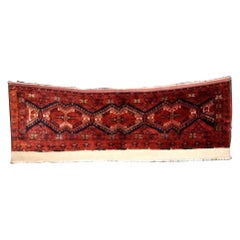
Antique Ersari Beshir Turkmen Torba, Full Pile, Circa 1900
Located in Moreton-In-Marsh, GB
Antique Ersari Beshir torba with ikat design Circa 1900 A superb torba with rich colour and great wool Outstanding condition with no wear, full pile Complete with un-dyed ivory wo...
Category

20th Century Turkmen More Carpets

Materials

Wool

Contemporary Handmade Turkish Flat-Weave Kilim Large Room Size Carpet
Located in New York, NY
A modern Turkish flat-weave Kilim large room size carpet handmade during the 21st century. Measures: 13' 9" x 16' 8" Flat-weave rugs carpets: Knotted pile rugs are just one small part of a vast universe of textile techniques suitable for heavy use. If you can imagine it, some weaver has tried it out. Pieces can be roughly divided into those reversible from the start and those never, or at least not initially, reversible. Thus, kilims are considered reversible, while everything else is not. Kilims are tapestry woven rugs with both sides the same, in either slit technique where colors change, or with various methods of avoiding slits. Slit tapestry weave goes back to ancient times and Coptic...
Category

21st Century and Contemporary Turkish Modern Turkish Rugs

Materials

Wool

Russian Roller Printed Cotton Fabric Panel, Mid-20th Century or Earlier
Located in Istanbul, TR
These type of Russian prints that are also called 'trade cloth' since they were made for Central Asian markets. They were used to make blankets and dresses, and also used for the lin...
Category

Mid-20th Century Russian Mid-Century Modern Russian and Scandinavian Rugs

Materials

Cotton

Russian Roller Printed Cotton Fabric Panel, Mid-20th Century or Earlier
Located in Istanbul, TR
These type of Russian prints that are also called 'trade cloth' since they were made for Central Asian markets. They were used to make blankets and dresses, and also used for the lin...
Category

Mid-20th Century Russian Mid-Century Modern Russian and Scandinavian Rugs

Materials

Cotton

Russian Printed Cotton Fabric Panel, Mid-20th Century or Earlier
Located in Istanbul, TR
These type of Russian prints that are also called 'trade cloth' since they were made for Central Asian markets. They were used to make blankets and dresses, and also used for the lin...
Category

Mid-20th Century Russian Russian and Scandinavian Rugs

Materials

Cotton

Russian Printed Cotton Fabric Panel, Mid-20th Century or Earlier
Located in Istanbul, TR
These type of Russian prints that are also called 'trade cloth' since they were made for Central Asian markets. They were used to make blankets and dresses, and also used for the lin...
Category

Mid-20th Century Russian Russian and Scandinavian Rugs

Materials

Cotton

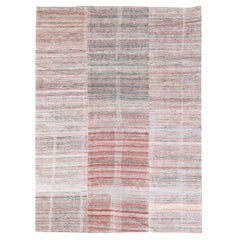
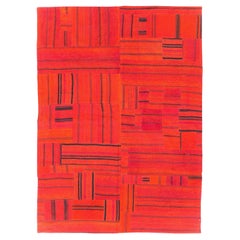
21st Century Red Patchwork Style Turkish Flat-Weave Kilim Accent Carpet
Located in New York, NY
A modern Patchwork style accent carpet handmade using vintage Turkish flat-weave Kilim rugs from the mid-20th century that have been overdyed red and stitched together. Measures: 5' 2" x 7' 2" Flat-weave rugs carpets: Knotted pile rugs are just one small part of a vast universe of textile techniques suitable for heavy use. If you can imagine it, some weaver has tried it out. Pieces can be roughly divided into those reversible from the start and those never, or at least not initially, reversible. Thus, kilims are considered reversible, while everything else is not. Kilims are tapestry woven rugs with both sides the same, in either slit technique where colors change, or with various methods of avoiding slits. Slit tapestry weave goes back to ancient times and Coptic Egyptian...
Category

21st Century and Contemporary Turkish Modern Turkish Rugs

Materials

Wool

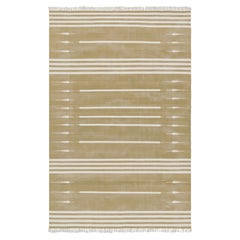
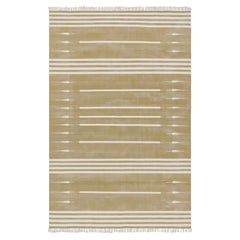
Vintage Striped Dhurrie Runner Rug in Beige-Brown and Cream Tones Rug Kilim
Located in Long Island City, NY
This 4x7 vintage Dhurrie rug is an exciting new curation from Rug & Kilim’s latest acquisition of rare and exemplary mid-century flatweaves of the same style. Handwoven in cotton, it...
Category

Vintage 1950s Indian Kilim Indian Rugs

Materials

Cotton

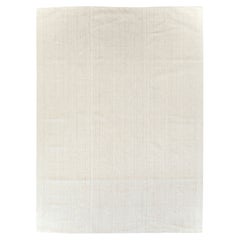
Rug Kilim’s Contemporary Rug in Beige and Cream with Geometric Patterns
By Rug Kilim
Located in Long Island City, NY
Made with hand-knotted cotton, this 9x12 contemporary rug features a simple repeat of geometric patterns in rows almost like Ikats—a fabulous new addition to the Rug & Kilim’s Modern...
Category

2010s Indian Oushak Indian Rugs

Materials

Cotton

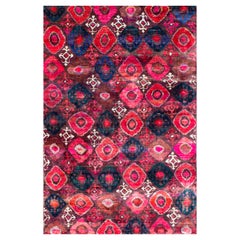
Modernist Pink Burgundy Red Blue Natural Silk Eco-Friendly Hand-Knotted Rug
By Woven Concepts
Located in New York, NY
The Rumi collection master weavers artfully re-spin and hand knot the finest remnants of sustainable sari-silk to create the breakthrough Rumi Silk collection. These remarkable patte...
Category

2010s Indian Organic Modern Indian Rugs

Materials

Silk

Rug Kilim’s Contemporary Dhurrie Rug in Beige and White Stripes
By Rug Kilim
Located in Long Island City, NY
This contemporary 6x9 Dhurrie flat weave is an exciting new entry in Rug & Kilim’s esteemed custom-capable collection. Handwoven in cotton, it’s a modern take on antique and vintage ...
Category

2010s Indian Modern Indian Rugs

Materials

Cotton

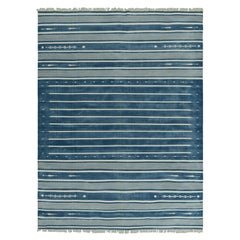
Rug Kilim’s Contemporary Dhurrie Rug in Blue and Off-White Stripes
By Rug Kilim
Located in Long Island City, NY
This contemporary 7x10 Dhurrie flat weave is an exciting new entry in Rug Kilim’s esteemed custom-capable collection. Handwoven in cotton, it’s a modern take on antique and vin...
Category

2010s Indian Modern Indian Rugs

Materials

Cotton

Chevron Hand-Tufted Wool Rug - Multicolored
By Bertrando Di Renzo
Located in ROCCAVIVARA CB, IT
The Chevron Rug reimagines a classic Ikat design deeply rooted in Ottoman culture. Vibrant and full of joy, this rug adds a distinctive touch to any room, bringing warmth and charact...
Category

21st Century and Contemporary Indian Other Indian Rugs

Materials

Wool

Chevron Hand-Tufted Wool Rug - Multicolored
$1,993 Sale Price / item
20% Off
Rug Kilim’s Contemporary Dhurrie Rug in Beige and White Stripes
By Rug Kilim
Located in Long Island City, NY
This contemporary 6x9 Dhurrie flat weave is an exciting new entry in Rug & Kilim’s esteemed custom-capable collection. Handwoven in cotton, it’s a modern take on antique and vintage ...
Category

2010s Indian Modern Indian Rugs

Materials

Cotton

Tribal Mid-20th Century Handmade Persian Turkoman Runner
Located in New York, NY
A vintage Persian tribal Turkoman rug in runner format handmade during the mid-20th century. Although this rug is of Persian origin, the roots of Turkoman rugs originated in the Central Asian region. Measures: 1' 6" x 10' 4" Central Asian Rugs Carpets: Central Asia is a vast area stretching from Northeastern Persia to western China, and from northern Afghanistan to the southern edge of Russia. The carpets can be usefully divided into three groups: the nomadic Turkmen rugs of Turkmenistan, northern Afghanistan, and northeastern Persia; the non-Turkmen tribal pieces from Kazakhstan, Uzbekistan, and Kirghizstan; and the urban creations of Khotan, Yarkand, and Kashgar, oasis cities of Western China (Xinjiang Province). Commercially, the most important group is from Khotan, the easternmost of the Chinese Turkestan cities. The craft of rug weaving is primarily in the hands of Muslim Uighurs. Khotan carpets mix purely Central Asian design themes with Chinese elements. Native Khotan devices include pomegranate trees, upright flowers, round medallions, and yellow or red grounds. Chinese motives include triangular fretwork corners, swastika fretwork, and Yun-Tsao Tou (clouds and rain) diagonally striped polychrome borders. Cotton foundations, asymmetrical (Persian) knots, and medium weaves are standard. Some vintage Khotan are in horizontal, pictorial layouts with multiple various vases and plants. Saphs (multiple prayer niche panel carpets) are also a Khotan specialty. Others employ stepped and layered lozenge medallions, singly or in pairs. Still others, almost all antique, feature a stylized version of the allover Persian Herati design. Many of the oldest pieces employ brown wool wefts. Antique and vintage Khotans are almost always in the k’ang (double square) layout, conforming to the local household plans. Only relatively recently has the 6’ by 12’ or 7’ by 16’ format been replaced by the 9’ by 12’ size. As a result, an antique room size Khotan carpet is very uncommon. Reds are cinnamon, tomato and rust, never wine reds, crimson, or scarlet. Yarkand, farther west on the old Silk Road specializes in multi-medallion long carpets while Kashgar, farthest west and most under Persian influence, has traditionally knotted allover pattern pieces with finer weaves, often with silk piles, and enriched with medal thread, on cotton foundations. Extant Kashgars go back to the 17th century, but the carpet craft in Chinese Turkestan must be much older as fragments have been recovered from local tombs of the early C.E. period. Kashgars are the rarest of all East Turkestan rugs. Most available vintage East Turkestan carpets are interwar Khotans, many with pleasingly soft decorative palettes. The non-Turkmen nomads include the Kazakh, Kirghiz, Uzbek, and Karakalpak groups. Like the Turkmen, they were once all seasonally migratory, dwelling in round felt tents (yurts), but have been settled, at least partially, in the villages, and have taken up crafts and agriculture instead of sheep herding. As a result, carpet production has transitioned from domestic tent use to commercial sale, but the roots of long traditions are still evident. The Uzbeks weave...
Category

Mid-20th Century Persian Tribal Persian Rugs

Materials

Wool

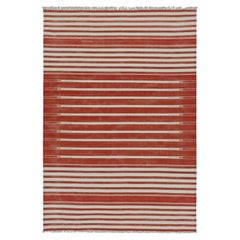
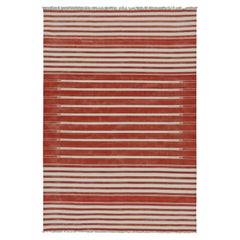
Rug Kilim’s Contemporary Dhurrie Rug in Red and White Stripes
By Rug Kilim
Located in Long Island City, NY
This contemporary 7x10 Dhurrie flat weave is an exciting new entry in Rug & Kilim’s esteemed custom-capable collection. Handwoven in cotton, it’s a modern take on antique and vintage...
Category

2010s Indian Modern Indian Rugs

Materials

Cotton

Mid-20th Century Handmade European Flat-Weave Kilim Throw Rug
Located in New York, NY
A vintage European flat-weave Kilim throw rug handmade in Poland during the mid-20th century. Measures: 3' 5" x 5' 11" Flat-weave rugs carpets: Knotted pile rugs are jus...
Category

Mid-20th Century Polish Scandinavian Modern Western European Rugs

Materials

Wool

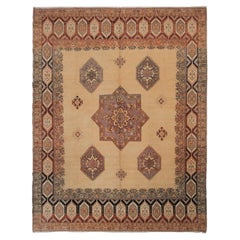
Vintage Oushak Diamond Design Beige Handmade Oushak Purple
Located in New York, NY
Magnificent vintage Turkish oushak Beige area rug Ikat handmade rug 9'6" x 12'2" 9' x 12' Circa 1960 "This is a beautiful vintage Turkish Oushak rug with a soft color palett...
Category

Vintage 1960s Turkish Turkish Rugs

Materials

Wool

Rug Kilim’s Contemporary Dhurrie Rug in Blue and Off-White Stripes
By Rug Kilim
Located in Long Island City, NY
This contemporary 7x10 Dhurrie flat weave is an exciting new entry in Rug Kilim’s esteemed custom-capable collection. Handwoven in cotton, it’s a modern take on antique and vin...
Category

2010s Indian Modern Indian Rugs

Materials

Cotton

Rug Kilim’s Dragon Rug in Gold and Blue with Geometric-Floral Patterns
By Rug Kilim
Located in Long Island City, NY
Hand-knotted in wool, this 2x3 rug is a new addition to the Burano Collection by Rug & Kilim—a bold and luxurious new exploration of important classics and period pieces. On the Des...
Category

2010s Indian Modern Indian Rugs

Materials

Wool

Vintage Dhurrie Rug in Blue with Salmon-Pink Stripes - Rug Kilim
Located in Long Island City, NY
This 8x9 vintage rug is from a new collection of Dhurrie flat weaves in rare sizes and exceptional craftsmanship—an exciting new curation in the Kilim Flat Weave Collection by ...
Category

Vintage 1950s Indian Kilim Indian Rugs

Materials

Cotton

Rug Kilim’s Contemporary Dhurrie Rug in Red and White Stripes
By Rug Kilim
Located in Long Island City, NY
This contemporary 7x10 Dhurrie flat weave is an exciting new entry in Rug & Kilim’s esteemed custom-capable collection. Handwoven in cotton, it’s a modern take on antique and vintage...
Category

2010s Indian Modern Indian Rugs

Materials

Cotton

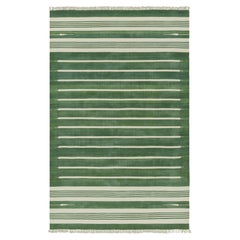
Rug Kilim’s Contemporary Dhurrie Rug in Green and Off-White Stripes
By Rug Kilim
Located in Long Island City, NY
This contemporary 5×9 Dhurrie flat weave is an exciting new entry in Rug & Kilim’s esteemed custom-capable collection. Handwoven in cotton, it’s a modern take on antique and vintage ...
Category

2010s Indian Modern Indian Rugs

Materials

Cotton

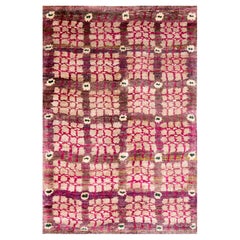
Beige Purple Magenta Green Transitional Natural Silk Hand-Knotted Rug in Stock
By Woven Concepts
Located in New York, NY
The Rumi collection master weavers artfully re-spin and hand-knot the finest remnants of sustainable sari-silk to create the breakthrough Rumi Silk collection. These remarkable patte...
Category

2010s Indian Organic Modern Indian Rugs

Materials

Silk

Early 20th Century Handmade East Turkestan Saph Khotan Runner
Located in New York, NY
An antique East Turkestan Saph Khotan rug in runner format handmade during the early 20th century. Measures: 2' 2" x 9' 3" Central Asian Rugs Carpets: Central Asia is a vast area stretching from Northeastern Persia to western China, and from northern Afghanistan to the southern edge of Russia. The carpets can be usefully divided into three groups: the nomadic Turkmen rugs of Turkmenistan, northern Afghanistan, and northeastern Persia; the non-Turkmen tribal pieces from Kazakhstan, Uzbekistan, and Kirghizstan; and the urban creations of Khotan, Yarkand, and Kashgar, oasis cities of Western China (Xinjiang Province). Commercially, the most important group is from Khotan, the easternmost of the Chinese Turkestan cities. The craft of rug weaving is primarily in the hands of Muslim Uighurs. Khotan carpets mix purely Central Asian design themes with Chinese elements. Native Khotan devices include pomegranate trees, upright flowers, round medallions, and yellow or red grounds. Chinese motives include triangular fretwork corners, swastika fretwork, and Yun-Tsao Tou (clouds and rain) diagonally striped polychrome borders. Cotton foundations, asymmetrical (Persian) knots, and medium weaves are standard. Some vintage Khotan are in horizontal, pictorial layouts with multiple various vases and plants. Saphs (multiple prayer niche panel carpets) are also a Khotan specialty. Others employ stepped and layered lozenge medallions, singly or in pairs. Still others, almost all antique, feature a stylized version of the allover Persian Herati design. Many of the oldest pieces employ brown wool wefts. Antique and vintage Khotans are almost always in the k’ang (double square) layout, conforming to the local household plans. Only relatively recently has the 6’ by 12’ or 7’ by 16’ format been replaced by the 9’ by 12’ size. As a result, an antique room size Khotan carpet is very uncommon. Reds are cinnamon, tomato and rust, never wine reds, crimson, or scarlet. Yarkand, farther west on the old Silk Road specializes in multi-medallion long carpets while Kashgar, farthest west and most under Persian influence, has traditionally knotted allover pattern pieces with finer weaves, often with silk piles, and enriched with medal thread, on cotton foundations. Extant Kashgars go back to the 17th century, but the carpet craft in Chinese Turkestan must be much older as fragments have been recovered from local tombs of the early C.E. period. Kashgars are the rarest of all East Turkestan rugs. Most available vintage East Turkestan carpets are interwar Khotans, many with pleasingly soft decorative palettes. The non-Turkmen nomads include the Kazakh, Kirghiz, Uzbek, and Karakalpak groups. Like the Turkmen, they were once all seasonally migratory, dwelling in round felt tents (yurts), but have been settled, at least partially, in the villages, and have taken up crafts and agriculture instead of sheep herding. As a result, carpet production has transitioned from domestic tent use to commercial sale, but the roots of long traditions are still evident. The Uzbeks weave...
Category

Early 20th Century East Turkestani Folk Art Central Asian Rugs

Materials

Wool

Colorful Contemporary Handmade Turkish Flat-Weave Kilim Large Room Size Carpet
Located in New York, NY
A modern Turkish flat-weave Kilim large room size carpet handmade during the 21st century with a horizontally striped pattern in soft, but colorful tones similar to the style of Amer...
Category

21st Century and Contemporary Turkish Modern Turkish Rugs

Materials

Wool

Mid-20th Century Handmade Turkish Flat-Weave Kilim Room Size Carpet
Located in New York, NY
A vintage Turkish flat-weave Kilim room size carpet handmade during the mid-20th century. Measures: 10' 7" x 12' 9" Flat-weave rugs carpets: Knotted pile rugs are just one small part of a vast universe of textile techniques suitable for heavy use. If you can imagine it, some weaver has tried it out. Pieces can be roughly divided into those reversible from the start and those never, or at least not initially, reversible. Thus, kilims are considered reversible, while everything else is not. Kilims are tapestry woven rugs with both sides the same, in either slit technique where colors change, or with various methods of avoiding slits. Slit tapestry weave goes back to ancient times and Coptic...
Category

Mid-20th Century Turkish Modern Turkish Rugs

Materials

Wool

Still Thinking About These?

All Recently Viewed