410 results for "antiquity"

to
68
263
126
373
31
6
Height
to
Width
to
22
10
9
7
4
3
3
2
2
2
1
186
119
68
37
17
24
13
5
3
2
1
4
5
7
4
1
2
249
61
56
39
31
265
71
63
50
35
410
391
403
8
5
5
4
3
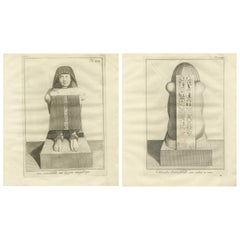
Egyptian Osiris Statue with Hieroglyphs – Front and Rear Views Engraving, c.1776
Located in Langweer, NL
Egyptian Osiris Statue with Hieroglyphs – Front and Rear Views Engraving This antique pair of engravings presents a compelling depiction of an ancient Egyptian statue...
Category

Antique Late 18th Century Dutch Prints

Materials

Paper

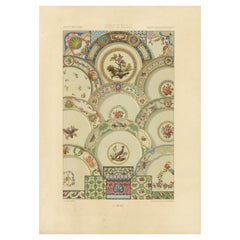
Rococo Ceiling Ornament – 18th-Century Floral and Bird Medallions, Plate XCVIII
Located in Langweer, NL
Rococo Ceiling Ornament – 18th-Century Floral and Bird Medallions, Plate XCVIII This exquisite chromolithograph, Plate XCVIII from *L'Ornement Polychrome*, showcases a stunning arra...
Category

Antique Mid-19th Century French Prints

Materials

Paper

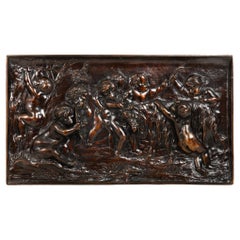
Rare 18th Century Bachanalia Plaque of Putti Tormenting Goat after Duquesnoy
Located in Shippensburg, PA
AFTER FRANÇOIS DUQUESNOY Flemish, 1594-1643 An exceedingly rare bas-relief of "Putti Tormenting a Goat" Probably Italian, circa 18th century Sand-cast bronze, chemical and lacquer ...
Category

Antique 18th Century European Baroque Wall-mounted Sculptures

Materials

Bronze

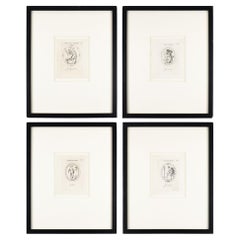
Set of four Roman intaglio engravings by Leonardo Agostini, 1685-1793
Located in Kenilworth, IL
Set of four engravings by Giovanni Battista Galestruzzi of Roman intaglio from Leonardo Agostini's book "Le gemme antiche figurate". The ...
Category

Antique 18th Century Dutch Prints

Materials

Paper

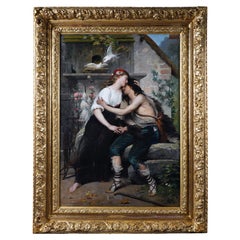
L. Royer, Oil on canvas "Thwarted Love" , France, dated 1882 (?)
Located in PARIS, FR
Signed Lionel Royer and dated 1882 (?) Former Salon exhibition label at the top right, n°538 Indication of an exhibition in Lyon on the back of the frame, n°163 Beautiful painting ...
Category

Antique 1880s French Romantic Paintings

Materials

Canvas

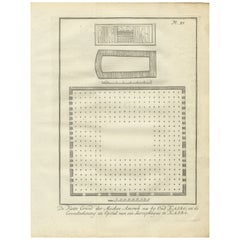
Mosque of Amr, Old Cairo Sarcophagus Design – Architectural Print, Egypt 1776
Located in Langweer, NL
Title: Mosque of Amr, Old Cairo, and Sarcophagus Design – Architectural Engraving, Egypt 1776 Description: This antique architectural engraving from 1776 features a detailed plan of...
Category

Antique Late 18th Century Dutch Prints

Materials

Paper

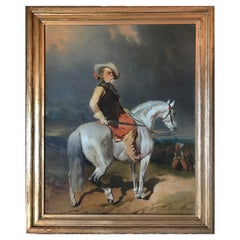
French 19th-Century Oil Painting: Alfred de Dreux - Capitaine des Mousquetaires
Located in TEYJAT, FR
French 19th-Century Oil Painting: Follower of Alfred de Dreux - Capitaine des mousquetaires se retournant, A beautiful 19th-century oil on canvas Capitaine des mousquetaires se ret...
Category

Antique Early 19th Century Paintings

Materials

Canvas

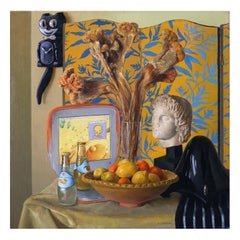
Contemporary Still Life with Alexander The Great Bust and Orange Apple iBook
By Andrew S. Conklin
Located in Chicago, IL
Still Life painting, with origins dating back to the 16th century, often depicts simple everyday objects. Conklin sets his composition with both antiquities and modern elements to bring the Still Life genre into the contemporary. Yet when a closer look is taken, his modern elements are already obsolete by today's standards. The ancient bust of Alexander is placed next to an iBook begging to ask the question - what will stand the test of time?? The piece is framed in a simple walnut frame measuring 26 x 26 inches. Andrew S. Conklin Square still life with Alexander Bust and ibook oil on linen Measures: 25 H x 25 W in 63.50 H x 63.50 W cm ACK038 Andrew S. Conklin Andrew S. Conklin is a figurative painter. He holds an MFA from the Academy of Art University, and studied painting at the National Academy of Design in New York City with Harvey Dinnerstein...
Category

2010s American Mid-Century Modern Paintings

Materials

Paint, Linen

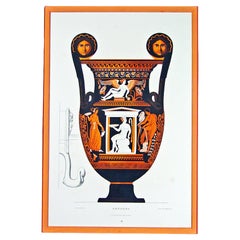
Albert Genick, a Lithographic Print of an Ancient Greek Vase, an Amphora
Located in Downingtown, PA
An Illustrated Legacy: A Chromolithograph of an Ancient Greek Amphora, 1883 This large, striking chromolithograph is more than a simple print; it is a testament to the 19th-century intellectual and artistic fascination with classical antiquity. Depicting an ancient Greek amphora, this piece is Plate VI from the seminal folio Griechische Keramik by Albert Genick...
Category

Antique Late 19th Century German Neoclassical Revival Prints

Materials

Paper

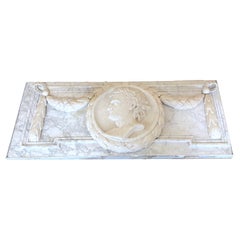
19th C. Italian Grand Tour Carved Marble Portrait Plaque of Caesar
Located in West Palm Beach, FL
19th Century Italian Grand Tour Carved Marble Portrait Plaque of Caesar Italy, Circa 1880s A fine example of 19th-century Italian Grand Tour, this masterwork carved marble portrai...
Category

Antique 19th Century Italian Grand Tour Wall-mounted Sculptures

Materials

Marble, Steel

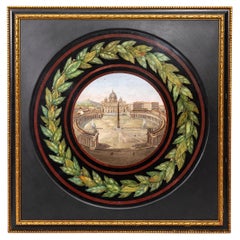
Large Antique Italian Micro Mosaic plaque of St. Peters Square, Rome mid 1800 s
By Vatican Mosaic Studio
Located in New York, NY
A Very Large and Exceptionally Fine Quality Antique Italian Micro-Mosaic Plaque Depicting "The Saint Peter Square" in Rome. The center medallion surrounded by a beautiful Laurel Wreath in multiple shades of Green Mosaic amidst a black Belgium Marble border. The interior rounded subject depicts Saint Peter Square which is found in Rome, Italy. The entire center panel is made up of a captivating array of tesserae in a variety of shapes and colors, which create this stunning mosaic construct. When inspected from up-close, small rectangular tesserae are found in an assortment of colors, which include: white, green, blue, red, black, brown, orange etc. When the subject is seen from afar, a fantastic image of the entire Saint Peter Square can be viewed as if a painting has been created. The oil on canvas of this scene, by was sold in Christie's Auction for over $2,000,000 USD. The plaque rests in a custom ebonized and gilt square frame. This can be used as a decorative object on the wall to serve as a painting, or, be converted to a table-top by mounting it on a table stand. Rome, Circa: 1850 Giovanni Paolo Panini (Piacenza 1691-1765 Rome), View of Saint Peter's Square, Rome. From Christie's Auction: Giovanni Paolo Panini arrived in Rome in 1711, painting capricci and architectural pieces in a vigorous if slightly eccentric style, and by 1719, when he was admitted to the Academy of St. Luke and the virtuosi al Pantheon, he was a rising star in the Roman art world. From around 1719-1726 he was much in demand for decorative frescoes, including quadratura, ornament and landscape and other genres, often in collaboration with figure or flower painters. During this period he worked for Cardinal Patrizi at Villa Patrizi, Cardinal Annibale Albani at Palazzo Albani (now del Drago) alle Quattro Fontane, Livio de Carolis at Palazzo de Carolis, Cardinal Alberoni at Palazzo Alberoni, Innocent XIII Conti in the Quirinal and in the library of S. Croce in Gerusalemme. In 1724 he married Caterina Gosset, the sister-in-law of Nicolas Vleughels, the director of the French Academy in Rome, to which he was admitted in 1732, and as a result he was much patronized by the French. During the 1720s he developed his figure style away from the awkwardness of his early works into one that concentrated on groups of stylishly-dressed aristocrats and skillfully modelled bystanders, sibyls and pseudo-antique figures. These he noted down in drawings (such as a sketchbook in the British Museum) that he drew upon to populate his paintings. He also began to receive commissions to design and record temporary festivals, often for French ambassadors to Rome. By the beginning of the 1730s Panini was developing a distinctive subgenre of the capriccio in which recognizable monuments are placed in imaginary topographical relationships, which were well-received in the classicizing era of Clement XII Corsini. In 1732 he was one of the panel of judges for the competition instituted by Clement for the Lateran façade, and in the following year painted an impressive View of Piazza del Quirinale for the pope. At about this time he was developing his best-known topographical subjects, interior views of St Peter's and the Pantheon, which were much in demand, to judge by the number of extant versions extending into the 1750s. By about 1734 he was beginning to attract the attention of English patrons, who ordered sets of Roman views, such as those at Marble Hill House (1738) and Castle Howard. In 1736, through Filippo Juvarra, he received important commissions from Philip V of Spain for scenes of the life of Christ in the Chinoiserie room at La Granja in Spain (1736). From as early as the 1720s he had been producing some vedute (view-paintings), initially based on prototypes by Gaspar van Wittel, and he developed the genre in subsequent decades in works that would include impressive panoramic views of the Forum or Palatine, although his staple genre was the capriccio rather than the veduta. He also expanded his repertory of church interiors, adding such churches as S. Paolo fuori le Mura and S. Agnese in Piazza Navona, as well as church interiors recording special events. His son by his first marriage, Giuseppe (1718-1805), began to support him in architectural and festival design projects. By the 1740s Panini was at the peak of his powers, and evidently had a considerable workshop helping him meet demand, especially of capricci to be used as overdoors and other decorative installations. Giovanni Paolo was successful in elevating himself socially above the usual artisanal status of genre painters, and would sometimes include a self-portrait in paintings commissioned by the great and powerful. He also appears to have been successful financially, and owned a substantial palazzo in via Monserrato. He increasingly concentrated on important commissions, such as a view of the Lottery in Piazza Montecitorio (London, National Gallery, 1743-1744), the designs for the festival decorations for the birth of the Dauphin in Palazzo Farnese (Waddesdon Manor, 1751), or the view of an imaginary picture gallery housing the collection of Cardinal Valenti Gonzaga (Wadsworth Atheneum, 1749). In the mid-1750s he received an important series of commissions from the Duc de Choiseul, French ambassador to Rome and soon to become one of the most powerful men in France, that included his best-known compositions, Ancient Rome (Roma Antica) and Modern Rome (Roma Moderna). These large paintings, of which there are three sets (in Boston and Stuttgart, the Metropolitan Museum, and the Louvre) represent imaginary picture galleries based on the Valenti Gonzaga composition but hung with what purport to be Panini's own vedute of ancient and modern sites respectively (with corresponding pieces of sculpture). These paintings sum up the eighteenth-century canon of the greatest works of architecture and sculpture, and the equivalence between modern and ancient Rome. By this time Panini was being assisted by his son by his second marriage, Francesco (1748-1800), who was a skilled draughtsman and painter who continued his father's work after his death in 1765. The Farnborough Hall paintings The Piazza S. Pietro and the Campidoglio are important vedute by Panini painted in 1750 and originally installed, with other works by Panini and Canaletto, in the seat of the Holbech family, Farnborough Hall, Warwickshire (National Trust). Farnborough Hall had been inherited in 1717 by William Holbech (circa 1699-1771), who is documented on the Grand Tour in Florence, Rome and Venice from late 1732 until his return home at the end of April 1734 with his brother Hugh. Holbech is said to have gone on the Grand Tour to recover from a broken heart and to have spent a considerable time there prior to these documented appearances. During his time in Rome he acquired two Paninis, which were seen by an anonymous antiquary around 1746, who referred to various sculptures "all brought from Rome with two pictures, one of the Rotunda, and the other of diverse buildings by Panino" (British Library, Add. MS 6230, pp. 31-32). The Rotunda (the Pantheon) is a painting now in a private collection in New York, and is signed and dated 1734. The Diverse Buildings, which was probably one of Panini's capricci, has not been identified. On his Grand Tour Holbech seems also to have acquired two Canalettos, although they are not mentioned by the antiquary, who may only have had eyes for things Roman. In about 1746-1747, Holbech remodelled the house by creating a Saloon, now the dining room, at the back of the house. This room, the entrance hall, the staircase, library and closet were stuccoed by William Perritt of York, and a bill for this work dated 14 November 1750 survives (or survived until recently; G. Beard, Decorative Plasterwork in Great Britain, London, 1975, p. 233). The two Canalettos acquired on the Grand Tour were installed in the Saloon, together with two new works commissioned from Canaletto, who was then in England and working nearby at Warwick Castle in 1748. The two Paninis acquired on the Grand Tour may have been installed in the Library, as Alastair Laing assumes (op. cit.), while three new works commissioned from Panini in Rome were placed in the Hall and Saloon: the Piazza S. Pietro for the overmantel in the Hall (fig. 1), the Campidoglio as the overmantel in the Saloon (fig. 2), and an Interior of St Peter's (now in Detroit) (fig. 3) on the adjacent wall facing the windows. Two of the Canalettos flanked the Campidoglio, while the others were on the opposite wall. The Interior of St Peter's was therefore effectively the fifth member of the Canaletto set, distinct from the two overmantels. Holbech's installation of his Canalettos and Paninis in fixed stucco frames was unusual for England in 1750, and had probably been inspired by what he had seen on his Grand Tour in Northern Italy, where fixed stucco installations of canvases were common in the 1720s and 1730s (Cornforth, II, p. 51). The Campidoglio and the Interior of St Peter's are both signed and dated 1750, a date that corresponds to the payments for the stucco. The commission for the new Paninis would have been made through an agent, possibly the Roman dealer in antiquities Belisario Amidei from whom some of the antique busts in the Hall were acquired in 1745, who was also a picture dealer; or perhaps the painter Pietro Berton, who on 7 December 1750 shipped a Panini to England. The paintings were sold to Savile Gallery in 1929 and replaced by copies by one Mohammed Ayoub. The four Canalettos were exhibited at Savile Gallery in 1930 and entered the London art trade, finding their way at various times to Augsburg, Melbourne, Ottawa and a private collection. The Paninis seem to have been resold immediately to Knoedler & Co. in New York. When the stucco was removed from the library by Holbech's great-grandson, another William Holbech, shortly after his succession in 1812, the Interior of the Pantheon and the Diverse Buildings may have been taken down. Although there is no record of either painting being at Farnborough subsequently, the Interior of the Pantheon at least must have remained there, since it appeared at Knoedler's in 1930 at about the same time as the other Paninis, and was presumably acquired at the same time from the same source. The Campidoglio was a rare subject for Panini: this is the only known extant version, apart from fictive versions in the Metropolitan Museum (1757) (figs. 4) and Louvre (1759) versions of his Roma Moderna composition (but not in the first Boston version of 1757). Probably Holbech insisted on the choice of subject in order to represent the centre of Rome's civic administration to complement the religious one of St Peter's. The Campidoglio may have been of interest to English patrons because it represented the seat of a form of government they were more comfortable with than the papacy. For example, Canaletto painted the subject, together with English subjects, for Thomas Hollis, 'the most bigoted of all Republicans' in 1755, who may have wanted to 'represent London as the heir to the legacy of Ancient Rome and Renaissance Italy' (see Michael Liversidge and Jane Farrington, eds., Canaletto and England, exhibition catalogue, Birmingham Museums and Art Gallery, London, 1993, p. 25). Canaletto also painted the subject for Sir Richard Neave, Ist Baronet (1731-1814) of Dagnam Park, Essex, at the end of his English stay or shortly afterwards (i.e. 1755-1766) (sold, Sotheby's, London, 10 July 2002, lot 8). Like Holbech, Neave mixed Venetian and Roman subjects, but his Roman subjects steer clear of St Peter's: the others were the Piazza del Quirinale and Piazza Navona. While Holbech had gone to both Venice and Rome and commissioned views of both cities, Rome sets the keynote for his decoration: antique busts line the Hall, and its religious and civic centres are the overmantels in the Hall and Saloon respectively. The Piazza S. Pietro The Piazza S. Pietro shows the piazza much as it appears today, apart from the absence of Valadier's late eighteenth-century clocks on the towers. Bernini's colonnade (1656-1667), both ends of which are visible, reaches out its arms to embrace the viewer. In the center of the piazza is the obelisk moved by Sixtus V in 1586 from the left side of the church where it had formed part of the Circus of Nero. On either side are two fountains, the one on the right by Carlo Maderno (1613) and the one on the left created to match it by Carlo Fontana in 1677. Beyond is the rectangular forecourt to the church, the piazza retta, leading to the façade by Maderno, completed in 1610, and the dome by Michelangelo, Giacomo della Porta and Domenico Fontana. To the right of the façade the roof of the Sistine Chapel is just visible, followed by the Cortile di S. Damaso, the palace of the Swiss Guards and the palace of Paul V. A Cardinal is being driven in a carriage across the piazza at the right in the direction of the Borgo Nuovo and Ponte S. Angelo with his blue-liveried retinue and subsidiary carriages. Unlike the later versions of the subject that depict the Duke de Choiseul, there seems to be no intent to portray any particular cardinal: the procession of a cardinal here is presented simply as characteristic activity within the piazza. Various groups of figures, including well-dressed women in brightly colored dresses, Swiss Guards, priests, gentlemen, idlers and a pilgrim are distributed around the piazza. In the foreground an imaginary heap of fallen masonry provides visual interest in an otherwise dead space. Panini painted the Piazza S. Pietro on a number of occasions, and his works falls into two types, one with the viewpoint shifted slightly to left of the axis, as in the Farnborough Hall version, and one with it shifted slightly to the right. The first type is based on a composition by Gaspar van Wittel, of which there are numerous versions from 1684 until 1721 (Fig. 9 van Wittel). The work by Panini that seems closest to Van Wittel and therefore probably the earliest is the version in the Circolo della Caccia, Rome, which has been dated to the second half of the 1730s, but is probably a decade or so earlier. Another, on the London art market in 2002-2009, and a version with workshop participation at Sotheby's, Milan (20 November 2007, lot 137) and currently on the art market in Rome, are closer to an important painting in Toledo (Arisi no. 308) that is signed and dated 1741 (fig. 6). Van Wittel employed a wide format (about 2:1), showed both of the end faces of the colonnade almost to their full extent, and introduced the theme of a heap of masonry to enliven the foreground. His choice of perspective implies a viewpoint located in the small piazza between the Borgo Nuovo and Borgo Vecchio, now the Piazza Pio XII at the top of the Via della Conciliazione. From this viewpoint a building at the left tended to interfere with the view of the end of the left arm, as can be seen from the Nolli map...
Category

Antique 1850s Italian Louis XVI Decorative Art

Materials

Glass

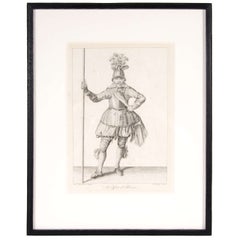
Antique Copper Engraving of an Officer of Pikeman by Francis Grose
By Francis Grose
Located in New York, NY
Francis Grose entered the army early in life and served in the cavalry, infantry, and militia.He had a profound knowledge of antiquities and spent the greater part of his life collec...
Category

Antique 19th Century English Renaissance Revival Prints

Materials

Paper

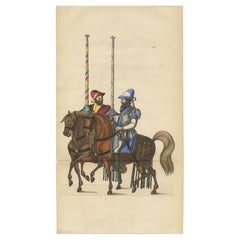
Hand-Coloured Lithograph of Medieval Horsemen with Festive Standards, 1842
Located in Langweer, NL
19th-Century Hand-Coloured Lithograph of Medieval Horsemen with Festive Standards This original hand-coloured lithograph, produced in 1842, provides a fascinating window into the ce...
Category

Antique 1840s Prints

Materials

Paper

Paresh Maity Watercolor on Board, Encounter I
Located in Dallas, TX
Presenting a glorious contemporary piece of Art by a recognized Indian Master – Paresh Maity Watercolor on Board – Encounter I. This piece has impeccable Provenance! It was purchased by a Private Dallas Collector at Sotheby’s New York Auction on 18th September 2008. Lot No. 74. Sotheby’s operate a twice yearly auction of Southeast Asian Art & Antiquities in New York in the months of March and September. This sale was titled “Modern & Contemporary Indian Art”. The Lot consisted of a Group of 3 Watercolors by Babu Xavier, Paresh Maity and Ranjit Kurmi. (b.1960, b.1965, b.1970) Three Untitled Works. Signed and dated ‘Paresh Maity ’02 lower right, watercolor and ink on paper. …. 5.6 x 3.6 (14 x 9 cm)”. Exhibited: Herbert F. Johnson Museum of Art, Modern Indian Art, Cornell University, Ithaca, April 8 – June 11 2006. The Provenance is given as: “Property of Private Maryland Collectors”. The 3 watercolors carried an Auction estimate of USD 3,000 to USD 4,000 and Sold for USD 4,000 (not including Buyers Premium). Allowing for inflation alone this would be over $7,000 in today’s value. We have this watercolor by Paresh Maity and (listed separately) the Babu Xavier watercolor, but not the Ranjit Kurmi watercolor. As an added bonus and proof of authenticity the painting still retains it’s original Sotheby’s Lot No. Label. It has substantially increased in value over the years as a HIGHLY DESIRABLE piece from an exhibited and highly collected Modern Indian Master painter. We also possess the Babu Xavier watercolor in our Collection! Paresh Maity (born 1965) is an Indian painter...
Category

20th Century Indian Modern Paintings and Screens

Materials

Paper

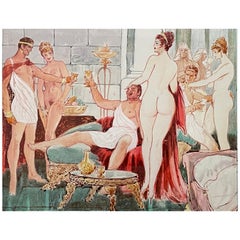
W. Hall Mid-Century Classical Figural Watercolor
Located in Norwood, NJ
This striking watercolor, signed W. Hall, depicts a lively classical bacchanalian scene rendered in a style that blends Neoclassical subject matter with Art Deco and early Mid-Centur...
Category

Mid-20th Century English Art Deco Paintings

Materials

Paper

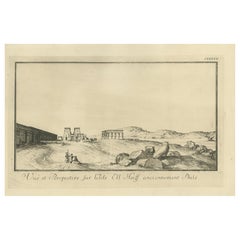
Temple of Philae on the Nile – Antique Egypt Ruins Engraving by Norden, c.1755
Located in Langweer, NL
Temple of Philae on the Nile – Antique Egypt Ruins Engraving by Norden, c.1755 This impressive 18th-century engraving presents a detailed view and pe...
Category

Antique Mid-18th Century Danish Prints

Materials

Paper

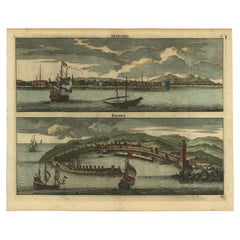
Rare Old Panoramic Views of Stanchio, Greece and the Island of Rhodes, 1698
Located in Langweer, NL
Antique print titled Stanchio Rhodus. Original antique print showing panoramic views of Stanchio, Greece and the Island of Rhodes, both with ships. First edition in French, firs...
Category

Antique 1690s Dutch Prints

Materials

Paper

Early 20th Century Emilio Vasarri Lithograph in Arts Crafts Wood Frame
By Emilio Vasarri
Located in Cincinnati, OH
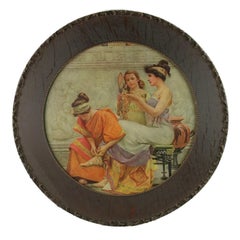
This rare early 20th century lithograph depicts an image originally executed by Italian artist Emilio Vasarri in 1909. The piece features a scene from classical antiquity and depicts...
Category

Early 20th Century Unknown Pre-Raphaelite Prints

Materials

Oak, Paper

Antique Oil on Canvas Painting, Interior of an Inn with Dancing Peasants, 18th C
By David Teniers the Younger
Located in Dallas, TX
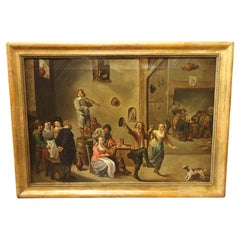
After the original 17th-century by the famed Flemish painter, David Teniers II (usually referred to as “David Teniers the Younger”, as his father David Teniers the Elder was also an accomplished painter), this fabulous painting depicts a vibrant scene, both in color and theme. Our version, which was painted in the 1700s, is by an unknown, but very talented artist. The painting is surrounded by a giltwood frame with two layers of beading. Both Teniers were known for developing the “peasant genre” or “tavern scene”, where members of the working class were shown actively celebrating life. The earthy tones of the interior of the inn (brown and beige) are offset by citizens in brightly colored attire consisting of green, red, black, and gray. The scene is divided into two rooms, with seven patrons (mostly men) gathered around a barrel table in front of a very large fireplace. Two of the men are playing cards and there are two tankards visible. The calmness of this group is a drastic difference from the 11 people gathered in the foreground. A man in blue stands on top of a wine barrel table...
Category

Antique 18th Century European Paintings

Materials

Canvas, Wood, Giltwood, Paint

Antique Map of Alexandria Egypt – Plan of Vetus Nova, Inset of Patriarch Seat
Located in Langweer, NL
Antique Map of Alexandria Egypt – Plan of Vetus & Nova with Inset of Patriarch Seat This finely engraved 18th-century map presents an early and detailed plan of Alexandria, Egypt, s...
Category

Antique Late 18th Century Dutch Prints

Materials

Paper

Pastoral Elegance: Ulrik Thersner s 1824 Aquatint of Djursholm Castle
Located in Langweer, NL
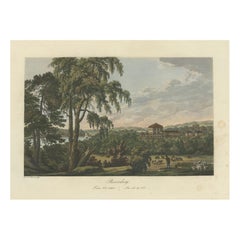
This beautiful original hand-colored antique print, made by Ulrik Thersner in 1824, is a fine example of his work. Thersner, known for his detailed and atmospheric landscapes, would have drawn this view of Djursholm Castle with great care, capturing not only the architectural features of the castle but also the surrounding natural landscape and pastoral life, as seen in the foreground with figures and livestock. The aquatint technique allowed Thersner to produce gradations of tone that give the print a remarkable depth and a lifelike quality, a characteristic that was particularly prized in the early 19th century for the way it mimicked the subtleties of watercolor paintings. The composition of the print, with the castle situated amidst the verdant trees and the inclusion of human and animal figures, creates a harmonious balance between the built environment and the natural world, reflecting the romantic sensibilities of the time. The view "from the S.E. angle" provides a unique perspective of the castle, emphasizing its prominence and setting within the landscape. As a historical document, the print serves as a valuable visual record of Djursholm Castle and its environs in the early 1800s. As an artwork, it stands as a testament to Thersner's skill as an artist and his contribution to the tradition of Swedish topographical art. More about the maker: Ulrik Thersner was a multifaceted individual, having an impactful military career alongside his work as a draftsman and topographer. Born on April 2, 1779, in Kyrkslätt parish in Finland, Thersner began his military service early, becoming a ship's boy in the Swedish navy at the tender age of seven. His naval service during Gustav III's Russian War...
Category

Antique 1820s Prints

Materials

Paper

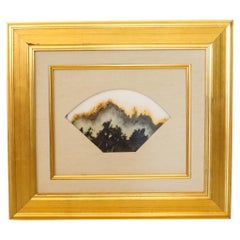
DREAM STONE 1910 Xi-Tuanxiong China Shih-Hua Art Landscape Framed Cut Marble
Located in Miami, FL
Framed Shih-Hua dream stone landscape. This is a gorgeous framed and matted marble stone slice known as a dream stone Shih-Hua boasting swirling hues of butterscotch, charcoal, ligh...
Category

Vintage 1910s Chinese Qing Decorative Art

Materials

Marble

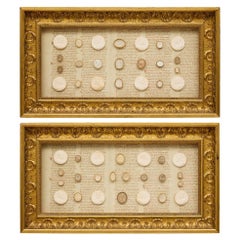
Pair Antique Early 19th Century Italian Framed Grand Tour Plaster Intaglios
Located in London, GB
Pair Antique Early 19th Century Italian Framed Grand Tour Plaster Intaglios Italian, Early 19th Century Panels: Height 25cm, width 57cm Frames: Height 40cm, width 71cm, depth 7cm Th...
Category

Antique Early 19th Century Italian Victorian Decorative Art

Materials

Wood, Giltwood

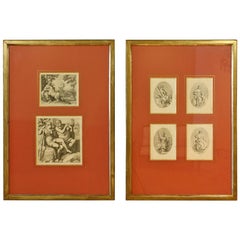
Framed Set of 18th Century Classical Engravings
Located in Pembroke, MA
Two French matted and framed 18th century black and white engravings inspired by Classical Antiquity. The first frame contains an engraving of a woman patting a unicorn, and a man an...
Category

Antique 18th Century French Classical Greek Prints

Materials

Giltwood, Paper

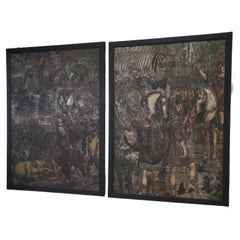
A Pair of Decorative Leather Painted Panels
Located in Conwy, GB
A very large and impressive pair of painted leather panels possibly depicting the 'Battle of Cannae'. 18th or early 19th Century It is believed that these panels were possibly ori...
Category

Antique Early 19th Century English Decorative Art

Materials

Leather

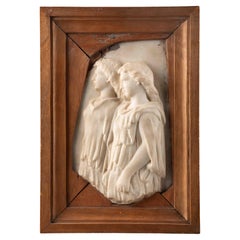
Renaissance relief - Italy, probably Rome, 16th century
Located in Bruxelles, BE
Renaissance relief depicting two female figures dressed in a chiton Italy, probably Rome, 16th century Marble, wooden frame (provenance label on the back) 28 x 20 x 5 cm This beau...
Category

Antique 16th Century Italian Renaissance Wall-mounted Sculptures

Materials

Marble

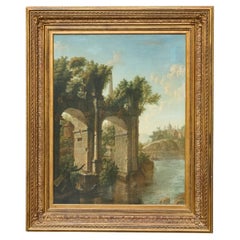
19th-Century Italian Oil on Canvas Classical Landscape with Arch Bridge Ruin
Located in Atlanta, GA
This evocative 19th-century Italian oil on canvas transports viewers to a timeless riverside vista where nature and antiquity entwine. Dominating the foreground is a weathered Roman-...
Category

Antique 19th Century Italian Paintings

Materials

Canvas, Paint

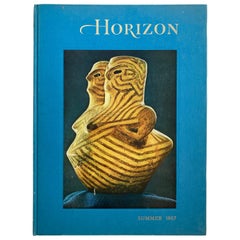
Horizon Magazine, A Magazine of the Arts, Summer 1967 Hardcover Book
Located in Moreno Valley, CA
Horizon Summer 1967 Hardcover – January 1, 1967 Horizon Magazine - A Magazine Of The Arts, Summer 1967 By Thorndike, Joseph Ed/ New York: American ...
Category

Vintage 1960s American Archaistic Books

Materials

Paper

Antique Framed Japanese Silk Kesa Monk s Robe Edo Period
Located in Atlanta, GA
A Japanese Kesa (Monk's Vestment) made from thirteen columns of patchworks of brocades set within a border of the same material. The brocade was woven from a subtle color palette of ...
Category

Antique 19th Century Japanese Edo Textiles

Materials

Brocade, Silk

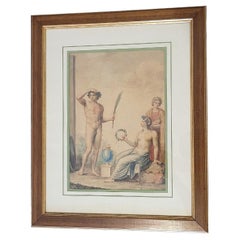
After A Appiani, Watercolor Drawing, Mythological Scene, Late 18th/early 19th Ce
Located in MARSEILLE, FR
Framed neoclassical drawing depicting a scene animated by characters, inspired by ancient Greek or Roman settings Framed watercoloured drawing in the style of Andrea Appiani (1754-1...
Category

Antique Late 18th Century Neoclassical Drawings

Materials

Paper

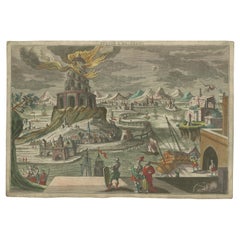
Antique Optical Print of the Lighthouse of Alexandria, Egypt
Located in Langweer, NL
Antique print titled 'Phare de l'Egypte'. A vue d'optique of the lighthouse of Alexandria. Also called Pharos of Alexandria, one of the Seven Wonders of the World and the most famous...
Category

Antique Late 18th Century Prints

Materials

Paper

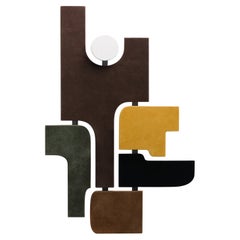
Wall Sculpture Leather Stephane Parmentier for Giobagnara Tabou Parete 4
By Stephane Parmentier, Giobagnara
Located in New York, NY
Tabou Parete 4 -- Stephane Parmentier x Giobagnara Available only in suede leather and bronze finishing. Embracing sleek designs and beautiful materials, the Stephane Parmentier Co...
Category

21st Century and Contemporary Italian Wall-mounted Sculptures

Materials

Bronze

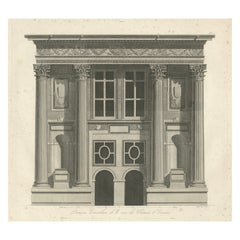
Portique Corinthien du Château d’Écouen – Architectural Engraving, Baltard, 1799
Located in Langweer, NL
Portique Corinthien du Château d’Écouen – Architectural Engraving by Louis-Pierre Baltard A finely detailed architectural engraving by Louis-Pierre Baltard (1764–1846) depicting the...
Category

Antique Late 18th Century French Prints

Materials

Paper

Important 19th Century Italian Parade Plate
Located in Madrid, ES
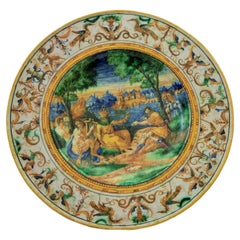
Important 19th Century Italian Parade Plate Polychrome ceramic, with a wide brim, short frill, and a wide base. Reverse with ring support. Decoration on the rim with harpies and fan...
Category

Antique Early 19th Century Italian Baroque Decorative Art

Materials

Maiolica, Porcelain

Fine Rare Inlaid Rosewood Dodecahedron Cane Walking Stick
Located in Shippensburg, PA
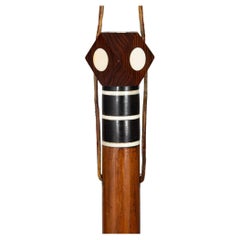
A VERY FINE INLAID ROSEWOOD DODECAHEDRON CANE Circa late 19th century 35 1/2" H An unusual walking stick featuring a knob handle in the form of a dodecahedron, with twelve geometri...
Category

Antique 19th Century Victorian Decorative Art

Materials

Rosewood

Silk and Metallic Threads Embroidered Tapestry in Black Wood Frame with Pearls
By (After) Michael Verkholantzev, Alexander Anisimov, Alexander s Collection
Located in Hong Kong, HK
Silk and Metallic Threads Embroidered Tapestry in Black Wood Frame with Pearls Large Modern Decorative Art in Erotic Style Silk, Silver Metallic Threads, Mother of Pearl, Black woo...
Category

2010s Spanish Modern Decorative Art

Materials

Gold Leaf

Mountain Landscape Painting, Antique Oil Landscape Painting, Oil on Paper, XIX
By Leberecht Lortet
Located in Breganze, VI
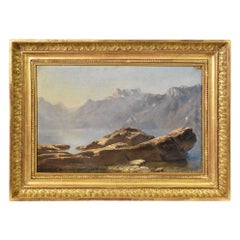
This is an antique Mountain landscape oil painting with lake, XIXth century. 19th century. This oil painting on paper has an original gold leaf frame, original and coeval with the antique painting.  The ancient painting is signed by a French painter at the bottom left Lortet and dated 1857, a landscape painter. Leberecht Lortet (1828-1901) was born of French parents in Heidelberg, Germany, but lived for a long time in Lyon, France. A pupil of Alexandre Calame...
Category

Antique Mid-19th Century French Louis Philippe Paintings

Materials

Paper

The Holy Staircase (Scala Santa), Rome – Sacred Interior Scene, 1868
Located in Langweer, NL
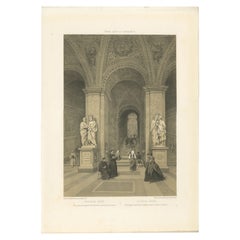
The Holy Staircase (Scala Santa), Rome – Sacred Interior Scene, 1868 This detailed lithograph represents the Scala Santa, the Holy Stairs housed near the Basilica of St John Lateran...
Category

Antique 1860s French Prints

Materials

Paper

18th Century Italian Framed Neoclassical Hercules Statues Engravings, Set of 3
Located in Dallas, TX
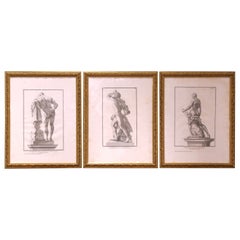
Add classical gravitas to your space with this elegant set of three antique engravings depicting views of ancient Hercules sculptures. Printed in Rome in the 18th century, each print...
Category

Antique Late 18th Century Italian Neoclassical Drawings

Materials

Glass, Giltwood, Paper

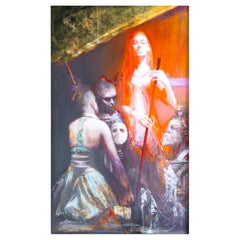
Painting by Andreas Wachter (*1951), Lichtung (Clearing), 2023
Located in New York, NY
Painting by Andreas Wachter (*1951), Lichtung (Clearing), 2023 Oil on hardboard Canvas Dimensions: 147.5 x 89.5 cm Monogrammed and dated AW’23 at the lower right. Signed, dated and ...
Category

21st Century and Contemporary German Modern Paintings

Materials

Other

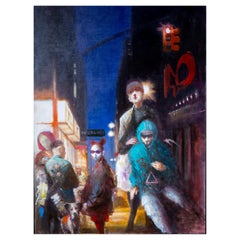
Andreas Wachter (*1951), Restposten (Remainders), 2023
Located in New York, NY
Oil on hardboard Canvas Dimensions: 147 x 89.5 cm Monogrammed and dated AW’23 at the lower right. Signed, dated and titled on the reverse. Andreas Wachter was born in Chemnitz in 19...
Category

21st Century and Contemporary German Modern Paintings

Materials

Other

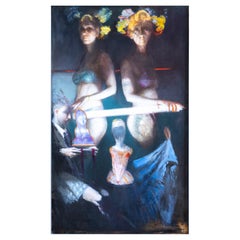
Andreas Wachter (b. 1951) W31St, 2024
Located in New York, NY
Oil on canvas. Framed. Image size: 160 x 120 cm. Monogrammed and dated ‘AW’24’ at bottom left. Andreas Wachter was born in Chemnitz in 1951. He studied under Volker Stelzmann an...
Category

21st Century and Contemporary German Paintings

Materials

Canvas, Paint

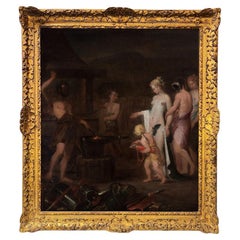
Circle of Jacob van Loo (French, 1614-1670) - Venus at the Forge of Vulcan
Located in New York, US
Our oil painting on canvas depicting the Venus at the Forge of Vulcan is attributed to the circle of Jacob van Loo (French, 1614-1670). Previously erroneously attributed to Ambroise...
Category

Antique 17th Century French Paintings

Materials

Canvas

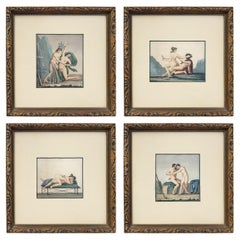
Rare Collection of Four Pompeiian Erotic Etchings by Auguste Delvaux, 1836
Located in Chicago, IL
This rare set of four framed hand-colored engravings by Auguste Delvaux comes from César Famin’s remarkable 1836 publication, Musée royal de Naples: peintures, bronzes et statues érotiques du cabinet secret. Each engraving reproduces a fresco unearthed in Pompeii in the 18th and 19th centuries, preserved in the Secret Cabinet of the Naples Archaeological Museum—a collection of ancient Roman erotic art long hidden from public view. In this set: Bacchus wrestles playfully with a satyr in a moment of drunken abandon; a nude woman straddles a man in bed...
Category

Antique 1830s French Neoclassical Prints

Materials

Paper

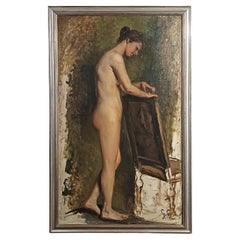
SECOND HALF OF THE 19th CENTURY PAINTING OF A FEMALE NUDE
Located in Firenze, FI
Elegant oil painting on canvas, embellished with a carved and silvered wooden frame. The painting depicts a study of a female nude, a typical drawing from the Academy of Fine Arts. T...
Category

Antique Late 19th Century Italian Paintings

Materials

Wood, Paint, Canvas

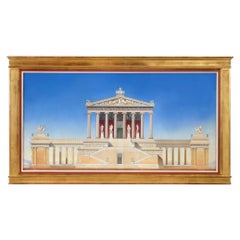
Victor Forabosco, Architectural design of a Greek Temple, Watercolor on Paper
Located in Dresden, DE
GREEK TEMPLE, ARCHITECTURAL DESIGN Victor Forabosco (end of the 19th/beginning of the 20th century) 1895/6 Watercolour on paper, 50 x 97 cm Victor Forabosco was a master builder, ...
Category

Antique Late 19th Century German Grand Tour Paintings

Materials

Paper

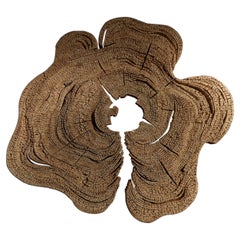
Tales Under The Oak Wall Decoration by TOR-Design
Located in Geneve, CH
Tales Under The Oak Wall Decoration by TOR-Design Dimensions: Ø 143 cm. Materials: Linden wood and birch plywood. Fairy tales, as a magical guide to the boundless forest of time, ca...
Category

2010s Moldovan Post-Modern Wall-mounted Sculptures

Materials

Birch, Wood

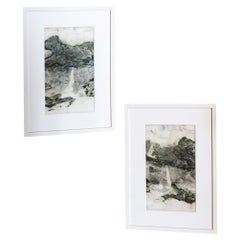
DREAM STONES 2007 China Diptych Shih-Hua Art Landscape Framed Marble Art
Located in Miami, FL
Framed Shih-Hua dream stone diptych landscape. This is a gorgeous pair of framed and matted marble stone slice known as a dream stone Shih-Hua This Diptych boasting swirling hues of...
Category

21st Century and Contemporary Chinese Modern Contemporary Art

Materials

Marble

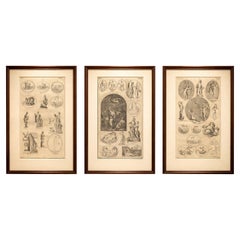
Classical Gods Mythology, Set of 3 Antique Engravings – Montfaucon 1721
Located in Langweer, NL
Classical Gods & Mythology, Set of 3 Antique Engravings – Montfaucon 1721 This cohesive set of three copper engravings originates from Bernard de Montfaucon’s seminal antiquarian pu...
Category

Antique Early 18th Century British Prints

Materials

Paper

Nebula, La Primavera Botticelli Wallpaper
By Millim Studio
Located in Roma, IT
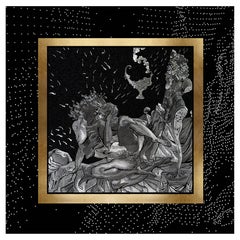
Were I, all of a sudden, to find myself lost in a dream, I would search in the horizon for the right moment to make it come true. Even if everything seems frozen in time, it’s actua...
Category

2010s Italian Wallpaper

Materials

Paper

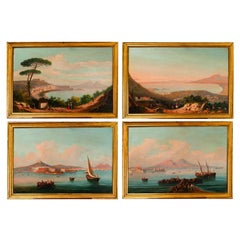
Four Vedute of the Bay of Naples, Early 19th Century
Located in PARIS, FR
Four landscapes of the Bay of Naples. Italy. ca. 1816-1820. h. 22,8 in. ; l. 32,6 in. “Grandiose entrance : we go, an hour during, down to the sea along a wide road cut into the ten...
Category

Antique Early 19th Century Italian Grand Tour Paintings

Materials

Canvas

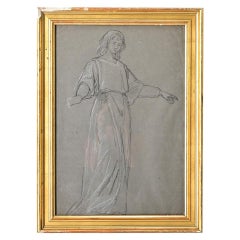
French Vintage Framed Charcoal Sketch
Located in Baton Rouge, LA
French vintage 20th century charcoal and chalk sketch/study of a statuesque woman in loose-fitting dress (like a dressing gown); out of context she could easily be mistaken for a fig...
Category

20th Century French French Provincial Drawings

Materials

Gold

Chronological Portraits of the Kings of Spain – Large Engraved Suite, Rome 1700
Located in Langweer, NL
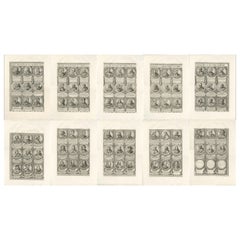
Chronological Portraits of the Kings of Spain – Large Engraved Suite, Rome c.1700 This impressive engraved suite presents a chronological portrait history of Spain, tracing political authority on the Iberian Peninsula from Roman imperial rule through the Visigothic period, the medieval Christian kingdoms, and the Habsburg monarchy, concluding with Charles II of Spain. The series is conceived as a visual narrative of Spanish sovereignty rather than a generic collection of rulers. It begins with Roman emperors closely connected to Hispania, including Trajan and Hadrian, and continues through late antiquity, the Visigothic kings, the Reconquista, and the consolidation of Spain under Castile, León, Aragón, and the Habsburg dynasty. Together, the sheets form a coherent regnal sequence spanning more than fifteen centuries of Spanish history. Each sheet is structured as a carefully balanced grid of oval portrait medallions, framed by architectural borders and accompanied by concise Latin texts. The portrait style is derived from classical and numismatic sources, lending the series a timeless, authoritative character. The monochrome engraving, strong linear structure, and repetition of form give the set considerable decorative impact, making it particularly suitable for libraries, studies, hallways, or large wall installations. The engravings were produced in Rome around 1700, within the tradition of learned historical illustration intended for collectors, scholars, and institutions. The presence of intentionally blank medallions at the end of the sequence reflects the original concept of an expandable dynastic history and underscores the intellectual ambition of the project. This is a rare opportunity to acquire a large, visually unified Spanish royal portrait series that combines strong interior appeal with serious historical depth. Condition report: Overall very good condition. Clean impressions with strong detail. Light age toning, minor handling marks, and occasional soft creases consistent with age. Margins ample. No restorations observed. Framing tips Excellent framed as a full suite in matching frames for a statement wall, or individually spaced in a grid layout. Works well with dark wood or black frames and generous off-white mats to emphasize the engraved detail. Technique Copper engraving Maker Italian engravers, Rome, circa 1700 Keyword: Kings of Spain portraits, Spanish monarchy, Spain royal history, Hispania rulers, Roman Hispania, Visigothic kings, Reconquista Spain, Habsburg Spain, Spanish regnal portraits, dynastic portrait series, genealogical engravings, Roman engraving...
Category

Antique Early 18th Century Italian Prints

Materials

Paper

Nebula, Giudizio Universale Michelangelo Wallpaper
By Millim Studio
Located in Roma, IT
Were I, all of a sudden, to find myself lost in a dream, I would search in the horizon for the right moment to make it come true. Even if everything seems frozen in time, it’s actua...
Category

2010s Italian Wallpaper

Materials

Paper

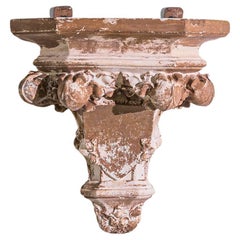
1900s French Wall Plaster Pedestal
Located in High Point, NC
This 1900s French wall plaster pedestal brings the allure of antiquity straight into the modern home. Crafted with meticulous attention to detail, the pedestal showcases a rich tapes...
Category

20th Century French Shelves and Wall Cabinets

Materials

Plaster

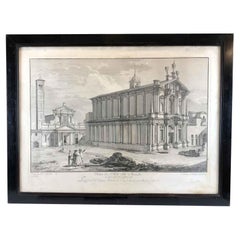
18th Century Italian Milan View Etching by Aspari Domenico 1788
By Domenico Aspari
Located in Milano, MI
A rare view of Milan, an 18th century Italian etching and burin engraving with original ebonized walnut frame and glass depicting San Paolo delle Monache a Milan view, dated 1788, by...
Category

Antique Late 18th Century Italian Neoclassical Prints

Materials

Paper, Canvas, Walnut

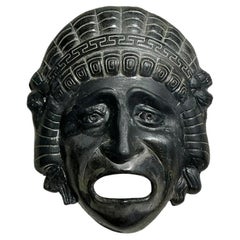
Vintage Greek Key Terra Cotta Face Plaque
Located in West Palm Beach, FL
Bring dramatic flair and timeless symbolism to your wall decor with this Vintage Greek Key TerraCotta Face Plaque. This expressive sculptural piece captures a bold, emotive visage fr...
Category

Mid-20th Century North American Classical Greek Wall-mounted Sculptures

Materials

Terracotta

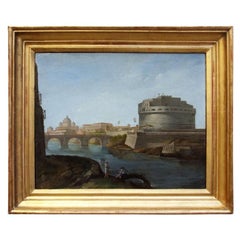
19th Century Castel Sant Angelo Painting Oil on Canvas
Located in Milan, IT
19th century Castel Sant'Angelo Oil on canvas, 49 x 58.5 cm The analyzed painting portrays a pleasant view of the city of Rome. Taken from the bank of the Tiber, Castel Sant'A...
Category

Antique 19th Century Italian Paintings

Materials

Canvas

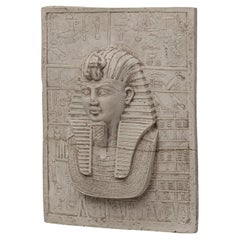
20th Century France Ceramic King Tut Wall Plaque
Located in High Point, NC
20th Century French Ceramic King Tut Wall Plaque. This detailed ceramic relief depicts the iconic visage of King Tutankhamun, framed by an intricate background of Egyptian hieroglyph...
Category

20th Century French Wall-mounted Sculptures

Materials

Ceramic

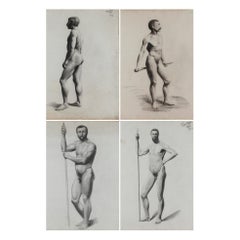
4 Nude Drawings After a Live Model by V. Geoffroy, Circa 1895
Located in Paris, FR
Four male nude drawings from life by V. Geoffray in the late 19th century. These academic drawings of the nude, called académies, were the basic building block of academic education, as it was practiced in France in the 19th century. They were executed in the studio, where a live model...
Category

Antique Late 19th Century French Art Nouveau Drawings

Materials

Paper

Read More

Punk Rock and Rebellion Animate London’s Hit Yoshitomo Nara Show

The exhibition includes his portraits of wide-eyed kids with mayhem on their minds, as well as some of the artist’s personal belongings.

Whether Painted or Papered, Muraled Walls Make Bold Statements in the Home

The ancient practice of covering walls in artistic scenery is back.

In Francks Deceus’s ‘Mumbo Jumbo #5,’ the Black Experience Is . . . Complicated

Despite the obstacles, the piece’s protagonist navigates the chaos without losing his humanity.

12 Floral-Accented Rooms with a Handmade, Folkloric Feel

Who needs a flower garden? Just use your imagination — and some beautifully patterned wallpaper or fabric — to bring the outdoors in.

This Wolf Kahn Pastel Is the Epitome of Beauty at Its Most Essential

A longtime admirer of Kahn’s work, 1stDibs editorial director Anthony Barzilay Freund explores why it’s relevant now more than ever.

Why Jules Chéret Was the King of the Modern Poster

The streets of fin-de-siècle Paris were set aglow with colorful poster ads, thanks to the printing techniques invented by Jules Chéret. Now, the Milwaukee Art Museum is celebrating this undersung talent in America's first solo show dedicated his exuberant works.

Anna Condo’s Multifaceted Career Spans Film, Photography and NFTs

From her historic Manhattan townhouse, the talented creator and curator of 1stDibs' latest NFT exhibition tells us about the art in her home and how she got involved with cryptoart.

How Keith Rivers Went from NFL Linebacker to Blue-Chip Art Aficionado

The former football player is as serious about becoming a great contemporary-art patron as he once was about making tackles. Here, Rivers tells us how he got the collecting bug and how his tastes have evolved over the years.

Still Thinking About These?

All Recently Viewed