1,477 results for "baroque"

to
237
834
591
1,450
14
13
Height
to
Width
to
890
26
14
14
12
11
6
4
3
2
1
1
1
1
838
351
261
27
87
78
56
20
4
21
6
3
18
14
14
3
6
466
452
388
305
288
1,264
398
274
112
106
1,477
1,469
1,473
26
20
7
6
5
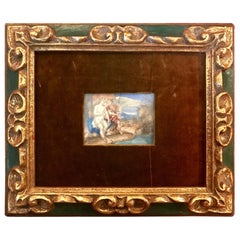
18th Century French Miniature Genre Painting
Located in Vero Beach, FL
Superb French hand-painted watercolor/gouache miniature on a bone panel. It depicts Bacchus and Ariane in a courting scene set in a mountainous landscape. The 18th century miniature is a version of the painting by Charles Joseph Natoire (1700-1777). It is a small but elegant painting with amazing quality details. It is mounted in a hand carved polychrome and gilded Spanish Baroque style wood frame...
Category

Antique 18th Century French Baroque Paintings

Materials

Bone

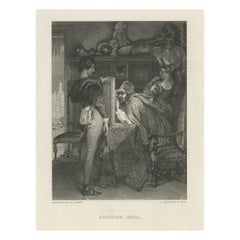
Old Steel Engraving of Salvator Rosa, an Italian Baroque Painter and Poet, c1890
Located in Langweer, NL
Description: Antique print titled 'Salvator Rosa'. Steel engraving of Salvator Rosa, an Italian Baroque painter, poet, and printmaker, who was active in Naples, Rome, and Florence. Artists and Engravers: D. Appleton & Company was an American company founded by Daniel Appleton (December 10, 1785 – March 27, 1849), who opened a general store which included books. He published his first book in 1831. The company's publications gradually extended over the entire field of literature. It issued the works of contemporary scientists at moderate prices, for example, Herbert Spencer...
Category

Antique 1890s Prints

Materials

Paper

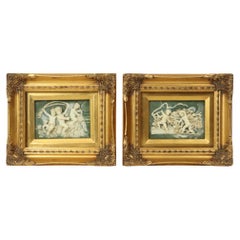
Set of 2 Framed Plaques Alabaster Biggs and Sons London
Located in Poperinge, BE
A set of two framed plaques made of alabaster powder and resin, framed in a classic Baroque-style frame gilded with gold leaf, by Biggs and Sons, London, circa mid-20th century, mark...
Category

Mid-20th Century British Baroque Wall-mounted Sculptures

Materials

Alabaster, Gold Leaf

Statio I – Christ Condemned to Death, Antique Mezzotint, Late Baroque
Located in Langweer, NL
Statio I – Christ Condemned to Death, Antique Mezzotint – Johann Elias Haid, Augsburg This dramatic devotional print represents Statio I from the Stations of the Cross: Christ being...
Category

Antique Late 18th Century Austrian Prints

Materials

Paper

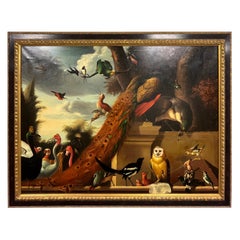
Large Still Life with Birds after Hondecoeter
By Melchior d Hondecoeter
Located in W Allenhurst, NJ
Beautiful large canvas landscape featuring peacock, owl, hawk, and a variety of birds landscape. Vivid colors. Signed L. Cassidy. Wonderfully framed. Curbside to NYC/Philly $450
Category

20th Century Unknown Baroque Paintings

Materials

Canvas, Paint

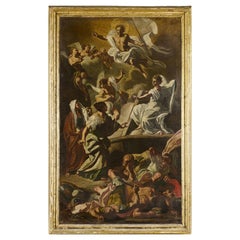
Attribution to Francesco Solimena "Resurrection of Christ" 18th Century
By Francesco Solimena
Located in Madrid, ES
Attribution to Francesco Solimena "Resurrection of Christ" 18th Century oil on canvas (129x77 cm.) framed good condition for the period Francesco Solimena, also called l'Abate C...
Category

Antique Early 18th Century Italian Baroque Wallpaper

Materials

Paint

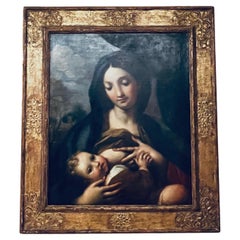
Antique 17th Century Madonna with Child, Rome Carlo Maratta Oil on Canvas
By Carlo Maratta
Located in Doha, QA
C. Maratta went to Rome in 1636 and became an apprentice in the Studio of Andrea Sacchi. Pope Alexander VII commissioned many paintings from him. Maratta’s paintings of the later 165...
Category

Antique 17th Century Italian Baroque Paintings

Materials

Canvas

Alberto Carlieri, Capriccio with Christ and the Adulteress, Oil on Canvas
By Alberto Carlieri
Located in IT
Alberto Carlieri (Italy-Roma 1672-1720), "Christ and the adulteress", Oil on canvas, with frame cm H 115 x L 151 x 6.5, only canvas H 98.5 x L 135 cm...
Category

Antique Late 17th Century Italian Baroque Paintings

Materials

Canvas

17th Century Painting
Located in Miami, FL
17th century painting J.Castano 17th century Spain
Category

Antique 17th Century Baroque Paintings

Materials

Canvas

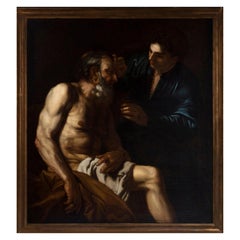
Important Italian School 17th Century "The Healing of Tobias".
Located in Madrid, ES
Italian school; second third of the 17th century. "The Healing of Tobias". Oil on canvas. Relined. very good condition Dimensions: 117.5 x 107 cm; 130 x 118 cm (frame). This canvas ...
Category

Antique Early 17th Century Italian Baroque Wallpaper

Materials

Paint

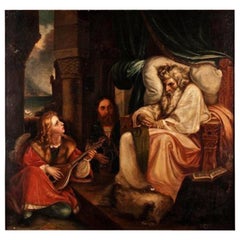
19th Century Baroque Oil on Canvas "the King and the Musical Page" by A. Sturm
Located in Berlin, DE
"The King and the Musical Page" by A. Sturm 1885 to K. Begas. Oil on canvas with wooden frame. Signed and dated. (S-78).
Category

Antique 19th Century German Baroque Paintings

Materials

Canvas

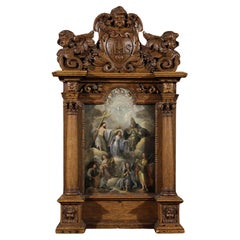
Italian School Panel Painting, 17th Century "The Adoration of Mary"
Located in Madrid, ES
Italian School Panel Painting, 17th Century "The Adoration of Mary" Oil on panel. 78 x 25.5 cm Original carved wooden frame Good condition
Category

Antique 17th Century Italian Baroque Paintings

Materials

Wood, Paint

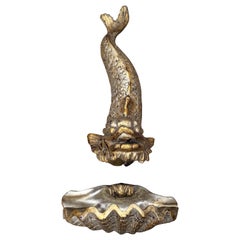
Venetian Style Classical Dolphin and Clam Wall Decoration
Located in Riverdale, NY
Venetian style dolphin and clam wall decor set from the 1960's in silver leafed resin with hand painted gold highlights. Together, they make a striking baroque focal point in any roo...
Category

Vintage 1960s Italian Baroque Wall-mounted Sculptures

Materials

Resin

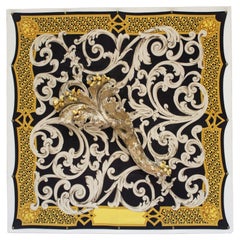
Italian Vintage Scarf with 18th Century Fragment and Baroque Pearls on Canvas
By Interi
Located in Dublin, Dalkey
Vintage Italian silk scarf with 18th century Italian gilded wood fragment and naturally forming baroque pearls on canvas. Vintage silk gold and black scarf centered with a large coo...
Category

Antique 18th Century Italian Rococo Wall-mounted Sculptures

Materials

Quartz, Rock Crystal, Gold Leaf

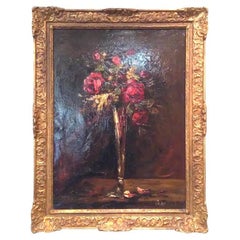
French Still Life Floral Painting by Charles Franzini d Issoncourt
Located in Miami, FL
Magnificent French Floral Oil Painting from Paris Universal Exposition in 1900. This captivating 19th-century still life oil painting by the award-winning French artist Charles Henr...
Category

Antique Early 1900s French Baroque Paintings

Materials

Canvas, Paint, Giltwood

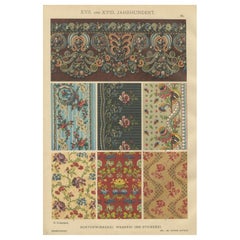
Ornamental Baroque Weaving and Embroidery Sample Print by H. Dolmetsch, 1887
Located in Langweer, NL
Ornamental Baroque Weaving and Embroidery Sample Print by H. Dolmetsch, 1890s This richly decorative antique print originates from the celebrated series *Ornamentenschatz*, compiled...
Category

Antique 1880s Prints

Materials

Paper

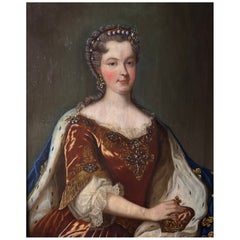
Portrait of Queen Marie Leszczynska, Wife of Louis XV, oil on canvas, 18th centu
By France"
Located in Madrid, ES
Portrait of Queen Marie Leszczynska, Wife of Louis XV, oil on canvas, 18th century Oil on canvas depicting Marie Leszczynska, Queen of France and wife of Louis XV, dressed in a luxu...
Category

Antique 18th Century French Baroque Paintings

Materials

Paint

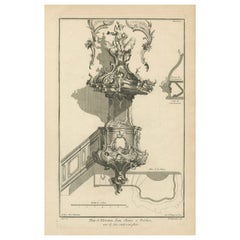
Original Antique Baroque Sermon Pulpit with Full Arch Elevation, circa 1740
Located in Langweer, NL
This is an original antique architectural design for a pulpit in baroque style dating approximately between 1740 and 1760. The artist responsible for this design is Franz Xaver Hab...
Category

Antique 1740s German Prints

Materials

Paper

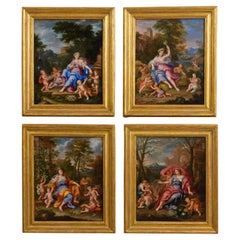
17th century, Four French Paintings Depicting The Seasons, Circle of Noel Coypel
By Noël Coypel
Located in IT
Four paintings depicting the seasons, circle of Noel Coypel, second half of the 17th century Oil on canvas, unsigned Measures: cm W 37 x H 46 x D 2 cm (canvas) The four paintings, pr...
Category

Antique Late 17th Century French Baroque Paintings

Materials

Canvas

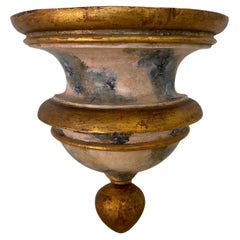
Portuguese Eighteenth Century Decorative Wall Shelf
Located in Ballard, CA
Unique Baroque wall shelve from Portugal, adorned with beautiful gilt and faux marble, Having arrived in Portugal later than it did in the rest of Europe, baroque art was to take on ...
Category

Antique 18th Century Portuguese Baroque Wall Brackets

Materials

Fruitwood

Rare Portrait of Maria Theresa of Austria, Queen Consort of France, 17th Century
By France"
Located in Madrid, ES
Portrait of Maria Theresa of Austria, Queen Consort of France, 17th Century Oil on canvas, European School, ca. 1660–1680, late 17th century Oil on canvas depicting Maria Theresa of...
Category

Antique 17th Century Spanish Baroque Paintings

Materials

Paint

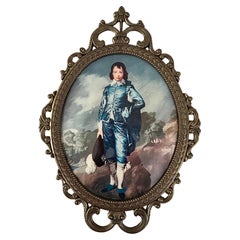
The Blue Boy by Thomas Gasinborough Print-Made in Italy
By (circle of) Thomas Gainsborough
Located in Medina, OH
This a print of the iconic The Blue Boy by Thomas Gainsborough from around 1770. It is believed to be a portrait of Jonathan Buttali, the son of wealthy ironmonger. This print come...
Category

Antique Late 18th Century Italian Baroque Prints

Materials

Brass

Impressive Scale Mid-17th Century Flemish Tapestry Depicting Alexander The Great
By Jacob Jordaens
Located in Dubai, AE
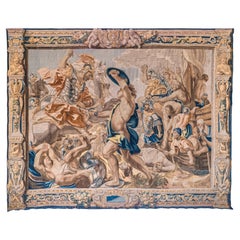
Spectacular large scale mid-17th Century Flemish tapestry created after the 1630s design by Jacob Jordaens (d. 1678). Several tapestries of identical design were produced based on dr...
Category

Antique 17th Century Belgian Baroque Tapestries

Materials

Wool, Silk

Matteo Lovatti (Italian, 1861-1909) 19th-Century Oil on Canvas "Church V State"
By Matteo Lovatti 1
Located in Los Angeles, CA
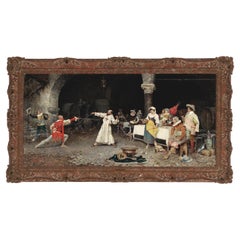
Matteo Lovatti (Italian, 1861-1909) A Fine 19th-Century Oil on Canvas Titled 'Church V. State - The Fencing Lesson'. The finely detailed artwork depicting an interior tavern scene, f...
Category

Antique 19th Century Italian Baroque Paintings

Materials

Canvas, Giltwood

Rare Portrait of Elizabeth Petrovna of Russia (1709-1762) 18th Century Sign
By Midcentury Italian school
Located in Madrid, ES
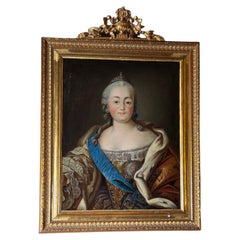
Rare Portrait of Elizabeth Petrovna of Russia (1709-1762) 18th Century Signature Signed by court painter Magnificent oil on canvas depicting Empress Elizabeth Petrovna (1709-1762),...
Category

Antique 18th Century Italian Baroque Paintings

Materials

Paint

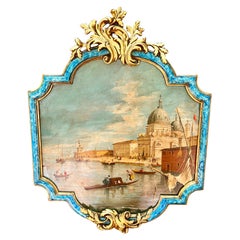
Venetian Canal Scene Set in Marbleized and Giltwood Frame
Located in Nashville, TN
Oil on board Venetian Canal Scene looking towards the mouth of The Grand Canal with Della Salute to one side . Typical in the Grand Tour style of 18th ,19th and 20th centuries ..
Category

Mid-20th Century Italian Baroque Decorative Art

Materials

Wood

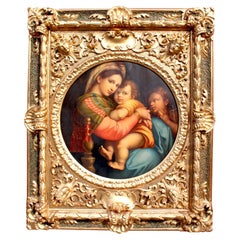
After Raffaello Sanzio 1483-1520 Raphael La Madonna della Seggiola Oil on Canvas
By (after) Raphael (Raffaello Sanzio da Urbino)
Located in Los Angeles, CA
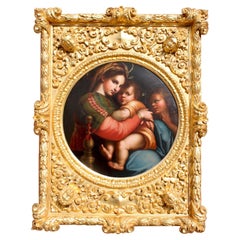
A Fine Italian 19th Century Oil Painting on Canvas "La Madonna della Seggiola" after Raphael (Raffaello Sanzio da Urbino 1483-1520). The circular painted canvas depicting a seated Madonna holding an infant Jesus Christ next to a child Saint John the Baptist, all within a massive carved two-tone gilt wood, gilt-patinated and gesso frame, which is identical to the frame on Raphael's original artwork. This painting is a 19th Century copy of Raphael's Madonna della Seggiola painted in 1514 and currently exhibited and part of the permanent collection at the Palazzo Pitti, Galleria Palatina, Florence, Italy. The bodies of the Virgin, Christ, and the boy Baptist fill the whole picture. The tender, natural looking embrace of the Mother and Child, and the harmonious grouping of the figures in the round, have made this one of Raphael's most popular Madonnas. The isolated chair leg is reminiscent of papal furniture, which has led to the assumption that Leo X himself commissioned the painting. Circa: 1890-1900. Subject: Religious painting Painting diameter: 28 inches (71.1 cm) Frame height: 55 1/8 inches (140 cm) Frame width: 46 inches (116.8 cm) Frame depth: 5 1/8 inches (13 cm) Raffaello Sanzio da Urbino (Italian, March 28 or April 6, 1483 - April 6, 1520), known as Raphael, was an Italian painter and architect of the High Renaissance. His work is admired for its clarity of form, ease of composition, and visual achievement of the Neoplatonic ideal of human grandeur. Together with Michelangelo and Leonardo da Vinci, he forms the traditional trinity of great masters of that period. Raphael was enormously productive, running an unusually large workshop and, despite his death at 37, leaving a large body of work. Many of his works are found in the Vatican Palace, where the frescoed Raphael Rooms were the central, and the largest, work of his career. The best known work is The School of Athens in the Vatican Stanza della Segnatura. After his early years in Rome much of his work was executed by his workshop from his drawings, with considerable loss of quality. He was extremely influential in his lifetime, though outside Rome his work was mostly known from his collaborative printmaking. After his death, the influence of his great rival Michelangelo was more widespread until the 18th and 19th centuries, when Raphael's more serene and harmonious qualities were again regarded as the highest models. His career falls naturally into three phases and three styles, first described by Giorgio Vasari: his early years in Umbria, then a period of about four years (1504–1508) absorbing the artistic traditions of Florence, followed by his last hectic and triumphant twelve years in Rome, working for two Popes and their close associates. Raphael was born in the small but artistically significant central Italian city of Urbino in the Marche region, where his father Giovanni Santi was court painter to the Duke. The reputation of the court had been established by Federico III da Montefeltro, a highly successful condottiere who had been created Duke of Urbino by the Pope - Urbino formed part of the Papal States - and who died the year before Raphael was born. The emphasis of Federico's court was rather more literary than artistic, but Giovanni Santi was a poet of sorts as well as a painter, and had written a rhymed chronicle of the life of Federico, and both wrote the texts and produced the decor for masque-like court entertainments. His poem to Federico shows him as keen to show awareness of the most advanced North Italian painters, and Early Netherlandish artists as well. In the very small court of Urbino he was probably more integrated into the central circle of the ruling family than most court painters. Federico was succeeded by his son Guidobaldo da Montefeltro, who married Elisabetta Gonzaga, daughter of the ruler of Mantua, the most brilliant of the smaller Italian courts for both music and the visual arts. Under them, the court continued as a centre for literary culture. Growing up in the circle of this small court gave Raphael the excellent manners and social skills stressed by Vasari. Court life in Urbino at just after this period was to become set as the model of the virtues of the Italian humanist court through Baldassare Castiglione's depiction of it in his classic work The Book of the Courtier, published in 1528. Castiglione moved to Urbino in 1504, when Raphael was no longer based there but frequently visited, and they became good friends. He became close to other regular visitors to the court: Pietro Bibbiena and Pietro Bembo, both later cardinals, were already becoming well known as writers, and would be in Rome during Raphael's period there. Raphael mixed easily in the highest circles throughout his life, one of the factors that tended to give a misleading impression of effortlessness to his career. He did not receive a full humanistic education however; it is unclear how easily he read Latin. Early Life and Works His mother Màgia died in 1491 when Raphael was eight, followed on August 1, 1494 by his father, who had already remarried. Raphael was thus orphaned at eleven; his formal guardian became his only paternal uncle Bartolomeo, a priest, who subsequently engaged in litigation with his stepmother. He probably continued to live with his stepmother when not staying as an apprentice with a master. He had already shown talent, according to Vasari, who says that Raphael had been "a great help to his father". A self-portrait drawing from his teenage years shows his precocity. His father's workshop continued and, probably together with his stepmother, Raphael evidently played a part in managing it from a very early age. In Urbino, he came into contact with the works of Paolo Uccello, previously the court painter (d. 1475), and Luca Signorelli, who until 1498 was based in nearby Città di Castello. According to Vasari, his father placed him in the workshop of the Umbrian master Pietro Perugino as an apprentice "despite the tears of his mother". The evidence of an apprenticeship comes only from Vasari and another source, and has been disputed—eight was very early for an apprenticeship to begin. An alternative theory is that he received at least some training from Timoteo Viti, who acted as court painter in Urbino from 1495.Most modern historians agree that Raphael at least worked as an assistant to Perugino from around 1500; the influence of Perugino on Raphael's early work is very clear: "probably no other pupil of genius has ever absorbed so much of his master's teaching as Raphael did", according to Wölfflin. Vasari wrote that it was impossible to distinguish between their hands at this period, but many modern art historians claim to do better and detect his hand in specific areas of works by Perugino or his workshop. Apart from stylistic closeness, their techniques are very similar as well, for example having paint applied thickly, using an oil varnish medium, in shadows and darker garments, but very thinly on flesh areas. An excess of resin in the varnish often causes cracking of areas of paint in the works of both masters. The Perugino workshop was active in both Perugia and Florence, perhaps maintaining two permanent branches. Raphael is described as a "master", that is to say fully trained, in December 1500. His first documented work was the Baronci altarpiece for the church of Saint Nicholas of Tolentino in Città di Castello, a town halfway between Perugia and Urbino. Evangelista da Pian di Meleto, who had worked for his father, was also named in the commission. It was commissioned in 1500 and finished in 1501; now only some cut sections and a preparatory drawing remain. In the following years he painted works for other churches there, including the Mond Crucifixion (about 1503) and the Brera Wedding of the Virgin (1504), and for Perugia, such as the Oddi Altarpiece. He very probably also visited Florence in this period. These are large works, some in fresco, where Raphael confidently marshals his compositions in the somewhat static style of Perugino. He also painted many small and exquisite cabinet paintings in these years, probably mostly for the connoisseurs in the Urbino court, like the Three Graces and St. Michael, and he began to paint Madonnas and portraits. In 1502 he went to Siena at the invitation of another pupil of Perugino, Pinturicchio, "being a friend of Raphael and knowing him to be a draughtsman of the highest quality" to help with the cartoons, and very likely the designs, for a fresco series in the Piccolomini Library in Siena Cathedral. He was evidently already much in demand even at this early stage in his career. Influence of Florence Raphael led a "nomadic" life, working in various centres in Northern Italy, but spent a good deal of time in Florence, perhaps from about 1504. Although there is traditional reference to a "Florentine period...
Category

Antique Early 1900s Italian Baroque Paintings

Materials

Canvas, Giltwood

17th century Antique Flemish Tapestry Wool Silk Verdure Art Nouveau 4x6ft
Located in New York, NY
17th century Antique Flemish Tapestry Wool & Silk Verdure Art Nouveau 4x6ft 122cm x 178cm "This is a very fine high quality rare authentic Antique Frenc...
Category

Antique 1690s French Baroque Tapestries

Materials

Wool, Silk

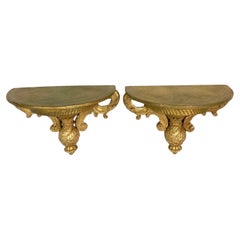
Pair Of Italian Carved And Giltwood Wall Brackets
Located in Bradenton, FL
Pair of Italian carved and giltwood wall brackets. Beautifully carved with acanthus leaves and scrollwork. Nice wide shelf atop a base that cumulates into a pineapple-like shape at b...
Category

Antique 19th Century Italian Baroque Wall Brackets

Materials

Giltwood

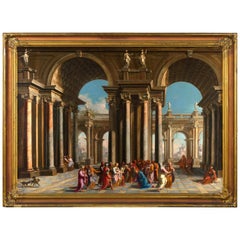
Alberto Carlieri, Painting with Architectural Capriccio
By Alberto Carlieri
Located in IT
Alberto Carlieri (Rome 1672-1720) "Architectural capriccio with the preaching of Saint Paul in the Areopagus of Athens" Oil on canvas, measures with...
Category

Antique Late 17th Century European Baroque Paintings

Materials

Canvas

Baroque Religious Painting Of Immaculate Conception, Gilt Frame, 17th Century
Located in Lisbon, PT
This 17th-century Baroque painting, in oil on copper, captures a serene portrayal of the Immaculate Conception, draped in yellow silk robes with accents of green and red. The divine ...
Category

Antique 17th Century Italian Renaissance Paintings

Materials

Copper

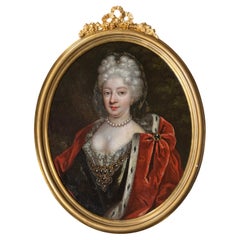
Portrait of Isabella Farnese, Queen Consort of Spain, 18th Century
By Central School of Arts Crafts
Located in Madrid, ES
Portrait of Isabella Farnese, Queen Consort of Spain, 18th Century Oil on oval canvas depicting Isabella Farnese (1692–1766), queen consort of Spain by her marriage to Philip V. The...
Category

Antique 18th Century Spanish Baroque Paintings

Materials

Paint

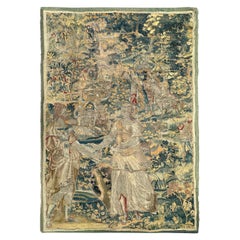
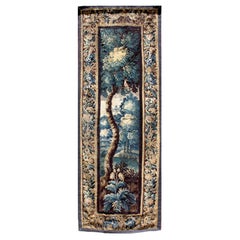
Flemish 18th-19th Century Verdure Landscape Tapestry Panel Centered with a Tree
Located in Los Angeles, CA
A fine flemish 18th-19th century Verdure landscape tapestry, the wool and silk tapestry centered by a scene of a tall tree within a forest background and a foliage border. Circa: 180...
Category

Antique Early 19th Century Belgian Baroque Tapestries

Materials

Wool, Silk

Petite French Baroque Style 1885s Silvered Wood Wall Bracket with Oval Mirror
Located in Palm Desert, CA
A petite French Baroque style wall bracket with mirror made of carved and silvered wood from the 19th century. The scalloped top rests on a scrolling leaf designed support above a small oval-shaped mirror. Unusually placed below the shelf, the mirror is set within a pierced Baroque cartouche...
Category

Antique Late 19th Century French Baroque Wall Brackets

Materials

Mirror, Wood

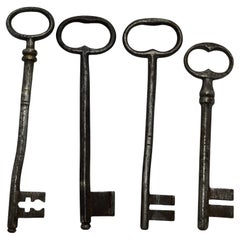
Set of four Wrought Iron Skeleton Key Antique German Folk Art, 18th Century
Located in Nuernberg, DE
A lovely collection of old antique iron skeleton keys. Found at an estate sale in Nuremberg, Germany. A nice addition to your collection or...
Category

Antique 18th Century German Baroque Shelves and Wall Cabinets

Materials

Metal, Iron

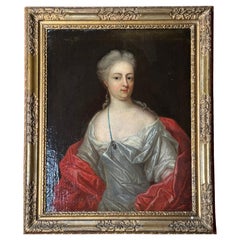
Elegant 17th-18th Century Lady’s Portrait in a Lavish Baroque-Style Gilt Frame
Located in Berlin, DE
This distinguished 19th-century portrait depicts an elegantly dressed lady, captured with remarkable refinement and quiet dignity. Her composed expression, finely rendered features, ...
Category

Antique 17th Century German Baroque Paintings

Materials

Wood

Antique 18th Square Century Flemish Verdure Green Landscape Tapestry with Birds
Located in New York, NY
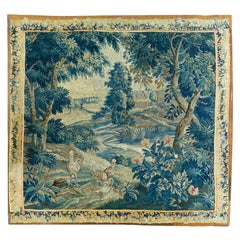
This is a gorgeous antique square 18th century flemish verdure landscape tapestry with birds depicting a beautiful and rich summer scene of a countryside with lush trees and vegetati...
Category

Antique 18th Century Dutch Baroque Tapestries

Materials

Tapestry, Wool

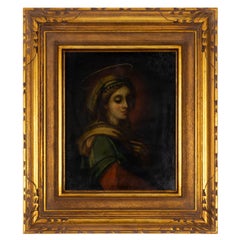
Antique 17th Century Painting Madonna /Virgin Mary Italy Oil on Canvas
Located in Doha, QA
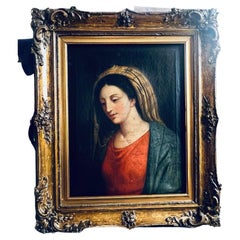
Magnificent Italian 17th century Portrait of Virgin Mary measures 52 x 68 cm without the frame. The colors are stunning and the paintin...
Category

Antique 17th Century Italian Baroque Paintings

Materials

Canvas

"An Elegant Hawking Party" A Pair of Paintings by August Querfurt
Located in Wiscasset, ME
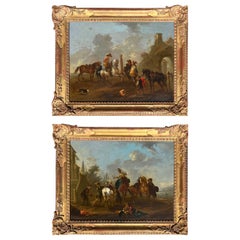
Pair of old master paintings by August Querfurt (1696-1761). Oil on panel, one signed with initials in the lower left. Two scenes depicting hawking parties from the 18th century. ...
Category

Antique 18th Century Austrian Baroque Paintings

Materials

Paint

18th Century Carved Wood Heraldic Coat of Arms
Located in Bradenton, FL
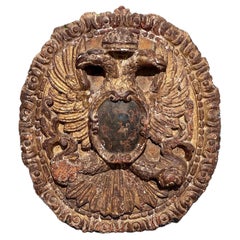
18th Century Carved and Painted Coat of Arms. Plaque features deeply hand-carved wood and retains traces of original polychrome and gilt finish. The coat of arms feature a double-hea...
Category

Antique 18th Century Russian Baroque Wall-mounted Sculptures

Materials

Wood

Jan Frans van Bloemen called Orizzonte (Antwerp 1662-Rome 1749), Roman Landscape
Located in CH
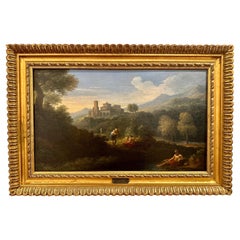
Jan Frans van Bloemen, called Orizzonte (Antwerp, 1662 – Rome, 1749) A Late 17th–Early 18th Century Italian Landscape with Figures of the Roman Campagna...
Category

Antique Late 17th Century Dutch Baroque Paintings

Materials

Canvas

Antonio Allegri, Our Lady with the Child Jesus 16th Century
By Antonio da Correggio
Located in Madrid, ES
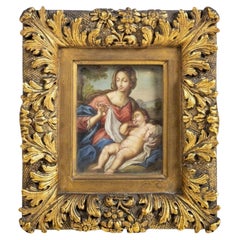
Antonio Alegri, (Correggio - 1494-1534) Our Lady with the Child Jesus oil on copper, Italian School 16th century With inscription on the back '1494-1534...
Category

Antique 16th Century Italian Baroque Paintings

Materials

Copper

Religious Oil on Canvas – European School, 18th Century
Located in Madrid, ES
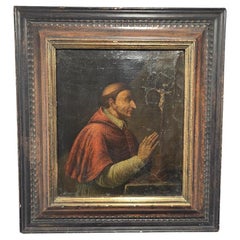
Religious Oil on Canvas – European School, 18th Century Dimensions: 50 x 45 cm (frame), 34 x 29 cm (view): San Carlos Borromeo, Archbishop of Milan (1538-1584) A serene and contempl...
Category

Antique 18th Century European Baroque Paintings

Materials

Canvas

17th Century, Italian Painting by Pier Francesco Cittadini, Jacob and his Family
Located in IT
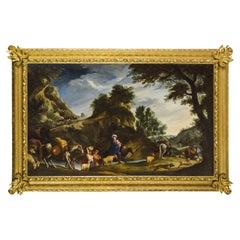
Pier Francesco Cittadini (Milan, 1616-Bologna, 1681) "Jacob and his family go to Egypt" Oil on canvas, cm 109 x 190 (canvas only) The valuable painting, made in oil on canvas, depicts Jacob and his family go to Egypt and we believe it can be, given the high quality painting, autograph work of Italian Pier Francesco Cittadini (Italy Milan, 1616 - Bologna, 1681) made after 1647. The work, in excellent condition is accompanied by a coeval frame in wood finely carved and golden. The scene depicted, which was confused with the Flight to Egypt in the past years, is instead identified with the biblical episode of Jacob’s journey. In the foreground, reading the painting from left to right, we see a caravan composed of animals, including donkeys, dromedaries, goats, dogs and horses and people, women, men and slaves, who carry on their journey along the banks of a river, following a path that to the right, would seem to lead to the through of a bridge. In addition to the watercourse is described an environment characterized by large rocks and impervious come far to cover the entire verticality of the canvas. On the left, in the distance, we see the tail of the caravan that runs along the steep path. Large trees enliven and harmonize the environment, as well as white and grey clouds characterize the predominantly clear sky and illuminated on the right by sunlight. The story is told in the Bible, Book of Genesis, 30, 25, passage in which is described the flight of Jacob from Haran after the contrasts with Laban, father of his wife Rachel. Jacob is the third great patriarch of the Bible. From his descendants originate the twelve generations of the people of Israel. He is the son of Isaac and Rebekah, who led him to flee from the wrath of Esau to Haran to seek refuge from his brother, Laban. At his uncle’s house Jacob met his daughter Rachel. As soon as he saw his cousin, Jacob was taken. Jacob will stay seven years in the service of Laban to marry his beloved Rachel. But Laban, with a deception, will give him in marriage first Lia, the least beautiful eldest daughter, and only after another seven years the splendid Rachel. From his first wife he will have several children, while Rachel will give birth to the beloved son, Joseph, who will become viceroy of Egypt. After years of service, Jacob asked to be paid with every dark-coloured garment among the sheep and every spotted and dotted garment among the goats. Laban accepted and sent away from his sons all the leaders of that kind. So Jacob took fresh branches of poplar, almond and plane tree, and flayed them, and put them in the troughs. The optical suggestion induced the goats and the sheep to conceive and give birth to dark, striped and dotted garments. He also ensured that all the strongest and healthiest leaders of the flock of Laban would drink near the barked branches, thus assuring a genetic superiority to his part of the flock. His flocks grew numerous and strong and he became richer than his relative, arousing envy. It was clear that Laban would not respect him much longer. At the suggestion of the Lord, Jacob decided to return to Canaan. Trying to avoid any possible dispute, he left with his family while Laban was absent for shearing sheep. But when, three days later, his uncle returned home, he became angry, feeling offended because Jacob had gone secretly and had not allowed him to greet his daughters and grandchildren. In addition, his teraphim, statuettes, or idols, which depicted the family deities, had disappeared. After 7 days of pursuit, Laban and his men reached Jacob’s group on Mount Gilead, in the mountainous region west of the Euphrates River, where his uncle and grandson had a stormy conversation. The younger man was outraged at being accused of stealing idols and told Labano to rummage through his family’s tents at will. Neither of them could know or even imagine that it was Rachel who took the idols and hid them in the saddle of the camel. During the search, she sat down firmly on the saddle, apologizing for not being able to get up, «because I usually have what happens to women» (Gen 31:35). So the loot wasn’t discovered. The author of this work was inspired by the composition of an engraving by Stefano Della Bella (1610-1664) of circa 1647. The engraving by Stefano della Bella bears the title "Iacob sur ses vieux jours quitte sans fascherie pour voir son filz Ioseph, sa terre et sa patrie" and is signed on the bottom left "Stef. of the Beautiful In. et fe." while on the right it is declared "Cum privil. Regis", that is with license of the king. Stefano Della Bella (Italy - Florence, May 18, 1610-Florence, July 12, 1664) was born in a family of painters, sculptors and goldsmiths and was left early orphan of his father sculptor, he dedicated himself first to the art of goldsmith at the school of Giovanni Benedetto Castiglione and Gasparo Mola, then turning his attention to drawing and engraving. He soon began drawing figures and copying the etchings of Jacques Callot, which inspired his early works. Under the protection of the Medici, in particular of Don Lorenzo, cadet son of Grand Duke Ferdinand I, Della Bella has the opportunity to make study trips to Rome, where he stayed from 1633-1636; In Rome he met French engravers and publishers of prints such as Israël Henriet and François Langlois, who influenced his decision to move to Paris in 1639, four years after the death of Callot. In Paris he soon reached, thanks to the engravings commissioned by Cardinal Richelieu, the success also worldly; he frequented courtiers, theatre artists and writers, while refusing too oppressive honors. In 1646-1647 he continued his travels in the Netherlands to Amsterdam, Antwerp and Dordrecht. He returned to Florence in 1650 and resumed working under the protection of the Medici court, working for his patrons. In 1656 he became a member of the Academy of Apatists. The painting object of this study is reasonably attributable to Pier Francesco Cittadini, or Pierfrancesco Cittadini, called the Milanese or the Franceschino (Italy - Milan, 1616-Bologna, 1681) as some exemplary stylistic comparisons proposed to follow can prove. Pier Francesco Cittadini was an Italian baroque painter, mainly active in Bologna. His artistic training first took place with the painter Daniele Crespi...
Category

Antique Mid-17th Century European Baroque Paintings

Materials

Canvas, Giltwood

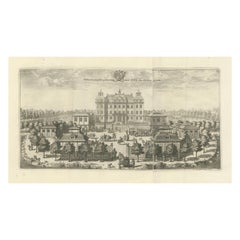
Baroque Opulence: The Eastern View of SIQVO Palace in Swidde s 1696 Engraving
Located in Langweer, NL
An engraving by Willem Swidde from 1696. The print features a palatial estate surrounded by formal gardens, a common representation of baroque architecture and landscaping. The centr...
Category

Antique 1690s Prints

Materials

Paper

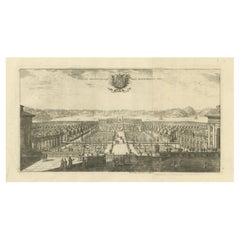
Rosersberg Palace and Gardens near Stockholm in the Baroque Splendor of 1695
Located in Langweer, NL
This is a historical etching from "Suecia Antiqua et Hodierna", which translates to "Ancient and Modern Sweden", a large work that includes a collection of engravings...
Category

Antique 1690s Prints

Materials

Paper

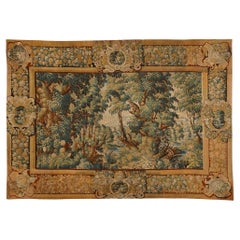
Immense 17th Century Flemish Wool Verdure Tapestry
Located in London, GB
Immense 17th Century Flemish wool verdure tapestry Flemish, 17th Century Height 323cm, width 424cm This very large and exquisite tapestry was crafted in wool in Flanders during the ...
Category

Antique 17th Century Belgian Baroque Tapestries

Materials

Wool

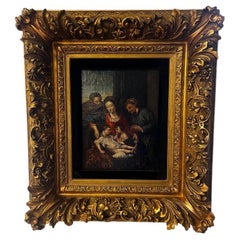
Early 17th Century School of Peter Paul Rubens “The Holy Family” Oil on Canvas
Located in Doha, QA
This is an absolutely incredible early 17th century oil on canvas painting representing Holy Family-Virgin Mary, St.Joseph, St. Elisabeth, John the Baptist and Baby Jesus. Sir Peter ...
Category

Antique Early 17th Century Italian Baroque Paintings

Materials

Canvas

Italian Gilt Leaf Sconce with Stone Fruit
Located in Riverdale, NY
Attractive Italian Gilt Leaf Wall Sconce with Stone Fruit. 1960's Italy. 45" x 25" x 4". Excellent condition.
Category

Vintage 1960s Italian Baroque Wall-mounted Sculptures

Materials

Brass

Mid 18th Century Italian Late Baroque / Rococo Oil on Cloth Framed Painting
Located in Marbella, ES
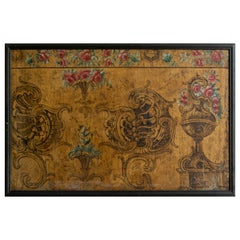
Antique mid 18th century Italian late Baroque / Rococo oil on cloth framed ornamental painting with rocaille, flowering roses and vases.
Category

Antique 18th Century Italian Paintings

Materials

Canvas

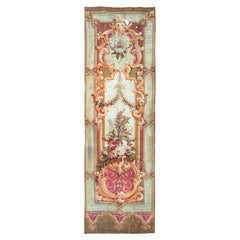
1920 Antique French Aubusson Tapestry Rug Floral Vase Runner 3x10 1880 97x287cm
Located in New York, NY
1920 Antique French Aubusson Tapestry Rug Floral Vase Runner 3x10 c.1880 3'2" x 9'5" 97cm x 287cm A magnificent antique French tapestry depict...
Category

Vintage 1920s French Baroque Tapestries

Materials

Wool

Pair of 19th Century Italian Painted and Giltwood Wall Brackets
Located in Houston, TX
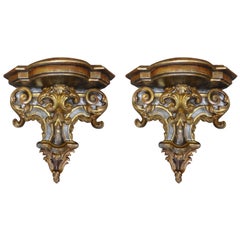
Pair of 19th Century Italian Painted and Gilt wood Wall Brackets. Stunning large pair of Italian Baroque style painted and gilt wood wall brackets, wall shelves or wall consoles to d...
Category

Antique 1870s Italian Baroque Wall Brackets

Materials

Giltwood

1850 Italy Pair Wunderkammer Vitrines with Natural Faux Fruits in Baroque Style
By Francesco Garnier Valletti 1
Located in Brescia, IT
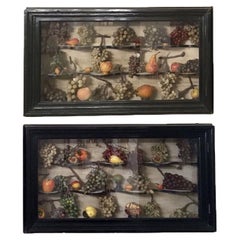
In the 18th century the most important tables in Europe they were richly decorated with all types of fruit and flowers. To obtain the maximum effect of beauty and amazement, the sple...
Category

Antique Mid-19th Century Italian Louis XVI Wall-mounted Sculptures

Materials

Other

Dutch Baroque Biblical Engravings, 3 Double-Scene Plates by Pieter Mortier, 1700
Located in Langweer, NL
Set of Three Double-Scene Biblical Engravings, Pieter Mortier, Amsterdam, ca.1700 This finely engraved biblical set consists of three early-18th-century copper engravings, each shee...
Category

Antique Early 1700s Dutch Prints

Materials

Paper

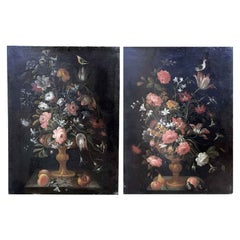
Coppia di Nature morte di FIori Frutta e Uccelli Due Dipinti Italiani 1650 circa
Located in Milano, MI
Nature morte di fiori in vaso di scuola italiana del XVII secolo, coppia di due dipinti senza cornice. Olio su tela con sfondo scuro e fiori finemente definiti. Questi dipinti, natur...
Category

Antique 17th Century Italian Baroque Paintings

Materials

Canvas

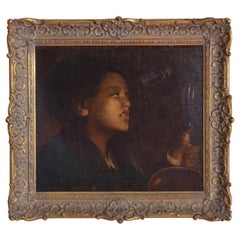
French Oil on Canvas on Board, Baroque Style, Girl in Lamplight, 19th Century
Located in Atlanta, GA
Depicing a genre scene in the Baroque style showing a dark vs light contrast imitated throughout the 18th and 19th centuries, placed in a later Regence style frame this oil on canvas...
Category

Antique 1840s French Paintings

Materials

Paint

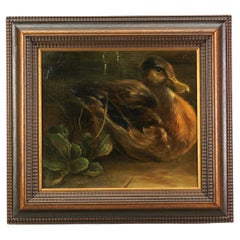
Painting with Duck and Plants, Oil on Plywood
Located in Barntrup, DE
A Baroque style oil painting from the first third of the 20th Century. This beautiful painting depicts a duck with plants, painted on a plywood panel in brown, green, and yellow ton...
Category

Vintage 1930s European Baroque Paintings

Materials

Wood, Paint, Plywood

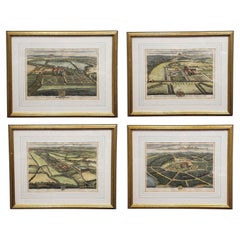
J. Kip and L. Knyff 18th Century Hand Colored Engravings, Set of 4
By Johannes Kip
Located in North Palm Beach, FL
Set of four antique hand-colored engravings. "Britannia Illustrata," the publication in which these prints originally appeared, was one of the most important topographical works of t...
Category

Antique Mid-18th Century English Baroque Prints

Materials

Paper

After Raffaello Sanzio 1483-1520 Raphael La Madonna della Seggiola Oil on Canvas
By (after) Raphael (Raffaello Sanzio da Urbino)
Located in Los Angeles, CA
A Fine Italian 19th Century Oil Painting on Canvas "La Madonna della Seggiola" after Raphael (Raffaello Sanzio da Urbino 1483-1520). The circular painted canvas depicting a seated Madonna holding an infant Jesus Christ next to a child Saint John the Baptist, all within a massive carved gilt wood and gesso frame, which is identical to the frame on Raphael's original artwork. This painting is a 19th Century copy of Raphael's Madonna della Seggiola painted in 1514 and currently exhibited and part of the permanent collection at the Palazzo Pitti, Galleria Palatina, Florence, Italy. The bodies of the Virgin, Christ, and the boy Baptist fill the whole picture. The tender, natural looking embrace of the Mother and Child, and the harmonious grouping of the figures in the round, have made this one of Raphael's most popular Madonnas. The isolated chair leg is reminiscent of papal furniture, which has led to the assumption that Leo X himself commissioned the painting. A retailer's label reads " Fred K/ Keer's Sons - Framers and Fine Art Dealers - 917 Broad St. Newark, N.J." - Another label from the gilder reads "Carlo Bartolini - Doratore e Verniciatori - Via Maggio 1924 - Firenze". Circa: 1890-1900. Subject: Religious painting Canvas diameter: 28 inches (71.1 cm) Frame height: 54 inches (137.2 cm) Frame width: 42 1/2 inches (108 cm) Frame depth: 5 1/2 inches (14 cm) Raffaello Sanzio da Urbino (Italian, March 28 or April 6, 1483 - April 6, 1520), known as Raphael, was an Italian painter and architect of the High Renaissance. His work is admired for its clarity of form, ease of composition, and visual achievement of the Neoplatonic ideal of human grandeur. Together with Michelangelo and Leonardo da Vinci, he forms the traditional trinity of great masters of that period. Raphael was enormously productive, running an unusually large workshop and, despite his death at 37, leaving a large body of work. Many of his works are found in the Vatican Palace, where the frescoed Raphael Rooms were the central, and the largest, work of his career. The best known work is The School of Athens in the Vatican Stanza della Segnatura. After his early years in Rome much of his work was executed by his workshop from his drawings, with considerable loss of quality. He was extremely influential in his lifetime, though outside Rome his work was mostly known from his collaborative printmaking. After his death, the influence of his great rival Michelangelo was more widespread until the 18th and 19th centuries, when Raphael's more serene and harmonious qualities were again regarded as the highest models. His career falls naturally into three phases and three styles, first described by Giorgio Vasari: his early years in Umbria, then a period of about four years (1504–1508) absorbing the artistic traditions of Florence, followed by his last hectic and triumphant twelve years in Rome, working for two Popes and their close associates. Raphael was born in the small but artistically significant central Italian city of Urbino in the Marche region, where his father Giovanni Santi was court painter to the Duke. The reputation of the court had been established by Federico III da Montefeltro, a highly successful condottiere who had been created Duke of Urbino by the Pope - Urbino formed part of the Papal States - and who died the year before Raphael was born. The emphasis of Federico's court was rather more literary than artistic, but Giovanni Santi was a poet of sorts as well as a painter, and had written a rhymed chronicle of the life of Federico, and both wrote the texts and produced the decor for masque-like court entertainments. His poem to Federico shows him as keen to show awareness of the most advanced North Italian painters, and Early Netherlandish artists as well. In the very small court of Urbino he was probably more integrated into the central circle of the ruling family than most court painters. Federico was succeeded by his son Guidobaldo da Montefeltro, who married Elisabetta Gonzaga, daughter of the ruler of Mantua, the most brilliant of the smaller Italian courts for both music and the visual arts. Under them, the court continued as a centre for literary culture. Growing up in the circle of this small court gave Raphael the excellent manners and social skills stressed by Vasari. Court life in Urbino at just after this period was to become set as the model of the virtues of the Italian humanist court through Baldassare Castiglione's depiction of it in his classic work The Book of the Courtier, published in 1528. Castiglione moved to Urbino in 1504, when Raphael was no longer based there but frequently visited, and they became good friends. He became close to other regular visitors to the court: Pietro Bibbiena and Pietro Bembo, both later cardinals, were already becoming well known as writers, and would be in Rome during Raphael's period there. Raphael mixed easily in the highest circles throughout his life, one of the factors that tended to give a misleading impression of effortlessness to his career. He did not receive a full humanistic education however; it is unclear how easily he read Latin. Early Life and Works His mother Màgia died in 1491 when Raphael was eight, followed on August 1, 1494 by his father, who had already remarried. Raphael was thus orphaned at eleven; his formal guardian became his only paternal uncle Bartolomeo, a priest, who subsequently engaged in litigation with his stepmother. He probably continued to live with his stepmother when not staying as an apprentice with a master. He had already shown talent, according to Vasari, who says that Raphael had been "a great help to his father". A self-portrait drawing from his teenage years shows his precocity. His father's workshop continued and, probably together with his stepmother, Raphael evidently played a part in managing it from a very early age. In Urbino, he came into contact with the works of Paolo Uccello, previously the court painter (d. 1475), and Luca Signorelli, who until 1498 was based in nearby Città di Castello. According to Vasari, his father placed him in the workshop of the Umbrian master Pietro Perugino as an apprentice "despite the tears of his mother". The evidence of an apprenticeship comes only from Vasari and another source, and has been disputed—eight was very early for an apprenticeship to begin. An alternative theory is that he received at least some training from Timoteo Viti, who acted as court painter in Urbino from 1495.Most modern historians agree that Raphael at least worked as an assistant to Perugino from around 1500; the influence of Perugino on Raphael's early work is very clear: "probably no other pupil of genius has ever absorbed so much of his master's teaching as Raphael did", according to Wölfflin. Vasari wrote that it was impossible to distinguish between their hands at this period, but many modern art historians claim to do better and detect his hand in specific areas of works by Perugino or his workshop. Apart from stylistic closeness, their techniques are very similar as well, for example having paint applied thickly, using an oil varnish medium, in shadows and darker garments, but very thinly on flesh areas. An excess of resin in the varnish often causes cracking of areas of paint in the works of both masters. The Perugino workshop was active in both Perugia and Florence, perhaps maintaining two permanent branches. Raphael is described as a "master", that is to say fully trained, in December 1500. His first documented work was the Baronci altarpiece for the church of Saint Nicholas of Tolentino in Città di Castello, a town halfway between Perugia and Urbino. Evangelista da Pian di Meleto, who had worked for his father, was also named in the commission. It was commissioned in 1500 and finished in 1501; now only some cut sections and a preparatory drawing remain. In the following years he painted works for other churches there, including the Mond Crucifixion (about 1503) and the Brera Wedding of the Virgin (1504), and for Perugia, such as the Oddi Altarpiece. He very probably also visited Florence in this period. These are large works, some in fresco, where Raphael confidently marshals his compositions in the somewhat static style of Perugino. He also painted many small and exquisite cabinet paintings in these years, probably mostly for the connoisseurs in the Urbino court, like the Three Graces and St. Michael, and he began to paint Madonnas and portraits. In 1502 he went to Siena at the invitation of another pupil of Perugino, Pinturicchio, "being a friend of Raphael and knowing him to be a draughtsman of the highest quality" to help with the cartoons, and very likely the designs, for a fresco series in the Piccolomini Library in Siena Cathedral. He was evidently already much in demand even at this early stage in his career. Influence of Florence Raphael led a "nomadic" life, working in various centres in Northern Italy, but spent a good deal of time in Florence, perhaps from about 1504. Although there is traditional reference to a "Florentine period...
Category

Antique Early 1900s Italian Baroque Paintings

Materials

Canvas, Giltwood

Vintage Italian Montelupo Maiolica Pottery Charger
Located in Bradenton, FL
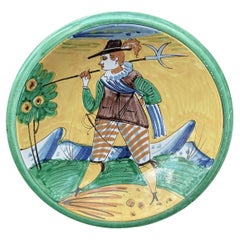
This beautiful maiolica pottery charger is from Montelupo, Italy and is boldly decorated with a soldier walking, carrying a tool of the day. Vividly painted in yellow, green, and blu...
Category

Mid-20th Century Italian Baroque Decorative Art

Materials

Pottery

Read More

Punk Rock and Rebellion Animate London’s Hit Yoshitomo Nara Show

The exhibition includes his portraits of wide-eyed kids with mayhem on their minds, as well as some of the artist’s personal belongings.

Whether Painted or Papered, Muraled Walls Make Bold Statements in the Home

The ancient practice of covering walls in artistic scenery is back.

In Francks Deceus’s ‘Mumbo Jumbo #5,’ the Black Experience Is . . . Complicated

Despite the obstacles, the piece’s protagonist navigates the chaos without losing his humanity.

12 Floral-Accented Rooms with a Handmade, Folkloric Feel

Who needs a flower garden? Just use your imagination — and some beautifully patterned wallpaper or fabric — to bring the outdoors in.

This Wolf Kahn Pastel Is the Epitome of Beauty at Its Most Essential

A longtime admirer of Kahn’s work, 1stDibs editorial director Anthony Barzilay Freund explores why it’s relevant now more than ever.

Why Jules Chéret Was the King of the Modern Poster

The streets of fin-de-siècle Paris were set aglow with colorful poster ads, thanks to the printing techniques invented by Jules Chéret. Now, the Milwaukee Art Museum is celebrating this undersung talent in America's first solo show dedicated his exuberant works.

Anna Condo’s Multifaceted Career Spans Film, Photography and NFTs

From her historic Manhattan townhouse, the talented creator and curator of 1stDibs' latest NFT exhibition tells us about the art in her home and how she got involved with cryptoart.

How Keith Rivers Went from NFL Linebacker to Blue-Chip Art Aficionado

The former football player is as serious about becoming a great contemporary-art patron as he once was about making tackles. Here, Rivers tells us how he got the collecting bug and how his tastes have evolved over the years.