1,477 results for "baroque"

to
237
834
591
1,450
14
13
Height
to
Width
to
890
26
14
14
12
11
6
4
3
2
1
1
1
1
838
351
261
27
87
78
56
20
4
21
6
3
18
14
14
3
6
466
452
388
305
288
1,264
398
274
112
106
1,477
1,469
1,473
26
20
7
6
5
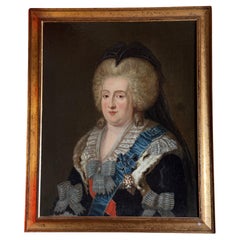
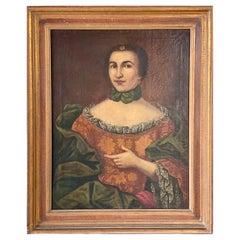
European School, 18th Century " German Princess "
By Central School of Arts Crafts
Located in Madrid, ES
Portrait of a German Princess with a Sash and Insignia of a Knightly Order European School, 18th Century " German Princess " Large-format oil on canvas depicting a German princess,...
Category

Antique 18th Century Polish Baroque Paintings

Materials

Paint

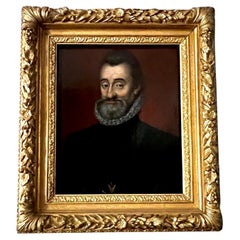
Portrait of King Henri IV of France Oil on Canvas 1553-1610
Located in Doha, QA
A stunning Portrait of King Henri IV of France, father of King Louis XIII in the fantastic impressive hand carved gold gilded French baroque frame...
Category

Antique 17th Century French Baroque Paintings

Materials

Canvas, Paint

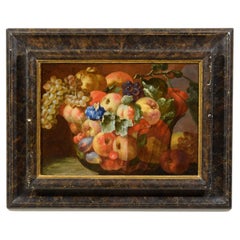
18th Century, Italian Painting Still Life by Giovanni Paolo Castelli Lo Spadino
Located in IT
Giovanni Paolo Castelli, known as "Lo Spadino" (Rome 1659 – around 1730) Still Life with a Composition of Fruit Dimensions: frame cm L 76.5 x H 61 x D 6.5. Canvas cm L 55.5 x H 40 Th...
Category

Antique Early 18th Century Italian Baroque Paintings

Materials

Canvas, Wood

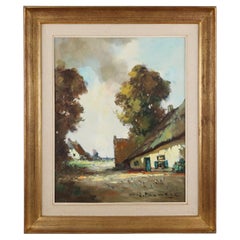
20th Century Belgian Painting of a farm scene with gilded wooden frame
Located in Meulebeke, BE
Belgium / 1950 / Painting / canvas, wood / Antique / Baroque An exquisite oil painting in the style of the Belgian old masters with a luxurious gilded wooden frame. This work beau...
Category

Vintage 1950s Belgian Baroque Paintings

Materials

Canvas, Wood, Paint

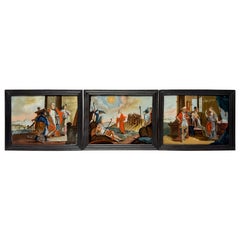
Set of 3, 19th Century Allegorical Reverse Glass Paintings
Located in Atlanta, GA
**Set of 3, 19th Century Allegorical Reverse Glass Paintings** This captivating set of **three 19th-century allegorical reverse glass paintings** presents richly detailed narratives imbued with symbolism and classical themes. Each painting is executed in the traditional reverse glass technique, providing a smooth and reflective surface that enhances the vibrant palette and fine detailing. 1. **Painting 1 (Left Panel):** This scene portrays a dramatic encounter, likely a moment of judgment or persuasion, set against a distant landscape. A figure in a flowing blue robe gestures emphatically toward a well-dressed couple, perhaps symbolizing conflict, intervention, or moral decision-making. The background includes a sweeping view of the countryside, with figures in the distance adding depth and context. 2. **Painting 2 (Center Panel):** The central panel features a pastoral scene steeped in allegorical significance. A central figure dressed in red, resembling a shepherd, commands attention under a radiant sunburst. Surrounding characters appear in moments of tension and repose, including a reclining figure and a soldier-like character. This composition evokes themes of guidance, struggle, and divine providence, with the bright sky and natural elements reinforcing the allegorical tone. 3. **Painting 3 (Right Panel):** The final panel depicts an intimate interior scene, with two seated women engaged in conversation, one gesturing emphatically as a standing male figure observes. The setting includes detailed furnishings, such as a writing desk, a red draped curtain, and objects hinting at scholarly or domestic pursuits. This tableau may represent themes of wisdom, counsel, or moral reflection, supported by the characters' thoughtful expressions and elaborate dress. Each painting is framed in its **original dark wooden frame**, complementing the vibrant colors and enhancing their display value. The set embodies the **19th-century European fascination with allegory and storytelling**, making it a significant piece for collectors of reverse glass art...
Category

Antique Mid-19th Century Italian Baroque Paintings

Materials

Glass, Paint

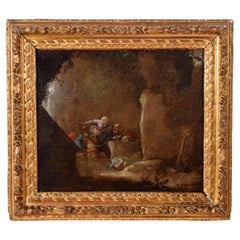
The temptation of St Anthony. Oil on canvas. 17th c., after David Teniers II
By David Teniers the Younger
Located in Madrid, ES
Temptations of San Antonio Abad. Oil on canvas. 17th century, following the model of David Teniers II (Antwerp, 1610-Brussels, 1690). Oil on canvas showing a figurative scene located inside a cave. To the right, you can see a cross standing, supported; to the left, a hut; and in the center of the painting appears an elderly, bearded man, leaning on a table on which there is a ceramic jug and a skull, with an open book at the foot of it. The man looks towards a woman, who points to something outside, and appears accompanied by a large frog and a series of ghostly beings or monsters dressed in brightly colored cloth and clothing. San Antonio Abad or Antonio Magno (251-356) was a Christian monk, considered the founder of the eremitical movement. He was tempted numerous times by the devil while he was in the desert, becoming a subject frequently represented in art (as can be seen in this oil painting). He is represented in a black habit because the Order of the Knights of the Hospital of San Antonio (Hospitals) was placed under his patronage, being the color of the habits of the members of this order (the tau or Egyptian cross was also the symbol chosen by they). David Teniers II or El Joven was a prominent Flemish painter and engraver, son of David Teniers El Viejo or I and father of David Teniers III, much appreciated at the time for his scenes of villagers and common people, his paintings of monkey painters, etc. . He dealt with the theme of the Temptations of Saint Anthony...
Category

Antique 17th Century European Baroque Paintings

Materials

Other

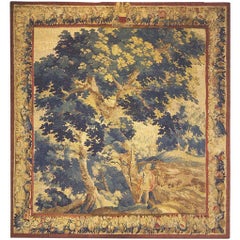
Late 17th Century Flemish Landscape Tapestry, with an Archer in a Forest
Located in New York, NY
A Flemish Baroque landscape hunting tapestry from the late 17th or early 18th century, depicting a young Archer carrying a bow and arrow within a forest in a meadowland setting. Encl...
Category

Antique Late 17th Century European Baroque Tapestries

Materials

Wool

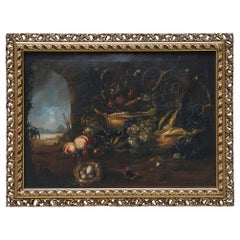
Italian Still Life Painting Oil on Canvas in Flemish Style
Located in Alessandria, Piemonte
Charming still life old Italian painting with beautiful details, in a vintage Italian carved wooden frame Interesting for a study room . If You don't want the frame for the paintin...
Category

Mid-20th Century Italian Baroque Paintings

Materials

Giltwood

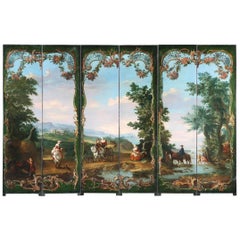
18th Century Painted Six Panelled Screen Depicting an European Landscape
Located in London, GB
A six panelled screen of the late Baroque period Oil on canvas, depicting a panoramic view of a Capriccio north European landscape, perhaps Schlesweig-Holstein, with distant views of the sea, the ruined castles, peasants, and a lady of quality mounted, within a running arched canopy...
Category

Antique 18th Century German Baroque Paintings

Materials

Canvas, Paint

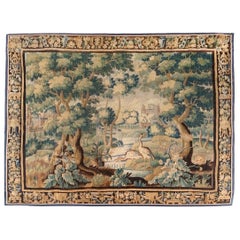
SHAHKAR Early 17th Century French Verdure Landscape Tapestry 8.11 x 11.3 ft
Located in New York, NY
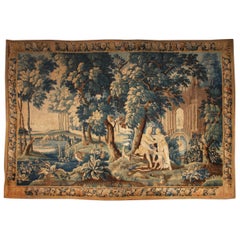
This is a gorgeous antique Early 17th century Flemish Verdure landscape tapestry depicting a beautiful and rich summer scene of a countryside with lush trees and vegetation, and bird...
Category

Antique 17th Century Dutch Baroque Tapestries

Materials

Silk

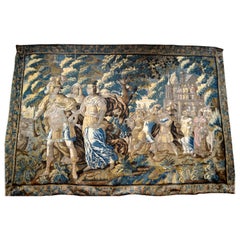
17th Century Flemish Verdure Mythological Tapestry of Paris Taking Helen to Troy
Located in Vancouver, British Columbia
A spectacular flemish 17 century combined verdure and mythological handwoven wool tapestry in a simple palette of beige, green, brown and blue, framed with a complete floral border a...
Category

Antique 1660s Belgian Baroque Tapestries

Materials

Wool

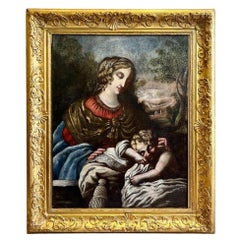
Early 17th Century Tuscan School Oil Painting on Canvas Virgin and Child
Located in NICE, FR
We present you this magnificent oil painting on canvas endearingly the Virgin Mary gently caressing the head of Christ Child asleep on his Mother's lap. This artwork has been expertly fit with new canvas and encased in an exquisite gilded wooden frame. It is representative of the Tuscan School...
Category

Antique Early 17th Century Italian Baroque Paintings

Materials

Canvas

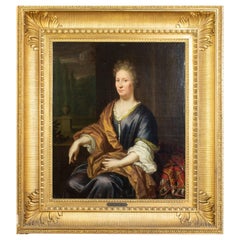
18th Century Portrait of a Noblewoman in Giltwood Frame
Located in Bradenton, FL
18th Century Portrait of a Noblewoman in period attire, Oil on Canvas later mounted on board. Woman is dressed in richly detailed period attire and gazes confidently outward. A delic...
Category

Antique 18th Century Italian Baroque Paintings

Materials

Canvas, Paint

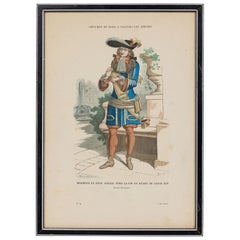
French Louis XIV Style Framed Lithograph of a Lord in Baroque Attire
Located in Queens, NY
French Louis XIV style framed lithograph of a lord in Baroque attire towards the end of Louis XIV\'s reign in a wooden black and silver frame (Similar group of prints NWL6152A-J) Go...
Category

Antique 18th Century French Louis XIV Prints
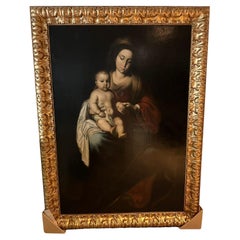
Important Circle Esteban Murillo "The Virgin and Child"
Located in Madrid, ES
Important Circolo Esteban Murillo "The Virgin and Child" oil on canvas Provenance: Private, Monte Carlo 150cm x 105cm Murillo received several commissions for paintings featuring Vi...
Category

Antique 17th Century Spanish Baroque Paintings

Materials

Paint

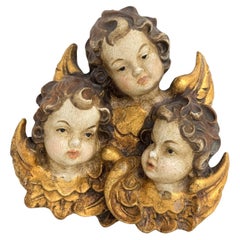
Hand Carved 20th Century Wooden Three Cherub Angel Head Vintage, German
Located in Nuernberg, DE
Beautiful hand carved wooden cherub angel head, found at an estate sale in Nuremberg, Germany. We believe that this piece is from the mid-20th century, probably older. A nice addit...
Category

Vintage 1950s German Baroque Wall-mounted Sculptures

Materials

Wood

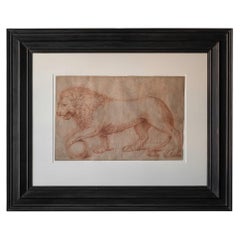
Beautiful 17th Century Red Chalk Drawing of the Medici Lion by Domenico Vacca
Located in Jesteburg, DE
Florentine or Flemish school 17th century study of the Medici Lion by Flaminio Vacca. Measures: Sheet 31.7 x 48.8 cm. (12.5 x 19.2 in.) Frame...
Category

Antique 17th Century European Baroque Drawings

Materials

Paper

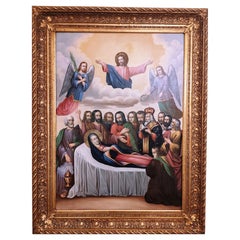
A large 19th-century Orthodox icon of the Assumption of the Virgin Mary
Located in Belgrade, RS
An imposing religious-themed painting depicts the scene of the "Assumption of the Virgin". The iconography in this 19th-century painting follows the tendencies of Baroqueization and ...
Category

Antique Late 19th Century Serbian Baroque Paintings

Materials

Canvas, Wood, Giltwood

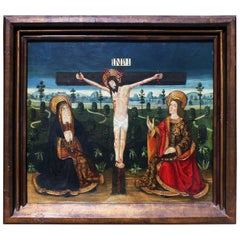
Hispano-Portuguese 19th Century Oil Painting on Board, Icon "The Crucifixion"
Located in Los Angeles, CA
An Hispano-Portuguese 19th century oil on board depiction of "The Crucifixion". The baroque icon style painting depicting the Crucifixion of Jesus Christ outside the city walls of Jerusalem, north of Mount Zion...
Category

Antique 19th Century Spanish Baroque Revival Paintings

Materials

Wood

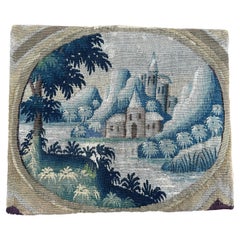
Antique Flemish Wool Silk Tapestry 36cm×43 cm Mounted Scenic 1 x2 c.1790
Located in New York, NY
This 18th-century Flemish tapestry panel depicts a serene, blue-toned landscape with castle architecture framed by lush foliage. Handwoven in wool and silk, the composition reflects ...
Category

Antique 18th Century Belgian Baroque Tapestries

Materials

Wool, Silk

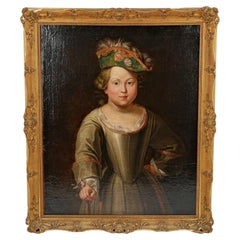
Circle of Alexis-Simon Belle (1674-1734) "Antique Portrait of a Young Girl"
Located in Madrid, ES
Circle of Alexis-Simon Belle (1674-1734) "Antique Portrait of a Young Girl" Oil on canvas. Dimensions: H: 70 × W: 57 cm Good condition Alexis Simon Belle was born in Paris. He was t...
Category

Antique 17th Century French Baroque Paintings

Materials

Paint

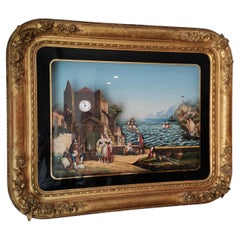
Musical Automaton Picture Clock by Xavier Tharin, c. 1860
Located in Madrid, ES
Musical automaton picture clock by Xavier Tharin, c. 1860 Paris, hand-colored lithographed scene depicting a Mediterranean harbor scene with abbey, ...
Category

Antique 19th Century French Baroque Decorative Art

Materials

Paint

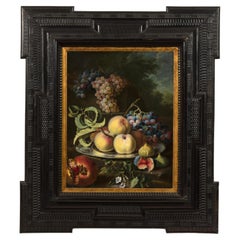
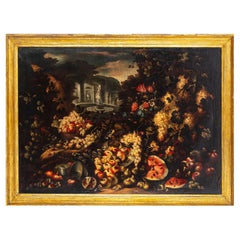
18th Century, Painting with Still Life by Maximilian Pfeiler
Located in IT
Maximilian Pfeiler (active Rome, circa 1694-circa 1721 Budapest) Still life with peaches, grapes, figs and pomegranate Oil on canvas, Measures: cm H 63,5 x W 47. With frame cm ...
Category

Antique Early 18th Century Italian Baroque Paintings

Materials

Canvas, Wood

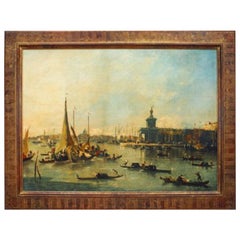
Copy of a Seascape "Venice, The Dogana with the Guidecca"
Located in Queens, NY
Copy of a seascape painting titled " Venice, the Dogana With The Guidecca" showing ships on the Canal Guidecca inspected by Dogana or Customs
Category

Late 20th Century American Baroque Paintings

Materials

Paint

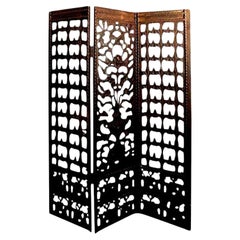
Edgar Brandt Inspired Wrought Iron Screen or Room Divider
By Gilbert Poillerat, Paul Kiss, Edgar Brandt, Addison Mizner
Located in Houston, TX
Edgar Brandt inspired wrought iron screen or room divider. Fabulous one of a kind antique three-panel hand forged heavy weight wrought iron screen or room divider, possibly Italian. ...
Category

20th Century Unknown Baroque Screens and Room Dividers

Materials

Wrought Iron

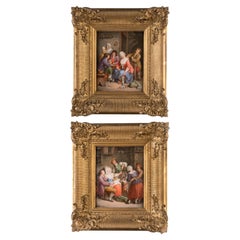
Pair of Early 19th Century Parisian Porcelain Plaques by Jean-Pierre Feuillet
By Jean-Pierre Feuillet
Located in London, GB
A Fine Pair of Framed Porcelain Plaques Of Tavern Scenes By Jean-Pierre Feuillet The hand-painted, glazed & fired rectangular plaques of tavern scene, one depicting a friendly card ...
Category

Antique 19th Century French Baroque Decorative Art

Materials

Porcelain, Giltwood

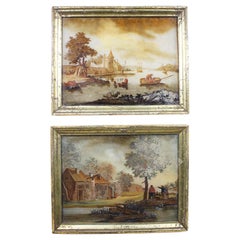
Rare Pair of Flemish 18th Century "Verre Églomisé" Reverse Glass Paintings
Located in Los Angeles, CA
A rare pair of Flemish 18th century "Verre Églomisé" Reverse Glass Paintings, each depicting riverfront scenes with figures, fishermen castles, co...
Category

Antique 18th Century Finnish Baroque Paintings

Materials

Glass, Giltwood, Paint

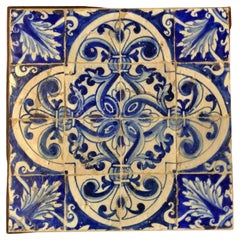
17th Century Portuguese Tile Panel
Located in Madrid, ES
Largest collection of Portuguese tiles in the world 17th Century Portuguese tile panel. Restored 56cm x 56cm 14cm x 14cm tiles 17th Century Shortly afterwards, these plain white ti...
Category

Antique 17th Century Portuguese Baroque Decorative Art

Materials

Porcelain

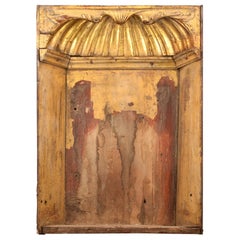
Pine Wood Niche, Spanish School, 17th Century
Located in Madrid, ES
Niche. Gilded and polychrome pine wood. Spain, 17th century. Niche made of carved and gilded pine wood, decorated with moldings, a venerated shape and plant elements in the upper p...
Category

Antique 17th Century Spanish Baroque Architectural Elements

Materials

Other

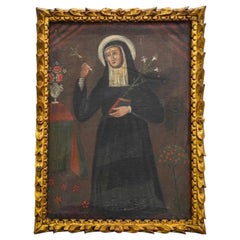
Saint Catherine Of Sienna Oil On Canvas Spanish Colonial Painting
Located in Bradenton, FL
18th Century oil on canvas painting depicting Saint Catherine of Siena bearing lilies and a book in her left hand and a crucifix in her right ...
Category

Antique 18th Century Italian Baroque Paintings

Materials

Canvas, Wood

Couple of Italian Paintings Depicting Capricci, Francesco Aviani ‘1662-1715’
Located in IT
Francesco Aviani (Italy - Venice, 25-11-1662 / 1715) att. Couple of paintings depicting Capricci Oil on canvas, 135 x 183 cm, without frame The two large and fine paintings depict two illusionistic architectural renderings, with views of colonnades and arched buildings, animated by figures. The compositions are characterized by the harmony with which the painter introduces the sumptuous architectural monuments, the mirrors of water, the buildings in the distance and the views of the landscape. Dominates with a color on the tones of brown and ochre that stands out on the blue sky, marked by some cloud of steam. The insertion of the figures to enliven the architectural views also balances with the set. The Capriccio, an artistic genre that has made its way into Italian painting since the 17th Century, is characterized by the representation of fantastic architectures or prospective inventions, sometimes combined with elements drawn freely from reality. The two paintings are an example of this type and they are a very interesting and Fine artwork. The remarkable pictorial quality emerges both from the composition of the ensemble and from the way in which the artist describes the views with great attention to detail, highlights and refined, perfectly realistic, chiaroscuro. The same must be recognized for the figures: these are described with a wise brushstroke, quick and quick touches give the dynamism of the moment that is captured, as if time had stopped to show and narrate what is happening. The painting on the right represents a large Baroque building in stone and paved with marbles, two floors, with moving façade, large columns with corinthian columns, a large portal with a staircase with large footsteps, a balustrade with string, from which some figures appear, and two equestrian monuments in bronze. The sumptuous building overlooks a large POOL of water, with a gushing fountain, around which some characters sit. In the second floor is described a white palace from which rises a tower crowned by a structure with wrought iron loggia. In addition there is a bridge and some architectural ruins behind which some mountainous reliefs fade towards the horizon. On the staircase is described a particular scene. The people seem to be part of a very precise story. A woman, in the shadow of a parasol supported by a servant, would seem to drive out of the palace a man, who, taken under his arm by two maidens with a determined attitude, is led to a boat. The scene could be identified with the biblical episode of the parable of the prodigal son (Luke 15,11-32), at the moment when the prodigal son is robbed and driven away by the harlots. The episode tells of a man with two children. The youngest said to his father: “Father, give me the part of my inheritance”. And the father divided the substances. After not many days, the youngest son, collected his things, left for a far country and there he lost his substances with prostitutes and living as a debaucher. When he had spent everything, there came a great famine in that country and he began to find himself in need. Reduced to hunger, he was forced to be a pig herder to survive. He therefore meditated in his heart to go to his father and ask for his forgiveness and to be welcomed anew, even as a servant. While still on the road, however, the father saw him and ran towards him, receiving him with open arms. He then ordered his servants to prepare a great feast for the occasion, killing for the purpose the "fatty calf". The firstborn did not understand why his brother was given such treatment, and reminded the parent that he, who had always obeyed him, had never received a single kid to celebrate with his friends. The father answered him: «Son, you are always with me and everything that is mine is yours; but it was necessary to celebrate and rejoice, because this brother of yours was dead and came back to life, was lost and was found». The parable of the prodigal son was often portrayed in painting and the scene he finds most is certainly that of returning home in his father’s arms. Among the many is a canvas by the famous painter Giovanni Paolo Pannini (or Panini) (Italy – Piacenza, 1691– Rome, 1765) kept at the Hallsborough Gallery in London. Rather rare, however, is the scene of the prodigal son driven and robbed by harlots. There is an engraving by Hans Collaert II (1561-1620) in which this moment is described in the background compared to the moment, narratively later, in which he is penitent among the pigs. The second painting, certainly pendant of the first, represents a similar palace, with some characters overlooking the balustrade marcapiano and other figures around the large bathtub quadrilobata. In the foreground is described a monument with two large stone sculptures. In the distance some architectural elements and, beyond, the mountains are lost on the horizon. The studies related to the numerous painters of architectural views and caprices, active in Italy, and the archival documents found, which could better clarify commissions, biographies and certain works, are scarce and sporadic. Therefore there are still many difficulties in reconstructing a catalogue of autograph works for each author. Through paintings in private collections, in museums and paintings passed on the antique market it is however possible to advance some attributions in order to better delineate the various artistic figures. The style of the works studied here leads to a dating that runs between the 17th and 18th Centuries, with obvious influences dictated by the perspectives of the brothers Galli Bibiena. The analysis of the architectures and the chromatic palette suggests that we are in the presence of a northern Italian and Venetian author. Observing the decorations and the volutes, the brightness and the perspective disposition in fact, we find several analogies with those used by the Vicenza painter Francesco Aviani, excellent in pictorial perspective and architectural views. The biographical profile of Francesco Aviani (Italy - Vicenza, 1662-1715) was essentially traced in 1956 by Andreina Ballarin, then re-visited by Federica Spadotto in 2014 and Giancarlo Sestieri in 2015. Certain documents about his life are scarce, as are the documented works. He was born in Venice, probably on 25 November 1662, to Bernardo and a Magdalene whose surname is unknown, and was baptized on 3 December 1662. Between 1701 and 1703 he worked, together with his brother MarCo, sculptor, for the fresco decoration (now illegible) of the church villa in Soella (Vicenza). On October 16, 1703 he married Isabella Carcano. On March 26, 1715 he made a will and died on April 3 of the same year, in Vicenza. The frescoes in the refectory of the sanctuary of Monte Berico in Vicenza are considered authentic works by Aviani, probably made in 1708; the paintings preserved in the Civic Museum of Vicenza: “Landscape with Lazzaro and the rich Epulone”; “Christ among the doctors”; “The miraculous fishing”, works not datable but with attribution corroborated by style. In addition, the frescoes in the east and west corridors of the Villa La Rotonda, near Vicenza; the fresco in the apse basin of the chapel of the church S. Croce, Vicenza, now destroyed; the frescoes of the central hall of Villa Camerini a Montruglio (1714) and a painting of a “Porto Regio”, of which we have a print engraved by Dall'Acqua. From his works emerges the artistic background that animated the Venetian culture in the early eighteenth century. The scenic grandeur with which Aviani treats the architecture also suggests a stay in Emilia of the painter, in which he could have come into contact with the environment of the Bibiena. These contacts would be confirmed by the press of Cristoforo Dall'Acqua (Vicenza 1734-1787), “Il porto regio”, after a painting of Aviani. The press was part of a group of engravings, representing royal buildings, reproducing paintings of the Bibiena. In the eyes of Dall’Acqua, therefore, Aviani’s work was not foreign among those of the Emilians. Inside the sumptuous architectural whims, Aviani often depicts biblical scenes, in which the characters share the space and the narrative rhythm, along with figures drawn from everyday scenes, memories of the Veronese and Bassano heritage. Also in the works covered by this study the author does not seem to want to give up a biblical subject, though the purpose of the paintings appears to be clearly a staging scenography-architectural within which the characters are relegated to the role of extras. From the examination of the architectural Capriccio gathered under the name of Aviani then emerge common elements. The comparison between these works and the works in question highlights the proximity of the compositions. The imposing and scenic architectures are in fact equally characterized by the perspective-scenographic ability diffused in emilian “quadraturisti” and in Bibiena work. In fact, you can see the spectacular slender architecture in the lower part, the loggias that create chiaroscuro games with arches and binate columns placed on massive bases and overhung by projecting cornices. Significant also the comparison with two paintings with architectural whims in a night vision attributed to Francesco Aviani. In Aviani’s works it is possible to find a certain knowledge of the Roman Codazzi paint nd its early development of the eighteenth century, developed with the Locatelli, the Pannini and the less known Domenico Roberti. To Roberti have been recently attributed two works that have some compositional affinity with the canvases in question. The same can be done for a work on the antique market, attributed to Pietro Francesco...
Category

Antique Late 17th Century Italian Baroque Paintings

Materials

Canvas

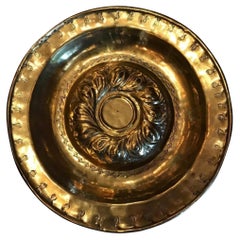
17th C. Rare Alms Dish Bowl Luxury Vide Poche Center Tray Decorative Object
Located in West Hollywood, CA
17th C. Rare Alms Dish Bowl Luxury Vide Poche Center Tray Decorative Object .German Baroque . A real period collector’s item Circa 1600’s Alms collecting German Baroque dish with inc...
Category

Antique 17th Century German Baroque Decorative Art

Materials

Metal

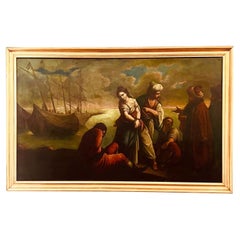
“Abduction of Roxelana-future wife of Sultan Suleiman” Oil on Canvas ca 1680
Located in Doha, QA
This an absolutely magnificent unique 17th century painting illustrates pirates in the time of Barbary Slave Trade (European slaves were acquired by Barbary pirates...
Category

Antique 17th Century Dutch Baroque Paintings

Materials

Canvas

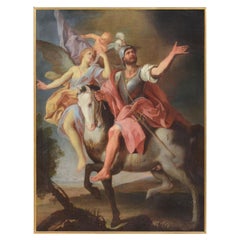
Magnificent 18th-Century French School Painting "Holy Knight Guided by an Angel"
By Central School of Arts Crafts
Located in Madrid, ES
Magnificent 18th-Century French School Painting "Holy Knight Guided by an Angel" Oil on canvas, 95.5 x 75 cm 105.5 x 85 cm with frame Good condition
Category

Antique 18th Century French Baroque Paintings

Materials

Paint

Aeneas Fleeing the Burning of Troy, 17th Century Flemish Oil on Canvas Painting
Located in Firenze, IT
This oil painting on canvas, created by an artist from the 17th Century Flemish School, depicts one of the most significant scenes from Greco-Roman mythology: Aeneas saving his famil...
Category

Antique 17th Century Dutch Baroque Paintings

Materials

Giltwood, Paint

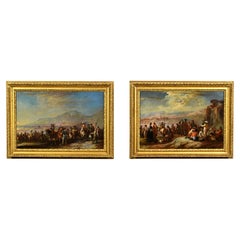
18th Century, Italian Pair of Oil on Canvas Paintings by Francesco Simonini
By SIMONINI
Located in IT
Francesco Simonini (Parma, 16 June 1686 - Parma, 1766) “The rest of the soldiers” and “The march of soldiers” oil on canvas cm 40 x 58 and 40 x 60 ; frame: h 52,5 x W 70,5 x D 6 an...
Category

Antique Early 18th Century Italian Baroque Paintings

Materials

Canvas

Large Oil On Canvas Studio Of Miguel Canals
Located in Essex, MA
Miguel Canals a Spanish painter from Barcelona who painted in the style of 17th century Spanish painters such as Tom'as Hiepes . In Spanish, the word Bodeg'on designates a pictorial ...
Category

Mid-20th Century Spanish Baroque Paintings

Materials

Canvas, Wood, Giltwood

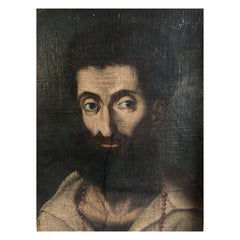
Portrait of a monk, Spanish school 18th century
Located in Valby, 84
captivating oil on canvas portrait of a monk, likely created in the 18th century by an artist of the Spanish school. The sitter is depicted with solemn intensity, his expressive fea...
Category

Antique 18th Century Spanish Baroque Paintings

Materials

Canvas, Paint

Italian Panel, Circle of Jacopo Palma the Younger, late 16th–early 17th century
By Central School of Arts Crafts
Located in Madrid, ES
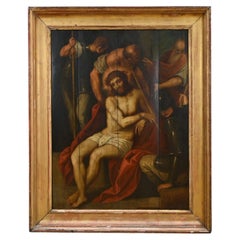
Italian Panel, Circle of Jacopo Palma the Younger, late 16th–early 17th century " Ecce Homo" (91 x 120 x 0 cm) Good condition The image is an artistic representation of the biblical ...
Category

Antique 16th Century Italian Baroque Paintings

Materials

Paint

Old Master Allegorical oil painting of “Erminia and The Shepherds”
By Giovanni Francesco Barbieri (Il Guercino)
Located in Vancouver, British Columbia
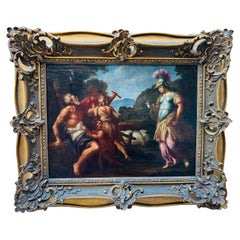
A fully restored small northern Italian Baroque painting on canvas that may have been painted as a study, (or what is referred to as a bozzet...
Category

Antique 17th Century Italian Baroque Paintings

Materials

Canvas

Antique Oil on Canvas Painting "Party Picnicking" After Watteau 18th Century
By Jean-Antoine Watteau
Located in London, GB
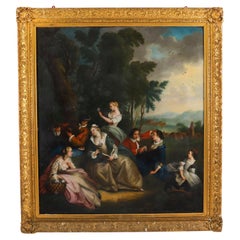
This is a large delightful antique oil on canvas painting after Watteau, depicting a "Party Picnicking", Circa 1780 in date. The painting depicts a group of people relaxing in the c...
Category

Antique Late 18th Century Paintings

Materials

Canvas

Louis XIV Style Antique French Aubusson Verdure Tapestry, Venus and Adonis
By Gobelins Royal Manufactory, Peter Paul Rubens, Francesco Albani
Located in Dallas, TX
Mid-18th Century Antique French Aubusson Verdure Tapestry, Venus and Adonis Wall Hanging 13'09 x 09'05. A rare jewel from the heart of 18th-century France, this handwoven wool and silk Aubusson verdure tapestry offers more than aesthetic beauty—it is a portal to a bygone era of aristocratic grandeur and mythological reverence. Woven by master artisans whose skill and devotion were reserved for the noble elite, this extraordinary tapestry captures the romantic tragedy of Venus and Adonis in a style that pays homage to the great Italian Baroque painters—Francesco Albani...
Category

Antique Mid-18th Century French Aubusson Western European Rugs

Materials

Wool, Silk

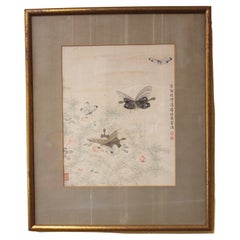
Late 19th Century Chinese Qing Dynasty Ink and Color Painting on Silk
Located in Chapel Hill, NC
Qing Dynasty ink & color painting on silk, Chinese, late 19th century. Butterflies fluttering in gongbi style. Text on right translates to: Morning Mist, Butterflies, divine, imitati...
Category

Antique Late 19th Century Chinese Qing Paintings

Materials

Silk, Giltwood, Paint

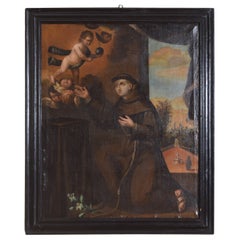
Spanish or Pourtuguse Large Oil on Canvas, "Saint Anthony", Mid-17th Century
Located in Atlanta, GA
Oil on canvas depicting Saint Anthony in a garden being visited by Angelic Cherubs with a courtyard and fountain and mysterious figure in the background, the ever present Lily flower in the foreground. In a period ebonized wood frame. Anthony of Padua (Italian: Antonio di Padova) or Anthony of Lisbon (Portuguese: António/Antônio de Lisboa; born Fernando Martins de Bulhões; 15 August 1195 – 13 June 1231) was a Portuguese Catholic priest...
Category

Antique Mid-17th Century European Baroque Paintings

Materials

Paint

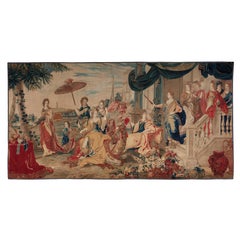
Brussels Late 17th Century Tapestry Asia from a Four Continents Series 9 4 x 18
Located in New York, NY
Brussels late 17th century tapestry, "Asia" from a Four Continents series. Designed by Lodowijk van Schoor, Woven in the Workshop of J. van der Borcht I Size: 9'4 high x 18' wide. Wool, silk and metal thread pattern wefts This extremely colorful and attractive late Baroque Flemish tapestry with a popular iconography is the product of two important figures in 17th century Brussels weaving. J. van der Borcht I (circa 1650–1713) was a master weaver and tapestry entrepreneur who established a most distinguished family tapestry firm and was followed by J. van der Borcht II, Jasper van der Borcht, Pieter van der Borcht and Jan Frans van der Borcht, taking the operations into the mid18th century. Their wealthy patrons allowed the firm to engage some of the best designers and as a result the artistic quality, as well as the sheer technical execution, is always high. The Van der Borchts wove tapestry series (or single pieces) of Mythological Scenes, Months, Allegories, Armorials, Triumphs of the Gods, The Continents, as well as more down-to-earth genre scenes designed or inspired by David Teniers II or Teniers III. Their artist designers included, besides the Teniers, Jan van Orley, Augustin Coppens, Gerard Lairesse, Phillipe de Hondt, and the Antwerp-born Lodowijk van Schoor (circa 1650–1702), the designer of U-1362. Van Schoor was the successor of David Teniers III. He was the designer or co-creator of about fifteen sets of tapestries. His cartoons were utilized and copied in both the Northern and Southern Netherlands, and continued popular well into the 18th century. His style, especially in his later works, is more harmonious and refined than Teniers and he avoided genre scenes with peasants. Van Schoor sometimes collaborated with other artists, for example Lucas Aertschellinck (1620 – 1699) who specialized in landscape backgrounds as in the set of Mythological Scenes” woven circa 1700 in the Van der Borcht shop. He did not collaborate on this tapestry, Van Schoor’s figures are graceful and his color schemes vivid, in keeping with the best of contemporary Flemish tapestry. Van Schoor’s designs influenced artists working at great remove from Brussels, even so far as the Florentine workshop of Bernini and Demignot where a Van Schoor inspired “Four Continents” set was woven in the early 1720s. The “Four Continents” or “Four Parts of the World” was a popular theme in the 17th and 18th centuries for tapestry patrons. Each continent was identified by native peoples and animals: America (North and South together) by Indians and the Turkey bird...
Category

Antique 17th Century Belgian Tapestries

Materials

Wool

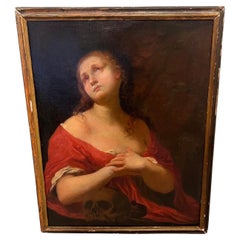
18th Century, Italian Memento Mori Old Master School of Guido Reni
By Guido Reni
Located in Atlanta, GA
In the style or School of the Important Old Master Guido Reni (Italian, 1575-1642). A stunning Old Master 18th or possibly 17th century Italian Baroque School religious portrait painting...
Category

Antique 18th Century Italian Baroque Paintings

Materials

Canvas, Giltwood, Paint

Thomas VAN DER WILT (1659-1733) "Portrait of Noble Woman"
Located in Madrid, ES
Thomas VAN DER WILT (1659-1733) "Portrait of Noble Woman", oil on canvas 55cm x 46cm without frame 65cm x 56cm with frame very good conditions Thomas van der Wilt (1659–1733) was an...
Category

Antique Early 18th Century Dutch Baroque Paintings

Materials

Paint

Important Circle of Jusepe de Ribera (1588/91-1652) "Saint Peter, 17th Century"
By Central School of Arts Crafts
Located in Madrid, ES
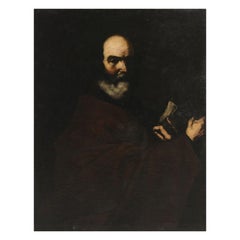
Circle of JUSEPE DE RIBERA (1588/91-1652) "Saint Peter, 17th Century" Spanish School of Saint Peter, 17th Century. Oil on canvas. Minor imperfections and restorations, relined. Dimen...
Category

Antique 17th Century Italian Baroque Paintings

Materials

Paint

The Eavesdropper, Nicholas Maes, 19th Century Antique Print
Located in Toronto, CA
A wonderful antique print of Nicolaes Maes' iconic painting "The Eavesdropper." Nineteenth Century or earlier, from the Netherlands. Framed in a love...
Category

Antique Early 19th Century Dutch Baroque Prints

Materials

Paper

Aurora And Cephale, Framed Engraving, Carracci, 17th Century?
By Annibale Carracci
Located in MARSEILLE, FR
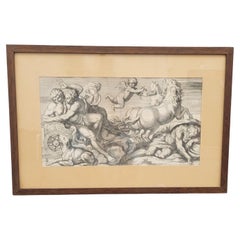
The framed engraving of "Aurore and Cephalus" depicts the kidnapping of Prince Cephalus by Aurore, who has fallen madly in love with him. This work was created by Annibale Carracci ...
Category

Antique 17th Century Italian Baroque Prints

Materials

Paper

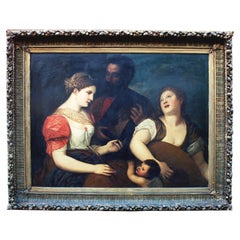
"An Allegory of Love" 19th C. Oil on Canvas After Titian - Tiziano Vecellio
Located in Los Angeles, CA
A Large and Impressive 19th Century Continental Oil on Canvas "An Allegory of Love" after the original work by Titian - Tiziano Vecellio (Italian 1488-1576), within an ornate gilt-wo...
Category

Antique 19th Century Italian Baroque Paintings

Materials

Canvas

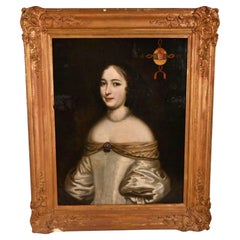
French School 17th Century"Portrait with Coat of Arms Margueritte de Boutteville
Located in Madrid, ES
French School of 1659 17th century "Portrait with Coat of arms of Margueritte Pierre de Boutteville" around 1659 Oil on canvas with coat of arms and dated top right Provenance: Bel...
Category

Antique 17th Century French Baroque Paintings

Materials

Paint

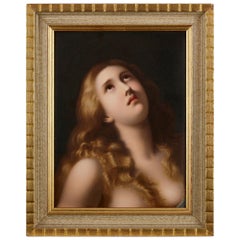
Porcelain Plaque Painted with Mary Magdalene by K.P.M
By Königliche Porzellan-Manufaktur (KPM)
Located in London, GB
Porcelain plaque painted with Mary Magdalene by K.P.M. German, circa 1900 Measures: Frame: Height 32.5cm, width 26.5cm, depth 3cm Plaque: Height 25.5cm, width 19cm, depth 0.5cm ...
Category

Antique Early 1900s German Baroque Paintings

Materials

Porcelain, Giltwood

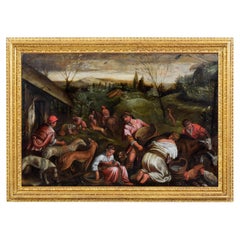
17th Century, Italian painting Allegory of the Spring Follower of Jacopo Bassano
By Jacopo Bassano
Located in IT
Follower of Jacopo Da Ponte, called Jacopo Bassano (Bassano del Grappa, circa 1510 - Bassano del Grappa, 13 February 1592), 17th century Allegory of the Spring Measures: With frame: ...
Category

Antique Late 17th Century Italian Baroque Paintings

Materials

Canvas

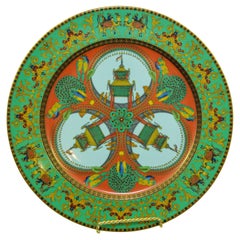
Gianni Versace For Rosenthal le Voyage de Marco Polo Porcelain Plate
By Rosenthal, Gianni Versace
Located in Moreno Valley, CA
Gianni Versace "le Voyage de Marco Polo" for Rosenthal. Designed in Italy by Gianni Versace for Rosenthal. "Le voyage de Marco Polo" porcelain service plate with gold decoration, bri...
Category

Late 20th Century Italian Chinoiserie Decorative Art

Materials

Porcelain

Abraham Brueghel (1631-1690) Attribution - "Triumph of Flowers and Fruits" 17th
By Abraham Brueghel
Located in Madrid, ES
Abraham Brueghel (1631 - 1690) Attribution - "Triumph of Flowers and Fruits in Plein Air" oil on canvas 95 x 130 cm without frame 100cm x 135cm with frame good conditions Abraham Br...
Category

Antique 17th Century Dutch Baroque Paintings

Materials

Paint

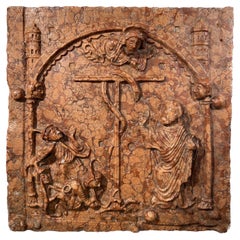
19th Century Moses the Bronze Serpent Italian Marmo Rosso Di Verona Low Relief
Located in Encinitas, CA
Moses and the bronze serpent depicted in low relief carving in Italian Marmo Ross di Verona. Handcrafted replica of a Tau Cross XIII century artifac...
Category

Antique Mid-19th Century Italian Baroque Decorative Art

Materials

Marble

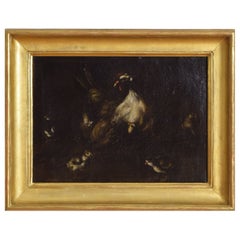
Oil on Canvas, Italy, Emilian School, Mother Hen with Chicks, Early 18th Cen.
Located in Atlanta, GA
From the Emilia Romagna school of painting this is a depiction of a mother hen protecting her chicks, the period giltwood frame in perfect condition and retaining a paper label at to...
Category

Antique Early 18th Century Italian Baroque Paintings

Materials

Canvas, Paint

Pair of 18 Century Paintings of St Francis Xavier and St Carlo Borromeo
Located in Vancouver, British Columbia
A beautifully executed and rare complementary pair of oil on canvas paintings depicting two of the moist famous and important counter reformation catholic saints St Francis Xavier and St Carlo Borromeo shown in scenes of what the respective saints are mostly famous for. St Francis Xavier for the conversion to Christianity of many S. E Asian countries notably India and St Carlo Borromeo shown asking the Virgin Mary to intercede for the cessation of the terrible plague of 1576. The paintings are presented in refreshed gilded carved wooden frames and are unsigned. St. Francis Xavier was born in Spanish Navarre in 1506 and in 1528, he met St. Ignatius of Loyola. He became one of the seven in 1534 who founded the Society of Jesus (Jesuit Order). In 1536, he left the University of Paris and joined St. Ignatius in Venice. He was ordained in 1537, and in 1540 after the Society was recognized by the Pope, he journeyed to the Far East. Francis Xavier first evangelized the Portuguese colony of Goa in India, then Travancore, Ceylon, Malacca, and the surrounding islands. From there he journeyed to Japan, where he gave Christianity such deep roots that it survived centuries of violent persecution. He died on Sancian Island in 1552, while he was seeking to penetrate into the great forbidden land of China. Despite language problems, lack of funds, resistance from the Europeans as well as the natives, he persevered. St. Francis converted more people in his life than anyone since the Apostle St. Paul. He baptized over 3 million people, converted the entire town of Goa in India, and he labored in India, Pakistan, Bangladesh, Sri Lanka, Malaysia, Indonesia, Singapore, and Japan. He was truly a missionary par excellence. St Carlo Borromeo (1538-1584), was a Cardinal of the Holy Roman Catholic Church and Archbishop of Milan from 1565 to 1583. He was described in the decree for his canonization, as “a man, even while the world smiles on him with the utmost flattery, he lives crucified to the world, spiritually, trampling earthly things, seeking continuously the things of heaven, emulating the life of the Angels on earth, in his thoughts and actions. The plague began in the month of August that year. Milan was celebrating joyfully the arrival of Don John of Austria, on his way to Flanders, where he had been appointed governor. The city authorities were abuzz with excitement in their desire to bestow the highest honours on the Spanish prince, but Charles, who had been Archbishop of the diocese for six years, was following with concern the news coming from Trento, Verona and Mantua, where the plague had begun claiming victims. The first cases exploded in Milan on August 11th, right at the moment when Don John of Austria arrived. The victor of Lepanto, followed by the governor, Antonio de Guzmán y Zuñiga, departed the city, while Carlo Borromeo, who was in Lodi for the Bishop’s funeral, returned in haste. Confusion and fear reigned in Milan and the Archbishop dedicated himself completely to assisting the sick and ordering public and private prayers. Dom Prosper Guéranger sums up his infinite charity in this way: “In the absence of local authorities, he organized the health service, founded or renewed hospitals, sought money and provisions, decreed preventive measures. Most importantly though, he took steps to ensure spiritual help, assistance to the sick and the burial of the dead. Unafraid of being infected, he paid in person, by visiting hospitals, leading penitential processions, being everything to everyone, like a father and true shepherd” St. Carlo was convinced that the epidemic was “a scourge sent by Heaven” as chastisement for the sins of the people and that recourse to spiritual measures was necessary to fight against it: prayer and penitence. He rebuked the civil authorities for having placed their trust in human measures rather than divine ones. “Hadn’t they prohibited all the pious gatherings and processions during the time of the Jubilee? For him, and he was convinced of it, these were the causes of the chastisement. The magistrates who governed the city continued to oppose public ceremonies, out of fear that the large gathering of people would spread contagion, but Charles “who was guided by the Divine Spirit” – recounts another biographer – convinced them by citing various examples, among which was the one regarding St. Gregory the Great who had halted the plague devastating Rome in 590. While the pestilence spread, the Archbishop then ordered three general processions to take place in Milan on the 3rd, 5th and 6th of October, “to placate the wrath of God”. On the first day, the Saint, despite it not being the Lenten season, placed ashes on the heads of the thousands gathered, exhorting them to penitence. Once the ceremony was over, the procession went to the Basilica of St. Ambrose. Charles put himself at the head of the people, dressed in a hooded purple robe, barefoot, penitential cord at his neck and large cross in his hand. The second procession led by the Cardinal headed towards the Basilica of San Lorenzo. The third day the procession from the Duomo headed for the Basilica of Santa Maria at San Celso. St. Carlo carried in his hands a relique of Our Lord’s Holy Nail, which had been given by the Emperor Theodosius to St. Ambrose in the 5th century. The plague didn’t show any signs of waning and Milan appeared depopulated, as a third of its citizens had lost their lives and the others were in quarantine or didn’t dare leave their homes. The Archbishop ordered about twenty stone columns with a cross at the top to be erected in the main squares and city crossroads, allowing the inhabitants from every quarter to take part in the Masses and public prayers - from the windows of their homes. One of Milan’s protectors was St. Sebastian, the martyr the Romans had recourse to during the plague in 672. St. Charles suggested that the magistrates of Milan reconstruct the sanctuary dedicated to him, which was falling into ruins, and to celebrate a solemn feast in his honour for ten years. Finally in July 1577, the plague ceased and in September the founding stone was laid in the civic temple of St. Sebastian, where on January 20th every year, even today a Mass is offered to recall the end of the scourge. St.Carlo Borromeo died on November 3rd 1584 and was buried in the Duomo of Milan. His heart was solemnly translated to Rome, in the Basilica of Saints Ambrose...
Category

Antique Late 18th Century French Baroque Paintings

Materials

Canvas

Pair of Italian Venetian Canal Paintings
Located in Queens, NY
PAIR of Italian Venetian style (19th Cent) gilt framed oil paintings of canal scenes.
Category

Antique 19th Century Italian Baroque Paintings

Materials

Paint

Read More

Punk Rock and Rebellion Animate London’s Hit Yoshitomo Nara Show

The exhibition includes his portraits of wide-eyed kids with mayhem on their minds, as well as some of the artist’s personal belongings.

Whether Painted or Papered, Muraled Walls Make Bold Statements in the Home

The ancient practice of covering walls in artistic scenery is back.

In Francks Deceus’s ‘Mumbo Jumbo #5,’ the Black Experience Is . . . Complicated

Despite the obstacles, the piece’s protagonist navigates the chaos without losing his humanity.

12 Floral-Accented Rooms with a Handmade, Folkloric Feel

Who needs a flower garden? Just use your imagination — and some beautifully patterned wallpaper or fabric — to bring the outdoors in.

This Wolf Kahn Pastel Is the Epitome of Beauty at Its Most Essential

A longtime admirer of Kahn’s work, 1stDibs editorial director Anthony Barzilay Freund explores why it’s relevant now more than ever.

Why Jules Chéret Was the King of the Modern Poster

The streets of fin-de-siècle Paris were set aglow with colorful poster ads, thanks to the printing techniques invented by Jules Chéret. Now, the Milwaukee Art Museum is celebrating this undersung talent in America's first solo show dedicated his exuberant works.

Anna Condo’s Multifaceted Career Spans Film, Photography and NFTs

From her historic Manhattan townhouse, the talented creator and curator of 1stDibs' latest NFT exhibition tells us about the art in her home and how she got involved with cryptoart.

How Keith Rivers Went from NFL Linebacker to Blue-Chip Art Aficionado

The former football player is as serious about becoming a great contemporary-art patron as he once was about making tackles. Here, Rivers tells us how he got the collecting bug and how his tastes have evolved over the years.