2,118 results for "renaissance"

to
570
1,258
826
1,926
116
76
Height
to
Width
to
512
122
62
44
39
18
15
8
7
5
4
3
2
1
1
312
649
965
192
251
566
85
32
18
143
265
142
84
30
24
13
15
822
476
433
264
214
1,036
543
534
360
266
2,118
2,101
2,113
16
15
13
11
10
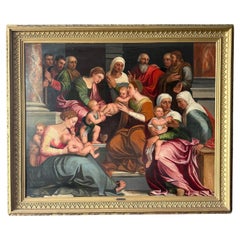
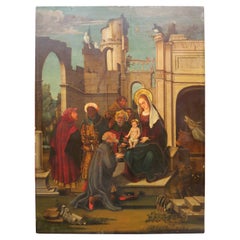
The Holy Kinship of Mary Oil on slatted panel Possibly Willem Key (16th Century)
Located in Chonburi, TH
This impressive 16th-century oil painting on a slatted wooden panel depicts *The Holy Kinship of Mary*, a revered religious subject in Northern Renaissance art. The composition bring...
Category

Antique 16th Century Belgian Renaissance Paintings

Materials

Wood, Paint

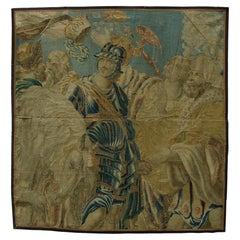
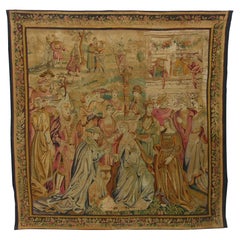
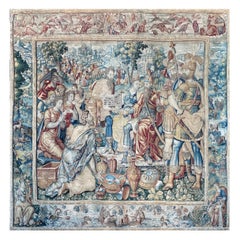
Antique 17th Century Brussels Tapestry 7 X 7 3"
Located in Los Angeles, US
A wall hanging tapestry, simply put, is a textile specifically designed and woven to portray an artistic scene with the intent of hanging it on a wall. Antique tapestries, those that...
Category

Antique 17th Century Unknown Other Tapestries

Materials

Wool, Cotton

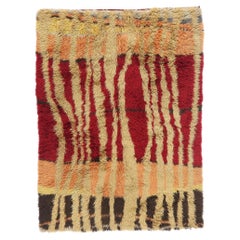
Vintage Scandinavian Swedish Rya Carpet, 05 10 x 08 00
Located in Dallas, TX
79013 Vintage Swedish Scandinavian Rya Rug, 05'10 x 08'00. Born of an era where form met function in its most elevated expression, this vintage Swedish rya rug is not merely a furnis...
Category

Mid-20th Century Swedish Scandinavian Modern Russian and Scandinavian Rugs

Materials

Wool

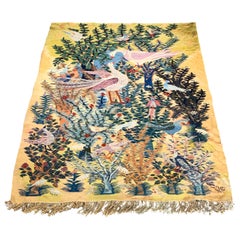
"Tree of Life, " Large Midcentury Tapestry by Ahmed, Early Student, Wissa Wassef
By Ramses Wissa Wassef Workshop
Located in Philadelphia, PA
Dating from 1976, about 20 years after Ramses Wissa Wassef established his tapestry workshop in the 1950s, this monumental tapestry by Samina Ahmed...
Category

Vintage 1970s Egyptian Mid-Century Modern Tapestries

Materials

Wool

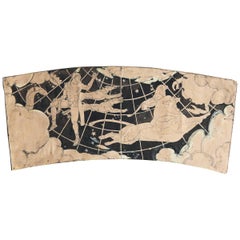
"Herdsman, Asterion Chara, " Rare Art Deco Mural Study, Bushnell Auditorium
By Barry Faulkner
Located in Philadelphia, PA
Painted by the renowned muralist, Barry Faulkner, in 1929 for the ceiling of the Horace Bushnell Memorial Hall in Hartford, Connecticut, this remarkable Art Deco study depicts Canes Venatici, or the Herdsman holding two hounds, Asterion and Chara, by the leash as they chase Ursa Major around the Pole. The overall theme of the ceiling mural is "Drama" and it is reputed to be the largest and most ambitious in America, featuring the allegorical figure of Drama surrounded by the constellations and the Zodiac, as well as modern symbols of America including Al Jolson...
Category

Vintage 1920s American Art Deco Paintings

Materials

Paper

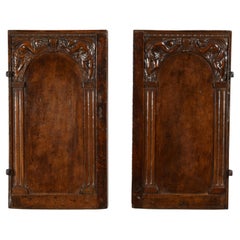
16th Century, Pair of Italian Small Carved Walnut Doors
Located in IT
Pair of small carved walnut doors, 16th century, central Italy This pair of small doors was made in the sixteenth century, in central Italy, in carved walnut. The decoration provides...
Category

Antique 16th Century Italian Renaissance Decorative Art

Materials

Walnut

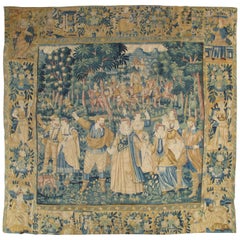
Antique 17th Century Flemish Tapestry 7 11" X 5 9"
Located in Los Angeles, US
A wall hanging tapestry, simply put, is a textile specifically designed and woven to portray an artistic scene with the intent of hanging it on a wall. Antique tapestries, those that...
Category

Antique 17th Century Unknown Other Tapestries

Materials

Wool, Cotton

Allegory of Time. Oil on panel. Circle of Jacob de Backer (act. 1571-1585).
Located in Madrid, ES
Allegory of Time. Oil on panel. Circle of Jacob de Backer (act. Antwerp, 1571-1585). Exhibition: “Reality, time and artifice. Still life and vanitas in baro...
Category

Antique 16th Century Belgian Renaissance Paintings

Materials

Other

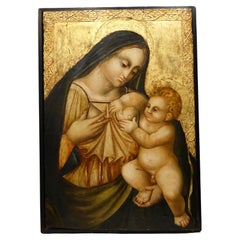
Madonna Lactans , Gold Background , Quattrocento Attributed to Sano di Pietro
Located in PARIS, FR
-Madonna Lactans, Gold Background Quattrocento Our painting is on poplar wood, characteristic of Italian Quattrocento works. The gold background is stuccoed and engraved. Our Madonna Lactans is a variation on the theme of the Madonna and Child. In Christian iconography, this subject is depicted at a moment of great intimacy, as the Virgin Mary delicately takes Christ's foot. When cleaning the work, small jets of milk can be seen ... Sano di Pietro...
Category

Antique 15th Century and Earlier Italian Renaissance Paintings

Materials

Wood

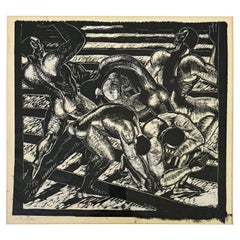
"Laying Track", WPA-Era Woodblock Print with Nude Male Workers by Ruegg
Located in Philadelphia, PA
This remarkable -- perhaps unique -- woodblock print depicts a group of five nude male workers laying railroad track, their strong, muscled figures interlaced as they strive to move ...
Category

Vintage 1930s American Art Deco Prints

Materials

Paper

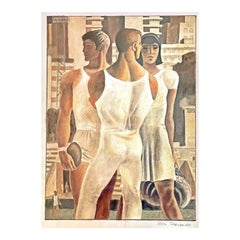
"The Gymnasts, " Important Mid-Century Painting of Soviet Athletes by Talberg
By Boris Alexandrovich Talberg
Located in Philadelphia, PA
This beautifully executed mixed-media painting by Boris Talberg (or Thalberg) was clearly executed in preparation for one of the artist's most famous works -- "The Gymnasts...
Category

Vintage 1950s Russian Mid-Century Modern Paintings

Materials

Paint

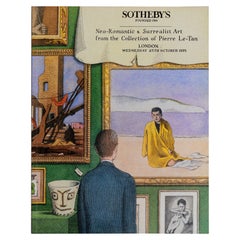
Neo-Romantic and Surrealist Art from the Collection of Pierre Le-Tan, Sotheby s
Located in valatie, NY
Sotheby's, London: Neo-Romantic & Surrealistic Art from the Collection of Pierre Le-Tan. October 25, 1995. 210 lots, Including artwork by: Beaton, Ber...
Category

1990s English Books

Materials

Paper

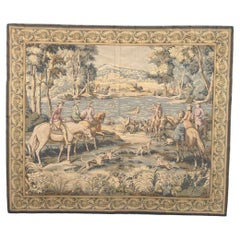
Pretty vintage French Aubusson style Jacquard Tapestry « Hunting with hounds »
Located in Saint Ouen, FR
"Discover the timeless elegance of this exquisite vintage French tapestry featuring Renaissance-style jacquard tapestry, "Hunting with Hounds," depicts a scene of a hunting with houn...
Category

Mid-20th Century French Aubusson Tapestries

Materials

Wool, Cotton

Antique 18th Century Brussels Tapestry 8 X 7 7"
Located in Los Angeles, US
A wall hanging tapestry, simply put, is a textile specifically designed and woven to portray an artistic scene with the intent of hanging it on a wall. Antique tapestries, those that...
Category

Antique 18th Century Unknown Other Tapestries

Materials

Wool, Cotton

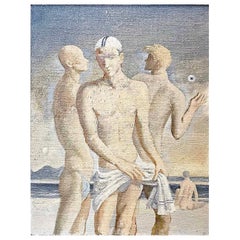
"Nude Bathers at Swan Hill", Painting of Male Nudes by Ernest Smith, Australia
Located in Philadelphia, PA
Pale and enigmatic, this lovely modern painting of three male nude bathers -- and a fourth in the distance -- on the sandy shore of a mountainous lake was painted by Ernest Smith. Smith is known for his figural paintings in Australia...
Category

Early 2000s Australian Modern Paintings

Materials

Paint

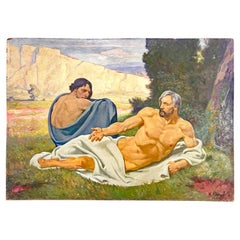
"Two Philosophers", 1948 Painting with Two Male Nudes by Arthur Kampf
Located in Philadelphia, PA
Serving, perhaps, as a commentary on the futility and horror of war, this allegorical painting of "Two Philosophers" was made by Arthur Kampf in 1948-49, shortly after the end of World War II and toward the end of his long life. Kampf was known for his historical and allegorical paintings, including a large scene showing a group of nude soldiers...
Category

Vintage 1940s German Art Deco Paintings

Materials

Paint

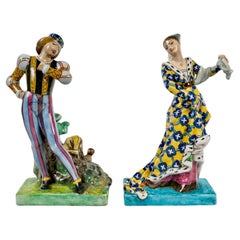
Théodore Deck (1823-1891), Courtly Love, Rare Pair of Faience Figures , c.1860
By Theodore Deck
Located in Saint-Ouen, FR
Théodore Deck (1823-1891) Courtly Love Polychrome enamelled earthenware Pair of subjects representing two lovers in the Middle Ages Each signed below with the stamp “Th.Deck” Extr...
Category

Antique 1860s French Renaissance Revival Decorative Art

Materials

Faience

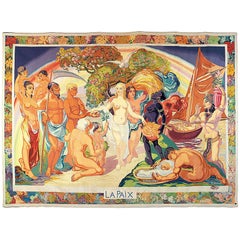
"Peace, " Monumental Art Deco Tapestry w/ Goddess of Abundance and Nudes, 1945
By Gaston Alfred Henrich
Located in Philadelphia, PA
A unique and remarkable work of art with great historical importance, this monumental Art Deco tapestry celebrating the end of World War II presents a large scene of nude male and female...
Category

Vintage 1940s French Art Deco Tapestries

Materials

Wool

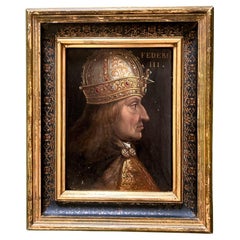
16th Century Oil Painting of Emperor Frederic III by School of Hans Burgkmair
Located in London, GB
16th Century Oil Painting of Holy Roman Emperor Frederic III, Antique Religious Oil Painting, Antique Royal King Oil Painting, Hans Burgkmair the older. 16th Century Oil Painting on board of the Holy Roman Emperor Frederic III by circle or school of Hans Burgkmair the older (1473 - 1531). Portrait of the Holy Roman Emperor Frederic III. (1415 – 1493). Oil on wooden panel. Described top right. In later attractive European gilt frame with black & gilt inner decoration, circa 18th Century. Hans Burgkmair was a German woodcut...
Category

Antique 16th Century German Renaissance Paintings

Materials

Wood, Paint

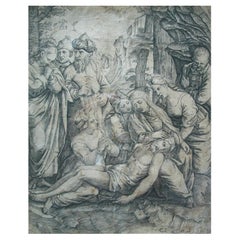
Marcantonio Raimondi Pupil of, Antique Engraving, Italy, Mid-16th Century
Located in Chatham, ON
A very rare - finest quality - mid 16th century Italian Renaissance engraving (after Raphael) by an anonymous pupil of MARCANTONIO RAIMONDI (1480-...
Category

Antique 16th Century Italian Renaissance Prints

Materials

Paper

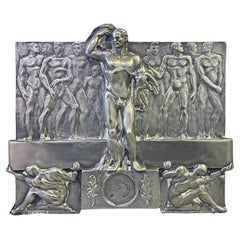
"Male Nude Frieze", Art Deco Sculptural Panel, Bertoni, Traction Avant Designer
Located in Philadelphia, PA
In the 1930s, when Italy was once again valorizing and idealizing the male nude -- witness the famous crescent of nude male athletes at the Foro Italico in Rome -- this silvered bron...
Category

Vintage 1930s Italian Art Deco Wall-mounted Sculptures

Materials

Bronze

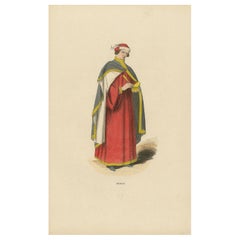
Attire of a Medieval Scholar: The Learned Physician of the Middle Ages, 1847
Located in Langweer, NL
Title: "Attire of a Medieval Scholar: The Learned Physician of the Middle Ages" This hand-colored lithograph, titled "Médecin" in the original French, is a detailed portrayal of a m...
Category

Antique 1840s Prints

Materials

Paper

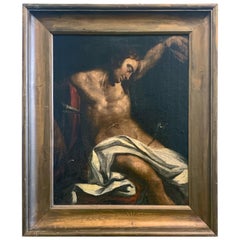
"Saint Sebastian, " Unusual Depiction of Nude Figure, Oil on Canvas
Located in Philadelphia, PA
Quiet and at peace, with almost a smile on his face, the expired Saint Sebastian depicted here -- in the nude, as is customary, and wounded with multiple arrows -- probably dates to ...
Category

Antique 19th Century Swedish Romantic Paintings

Materials

Paint

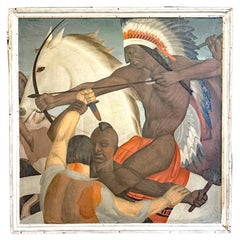
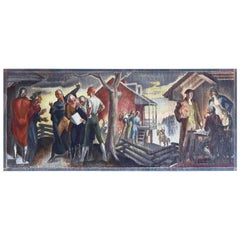
"Pioneers and Indians in Battle", Large, Extraordinary Art Deco Mural, 1930s
Located in Philadelphia, PA
Bold, high-energy and striking, this Art Deco mural depicts a battle in 19th century America, with an Indian chief on horseback in full battle regalia,...
Category

Vintage 1930s American Art Deco Paintings

Materials

Paint

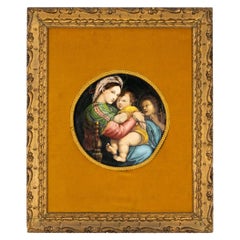
Sèvres Porcelain Painting of Raphael s Madonna by Marcel Prunier
By Manufacture Nationale de Sèvres
Located in Lisbon, PT
This enamelled porcelain painting, inspired by Raphael’s iconic Madonna of the Chair (c. 1513), beautifully portrays the Christ Child embraced by Mary, with John the Baptist gazing r...
Category

20th Century French Renaissance Paintings

Materials

Porcelain, Scrap Wood

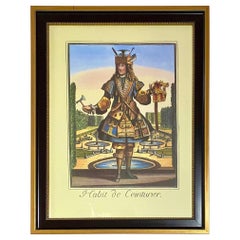
Nicolas de Larmessin Etching, Habit de Ceinturier
Located in Montreal, Quebec
Nicolas de Larmessin Etching – Habit de Ceinturier. 20th century print. Nicolas de Larmessin (1640-1725) was an enormously creative and productive artist. Nicolas was part of a long...
Category

20th Century French Renaissance Prints

Materials

Wood, Paper

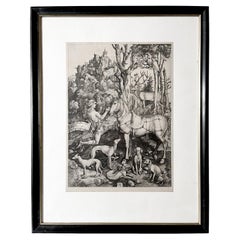
Albrecht Dürer - Saint Eustace
By Albrecht Dürer
Located in Paris, FR
Albrecht Dürer, Saint Eustace. Wood engraving, 1501. Signed with the monogram A.D (Albrecht Dürer) Why not having on a wall a Masterpiece which is also ...
Category

Antique 16th Century German Renaissance Prints

Materials

Paper

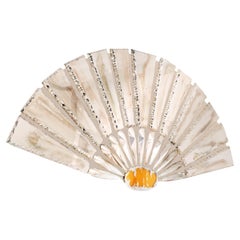
Contemporary modern Mirror, Wall Fan, Silvered Glass, Satin silk vintage kimono
By Sabrina Landini
Located in Pietrasanta, IT
WALL FAN scuplture wall mirror Introducing Sabrina's breathtaking "Lady-fan mirror",a dazzling new creation unlike any other. Like a free dance movement, Sabrina Landini pays homage ...
Category

21st Century and Contemporary Italian Modern Wall Mirrors

Materials

Glass, Mirror, Silk

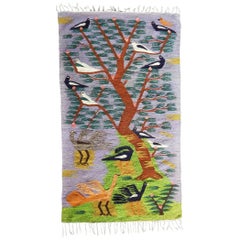
Egyptian "Tree of Life" Tapestry, Influenced by the Ramses Wissa Wassef Workshop
By Ramses Wissa Wassef Workshop
Located in Philadelphia, PA
This remarkable weaving, using yarns in shades of pale purple, burnt umber, ruddy brown and deep blue, is a masterpiece of post-war Egyptian artisanry. It depicts a crowd of birds in and around a stylized tree and was influenced by the work of the famed Ramses Wissa Wassef...
Category

Vintage 1950s Egyptian Mid-Century Modern Tapestries

Materials

Wool

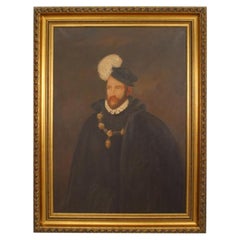
Portrait with Hat Painting
Located in Queens, NY
Copy of a painting titled "Portrait with Hat" Showing a man in a cape with feathered plume in his hat
Category

Late 20th Century American Renaissance Paintings

Materials

Paint

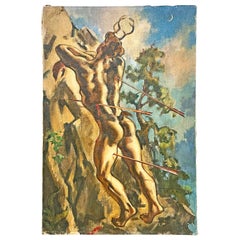
"Actaeon in Flight, " Large Painting of Mythological Scene w/ Male Nude, 1942
By William Littlefield
Located in Philadelphia, PA
This stunning example of Art Deco painting illustrates the dramatic moment when the hunter Actaeon, having seen the nude Diana in her bath, is meeting his death. Here Actaeon himself is fully nude, and is being transformed into a deer as he is being pursued by Diana's avengers. The classic myth...
Category

Vintage 1940s North American Art Deco Paintings

Materials

Paint

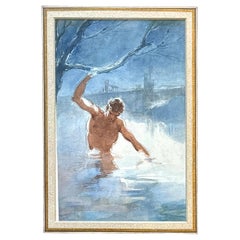
"Swimming in the Cloisterham Weir", Watercolor by Shinn for Dickens Edwin Drood
By Everett Shinn
Located in Philadelphia, PA
Many a Baby Boomer will recall growing up with a bookshelf lined with classic novels issued by The Heritage Press with newly-commissioned illustrations by celebrated artists of the d...
Category

Vintage 1940s American Art Deco Paintings

Materials

Paint

Antique Turkish Silk and Gold Hereke Tapestry with Flower of the Seven Mountains
Located in Dallas, TX
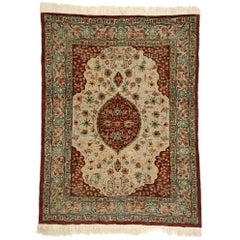
77024, this opulent antique Turkish silk and gold Hereke tapestry with flower of the seven mountains. Featuring a central medallion of cinnamon-red floating in a cut out medallion of...
Category

Early 20th Century Turkish Rococo Turkish Rugs

Materials

Gold

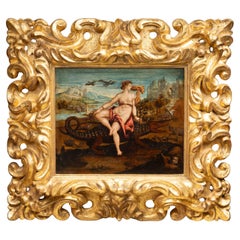
"St. George and the Dragon", Large Bronze Relief Sculpture with Male Nude
Located in Philadelphia, PA
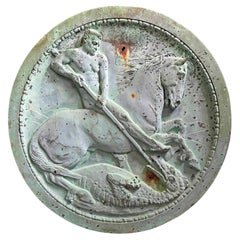
Large and impressive, this bronze bas relief rondel depicts a nude St. George on his valiant horse, spearing a fearsome dragon below. The relief is bold and expressive, and the bron...
Category

Vintage 1920s American Art Deco Wall-mounted Sculptures

Materials

Bronze

"Nudes Suspended", Early, Surrealist Drawing w/ Male Nudes by John B. Lear
By John B. Lear
Located in Philadelphia, PA
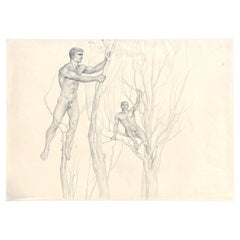
Early, important and finely drawn, this piece by John B. Lear depicts two fully nude male figures suspended among the branches of two trees, each figure demonstrating the care with w...
Category

Vintage 1960s American Mid-Century Modern Drawings

Materials

Paper

"Bricklayer at Rest, " Monumental WPA Period Painting of Worker with Landscape
By Paul Ulen
Located in Philadelphia, PA
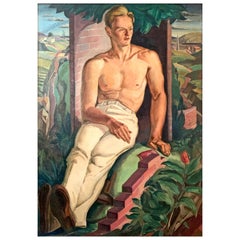
One of the finest depictions of an American worker from the 1930s that we have seen, this monumental painting of a shirtless bricklayer, resting against a curved brick niche, with a ...
Category

Vintage 1930s American Art Deco Paintings

Materials

Paint

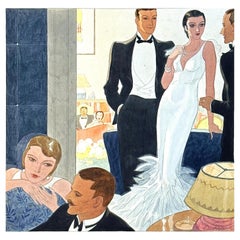
"Cocktail Party", Sophisticated Art Deco Painting by Patterson
Located in Philadelphia, PA
This sophisticated view of a 1920s cocktail party -- probably taking place on the upper levels of an Art Deco tower in New York or Chicago -- was painted by Robert Patterson, one of ...
Category

Vintage 1920s American Art Deco Paintings

Materials

Paint

Italian Spolvero Rococo Print on Canvas with an Antique Frame Citrine Crystals
By Interi
Located in Dublin, Dalkey
18th century Italian spolvero fresco pattern printed onto canvas and framed with an antique molding frame and citrine crystals. Spolvero is an artisti...
Category

Antique 18th Century Italian Rococo Prints

Materials

Rock Crystal, Gold Leaf

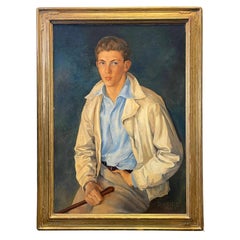
"Portrait of a Young Jockey", Vivid, Superb Portrait Painting by Peter Hurd
Located in Philadelphia, PA
Perhaps the finest portrait we have ever offered, this depiction of a young jockey in 1941, his complexion warm and glowing and his blue eyes echoing the color of his shirt, was pain...
Category

Vintage 1940s American Art Deco Paintings

Materials

Paint

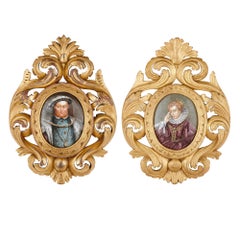
Two Limoges Enamel Paintings Including Portrait of Henry VIII
By Hans Holbein
Located in London, GB
These exquisite portrait plaques were made in the French town of Limoges, which is renowned for the fine quality of its enamel wares. The panels have been painted with oval, half-length portraits of British Tudor monarchs...
Category

Antique 19th Century French Renaissance Revival Paintings

Materials

Enamel

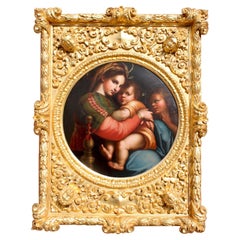
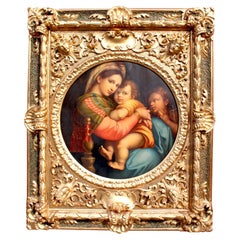
After Raffaello Sanzio 1483-1520 Raphael La Madonna della Seggiola Oil on Canvas
By (after) Raphael (Raffaello Sanzio da Urbino)
Located in Los Angeles, CA
A Fine Italian 19th Century Oil Painting on Canvas "La Madonna della Seggiola" after Raphael (Raffaello Sanzio da Urbino 1483-1520). The circular painted canvas depicting a seated Madonna holding an infant Jesus Christ next to a child Saint John the Baptist, all within a massive carved gilt wood and gesso frame, which is identical to the frame on Raphael's original artwork. This painting is a 19th Century copy of Raphael's Madonna della Seggiola painted in 1514 and currently exhibited and part of the permanent collection at the Palazzo Pitti, Galleria Palatina, Florence, Italy. The bodies of the Virgin, Christ, and the boy Baptist fill the whole picture. The tender, natural looking embrace of the Mother and Child, and the harmonious grouping of the figures in the round, have made this one of Raphael's most popular Madonnas. The isolated chair leg is reminiscent of papal furniture, which has led to the assumption that Leo X himself commissioned the painting. A retailer's label reads " Fred K/ Keer's Sons - Framers and Fine Art Dealers - 917 Broad St. Newark, N.J." - Another label from the gilder reads "Carlo Bartolini - Doratore e Verniciatori - Via Maggio 1924 - Firenze". Circa: 1890-1900. Subject: Religious painting Canvas diameter: 28 inches (71.1 cm) Frame height: 54 inches (137.2 cm) Frame width: 42 1/2 inches (108 cm) Frame depth: 5 1/2 inches (14 cm) Raffaello Sanzio da Urbino (Italian, March 28 or April 6, 1483 - April 6, 1520), known as Raphael, was an Italian painter and architect of the High Renaissance. His work is admired for its clarity of form, ease of composition, and visual achievement of the Neoplatonic ideal of human grandeur. Together with Michelangelo and Leonardo da Vinci, he forms the traditional trinity of great masters of that period. Raphael was enormously productive, running an unusually large workshop and, despite his death at 37, leaving a large body of work. Many of his works are found in the Vatican Palace, where the frescoed Raphael Rooms were the central, and the largest, work of his career. The best known work is The School of Athens in the Vatican Stanza della Segnatura. After his early years in Rome much of his work was executed by his workshop from his drawings, with considerable loss of quality. He was extremely influential in his lifetime, though outside Rome his work was mostly known from his collaborative printmaking. After his death, the influence of his great rival Michelangelo was more widespread until the 18th and 19th centuries, when Raphael's more serene and harmonious qualities were again regarded as the highest models. His career falls naturally into three phases and three styles, first described by Giorgio Vasari: his early years in Umbria, then a period of about four years (1504–1508) absorbing the artistic traditions of Florence, followed by his last hectic and triumphant twelve years in Rome, working for two Popes and their close associates. Raphael was born in the small but artistically significant central Italian city of Urbino in the Marche region, where his father Giovanni Santi was court painter to the Duke. The reputation of the court had been established by Federico III da Montefeltro, a highly successful condottiere who had been created Duke of Urbino by the Pope - Urbino formed part of the Papal States - and who died the year before Raphael was born. The emphasis of Federico's court was rather more literary than artistic, but Giovanni Santi was a poet of sorts as well as a painter, and had written a rhymed chronicle of the life of Federico, and both wrote the texts and produced the decor for masque-like court entertainments. His poem to Federico shows him as keen to show awareness of the most advanced North Italian painters, and Early Netherlandish artists as well. In the very small court of Urbino he was probably more integrated into the central circle of the ruling family than most court painters. Federico was succeeded by his son Guidobaldo da Montefeltro, who married Elisabetta Gonzaga, daughter of the ruler of Mantua, the most brilliant of the smaller Italian courts for both music and the visual arts. Under them, the court continued as a centre for literary culture. Growing up in the circle of this small court gave Raphael the excellent manners and social skills stressed by Vasari. Court life in Urbino at just after this period was to become set as the model of the virtues of the Italian humanist court through Baldassare Castiglione's depiction of it in his classic work The Book of the Courtier, published in 1528. Castiglione moved to Urbino in 1504, when Raphael was no longer based there but frequently visited, and they became good friends. He became close to other regular visitors to the court: Pietro Bibbiena and Pietro Bembo, both later cardinals, were already becoming well known as writers, and would be in Rome during Raphael's period there. Raphael mixed easily in the highest circles throughout his life, one of the factors that tended to give a misleading impression of effortlessness to his career. He did not receive a full humanistic education however; it is unclear how easily he read Latin. Early Life and Works His mother Màgia died in 1491 when Raphael was eight, followed on August 1, 1494 by his father, who had already remarried. Raphael was thus orphaned at eleven; his formal guardian became his only paternal uncle Bartolomeo, a priest, who subsequently engaged in litigation with his stepmother. He probably continued to live with his stepmother when not staying as an apprentice with a master. He had already shown talent, according to Vasari, who says that Raphael had been "a great help to his father". A self-portrait drawing from his teenage years shows his precocity. His father's workshop continued and, probably together with his stepmother, Raphael evidently played a part in managing it from a very early age. In Urbino, he came into contact with the works of Paolo Uccello, previously the court painter (d. 1475), and Luca Signorelli, who until 1498 was based in nearby Città di Castello. According to Vasari, his father placed him in the workshop of the Umbrian master Pietro Perugino as an apprentice "despite the tears of his mother". The evidence of an apprenticeship comes only from Vasari and another source, and has been disputed—eight was very early for an apprenticeship to begin. An alternative theory is that he received at least some training from Timoteo Viti, who acted as court painter in Urbino from 1495.Most modern historians agree that Raphael at least worked as an assistant to Perugino from around 1500; the influence of Perugino on Raphael's early work is very clear: "probably no other pupil of genius has ever absorbed so much of his master's teaching as Raphael did", according to Wölfflin. Vasari wrote that it was impossible to distinguish between their hands at this period, but many modern art historians claim to do better and detect his hand in specific areas of works by Perugino or his workshop. Apart from stylistic closeness, their techniques are very similar as well, for example having paint applied thickly, using an oil varnish medium, in shadows and darker garments, but very thinly on flesh areas. An excess of resin in the varnish often causes cracking of areas of paint in the works of both masters. The Perugino workshop was active in both Perugia and Florence, perhaps maintaining two permanent branches. Raphael is described as a "master", that is to say fully trained, in December 1500. His first documented work was the Baronci altarpiece for the church of Saint Nicholas of Tolentino in Città di Castello, a town halfway between Perugia and Urbino. Evangelista da Pian di Meleto, who had worked for his father, was also named in the commission. It was commissioned in 1500 and finished in 1501; now only some cut sections and a preparatory drawing remain. In the following years he painted works for other churches there, including the Mond Crucifixion (about 1503) and the Brera Wedding of the Virgin (1504), and for Perugia, such as the Oddi Altarpiece. He very probably also visited Florence in this period. These are large works, some in fresco, where Raphael confidently marshals his compositions in the somewhat static style of Perugino. He also painted many small and exquisite cabinet paintings in these years, probably mostly for the connoisseurs in the Urbino court, like the Three Graces and St. Michael, and he began to paint Madonnas and portraits. In 1502 he went to Siena at the invitation of another pupil of Perugino, Pinturicchio, "being a friend of Raphael and knowing him to be a draughtsman of the highest quality" to help with the cartoons, and very likely the designs, for a fresco series in the Piccolomini Library in Siena Cathedral. He was evidently already much in demand even at this early stage in his career. Influence of Florence Raphael led a "nomadic" life, working in various centres in Northern Italy, but spent a good deal of time in Florence, perhaps from about 1504. Although there is traditional reference to a "Florentine period...
Category

Antique Early 1900s Italian Baroque Paintings

Materials

Canvas, Giltwood

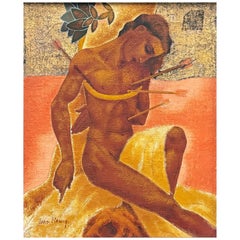
"St. Sebastian in Gold and Coral", Striking Art Deco Painting by Remy, France
Located in Philadelphia, PA
A vivid and striking example of Art Deco painting, this depiction of St. Sebastian in tones of gold and pink-papaya shows the figure with a rich, brown complexion, wounded with four ...
Category

Vintage 1920s French Art Deco Paintings

Materials

Paint

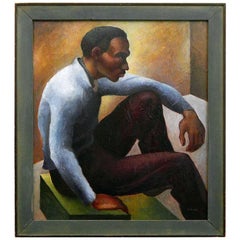
"Black Figure in Yellow Room, " 1930s Portrait by Student of Thomas Hart Benton
By Trew Hocker
Located in Philadelphia, PA
Brilliantly conceived and executed by Trew Hocker, an important muralist who was strongly influenced by Thomas Hart Benton and Grant Wood, this portrait of a young African American m...
Category

Vintage 1930s American Art Deco Paintings

Materials

Paint

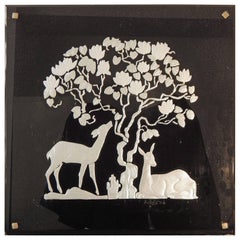
"Deer in the Shade, " Highly Rare Art Deco Mirror with Sculptural Relief
Located in Philadelphia, PA
Stunning and very rare, this high style Art Deco mirror features a pair of deer under a spreading tree, all alive with a silvery shimmer that is entrancing. The background is reverse...
Category

Vintage 1930s American Art Deco Wall Mirrors

Materials

Glass

Allegory of Africa - 16th century
Located in Bruxelles, BE
Flemish school of the 16th century Allegory of Africa
After The Allegories of the Continents by Maerten de Vos (engraving by Adriaen Collaert)
 Oil on copper
 Inscription: "Giulio Ro...
Category

Antique 16th Century Belgian Renaissance Paintings

Materials

Copper

Allegory of Africa - 16th century
$53,165 Sale Price
20% Off
"The Return of Thomas Pickering, " Important WPA-Period Oil Painting by Beck
Located in Philadelphia, PA
Full of atmosphere, rich color and drama, this fully realized oil on canvas study by Dunbar Beck was executed in preparation for his lobby painting at the US Post Office...
Category

Vintage 1930s American Art Deco Paintings

Materials

Paint

"Nude Male with Hand to Chest, " Drawing by Raoul du Bois
By Raoul Pene du Bois
Located in Philadelphia, PA
Powerful and eloquent, this drawing by Raoul Pene du Bois showcases his mastery of the human figure, expressed with his usual Mannerist approach -- all elongated limbs and stylized p...
Category

Vintage 1940s American Art Deco Drawings
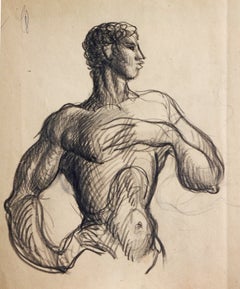
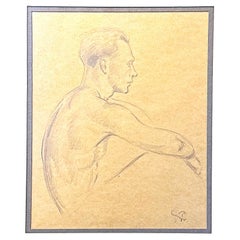
"Seated Man", Fine Drawing of Nude Male Figure by Woodruff, Vogue Artist
By Porter Woodruff
Located in Philadelphia, PA
Finely drawn and quiet in mood, this lovely drawing by Porter Woodruff depicts a seated, nude male figure from the side, his arms crossed on his knees and his eyes looking into the d...
Category

Vintage 1930s American Art Deco Drawings

Materials

Paper

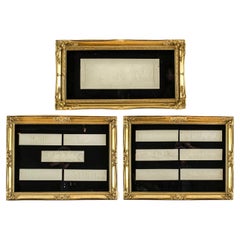
Antique Set of Three Box Framed Grand Tour Giovanni Liberotti Intaglios 19th C
Located in London, GB
An elegant set of three giltwood frames enclosing 12 unusually large plaster Grand Tour Giovanni Liberotti intaglios dating from the early 19th Century. The various large rectang...
Category

Antique 1810s Decorative Art

Materials

Plaster, Giltwood

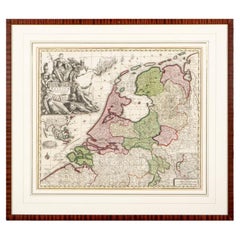
Matthaus Seutter, Framed 1730 Color Engraving Map of "Belgium Fonderatum"
Located in Bridgeport, CT
Label on verso. From Grosser Atlas. The name Belgium comes from the ancient designation "Gallis Belgica". Figural decoration upper left. M. Seutter was a famed German mapmaker in the...
Category

Antique 18th Century European Renaissance Maps

Materials

Brass

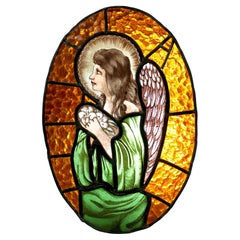
French Neoclassical Revival Style Stained Glass Panel Praying Angel or Cupid
Located in Los Angeles, CA
A French early 20th Century Neoclassical Revival stained glass panel depicting a praying angel or cupid. The charming oval shaped hand-painted multi-colored glass panel or window dep...
Category

Antique Early 1900s French Renaissance Revival Paintings

Materials

Art Glass, Stained Glass

After Raffaello Sanzio 1483-1520 Raphael La Madonna della Seggiola Oil on Canvas
By (after) Raphael (Raffaello Sanzio da Urbino)
Located in Los Angeles, CA
A Fine Italian 19th Century Oil Painting on Canvas "La Madonna della Seggiola" after Raphael (Raffaello Sanzio da Urbino 1483-1520). The circular painted canvas depicting a seated Madonna holding an infant Jesus Christ next to a child Saint John the Baptist, all within a massive carved two-tone gilt wood, gilt-patinated and gesso frame, which is identical to the frame on Raphael's original artwork. This painting is a 19th Century copy of Raphael's Madonna della Seggiola painted in 1514 and currently exhibited and part of the permanent collection at the Palazzo Pitti, Galleria Palatina, Florence, Italy. The bodies of the Virgin, Christ, and the boy Baptist fill the whole picture. The tender, natural looking embrace of the Mother and Child, and the harmonious grouping of the figures in the round, have made this one of Raphael's most popular Madonnas. The isolated chair leg is reminiscent of papal furniture, which has led to the assumption that Leo X himself commissioned the painting. Circa: 1890-1900. Subject: Religious painting Painting diameter: 28 inches (71.1 cm) Frame height: 55 1/8 inches (140 cm) Frame width: 46 inches (116.8 cm) Frame depth: 5 1/8 inches (13 cm) Raffaello Sanzio da Urbino (Italian, March 28 or April 6, 1483 - April 6, 1520), known as Raphael, was an Italian painter and architect of the High Renaissance. His work is admired for its clarity of form, ease of composition, and visual achievement of the Neoplatonic ideal of human grandeur. Together with Michelangelo and Leonardo da Vinci, he forms the traditional trinity of great masters of that period. Raphael was enormously productive, running an unusually large workshop and, despite his death at 37, leaving a large body of work. Many of his works are found in the Vatican Palace, where the frescoed Raphael Rooms were the central, and the largest, work of his career. The best known work is The School of Athens in the Vatican Stanza della Segnatura. After his early years in Rome much of his work was executed by his workshop from his drawings, with considerable loss of quality. He was extremely influential in his lifetime, though outside Rome his work was mostly known from his collaborative printmaking. After his death, the influence of his great rival Michelangelo was more widespread until the 18th and 19th centuries, when Raphael's more serene and harmonious qualities were again regarded as the highest models. His career falls naturally into three phases and three styles, first described by Giorgio Vasari: his early years in Umbria, then a period of about four years (1504–1508) absorbing the artistic traditions of Florence, followed by his last hectic and triumphant twelve years in Rome, working for two Popes and their close associates. Raphael was born in the small but artistically significant central Italian city of Urbino in the Marche region, where his father Giovanni Santi was court painter to the Duke. The reputation of the court had been established by Federico III da Montefeltro, a highly successful condottiere who had been created Duke of Urbino by the Pope - Urbino formed part of the Papal States - and who died the year before Raphael was born. The emphasis of Federico's court was rather more literary than artistic, but Giovanni Santi was a poet of sorts as well as a painter, and had written a rhymed chronicle of the life of Federico, and both wrote the texts and produced the decor for masque-like court entertainments. His poem to Federico shows him as keen to show awareness of the most advanced North Italian painters, and Early Netherlandish artists as well. In the very small court of Urbino he was probably more integrated into the central circle of the ruling family than most court painters. Federico was succeeded by his son Guidobaldo da Montefeltro, who married Elisabetta Gonzaga, daughter of the ruler of Mantua, the most brilliant of the smaller Italian courts for both music and the visual arts. Under them, the court continued as a centre for literary culture. Growing up in the circle of this small court gave Raphael the excellent manners and social skills stressed by Vasari. Court life in Urbino at just after this period was to become set as the model of the virtues of the Italian humanist court through Baldassare Castiglione's depiction of it in his classic work The Book of the Courtier, published in 1528. Castiglione moved to Urbino in 1504, when Raphael was no longer based there but frequently visited, and they became good friends. He became close to other regular visitors to the court: Pietro Bibbiena and Pietro Bembo, both later cardinals, were already becoming well known as writers, and would be in Rome during Raphael's period there. Raphael mixed easily in the highest circles throughout his life, one of the factors that tended to give a misleading impression of effortlessness to his career. He did not receive a full humanistic education however; it is unclear how easily he read Latin. Early Life and Works His mother Màgia died in 1491 when Raphael was eight, followed on August 1, 1494 by his father, who had already remarried. Raphael was thus orphaned at eleven; his formal guardian became his only paternal uncle Bartolomeo, a priest, who subsequently engaged in litigation with his stepmother. He probably continued to live with his stepmother when not staying as an apprentice with a master. He had already shown talent, according to Vasari, who says that Raphael had been "a great help to his father". A self-portrait drawing from his teenage years shows his precocity. His father's workshop continued and, probably together with his stepmother, Raphael evidently played a part in managing it from a very early age. In Urbino, he came into contact with the works of Paolo Uccello, previously the court painter (d. 1475), and Luca Signorelli, who until 1498 was based in nearby Città di Castello. According to Vasari, his father placed him in the workshop of the Umbrian master Pietro Perugino as an apprentice "despite the tears of his mother". The evidence of an apprenticeship comes only from Vasari and another source, and has been disputed—eight was very early for an apprenticeship to begin. An alternative theory is that he received at least some training from Timoteo Viti, who acted as court painter in Urbino from 1495.Most modern historians agree that Raphael at least worked as an assistant to Perugino from around 1500; the influence of Perugino on Raphael's early work is very clear: "probably no other pupil of genius has ever absorbed so much of his master's teaching as Raphael did", according to Wölfflin. Vasari wrote that it was impossible to distinguish between their hands at this period, but many modern art historians claim to do better and detect his hand in specific areas of works by Perugino or his workshop. Apart from stylistic closeness, their techniques are very similar as well, for example having paint applied thickly, using an oil varnish medium, in shadows and darker garments, but very thinly on flesh areas. An excess of resin in the varnish often causes cracking of areas of paint in the works of both masters. The Perugino workshop was active in both Perugia and Florence, perhaps maintaining two permanent branches. Raphael is described as a "master", that is to say fully trained, in December 1500. His first documented work was the Baronci altarpiece for the church of Saint Nicholas of Tolentino in Città di Castello, a town halfway between Perugia and Urbino. Evangelista da Pian di Meleto, who had worked for his father, was also named in the commission. It was commissioned in 1500 and finished in 1501; now only some cut sections and a preparatory drawing remain. In the following years he painted works for other churches there, including the Mond Crucifixion (about 1503) and the Brera Wedding of the Virgin (1504), and for Perugia, such as the Oddi Altarpiece. He very probably also visited Florence in this period. These are large works, some in fresco, where Raphael confidently marshals his compositions in the somewhat static style of Perugino. He also painted many small and exquisite cabinet paintings in these years, probably mostly for the connoisseurs in the Urbino court, like the Three Graces and St. Michael, and he began to paint Madonnas and portraits. In 1502 he went to Siena at the invitation of another pupil of Perugino, Pinturicchio, "being a friend of Raphael and knowing him to be a draughtsman of the highest quality" to help with the cartoons, and very likely the designs, for a fresco series in the Piccolomini Library in Siena Cathedral. He was evidently already much in demand even at this early stage in his career. Influence of Florence Raphael led a "nomadic" life, working in various centres in Northern Italy, but spent a good deal of time in Florence, perhaps from about 1504. Although there is traditional reference to a "Florentine period...
Category

Antique Early 1900s Italian Baroque Paintings

Materials

Canvas, Giltwood

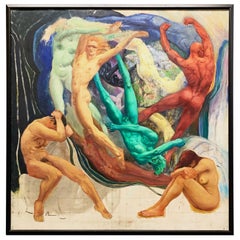
"Ten Nudes Dancing, " Large Art Deco-Surrealist Painting by Bond, 1940s
By Milton Bond
Located in Philadelphia, PA
Clearly showing the influence of modern dance, William Blake and early 19th century Classicism, Art Deco stylization and Surrealism, this remarkable, brilliantly hued painting by Mil...
Category

Vintage 1940s American Art Deco Paintings

Materials

Paint

Important Historical Tapestry Brussels– Cyrus the Great – 17th Century - No 1534
By Brussels Manufactory
Located in Paris, FR
Very Important & Great Tapestry Historical & Biblical by Brusseles Manufactury in 1680th Period: 17th century Condition: Excellent Material: Wool & Silk Width: 375 cm Height: 325 c...
Category

Antique 17th Century Belgian French Provincial Tapestries

Materials

Wool, Silk

Adoration of the Magi, Catalan Baroque, S.XVI Dated 1527, Oil on Wood
Located in CABA, AR
Catalan Baroque S.XVI The Adoration of the Magi Oil on wood 92cm x 68cm Dated 1527 At the beginning of the Renaissance period, Gothic forms coexisted in Catalonia with other new solutions, in which religious fervor was mixed with the attention to detail of everyday life. Following the medieval tradition, the altarpieces are thought from a narrative vision, and flat painting...
Category

Antique 16th Century Spanish Baroque Paintings

Materials

Wood

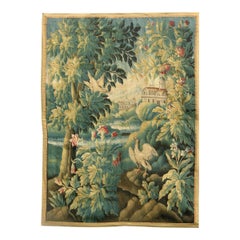
Late 16th Century Flemish Historical Tapestry
Located in Port Washington, NY
This magnificent tapestry was woven in Flanders during the middle of the European Renaissance, in the late 1500s. At this time, Flanders was creating some of the best textiles in the world, and many of the rich wooded scenes with animals and hunting motifs began to appear. Tapestries subjects were thick forests and park lands, hunting scenes filled with deer, birds, exotic animals, and even mythological creatures. These were later referred to as Game Park tapestries...
Category

Antique 16th Century Belgian Tapestries

Materials

Wool

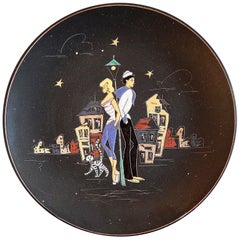
"Paris at Night, " Large Midcentury Platter or Low Bowl with Sailor and Blonde
By Ruscha
Located in Philadelphia, PA
Hinting at the demimonde of Paris after World War II, this rare and atmospheric bowl/platter depicts a lamp post flanked by a sailor with his cap and bandanna, and a blonde woman in a tight sweater and pair of fashionable Capri pants. The setting is a rundown section of the city, probably near the docks, and the ragtag background of houses and the striped alley cat complete the picture. This piece was made by the famed Ruscha ceramic...
Category

Vintage 1950s German Mid-Century Modern Decorative Art

Materials

Ceramic

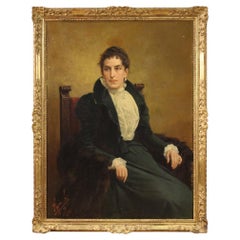
19th Century Oil on Canvas Italian Signed Noblewoman Portrait Painting, 1898
Located in Vicoforte, Piedmont
Large Italian painting signed and dated 1898. Oil on canvas, first canvas, artwork depicting a portrait, Milanese noblewoman, of good pictorial quality. Painting of great size and im...
Category

Antique 1890s Italian Paintings

Materials

Canvas

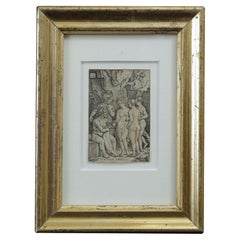
Hans Sebald Beham (1500 Nuremberg - 1550 Frankfurt am Main) “Judicium des Paris”
Located in Münster, DE
Hans Sebald Beham (1500 Nuremberg - 1550 Frankfurt am Main) “Judicium des Paris”, The Judgement of Paris, original copperplate engraving, framed behind glass, 1546, dated in the cane...
Category

Antique 16th Century German Renaissance Decorative Art

Materials

Paper

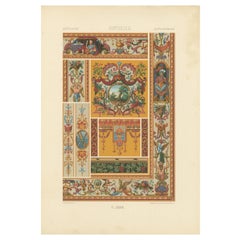
18th Century French Decorative Panels – Neoclassical and Chinoiserie Motifs
Located in Langweer, NL
18th Century French Decorative Panels – Neoclassical and Chinoiserie Motifs, Plate LXXXIX This richly detailed chromolithograph, Plate LXXXIX from *L'Ornement Polychrome*, showcases...
Category

Antique Mid-19th Century French Prints

Materials

Paper

Read More

Punk Rock and Rebellion Animate London’s Hit Yoshitomo Nara Show

The exhibition includes his portraits of wide-eyed kids with mayhem on their minds, as well as some of the artist’s personal belongings.

Whether Painted or Papered, Muraled Walls Make Bold Statements in the Home

The ancient practice of covering walls in artistic scenery is back.

In Francks Deceus’s ‘Mumbo Jumbo #5,’ the Black Experience Is . . . Complicated

Despite the obstacles, the piece’s protagonist navigates the chaos without losing his humanity.

12 Floral-Accented Rooms with a Handmade, Folkloric Feel

Who needs a flower garden? Just use your imagination — and some beautifully patterned wallpaper or fabric — to bring the outdoors in.

This Wolf Kahn Pastel Is the Epitome of Beauty at Its Most Essential

A longtime admirer of Kahn’s work, 1stDibs editorial director Anthony Barzilay Freund explores why it’s relevant now more than ever.

Why Jules Chéret Was the King of the Modern Poster

The streets of fin-de-siècle Paris were set aglow with colorful poster ads, thanks to the printing techniques invented by Jules Chéret. Now, the Milwaukee Art Museum is celebrating this undersung talent in America's first solo show dedicated his exuberant works.

Anna Condo’s Multifaceted Career Spans Film, Photography and NFTs

From her historic Manhattan townhouse, the talented creator and curator of 1stDibs' latest NFT exhibition tells us about the art in her home and how she got involved with cryptoart.

How Keith Rivers Went from NFL Linebacker to Blue-Chip Art Aficionado

The former football player is as serious about becoming a great contemporary-art patron as he once was about making tackles. Here, Rivers tells us how he got the collecting bug and how his tastes have evolved over the years.