Miniature Drawings and Watercolor Paintings

to
2,599
8,090
6,192
2,307
1,599
Overall Width
to
Overall Height
to
319
1,898
12,492
6,980
220
266
492
636
699
979
923
886
589
443
215
5,152
3,314
1,933
1,659
657
321
261
224
204
196
159
74
46
43
11,783
8,753
1,035
11,236
6,506
5,784
4,059
3,568
2,617
2,081
1,842
1,470
1,230
970
914
846
792
627
611
595
559
468
467
11,002
9,603
8,532
5,355
5,046
885
313
262
243
214
4,774
6,257
11,371
8,208
Size: Miniature
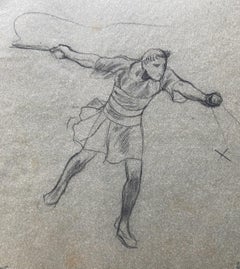
G. A. Rochegrosse (1859-1938) , Study for "Le Cocher" original drawing
Located in Paris, FR
Georges Antoine Rochegrosse (1859-1938) Study for "Le Cocher" carbon pencil on thin paper 14.5 x 13 cm In good condition Framed : 36.7 x 31 cm Provenance: Estate of the artist and...
Category

1910s Symbolist Portrait Drawings and Watercolors

Materials

Carbon Pencil

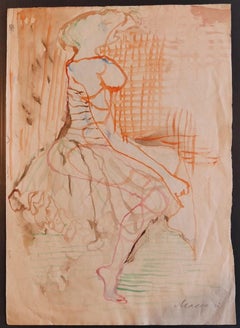
Woman - Watercolor Drawing by Mino Maccari - 1950s
Located in Roma, IT
Woman is an original modern artwork realized the 1950s by the Italian artist Mino Maccari (Siena, 1898 - Rome, 1989). Original drawing in watercolor on paper Hand-signed on the low...
Category

1950s Modern Figurative Drawings and Watercolors

Materials

Paper, Watercolor

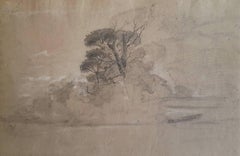
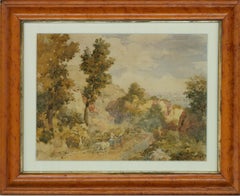
Attrib. David Hall McKewan (1782-1842) - Watercolour, River Scene
Located in Corsham, GB
Depicting a peaceful river running through a mountainous landscape this fine watercolour has the hallmarks of the British painter David Hall McKewan. Originally purchased with the at...
Category

19th Century Landscape Drawings and Watercolors

Materials

Watercolor

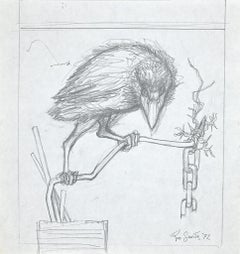
The Crow - Pencil Drawing by Leo Guida - 1972
Located in Roma, IT
The Crow is an original Contemporary artwork realized in 1972 by the italian artist Leo Guida. Hand-signed and dated in pencil on the lower right corner: Leo Guida '72. Original P...
Category

1970s Contemporary Animal Drawings and Watercolors

Materials

Pencil

Three Studies of a Woman in Movement - Charcoal by G. Gôbo - Early 20th Century
Located in Roma, IT
Three studies of a woman in movement is an original black charcoal drawing on thick serrated sheet on the left side, realized at the beginning o...
Category

Early 20th Century Modern Figurative Drawings and Watercolors

Materials

Charcoal

Landscape
Located in Roma, IT
Drawing on paper, XIX century. Provenance: Nino Costa’s successors. Liberio Merolli, Rome. Private Collection. This fascinating drawing was realized by Nino Costa, an Italian landsca...
Category

19th Century Romantic Landscape Drawings and Watercolors

Materials

Paper

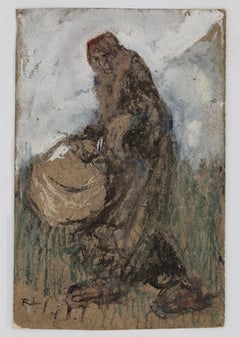
Woman with Basket - Original Ink, Tempera and Watercolor by G. Galantara - 1905
Located in Roma, IT
Woman with Basket is an original Modern artwork created by Gabriele Galantara (1865-1937) in 1905. The artwork has been realized in China ink, tempe...
Category

Early 1900s Modern Figurative Drawings and Watercolors

Materials

Ink, Watercolor, Tempera

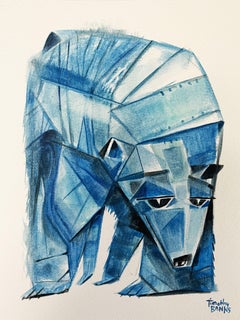
Ice Blue Bear, Original Painting
Located in San Francisco, CA

Artist Comments
A hunched blue bear leans into winter. Caught in a moment between frozen and awake, the animal feels present but distant. Layers of watercolor shift between sha...

Category

21st Century and Contemporary Contemporary Animal Drawings and Watercolors

Materials

Watercolor

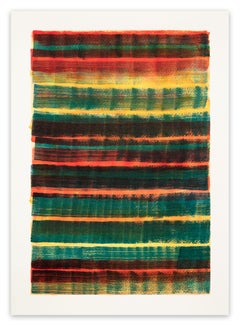
Ink #5 (Abstract painting)
Located in London, GB
Ink #5 (Abstract painting) Ink, watercolor on Arches watercolor paper - Unframed. Image size: 12.25” x 8.25 - 31 x 21 cm. She layers paint in gestural, horizontal swaths from left...
Category

2010s Abstract Abstract Drawings and Watercolors

Materials

Paper, Ink, Watercolor

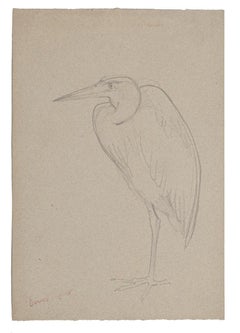
Stork - Original Pencil on Paper - Mid-20th Century
Located in Roma, IT
Stork is an original drawing in pencil on paper realized by an Anonymous artist of the mid-20th Century. The State of preservation is very good. Hand-signed, illegible. The artwo...
Category

Mid-20th Century Figurative Drawings and Watercolors

Materials

Pencil

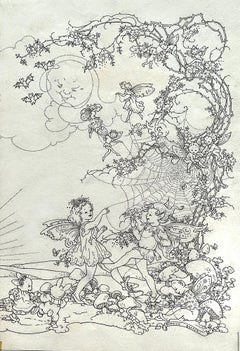
Wonderland Tale - Fairy Tale - Female Illustrator
Located in Miami, FL
Wonderland Tale - Fairy Tale - Female Illustrator - The work is meticulously rendered in an exacting technique of line to the point of wonderment. Yet, Baxter can obtain an ethereali...
Category

1950s English School Figurative Drawings and Watercolors

Materials

Ink, Pen

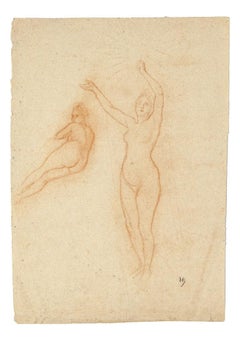
Nudes Study - Pastel Drawing on Paper by Arnold Heldink - Early 20th Century
Located in Roma, IT
Nudes Study is an original modern artwork realized in the first years of the 20th Century by the artist Arnold Heldink (b. 1860-?). Original drawing on paper. Sigled in black char...
Category

Early 20th Century Contemporary Figurative Drawings and Watercolors

Materials

Paper, Pastel

The Monkey - Ink and Watercolor by Leo Guida - 1971
Located in Roma, IT
The monkey is an original painting in watercolor on paper by Leo Guida in 1971. The state of preservation is good.. On the lower left margin hand-signed and dated. On the lower ri...
Category

1970s Animal Drawings and Watercolors

Materials

Ink, Watercolor

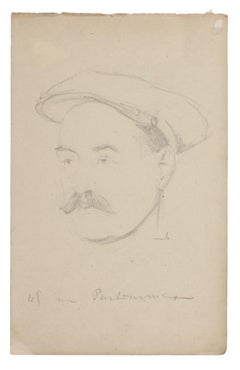
Portrait - Original Drawing In Pencil- 20th Century
Located in Roma, IT
"Portrait" is an original drawing in pencil on ivory-colored paper glued on ivory-colored cardboard, signed, on the back of the drawing, by Bernard Millerent. Good conditions. She...
Category

20th Century Modern Portrait Drawings and Watercolors

Materials

Pencil

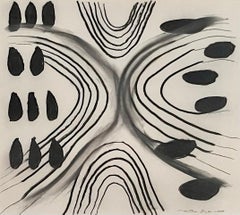
"Untitled" - black and white abstract charcoal drawing on paper, framed art
Located in Nyack, NY
Framed abstract charcoal drawing on paper by artist Martha Lloyd. About the artist: Martha Anne Lloyd was born in Washington, D.C. in 1927. An avid artist, Lloyd completed a BFA deg...
Category

2010s Abstract More Art

Materials

Charcoal, Paper

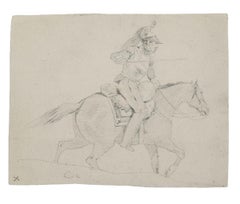
Soldier on Horseback - Pencil Drawing - 19th Century
Located in Roma, IT
"Soldier on Horseback" is a pencil drawing on ivory-colored paper by Anonymous Artist of 19th Century. In very good conditions. Sheet dimensio...
Category

19th Century Modern Animal Drawings and Watercolors

Materials

Pencil

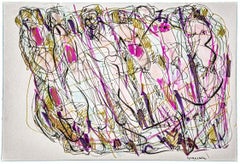
Flowers - Ink on Paper by Maurizio Gracceva - 2016
Located in Roma, IT
Flowers is a beautiful artwork realized by Maurizio Gracceva in the 2016. Mixed colored ink on paper. Hand signed by the artist. Original title: Fiori Author of numerous philosop...
Category

2010s Contemporary Abstract Drawings and Watercolors

Materials

Paper, Pencil

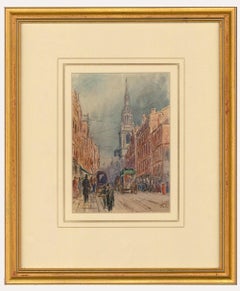
A.R. Collis - Framed Late 19th Century Watercolour, St Mary-le-Bow, Cheapside
Located in Corsham, GB
This charming watercolour captures the hustle and bustle of Cheapside, one of London's oldest thoroughfares with the Church of St Mary-le-Bow. Initialled by the artist to the lower r...
Category

Late 19th Century Landscape Drawings and Watercolors

Materials

Watercolor

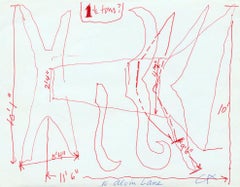
Sketch for The X Its Tails . 1967
Located in Palo Alto, CA
This work is registered as an authentic work by Alexander Calder (1898 – 1976) in the archives of the Calder Foundation (NY), under application number A.24492.  Created in 1967, this original pen and red ink drawing on paper is initialed ‘CA’ in blue ink in the lower right by Alexander Calder (1898 – 1976) with a handwritten dedication, also in blue ink, ‘To Alvin Lane’ along the lower center. The Sketch for ‘The X & Its Tails’ is an original study and preliminary drawing made by Calder preceding his large-scale sculpture for the Detroit Institute of Arts.  Sketches for models and sculptures are rare and this is no exception; according to Alvin S. Lane, collector and friend to Calder, “To the best of my knowledge there were very few, if any, preliminary drawings done by Calder that were on the market, but he was good enough when he did two for commissions to send the drawings to me as a present [including this Sketch for ‘The X & Its Tails’].  I included one of them here to show that although his drawings usually have a flowing steady line, his preliminary drawings are sloppy scribbles” (23). Provenance: ~       Gift of artist ~       Private Collection (Riverdale, NJ) Catalogue Raisonné and COA: Sketch for 'The X & Its Tails,' 1967 is fully documented and referenced in the below catalogue raisonnés and texts (copies will be enclosed as added documentation with the invoices that will accompany the final sale of the work). 1. Registered with the Calder Foundation, NY under application number A.24492. 2. Elvehjem Museum of Art. The Terese and Alvin S. Lane Collection...
Category

1960s Modern Abstract Drawings and Watercolors

Materials

Ink, Pen

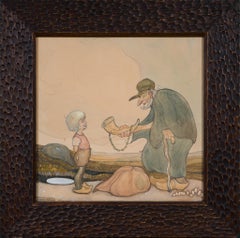
From Folklore to Disney: Tenggren’s 1919 Scene with Boy and Ceremonial Horn
Located in Stockholm, SE
Gustaf Tenggren (1896-1970) The Horn (1919) signed Tenggren. Ink, watercolor and gouache on cardboard unframed 29.5 x 30 cm (11 ⅝ x 11 ¾ in) framed 41.5 x 42 cm (16 ⅜ x 16 ½ in) h...
Category

1910s Realist Figurative Drawings and Watercolors

Materials

Ink, Watercolor, Gouache

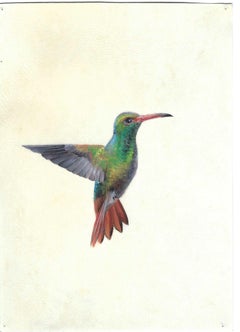
Hummingbird in Flight, Colorful Miniaturist Realist Painting on Parchment
Located in New York, NY
A captivating miniature painting by renowned artist Dina Brodsky, known for her masterful technique in gouache and watercolor. This exquisite work, painted on authentic animal parchm...
Category

2010s Realist Animal Paintings

Materials

Parchment Paper, Watercolor, Gouache

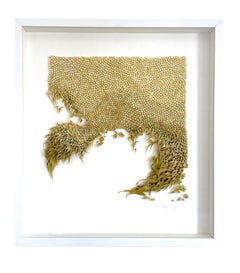
Green Roses - abstract nature inspired minimal collage of clay on paper
Located in New York, NY
The new works of Mylinh Nguyen designed from polymer resin, bring us into a nature whose refinement commands admiration. From the physiognomy of living or extinct plant species, the ...
Category

2010s Abstract Geometric Mixed Media

Materials

Clay, Polymer

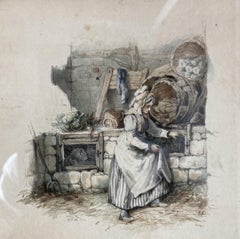
Attributed to Eugène Lami (1800-1890) A Maid feeding rabbits, Watercolor
By Eugène Louis Lami
Located in Paris, FR
Attributed to Eugène Lami (1800-1890) A maid feeding rabbits Watercolor on paper Bears a monogramm E L on the lower right 12.5 x 12.5 cm In good condition, some foxings in the uppe...
Category

1860s Academic Figurative Drawings and Watercolors

Materials

Watercolor

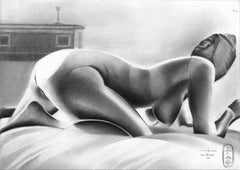
Solarized Roundism – 02-03-23, Drawing, Pencil/Colored Pencil on Paper
Located in Yardley, PA
Solarize It Again This graphite pencil drawing ‘Solarized Roundism – 02-03-23’ follows directly after one with the same name. You see, I quite got the hang of it. I’m tota...
Category

2010s Cubist Drawings and Watercolor Paintings

Materials

Pencil

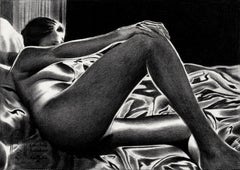
Roundism – 04-04-20, Drawing, Pencil/Colored Pencil on Paper
Located in Yardley, PA
Roundism – 04-04-20 This is my third solarized drawing I did since a long time and represents my regular model I know for years. Areas that catch the most solarization are the h...
Category

2010s Contemporary Drawings and Watercolor Paintings

Materials

Pencil

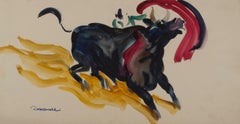
Bull engaging the muleta (Bull Fight)
Located in Fairlawn, OH
Bull engaging the muleta (Bull Fight) Signed with the Estate stamp lower left (See photo) Provenance: Estate of the Artist Marbella Gallery Inc., NYC Refer...
Category

Mid-20th Century American Modern Animal Drawings and Watercolors

Materials

Watercolor

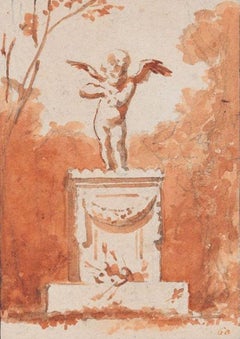
Cupid Statue - Original Charcoal and Watercolorl Drawing - Late 19th Century
Located in Roma, IT
Cupid Statue is an original pencil and watercolor drawing on thick cream-colored paper, realized by an anonymous French artist of the end of XIX century....
Category

Late 19th Century Figurative Drawings and Watercolors

Materials

Pencil

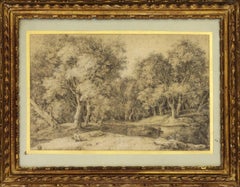
Figures by a River at the Edge of a Wood
Located in Paris, Île-de-France
Ferdinand von Kobell (1740–1799) Figures by a River at the Edge of a Wood Black chalk, stump and white chalk highlights, on paper 19 x 28.8 cm Signed and dated lower right: 1777 P...
Category

Late 18th Century Old Masters Landscape Drawings and Watercolors

Materials

Chalk

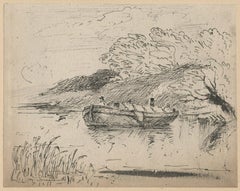
The River Barge
Located in Fairlawn, OH
The River Barge Pen and ink on paper on laid paper, mounted in English drum mount , c. 1810 Unsigned Condition: Slight sun staining to sheet and mount in the window (see photo) Image/sheet size: 5 1/4 x 6 11/16 inches Sight: : 5-3/4 x 7-1/4" Frame: 13-3/8 x 14-3/8" Provenance: Colnaghi, London (see photo of label) David Cox (29 April 1783 – 7 June 1859) was an English landscape painter, one of the most important members of the Birmingham School of landscape artists and an early precursor of Impressionism. He is considered one of the greatest English landscape painters, and a major figure of the Golden age of English watercolour. Although most popularly known for his works in watercolour, he also painted over 300 works in oil towards the end of his career, now considered "one of the greatest, but least recognised, achievements of any British painter. His son, known as David Cox the Younger (1809-1885), was also a successful artist. Early life in Birmingham, 1783–1804 Cox's birthplace in Deritend, Birmingham, illustrated by Samuel Lines Cox was born on 29 April 1783 on Heath Mill Lane in Deritend, then an industrial suburb of Birmingham. His father was a blacksmith and whitesmith about whom little is known, except that he supplied components such as bayonets and barrels to the Birmingham gun trade. Cox's mother was the daughter of a farmer and miller from Small Heath to the east of Birmingham. Early biographers record that "she had had a better education than his father, and was a woman of superior intelligence and force of character." Cox was initially expected to follow his father into the metal trade and take over his forge, but his lack of physical strength led his family to seek opportunities for him to develop his interest in art, which is said to have first become apparent when the young Cox started painting paper kites while recovering from a broken leg. By the late 18th century Birmingham had developed a network of private academies teaching drawing and painting, established to support the needs of the town's manufacturers of luxury metal goods, but also encouraging education in fine art, and nurturing the distinctive tradition of landscape art of the Birmingham School. Cox initially enrolled in the academy of Joseph Barber in Great Charles Street, where fellow students included the artist Charles Barber and the engraver William Radclyffe, both of whom would become important lifelong friends. At the age of about 15 Cox was apprenticed to the Birmingham painter Albert Fielder, who produced portrait miniatures and paintings for the tops of snuffboxes from his workshop at 10 Parade in the northwest of the town. Early biographers of Cox record that he left his apprenticeship after Fielder's suicide, with one reporting that Cox himself discovered his master's hanging body, but this is probably a myth as Fielder is recorded at his address in Parade as late as 1825. At some time during mid-1800 Cox was given work by William Macready the elder at the Birmingham Theatre, initially as an assistant grinding colours and preparing canvases for the scene painters, but from 1801 painting scenery himself and by 1802 leading his own team of assistants and being credited in plays' publicity. London, 1804–1814 In 1804 Cox was promised work by the theatre impresario Philip Astley and moved to London, taking lodgings in 16 Bridge Row, Lambeth. Although he was unable to get employment at Astley's Amphitheatre it is likely that he had already decided to try to establish himself as a professional artist, and apart from a few private commissions for painting scenery his focus over the next few years was to be on painting and exhibiting watercolours. While living in London, Cox married his landlord's daughter, Mary Agg and the couple moved to Dulwich in 1808. David Cox Travellers on a Path, pencil and brown wash. In 1805 he made his first of many trips to Wales, with Charles Barber, his earliest dated watercolours are from this year. Throughout his lifetime he made numerous sketching tours to the Home Counties, North Wales, Yorkshire, Derbyshire and Devon. Cox exhibited regularly at the Royal Academy from 1805. His paintings never reached high prices, so he earned his living mainly as a drawing master. His first pupil, Colonel the Hon.H. Windsor (the future Earl of Plymouth) engaged him in 1808, Cox went on to acquire several other aristocratic and titled pupils. He also went on to write several books, including: Ackermanns' New Drawing Book (1809); A Series of Progressive Lessons (1811); Treatise on Landscape Painting (1813); and Progressive Lessons on Landscape (1816). The ninth and last edition of his series Progressive Lessons, was published in 1845. By 1810 he was elected President of the Associated Artists in Water Colour. In 1812, following the demise of the Associated Artists, he was elected as associate of the Society of Painters in Water Colour (the old Water Colour Society). He was elected a Member of the Society in 1813, and exhibited there every year (except 1815 and 1817) until his death. Hereford, 1814–1827 In the summer of 1813 Cox was appointed as the drawing master of the Royal Military College in Farnham, Surrey, but he resigned shortly afterwards, finding little sympathy with the atmosphere of a military institution. Soon after that he applied to a newspaper advertisement for a position as drawing master for Miss Crouchers' School for Young Ladies in Hereford and in Autumn 1814 moved to the town with his family. Cox taught at the school in Widemarsh Street until 1819, his substantial salary of £100 per year requiring only two-day's work per week, allowing time for painting and the taking of private pupils. Cox's reputation as both a painter and a teacher had been building over previous years, as indicated by his election as a member of the Society of Painters in Water Colours and his inclusion in John Hassell's 1813 book Aqua Pictura, which claimed to present works by "all of the most approved water coloured draftsmen". The depression that accompanied the end of the Napoleonic Wars had caused a contraction in the art market, however, and by 1814 Cox had been very short of money, requiring a loan from one of his pupils to pay even for the move to Hereford. Despite its financial advantages and its proximity to the scenery of North Wales and the Wye Valley, the move to Hereford marked a retreat in terms of his career as a painter: he sent few works to the annual exhibition of the Society of Painters in Water Colours during his first years away from London and not until 1823 would he again contribute more than 20 pictures. Between 1823 and 1826 he had Joseph Murray Ince as a pupil. London, 1827–1841 He made his first trip to the Continent, to Belgium and the Netherlands in 1826 and subsequently moved to London the following year. He exhibited for the first time with the Birmingham Society of Artists in 1829, and with the Liverpool Academy in 1831. In 1839, two of Cox's watercolours were bought from the Old Water Colour Society exhibition by the Marquis of Conynha for Queen Victoria. Birmingham, 1841–1859 Greenfield House in Harborne, Birmingham – where Cox lived from 1841 until his death in 1859 . In May 1840 Cox wrote to one of his Birmingham friends: "I am making preparations to sketch in oil, and also to paint, and it is my intention to spend most of my time in Birmingham for the purpose of practice". Cox had been considering a return to painting in oils since 1836 and in 1839 had taken lessons in oil painting from William James Müller, to whom he had been introduced by mutual friend George Arthur Fripp. Hostility between the Society of Painters in Water Colours and the Royal Academy made it difficult for an artist to be recognised for work in both watercolour and oil in London, however, and it is likely that Cox would have preferred to explore this new medium in the more supportive environment of his home town. By the early 1840s his income from sales of his watercolours was sufficient to allow him to abandon his work as a drawing master, and in June 1841 he moved with his wife to Greenfield House in Harborne, then a village on Birmingham's south western outskirts. It was this move that would enable the higher levels of freedom and experimentation that were to characterise his later work. The elderly Cox pictured by Samuel Bellin in 1855. In Harborne, Cox established a steady routine – working in watercolour in the morning and oils in the afternoon. He would visit London every spring to attend the major exhibitions, followed by one or more sketching excursions, continuing the pattern that he had established in the 1830s. From 1844 these tours evolved into a yearly trip to Betws-y-Coed in North Wales to work outdoors in both oil and watercolour, gradually becoming the focus for an annual summer artists colony that continued until 1856 with Cox as its "presiding genius". Cox's experience of trying to exhibit his oils in London was short and unsuccessful: in 1842 he made his only submission to the Society of British Artists; one oil painting was exhibited at each of the British Institution and the Royal Academy in 1843; and two oil paintings were exhibited at the Royal Academy in 1844 – the last that would be exhibited in London during his lifetime. Cox showed regularly at the Birmingham Society of Arts and its successor, the Birmingham Society of Artists, becoming a member in 1842. Cox suffered a stroke on 12 June 1853 that temporarily paralysed him, and permanently affected his eyesight, memory and coordination. By 1857 however, his eyesight had deteriorated. An exhibition of his work was arranged in 1858 by the Conversazione Society Hampstead, and in 1859 a retrospective exhibition was held at the German Gallery Bond Street, London. Cox died several months later. He was buried in the churchyard of St Peters, Harborne, Birmingham, under a chestnut tree, alongside his wife Mary. Work Early work In the spring of 1811 Cox made a small number of notable works in oils during a visit to Hastings with his family. It is not known why he didn't continue working in this medium at the time, but the five known surviving examples were described in 1969 as "surely some of the most brilliant examples of the genre in England". Mature work Cox reached artistic maturity after his move to Hereford in 1814. Although only two major watercolours can confidently be traced to the period between Cox's arrival in the town and the end of the decade, both of these – Butcher's Row, Hereford of 1815 and Lugg Meadows, near Hereford of 1817 – mark advances on his earlier work. Later work Cox's later work produced after his move to Birmingham in 1841 was marked by simplification, abstraction and a stripping down of detail. His art of the period combined the breadth and weight characteristic of the earlier English watercolour school, together with a boldness and freedom of expression comparable to later impressionism. His concern with capturing the fleeting nature of weather, atmosphere and light was similar to that of John Constable, but Cox stood apart from the older painter's focus on capturing material detail, instead employing a high degree of generalisation and a focus on overall effect. The quest for character over precision in representing nature was an established characteristic of the Birmingham School of landscape artists with which Cox had been associated early in his life, and as early as 1810 Cox's work had been criticised for its "sketchiness of finish" and "cloudy confusion of objects", which were held to betray "the coarseness of scene-painting". During the 1840s and 1850s Cox took this "peculiar manner" to new extremes, incorporating the techniques of the sketch into his finished works to a far greater degree. Cox's watercolour technique of the 1840s was sufficiently different from his earlier methods to need explanation to his son in 1842, despite the fact that his son had been helping him teach and paint since 1827. The materials used for his later works in watercolour also differed from his earlier periods: he used black chalk instead of graphite pencil as his primary drawing medium, and the rough and absorbent "Scotch" wrapping paper for which he became well-known – both of these were related to his development of a rougher and freer style. Influence and legacy By the 1840s Cox, alongside Peter De Wint and Copley Fielding, had become recognised as one of the leading figures of the English landscape watercolour style of the first half of the 19th century. This judgement was complicated by reaction to the rougher and bolder style of Cox's later Birmingham work, which was widely ignored or condemned. While by this time De Wint and Fielding were essentially continuing in a long-established tradition, Cox was creating a new one. A group of young artists working in Cox's watercolour style emerged well before his death, including William Bennett, David Hall McKewan and Cox's son David Cox Jr. By 1850 Bennett in particular had become recognised as "perhaps the most distinguished among the landscape painters" for his Cox-like vigorous and decisive style. Such early followers concentrated on the example of Cox's more moderate earlier work and steered clear of what were then seen as the excesses of Cox's later years. During a period dominated by sleek and detailed picturesque landscape, however, they were still condemned by publications such as The Spectator as "the 'blottesque' school", and failed to establish themselves as a cohesive movement. John Ruskin in 1857 condemned the work of the Society of Painters in Water-colours as "a kind of potted art, of an agreeable flavour, suppliable and taxable as a patented commodity", excluding only the late work of Cox, about which he wrote "there is not any other landscape which comes near these works of David Cox in simplicity or seriousness". An 1881 book, A Biography of David Cox: With Remarks on His Works and Genius, was based on a manuscript by Cox's friend William Hall, edited and expanded by John Thackray Bunce, editor of the Birmingham Daily Post. There are two Blue Plaque memorials commemorating him at 116 Greenfield Road, Harborne, Birmingham, and at 34 Foxley Road, Kennington, London, SW9, where he lived from 1827. It can also be seen at the David Cox exhibition in Birmingham. His pupils included Birmingham architectural artist, Allen Edward...
Category

1810s Romantic Landscape Drawings and Watercolors

Materials

Ink

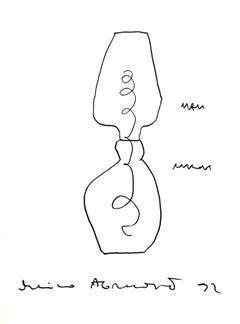
Marina Abramovic, Original hand signed hourglass drawing in Beaux Arts monograph
Located in New York, NY
Marina Abramović Untitled hourglass drawing, 1992 Original drawing done in black marker, hand signed and annotated and held inside the softback catalogue for the artist's 1992 Beaux ...
Category

1990s Contemporary Abstract Drawings and Watercolors

Materials

Mixed Media, Permanent Marker

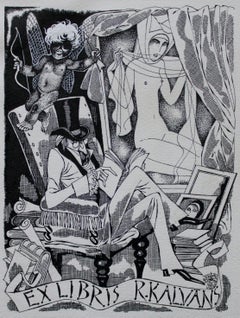
Ex Libris 1982, paper, ink, gouache, 17.5х13 cm
Located in Riga, LV
Ex Libris 1982, paper, ink, gouache, 17,5х13 cm Information about artist: Gunārs Vīndedzis (1918 - 1991) - cartoonist, illustrator. Born in a fami...
Category

1980s Realist Figurative Drawings and Watercolors

Materials

Paper, Ink, Gouache

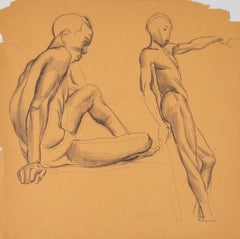
Male Model–Two Views
Located in New York, NY
Male Model–Two Views Signed, l.c. Charcoal on buff paper 13 x 13 inches This work is offered by ClampArt in New York City.
Category

20th Century Contemporary Drawings and Watercolor Paintings

Materials

Paper, Charcoal

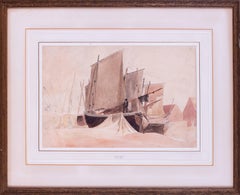
19th Century watercolour of fishing boats at low tide by British artist de Wint
By Peter de Wint
Located in Petworth, West Sussex
Peter de Wint (British, 1784 – 1849) Fishing boats at low tide Pencil on watercolour 10.3/4 x 16.3/8 in. (27.3 x 41.7 cm.) Peter de Wint was born in Stone in Staffordshire, the son ...
Category

19th Century English School Landscape Drawings and Watercolors

Materials

Watercolor, Pencil

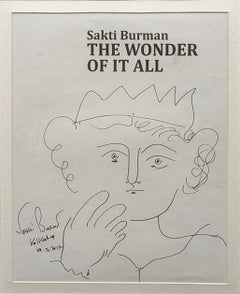
Untitled, Pastel on Paper, Black Colour by Modern Artist "In Stock"
Located in Kolkata, West Bengal
Sakti Burman Untitled - 11 x 9 inches ( Unframed Size ) Pastel on Paper , 2012 Born : 1935 Kolkata Education : 1956 Government College of Arts and Crafts in Kolkata and the Ecole N...
Category

2010s Modern Figurative Paintings

Materials

Paper, Pastel

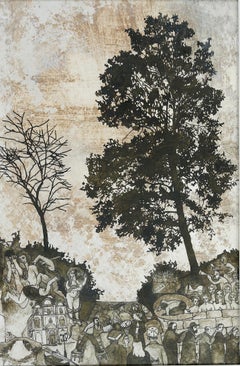
"The Small Collar", Trees Inhabited by Human, Paper Drawing with Pigment Colors
Located in Clermont-Ferrand, Auvergne-Rhône-Alpes
This drawing by Frank Girard is created with ink and pigments Colors, on 300g/m2 neutral white paper. It is not framed. Through drawings, the masterful French artist Frank Girard is...
Category

2010s Realist Figurative Drawings and Watercolors

Materials

Paper, Ink, Watercolor, Pigment

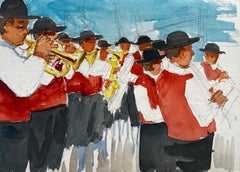
French Village Brass Band Musicians in Red Waistcoats Outdoor Parade Watercolor
Located in Cirencester, Gloucestershire
Title: French Village Brass Band Musicians in Red Waistcoats Outdoor Parade Watercolor Artist: Pierre Neveu (French b.1929) Medium: Watercolour on artist paper, unframed Size (H x W)...
Category

Mid-20th Century Post-Impressionist Landscape Drawings and Watercolors

Materials

Watercolor

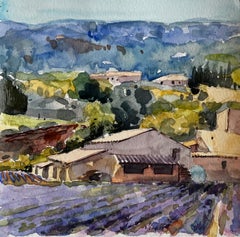
Provence Lavender Fields with Farmhouse and Distant Hills French Landscape
Located in Cirencester, Gloucestershire
Title: Provence Lavender Fields with Farmhouse and Distant Hills French Landscape Artist: Pierre Neveu (French b.1929) Medium: Watercolour on artist paper, unframed Size (H x W): 8.5 x 6.5 inches Condition: Good overall, with light natural edge wear consistent with age. Provenance: From the artist’s studio sale in France; all works by this artist in our collection originate from the artist’s estate. Description: This luminous watercolor and gouache landscape by Pierre Neveu captures the quintessential beauty of Provence, featuring sweeping lavender fields, warm ochre farm buildings, and rolling blue-green hills under a glowing southern sky. Neveu’s ability to express the colours, textures, and atmosphere of the French countryside is fully evident here, making this an ideal work for collectors seeking an evocative Post-Impressionist interpretation of Provence’s most iconic landscape. The foreground is dominated by the rich purple rows of blooming lavender, painted with loose, rhythmic brushstrokes that convey both movement and scent—those unmistakable fields that draw visitors from around the world each summer. A sunlit farmhouse complex sits beyond the lavender, its tiled roofs and stone walls glowing in warm yellows, browns, and soft creams. The mid-ground transitions into layered greens of vineyards, orchards, and cypresses, characteristic of the Luberon and Vaucluse regions. Above, the composition rises into deep blue and indigo mountain ranges, their tonal shifts suggesting atmospheric heat and great distance. Neveu’s use of gouache adds solidity to architectural details while maintaining the translucency and fluidity of watercolor in the sky and foliage. His sketchlike graphite lines remain visible beneath the paint, giving the work an immediacy reminiscent of plein-air studies done on location in rural Provence. Perfect for collectors of French landscapes, lavender field paintings...
Category

Mid-20th Century Post-Impressionist Landscape Drawings and Watercolors

Materials

Watercolor

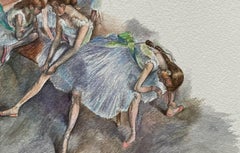
Ballet Dancers Resting (Original Watercolor, Reminiscent of Degas)
Located in New Orleans, LA
We added this superb Degas-like watercolor to our inventory years ago, then it disappeared and has just resurfaced - but without the name of the artist, sadly. At any rate, it is cha...
Category

2010s Post-Impressionist Figurative Drawings and Watercolors

Materials

Watercolor

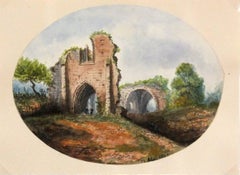
Old Ruins Near Paris
Located in Houston, TX
Beautifully detailed 19th century watercolor of ruins near Paris by artist Delastre, 1862. Original artwork on paper displayed on a white mat with a gold border. Mat fits a standar...
Category

1860s Landscape Drawings and Watercolors

Materials

Watercolor

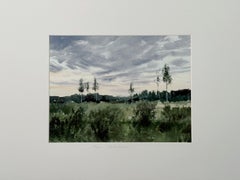
Birches at Dusk
Located in Oslo, NO
"Birches at Dusk" is an original watercolor painting that beautifully captures the rugged texture and quiet immensity of the Nordic wilderness. The artist masterfully builds up a de...
Category

2010s Impressionist Landscape Drawings and Watercolors

Materials

Paper, Watercolor

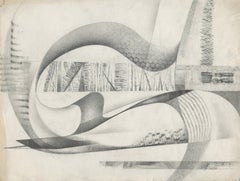
Untitled Abstraction
Located in Fairlawn, OH
Untitled Abstraction Graphite on paper. c. 1946 Unsigned Provenance: Estate of the Artist Inherited by his neighbor/caregiver Condition: Staining at corners ...
Category

1940s Abstract Abstract Drawings and Watercolors

Materials

Graphite

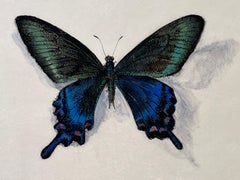
Butterfly, Small Panel Painting of Blue and Green Butterly With Intricate Detail
Located in New York, NY
Dina Brodsky’s miniature painting of a butterfly is a masterful study of nature’s fragility and beauty. Meticulously rendered on panel, the piece captures the shimmering interplay of...
Category

2010s Realist Animal Paintings

Materials

Watercolor, Gouache, Panel

A Cloudy Day
Located in Oslo, NO
"A Cloudy Day" is an evocative original watercolor that celebrates the tranquility and intense color found in nature under diffused light. The painting features a rich, dense band o...
Category

2010s Impressionist Landscape Drawings and Watercolors

Materials

Paper, Watercolor

Framed 19th Century Watercolour - A Toast in the Tavern
Located in Corsham, GB
A finely executed genre scene from the 19th century, depicting a small gathering of merry men in a quiet tavern. A single figure has a glass raised in the centre of the scene as the tavern girl...
Category

19th Century Figurative Drawings and Watercolors

Materials

Watercolor

Mediterranean Village Rooftops Church Towers and Pine Trees Watercolor
Located in Cirencester, Gloucestershire
Title: Mediterranean Village Rooftops Church Towers and Pine Trees Watercolor Artist: Pierre Neveu (French b.1929) Medium: Watercolour on card, unframed Size (H x W): 6.25 x 9.75 inc...
Category

Mid-20th Century Post-Impressionist Landscape Drawings and Watercolors

Materials

Watercolor

"Figure Study 2" drawing by Hiroshi Hayakawa
Located in Palm Beach, FL
Framed Dimensions: 12.5h x 18.5w inches Hiroshi Hayakawa was born and raised in Japan. He earned a BA in French Literature from Keio University in To...
Category

21st Century and Contemporary Contemporary Nude Drawings and Watercolors

Materials

Graphite

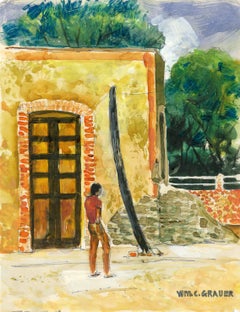
untitled (Street Scene Mexico)
Located in Fairlawn, OH
Untitled Mexican Landscape (Man Walking on Street) Ink and watercolor on paper. Signed with the estate stamp lower right (see photo) From the Estate of the Artist with the artist's estate stamp lower right. C. 1960's Condition: excellent Image/Sheet size: 9 7/8 x 7 5/8 inches William C. Grauer (1895-1985) William C. Grauer (1895-1985) was born in Philadelphia to German immigrant parents. After attending the Philadelphia Museum School of Industrial Art, Grauer received a four year scholarship from the City of Philadelphia to pursue post graduate work. It was during this time that Grauer began working as a designer at the Decorative Stained Glass Co. in Philadelphia. Following his World War I service in France, Grauer moved to Akron, Ohio where he opened a studio in 1919 with his future brother-in-law, the architect George Evans Mitchell. Soon, the Rorimer-Brooks design company, the developer Van Swerngen brothers, as well as the Sterling Welch and Halle Bros. department stores realized the extent of Grauer's talent and eagerly employed him. Grauer’s work during this time included architectural renderings for Shaker Square, Moreland Courts, and other many other projects commissioned by Cleveland architects. Grauer also remained true to his roots as a master designer of stained glass windows. With his work in such high demand, Grauer received a commission in 1921 to paint murals for the French Grill...
Category

1960s American Modern Landscape Drawings and Watercolors

Materials

Watercolor

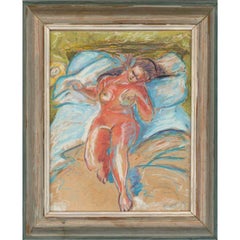
Bracey - Framed 1991 Pastel, Sleeping Nude
Located in Corsham, GB
Well presented in a distress-effect wood frame. Signed and dated. On paper.
Category

21st Century and Contemporary Nude Drawings and Watercolors

Materials

Pastel

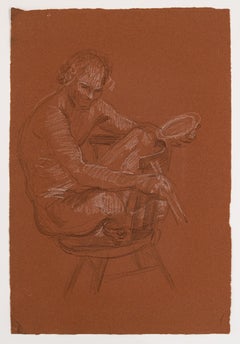
Painter Crouching on a Chair
Located in New York, NY
Painter Crouching on a Chair Conté crayon on paper 15 x 10 inches (38.1 x 25.4 cm) This work is offered by ClampArt in New York City.
Category

20th Century Contemporary Drawings and Watercolor Paintings

Materials

Conté

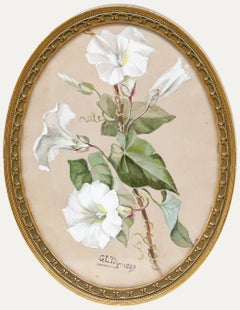
C. Lidy - Framed 1889 Gouache, Morning Glory
Located in Corsham, GB
English School, late 19th century botanical study - Morning Glory. Presented in a glazed oval frame. Signed and dated to the lower edge. On paper.
Category

Late 19th Century Still-life Drawings and Watercolors

Materials

Gouache

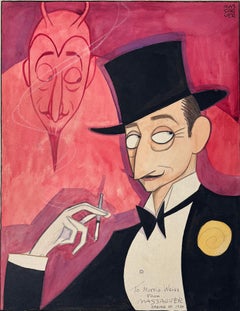
Cuban Artist - Caricature of Adolphe Menjou Debonair Devil
Located in Miami, FL
Framed Cuban Artist/Caricaturist Conrado Walter Massaguer presents Hollywood star Adolphe Menjou in a satirical dual portrait. In the foreground, the subject is seen in a dapper top hat, tux, fashionable cigarette and boutonnière, and is shown as being the epitome of being stylishly debonair. To make a larger point about this subject, Massaguer paints a cast shadow of Menjou as a burning red devil who studies his alter ego from above. Keeping with the artist's sarcasm, we see the good and bad in one image. Works by Massaguer are rare and this work is in keeping with his signature style. This work was most likely done on assignment for Life Magazine, Cosmopolitan, The New Yorker or Vanity Fair. Signed upper right. Inscribe lower right. Titled on verso. Unframed, Slight bend to board; toning to board; scattered faint foxing; pin point abrasions to margins, not affecting image. 19-1/2 x 15-1/8 inches board size. Conrado Walter Massaguer y Diaz was a Cuban artist, political satirist, and magazine publisher. He is considered a student of the Art Nouveau. He was the first caricaturist in the world to broadcast his art on television.He was first caricaturist to exhibit on Fifth Avenue. He was the first caricaturist in the world to exhibit his caricatures on wood. He, and his brother Oscar, were the first magazine publishers in the world to use photolithographic printing. Self portrait of Conrado Walter Massaguer, depicted on a carrousel ride, with the devil over his left shoulder and an angel over his right. (1945) He created the magazine Social with his brother Oscar to showcase Cuban artistic talent. The duo later created the magazine Carteles, which became for a period the most popular magazine in Cuba, which was purchased by Miguel Ángel Quevedo in 1953. In his life, he met and drew caricatures of Franklin D. Roosevelt, Walt Disney, Albert Einstein, the King of Spain, and many others.[ In sum total, he was the author of more than 28 thousand caricatures and drawings.Ernest Hemingway once had to refrain himself from punching Massaguer in the face after the artist drew an unflattering caricature of him. The dictator Gerardo Machado, however, did not punch Massaguer for his own unflattering caricature - he had the artist deported. He was one of the most internationally renowned Cuban artists of his day, and his art is still regularly featured in galleries across the Western Hemisphere and Europe. Early life Massaguer was born on October 18, 1889, in Cárdenas, Cuba.[In 1892, his family moved to Havana. When the Cuban War of Independence broke out, Massaguer's family escaped the country. From 1896 to 1908, he lived in Mérida, Mexico. However, during this time, his parents enrolled him in the New York Military Academy, where he stayed during school years. In 1905, after graduating the military academy, he briefly attended the San Fernando school in Havana, where he was tutored by Ricardo de la Torriente and Leopoldo Romañach. In 1906, less than a year later, he returned to the family home in Mexico. Career as artist Early career While living in Yucatán, Mexico, Massaguer published his first caricatures in local newspapers and magazines. These included La Campana, La Arcadia, and the Diario Yucateco. In 1908, he moved back to Havana. After returning to the island in 1908, Massaguer began mingling with Havana's aristocratic circles, forming close friendships with some of the city's most powerful and influential men, as well as winning the favor of many women who were quickly charmed by him. Massaguer, largely self-taught, honed his style using the avant-garde techniques he studied from the European and American magazines that were widely available in Cuba at the time. Cover of the immensely popular Cuban magazine El Figaro, drawn by Massaguer in 1909. This cover depicts two bumbling, incompetent American tourists to the island. He started drawing for El Fígaro, and was featured prominently on the cover in 1909. After two years of refining his craft, Havana announced a poster contest aimed at attracting North American tourists to stay in the city during the winter months. Notable figures like Leopoldo Romañach, Armando Menocal, Rodríguez Morey, Jaime Valls, and others also entered the competition. The jury was particularly impressed by the modern execution and creative solution of one piece, signed by Massaguer, who was relatively unknown at the time. The jury deliberations caused a great controversy.[5] The prize was ultimately awarded to the Galician painter Mariano Miguel, who had recently married the daughter of Nicolás Rivero, the wealthy owner of the conservative newspaper Diario de la Marina. Although Massaguer received only an honorable mention, the fraud scandal caused such an uproar that his name quickly entered the public spotlight, and he became an overnight sensation. In 1910, he became co-owner of the advertising agency Mercurio, with Laureano Rodríguez Castells. At Mercurio, he led the Susini cigar campaign, and earned substantial wealth. Massaguer has been described as a restless man, in both mind and body.After earning enough money from his art to begin traveling, he was almost always doing so. He constantly traveled between New York City and Havana, Mexico and France, Europe and the Americas. In 1911, his reputation among the Havana socialites solidified when he organized his own first public caricature exhibit, and also the first Caricature Salon ever held in the Americas, hosted at Athenaeum of Havana (the Ateneo), and the Círculo de La Habana. Other exhibitors here included Maribona, Riverón, Portell Vilá, Valer, Botet, Barsó, García Cabrera, Carlos Fernández, Rafael Blanco, and Hamilton de Grau. "Messaguer Visits Broadway." Caricatures of theatrical and literary figures. Elsie Janis, Raymond Hitchcock, S. Jay Kaufman (columnist), Ibanez, author of The Four Horsemen, and Frances White In 1912, in the New York American Journal, he published his first Broadway drawings. From 1913 to 1918, he was an editor for Gráfico. Social Main article: Social (magazine) Cover of the magazine Social, July 7, 1923 In 1916, he created the magazine Social with his brother, Oscar H. Massaguer. Social's contributors included Guillén Carpentier, Chacón y Calvo, Enrique José Varona and others.Social has been described as Massaguer's great love in the magazine industry, and was the property that historians say he cared the most about. Social was an innovative magazine, being the first magazine in the world to use a modern printing process called photolithographic printing. Social set cultural trends, not only in the fashion of Cuba, but in art, politics, and Cuban identity.[11] Social catered to a certain aesthetic in Cuba - that of the sophisticated elite socialite - but Massaguer would also use this magazine to ridicule and jibe against that same class of society when he found their personalities worthy of his contempt. In Social, readers could find a variety of content, including short stories, avant-garde poetry, art reviews, philosophical essays, and serialized novels, as well as articles on interior design, haute couture, and fashion. Occasionally, the magazine also featured reports on sports such as motor racing, rowing, tennis, and horse riding.The cultural promotion efforts of both Massaguer and Emilio Roig de Leuchsenring are evident in the magazine. Notably, this period overlaps with their involvement in the Minorista Group, which was then at the forefront of the country's intellectual life.[5] Many contributors were devoted members of the group, leading some experts to consider Social as the cultural voice of the Minoristas. One of the features of Social magazine was its section called "Massa Girls," which was a play on his own name, and pronounced with a glottal 'g' in a similar fashion to the letter in Massaguer.[12] Massaguer drew women as independent and free-thinking, and never drew the woman celebrity as a caricature of herself, but as a free agent surrounded by caricatures.[11] However, Massaguer himself has been described as a womanizer in his personal life, and hesitant to fully embrace every facet of women's liberation. In 1916, he also established la Unión de Artes Gráficas and the advertising agency Kesevén Anuncios.[9] The art critic Bernardo González Barroa wrote: “Massaguer has solved the problem of working hard, living comfortably off what his art produces and not missing any artistic, sporting or social event. His broad, childish laugh, of a carefree individual who carries his luck hidden in a pocket, appears everywhere for the moment, disguising the pranks of pupils that lurk, mock and, finally, flash with satisfaction at finding the characteristic point after having analyzed a soul... Massaguer's personality is beginning to solidify now. He has been the best-known and most popular caricaturist for a long time, but his technique had not reached the security, the mastery of values that he presents in his latest works, which is very natural and explainable”[5] Carteles Main article: Carteles Cover of the magazine Carteles, November 29, 1931 In 1919, Massaguer and his brother created the magazine Carteles.[9] Carteles gained the widest circulation of any magazine in Latin America, and the most popular magazine in Cuba for a time, until that title was claimed by Revista Bohemia. Carteles remained in print until July 1960.This magazine showcased Cuban commerce, art, sports, and social life before the revolution. In 1924, Carteles took a more political turn, with articles criticizing Gerardo Machado's government. it became a prime example of the humor and graphic design employed by artists like Horacio Rodríguez Suria and Andrés García...
Category

1930s Art Nouveau Portrait Drawings and Watercolors

Materials

Ink, Watercolor, Illustration Board

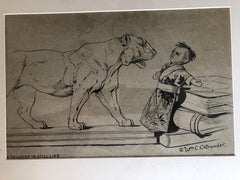
William C. Ostrander "A Tragedy in Still Life"
By William Cheesborou Ostrander
Located in San Francisco, CA
William C Ostrander: 1858-1933. Listed NYC and California artist. In the 19th century he taught at Metropolitan Museum of Art in NYC. His works are very scarce as I could only find o...
Category

19th Century American Realist Still-life Drawings and Watercolors

Materials

Ink

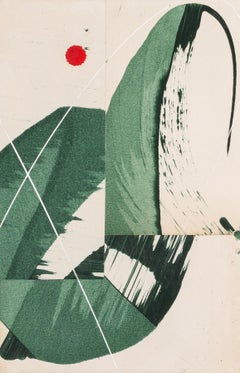
Hokusai Covers I - Abstract Mixed Media on Found Book Cover, Green + White
Located in Kingsclere, GB
Jane Skingley b. 1963 Hokusai Covers I, 2025 oil and collage on book cover 28 x 18 cm 11 x 7 1/8 in signed, titled and inscribed on a label attached verso Jane Skingley paints seasc...
Category

21st Century and Contemporary Mixed Media

Materials

Found Objects, Mixed Media

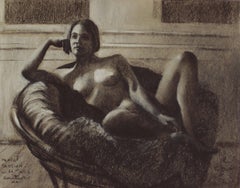
Model Session with Julia – 31-12-21, Drawing, Pastels on Paper
Located in Yardley, PA
Love at First Sight Last night I had a model session with Julia. Sometimes you come across a woman you immediately fall in love with. She is a great model and warm personality. Be...
Category

21st Century and Contemporary Impressionist Drawings and Watercolor Pain...

Materials

Pastel

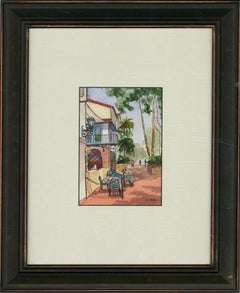
Martha Inman Lorch - Contemporary Watercolour, Aldo s
Located in Corsham, GB
A captivating watercolor painting with pen and ink details by the North American artist Martha Inman Lorch. The scene depicts a bright street view with a restaurant and figures in th...
Category

21st Century and Contemporary Landscape Drawings and Watercolors

Materials

Watercolor

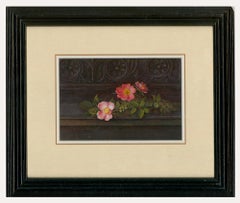
Ann Mumford - Framed Contemporary Watercolour, Eglantine Roses
Located in Corsham, GB
An original watercolour by Ann Mumford. Well-presented in a double card mount and black reeded frame. Signed by the artist to the lower right. Labelled verso. On paper.
Category

21st Century and Contemporary Still-life Drawings and Watercolors

Materials

Watercolor

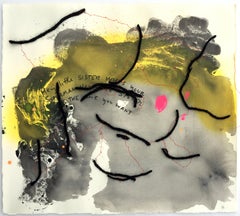
Little Sister - Mixed Media Abstraction with Yellow and Green
Located in Gilroy, CA
"Little Sister," is a contemporary mixed media abstraction by artist Vivian Liddell. In this piece she works with mixed media and text to create her comp...
Category

2010s Contemporary Abstract Paintings

Materials

Spray Paint, Monotype, Textile

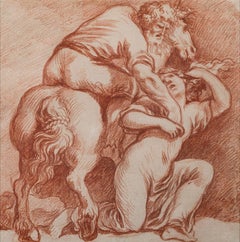
Man on Horseback Abducting a Woman
Located in Paris, Île-de-France
Jean-Robert ANGO (Active 1759 – 1773) Man on Horseback Abducting a Woman Red chalk and white chalk 26.1 x 25.9 cm Provenance Libert-Castor sale, November 19, 1993 (lot no. 23, ill...
Category

1760s Old Masters Animal Drawings and Watercolors

Materials

Chalk

Framed Late 19th Century Watercolour - Country scene with Wagon
Located in Corsham, GB
A fine watercolour landscape, depicting two figure in a wagon, driven by two horned cattle. The wagon can be seen in the foreground making its way along a country road with goods. We...
Category

Late 19th Century Landscape Drawings and Watercolors

Materials

Watercolor

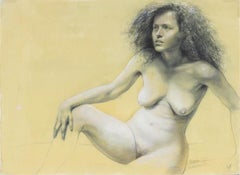
Untitled Female Nude
By Steven Assael
Located in Fairlawn, OH
Untitled (Female Nude) Graphite and sgrafitto on yellow paper, 1987 Signed lower right Note: Steven Assael is represented by Forum Gallery in New York. In 1977 he won the Charles Ro...
Category

1980s American Realist Nude Drawings and Watercolors

Materials

Graphite

Still Thinking About These?

All Recently Viewed