Old Masters Figurative Drawings and Watercolors

to
20
137
22
6
Overall Width
to
Overall Height
to
104
58
3
1
1
61
5,299
3,478
603
396
271
262
241
219
164
52
49
48
28
106
54
3
144
101
65
45
38
38
25
20
15
10
8
6
5
4
4
4
3
2
2
2
74
68
66
50
33
30
5
4
4
4
80
44
131
18
Style: Old Masters
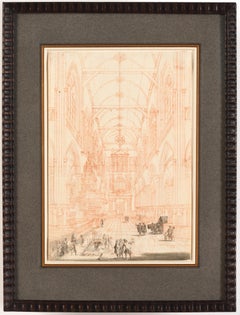
Interior of the Nieuwe Kerk, Amsterdam
Located in Paris, Île-de-France
Jan Goeree (Middelburg 1670 – Amsterdam 1731) Interior of the Nieuwe Kerk, Amsterdam (c. 1724) Red chalk for the architecture, pen and black ink, grey wash on paper Composition reversed in preparation for engraving 25 × 17.5 cm Watermark: Hunting horn, Churchill 318 (dated 1724) Unsigned Provenance Private collection, France Context & Attribution Trained in the studio of Gérard de Lairesse, Jan Goeree was among the finest Dutch engravers of the early eighteenth century, celebrated for his architectural views of Amsterdam. This drawing is a preparatory study for an engraving of the same subject now preserved in a major public collection. The final print—slightly larger—closely follows the reversed composition of this sheet. Subject In the center of the Gothic nave, five bearers carry a catafalque toward a freshly dug grave—a tribute to the naval heroes often buried in the Nieuwe Kerk. This funerary motif, familiar from Dutch painting (e.g. Emanuel de Witte, 1657), evokes the vanitas theme and the transience of earthly life. Technical Analysis Goeree’s use of red chalk for the architecture and ink for the figures reveals his working method: the chalk lines could be used to produce a counterproof restoring the correct orientation of the architecture, while the inked figures remained adjustable before the design was transferred to the copper plate. Place within the Oeuvre Drawings of church...
Category

Early 18th Century Old Masters Figurative Drawings and Watercolors

Materials

Chalk, Ink

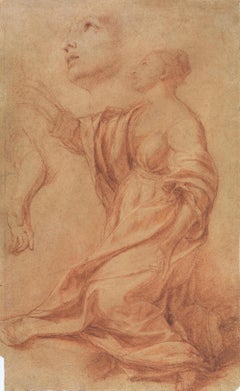
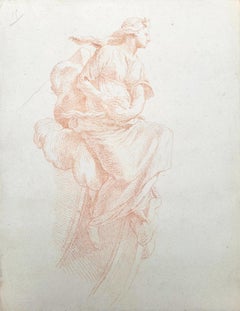
Studies of a kneeling female figure, an arm, a hand, and a head in profile
Located in Paris, Île-de-France
Studio of Carlo Maratti (or Maratta) Camerano 1625 – Rome 1713 Studies of a kneeling female figure, an arm, a hand, and a head in profile Red chalk on paper 43.4 x 26.6 cm Unsigne...
Category

Late 17th Century Old Masters Figurative Drawings and Watercolors

Materials

Chalk

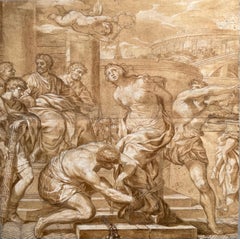
The Torture of Saint Concordia
By Domenico Piola the Elder
Located in Paris, Île-de-France
Circle of Domenico Piola (Genoa 1627 – 1703) The Torture of Saint Concordia Black chalk, brown ink and brown wash on two sheets of paper, 40.5 x 42 cm Unsigned Provenance: Estate...
Category

17th Century Old Masters Figurative Drawings and Watercolors

Materials

Ink

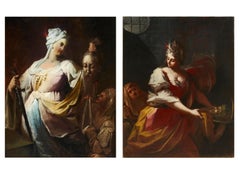
Judith and Salome, a pair of oil paintings on canvas by Francesco Conti
Located in PARIS, FR
This widely referenced pair of paintings is one of Francesco Conti’s most successful productions. Francesco Conti is one of the finest painters of 18th-century Florence. In the shimmering colors typical of his best work, he represents two opposite characters from the Bible: the virtuous Judith, whose courage saves her people by cutting off the head of the invader Holofernes, and the depraved Salome, who under the influence of her mother becomes responsible for the beheading of the prophet John the Baptist. The artist's talent lies in his ability to treat these two macabre subjects with a light touch, presenting us with two attractive women who seem to twirl with glee amidst the severed heads... 1. Francesco Conti, the “Florentine Tiepolo” Francesco Conti is a major painter of the Florentine school of the 18th century; he can even probably be considered, along with Giovanni Domenico Ferretti (1692-1768), as one of the two main painters of the second quarter of the Florentine 18th century. Born in Florence in 1682, Francesco Conti began his apprenticeship in the workshop of Simone Pignoni (1611 - 1698), a disciple of Francesco Furini; he was also influenced by the Venetian Sebastiano Ricci. A protégé of Marquis Riccardi, he accompanied him to Rome between 1699 and 1705, where he frequented Carlo Maratta's studio. He settled permanently in Florence in 1705. Painted exclusively on canvas, the majority of his work consists of religious subjects, altarpieces or private devotional works. It is likely that Conti himself was a devout churchgoer, as evidenced by his affiliation, in the third decade of the eighteenth century, to the Society of the Disciples of Saint-John-the-Baptist, and his entry, at the end of his life, into the fraternity of the Venerable Society of the Holy Trinity. In Florence, Conti worked for the Grand Duchy's major patrons, including the last Medici - in particular Giangastone and Annamaria Luisa, Electress Palatine - and confirmed his role as a reference painter under the Lorraine Regency, as master of the Public Drawing School, which was closely linked to the institute responsible for the manufacture of semi-precious stone mosaics, then located in the Uffizi complex. Matteo Marangoni, an art critic of the early 20th century, praised his "brushwork full of elegance and true spirit of the 18th century", pointing out that Conti was "probably one of the best colorists" of the Florentine school of his time. These two characteristics led the art historian Paolo dal Poggetto to nickname him the "Florentine Tiepolo". 2. Judith and Salome, two biblical characters opposing each other These two paintings form a pair presenting two biblical episodes, which have in common the depiction of a "heroine" carrying the severed head of a man. While the Salome episode might at first appear to be an echo of the Old Testament story of Judith, each character is the exact opposite of the other. Judith, whose story is told in the Book of Judith, is a beautiful young widow from Bethulia who, accompanied by her maid, went into the camp of the invading Assyrians and won the confidence of Holofernes, the general commanding the enemy army. Invited to a great feast on the fourth evening, she took advantage of Holofernes' drunkenness to cut off his head. “She went up to the bedpost near Holofernes’ head, and took down his sword that hung there. She came close to his bed, took hold of the hair of his head, and said, “Give me strength today, O Lord God of Israel!” Then she struck his neck twice with all her might, and cut off his head. Next she rolled his body off the bed and pulled down the canopy from the posts. Soon afterward she went out and gave Holofernes’ head to her maid, who placed it in her food bag...
Category

1710s Old Masters Figurative Drawings and Watercolors

Materials

Canvas, Oil

Study for a Hunting Scene, a red chalk sketch attributed to Karel du Jardin
Located in PARIS, FR
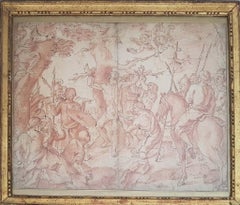
We would like to thank Carolina Trupiano Kowalczyk for suggesting this attribution to Karel du Jardin after direct examination of the artwork. Her study of the drawing (in Italian), ...
Category

1650s Old Masters Figurative Drawings and Watercolors

Materials

Chalk, Ink, Laid Paper

16th Century by Andrea Boscoli The payment of the duty Pen and ink on paper
Located in Milano, Lombardia
Andrea Boscoli (Florence, Italy, 1564 – Rome, Italy, 1608) Title: 𝘛𝘩𝘦 𝘱𝘢𝘺𝘮𝘦𝘯𝘵 𝘰𝘧 𝘵𝘩𝘦 𝘥𝘶𝘵𝘺, 𝘧𝘳𝘰𝘮 𝘗𝘰𝘭𝘪𝘥𝘰𝘳𝘰 𝘥𝘢 𝘊𝘢𝘳𝘢𝘷𝘢𝘨𝘨𝘪𝘰 Medium: Pen and brow...
Category

16th Century Old Masters Figurative Drawings and Watercolors

Materials

Paper, Ink, Cardboard, Pen

Self Portrait
Located in London, GB
Pen and ink, ink wash and pencil on paper, signed and dated (lower right), 38cm x 29cm (65cm x 55cm framed). This penetrating and wonderfully executed self-portrait, is all the mor...
Category

1910s Old Masters Figurative Drawings and Watercolors

Materials

Paper, Carbon Pencil, Ink

Three drawings by François Boucher in a mounting by Jean-Baptiste Glomy
Located in PARIS, FR
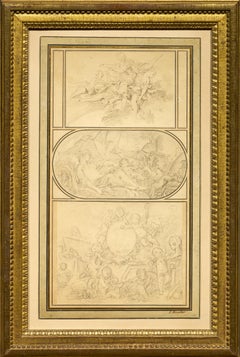
We would like to thank Juliette Parmentier-Courreau of the Custodia Foundation for her welcome and support during the consultation of Glomy’s Journal des Ouvrages. This spectacularly large "feuille de desseins ajustés" commissioned by François Boucher from Jean-Baptiste Glomy is emblematic of the painter's art and mastery of rocaille. It is also fully representative of the taste of this period in the field of decorative arts. The largest of these three drawings, placed at the bottom of the composition, is particularly interesting: dating from around 1756, it constitutes a modello (apparently unpublished) for the frontispiece of the "Catalogue des tableaux de Monsieur de Julienne"), preserved in the Morgan Library in New York. 1. François Boucher, the master of French rocaille The extraordinary career of Francois Boucher was unmatched by his contemporaries in versatility, consistency and output. For many, particularly the writers and collectors who led the revival of interest in the French rococo during the last century, his sensuous beauties and plump cupids represent the French eighteenth century at its most typical. His facility with the brush, even when betraying the occasional superficiality of his art, enabled him to master every aspect of painting – history and mythology, portraiture, landscape, ordinary life and, as part of larger compositions, even still life. He had been trained as an engraver, and the skills of a draftsman, which he imbued in the studio of Jean-Francois Cars (1661 – 1738), stood him in good stead throughout his career; his delightful drawings are one of the most sought-after aspects of his oeuvre. As a student of Francois Lemoyne (1688 - 1737), he mastered the art of composition. The four years he spent in Italy, from 1727-1731, educated him in the works of the masters, classics and history, that his modest upbringing had denied him. On his return to Paris in 1734, he gained full membership of the Royal Academy of Painting and Sculpture with his splendid Rinaldo and Armida (Paris, Musée du Louvre). Although, throughout his career, he occasionally painted subjects taken from the Bible, and would always have considered himself first as a history painter, his own repertoire of heroines, seductresses, flirtatious peasant girls and erotic beauties was better suited to a lighter, more decorative subject matter. His mastery of technique and composition enabled him to move from large scale tapestry...
Category

1750s Old Masters Figurative Drawings and Watercolors

Materials

Chalk, Ink

19th century watercolour of a Girl at her Dressing Table
Located in London, GB
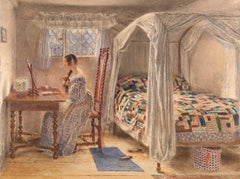
Collections: Muir Hetherington; Sir John and Lady Witt, acquired 1974; By descent to 2015. Literature: Tom Jones (ed.), William Henry Hunt 1790-1864, exh. cat., 1981, no. 145 (Girl in a bedroom); John Witt, William Henry Hunt (1790-1864) Life and Work, London, 1982, no. 553, p. 194, colour pl. 16. Exhibited: Wolverhampton, Central Art Gallery, Preston, Harris Museum and Art Gallery and Hastings, Hastings Museum and Art Gallery, William Henry Hunt 1790-1864, 1981, no. 145 as Girl in a bedroom (Lent by Sir John & Lady Witt) Framed dimensions: 20 x 20.75 inches This unusually charming and well-preserved watercolour was painted by William Henry Hunt in around 1833. Almost certainly depicting his young wife, Sarah, possibly in the interior of her family home at Bramley in Hampshire. This work shows Hunt’s remarkable virtuosity as a watercolourist, Hunt, for example, articulates the profile of his young wife, by leaving a reserve of white paper to suggest the light modelling her features. Throughout the 1830s Hunt made a sequence of richly painted interior views of both domestic and agricultural spaces which pay scrupulous attention to detail. Hunt was born in London, the son of a tin-plate worker and japanner. J. L. Roget recorded the observation of Hunt’s uncle: ‘nervy, little Billy Hunt… was always a poor cripple, and as he was fit for nothing, they made an artist of him.’ At the age of sixteen he was apprenticed to the landscape painter John Varley for seven years, moving to live with Varley at 18 Broad Street, Golden Square, London. There he made close friends with both John Linnell and William Mulready. Hunt worked at the ‘Monro Academy’, at 8 Adelphi Terrace, London, the house of Dr Thomas Monro, an enthusiastic patron of landscape watercolourists. Through Monro, Hunt was introduced to the 5th Earl of Essex...
Category

19th Century Old Masters Figurative Drawings and Watercolors

Materials

Watercolor, Pencil

Eighteenth century Old Master drawing - St Jerome
Located in London, GB
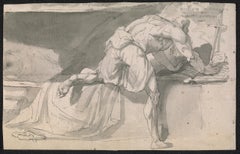
Pen, ink and wash Framed dimensions: 9 ½ x 11 ¼ inches Drawn c. 1763 This small, powerful study shows St Jerome contemplating the bible with a cross and sk...
Category

18th Century Old Masters Figurative Drawings and Watercolors

Materials

Ink, Pen

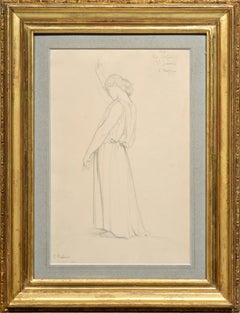
Draped Woman Holding A Branch
Located in Paris, Île-de-France
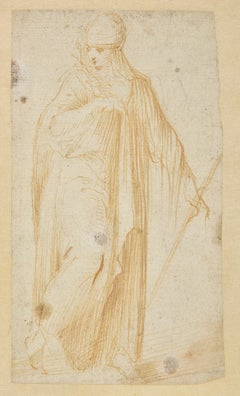
CARLO URBINO (Crema 1525 - after 1585) Draped Woman Holding a Branch Pencil and brown ink on laid paper 13.6 x 7.7 cm Unsigned 16th century Mounted on 20th-century paper Handwrit...
Category

16th Century Old Masters Figurative Drawings and Watercolors

Materials

Ink

Costume drawings for ‘Ambassadeur de Siam’ and ‘La Sultana Reine’
Located in Amsterdam, NL
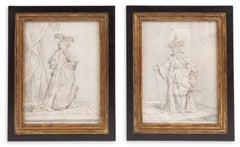
Joseph-Marie Vien (1716-1809) ‘Ambassadeur de Siam’ and ‘La Sultana Reine’ Both titled lower centre, the drawing of the ambassador inscribed with colours intended for the prints, e...
Category

Mid-18th Century Old Masters Figurative Drawings and Watercolors

Materials

Paper, Pencil

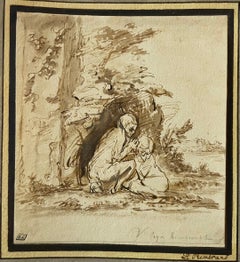
17th C Dutch Old Master Ink Wash Painting Biblical Figures Rembrandt Pupil
Located in Cirencester, Gloucestershire
Figure being Comforted (Job?) circle of Willem Drost (Dutch 1633-1659) *See notes below ink and wash drawing on paper (Arms of Amsterdam watermarked) Dutc...
Category

Mid-17th Century Old Masters Figurative Drawings and Watercolors

Materials

Ink, Watercolor

La Femme Muse /// Allegorical Symbolism Romantic Old Masters European Drawing
Located in Saint Augustine, FL
Artist: Unknown (Likely French, 18th Century) Title: "La Femme Muse" *No signature found Circa: 1780 Medium: Original Pastel Drawing on heavy laid paper Framing: Recently beautifully...
Category

1780s Old Masters Figurative Drawings and Watercolors

Materials

Pastel, Laid Paper

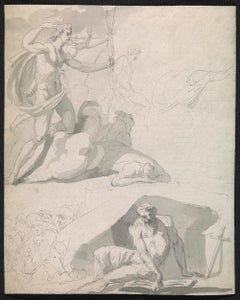
Eighteenth century Old Master drawing - Apollo destroying Niobe s children
Located in London, GB
Pen, ink and wash Framed dimensions: 13 x 11 ¼ inches Drawn c.1765 Verso: a study of a hanged man Mortimer has filled this small sheet with action, depicting in the top right, Apollo and Artemis...
Category

18th Century Old Masters Figurative Drawings and Watercolors

Materials

Ink, Pen

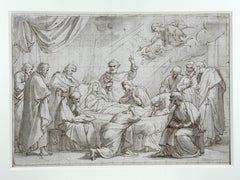
Death of the Virgin (Old Master drawing)
Located in Wilton Manors, FL
Old Master drawing, Death of the Virgin Surrounded by Apostles, ca. 17th century. Ink pen and wash on paper. Sheet measuring 11 x 15.5 inches. Framed measurement: 18.5 x 23.5 inches...
Category

17th Century Old Masters Figurative Drawings and Watercolors

Materials

Ink

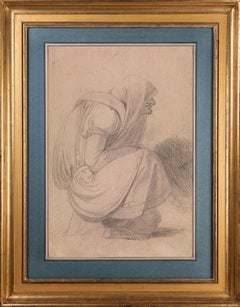
Drawing of a captive woman
Located in London, GB
Collections: Sir Thomas Lawrence, who acquired the contents of Fuseli’s studio; Susan, Countess of Guilford, née Coutts (1771-1837), acquired from the Lawrence estate; Susan, Baroness North (1797-1884), daughter of the above; Mrs A. M. Jaffé, acquired in France, c. 1950 to 2016. Black chalks, on buff-coloured paper Stamped verso: ‘Baroness Norths Collection / of Drawings by H Fuseli Esq.’ Framed dimensions: 26.38 x 20.63 inches This boldly drawn sheet depicting a seated figure was made by Fuseli at an important and highly productive moment in his career. The monumental drawing is closely related to another sheet by Fuseli in the British Museum which Schiff published as subject unknown. Both drawings were made when Fuseli was designing his most important sequence of historical works, including scenes from Shakespeare and Milton, The Nightmare and The Death of Dido which was exhibited at the Royal Academy to great critical acclaim in 1781. The present drawing does not relate directly to any of Fuseli’s finished historical paintings of the period, but evidently the image of a slightly menacing, seated and covered old woman was precisely the sort of motif he was playing with. It is notable that the same figure reappears later in Fuseli’s work as the witch from Ben Jonson’s Witch’s Song which Fuseli produced as both a painting and engraving in 1812. Fuseli returned to London in 1779 from a highly creative and productive period in Rome and established himself as one of the leading history painters of the period. Fuseli re-established contact with his old mentor Sir Joshua Reynolds, becoming a regular guest at his dinner table and visitor to his studio. The earliest and most striking manifestation of this strategy was Fuseli's Death of Dido, exhibited in 1781 at the Royal Academy. Executed on the same scale as Reynolds's version (Royal Collection), Fuseli's vertically oriented picture was hung directly opposite Reynolds's with its horizontal orientation, inevitably inviting comparison between the two works and garnering Fuseli much publicity and favourable reviews in the newspapers. The present, previously unpublished sheet, relates closely to a drawing now in the British Museum. That sheet shows the same seated old woman, drawn on a smaller scale and more schematic in design, seated next to an anatomical drawing of a man. The pose of this figure is related to the pose of Dido in his Death of Dido; the foreshortened torso, arrangement of head, oblique view of Dido’s features and arms all suggest that the study can be viewed as an initial thought for the composition. Fuseli may have initially thought of including the figure of the hunched and covered old woman. Drawn on identical paper to the British Museum sheet, our study is an enlarged depiction of the same figure, more elaborately delineated and developed. The presence of a chain to the right of the figure, suggests that the iconography was related in some way to a scene of imprisonment. Fuseli had first explored the motif of the hooded old woman in an early Roman drawing, 'The Venus Seller'. The idea of a grotesque old woman, hooded and with angular nose and projecting chin seen in profile was most spectacularly used by Fuseli in his sequence of paintings depicting The Three Witches from Macbeth. Fuseli seems to have kept the present sheet and may have returned to it when preparing a painting of The Witch and the Mandrake from Ben Jonson’s Witch’s Song from his Masque of Queens in 1812. Here the same seated figure looks out from under her hood and picks a mandrake by moonlight. Jonson’s drama had been performed at the court of James I in 1609, inspired the subject. To throw the nobility of the queens into relief, the poet added a coven of witches, one of whom declares: ‘I last night lay all alone, On the ground, to hear the mandrake groan; And plucked him up, though he grew full low, And, as I had done, the cock did crow.’ The figure was reversed in the associated etching which was published in 1812. It seems likely that the present drawing remained as part of Fuseli’s working archive of figure studies. The present drawing was presumably purchased with the bulk of Fuseli’s drawings after the artist’s death by Sir Thomas Lawrence. Lawrence’s large group of Fuseli drawings were then acquired by Susan, Countess of Guildford (1771-1837). Lady Guildford was the eldest daughter of the banker Thomas Coutts (1735-1822), who himself had supported Fuseli’s journey to Rome in the 1770s and had remained one of the artist’s key...
Category

18th Century Old Masters Figurative Drawings and Watercolors

Materials

Chalk

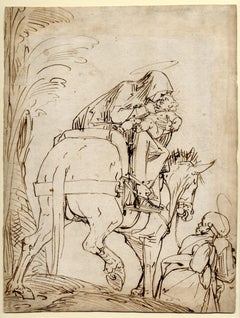
The Flight into Egypt
Located in New York, NY
Inscribed: 3. una Madonna che va in Egitto, verso, and Madonna che va in Egitto, recto Provenance: Private Collection, UK, since 1999 This expressive and boldly executed drawing is the work of Luca...
Category

16th Century Old Masters Figurative Drawings and Watercolors

Materials

Chalk, Ink, Pen, Paper

A Study for the Angel of Saint-Severin church in Paris, by Paul Flandrin
Located in PARIS, FR
After the restoration of the Saint-John chapel’s frescoes at the Saint-Severin church in Paris in 2022, the drawing presented here is a moving testimony to their creative process. It...
Category

1840s Old Masters Figurative Drawings and Watercolors

Materials

Chalk

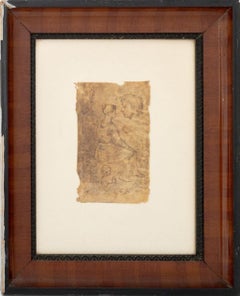
Old Master Figure Sketch Pencil on Vellum
Located in Astoria, NY
Old Master, Figure Sketch, Pencil on Vellum, 18th century, inscribed "G.26" lower right, wood frame. Image: 5.5" H x 3.5" W; frame: 13.75" H x 11" W x 1.25" D. Provenance: From a New...
Category

18th Century Old Masters Figurative Drawings and Watercolors

Materials

Vellum, Pencil

At Tunbridge Well
By Agostino Aglio
Located in Middletown, NY
Black crayon and graphite with white heightening on blue handmade laid paper. Adhered at all four corners to a period support, on which the title and an illegible date (perhaps 1815) appear to be written in the artist's hand. ________ Aglio was born in Cremona is 1777 and his artistic talent was recognized early in his life. He was promised a place at the University in Milan by the Holy Roman Emperor, however, his formal education was upended before it even began by the invasion of Italy and Austria by Napoleon. Aglio joined the war effort and fought in a series of major battles near Venice before becoming seriously ill. At the age of about 23 he was released from duty, and traveled to Rome to focus on his health, and landscape painting. In Rome, Aglio studied with the renowned artist Campovecchio. At the invitation of well known British architect William Wilkins (designer of the National Gallery and University College London), Aglio relocated to London in 1803. He made London his permanent home, and married Letitia Clarke in 1805. He enjoyed a lucrative career painting frescoes in the interiors of high society townhouses, country manors, and major London concert halls and theaters. Most notably, Aglio painted multiple official portraits of Queen Victoria...
Category

Early 19th Century Old Masters Figurative Drawings and Watercolors

Materials

Crayon, Handmade Paper, Laid Paper, Color Pencil, Graphite
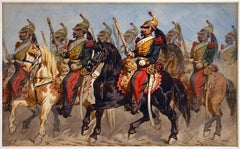
Battle, Knights on Horses - China Ink and Watercolor by T. Fort - 1840s
Located in Roma, IT
Typical battle scene by T. Fort, in very good conditions and signed by the artist. A very interesting artwork for a connoisseur of the militaria genre! Theodore Géricaul Fort (1810 - 1896), Simeone Fort's son, belonged to the French school of the XIX century; Théodore Fort...
Category

1840s Old Masters Figurative Drawings and Watercolors

Materials

Watercolor, Ink

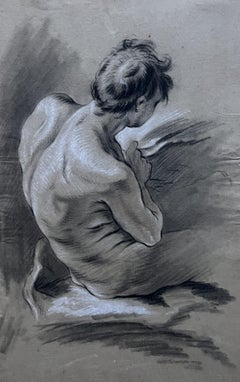
18th-century French school Study of a man seen from behind, drawing
Located in Paris, FR
18th-century French school Study of a man seen from behind, Charcoal and white chalk on brown paper 46 x 29 cm Framed under glass : 60 x 43 cm This beautiful study of a naked man...
Category

1760s Old Masters Figurative Drawings and Watercolors

Materials

Charcoal, Chalk

Study for a Frontispiece, a baroque drawing by Giovanni Antonio Pellegrini
By Giovanni Antonio Pellegrini
Located in PARIS, FR
This masterly frontispiece study, executed with a very sure hand, testifies to the survival of the great Baroque taste in 18th century Venice. It could be one of the very last works by Giovanni Antonio Pellegrini: the few lines that cross the papal arms evoke those of Benedict XIV, who became pope in 1740, one year before the artist's death. 1. Giovanni Antonio Pellegrini and the European influence of Venetian history painting in the 18th century Giovanni Antonio Pellegrini was born in Venice in 1675 and trained in the studio of the Milanese painter Paolo Pagani (1655 - 1716). Pagani, who had been living in Venice since 1667, took him to Moravia and Vienna from 1690 to 1696. After a stay in Rome from 1699 to 1701, Pellegrini married Angiola Carriera in 1704, the sister of the great pastelist Rosalba Carriera. From 1708 onwards, Pellegrini left Venice and began an extensive tour of Europe: he worked in England between 1708 and 1713, where he met great success, particularly at Kimbolton Castle and Castle Howard. He then worked in Germany and the Netherlands, then in Bohemia and Austria, before returning briefly to England in 1719. In 1720 he was in Paris where he decorated the ceilings of the Royal Bank for John Law...
Category

1740s Old Masters Figurative Drawings and Watercolors

Materials

Ink

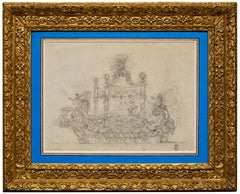
A dazzling Venetian Regatta Boat Study attributed to Alessandra Mauro
Located in PARIS, FR
This stunning Baroque study depicts a regatta boat, a type of vessel developed in eighteenth-century Venice for the regattas organized by the Serenissima during visits by royalty and princes. We propose to link this drawing to the work of Alessandro Mauro, an artist who specialized in this type of composition, as illustrated by a drawing from him at the Metropolitan Museum. 1. Description of the boat The greatest decorative fantasy reigns in this preparatory study, which blends mythological and exotic elements with references to ancient Egypt. Our drawing is probably an initial thought, destined to be refined and clarified later in pen and ink (as evidenced by the ink stain in the lower right). A quadriga of seahorses guided by Neptune stands at the stern of the boat, shown well above the waterline (perhaps to outline its empty volume). One of the seahorses is ridden by a newt, while Amphitrite lies at the feet of the sea god. The center of the boat is occupied by a vast baldachin resting on four atlantes and surmounted by a figure riding an animal (a dragon?). Three figures sit beneath the canopy, one of them on a griffin-shaped seat. This allusion to Egyptian antiquity echoes the winged sun (sometimes a symbol of the god Horus, as in the temple of Edfu in Egypt) that adorns the sides of the promontory on which this baldachin rests. Another flag-bearer figure crouches at the stern of the boat on a raised seat, on the reverse of which is a crowned mermaid whose arm, extended backwards, rests on a mascaron decorated with a radiant face (Helios?) and whose torso surmounts an elephant's head. The heads of the rowers and their oars are sketched all along the boat, whose sides are embellished with elongated naiads. 2. The Venetian regatta boats An exhibition held in 2013 at the Ca' Rezzonico (the Venetian eighteenth-century museum) paid tribute to these regatta boats through studies and prints depicting them. The regattas organized by the Serenissima in honor of visiting princes and sovereigns were among the most spectacular ceremonies in Venice. Some important artists of the 18th century contributed to the creation of these extravagant boats which were given exotic names such as bissona, malgarota or peota. The specialists in this field were Andrea Urbani and the brothers Alessandro and Romualdo Mauro. They were born into a family of theater decorators in Piedmont, but little is known about their detailed biography. Alessandro was the architect of the Dresden opera house and of the St. Samuel Theater in Venice (in collaboration with his brother Romualdo), but also worked as stagehand and set designer in Vienna, Rome and Turin. A drawing produced around 1737 from the Metropolitan Museum (7th photo in the gallery) bears witness to his activity as a regatta boat designer. This drawing is a much more elaborate version than the one presented here, having been entirely reworked in brown ink. However, a figure at the bow of the boat, executed solely in black chalk, still bears witness to a technique similar to that of our drawing. It is difficult to know whether the boat depicted in our drawing was a project for an actual boat or whether it remained in the planning stage, but the front of our boat (Neptune and the quadriga of seahorses ridden by a newt) bears several similarities to that of a parade boat depicted in the print published by Michele Marieschi entitled Regatta on the Grand Canal, between the Foscari and Balbi Palaces (last photo in the gallery). This print is dated 1741, which could confirm that our work dates from around 1740. The area between Neptune and the quadriga that precedes him on this strange paddle-boat appears to be partially submerged, confirming that the waterline of our boat was probably intended to be much lower than the one shown in our drawing. The Correr Museum’s collection holds one of the most important collection of engravings and drawings devoted to these specifically Venetian Baroque productions. These boats were intended to last the duration of a festival. Today, they are only documented by preparatory drawings or prints that testify to the sumptuousness of their decoration. This taste for regatta boats lasted throughout the Venetian eighteenth century, and the conception of regatta boats also attracted great masters such as Giambattista Tiepolo, Francesco Guardi or Giambattista Piranesi...
Category

Mid-18th Century Old Masters Figurative Drawings and Watercolors

Materials

Chalk

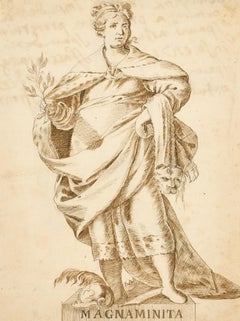
Fine 1700 s Italian Old Master Ink Wash Drawing Roman Allegorical Magnaminita
Located in Cirencester, Gloucestershire
'Mgnaminia' Italian School, 18th century ink and wash drawing on paper, framed within a light oak wood frame (behind glass) image size: 10.5 x 7 inches overall framed: 17 x 13 inches...
Category

18th Century Old Masters Figurative Drawings and Watercolors

Materials

Ink, Watercolor, Archival Paper

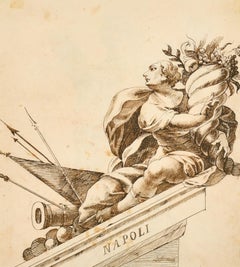
Fine 1700 s Italian Old Master Ink Wash Drawing Roman Allegorical Napoli
Located in Cirencester, Gloucestershire
'Napoli' Italian School, 18th century ink and wash drawing on paper, framed within a light oak wood frame (behind glass) image size: 10.5 x 7 inches overall framed: 17 x 13 inches co...
Category

18th Century Old Masters Figurative Drawings and Watercolors

Materials

Ink, Watercolor, Archival Paper

Study of horse and ox bones
Located in Middletown, NY
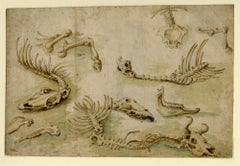
Graphite, ink wash and watercolor on handmade laid paper with a large, indistinguishable ovoid watermark with a bunch of grapes, 8 7/16 x 12 5/8 inches (225 x 320 mm), signed in brown ink in the lower left. With the Henry Scipio Reitlinger oval stamp in brown ink on the verso (Lugt 2274a). The condition of the image and paper is consistent with age, there is minor toning on the recto and some attenuation of the green pigment. The drawing is laid down to an 18th century laid paper support and has a small pencil notation in the lower right corner (modern), and scattered notations in pencil on the verso of the support (also modern, perhaps auction/accession notes). On the paper support is an ink drawing in red and black of what appears to be the floor plan for the wing of a large building. The drawing is top-up, adhered facing the verso of the drawing. The architectural drawing on the support is visible through to the recto of the composition when the sheets are viewed through raking light. There is a small area of stipple point spotting in brown ink on the verso of the support. Examination under black light shows no indication of repairs or additions, expert or otherwise. Provenance: Henry Scipio Reitlinger was born in either 1882 or 1885, attended Kings College...
Category

Mid-17th Century Old Masters Figurative Drawings and Watercolors

Materials

Ink, Handmade Paper, Laid Paper, Graphite
Landscape - Watercolor and Pencil by Jan Peter Verdussen - 18th Century
Located in Roma, IT
Landscape is a beautiful dranwing in watercolor and pencil on ivory-colored paper realized by Jan Peter Verdussen. In good condition; only a sma...
Category

18th Century Old Masters Figurative Drawings and Watercolors

Materials

Watercolor, Pencil

Pair of 18th Century watercolour drawings by Old Master Carle Vernet
Located in Petworth, West Sussex
Carle Vernet (French, 1758 – 1836) ‘La Marchande de Coco’; and ‘La Tour de Babbe d’un Charbonnier’ Ink, watercolour on paper Both signed C Vernet and Carle Vernet (lower left and lower right respectively) 12.1/4 x 9 in. (31 x 22.8 cm.) A pair Vernet was born in Bordeaux. At the age of five, he showed an extraordinary passion for drawing horses, but went through the regular academical course as a pupil of his father and of Nicolas-Bernard Lépicié. Strangely, after winning the grand prix (1782), he seemed to lose interest in the profession, and his father had to recall him back from Rome to France to prevent him from entering a monastery. In his Triumph of Aemilius Paulus, he broke with tradition and drew the horse with the forms he had learnt from nature in stables and riding-schools. His hunting-pieces, races, landscapes, and work as a lithographer were also very popular. Carle's sister was executed by the guillotine during the Revolution. After this, he gave up art. When he again began to produce under the French Directory (1795–1799), his style had changed radically. He started drawing in minute detail battles and campaigns to glorify Napoleon. His drawings of Napoleon...
Category

18th Century Old Masters Figurative Drawings and Watercolors

Materials

Paper, Ink, Watercolor

Moses Breaking the Tablet of the Law (after Parmigianino. 1503-1540)
By Daniel Ramée
Located in Plano, TX
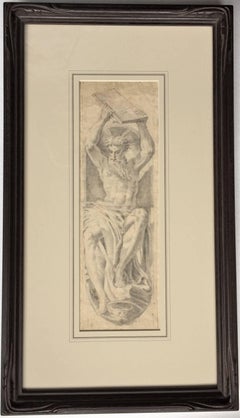
Moses Breaking the Tablet of the Law. (after Parmigianino. 1503-1540.) Pencil drawing mounted onto paper. 12 1/4 x 3 3/4 inches. Collector's seal verso: Gustav Grunwald, (Lugt 1155b)...
Category

19th Century Old Masters Figurative Drawings and Watercolors

Materials

Pencil

Study for Assumption of the Virgin
Located in Middletown, NY
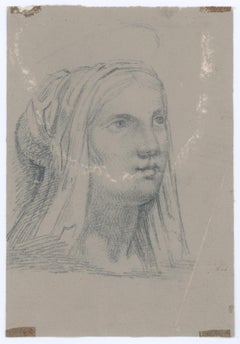
Graphite on hand made, fibrous wove paper, finished with gray wash. Unevenly trimmed sheet edges, non-archival tape remnants at all four corners, recto, well outside of image area. Horseshoe-shaped area of light discoloration that extends significantly into the figure's face, beneath the lips, and up over the rear of the head, dog-eared right lower corner with associated light discoloration at crease. DeMin and Belluno inscribed in graphite, verso. A detailed study showing 'primo pensiero' for Giovanni DeMin's large scale fresco, Assumption of the Virgin...
Category

Mid-19th Century Old Masters Figurative Drawings and Watercolors

Materials

Handmade Paper, Graphite

Italian Old Master Ink Wash Drawing St. Anne The Virgin Mary with Cherubs
Located in Cirencester, Gloucestershire
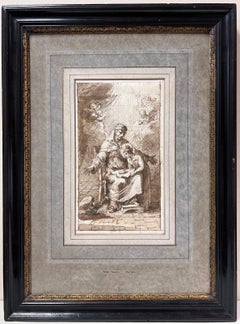
Pietro Fancelli (Italian 1764 - 1850) bio details attached to the frame 'St. Anne & The Virgin' ink with watercolor wash on paper, framed framed: 22 x 16 inches image: 11 x 6.5 inche...
Category

Late 18th Century Old Masters Figurative Drawings and Watercolors

Materials

Ink, Watercolor

Martyrdom of Saint Bartholomew - Drawing - 17th Century
Located in Roma, IT
Martyrdom of Saint Bartholomew is a precious original drawing (black and red chalk, pen and China ink on laid paper, laid down on canvas) realized by...
Category

17th Century Old Masters Figurative Drawings and Watercolors

Materials

Charcoal, Ink, Watercolor

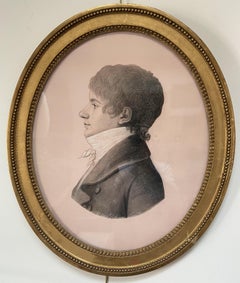
Early 19th century French School, Portrait of a man in profile, oval drawing
Located in Paris, FR
Early 19th century French School, Portrait of a young man in profile charcoal on cut paper applied to pink tinted paper Oval 58 x 47 cm (overall size) the portrait itself 41.5 x 28...
Category

Early 1800s Old Masters Figurative Drawings and Watercolors

Materials

Charcoal

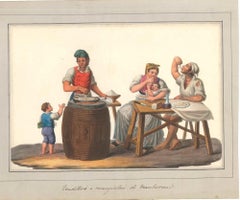
Venditori e Mangiatori di Maccheroni - Watercolor by M. De Vito - 1820 ca.
Located in Roma, IT
Watercolour on paper stuck on grey cardboard, 1820 c.a. Wonderful watercolour both for the drawing and for the fineness of the colours representing a typical Italian scene of ordina...
Category

1820s Old Masters Figurative Drawings and Watercolors

Materials

Watercolor

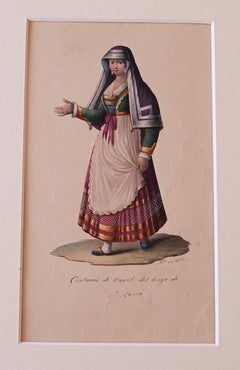
Costume of Napoli - Ink and Watercolor by Michela De Vito - 1830s
Located in Roma, IT
Costume of Napoli is an original Ink and Watercolour drawing on ivory-colored stuck on paper, 1830 c.a. Signed. Image Dimensions: 24.5 x 15 cm. The original title is written at the...
Category

1830s Old Masters Figurative Drawings and Watercolors

Materials

Watercolor, Ink

Figure of Breton Woman - Drawing by J. P. Verdussen - End of 18th Century
Located in Roma, IT
Figure of Breton Woman is a beautiful ink and watercolor original drawing on wire rod and watermarked paper realized at the middle of XVIII century by Jan Peter Verdussen. This ori...
Category

Early 18th Century Old Masters Figurative Drawings and Watercolors

Materials

Paper

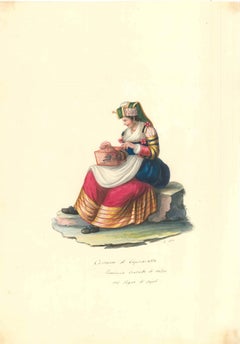
Costume di Procida - Watercolor by M. De Vito - 1820 ca.
Located in Roma, IT
Watercolour on paper stuck on ivory colored cardboard, 1820 c.a. Hand-titled "Costume di Procida" with a caption "Provincia di Napoli" in black ink on lower margin. Partially hand-signed on lower-right margin. Representing a woman with baby...
Category

1820s Old Masters Figurative Drawings and Watercolors

Materials

Watercolor

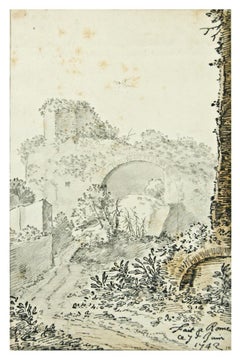
Ruines Romanes - Roman Ruins - Ink and Watercolor by J. P. Verdussen - 1742
Located in Roma, IT
China ink and watercolor on paper. Hand dated. Conditions: Foxing on the top right of the paper
Category

1740s Old Masters Figurative Drawings and Watercolors

Materials

Ink, Watercolor

Man Eating Spaghetti - Watercolor by M. De Vito - 1820 ca.
Located in Roma, IT
Man Eating Spaghetti is an original watercolor on ivory-colored paper, realized by the old master Michela De Vito in 1828. The year is written by the author, Michela De Vito, in pen...
Category

1820s Old Masters Figurative Drawings and Watercolors

Materials

Watercolor

Sleeping Boy - Drawing by Giovanni Fontana - 16th Century
Located in Roma, IT
Sleeping Boy is an original modern artwork realized in the 16th century by Giovanni Fontana. Ivory colored sheet attached on an ivory colored cardboard (...
Category

16th Century Old Masters Figurative Drawings and Watercolors

Materials

Paper, Pencil

Gioncataro - Watercolor by M. De Vito - 1820 ca.
Located in Roma, IT
Gioncataro is an amazing original artwork, watercolour on ivory-colored paper, realized by the talented artist Michela De Vito in 1820 ca. Hand-titled "Gioncataro" in pencil on the ...
Category

1820s Old Masters Figurative Drawings and Watercolors

Materials

Watercolor

Costume di Capracolla - Watercolor by M. De Vito - 1820 ca.
Located in Roma, IT
Beautiful watercolor on ivory-colored paper called Costume di Capracolla, realized by the Italian artist Michela De Vito in 1820 ca. Hand-titled "Costume di Capracolla" with a hand-...
Category

1820s Old Masters Figurative Drawings and Watercolors

Materials

Watercolor

Costume di Parghelia di Calabria - Watercolor by M. De Vito - 1820 ca.
Located in Roma, IT
Watercolour on ivory colored paper, early XIX century. Hand-titled and signature in black ink (both not readable)on lower margin. Representing a woman in traditional Calabrese costum...
Category

1820s Old Masters Figurative Drawings and Watercolors

Materials

Watercolor

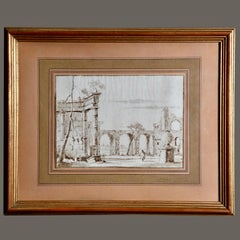
Francesco Guardi Follower Period Venetian School Ink Picture Capriccio
By Francesco Guardi
Located in Roma, IT
Our company has been present on this platform for many years, with numerous sales made and just as many excellent reviews received that you can under our Furniture account. Period V...
Category

Late 18th Century Old Masters Figurative Drawings and Watercolors

Materials

Paper, Ink

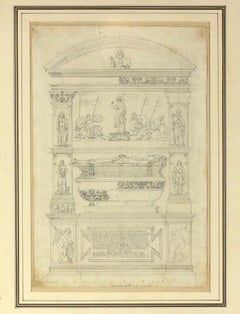
Monumento al Popolo - Drawing by Giovanni Fontana - 16th Century
Located in Roma, IT
Monumento al popolo is an original drawing realized by Giovanni Fontana in the 16th century. Ivory colored paper attached on an ivory colored sheet. Includes frame: 48.5 x 1 x 44 c Beautiful drawing in graphite, representing the funeral monument...
Category

16th Century Old Masters Figurative Drawings and Watercolors

Materials

Paper, Pencil

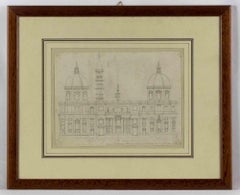
Tribuna della Basilica - Drawing by Giovanni Fontana - 16th Century
Located in Roma, IT
Tribuna della Basilica Labicana is an original old master artwork realized in 16th century by Giovanna Fontana. IIvory colored paper attached on an ivory colored sheet (cm 27 x 36.7...
Category

16th Century Old Masters Figurative Drawings and Watercolors

Materials

Paper, Pencil

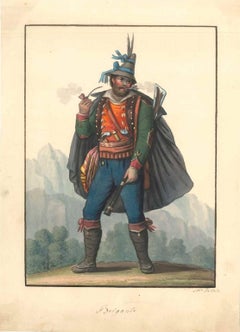
Brigante - Watercolor 1820 ca.
Located in Roma, IT
Watercolour on ivory colored paper, 1820 c.a.. Hand titled and signed. Representing brigand. Very good conditions. Very beautiful and good quality watercolour both for the drawing a...
Category

1820s Old Masters Figurative Drawings and Watercolors

Materials

Watercolor

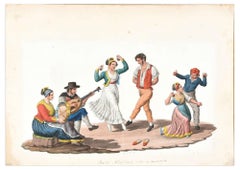
Tarantella - Watercolor by M. De Vito - 19th Century
Located in Roma, IT
Tarantella is an original watercolor on ivory-colored paper, realized by Michela De Vito in the first half of XIX century. Good conditions except for shading and light stains along...
Category

1820s Old Masters Figurative Drawings and Watercolors

Materials

Watercolor

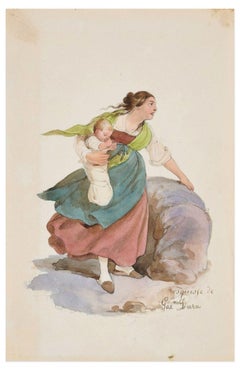
Woman - Original Ink Drawing and Watercolor by G. Dura - 19th Century
Located in Roma, IT
Woman is an original watercolor artwork realized in the XIX century by Gaetano Dura. Good conditions except for yellowing of the paper, some folds on the higher and right margin, a...
Category

19th Century Old Masters Figurative Drawings and Watercolors

Materials

Ink, Watercolor

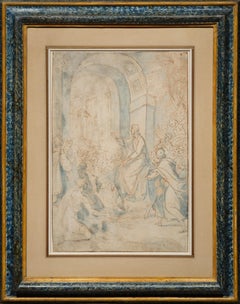
A large drawing by Il Cigoli depicting Christ s Entry into Jerusalem
Located in PARIS, FR
This large sheet, delicately enhanced with blue ink wash, was created by Lodovico Cardi, known as Il Cigoli, the most prominent painter in Florence at the end of the 16th century. It...
Category

16th Century Old Masters Figurative Drawings and Watercolors

Materials

Paper, Chalk, Ink, Pen

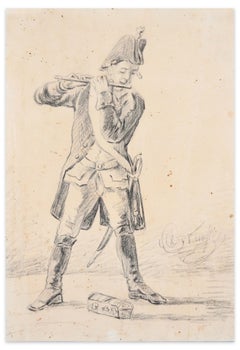
Member of the Military Band - Drawing - 19th Century
Located in Roma, IT
Member of the military band is a beautiful pencil drawing on cream-colored paper, realized during the XIX century by an Italian Master. Hand-signed on the right side of the artwork....
Category

19th Century Old Masters Figurative Drawings and Watercolors

Materials

Pencil

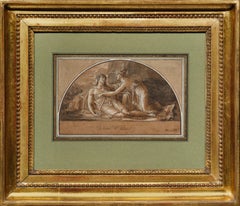
The Death of Adonis, a neoclassical drawing by Jean-Guillaume Moitte (ca. 1785)
Located in PARIS, FR
This elegant composition, whose curved shape suggests that it was intended for some decorative project, illustrates Moitte's shift around 1780 towards the neoclassical movement, insp...
Category

1780s Old Masters Figurative Drawings and Watercolors

Materials

Paper, Ink, Gouache, Pen

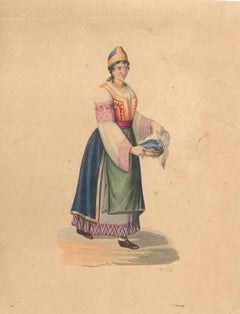
Woman in Typical Costumes - Watercolor by M. De Vito - 1820 ca.
Located in Roma, IT
Watercolour on ivory colored paper, 1828. Representing a woman in typical Italian costumes of XIX century. Good conditions with some light stains. The year of composition is hand-wri...
Category

1820s Old Masters Figurative Drawings and Watercolors

Materials

Watercolor

Baptism of Christ - Ink Drawing by Anonymous XIX Century
Located in Roma, IT
Baptism of Christ is a beautiful original drawing (pen and ink on paper) by an anonymous of the Neoclassical school of the beginning of the 19th century. A ...
Category

19th Century Old Masters Figurative Drawings and Watercolors

Materials

Ink

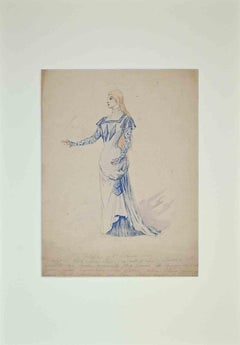
Theatrical Costume - Watercolor by Alfredo Edel - 1895
Located in Roma, IT
Theatrical Costume is an original pencil, pastel and watercolor realized by Alfredo Edel in 1895. Good condition, the artwork is from Amleto and represents Ofelia, with a note writes from the artist on the lower margin. Hand signed with pencil by the artist. Alfredo Leonardo Edel (1856–1912), sometimes credited as Alfredo Edel Colorno, was an Italian costume designer popular during the late 19th and early 20th century. He worked at the La Scala opera...
Category

1890s Old Masters Figurative Drawings and Watercolors

Materials

Watercolor, Pastel, Pencil

The Death of Coresus
By Jean-Baptiste Greuze
Located in Paris, Île-de-France
JEAN-BAPTISTE GREUZE (Tournus 1725 - 1805 Paris) The Death of Coresus, circa 1750 Pen and brown ink, black ink tips, gray wash on black chalk, 455 x 385 cm Bears on the reverse in ...
Category

18th Century Old Masters Figurative Drawings and Watercolors

Materials

Ink, Watercolor

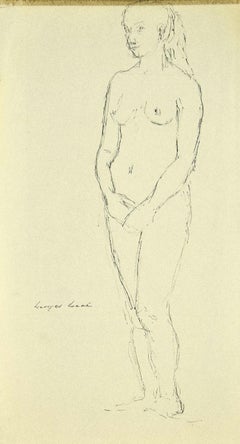
Female Nude - Original Ink on Paper by Georges Isaul - 1940s
Located in Roma, IT
Female Nude is an original modern artwork realized in the 1940s by Georges Isaul (Argenteuil, 1882 - 1963). Original ink drawing on paper. Hand-signed in pen by the artist on the ...
Category

Early 1900s Old Masters Figurative Drawings and Watercolors

Materials

Pencil

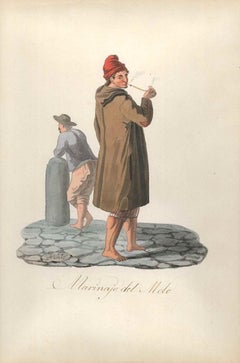
Marinajo del Molo- Watercolor by M. De Vito - 1820 ca.
Located in Roma, IT
Watercolour on paper, 1820 c.a. Hand-titled "Marinajo del Molo" (Sailor of the pier), hand-signed on lower-left margin. Very good conditions. Including an ivory colored cardboard p...
Category

1820s Old Masters Figurative Drawings and Watercolors

Materials

Watercolor

Old Masters figurative drawings and watercolors for sale on 1stDibs.

Find a wide variety of authentic Old Masters figurative drawings and watercolors available for sale on 1stDibs. Works in this style were very popular during the 21st Century and Contemporary, but contemporary artists have continued to produce works inspired by this movement. If you’re looking to add figurative drawings and watercolors created in this style to introduce contrast in an otherwise neutral space in your home, the works available on 1stDibs include elements of orange and other colors. Many Pop art paintings were created by popular artists on 1stDibs, including Michela De Vito, Jan Pieter Verdussen, Jan Peeter Verdussen, and Augustin de Saint-Aubin. Frequently made by artists working with Paint, and Watercolor and other materials, all of these pieces for sale are unique and have attracted attention over the years. Not every interior allows for large Old Masters figurative drawings and watercolors, so small editions measuring 1.89 inches across are also available. Prices for figurative drawings and watercolors made by famous or emerging artists can differ depending on medium, time period and other attributes. On 1stDibs, the price for these items starts at $121 and tops out at $50,000, while the average work sells for $1,001.

Still Thinking About These?

All Recently Viewed