Charcoal Landscape Drawings and Watercolors

to
36
111
54
56
19
14
Overall Width
to
Overall Height
to
13
157
84
4
3
10
5
16
12
5
15
4
4
61
55
18
13
9
5
4
3
148
103
2
84
77
45
41
34
26
25
19
19
17
14
13
11
11
9
8
7
7
7
7
4,030
6,640
6,191
3,108
1,027
18
9
8
7
5
87
82
142
96
Medium: Charcoal
Mid 20th century black and white drawing landscape trees houses figures signed
Located in Milwaukee, WI
"Monkey Island at Washington Park Zoo" is an original graphite and charcoal drawing on paper by Francesco Spicuzza. It depicts a number of figures gazing out at a monkey enclosure at a zoo. The artist signed the piece in the lower left. 8 1/2" x 11 3/4" art 17 1/4" x 21 1/8" frame Francesco J. Spicuzza, born in Sicily on July 23, 1883, came to America at the age of 8. He supported himself as a fruit peddler until a newspaperman gave him $4 a week to go to school. He attended classes at the Milwaukee Art Students League, where he studied under Alexander Mueller. There he learned to paint in the then-fashionable "Munich School" technique, with detailed realism in heavy browns and grayed-out hues. Spicuzza completed eight grades in four years, and then in 1911, three businessmen advanced him enough money to allow him to study in New York under artist and teacher John Carlson. It was during this time that Spicuzza changed his style of painting, developing an impressionistic use of color, form and atmospheric renditions. After a period of grinding poverty, one of Spicuzza's pictures won a major New York competition. It was the first of 60 wins, both in the U.S. and Paris. He became a fashionable painter, and many of the leading collections have his work. Spicuzza's typical works were beach scenes, still life, landscapes and portraits done in pastels, oils, ink, charcoal and watercolors. Much of his work traced the history of Milwaukee in the early 1900s. He was probably best known for his scenes of women and children splashing in...
Category

1950s Charcoal Landscape Drawings and Watercolors

Materials

Paper, Charcoal, Graphite

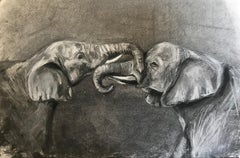
Sophie Harden Duel Sketch, Original Charcoal Painting of Elephants, Affordable
Located in Deddington, GB
Sophie Harden Duel Sketch Charcoal on Paper Image Size: H 25cm x W 38cm x D 0.1cm Framed Size: H 41cm x W 55cm x D 3.5cm Sold Framed in a Black Frame Please note that insitu images are purely an indication of how a piece may look. Duel Sketch is an original drawing of elephants...
Category

21st Century and Contemporary Charcoal Landscape Drawings and Watercolors

Materials

Paper, Charcoal

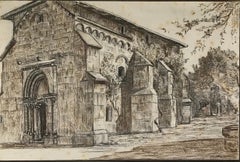
"Commandery of Corsier, Geneva" by Barthélémy Marc Bodmer - Charcoal
Located in Geneva, CH
Work on paper Brown wooden frame with glass pane 50 x 61,5 x 1,5 cm
Category

Early 20th Century Modern Charcoal Landscape Drawings and Watercolors

Materials

Charcoal

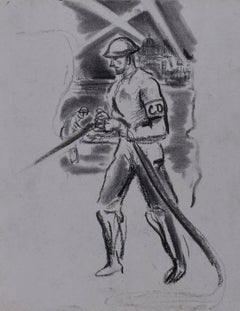
The Blitz: A Civil Defence Firefighter before St Paul s Cathedral, London 1940
Located in London, GB
To see our other World War Two art, scroll down to "More from this Seller" and below it click on "See all from this seller." The Blitz: A Civil Defence Firefighter In Action before St Paul's Cathedral with Search Lights...
Category

1940s Realist Charcoal Landscape Drawings and Watercolors

Materials

Charcoal

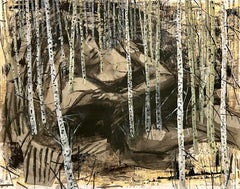
Birch Mystery, trees, female figure, neutral tones, collage on archival paper
Located in Brooklyn, NY
Paper paint charcoal collage Paper charcoal collage These collages were created first in the presence of a live model, working quickly, in charcoal and again, later, alone in the stu...
Category

2010s Surrealist Charcoal Landscape Drawings and Watercolors

Materials

Charcoal, Archival Paper, Acrylic, Mixed Media

"Waldsee 1944: Budapest / Soweto"
Located in Astoria, NY
William Kentridge (South African, b. 1955), "Waldsee 1944: Budapest / Soweto", Charcoal and Ink on Paper, 2003, signed in pencil vertically left edge, black frame. Image: 4.75" H x 6...
Category

Early 2000s Contemporary Charcoal Landscape Drawings and Watercolors

Materials

Paper, Charcoal, Ink, Mixed Media

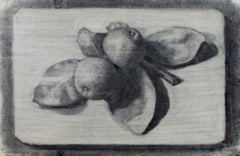
"Still Life with Fruit" original charcoal drawing by Sylvia Spicuzza
Located in Milwaukee, WI
In this drawing, Sylvia Spicuzza presents the viewer with a dark, subtle view of two apples, still clinging to their leaves. Examples like this show the ability of Spicuzza to draw i...
Category

1920s American Impressionist Charcoal Landscape Drawings and Watercolors

Materials

Paper, Charcoal

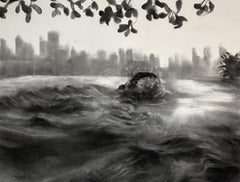
The Space Between, monochrome charcoal drawing of swimmer in city setting
Located in Dallas, TX
"The Space Between" is a unique charcoal drawing on paper. Scottish artist Patsy McArthur captures the dynamic movement of the swimmer against an urban backdrop. This monochromatic ...
Category

2010s Realist Charcoal Landscape Drawings and Watercolors

Materials

Charcoal, Archival Paper

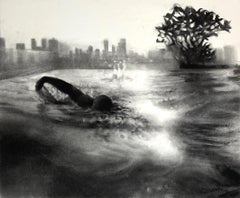
City Swim Dusk, realist monochrome charcoal drawing of swimmer in city setting
Located in Dallas, TX
"City Swim, Dusk" is a unique charcoal drawing on paper. Scottish artist Patsy McArthur captures the dynamic movement of the swimmer against an urban backdrop. This monochromatic ar...
Category

2010s Realist Charcoal Landscape Drawings and Watercolors

Materials

Charcoal, Archival Paper

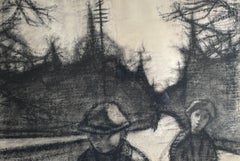
Figures at a Road Junction - Modern British drawing by Harold Cheesman
Located in London, GB
HAROLD CHEESMAN, RSA (1915-1982) Figures at Road Junction Signed, inscribed with title and dated 1960 on a label on the backboard Charcoal and black conte crayon Framed 36 by 53 ...
Category

1960s Modern Charcoal Landscape Drawings and Watercolors

Materials

Charcoal

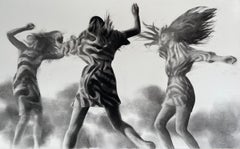
Feel The Beat, realistic figurative drawing of party girls dancing, high energy
Located in Dallas, TX
"Feel the Beat" is a dynamic artwork features three figures caught in a moment of rhythmic movement, exuding an ethereal energy. Each figure is rendered in a monochromatic palette, e...
Category

2010s Realist Charcoal Landscape Drawings and Watercolors

Materials

Charcoal, Archival Paper, Graphite

Being one with Nature II, Man in His Environment, Charcoal Drawing In Stock
Located in Kolkata, West Bengal
Debabrata Basu - Being one with Nature II - 26 x 20 inches (unframed size) Charcoal on Fabriano Paper Style : Debabrata derives his style and theme by introspecting within himself. ...
Category

2010s Contemporary Charcoal Landscape Drawings and Watercolors

Materials

Charcoal, Paper

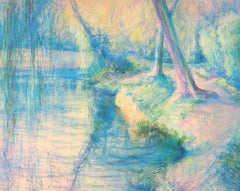
Impressionist Lake - Original Signed Charcoals Drawing
Located in Paris, IDF
Gaston COPPENS (1909 - 2002) Impressionist Lake Original charcoal drawing Handsigned on the bottom right of the sheet On canson paper, 50 x 65 cm (c. 19,6 x 25,5 inch) Very good co...
Category

Mid-20th Century Modern Charcoal Landscape Drawings and Watercolors

Materials

Charcoal

Red Birch, disrupted realism, nature, woman, muted reds, mystery
Located in Brooklyn, NY
Paper paint charcoal collage Paper charcoal collage These collages were created first in the presence of a live model, working quickly, in charcoal and pastel, and again, later, alon...
Category

2010s Assemblage Charcoal Landscape Drawings and Watercolors

Materials

Charcoal, Acrylic, Archival Paper, Magazine Paper

Landscape - Drawing - 19th Century
Located in Roma, IT
Landscape is a modern artwork realized in the 19th century Charcoal drawings. Good conditions 
Category

19th Century Modern Charcoal Landscape Drawings and Watercolors

Materials

Paper, Charcoal

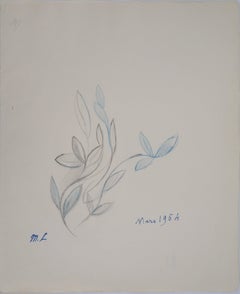
Spring Blossom : Leaves in Blue - Original pencil drawing, 1953
Located in Paris, IDF
Marie LAURENCIN Spring Blossom : Leaves in Blue, 1953 Original pencil drawing Signed by artist stamp On paper 24.5 x 19.5 cm (c. 9.6 x 7.6 inch) Very good condition, marks of the ...
Category

1950s Modern Charcoal Landscape Drawings and Watercolors

Materials

Charcoal, Pencil, Color Pencil

Landscape - Drawing - 19th Century
Located in Roma, IT
Landscape is a modern artwork realized by in the 19th Century. Charcoal drawing. Good conditions.
Category

19th Century Modern Charcoal Landscape Drawings and Watercolors

Materials

Paper, Charcoal

NEWRY
Located in Portland, ME
Barr, Wyatt. NEWRY. Drawing, Charcoal and ink wash on Arches 300lb. Hot Press Watercolor paper, 2014. The subject is a hillside next to Step Falls in Newry, Maine. Signed and dated. ...
Category

2010s Realist Charcoal Landscape Drawings and Watercolors

Materials

Charcoal, Ink

"Behind the Studio" Realist charcoal on paper drawing, trees and shadows, framed
Located in Sag Harbor, NY
"Behind the Studio" is a realist charcoal on paper drawing. It depicts the treed filled forrest behind the aritst's studio in Sag Harbor, NY. Frame Dimensions 26 x 34in Framed und...
Category

21st Century and Contemporary Realist Charcoal Landscape Drawings and Watercolors

Materials

Paper, Charcoal

Landscape - Drawing by Jaques Hesvalle - Mid-20th Century
Located in Roma, IT
Figures is a Pastel and Charcoal drawing realized by Jaques Hesvalle in the Mid-20th Century. Hand-signed. Good conditions with slight foxing.
Category

Mid-20th Century Modern Charcoal Landscape Drawings and Watercolors

Materials

Charcoal, Pastel

Blooming Apple Tree on Union Street - Finnish Landscape in Charcoal on Paper
Located in Soquel, CA
Blooming Apple Trees on Union Street - Finnish Landscape in Charcoal on Paper Lovely drawing of a country street by Finnish surrealist Otto Makila (1904-...
Category

1940s Impressionist Charcoal Landscape Drawings and Watercolors

Materials

Paper, Charcoal

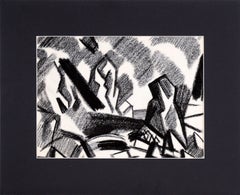
Mid Century Modern East Bay IV Abstracted Landscape by Erle Loran
Located in Soquel, CA
Mid Century Modern East Bay IV Abstracted Landscape by Erle Loran Dynamic mid century abstracted geometric landscape drawing of the East Bay California landscape by Erle Loran (American, 1905-1999), circa 1950. From a collection of estate of Ruth Loran (wife of artist). Presented in mat. Unframed. Mat size: 13"H x 16"W. Paper size: 9"H x 12"W Provenance: This piece was from Erle Loran's sketch book and this drawing was then matted, purchased from the Erle Loran estate and the Carlson Gallery, Carmel. Erle Loran was a modernist of urban-coast views and geometric painting. Loran was born in Minneapolis, Minnesota in 1905. He attended the University of Minnesota for a while before studying at the Minneapolis School of Art, under Cameron Booth...
Category

1950s Abstract Expressionist Charcoal Landscape Drawings and Watercolors

Materials

Charcoal, Laid Paper

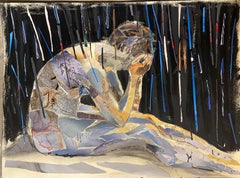
Rain, mystery, collage, figure, dark color, night cave painting random stripes
Located in Brooklyn, NY
Paper paint charcoal collage Paper charcoal collage These collages were created first in the presence of a live model, working quickly, in charcoal and pastel, and again, later, alon...
Category

2010s Assemblage Charcoal Landscape Drawings and Watercolors

Materials

Charcoal, Archival Paper, Magazine Paper

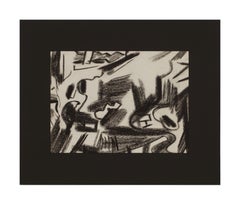
Mid Century Modern East Bay Abstracted Landscape
Located in Soquel, CA
Dynamic abstracted geometric landscape drawing of the East Bay California landscape by Erle Loran (American, 1905-1999), circa 1950. From a collection of esta...
Category

1950s Abstract Expressionist Charcoal Landscape Drawings and Watercolors

Materials

Charcoal, Laid Paper

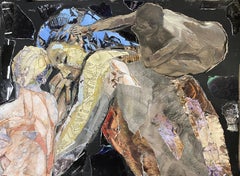
Sleep Watchers, mystery, collage, figure, night
Located in Brooklyn, NY
Paper paint charcoal collage Paper charcoal collage These collages were created first in the presence of a live model, working quickly, in charcoal and pastel, and again, later, alon...
Category

2010s Assemblage Charcoal Landscape Drawings and Watercolors

Materials

Charcoal, Archival Paper, Magazine Paper

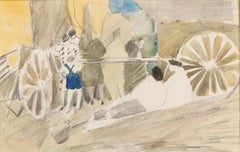
Wagons in the Field, Poland by Peter Potworowski, Watercolour Landscape, 1958
Located in Kingsclere, GB
Wagons in the Field, Poland
Category

20th Century Charcoal Landscape Drawings and Watercolors

Materials

Charcoal, Watercolor

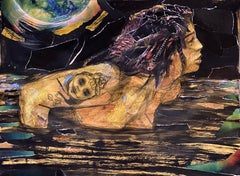
Dark Water, mystery, collage, figure, black yellow, night
Located in Brooklyn, NY
Paper paint charcoal collage on colored paper These collages were created first in the presence of a live model, working quickly, in charcoal and pastel, and again, later, alone in ...
Category

2010s Assemblage Charcoal Landscape Drawings and Watercolors

Materials

Charcoal, Archival Paper, Magazine Paper, Mixed Media

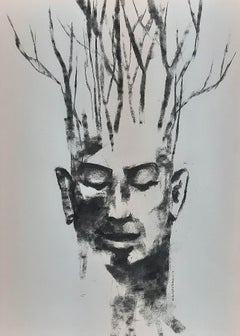
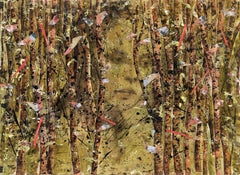
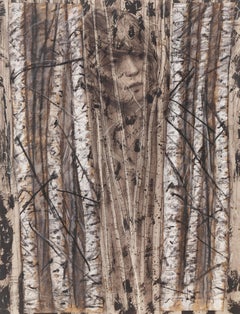
Obscura, face w birch trees, nature, monochromatic
Located in Brooklyn, NY
Starting with observational drawings from life, these works evolve through a series of variations, modifying tonality and forest elements.Even though recognizable as trees, the artis...
Category

2010s American Modern Charcoal Landscape Drawings and Watercolors

Materials

Mixed Media, Acrylic, Charcoal

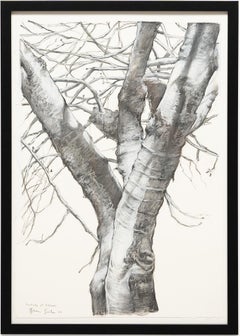
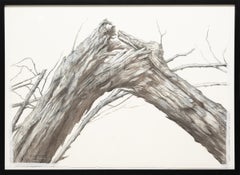
"Memory of Leaves, " Charcoal on Paper
Located in Chicago, IL
Chicago-based fine art painter Bruno A. Surdo is classically trained in drawing and oil painting in the tradition of Renaissance masters. With strong command of the human form, Surdo creates dynamic compositions of people and places that communicate a rich commentary on the world around him. Depicting trees from personal encounters, Surdo’s latest body of work entitled “Tree Spirits” takes us on a foray into the forest, where leaves, branches and burls express something deeply personal. Applying his mastery of figurative realism to the natural world, he experiments with form and texture to uncover the intangible spirits of trees. This charcoal drawing entitled “Memory of Leaves” beautifully illustrates the branching form of a mature birch tree. Loosely drawn with informal, sketch-like linework, the tree is shown in the middle of winter, bare of leaves and white with frost. Surdo’s skillful placement of shadow illustrates the forking branches with incredible texture and effortless realism. The intricate play of light and dark is accentuated by the stark white background, a negative space that isolates the tree in space and time. Restricting the composition to only a portion of the tree trunk, Surdo accentuates the tree’s abstract form, lingering on areas of unusual shape or texture. Seeking to convey the strong emotional response elicited by his initial encounter with the tree, Surdo focuses on the tree’s sculptural form, contrasting the strong trunk...
Category

21st Century and Contemporary Naturalistic Charcoal Landscape Drawings and Watercolors

Materials

Paper, Charcoal

Rivers of the Tiber - Etching by Nazareno Gattamelata - 1970s
Located in Roma, IT
Rivers of the Tiber is an original Contemporary artwork realized by Nazareno Gattamelata in the 1970s. Original oil Pastel and Charcoal Good conditions. Rivers of the Tiber is an original work depicting a typical urban Roman landscape realized by the Italian artist Nazareno Gattamelata. He frequented the Roman artistic environment that revolves around the "trident" between the poles of the Caffè Rosati and Canova in Piazza del Popolo and the Osterie of the "Bottaro" and the "King of friends" around Via Ripetta. He makes friends in particular with the poet Sandro Penna and the sculptors Francesco Coccia and Pietro de Laurentiis.
Category

1970s Contemporary Charcoal Landscape Drawings and Watercolors

Materials

Charcoal, Oil Pastel

House - Original Mixed Media on Cardboard by Sun Jingyuan - 1970s
Located in Roma, IT
House is an original drawing artwork in mixed media on cardboard, charcoal and oil pastel, realized by Sun Jingyuan in 1970s. The state of preservation is very good. Sheet dimensio...
Category

1970s Charcoal Landscape Drawings and Watercolors

Materials

Mixed Media, Cardboard, Charcoal, Oil Pastel

Landscape - Mixed Media on Cardboard by Sun Jingyuan - 1970
Located in Roma, IT
Landscape is an original drawing artwork in mixed media, charcoal and oil pastel, on cardboard, realized by Sun Jingyuan in 1970s. The state of preservati...
Category

1970s Charcoal Landscape Drawings and Watercolors

Materials

Mixed Media, Cardboard, Charcoal, Oil Pastel

Landscape - Mixed Media on Cardboard by Sun Jingyuan - 1970s
Located in Roma, IT
Landscape is an original drawing artwork in mixed media on cardboard, realized by Sun Jingyuan in 1970s. The state of preservation is very good. Sheet di...
Category

1970s Charcoal Landscape Drawings and Watercolors

Materials

Mixed Media, Cardboard, Charcoal, Oil Pastel

Landscape - Mixed Media on Cardboard by Sun Jingyuan - 1970
Located in Roma, IT
Landscape is an original drawing artwork in mixed media on cardboard, charcoal and oil pastel, realized by Sun Jingyuan in 1970. The state of preservation...
Category

1970s Charcoal Landscape Drawings and Watercolors

Materials

Mixed Media, Cardboard, Charcoal, Oil Pastel

Landscape - Mixed Media on Cardboard by Sun Jingyuan - 1970s
Located in Roma, IT
Landscape is a drawing in mixed media, charcoal and oil pastel on cardboard, realized by Sun Jingyuan in 1970s. The state of preservation is very good. S...
Category

1970s Charcoal Landscape Drawings and Watercolors

Materials

Mixed Media, Cardboard, Charcoal, Oil Pastel

Landscape - Mixed Media on Cardboard by Sun Jingyuan - 1970s
Located in Roma, IT
Landscape is an original drawing artwork in mixed media on cardboard, realized by Sun Jingyuan in 1970s. The state of preservation is very good. Sheet dimension: 54.5 x 39.5 cm. Th...
Category

1970s Charcoal Landscape Drawings and Watercolors

Materials

Mixed Media, Cardboard, Charcoal, Oil Pastel

Landscape - Drawing in Charcoal and Pencil on Paper - 19th Century
Located in Roma, IT
Landscape is an original drawing in charcoal and pencil on paper realized by an Anonymous artist of the XIX century. The State of preservation is good with the traces of time and s...
Category

19th Century Modern Charcoal Landscape Drawings and Watercolors

Materials

Charcoal, Pencil

M-108533 - Charcoal Drawing by N. Gattamelata - 1970s
Located in Roma, IT
Shadow is a mixed colored drawing realized by Nazareno Gattamelata in the second half of the XX century. Hand signed by the artist on the upper left margin. The artwork is framed (...
Category

1970s Contemporary Charcoal Landscape Drawings and Watercolors

Materials

Charcoal

Reclined Nude - China Ink and Watercolor Drawing by Jean Chapin - Early 1900
Located in Roma, IT
Reclined Nude is an ink and watercolor drawing realized by Jean Chapin in the First Half 20th Century. The artwork represents a female nude. Good conditions. Jean Chapin (Paris,...
Category

Early 20th Century Charcoal Landscape Drawings and Watercolors

Materials

Charcoal

Wood - Charcoal Drawing by Jean Chapin - Early 1900
Located in Roma, IT
Wood is a charcoal drawing realized by Jean Chapin in the early XX century. The artwork represents a black and white drawing wood. Good conditions except for some foxings. Jea...
Category

Early 20th Century Charcoal Landscape Drawings and Watercolors

Materials

Charcoal

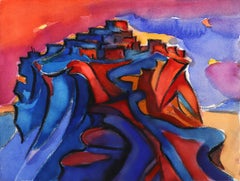
Hopi Village on First Mesa, Arizona: Red, Blue, Orange Mixed Media Landscape Art
Located in Denver, CO
This stunning mixed-media painting by German-American artist Bert Van Bork (1928–2014), titled Walpi #9 (Hopi Village on First Mesa, Arizona), is a vibra...
Category

1990s American Modern Charcoal Landscape Drawings and Watercolors

Materials

Charcoal, Ink, Watercolor

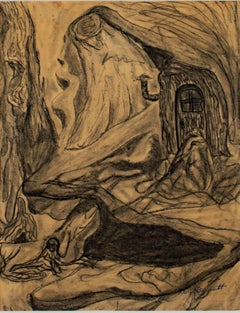
"Mountain Mystery, " Charcoal on Paper signed by David Barnett
Located in Milwaukee, WI
"Mountain Mystery" is an original signed charcoal drawing by David Barnett. The surrealistic landscape depicts mountainous natural forms with swirling lines and an element of uncerta...
Category

1960s Surrealist Charcoal Landscape Drawings and Watercolors

Materials

Charcoal

"Broken Spirit, " Charcoal on Paper
Located in Chicago, IL
Chicago-based fine art painter Bruno A. Surdo is classically trained in drawing and oil painting in the tradition of Renaissance masters. With strong command of the human form, Surdo...
Category

21st Century and Contemporary Naturalistic Charcoal Landscape Drawings and Watercolors

Materials

Charcoal, Paper

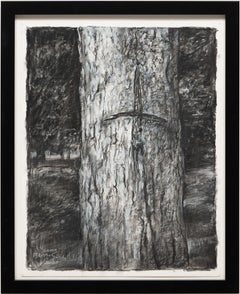
"Faith, " Charcoal on Paper, 2023
Located in Chicago, IL
Chicago-based fine art painter Bruno A. Surdo is classically trained in drawing and oil painting in the tradition of Renaissance masters. With strong command of the human form, Surdo creates dynamic compositions of people and places that communicate a rich commentary on the world around him. Depicting trees from personal encounters, Surdo’s latest body of work entitled “Tree Spirits” takes us on a foray into the forest, where leaves, branches and burls express something deeply personal. Applying his mastery of figurative realism to the natural world, he experiments with form and texture to uncover the intangible spirits of trees. Entitled “Faith,” this small-scale charcoal drawing depicts a tree trunk carved with two deep cuts in the shape of a cross. The carving has healed over, assimilated into the bark as just another interesting detail. Up close, the work is loosely drawn with a heavy hand, but from afar, the natural scene still achieves a sense of realism. The tree trunk is conveyed through chaotic scribbling and aggressive strokes of light and dark charcoal, resulting in a pattern that simulates the rough texture of bark. Light falls softly on the tree, illuminating its form against the dark, atmospheric surroundings. The striking imagery of this work conveys the strong emotional response elicited by Surdo’s personal encounter with this tree. Restricting the composition to only the scarred portion of the tree trunk, Surdo focuses on symbolism of the cross carved into the tree’s side. The carving was inflicted upon the tree by an individual, whether as an act of graffiti or the object of adoration. Despite this wound, the tree persists and grows, adapting and changing until the mark is but another interesting detail. The tree’s spirit endures and speaks to the strength it takes to heal oneself, whether physically or mentally. Charcoal on paper...
Category

21st Century and Contemporary Naturalistic Charcoal Landscape Drawings and Watercolors

Materials

Paper, Charcoal

Simon B. Hodges (b.1956) - 20th Century Charcoal Drawing, Bath Abbey Interior
Located in Corsham, GB
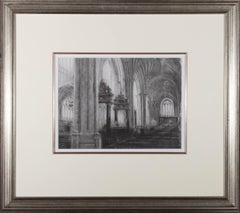
A spectacular charcoal depiction of the impressive interior of Bath abbey. The artist has captured the vaulted ceilings and darkened tombs with wonder...
Category

21st Century and Contemporary Charcoal Landscape Drawings and Watercolors

Materials

Charcoal

Air Raid, Second World War charcoal sketch
Located in London, GB
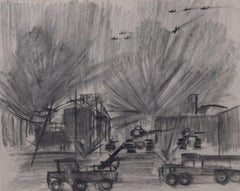
Anonymous Air Raid Charcoal sketch 34 x 43 cm At first glance, this charcoal sketch seems fairly innocuous, after all it seems to simply depict a series of parked military vehicl...
Category

Mid-20th Century Realist Charcoal Landscape Drawings and Watercolors

Materials

Charcoal

Le Pont du Vey by Paulémile Pissarro - Charcoal drawing
Located in London, GB
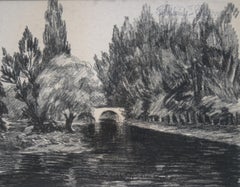
Le Pont du Vey by Paulémile Pissarro (1884-1972) Charcoal on paper 24.5 x 31.5 cm (9 ⁵/₈ x 12 ³/₈ inches) Signed with Estate stamp lower centre and upper right Executed circa 1940s ...
Category

1940s Post-Impressionist Charcoal Landscape Drawings and Watercolors

Materials

Paper, Charcoal

Erle Loran mixed media drawings of landscapes, set of 6
Located in San Rafael, CA
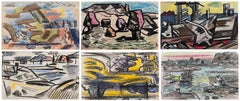
Erle Loran (American, 1905-1999) Set of six landscapes Each mixed media on paper Two signed, lower right and left corners Sheet (largest, unframed): 8.25"h x 11.25"w. Loran was a very influential Bay Area artist whose works are held in public collections across the U.S., including the Metropolitan Museum of Art, the Smithsonian Institution, de Young Museum, SF MoMA...
Category

Mid-20th Century Abstract Geometric Charcoal Landscape Drawings and Watercolors

Materials

Charcoal, Crayon, Pastel, Ink

Vintage Mixed Media American Cityscape Illustration c.1960s
Located in San Francisco, CA
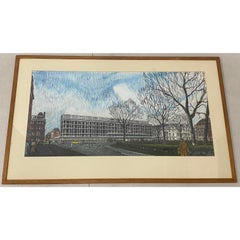
Vintage Mixed Media Cityscape Illustration c.1960s Late Fall or early Winter scene of an urban environment with figures, buildings, barren trees i...
Category

Mid-20th Century Impressionist Charcoal Landscape Drawings and Watercolors

Materials

Charcoal, Pastel, Watercolor

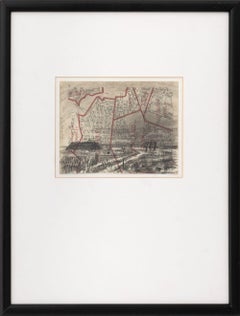
Compulsion Drift
Located in New York, NY
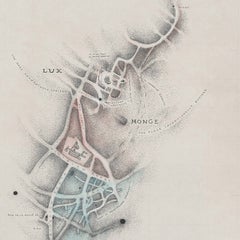
watercolor, charcoal, graphite, ink on paper 19"x25" available framed Known for her idiosyncratic cartographic explorations of the psyche and mental states, Smith incorporates ou...
Category

21st Century and Contemporary Contemporary Charcoal Landscape Drawings and Watercolors

Materials

Charcoal, Graphite, Ink, Paper, Watercolor

"View of Lambertville"
Located in Lambertville, NJ
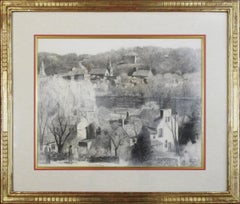
Jim’s of Lambertville Fine Art Gallery is proud to present this piece by Daniel Garber (1880 - 1958). One of the two most important and, so far, the most valuable of the New Hope Sc...
Category

1940s American Impressionist Charcoal Landscape Drawings and Watercolors

Materials

Paper, Charcoal

Corner of 9th and de Chirico surreal urban landscape warm black Grey and red
Located in Brooklyn, NY
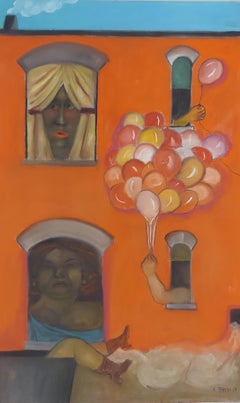
Soft pastel on Grey toned archival paper signed and dated. This is a large pastel painting suitable for framing under glass. The artist is reminded of the great Italian painter after...
Category

2010s Expressionist Charcoal Landscape Drawings and Watercolors

Materials

Charcoal, Pastel, Archival Paper

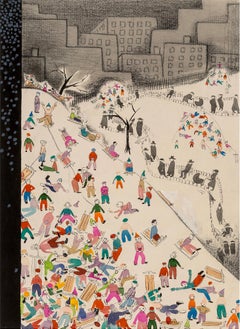
Children Snow Sledding in Central Park - New Yorker Cover Study
Located in Miami, FL
Hungarian/American artist/illustrator depicts a charming scene of sledding in the snow in Central Park. The work is abstract in its design as it's functional in its narrative - Unpublished New Yorker...
Category

1940s Modern Charcoal Landscape Drawings and Watercolors

Materials

Charcoal, Ink, Watercolor, Gouache, Pencil

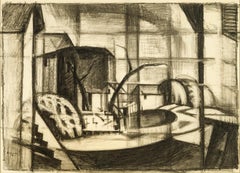
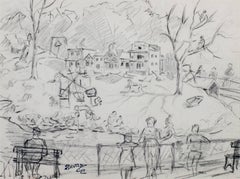
Study for Old Canal, Red and Blue (Rockaway, Morris Canal)
Located in New York, NY
Oscar Bluemner was a German and an American, a trained architect who read voraciously in art theory, color theory, and philosophy, a writer of art criticism both in German and English, and, above all, a practicing artist. Bluemner was an intense man, who sought to express and share, through drawing and painting, universal emotional experience. Undergirded by theory, Bluemner chose color and line for his vehicles; but color especially became the focus of his passion. He was neither abstract artist nor realist, but employed the “expressional use of real phenomena” to pursue his ends. (Oscar Bluemner, from unpublished typescript on “Modern Art” for Camera Work, in Bluemner papers, Archives of American Art, Smithsonian Institution, as cited and quoted in Jeffrey R. Hayes, Oscar Bluemner [1991], p. 60. The Bluemner papers in the Archives [hereafter abbreviated as AAA] are the primary source for Bluemner scholars. Jeffrey Hayes read them thoroughly and translated key passages for his doctoral dissertation, Oscar Bluemner: Life, Art, and Theory [University of Maryland, 1982; UMI reprint, 1982], which remains the most comprehensive source on Bluemner. In 1991, Hayes published a monographic study of Bluemner digested from his dissertation and, in 2005, contributed a brief essay to the gallery show at Barbara Mathes, op. cit.. The most recent, accessible, and comprehensive view of Bluemner is the richly illustrated, Barbara Haskell, Oscar Bluemner: A Passion for Color, exhib. cat. [New York: Whitney Museum of American Art, 2005.]) Bluemner was born in the industrial city of Prenzlau, Prussia, the son and grandson of builders and artisans. He followed the family predilection and studied architecture, receiving a traditional and thorough German training. He was a prize-winning student and appeared to be on his way to a successful career when he decided, in 1892, to emigrate to America, drawn perhaps by the prospect of immediate architectural opportunities at the Chicago World’s Fair, but, more importantly, seeking a freedom of expression and an expansiveness that he believed he would find in the New World. The course of Bluemner’s American career proved uneven. He did indeed work as an architect in Chicago, but left there distressed at the formulaic quality of what he was paid to do. Plagued by periods of unemployment, he lived variously in Chicago, New York, and Boston. At one especially low point, he pawned his coat and drafting tools and lived in a Bowery flophouse, selling calendars on the streets of New York and begging for stale bread. In Boston, he almost decided to return home to Germany, but was deterred partly because he could not afford the fare for passage. He changed plans and direction again, heading for Chicago, where he married Lina Schumm, a second-generation German-American from Wisconsin. Their first child, Paul Robert, was born in 1897. In 1899, Bluemner became an American citizen. They moved to New York City where, until 1912, Bluemner worked as an architect and draftsman to support his family, which also included a daughter, Ella Vera, born in 1903. All the while, Oscar Bluemner was attracted to the freer possibilities of art. He spent weekends roaming Manhattan’s rural margins, visiting the Bronx, Brooklyn, Queens, and New Jersey, sketching landscapes in hundreds of small conté crayon drawings. Unlike so many city-based artists, Bluemner did not venture out in search of pristine countryside or unspoiled nature. As he wrote in 1932, in an unsuccessful application for a Guggenheim Fellowship, “I prefer the intimate landscape of our common surroundings, where town and country mingle. For we are in the habit to carry into them our feelings of pain and pleasure, our moods” (as quoted by Joyce E. Brodsky in “Oscar Bluemner in Black and White,” p. 4, in Bulletin 1977, I, no. 5, The William Benton Museum of Art, Storrs, Connecticut). By 1911, Bluemner had found a powerful muse in a series of old industrial towns, mostly in New Jersey, strung along the route of the Morris Canal. While he educated himself at museums and art galleries, Bluemner entered numerous architectural competitions. In 1903, in partnership with Michael Garven, he designed a new courthouse for Bronx County. Garven, who had ties to Tammany Hall, attempted to exclude Bluemner from financial or artistic credit, but Bluemner promptly sued, and, finally, in 1911, after numerous appeals, won a $7,000 judgment. Barbara Haskell’s recent catalogue reveals more details of Bluemner’s architectural career than have previously been known. Bluemner the architect was also married with a wife and two children. He took what work he could get and had little pride in what he produced, a galling situation for a passionate idealist, and the undoubted explanation for why he later destroyed the bulk of his records for these years. Beginning in 1907, Bluemner maintained a diary, his “Own Principles of Painting,” where he refined his ideas and incorporated insights from his extensive reading in philosophy and criticism both in English and German to create a theoretical basis for his art. Sometime between 1908 and 1910, Bluemner’s life as an artist was transformed by his encounter with the German-educated Alfred Stieglitz, proprietor of the Little Galleries of the Photo-Secession at 291 Fifth Avenue. The two men were kindred Teutonic souls. Bluemner met Stieglitz at about the time that Stieglitz was shifting his serious attention away from photography and toward contemporary art in a modernist idiom. Stieglitz encouraged and presided over Bluemner’s transition from architect to painter. During the same period elements of Bluemner’s study of art began to coalesce into a personal vision. A Van Gogh show in 1908 convinced Bluemner that color could be liberated from the constraints of naturalism. In 1911, Bluemner visited a Cézanne watercolor show at Stieglitz’s gallery and saw, in Cézanne’s formal experiments, a path for uniting Van Gogh’s expressionist use of color with a reality-based but non-objective language of form. A definitive change of course in Bluemner’s professional life came in 1912. Ironically, it was the proceeds from his successful suit to gain credit for his architectural work that enabled Bluemner to commit to painting as a profession. Dividing the judgment money to provide for the adequate support of his wife and two children, he took what remained and financed a trip to Europe. Bluemner traveled across the Continent and England, seeing as much art as possible along the way, and always working at a feverish pace. He took some of his already-completed work with him on his European trip, and arranged his first-ever solo exhibitions in Berlin, Leipzig, and Elberfeld, Germany. After Bluemner returned from his study trip, he was a painter, and would henceforth return to drafting only as a last-ditch expedient to support his family when his art failed to generate sufficient income. Bluemner became part of the circle of Stieglitz artists at “291,” a group which included Marsden Hartley, John Marin, and Arthur Dove. He returned to New York in time to show five paintings at the 1913 Armory Show and began, as well, to publish critical and theoretical essays in Stieglitz’s journal, Camera Work. In its pages he cogently defended the Armory Show against the onslaught of conservative attacks. In 1915, under Stieglitz’s auspices, Bluemner had his first American one-man show at “291.” Bluemner’s work offers an interesting contrast with that of another Stieglitz architect-turned-artist, John Marin, who also had New Jersey connections. The years after 1914 were increasingly uncomfortable. Bluemner remained, all of his life, proud of his German cultural legacy, contributing regularly to German language journals and newspapers in this country. The anti-German sentiment, indeed mania, before and during World War I, made life difficult for the artist and his family. It is impossible to escape the political agenda in Charles Caffin’s critique of Bluemner’s 1915 show. Caffin found in Bluemner’s precise and earnest explorations of form, “drilled, regimented, coerced . . . formations . . . utterly alien to the American idea of democracy” (New York American, reprinted in Camera Work, no. 48 [Oct. 1916], as quoted in Hayes, 1991, p. 71). In 1916, seeking a change of scene, more freedom to paint, and lower expenses, Bluemner moved his family to New Jersey, familiar terrain from his earlier sketching and painting. During the ten years they lived in New Jersey, the Bluemner family moved around the state, usually, but not always, one step ahead of the rent collector. In 1917, Stieglitz closed “291” and did not reestablish a Manhattan gallery until 1925. In the interim, Bluemner developed relationships with other dealers and with patrons. Throughout his career he drew support and encouragement from art cognoscenti who recognized his talent and the high quality of his work. Unfortunately, that did not pay the bills. Chronic shortfalls were aggravated by Bluemner’s inability to sustain supportive relationships. He was a difficult man, eternally bitter at the gap between the ideal and the real. Hard on himself and hard on those around him, he ultimately always found a reason to bite the hand that fed him. Bluemner never achieved financial stability. He left New Jersey in 1926, after the death of his beloved wife, and settled in South Braintree, Massachusetts, outside of Boston, where he continued to paint until his own death in 1938. As late as 1934 and again in 1936, he worked for New Deal art programs designed to support struggling artists. Bluemner held popular taste and mass culture in contempt, and there was certainly no room in his quasi-religious approach to art for accommodation to any perceived commercial advantage. His German background was also problematic, not only for its political disadvantages, but because, in a world where art is understood in terms of national styles, Bluemner was sui generis, and, to this day, lacks a comfortable context. In 1933, Bluemner adopted Florianus (definitively revising his birth names, Friedrich Julius Oskar) as his middle name and incorporated it into his signature, to present “a Latin version of his own surname that he believed reinforced his career-long effort to translate ordinary perceptions into the more timeless and universal languages of art” (Hayes 1982, p. 189 n. 1). In 1939, critic Paul Rosenfeld, a friend and member of the Stieglitz circle, responding to the difficulty in categorizing Bluemner, perceptively located him among “the ranks of the pre-Nazi German moderns” (Hayes 1991, p. 41). Bluemner was powerfully influenced in his career by the intellectual heritage of two towering figures of nineteenth-century German culture, Johann Wolfgang von Goethe and Georg Wilhelm Friedrich Hegel. A keen student of color theory, Bluemner gave pride of place to the formulations of Goethe, who equated specific colors with emotional properties. In a November 19, 1915, interview in the German-language newspaper, New Yorker Staats-Zeitung (Abendblatt), he stated: I comprehend the visible world . . . abstract the primary-artistic . . . and after these elements of realty are extracted and analyzed, I reconstruct a new free creation that still resembles the original, but also . . . becomes an objectification of the abstract idea of beauty. The first—and most conspicuous mark of this creation is . . . colors which accord with the character of things, the locality . . . [and which] like the colors of Cranach, van der Weyden, or Durer, are of absolute purity, breadth, and luminosity. . . . I proceed from the psychological use of color by the Old Masters . . . [in which] we immediately recognize colors as carriers of “sorrow and joy” in Goethe’s sense, or as signs of human relationship. . . . Upon this color symbolism rests the beauty as well as the expressiveness, of earlier sacred paintings. Above all, I recognize myself as a contributor to the new German theory of light and color, which expands Goethe’s law of color through modern scientific means (as quoted in Hayes 1991, p. 71). Hayes has traced the global extent of Bluemner’s intellectual indebtedness to Hegel (1991, pp. 36–37). More specifically, Bluemner made visual, in his art, the Hegelian world view, in the thesis and antithesis of the straight line and the curve, the red and the green, the vertical and the horizontal, the agitation and the calm. Bluemner respected all of these elements equally, painting and drawing the tension and dynamic of the dialectic and seeking ultimate reconciliation in a final visual synthesis. Bluemner was a keen student of art, past and present, looking, dissecting, and digesting all that he saw. He found precedents for his non-naturalist use of brilliant-hued color not only in the work Van Gogh and Cezanne, but also in Gauguin, the Nabis, and the Symbolists, as well as among his contemporaries, the young Germans of Der Blaue Reiter. Bluemner was accustomed to working to the absolute standard of precision required of the architectural draftsman, who adjusts a design many times until its reality incorporates both practical imperatives and aesthetic intentions. Hayes describes Bluemner’s working method, explaining how the artist produced multiple images playing on the same theme—in sketch form, in charcoal, and in watercolor, leading to the oil works that express the ultimate completion of his process (Hayes, 1982, pp. 156–61, including relevant footnotes). Because of Bluemner’s working method, driven not only by visual considerations but also by theoretical constructs, his watercolor and charcoal studies have a unique integrity. They are not, as is sometimes the case with other artists, rough preparatory sketches. They stand on their own, unfinished only in the sense of not finally achieving Bluemner’s carefully considered purpose. The present charcoal drawing is one of a series of images that take as their starting point the Morris Canal as it passed through Rockaway, New Jersey. The Morris Canal industrial towns that Bluemner chose as the points of departure for his early artistic explorations in oil included Paterson with its silk mills (which recalled the mills in the artist’s childhood home in Elberfeld), the port city of Hoboken, Newark, and, more curiously, a series of iron ore mining and refining towns, in the north central part of the state that pre-dated the Canal, harkening back to the era of the Revolutionary War. The Rockaway theme was among the original group of oil paintings that Bluemner painted in six productive months from July through December 1911 and took with him to Europe in 1912. In his painting journal, Bluemner called this work Morris Canal at Rockaway N.J. (AAA, reel 339, frames 150 and 667, Hayes, 1982, pp. 116–17), and exhibited it at the Galerie Fritz Gurlitt in Berlin in 1912 as Rockaway N. J. Alter Kanal. After his return, Bluemner scraped down and reworked these canvases. The Rockaway picture survives today, revised between 1914 and 1922, as Old Canal, Red and Blue (Rockaway River) in the collection of the Hirshhorn Museum and Sculpture Garden, Smithsonian Institution, Washington D. C. (color illus. in Haskell, fig. 48, p. 65). For Bluemner, the charcoal expression of his artistic vision was a critical step in composition. It represented his own adaptation of Arthur Wesley’s Dow’s (1857–1922) description of a Japanese...
Category

20th Century American Modern Charcoal Landscape Drawings and Watercolors

Materials

Paper, Charcoal

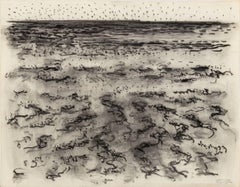
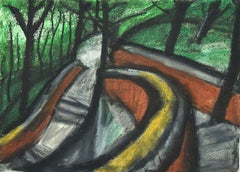
Beach Seascape
Located in Astoria, NY
Manfred Schwartz (American, b. Poland, 1909-1970), Beach Seascape, Charcoal on Paper, with the artist's signature stamped lower right, unframed. 19.75" H x 25.25" W. Provenance: From...
Category

Mid-20th Century Modern Charcoal Landscape Drawings and Watercolors

Materials

Paper, Charcoal

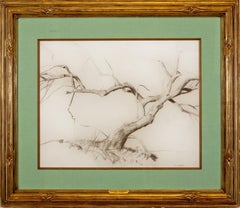
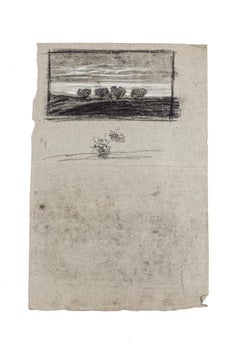
"Bare Tree"
Located in Lambertville, NJ
Jim’s of Lambertville Fine Art Gallery is proud to present this piece by Daniel Garber (1880 - 1958). One of the two most important and, so far, the most valuable of the New Hope School Painters, Daniel Garber was born on April 11, 1880, in North Manchester, Indiana. At the age of seventeen, he studied at the Art Academy of Cincinnati with Vincent Nowottny. Moving to Philadelphia in 1899, he first attended classes at the "Darby School," near Fort Washington; a summer school run by Academy instructors Anshutz and Breckenridge. Later that year, he enrolled at the Pennsylvania Academy of the Fine Arts. His instructors at the Academy included Thomas Anshutz, William Merritt Chase and Cecilia Beaux. There Garber met fellow artist Mary Franklin while she was posing as a model for the portrait class of Hugh Breckenridge. After a two year courtship, Garber married Mary Franklin on June 21, 1901. In May 1905, Garber was awarded the William Emlen Cresson Scholarship from the Pennsylvania Academy, which enabled him to spend two years for independent studies in England, Italy and France. He painted frequently while in Europe, creating a powerful body of colorful impressionist landscapes depicting various rural villages and farms scenes; exhibiting several of these works in the Paris Salon. Upon his return, Garber began to teach Life and Antique Drawing classes at the Philadelphia School of Design for Women in 1907. In the summer of that same year, Garber and family settled in Lumbertville, Pennsylvania, a small town just north of New Hope. Their new home would come to be known as the "Cuttalossa," named after the creek which occupied part of the land. The family would divide the year, living six months in Philadelphia at the Green Street townhouse while he taught, and the rest of the time in Lambertville. Soon Garber’s career would take off as he began to receive a multitude of prestigious awards for his masterful Pennsylvania landscapes. During the fall of 1909, he was offered a position to teach at the Pennsylvania Academy as an assistant to Thomas Anshutz. Garber became an important instructor at the Academy, where he taught for forty-one years. Daniel Garber painted masterful landscapes depicting the Pennsylvania and New Jersey countryside surrounding New Hope. Unlike his contemporary, Edward Redfield, Garber painted with a delicate technique using a thin application of paint. His paintings are filled with color and light projecting a feeling of endless depth. Although Like Redfield, Garber painted large exhibition size canvases with the intent of winning medals, and was extremely successful doing so, he was also very adept at painting small gem like paintings. He was also a fine draftsman creating a relatively large body of works on paper, mostly in charcoal, and a rare few works in pastel. Another of Garber’s many talents was etching. He created a series of approximately fifty different scenes, most of which are run in editions of fifty or less etchings per plate. Throughout his distinguished career, Daniel Garber was awarded some of the highest honors bestowed upon an American artist. Some of his accolades include the First Hallgarten Prize from the National Academy in 1909, the Bronze Medal at the International Exposition in Buenos Aires in 1910, the Walter Lippincott Prize from the Pennsylvania Academy and the Potter Gold Medal at the Art Institute of Chicago in 1911, the Second Clark Prize and the Silver Medal from the Corcoran Gallery of Art for “Wilderness” in 1912, the Gold Medal from the Panama-Pacific Exposition in San Francisco of 1915, the Second Altman Prize in1915, the Shaw prize in 1916, the First Altman Prize in 1917, the Edward Stotesbury Prize in1918, the Temple Gold Medal, in 1919, the First William A...
Category

Early 20th Century American Impressionist Charcoal Landscape Drawings and Watercolors

Materials

Paper, Charcoal

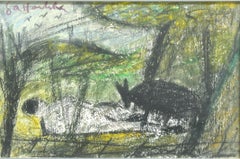
View of a steelworks in the north of France
Located in PARIS, FR
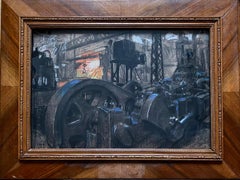
Albert Charles DEQUÈNE Lille 1897 - 1973 View of a steelworks in the north of France First third of the 20th century Charcoal and pastel on Signed lower left 32 x 47.5 cm 49 x 63 cm...
Category

Early 20th Century French School Charcoal Landscape Drawings and Watercolors

Materials

Charcoal, Pastel

Village in Normandy, Watercolour on Paper by Paulémile Pissarro, 1920
Located in London, GB
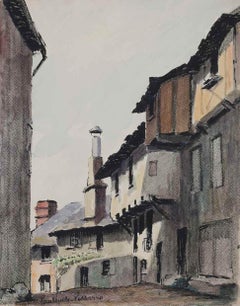
Village in Normandy by Paulémile Pissarro (1884 - 1972) Watercolour, ink and charcoal on paper 40 x 31.2 cm (15 ³/₄ x 12 ¹/₄ inches) Signed lower left, Paulémile Pissarro Executed ...
Category

1920s Post-Impressionist Charcoal Landscape Drawings and Watercolors

Materials

Watercolor, Charcoal, Ink

Boy Launching a Sailboat
Located in Milwaukee, WI
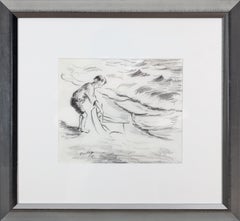
Graphite and charcoal on paper signed by the artist. 7.38" x 8.63" 16.75" x 15.5" frame Framed to conservation standards. Float mounted on 100% cotton matboard and glazed in UF5 Plexiglass that filters 99% of UV Rays to ensure the preservation of the piece. All housed in a bold miter jointed bevel frame in distressed silver finish with reflective accents. Francesco J. Spicuzza, born in Sicily on July 23, 1883, came to America at the age of 8. He supported himself as a fruit peddler until a newspaperman gave him $4 a week to go to school. He attended classes at the Milwaukee Art Students League, where he studied under Alexander Mueller. There he learned to paint in the then-fashionable "Munich School" technique, with detailed realism in heavy browns and grayed-out hues. Spicuzza completed eight grades in four years, and then in 1911, three businessmen advanced him enough money to allow him to study in New York under artist and teacher John Carlson. It was during this time that Spicuzza changed his style of painting, developing an impressionistic use of color, form and atmospheric renditions. After a period of grinding poverty, one of Spicuzza's pictures won a major New York competition. It was the first of 60 wins, both in the U.S. and Paris. He became a fashionable painter, and many of the leading collections have his work. Spicuzza's typical works were beach scenes, still life, landscapes and portraits done in pastels, oils, ink, charcoal and watercolors. Much of his work traced the history of Milwaukee in the early 1900s. He was probably best known for his scenes of women and children splashing in the waves...
Category

Mid-20th Century Charcoal Landscape Drawings and Watercolors

Materials

Charcoal, Graphite

Painting, 20th century, charcoal drawing "Venice - Venezia" by Paul Kuhfuss
Located in Berlin, DE
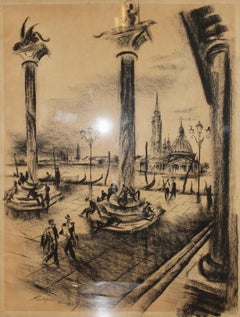
Painting, 20th century, charcoal drawing "Venice - Venezia" by Paul Kuhfuss Original drawing. Signed and dated. Title "Venezia". Framed, behind glass. Dimensions with frame 65.5cm x 51cm. Age-related condition. For magazines from the publishers Scherl, Mosse, Ullstein, youth (Munich) he worked as an illustrator. In October 1935, he was denounced to the Gestapo by a member of the artist association "Berlin North" for "expressionist impact" and "resistance to Nazi cultural propaganda" and the defense of Jewish colleagues after an exhibition opening in the castle Niederschönhausen. After that, participation in art exhibitions in Berlin was no longer possible. From 1945 he was until January 1960 lecturer at the Volkshochschule Berlin. From 1949 to 1954 he was in charge of the class "Act, Set Design and Costume Design" at the Textile and Clothing School Berlin. From 1912 to 1960 he participated in 173 exhibitions, in particular the Great Berlin Art Exhibitions...
Category

20th Century Charcoal Landscape Drawings and Watercolors

Materials

Paper, Charcoal

Charcoal landscape drawings and watercolors for sale on 1stDibs.

Find a wide variety of authentic Charcoal landscape drawings and watercolors available on 1stDibs. While artists have worked in this medium across a range of time periods, art made with this material during the 21st Century is especially popular. If you’re looking to add landscape drawings and watercolors created with this material to introduce a provocative pop of color and texture to an otherwise neutral space in your home, the works available on 1stDibs include elements of blue, green and other colors. There are many well-known artists whose body of work includes ceramic sculptures. Popular artists on 1stDibs associated with pieces like this include Sue Bryan, Marilina Marchica, Robert Lebsack, and Erle Loran. Frequently made by artists working in the Contemporary, Modern, all of these pieces for sale are unique and many will draw the attention of guests in your home. Not every interior allows for large Charcoal landscape drawings and watercolors, so small editions measuring 0.1 inches across are also available Prices for landscape drawings and watercolors made by famous or emerging artists can differ depending on medium, time period and other attributes. On 1stDibs, the price for these items starts at $49 and tops out at $985,000, while the average work can sell for $801.