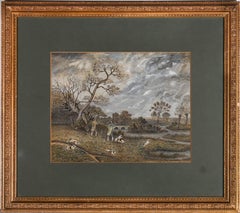
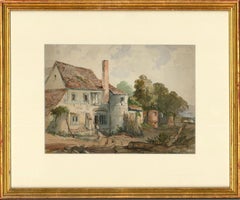
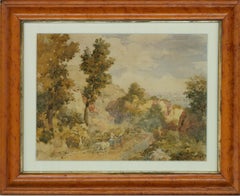
19th Century Landscape Drawings and Watercolors

to
436
500
261
173
25
11
Overall Width
to
Overall Height
to
80
5,951
1,964
96
88
166
258
237
372
363
320
255
237
62
100
56
19
8
3
751
214
3
449
139
117
107
85
85
71
39
35
31
30
29
28
28
26
23
20
20
18
18
782
765
242
138
65
12
11
11
6
6
538
71
734
215
Period: 19th Century
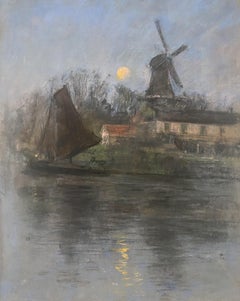
Siebe Johannes Ten Cate (1858-1908) Mill and sailboat in the moonlight, pastel
Located in Paris, FR
Siebe Johannes ten Cate (1858-1908) Mill and sailboat in the moonlight, Signed lower rigt Pastel on paper 40 x 31 cm Framed under glass : 52 x 44 cm This landscape shows the out...
Category

Impressionist 19th Century Landscape Drawings and Watercolors

Materials

Pastel

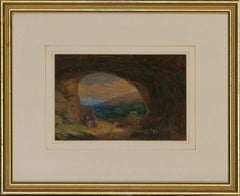
Mid 19th Century Watercolour - In the Cave
Located in Corsham, GB
A charming watercolour painting with gouache and gum arabic details, depicting a landscape scene with two figures and livestock in a cave. Well-presented in a washline card mount and...
Category

19th Century Landscape Drawings and Watercolors

Materials

Watercolor

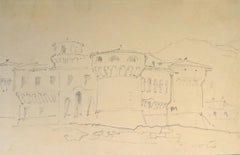
Chateau Fort - 19th Century - Horace Vernet - Drawing - Old Master
Located in Roma, IT
Chateau fort is an original pencil drawing on paper by Horace Vernet realized in XIX century. Certified by Paul Proutè. Very good conditions, except for a very little rip on the lef...
Category

Old Masters 19th Century Landscape Drawings and Watercolors

Materials

Pencil

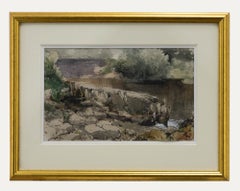
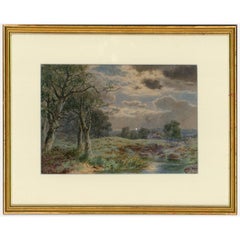
Attrib. William Collingwood Smith (1815-1887) - Watercolour, River Landscape
By William Collingwood Smith
Located in Corsham, GB
Attributed to William Collingwood Smith - A fine 19th century English School watercolour. Presented in a gilt-effect frame. Unsigned. On watercolour paper.
Category

19th Century Landscape Drawings and Watercolors

Materials

Watercolor

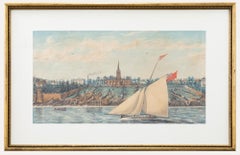
Mid 19th Century Watercolour - Passing Yacht
Located in Corsham, GB
A charming 19th century study of a yacht with a red duster flag passing through a city on the river. The yacht passes a parish church on the river bank with a spire at the centre. Th...
Category

19th Century Landscape Drawings and Watercolors

Materials

Watercolor

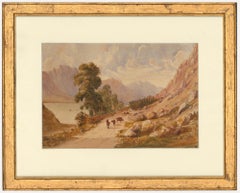
Charles Parsons Knight (1829-1897) - Framed Watercolour, On the Lakeside Path
By Charles Parsons Knight
Located in Corsham, GB
A delightful watercolour scene by Charles Parsons Knight (1829-1897), depicting a European farmer herding a small group of cattle down a scenic lakeside path. The watercolour has been monogrammed by the artist to the lower right. Well-presented in a rustic gilt...
Category

19th Century Landscape Drawings and Watercolors

Materials

Watercolor

Landscape
Located in Roma, IT
Drawing on paper, XIX century. Provenance: Nino Costa’s successors. Liberio Merolli, Rome. Private Collection. This fascinating drawing was realized by Nino Costa, an Italian landsca...
Category

Romantic 19th Century Landscape Drawings and Watercolors

Materials

Paper

John William North - 19th Century British Watercolour - Courtship
Located in London, GB
JOHN WILLIAM NORTH, ARA, RWS (1842-1924) Courtship - Bicknoller, Somerset Signed with initials l.r.: JWN Watercolour Framed 17.5 by 13.5 cm., 7 b...
Category

Realist 19th Century Landscape Drawings and Watercolors

Materials

Watercolor

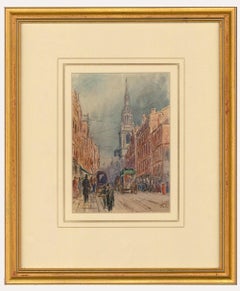
A.R. Collis - Framed Late 19th Century Watercolour, St Mary-le-Bow, Cheapside
Located in Corsham, GB
This charming watercolour captures the hustle and bustle of Cheapside, one of London's oldest thoroughfares with the Church of St Mary-le-Bow. Initialled by the artist to the lower r...
Category

19th Century Landscape Drawings and Watercolors

Materials

Watercolor

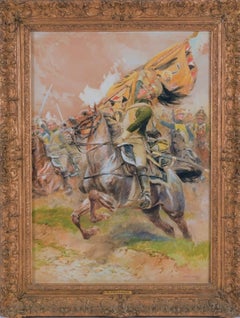
Cavalry Charge 1st Empire - Edouard Detaille - French art
Located in PARIS, FR
Conditions : Very good original conditions including a beautiful frame. This Framed under glass with a Length of 90 x 68 cm , this rare composition for sale is an exceptionnel piece...
Category

Academic 19th Century Landscape Drawings and Watercolors

Materials

Tempera

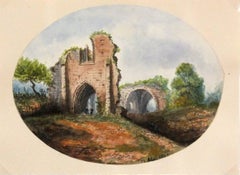
Old Ruins Near Paris
Located in Houston, TX
Beautifully detailed 19th century watercolor of ruins near Paris by artist Delastre, 1862. Original artwork on paper displayed on a white mat with a gold border. Mat fits a standar...
Category

19th Century Landscape Drawings and Watercolors

Materials

Watercolor

Disegno neoclassico mitologico inglese del XIX secolo
Located in Florence, IT
Disegno matita su carta, 45 x 68 cm; con cornice dorata 72 x 94 cm. La scena si svolge sulla costa, nel punto in cui il mare tempestoso lambisce la terraferma, che si presenta rocci...
Category

Romantic 19th Century Landscape Drawings and Watercolors

Materials

Paper, Pencil

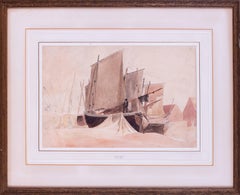
19th Century watercolour of fishing boats at low tide by British artist de Wint
By Peter de Wint
Located in Petworth, West Sussex
Peter de Wint (British, 1784 – 1849) Fishing boats at low tide Pencil on watercolour 10.3/4 x 16.3/8 in. (27.3 x 41.7 cm.) Peter de Wint was born in Stone in Staffordshire, the son ...
Category

English School 19th Century Landscape Drawings and Watercolors

Materials

Watercolor, Pencil

Framed Naive 19th Century Watercolour - Walking Guns in a Landscape
Located in Corsham, GB
This beautiful watercolour study with gum arabic depicts two affluent gentleman shooting with hounds before a landscape. In swift flight a woodcock can be seen to the right of the co...
Category

19th Century Landscape Drawings and Watercolors

Materials

Watercolor

W.R.P - Framed 1815 Watercolour, The Castle Inn
Located in Corsham, GB
Built on the ruins of an old medieval castle, this intriguing watercolour depicts a large guest house with rooms. In the foreground a figure can be see...
Category

19th Century Landscape Drawings and Watercolors

Materials

Watercolor

Framed Late 19th Century Watercolour - Country scene with Wagon
Located in Corsham, GB
A fine watercolour landscape, depicting two figure in a wagon, driven by two horned cattle. The wagon can be seen in the foreground making its way along a country road with goods. We...
Category

19th Century Landscape Drawings and Watercolors

Materials

Watercolor

Drawing pencil French school 19th Farm courtyard near Barbizon Fontainebleau
Located in PARIS, FR
French school of the 19th century Pencil drawing 40 x 28 cm Signed and dated "E.B. / 1869" Inscription "Elm struck by lightning in 1870 / Ferme de Samoreau"
Category

Impressionist 19th Century Landscape Drawings and Watercolors

Materials

Carbon Pencil

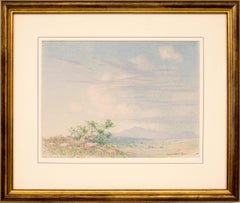
1888 George Elbert Burr Southwest Desert Landscape Drawing, Morning Near Arizona
Located in Denver, CO
This original 1888 color pencil drawing, Morning Near Arizona, is a luminous Southwestern landscape by acclaimed American artist George Elbert Burr (1859–1939). Rendered with Burr’s ...
Category

American Impressionist 19th Century Landscape Drawings and Watercolors

Materials

Color Pencil

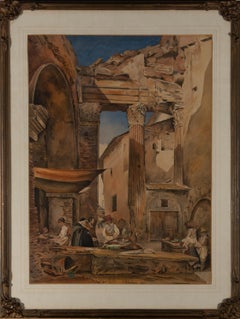
Framed Early 19th Century Watercolour - Fish Market, Portico of Octavia, Rome
Located in Corsham, GB
A fine 19th century watercolour study of the famous fish market inside the Portico of Octavia in Rome, Italy. The artist has beautifully captured the hustle and bustle of the scene, with various figures ranging from a catholic priest...
Category

19th Century Landscape Drawings and Watercolors

Materials

Watercolor

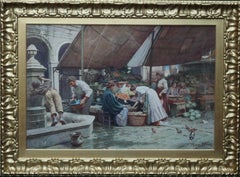
The Market Place Venice - British Victorian art watercolour painting Italy
By Thomas Ellison
Located in Hagley, England
A fine, large watercolour by British listed artist Thomas Ellison who exhibited at The Royal Academy and the British Art institutions. It is a busy scene depicting the market at Veni...
Category

Realist 19th Century Landscape Drawings and Watercolors

Materials

Watercolor

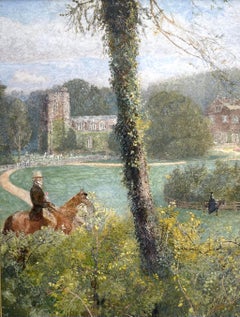
Siebe Johannes Ten Cate (1858-1908) A garden in Zurich, 1898, pastel signed
Located in Paris, FR
Siebe Johannes Ten Cate (1858-1908) A Garden in Zurich, 1898 Signed, located and dated "Zurich 98" lower right Pastel on paper 28.5 x 41.5 cm in good condition, trace of a small t...
Category

Impressionist 19th Century Landscape Drawings and Watercolors

Materials

Pastel

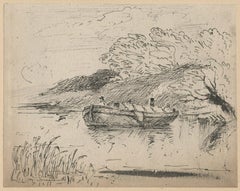
The River Barge
Located in Fairlawn, OH
The River Barge Pen and ink on paper on laid paper, mounted in English drum mount , c. 1810 Unsigned Condition: Slight sun staining to sheet and mount in the window (see photo) Image/sheet size: 5 1/4 x 6 11/16 inches Sight: : 5-3/4 x 7-1/4" Frame: 13-3/8 x 14-3/8" Provenance: Colnaghi, London (see photo of label) David Cox (29 April 1783 – 7 June 1859) was an English landscape painter, one of the most important members of the Birmingham School of landscape artists and an early precursor of Impressionism. He is considered one of the greatest English landscape painters, and a major figure of the Golden age of English watercolour. Although most popularly known for his works in watercolour, he also painted over 300 works in oil towards the end of his career, now considered "one of the greatest, but least recognised, achievements of any British painter. His son, known as David Cox the Younger (1809-1885), was also a successful artist. Early life in Birmingham, 1783–1804 Cox's birthplace in Deritend, Birmingham, illustrated by Samuel Lines Cox was born on 29 April 1783 on Heath Mill Lane in Deritend, then an industrial suburb of Birmingham. His father was a blacksmith and whitesmith about whom little is known, except that he supplied components such as bayonets and barrels to the Birmingham gun trade. Cox's mother was the daughter of a farmer and miller from Small Heath to the east of Birmingham. Early biographers record that "she had had a better education than his father, and was a woman of superior intelligence and force of character." Cox was initially expected to follow his father into the metal trade and take over his forge, but his lack of physical strength led his family to seek opportunities for him to develop his interest in art, which is said to have first become apparent when the young Cox started painting paper kites while recovering from a broken leg. By the late 18th century Birmingham had developed a network of private academies teaching drawing and painting, established to support the needs of the town's manufacturers of luxury metal goods, but also encouraging education in fine art, and nurturing the distinctive tradition of landscape art of the Birmingham School. Cox initially enrolled in the academy of Joseph Barber in Great Charles Street, where fellow students included the artist Charles Barber and the engraver William Radclyffe, both of whom would become important lifelong friends. At the age of about 15 Cox was apprenticed to the Birmingham painter Albert Fielder, who produced portrait miniatures and paintings for the tops of snuffboxes from his workshop at 10 Parade in the northwest of the town. Early biographers of Cox record that he left his apprenticeship after Fielder's suicide, with one reporting that Cox himself discovered his master's hanging body, but this is probably a myth as Fielder is recorded at his address in Parade as late as 1825. At some time during mid-1800 Cox was given work by William Macready the elder at the Birmingham Theatre, initially as an assistant grinding colours and preparing canvases for the scene painters, but from 1801 painting scenery himself and by 1802 leading his own team of assistants and being credited in plays' publicity. London, 1804–1814 In 1804 Cox was promised work by the theatre impresario Philip Astley and moved to London, taking lodgings in 16 Bridge Row, Lambeth. Although he was unable to get employment at Astley's Amphitheatre it is likely that he had already decided to try to establish himself as a professional artist, and apart from a few private commissions for painting scenery his focus over the next few years was to be on painting and exhibiting watercolours. While living in London, Cox married his landlord's daughter, Mary Agg and the couple moved to Dulwich in 1808. David Cox Travellers on a Path, pencil and brown wash. In 1805 he made his first of many trips to Wales, with Charles Barber, his earliest dated watercolours are from this year. Throughout his lifetime he made numerous sketching tours to the Home Counties, North Wales, Yorkshire, Derbyshire and Devon. Cox exhibited regularly at the Royal Academy from 1805. His paintings never reached high prices, so he earned his living mainly as a drawing master. His first pupil, Colonel the Hon.H. Windsor (the future Earl of Plymouth) engaged him in 1808, Cox went on to acquire several other aristocratic and titled pupils. He also went on to write several books, including: Ackermanns' New Drawing Book (1809); A Series of Progressive Lessons (1811); Treatise on Landscape Painting (1813); and Progressive Lessons on Landscape (1816). The ninth and last edition of his series Progressive Lessons, was published in 1845. By 1810 he was elected President of the Associated Artists in Water Colour. In 1812, following the demise of the Associated Artists, he was elected as associate of the Society of Painters in Water Colour (the old Water Colour Society). He was elected a Member of the Society in 1813, and exhibited there every year (except 1815 and 1817) until his death. Hereford, 1814–1827 In the summer of 1813 Cox was appointed as the drawing master of the Royal Military College in Farnham, Surrey, but he resigned shortly afterwards, finding little sympathy with the atmosphere of a military institution. Soon after that he applied to a newspaper advertisement for a position as drawing master for Miss Crouchers' School for Young Ladies in Hereford and in Autumn 1814 moved to the town with his family. Cox taught at the school in Widemarsh Street until 1819, his substantial salary of £100 per year requiring only two-day's work per week, allowing time for painting and the taking of private pupils. Cox's reputation as both a painter and a teacher had been building over previous years, as indicated by his election as a member of the Society of Painters in Water Colours and his inclusion in John Hassell's 1813 book Aqua Pictura, which claimed to present works by "all of the most approved water coloured draftsmen". The depression that accompanied the end of the Napoleonic Wars had caused a contraction in the art market, however, and by 1814 Cox had been very short of money, requiring a loan from one of his pupils to pay even for the move to Hereford. Despite its financial advantages and its proximity to the scenery of North Wales and the Wye Valley, the move to Hereford marked a retreat in terms of his career as a painter: he sent few works to the annual exhibition of the Society of Painters in Water Colours during his first years away from London and not until 1823 would he again contribute more than 20 pictures. Between 1823 and 1826 he had Joseph Murray Ince as a pupil. London, 1827–1841 He made his first trip to the Continent, to Belgium and the Netherlands in 1826 and subsequently moved to London the following year. He exhibited for the first time with the Birmingham Society of Artists in 1829, and with the Liverpool Academy in 1831. In 1839, two of Cox's watercolours were bought from the Old Water Colour Society exhibition by the Marquis of Conynha for Queen Victoria. Birmingham, 1841–1859 Greenfield House in Harborne, Birmingham – where Cox lived from 1841 until his death in 1859 . In May 1840 Cox wrote to one of his Birmingham friends: "I am making preparations to sketch in oil, and also to paint, and it is my intention to spend most of my time in Birmingham for the purpose of practice". Cox had been considering a return to painting in oils since 1836 and in 1839 had taken lessons in oil painting from William James Müller, to whom he had been introduced by mutual friend George Arthur Fripp. Hostility between the Society of Painters in Water Colours and the Royal Academy made it difficult for an artist to be recognised for work in both watercolour and oil in London, however, and it is likely that Cox would have preferred to explore this new medium in the more supportive environment of his home town. By the early 1840s his income from sales of his watercolours was sufficient to allow him to abandon his work as a drawing master, and in June 1841 he moved with his wife to Greenfield House in Harborne, then a village on Birmingham's south western outskirts. It was this move that would enable the higher levels of freedom and experimentation that were to characterise his later work. The elderly Cox pictured by Samuel Bellin in 1855. In Harborne, Cox established a steady routine – working in watercolour in the morning and oils in the afternoon. He would visit London every spring to attend the major exhibitions, followed by one or more sketching excursions, continuing the pattern that he had established in the 1830s. From 1844 these tours evolved into a yearly trip to Betws-y-Coed in North Wales to work outdoors in both oil and watercolour, gradually becoming the focus for an annual summer artists colony that continued until 1856 with Cox as its "presiding genius". Cox's experience of trying to exhibit his oils in London was short and unsuccessful: in 1842 he made his only submission to the Society of British Artists; one oil painting was exhibited at each of the British Institution and the Royal Academy in 1843; and two oil paintings were exhibited at the Royal Academy in 1844 – the last that would be exhibited in London during his lifetime. Cox showed regularly at the Birmingham Society of Arts and its successor, the Birmingham Society of Artists, becoming a member in 1842. Cox suffered a stroke on 12 June 1853 that temporarily paralysed him, and permanently affected his eyesight, memory and coordination. By 1857 however, his eyesight had deteriorated. An exhibition of his work was arranged in 1858 by the Conversazione Society Hampstead, and in 1859 a retrospective exhibition was held at the German Gallery Bond Street, London. Cox died several months later. He was buried in the churchyard of St Peters, Harborne, Birmingham, under a chestnut tree, alongside his wife Mary. Work Early work In the spring of 1811 Cox made a small number of notable works in oils during a visit to Hastings with his family. It is not known why he didn't continue working in this medium at the time, but the five known surviving examples were described in 1969 as "surely some of the most brilliant examples of the genre in England". Mature work Cox reached artistic maturity after his move to Hereford in 1814. Although only two major watercolours can confidently be traced to the period between Cox's arrival in the town and the end of the decade, both of these – Butcher's Row, Hereford of 1815 and Lugg Meadows, near Hereford of 1817 – mark advances on his earlier work. Later work Cox's later work produced after his move to Birmingham in 1841 was marked by simplification, abstraction and a stripping down of detail. His art of the period combined the breadth and weight characteristic of the earlier English watercolour school, together with a boldness and freedom of expression comparable to later impressionism. His concern with capturing the fleeting nature of weather, atmosphere and light was similar to that of John Constable, but Cox stood apart from the older painter's focus on capturing material detail, instead employing a high degree of generalisation and a focus on overall effect. The quest for character over precision in representing nature was an established characteristic of the Birmingham School of landscape artists with which Cox had been associated early in his life, and as early as 1810 Cox's work had been criticised for its "sketchiness of finish" and "cloudy confusion of objects", which were held to betray "the coarseness of scene-painting". During the 1840s and 1850s Cox took this "peculiar manner" to new extremes, incorporating the techniques of the sketch into his finished works to a far greater degree. Cox's watercolour technique of the 1840s was sufficiently different from his earlier methods to need explanation to his son in 1842, despite the fact that his son had been helping him teach and paint since 1827. The materials used for his later works in watercolour also differed from his earlier periods: he used black chalk instead of graphite pencil as his primary drawing medium, and the rough and absorbent "Scotch" wrapping paper for which he became well-known – both of these were related to his development of a rougher and freer style. Influence and legacy By the 1840s Cox, alongside Peter De Wint and Copley Fielding, had become recognised as one of the leading figures of the English landscape watercolour style of the first half of the 19th century. This judgement was complicated by reaction to the rougher and bolder style of Cox's later Birmingham work, which was widely ignored or condemned. While by this time De Wint and Fielding were essentially continuing in a long-established tradition, Cox was creating a new one. A group of young artists working in Cox's watercolour style emerged well before his death, including William Bennett, David Hall McKewan and Cox's son David Cox Jr. By 1850 Bennett in particular had become recognised as "perhaps the most distinguished among the landscape painters" for his Cox-like vigorous and decisive style. Such early followers concentrated on the example of Cox's more moderate earlier work and steered clear of what were then seen as the excesses of Cox's later years. During a period dominated by sleek and detailed picturesque landscape, however, they were still condemned by publications such as The Spectator as "the 'blottesque' school", and failed to establish themselves as a cohesive movement. John Ruskin in 1857 condemned the work of the Society of Painters in Water-colours as "a kind of potted art, of an agreeable flavour, suppliable and taxable as a patented commodity", excluding only the late work of Cox, about which he wrote "there is not any other landscape which comes near these works of David Cox in simplicity or seriousness". An 1881 book, A Biography of David Cox: With Remarks on His Works and Genius, was based on a manuscript by Cox's friend William Hall, edited and expanded by John Thackray Bunce, editor of the Birmingham Daily Post. There are two Blue Plaque memorials commemorating him at 116 Greenfield Road, Harborne, Birmingham, and at 34 Foxley Road, Kennington, London, SW9, where he lived from 1827. It can also be seen at the David Cox exhibition in Birmingham. His pupils included Birmingham architectural artist, Allen Edward...
Category

Romantic 19th Century Landscape Drawings and Watercolors

Materials

Ink

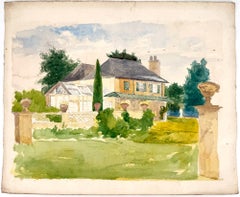
Country Manor, English School, 19th century
Located in Middletown, NY
Watercolor on watercolor paper, 9 3/4 x 11 3/4 inches (248 x 299 mm), the full sheet. With charming primo pensiero and unfinished detail in the form of a small child lying in his sto...
Category

English School 19th Century Landscape Drawings and Watercolors

Materials

Watercolor

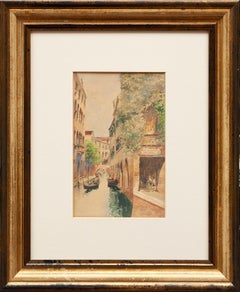
Canal with gondola in Venice
Located in Como, IT
Andrea Biondetti (1851-1946) Canal with gondola in Venice Watercolor painting on paper Size: 24x15 cm (48x39 cm including the frame) Last Quarter 19th Century Signed lower right Th...
Category

19th Century Landscape Drawings and Watercolors

Materials

Paper, Watercolor

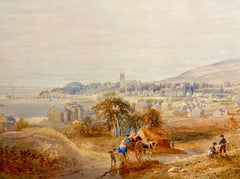
View of Dunoon on the Clyde, Scottish landscape and Figures, 19th Century
Located in Hillsborough, NC
Scottish artist Robert Carrick (1829-1904) is renowned for his landscape and figurative paintings in oil and watercolor. This painting features detailed drawings of figures in the foreground with wagon, and the town and scenery in the background, painted over in watercolor in rich raw umber and red-brown tones in the foreground and blue green tones in the background. Carrick showed promise at a young age, exhibiting his work at the Royal Academy age 16. He was a member of the Royal Institute. This two-toned watercolor work has detailed figures, wagon with hay in the forefront above a view of Dunoon town near Glasgow as it was long ago. Signed by the artist, lower left with an inscription that reads: 'View of Dunoon, Argyllshire drawn by Robert Carrick, Glasgow, for David Allan'. Verso includes a copy of the same inscription. Saltire Gallerie replaced the cracked and dirty plain glass with art glass and added an acid-free paper behind the work. While doing this work we found an art giclee, included with the painting. Presented in a patterned wooden frame with art glass. Dunoon was a thriving town on the river at the time of this work, and later became part of Glasgow. The view from above the town is a popular one, as Saltire Gallerie has another view of Dunoon from above by Scottish artist Patrick Downie...
Category

Naturalistic 19th Century Landscape Drawings and Watercolors

Materials

Watercolor, Board, Pencil

The Capitol, Timgad, Algeria
Located in Middletown, NY
A luminous landscape of the Roman ruins at Timgad, with the Aurès mountains aglow in the background. Watercolor on artist board, 9 7/8 x 7 inches (252 x 178 mm), the full sheet. Tit...
Category

English School 19th Century Landscape Drawings and Watercolors

Materials

Watercolor, Handmade Paper

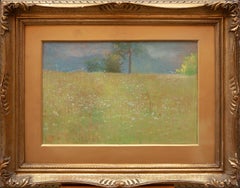
Meadow Bloom
Located in Como, IT
John Sottocornola (1855 - 1917) Meadow Bloom Pastels on paper in gilded frame Size: 30x45 cm (53x68 cm including frame) Late 19th century Giovanni Sottocornola was born in Milan on...
Category

19th Century Landscape Drawings and Watercolors

Materials

Paper, Pastel

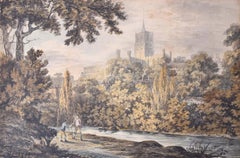
Prospect of Durham from the River 19th Century Watercolour
Located in London, GB
To see our other views and maps of England - including London, Durham, Oxford and Cambridge, scroll down to "More from this Seller" and below it click on "See all from this Seller" -...
Category

Realist 19th Century Landscape Drawings and Watercolors

Materials

Watercolor

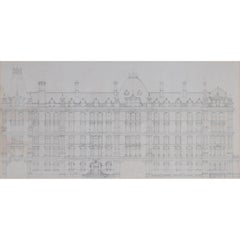
Design for the Midland Hotel, Manchester Architectural Drawing Railway Hotel
Located in London, GB
To see our other Architectural Drawings, scroll down to "More from this Seller" and below it click on "See all from this Seller" and then search. A Design For The Midland Hotel Manc...
Category

Realist 19th Century Landscape Drawings and Watercolors

Materials

Carbon Pencil

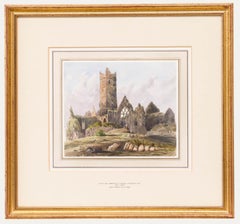
Lt Gen Archibald Ingles Lockhart (1810-1880) - Watercolour, Ruins of Quin Abbey
Located in Corsham, GB
A charming view of the Ruins of Quin Abbey in County Clare in the South West of Ireland. Artist name inscribed to the mount. Label verso with provenance details: by family descent t...
Category

19th Century Landscape Drawings and Watercolors

Materials

Watercolor

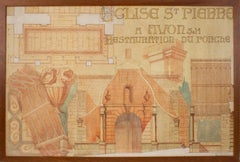
Architecture Sketches Study Drawing, Romane Church in France by Maurice Lambert
Located in Atlanta, GA
Architectural Study for the Restoration of Saint-Pierre Church in Avon, France. This unique architectural study was created as part of a church renovation project in a suburb of Pari...
Category

Academic 19th Century Landscape Drawings and Watercolors

Materials

Ink, Watercolor, Pencil

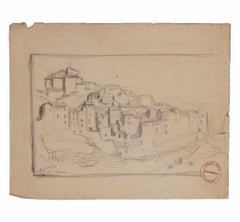
French Naturalistic Landscape Study in Pencil
Located in Houston, TX
Landscape study of a French town on a mountain top. The work is signed and stamped by the artist. The paper is not framed. Many others are available. Please inquire to buy the entir...
Category

Naturalistic 19th Century Landscape Drawings and Watercolors

Materials

Graphite

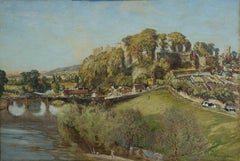
Victorian Landscape Detailed Large Watercolour of Ludlow Castle and Ludlow town
Located in ludlow, GB
Victorian Landscape a Detailed Watercolour of Ludlow Castle, Dinham and Ludlow town. Looking towards Dinham and Ludlow Castle, Shropshire - a Landscape view Signed Watercolour on P...
Category

Realist 19th Century Landscape Drawings and Watercolors

Materials

Watercolor

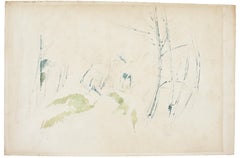
Le Sentier
Located in London, GB
Paul Cézanne Le Sentier ca. 1890 Watercolour and pencil on paper 34.6 x 51.5 cms (13 5/8 x 20 1/4 ins) PC16325
Category

Modern 19th Century Landscape Drawings and Watercolors

Materials

Watercolor, Pencil

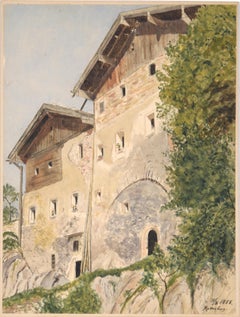
The Nailsmith Houses, Late 19th Century Rattenberg Austria Historical Landscape
Located in Soquel, CA
The Nailsmith Houses, Late 19th Century Rattenberg Austria Historical Landscape Exquisitely detailed 1888 watercolor of The Nailsmith Houses, a historical building in Rattenberg, A...
Category

Realist 19th Century Landscape Drawings and Watercolors

Materials

Paper, Watercolor, Illustration Board

Paul Lecomte (1842-1920) Brighton, the Beach, 1889, watercolor signed and dated
Located in Paris, FR
Paul Lecomte (1842-1920) Brighton, the beach 1889 signed located and dated lower left "Brighton juin 89" watercolor on paper 18.5 x 27.5 cm (view) framed 41 x 49.5 cm Paul Lecomt...
Category

Impressionist 19th Century Landscape Drawings and Watercolors

Materials

Watercolor

French School, early 19th century - Battle Scene between Greeks and Ottomans
Located in Paris, Île-de-France
French School, early 19th century Battle Scene between Greeks and Ottomans, circa 1820–1830 Pencil and brown wash on paper, 30 × 46 cm Unsigned Provenance: Former collection of P...
Category

Old Masters 19th Century Landscape Drawings and Watercolors

Materials

Chalk, Crayon

19th Century British landscape watercolour - Mamhead Hall, Devon
Located in London, GB
Attributed to BENJAMIN SHIPHAM (1806-1872) Mamhead House, Devon Signed with initials l.r.: BS Watercolour Framed 17 by 27 cm., 6 ¾ by 10 ½ in. (frame size 33 by 42.5 cm., 13 by 16 ¾ in.) Provenance: Ex collection of H. A. E. Day (publisher of G Waters, Dictionary of British Artists working 1900-1950) Shipham was born in Nottingham and seems to have lived there for most of his life. He painted landscapes and exhibited at the Royal Academy from 1852 until his death as well as at the British Institute and Royal Society of British Artists. Works by him are in the collections of Nottingham City Museum Art Gallery, Wolverhampton Art Gallery, Derby Art Gallery and Glasgow. The present Mamhead House dates to 1827 and was designed for the Exeter shipping fleet owner Robert Newman...
Category

Realist 19th Century Landscape Drawings and Watercolors

Materials

Watercolor, Paper

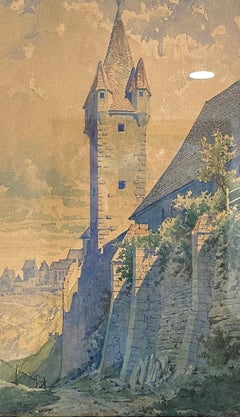
Tower, Original Watercolor Painting, Ready to Hang, Framed
Located in Granada Hills, CA
Artist: August Töpfer Work: Original Watercolor painting, handmade artwork, one of a kind Medium: Watercolor on Satin Paper Year: 1834-1911 Style: Classic Art Title: Tower, Size: 12...
Category

Old Masters 19th Century Landscape Drawings and Watercolors

Materials

Watercolor, Satin Paper

Antique Victorian Watercolour of Whitby Harbour by 19th Century British Artist
Located in Preston, GB
Antique Victorian Watercolour of Whitby Harbour by 19th Century British Artist William Langley (1852–1922) dating back to Circa 1891 Art measures 19 x 10.5 inches Frame measures 2...
Category

Victorian 19th Century Landscape Drawings and Watercolors

Materials

Gold

Paul Marny (1829-1914) - Late 19th Century Watercolour, View of a Cathedral
Located in Corsham, GB
A finely detailed watercolour scene by Paul Marny (1829-1914) featuring fortified walls and quaint cottages, with the spires of a cathedral rising beyond. Faintly signed to the lower...
Category

19th Century Landscape Drawings and Watercolors

Materials

Watercolor

Floral Gardens - Early 20th Century Watercolor Landscape by Annie L Pressland
Located in Watford, Hertfordshire
Annie L Pressland (1892 - 1933) A watercolor painter of flowers, gardens and still lives, she was born on 2 July 1862, the daughter of Caleb Pressla...
Category

Impressionist 19th Century Landscape Drawings and Watercolors

Materials

Watercolor

In The Country Side - Pencil by Brissot de Warville - 19th Century
Located in Roma, IT
"In The Country Side" is an original pencil drawing on ivory-colorated paper by Brissot de Warville (1818, Vernon - 1892, Wersailles) In excellent conditions: As good as new. Sheet ...
Category

Modern 19th Century Landscape Drawings and Watercolors

Materials

Pencil

Walter Stuart Lloyd (1845-1959) - 1879 Watercolour, Moonlight on Hampstead Heath
Located in Corsham, GB
A charming pastoral scene by Walter Stuart Lloyd (1845-1959) depicting sheep grazing on Hampstead Heath. The scene is illuminated by gentle moonlight, which breaks through the clouds...
Category

19th Century Landscape Drawings and Watercolors

Materials

Watercolor

Hastings seascape, English School, 19th century
Located in Middletown, NY
Watercolor on watercolor paper, 5 1/8 x 8 1/4 inches (130 x 210 mm), the full sheet. Initialed "H.D.W.L." in watercolor in the left image area (in the area of the sky), and titled an...
Category

English School 19th Century Landscape Drawings and Watercolors

Materials

Watercolor

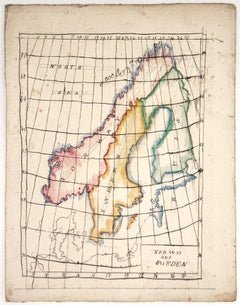
Map of Norway and Sweden
Located in Middletown, NY
Watercolor and ink on heavy gauge watercolor paper, 12 x 9 1/4 inches (305 x 235 mm), the full sheet. In very good condition with some minor age tone and scattered light areas of dis...
Category

English School 19th Century Landscape Drawings and Watercolors

Materials

Watercolor

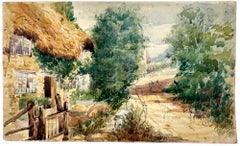
Cottage lane
Located in Middletown, NY
Watercolor and graphite on heavy gauge watercolor paper, 5 3/8 x 8 7/8 inches (132 x 221 mm), the full sheet. Extensive, fresh brushwork with nice primo pensiero and the unfinished f...
Category

English School 19th Century Landscape Drawings and Watercolors

Materials

Watercolor

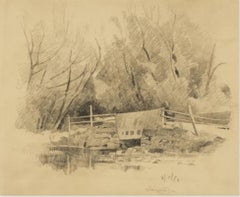
"Saratoga, " John Francis Murphy, Hudson River School, Tonalism
Located in New York, NY
John Francis Murphy (1853 - 1921) Saratoga, 1876 Graphite on paper Sight 8 3/4 x 10 1/2 inches Titled and dated to lower right Provenance: Babcock Galleries, New York Spanierman Gallery, New York In his lifetime, John Francis Murphy (1853-1921) was known as “the American Corot.” He was renowned for his small, intimate views of nature, especially barren fields and farms, bare trees, and lonely marshland. More than a century later, the power of Murphy’s landscapes has not waned. One contemporary critic wrote, “It was Murphy’s unique accomplishment to achieve an absolute realism without a loss of that mystic, indefinable quality which transfigures realism.” John Francis Murphy was born at Oswego, NY in 1853 but his family moved to Chicago in 1868 where he worked painting theater sets. Murphy was basically a self-taught artist; his only formal training was a few weeks of instruction at the Chicago Academy of Design. In 1875, Murphy moved from Chicago to New York, eventually rooming with the painters Dennis Bunker and Bruce Crane above a bakery shop. Murphy’s early work was typical of the Hudson River school but he soon fell under the sway of the loose brushwork and moody style of French Barbizon painting...
Category

Tonalist 19th Century Landscape Drawings and Watercolors

Materials

Paper, Pencil

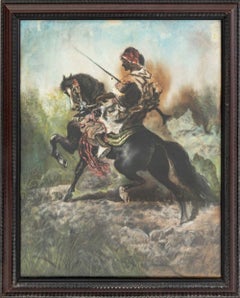
French School, Arabic Horseman, 19th C.
Located in Astoria, NY
French School, Arabic Horseman, Chalk Pastel on Paper Laid to Canvas, 19th century, paper labels to reverse, wood frame. Image: 19.5" H x 15.25" W; frame: 23" H x 18.5" W. Provenance...
Category

French School 19th Century Landscape Drawings and Watercolors

Materials

Canvas, Paper, Pastel

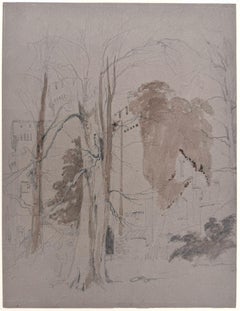
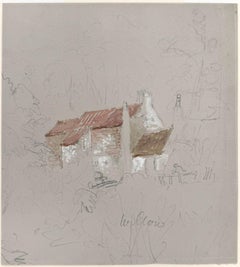
Ravensworth Castle – North Yorkshire
Located in Middletown, NY
Graphite and watercolor on grayish-tan wove paper, 10 3/4 x 8 3/8 inches (272 x 212 mm) the full sheet. An unfinished study in good condition. On the mat-back is a notation that the...
Category

English School 19th Century Landscape Drawings and Watercolors

Materials

Watercolor, Handmade Paper, Graphite

Albert Stevens (fl.1872-1902) - Late 19th Century Watercolour, Summer Landscape
Located in Corsham, GB
A wonderful landscape study by the artist Albert Stevens, depicting a panoramic view of rolling hills and a distant coastline. Well presented in a double card mount and frame. Signed...
Category

19th Century Landscape Drawings and Watercolors

Materials

Watercolor

A country cottage
Located in Middletown, NY
Graphite and watercolor on grayish-tan wove paper, 7 5/8 x 6 7/8 inches (194 x 175 mm), the full sheet. An unfinished study in good condition. On the mat-back is a notation that the...
Category

English School 19th Century Landscape Drawings and Watercolors

Materials

Watercolor, Handmade Paper, Graphite

Farm landscape with a man in a bowler hat
Located in Middletown, NY
Graphite and watercolor on light weight salmon-colored wove paper, 4 1/4 x 7 5/8 inches (109 x 194 mm), the full sheet. An unfinished study in good condition. On the mat-back is a n...
Category

English School 19th Century Landscape Drawings and Watercolors

Materials

Watercolor, Handmade Paper, Graphite

A barn landscape with a wagon – English School, late 19th century
Located in Middletown, NY
Graphite and watercolor on light weight salmon-colored wove paper, 4 1/4 x 7 5/8 inches (109 x 194 mm), the full sheet. An unfinished study in good condition. On the mat-back is a n...
Category

English School 19th Century Landscape Drawings and Watercolors

Materials

Watercolor, Handmade Paper, Laid Paper

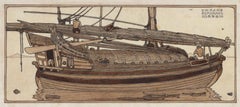
A Buginese boat, Semarang 1898
Located in Amsterdam, NL
'A Buginese boat, Semarang 1898’ Signed, dated, and annotated, upper right Pen, brush and ink on cardboard, H. 11.4 x W. 26.3 cm Literature: Venselaar, 2019, p. 69 (ill.)
Category

19th Century Landscape Drawings and Watercolors

Materials

Paper, Ink, Pencil

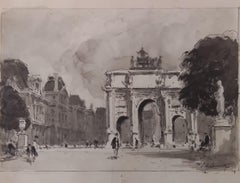
Paul emile Lecomte. Paris -The Carrousel and the Louvre pencil on paper, signed
Located in PARIS, FR
Provenance: Family of the artist, studio sale. Framing options available upon request. Free US CONTINENTAL Shipping, incl Europe and Asia. Born in Paris, the French painter Paul Lec...
Category

Impressionist 19th Century Landscape Drawings and Watercolors

Materials

Pencil

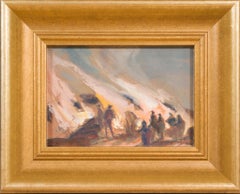
Gathered by the Easter Fire, Dalsland
Located in Stockholm, SE
A rare and atmospheric work from Carl Oscar Borg’s early years in Sweden, this evocative gouache captures the tradition of Easter fires (påskeldar) in the rural region of Dalsland. A...
Category

American Impressionist 19th Century Landscape Drawings and Watercolors

Materials

Paper, Gouache

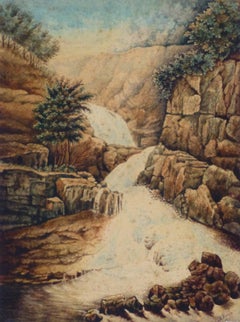
Antique French Watercolor Landscape - Waterfall
Located in Houston, TX
Magnificent landscape watercolor of a waterfall spilling over large river rocks by Alexandre René Véron (1826-1897), circa 1870. Signed lower right. Original one-of-a-kind antique w...
Category

19th Century Landscape Drawings and Watercolors

Materials

Paper, Watercolor

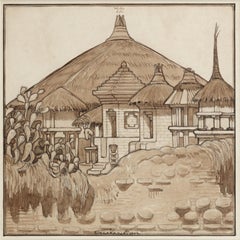
House temple in Singaradja, 1904
Located in Amsterdam, NL
House temple in Singaradja, 1904 Signed with initials upper centre and described with location and date, lower centre (vaguely in pencil 11 oct.). Pencil, ink and watercolour on pap...
Category

19th Century Landscape Drawings and Watercolors

Materials

Paper, Ink, Pencil

Boat in Harbor - At a Normandy harbor - Galien laloue - oil on canvas -
Located in PARIS, FR
Conditions : Good overall Conditions. Oil on canvas. Highly detailed composition in a 19th century original frame. This painting will be included in Volume II of the catalog of the w...
Category

Impressionist 19th Century Landscape Drawings and Watercolors

Materials

Oil

Still Thinking About These?

All Recently Viewed