19th Century Drawings and Watercolor Paintings

to
308
1,917
654
352
68
28
Overall Width
to
Overall Height
to
446
21,494
15,130
356
403
737
1,163
1,086
1,675
1,820
1,767
1,425
1,118
321
626
157
70
24
19
4
3
3
1,573
1,411
21
2,026
1,014
602
576
562
539
233
222
180
165
158
143
138
123
113
90
71
67
58
57
1,887
1,850
730
708
429
63
19
17
17
17
1,434
700
2,165
547
Period: 19th Century
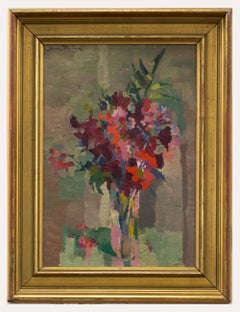
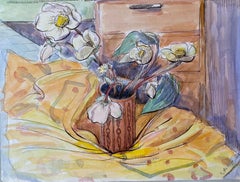
1940 s Post Impressionist artist Still Life Flowers in Vase
Located in Cirencester, Gloucestershire
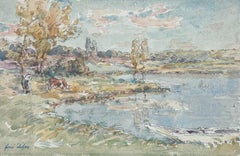
Provencal Landscape By Louis Bellon (French 1908-1998) From a batch of similar work where most were dated 1942-1947 watercolour painting on paper, unframed measurements: 9.5 x 13 in...
Category

Post-Impressionist 19th Century Drawings and Watercolor Paintings

Materials

Watercolor

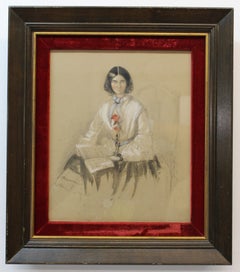
19th C. Watercolor "Woman Reading Book"
Located in San Francisco, CA
Circa 19th Century Watercolor portrait of a woman reading a book
Category

19th Century Drawings and Watercolor Paintings

Materials

Watercolor

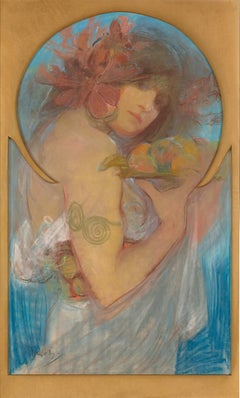
Fruit by Alphonse Mucha
Located in New Orleans, LA
Alphonse Mucha 1860-1939 Czech Fruit Signed "Mucha" (lower left) Pastel on paper "Art only exists to communicate a spiritual message." —Alphonse Mucha Alphonse Mucha's distincti...
Category

Art Nouveau 19th Century Drawings and Watercolor Paintings

Materials

Paper, Pastel

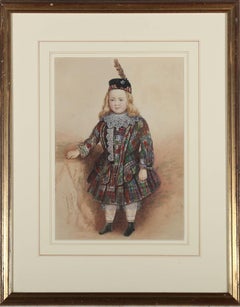
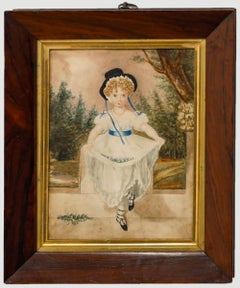
W. T. Bracewell - Framed 1855 Watercolour, Portrait in Tartan
Located in Corsham, GB
A full length and highly detailed watercolour portrait of a child wearing traditional tartan. Signed and dated (1855) to the lower left. Finely presented in a slim gilt frame with a ...
Category

19th Century Drawings and Watercolor Paintings

Materials

Watercolor

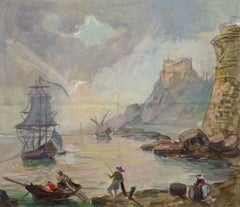
French Watercolor Seascape - Sunset Harbor
Located in Houston, TX
Spectacular watercolor seascape of boats in a old world harbor under a dusk colored sky, circa 1860. Original artwork on paper displayed on a whit...
Category

19th Century Drawings and Watercolor Paintings

Materials

Paper, Watercolor

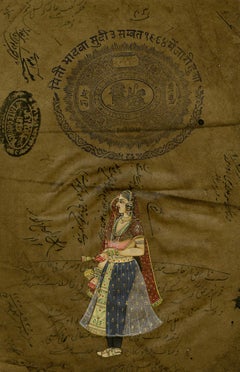
Rajput Ragamala miniature of woman with bell&rattle. Rajasthani School, 19th C.
Located in Middletown, NY
Ink and gouache with gold heightening on fibrous, brown laid paper with a Jaipur Court Fee tax stamp in gray ink, and the 1889 Jaipur State Council stamp in black ink, 13 1/4 x 8 3/4 inches (335 x 222 mm). Toning, handling creases and minor scattered surface soiling throughout. There are scattered coeval Hindi inscriptions in ink on the recto. "A ragamala, translated from Sanskrit as "garland of ragas," is a series of paintings depicting a range of musical melodies known as ragas. Its root word, raga, means color, mood, and delight, and the depiction of these moods was a favored subject in later Indian court paintings...
Category

Rajput 19th Century Drawings and Watercolor Paintings

Materials

Gold

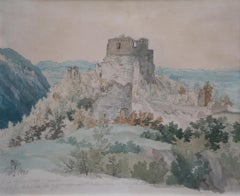
Ruins of the Imperial Castle Outside Split in Croatia
Located in Stockholm, SE
Gustaf Wilhelm Palm (1810–1890) Sweden Ruins of the Imperial Castle Outside Split in Croatia pencil and watercolour unframed: 23.6 x 29.2 cm (9 1/4 x 11 1/2 in) framed: 40 x 45 cm...
Category

Romantic 19th Century Drawings and Watercolor Paintings

Materials

Paper, Watercolor

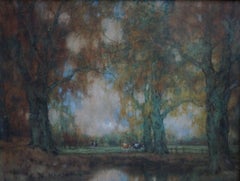
Dutch landscape with grazing cows near the forest, watercolor, impressionist
Located in DEVENTER, NL
Watercolor on paper depicting a Dutch landscape (East of The Netherlands) with grazing cows at the edge of a forest, by A. M. Gorter (1866 - 1933). Dimensions incl. frame: 60 x 72 cm...
Category

Impressionist 19th Century Drawings and Watercolor Paintings

Materials

Paper, Watercolor

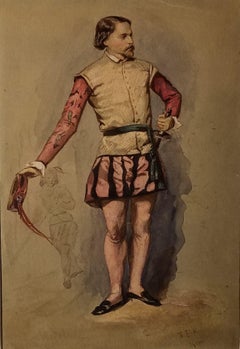
"Portrait of an Italian Fencer, " John Frederick Kensett, Hudson River School
Located in New York, NY
John Frederick Kensett (1816 - 1872) Portrait of an Italian Fencer, circa 1845-47 Watercolor on wove paper 13 1/8 x 8 1/8 inches Signed with initials and inscribed lower right "J.F.K. Rome" From October 1845 through the spring of 1847, Kensett lived in Rome. He attended classes where he sketched from live models, and he sketched in the countryside outside Rome and around Florence, Perugia, and Venice, places he visited with his artist friends. He fulfilled commissions for paintings from Americans in Italy, and by 1847 his career was well established. Son of an English immigrant engraver, John Kensett lacked enthusiasm for that medium and became one of the most accomplished painters of the second generation of Hudson River School painters. His reputation is for Luminism, careful depiction of light, weather, and atmosphere as they affect color and texture of natural forms. He was particularly influenced by the painting of Asher Durand in that he focused on realism and detail rather than the highly dramatic views associated with Thomas Cole. Going to the western United States in the mid 1850s and the 1860s, he was the first of the Hudson River School painters to explore and paint the West. Kensett was born and raised in Cheshire, Connecticut, and learned his engraving from his father, Thomas Kensett with whom he worked in New Haven, Connecticut until 1829. He continued working until 1840 as an engraver of labels, banknotes and maps and was employed part of that time by the American Bank Note Company in New York City. There he met Thomas Rossiter, John Casilear, and other artists who urged him to pursue painting. In 1840, he and Rossiter, Asher Durand, and Casilear went to Europe where Kensett stayed for seven years and supported himself by doing engraving but became accomplished in landscape painting. Having sent canvases of Italian landscapes back to New York, he had a reputation for skillful painting that preceded him. When he returned to New York City in 1847, he was an "instant success" and very sought after by collectors. Two of his Italian landscapes had already been purchased by the American Art Union. By 1849, he was a full member of the National Academy of Design and was generally popular among his peers. His studio was a gathering place with travelers stopping by to see his canvases and to identify "precise locations in the Catskills or Newport or New England in the oil sketches and drawings that covered his walls." (Zellman 170). For the women, he was a popular bachelor, "romantic looking with high forehead and sensitive expression." (Samuels 262) He was also sought after by many organizations. Among his activities were serving on the committee to oversee the decoration of the United States Capitol in Washington DC, and becoming one of the founders of the Metropolitan Museum in New York. An inveterate traveler, Kensett spent summers on painting excursions away from New York City. One of these trips was a special painting excursion with fifteen other artists sponsored by the B & O Railroad from Baltimore, Maryland to Wheeling, West Virginia. Unlike many of the Hudson River painters...
Category

Hudson River School 19th Century Drawings and Watercolor Paintings

Materials

Paper, Watercolor

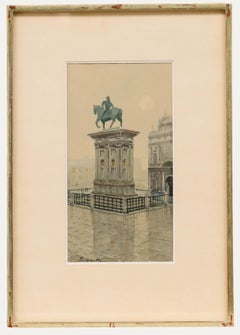
Andrea Biondetti (1851-1946) - Watercolour, Bartolomeo Colleoni Monument
Located in Corsham, GB
A charming depiction of the Bartolomeo Colleoni Monument in Venice, Italy. Signed. Presented in a gilt strip frame. On paper.
Category

19th Century Drawings and Watercolor Paintings

Materials

Watercolor

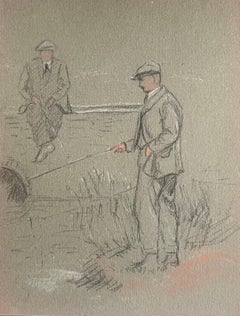
British Chalk Pencil Sketch of Two Dapper Gentleman Fishing On The Riverbank
Located in Cirencester, Gloucestershire
John Rabone Harvey ( 1966 - 1922) graphic and chalk deep green artist paper , unframed artist paper : 7 x 5.5 inches Provenance: private collection Condition: very good condition Ha...
Category

Realist 19th Century Drawings and Watercolor Paintings

Materials

Chalk, Graphite

British Chalk Pencil Sketch of A Cow Munching Grass In The Meadow
Located in Cirencester, Gloucestershire
John Rabone Harvey ( 1966 - 1922) graphic and chalk deep green artist paper , unframed artist paper : 5.5 x 7 inches Provenance: private collection Condition: very good condition Ha...
Category

Realist 19th Century Drawings and Watercolor Paintings

Materials

Chalk, Graphite

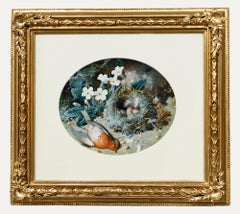
William Cruikshank (1848-1922) - Framed Watercolour, The Robin s Nest
Located in Corsham, GB
This delicate oval composition captures a poignant moment in nature, featuring a robin's nest with eggs nestled among blossoming primroses and woodland foliage. The artist's attentio...
Category

19th Century Drawings and Watercolor Paintings

Materials

Watercolor

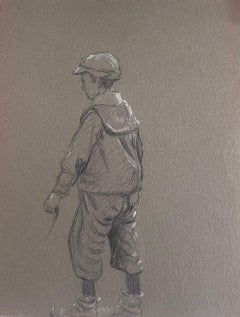
British Chalk Pencil Sketch of A Young Boy In His Fishing Gear
Located in Cirencester, Gloucestershire
John Rabone Harvey ( 1966 - 1922) graphic and chalk deep green artist paper , unframed artist paper : 7 x 5.5 inches Provenance: private collection Condition: very good condition Ha...
Category

Realist 19th Century Drawings and Watercolor Paintings

Materials

Chalk, Graphite

British Chalk Pencil Sketch of Two Cows At A Watering Hole
Located in Cirencester, Gloucestershire
John Rabone Harvey ( 1966 - 1922) graphic and chalk deep green artist paper , unframed artist paper : 7 x 5.5 inches Provenance: private collection Condition: very good condition Ha...
Category

Realist 19th Century Drawings and Watercolor Paintings

Materials

Chalk, Graphite

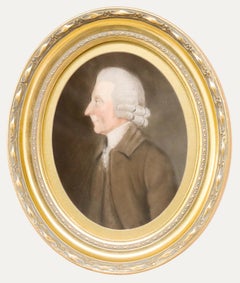
English School Early 19th Century Pastel - Gentleman in Profile
Located in Corsham, GB
A charming early 19th-century pastel study of a gentleman in a formal wig. Part of a pair of portraits depicting a man and woman in profile, the companion piece is also listed on our...
Category

19th Century Drawings and Watercolor Paintings

Materials

Pastel

Late 19th Century Boats at San Francisco Port Seascape Drawing
By Raymond Dabb Yelland
Located in Soquel, CA
San Francisco moorings, a late 19th century double-sided pencil sketch by Raymond Dabb Yelland (American, 1848 - 1900), 1987. Signed "R.D. Yelland" lower right. Dated "87" lower left. Drawing on both sides of paper. Wood frame. Image size, 8.5"H x 12"L. A master marine painter, Yelland painted in Gloucester Harbor. He sailed to San Francisco in 1874 to take a teaching position in art at Mills College in Oakland. From 1877 to 1894, he taught at the California School of Design. He was a decisive influence on a younger generation of California artists. Full Bio: Raymond Dabb Yelland was born in London, England on February 2, 1848. At the age of three, he immigrated with his family to New York City where he was raised and attended public schools. By the age of twelve, he had settled on art as a career. He was born as Raymond Dabb, but due to the negative connotation of his name, his mother's maiden name, Yelland, was added. After serving under Sheridan in the Federal Army during the Civil War, Yelland attended Pennington Seminary in New Jersey. He studied art at the National Academy of Design from 1869 to 1871 with Page and Brevoort, and then taught at the Academy for one year. With his new bride, he sailed around the Horn in 1874 to San Francisco where he would assume the position of an art instructor at Mills College in Oakland. In 1877, he traveled to England, and later continued his studies in Paris with Luc Oliver Merson. Upon his return to California, Yelland became assistant director of the San Francisco School of Design, and in 1888, assumed its directorship. While at that school, he also taught at the University of California, Berkeley, for many years. His many pupils included Homer Davenport, Alexander Harrison...
Category

American Impressionist 19th Century Drawings and Watercolor Paintings

Materials

Paper, Pencil

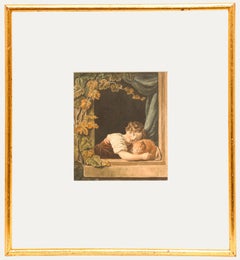
Early 19th Century Watercolour - Little Girl with Orange Cat
Located in Corsham, GB
A truly charming early 19th-century watercolour study depicting a young girl reaching tenderly toward her sleeping cat, curled peacefully on a sunlit windowsill. Framed by traditiona...
Category

19th Century Drawings and Watercolor Paintings

Materials

Watercolor

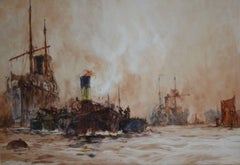
Shipping On The River Thames, London by Charles Dixon. Watercolour
By Charles Edward Dixon 1
Located in Brecon, Powys
Charles Dixon was born in England in December 1872 died 1934. Extremely well known for his nautical watercolours. Exhibited several time at the Royal Academy in London as well as the...
Category

English School 19th Century Drawings and Watercolor Paintings

Materials

Watercolor

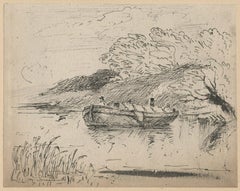
The River Barge
Located in Fairlawn, OH
The River Barge Pen and ink on paper on laid paper, mounted in English drum mount , c. 1810 Unsigned Condition: Slight sun staining to sheet and mount in the window (see photo) Image/sheet size: 5 1/4 x 6 11/16 inches Sight: : 5-3/4 x 7-1/4" Frame: 13-3/8 x 14-3/8" Provenance: Colnaghi, London (see photo of label) David Cox (29 April 1783 – 7 June 1859) was an English landscape painter, one of the most important members of the Birmingham School of landscape artists and an early precursor of Impressionism. He is considered one of the greatest English landscape painters, and a major figure of the Golden age of English watercolour. Although most popularly known for his works in watercolour, he also painted over 300 works in oil towards the end of his career, now considered "one of the greatest, but least recognised, achievements of any British painter. His son, known as David Cox the Younger (1809-1885), was also a successful artist. Early life in Birmingham, 1783–1804 Cox's birthplace in Deritend, Birmingham, illustrated by Samuel Lines Cox was born on 29 April 1783 on Heath Mill Lane in Deritend, then an industrial suburb of Birmingham. His father was a blacksmith and whitesmith about whom little is known, except that he supplied components such as bayonets and barrels to the Birmingham gun trade. Cox's mother was the daughter of a farmer and miller from Small Heath to the east of Birmingham. Early biographers record that "she had had a better education than his father, and was a woman of superior intelligence and force of character." Cox was initially expected to follow his father into the metal trade and take over his forge, but his lack of physical strength led his family to seek opportunities for him to develop his interest in art, which is said to have first become apparent when the young Cox started painting paper kites while recovering from a broken leg. By the late 18th century Birmingham had developed a network of private academies teaching drawing and painting, established to support the needs of the town's manufacturers of luxury metal goods, but also encouraging education in fine art, and nurturing the distinctive tradition of landscape art of the Birmingham School. Cox initially enrolled in the academy of Joseph Barber in Great Charles Street, where fellow students included the artist Charles Barber and the engraver William Radclyffe, both of whom would become important lifelong friends. At the age of about 15 Cox was apprenticed to the Birmingham painter Albert Fielder, who produced portrait miniatures and paintings for the tops of snuffboxes from his workshop at 10 Parade in the northwest of the town. Early biographers of Cox record that he left his apprenticeship after Fielder's suicide, with one reporting that Cox himself discovered his master's hanging body, but this is probably a myth as Fielder is recorded at his address in Parade as late as 1825. At some time during mid-1800 Cox was given work by William Macready the elder at the Birmingham Theatre, initially as an assistant grinding colours and preparing canvases for the scene painters, but from 1801 painting scenery himself and by 1802 leading his own team of assistants and being credited in plays' publicity. London, 1804–1814 In 1804 Cox was promised work by the theatre impresario Philip Astley and moved to London, taking lodgings in 16 Bridge Row, Lambeth. Although he was unable to get employment at Astley's Amphitheatre it is likely that he had already decided to try to establish himself as a professional artist, and apart from a few private commissions for painting scenery his focus over the next few years was to be on painting and exhibiting watercolours. While living in London, Cox married his landlord's daughter, Mary Agg and the couple moved to Dulwich in 1808. David Cox Travellers on a Path, pencil and brown wash. In 1805 he made his first of many trips to Wales, with Charles Barber, his earliest dated watercolours are from this year. Throughout his lifetime he made numerous sketching tours to the Home Counties, North Wales, Yorkshire, Derbyshire and Devon. Cox exhibited regularly at the Royal Academy from 1805. His paintings never reached high prices, so he earned his living mainly as a drawing master. His first pupil, Colonel the Hon.H. Windsor (the future Earl of Plymouth) engaged him in 1808, Cox went on to acquire several other aristocratic and titled pupils. He also went on to write several books, including: Ackermanns' New Drawing Book (1809); A Series of Progressive Lessons (1811); Treatise on Landscape Painting (1813); and Progressive Lessons on Landscape (1816). The ninth and last edition of his series Progressive Lessons, was published in 1845. By 1810 he was elected President of the Associated Artists in Water Colour. In 1812, following the demise of the Associated Artists, he was elected as associate of the Society of Painters in Water Colour (the old Water Colour Society). He was elected a Member of the Society in 1813, and exhibited there every year (except 1815 and 1817) until his death. Hereford, 1814–1827 In the summer of 1813 Cox was appointed as the drawing master of the Royal Military College in Farnham, Surrey, but he resigned shortly afterwards, finding little sympathy with the atmosphere of a military institution. Soon after that he applied to a newspaper advertisement for a position as drawing master for Miss Crouchers' School for Young Ladies in Hereford and in Autumn 1814 moved to the town with his family. Cox taught at the school in Widemarsh Street until 1819, his substantial salary of £100 per year requiring only two-day's work per week, allowing time for painting and the taking of private pupils. Cox's reputation as both a painter and a teacher had been building over previous years, as indicated by his election as a member of the Society of Painters in Water Colours and his inclusion in John Hassell's 1813 book Aqua Pictura, which claimed to present works by "all of the most approved water coloured draftsmen". The depression that accompanied the end of the Napoleonic Wars had caused a contraction in the art market, however, and by 1814 Cox had been very short of money, requiring a loan from one of his pupils to pay even for the move to Hereford. Despite its financial advantages and its proximity to the scenery of North Wales and the Wye Valley, the move to Hereford marked a retreat in terms of his career as a painter: he sent few works to the annual exhibition of the Society of Painters in Water Colours during his first years away from London and not until 1823 would he again contribute more than 20 pictures. Between 1823 and 1826 he had Joseph Murray Ince as a pupil. London, 1827–1841 He made his first trip to the Continent, to Belgium and the Netherlands in 1826 and subsequently moved to London the following year. He exhibited for the first time with the Birmingham Society of Artists in 1829, and with the Liverpool Academy in 1831. In 1839, two of Cox's watercolours were bought from the Old Water Colour Society exhibition by the Marquis of Conynha for Queen Victoria. Birmingham, 1841–1859 Greenfield House in Harborne, Birmingham – where Cox lived from 1841 until his death in 1859 . In May 1840 Cox wrote to one of his Birmingham friends: "I am making preparations to sketch in oil, and also to paint, and it is my intention to spend most of my time in Birmingham for the purpose of practice". Cox had been considering a return to painting in oils since 1836 and in 1839 had taken lessons in oil painting from William James Müller, to whom he had been introduced by mutual friend George Arthur Fripp. Hostility between the Society of Painters in Water Colours and the Royal Academy made it difficult for an artist to be recognised for work in both watercolour and oil in London, however, and it is likely that Cox would have preferred to explore this new medium in the more supportive environment of his home town. By the early 1840s his income from sales of his watercolours was sufficient to allow him to abandon his work as a drawing master, and in June 1841 he moved with his wife to Greenfield House in Harborne, then a village on Birmingham's south western outskirts. It was this move that would enable the higher levels of freedom and experimentation that were to characterise his later work. The elderly Cox pictured by Samuel Bellin in 1855. In Harborne, Cox established a steady routine – working in watercolour in the morning and oils in the afternoon. He would visit London every spring to attend the major exhibitions, followed by one or more sketching excursions, continuing the pattern that he had established in the 1830s. From 1844 these tours evolved into a yearly trip to Betws-y-Coed in North Wales to work outdoors in both oil and watercolour, gradually becoming the focus for an annual summer artists colony that continued until 1856 with Cox as its "presiding genius". Cox's experience of trying to exhibit his oils in London was short and unsuccessful: in 1842 he made his only submission to the Society of British Artists; one oil painting was exhibited at each of the British Institution and the Royal Academy in 1843; and two oil paintings were exhibited at the Royal Academy in 1844 – the last that would be exhibited in London during his lifetime. Cox showed regularly at the Birmingham Society of Arts and its successor, the Birmingham Society of Artists, becoming a member in 1842. Cox suffered a stroke on 12 June 1853 that temporarily paralysed him, and permanently affected his eyesight, memory and coordination. By 1857 however, his eyesight had deteriorated. An exhibition of his work was arranged in 1858 by the Conversazione Society Hampstead, and in 1859 a retrospective exhibition was held at the German Gallery Bond Street, London. Cox died several months later. He was buried in the churchyard of St Peters, Harborne, Birmingham, under a chestnut tree, alongside his wife Mary. Work Early work In the spring of 1811 Cox made a small number of notable works in oils during a visit to Hastings with his family. It is not known why he didn't continue working in this medium at the time, but the five known surviving examples were described in 1969 as "surely some of the most brilliant examples of the genre in England". Mature work Cox reached artistic maturity after his move to Hereford in 1814. Although only two major watercolours can confidently be traced to the period between Cox's arrival in the town and the end of the decade, both of these – Butcher's Row, Hereford of 1815 and Lugg Meadows, near Hereford of 1817 – mark advances on his earlier work. Later work Cox's later work produced after his move to Birmingham in 1841 was marked by simplification, abstraction and a stripping down of detail. His art of the period combined the breadth and weight characteristic of the earlier English watercolour school, together with a boldness and freedom of expression comparable to later impressionism. His concern with capturing the fleeting nature of weather, atmosphere and light was similar to that of John Constable, but Cox stood apart from the older painter's focus on capturing material detail, instead employing a high degree of generalisation and a focus on overall effect. The quest for character over precision in representing nature was an established characteristic of the Birmingham School of landscape artists with which Cox had been associated early in his life, and as early as 1810 Cox's work had been criticised for its "sketchiness of finish" and "cloudy confusion of objects", which were held to betray "the coarseness of scene-painting". During the 1840s and 1850s Cox took this "peculiar manner" to new extremes, incorporating the techniques of the sketch into his finished works to a far greater degree. Cox's watercolour technique of the 1840s was sufficiently different from his earlier methods to need explanation to his son in 1842, despite the fact that his son had been helping him teach and paint since 1827. The materials used for his later works in watercolour also differed from his earlier periods: he used black chalk instead of graphite pencil as his primary drawing medium, and the rough and absorbent "Scotch" wrapping paper for which he became well-known – both of these were related to his development of a rougher and freer style. Influence and legacy By the 1840s Cox, alongside Peter De Wint and Copley Fielding, had become recognised as one of the leading figures of the English landscape watercolour style of the first half of the 19th century. This judgement was complicated by reaction to the rougher and bolder style of Cox's later Birmingham work, which was widely ignored or condemned. While by this time De Wint and Fielding were essentially continuing in a long-established tradition, Cox was creating a new one. A group of young artists working in Cox's watercolour style emerged well before his death, including William Bennett, David Hall McKewan and Cox's son David Cox Jr. By 1850 Bennett in particular had become recognised as "perhaps the most distinguished among the landscape painters" for his Cox-like vigorous and decisive style. Such early followers concentrated on the example of Cox's more moderate earlier work and steered clear of what were then seen as the excesses of Cox's later years. During a period dominated by sleek and detailed picturesque landscape, however, they were still condemned by publications such as The Spectator as "the 'blottesque' school", and failed to establish themselves as a cohesive movement. John Ruskin in 1857 condemned the work of the Society of Painters in Water-colours as "a kind of potted art, of an agreeable flavour, suppliable and taxable as a patented commodity", excluding only the late work of Cox, about which he wrote "there is not any other landscape which comes near these works of David Cox in simplicity or seriousness". An 1881 book, A Biography of David Cox: With Remarks on His Works and Genius, was based on a manuscript by Cox's friend William Hall, edited and expanded by John Thackray Bunce, editor of the Birmingham Daily Post. There are two Blue Plaque memorials commemorating him at 116 Greenfield Road, Harborne, Birmingham, and at 34 Foxley Road, Kennington, London, SW9, where he lived from 1827. It can also be seen at the David Cox exhibition in Birmingham. His pupils included Birmingham architectural artist, Allen Edward...
Category

Romantic 19th Century Drawings and Watercolor Paintings

Materials

Ink

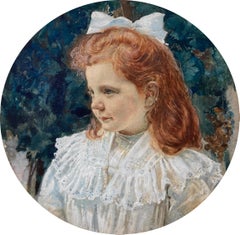
Circle of Myles Birket Foster, Portrait of a red haired girl
Located in Harkstead, GB
This exceptional quality watercolour depicts a snapshot of innocence and childhood with this delightful portrait of a red-haired young girl. Presented in a fine quality, hand carved and pierced, period frame with inlaid detail. Circle of Myles Birket Foster (1825-1899) Portrait of a red-haired young girl Watercolour with touches of white 4 inches diamter (image only) 11 x 11 inches with frame This beautiful image is of exceptional quality, as apparent in the delicate detailing to her eyelashes and the sunlit highlights of her hair. This is the work of an artist at the very peak of their powers and the intimacy of the work suggests a connection between artist and sitter such as daughter and parent. The level of draughtsmanship brings to mind artists from this period such as Myles Birket Foster, Fred Morgan and Helen...
Category

Victorian 19th Century Drawings and Watercolor Paintings

Materials

Watercolor, Paper

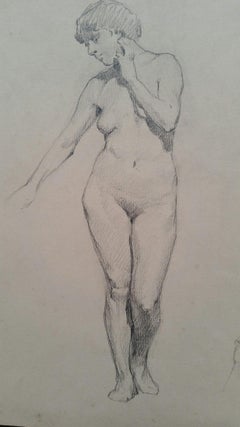
English Antique Portrait Sketch of Female Nude Standing
Located in Cirencester, Gloucestershire
English Graphite Sketch of a Female Nude, Standing by Henry George Moon (British 1857-1905) on off white artists paper, unframed measurements: sheet 14.75 x 10.5 inches provenance:...
Category

Impressionist 19th Century Drawings and Watercolor Paintings

Materials

Graphite

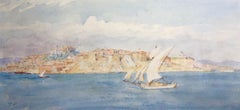
View of Constantinople
Located in Middletown, NY
A bright and beautiful Orientalist landscape by a master of the genre. Watercolor and graphite on cream laid paper, laid down to archival board, 14 3/4 x 6 3/4 inches (374 x 170 m...
Category

Realist 19th Century Drawings and Watercolor Paintings

Materials

Watercolor, Graphite

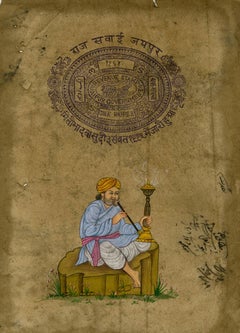
Turbaned man seated, smoking a hookah – Rajasthani School, 19th century
Located in Middletown, NY
Ink and gouache with yellow heightening on fibrous, brown laid paper, with a Jaipur Court Fee tax stamp in purple ink on the recto, and the Jaipur State Council Stamp dated June 5 18...
Category

Rajput 19th Century Drawings and Watercolor Paintings

Materials

Gold

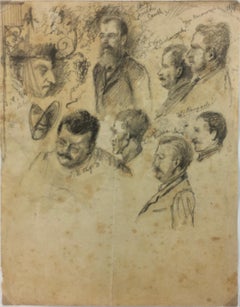
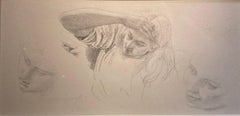
Figurative Pencil Drawing - Male Portrait Studies
Located in Houston, TX
A fascinating 19th Century pencil drawing of varying male portraits, mostly in profile view, with differing facial expressions and facial ...
Category

19th Century Drawings and Watercolor Paintings

Materials

Paper, Pencil

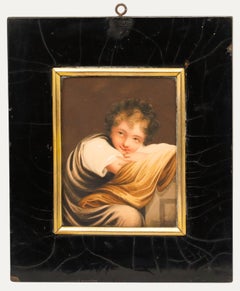
H. Harding - Miniature 1821 Watercolour, The Sly Girl
Located in Corsham, GB
A delightful early 19th-century miniature watercolour depicting a cheeky young girl. The artist renders the figure in impressive detail and uses soft tones to evoke warmth. Signed, t...
Category

19th Century Drawings and Watercolor Paintings

Materials

Watercolor

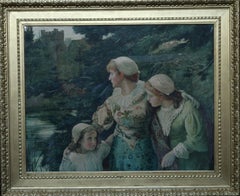
The Village Maids - British Victorian art exhibited RA 1880 watercolour painting
By Marcella M Walker
Located in Hagley, England
This stunning exhibited Pre-Raphaelite 19th century watercolour painting is by British Victorian female artist Marcella M Walker. The painting was painted in 1880 and exhibited at th...
Category

Pre-Raphaelite 19th Century Drawings and Watercolor Paintings

Materials

Watercolor

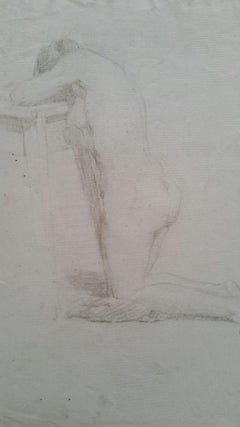
English Graphite Portrait Sketch of Female Nude, Kneeling
Located in Cirencester, Gloucestershire
English Graphite Sketch of a Female Nude, Kneeling by Henry George Moon (British 1857-1905) on off white artists paper, unframed measurements: sheet 18.75 x 12 inches provenance: f...
Category

Impressionist 19th Century Drawings and Watercolor Paintings

Materials

Graphite

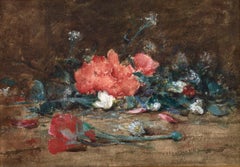
Flowers
Located in Bryn Mawr, PA
Flowers, 1882 Gouache and watercolor on paper 14 x 20 1/8 inches (35.6 x 51.1 cm) Framed dimensions: 23 x 29 1/4 inches Signed and dated lower right: J. Alden Weir / '82 Signed lowe...
Category

American Impressionist 19th Century Drawings and Watercolor Paintings

Materials

Paper, Watercolor, Gouache

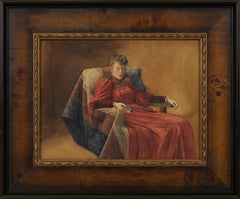
Portrait of Seated Woman Reading Julia Maud De Forest, Late 19th Century
Located in Beachwood, OH
Ora Coltman (American, 1858-1940) Julia Maud De Forest, 1898 Watercolor on paper Signed and dated upper left 9.25 x 12.75 inches 15 x 18.25 inches, framed Ora Coltman was born in 18...
Category

19th Century Drawings and Watercolor Paintings

Materials

Watercolor

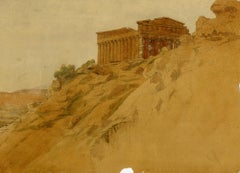
The Temple of Concordia, Agrigento - English School drawing, 19th Century
Located in Middletown, NY
A lovely grand tour image of the Doric architectural masterpiece dedicated to Castor and Pollux. Dated 1863. Watercolor and graphite on lightweight card stock, 10 x 13 3/4 inches (2...
Category

English School 19th Century Drawings and Watercolor Paintings

Materials

Watercolor, Cardboard, Graphite

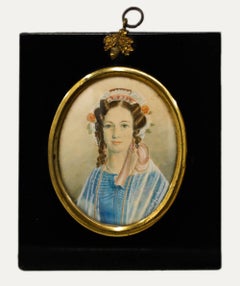
Miniature 19th Century Watercolour - Lady with a Lace Bonnet
Located in Corsham, GB
A fine English School miniature portrait of a Victorian lady wearing a delicate lace bonnet with roses in her hair. Well presented in a 19th-century miniature frame with an acorn han...
Category

19th Century Drawings and Watercolor Paintings

Materials

Watercolor

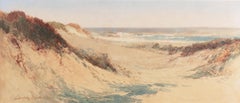
Carmel Dunes , Monterey, California, San Francisco Art Association, Illinois
Located in Santa Cruz, CA
Signed lower left, 'Sydney J. Yard' for Sydney Janis Yard (American, 1855 -1909) and painted circa 1905. Sydney Janis Yard was born 1855, in Rockford, Illinois where he first studie...
Category

19th Century Drawings and Watercolor Paintings

Materials

Laid Paper, Watercolor

Joseph Henry Hirst (1863–1945) - Graphite Drawing, St. John s Crypt Bristol
Located in Corsham, GB
Signed on the back J. H. Hirst Archt del. Joseph Henry Hirst (1863–1945). He was was a leading architect of the post-Victorian era and was based in Kingston upon Hull. The name on th...
Category

19th Century Drawings and Watercolor Paintings

Materials

Graphite

Frank Richards, Newlyn School, English Watercolor of figures on a Cornish beach
Located in Harkstead, GB
A wonderfully fluid watercolour capturing the end of the day on a Cornish beach, most probably Newlyn where Richards was painting from the 1890s onwards. Frank Richards (1863-1935) ...
Category

Victorian 19th Century Drawings and Watercolor Paintings

Materials

Paper, Watercolor

Fine Antique French Impressionist Painting Landscape with River Cow Figure
Located in Cirencester, Gloucestershire
The artist: Henri Aime Duhem (1860-1941) French *see notes below, signed Title: The River Landscape Medium: signed gouache on paper, loosely lai...
Category

Impressionist 19th Century Drawings and Watercolor Paintings

Materials

Gouache

After Sir Thomas Lawrence - Framed 19th Century Watercolour, Miss Murray
Located in Corsham, GB
A charming copy of Sir Thomas Lawrence's oil portrait of Miss Murray, commissioned by Sir George Murray, the Scottish soldier and politician, in 1826. The watercolour depicts Murray'...
Category

19th Century Drawings and Watercolor Paintings

Materials

Watercolor

Lake landscape - Aquatint 20x28 cm
Located in Geneva, CH
Aquatint from the beginning of the 19's century Illegible signature gold frame with glass, total size with frame: 38x48x3 cm
Category

Realist 19th Century Drawings and Watercolor Paintings

Materials

Aquatint

Fine Antique French Impressionist Painting Diving Board Jetty Boats at Sea
Located in Cirencester, Gloucestershire
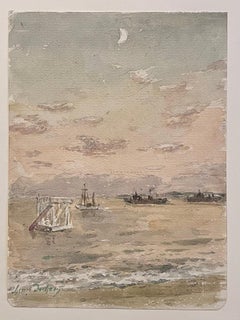
The artist: Henri Aime Duhem (1860-1941) French *see notes below, signed Title: The Diving Board Medium: gouache on paper, loosely laid over card, unframed card: 12.75 x 9.75 ...
Category

Impressionist 19th Century Drawings and Watercolor Paintings

Materials

Gouache

Chesterfield Sent to Coventry, or A Display of Military Education
Located in Middletown, NY
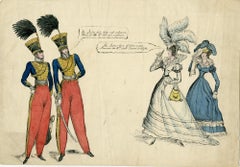
A wonderful 1824 preparatory drawing for a published work satirizing the famously ill-mannered 10th Hussars. 1842. Pen and ink with watercolor on watermarked J Whatman 1824 paper, 9...
Category

English School 19th Century Drawings and Watercolor Paintings

Materials

Handmade Paper, Ink, Watercolor, Pen

Study of an Angel by British Pre-Raphaelite artist Sir William Blake Richmond
Located in London, GB
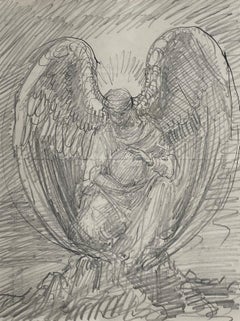
SIR WILLIAM BLAKE RICHMOND, RA (1842-1921) Study of an Angel Pencil on the artist’s writing paper for Beavor Lodge, Hammersmith Unframed 22.5 by 17 cm., 9 by 6 ¾ in. (mount size ...
Category

Pre-Raphaelite 19th Century Drawings and Watercolor Paintings

Materials

Pencil

View of the Forum Romanum - Watercolor by Giuseppe Costantini - 1870s
Located in Roma, IT
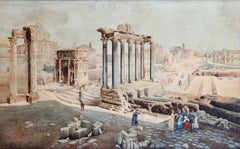
View of the Forum Romanum is an original modern artwork realized by the Italian painter Giuseppe Costantini (Nola, 1843 - Naples, 1893) in the seco...
Category

Modern 19th Century Drawings and Watercolor Paintings

Materials

Oil, Watercolor

Portrait Studies
By Edwin Longsden Long
Located in London, GB
Edwin Long 1829 - 1891 Portrait Studies Graphite on paper Image size: 4 x 8 inches (10 x 20.5 cm) Framed Edwin Longsden Long RA (1829-1891, British) wa...
Category

Pre-Raphaelite 19th Century Drawings and Watercolor Paintings

Materials

Graphite

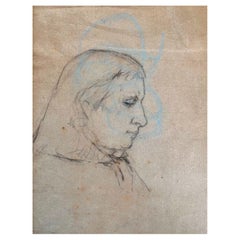
Paul Gauguin Self Portrait
Located in Dallas, TX
Paul Gauguin (French 1848 - 1903) Recto and Verso sketches Self-Portrait Recto with Portrait of a Woman on Verso. (One sheet). Self portrait shows Gauguin’s profile with eyes gazing...
Category

19th Century Drawings and Watercolor Paintings

Materials

Paper

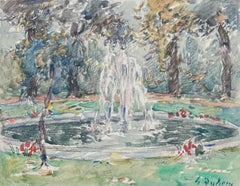
Fine Antique French Impressionist Painting Park Pond with Fountain
Located in Cirencester, Gloucestershire
The artist: Henri Aime Duhem (1860-1941) French *see notes below, signed Title: The Park Fountain Medium: signed gouache on paper, loosely laid over c...
Category

Impressionist 19th Century Drawings and Watercolor Paintings

Materials

Gouache

Late 19th Century pastel by Chantron of bathers by the side of a river
By Alexandre Jacques Chantron
Located in Petworth, West Sussex
Alexandre Jacques Chantron (French 1842 – 1918) Baigneuses au bord de la riviere Pastel Signed 'AJ Chantron' (lower right) 24 x 18 in (61 x 45.7)
Category

Impressionist 19th Century Drawings and Watercolor Paintings

Materials

Paper, Pastel

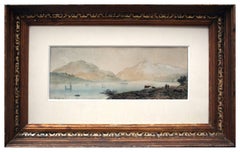
19th Century Loch Tay Scottish Landscape
Located in Soquel, CA
Masterful Scottish watercolor landscape of Loch Tay with boats and small figures on the short by Aaron Edwin Penley (English, 1826-1897)....
Category

Realist 19th Century Drawings and Watercolor Paintings

Materials

Paper, Watercolor

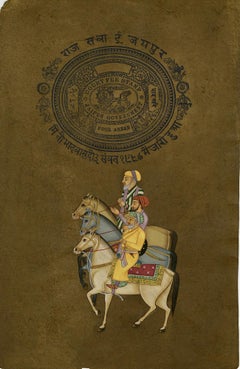
Three Rajput noblemen on horseback – Rajasthani School, 19th century
Located in Middletown, NY
Ink and gouache with gold heightening on fibrous, brown laid paper, with a Jaipur Court Fee tax stamp in black ink on the recto, as well as the Jaipur City Council blindstamp, 13 5/8...
Category

Rajput 19th Century Drawings and Watercolor Paintings

Materials

Gold

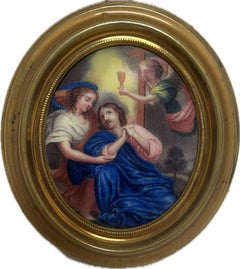
19th Century Italian Miniature Painting Christ Garden of Gethsemane Angels
Located in Cirencester, Gloucestershire
Italian School, late 19th century Christ in the Garden of Gethsemane miniature painting, framed framed: 3.5 x 3 inches image: 2.5 x 2 inches provenance: private collection, Italy con...
Category

Old Masters 19th Century Drawings and Watercolor Paintings

Materials

Watercolor

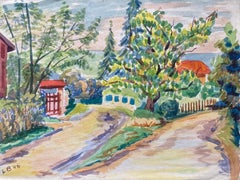
1940 s Provence Painting Joyful Green Landscape - Post Impressionist artist
Located in Cirencester, Gloucestershire
Provencal Landscape by Louis Bellon (French 1908-1998) signed and dated 46' From a batch of similar work where most were dated 1942-1947 watercolour painting on paper, unframed meas...
Category

Post-Impressionist 19th Century Drawings and Watercolor Paintings

Materials

Watercolor

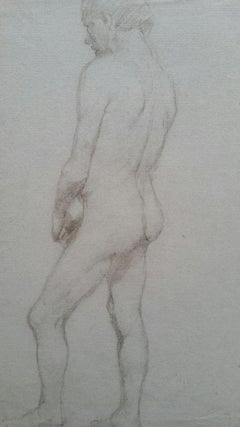
English Graphite Portrait Sketch of Male Nude, Back View
Located in Cirencester, Gloucestershire
English Graphite Sketch of a Male Nude, Back View by Henry George Moon (British 1857-1905) on pale blue/grey artists paper, unframed measurements: sheet 18.75 x 12 inches provenance...
Category

Impressionist 19th Century Drawings and Watercolor Paintings

Materials

Graphite

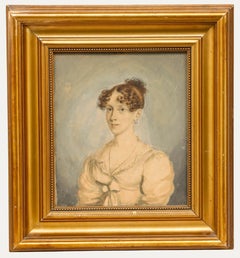
Early 19th Century Watercolour - Regency Woman
Located in Corsham, GB
A charming depiction of a Regency woman dressed in white. The artist uses a delicate hand to capture the fine details of her features and clothing. Unsigned. Illegibly inscribed vers...
Category

19th Century Drawings and Watercolor Paintings

Materials

Watercolor

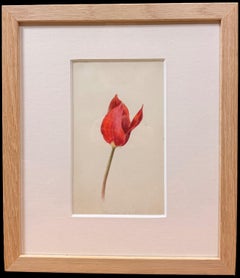
Fine 19th Botanical Watercolour Of A Red Tulip Flower In Wooden Frame
Located in Cirencester, Gloucestershire
Red Tulip English School, 19th century Medium: watercolour drawing on paper, glass covering Size: 15 x 13 inches Provenance: private collection, England. Condition: The drawing is...
Category

Victorian 19th Century Drawings and Watercolor Paintings

Materials

Watercolor

A Tailor Working at his Desk
Located in Stockholm, SE
Gerhard Ludwig Lahde (Bremen 1765–1833 Köpenhamn) A Tailor Working at his Desk Ink and wash on paper, mounted on a 19th-century backing inscribed “G. L. Lahde del.” unframed: 14.2 ...
Category

19th Century Drawings and Watercolor Paintings

Materials

Ink

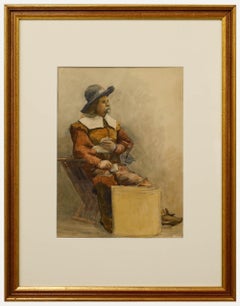
Framed Late 19th Century Watercolour - The Wounded Cavalier
Located in Corsham, GB
Watercolor portrait. Presented in a gilt-effect frame. Unsigned. On paper.
Category

19th Century Drawings and Watercolor Paintings

Materials

Watercolor

Une bonne prise !
Located in Atlanta, GA
François Joseph Girot was a French artist who was born in 1873. François Joseph Girot's work has been offered at auction multiple times, with realized prices ranging from $121 USD t...
Category

Modern 19th Century Drawings and Watercolor Paintings

Materials

Watercolor, Paper

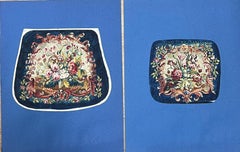
Rococo-Inspired Pair of Watercolor Paintings with Elaborate Floral Arrangements
Located in Cirencester, Gloucestershire
Rococo-Inspired Pair of Watercolor Paintings watercolor on artist paper, stuck on blue paper painting: 12.75 x 10 inches provenance: private collection condition: very good and soun...
Category

Rococo 19th Century Drawings and Watercolor Paintings

Materials

Watercolor

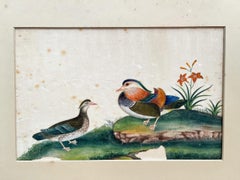
Two Mandarin Ducks, Circle of Sunqua, Gouache on Pith Paper, Qing Dynasty
By Sunqua
Located in Stockholm, SE
Circle of Sunqua (active 1830-1870) Two Mandarin Ducks pith paper (rice paper) gouache c.1830-1870 China Also close to: Chincqua, Lam Qua, Youqua. Compare ...
Category

19th Century Drawings and Watercolor Paintings

Materials

Gouache, Rice Paper

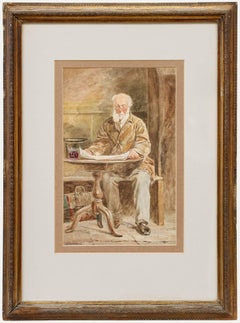
M. Haywood - Framed Late 19th Century Watercolour, Reading the Morning Paper
Located in Corsham, GB
This intimate portrait depicts an elderly gentleman seated at a wooden table, absorbed in reading his morning paper. The artist employs warm, earthy tones and soft brushwork to creat...
Category

19th Century Drawings and Watercolor Paintings

Materials

Watercolor

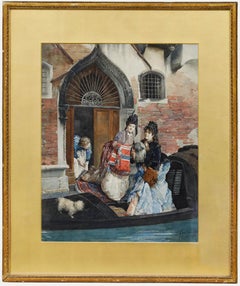
Cesare Maccari (1840-1919) - Fine 1873 Watercolour, Boarding the Gondola
Located in Corsham, GB
A fine late 19th-century watercolour by the artist Cesare Maccari (1840–1919), depicting elegant ladies gathered on the steps of a Venetian canal, poised to board a gondola. Rendered...
Category

19th Century Drawings and Watercolor Paintings

Materials

Watercolor