19th Century Animal Paintings
to
219
251
157
182
132
113
Overall Width
to
Overall Height
to
138
835
1,825
5,810
70
42
51
57
63
101
125
128
132
164
85
37
23
5
3
613
195
16
391
307
218
192
140
124
96
88
77
76
62
52
38
37
34
33
30
29
23
22
785
755
349
344
73
8
8
8
6
6
682
26
640
194
Period: 19th Century
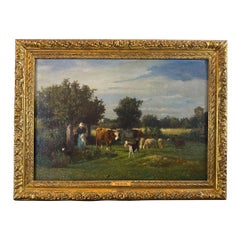
"Shepherdess With Farm Animals" 19th century Antique Oil painting on Canvas
Located in Jacksonville, FL
Description:
The Painting is signed and dated
Constant Troyon born on August 28, 1810, and passing away on February 21, 1865, Constant Troyon was a French painter associated with the...
Category
Barbizon School 19th Century Animal Paintings
Materials
Canvas, Oil
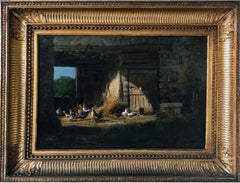
Basse Cour Alexandre Defaux (1826/1900)
Located in GOUVIEUX, FR
Basse cour d'Alexandre Defaux (1826–1900)
Huile sur panneau Dimensions : 45 x 31 cm
Cadre ancien en bois doré à décor de godrons et perles
Cette scène rurale baignée d’ombre et de ...
Category
19th Century Animal Paintings
Materials
Oil
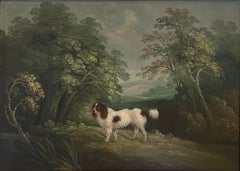
Spaniel
Located in Lexington, KY
Predominantly working for private patrons, Dalby is known for his sporting art, landscapes, and dog portraits. His father and teacher David Dalby was also a painter who specialized i...
Category
19th Century Animal Paintings
Materials
Oil

$2,850
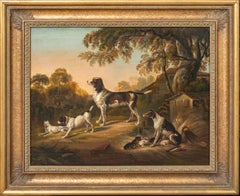
The Dog Yard, 18th Century attributed to Samuel RAVEN (1775-1847)
Located in Blackwater, GB
The Dog Yard, 18th Century
attributed to Samuel RAVEN (1775-1847)
Large 18th 19th Century English dog yard scene, oil on canvas attributed top Samuel Raven. Excellent quality and c...
Category
19th Century Animal Paintings
Materials
Canvas, Oil
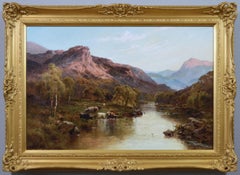
19th Century Welsh river landscape oil painting near Betws-y-Coed
Located in Nr Broadway, Worcestershire
Alfred de Breanski Snr
British, (1852-1928)
Near the Fairy Glen Betws-y-Coed
Oil on canvas, signed & transcribed verso
Image size: 23.5 inches x 35.5 inches
Size including frame: 31 ...
Category
Victorian 19th Century Animal Paintings
Materials
Canvas, Oil
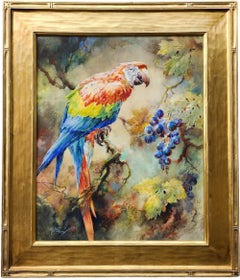
Contemplation, 1910 Scarlet Macaw, Ornithology, Naturalist, Bird Portrait
Located in Grand Rapids, MI
William Edward Powell (English, 1878/85 - 1955)
Signed: W. E. Powell (Lower, Left)
" Contemplation ", circa 1910 (Titled on Verso)
Watercolor on Paper
22 1/2" x 18 1/2"
Housed i...
Category
19th Century Animal Paintings
Materials
Paper, Watercolor
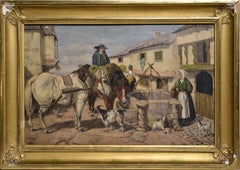
Daytime Watering Hole at Well in French Village 19th Century Oil Painting
Located in Stockholm, SE
This beautiful painting depicts a crowded scene of a watering hole at a well in the midst of a sunny, hot day, located on the street of a provincial village supposedly located somewh...
Category
Realist 19th Century Animal Paintings
Materials
Oil, Cardboard
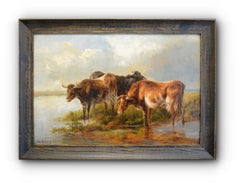
"Cows Watering" - Framed 19th Century Antique Landscape Painting
Located in New Orleans, LA
If anyone would like to do the research on the painter “J. Ericson” who signed this wonderful late 19th-century painting of cows grazing in a swamp, you might find they were really n...
Category
Naturalistic 19th Century Animal Paintings
Materials
Oil
$960 Sale Price
20% Off
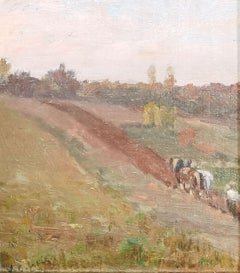
"Ploughing on the Hillside" Jean-Charles Cazin, Plein Air Landscape Sketch
Located in New York, NY
Jean-Charles Cazin
Ploughing on the Hillside
Signed lower left
Oil on board
6 1/2 x 6 inches
The son of a well-known doctor, FJ Cazin, he was born at Samer, Pas-de-Calais. After st...
Category
Tonalist 19th Century Animal Paintings
Materials
Canvas, Oil
$1,600 Sale Price
20% Off
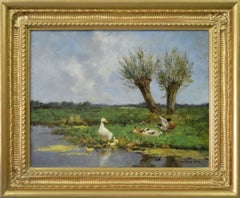
19th Century animal oil painting of ducks
ducklings next to a river
Located in Nr Broadway, Worcestershire
Constant Ludovic Artz
Dutch, (1870-1951)
The Swimming Lesson
Oil on canvas, signed
Image size: 11.5 inches x 15 inches
Size including frame: 16.5 inches x 20 inches
An enchanting painting of ducks and ducklings next to a river by constant Ludovic Artz. A white duck can be seen about to enter the water with her ducklings. Two more ducks are depicted resting on the bank beside a male duck who is shown puffing his chest out.
Constant David Ludovic Artz was born in Paris on 3 June, 1870, the son of David Adolph Constant Artz (1837-1890) and Josephine Jouanin. His father was a Dutch artist who had moved his family to Paris to set up a studio. The family returned to Holland in 1874 and settled in the Hague. Artz was taught art by his father and at the age of 12 enrolled at the Academy of Visual Arts in The Hague. He also received tuition from Hendrik Mesdag (1831-1915) and Willem Maris (1844-1910) who had an influence on his subject matter.
He married Johanna Sophia Cecilia Ginjoolen at the Hague on 5 July, 1893. One of the witnesses was the artist Tony Offermans (1854-1911) whom he was apprenticed to at his studio. The couple went on to have two children together and to supplement his income, Artz also worked as an art teacher. One of his pupils was Leendert Scheltema (1876-1966).
After divorcing from his first wife in 1915, he married Lucie Sophie van der Hoeven in 1917. At some point he moved to Soestdijk, living there until 1926 when he relocated to Katwijk at Sea in. He returned to Soestdijk in 1931 where he died on 23 February, 1951.
Like his father, Artz was fascinated by nature and after painting a series of landscapes and seascapes began producing scenes featuring ducks and waterfowl usually on or by lakes and rivers. He was an expert at painting the play of light upon water and also preferred to work with smaller canvasses. His work can be found in private and public collections including the Rijksmuseum.
Presentation: The painting is housed in a new, English made gilt frame which is in excellent condition.
Condition: As with all of our original antique oil paintings, this work is offered in ready to hang gallery condition, having been professionally cleaned, restored and revarnished.
© Benton Fine...
Category
Victorian 19th Century Animal Paintings
Materials
Canvas, Oil
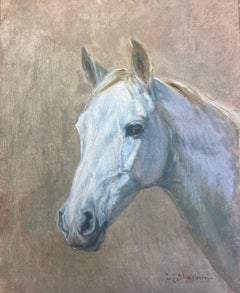
Head of a Arab Horse
By John Lewis Shonborn
Located in London, GB
Oil on cardboard mounted on canvas, signed lower right
Image size: 9 x 7 1/4 inches (23 x 18.5 cm)
Original gilt frame
This painting shows a horse standing in profile in front of, w...
Category
Modern 19th Century Animal Paintings
Materials
Oil
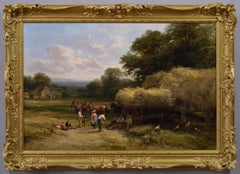
19th Century landscape genre oil painting of farmworkers with horses
a dog
By George Cole
Located in Nr Broadway, Worcestershire
George Cole
British, (1810-1883)
Rick Making, Lunchtime
Oil on canvas, signed & dated 1883
Image size: 23.5 inches x 35.5 inches
Size including frame: 30.5 inches x 42.5 inches
Prove...
Category
Victorian 19th Century Animal Paintings
Materials
Canvas, Oil
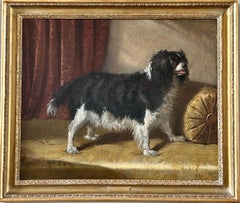
A portrait of a black and white spaniel dog in a sumptuous interior
Located in Bath, Somerset
A black and white spaniel standing on a yellow silk damask covered day-bed in a sumptuous interior.
Provenance:
With Arthur Ackermann & Son Ltd., London.
Anonymous sale; Christie's, South Kensington, 15 May 2007, lot 284
Private collection, London
Samuel John Carter...
Category
English School 19th Century Animal Paintings
Materials
Canvas, Oil
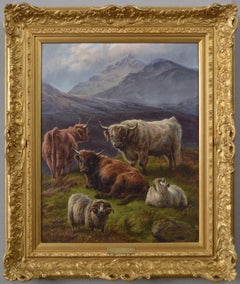
19th Century landscape oil painting of cattle
sheep in the Highlands
Located in Nr Broadway, Worcestershire
Charles Jones
British, (1836-1892)
Cattle & Sheep in the Scottish Highlands
Oil on panel, signed with monogram & dated (18)75, further inscribed verso
Image size: 19.75 inches x 15.75 inches
Size including frame: 26.75 inches x 22.75 inches
A dramatic Scottish landscape painting of Highland Cattle and Sheep by Charles ‘Sheep’ Jones...
Category
Victorian 19th Century Animal Paintings
Materials
Oil, Panel
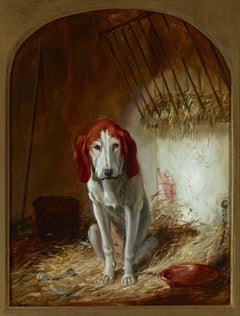
The Hound
Located in Bryn Mawr, PA
Oil on board
Signed within painting (on bucket): AFT
Provenance
Private collection
Why We Love It
Tait’s animal paintings were hailed for their masterful realism. Moreover, he capt...
Category
Realist 19th Century Animal Paintings
Materials
Oil
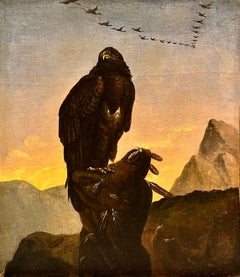
American or English School Perched Eagle
Located in Fredericksburg, VA
This striking mid-19th century oil painting captures the drama and majesty of a perched eagle surveying its domain at dusk. Painted around the 1840s, the work evokes the spirit of th...
Category
Realist 19th Century Animal Paintings
Materials
Canvas, Oil
Charger (military horse) "Sphinx"
Located in GB
John Ferneley Jr. (1815–1862) was born in 1815 in Melton Mowbray, Leicestershire, the eldest son of renowned sporting artist John Ferneley Sr. Growing up in a family immersed in the ...
Category
Victorian 19th Century Animal Paintings
Materials
Canvas, Oil
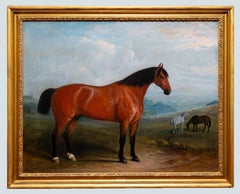
19th Century sporting horse portrait oil painting of a chestnut hunter
Located in Nr Broadway, Worcestershire
Abraham Cooper RA
British, (1787-1868)
A Surrey Hunter
Oil on canvas, signed with monogram & dated 1850, further inscribed bottom left
Image size: 24 inches x 29 inches
Size includi...
Category
Victorian 19th Century Animal Paintings
Materials
Canvas, Oil
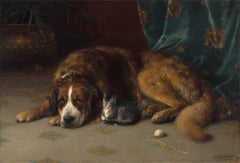
Newfoundland with a Kitten by Otto Eerelman
Located in New Orleans, LA
Otto Eerelman
1839-1926 Dutch
Newfoundland with a Kitten
Oil on canvas
Signed “O. Eerelman” (lower right)
This monumental painting is by the celebrated Dutch artist Otto Eerelman...
Category
Academic 19th Century Animal Paintings
Materials
Canvas, Oil
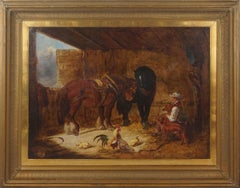
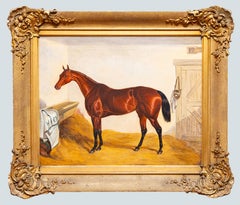
Mid 19th Century Interior of Stable with Horses, Dogs, and Stable Hand
Located in Soquel, CA
Wonderful mid 19th Century painting of a stable's interior with two horses, stable hand, two spaniels, a rooster and ducks from a follower of John Frederick Herring, Sr. (British, 17...
Category
English School 19th Century Animal Paintings
Materials
Masonite, Oil, Linen
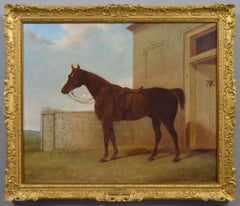
Bay race horse in a stable, William Osborne RHA, Irish Artist, 1823 - 1901
By William Osborne
Located in GB
This painting by William Osborne, an Irish artist from the 19th century, features a bay racehorse in a stable, captured in rich oil on canvas. The scene evokes a sense of realism and attention to detail, as Osborne was known for his vivid depictions of horses, particularly those involved in racing or in stables. The piece is signed with the artist’s initials, and still features the original frame.
William Osborne is today best remembered as the father of the artist Walter Osborne. But he was a significant artist in his own right. He specialised in painting animals especially his own terriers who were often depicted in his studio. Strickland wrote ''His pictures of dogs...
Category
19th Century Animal Paintings
Materials
Canvas, Oil
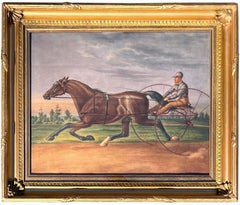
$7,866 Sale Price
20% Off
Harness Racer at Belmont Park 1884, Philadelphia
Located in Wiscasett, ME
Watercolor on paper, signed lower right Agustus Knoller and dated 1884. Inscribed on the reverse in pencil "This trotting came off Aug 15th 1884 at Belmont Park...
Category
Folk Art 19th Century Animal Paintings
Materials
Oil
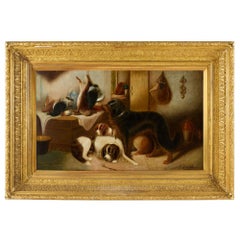
Antique Large Hunting Scene Dogs Edward Armfield British Oil Painting
Located in London, GB
Antique Large Hunting Scene Dogs Edward Armfield British Oil Painting
British, Late 19th Century
Canvas: Height 76.5cm, width 127cm
Frame: Height 118cm, width 168cm, depth 15cm
This...
Category
English School 19th Century Animal Paintings
Materials
Canvas, Oil
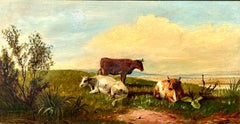
Cows Grazing in Field
Located in Fredericksburg, VA
This serene Hudson River School painting by George Wright captures a peaceful moment of pastoral life, where three cows rest and graze under a wide, luminous sky. The composition gen...
Category
Hudson River School 19th Century Animal Paintings
Materials
Canvas, Oil
Fine Victorian English Oil Rural Cottage Landscape Figures
Animals in Lane
Located in Cirencester, Gloucestershire
The Rural Lane
English School, mid Victorian period, circa 1860'1870
oil on canvas, framed
framed: 21.5 x 27 inches
canvas: 18 x 24 inches
Provenance: private collection, England
Con...
Category
English School 19th Century Animal Paintings
Materials
Canvas, Oil

$1,802 Sale Price
20% Off
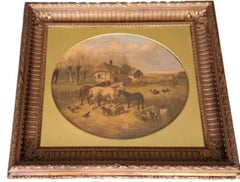
19th century landscape farmyard scene horses oil painting John Frederick Herring
Located in York, GB
Charming 19th century landscape oil painting of a Farmyard scene by john Frederick Herring depicting a number of different animals including horses, chickens, goats, ducks and cows along with a farmer and his homestead. Oil on canvas, in heavy gilt frame behind glass with oval mount. Size of canvas, Height: 51cm Width: 61cm. Framed overall size Height: 81cm Width: 90cm approximately. signed
This painting is in overall good condition. There is some age related craquelure throughout as to be expected (close up pics available on request)
The original frame/slip shows some signs of age as to be expected including age related cracks and some minor losses
which have been colour matched and regilded. This in no way detracting from this fine painting
This painting is heavy and may need crating if shipping,this would need to be custom made and may cause delay in shipping
John Frederick HERRING (1815-1907)
John Frederick Herring Junior (1815 - 1907)
was an English painter who is best known for his equine art.
John F. Herring Jr...
Category
Old Masters 19th Century Animal Paintings
Materials
Oil
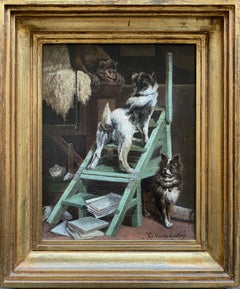
Confrontation, Charles Van Den Eycken, Brussels 1859 – 1923, Belgian Painter
Located in Knokke, BE
Confrontation
Van Den Eycken Charles
Brussels 1859 – 1923
Belgian Painter
Signature: Signed bottom right
Medium: Oil on canvas
Dimensions: Image size 28 x 21,50 cm, frame size 36 x 30 cm
Biography: Van Den Eycken Charles (alias Charles Duchene) was born in Brussels in 1859. He was an animal painter, mainly dogs and cats and interiors.
He was the son of Charles Van Den Eycken...
Category
Romantic 19th Century Animal Paintings
Materials
Canvas, Oil
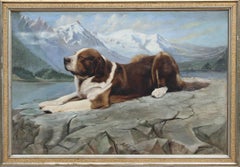
St. Bernard, Realist Oil on Canvas Painting by J. Bowker
By J. Bowker (XIXct.)
Located in Long Island City, NY
Artist: J. Bowker
Title: St. Bernard
Year: 1887
Medium: Oil on Canvas, signed and dated l.r.
Size: 30 in. x 48 in. (76.2 cm x 121.92 cm)
Category
Realist 19th Century Animal Paintings
Materials
Canvas, Oil
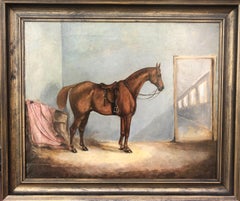
Sir Richard Sutton
s Most Famous Hunter Hotspur
By Claude-Lorraine Ferneley
Located in London, GB
Claude-Lorraine Ferneley
Sir Richard Sutton's Most Famous Hunter Hotspur
c.1840
24 X 28.5 inches framed
A genuinely famous hunter! Even mention in...
Category
19th Century Animal Paintings
Materials
Oil
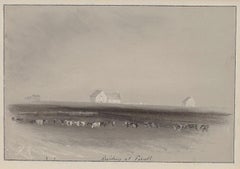
"Residence At Terrell" Date 1881 TEXAS CATTLE SCENE GRANDFATHER TEXAS ART
By Frank Reaugh
Located in San Antonio, TX
Frank Reaugh
(1860-1945)
Dallas Artist
Image Size: 3 3/4 x 5 1/2
Frame Size: 15 x 18
Medium: Pastel on paperboard
Circa 1881
"Residence At Terrell" From the collection of Lucretia Coke. Signed F.R. Lower Left & S7
On Verso 1881 or 2, 2 or 3 miles from next house.
Frank Reaugh (1860-1945)
Charles Franklin Reaugh.
THE FRANK REAUGH GALLERY AT THE PANHANDLE-PLAINS HISTORICAL MUSEUM
by Michael R. Grauer, Curator of Art, Panhandle-Plains Historical Museum
Called the pejorative "Rembrandt of the Longhorn" and "Longhorn Leonardo," and the gentler "Painter to the Longhorns," Charles Franklin "Frank" Reaugh was a master pastellist unparalleled in Texas and the greater Southwest. While he advertised himself as a "landscape and cattle painter" and insisted he was the historian of the Texas longhorn, he has effectively, and unfortunately, pigeonholed his art.
More appropriately, Frank Reaugh is often called the "Dean of Texas Painters." His name is synonymous with the "old guard" of Texas art history, along with Robert Onderdonk, Hermann Lungkwitz, William Henry Huddle, Henry McArdle, and others.
Reaugh's paintings focused on the landscape of the American West generally, and the American Southwest, specifically. He captured subtleties in a land of high contrast where others only saw the rawness. He painted the overwhelmingly blue sky, the illimitable plains, and the great gashes in the land that are called canyons, arroyos, or breaks in the West. And he painted the Texas longhorn, or Texas cattle, as he referred to them.
Usually no more important than the mesquite, yucca, sagebrush, and cholla that also populate his compositions of the Western landscape, the Texas longhorn became his recognized symbol. Today, some commercial galleries even insist that one of his works is more valuable if it has a cow in it! These commercial zealots in their search for a longhorn often overlook the beauty of his landscapes; they cannot see the landscape for the longhorns.
Born near Jacksonville, Illinois in 1860, Reaugh first came to Texas in a wagon in 1876 at the age of fifteen. He moved with his parents to a farm near Terrell, Texas, until 1890 when they moved to Dallas and settled in what is now the Oak Cliff area.
Reaugh had no formal education but fared well without it for his mother, Clarinda Reaugh, was his teacher in all things. The daughter of a Presbyterian minister, his mother instilled in her only child an appreciation of nature, grounded in her own readings in zoology, botany, and natural history. Her teachings were infused with the philosophies of the famed Swiss zoologist Louis Agassiz and John Burroughs, supporter and contemporary of Walt Whitman, who wrote extensively on his symbiotic relationship with nature. Clarinda Reaugh also encouraged her son's interest in drawing through her own interest in the fine arts.
Reaugh's father, George Washington Reaugh, was a mechanic, carpenter, cabinetmaker, and farmer, who had participated in the Gold Rush of 1849. It was from his father that Reaugh learned to be extremely adept with his hands, and later made his own picture frames and patented several inventions. George Reaugh's sense of adventure may have spurred his son's annual trips to West Texas and beyond, which began in the early 1880s.
Reaugh's first exposure to art came through reproductions in popular magazines such as Harper's, Scribner's, and Century Illustrated. Rosa Bonheur's Horsefair, the Dutch painter Paulus Potter's Young Bull, and the landscapes of Frederic Edwin Church and J. M. W. Turner were favorites of his. (In fact, his late works are often especially reminiscent of Church and Turner.) From these early reproductions in black and white, Reaugh learned well the lessons of value and composition.
While he studied and copied magazine reproductions, Reaugh also became interested in bovine anatomy. Using a "two-bit" book on cattle and sheep anatomy as his text, the young artist collected bones near the Reaugh farm and made measurements from family livestock. He supplemented his scientific studies with sketches made from longhorn cattle brought up from South Texas to fatten on grass nearby.
In the early 1880s, Reaugh met two cattlemen, Frank and Romeo Houston, who had interests throughout North Texas, and accompanied them on cattle drives and roundups near present-day Wichita Falls and in Indian Territory (now Oklahoma). His first documented trip to Western Texas came in 1883; probably near present day Wichita Falls and Henrietta, Texas.
Reaugh made numerous sketches during these trips, often from the saddle, and later enlarged and composed them in the studio. His field sketches resulted in his first two pastel masterpieces, Watering the Herd (1889) and The One-O Roundup (1894). and his oil The Approaching Herd (1902). These trips with the Houstons, begun as early as 1883, spurred a wanderlust for West Texas that lured Reaugh until he was nearly eighty.
Reaugh took his first formal art training at the Saint Louis Museum and School of Fine Arts during the winter of 1884-85. He spent most of his time there drawing from plaster casts of Greek, Roman, and Italian sculpture and possibly live models. Reaugh also met Halsey C. Ives, director of the school, who lectured on avant-garde art trends in Europe, particularly French Impressionism. Later, Ives was instrumental in the acceptance of Reaugh's work for display at the Louisiana Purchase Exposition, held in Saint Louis in 1904.
Following his studies at Saint Louis, Reaugh returned to Terrell and began teaching art to young ladies in the area. He supplemented his art classes with a stint at teaching public school, and by November 1888 had saved enough money for a trip to Europe.
Upon arriving at Paris, Reaugh enrolled at the Academie Julian, a school very popular with international students, especially Americans. He drew and painted from the figure while at the Academie under Jules Lefebvre, John-Joseph Benjamin Constant, and Henri-Lucien Douciet, all members of the "juste milieu" in France. Reaugh studied at the Academie for half of each day then supplemented his formal instruction by making copies of or studying paintings in the Louvre and the Luxembourg Palace.
Logically he was especially drawn to the pastels in what he later called the 'pastel room' in the Louvre. In his 1927 pamphlet, Pastel, Reaugh wrote of the pastel painters he saw in the gallery: "[John] Russell, of England, and [Maurice-Quentin de] La Tour, [Jean Etienne] Liotard, [Jean Simeon] Chardin, and [Madame Vigee] Le [sic] Brun. These were great painters. . .the work of all of them may be seen in the pastel room of the Louvre, as fresh and bright, apparently, as on the day it was done." In addition to the pastellists he mentioned, Reaugh also saw pastels in the Louvre by Rosalba Carriera, Francois Boucher, and Pierre Paul Prudhon.
At the end of March 1889, Reaugh traveled through Belgium and Holland, studying paintings of the Flemish and Dutch schools, and particularly those of The Hague School, of which Anton Mauve was a part. He returned to Paris in time to see the Exposition Universelle, at which paintings by French Impressionists Cezanne, Manet, Monet, and Pissarro were exhibited. This may have been Reaugh's initial exposure to Impressionism. Reaugh returned to Texas at the end of May 1889.
Between 1890 and 1915, Frank Reaugh enjoyed his greatest success as an artist. He exhibited works at two world's fairs: the World's Columbian Exposition at Chicago in 1893 and the Louisiana Purchase Exposition in 1904. He also exhibited at the prestigious National Academy of Design at New York, the Pennsylvania Academy of the Fine Arts at Philadelphia, and the Art Institute of Chicago. Moreover, Reaugh became a member of the Society of Western Artists and exhibited with that group all over the United States. Finally, Reaugh toured his pastels with much success, especially in the upper Midwest.
Simultaneously, Reaugh continued his trips to the West and, beginning in the 1890s, he started using a camera as a sketching tool. He photographed the landscape as well as cattle, and in 1893 photographed in Palo Duro Canyon; perhaps his first trip to the 'Grand Canyon of Texas'.
After 1900, Reaugh turned his genius to inventing and patented several devices including a folding lap easel, a water pump, and a cooling mechanism for internal combustion engines, among other things. He also patented Reaugh Pastels, using a formula he developed and shaped into an octagonal-shape stick for easier gripping. Allegedly, either John Singer Sargent or William Merritt Chase used Reaugh Pastels.
Reaugh also became more active in Dallas art and civic circles. After first offering private art lessons, he organized the Dallas School of Fine Arts in 1899. He urged Dallas to build the city's first art gallery in 1900, to which he donated a painting, and helped found the Dallas Art Association in 1903. Furthermore, Reaugh arranged the loan of paintings from then-contemporary American artists in the East and Midwest for the State Fair of Texas. An vocational naturalist, Reaugh also organized a popular nature study club in Dallas, members of which were young ladies who grew to be influential Dallas civic leaders. Nevertheless, despite his ground-level work to bring art to Dallas, as the Dallas Art Association grew Reaugh was pushed aside by socialites and his contributions forgotten.
Around 1910 and possibly earlier, he began taking students with him on his trips West. Among them were Texas artists Edward G. Eisenlohr, Florence McClung, Lloyd Goff...
Category
Impressionist 19th Century Animal Paintings
Materials
Pastel
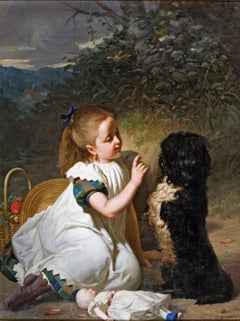
Teaching him a New Trick
Located in Mc Lean, VA
19th Century Dutch
Category
Academic 19th Century Animal Paintings
Materials
Canvas, Oil
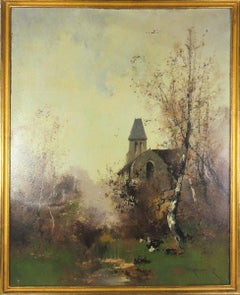
Vintage french art by Eugène Galien Laloue - oil signed
Located in PARIS, FR
Conditions : Very good overall Conditions. Few minor retouching under UV light. Original extra large canvas. No restauration necessary..
Complementary shipping worlwide by DHL, FED...
Category
Impressionist 19th Century Animal Paintings
Materials
Oil
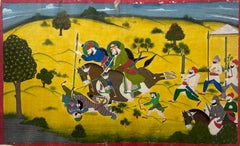
Kota School Large 19th century Indian Miniature Painting Private UK Collection
Located in Norfolk, GB
Kotah School, c.1880
A fine Kotah School miniature painting, c 1880. Examined by the British Museum in 2015. There is a similar known composition in the collection of LACMA depicti...
Category
Other Art Style 19th Century Animal Paintings
Materials
Watercolor, Paper
Antique Oil Painting, Dog Portrait, 19th Century, signed and dated.
Located in Berlin, DE
Decorative, antique oil painting, dog portrait, 19th century, signed and dated.
Dimensions including frame.
Category
19th Century Animal Paintings
Materials
Canvas, Oil
$4,737 Sale Price
20% Off
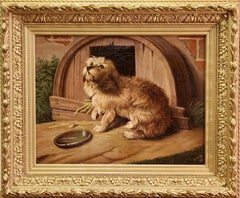
Fine Victorian English Oil Painting Three Terrier Dogs by Rabbit Hole landscape
Located in Cirencester, Gloucestershire
Three Terrier Dogs in Landscape
English artist, mid 19th century
circle of George Armfield (English dog painter, 1808-1893)
oil on board, framed
framed: 19.5 x 23 inches
board: 13 x ...
Category
Victorian 19th Century Animal Paintings
Materials
Oil
$1,092 Sale Price
20% Off
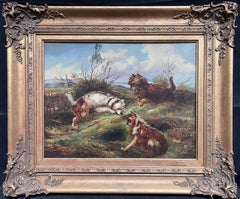
Old oil on Canvas 18th century , after Jean baptiste Oudry French school
Located in Gavere, BE
Very beautiful old artwork of the end of the 18th century ,after Jean Baptiste Oudry " Loup pris au piege ",
an example of which is exhibited at th...
Category
French School 19th Century Animal Paintings
Materials
Gold Leaf
$6,537 Sale Price
20% Off
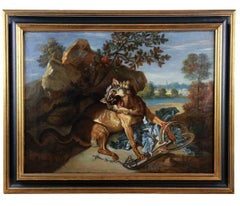
Chinese Bed Canopy Painting of Peonies and Pheasants, c. 1850
Located in Chicago, IL
The experience of art itself can be an intimate one, and this bed canopy, hand-painted over 100 years ago by an artist in Canton, was more intimate than most. Delicately painted pheasants...
Category
Qing 19th Century Animal Paintings
Materials
Paint, Wood Panel
$3,416 Sale Price
30% Off
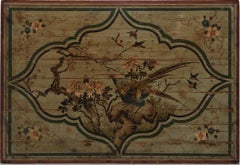
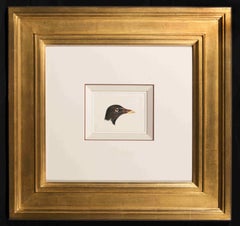
Study of the Head of a Moorhen
By Joseph Mallord William Turner
Located in Belgravia, London, London
Watercolour on paper
Paper size: 4 x 5 inches
Framed size: 19 x 19.75 inches
PROVENANCE
A gift from Joseph Mallord William Turner to Miss Amelia Hawksworth (later Mrs Hotham), niece of Walter Fawkes. The watercolour descended through the ownership of Amelia Hawksworth, daughter of Francis Fawkes ( Walter Fawkes's brother) who was the main compiler of the Ornithological Collection (Miss Hawksworth owned five other bird studies by Turner).
Private collection, London
LITERATURE:
For similar works by J M W Turner see Anne Lyles, The Tate catalogue for the exhibition 'Turner and Natural History, The Farnley Project', 1988.
The present watercolour was drawn circa 1815-1820 for Walter Fawkes of Farnley Hall, for his Ornithological Collection Volume IV.
Between 1808 and 1824, Turner visited Farnley Hall in Yorkshire to stay with the Fawkes family. Turner felt at home at Farnley - the Fawkes daughters reminded him of his own. He helped illustrate a five volume ornithological scrap book for the Fawkes children, making watercolour studies of the birds for the children to stick in opposite the pages on which feathers from similar birds were attached. His bird portraits were most effective, most "life-like", when in fact the bird was dead ! His watercolours of a live robin and goldfinch have a more hesitant touch.
At this time Turner enjoyed the patronage first of Edward Lascelles, the heir to Harewood, and after 1808, of the radical landlord Walter Fawkes of Farnley Hall, near Otley. He became a close friend of the Fawkes family with whom he stayed for most summers until 1824.
The last owner of Old Farnley Hall was Francis Fawkes, a rich widower with no direct heirs. When Francis Fawkes died in 1786 he left the house to Walter Beaumont Hawksworth of Hawksworth Hall, on condition that Hawksworth adopt the Fawkes name by Royal Licence. Walter Fawkes brought in architect John Carr of York to make extensions to the house, but he died before the work was completed, and Farnley Hall was passed on to his son, also called Walter who also took the Fawkes name and was known as Walter Ramsden Fawkes. It was this Walter who was a great friend of J M W Turner.
Anne Lyles has confirmed the attribution and writes:
"Everything fits in relation to the style of the watercolour and most especially the provenance - in the Turner and Natural History exhibition catalogue of 1988 we know that Amelia Hawksworth (Mrs Hotham) owned three studies of birds' heads by J M W Turner (previously with the Maas Gallery, and numbers 36, 37 and 61 in that catalogue) as well as two studies of dead game by the artist (catalogue numbers 59 and 63, the latter untraced in 1988). Interestingly, catalogue numbers 36 and 37 (the Merganser and the Smew) seem also originally to have been intended for Volume IV of the Ornithological Collection - it is likely that the "Study of the Head of a Moorhen...
Category
19th Century Animal Paintings
Materials
Paper, Watercolor
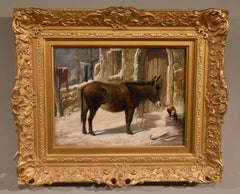
Oil Painting by Henry Charles Woollett "Winter"
Located in Mere, GB
Oil Painting by Henry Charles Woollett "Winter" 1826 - 1890 Henry was born in Brighton then lived in Cheltenham and Liverpool. He painted rustic landscape with animals found in the ...
Category
19th Century Animal Paintings
Materials
Oil
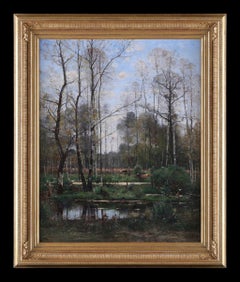
$2,048 Sale Price
25% Off
Cows on a Woodland Path
. Framed Oil painting by Louis Japy
Located in St. Albans, GB
Louis Aimé Japy
1840 - 1916
Oil painting on canvas
Fully signed
Picture Size: 32 x 25.5" (82 x 66cm)
Outside Frame Size: 39 x 33.5" (99 x 83cm)
Excellent age appropriate condition.
...
Category
Barbizon School 19th Century Animal Paintings
Materials
Oil
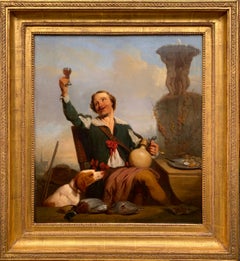
After a Good Hunt, Petrus Kremer, Antwerp 1801 – 1888, Belgian Painter, Signed
Located in Knokke, BE
After a Good Hunt
Kremer Petrus
Antwerp 1801 – 1888
Belgian Painter
Signature: Signed bottom left
Dimensions: Image size 49,50 x 44 cm, frame size 63,50 x 58,50 cm
Medium: Oil on panel
Biography: Kremer Petrus was born on May 9 in 1801 in Antwerp. He was a Belgian painter of genre scenes with religious and historic context, still lifes and portraits.
He studied at the Antwerp Academy of Fine Art, with master teachers and artists Guillaume Herreyns (1743 – 1827) and Mattheus van Bree (1773 – 1839). He perfected himself in Paris, travelled in 1838 Germany, France and Italy where he studied in the museums the pictures of the Dutch and Flemish masters.
He excelled in the representation of flowers, poultry and game. Some of his paintings were engraved by English engraver Joseph Brown (1809 – 1887) and other artists.
Belgian painter Gustaaf Wappers (1803 – 1874) painted his portrait.
Kremer was honoured with several medals at various exhibitions, notably in London in 1929. He exhibited at the Brussels National Exhibition of 1842 “Examination of Don Carlos...
Category
Flemish School 19th Century Animal Paintings
Materials
Oil, Panel
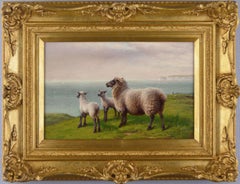
19th Century landscape oil painting of sheep grazing on a clifftop
Located in Nr Broadway, Worcestershire
Charles Jones
British, (1836-1892)
Sheep Grazing on a Cliff Top
Oil on canvas, signed with monogram
Image size: 7.5 inches x 11.5 inches
Size including frame: 13.5 inches x 17.5 inches
A lovely landscape painting of sheep on a coastal cliff by Charles ‘Sheep’ Jones. The sheep and her two lambs are depicted against the backdrop of the sea with shipping and chalk cliffs in the distance. The location is likely to be the Devon coast, an area Jones visited often.
Charles Jones was an animal painter who was born in Stepney, London in 1836. He was the son of the artist Samuel John Egbert Jones (1797-1861) and Dinah Jones. He lived with his parents and 9 siblings in Mile End and was a pupil of his father. In September 1859, he married Frances Rosalinda Downe, who was born in America. His son Arthur Bertram Loud (1863-1930) also became an artist. They lived at 12 Hayes Place, Lisson Grove from where he made his debut in London at the Royal Academy in 1861. He also exhibited at the British Institution, Suffolk Street, New Watercolour Society, Royal Institute of Oil Painters and the Royal Institute of Painters in Watercolours.
By 1867, he had become a successful artist and had moved to 7 Paragon Place, Brixton Hill. From 1874, he lived at Heathercroft, Balham Hill where he spent the rest of his life. As well as the major London galleries, he also exhibited provincially at various locations including: the Royal Cambrian Academy where he was elected a member in 1886, the Glasgow Institute of Fine Arts, Manchester City Art Gallery, Royal Hibernian Academy, Royal Society of British Artists, Birmingham and the Walker Art Gallery, Liverpool. Some of the smaller more intimate galleries he exhibited at were Arthur Tooth & Sons and Thomas Richardson...
Category
Victorian 19th Century Animal Paintings
Materials
Canvas, Oil
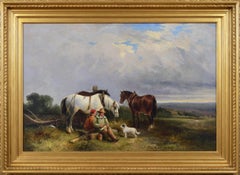
19th Century landscape genre oil painting of ploughmen with horses
a dog
By George Cole
Located in Nr Broadway, Worcestershire
George Cole
British, (1810-1883)
Waiting for a Treat
Oil on canvas, signed & dated 1857
Image size: 19.5 inches x 29.5 inches
Size including frame: 26.25 inches x 36.25 inches
A cha...
Category
Victorian 19th Century Animal Paintings
Materials
Canvas, Oil
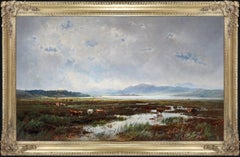
Morecambe Bay - Large 19th Century Oil Painting Royal Academy Exhibition 1877
Located in Gerrards Cross, GB
‘Morecambe Bay’ by Alfred de Breanski ARCA (1852-1928).
The painting - which depicts cattle grazing on Heysham salt marshes in Morecambe Bay with a view of the Old Man of Coniston an...
Category
Victorian 19th Century Animal Paintings
Materials
Oil
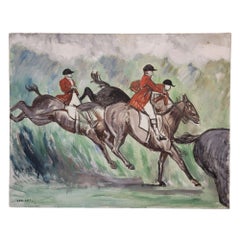
France Acrylic on canvas “Horse Race”, León Lafourcade
Located in Valladolid, ES
Exquisite painting by Léolaf, the artistic name of León Lafourcade, a French-born artist active between the 19th and 20th centuries. He participated in various exhibitions, including...
Category
Impressionist 19th Century Animal Paintings
Materials
Acrylic
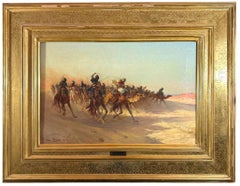
The Charge 19th-century Realism Antique Oil Painting on Canvas, Signed
Located in Jacksonville, FL
The painting is signed and dated 1894
Description:
Eugene Alexis Girardet (1853-1907) was a prominent Swiss painter known for his remarkable attention to detail and his ability to capture vivid and dynamic scenes. Born in Paris, France, Girardet came from a family of artists and received early artistic training from his father, Paul Girardet, and his uncle, Jules Girardet, both respected engravers. He later studied at the prestigious École des Beaux-Arts in Paris, where he honed his skills and developed a deep appreciation for historical and orientalist subjects.
He was interred at the Père-Lachaise Cemetery. In addition to several museums in France, his works may be seen at the Dahesh Museum of Art and the National Museum of Fine Arts of Algiers, as well as at museums in Switzerland and New York City.
Girardet’s artwork often depicted historical and exotic scenes, particularly focusing on Middle Eastern and North African themes. His meticulous attention to detail and his ability to convey a sense of movement and drama made his works highly sought after. One of his most renowned paintings, “The Charge,” exemplifies his exceptional talent and his ability to create a captivating and immersive experience for viewers.
In “The Charge,” Girardet presents an army of Arab camel...
Category
Academic 19th Century Animal Paintings
Materials
Canvas, Oil
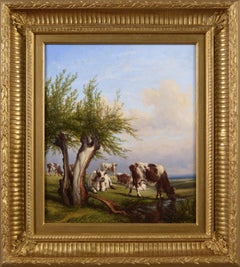
19th Century landscape oil painting of cattle
Located in Nr Broadway, Worcestershire
Thomas Baker
British, (1809-1864)
Cows with a Willow Tree
Oil on canvas, signed & dated 1860
Image size: 14 inches x 11.75 inches
Size including frame: 20.5 inches x 18.25 inches
P...
Category
19th Century Animal Paintings
Materials
Canvas, Oil
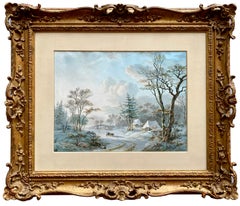
A winter landscape with an ox-cart
by Willem De Klerk (1800 – 1876)
Located in Knokke, BE
Willem De Klerk
1800 – Dordrecht – 1876
Dutch Painter
'A winter landscape with an ox-cart on a wooded road near a village'
Signature: signed lower left ‘W. de Klerk f’
Medium: oi...
Category
Romantic 19th Century Animal Paintings
Materials
Ink, Watercolor, Pencil
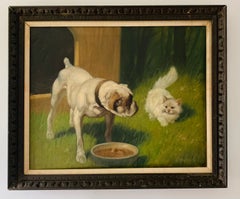
Dog Guarding Food Bowl From a Fluffy White Cat
By Arthur Heyer
Located in New York, NY
Arthur Heyer, 1871-1932
Oil on canvas, 22" x 27"
Signed on the front.
A bulldog is depicted guarding his bowl of food from a fluffy white cat, who keeps ...
Category
Impressionist 19th Century Animal Paintings
Materials
Canvas, Oil
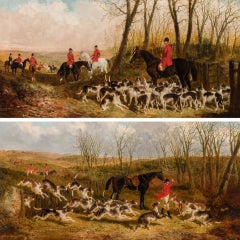
The Meet and the Kill
Located in Lexington, KY
Known to his contemporaries as “Fred,” the junior Herring painted farm and equestrian scenes similar in subject matter and style to those of his father. His paintings are chiefly dis...
Category
19th Century Animal Paintings
Materials
Oil
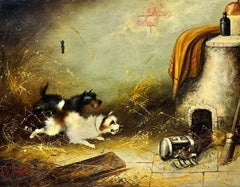
Terrier Dogs chasing Rat in Stable Barn Interior signed English Oil Painting
Located in Cirencester, Gloucestershire
Frank Cassell (British 19th century)
signed oil painting on canvas, framed
framed: 18.5 x 22 inches
canvas: 12 x 16 inches
provenance: private collection...
Category
Victorian 19th Century Animal Paintings
Materials
Canvas, Oil
$1,638 Sale Price
20% Off
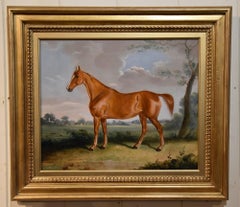
Oil Painting by Cornelius Jansen Walter Winter "A Favourite Hunter"
Located in Mere, GB
Oil Painting by Cornelius Jansen Walter Winter "A Favourite Hunter" 1817- 1891. Born in Bungay the son of a stained glass painter. Pupil of Edwin Cooper of Beccles. Painted Norfolk A...
Category
19th Century Animal Paintings
Materials
Oil
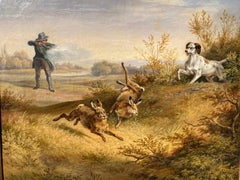
German School, Animal Hunting Scene, Hunter with Dogs, Hares, Cabinet Painting
Located in Greven, DE
German School or Swiss School, 19th Century, Hunting Scene, Hunter with Dogs, Hares, Painting
indistinctly signed.
Fine and detailed painted scene of a hunt with dogs, a hunter and h...
Category
Romantic 19th Century Animal Paintings
Materials
Canvas
$1,231 Sale Price
20% Off
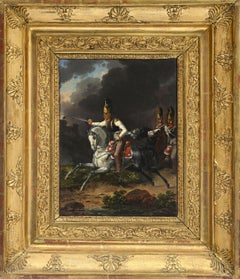
Portrait of Russian cuirassiers colonel
By Hippolyte Lecomte
Located in BELEYMAS, FR
Hippolyte LECOMTE
(Puiseaux, 1781 – Paris, 1857)
Colonel of Russian cuirassiers
Oil on canvas
H. 33 cm; W. 24 cm
Signed and dated at the bottom towards the center 1817
Exhibition: S...
Category
French School 19th Century Animal Paintings
Materials
Oil, Canvas
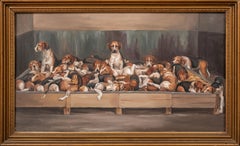
The New Forest Foxhounds, 19th Century by E G Chapman (19th Century British)
Located in Blackwater, GB
The New Forest Foxhounds, 19th Century
by E G Chapman (19th Century British)
19th Century English portrait of the New Forest Foxhounds, oil on canvas by E G Chapman. Excellent qual...
Category
19th Century Animal Paintings
Materials
Canvas, Oil
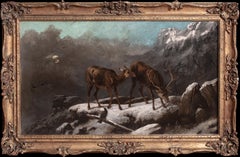
Stag
Deer Grazing In The Frozen Scottish Highlands, 19th Century ROBERT ROE
Located in Blackwater, GB
Stag & Deer Grazing In The Frozen Scottish Highlands, 19th Century
by ROBERT HENRY ROE (BRITISH 1822-1905)
Large 19th Century Scottish Highland scene of a deer & Stag grazing in a ...
Category
19th Century Animal Paintings
Materials
Canvas, Oil
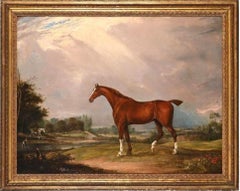
English early 19th century painting of a chestnut hunter in a landscape
Located in Bath, Somerset
A painting of a chestnut hunter in a landscape with a horse and rider accompanied by two hounds by a woodland river in the distance.
Signed and inscribed 'Melton Mowbray', lower left.
Oil on canvas in a giltwood frame.
John Ferneley Sr (1782-1860) was born the son of a Leicestershire wheelwright, the youngest of six children. He is known as one of the great British equine artists, perhaps only second to Stubbs in terms of raw ability.
Ferneley originally worked with his father, until by chance the Duke of Rutland saw some of his work on the side of a cart on which Ferneley and his father had been working. The Duke was so impressed with Ferneley that he persuaded John's father to allow him to become the pupil of Benjamin Marshall. Ferneley was so talented that apparently he produced almost perfect copies of his tutor's paintings and they were said to have been indistinguishable from the master’s. Marshall also enrolled him as a student of the Royal Academy Schools.
In 1804 Ferneley paid a man named Thomas Harrison...
Category
English School 19th Century Animal Paintings
Materials
Canvas, Oil
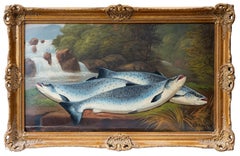
Salmon by the River, John Peter Russell, signed
Located in GB
John Peter Russell was a pioneering Australian impressionist, born in Sydney in 1858. After studying engineering in England, he turned to art and trained at the Académie Julian in Pa...
Category
19th Century Animal Paintings
Materials
Oil, Board
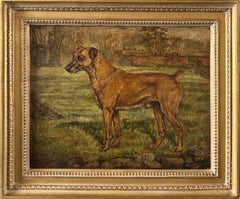
A portrait of an English terrier dog standing in a walled garden, signed.l
By John Emms
Located in Bath, Somerset
A terrier named Joe standing in an English country house walled garden, painted by the eminent animal painter John Emms (1844-1912) in the late 19th cent...
Category
English School 19th Century Animal Paintings
Materials
Oil, Canvas
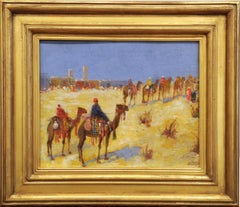
Romantic Oil Painting: The Departing Caravan, Late 19th Century
Located in New York, NY
C. Calusd (1860-1936)
Signed lower right
An American painter specializing in Marine night paintings and Orientalist Scenes, he lived in Constantinople and had a studio at 225 5th Ave...
Category
Romantic 19th Century Animal Paintings
Materials
Oil, Canvas
More Ways To Browse
Alexander Koester
Beagle Portrait
Black Labrador Painting
Boston Terrier Painting
Canadian Goose Painting
Chihuahua Painting
Frances Mabel Hollams
Hunt Slonem Finches
Hunting Painting 1900
J Langlois
Joanne Bird
John Barber
Joseph Dixon
Josh Brown Giraffe
Jules Chardigny
Jumping Horse Painting
Lion Cub Painting
Louis Eugene Lambert