Metal Figurative Paintings

to
98
276
138
144
120
339
Overall Width
to
Overall Height
to
45
44
112
816
3
1
13
2
2
6
4
9
5
50
21
433
64
53
24
23
20
16
15
15
9
9
2
1
485
291
206
400
250
145
144
132
76
64
58
52
47
44
43
38
26
25
24
23
22
19
19
378,273
45,096
30,194
24,128
23,076
62
29
28
21
16
386
140
607
343
Medium: Metal
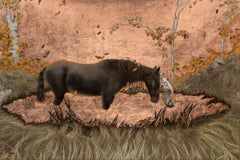
"Lowland Savior" Oil Painting
Located in Denver, CO
Dana Hawk's (US based) "Lowland Savior" is an original, handmade oil painting that depicts a horse that seems to be stuck in a vat of copper, surrounded with...
Category

2010s Realist Metal Figurative Paintings

Materials

Copper

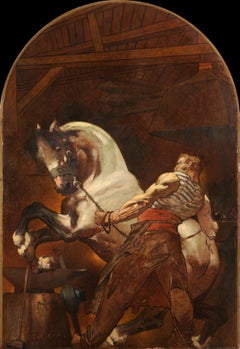
Horse at the Blacksmith s
By Louis Henri Deluermoz
Located in BELEYMAS, FR
Henri DELUERMOZ (Paris 1876 – Paris 1943) At the blacksmith's Oil on metal. Two welded plates H. 145 cm; W. 100.5 cm Signed lower left Trained under Alcide-Joseph Lorentz and Charle...
Category

1890s French School Metal Figurative Paintings

Materials

Metal

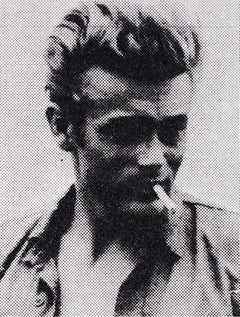
James Dean
Located in PARIS, FR
Original and unique work by Russell Young. Enamel and diamond dust screen print on linen, Black + White, unframed dimensions 62 x 48 inches, 2011, from the series "Diamond Dust". Da...
Category

2010s Pop Art Metal Figurative Paintings

Materials

Enamel

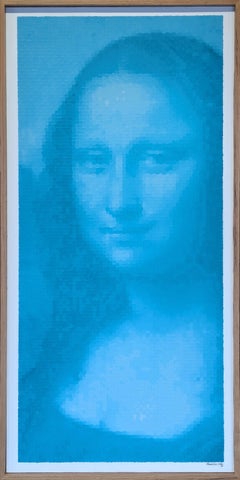
"Blue Mona Lisa " Contemporary Leonardo da Vinci Inspired Figure Pixel Painting
Located in Houston, TX
Contemporary pop art inspired pixelated rendition of a detail from Leonardo da Vinci's renowned painting, the "Mona Lisa." Similar to pointillism, the individual hand-painted blocks...
Category

2010s Pop Art Metal Figurative Paintings

Materials

Enamel

Staying Power
Located in Indianapolis, IN
David Kramer (b. 1963) Staying Power (2014) Oil and enamel on canvas 64 x 54 in (162.6 x 137.2 cm) Hand signed on verso ==== Inspired by vintage magazines and the portrayal of sed...
Category

2010s Contemporary Metal Figurative Paintings

Materials

Enamel

Maybelline
Located in Indianapolis, IN
David Kramer (b. 1963) Maybelline (2014) Oil and enamel on canvas 64 x 54 in (162.6 x 137.2 cm) Hand signed on verso ==== Inspired by vintage magazines and the portrayal of seduct...
Category

2010s Contemporary Metal Figurative Paintings

Materials

Enamel

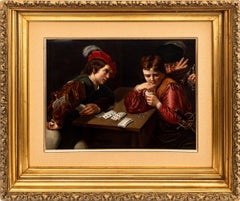
After Caravaggio KPM Porcelain Plaque
Located in Astoria, NY
After Caravaggio "Die Falschspieler" [The Cardsharps] KPM Porcelain Plaque, impressed "K.P.M. / F" marks to reverse, giltwood frame. Image: 11.75" H x 16" W; frame: 20.5" H x 24.5" W...
Category

19th Century Baroque Metal Figurative Paintings

Materials

Enamel

"Ivory s Second Life" (2025), Oil Female Portrait, Painting on Copper and Canvas
Located in Denver, CO
Lisa Fricker's "Ivory's Second Life" is an original, handmade oil painting that depicts a close up portrait of a woman in front of a earth , geometrical abstracted background. Throu...
Category

2010s Abstract Impressionist Metal Figurative Paintings

Materials

Copper

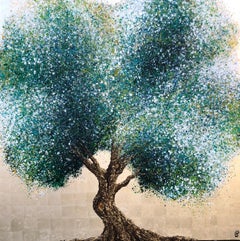
Olivier de Provence 3
Located in New York, NY
This work is a unique piece. It is a gilded oil painting on linen canvas with 22 carat gold leaf. CS Art comprises of two artists, one French, the other Norwegian. They have been pa...
Category

2010s Contemporary Metal Figurative Paintings

Materials

Gold, Silver, Foil, Gold Leaf

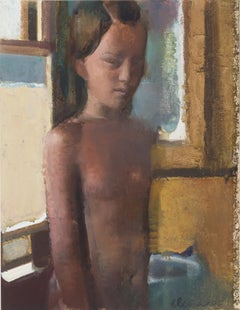
In the Bathroom
Located in Burlingame, CA
Portrait of a young woman in the bathroom, painted with oil and gold leaf on paper. The artwork is is 14 x 11 inches. And it is newly and professionally framed with all museum materi...
Category

21st Century and Contemporary Contemporary Metal Figurative Paintings

Materials

Gold Leaf

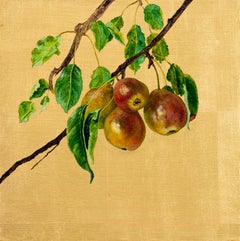
Pear branch laden with ripe fruits on a golden background
Located in Milan, IT
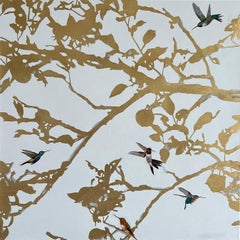
Margherita Leoni's small and precious painting presents all the fullness of thriving nature offering its fruits. As in sacred art, gold has always evoked the divine, the choice of th...
Category

2010s Realist Metal Figurative Paintings

Materials

Gold

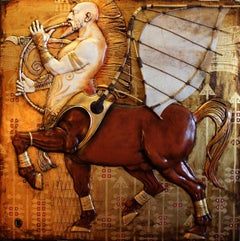
Inspired by a Dream
Located in Edinburgh, GB
Materials: Canvas on chipboard, polymer clay, genuine leather, parchment leather, bamboo, gold leaf, oil The image of a powerful Centaur who dreams of flying
Category

2010s Metal Figurative Paintings

Materials

Gold Leaf

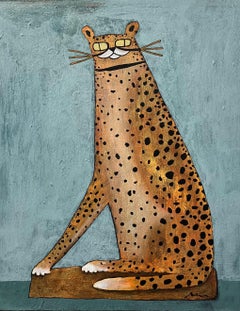
Ornamental Cheetah III, Original painting, Animal art, Cheetah painting
Located in Deddington, GB
The piece is part of a series loosely based on figurines I have come across in vintage shops, the figures often being moulded in one with the base, I thought it would be fun to do on...
Category

2010s Contemporary Metal Figurative Paintings

Materials

Enamel

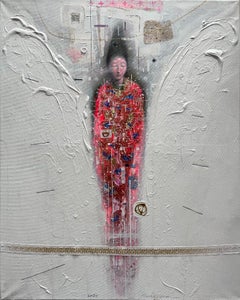
Automation of an Angel II Hyperrealism Mixed Media Surreal Modern Cuban Art
Located in Houston, TX
LOOK FOR FREE SHIPPING AT CHECKOUT. Automation of an Angel II 28" x 24" x 1" mixed media Cuba Automation of an Angel II was recently painted by the Cuban artist Brian Sanchez in 2...
Category

2010s Surrealist Metal Figurative Paintings

Materials

Gold Leaf

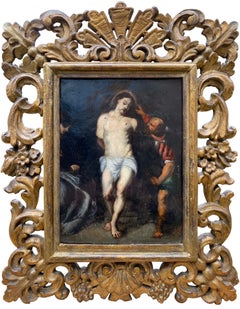
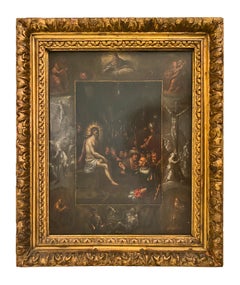
The Flagellation of Christ, Old Master, Flemish School, Oil on copper
Located in Knokke, BE
The Flagellation of Christ Old Master Flemish School 17th century Medium: Oil on copper Dimensions: Image size 22 x 17 cm, frame size 39 x 31 cm
Category

17th Century Baroque Metal Figurative Paintings

Materials

Copper

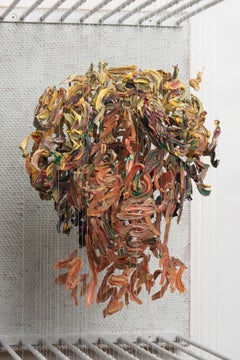
SOH - figurative portrait sculpture in 3D with suspended dried paint strokes
By Chris Dorosz
Located in New York, NY
Item description S.O.H acrylic paint on monofilament, metal, hemp on board 14 H x 9.25 W x 11 D inches 2018 Rosh from Chris Dorosz is a suite of small busts, each an individual scul...
Category

2010s Abstract Expressionist Metal Figurative Paintings

Materials

Metal

Kiss the Sky
Located in Atlanta, GA
Gwen Wong's work is both painterly and allegorical, caught somewhere in the middle between the representational painter and the narrator. "I am inspired by the idea of a childhood re...
Category

2010s Contemporary Metal Figurative Paintings

Materials

Gold Leaf

Art Deco Theatre Costume Design with Greek Mythological Figures
Located in Miami, FL
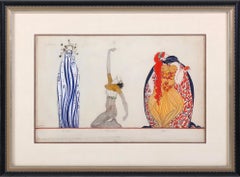
With stylistic confidence, French Artist Georges Lepape created three highly inventive and masterfully imaginative Art Deco figures based on Ancient Greek history. The work was for a...
Category

1920s Art Deco Metal Figurative Paintings

Materials

Metal

Holy Family, by the bolgonese master.
By Giuseppe Maria Crespi, Lo Spagnuolo
Located in New York, NY
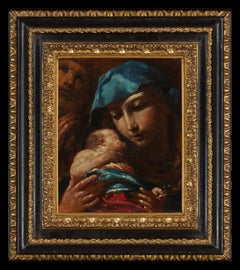
This exquisite painting, resembling a precious jewel, serves as an exceptional illustration of the devotional cabinet paintings created by Giuseppe Maria Crespi, a highly original Bolognese artist during the late 17th and early 18th centuries. Crespi's distinctiveness extended beyond his unique style and technique to the subjects he chose to portray. While his portraits and genre paintings often displayed a light-hearted and even irreverent tone, his treatment of religious themes resonated with deep emotion, even in its most inventive forms. This recently uncovered work by Crespi is a typical representation, invoking the tender connection between mother and child, and the Child's destiny, all within a compact and intimate format. Executed on a small scale, the painting showcases Crespi's remarkable sensitivity and mastery of paint, especially evident in the expressive brushwork of the drapery. The restrained and focused composition of the Holy Family allows for contemplation of the figures. Mary cradles the Christ child gently, seemingly presenting him to the viewer, her gaze knowing as the infant holds a diminutive cross, symbolizing his future crucifixion. Joseph appears in the background, emerging from the left side of the frame, gazing upward with folded hands in prayer. Individual motifs from this painting reappear in other works by Crespi, suggesting a synthesis of familiar elements into a vibrant composition. The artist's revisitation of designs throughout his career is evident, and this painting on copper likely belongs to a later period, reflecting stylistic ties to other works and Crespi's increased production of smaller devotional pieces. Distinguished by its cool palette, bold coloration, and the expressive force of the artist's hand, this Holy Family painting...
Category

Early 1700s Baroque Metal Figurative Paintings

Materials

Copper

Spring- 21st Century Contemporary
Located in Nuenen, Noord Brabant
This painting is made by Pam Hawkes. On the painting you see the portrait of a woman This British artist is new to the Netherlands, her work is now a household name in the rest of ...
Category

2010s Contemporary Metal Figurative Paintings

Materials

Gold Leaf

Five Moons, Folk Art Acrylic Painting by Ernani Silva
Located in Long Island City, NY
Ernani Silva, Brazilian - Five Moons, Medium: Acrylic, Collage and Enamel on board, signed in marker lower left, Size: 12.75 x 21 in. (32.39 x 53.34 cm)
Category

1990s Folk Art Metal Figurative Paintings

Materials

Enamel

"The Last Portrait of Roy Lichtenstein by Ceravolo", 74x82x10" Oil Aluminum
Located in Southampton, NY
Ceravolo was introduced to Lichtenstein at a museum show in 1995, at that show, Lichtenstein and Ceravolo discussed the fact that Andy Warhol had painted portraits of Roy in the 1970...
Category

1990s Pop Art Metal Figurative Paintings

Materials

Enamel, Metal

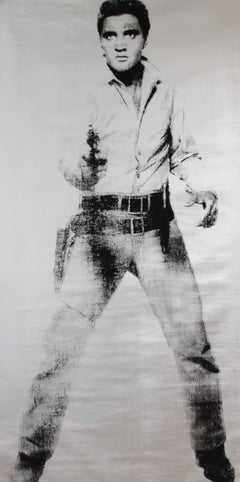
"Elvis", Denied Andy Warhol Silver Black Pop Art Painting by Charles Lutz
Located in Brooklyn, NY
Elvis, Metallic Silver and Black Full Length Silkscreen Painting by Charles Lutz Silkscreen and silver enamel painted on vintage 1960's era linen with Artist's Denied stamp of the Andy Warhol Art Authentication Board. 82" x 40" inches 2010 Lutz's 2007 ''Warhol Denied'' series gained international attention by calling into question the importance of originality or lack thereof in the work of Andy Warhol. The authentication/denial process of the [[Andy Warhol Art Authentication Board]] was used to create value by submitting recreations of Warhol works for judgment with the full intention for the works to be formally marked "DENIED". The final product of the conceptual project being "officially denied" "Warhol" paintings authored by Lutz. Based on the full-length Elvis Presley paintings by Pop Artist Andy Warhol in 1964, this is likely one of his most iconic images, next to Campbell's Soup Cans and portraits of Jackie Kennedy, Marilyn Monroe, Liz Taylor, and Marlon Brando. This is the rarest of the Elvis works from the series, as Lutz sourced a vintage roll of 1960's primed artist linen which was used for this one Elvis. The silkscreen, like Warhol's embraced imperfections, like the slight double image printing of the Elvis image. Lutz received his BFA in Painting and Art History from Pratt Institute and studied Human Dissection and Anatomy at Columbia University, New York. Lutz's work deals with perceptions and value structures, specifically the idea of the transference of values. Lutz's most recently presented an installation of new sculptures dealing with consumerism at Frank Lloyd Wright's Fallingwater House in 2022. Lutz's 2007 Warhol Denied series received international attention calling into question the importance of originality in a work of art. The valuation process (authentication or denial) of the Andy Warhol Art Authentication Board was used by the artist to create value by submitting recreations of Warhol works for judgment, with the full intention for the works to be formally marked "DENIED" of their authenticity. The final product of this conceptual project is "Officially DENIED" "Warhol" paintings authored by Lutz. Later in 2013, Lutz went on to do one of his largest public installations to date. At the 100th Anniversary of Marcel Duchamp's groundbreaking and controversial Armory Show, Lutz was asked by the curator of Armory Focus: USA and former Director of The Andy Warhol Museum, Eric Shiner to create a site-specific installation representing the US. The installation "Babel" (based on Pieter Bruegel's famous painting) consisted of 1500 cardboard replicas of Warhol's Brillo Box (Stockholm Type) stacked 20 ft tall. All 1500 boxes were then given to the public freely, debasing the Brillo Box as an art commodity by removing its value, in addition to debasing its willing consumers. Elvis was "the greatest cultural force in the Twentieth Century. He introduced the beat to everything, and he changed everything - music, language, clothes, it's a whole new social revolution." Leonard Bernstein in: Exh. Cat., Boston, The Institute of Contemporary Art and traveling, Elvis + Marilyn 2 x Immortal, 1994-97, p. 9. Andy Warhol "quite simply changed how we all see the world around us." Kynaston McShine in: Exh. Cat., New York, Museum of Modern Art (and traveling), Andy Warhol: Retrospective, 1996, p. 13. In the summer of 1963 Elvis Presley was just twenty-eight years old but already a legend of his time. During the preceding seven years - since Heartbreak Hotel became the biggest-selling record of 1956 - he had recorded seventeen number-one singles and seven number-one albums; starred in eleven films, countless national TV appearances, tours, and live performances; earned tens of millions of dollars; and was instantly recognized across the globe. The undisputed King of Rock and Roll, Elvis was the biggest star alive: a cultural phenomenon of mythic proportions apparently no longer confined to the man alone. As the eminent composer Leonard Bernstein put it, Elvis was "the greatest cultural force in the Twentieth Century. He introduced the beat to everything, and he changed everything - music, language, clothes, it's a whole new social revolution." (Exh. Cat., Boston, The Institute of Contemporary Art (and traveling), Elvis + Marilyn 2 x Immortal, 1994, p. 9). In the summer of 1963 Andy Warhol was thirty-four years old and transforming the parameters of visual culture in America. The focus of his signature silkscreen was leveled at subjects he brilliantly perceived as the most important concerns of day to day contemporary life. By appropriating the visual vernacular of consumer culture and multiplying readymade images gleaned from newspapers, magazines and advertising, he turned a mirror onto the contradictions behind quotidian existence. Above all else he was obsessed with themes of celebrity and death, executing intensely multifaceted and complex works in series that continue to resound with universal relevance. His unprecedented practice re-presented how society viewed itself, simultaneously reinforcing and radically undermining the collective psychology of popular culture. He epitomized the tide of change that swept through the 1960s and, as Kynaston McShine has concisely stated, "He quite simply changed how we all see the world around us." (Exh. Cat., New York, Museum of Modern Art (and traveling), Andy Warhol: Retrospective, 1996, p. 13). Thus in the summer of 1963 there could not have been a more perfect alignment of artist and subject than Warhol and Elvis. Perhaps the most famous depiction of the biggest superstar by the original superstar artist, Double Elvis is a historic paradigm of Pop Art from a breath-taking moment in Art History. With devastating immediacy and efficiency, Warhol's canvas seduces our view with a stunning aesthetic and confronts our experience with a sophisticated array of thematic content. Not only is there all of Elvis, man and legend, but we are also presented with the specter of death, staring at us down the barrel of a gun; and the lone cowboy, confronting the great frontier and the American dream. The spray painted silver screen denotes the glamour and glory of cinema, the artificiality of fantasy, and the idea of a mirror that reveals our own reality back to us. At the same time, Warhol's replication of Elvis' image as a double stands as metaphor for the means and effects of mass-media and its inherent potential to manipulate and condition. These thematic strata function in simultaneous concert to deliver a work of phenomenal conceptual brilliance. The portrait of a man, the portrait of a country, and the portrait of a time, Double Elvis is an indisputable icon for our age. The source image was a publicity still for the movie Flaming Star, starring Presley as the character Pacer Burton and directed by Don Siegel in 1960. The film was originally intended as a vehicle for Marlon Brando and produced by David Weisbart, who had made James Dean's Rebel Without a Cause in 1955. It was the first of two Twentieth Century Fox productions Presley was contracted to by his manager Colonel Tom Parker, determined to make the singer a movie star. For the compulsive movie-fan Warhol, the sheer power of Elvis wielding a revolver as the reluctant gunslinger presented the zenith of subject matter: ultimate celebrity invested with the ultimate power to issue death. Warhol's Elvis is physically larger than life and wears the expression that catapulted him into a million hearts: inexplicably and all at once fearful and resolute; vulnerable and predatory; innocent and explicit. It is the look of David Halberstam's observation that "Elvis Presley was an American original, the rebel as mother's boy, alternately sweet and sullen, ready on demand to be either respectable or rebellious." (Exh. Cat., Boston, Op. Cit.). Indeed, amidst Warhol's art there is only one other subject whose character so ethereally defies categorization and who so acutely conflated total fame with the inevitability of mortality. In Warhol's work, only Elvis and Marilyn harness a pictorial magnetism of mythic proportions. With Marilyn Monroe, whom Warhol depicted immediately after her premature death in August 1962, he discovered a memento mori to unite the obsessions driving his career: glamour, beauty, fame, and death. As a star of the silver screen and the definitive international sex symbol, Marilyn epitomized the unattainable essence of superstardom that Warhol craved. Just as there was no question in 1963, there remains still none today that the male equivalent to Marilyn is Elvis. However, despite his famous 1968 adage, "If you want to know all about Andy Warhol, just look at the surface of my paintings" Warhol's fascination held purpose far beyond mere idolization. As Rainer Crone explained in 1970, Warhol was interested in movie stars above all else because they were "people who could justifiably be seen as the nearest thing to representatives of mass culture." (Rainer Crone, Andy Warhol, New York, 1970, p. 22). Warhol was singularly drawn to the idols of Elvis and Marilyn, as he was to Marlon Brando and Liz Taylor, because he implicitly understood the concurrence between the projection of their image and the projection of their brand. Some years after the present work he wrote, "In the early days of film, fans used to idolize a whole star - they would take one star and love everything about that star...So you should always have a product that's not just 'you.' An actress should count up her plays and movies and a model should count up her photographs and a writer should count up his words and an artist should count up his pictures so you always know exactly what you're worth, and you don't get stuck thinking your product is you and your fame, and your aura." (Andy Warhol, The Philosophy of Andy Warhol (From A to B and Back Again), San Diego, New York and London, 1977, p. 86). The film stars of the late 1950s and early 1960s that most obsessed Warhol embodied tectonic shifts in wider cultural and societal values. In 1971 John Coplans argued that Warhol was transfixed by the subject of Elvis, and to a lesser degree by Marlon Brando and James Dean, because they were "authentically creative, and not merely products of Hollywood's fantasy or commercialism. All three had originative lives, and therefore are strong personalities; all three raised - at one level or another - important questions as to the quality of life in America and the nature of its freedoms. Implicit in their attitude is a condemnation of society and its ways; they project an image of the necessity for the individual to search for his own future, not passively, but aggressively, with commitment and passion." (John Coplans, "Andy Warhol and Elvis Presley," Studio International, vol. 181, no. 930, February 1971, pp. 51-52). However, while Warhol unquestionably adored these idols as transformative heralds, the suggestion that his paintings of Elvis are uncritical of a generated public image issued for mass consumption fails to appreciate the acuity of his specific re-presentation of the King. As with Marilyn, Liz and Marlon, Warhol instinctively understood the Elvis brand as an industrialized construct, designed for mass consumption like a Coca-Cola bottle or Campbell's Soup Can, and radically revealed it as a precisely composed non-reality. Of course Elvis offered Warhol the biggest brand of all, and he accentuates this by choosing a manifestly contrived version of Elvis-the-film-star, rather than the raw genius of Elvis as performing Rock n' Roll pioneer. A few months prior to the present work he had silkscreened Elvis' brooding visage in a small cycle of works based on a simple headshot, including Red Elvis, but the absence of context in these works minimizes the critical potency that is so present in Double Elvis. With Double Elvis we are confronted by a figure so familiar to us, yet playing a role relating to violence and death that is entirely at odds with the associations entrenched with the singer's renowned love songs. Although we may think this version of Elvis makes sense, it is the overwhelming power of the totemic cipher of the Elvis legend that means we might not even question why he is pointing a gun rather than a guitar. Thus Warhol interrogates the limits of the popular visual vernacular, posing vital questions of collective perception and cognition in contemporary society. The notion that this self-determinedly iconic painting shows an artificial paradigm is compounded by Warhol's enlistment of a reflective metallic surface, a treatment he reserved for his most important portraits of Elvis, Marilyn, Marlon and Liz. Here the synthetic chemical silver paint becomes allegory for the manufacture of the Elvis product, and directly anticipates the artist's 1968 statement: "Everything is sort of artificial. I don't know where the artificial stops and the real starts. The artificial fascinates me, the bright and shiny..." (Artist quoted in Exh. Cat., Stockholm, Moderna Museet and traveling, Andy Warhol, 1968, n.p.). At the same time, the shiny silver paint of Double Elvis unquestionably denotes the glamour of the silver screen and the attractive fantasies of cinema. At exactly this time in the summer of 1963 Warhol bought his first movie camera and produced his first films such as Sleep, Kiss and Tarzan and Jane Regained. Although the absence of plot or narrative convention in these movies was a purposely anti-Hollywood gesture, the unattainability of classic movie stardom still held profound allure and resonance for Warhol. He remained a celebrity and film fanatic, and it was exactly this addiction that so qualifies his sensational critique of the industry machinations behind the stars he adored. Double Elvis was executed less than eighteen months after he had created 32 Campbell's Soup Cans for his immortal show at the Ferus Gallery, Los Angeles in July and August 1962, and which is famously housed in the Museum of Modern Art, New York. In the intervening period he had produced the series Dollar Bills, Coca-Cola Bottles, Suicides, Disasters, and Silver Electric Chairs, all in addition to the portrait cycles of Marilyn and Liz. This explosive outpouring of astonishing artistic invention stands as definitive testament to Warhol's aptitude to seize the most potent images of his time. He recognized that not only the product itself, but also the means of consumption - in this case society's abandoned deification of Elvis - was symptomatic of a new mode of existence. As Heiner Bastian has precisely summated: "the aura of utterly affirmative idolization already stands as a stereotype of a 'consumer-goods style' expression of an American way of life and of the mass-media culture of a nation." (Exh. Cat., Berlin, Neue Nationalgalerie (and traveling), Andy Warhol: Retrospective, 2001, p. 28). For Warhol, the act of image replication and multiplication anaesthetized the effect of the subject, and while he had undermined the potency of wealth in 200 One Dollar Bills, and cheated the terror of death by electric chair in Silver Disaster # 6, the proliferation of Elvis here emasculates a prefabricated version of character authenticity. Here the cinematic quality of variety within unity is apparent in the degrees to which Presley's arm and gun become less visible to the left of the canvas. The sense of movement is further enhanced by a sense of receding depth as the viewer is presented with the ghost like repetition of the figure in the left of the canvas, a 'jump effect' in the screening process that would be replicated in the multiple Elvis paintings. The seriality of the image heightens the sense of a moving image, displayed for us like the unwinding of a reel of film. Elvis was central to Warhol's legendary solo exhibition organized by Irving Blum at the Ferus Gallery in the Fall of 1963 - the show having been conceived around the Elvis paintings since at least May of that year. A well-known installation photograph shows the present work prominently presented among the constant reel of canvases, designed to fill the space as a filmic diorama. While the Elvis canvases...
Category

21st Century and Contemporary Pop Art Metal Figurative Paintings

Materials

Enamel

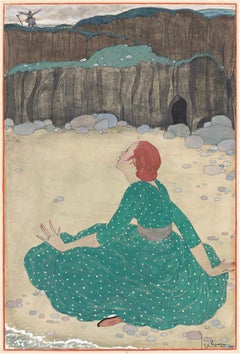
Art Nouveau Woman on Beach in Green Dress Romantic Story "Le Retour"
Located in Miami, FL
In this painting, Art Nouveau French illustrator Georges Lepape depicts a high moment of personal drama. He exquisitely renders a beautiful yet solitary woman sitting on the beach...
Category

1910s Art Nouveau Metal Figurative Paintings

Materials

Silver

Mocking of Christ, by Frans Francken (II) and possibly Ambrosius Francken (II)
Located in New York, NY
Mocking of Christ, with all around in grisaille: the Crucifixion, the Resurrection, God the Father, Mankind after the Fall,; in the corners the four evangelists. J. Dijkstra ao, cat. The paintings of Museum Catharijneconvent, Utrecht (Museum Catharijneconvent) 2002, p. 196, pict., as Frans Francken...
Category

17th Century Mannerist Metal Figurative Paintings

Materials

Copper

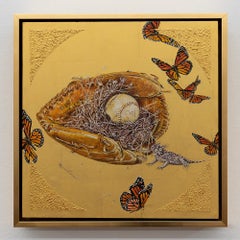
Catch - Oil Painting on 23k gold leaf, still life, horny toad, monarch, baseball
Located in Denton, TX
Catch by Pam Burnley-Schol is an oil painting on gold leaf, featuring a baseball mitt holding a birds' nest with a baseball nestled inside. A horned lizard and monarch butterflies su...
Category

2010s Contemporary Metal Figurative Paintings

Materials

Gold Leaf

The Home of The Muses -Andrea Stella-Figurative Abstract Painting-Mixed Media
Located in Carmel, CA
Andrea Stella (1950-2019). The child of Greek immigrants raised in Italy, Andrea was destined to create. His first concentration in the art world was antique woodworking, which lead...
Category

2010s Contemporary Metal Figurative Paintings

Materials

Gold Leaf

Sign of Power, Pop Art Acrylic Painting by Michael Knigin
Located in Long Island City, NY
Artist: Michael Knigin, American (1942 - 2011) Title: Sign of Power Year: 1990 Medium: Acrylic and enamel on canvas, signed and dated in pencil Size: 75...
Category

1990s Pop Art Metal Figurative Paintings

Materials

Enamel

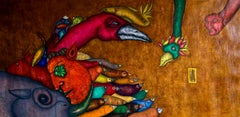
Figurative Oil Painting on Canvas and Animals. "Magical Ecstasy"
Located in Bogotá, Bogotá
This horizontal painting on canvas contains several layers of color, with textures and transparencies, representing a dreamlike scene where fantastic animals and humans in yellow and...
Category

2010s Contemporary Metal Figurative Paintings

Materials

Gold Leaf

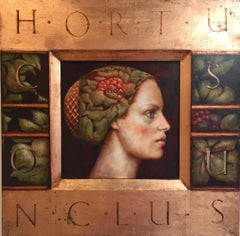
Hortus Conclusus- 21st Century Contemporary Portrait Painting of a Girl
Located in Nuenen, Noord Brabant
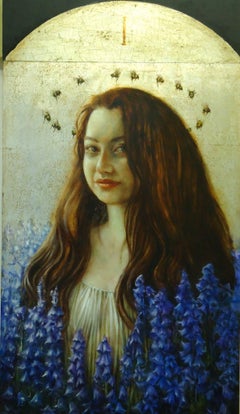
This remarkable painting is made by Pam Hawkes. This British artist is new to the Netherlands, her work is now a household name in the rest of the world. We're proud to represent her...
Category

2010s Contemporary Metal Figurative Paintings

Materials

Copper

Warm in the Sun
Located in Atlanta, GA
Gwen Wong's work is both painterly and allegorical, caught somewhere in the middle between the representational painter and the narrator. "I am inspired by the idea of a childhood re...
Category

2010s Contemporary Metal Figurative Paintings

Materials

Gold Leaf

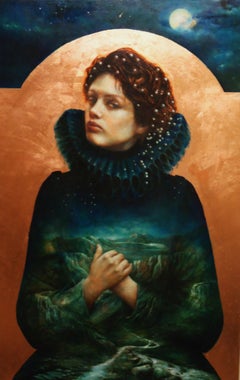
Terra Nullis-21st Century Contemporary Iconic Painting of a Girl in blue dress
Located in Nuenen, Noord Brabant
This British artist is new to the Netherlands, her work is now a household name in the rest of the world. We understand why. A painting by Pam Hawkes is something remarkable. At th...
Category

2010s Contemporary Metal Figurative Paintings

Materials

Copper

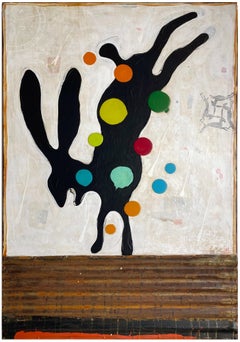
For Real
Located in Los Angeles, CA
John Randall Nelson is an Arizona-based painter and sculptor. Nelson’s works are layered with his own personal language consisting of patterns, symbols, and archetypes that may not make any literal sense but play on subconscious associations. His paintings are thick with poured pigment, saturated washes and worked with layers of drawing and collage. While Nelson's work is akin to outsider, folk art, it should be noted that he received his MFA from Arizona State University in 1995 and has completed commissions for projects as diverse as the National Endowment for the Arts, the United States Postal Service...
Category

2010s Abstract Metal Figurative Paintings

Materials

Metal

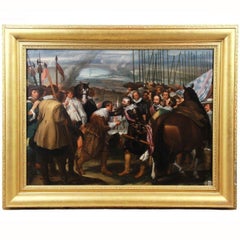
oil on canvas Historical Scene " The Surrender of Breda "after Diego Velasquez
Located in Gavere, BE
The Surrender of Breda, June 5, 1625, known as the Lances is an oil on canvas painted by the Spanish painter Diego Velázquez (1599, Seville - 1660, Madrid) during the years 1634-1635...
Category

1890s Baroque Metal Figurative Paintings

Materials

Gold Leaf

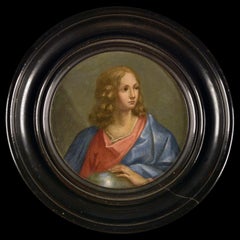
18th Century Italian oil on copper, Raphael School
By (after) Raphael (Raffaello Sanzio da Urbino)
Located in New York, NY
18th Century Italian oil on copper portrait in the style of Raphael. Excellent condition.
Category

18th Century Metal Figurative Paintings

Materials

Copper

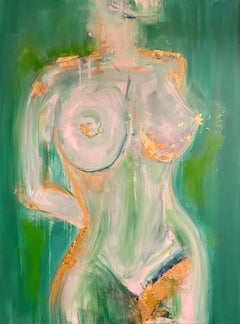
Green Gold Sensuality
Located in Brooklyn, NY
The beauty of the female form.
Category

2010s Contemporary Metal Figurative Paintings

Materials

Gold Leaf

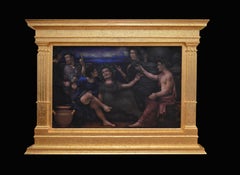
School of Stoics
Located in Mokena, IL
The School of Stoics brings the viewer into an airy evening discussion at an agora overlooking the Aegean Sea. Amidst the silent water and grained marble, a group of stoics debate logic, reason, and nature. Agreement and disagreement prevail in the noble gestures of their bodies. Soon you see an individual's gaze directed towards you, raising their hand, calling you to join the conversation. Technical: 53” x 39”. Tempera on panel with 24k gold water-gilded frame. Painting and frame produced by artists Justas and Vilius Varpucanskis. This piece utilizes the "rules of craftsmanship" as outlined in Cenino Cennini's Il Libro dell'Arte. 21st century contemporary artwork that employs techniques, philosophy, and visual language of the Italian High Renaissance...
Category

21st Century and Contemporary Renaissance Metal Figurative Paintings

Materials

Gold Leaf

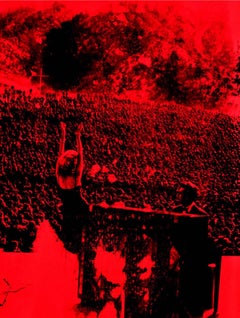
Marilyn in Korea
Located in PARIS, FR
Original and unique artwork by Russell Young. Acrylic paint and enamel screen print on linen, unframed dimensions 62 x 48 inches, 2008, from the series "Fame + Shame". Red and dark c...
Category

Early 2000s Pop Art Metal Figurative Paintings

Materials

Enamel

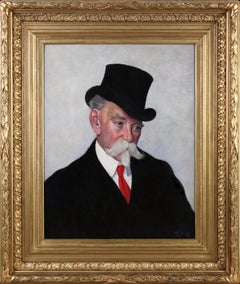
Portrait of A Man Wearing A Top Hat , attributed to Tom Roberts 1888
By Tom Roberts
Located in Gavere, BE
Portrait of A Man Wearing A Top Hat , attributed to Tom Roberts 1888 Thomas William Roberts ( 1856 – 1931) was an English-born Australian artist and a key member of the Heidelberg S...
Category

1880s Realist Metal Figurative Paintings

Materials

Gold Leaf

"Pink Rose Icon" (2020) By Fred Wessel, Egg Tempera Painting on Gold Leaf
Located in Denver, CO
Fred Wessel's "Pink Rose Icon" is a stunning egg tempera painting on gold leaf. Created in 2020, this piece features a beautiful single pink rose with a blooming bud, among its leave...
Category

2010s Realist Metal Figurative Paintings

Materials

Gold Leaf

"LIDER SIN MIEDO" Figurative Portrait Painting 30" x 24" inch by Isaac Pelayo
Located in Culver City, CA
"LIDER SIN MIEDO" Figurative Portrait Painting 30" x 24" inch by Isaac Pelayo Medium: oil, liquid gold, and aerosol on wood ABOUT THE ARTIST: Isaac Pelayo is a head on crash col...
Category

21st Century and Contemporary Contemporary Metal Figurative Paintings

Materials

Gold

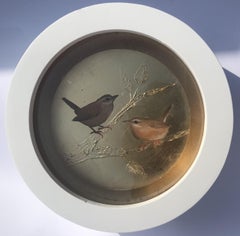
A Pair of Wrens
Located in Deddington, GB
Sally-Ann Johns’ striking work often depicts everyday birds and animals, sometimes portraits, displayed in a unique and exciting way. Set into a gold leaf lined box, they conjure images of ancient religious icons tempting the viewer to witness them in a new light. A Pair of...
Category

2010s Contemporary Metal Figurative Paintings

Materials

Gold Leaf

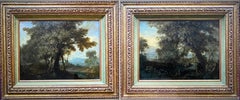
A Pair of Forest Landscapes by Philipp H. Brinckmann (1709 – 1761) Old Master
Located in Knokke, BE
Brinckmann Philipp Hieronymus Spire 1709 – 1761 Manheim Old Master 'A Pair of Forest Landscapes with River and Boat in the Foreground' Signature: signed "Ph. Brinckm" bottom lower ...
Category

18th Century Old Masters Metal Figurative Paintings

Materials

Copper

Oil On Canvas Self Portrait of the artist Sir Anthony Van Dyck 18Th c
Located in Gavere, BE
"Oil On Canvas Self Portrait After Sir Anthony Van Dyck" Follower of Sir Anthony van Dyck (Flemish painter, 1599-1641), Self portrait Oil on canvas (doubled), Probably end 18th centu...
Category

Late 18th Century Baroque Metal Figurative Paintings

Materials

Gold Leaf

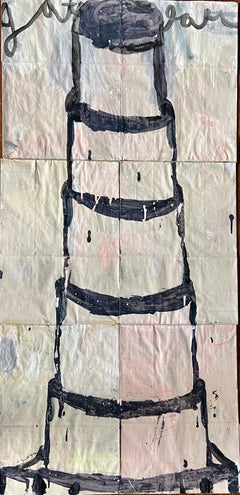
Stacked Cake: Black on Pale Pink and Grey
Located in Fairfield, CT
Unique; water-based enamel paint on paper bags
Category

2010s Contemporary Metal Figurative Paintings

Materials

Enamel

Solitude by Chen Yiching - Contemporary nihonga painting, forest
Located in Paris, FR
Solitude is a unique painting by contemporary artist Chen Yiching. The painting is made with mineral pigments and silver leaf on Japanese paper mounted on wood, dimensions are 70 × 1...
Category

2010s Contemporary Metal Figurative Paintings

Materials

Silver

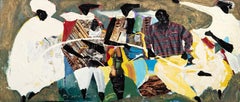
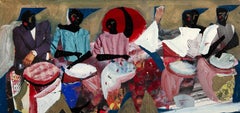
Six Figures, Folk Art Acrylic Painting by Ernani Silva
Located in Long Island City, NY
Ernani Silva, Brazilian - Six Figures, Medium: Acrylic, Collage and Enamel on board, signed in marker lower left, Size: 9.5 x 21 in. (24.13 x 53.34 cm)
Category

1990s Folk Art Metal Figurative Paintings

Materials

Enamel

Solidarity
Located in Ibadan, Oyo
In the ethereal realm of "Solidarity," Dennis Onofua captures a moment of profound connection and unity between two female figures. The artwork, a testam...
Category

21st Century and Contemporary Contemporary Metal Figurative Paintings

Materials

Enamel

Solidarity
Solidarity
$4,000 Sale Price
20% Off
Oil on canvas nude " Lady Godiva " late 19th century Flemish school
Located in Gavere, BE
Lady Godiva 19th century oil on canvas after Joseph Van Lerius (1823-1876) Very beautiful oil on canvas painted by the Belgian artist JH Mols (19th century art...
Category

1890s Flemish School Metal Figurative Paintings

Materials

Gold Leaf

Startled Character
Located in San Francisco, CA
Gabriel Mendoza Personaje sobresaltado (Startled Character), 2024 Gold leaf and oil on wood panel 15.75 x 23.63 x 1 inches This one-of-a-kind painting is mounted on board. Years ag...
Category

21st Century and Contemporary Contemporary Metal Figurative Paintings

Materials

Gold Leaf

Continuum - Oil painting on 23k gold leaf, still life, nest, shell, prism, clock
Located in Denton, TX
Continuum by Pam Burnley-Schol is an oil painting on 23k gold leaf, featuring a seashell nestled in a birds' nest, with an antique clock, prism and dragonfly surrounding the nest. O...
Category

2010s Contemporary Metal Figurative Paintings

Materials

Gold Leaf

Chene de Versailles 6 - An Oil Painting on Gold Leaf
Located in New York, NY
This work is a unique piece. It is an oil painting on linen canvas gilded with 24 carat gold leaf. CS Art comprises of two artists, one French, the other Norwe...
Category

2010s Contemporary Metal Figurative Paintings

Materials

Gold, Silver, Foil, Gold Leaf

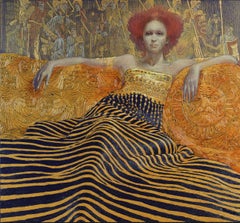
Redhead
Located in Edinburgh, GB
Materials: Oil on canvas, oil pastels, gold leaf The image of a strong, domineering, self-sufficient woman
Category

2010s Metal Figurative Paintings

Materials

Gold Leaf

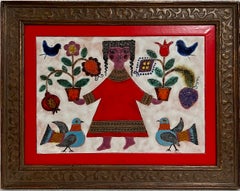
Girl Plants Enamel Glazed Ceramic Plaque Israeli Artist Awret Naive Folk Art
Located in Surfside, FL
This is a rare ceramic plaque painted with enamel glaze by famed Israeli German artist Irene Awret (these are generally hand signed Awret Safed on the verso. I just have not opened the frame to check) the actual glazed ceramic is 10.25 X 14.75 inches. It depicts a girl or woman with potted plants, birds, pomegranates and other fruits and flowers in a naif, folk art style. Irène Awret was born to a Jewish family in Berlin called Spicker, the youngest of three children. Her mother died in 1927, when Irène was six years old. In 1937 she was forced to stop high school, due to the Nazi race laws. Because she could not continue her regular studies, her father sent her to study drawing, painting and art restoration with a Jewish painter. Among his students were a large number of German Jews who knew they would have to leave Germany within a short time and would require a profession to enable them to support themselves. When the situation grew worse, following the Kristallnacht (the first major attack on German and Austrian Jews in November 1938), her uncle decided to move to Belgium. In 1939 the situation became even worse - her father was fired from his job and the family were forced to leave their home. As a result, Awret's father tried to send her and her sister to Belgium, with the help of smugglers. The first smuggler proved to be a double agent and they were sent back from Aachen to Berlin. Two weeks later they made a second, successful, attempt to sneak across the border. Awret worked for a Dutch Jewish family as a maid. As she had her room and board there, she was able to save enough money to study art part-time at Brussels' Académie Royal des Beaux-Arts. A few months later Awret's father joined her and her financial situation became easier. She left her job and studied full-time, helping support herself with restoration work when it was available and by painting portraits to order. Later, Awret found a hiding place on a farm in Waterloo with a Jewish family who were connected with the underground. In January 1943 she had to return to Brussels, living with a false identity card which stated she was a married woman with two children. Awret succeeded in renting an attic without informing the police where she was - she told her landlady that she had been forced to flee her husband because he beat her. While there, she supported herself by restoring wooden sculptures. A Jewish informer gave her up to the Gestapo, accompanying the two Gestapo men who arrested her. Awret was able to take a bag containing food and drawing materials. She was detained in the Gestapo cellars in Brussels where she drew. Because there was nothing there to draw, she sketched her own hand (view this work). Awret was interrogated in order to reveal the hiding place of her father who was still in Brussels. The National Socialist regime was determined to persecute him, even though he had fought for Germany in World War I and been permanently disabled. They stepped up their torture and brought Awret before Hartmann, the head of the Gestapo in Brussels. When Hartmann saw her block of drawings, he asked her where she had studied art and halted the interrogation. Awret was placed in a narrow cell and then transferred to Malines camp, which the Belgian's called Mechelen. Malines was a transit camp to Auschwitz, regularly sending 2000 people at a time. Although she arrived just before Transport No. 20, Irène Awret avoided being included. Instead she was put to work in the leather workshop, decorating broaches. While she was there, Hartmann visited the camp and spotted her: "I could have discovered where your father is hiding," he told her. When her artistic talents became known, she was transferred to the Mahlerstube (artist's workshop) where she worked producing graphics for the Germans until the end of the war. When Carol (Karel) Deutsch (whose works are now on view at Yad Vashem) was sent from Mechelen to his death with his wife, he left young Irene his paintbox. Irene also recalls seeing the great painter Felix Nussbaum and his wife being pushed into a boxcar bound for the gas, and tells of the aftermath of the famous 20th Train incident, when a young Jewish doctor armed only with a pistol and helped by two unarmed friends with a lantern ambushed one of Mechelen's Auschwitz-bound trains carrying 1,618 Jews, most of whom had fled Eastern Europe for Belgium. Awret's job enabled her to paint and draw - mainly in pencil, but also in watercolors and oils. In the artists' workshop she met a Jewish refugee from Poland - Azriel Awret - who would later become her husband. Among the other artists in the workshop were Herbert von Ledermann-Vütemberg, a sculptor from an aristocratic family with Jewish roots, Léon Landau, and Smilowitz, who perished in the camps in the East. Irène and Azriel tried to bribe a German officer to prevent Smilowitz's deportation. Not only were they unsuccessful, but they were almost put onto the same train. Jacques Ochs was another artist with whom they became friends in the camp. Ochs, a French-born Protestant who lived in Belgium, was interned as a political prisoner. He remained in Belgium after liberation. After the war the Awrets immigrated to Israel and made their home in Safed. They continued to work, and were instrumental in founding Safed's artists' quarter. The Beit Lohamei Haghetaot (Ghetto Fighters' House Museum) art collection holds works donated by Awret. These date from her time in Malines camp and from her stay in Brussels after the war, when she was in the company of orphans who had hidden while their parents were sent to Auschwitz. Her highly expressive works have made their way to exhibitions at theTel Aviv Museum, the Haifa Museum of Modern Art and the Modern Art Gallery in Washington, D.C., as well as into the private collections of such individuals as Dr. Jonas Salk...
Category

1950s Expressionist Metal Figurative Paintings

Materials

Enamel

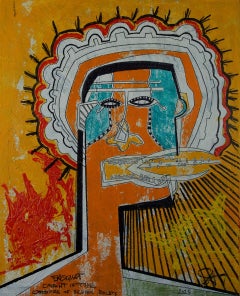
Basquiat . Caught in the crossfire of Silver Bullets.
Located in Brecon, Powys
Created in Berlin's inimitable style and using a rich and vibrant palette this piece reflects the social turmoil of the times, Drawing on his personal experience of living in New Yor...
Category

2010s Neo-Expressionist Metal Figurative Paintings

Materials

Gold Leaf

"Jenni s Lily" (2021) By Fred Wessel, Egg Tempera on Gold Leaf Painting
Located in Denver, CO
Fred Wessel's "Dahlia Icon" is a stunning egg tempera painting on gold leaf with coral cabochons. Created in 2021, this piece features a freshly bloomed stem of a white lily flower, ...
Category

2010s Realist Metal Figurative Paintings

Materials

Gold Leaf

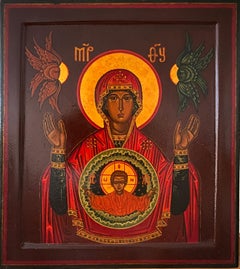
Byzantine Icon "Virgin of the Sign" (Orans) with Child Emmanuel Cherubim
Located in Segovia, ES
Virgin of the Sign (Orans), with the Christ Child Emmanuel and Cherubim Artist: Oliver Samsinger Technique: Egg tempera on gesso and wood, with 24-karat gold leaf application. Dimens...
Category

2010s Byzantine Metal Figurative Paintings

Materials

Gold Leaf

"Owl Feather" Original Artwork, 24kt Gold on Museum Glass
Located in Denver, CO
About the artist: Kate Breakey is internationally known for her large-scale, richly hand-colored photographs including her acclaimed series of luminous portraits of birds, flowers a...
Category

2010s Photorealist Metal Figurative Paintings

Materials

Gold Leaf

"Pomegranate" Original Artwork, 24kt Gold on Museum Glass
Located in Denver, CO
About the artist: Kate Breakey is internationally known for her large-scale, richly hand-colored photographs including her acclaimed series of luminous portraits of birds, flowers a...
Category

2010s Photorealist Metal Figurative Paintings

Materials

Gold Leaf

West Meets East, Folk Art Acrylic Painting by Ernani Silva
Located in Long Island City, NY
Ernani Silva, Brazilian - West Meets East, Medium: Acrylic, Collage and Enamel on board, signed in marker lower right, Size: 10.5 x 22 in. (26.67 x 55.88 cm)
Category

1990s Folk Art Metal Figurative Paintings

Materials

Enamel

Metal figurative paintings for sale on 1stDibs.

Find a wide variety of authentic Metal figurative paintings available on 1stDibs. While artists have worked in this medium across a range of time periods, art made with this material during the 21st Century is especially popular. If you’re looking to add figurative paintings created with this material to introduce a provocative pop of color and texture to an otherwise neutral space in your home, the works available on 1stDibs include elements of blue, red, orange, pink and other colors. There are many well-known artists whose body of work includes ceramic sculptures. Popular artists on 1stDibs associated with pieces like this include Sax Berlin, Giancarlo Impiglia, Eleanor Aldrich, and Zabel. Frequently made by artists working in the Contemporary, Abstract, all of these pieces for sale are unique and many will draw the attention of guests in your home. Not every interior allows for large Metal figurative paintings, so small editions measuring 0.1 inches across are also available