17th Century Figurative Paintings

to
151
91
43
80
64
150
Overall Width
to
Overall Height
to
1,019
2,548
14,203
31,176
325
330
572
806
623
780
936
1,229
1,115
1,154
498
182
6
1
1
231
194
1
371
241
199
129
79
51
46
34
16
13
12
6
6
4
4
4
4
4
3
3
421
417
187
187
51
2
1
1
1
1
343
38
398
28
Period: 17th Century
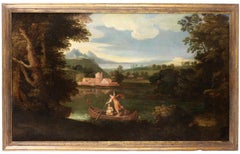
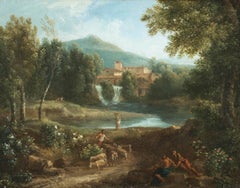
River Landscape with Boat and two Figures - Oil Paint - 17th Century
Located in Roma, IT
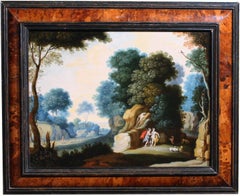
River Landscape with Boat and two Figures, realized by an artist active in italy in the mid-17th Century. In very good condition, it includes a gilded coeval wooden frame.
Category

Modern 17th Century Figurative Paintings

Materials

Oil, Canvas

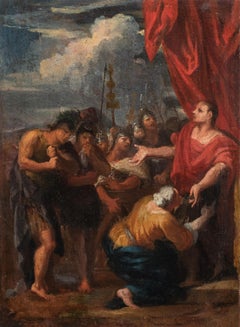
Pier Dandini (Florence master) - 17th century figure painting - Scipio
Located in Varmo, IT
Pier Dandini (Florence 1646 - Florence 1712) attributed - The Continence of Scipio (preparatory sketch). 50 x 37 cm. Ancient oil painting on canvas, without frame (not signed). - ...
Category

Baroque 17th Century Figurative Paintings

Materials

Canvas, Oil

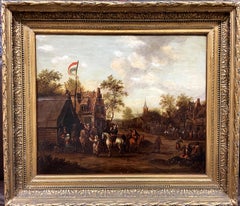
"Figures and horses by a country tavern"
Located in Edinburgh, GB
Unidentified Dutch Artist (17th Century) "Figures and Horses by a Country Tavern" (1618) Oil on canvas Framed: 69 x 82 cm Canvas: 52 x 64 cm No signatured This exquisite 17th-century Dutch painting masterfully depicts a bustling village scene with figures and horses gathered outside a country tavern. The composition is rich in detail, featuring travelers, merchants, and townspeople engaging in lively interactions, while a Dutch flag waves above the rustic inn, reinforcing the national identity of the scene. Executed in oil on canvas, the painting showcases warm earthy tones and delicate use of light and shadow, capturing the golden glow of a late afternoon or early evening setting. The finely rendered architecture, expressive figures, and atmospheric depth are reminiscent of the works of Isaac van Ostade, Jan Steen, or Adriaen van de Velde...
Category

Realist 17th Century Figurative Paintings

Materials

Canvas, Oil

Painting Moses Makes Water Flow from the Rock XVII-XVIII century
By Giovanni Ghisolfi
Located in Milan, IT
Oil on Canvas. Set in a classical, richly vegetated landscape, the scene depicts the biblical episode from the book of Genesis that tells how the people of Israel, who are crossing t...
Category

Other Art Style 17th Century Figurative Paintings

Materials

Oil

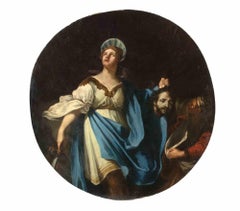
Judith Holding Holofernes Head - Oil Painting - 17th Century
Located in Roma, IT
Judith Holding Holofernes' Head is an old master artwork realized by an unknown Artist of 17th century. Oil on canvas. The painting depicts Judith Holding the head of Holofernes.
Category

Modern 17th Century Figurative Paintings

Materials

Paint, Oil

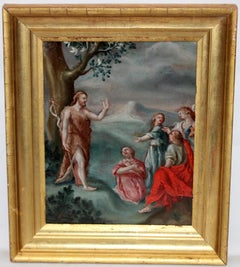
Escuela Italo-Flamenca (XVII) - Jesús predicando
Located in Sant Celoni, ES
La obra no va firmada, es de autor anónimo En la parte trasera, va ncon alguna inscripción ilegible para mi Se presenta enmarcada la obra con un marco en madera policromada de la é...
Category

Old Masters 17th Century Figurative Paintings

Materials

Oil

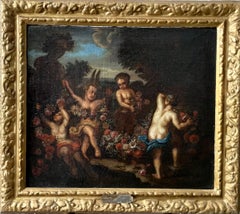
"Putti games in a park"
Located in Edinburgh, GB
François Liberti (17th-18th Century) – "Putti Games in a Park" An enchanting Baroque-era oil painting attributed to François Liberti (17th-18th century), depicting a joyous scene of ...
Category

Baroque 17th Century Figurative Paintings

Materials

Canvas, Oil

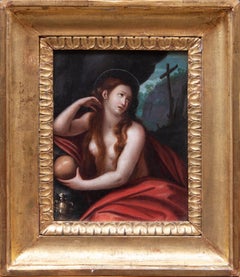
Penitent Magdalene - 17th century painter
Located in Como, IT
Penitent Magdalene Italian painter of the 17th century Oil on copper in gilt frame Size: 22x17 cm (33x28 cm including frame) Mary Magdalene is the repentant sinner who washed Jesus'...
Category

17th Century Figurative Paintings

Materials

Copper

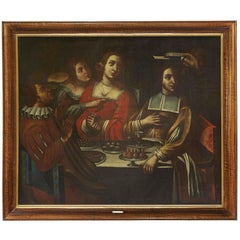
Banquet with Figures Memento Mori Italian 17th Century After Giovanni Martinelli
Located in Milano, IT
Antique Painting of 1600s Banquet with Figures Memento Mori after Giovanni Martinelli death comes to the banquet table-memento mori circa 1635. The oil on canvas painting (lined with...
Category

Baroque 17th Century Figurative Paintings

Materials

Canvas, Oak, Oil

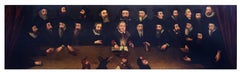
The Primitive Reformers - Oil on Canvas by English School Master 1600/1700
Located in Roma, IT
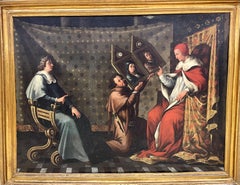
The primitive Reformers is an interesting, rare and original oil painting on canvas, realized by an anonymous artist of the English School around XVII-XVIII century. Original Title: The Primitive Reformers (Portrait of Martin Luther with the main figures of the Protestant Reformation with a cardinal, a devil, a pope and a monk at the bottom trying to extinguish the candle of Protestantism). This original painting remembers an original etching (specular in the composition), titled "The Primitive Reformers", published between 1768-69, in a literary volume called England's Bloody tribunal or popish cruelty display by Matthew Taylor. Our painted specimen is really precious because this is the unique important testimony known today. The scene, horizontally built and closed at the sides by two curtains, represents a group of twenty-three characters arranged on two foils around a long table. The figures represented are the most important personalities of the Reformation...
Category

17th Century Figurative Paintings

Materials

Canvas, Oil

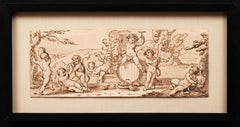
Antique Italian School Late 17th - Early 18th "Cherubs (B)" Pen drawing of Putti
Located in SANTA FE, NM
"Cherubs" (B) Pen and Ink drawing of Putto Italian School Late 17th early 18th century. Pen and ink on paper 6 ½ x 17 ½ (22 ½ x 11 ½) inches Antique scenes of putto and a faun cele...
Category

Old Masters 17th Century Figurative Paintings

Materials

Paper, Ink, Pen

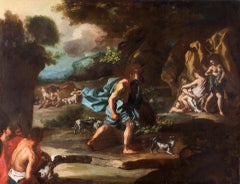
17th Century Myth of Diana and Ataeon Francesco Solimena Oil on Canvas Blu Red
By Francesco Solimena
Located in Sanremo, IT
Painting oil on canvas depicting the myth of Diana and Actaeon measuring 110 x 130 without frame and 120 x 140 with frame by the painter Francesco Solimena. According to the myth, d...
Category

Italian School 17th Century Figurative Paintings

Materials

Canvas, Oil

Francesco Albani Circle Italian Mythological Painting
Located in Roma, IT
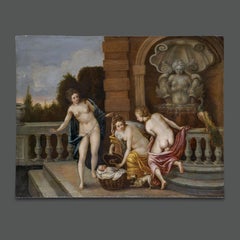
Francesco Albani Circle Italian Mythological Painting This important oil painting on wood depicts a subject that is very rare in the iconography of ancient mythological paintings: the birth of Erittonio. Erichthonius who succeeded Amphictyon becoming the fourth mythological king of Athens and married the naiad Praxithea who made him the father of Pandion. The extremely high quality of this very rare painting suggests that it was painted by an artist who frequented Francesco Albani's studio. The period, the mythological subject, the harmony of the colours and, above all, the sublime quality of the flesh tones all point in this direction. This artwork, never before on the market, comes from an important Italian private collection Every item of our Gallery, upon request, is accompanied by a certificate of authenticity issued by Sabrina Egidi official Expert in Italian furniture for the Chamber of Commerce of Rome and for the Rome Civil Courts. ERYTHTONIOS (᾿Ερυχϑόνιος, Erychthonios) Born of Hephaestus' love for Athena, from the breast of Ghe, who was impregnated by the god; welcomed by Athena, who placed him in a basket together with one or two snakes, entrusting him to the care of Cecrops' three daughters. Against the goddess's wishes, they opened the chest, from which emerged, according to different versions of the myth, either the child wrapped in snakes or a snake, which, in some versions, killed the girls, while in others, they threw themselves from the Acropolis in fear. Erittonio, in the form of a snake, is welcomed by Athena into her temple and curls up under the goddess's shield. Alongside this myth, of Ionian origin, are others due to the doubling of the figures of E. and Erechtheus The scene of the birth appears in figurative tradition: in a Melian terracotta relief from the early 5th century, Ghe, half-emerging, holds out the baby Erittonio. to Athena, who welcomes him in the presence of Cecrops; the same scene appears on various painted vases, such as a red-figure kölix by the Painter of Kodros, from Tarquinia, in the Berlin Museums, dating from around 440 BC, where Hephaestus also appears alongside Cecrops. A modest red-figure vase from Camiro, in the British Museum, depicts the moment when the fleeing Cecropids discover the cista, from which the infant Erittonio. emerges between two snakes, greeting Athena. The moment when the chest was opened was depicted by Phidias on the xiii and xiv S metopes of the Parthenon, where Cecrops and Pandrosus appear in the first and Erisichthon and Aglaurus with the chest uncovered in the second. A kölix in the style of the Brygos Painter in Frankfurt, on the other hand, depicts the large snake E. chasing the fleeing Cecropids towards their father's palace. Luciano (De dom., 27) recalls a painting depicting the scene of the birth and the representation of the myth in pantomime on the theatre (De salt., 39). Bibliography: Engelmann, in Roscher, cc. 1303-1308, s. v. Erichthonios; P. Jacobstahl, Die Melischen Reliefs, Berlin 1931, pp. 96-98, plate 75 a; W. Züchner, in Jahrbuch, LXV-LXVI, 1950-51, p. 200 ff., figs. 34-35; J. D. Beazley, Red-fig., p. 720; G. Becatti, Problemi fidiaci, Florence 1951, p. 22. Questo Francesco Albani (Bologna, August 17, 1578 – Bologna, October 4, 1660) was an Italian painter. Albani was born in Bologna, Papal States, in 1578. His father was a silk merchant who intended his son to go into his own trade. By the age of twelve, however, he had become an apprentice to the competent mannerist painter Denis Calvaert, in whose studio he met Guido Reni. He soon followed Reni to the so-called "Academy" run by Annibale, Agostino, and Ludovico Carracci. This studio fostered the careers of many painters of the Bolognese school, including Domenichino, Massari, Viola, Lanfranco, Giovanni Francesco Grimaldi...
Category

Old Masters 17th Century Figurative Paintings

Materials

Oil, Wood Panel

Peasants in a Cornfield (Boer in het veld) by David Teniers the Younger
By David Teniers the Younger
Located in Stockholm, SE
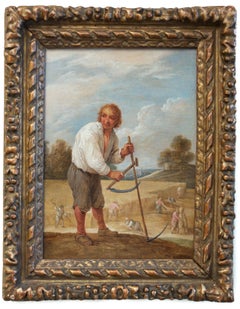
Remembering the magic of everyday life moments in the art of David Teniers: The art of David Teniers the Younger (1610–1690) coincided with the heyday of the Flemish Baroque and captured a great variety of motifs of his time. In this painting of a seemingly simple peasant scene lies keys to understanding both the imaginative mind of Teniers as well as why this time period produced some of the most iconic works in all of art history.  As indicated by the name, Teniers was more or less born into his profession. As the son of David Teniers the elder, himself a painter who studied under Rubens, the younger David received training in art from a very young age and had no less than three brothers who also became painters. Because of his father’s frequent financial failures that even at times saw him imprisoned, David the younger helped to rescue the family from ruin through painting copies of old masters. Essentially, the young Teniers was confronted with painting as both a passion and creative expression as well as a necessity during difficult times, an experience that would shape much of his capacity and sensitivity in his coming life. Despite the hardships, the talent and determination of Teniers was recognized and quickly expanded his possibilities. He had already spent time in France and possibly also England when he was hired by his father’s former teacher Rubens to help with a prestigious commission with mythological paintings, now considered lost, for Philip IV the king Spain. In 1644–54 Teniers was appointed dean of the Antwerp Guild of Saint Luke, manifesting his esteemed position within the artistic community. A few years afterwards he took an important step when relocating to Brussels, where Teniers yet again found new career opportunities that would prove to be very successful. As the keeper of the collections of Archduke Leopold Wilhelm, a role similar to what we now refer to as an art advisor, Teniers purchased hundreds of important artworks that manifested the prominent status of the Archduke’s collection while at the same time providing an unusual access to inspiration and knowledge for Teniers himself. Since he kept on painting during the same time, his creative scope must have seemed almost bewildering in the great variety of images and stories that he surrounded himself with.  Regardless of how glamorous and culturally stimulating the career of Teniers was, he was as open to the charm and existential importance of everyday life as he was to works of great masters and luxurious collectibles. In his impressive repertoire of genres with everything from exquisite royal portraits, interiors, landscapes and history paintings he always added something new and inventive, highlighting the possibilities of art and importance of an experimental and intuitive mind. It is difficult to single out one aspect or genre to summarize his legacy, since it lies much more in the broad virtuosity across many motifs, although he is particularly remembered for farm scenes and meticulously depicted interiors where other paintings and artworks are captured with an astonishing precision. However, the fact that he is still today one of the most known and celebrated names of the Dutch Golden Age is a proof to the magic of his work, which continues to spark dialogue and wonder in the contemporary viewer of his works. The farm boy in the field in this painting, which likely dates to the mature part of his career, is a wonderful entry into the mind of Teniers. In the tightly cropped motif, we see him standing right in the middle of the busy harvest when men, women and everyone capable were sent out in the field to collect the crop that formed the very core of their diet and survival. In the background we see a fresh blue sky interspersed with skillfully painted clouds, some trees reaching their autumnal colours and in the far distance the glimpse of a small church and village. The presence of a church in a landscape, so typical of Dutch art, served both a symbolic and visual function as a representation of faith while at the same time defining scale and distance. In the field, the work is in full action with the farmers spread out in various positions, all in the midst of hard and sweaty labour. While they are portrayed as having nothing else than the work on their mind, our farm boy seems to have his attention directed elsewhere. Standing there with his white, half open shirt, flowy curls and strong, sturdy body; his gaze is directed away, out of the picture and the scythes in his hands. He looks almost smirking, expressed with tremendous subtlety in the slight smile of his lips and big eyes, being just in the middle of losing focus on the work. What is it that steals his attention? What has he seen, or realized, or felt – to break him free of the arduous task of harvesting, if but for a moment? Here starts the wondering and the questions that are the hallmark of a great piece of art. Instead of explicitly locking in the motif in overly clear symbolism Teniers has chosen an open ended, subtle yet striking moment for us to consider. While it of course can be related to numerous other farm scene depictions of this time, and clever usages of gazes and real-life scenes to underscore various moral or symbolic meanings, the painting can be much more of a contemplation than an explanation or illustration. The ordinary nature and understated yet emotionally textured composition of the motif gives greater space for our own reactions and thoughts. Has he seen a pretty farm girl just passing by? Is he fed up with the farm life, joyously dreaming away for a minute, imagining another future? Or is he simply in need of distraction, looking away and ready for anything that can steal his attention? One quality that never seem to have escaped Teniers was that of curiosity. During all of his career he constantly investigated, expanded and experimented with not only the style and technique of painting, but with the vision of art itself. Being credited with more or less introducing farm motifs for a broader audience not only tells us of his ability to understand the demand for different motifs, but the sensitivity to transform seemingly ordinary parts of life into deep aesthetic experiences, far beyond their expected reach. The farm boy in this painting is, of course, exactly that. But with the help of one smirk the entire picture is charged with a different energy, awakening many contrasts and relationships between the calm landscape, the hard work and his own breach of effectivity, holding sharp scythes while thinking or seeing something else. It is no wonder Teniers chose to work with farm scenes as a way of investigating these intricate and delicate plays on expectations and surprises, clarity and ambivalence. It invites us to an appreciation of human everyday life that connects us with the people of 17th century...
Category

Old Masters 17th Century Figurative Paintings

Materials

Canvas, Oil

"Saint with icons"
Located in Edinburgh, GB
Unidentified French Artist (in the Manner of 17th Century Masters) "Saint with Icons" Medium: Oil on canvas Dimensions (Framed): 130 x 164 cm Dimensions (Canvas): 114 x 149 cm No sig...
Category

Realist 17th Century Figurative Paintings

Materials

Canvas, Oil

17th Century Oil on Canvas Italian Mythological Painting Bacchanal, 1650
By Giulio Carpioni
Located in Vicoforte, IT
A great 17th-century Italian painting. Oil on canvas artwork depicting a marvelous mythological subject, a lively Venetian Bacchanal. The painting is in fact attributable to the circ...
Category

17th Century Figurative Paintings

Materials

Oil

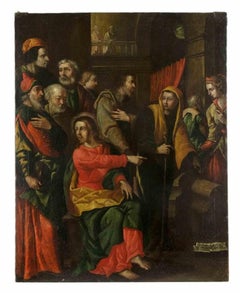
The Poor Widow s Offer - Oil Painting - 17th Century
Located in Roma, IT
The Poor Widow's Offer is an old master artwork realized by a follower of Marten de Vos (Antwerp 1532-1603) in the half of 17th Century. Mixed colored oil on canvas. Inscribed bottom right “Jesus Laudat Pauperculam […]”. The painting, whose subject is taken from the Gospel episode of the Offering of the poor widow (Mk., 12, 38-44; Lk., 21, 1-4), depicts Jesus in the Temple...
Category

Modern 17th Century Figurative Paintings

Materials

Paint, Oil

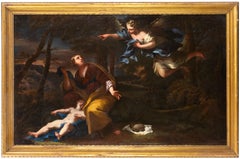
Agar and the Angel -Oil Paint - Late 17th Century
Located in Roma, IT
Oil on canvas realized in Italy ih the late 17th Century. The painting depicts the episode from Genesis (21, 9-21) in which the servant Hagar, together woth her little son Ishmael b...
Category

Baroque 17th Century Figurative Paintings

Materials

Oil

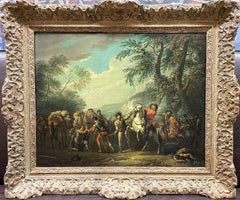
"Scene of a gang of robbers during a raid"
Located in Edinburgh, GB
Pieter van Bloemen (Antwerp, 1657–1720) – "Scene of a Gang of Robbers During a Raid" Medium: Oil on canvas Period: Late 17th – Early 18th Century Dimensions: [Include dimensions if a...
Category

Rococo 17th Century Figurative Paintings

Materials

Canvas, Oil

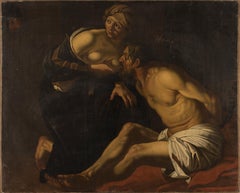
Roman Charity - Oil on Canvas After Dirck van Baburen
Located in Roma, IT
Roman Charity is a beautiful original oil painting on canvas, realized after a painting by Dirck van Baburen (1595-1624). This painting depicts the ...
Category

17th Century Figurative Paintings

Materials

Canvas, Oil

Figurative mythological baroque Venetian Bacchanal painting from the 17th century
Located in Florence, IT
The painting (oil on canvas 39.3x55.1; 46x61.8 in. with frame) depicts a bacchanal: on the left we see a figure who, from the detail of the paw appears to be a satyr, intent on raisi...
Category

Baroque 17th Century Figurative Paintings

Materials

Canvas, Oil

17th Century by Pietro della Vecchia Old man in a coat trimmed with fur
Located in Milano, Lombardia
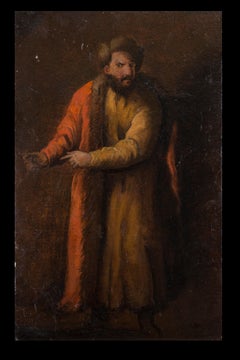
Pietro della Vecchia (Venice, Italy, 1603 - Vicenza, Italy, 1678) Title: Old man in a coat trimmed with fur Medium: Oil on canvas Dimensions: without frame 36.5 × 23 x 1.7 cm Paintin...
Category

Old Masters 17th Century Figurative Paintings

Materials

Canvas, Oil

Battle Scene Oil On Canvas 17th Century
Located in Milan, IT
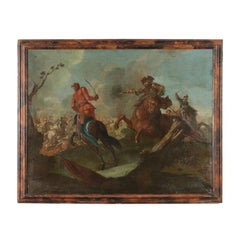
Oil on canvas. Mittel-European School. There is a No.S monogram on the back and numbers probably from an inventory. The painting reminds of pieces from the Austrian area. It represen...
Category

Other Art Style 17th Century Figurative Paintings

Materials

Oil

17th Century Hunting Scene Flemish School Battle Dogs Horses Oil on Canvas Red
Located in Sanremo, IT
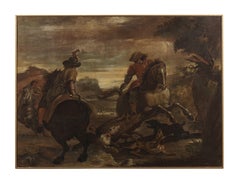
Painting, oil on canvas, measuring 75 x 103 cm without frame and 82 x 110 cm with frame, of the Flemish school depicting a hunting scene. The confident outline of the almost drawn a...
Category

Flemish School 17th Century Figurative Paintings

Materials

Canvas, Oil

Scene of Genre Comedy of Arts in the Square Flemish Oil Painting on Copper 1650
Located in Milano, IT
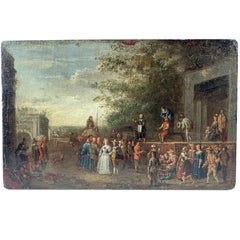
17th-century Flemish oil-on-copper painting depicting a foreshortened landscape with figures, a genre scene with a multitude of crowded characters in a street with classical architec...
Category

Realist 17th Century Figurative Paintings

Materials

Copper

Baroque Italian painter - 17th century figure painting - Saint Andrew
Located in Varmo, IT
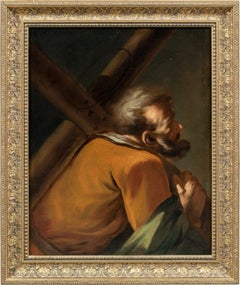
Italian painter (17th-18th century) - Saint Andrew. 73.5 x 58.5 cm unframed, 88.5 x 73.5 cm with frame (not signed). Antique oil painting on canvas, in a carved and gilded wooden f...
Category

Baroque 17th Century Figurative Paintings

Materials

Canvas, Oil

Portrait Noblewoman Kneller 17/18th Century Paint Oil on canvas Old master Art
Located in Riva del Garda, IT
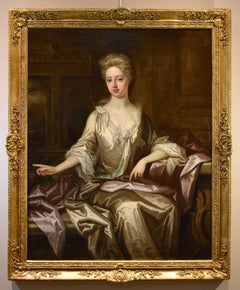
Godfrey Kneller (Lübeck 1646 – London 1723) Portrait of an English noblewoman, presumably Mary Capel, Countess of Essex (1679–1726) Oil on canvas 128 x 104 cm. In frame 146 x...
Category

Old Masters 17th Century Figurative Paintings

Materials

Oil

17th Century Oil on Panel Flemish Religious Painting Madonna with Child, 1670
Located in Vicoforte, IT
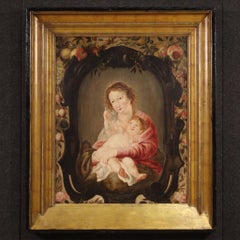
Antique Flemish panel from the first half of the 17th century. Oil painting depicting a splendid Madonna with child inside a niche surrounded by a garland of masterfully painted flow...
Category

17th Century Figurative Paintings

Materials

Oil, Wood

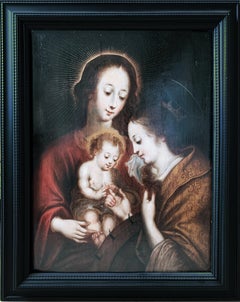
Le Mariage Mystique De Ste Catherine XVIIe Siècle Flamand
Located in GOUVIEUX, FR
Oil on panel, Flemish School of the 17th century Dimensions: 64 x 49 cm (without frame) – 64 x 79 cm (with frame) This highly delicate painting depicts the theme of The Mystic Marri...
Category

Flemish School 17th Century Figurative Paintings

Materials

Oil, Panel

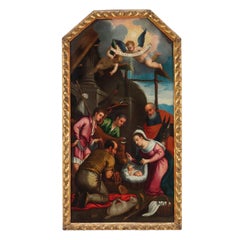
Adoration of the Shepherds, c. 1620.
Located in Milan, IT
Oil on Canvas. Venetian school of the 17th century. Looking to the models popularized by Jacopo Bassano, the painting presents a scene rich in figures and contour elements typical of...
Category

Other Art Style 17th Century Figurative Paintings

Materials

Oil

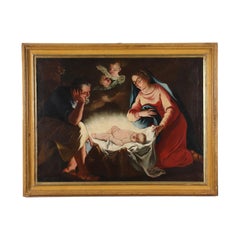
Adoration of the Child Jesus, XVII century
Located in Milan, IT
Oil painting on canvas. Northern Italy school. The depiction of the Nativity is seen here as a contemplative moment of the Holy Child, by Mary and Joseph, accompanied by little angel...
Category

Other Art Style 17th Century Figurative Paintings

Materials

Oil

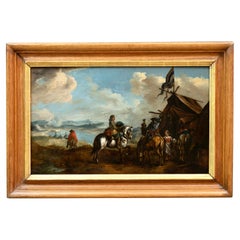
Period Philips Wouwerman Style Credited Dutch Landscape
By Philips Wouwerman
Located in Roma, IT
Important oil on panel in the style of the great Dutch artist Philips Wouwerman (also Wouwermans) (1619 – 1668) a painter of hunting, landscape and battle scenes. This beautiful pain...
Category

Baroque 17th Century Figurative Paintings

Materials

Oil, Wood Panel

Painting with Female Bust with Flower Garland, late 17th, early 18th century
Located in Milan, IT
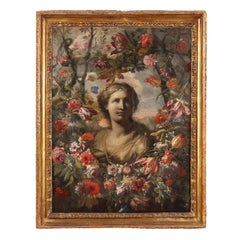
Oil on Canvas. Central-Italian school of the late 17th-early 18th century. The composition proposes a female bust in the center, portrayed as if it were a sculptural effigy, because ...
Category

Other Art Style 17th Century Figurative Paintings

Materials

Oil

17th Century By Giuseppe Caletti The Court Jester From Dosso Dossi Oil on Canvas
Located in Milano, Lombardia
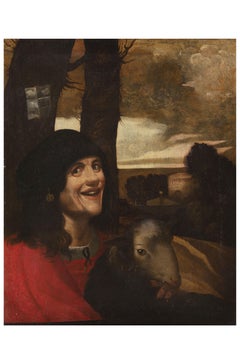
Giuseppe Caletti (1600 - 1660) Title: The Court Jester from Dosso Dossi Medium: Oil on canvas Dimensions: without frame 172 × 136 cm Beautiful original frame in carved and gilded woo...
Category

Old Masters 17th Century Figurative Paintings

Materials

Canvas, Oil

Three Angels
By Domenico Piola the Elder
Located in New York, NY
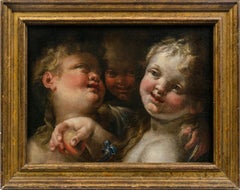
Provenance: Robert L. and Bertina Suida Manning, New York, until 1996 Private Collection, USA One of the leading artists in Genoa during the second half of the seventeenth century, Domenico Piola came from a successful family of artists, renowned for their many illusionistic ceiling programs throughout Genoese churches and palaces. A prolific draughtsman and painter, Domenico oversaw an extremely productive studio. In addition to his collaborations with numerous other artists, Domenico also provided many designs for book illustrations and prints that circulated throughout Europe, earning him international exposure and high acclaim in his own day. As Dr. Anna Orlando has indicated (written communication), the present work is an early work by Piola, datable from the late 1640s. At this time the young artist came strongly under the influence of Castiglione and Valerio Castello, while admiring the works of Giulio Cesare Procaccini. Piola’s works from this period are exuberant and fluid, and the artist’s love of portraying children is evident from the angels and putti that populate both his altarpieces and more intimate paintings. The present work depicts three angels...
Category

Baroque 17th Century Figurative Paintings

Materials

Canvas, Oil

Imas Coat Of Arms, Innes Clan, Sir Robert Innes, 17th Century McInnes family
Located in Blackwater, GB
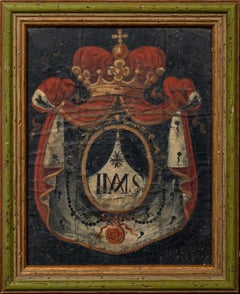
Imas Coat Of Arms, Innes Clan, Sir Robert Innes, 17th Century Scottish School 17th Century Scottish Imas Coat Of Arms to the Innes Clan, oil on canvas laid down. Early Innes clan c...
Category

17th Century Figurative Paintings

Materials

Oil, Wood Panel

Painted in Historical Subject, XVIIth century
Located in Milan, IT
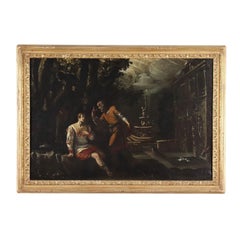
Oil painting on canvas. French school of the seventeenth century. The scene, set at night in the garden of a villa, of which you can glimpse the ornate facade on the right and in which the fountain gushing with cherubs stands out, under a dark sky and further obscured by heavy clouds, proposes two figures who entertain each other in conversation : an elderly modestly dressed is sternly admonishing a seated young man, richly dressed, who seems instead to make the gesture of mea culpa with his hand. The physiognomy and the gestures of the two characters, together with the style of the clothes, would refer to the philosopher Aristotle who was called to the court of Macedon to be the tutor...
Category

Other Art Style 17th Century Figurative Paintings

Materials

Oil

The Harvest - French school of 17th century
Located in PARIS, FR
Very decorative painting, in its period frame. French school of 17th century Oil on canvas Dimensions of the painting: 89.5 x 130 cm Dimensions with frame 99.5 x 145 cm Without...
Category

17th Century Figurative Paintings

Materials

Canvas, Oil

Figures with Autumnal Still Life, 17th century
Located in Milan, IT
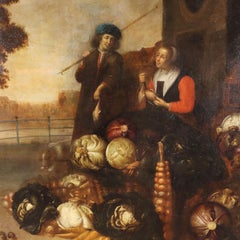
Oil on Canvas. On the barrel in the lower left corner is the signature H.Sanders. The scene, set outdoors on a street in a Flemish town, with the canal in the background on the left,...
Category

Other Art Style 17th Century Figurative Paintings

Materials

Oil

Painting Guardian Angel in Flower Garland 17th century
Located in Milan, IT
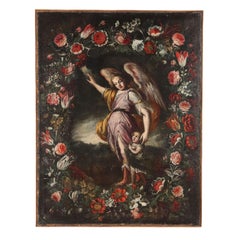
Oil on Canvas. Central Italian school of the 17th century. According to iconographic tradition, the 'guardian angel is also depicted in this painting as a winged youth accompanying a...
Category

Other Art Style 17th Century Figurative Paintings

Materials

Oil

Cleopatra Queen of Egypt 17 century Painting Oil on Canvas
Located in Rome, IT
Amazing painting of Cleopatra oil on canvas with a gilt wood frame. Attributed to Giuseppe Diamantini (Fossombrone 1621-Venice 1705) The dramatic subje...
Category

Academic 17th Century Figurative Paintings

Materials

Oil

Religious Subject Oil on Canvas Italy XVII Century
Located in Milan, IT
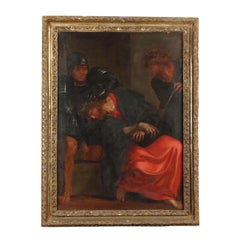
Oil painting on canvas. It is a vintage copy of the engraving of the same name made by Annibale Carracci (1560-1609), which had immediate success and gave rise to a series of printed replicas and painted copies. It presents the moment of the Passion in which Christ is crowned with the crown of thorns, the object of torture, the disparaging symbol of his proclamation as King of Kings. The act is performed by two figures, the Roman soldier and the Jew, representing the two people who they took part in Christ's death sentence. The figures, vigorous and sanguine, those of the two tormentors paler and more inert than the victim, create an intertwined composition of bodies, with that of the central Jesus joining the other two, uniting them in the shared responsibility of what they are doing; placed sideways, Jesus has his head bent forcibly to the left by the soldier who imposes the crown of thorns on him, while the Jew on the right places the bamboo cane in his hand, replacing the scepter. The scene is dominated by gloomy and dark colors, among which only the bright red of Christ's robe stands...
Category

Other Art Style 17th Century Figurative Paintings

Materials

Oil

17th Century By Livio Mehus Allegory of Augustinian Order Oil on Canvas
Located in Milano, Lombardia
Livio Mehus (Oudenaarde, Belgium, 1630 - Florence, Italy, 1691) Title: Allegory of Augustinian Order Medium: Oil on canvas Dimensions: without frame 94 x 98 cm - with frame 116 x 143...
Category

Old Masters 17th Century Figurative Paintings

Materials

Canvas, Oil

“The Drunk ” 17th Century Dutch Oil Painting On Panel
Located in Jacksonville, FL
The Drunk" is an oil on panel painting created by Dutch school student. This artwork provides viewers with a captivating glimpse into the past, offering a detailed and vivid portraya...
Category

Academic 17th Century Figurative Paintings

Materials

Oil, Panel

Cleopatra Queen of Egypt 17 century Painting Oil on Canvas
Located in Rome, IT
Amazing painting of Cleopatra oil on canvas with a gilt wood frame. Attributed to Giuseppe Diamantini (Fossombrone 1621-Venice 1705) The dramat...
Category

Academic 17th Century Figurative Paintings

Materials

Oil

Landscape with figures, workshop of Paul Bril, Italian school 17th Century
By Paul Bril
Located in PARIS, FR
Idyllic landscape with myhological story of Cephalus and Procris Early 17th century Italian school Workshop Of Paul Bril (Antwerp, 1554 - Roma, 1626) Oil on poplar panel: H. 28 cm (1...
Category

Old Masters 17th Century Figurative Paintings

Materials

Poplar, Oil

Penitent Magdalene and St. John the Baptist, oil on slate, early 17th century
Located in Milan, IT
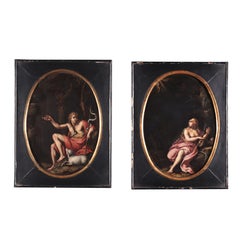
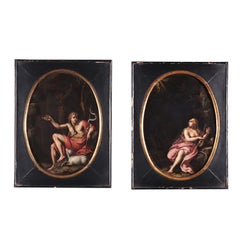
The figure of the Magdalene emerges from the darkness, leaning to follow the curve of the stone support; it is depicted vaulted with an interrogative air towards the dark, as if in an attitude of listening, the left hand raised and the other leaning on the "memento mori" very shortened. In front of her a scourge and the jar of ointment. Painted en pendant, Saint John the Baptist is depicted as a young man, with a lamb at his feet, in his hand the processional cross with the banner "exception agnus dei", while with his right hand he draws from the source of water, recalling the episode that will see Jesus Christ baptized. In both paintings the figures stand out in a strong and incisive way thanks to the black that characterizes the slate plate on which they are depicted. Historical-critical analysis: We are faced with two examples of oil painting on stone. The beginnings of this particular technique are to be placed in the first half of the sixteenth century: after some fifteenth-century experiments it is with Sebastiano del Piombo that the genre takes hold in the sixteenth century. There were different types of support used, also linked to their availability: amethyst, marble in various colors, alabaster and blackboard. The reasons underlying this technical choice refer to Renaissance artistic theories: it is no coincidence that the painter who most often experimented with oil painting on marble...
Category

Other Art Style 17th Century Figurative Paintings

Materials

Oil

Painted Cleopatra Melts a Pearl in a Cup of Vinegar 17th Century
Located in Milan, IT
Oil on Canvas. Roman school of the second half of the 17th century. The scene recounts an episode in the love affair between the queen of Egypt and the Roman triumvir Antony: Cleopat...
Category

Other Art Style 17th Century Figurative Paintings

Materials

Oil

17th Century Allegory of Charity Carlo Cignani Madonna and Child Oil on Canvas
By Carlo Cignani
Located in Sanremo, IT
Painting, oil on canvas, with dimensions of 105 x 120 cm without frame and 125 x 140 with a beautiful carved frame depicting the 'allegory of charity and love with a woman with three...
Category

Italian School 17th Century Figurative Paintings

Materials

Canvas, Oil

Pair of Paintings on Slate The Penitent Magdalene and St. John the Baptist
Located in Milan, IT
Oil on slate. Proposed here are two examples of oil painting on stone, a pictorial genre that at the turn of the 16th and 17th centuries i had particular fortune in the Venetian Repu...
Category

Other Art Style 17th Century Figurative Paintings

Materials

Oil

Cleopatra Queen of Egypt 17 century Painting Oil on Canvas
Located in Rome, IT
Amazing painting of Cleopatra oil on canvas with a gilt wood frame. Attributed to Giuseppe Diamantini (Fossombrone 1621-Venice 1705) The dramatic subje...
Category

Academic 17th Century Figurative Paintings

Materials

Oil

Venetian Baroque religious figurative painting from the 17th century
Located in Florence, IT
This painting (oil on paper applied to wood panel, 18 x 12, 5 cm) is a valuable example of the production of small-format works, thus aimed at a private audience, which was very comm...
Category

Baroque 17th Century Figurative Paintings

Materials

Paper, Oil, Wood Panel

17th Century By Paulus Bor Heraclitus and Democritus Oil on Panel
Located in Milano, Lombardia
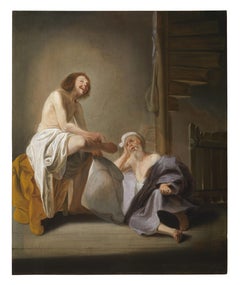
Paulus Bor (Amersfoort, Netherlands, 1605 - 1669) Title: Heraclitus and Democritus Medium: Oil on panel Dimensions: without frame 56 x 46 cm - with frame 77 x 67 cm "Cassetta" frame ...
Category

Old Masters 17th Century Figurative Paintings

Materials

Wood Panel, Oil

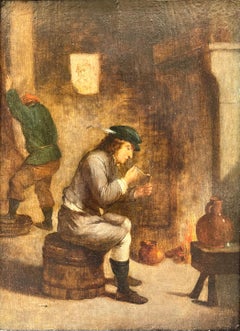
Man Smoking on a Barrel
By David Teniers the Younger
Located in London, GB
Man Smoking on a Barrel Circle of David Teniers the Younger 1610-1690 Oil on oak panel, unsigned Image size: 9 1/2 x12 1/2 inches (23.5 x 32 cm) Handmade contemporary frame Here in...
Category

Flemish School 17th Century Figurative Paintings

Materials

Oil, Panel

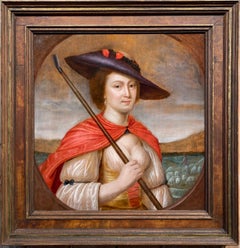
Portrait of a Lady as a Shepherdess
By Gerrit van Honthorst
Located in London, GB
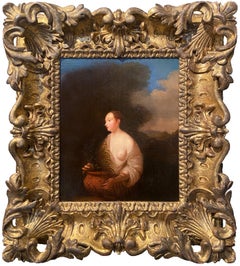
Oil on oak panel Image size: 18 x 17 inches (45.5 x 43.5 cm) Period style frame This painting is a half-length portrait of a lady in the guise of a shepherdess. She is holding a ho...
Category

Dutch School 17th Century Figurative Paintings

Materials

Oak, Oil

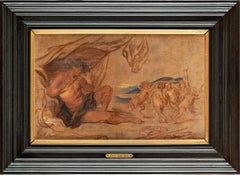
Thomas Willeboirts Bosschaert, Dancing Putti, Pan, Satyr, Rubens School, Model
By Thomas Willeboirts Bosschaert
Located in Greven, DE
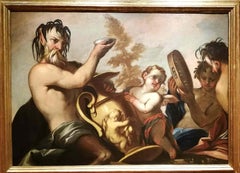
Thomas Willeboirts Bosschaert Pan plays to the dance of the putti Thomas Willeboirts Bosschaert (1614 Bergen op Zoom - 1654 Antwerp) Pan plays to the dance of the putti Oil sketch Oil on canvas, 35 x 51 cm Provenance: Belgian private collection, ca. 1980 to 2020. The oil sketch shows a flute-playing man with dark curls sitting at the left edge of the picture in a recess draped with cloth. In the lower left corner, a fallen bowl with leaking water can be seen. The right half of the picture shows a circle of five dancing putti, whereby the left putti can be recognized as a satyr due to the goat legs. The background is dominated by a dark mountain landscape. In the sky a rising or setting sun can be guessed. It is possible that the flute player represents Bacchus, the god of wine and ecstasy. This fits with the flute as a symbol of celebration, as well as the bowl of water, which could refer to Bacchus' mother, Lethe. Lethe is a river in the underworld, which at the same time symbolizes "oblivion". Thus, the spilling water bowl is not only a reference to this river, but it also symbolizes "oblivion". Moreover, Bacchus is usually depicted with satyrs in his retinue, which would explain the putto with goat legs. However, the interpretation of the flute player as the god Pan would be possible. He is usually shown with his flute and associated with dance. Moreover, he is native to the mountainous landscape of Arcadia. The present work is an oil sketch, i.e. a preparatory study. This is suggested by the partly unfinished parts, as well as the structure of the picture. Some parts are already almost completely laid out, such as the flute player, while others, for example the horizon and also the figures of the putti, are only sketched in outline. The painting can be attributed to the Baroque painter Thomas Willeboirts Bosschaert. This attribution was also confirmed by Prof. Hans Vlieghe. Bosschaert lived and worked in Antwerp with Peter Paul Rubens and Anthonis van Dyck, among others. He studied with Gerard Seghers...
Category

Baroque 17th Century Figurative Paintings

Materials

Canvas

Dipinto figurativo paesaggio fiammingo del XVII secolo
By Jans Frans van Bloemen
Located in Florence, IT
Il dipinto rientra nel corpus delle opere dell'importante paesaggista fiammingo Jan Frans Van Bloemen. I Van Bloemen erano una famiglia di artisti, fra essi Jan Frans nato ad Anvers...
Category

Other Art Style 17th Century Figurative Paintings

Materials

Canvas, Oil

The Matchmaker, oil on canvas by Jan Baptist Lambrechts
By Jan Baptist Lambrechts
Located in Gent, VOV
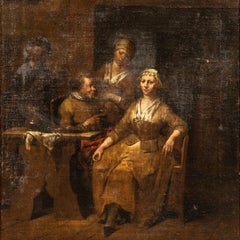
Jan Baptist LAMBRECHTS (Antwerp, 1680 - after 1731), L'entremetteuse Canvas. On verso, wax stamp. 40 x 31 cm Expert : M. René MILLET Lambrechts was born in Antwerp in 1680. His fathe...
Category

17th Century Figurative Paintings

Materials

Canvas, Oil

Portrait of a Young Woman with Vase, Oil on canvas, Early Dutch Genre Painting
Located in London, GB
Oil on canvas Image size: 12 x 10 inches (30.5 x 25.5 cm) Period hand carved gilt frame This 17th century Dutch genre painting depicts a young woman holding a jug with a landscape l...
Category

Dutch School 17th Century Figurative Paintings

Materials

Canvas, Oil

17th C painting of a peasant couple preparing for Carnival.Flemish School.
Located in brussel, BE
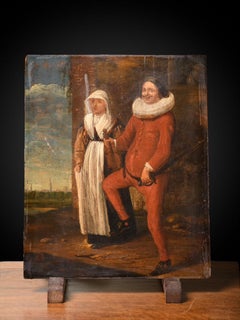
Preparation for Carnival: a three day festival of insatiable eating, drinking and carousing that preceded the forty days of Lent, a period of penitence when the pious drank only wate...
Category

Baroque 17th Century Figurative Paintings

Materials

Wood Panel, Oil