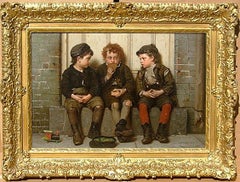
Late 19th Century Figurative Paintings

to
274
294
223
240
144
174
Overall Width
to
Overall Height
to
990
2,537
14,163
30,934
322
322
575
809
611
776
932
1,233
1,110
1,154
489
173
33
24
8
3
3
1
1
533
530
9
825
428
218
178
172
124
93
83
82
72
60
52
35
34
34
34
33
30
26
24
1,051
989
473
464
101
8
5
5
5
4
871
64
662
396
Period: Late 19th Century
At the Well, Late 19th Century Orientalist Signed Oil Painting
By George Edward Robertson
Located in London, GB
Oil on canvas, signed lower right Image size: 28 x 36 1/2 inches (71 x 93 cm) Orientalist Gilt frame George Edward Robertson George Edward Robertson (born 1864) painted portraits, ...
Category

English School Late 19th Century Figurative Paintings

Materials

Canvas, Oil

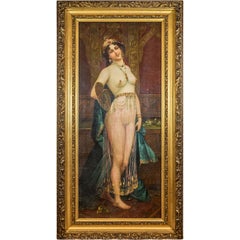
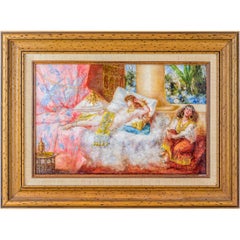
Odalisque
Located in New York, NY
Italian, ca. 19th century Odalisque Signed illegible Oil on canvas 51 in. x 21 3/4 inches Framed: 61 1/2 x 32 1/4 inches
Category

Late 19th Century Figurative Paintings

Materials

Canvas, Oil

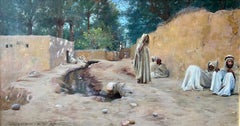
Large Middle Eastern Figurative Oil Painting Resting Along Algerian Water Canal
Located in Fredericksburg, VA
This painting is signed bottom left. This Monumental Middle Eastern Figurative painting by Charles Theriat (1860-1937) is an oil on canvas and comes with frame. His artistic training...
Category

Post-Impressionist Late 19th Century Figurative Paintings

Materials

Canvas, Oil

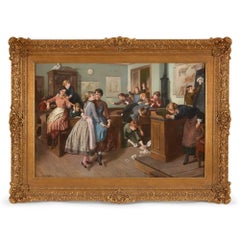
Austrian genre painting of children in a classroom by Rudolf Geyling
By Rudolf Geyling
Located in London, GB
Austrian genre painting of children in a classroom by Rudolf Geyling Austrian, late 19th Century Frame: Height 94cm, width 126cm, depth 8cm Canvas: Height 75cm, width 101cm, depth 2c...
Category

Late 19th Century Figurative Paintings

Materials

Canvas, Oil

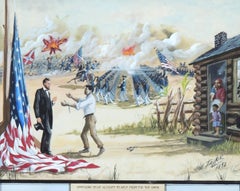
Appealing To Be Allowed To Help Fight For The Union
By James Earl Taylor
Located in Fort Washington, PA
Medium: Gouache Signature: Signed Lower Right a slave with shackles on the ground behind him appealing to Abraham Lincoln with the Civil War battle s...
Category

Late 19th Century Figurative Paintings

Materials

Gouache

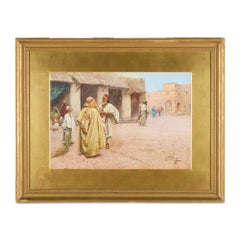
Antique Italian Orientalist Watercolour of a Market Square by Rosati
Located in London, GB
Antique Italian Orientalist watercolour of a market square by Rosati Italian, Late 19th Century Paper: Height 36cm, width 52cm Frame: Height 62cm, width 78cm, depth 4cm This late 19th century Orientalist watercolour, created by esteemed Italian artist Giulio Rosati...
Category

Late 19th Century Figurative Paintings

Materials

Paper, Watercolor, Pencil

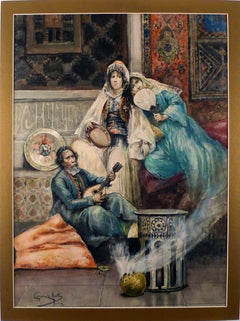
"The Mandolin Serenade", 19th Century Watercolour on Cardboard by Giménez Martín
Located in Madrid, ES
JUAN GIMÉNEZ MARTÍN Spanish 1855 - 1901 THE MANDOLIN SERENADE signed & located "Gimenez-Martin, Roma" lower left watercolour on cardboard 21-1/4 x ...
Category

Realist Late 19th Century Figurative Paintings

Materials

Watercolor, Cardboard

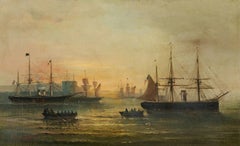
G.S WART « La flottille dans la rade de Toulon (?) » fin XIXè
Located in ROUEN, FR
G.S WART « La flottille au large d'un port » Belle Huile sur toile signée en bas à gauche 40 x 65 cm Encadré.
Category

French School Late 19th Century Figurative Paintings

Materials

Oil

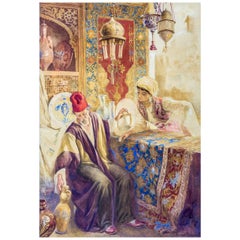
Orientalist Watercolor Painting of A Merchant by Amedeo Simonetti
Located in New York, NY
AMEDEO SIMONETTI Italian, 1874-1922 The Merchant Signed Amedeo Simonetti Watercolor on paper 21 x 14 inches Framed: 27 1/2 x 20 1/2 inches
Category

Late 19th Century Figurative Paintings

Materials

Paper, Watercolor

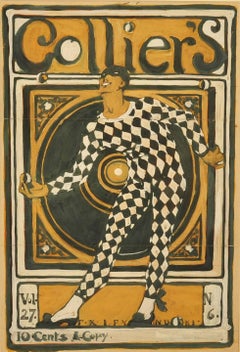
Study for Collier s Magazine Cover
Located in Fort Washington, PA
Medium: Oil on Canvas Signature: Signed Lower Right
Category

Late 19th Century Figurative Paintings

Materials

Canvas, Oil

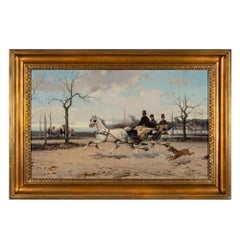
Passeggiata a cavallo a Trieste
Located in Roma, RM
Alfredo Tominz (Trieste 1854 – 1936), Passeggiata a cavallo a Trieste Dipinto ad olio su tela di cm 69 x 110 firmato e datato 1890 in basso a destra. Provenienza: Asta Stadion Trie...
Category

Academic Late 19th Century Figurative Paintings

Materials

Canvas, Oil

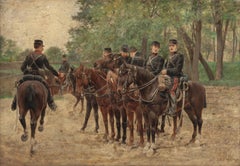
French Military on Horseback
By Jules Delaunay
Located in Fort Washington, PA
Date: 1893 Medium: Oil on Panel Dimensions: 14.50" x 21.00" Signature: Signed and Dated Lower Right: J. Delaunay. 1893
Category

Late 19th Century Figurative Paintings

Materials

Oil, Panel

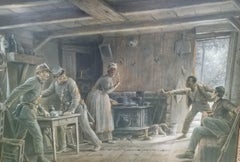
The Warning
Located in Saratoga Springs, NY
Edward Lamson Henry (American, (1841 - 1919)) “The Warning” Grisaille on paper mounted on board, signed lower left ‘E L Henry’ (partially obscured by frame) ...
Category

Hudson River School Late 19th Century Figurative Paintings

Materials

Oil, Board, Laid Paper

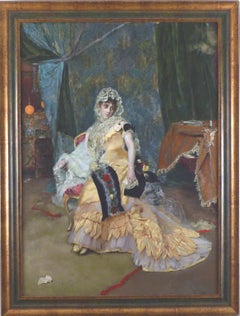
"Lady in yellow", 19th Century oil on panel by Rogelio de Egusquiza y Barrena
Located in Madrid, ES
ROGELIO DE EGUSQUIZA Y BARRENA LADY IN YELLOW signed "R. Egusquiza" (lower right) oil on panel 28-5/8 X 20-3/4 inches (72.5 X 52.7 cm.) framed: 32-5/8 X 24-3/4 inches (82.5 X 62.5 cm.) Rogelio de Egusquiza y Barrena (1845 – 10 February 1915) was a Spanish painter, known for his friendship with the German composer Richard Wagner, whose works he helped make familiar in Spain He was born in El Astillero, into a well-to-do family. He studied in Madrid and with Léon Bonnat at the École des Beaux-Arts in Paris. In 1868, after travelling and participating several times in the National Exhibition of Fine Arts, he returned to Paris and settled there. At first, he painted historical scenes, but later turned to genre scenes and portraits in the Academic style. Following the death of Marià Fortuny, he moved to Rome at the invitation of the Madrazos, Raimundo and Ricardo, taking Fortuny's place at their studio through 1875 and attending classes at the Spanish Academy in Rome. He heard Wagner's music for the first time in 1876, after returning to Paris. Three years later, he travelled to Munich to hear a performance of The Ring of the Nibelungen. His enthusiasm for what he heard led him to go to Bayreuth, where he introduced himself to Wagner and became his friend. In the following years, he and Wagner got together again several times; in Venice (1880), Berlín (1881) and Bayreuth (1882); where he was a guest at the premiere of Parsifal. After his first meeting with Wagner, he decided to devote his career to doing works on Wagnerian themes; mostly portraits of the characters rather than specific scenes. During his visits to Germany, he also created portraits of Arthur Schopenhauer (posthumous) and King Ludwig II...
Category

Realist Late 19th Century Figurative Paintings

Materials

Oil, Panel

In the diner
Located in Roma, RM
Antonio Maria Fabrés y Costa (Barcelona 1854 - Rome 1938), In the Restaurant (1880) Oil painting on panel 14 x 21 cm signed and dated on the right.
Category

Academic Late 19th Century Figurative Paintings

Materials

Oil, Board

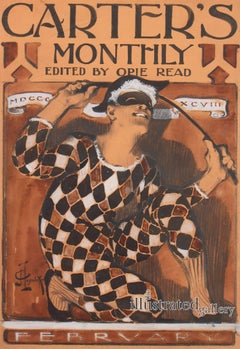
Harlequin Grinning and Brandishing his Batte
Located in Fort Washington, PA
Medium: Gouache and Pencil on Board Signature: Signed Lower Left Carter's Monthly, February 1898, cover illustration. Newly Framed.
Category

Late 19th Century Figurative Paintings

Materials

Gouache, Board, Pencil

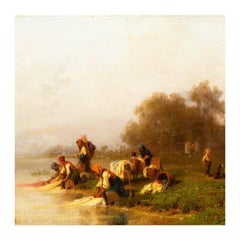
Washerwomen by the river, oil on canvas by Karl Girardet
Located in Gent, VOV
This painting is part of a series of paintings Girardet made of washerwomen by the river. Upon their presentation they had a considerable success, which endures till now. In 2008 another painting of this series was sold at Christie's . Karl Girardet was born in 1813 in Le Locle, which at the time was part of France but is now part of Switzerland. Girardet lived and worked most of his life in Paris. After beginning his career as a painter of landscapes, he became a well-known history painter. As a confidant of the French king Louis Philippe I...
Category

Realist Late 19th Century Figurative Paintings

Materials

Canvas, Oil, ABS

Butcher’s Apprentice, Late 19th Century
Located in Greding, DE
Depiction of a butcher's apprentice against an undefined brown background. He is balancing a large wicker basket filled with ham on his head. He wears a cap with a red tie, brown ves...
Category

Late 19th Century Figurative Paintings

Materials

Canvas, Oil

"Washerwomen", 19th Century Spanish School Oil on Canvas of Washerwomen at Work
Located in Madrid, ES
SPANISH SCHOOL, 19th CENTURY ARTIST UNKNOWN oil on canvas 10-1/2 x 7-5/8 inches (26.5 x 19.3 cm.) framed: 15-1/2 x 12-1/2 inches (39 x 31.5 cm.) PROVENANCE Spanish Collector, Madrid...
Category

Romantic Late 19th Century Figurative Paintings

Materials

Canvas, Oil

Pilgrims Fairwell
By Frank T. Marrill
Located in Fort Washington, PA
Date: 1880 Medium: Oil on Board Dimensions: 18.20" x 24.00" Signature: Signed Lower Right
Category

Late 19th Century Figurative Paintings

Materials

Oil, Board

"Florence´s Bridge", 19th Century Oil on Canvas by Antonietta Brandeis
Located in Madrid, ES
ANTONIETTA BRANDEIS Czechoslovakian, 1848 - 1926 FLORENCE´S BRIDGE signed "ABrandeis" lower right oil on canvas 10-3/5 x 14-4/5 inches (27 x 37.5 cm.) unframed PROVENANCE Private Collection, Barcelona Antonietta Brandeis (also known as Antonie Brandeisová) (1848–1926), was a Czech-born Italian landscape, genre and portrait painter, as well as a painter of religious subjects for altarpieces. She was born on January 13, 1848, in Miskovice (near Kutná Hora) in Bohemia, Austria-Hungary.[2] The first bibliographical indication of Antonietta Brandeis dates from her teens, when she is mentioned as a pupil of the Czech artist Karel Javůrek of Prague.[3] After the death of Brandeis' father, her mother, Giuseppina Dravhozvall, married the Venetian Giovanni Nobile Scaramella; shortly afterward the family apparently moved to Venice. In the 1867 registry of the Venetian Academy of Fine Arts, Brandeis is listed as being enrolled as an art student. At this time, Brandeis would have been nineteen, and one of the first females to receive academic instruction in the fine arts in Italy. In fact, the Ministry granted women the legal right to instruction in the fine arts only in 1875, by which time Brandeis had finished her education at the Academy. Brandeis’s professors at the Venetian Academy of Fine Arts include Michelangelo Grigoletti and Napoleone Nani for life drawing, Domenico Bresolin for landscape, Pompeo Marino Molmenti for painting and Federico Moja for perspective. Already during her first years of study there is evidence of Brandeis' skill-in her first year she is awarded prizes and honors in Perspective and Life Drawing. Brandeis’ continuing excellence and diligence in her artistic studies during the five years she spends at the Academy is attested to in the lists of prize-winning students of the Academy “Elenco alunni premiati Accademia Venezia in Atti della Reale Accademia di Belle Arti in Venezia degli anni 1866-1872”.[4] It includes numerous mentions of prizes and high honours won by Brandeis in Art History, Perspective, Life Drawing, Landscape and Anatomical Drawing, Drawing of Sculpture, and “Class of Folds”. It is in Venice at the Academy that Brandeis perfected her skills as a meticulous landscape and cityscape painter, with intricate and luminous details in the tradition of the eighteenth-century “vedutisti”. In 1870, while still a student at the Academy, she participated in her first exhibition; that of the Società Veneta Promotrice di Belle Arti with the oil painting Cascina della Madonna di Monte Varese. She is documented as having exhibited eight paintings during the years 1872 to 1876 with the Società Veneta Promotrice di Belle Arti, both landscapes and genre scenes. In the exhibit of 1875 her landscape Palazzo, Marin Falier is sold to M. Hall of London for 320 lire, a first indication of the success Brandeis will achieve with foreign collectors of her work (particularly the English and German visitors to Italy on the Grand Tour circuit). During these same years, she showed two paintings in the Florentine exhibit Promotrice Fiorentina. The first painting, entitled “Gondola” is a subject which she repeats in new variations throughout her career with great success. The second, perhaps a genre painting, is entitled “Buon dì !” The two paintings remained unsold and were presented at the same exhibition the following year, together with two more genre scene paintings. In 1876 and 1877 she exhibited three landscapes of Venice at the Promotrice Veneta, which sold to foreign collectors. In November 1877 Brandeis showed the large painting Palazzo Cavalli a Venezia at the exhibition of the Hungarian Fine Arts Society in Budapest. In both Florence and Budapest, Brandeis showed her work under the name “Antonio Brandeis”. The biographer De Gubernatis offers the following explanation for the change of name: “her first pictures received praise and criticism; she took the criticism, but when she was praised as a woman she was annoyed, and therefore exhibited under the name Antonio Brandeis.” During the years 1878 to 1893 Brandeis painted and exhibited numerous works, primarily scenes of Venice, and although she resided chiefly in that city she also traveled and painted in Verona, Bologna, Florence, and Rome. As well as in Venice and Florence, she exhibited in Turin, Milan, and Rome. In 1880 she was present at the International Exposition of Melbourne with three paintings: Palazzo Cavalli, A Balcony in Venice and The Buranella- native of Burano Island near Venice. Brandeis was a prolific painter, and often replicated her most popular subjects with only slight variations. She was represented in Venice at the photographer Naya’s studios in Piazza San Marco and in Campo San Maurizio and in Florence she collaborated with the picture dealer Giovanni Masini. During this period of intense activity painting landscapes en plein air and genre scenes, Brandeis also is documented in De Gubernatis as a painter of religious altarpieces. Several of these altarpieces can be found on the Island of Korcula in Croatia. Two are visible in the parish church of Smokvici and of in the church of St. Vitus in Blato. In the sacristy of the Cathedral of Korcula is a Madonna with Christ Child painted by Brandeis. For the same church she also painted a copy of the central panel of Giovanni Bellini’s triptych from the Venetian Church of Santa Maria dei Frari Gloriosa (1488). In 1899, for the main altar of the chapel of St. Luke in the Korcula town cemetery, Brandeis painted a St. Luke, which shows the sparkling colors and free impasto typical of her plein air oil paintings. On October 27th 1897 at the age of 49, Brandeis married the Venetian Antonio Zamboni, a knight and officer of the Italian Crown and knight of the Order of SS. Maurizio and Lazzaro. The couple continued to reside in Venice and Brandeis continued to show at Italian exhibitions in Venice, Florence, and Rome although more sporadically and with fewer works than before. Although she participated in the International Exposition of Watercolourists in Rome in 1906 with a “Study” and in the Società Promotrice delle Belle Arti in Florence in 1907 and 1908 with two oil paintings, De Gubernatis quotes Brandeis as saying in 1906, that even though she resides in Venice “I am a foreigner, and for some time I have not taken part in Italian Exhibitions, sending all my paintings to London.[3] Antonio Zamboni died 11...
Category

Realist Late 19th Century Figurative Paintings

Materials

Canvas, Oil

"Courtship", Late 19th Century Oil on Canvas by Sapnish Artist M. Alonso Pérez
Located in Madrid, ES
MARIANO ALONSO PÉREZ Spanish, 1857 - 1930 COURTSHIP signed "Alonso Pérez" (lower left) oil on canvas 23 x 12-1/8 inches (58 x 30.7 cm.) framed: 28...
Category

Romantic Late 19th Century Figurative Paintings

Materials

Canvas, Oil

Sultan’s Concubine
Located in New York, NY
ANTONIO RIVAS Spanish, 1845-1911 Sultan’s Concubine Signed 'A. Rivas' Oil on canvas 10 x 15 1/2 inches Framed: 15 1/2 x 20 3/4 inches
Category

Late 19th Century Figurative Paintings

Materials

Oil, Panel

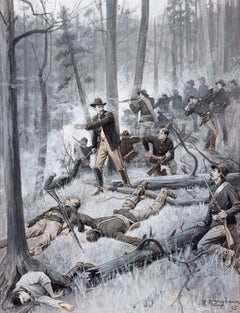
Battle of the Big Hole, Magazine Cover
By Rufus Zogbaum
Located in Fort Washington, PA
Approximate Date: 1895 Medium: Gouache on paper laid to card Signature: Signed and dated 'R.F. Zogbaum/ 95' bottom right Size: 18 x 13 3/4 in. Harper's Weekly: A Journal of Civilization, New York, December 28, 1895, vol. XXXIX, no. 2036, (cover illustration). The present painting represents a battle fought August 9 and 10, 1877, between the United States troops and Chief Joseph...
Category

Late 19th Century Figurative Paintings

Materials

Gouache, Laid Paper

19th Century Painting Puppet theatre
By Paul Louis Martin des Amoignes
Located in Saint-Ouen, FR
MARTIN DES AMOIGNES, Paul Louis (1850-1925) Puppet theatre on the village square Oil on canvas signed low right Dated 14th of July 1884 Old original f...
Category

Academic Late 19th Century Figurative Paintings

Materials

Oil

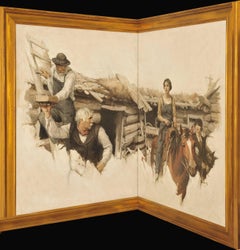
Judith Sat Straight and Formidable in Her Saddle, Facing Caleb Coldly...
Located in Fort Washington, PA
Medium: Oil on Canvas Signature: Signed (With Initials WHDK, Lower Right of Right Canvas) Dimensions: Each Canvas 40.00" x 30.00" PRICE ON REQUEST- A pair of illustrations fro...
Category

Late 19th Century Figurative Paintings

Materials

Canvas, Oil

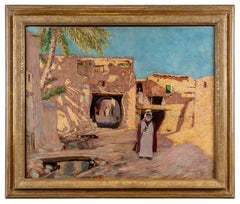
Biskra Algeria
By Arthur George Collins
Located in Sheffield, MA
Arthur George Collins American, b.1866 Biskra Algeria Oil on canvas Signed and dated Biskra, 1893 26 ½ by 32 ½ in. W/frame 32 ½ by 38 ½ in. Arthur studied at the Julien Academy, P...
Category

Impressionist Late 19th Century Figurative Paintings

Materials

Oil

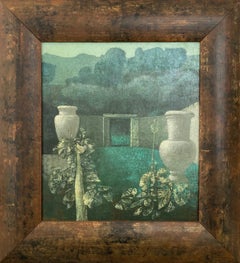
Hortus Contemporary Landscape Oil On Canvas Nature Garden Modern New In Stock
Located in Utrecht, NL
Wout Muller (June 18, 1946 – January 24, 2000) was a Dutch painter and graphic artist known for his detailed, often surrealistic works filled with symbolism and fantasy. Born in Hilv...
Category

Contemporary Late 19th Century Figurative Paintings

Materials

Canvas, Oil

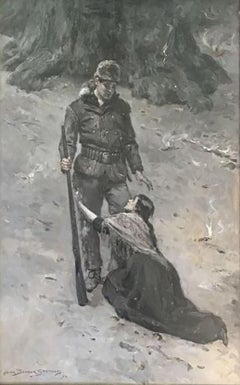
“She caught him by the knees” Illustration for In the Carquinez Woods
Located in Fort Washington, PA
Story illustration for “In the Carquinez Woods” by Bret Harte, published in the book The Writings of Bret Harte, Volume IV: Stories of California and the Frontier II (Boston and New ...
Category

Late 19th Century Figurative Paintings

Materials

Canvas, Oil

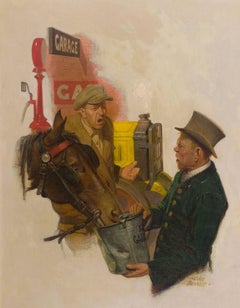
Trouble at the Garage
Located in Fort Washington, PA
Medium: Oil on Canvas Dimensions: 28.00" x 22.00" Signature: Signed Lower Right
Category

Late 19th Century Figurative Paintings

Materials

Canvas, Oil

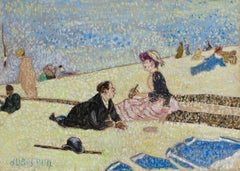
Picnic by the Seine - Impressionist Figurative Oil by Albert Dubois-Pillet
Located in Marlow, Buckinghamshire
Signed oil on paper laid on board figures in landscape circa 1890 by French Neo-Impressionist painter Albert Dubois-Pillet. This pointillist piece depicts and elegant couple enjoying...
Category

Pointillist Late 19th Century Figurative Paintings

Materials

Oil, Board, Laid Paper

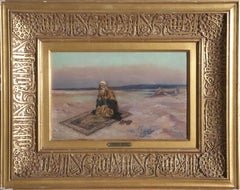
Bedouin at Prayer, Orientalist Oil Painting on Panel by Rudolf Ernst
Located in Long Island City, NY
This painting by Orientalist artist Rudolf Ernst depicts a Muslim man in quiet contemplation during prayer. He kneels in solitude in the vast desert as the light fades around him. Ma...
Category

Old Masters Late 19th Century Figurative Paintings

Materials

Oil, Wood Panel

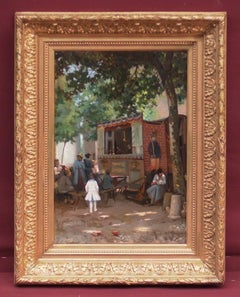
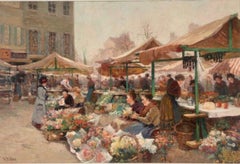
Scene de Marche
Located in New York, NY
Victor Gabriel Gilbert (1847–1933) holds a significant place in the history of French painting, primarily for his evocative depictions of everyday life and his mastery in capturing t...
Category

French School Late 19th Century Figurative Paintings

Materials

Oil

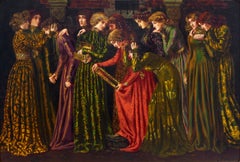
The Twelve Princesses
Located in New Orleans, LA
The greatest triumph of the artist’s career, this extraordinary and monumental oil on canvas by Gustave-Max Stevens perfectly represents the highly detailed compositions and richly h...
Category

Academic Late 19th Century Figurative Paintings

Materials

Canvas, Oil

Processione nella piazza di Capodistria
Located in Roma, RM
Adolf Hiremy Hirschl (Temesvàr 1860 – Roma 1933), Processione nella piazza di Capodistria Dipinto ad olio su tavola di cm 16 x 33. Esposizioni: Adolfo Hiremy (1860 – 1933), Mostra ...
Category

Other Art Style Late 19th Century Figurative Paintings

Materials

Oil, Board

Mid-day, Zuni Village
By Frank Reed Whiteside
Located in Missouri, MO
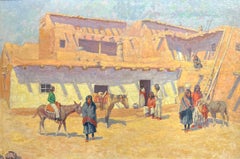
Mid-day, Zuni Village, 1897 By. Frank Reed Whiteside (American, 1866-1929) Unframed: 20" x 30" Framed: 28" x 38" Frank Reed Whiteside, born in Philadelphia on 20 August 1867, became a student of Thomas Anshutz at the Pennsylvania Academy of the Fine Arts (1888-92). He already began exhibiting there during his student years (1887-98). In 1893, he enrolled in the Académie Julian in Paris where he received instruction from Jean-Paul Laurens and Benjamin Constant. After his French academic training, Whiteside taught art in Philadelphia high schools. He took frequent trips to the Southwest between 1890 and 1928 to live with and paint the Zuni Indians. Whiteside depicted ceremonial dances, Zuni buildings, and other genre scenes, usually in blinding afternoon sunlight. He carefully observed the effects of light on vibrant color, using a finely crafted impressionist technique. He was fond of broad areas of color, subtle combinations of hues, and simplified shapes and silhouettes. Whiteside continued to exhibit at the PAFA (1905-15), at the Art Institute of Chicago (1896-1916), at the Carnegie International (1905 and 1907) and at the Corcoran Gallery (1907). He was a member of Philadelphia art societies and beginning in 1909 had a summer studio in Ogunquit, Maine, where he took part in Hamilton Easter Field's discussion groups. Frank's wife, Clara Walker Whiteside, who published Touring New England in 1926, was active in the Ogunquit Art Association. Like Stanford White, Frank Reed Whiteside was the victim of murder, on 19 September 1929, but Whiteside's case remains unsolved. One night, the sixty-three year-old painter answered the doorbell. Two witnesses...
Category

Other Art Style Late 19th Century Figurative Paintings

Materials

Canvas, Oil

Young girl from Tetouan, Morocco
Located in New Orleans, LA
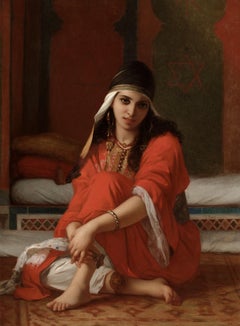
Young girl from Tetouan, Morocco Signed (center right) Oil on canvas In this important oil on canvas, French Orientalist painter Charles Landelle captures the engaging visage of a young Moroccan woman in a moment of tranquil contemplation. Seated on the floor of what is almost certainly an opulent riad, the young woman wears an intricately embroidered Moroccan kaftan and headdress. The sumptuous patterns on the floor and in the background lend an additional warmth to the strikingly vivid red hues which dominate the composition and are a hallmark of Landelle’s work. The symbols behind the young woman may represent either the Jewish Star of David or the Islamic Seal...
Category

Academic Late 19th Century Figurative Paintings

Materials

Canvas, Oil

The Reading Lesson
Located in Missouri, MO
Bernard Pothast "The Reading Lesson" Oil on Canvas Signed Lower Right 25 x 30 inches 30.5 x 35.5 inches framed Born in Belgium, Bernard Pothast travel...
Category

Dutch School Late 19th Century Figurative Paintings

Materials

Canvas, Oil

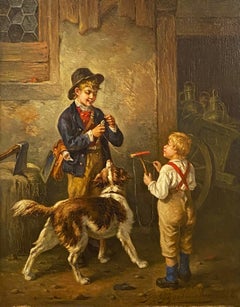
Readying for Play
Located in Missouri, MO
Framed Size: 25.5 x 23 inches Joseph Gyselinckx was born in 1817. He was a genre painter in Antwerp. The artist was a student of F. de Brakeleer. He had two paintings included in ...
Category

Realist Late 19th Century Figurative Paintings

Materials

Canvas, Oil

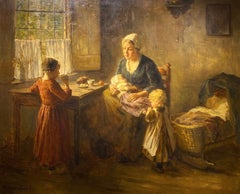
Mother and Children
Located in Missouri, MO
Bernard DeHoog (1867-1943) "Mother and Children" Oil on Canvas Signed Lower Left Site Size: approx. 32.5 x 39.5 inches Framed Size: approx. 39 x ...
Category

Realist Late 19th Century Figurative Paintings

Materials

Canvas, Oil

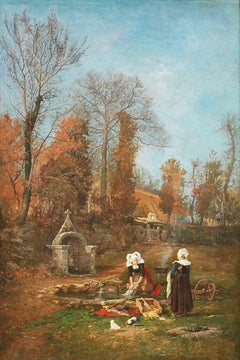
Breton Chores
Located in Missouri, MO
Clement Nye Swift "Breton Chores" 1870 Oil on Canvas Signed and Dated Lower Right Canvas Size: approx 27 x18 inches Framed Size: approx 34 x 35 inches Provenance: Private Midwes...
Category

Victorian Late 19th Century Figurative Paintings

Materials

Canvas, Oil

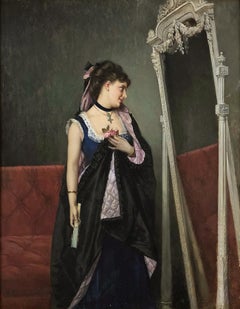
A Lovely Reflection
Located in Missouri, MO
Auguste Toulmouche (1829-1890) "A Lovely Reflection" 1874 Oil on Panel Signed and Dated Lower Left Site Size: approx 17 x 14 inches Framed SIze: approx. 27.5 x 24 inches Provenan...
Category

Victorian Late 19th Century Figurative Paintings

Materials

Oil, Wood Panel

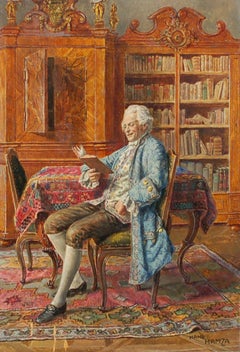
In the Study
By Hans Hamza
Located in Missouri, MO
Hans Hamza (Austrian 1879-1945) In the Study Oil on Panel Signed Site Size: approx. 8 x 6 inches Framed Size: approx. 14 x 12 inches
Category

Victorian Late 19th Century Figurative Paintings

Materials

Oil, Wood Panel

In the Study
In the Study
Price Upon Request
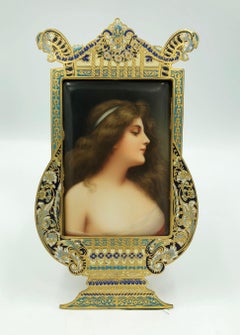
Épanouissement
Located in Missouri, MO
KPM Porcelain After Angelo Asti (French, 1847-1903) "Épanouissement" c. 1900 With Original Gold Gilded Frame Image Size: approx. 6 x 4 inches Framed Size: approx. 9 x 6 inches Eve...
Category

Victorian Late 19th Century Figurative Paintings

Materials

Porcelain, Oil

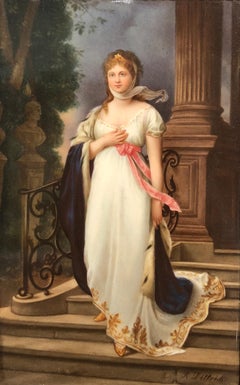
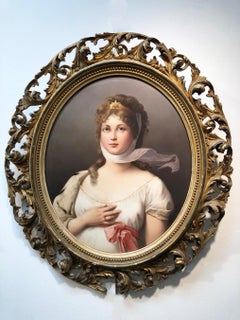
Queen Louise
Located in Missouri, MO
KPM Porcelain "Queen Louise" c. late 19th century Original Hand-Painted Porcelain Signed "R. Dittrich" Since 250 years, the royal sceptre brand stands fo...
Category

Victorian Late 19th Century Figurative Paintings

Materials

Porcelain, Oil

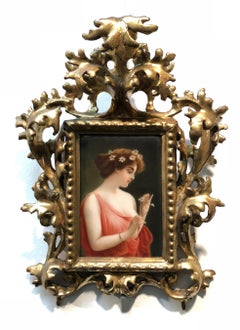
Marguerite
Located in Missouri, MO
Marguerite Hand Painted Porcelain w/crown stamp #107 Signed "Wagner" Original Gilded Florentine Frame approx 6 x 4 inches /approx 14 x 8 inches framed Since 250 years, the royal sc...
Category

Victorian Late 19th Century Figurative Paintings

Materials

Porcelain, Oil

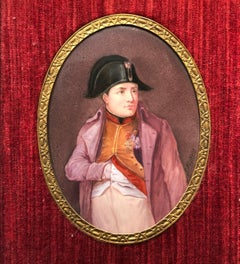
Napoleon
By Manufacture Nationale de Sèvres
Located in Missouri, MO
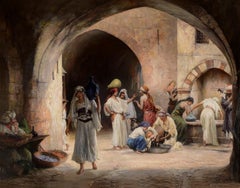
Sevres 19th C. Original Hand Painted Porcelain Signed "G Poitevin" approx 9 x 5 inches/15 x 12 framed The vast and diverse production of the Sèvres factory in the nineteenth century resists easy characterization, and its history during this period reflects many of the changes affecting French society in the years between 1800 and 1900. Among the remarkable accomplishments of the factory was the ability to stay continuously in the forefront of European ceramic production despite the myriad changes in technology, taste, and patronage that occurred during this tumultuous century. The factory, which had been founded in the town of Vincennes in 1740 and then reestablished in larger quarters at Sèvres in 1756, became the preeminent porcelain manufacturer in Europe in the second half of the eighteenth century. Louis XV had been an early investor in the fledgling ceramic enterprise and became its sole owner in 1759. However, due to the upheavals of the French Revolution, its financial position at the beginning of the nineteenth century was extremely precarious. No longer a royal enterprise, the factory also had lost much of its clientele, and its funding reflected the ruinous state of the French economy. However, the appointment in 1800 of Alexandre Brongniart (1770–1847) as the administrator of the factory marked a profound shift in its fortunes. Trained as both an engineer and a scientist, Brongniart was both brilliant and immensely capable, and he brought all of his prodigious talents to the running of the troubled porcelain factory. He directed the Sèvres factory as administrator until his death in 1847, and during those five decades influenced every aspect of its organization and production. Much of the factory’s old, undecorated stock was immediately sold off, and new forms—largely in the fashionable, more severe Neoclassical style—were designed to replace out-of-date models. The composition for hard-paste porcelain was improved, and the production of soft paste, for which the factory had been famous in the previous century, was abandoned in 1804. New enamels colors were devised, and Brongniart oversaw the development of a new type of kiln that was both more efficient and cost-effective. Much of the factory’s output during Brongniart’s first decade reflected the prevailing Empire taste, which favored extensive gilding, rich border designs, and elaborate figural scenes (56.29.1–.8). Backgrounds simulating marble or a variety of hardstones were employed with greater frequency (1987.224); the new range of enamel colors developed under Brongniart made it easier to achieve these imitation surfaces, and it is thought that his interest in mineralogy provided the impetus for this type of decoration. For objects produced in sets, such as dinner, tea, and coffee services, and even garnitures of vases, Brongniart preferred decorative schemes that linked the objects in terms of subject matter as well as stylistically. Dinner services were given coherence by the use of an overall theme, in addition to shared border patterns and ground colors. One of the best examples of this can be found in the “Service des Départements,” which was conceived by Brongniart in 1824 (2002.57). Each of the plates in the service was decorated with a famous topographical view of the département (administrative unit) of France that it represented, and its border was painted with small cameo portraits of figures from the region, as well as symbols of the major arts, industries, and products of the area. This same type of thematic unity is found on a coffee service produced in 1836 (1986.281.1ab–4). All of the pieces of the service are decorated with scenes depicting the cultivation of cacao, from which chocolate is made, or various stages in the preparation of chocolate as a beverage. The compositions were conceived and executed by Jean Charles Develly, a painter at Sèvres who was responsible for many of the most ambitious dinner services produced at the factory during Brongniart’s tenure. The range of objects produced in the first half of the nineteenth century was enormous, as were the types of decoration that they employed. A recent exhibition catalogue devoted to Brongniart’s years at Sèvres indicates that ninety-two new designs for vases were introduced, as were eighty-nine different cup models, and the types of objects produced by the factory included every sort of form required by a dinner or dessert service, coffee and tea wares, decorative objects such as vases, and functional objects such as water jugs, basins, and toiletry articles. A new form rarely replaced an older one; the range of production simply increased. The same was true with types of decoration, as the factory was working in a wide variety of styles at any given time. From the earliest years of the Sèvres factory, its painters had copied not only contemporary compositions but also prints and paintings from earlier periods. However, under Brongniart, the factory sought to copy famous paintings with the specific intention of recording the “true” appearance of works increasingly perceived to be fragile. Works by a wide variety of artists were copied, but those by Raphael were especially popular. Raphael’s stature is reflected in a vase of 1834 in which a cameo-style portrait of the artist decorates the primary reserve, while on the back an artist’s palette is encircled by the names Titian, Poussin, and Rubens (1978.373). Just as works by earlier artists were copied, so too were decorative techniques of previous centuries. The interlace patterns of so-called Saint-Porchaire ceramic ware of the sixteenth century served as the inspiration for the decoration on a cup of 1837 (2003.153). The form of the cup itself derives from Renaissance silver forms made in Italy and France. However, the palette of vibrant reds, greens, blues, and yellows contrasts markedly with the muted browns and off whites of Saint-Porchaire wares and reflects the reinterpretation of historical styles that was characteristic of so much of nineteenth-century decorative arts. Interest in the Gothic style emerged early in Brongniart’s tenure at Sèvres and remained popular for much of the nineteenth century. Strict adherence to Gothic motifs was rarely observed, however, and the Gothic style was more evoked than faithfully copied. This tendency is reflected in a pair of vases (1992.23.1) for which the model was designated vase gothique Fragonard (named after the vase’s designer, Alexandre Evariste Fragonard [1780–1850]. The Gothic elements lie more in the painted decoration than in the form itself, and the style of the painting reflects a Renaissance technique rather than a medieval one. The palette of grays and whites on a blue ground instantly recalls the enamel-on-copper wares produced in Limoges, France, in the sixteenth century, and its use on these vases indicates the willingness to freely mix artistic styles and techniques of different periods in order to achieve new aesthetic effects. The eclecticism and historicism that characterized so much of the production during Brongniart’s tenure continued after his death in 1847. The factory’s output reflected an ongoing desire for technical innovation as well as a wide embrace of diverse decorative styles that were employed simultaneously. A tea and coffee service of 1855–61 (69.193.1–.11) embodies the selective borrowing of forms and motifs that is found so frequently in Sèvres production of the middle decades of the nineteenth century. The shapes used for the different components of the service evoke both China and the Near East, an obvious allusion to the origins of the two beverages. The openwork decoration refers directly to Chinese ceramics made in this technique, and the decoration employs a variety of Chinese emblems. However, the palette of pink and gold, entirely European in character, serves to neutralize the Asian aspects of the service. Perhaps the only thread that can be said to run through much Sèvres production of the nineteenth century is the proclivity to borrow freely from various historical styles and then to either reinterpret these styles or combine them in unprecedented ways. A standing cup of 1879 (1990.238a,b) draws upon silver cups of the Renaissance for its form, but in this instance the size of the porcelain cup dwarfs any of its metal prototypes. Its style of decoration derives from Limoges painted enamels of the sixteenth century, but the prominent use of gilding throughout reflects its wholly nineteenth-century character. This cup was presented by the French government to one of the first-prize winners at the 1878 Exposition Universelle. It was with the advent of the Art Nouveau style at the very end of the nineteenth century that historicism lost its grip at Sèvres, and indeed throughout the decorative arts, and forms inspired by nature and often characterized by asymmetry become dominant. This reliance upon natural forms is fully evident in a coffee service of 1900–1904 (1988.287.1a,b). The designer, Léon Kann...
Category

Late 19th Century Figurative Paintings

Materials

Porcelain, Oil

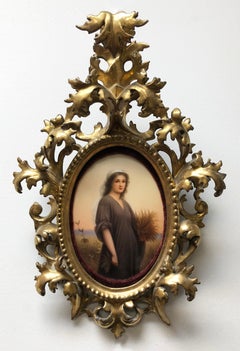
Ruth
Located in Missouri, MO
KPM Porcelain "Ruth" c. 1900 Original hand-painted KPM Porcelain In Original Gilded Florentine Frame 7 x 4 (16 x 9 framed) Since 250 years, the royal sceptre brand stands for finest...
Category

Victorian Late 19th Century Figurative Paintings

Materials

Porcelain, Oil

Queen Louise
Located in Missouri, MO
KPM Porcelain "Queen Louise" c. 1900 Original hand-painted KPM Porcelain approx. 14 x 11 inches approx. 21 x 15 inches framed Since 250 years, the royal ...
Category

Victorian Late 19th Century Figurative Paintings

Materials

Porcelain, Oil

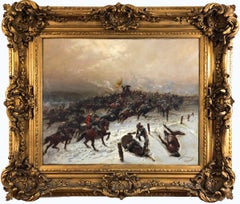
Franco-Prussian Battle Scene
Located in Missouri, MO
Wilfrid Constant Beauquesne (1847 - 1913) "Franco-Prussian Battle Scene" c. 1900 Oil on Canvas Signed Lower Right Site Size: approx 22 x 28 inches Framed Size: approx 35 x 40 inches French artistry was deeply influenced by three wars during the 19th century and, accordingly, the artistic imagination was not lost upon the public. "Patriotism comes to the aid of battle painters," a contemporary remarked, "presenting them with a sympathetic public already fascinated by the subject." After the brief Franco-Prussian conflict of 1870, French painters were particularly anxious to retrieve national pride by presenting works which reflected their own national heroism versus enemy brutality. Known for his scenic depictions of this war, Wilfried Beauquesne, a native of Rennes, France, was undoubtedly influenced in his selection of subjects by his instructors at the Ecole des Beaux Arts in Paris. Vernet-Lecomte and Horace Vernet were both well known military artists. Vernet had actually lived and worked during the period of Napoleonic conflicts - being awarded the Legion of Honor by the Emperor's own hand. Beauquesne exhibited regularly at the annual Paris Salon between 1887 and 1899, as well as throughout Europe. In 1890, illustrating the fortunes of life, The Art Amateur ran the following item in its "Gossip Column:" "A queer story comes to me from Paris. A commission agent made a bargain with a poor painter, living out at Saint-Maude, to paint military subjects for him, at two francs an hour. The agent changed the signature to that of Gaubault, and sold the pictures to various dealers. On day, by chance, the poor painter came to Paris, went to the Salon, and was astonished to see one of his pictures there. He look at the catalogue, and found the name of the artist and the address of the dealer where he was to be found, The poor artist went to the dealer and introduced himself saying, "I am Gaubault." "Most happy to make your acquaintance," replied the dealer. "Your pictures sell very well, and I have been wanting to see you for the last six years." "But my name is not Gaubault, it is Beauquesne." Explanations followed. The dishonest commission agent disappeared; and Beauquesne restored his real signature on the pictures, which had made his pseudonym almost famous...
Category

Impressionist Late 19th Century Figurative Paintings

Materials

Canvas, Oil

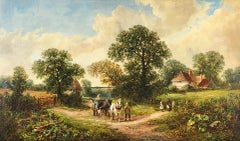
The Haywagon
Located in Missouri, MO
James Edwin Meadows (British 1828-1888) "The Haywagon" 1866 Oil on Canvas Site: 24 x 40 inches Framed: 30 x 46 inches approx. A London landscape painter, James Edwin Meadows was the...
Category

Land Late 19th Century Figurative Paintings

Materials

Canvas, Oil

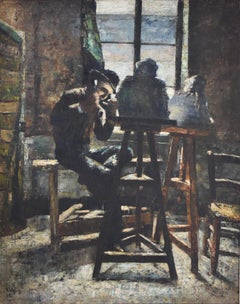
The Sculptor’s Studio Das Bildhauer Atelier
Located in London, GB
LESSER URY 1861-1931 Międzychód, Poland 1861 - 1931 Berlin (German) Title: The Sculptor’s Studio Das Bildhauer Atelier, 1883 Technique: Hand Signed and Dated Oil on Canvas Pape...
Category

Late 19th Century Figurative Paintings

Materials

Oil

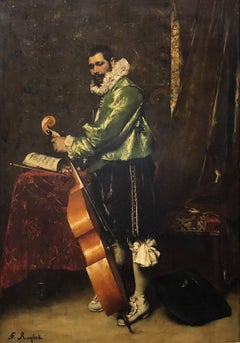
The Cellist
Located in Missouri, MO
Ferdinand V.L. Roybet (1840-1920) "The Cellist" c. 1880s Oil on Panel Site: 20 x 14 inches Framed Size: 28 x 14 inches Ferdinand Roybet is considere...
Category

Realist Late 19th Century Figurative Paintings

Materials

Oil, Wood Panel

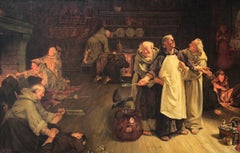
A Conundrum in the Kitchen
Located in Missouri, MO
Frank Hyde (British 1849-1937) "A Conundrum in the Kitchen" c. 1900 Oil on Canvas Signed Lower Left Image: 37.5 x 57.5 inches Framed: 44 x 64.5 inches From the Maidstone Museum, UK: Hyde was born in Surrey in 1849 and spent a large amount of time in London during his youth. His father had been in the army but retired to live the life of a gentleman upon inheriting the family seat, Hyde End Manor in Berkshire. Hyde, however, would later inherit and sell the Manor. As a young man, Hyde trained as an artist at the Royal Academy, London, and his subsequent career revealed striking artistic versatility. His subjects varied from the portrayal of real, dramatic events to comic characters commissioned by the card manufacturer Raphael Tuck. Starting out as a 1st Lieutenant in the Royal Engineers, Hyde moved on to begin his career as a war artist during the Franco-Prussian war of 1870-71, producing drawings for ‘The Graphic’, an illustrated weekly publication. Hyde married Constance Mary Louise Felgate in 1876, but she died less than a year later. While he travelled extensively throughout his life after Constance’s, death Hyde purchased a villa in Capri where he met Rosina Ferrara, whom he used as a model, and John Singer Sargent, with whom he shared a studio. Hyde is perhaps best known for his paintings of Capri...
Category

Realist Late 19th Century Figurative Paintings

Materials

Canvas, Oil

The Monopolist
Located in Fort Washington, PA
Framed Dimensions: 36.00" x 48.00" Signature: Signed Lower Right J.G Brown's "Monopolist" was listed in 1885's Spring Exhibit catalogue of M.A. It was displayed on a panel in The We...
Category

Late 19th Century Figurative Paintings

Materials

Canvas, Oil

Still Thinking About These?

All Recently Viewed