Late 17th Century Paintings

to
44
20
13
26
23
57
Overall Width
to
Overall Height
to
2,109
6,428
42,959
122,307
745
721
1,304
1,682
1,666
2,325
3,098
3,585
3,403
3,380
1,041
44
1
1
75
63
1
99
58
42
36
23
13
12
12
10
6
4
4
4
3
3
2
2
2
2
2
136
133
69
69
10
2
1
1
1
1
115
12
127
11
Period: Late 17th Century
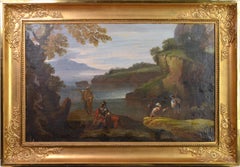
Warrior Figures Conversating in Capriccio Landscape 17-18 Century Oil Painting
Located in Stockholm, SE
In the foreground, we see two conquistadors and three natives accompanying them landing on the shore, presumably on a reconnaissance mission in an unfamiliar bay. Perhaps they are in...
Category

Baroque Late 17th Century Paintings

Materials

Canvas, Wood, Oil

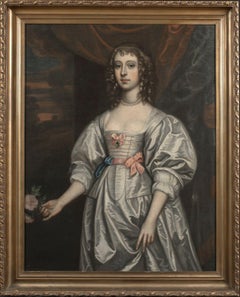
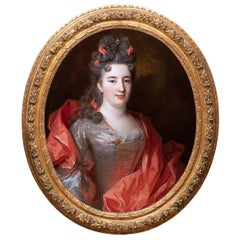
Portrait Of A Lady, Frances Bard (1646-1702) Mistress of The Duke Of Cumberland
Located in Blackwater, GB
Portrait Of A Lady, Frances Bard (1646-1702) Mistress of Prince Rupert von de Pfalz, Duke of Cumberland (1619-1882) follower of Anthony Van Dyck (1...
Category

Old Masters Late 17th Century Paintings

Materials

Oil

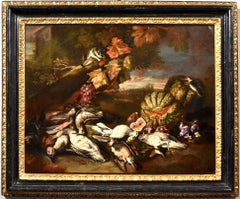
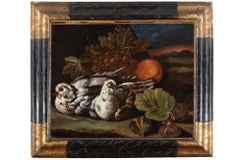
Still-Life Flower Landscape Castelli Paint Oil on canvas Old master Italian art
By Giovanni Paolo Castelli detto Spadino
Located in Riva del Garda, IT
Still life in a landscape with fruit and game Work of the late Roman Baroque of the late seventeenth / eaarly eighteenth century attributable to Giovanni Paolo Castelli, known as Spadino (Rome, 1659 - 1730) oil on canvas 62 x 76 cm., Framed 90 x 109 cm. An open-air setting, with a hilly landscape gash that opens into the distance in the central part, surrounds our beautiful canvas, which showcases a rich selection of game and fruit, arranged in the foreground near the point of view of the observer, occupying a large part of the visual field with their bright and festive colors. The style and quality of the work, like the pictorial technique of this still life, characterized by subtle luminous vibrations and a lively chroma, make it attributable to the Roman Giovanni Paolo Castelli, known as Lo Spadino (Rome, 1659 - 1730), one of the most important specialists of this pictorial genre of late Baroque Rome, which had a very successful career between the 17th and 18th centuries. Analyzing the rich and heterogeneous catalog of the Roman master, in fact, our canvas can be included among his rare works which, alongside a selection of fruit - among which stand out large melons, ripe figs, dark grapes and plums - we see a game advert, presumably as requested by a patron who loves hunting. Next to various birds, spoils of a profitable hunting trip, there is also a small green woodpecker, with the characteristic red spot on the head, and a nice rodent that terminates from behind the trunk. The painter abandons himself to a skilful and brilliant chromatic texture of the surfaces, through a pictorial material rendered with exceptional vibration in its luminous and 'tactile' body, fully respecting the taste of the full Roman Baroque. The quality appears excellent, distinguished by a skilful and brilliant chromatic texture of the surfaces, which appear almost vibrant thanks to a skilful drafting of the pictorial material. Inevitable and evident are the Flemish suggestions, which had influenced the Roman Baroque still life, in particular the work of Abraham Brueghel...
Category

Old Masters Late 17th Century Paintings

Materials

Oil

Ten Dog Studies and a Study of a Stole, a panel attributed to Jan Weenix
By Jan Weenix
Located in PARIS, FR
This painting, formerly attributed to Hyacinthe Rigaud, is typical of the art of Jan Weenix, one of the best still life and hunting painters of the Dutch Golden Age. In a cleverly d...
Category

Dutch School Late 17th Century Paintings

Materials

Oak, Oil

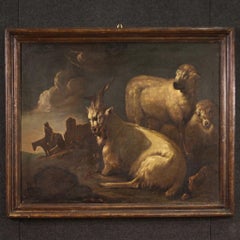
17th Century Oil on Canvas Italian Antique Painting Landscape with Goats, 1680
By Philipp Peter Roos (Rosa di Tivoli)
Located in Vicoforte, IT
Antique Italian painting from the second half of the 17th century. Oil on canvas artwork depicting a splendid bucolic landscape with animals and a shepherd, of great pictorial qualit...
Category

Late 17th Century Paintings

Materials

Canvas, Oil

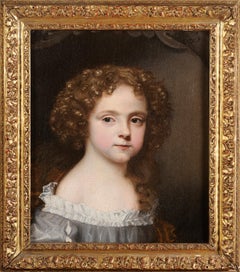
Young girl portrait
By Jacob Ferdinand Voet 1
Located in BELEYMAS, FR
Circle of Jacob Ferdinand Voet Portrait of a Little Girl Oil on canvas H. 44 cm; W. 38 cm Unsigned This delicate portrait of a child, from the circle of Jacob Ferdinand Voet, demons...
Category

French School Late 17th Century Paintings

Materials

Canvas, Oil

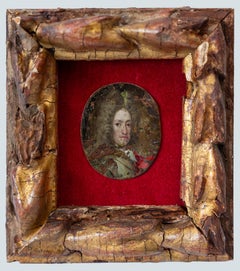
Portrait of Charles II of Spain
Located in GB
Title: Portrait of Charles II of Spain Artist: Unknown Date: Late 17th century Medium: Oil on copper Framing: Set against red velvet in a deeply carved and distressed giltwood frame,...
Category

Late 17th Century Paintings

Materials

Copper

Portrait of Charles II of Spain
$1,529 Sale Price
20% Off
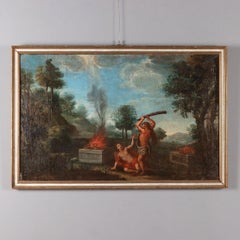
Painting Cain and Abel 17th-18th century
Located in Milan, IT
Oil on Canvas. Northern-Italian school of the 17th-18th centuries. The widely known biblical scene of the quarrel between the two brothers, sons of Adam and Eve, which later results ...
Category

Other Art Style Late 17th Century Paintings

Materials

Oil

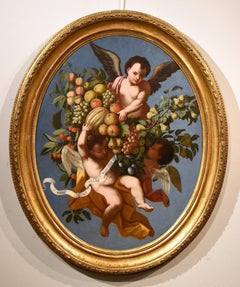
Angels Flower Garzi Paint Oil on canvas Old master 17/18th Century Italian Art
By Luigi Garzi (Pistoia 1638– Rome1721)
Located in Riva del Garda, IT
Roman school of the early 18th century Luigi Garzi (Pistoia 1638– Rome1721) attributed Still life of fruit supported by three angels Oil on oval canvas 116 x 91 cm., Framed 140 x 119 cm. Authentication on a photograph by Prof Giancarlo Sestieri, who attributes the work to the sphere of Luigi Garzi This magnificent canvas, depicting a sumptuous composition of fruit supported by three prosperous winged cherubs, from which comes a parchment bearing the Latin expression "Amor est vitae essentia", is to be placed in the production of a Roman author active between the second half of XVII century and the first of the following century. The iconography that sees represented cherubs with fruit or flowers is frequent in the Baroque period, especially in the Roman area, starting from the 1600s, with that particular depictional tendency aimed at illusionistic and frivolous images, to a type of paintings or frescoes of strong value decorative, intended for the private context and depicting jubilation of cherubs, angels or cherubs, and of which our canvas represents a perfect example. We can recall, among the most illustrious iconographic precedents, the elegant mirrors painted by Mario Nuzzi and Carlo Maratta that adorn the hall of Palazzo Colonna in Rome, and again the canvas preserved in the Rouen museum and the similar ones in Palazzo Chigi in Ariccia, with the collaboration for the figurative parts of Filippo Lauri. The commercial and furnishing success of similar works is also testified by authors such as Guglielmo Cortese known as Borgognone (1628 - 1679), Franz Werner Von Tamm (1658 - 1724), Giovan Battista Gaulli (1639 - 1709), Giovanni Paolo Castelli known as Spadino (Rome 1650 - 1740) and the aforementioned Carlo Maratta (1625 - 1713) The work, studied by Giancarlo Sestieri, was brought closer to the sphere of the eclectic Pistoian painter Luigi Garzi, one of the protagonists of Roman painting in the decades of transition between the seventeenth and eighteenth centuries. In our painting we can find the typical elements of his painting: the soft and delicately chiaroscuro light, the sculptural classicism of the figures as well as the stupendous luministic and chromatic effects. Luigi Garzi's training and artistic activity took place in the Eternal City and he was in effect a Roman artist. He moved to Rome from Pistoia, his hometown at a very young age, and joined the atelier of Andrea Sacchi, who directed his studies towards classicism, comparing himself with the works of Raphael, Domenichino and Nicolas Poussin, but also with the Emilian one. , with particular attention to the school of Guido Reni. But the Emilian examples were undoubtedly preceded, particularly by Giovani Lanfranco, who modeled his taste and style, together with a modulated cortonism, while those pre-eighteenth-century sensibilities are due to the lesson of Carlo Maratta. However, there is no doubt that the painter oriented his personality without ever bowing to imitation, reaching a refined elegance and autonomy of language, as the canvas in question clearly demonstrates in which the different influences find a refined amalgamation in perfect harmony with the baroque evolution between the seventeenth and eighteenth centuries, indicating a dating to its earliest maturity. These attitudes led the painter to obtain awards and prestigious commissions as soon as possible, such as the frescoes of Palazzo Borghese...
Category

Old Masters Late 17th Century Paintings

Materials

Oil

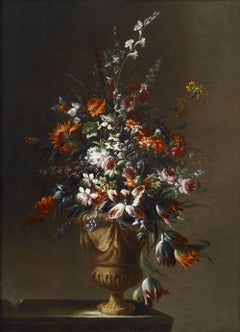
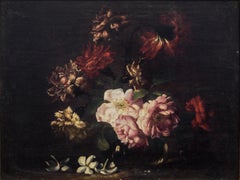
17th Century Still Life Niccolò Stanchi Flowers Oil on Canvas Red Pink White
Located in Sanremo, IT
Painting oil on canvas measuring 67 x 45 cm without frame and 82 x 60 depicting a vase of flowers by the painter Niccolò Stanchi ( Rome 1626 - 1690 ). The Stanchi brothers (Giovanni...
Category

Italian School Late 17th Century Paintings

Materials

Canvas, Oil

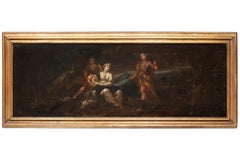
17th Century by Felice Torelli Rachel Hiding the Idols Oil on Canvas
Located in Milano, Lombardia
Felice Torelli (Verona, Italy, 1667 - Bologna, Italy, 1748) Title: Rachel Hiding the Idols Medium: Oil on canvas Dimensions: without frame 41 x 116 cm -...
Category

Old Masters Late 17th Century Paintings

Materials

Canvas, Cotton Canvas, Oil

Cleopatra Queen of Egypt 17 century Painting Oil on Canvas
Located in Rome, IT
Amazing painting of Cleopatra oil on canvas with a gilt wood frame. Attributed to Giuseppe Diamantini (Fossombrone 1621-Venice 1705) not signed. The dramatic subject of the paintin...
Category

Academic Late 17th Century Paintings

Materials

Oil

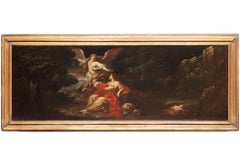
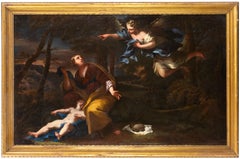
17th Century by Felice Torelli Hagar and the Angel Oil on Canvas
Located in Milano, Lombardia
Felice Torelli (Verona, Italy, 1667 - Bologna, Italy, 1748) Title: Hagar and the Angel Medium: Oil on canvas Dimensions: without frame 41 x 116 cm - wit...
Category

Old Masters Late 17th Century Paintings

Materials

Canvas, Cotton Canvas, Oil

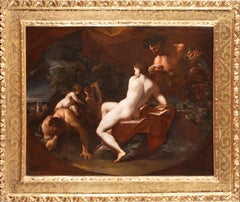
17th Century By Domenico Maria Canuti Toilet of Venus with Cupids and Satyrs
Located in Milano, Lombardia
Domenico Maria Canuti (Bologna 1626 - 1684) Title: Toilet of Venus with Cupids and Satyrs Medium: Oil on canvas Dimensions: without frame 79 x 98 cm - ...
Category

Old Masters Late 17th Century Paintings

Materials

Canvas, Cotton Canvas, Oil

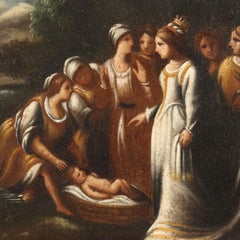
Dipinto Mosè salvato dalle Acque, XVII-XVIII secolo
Located in Milan, IT
Olio su tela. La scena racconta l'episodio biblico del libro dell' Esodo in cui il piccolo Mosè, che la madre aveva affidato al fiume all'interno di una cesta per salvarlo dalla str...
Category

Other Art Style Late 17th Century Paintings

Materials

Oil

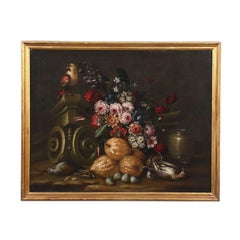
Still Life with Flowers, Fruits and Animals
Located in Milan, IT
Oil painting on canvas. Neapolitan school of the seventeenth-eighteenth century. The large composition is rich in numerous different elements: in the center stands a large floral com...
Category

Other Art Style Late 17th Century Paintings

Materials

Oil

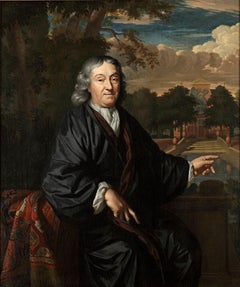
Male and female portrait, both in silk kimono, possibly textile dealers
By Christoffel Lubieniecki
Located in Amsterdam, NL
CHRISTOFFEL LUBIENIECKI (1659-1729) Pair of portraits of a gentleman and a lady, both in silk kimono, before a country house (circa 1680) Indistinctly signed “C.......” on a box under the man’s left hand Oil on canvas, 79.5 x 67 cm each Both sitters are portrayed wearing a silk “Japanese” coat. During the second half of the seventeenth the Japanese silk coat, an adapted Japanese kimono, became a real vogue in the Dutch elite. The exclusive Dutch trade contacts with Japan can explain the popularity of the kimono-style silk coats in the Netherlands. Everybody who could afford one, dressed in such a fashionable and comfortable coat and, like the present sitters, some proud owners had themselves portrayed in a “Japanese” coat often together with an oriental carpet to underline their standing and international connections. These portraits are the work of the Polish-born portraitist Christoffel Lubieniecki (also known as Lubienitski, Lubinitski or Lubiniecki) Lubieniecki was first trained in Hamburg under Julian Stuhr and after 1675 in Amsterdam under Adriaen Backer and Gerard de Lairesse. He specialized in landscapes, generally of an Italianate character, and in portraits. The loving execution of these contented burghers, enjoying the garden vistas of their country house, places him alongside Amsterdam portraitists such as Constantijn Netscher and Michiel van Musscher...
Category

Old Masters Late 17th Century Paintings

Materials

Canvas, Oil

17th Century by Filippo Abbiati Solomon sacrificing to idols Oil on Canvas
Located in Milano, Lombardia
Filippo Abbiati (Milan, Italy, 1640 - 1715) Title: Solomon sacrificing to idols Medium: Oil on canvas Dimensions: without frame 117 x 146 cm – with frame 131 x 158 cm Antique cassett...
Category

Old Masters Late 17th Century Paintings

Materials

Canvas, Cotton Canvas, Oil

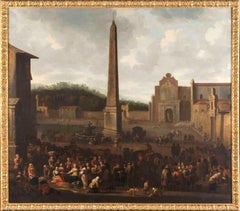
Dipinto fiammingo figurativo paesaggio bamboccianti del XVII secolo
By Jacob Van Huchtenberg
Located in Florence, IT
Il Mercato a Piazza del Popolo è opera del pittore olandese Jacob van Huchtenburgh, nato a Haarlem e presente, nel corso dei primi anni Sessanta del Seicento, a Roma, a stretto conta...
Category

Other Art Style Late 17th Century Paintings

Materials

Canvas, Oil

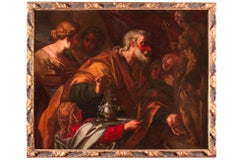
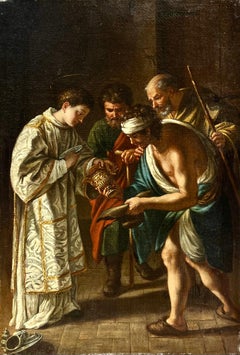
Saint Lawrence Looking at the Treasures
Located in Fredericksburg, VA
"Saint Lawrence Looking at the Treasures" is a captivating painting attributed to the Bolognese School, a prominent art movement from Bologna, Italy, flourishing primarily in the 16t...
Category

Old Masters Late 17th Century Paintings

Materials

Canvas, Oil

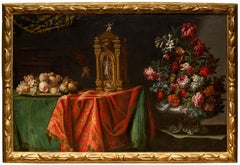
Baroque silver Vase with Flowers with a Fruit Tray and a Clock by A. Zuccati
Located in PARIS, FR
This unpublished composition is a recent addition to Adeodato Zuccati’s catalog. The study of this painting by Gianluca Bocchi, an Italian art historian specializing in Italian still lives, is available upon request. This composition is typical of the productions of Adeodato Zuccati, an Emilian painter...
Category

Old Masters Late 17th Century Paintings

Materials

Canvas, Oil

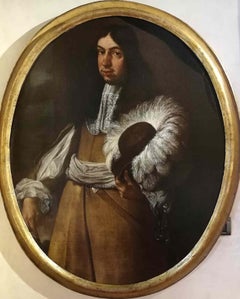
Ritratto figurativo maschile scuola toscana del XVII secolo olio su tela
Located in Florence, IT
Dipinto di scuola toscana della seconda metà del XVII secolo raffigurante un ritratto maschile di tre quarti, immerso nell'eleganza e nella maestosità proprie dell'epoca. La figura è...
Category

Baroque Late 17th Century Paintings

Materials

Canvas, Oil

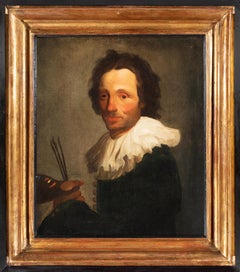
17th Century By Niccolo Cassana Self-portrait Oil On Canvas
Located in Milano, Lombardia
Niccolò Cassana (Venice, Italy, 1659 - London, UK, 1713) Title: Self-portrait Medium: Oil on canvas Dimensions: without frame 64 x 54 cm - with frame 89 x 78 cm Antique shaped wooden cassetta frame...
Category

Italian School Late 17th Century Paintings

Materials

Canvas, Cotton Canvas, Oil

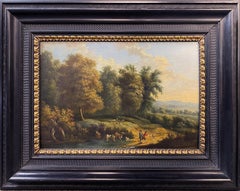
Dutch or Flemish Landscape with Figures Animals
Located in Milford, NH
A beautifully detailed late 17th or early 18th century Dutch or Flemish landscape with cows grazing in the water, goats, dogs, and other animals near the water’s edge, under the watchful eye of the herdsmen, on a backdrop of rolling hills and trees. Oil on wood panel, unsigned, and housed in a Rudolph...
Category

Flemish School Late 17th Century Paintings

Materials

Oil, Wood Panel

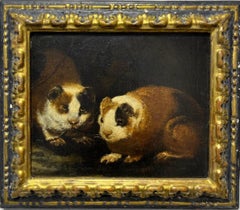
TWO TORTOISESHELL GUINEA PIGS, Italian Old Master Painting 17th C Oil Canvas
Located in New York, NY
Giovanni Agostino Cassana Venice, c. 1658 – 1720 Genoa Two Tortoiseshell Guinea-Pigs Oil on canvas 10 1/2 x 12 1/2 inches (26.7 x 31.7 cm) Framed: 16 1/2 x 18 1/2 inches Giovan...
Category

Old Masters Late 17th Century Paintings

Materials

Oil, Canvas

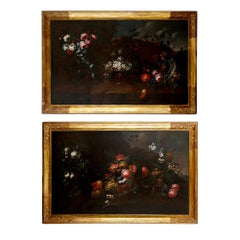
Pair of Antique 17th Century Floral Still Life Paintings, attr. Vincenzino
Located in London, GB
Pair of Antique 17th Century Floral Still Life Paintings, Attributed to Vincenzino Italian, second half 17th Century Dimensions: Frame height 111cm, width 170cm, depth 7cm; Canvas he...
Category

Late 17th Century Paintings

Materials

Canvas, Oil

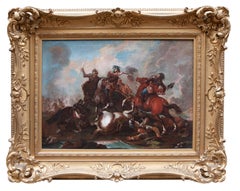
Scena di Battaglia
Located in Como, IT
Antonio Calza (1653-1725) Scena di Battaglia Olio su tela in cornice dorata Dimensioni: 45x60 cm (68,5 x 84,5 cm inclusa la cornice) Fine del XVII secolo Nacque nel 1653 a Verona d...
Category

Late 17th Century Paintings

Materials

Canvas, Oil

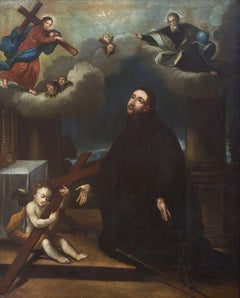
17th Century Saint Ignatius Italian School Adoration Oil on Canvas Brown Orange
Located in Sanremo, IT
Oil painting on canvas, sized 149 x 124 cm (149 x 124 cm) unframed and 158 x 133 cm (158 x 133 cm) with antique hook depicting St. John the Baptist. Ignatius of Loyola in adoration o...
Category

Italian School Late 17th Century Paintings

Materials

Canvas, Oil

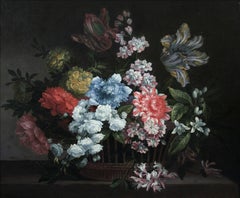
Flowers In A Basket - Original Oil, Still Life, French, Franco-Flemish painter
Located in Knowle Lane, Cranleigh
Flowers in A Basket by Jean-Baptiste Monnoyer. A Still Life of flowers in a basket including jasmine, honeysuckle, dahlias, parrot tulips, delphiniums and white carnations.
Category

Baroque Late 17th Century Paintings

Materials

Oil, Canvas

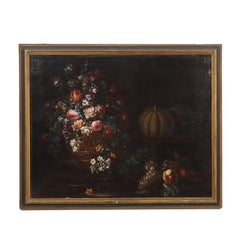
Still Life with Flowers, Fruit and Pumpkins, XVIIth - XVIIIth century
Located in Milan, IT
Oil painting on canvas. Lombard school of the late 17th-early 18th century. The rich composition offers a large bouquet of colorful flowers in an embossed vase, next to two large pumpkins and mixed fruit (grapes and peaches...
Category

Other Art Style Late 17th Century Paintings

Materials

Oil

Still Life with Flowers, Grapes and Mushrooms, XVIIth - XVIIIth century
Located in Milan, IT
Oil painting on canvas. Lombard school of the late 17th-early 18th century. The rich composition offers a large bouquet of colorful flowers in an embossed vase, next to a bowl full o...
Category

Other Art Style Late 17th Century Paintings

Materials

Oil

17th Century Still Life Angelo Maria Rossi Still Life Oil on Canvas Fruit
By Angelo Maria Rossi
Located in Sanremo, IT
Pair of paintings, oil on canvas, measuring 54 x 44 cm unframed and 65 x 55 cm with a coeval frame, depicting still lifes with asparagus, pomegranates, quinces, figs and medlars by t...
Category

Italian School Late 17th Century Paintings

Materials

Canvas, Oil

River Landscape with Shepherds and Architecture, a painting by Jan van Bunnik
By Jan van Bunnik
Located in PARIS, FR
This painting has been the subject of a study by the art historian Fabrizio Dassie (available on request), confirming its inclusion in Jan van Bunnik’s corpus. In this painting, Ja...
Category

Old Masters Late 17th Century Paintings

Materials

Copper

William Lord Russell
Located in Douglas, Isle of Man
Sir Godfrey Kneller 1646-1723, was a German born English portrait painter. He was a pupil of Bol and Rembrandt, he was born in Leiden, travelled to Rome , Venice, Hamburg and later t...
Category

Baroque Late 17th Century Paintings

Materials

Canvas, Oil

Nicolas de Largillière - Portrait of a Lady, Paris, circa 1695
Located in PARIS, FR
Nicolas de Largillière (Paris, 1656-1746) Portrait of a lady, circa 1695 Oil on canvas (relined): 76 x 61 cm Framed: h. 97 cm, l. 82 cm To be included in the forthcoming catalogue raisonné of the artist by Dominique Brême, director of museum of Sceaux and artist specialist. Our work presents a majestic French aristocrat against the backdrop of a twilight landscape. The face seen from the front, the body turned three-quarters, the young woman is portrayed half-length, revealing her slim belted waist. The elongated face with rosy cheeks, almond-shaped eyes, straight nose and strong chin, solemn expression, the young woman sketches...
Category

Old Masters Late 17th Century Paintings

Materials

Canvas, Oil

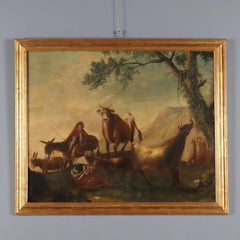
Painted Landscape with Herdsmen and Shepherds 17th-18th century
Located in Milan, IT
Oil on Canvas. Central-Italian school of the 17th-18th centuries. In a landscape with rocky, barren slopes, a herd of oxen and goats is depicted in the foreground, tended by a pair o...
Category

Other Art Style Late 17th Century Paintings

Materials

Oil

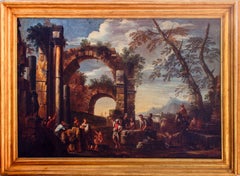
Roman Ruins with Figures - Oil On Canvas by Giovanni Ghisolfi
By Giovanni Ghisolfi
Located in Roma, IT
Roman Ruins with Figures is an original artwork realized by the Italian artist Giovanni Ghisolfi in the second half of the XVII century. Oil painting on canvas. Golden wood frame i...
Category

Late 17th Century Paintings

Materials

Oil

Pair fo Still Lives - Oil on Canvas by N. Stanchi - Late 17th Century
Located in Roma, IT
Beautiful pair of still lives ascribed to N. Stanchi, realized in the second half of 17th century. Both in very good conditions, they include a contemporary wooden gilded frame. Dime...
Category

Baroque Late 17th Century Paintings

Materials

Oil

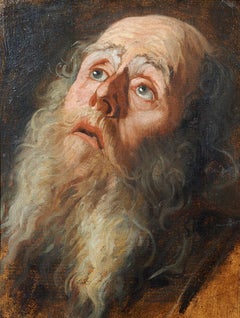
17th Century Old Head Flemish School Eyes Caravagism Oil on Canvas Yellow White
Located in Sanremo, IT
Painting oil on panel depicting a strong and distinctive old man's head with dimensions of 36 x 28 cm without frame and 68 x 60 with frame coeval Flemish school of the second half of...
Category

Flemish School Late 17th Century Paintings

Materials

Oil, Board

Cleopatra Queen of Egypt 17 century Painting Oil on Canvas
Located in Rome, IT
Amazing painting of Cleopatra oil on canvas with a gilt wood frame. Attributed to Giuseppe Diamantini (Fossombrone 1621-Venice 1705) The dramatic subje...
Category

Academic Late 17th Century Paintings

Materials

Oil

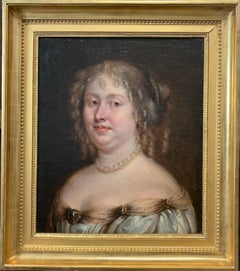
Portrait of a Lady . Louis Ferdinand Elle the Younger. ( Paris, 1612-1689), attrib
By Louis Elle (Ferdinand)
Located in Firenze, IT
Portrait of a lady . Louis Ferdinand Elle the Younger. ( Paris, 1612-1689), attributed. Circa 1680. Oil on canvas, resting on cardboard. In 19th-century giltwood frame. A female...
Category

French School Late 17th Century Paintings

Materials

Canvas, Oil, Cardboard

17th Century by Giovanni Paolo Castelli Still Life Oil on Canvas
By Giovanni Paolo Castelli detto Spadino
Located in Milano, Lombardia
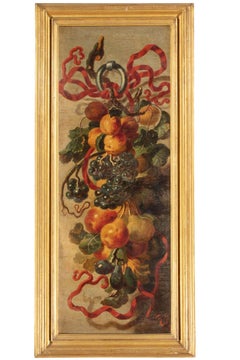
Giovanni Paolo Castelli known as Spadino (Rome, Italy, 1659 - 1730) Title: Still life Medium: Oil on canvas Dimensions: without frame 81 x 31 ...
Category

Old Masters Late 17th Century Paintings

Materials

Canvas, Cotton Canvas, Oil

17th Century by Onofrio Loth Still Life Oil on Canvas
Located in Milano, Lombardia
Onofrio Loth (Naples, Italy, 1665 – 1717) Title: Still life Medium: Oil on canvas Dimensions: without frame 37.5 x 47.5 cm – with frame 50 x 57 cm Original ebonised wooden frame wit...
Category

Old Masters Late 17th Century Paintings

Materials

Canvas, Cotton Canvas, Oil

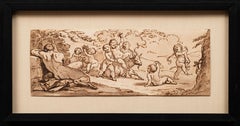
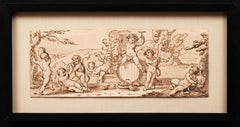
Antique Italian School Late 17th - Early 18th "Cherubs (A)" Pen drawing of Putti
Located in SANTA FE, NM
"Cherubs" (A) Pen and Ink drawing of Putto Italian School Late 17th early 18th century. Pen and ink on paper 6 ½ x 17 ½ (22 ½ x 11 ½) inches Antique scenes of putto and a faun cele...
Category

Old Masters Late 17th Century Paintings

Materials

Paper, Ink, Pen

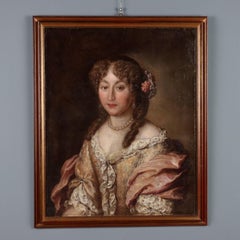
Painted Portrait of a Woman in the Style of Jakob Ferdinand Voet late600s early700s
Located in Milan, IT
Oil on Canvas. L'opera riprende i modi diffusi in tutta Europa da Jakob Ferdinand Voet, pittore fiammingo affermatosi soprattutto come ritrattista, che ebbe ampio seguito sia negli ...
Category

Other Art Style Late 17th Century Paintings

Materials

Oil

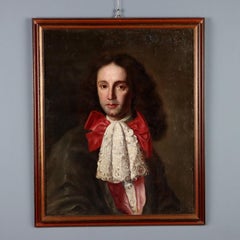
Painting Male Portrait in the Style of Jakob Ferdinand Voet late 1600s early 1700s
Located in Milan, IT
Oil on Canvas. L'opera riprende i modi diffusi in tutta Europa da Jakob Ferdinand Voet, pittore fiammingo affermatosi soprattutto come ritrattista, che ebbe ampio seguito sia negli a...
Category

Other Art Style Late 17th Century Paintings

Materials

Oil

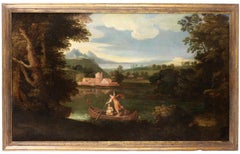
River Landscape with Boat and two Figures - Oil Paint - 17th Century
Located in Roma, IT
River Landscape with Boat and two Figures, realized by an artist active in italy in the mid-17th Century. In very good condition, it includes a gilded coeval wooden frame.
Category

Modern Late 17th Century Paintings

Materials

Oil, Canvas

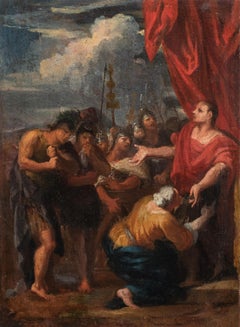
Pier Dandini (Florence master) - 17th century figure painting - Scipio
Located in Varmo, IT
Pier Dandini (Florence 1646 - Florence 1712) attributed - The Continence of Scipio (preparatory sketch). 50 x 37 cm. Ancient oil painting on canvas, without frame (not signed). - ...
Category

Baroque Late 17th Century Paintings

Materials

Canvas, Oil

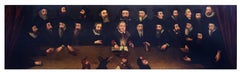
The Primitive Reformers - Oil on Canvas by English School Master 1600/1700
Located in Roma, IT
The primitive Reformers is an interesting, rare and original oil painting on canvas, realized by an anonymous artist of the English School around XVII-XVIII century. Original Title: The Primitive Reformers (Portrait of Martin Luther with the main figures of the Protestant Reformation with a cardinal, a devil, a pope and a monk at the bottom trying to extinguish the candle of Protestantism). This original painting remembers an original etching (specular in the composition), titled "The Primitive Reformers", published between 1768-69, in a literary volume called England's Bloody tribunal or popish cruelty display by Matthew Taylor. Our painted specimen is really precious because this is the unique important testimony known today. The scene, horizontally built and closed at the sides by two curtains, represents a group of twenty-three characters arranged on two foils around a long table. The figures represented are the most important personalities of the Reformation...
Category

Late 17th Century Paintings

Materials

Canvas, Oil

Antique Italian School Late 17th - Early 18th "Cherubs (B)" Pen drawing of Putti
Located in SANTA FE, NM
"Cherubs" (B) Pen and Ink drawing of Putto Italian School Late 17th early 18th century. Pen and ink on paper 6 ½ x 17 ½ (22 ½ x 11 ½) inches Antique scenes of putto and a faun cele...
Category

Old Masters Late 17th Century Paintings

Materials

Paper, Ink, Pen

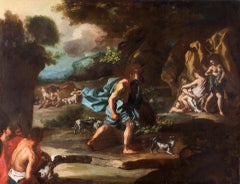
17th Century Myth of Diana and Ataeon Francesco Solimena Oil on Canvas Blu Red
By Francesco Solimena
Located in Sanremo, IT
Painting oil on canvas depicting the myth of Diana and Actaeon measuring 110 x 130 without frame and 120 x 140 with frame by the painter Francesco Solimena. According to the myth, d...
Category

Italian School Late 17th Century Paintings

Materials

Canvas, Oil

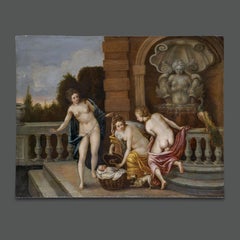
Francesco Albani Circle Italian Mythological Painting
Located in Roma, IT
Francesco Albani Circle Italian Mythological Painting This important oil painting on wood depicts a subject that is very rare in the iconography of ancient mythological paintings: the birth of Erittonio. Erichthonius who succeeded Amphictyon becoming the fourth mythological king of Athens and married the naiad Praxithea who made him the father of Pandion. The extremely high quality of this very rare painting suggests that it was painted by an artist who frequented Francesco Albani's studio. The period, the mythological subject, the harmony of the colours and, above all, the sublime quality of the flesh tones all point in this direction. This artwork, never before on the market, comes from an important Italian private collection Every item of our Gallery, upon request, is accompanied by a certificate of authenticity issued by Sabrina Egidi official Expert in Italian furniture for the Chamber of Commerce of Rome and for the Rome Civil Courts. ERYTHTONIOS (᾿Ερυχϑόνιος, Erychthonios) Born of Hephaestus' love for Athena, from the breast of Ghe, who was impregnated by the god; welcomed by Athena, who placed him in a basket together with one or two snakes, entrusting him to the care of Cecrops' three daughters. Against the goddess's wishes, they opened the chest, from which emerged, according to different versions of the myth, either the child wrapped in snakes or a snake, which, in some versions, killed the girls, while in others, they threw themselves from the Acropolis in fear. Erittonio, in the form of a snake, is welcomed by Athena into her temple and curls up under the goddess's shield. Alongside this myth, of Ionian origin, are others due to the doubling of the figures of E. and Erechtheus The scene of the birth appears in figurative tradition: in a Melian terracotta relief from the early 5th century, Ghe, half-emerging, holds out the baby Erittonio. to Athena, who welcomes him in the presence of Cecrops; the same scene appears on various painted vases, such as a red-figure kölix by the Painter of Kodros, from Tarquinia, in the Berlin Museums, dating from around 440 BC, where Hephaestus also appears alongside Cecrops. A modest red-figure vase from Camiro, in the British Museum, depicts the moment when the fleeing Cecropids discover the cista, from which the infant Erittonio. emerges between two snakes, greeting Athena. The moment when the chest was opened was depicted by Phidias on the xiii and xiv S metopes of the Parthenon, where Cecrops and Pandrosus appear in the first and Erisichthon and Aglaurus with the chest uncovered in the second. A kölix in the style of the Brygos Painter in Frankfurt, on the other hand, depicts the large snake E. chasing the fleeing Cecropids towards their father's palace. Luciano (De dom., 27) recalls a painting depicting the scene of the birth and the representation of the myth in pantomime on the theatre (De salt., 39). Bibliography: Engelmann, in Roscher, cc. 1303-1308, s. v. Erichthonios; P. Jacobstahl, Die Melischen Reliefs, Berlin 1931, pp. 96-98, plate 75 a; W. Züchner, in Jahrbuch, LXV-LXVI, 1950-51, p. 200 ff., figs. 34-35; J. D. Beazley, Red-fig., p. 720; G. Becatti, Problemi fidiaci, Florence 1951, p. 22. Questo Francesco Albani (Bologna, August 17, 1578 – Bologna, October 4, 1660) was an Italian painter. Albani was born in Bologna, Papal States, in 1578. His father was a silk merchant who intended his son to go into his own trade. By the age of twelve, however, he had become an apprentice to the competent mannerist painter Denis Calvaert, in whose studio he met Guido Reni. He soon followed Reni to the so-called "Academy" run by Annibale, Agostino, and Ludovico Carracci. This studio fostered the careers of many painters of the Bolognese school, including Domenichino, Massari, Viola, Lanfranco, Giovanni Francesco Grimaldi...
Category

Old Masters Late 17th Century Paintings

Materials

Oil, Wood Panel

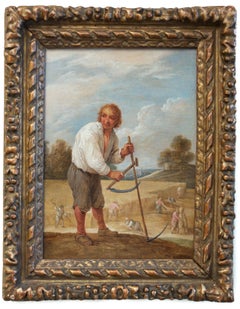
Peasants in a Cornfield (Boer in het veld) by David Teniers the Younger
By David Teniers the Younger
Located in Stockholm, SE
Remembering the magic of everyday life moments in the art of David Teniers: The art of David Teniers the Younger (1610–1690) coincided with the heyday of the Flemish Baroque and captured a great variety of motifs of his time. In this painting of a seemingly simple peasant scene lies keys to understanding both the imaginative mind of Teniers as well as why this time period produced some of the most iconic works in all of art history.  As indicated by the name, Teniers was more or less born into his profession. As the son of David Teniers the elder, himself a painter who studied under Rubens, the younger David received training in art from a very young age and had no less than three brothers who also became painters. Because of his father’s frequent financial failures that even at times saw him imprisoned, David the younger helped to rescue the family from ruin through painting copies of old masters. Essentially, the young Teniers was confronted with painting as both a passion and creative expression as well as a necessity during difficult times, an experience that would shape much of his capacity and sensitivity in his coming life. Despite the hardships, the talent and determination of Teniers was recognized and quickly expanded his possibilities. He had already spent time in France and possibly also England when he was hired by his father’s former teacher Rubens to help with a prestigious commission with mythological paintings, now considered lost, for Philip IV the king Spain. In 1644–54 Teniers was appointed dean of the Antwerp Guild of Saint Luke, manifesting his esteemed position within the artistic community. A few years afterwards he took an important step when relocating to Brussels, where Teniers yet again found new career opportunities that would prove to be very successful. As the keeper of the collections of Archduke Leopold Wilhelm, a role similar to what we now refer to as an art advisor, Teniers purchased hundreds of important artworks that manifested the prominent status of the Archduke’s collection while at the same time providing an unusual access to inspiration and knowledge for Teniers himself. Since he kept on painting during the same time, his creative scope must have seemed almost bewildering in the great variety of images and stories that he surrounded himself with.  Regardless of how glamorous and culturally stimulating the career of Teniers was, he was as open to the charm and existential importance of everyday life as he was to works of great masters and luxurious collectibles. In his impressive repertoire of genres with everything from exquisite royal portraits, interiors, landscapes and history paintings he always added something new and inventive, highlighting the possibilities of art and importance of an experimental and intuitive mind. It is difficult to single out one aspect or genre to summarize his legacy, since it lies much more in the broad virtuosity across many motifs, although he is particularly remembered for farm scenes and meticulously depicted interiors where other paintings and artworks are captured with an astonishing precision. However, the fact that he is still today one of the most known and celebrated names of the Dutch Golden Age is a proof to the magic of his work, which continues to spark dialogue and wonder in the contemporary viewer of his works. The farm boy in the field in this painting, which likely dates to the mature part of his career, is a wonderful entry into the mind of Teniers. In the tightly cropped motif, we see him standing right in the middle of the busy harvest when men, women and everyone capable were sent out in the field to collect the crop that formed the very core of their diet and survival. In the background we see a fresh blue sky interspersed with skillfully painted clouds, some trees reaching their autumnal colours and in the far distance the glimpse of a small church and village. The presence of a church in a landscape, so typical of Dutch art, served both a symbolic and visual function as a representation of faith while at the same time defining scale and distance. In the field, the work is in full action with the farmers spread out in various positions, all in the midst of hard and sweaty labour. While they are portrayed as having nothing else than the work on their mind, our farm boy seems to have his attention directed elsewhere. Standing there with his white, half open shirt, flowy curls and strong, sturdy body; his gaze is directed away, out of the picture and the scythes in his hands. He looks almost smirking, expressed with tremendous subtlety in the slight smile of his lips and big eyes, being just in the middle of losing focus on the work. What is it that steals his attention? What has he seen, or realized, or felt – to break him free of the arduous task of harvesting, if but for a moment? Here starts the wondering and the questions that are the hallmark of a great piece of art. Instead of explicitly locking in the motif in overly clear symbolism Teniers has chosen an open ended, subtle yet striking moment for us to consider. While it of course can be related to numerous other farm scene depictions of this time, and clever usages of gazes and real-life scenes to underscore various moral or symbolic meanings, the painting can be much more of a contemplation than an explanation or illustration. The ordinary nature and understated yet emotionally textured composition of the motif gives greater space for our own reactions and thoughts. Has he seen a pretty farm girl just passing by? Is he fed up with the farm life, joyously dreaming away for a minute, imagining another future? Or is he simply in need of distraction, looking away and ready for anything that can steal his attention? One quality that never seem to have escaped Teniers was that of curiosity. During all of his career he constantly investigated, expanded and experimented with not only the style and technique of painting, but with the vision of art itself. Being credited with more or less introducing farm motifs for a broader audience not only tells us of his ability to understand the demand for different motifs, but the sensitivity to transform seemingly ordinary parts of life into deep aesthetic experiences, far beyond their expected reach. The farm boy in this painting is, of course, exactly that. But with the help of one smirk the entire picture is charged with a different energy, awakening many contrasts and relationships between the calm landscape, the hard work and his own breach of effectivity, holding sharp scythes while thinking or seeing something else. It is no wonder Teniers chose to work with farm scenes as a way of investigating these intricate and delicate plays on expectations and surprises, clarity and ambivalence. It invites us to an appreciation of human everyday life that connects us with the people of 17th century...
Category

Old Masters Late 17th Century Paintings

Materials

Canvas, Oil

Agar and the Angel -Oil Paint - Late 17th Century
Located in Roma, IT
Oil on canvas realized in Italy ih the late 17th Century. The painting depicts the episode from Genesis (21, 9-21) in which the servant Hagar, together woth her little son Ishmael b...
Category

Baroque Late 17th Century Paintings

Materials

Oil

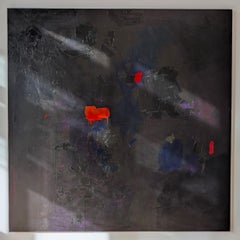
Untitled
Located in Vancouver, CA
Ron Stonier (1933-2001) was a dedicated Vancouver artist celebrated for his exploration of abstract painting, influenced by his mentors Gordon Smith and Jack Shadbolt, as well as by ...
Category

Abstract Late 17th Century Paintings

Materials

Canvas, Acrylic

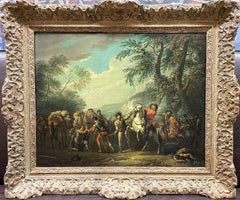
"Scene of a gang of robbers during a raid"
Located in Edinburgh, GB
Pieter van Bloemen (Antwerp, 1657–1720) – "Scene of a Gang of Robbers During a Raid" Medium: Oil on canvas Period: Late 17th – Early 18th Century Dimensions: [Include dimensions if a...
Category

Rococo Late 17th Century Paintings

Materials

Canvas, Oil

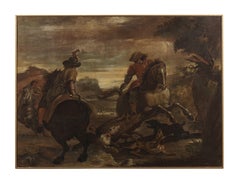
17th Century Hunting Scene Flemish School Battle Dogs Horses Oil on Canvas Red
Located in Sanremo, IT
Painting, oil on canvas, measuring 75 x 103 cm without frame and 82 x 110 cm with frame, of the Flemish school depicting a hunting scene. The confident outline of the almost drawn a...
Category

Flemish School Late 17th Century Paintings

Materials

Canvas, Oil

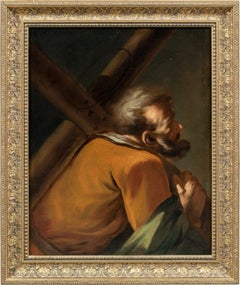
Baroque Italian painter - 17th century figure painting - Saint Andrew
Located in Varmo, IT
Italian painter (17th-18th century) - Saint Andrew. 73.5 x 58.5 cm unframed, 88.5 x 73.5 cm with frame (not signed). Antique oil painting on canvas, in a carved and gilded wooden f...
Category

Baroque Late 17th Century Paintings

Materials

Canvas, Oil

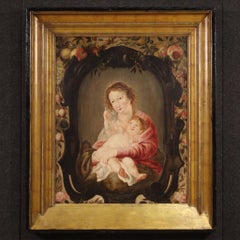
17th Century Oil on Panel Flemish Religious Painting Madonna with Child, 1670
Located in Vicoforte, IT
Antique Flemish panel from the first half of the 17th century. Oil painting depicting a splendid Madonna with child inside a niche surrounded by a garland of masterfully painted flow...
Category

Late 17th Century Paintings

Materials

Oil, Wood

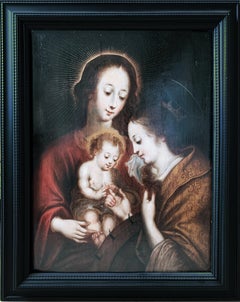
Le Mariage Mystique De Ste Catherine XVIIe Siècle Flamand
Located in GOUVIEUX, FR
Oil on panel, Flemish School of the 17th century Dimensions: 64 x 49 cm (without frame) – 64 x 79 cm (with frame) This highly delicate painting depicts the theme of The Mystic Marri...
Category

Flemish School Late 17th Century Paintings

Materials

Oil, Panel

Read More