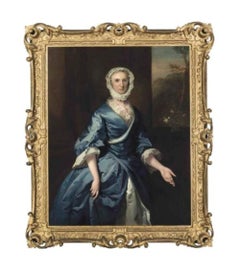
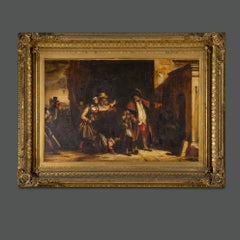
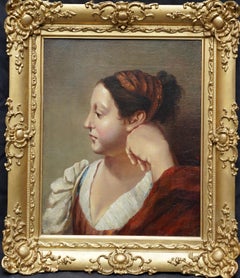
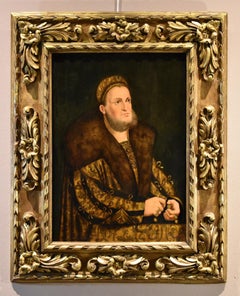
Old Masters Portrait Paintings

OLD MASTERS

Encompassing centuries of change in Europe between 1300 and 1800, from booms of prosperity to bloody revolutions, Old Masters describes a wide range of artists. The informal term was derived from the title of an artist who trained in a guild long enough to become a master, such as Leonardo da Vinci, who studied in a Florence painters’ guild. However, Old Masters paintings, prints and other art is now used to refer to work made by any artist with a high level of skill in painting, drawing, sculpture or printmaking who worked during this era.

The 15th century’s expansive trade and commerce spread culture across borders. A vibrant period of art emerged, bolstered by studies of anatomy and nature that influenced a new visual realism. From Raphael and Michelangelo in the Renaissance to Rembrandt van Rijn and Johannes Vermeer in the Dutch Golden Age, artists expressed emotion, naturalism, color and light in new ways. El Greco and Paolo Veronese were leaders in the dramatic style of Mannerism, while Caravaggio and Peter Paul Rubens demonstrated the movement and meticulous detail of Baroque art.

Historically, most attention was concentrated on male artists, but recent research and exhibitions have elevated the impactful work of women such as Rachel Ruysch and Artemisia Gentileschi. In late-18th-century France, female artists like Adélaïde Labille-Guiard and Élisabeth Vigée Le Brun were prominent names. Nevertheless, access to the academies and guilds was highly restricted for women, and even those able to establish practices were expected to adhere to portraits and still lifes rather than the grand history paintings being created by men.

Find a collection of Old Masters prints, paintings, drawings and watercolors and other art on 1stDibs.

to
275
62
41
94
126
126
Overall Width
to
Overall Height
to
342
73
19
15
3
1
2
1
143
4,480
1,178
886
623
560
546
425
380
173
134
99
27
7
389
47
6
383
259
227
146
124
76
68
58
41
19
11
9
8
7
6
3
3
3
2
2
438
434
144
142
29
4
3
2
2
2
361
24
417
30
Style: Old Masters
Annunciation De Witte Paint Oil on canvas Old master 17th Century Flemish Art
Located in Riva del Garda, IT
Pieter de Witte, also known as Peter Candid (Bruges, 1548 - Munich, 1628) - Workshop/School The Annunciation oil on canvas (cm): 79 x 110 - framed 92 x 127 We are delighted to present a fascinating work, dating back to the beginning of the 17th century, inspired by the prototype of the Annunciation created around 1586-1595 by Pieter de Witte, also known as Peter Candid (Bruges, 1540/1548 - Munich, 1628), which has been lost but made famous thanks to an engraving made and published by Jan Sadeler I (1550-1600). A painter of Flemish origin with strong affinities to 16th century Italianising culture, De Witte tackles the theme of the Annunciation numerous times, revealing knowledge of both Roman and Florentine Mannerism, inherited from his Italian sojourn. Some of these works are now housed in various international museums, in addition to autograph or workshop works that can be found in numerous public or private collections; in this regard, we may mention the following: - National Museum in Prague [1] - Carrara Academy of Bergamo, Angelo Annunziante and Vergine Annunziata [2]. - Finnish National Museum, Helsinki  - Private property, religious institution Bergamo (Bergamo area) Observing the composition, we can admire the rather well-established iconographic scheme, with the two figures immersed in an almost dreamlike atmosphere: the Archangel Gabriel on the left, of an ethereal beauty, appears imperious as he delivers the supreme annunciation to the Virgin Mary, who greets him with lowered eyes, composed in her amazement; surprised in the act of reading a book, she receives the white lilies...
Category

17th Century Old Masters Portrait Paintings

Materials

Oil

17th century portrait of Lady Sarah Cowper, Circle of Michael Dahl
By (Circle of) Michael Dahl
Located in York, GB
Portrait of Lady Sarah Cowper, nee Holled [1644-1720]-Circle of Michael Dahl (unsigned)17th century,Oil painting on canvas oval,bust-length . She has dar...
Category

17th Century Old Masters Portrait Paintings

Materials

Oil

Portrait of Lady in Mob Cap - British Old Master 18th century art oil painting
Located in Hagley, England
This charming British Old Master Regency pastel portrait is attributed to John Russell RA. Painted circa 1790 the composition is a blonde woman in pretty mob cap with a blue ribbon. A really lovely image. Provenance. Oxford estate. Condition. Oil pastel on paper, 23 inches by 19 inches unframed and in good condition but has line in paper in middle. Frame. Housed in a fine frame, 30 inches by 26 inches framed and in good condition. John Russell RA (1745-1806) was an English painter renowned for his portrait work in oils and pastels, and as a writer and teacher of painting techniques. Russell was born in Guildford, Surrey, the son of John Russell Snr., book and print seller and five times mayor of the town; his father was something of an artist, and drew and published two views of Guildford. Russell was educated at the Royal Grammar School, Guildford, and soon showed a strong inclination for art. He trained under Francis Cotes RA (of Cavendish Square, London), one of the pioneers of English pastel painting, and, like Cotes, was an admirer of the pastel drawings of Rosalba Carriera whose methods influenced his technique of "sweetening". At the age of 19 he converted to Methodism, which was the cause of tension with his family and with his teacher; he made no secret of his strong evangelical leanings and would attempt to preach and convert at every opportunity. Russell set up his own studio, in London, in 1767. He made the acquaintance of the notorious Dr. William Dodd, whose portrait he painted in 1768. He was introduced to Selina, Countess of Huntingdon, who unsuccessfully attempted to persuade him to give up painting and attend her Methodist ministers' training college at Trevecca in Wales. On 5 February 1770, he married Hannah Faden, daughter of a Charing Cross print and map seller...
Category

18th Century Old Masters Portrait Paintings

Materials

Oil

Portrait of William Herbert, 3rd Earl of Pembroke, Early 17th Century Portrait
Located in London, GB
English School, (circa 1600) Portrait of William Herbert, 3rd Earl of Pembroke Oil on panel, oval Image size: 29¼ x 23⅞ inches Painted wooden frame Provenance: 176, Collection of Francis Greville, 1st Earl of Warwick. The Trustees of the Lord Brooks’ Settlement, (removed from Warwick Castle). Sotheby’s, London, 22nd March 1968, lot 81. Painted onto wooden panel, this portrait shows a dark haired gentleman in profile sporting an open white shirt. On top of this garments is a richly detailed black cloak, decorated with gold thread and lined with a sumptuous crimson lining. With the red silk inside it’s all very expensive and would fall under sumptuary laws – so this is a nobleman of high degree. It’s melancholic air conforms to the contemporary popularity of this very human condition, evident in fashionable poetry and music of the period. In comparison to our own modern prejudices, melancholy was associated with creativity in this period. This portrait appeared in the earliest described list of pictures of Warwick castle dating to 1762. Compiled by collector and antiquary Sir William Musgrave ‘taken from the information of Lord & Lady Warwick’ (Add. MSS, 5726 fol. 3) is described; ‘8. Earl of Essex – an original by Zuccharo – seen in profile with black hair. Holding a black robe across his breast with his right hand.’ As tempting as it is to imagine that this is a portrait of Robert Devereux, the 2nd Earl Essex, we might take this with a pinch of salt. Its identification with this romantic and fatal Elizabethan might well have been an attempt to add romance to Warwick Castle’s walls. It doesn’t correspond all that well with Essex’s portraits around 1600 after his return from Cadiz. Notably, this picture was presumably hung not too far away from the castle’s two portraits of Queen Elizabeth I. The first, and undoubtedly the best, being the exquisite coronation portrait that was sold by Lord Brooke in the late 1970s and now hangs in the National Portrait Gallery. The second, described as being ‘a copy from the original at Ld Hydes’, has yet to resurface. The portrait eventually ended up being hung in the State Bedroom of Warwick Castle. Archival documents present one other interesting candidate. The Greville family’s earliest inventory of paintings, made in 1630 at their home Brooke House in Holborn, London, describes five portraits of identified figures. All five belonged to the courtier, politician and poet Sir Fulke Greville (1554-1628), 1st Baron Brooke, and were hung in the ‘Gallerie’ of Brooke House behind yellow curtains. One of them was described as being of ‘Lord of Pembrooke’, which is likely to have been William Herbert (1580-1630), 3rd Earl of Pembroke. William was the eldest son of Greville’s best friend’s sister Mary Sidney, and was brought up in the particularly literary and poetically orientated household which his mother had supported. Notably, the 3rd Earl was one of the figures that Shakespeare’s first folio was dedicated to in 1623. The melancholic air to the portrait corresponds to William’s own pretensions as a learned and poetic figure. The richness of the robe in the painting, sporting golden thread and a spotted black fabric, is indicative of wealth beyond that of a simple poet or actor. The portrait’s dating to around the year 1600 might have coincided with William’s father death and his own rise to the Pembroke Earldom. This period of his life too was imbued with personal sadness, as an illicit affair with a Mary Fitton had resulted in a pregnancy and eventual banishment by Elizabeth I to Wilton after a short spell in Fleet Prison. His illegitimate son died shortly after being born. Despite being a close follower of the Earl of Essex, William had side-stepped supporting Devereux in the fatal uprising against the Queen and eventually regained favour at the court of the next monarch James I. His linen shirt is edged with a delicate border of lace and his black cloak is lined on the inside with sumptuous scarlet and richly decorated on the outside with gold braid and a pattern of embroidered black spots. Despite the richness of his clothes, William Herbert has been presented in a dishevelled state of semi-undress, his shirt unlaced far down his chest with the ties lying limply over his hand, indicating that he is in a state of distracted detachment. It has been suggested that the fashion for melancholy was rooted in an increase in self-consciousness and introspective reflection during the late 16th and early 17th centuries. In contemporary literature melancholy was said to be caused by a plenitude of the melancholy humor, one of the four vital humors, which were thought to regulate the functions of the body. An abundance of the melancholia humor was associated with a heightened creativity and intellectual ability and hence melancholy was linked to the notion of genius, as reflected in the work of the Oxford scholar Robert Burton, who in his work ‘The Anatomy of Melancholy’, described the Malcontent as ‘of all others [the]… most witty, [who] causeth many times divine ravishment, and a kind of enthusiamus… which stirreth them up to be excellent Philosophers, Poets and Prophets.’ (R. Burton, The Anatomy of Melancholy, London, 1621 in R. Strong, ‘Elizabethan Malady: Melancholy in Elizabethan and Jacobean Portraits’, Apollo, LXXIX, 1964). Melancholy was viewed as a highly fashionable affliction under Elizabeth I, and her successor James I, and a dejected demeanour was adopted by wealthy young men, often presenting themselves as scholars or despondent lovers, as reflected in the portraiture and literature from this period. Although the sitter in this portrait is, as yet, unidentified, it seems probable that he was a nobleman with literary or artistic ambitions, following in the same vain as such famous figures as the aristocratic poet and dramatist, Edward de Vere...
Category

Early 17th Century Old Masters Portrait Paintings

Materials

Oil, Wood Panel

Portrait of William Henry Kerr, Earl of Ancram, 4th Marquess of Lothian
Located in London, GB
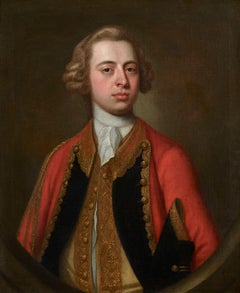
James Fellowes Flourished 1719 - 1750 Portrait of William Henry Kerr, Earl of Ancram, 4th Marquess of Lothian Oil on canvas, signed & dated 1747 Image size: 29 1/2 x 24 1/2 inches (75 x 62 cm) Original gilt wood frame William Henry Kerr was born a member of the Scottish peerage to William, third Marquess of Lothian, and his first wife Margaret, daughter of Sir Thomas Nicholson of Kemnay, first Baronet. William was styled Master Jedburgh until 1722, when his father was elevated to a Marquessate, after which he was referred to as Lord Jedburgh until 1735. Following his father’s military footsteps, on 20 June 1735 Ancram was commissioned as a cornet to the regiment (11th Dragoons) of his grand-uncle, Lord Mark Kerr. Ancram married Lady Caroline...
Category

1740s Old Masters Portrait Paintings

Materials

Oil

19th Century Portrait Of A Young Woman Oil On Canvas
Located in York, GB
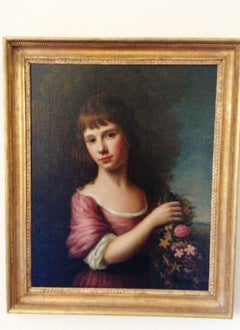
Fine 19th Century Oil on Canvas Portrait of a Young Woman in large gilt gesso frame .unsigned. Identity of the sitter as yet unknown. The artist has managed to capture her ethereal b...
Category

19th Century Old Masters Portrait Paintings

Materials

Oil

Susanna Old Men Religious Roma nschool 17th Century Paint Oiul on canvas Italy
Located in Riva del Garda, IT
Painter active in Rome in the early 17th century Susanna and the Old Men Oil on canvas 76 x 62 cm. with frame 92 x 78 cm. This valuable painting illustrates the piquant episode, ta...
Category

17th Century Old Masters Portrait Paintings

Materials

Oil

Portrait of Monsieur Aubert, a ceremonial portrait by Nicolas de Largillière
Located in PARIS, FR
Provenance : Arnold S. Kirkeby (1901-1962) Donated by Arnold S. Kirkeby to the Los Angeles County Museum of Art in 1955, where it remained until its sale at Sotheby's, New York on January 10, 1991, lot 82. Christie's, London, July 7, 2010, lot 186, where it was purchased after the sale by the executors of the will of the late Edmund de Rothschild (1916-2009) for display at Exbury House The Trustees of Exbury House Literature : R. Brown, Bulletin of the Art Division, Los Angeles County Museum, VIII, 1957, pp.8-9, no. 4; S. Schaefer and P. Husco, European Paintings and Sculpture in the Los Angeles County Museum of Art (Los Angeles, 1987), p. 53 (illustrated and dated c. 1735) This sumptuous ceremonial portrait, executed around 1725-1730, depicts Monsieur Aubert, the French General Comptroller of Bridges and Roadways, as we learn from a letter on the desk beside our model. The virtuoso treatment of the fabrics, the authoritative yet confident pose, the vigorous treatment of the two hands, are representative of Largillière's talent, here at the peak of his art as portraitist. The portrait also has a rather extraordinary provenance: donated by Arnold S. Kirkeby, an American hotel magnate and real estate developer, it was exhibited during almost forty years in the collections of the Los Angeles County Museum, before being acquired in 2010 by the executors of Edmund de Rothschild's will to adorn his former home Exbury House (Hampshire), where it remained until its sale in 2022. 1. Nicolas de Largillière, a great European portraitist Nicolas de Largillière (or Largillierre), one of Europe's premier painters of portraits, history paintings, and still lifes during the late seventeenth century and the first four decades of the eighteenth, was born in Paris in 1656. He was the son of a hatmaker and merchant who moved with his family to Antwerp in 1659. As a boy of nine, he traveled for the first time to London in the company of an associate of his father. After returning to Antwerp more than a year later, his artistic gifts were recognized and his father apprenticed him to Antoni Goubau (1616-1698), a painter genre scenes and landscapes. Something of a prodigy, he was admitted to the painters' Guild of Saint Luke when he was only seventeen. In 1675 he made a second trip to London, where he was employed at Windsor Castle and worked as a restorer under the direction of Italian painter and decorator Antonio Verrio (c. 1639-1707), who brought him to the attention of King Charles II (r. 1660-1685). At this time Largillière painted several still life paintings in the manner of the Dutch and Flemish masters. Thereafter he practiced this branch of painting with consummate skill, a talent that allowed him to make brilliant use of flowers, fruit, and animals in some of his most ambitious portraits and contemporary history pictures. In 1679 Largillière settled in Paris, where he specialized in baroque portraiture in the grand manner of Peter Paul Rubens (1577-1640), Anthony van Dyck (1599-1641), and Peter Lely (1618-1680). The Flemish battle painter Adam Frans van der Meulen (1631 or 1632-1690) introduced him to Charles Le Brun (1619-1690) who, as First Painter to King Louis XIV (r. 1643-1715) and director of the Académie royale de peinture et de sculpture, was the predominant figure in France's official art establishment. Upon his acceptance as a candidate for admission to the Académie, he agreed to execute as his diploma picture a large portrait of Le Brun (completed 1686, Paris, Musée du Louvre, eight photo in the gallery) seated in his studio surrounded by the accoutrements of his art and an oil study for the ceiling of Galerie des Glaces at Versailles. In 1686, Largillière made a final trip to England, where he painted portraits of the newly crowned king, James II (r. 1685-1688) (Greenwich, National Maritime Museum) and his consort Mary of Modena...
Category

1720s Old Masters Portrait Paintings

Materials

Oil

Saint John Evangelist Paint Oil on canvas Old master 18th Century French School
Located in Riva del Garda, IT
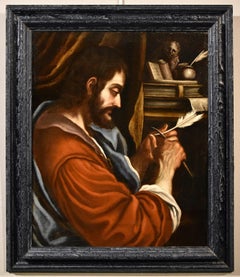
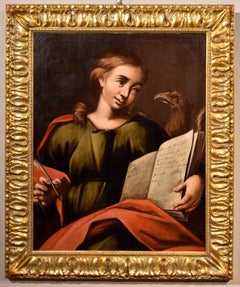
Saint John the Evangelist French school of the eighteenth century Oil painting on canvas 82 x 64 cm. - in frame 102 x 84 cm. In this pleasant painting we see the portrait of the evangelist John, holding a pen in his hand while writing the pages of the Gospel, while behind him it is possible to recognize the profile of an eagle, his typical iconographic attribute. The graceful face, which still reveals the devout attitude, which gives the painting a more intimate and delicate, not excessive religiosity, is one of the typical characteristics for works intended for domestic devotion, as in the case of this Saint John. From the representation of the Saint the freshness of his features immediately stands out, he is in fact portrayed as young and handsome: and it is precisely this iconographic peculiarity that makes the work fascinating and very pleasant, probably commissioned for a private room. The painting presents the peculiarities of eighteenth-century French portraiture, characterized by a soft drawing and a wise use of light. The rather marked chiaroscuro and well-calibrated shades produce an excellent result thanks to the play of light on the face, highlighted by the dark background of the scene. The painting has been relined and is in an excellent state of conservation with the colors still bright and a very healthy pictorial layer. The painting is sold together with a nice golden frame. ADDITIONAL INFORMATION: The work is sold with a certificate of authenticity and a descriptive iconographic card. We take care and organize the transport of the purchased works, both for Italy and abroad, through professional and insured carriers. It is also possible to see the painting in the Riva del Garda...
Category

18th Century Old Masters Portrait Paintings

Materials

Oil

Joseph Highmore Portrait of a lady, 18th century
By Joseph Highmore
Located in York, GB
Portrait of a lady, traditionally identified as Grace Loftus,of Beverley hall yorkshire.Three-quarter-length, before a window. Dressed in blue and wearing a white bonnet. The paintin...
Category

1740s Old Masters Portrait Paintings

Materials

Oil

18th Century by Pietro Bardellino Mary Magdalene Painting Oil on Canvas
Located in Milano, Lombardia
Pietro Bardellino (Naples, Italy, 1731 – 1806) Title: Mary Magdalene Medium: Oil on canvas Dimensions: without frame 75 x 60 cm – with frame 97 x 82 cm Antique shaped and carved wood...
Category

Mid-18th Century Old Masters Portrait Paintings

Materials

Oil, Canvas

English 18th century portrait of a lady, Circle of Thomas Murray (1663-1735)
Located in Bath, Somerset
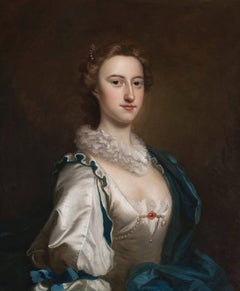
An early 18th century portrait of a young lady, half length, wearing a blue silk gown with white chemise and gold trimmed cloak draped across her arm and shoulders. Her sensitively observed soft expression and skilfully painted youthful 'dewy' complexion are reminiscent of the portrait style of John Closterman whose work Murray would have been familiar with, being a close colleague of Murray's teacher, John Riley. An old label on the reverse identifies the sitter as a young Princess Charlotte...
Category

Early 18th Century Old Masters Portrait Paintings

Materials

Canvas, Oil

17th century By Neapolitan Maestro San Vincenzo Ferreri Oil on canvas
Located in Milano, Lombardia
17th Century Neapolitan Maestro Title: San Vincenzo Ferreri Medium: Oil on canvas Dimensions: without frame 63 x 48.5 cm - with frame 77 x 63.5 cm Original shaped, carved, sculpted a...
Category

17th Century Old Masters Portrait Paintings

Materials

Canvas, Oil

Portrait Mignard Paint Oil on canvsa Old master 17th Century French Lady Woman
Located in Riva del Garda, IT
Pierre Mignard, known as Le Romain (Troyes 1612 - Paris 1695), attributed Portrait of 'Louise Renée de Penancoët de Keroualle, Duchess of Portsmouth and Aubigny (Brest 1649 - Paris 1734) as MADDALENA Oil on canvas 97 x 88 cm In an important gilded frame 132 x 122 cm. Provenance: Private collection, Naples The young and attractive noblewoman portrayed in this painting is Louis Renée de Penancoet de Keroualle, Duchess of Portsmouth and Aubigny (Brest 1649 - Paris 1734), known to have been King Charles II's favourite mistress for over fifteen years, from whose relationship Charles Lennox, 1st Duke of Richmond, was born, but above all to have gone down in history as one of Louis XIV's French informants at the English court. The duchess was a very influential figure at court, promoting French interests and often acting as an intermediary between the king, his ministers and French ambassadors. After the death of Charles II this influence quickly came to an end, forcing her to hastily leave London and renounce all her possessions to return to her homeland, between Aubigny-sur-Nère and Paris, where she died in 1734, always remaining in the sovereign's good graces. The peculiarity of the portrait, probably executed after her return to her homeland, is that the noblewoman takes the form of a charming Mary Magdalene, depicted here following her renunciation of earthly possessions, her rich robes and jewellery, in order to aspire to heavenly riches; We see her immortalised with her long hair loose on one breast, her intriguing but serene gaze directed at the observer, as she rests her crossed hands, as if in prayer, on the ampulla of perfumed ointments and the open book, both iconographic symbols. The custom of being portrayed in the guise of Magdalene was in vogue for powerful women of the great European courts as early as the 16th century, as it represented the most appropriate image to justify the union of female power and virtue. It must be said that court culture exalted only the positive characteristics of her personality, glossing over or downplaying all references to her sinful past and dissolute life. The work, whose style fits perfectly into 17th century French portraiture, suggests the pertinent attribution to the Baroque painter Pierre Mignard (Troyes, 1612 - Paris, 1695), whose works were highly praised and earned him a great reputation as a portrait painter for the demanding Parisian aristocracy at the time of Louis XIV, and who portrayed the Duchess de Kérouaille on numerous occasions. His first important artistic training took place in Simon Vouet's studio, and he then moved to Italy for over twenty years before returning to Paris, blending his own with the influence of Roman classicism. The elegant looseness of touch and sensual refinement typical of Mignard, combined with a very accurate chiaroscuro rendering, inherited from his artistic training in Rome (which he looked up to the examples of Ferdinad Voet), and the exceptional sweetness of the drawing, the floridity of the complexion and the almost enamelled surfaces, and finally, the peculiar pose of the figure portrayed (the beauty of the two intertwined hands...
Category

17th Century Old Masters Portrait Paintings

Materials

Oil

Dutch Old Master Portrait of Maurits, Prince of Orange-Nassau, Oil on Panel
Located in London, GB
In 1607, the Delft city council decided to commission a portrait of Stadholder Maurits of Nassau for the town hall, with Michiel van Mierevelt as the chosen artist due to the passing...
Category

17th Century Old Masters Portrait Paintings

Materials

Oil, Wood Panel

Portrait Lady Woman Voet Paint Oil on canvas Old master 17th Century Italian Art
By Jacob Ferdinand Voet (Antwerp 1639 - Paris 1689)
Located in Riva del Garda, IT
Jacob Ferdinand Voet (Antwerp 1639 - Paris 1689) Atelier Portrait of the Young Ortensia Mancini, Duchess of La Meilleraye (Rome 1646 - Chelsea 1699) Oil on canvas 75 x 61 cm. - exquisite gilded and lacquered wooden double frame 105 x 91 cm. The beautiful painting depicting the young and attractive Duchess Ortensia Mancini is part of the refined portraiture of Jacob Ferdinand Voet (Antwerp 1639 - Paris 1689). Of Flemish origin, the painter achieved great success with the aristocratic families of Rome - where he stayed from 1663 to 1679 - thanks to the famous series of portraits commissioned by Cardinal Flavio Chigi, depicting the most enchanting women of the time, and now housed in the Palazzo Chigi in Ariccia. The paintings became so popular that the artist was repeatedly asked to reproduce replicas and similar versions of them: the 'cabinet des dames' was thus one of the Roman fashions of the 17th century, justifying the large number of female portraits attributable to his workshop that gravitated on the market. Voet flaunted in his portraits a peculiar softness and grace in the rendering of the complexions, a subtle voluptuousness in the description of the lips, entrusted to small brushstrokes of red, a sense of calm fixity in the pose, all characteristics that are immediately reflected in the work under examination. Our young effigy, Hortense Mancini...
Category

17th Century Old Masters Portrait Paintings

Materials

Oil

Michael Dahl (circle) 17th century portrait of Sir William Cowper
By (Circle of) Michael Dahl
Located in York, GB
Portrait of Sir William Cowper [1639-1706] Circle of Michael Dahl. (unsigned)Oil painting on canvas 17th century oval, bust-length, with a long dark wig,...
Category

17th Century Old Masters Portrait Paintings

Materials

Oil

Saint Mark Evangelist Guercino Paint Oil on canvas Old master 17th Century Italy
Located in Riva del Garda, IT
Workshop of Giovanni Francesco Barbieri, known as Il Guercino (Cento, 1591 - Bologna, 1666) Saint Mark the Evangelist Oil on canvas - 85 x 71 cm., Framed 100 x 86 cm. Of great cha...
Category

17th Century Old Masters Portrait Paintings

Materials

Oil

Portrait Of A Lady, Frances Bard (1646-1702) Mistress of The Duke Of Cumberland
Located in Blackwater, GB
Portrait Of A Lady, Frances Bard (1646-1702) Mistress of Prince Rupert von de Pfalz, Duke of Cumberland (1619-1882) follower of Anthony Van Dyck (1...
Category

Late 17th Century Old Masters Portrait Paintings

Materials

Oil

Philip V King Spain Louise Savoy Queen Gobert Paint Oil 18th Century Old master
Located in Riva del Garda, IT
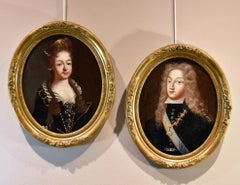
Circle of Pierre Gobert (Fontainebleau 1662 - Paris 1744) Pair of portraits Portrait of Philip V, King of Spain (Versailles 1683 - Madrid 1746) Portrait of Queen Louise of Savoy (16...
Category

18th Century Old Masters Portrait Paintings

Materials

Oil

Fleur de Neige, Portrait de Mme Godillot
Located in Saint-Ouen-sur-Seine, FR
Fleur de Neige by Jan Van Beers, painted in July 1880, stands out for the delicacy of its depiction. This remarkable portrait depicts a woman dressed in a sumptuous white costume, ad...
Category

1880s Old Masters Portrait Paintings

Materials

Oil

Portrait Philip V King Rigaud Paint Oil on canvas 17/18th Century Old master Art
Located in Riva del Garda, IT
Hyacinthe Rigaud (Perpignan 1659 - Paris 1743) Circle Portrait of Philip V, King of Spain (Versailles 1683 - Madrid 1746) Oil on canvas 72 x 59 cm - framed 87 x 74 cm. The painting examined here, depicting King Philip V of Spain (Perpignan 1659 - Paris 1743), is to be placed in the circle of the painter Hyacinthe Rigaud (Perpignan 1659 - Paris 1743), one of the most significant portrait painters of his time and a great interpreter of the French school. This is a work of excellent pictorial quality: note the rendering of the facial features and the sharpness of the contours emphasised by the light. The face is characterised by chiaroscuro passages that verisimilarly reproduce light and its effects, rendered with great skill. Philip V wears a black satin costume with a sword at his side, he wears the stiff white Spanish collar and at the same time wears the blue sash of the Order of the Holy Spirit and the collar of the Habsburg Order of the Golden Fleece: this bringing together of the two main orders of France and Spain announced the possibility of a union between the two crowns. In Spanish costume, this effigy is nevertheless fully in line with the French tradition of ceremonial portraiture, also testifying to the renewal that Rigaud had brought about, particularly through the relationship between the character and the splendour of the decoration. The work is inspired, reworked in a reduced format to make it suitable for a private clientele, by the large painting that Rigaud made for the sovereign around 1700, today conserved in the Louvre, reproduced by the same workshop in numerous other versions. The account books...
Category

17th Century Old Masters Portrait Paintings

Materials

Oil

Pietà Cherubs Paint Oil on canvas Religious Rome 16/17th Century Michelangelo
Located in Riva del Garda, IT
Peintre actif à Rome au XVIe siècle - entourage de Scipione Pulzone (Gaeta 1550 - Rome 1598) La Pietà (Christ mort soutenu par la Madone) huile sur t...
Category

16th Century Old Masters Portrait Paintings

Materials

Oil

Portrait of a French lady by Robert Le Vrac Tournieres, circa 1725
Located in PARIS, FR
Portrait of a young Lady Robert Le Vrac Tournières (1667-1752) 18th century French school, circa 1725 Oil on canvas Dimensions: h. 81 cm, w. 65 cm Important 18th century Régence per...
Category

Early 18th Century Old Masters Portrait Paintings

Materials

Canvas, Oil

Portrait d’un militaire 1660
Located in GOUVIEUX, FR
Huile sur toile Dim avec cadre 92/69 cm Dim sans cadre 62/85 cm Il est tout à fait possible que ce portrait ait été réalisé par un peintre itinérant,spécialiste du portrait d’appar...
Category

17th Century Old Masters Portrait Paintings

Materials

Oil

17th Century portrait oil painting of a gentleman
By John Riley
Located in Nr Broadway, Worcestershire
Circle of John Riley British, (1646-1691) Portrait of a Gentleman Oil on canvas Image size: 29 inches x 24 inches Size including frame: 36 inches x 31 inch...
Category

17th Century Old Masters Portrait Paintings

Materials

Canvas, Oil

18th century painting of the Dalbiac family in the gardens of a country house
By Charles Philips
Located in Bath, Somerset
The painting depicts James (Jacques) Dalbiac, his wife Louise (ne de la Porte) and their five children, James, Charles, Louise, Marianne and Martha in the ornamental gardens of a grand country estate. The extensive gardens extend into the distance with gardeners working in the background and figures strolling through the avenues of trees. A peacock and peahen can be seen on the wall to the left and a potted orange tree to the right. Louise Dalbiac holds an orange taken from the orange tree, aluding to the family's faith and their loyalty to the protestant King William of Orange and their adopted country. The Dalbiacs were wealthy London silk and velvet merchants of French Huguenot origin who had fled France at the end of the 17th century to escape persecution for their protestant faith. England offered safe refuge and their skills and industriousness allowed them to establish one of the most successful businesses in London's Spitalfields which became a new centre of the silk trade, effectively leading to the collapse of the once dominant French silk industry. Both sons, James and Charles followed their father and Uncle into the family business, successfully growing the family's fortune and each going on to own their own country estates. A conversation piece is a genre of painting used to describe group portraits of families and friends, often depicted with their servants and family pets and set within an elegantly furnished interior or the garden of a grand country house. They were a celebration of the intimacy of family relations as well as a sign of status, property and the power of succession. The informality of conversation pieces grew popular in 18th century England, allowing the sitters to present themselves in a more relaxed pose, perhaps engaged in intellectual conversation or showing their talents or interests. In this present portrait, the Dalbiacs are shown richly dressed and and at leisure in a grand country house setting, conveying their success and cultural and social aspirations. Charles Philips (c.1703–1747) was an English artist known for painting a number of portraits and conversation pieces for noble and Royal patrons in the mid-eighteenth century. He was the son of portrait painter Richard Philips...
Category

Early 18th Century Old Masters Portrait Paintings

Materials

Canvas, Oil

Flower Still-life Virgin Trevisani Stanchi Paint Oil on canvas 17/18th Century
Located in Riva del Garda, IT
Flower garland with a portrait of the Virgin Francesco Trevisani (Capodistria 1656 - Rome 1746) and Niccolò Stanchi (Rome 1623 - 1690), attributable Oil on canvas 66 x 49 cm. - In f...
Category

18th Century Old Masters Portrait Paintings

Materials

Oil

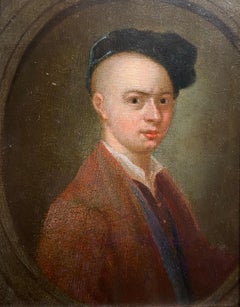
Self-Portrait - Royal Academy Founding Member, 18th Century
Located in London, GB
Francis Hayman RA 1708–1776 Self-Portrait Oil on oak panel Image size: 8 x 6¼ inches Contemporary gilt frame This newly discovered work is the earliest known self portrait by Francis Hayman, dated to the mid to late 1720’s. The small scale of the portrait gives it a strong sense of intimacy. Whereas clients would often dress themselves in their best clothes for a sitting, Hayman has portrayed himself in informal attire, with his shirt unbuttoned and a wig cap. Born in 1708 to a respectable Devonshire family, his training began at the tender age of ten under the tutelage of the historical painter Robert Brown, who was probably an uncle. By the 1730’s he is known to have been engaged in painting scenery for the popular theatres on Goodman’s Fields and Drury Lane. He established a studio on St Martin’s Lane, and demonstrated his versatility as one of the most important painters of his time in portraits, illustration and history painting. Indeed, he was one of the first English painters deemed to have the skill and proficiency to rival that of the foreign masters, such as Holbein and Kneller, who were brought in by the court to make up for the perceived shortcomings of the native artists. Led by William Hogarth, Hayman and other artists began to create a new movement in the English art world. Thomas Gainsborough was one of his pupils, whom he is said to have introduced to the more lascivious and debauched underbelly of London life. After mostly making his living as an illustrator, in the 1740’s Hayman was commissioned by the proprietor of the Vauxhall Pleasure Gardens, Jonathan Tyers, to produce a series of four large celebratory canvases depicting British victories from the Seven Years War. His association with Tyers continued, and over the next ten years he produced a number of large decorative paintings...
Category

18th Century Old Masters Portrait Paintings

Materials

Oak, Oil Pastel

18th Century French Portrait Jean-Baptiste Soyer
Located in Roma, IT
Beautiful pastel on paper laid down on canvas in an oval shape. It depicts a young noblewoman portrayed three-quarter-length with her little dog in her arms. Seated in a gilded armch...
Category

Late 18th Century Old Masters Portrait Paintings

Materials

Canvas, Glass, Wood, Paper, Pastel

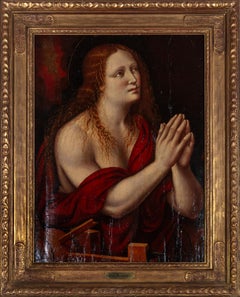
19th century classical religious oil painting portrait female subject red dark
Located in Milwaukee, WI
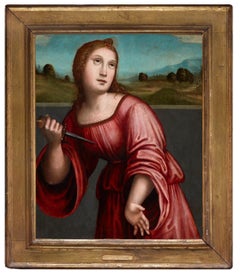
"Caterina d'Alexandria (Saint Catherine of Alexandria)" is a copy oil painting on wood panel, after Italian artist Giampietrino (Giovanni Pietro Riz...
Category

19th Century Old Masters Portrait Paintings

Materials

Oil, Wood Panel

English 18th century portrait of a Lady and her Daughter in an interior
By (attributed to) Joseph Highmore
Located in Bath, Somerset
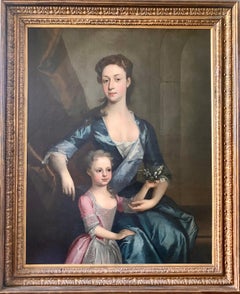
Portrait of a lady, three-quarter length, wearing a blue silk gown, seated in a classical interior, with her daughter in a pink gown standing beside her holding a sprig of blossom. T...
Category

Early 18th Century Old Masters Portrait Paintings

Materials

Oil

Ecce Homo Christ Paint Oil on canvas 17th Century Old master Leonardo Italian
Located in Riva del Garda, IT
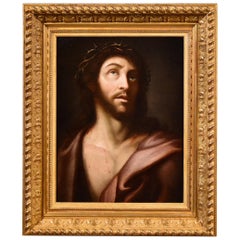
Lombard painter of the seventeenth century Ecce Homo Oil painting on canvas 56 x 43 cm. , framed 75 x 63 cm. Provenance: Florence, Pandolfini, 5.10.2021, lot 209 The proposed canv...
Category

17th Century Old Masters Portrait Paintings

Materials

Oil

Portrait Woman Princess Diziani Paint 18th Century Oil on canvas Old master Art
Located in Riva del Garda, IT
Gaspare Diziani (Belluno 1689 - Venice 1767) Portrait of a Young Princess (Salome?) Oil on canvas 42 x 33 cm Framed 70 x 63 cm A charming portrait of a beautiful young woman with ...
Category

18th Century Old Masters Portrait Paintings

Materials

Oil

Portrait of a Lady with Lace Collar - British 19th century art oil painting
By Sir Thomas Lawrence
Located in Hagley, England
This very charming British 19th century Old Master portrait oil painting is attributed to the circle of Thomas Lawrence. Painted circa 1810 it is a seated half length portrait of a l...
Category

1810s Old Masters Portrait Paintings

Materials

Oil

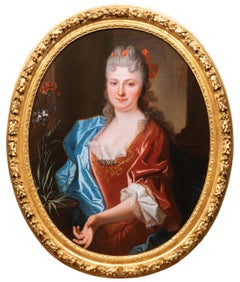
18th c. French Portrait of a Lady by Jean Ranc (1674 - 1735), Paris circa 1700
Located in PARIS, FR
Portrait of a Lady with carnations By Jean Ranc (Montpellier 1674 - Madrid 1735), circa 1700 Oil on canvas in oval shape, Dimensions: h. 35.82, w. 28.34 in. Period Louis XIV giltwood and carved frame with laurel leaves. Framed dimensions: h. 42.52 in, w. 33.85 in. Provenance: Collection of the Marquis de Bailleul at the Château d'Angerville-Bailleul (before 1942). To be included in the catalog raisonné of the artist by Stephane Perreau Important portrait of a young woman depicted half-length turned three-quarters, her face looking at the viewer. Dressed in a brick red velvet dress, an elegant blue scarf envelops her figure. Hair styled “a la Fontange”, her powdered hair is raised and tied at the back with a red ribbon, several curly locks escape from her bun and fall on her back and shoulders. The perfectly oval face with regular features dominated by her straight nose is softened by her gray eyes with slightly lowered lids. The red tinged skin tones on the cheeks and cheekbones color the face and make the portrait come alive. The young woman is portrayed standing near a pot of carnations. Her strongly lighted figure stands out against an architectural background of columns. The artist's palette is made of contrasts opposing warm to cold hues. The icy electric blue contrasts with the fiery brick red, the hair powdered with white accentuates even more the flush of the cheeks. The left arm bent at the elbow, extending the open hand with slightly bent fingers in the foreground brings depth to the composition. Our portrait, an interesting testimony in the corpus of works of the painter, is part of his youthful period, around 1700-1705. The former belonging of this portrait to the Marquis de Bailleul reinforces the remarkable character of our painting. The portrait has been examined by Stéphane Perreau, specialist of Jean Ranc and will be included in the catalog raisonné currently being written, under number P. 43. The notice edited by Mr Perreau is below: "Painted around 1700-1705, this portrait of a woman is directly inherited from Hyacinthe Rigaud, the master of Jean Ranc (the hand turned over the front, in a watch...
Category

Early 18th Century Old Masters Portrait Paintings

Materials

Canvas, Oil

17th Century Oil Painting Portrait of a Young English Boy
Located in London, GB
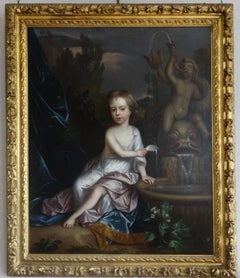
Gerard SOEST (1600 - 1681) Portrait of a Young Boy oil on canvas 35.5 x 30.5 inches inc. frame Gerard Soest (circa 1600 – 11 February 1681), also known as Gerald Soest, was a portra...
Category

17th Century Old Masters Portrait Paintings

Materials

Oil

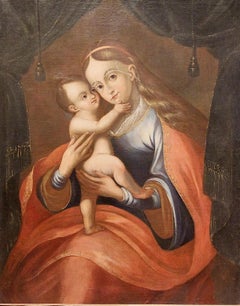
Madonna Parrot Paint Oil on table Old master Flemish Follower Master of Parrot
Located in Riva del Garda, IT
'Master of the parrot' (a painter active in Antwerp in the early 16th century, whose name refers to the parrot who always occurs in his paintings) - follower of Madonna on the throne with child (With the coat of arms of the client family in the upper part of the composition) Oil on the table 101 x 62 cm. - In frame 114 x 76 cm. The beautiful proposed work explains the typical iconographic characters of the painter called 'Master of the parrot', a conventional name used by critics to define an anonymous Dutch author of the 16th century. More precisely, it is a painter of the southern Netherlands, active in Antwerp around 1530-50, so defined for the unmistakable parrot who often appears in his works of him. In religious iconography the parrot has often been used as a Marian symbol, as it was widespread that its most common verse was "Ave", that is, the greeting of the Archangel Gabriele to Mary at the time of the Annunciation. Today the idea according to which the name 'master of the parrot' has not referred to a single painter, but rather a group that, based on the stylistic characters, carried out their training at the workshop of Pieter Coecke Van Aelst (Aalst (Aalst is widespread. 1502 - Brussels 1550), creating devotion paintings intended for a bourgeois client and concentrating their activity on a specific topic particularly requested by the contemporary market. By way of example we can mention the Virgin with the San Diego Museum of Art child where the figures, like our own, are in line, With the mannerist taste for the elegant body proportions that exceed reality, with elements such as tapered finger, wide face and thin nose. These characters also betray the influence of active artists in the region such as Joos Van Cleve...
Category

17th Century Old Masters Portrait Paintings

Materials

Oil

18th Century by Alessandro Longhi Portrait of a young musician Oil on canvas
Located in Milano, Lombardia
Alessandro Longhi (Venice, Italy, 1733 – 1813) Title: Portrait of a young musician in front of his desk with a score in his hand Medium: Oil on canvas Dimensions: without frame 39.5 ...
Category

18th Century Old Masters Portrait Paintings

Materials

Canvas, Oil

French School of the 17th Century Female portrait with flowers Oil on canvas
Located in Milano, Lombardia
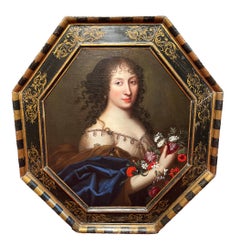
French School of the 17th Century – Circle of Pierre Mignard (1612-1695) Title: Female portrait with flowers Medium: Oil on canvas Dimensions: without frame 81 × 68 cm – with frame ...
Category

17th Century Old Masters Portrait Paintings

Materials

Canvas, Oil

17th Century, Old Master, "King Basileus Alexander of Macedon Magnus, the Great"
Located in Berlin, DE
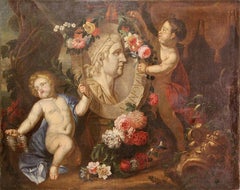
Very decorative, 17th century, old master painting, oil on canvas, King Alexander Magnus, the great. Illustration of two children, putti, with wreaths of flowers on a board (or maus...
Category

17th Century Old Masters Portrait Paintings

Materials

Canvas, Oil

Portrait Cardinal Barberini Alberti Paint Oil on canvas 17th Century Old master
Located in Riva del Garda, IT
Antonio Alberti (1603 - 1649) Portrait of Cardinal Antonio Marcello Barberini (Florence 1569 – Rome 1646) Inscription on the bottom: F.M D.D ANTONIUS BARBERINUS ROM. O. CAP. S.R.E. ...
Category

17th Century Old Masters Portrait Paintings

Materials

Oil

Portrait Lady Pulzone Paint Oil on canvas Old master 16th Century Italian Roma
Located in Riva del Garda, IT
Scipione Pulzone, called Il Gaetano (Gaeta 1544 - Rome 1598) - workshop of Portrait of Bianca Cappello (Venice, 1548 - 1587) Grand Duchess of Tuscany, second wife of Francesco I de 'Medici Second half of the 16th century oil on canvas, cm. 70 x 56 cm., Framed 103 x 87 cm. The proposed painting illustrates the portrait of Bianca Cappello (Venice, 1548 - 1587), a noblewoman of Venetian origins, second wife of the Grand Duke of Tuscany Francesco I de 'Medici, whose expressive power is wisely highlighted by the composite cut of light three quarters, with the head and gaze directed at the observer. The beam of light coming from her right brings out the volumes of her face plastically and lingers on her features, highlighted by the large white lace ruff that surrounds his neck and by the details of her precious clothing. Bianca wears a dark red dress, perhaps a zimarra, embroidered in gold with a plunging neckline and a raised collar of the shirt curled in a ruff and also edged with precious lace, embroidered with the motif of the Florentine lily.   The favorite jewels of the noblewoman were pearls: we see them on a choker that adorns the neckline, in the earrings and again in the hairstyle, which sees the hair gathered at the nape of the neck and adorned with a string of small black pearls and embellished with a clasp. It is a high-quality painting that can be confined to the workshop of the painter Scipione Pulzone called Gaetano, representing at best a pictorial genre, that of portraiture, in which the master excelled. This attribution would be confirmed by comparisons with the numerous portraits that Pulzone dedicated to the Medici family. Our painting, in particular, could represent one of the versions that the workshop has replicated, at the request of the numerous art collectors who wish to have a portrait of one of the most influential personalities of the Florentine scene. The characters drawn by Pulzone were icons of incomparable elegance: noblewomen, knights and religious lent their faces to the eye of the artist who was able to grasp every meticulous detail with his superb technique. A photographic wealth and surprising material attention that trace the pictorial prototypes of Flemish inspiration, in particular of Antonis Mor...
Category

16th Century Old Masters Portrait Paintings

Materials

Oil

St Joseph Paint Oil on canvas Lombard School 17th Century Religious Old master
Located in Riva del Garda, IT
Lombard School of the 17th century St. Joseph with Flower Stick Oil on oval canvas 92 x 70 cm. In antique frame 106 x 85 cm. The work shows us an intense image of St. Joseph, portrayed according to the classical iconography that sees him as a mature man holding in his hands a staff from which lilies bloom, symbol of the Virgin's purity. This iconographic attribute also alludes to his figure as God's chosen one as Mary's future husband. According to the apocryphal gospels, the Virgin had grown up in the Temple of Jerusalem, following a monastic lifestyle, and when she reached marriageable age, each of the suitors was given a dry branch...
Category

17th Century Old Masters Portrait Paintings

Materials

Oil

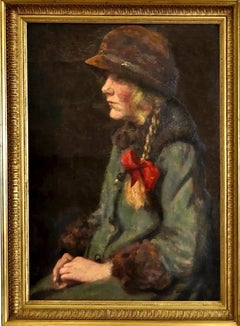
German Miniature of Young Lady in a Fancy Hat
Located in New Orleans, LA
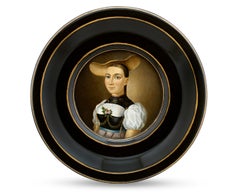
This charming German miniature painting, created of oil on copper, depicts a young woman wearing a large and lavish hat. With dark, braided hair and blue eyes, the sitter's cheerful ...
Category

19th Century Old Masters Portrait Paintings

Materials

Copper

Henry Raeburn, (circle) 19th Century portrait of Sir Charles Forbes Edinglassie
By Henry Raeburn (circle)
Located in York, GB
Portrait of Sir Charles Forbes of Edinglassie, Oil on canvas. The size of the portrait is 75 cm x 59.5 cm whilst overall the size is 106 cm x 91 cm In very good condition.There has been some restoration/overpainting etc.There is some minor craquelure. Housed in a period gilt frame decorated with acorns and leaves Overall a good portrait, circle of a fine scottish artist (unsigned) , with an interesting sitter, his details below. sir Charles Forbes of Edinglassie Sir Charles Forbes, 1st Baronet (1774–1849) was a Scottish politician, of Newe and Edinglassie, Aberdeenshire. Forbes was the son of the Rev. George Forbes of Lochell. He was a descendant of Alexander Forbes of Kinaldie and Pitsligo, and was in 1833 served heir male in general to Alexander Forbes, 3rd lord Forbes of Pitsligo, father of Alexander Forbes, 4th Lord Forbes of Pitsligo, attainted in 1745. Forbes was of a bluff but kindly nature, diffident as to his own merits, of a straightforward and manly character. On the death of his uncle in 1821 Forbes succeeded to the entailed estates of the Forbeses of Newe, and was created a baronet by patent in 1823.[1] He married in 1811. His daughter, Elizabeth, married General, Lord James Hay, second son of the seventh Marquess of Tweeddale. Sir Henry Raeburn FRSE, RA, RSA (1756-1823) Scottish portrait painter and Scotland's first significant portrait painter since the Union to remain based in Scotland. He served as Portrait Painter to King George IV in Scotland Raeburn had all the essential qualities of a popular and successful portrait painter. He was able to produce a telling and forcible likeness; his work is distinguished by powerful characterisation, stark realism, dramatic and unusual lighting...
Category

19th Century Old Masters Portrait Paintings

Materials

Oil

18th Century portrait oil painting of a girl with an orange
By Robert Byng
Located in Nr Broadway, Worcestershire
Circle of Robert Byng British, (1666-1720) Girl with Orange Oil on canvas Image size: 29 inches x 24 inches Size including frame: 36 inches x 31 inc...
Category

18th Century Old Masters Portrait Paintings

Materials

Canvas, Oil

Portrait of a Spanish Noble Lady - 17th Century Old Master art oil painting
Located in Hagley, England
This stunning, large portrait oil painting is attributed to Spanish Old Master Claudio Coello who is considered the last great Spanish painter of the 17th century. It has formerly be...
Category

1680s Old Masters Portrait Paintings

Materials

Oil Crayon

Portrait of Senator Bartolomeo Panciatichi by Santi di Tito (1574)
Located in PARIS, FR
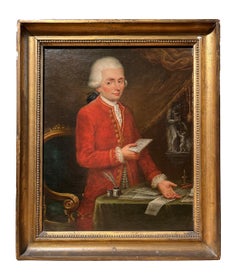
This recently rediscovered portrait of Santi di Tito depicts a Florentine senator, with a letter in his hand indicating that the painting was executed in 1574 when the sitter was 66 years old. On the basis of these clues, it is tempting to view it as a portrait of Bartolomeo Panciatichi, who was painted some thirty years before by Bronzino (1503 - 1572). While the treatment of the hands recalls the Florentine tradition of Mannerist portraits, the comparison with Bronzino's portrait illustrates Santi di Tito's search for greater realism, despite the stereotyped composition. 1. Santi di Tito, Counter-Reformation painter and portraitist Santi di Tito was the great painter of the Florentine Counter-Reformation. He proposed a new artistic language that broke away from Mannerism. Little is known about his training in Florence (perhaps alongside Bronzino or Baccio Bandinelli), but this period of training enabled him to join the Company of Saint Luke, the guild of Florentine painters, in 1554. Between 1560 and 1564, Santi di Tito spent time in Rome, where he frequented the workshop of Taddeo Zuccari. This stay had a fundamental influence on his work, thanks to the discovery of the late work of Raphael, but also his encounters with the painters Francesco Salviati and Federico Barocci. Around 1565, Santi di Tito returned to Florence, where he remained until the end of his life, dividing his talents between the creation of important religious paintings and countless portraits. He became one of the city's leading painters, distinguishing himself, in particular, in the creation of large religious compositions in which the spirit of the Counter-Reformation was reflected. In 1568, Santi di Tito became a member of the Confraternity of Saint Thomas Aquinas...
Category

16th Century Old Masters Portrait Paintings

Materials

Poplar, Oil

17th century portrait of lady in an ivory silk gown and lace collar
By Cornelius Johnson
Located in Bath, Somerset
Circle of Cornelius Johnson (1593-1661), a 17th century portrait of a lady, bust-length oval, wearing an ivory silk gown with blue silk bows and lace c...
Category

Early 17th Century Old Masters Portrait Paintings

Materials

Canvas, Oil

Madonna Angels Van Balen Paint Oil on table Old master 16/17th Century Flemish
Located in Riva del Garda, IT
Hendrick van Balen (Antwerp 1575 - 1632) workshop Possible Jan van Balen (Antwerp 1611 - 1654) Madonna and Child with Three Angels Oil on panel 65 x 50 cm....
Category

17th Century Old Masters Portrait Paintings

Materials

Oil

17th Century by Ercole de Maria Penitent Saint Peter Oil on canvas
Located in Milano, Lombardia
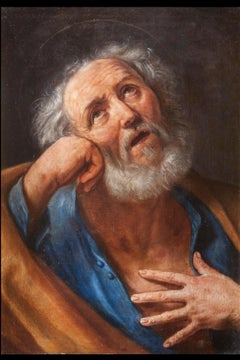
Ercole De Maria (…. – 1640 ca.) Title: Penitent Saint Peter Medium: Oil on canvas Dimensions: without frame 66 × 50 cm – with frame 80.2 x 60.2 x 5.7 cm Not signed Expertise by And...
Category

17th Century Old Masters Portrait Paintings

Materials

Canvas, Oil

Portrait Augustus Emperor Flemish school 17/18th Century Paint Oil on canvas Art
Located in Riva del Garda, IT
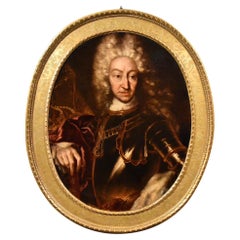
Flemish painter of the 17th/18th century Portrait of Augustus, first Roman emperor Oil on canvas 61 x 49 cm Framed 77.5 x 65 cm The portrait depicts Augustus, founder and fi...
Category

17th Century Old Masters Portrait Paintings

Materials

Oil

Nathaniel Hone, portrait of "flora" roman goddess, 18th century
By Nathaniel Hone the Elder
Located in York, GB
I have great pleasure in offering for sale this beautiful portrait, by Nathaniel Hone, the elder. 18th century. The painting is of Ann Anderson, wife...
Category

18th Century Old Masters Portrait Paintings

Materials

Oil

Paint Religious 17th Century Oil On Panel Saint Girolamo Leonardo Italy Holy
Located in Riva del Garda, IT
This splendid panel, made in the last decades of the sixteenth century, depicts San Girolamo, a monk who lived between the 4th and 5th centuries, presente...
Category

17th Century Old Masters Portrait Paintings

Materials

Oil

Portrait of a Gentleman, 17th Century Dutch Old Masters Oil
Located in London, GB
Circle of Gerard van Honthorst 1592 - 1656 Portrait of a Gentleman Oil on wooden panel Image size: 29 x 23 inches Contemporary gilt frame Gerard van Honthorst was a Dutch Golden Age...
Category

17th Century Old Masters Portrait Paintings

Materials

Oil, Wood Panel

18th Century by Evangelista Schiano Saint Gennaro Oil on Canvas
Located in Milano, Lombardia
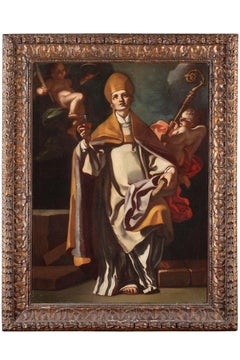
Evangelista Schiano (attr.) (active in the 18th century) Title: Saint Gennaro Medium: Oil on canvas Dimensions: without frame 102 x 74 cm - with frame 126.5 x 100 cm 19th century car...
Category

Mid-18th Century Old Masters Portrait Paintings

Materials

Cotton Canvas, Canvas, Oil

Madonna with Holy Child and St. John
Located in Fredericksburg, VA
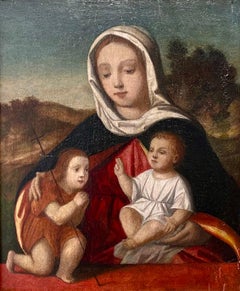
Madonna with Holy Child and St. John is a masterful depiction of a tender religious scene, capturing the sacred relationship between the Virgin Mary, the infant Jesus, and St. John t...
Category

17th Century Old Masters Portrait Paintings

Materials

Wood, Oil

Portrait of a Lady, 17th Century Flemish Oil Old Masters
By Jacob Huysmans
Located in London, GB
Jacob Huysmans Flemish 1633 - 1696 Portrait of a Lady Oil on canvas Image size: 49 x 40 ¼ inches Gilt frame Huysmans was born in Antwerp and came to England during the reign of Charles II where he became one of the fashionable painters of the court.. The diarist Samual Pepys noted the artist as capable of a more exact likeness than Lely. Certainly the diarist records that by August 1664 in the circle of Queen Catherine...
Category

17th Century Old Masters Portrait Paintings

Materials

Canvas, Oil, Acrylic

17th century portrait of a lady
Located in Bath, Somerset
Portrait of a lady richly dressed in a purple silk gown with white sleeves, a gold coloured cloak draped across one shoulder, her blonde curls worn up...
Category

17th Century Old Masters Portrait Paintings

Materials

Canvas, Oil

Old Masters portrait paintings for sale on 1stDibs.

Find a wide variety of authentic Old Masters portrait paintings available for sale on 1stDibs. Works in this style were very popular during the 21st Century and Contemporary, but contemporary artists have continued to produce works inspired by this movement. Many Pop art paintings were created by popular artists on 1stDibs, including (After) Giampietrino, Henri-Joseph Castaing, Charles Towne, and Jean Alexandre Rémy Couder. Frequently made by artists working with Paint, and Oil Paint and other materials, all of these pieces for sale are unique and have attracted attention over the years. Not every interior allows for large Old Masters portrait paintings, so small editions measuring 4.53 inches across are also available. Prices for portrait paintings made by famous or emerging artists can differ depending on medium, time period and other attributes. On 1stDibs, the price for these items starts at $695 and tops out at $339,912, while the average work sells for $4,791.

Recently Viewed

View All