1970s Art
to
3,763
7,273
5,263
7,590
3,299
2,313
Overall Width
to
Overall Height
to
7,602
21,281
162,177
232,939
1,978
2,252
4,935
6,454
5,732
15,019
20,459
25,771
18,493
13,838
5,392
5,735
4,906
4,056
1,967
1,667
586
303
272
176
169
69
43
24
11
13,742
10,345
1,238
10,877
5,642
3,869
2,955
2,794
2,412
1,859
1,843
1,438
1,333
1,259
1,129
893
831
765
682
628
618
584
562
6,427
4,192
3,822
3,034
2,551
2,668
793
581
520
430
3,790
11,456
13,619
10,736
Period: 1970s
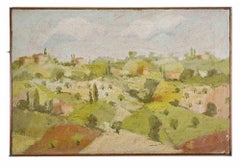
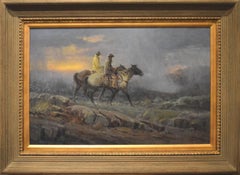
Landscape - Oil Painting by Franco Marzilli - 1970s
Located in Roma, IT
Oil on canvas realized by Franco Marzilli (1934-2010) in 1970s.
Hand signed lower right.
Very good condition.
Franco Marzilli was born in Rome in 1934. He received his first artis...
Category
Contemporary 1970s Art
Materials
Oil
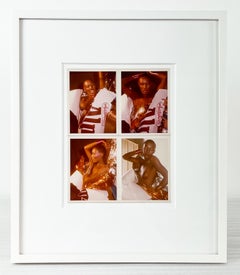
Grace Jones
Located in New York, NY
Listing includes framing with UV plexi, free express shipping and a 14-day return policy.
Four 4.5 x 3.25 inch unique vintage Kodak prints. Prints are on active consignment from the estate of Antonio Lopez. Purchase includes certificates of authenticity from the estate of Antonio Lopez. These Kodak prints are not signed by Antonio Lopez.
Artist Biography -
The foremost fashion illustrator of the 1970s and 80s, Antonio (as he signed his work) was and remains one of the most highly regarded and influential figures in the fashion world. While not initially known as a photographer, Antonio was rarely without his favorite Instamatic camera, and as his career progressed he turned increasingly to photography to create fashion stories, portraits, and elaborate mise-en-scènes.
A serial Svengali, as the writer Karin Nelson noted: “Lopez brilliantly transformed the women in his world. Under his tutelage, Jerry Hall, a long tall Texan he met at Paris’s Club Sept, evolved into a golden goddess. He put Jessica Lange in gold lamé evening dresses after discovering her in Paris studying mime, and gave aspiring model Tina Lutz her start (and an introduction to future husband Michael Chow...
Category
1970s Art
Materials
Photographic Paper, Polaroid
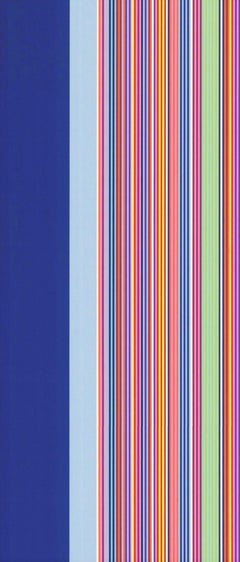
Yankee Doodle /// Gene Davis Abstract Geometric Huge Screenprint Colorful Modern
By Gene Davis
Located in Saint Augustine, FL
Artist: Gene Davis (American, 1920-1985)
Title: "Yankee Doodle"
*Signed and numbered by Davis in pencil lower right
Year: 1972
Medium: Original Screenprint on wove paper, laid down t...
Category
Abstract Geometric 1970s Art
Materials
Canvas, Screen
The Good Life 1978 Signed Limited Edition Art Lithograph
Located in Rochester Hills, MI
Artist Mati (Abdul) Klarwein
Title: The Good Life
Year: 1978
Print - Lithograph
Paper Size 23" x 23½" inches
Edition: signed in pencil and marked 3/300
Hand embellished by the artis...
Category
Surrealist 1970s Art
Materials
Lithograph
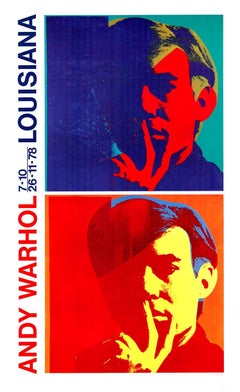
Original Andy Warhol Double Self Portrait - Louisiana (Denmark) vintage poster
By Andy Warhol
Located in Spokane, WA
Andy Warhol (after), Double Self-Portrait — Louisiana Museum, 1978
Original Danish exhibition poster; linen-backed; Very Fine (Grade A)
Striking vintage exhibition poster created b...
Category
Pop Art 1970s Art
Materials
Offset
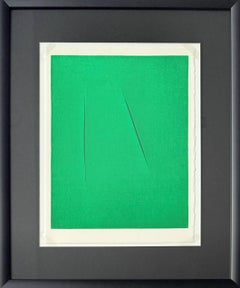
Concetto Spaziale
Located in OPOLE, PL
Lucio Fontana (1899-1968) - Concetto Spaziale
Lithograph from 1975.
Edition 371/575 (Photocopy of the colophone is included).
Dimensions of work: 31 x 24 cm.
Each copy of this li...
Category
Modern 1970s Art
Materials
Lithograph
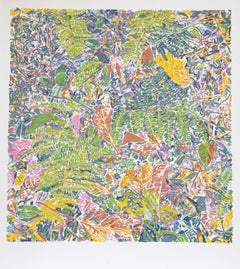
Ferns, Contemporary Screenprint by George Chemeche
Located in Long Island City, NY
George Chemeche, Iraqi/American (1934 - ) - Ferns, Year: 1979, Medium: Screenprint, signed and numbered in pencil, Edition: 260, Image Size: 30 x 29 inches, Size: 36 in. x 32 in...
Category
Contemporary 1970s Art
Materials
Screen
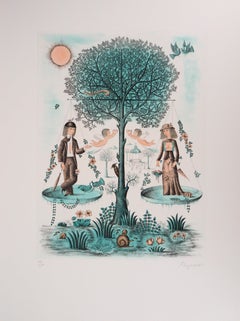
Astrology - Zodiac : Libra - Original Etching, Handsigned in pencil 1979
Located in Paris, IDF
Raymond PEYNET
Astrology - Zodiac : Libra, 1979
Original etching
Handsigned in pencil
Numbered /220
On Arches vellum 76x56 cm (c. 30 x 22 inches)
This etching is authentified by the...
Category
Modern 1970s Art
Materials
Etching
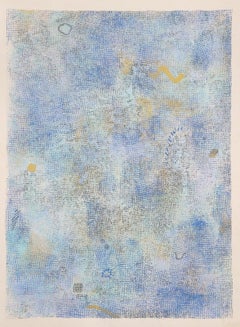
Intimate Lighting: Blue, Abstract Expressionist Screenprint by Robert Natkin
Located in Long Island City, NY
Robert Natkin, American (1930 - 2010) - Intimate Lighting: Blue, Year: 1974, Medium: Screenprint on Arches, signed, numbered and dated in pencil lower left, Edition: 59/100, Image...
Category
Abstract Expressionist 1970s Art
Materials
Screen
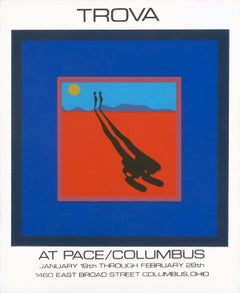
Falling Man Screenprint by Ernst Trova, Pop Art, 1972, Unframed, Mint
By Ernest Trova
Located in Brooklyn, NY
Paper Size: 31.25 x 25.75 inches ( 79.375 x 65.405 cm )
Image Size: 24.5 x 24.5 inches ( 62.23 x 62.23 cm )
Framed: No
Condition: A: Mint
Additional Details: This poster by Ernest T...
Category
Pop Art 1970s Art
Materials
Screen
$60 Sale Price
20% Off
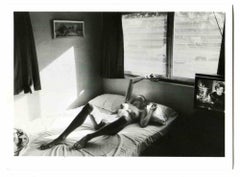
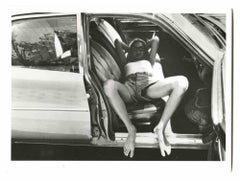
Kristine DeBell - Vintage Photo by Helmut Newton - 1970s
Located in Roma, IT
Kristine DeBell is a vintage photo, realized by Helmut Newton in the 1970s.
The artwork represent fashion model and actress in 1970s.
Category
Contemporary 1970s Art
Materials
Photographic Paper
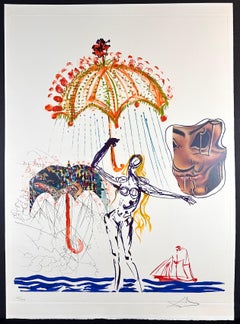
Imaginations
Objects of The Future Anti-Umbrella with Atomized Liquid
Located in Hollywood, FL
ARTIST: Salvador Dali
TITLE: Imaginations & Objects of The Future Anti-Umbrella with Atomized Liquid
MEDIUM: Etching
SIGNED: Hand Signed by Salvador Dali
PUBLISHER: Merrill Chas...
Category
Surrealist 1970s Art
Materials
Etching
Kristine DeBell - Vintage Photo by Helmut Newton - 1970s
Located in Roma, IT
Kristine DeBell is a vintage photo, realized b Helmut Newton in the 1970s.
The artwork represent fashion model and actress in 1970s.
Category
Contemporary 1970s Art
Materials
Photographic Paper
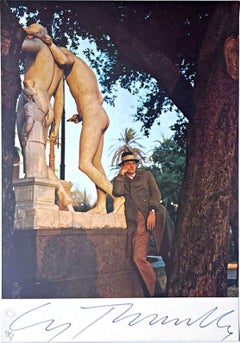
Cy Twombly - Allusions Bay of Naples, ex-collection of Donald Baechler Signed/N
By Cy Twombly
Located in New York, NY
Cy Twombly
Allusions, Bay of Naples (from the collection of Donald Baechler), 1975
Color offset lithograph and photo lithograph on wove paper
Signed and numbered 56/80 in ink on the ...
Category
Conceptual 1970s Art
Materials
Lithograph, Offset
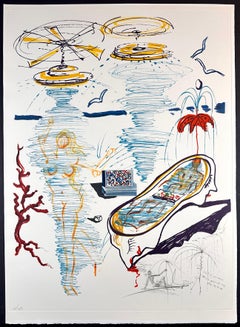
Imaginations
Objects of The Future Liquid Tornado Bath Tub
Located in Hollywood, FL
ARTIST: Salvador Dali
TITLE: Imaginations & Objects of The Future Liquid Tornado Bath Tub
MEDIUM: Etching
SIGNED: Hand Signed by Salvador Dali
PUBLISHER: Merril Chase, Chicago/Al...
Category
Surrealist 1970s Art
Materials
Etching
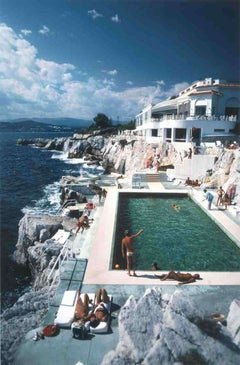
Eden-Roc Pool, 1976
By Slim Aarons
Located in New York, NY
Guests by the pool at the Hotel du Cap Eden-Roc, Antibes, France, August 1976.
Eden-Roc Pool
1976
C-Print
Estate signature stamped and hand numbered edition of 150 with certificate ...
Category
Modern 1970s Art
Materials
Lambda
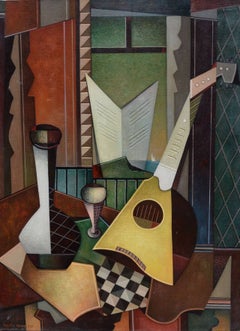
The Yellow Mandolin
Located in West Hollywood, CA
Premiering for the first time in three decades, the original paintings of American artist Maurice Green.
Born in 1908 in Latvia, Maurice Green studied with prominent artists of the day before settling in Los Angeles in the 1930’s. The artist continued his art education and began exhibiting throughout galleries in Southern California. As with many artists, his earliest style was more realist imagery, transitioning through his intense fascination with the cubist avant-garde movement, into specific cubist imagery which became the trademark style of painting for the remainder of his life.
This is the first presentation of the paintings of Maurice Green since his death in 1993.
“The Yellow Mandolin”, is an exceptional early work, an original oil on canvas, signed, dated 1974, with an image dimension of 40 x 30 inches; a painting which clearly defines his talent as a fine cubist artist...
Category
Cubist 1970s Art
Materials
Oil
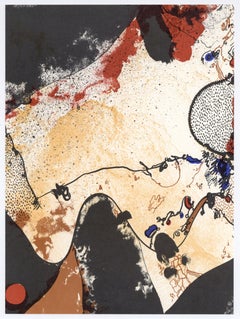
original lithograph
Located in Henderson, NV
Medium: original lithograph. Printed in 1979 and published in Barcelona by La Poligrafa in an edition of 1000. Size: 10 x 7 1/2 inches (255 x 188 mm). Not signed.
Category
1970s Art
Materials
Lithograph
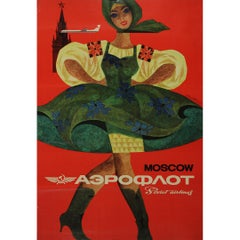
Circa 1970 original advertising poster for Aeroflot - Soviet airline
Located in PARIS, FR
This vibrant mid-century travel poster advertising Aeroflot, the official Soviet airline, offers a cheerful invitation to visit Moscow, the beating heart of the USSR. Created around 1970, the composition reflects the optimism and modernism of Soviet graphic design during the Cold War era, when air travel was increasingly used as a symbol of national pride and progress.
At the center of the poster is a stylized female figure in traditional Russian dress...
Category
1970s Art
Materials
Paper, Lithograph
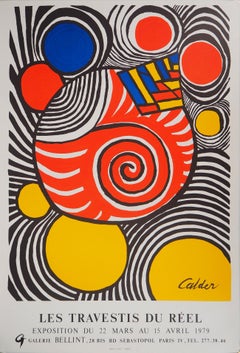
Color Balloons and Waves (Les Travestis du Reel) - Lithograph poster - 1979
Located in Paris, IDF
Alexander CALDER
Les Travestis du Reel, 1979
Original vintage lithograph poster
Printed in Atelier Arts-Litho
Printed signature in the plate
82 x 57 cm (c. 32.2 x 22.4 in)
Excelle...
Category
Abstract Geometric 1970s Art
Materials
Lithograph
"BLOWIN
IN" WESTERN G. HARVEY PAINTING 28 X 38 FRAME SIZE DATED 1974
By G. Harvey
Located in San Antonio, TX
G. Harvey (Gerald Harvey Jones)
(1933-2017)
San Antonio, Austin, and Fredericksburg Artist
Image Size: 20 x 30
Frame Size: 28 x 38
Medium: Oil on Canvas
Dated 1974
"Blowin' In" Sign...
Category
Impressionist 1970s Art
Materials
Oil
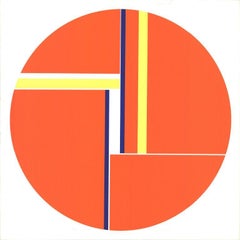
Orange Tondo Serigraph, Geometric Abstraction, Signed, 1973, 125 Ed.
Located in Brooklyn, NY
"Orange Tondo" by Ilya Bolotowsky is a quintessential example of geometric abstraction, featuring a bold circular composition dominated by vibrant orange hues and precise geometric ...
Category
Contemporary 1970s Art
Materials
Screen

$720 Sale Price
20% Off
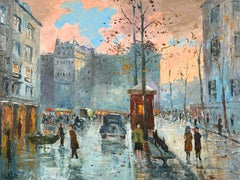
“Paris”
Located in Southampton, NY
Original oil on canvas painting of a Parisian street scene done in post impressionist style by the Portuguese artist, Hilario Roberto. Street scene complete with iconic Parisian flo...
Category
Post-Impressionist 1970s Art
Materials
Canvas, Oil
$850 Sale Price
46% Off
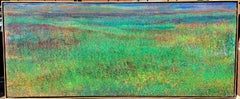
Nightfall, Acrylic
oil landscape painting, signed, framed, Museum provenance
By Thelma Appel
Located in New York, NY
Thelma Appel
Nightfall (Dusk), 1973
Acrylic and Oil on Canvas. Hand Signed. Framed.
Hand signed and titled on the back
Unique
Provenance: Jill Kornblee Gallery, NYNEX Corporation
Frame included
Museum Provenance. This work was originally sold in 1973 by the prestigious Jill Kornblee Gallery to a corporate collection (NYNEX) and, in 2019, it was featured in the Thelma Appel 50 year career survey at the Brattleboro Museum in Vermont – so the provenance is superb. It is reproduced in the exhibition catalogue. The collector who acquires this beautiful painting will be furnished with several copies of the limited edition museum catalogue
Measurements:
Framed
38.5 x 89.5 inches
Artwork
36.5 x 87.5 inches
Thelma Appel Biography:
A co-founder of the Bennington College Summer Painting Workshop, Thelma Appel is a representational and abstract painter who has been practicing art for more than six and a half decades. In the 1980s, Thelma Appel was represented by the renowned Jill Kornblee Gallery and, after Ms. Kornblee retired, Appel joined the legendary Fischbach Gallery, (the gallery of record for Alex Katz for many decades,) also on West 57th Street, before they shuttered. After leaving Manhattan, she retreated from the art world for several decades; however, in recent years, her work is being rediscovered by a generation of new collectors. A beloved and popular teacher, at 87 years of age, Thelma could still be found teaching “The Art of Painting” at Artsplace in Cheshire, CT. and at the Osher Life Long Learning Institute (OLLI) At the University of Connecticut, near her home during the 2024-5 Fall/Winter Semester. In 2019, she was subject of a 50-year career survey (October, 2019 -February 2020) at the Brattleboro Museum in Vermont, entitled Thelma Appel: Abstract/Observed curated by Mara Williams. She has also exhibited at the Mattatuck Museum in Connecticut, which acquired one of her fabric collages for their permanent collection, the Bennington Museum in Vermont and the Police Museum in Lower Manhattan. Thelma Appel was born in Tel Aviv, Israel, but following her parents’ divorce, her father remained in Israel, but her mother emigrated to London to pursue a career as a journalist. However, she soon became ill, and Thelma was sent alone to be educated in a Protestant missionary schools in Darjeeling, India, a geographical displacement that would impact her life and her work. Thelma returned to London, England, to study art at the legendary St. Martin's School of Art (later Central St. Martins) and Hornsey College of Art, under such renowned teachers as Joe Tilson and Eduardo Paolozzi, before emigrating to the United States in the 1960s. Her work has been exhibited in numerous venues, including the Bennington Museum, the Berkshire Museum in North Adams, Mass., the Children's Museum of the Arts in New York City, the Mattatuck Museum, the Brattleboro Museum, the Milwaukee Art Museum, the Robert Hull Fleming Museum at the University of Vermont and the University of Pennsylvania Fine Arts Gallery. In 1974 she was awarded a YADDO Fellowship, and in 1975, Thelma Appel, along with the painter Carol Haerer, co-founded the Bennington College Summer Painting Workshop, where many distinguished painters of the day, both abstract and representational, conducted master classes. Among them were Neil Welliver, John Button, Alice Neel, Larry Poons, Friedel Dzubas, Stanley Boxer, Elizabeth Murray and Doug Ohlson – a program that continued until 1980. (One of Thelma’s students was the renowned art dealer Matthew Marks.) She has also taught drawing at Parsons School of Design, painting at Southern Vermont College and at the University of Connecticut. Appel’s work has been presented at Art on Paper, Texas Contemporary, Market Art & Design in Bridgehampton and Art New York art fair, which selected Appel’s Times Square series of paintings for their invitational public Project Space sponsored by Absolut Vodka. She was one of the winning artists of the juried exhibition “Pets of the Pandemic” juried by art historian and critic David Cohen, publisher and editor of artcritical, who cited it for special commendation as a “masterful portrait”. In recent years, Thelma’s work has been exhibited in both one-person and group shows at Alpha 137 Gallery in New York, Sager Reeves (now Sager Braudis) Gallery in Missouri, the Chashama Foundation in New York City, as well as the Five Points Gallery and Center for the Visual Arts in Torrington Connecticut, the David M. Hunt Gallery in Falls Village, CT and Wisdom House in Litchfield Ct...
Category
Contemporary 1970s Art
Materials
Canvas, Oil, Acrylic
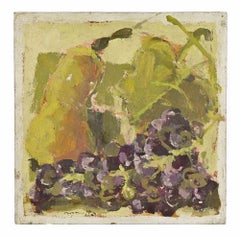
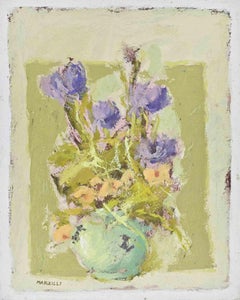
Still Life - Oil Painting by Franco Marzilli - 1970s
Located in Roma, IT
Oil on wooden table realized by Franco Marzilli (1934-2010) in 1970s.
Hand signed lower left.
Very good condition.
Franco Marzilli was born in Rome in 1934. He received his first ...
Category
Contemporary 1970s Art
Materials
Oil
$380 Sale Price
20% Off
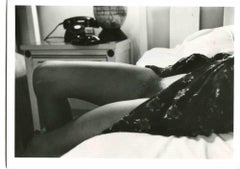
Kristine DeBell - Vintage Photo by Helmut Newton - 1970s
Located in Roma, IT
Kristine DeBell is a vintage photo, realized by Helmut Newton in the 1970s.
The artwork represent fashion model and actress in 1970s.
Category
Contemporary 1970s Art
Materials
Photographic Paper
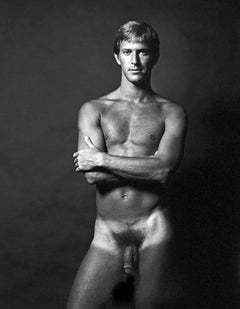
Adult film star Cal Culver (AKA Casey Donovan)
After Dark
Nude, Signed
Located in Senoia, GA
Adult film star Cal Culver (AKA Casey Donovan) 'After Dark' magazine nude study, photographed in 1972. This is a vintage gelatin silver print, selenium...
Category
Pop Art 1970s Art
Materials
Silver Gelatin
$1,210 Sale Price
44% Off
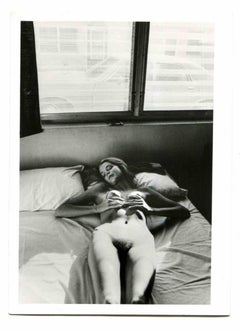
Kristine DeBell - Vintage Photo by Helmut Newton - 1970s
Located in Roma, IT
Kristine DeBell is a vintage photo, realized by Helmut Newton in the 1970s.
The artwork represent fashion model and actress in 1970s.
Category
Contemporary 1970s Art
Materials
Photographic Paper
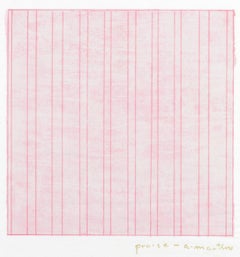
Praise, Rubber Stamp Portfolio, Agnes Martin
By Agnes Martin
Located in Southampton, NY
Printer’s ink from rubber stamp on vélin Dalton natural bond paper. Paper Size: 8 x 8 inches. Inscription: Unsigned, as issued. Notes: From the folio, Rubber Stamp Portfolio, 1977. P...
Category
Minimalist 1970s Art
Materials
Printer s Ink
$5,996 Sale Price
20% Off
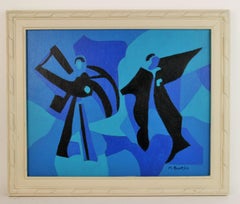
Japanese Theater Blue Dancing Figurative Expressionist Painting
Located in Douglas Manor, NY
5-3311 Abstract Figurative Painting
Set in a hand painted wood frame
Image size 12x15"
Category
1970s Art
Materials
Oil
$250 Sale Price
47% Off
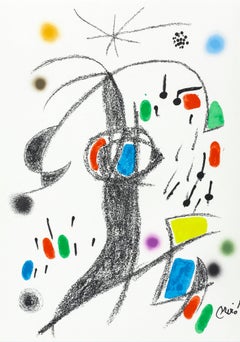
Joan Miro, Untitled, Marvels with Acrostic Variations in Miro’s Garden, 1975
By Joan Miró
Located in Southampton, NY
This exquisite lithograph by Joan Miro (1893–1983), titled Sans titre (Untitled), from the folio Maravillas con variaciones acrosticas en el Jardin de Miro (Marvels with Acrostic Var...
Category
Surrealist 1970s Art
Materials
Lithograph
$1,196 Sale Price
20% Off
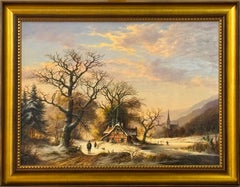
Vintage Rural Landscape Snow Scene "Winter Cold, Farm Idyll" by German Artist
Located in Preston, GB
Vintage Rural Landscape Snow Scene entitled "Winter Cold, Farm Idyll" by German Artist, Karl Heinz Stienen (1918-2002). Graduate of the Dresden Academy of Fine Arts. A serene winter ...
Category
Realist 1970s Art
Materials
Canvas, Cotton Canvas, Oil
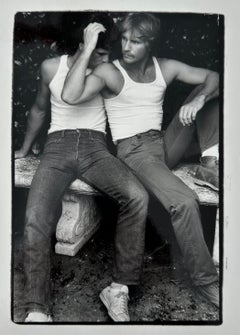
Lovers, San Francisco.
Located in Wilton Manors, FL
Fisher Ross. Untitled, ca. 1975-80. Gelatin Silver print, sheet measures 8 x 10 inches; 17 x 21 inches framed. Artist studio stamp on verso. Excellent cond...
Category
Realist 1970s Art
Materials
Silver Gelatin
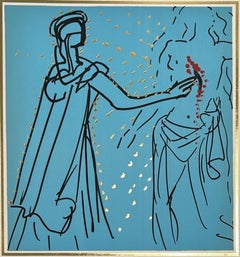
Thomas (Lancelot Healing Sir Urre)
Located in Washington, DC
Artist: Salvador Dali
Title: Thomas (Lancelot Healing Sir Urre)
Portfolio: 1972 The Twelve Apostles (Knights of the Round Table)
Medium: Lithograph
Year: 1972
Edition: 38/350
Frame S...
Category
Surrealist 1970s Art
Materials
Lithograph
The Golfer
Located in Washington, DC
Artist: Salvador Dali
Title: The Golfer
Medium: Lithograph in colors on Arches paper
Year: 1973
Edition: 8/199
Sheet Size: 23 7/8" x 18 7/8"
Image Size: 19" x 16"
Signature: Hand sig...
Category
Surrealist 1970s Art
Materials
Lithograph

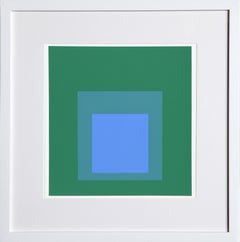
Homage to the Square - P2, F32, I1 - Geometric Screenprint by Josef Albers
By Josef Albers
Located in Long Island City, NY
"Homage to the Square - P2, F32, I1" from the portfolio “Formulation: Articulation” created by Josef Albers in 1972. This monumental series consists of 127 original screenprints that...
Category
Abstract Geometric 1970s Art
Materials
Screen
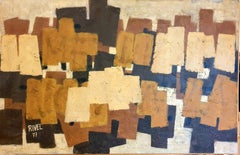
Large Geometric Abstract.
Traces No.9 Pour une Archéologie du Présent.
Located in Cotignac, FR
Large 1970s abstract geometric acrylic and oil on plywood panel signed Rivel and dated 1977 to the bottom left. The painting is titled to the rear of the panel.
Numbers of colour fields in muted shades jostle against one another. It is the shapes and the space between them which give energy to the painting whilst the colour palette restrains.
The painting is highly textured as the artist has applied the paint thickly and energetically with both palette knife and large brushstrokes. At times layers of paint reveal underlying colours.
This painting fits perfectly into the abstract genre with its focus on its formal qualities over and above its subject matter. Furthermore the artist experiments with reconstructing shapes and rejecting three dimensional perspective. A fine example of non objective art...
Category
Abstract Expressionist 1970s Art
Materials
Acrylic, Board
$1,330 Sale Price
30% Off
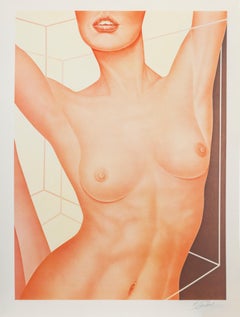
Lips in Perspective, Nude Lithograph by Roberto Carbone
Located in Long Island City, NY
Lips in Perspective
Roberto Carbone, Italian (1949)
Date: 1979
Lithograph, signed and numbered in pencil
Edition of 250
Size: 27 in. x 20 in. (68.58 cm x 50.8 cm)
Category
Realist 1970s Art
Materials
Lithograph
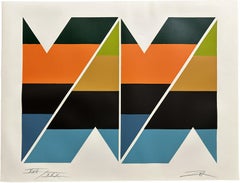
Scissors Jack Series 1978 Two Signed Limited Edition Screen Prints
By Larry Zox
Located in Rochester Hills, MI
Larry Zox
Two Screen Prints
Edition: Signed in pencil and marked XXII/XXX
Scissors Jack I
Scissors Jack II
39'' x 29.5'' inches
Larry Zox is one of the principal representatives...
Category
Abstract Geometric 1970s Art
Materials
Screen
$2,400 Sale Price
20% Off
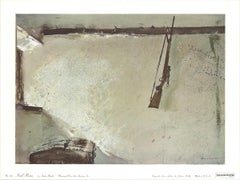
Andrew Wyeth
Karl
s Room
1970- Poster
By Andrew Wyeth
Located in Brooklyn, NY
This poster features Andrew Wyeth's *Karl's Room*, an intimate and evocative work that captures the quiet, poignant atmosphere of a personal space. Presented in collaboration with th...
Category
1970s Art
Materials
Offset
$72 Sale Price
20% Off
"Piriac-sur-Mer, Bretagne" by Claude Sauthier - Oil on Wood - 92x65 cm
Located in Geneva, CH
Claude Sauthier was born in Geneva, Switzerland, in 1929 and passed away in the same city in 2016. He studied at the Geneva School of Decorative Arts and initially worked as a graphi...
Category
Modern 1970s Art
Materials
Wood, Oil

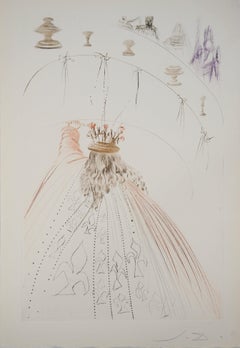
Knights of King Arthur - Original etching Handsigned (Field #70-10M)
Located in Paris, IDF
Salvador DALI
Les chevaliers du roi Arthur ("The cavaliers of King Arthut"), 1970
Original etching
Handsigned in pencil with his monogram
Limited to 125 copies
On Lana vellum 45 x ...
Category
Surrealist 1970s Art
Materials
Etching
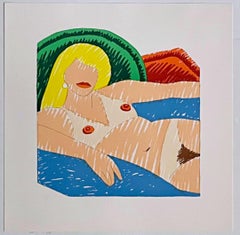
Shiny Nude (Stealingworth, 33) silkscreen on kromekote paper + envelope AP/1000
Located in New York, NY
Tom Wesselmann
Shiny Nude (Stealingworth, 33), 1977
Silkscreen on glossy cast-coated Kromekote paper
8 × 8 inches
Edition of 1000 (AP/1000)
Pencil numbered ...
Category
Pop Art 1970s Art
Materials
Screen, Paper
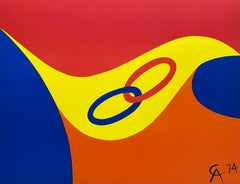
Friendship, Braniff International Airways Flying Colors Collection
Located in Fairfield, CT
Artist: Alexander Calder (1898-1976)
Title: Friendship, Braniff International Airways Flying Colors Collection
Year: 1975
Medium: Lithograph on vélin d’Arches paper
Size: 20 x 26 inc...
Category
Surrealist 1970s Art
Materials
Lithograph
$1,560 Sale Price
20% Off
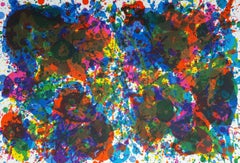
Untitled (SF-348) (Fresh Air School) /// Abstract Expressionist Sam Francis Art
By Sam Francis
Located in Saint Augustine, FL
Artist: Sam Francis (American, 1923-1994)
Title: "Untitled (SF-348) (Fresh Air School)"
Portfolio: Fresh Air School
*Unsigned edition
Year: 1972
Medium: Original Lithograph on white ...
Category
Abstract Expressionist 1970s Art
Materials
Lithograph
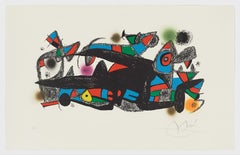
Spanish Artist signed limited edition original art print numbered lithograph
By Joan Miró
Located in Miami, FL
Joan Miro (Spain, 1893-1983)
'Joan Miró. Fotoscop', 1974
lithograph on paper
12.9 x 20.5 in. (32.7 x 52 cm.). The size of the stamp paper has been slightly modified. Its original dim...
Category
Abstract 1970s Art
Materials
Paper, Lithograph
Still life with mask oil on canvas painting cubism
Located in Sitges, Barcelona
Bernat Sanjuan Tarre (1915-1979) - Still life with mask - Oil on canvas
Oil measurements 50x65 cm.
Frame measurements 71x86 cm.
Category
Cubist 1970s Art
Materials
Canvas, Oil
$1,140 Sale Price
20% Off
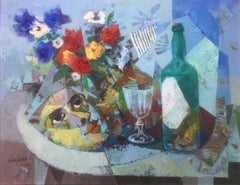
The South of France
, MMA Paris, Pompidou, Ecole des Beaux-Arts, Benezit
Located in Santa Cruz, CA
Signed lower right, 'Garcia Fons' for Pierre Garcia-Fons (French, 1928-2016), and inscribed lower left, 'Epr. d' Artist' (Epreuve d'Artist / Artist's Proof); also indistinctly inscri...
Category
1970s Art
Materials
Laid Paper, Lithograph
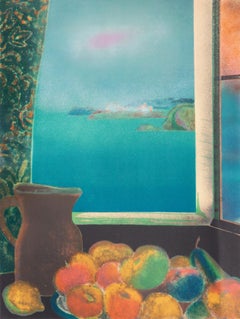
Still Life - Oil Painting by Franco Marzilli - 1970s
Located in Roma, IT
Oil on canvas realized by Franco Marzilli (1934-2010) in 1970s.
Hand signed lower left.
Very good condition.
Franco Marzilli was born in Rome in 1934. He received his first artist...
Category
Contemporary 1970s Art
Materials
Oil
$532 Sale Price
20% Off
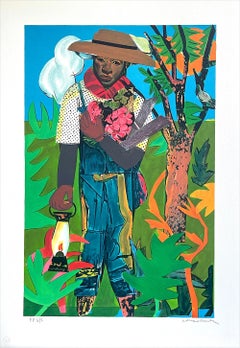
THE LANTERN Hand Signed Lithograph, Collage Portrait, African American Heritage
Located in Union City, NJ
THE LANTERN is an original, handmade limited edition lithograph printed in 13 colors from hand drawn lithography plates using traditional hand lithography methods on archival Somerse...
Category
Contemporary 1970s Art
Materials
Lithograph
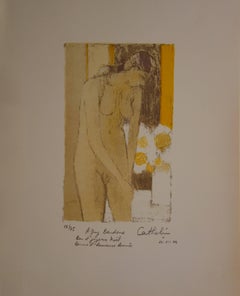
Nude with Bouquet of Flowers - Handsigned lithograph /75ex - Mourlot 1974
Located in Paris, IDF
Bernard CATHELIN
Nude with Bouquet of Flowers
Original stone lithograph
Signed in pencil
Numbered / 75 ex
With dedication to the painter Guy Bardone
On Arches vellum 39 x 31 cm (c. 16 x 12 in)
REFERENCES : Catalog raisonne Cathelin lithographs...
Category
American Modern 1970s Art
Materials
Lithograph
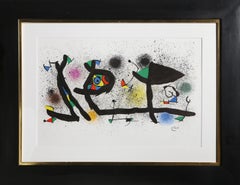
Sculptures (M. 950), Abstract Expressionist Lithograph by Joan Miro
By Joan Miró
Located in Long Island City, NY
Joan Miro, Spanish (1893 - 1983) - Sculptures (M. 950), Year: 1974, Medium: Lithograph on BFK Rives, signed in the plate, Image Size: 16.25 x 24 inches, Size: 20.5 x 29 in. (52.0...
Category
Abstract Expressionist 1970s Art
Materials
Lithograph
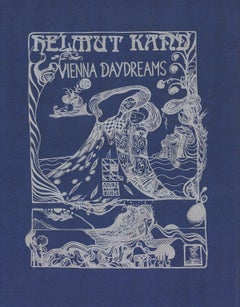
Vienna Daydreams Serigraph, Screen Print, 1972, Unframed, A- Condition
By Helmut Kand
Located in Brooklyn, NY
Paper Size: 25 x 19.5 inches ( 63.5 x 49.53 cm )
Image Size: 19 x 14 inches ( 48.26 x 35.56 cm )
Framed: No
Condition: A-: Near Mint, very light signs of handling
Additional De...
Category
1970s Art
Materials
Screen
$60 Sale Price
20% Off
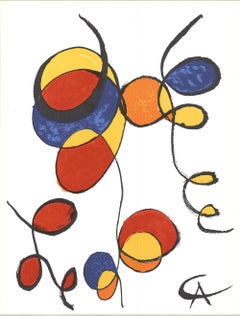
Spirales Lithograph by Alexander Calder, Vintage 1974, Unframed
Located in Brooklyn, NY
This first-release lithograph, Spirales, was published by XXe Siècle in an edition above the official release that accompanied a special volume dedicated to Calder’s work. While plat...
Category
1970s Art
Materials
Lithograph
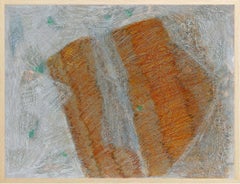
Mid-Century Painting Drawing Framed Colorful Texture New York Orange Grey Green
Located in Buffalo, NY
A wonderful minimalist mixed media work Circa 1970. Though the artist is unknown this work was acquired along with pieces by well know artists Karel Appel and Robert Motherwell from...
Category
Minimalist 1970s Art
Materials
Coating, Oil Pastel, Acrylic
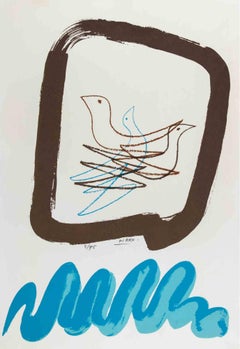
Pigeons - Lithograph by Marcello Pirro - 1970s
Located in Roma, IT
Pigeons is a contemporary artwork realized by Marcello Pirro in 1970s.
Mixed colored lithograph.
Hand signed and numbered on the lower margin.
Edition of 5/75.
Good conditions.
Category
Contemporary 1970s Art
Materials
Lithograph
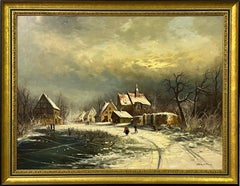
European Village in Winter Snow with Figures
Frozen Pond by German Artist
Located in Preston, GB
European Village in Winter Snow with Figures & Frozen Pond by 20th Century German Artist, Gunter Seekatz. This is a large painting measuring almost 4 fe...
Category
Bauhaus 1970s Art
Materials
Oil, Canvas
$3,783 Sale Price
20% Off
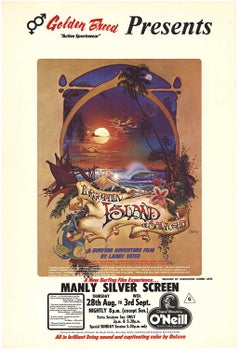
Forgotten Island of Santosha original vintage surfing movie poster
Located in Spokane, WA
Original: FORGOTTEN ISLAND OF SANTOSHA vintage surfing poster. Artist: Bill Ogden. Size: 27" x 39 3/4". Year: 1974. Original One Sheet from Austra...
Category
Surrealist 1970s Art
Materials
Offset
"Arizovert" original lithograph
Located in Henderson, NV
Medium: original lithograph. Printed for XXe Siecle (No. 39) in 1972 and published in Paris by San Lazzaro. Size: 12 1/4 x 9 1/2 inches (310 x 240 mm). Not signed.
Category
1970s Art
Materials
Lithograph
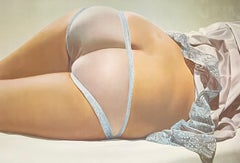
Diane, John Kacere
By John Kacere
Located in Fairfield, CT
Artist: John Kacere (1930-1999)
Title: Diane
Year: 1979
Edition: A.P.; 200, plus proofs.
Medium: Lithograph on Waterford paper
Size: 19 x 28 inches
Inscription: Signed by the artist
...
Category
Pop Art 1970s Art
Materials
Lithograph
$1,276 Sale Price
20% Off