Early 1900s Art
to
272
885
440
287
180
165
Overall Width
to
Overall Height
to
7,568
21,233
159,728
231,699
1,972
2,249
4,934
6,444
5,867
13,362
19,843
25,859
18,446
13,782
5,384
297
241
117
101
11
9
7
5
5
4
1
1
1,013
788
49
1,112
631
395
341
329
185
108
105
101
92
86
79
77
75
74
74
73
71
66
62
889
625
454
358
358
57
45
29
25
18
807
233
1,024
873
Period: Early 1900s
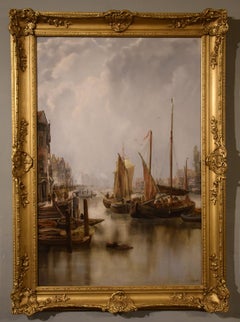
Oil Painting by William Howard "A Busy Quayside"
Located in Mere, GB
Oil Painting by William Howard "A Busy Quayside" 1879 - 1945 Painter of atmospheric British and continental townscapes, represented in the national maritime museum Greenwich and in R...
Category
Early 1900s Art
Materials
Oil
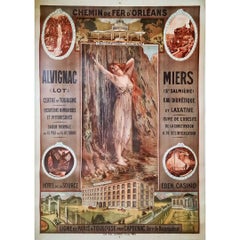
Circa 1900 Original poster after Henri Gervex for the railways of Orleans
By Henri Gervex
Located in PARIS, FR
Beautiful poster after Henri Gervex for the railways of Orleans and more precisely the communes of Alvignac and Miers in the Lot and the line from Paris to Toulouse by Capdenac and t...
Category
Early 1900s Art
Materials
Linen, Paper, Lithograph
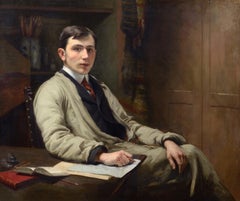
Portrait of young man - The artist
s son
Located in BELEYMAS, FR
Auguste-Joseph Delécluse
(Roubaix 1855 - Paris 1928)
Portrait of the artist's son, Eugène Delécluse
Oil on canvas
H. 98 cm; W. 116 cm
Signed lower right
1903
Exhibition: 1903, Salon...
Category
French School Early 1900s Art
Materials
Canvas, Oil
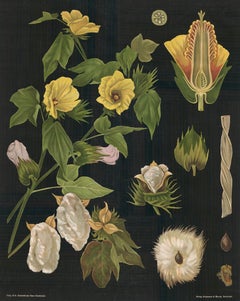
German Cotton Plant Botanical Teaching Chart
By Heinrich Jung
Located in New York, NY
Original chromolithograph teaching chart by Heinrich Jung G. Ton Koch, and F. Quentell. Darmstadt, Verlag Frommann & Morian, circa 1902.
Category
Early 1900s Art
Materials
Paper
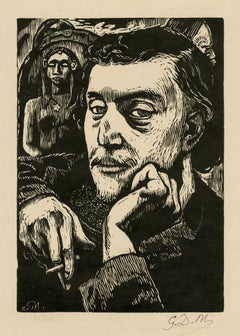
Portrait de Paul Gauguin
Located in Fairlawn, OH
Portrait de Paul Gauguin
Woodcut, c. 1900
Initialed in pencil lower right
Numbered in pencil lower left
Edition: 100 (34/100)
Annotated verso: “epreuve sur japon”
Condition: Excellent
Image size: 6 3/4 x 4 3/4 inches
Sheet size: 11 x 8 5/8 inches
Note: Born in New York, Monfreid studied in France at the Academy Julian. He was a friend of Gauiguin, Verlaine and Maillol. He formed a noted collection of works by Gauguin. In 1924, Monfreid published the manuscript for Paul Gauguin’s Noa Noa with 24 woodcuts inspired by Gauguin...
Category
Post-Impressionist Early 1900s Art
Materials
Woodcut
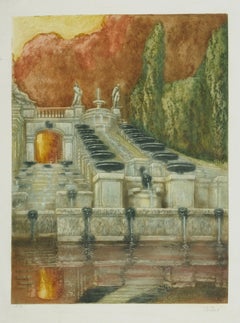
La Grande Cascade de Saint Cloud
Located in Fairlawn, OH
La Grande Cascade de Saint Cloud
Color aquatint on watermarked Arches J Perrigot paper, 1905
Signed by the artist in pencil lower right. (see photo)
Edition: 100. Numbered "39" in ...
Category
French School Early 1900s Art
Materials
Aquatint
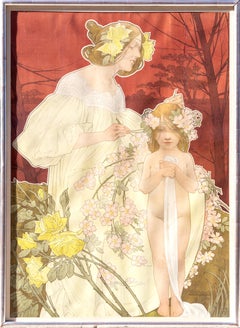
Palais de la Femme, Art Nouveau Lithograph by Georges Henri Privat-Livemont
Located in Long Island City, NY
Vintage poster by Henri Privat-Livemont created for the Exposition Universelle (the 1900 Paris Exposition) before the lettering was added on the upper portion of the image.
Palais d...
Category
Art Nouveau Early 1900s Art
Materials
Lithograph
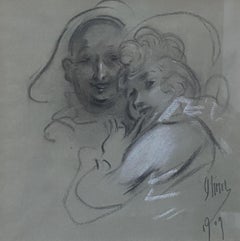
Jules Cheret (1836-1932) A couple, 1909, drawing signed
By Jules Chéret
Located in Paris, FR
Jules Cheret (1836-1932)
A couple, 1909
signed and dated in the lower right
Charcoal and heightenings of white chalk
23 x 23 cm
Framed under glass : 33.8 x 33.8 cm
This work is hi...
Category
Art Nouveau Early 1900s Art
Materials
Chalk, Charcoal
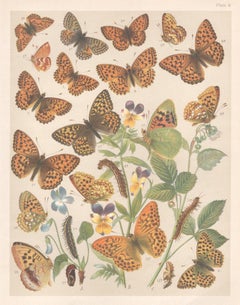
Butterflies, English antique natural history Lepidoptera chromolithograph print
Located in Melbourne, Victoria
English butterfly chromolithograph, circa 1900. Plate number top right. From an English series of illustrations of butterflies and moths. Butterflies / moths are numbered and there i...
Category
Art Nouveau Early 1900s Art
Materials
Lithograph
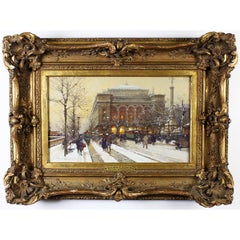
A Fine French 19th Century Parisian Watercolor
Gouache "Theatre du Chatelet"
Located in LA, CA
Eugène Galien-Laloue (1854-1941) "Theatre du Chatelet" watercolor and gouache on paper signed 'E Galien Laloue' lower left, within a giltwood and gesso carved frame and behind a prot...
Category
French School Early 1900s Art
Materials
Glass, Wood, Watercolor, Pencil
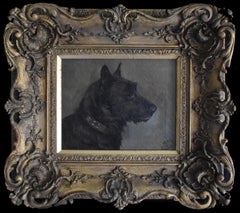
Mac
, a favourite terrier
Located in London, GB
Signed and inscribed ‘Mac/WH Wheeler’ (lower right)
This striking portrait by Walter Herbert Wheeler presents a dignified black terrier in crisp profile, its wiry coat and alert ears...
Category
Realist Early 1900s Art
Materials
Canvas, Oil
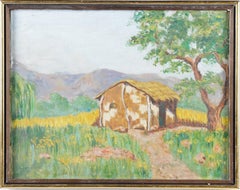
Antique Tropical 19th Century Landscape Original Oil Painting Flower Path
Located in Buffalo, NY
Antique modernist landscape painting. Oil on canvas. Housed in a period frame. Image size, 17.5L x 13.75H. Signed.
Category
Modern Early 1900s Art
Materials
Canvas, Oil

$296 Sale Price
25% Off
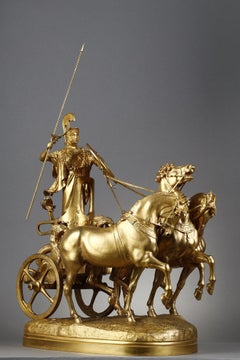
Minerva driving her chariot
Located in PARIS, FR
"Minerva driving her chariot"
by Emmanuel Fremiet (1824-1910)
Very beautiful group in bronze with old gilded patina
Cast by BARBEDIENNE
France
circa 1900
height : 54 cm
length : 54...
Category
French School Early 1900s Art
Materials
Bronze
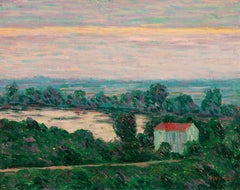
Petite maison au bord de l
eau by Auguste Herbin - Landscape, Oil painting
Located in London, GB
*PLEASE NOTE UK BUYERS WILL ONLY PAY 5% VAT ON THIS PURCHASE. once an order is placed we will arrange the VAT of 20% to be reduced to 5%
Petite maison au bord de l'eau by Auguste H...
Category
Post-Impressionist Early 1900s Art
Materials
Canvas, Oil
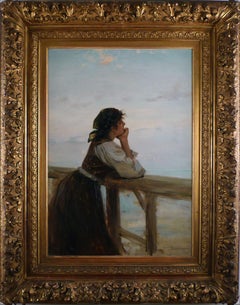
"Far Away Thoughts", 19th Century Oil on Canvas by Daniel Hernández
Located in Madrid, ES
DANIEL HERNÁNDEZ
Peruvian, 1856 - 1932
FAR AWAY THOUGHTS
signed "Daniel Hernandez" (lower right)
oil on canvas
27-1/2 x 19-1/4 inches (70 x 49 cm.)
framed: 39-3/8 x 31-1/8 inches (100 x 79 cm.)
Daniel Hernández Morillo...
Category
Realist Early 1900s Art
Materials
Canvas, Oil
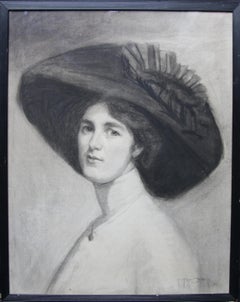
Portrait of Decima Moore - Actress
Suffragette Edwardian drawing female artist
By Maria Cowell nee Sayer
Located in Hagley, England
A fine, circa 1907, Edwardian pencil / charcoal drawing. Executed by Maria Cowell nee Sayer, it depicts a portrait of Decima Moore - an actress and Suffragette. A very striking and f...
Category
Realist Early 1900s Art
Materials
Charcoal, Carbon Pencil
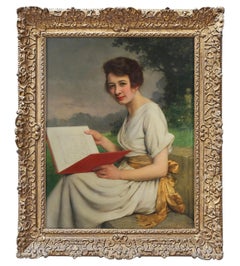
Portrait of a woman in a garden oil painting on panel by Jan Van Beers
Located in Gavere, BE
Info artist :
Van Beers studied at the Academy in Antwerp. In 1873, he undertook a trip to London with Alexandre Struys. In 1878, Van Beers went to Paris where he worked in the stud...
Category
Victorian Early 1900s Art
Materials
Oil, Wood Panel
Along The Seine
Located in Milford, NH
A fine impressionist landscape along the Seine River in France by American artist Chauncey Foster Ryder (1868-1949). Ryder grew up in New Haven, Connec...
Category
American Impressionist Early 1900s Art
Materials
Canvas, Oil
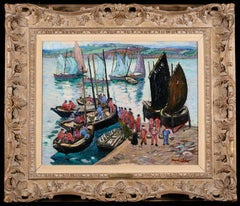
Unloading the catch - Impressionist Figures Seascape Oil by Richard Hayley Lever
Located in Marlow, Buckinghamshire
Signed figures in landscape oil on board circa 1905 by Australian-American impressionist painter Richard Hayley Lever. The work depicts fishing vessels docked in the harbour in Douar...
Category
Impressionist Early 1900s Art
Materials
Oil, Board
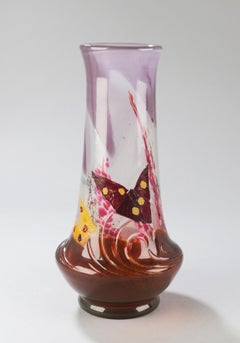
Exceptional vase "Marquetry with butterflies"
By Émile Gallé
Located in PARIS, FR
Exceptional vase "Marquetry with butterflies"
by Emile GALLE (1846-1904)
Baluster shaped vase raised on a rounded foot
Multi-layered blown-molded glass,
ornated with deep engraved ...
Category
Art Nouveau Early 1900s Art
Materials
Glass
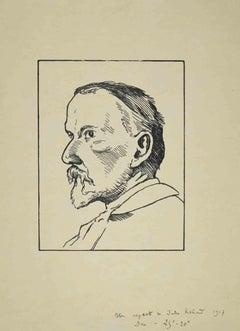
Portrait of Jules Lenard - Woodcut by Paul Emile Colin - 1907
Located in Roma, IT
Woodcut print realized by Paul Emile Colin in the 1907.
Not signed.
Very good condition.
Category
Modern Early 1900s Art
Materials
Woodcut
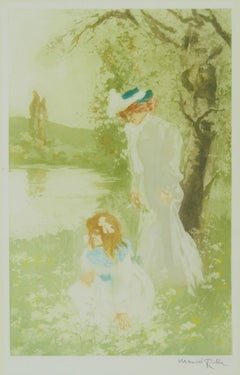
Avril
By Manuel Robbe
Located in Fairlawn, OH
Avril (April)
Color aquatint and etching, c. 1906
Signed in pencil lower right
Edition: c. 100
Excellent impression, fresh colors
Reference: Merrill Chase Volume 1, No. 9
Condition: ...
Category
Impressionist Early 1900s Art
Materials
Aquatint
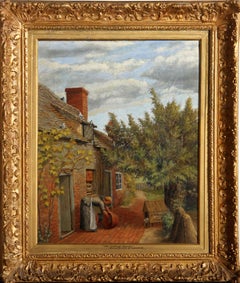
The Cottage Garden, Impressionist Oil on Canvas Painting by Henry Stannard
Located in Long Island City, NY
A neoclassical oil painting on canvas by British artist Henry John Sylvester Stannard. The scene depicts a woman cleaning a bucket outside her house while a dog nestled in a dog house watches on. The painting is signed by the artist as “Sylvester Stannard”.
The Cottage Garden...
Category
Impressionist Early 1900s Art
Materials
Canvas, Oil
French Landscape by Jules Alexis Muenier
Located in Philadelphia, PA
JULES-ALEXIS MUENIER
(French, 1863–1942)
Landscape
Oil on canvas, 25 1/2 x 21 1/4 inches
FRAMED: 34 1/2 x 30 (approx.)
Signed and dated at lower right: “J. A. MUENIER/1908”
Provena...
Category
Realist Early 1900s Art
Materials
Canvas, Oil
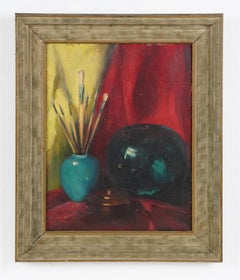
Antique American School Impressionist Artist Studio Still Life Oil Painting
Located in Buffalo, NY
Oil on canvasboard. Framed. No signature found.
Category
Realist Early 1900s Art
Materials
Canvas, Oil
$316 Sale Price
20% Off
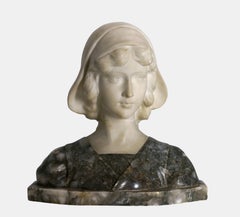
Bust of a young woman / - Beauty of youth -
Located in Berlin, DE
Anonymous, Bust of a young woman, c. 1900, artificial marble and gray onyx marble. 37 cm (height) x 37 cm (width) x 22 cm (depth), weight 17.2 kg. Signed “GURRINI” on the reverse.
-...
Category
Realist Early 1900s Art
Materials
Marble
Original Vintage Yale University Poster by Abigail Kellogg Hazard 1909
By Abigail Kellogg Hazard
Located in Boca Raton, FL
The bulldog, known as Handsome Dan, is the mascot of Yale University, located in New Haven, Connecticut. This poster was created in 1909 by Abigail Kellogg Hazard. The poster complim...
Category
Early 1900s Art
Materials
Lithograph

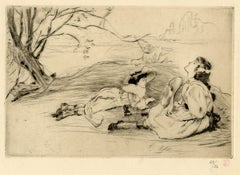
A L
Ombre (In Shadow)
Located in Fairlawn, OH
A L'Ombre (In Shadow)
Etching & drypoint, 1905
Signed with the red stamp of the publisher Pellet (see photo)
Edition: 50 on velin paper, signed and numbered
Publisher: Gustav Pellet, Paris (his red stamp lower right, recto; Lugt 1193)
Condition: Excellent
Image/Plate size: 5-7/8 x 8-5/8" (14.8 x 21.8 cm.)
Sheet size: 11 5/8 x 17 1/8"
Reference: IFF 119
Exteens 229
Arwas 256 v/V
Louis Auguste Mathieu Legrand (29 September 1863 – 1951) was a French artist, known especially for his aquatint engravings, which were sometimes erotic. He was awarded the Légion d'honneur for his work in 1906.
Life
Legrand was born in the city of Dijon in the east of France. He worked as a bank clerk before deciding to study art part-time at Dijon's Ecole des Beaux-Arts. He won the Devosge prize at the school in 1883.[2] In 1884 Legrand studied engraving under the Belgian printmaker Félicien Rops.
Legrand's artworks include etchings, graphic art and paintings. His paintings featured Parisian social life. Many were of prostitutes, dancers and bar scenes, which featured a sense of eroticism. According to the Hope Gallery, "Louis Legrand is simply one of France's finest early twentieth century masters of etching." His black and white etchings especially provide a sense of decadence; they have been compared to those of Henri de Toulouse-Lautrec, though his drawings of the Moulin Rouge, the can-can dance and the young women of Montmartre preceded Toulouse-Lautrec's paintings of similar scenes. He made over three hundred prints of the night life of Paris. They demonstrate "his remarkable powers of observation and are executed with great skill, delicacy, and an ironic sense of humor that pervades them all."
Two of his satirical artworks caused him to be tried for obscenity. The first, "Prostitution" was a symbolic drawing which depicted a naked girl being grasped by a dark monster which had the face of an old woman and claws on its hands; the second, "Naturalism", showed the French novelist Émile Zola minutely studying the thighs of a woman with a magnifying glass. Defended by his friend the lawyer Eugène Rodrigues-Henriques (1853–1928), he was found not guilty in the lower court, but was convicted in the appeal court and then given a short prison sentence for refusing to pay his fine.
Legrand was made famous by his colour illustrations for Gil Blas magazine's coverage of the can-can, with text by Rodrigues (who wrote under the pseudonym Erastene Ramiro). It was a tremendous success, with the exceptional quantity of 60,000 copies of the magazine being printed and instantly sold out in 1891.
In 1892, at the instigation of the publishing house Dentu, Legrand made a set of etchings of his Gil Blas illustrations. The etchings were published in a book, Le Cours de Danse Fin de Siecle (The End of the Century Dance Classes).
Legrand took a holiday in Brittany, which inspired him to engrave a set of fourteen lithographs of simple country life called Au Cap de la Chevre (On Goat Promontory). It was published by Gustave Pellet who became a close friend of Legrand's. Pellet eventually published a total of 300 etchings by Legrand, who was his first artist; he also published Toulouse-Lautrec and Félicien Rops among others.
He did not only work in graphics; he exhibited paintings at the Paris salon of the Société Nationale des Beaux-Arts starting in 1902. In 1906 he was made a chevalier of the Légion d'honneur.
Legrand died in obscurity in 1951. A retrospective exhibition was held at the Félicien Rops museum in Namur, Belgium in 2006 to celebrate his graphic art. The art collector Victor Arwas published a catalogue raisonné for the occasion.
Books illustrated
de Maupassant, Guy: Cinq Contes Parisiens, 1905.
Poe, Edgar Alan: Quinze Histoires d'Edgar Poe...
Category
Art Nouveau Early 1900s Art
Materials
Etching
The Courtship, Success Magazine Cover
Located in Fort Washington, PA
Medium: Oil on Canvas
Signature: Signed Lower Left
Sight Size 22.00" x 15.50", Framed 31.00" x 24.00"
Success Magazine Cover, The Success Company, Ne...
Category
Early 1900s Art
Materials
Canvas, Oil
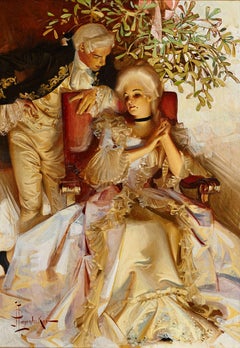
Le Fondeur Paris [Steel Worker]
Located in New York, NY
Carriere, Eugene. Le Fondeur, Paris 1900 [Steel Worker], Color lithograph.
Ref: Das Fruhe Plakat 134. 51 x 34 3/4 inches.
Eugène Anatole Ca...
Category
Symbolist Early 1900s Art
Materials
Lithograph
![Le Fondeur Paris [Steel Worker]](https://a.1stdibscdn.com/eugene-carriere-prints-works-on-paper-le-fondeur-paris-steel-worker-for-sale/a_2922/1610896410669/Carriere_E_master.jpg?width=240 "carriere painter")
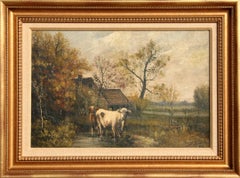
Pastoral Landscape with Cows, Impressionist Oil Painting by John Parker Davis
Located in Long Island City, NY
Artist: John Parker Davis, American (1832 - 1910)
Title: Cow Farm Landscape
Year: 1905
Medium: Oil on Canvas, signed and dated l.l.
Size: 12 x 18 in...
Category
Post-Impressionist Early 1900s Art
Materials
Oil
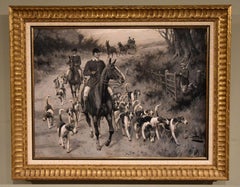
Oil Painting by George Wright "Exercising the Path"
Located in Mere, GB
Oil Painting by George Wright "Exercising the Path" 1860 - 1942 Leading painter of coaching and hunting scenes, he exhibited at the Royal Academy. Many works of his were illustrated ...
Category
Early 1900s Art
Materials
Oil
$1,797 Sale Price
27% Off
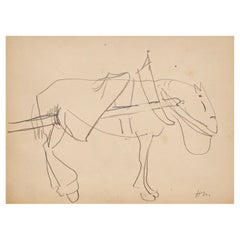
Henri Matisse Crayon Drawing Direct from Matisse Estate
Located in Dallas, TX
Henri Matisse (French 1869-1954) Pencil Drawing Of A Working Horse Catalogued as Number Z 548 in the Artist Archives
Pencil on paper, c. 1900, signed with initials 'HM' lower right....
Category
Modern Early 1900s Art
Materials
Paper, Crayon
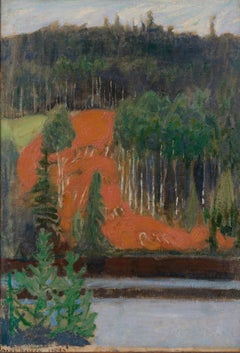
View of a hill slope across a stretch of water; A View from Keitele or Ruovesi
Located in Stockholm, SE
Akseli Gallen-Kallela (Björneborg 1865–1931 Stockholm)
View of a hill slope across a stretch of water; A View from Keitele or Ruovesi
Signed and dated “AXEL GALLEN 1904”
Oil on can...
Category
Symbolist Early 1900s Art
Materials
Canvas, Oil, Board
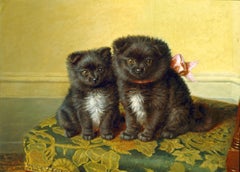
Sitting Pretty (Pomeranian Pups)
Located in Mc Lean, VA
Signed and dated '1901' lower left
Category
Academic Early 1900s Art
Materials
Canvas, Oil
Father Rushing Home with an Armload of Gifts, Saturday Evening Post Cover
Located in Fort Washington, PA
Father Rushing Home with an Armload of Gifts, The Saturday Evening Post Cover, December 4, 1909.
A charming original cover for The Saturday Evening Post, published December 4, 1909,...
Category
Early 1900s Art
Materials
Canvas, Oil, Masonite

A view from the Pont Neuf - Impressionist Landscape Oil by Charles Guilloux
Located in Marlow, Buckinghamshire
Signed and dated oil on canvas riverscape by French impressionist painter Charles-Victor Guilloux. This beautifully painter piece shows a view from the Pont Neuf looking towards the ...
Category
Impressionist Early 1900s Art
Materials
Canvas, Oil
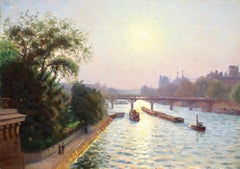
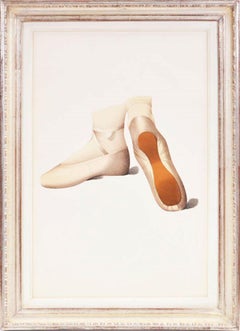
Illustration of Ballet Slippers
By Thomas Watson Greig
Located in London, GB
Chromolithographed illustration of a pair of Ballet Slippers, printed with gold and silver inks.
[Published by David Douglas, Edinburgh, 1900].
Plate...
Category
Naturalistic Early 1900s Art
Materials
Lithograph
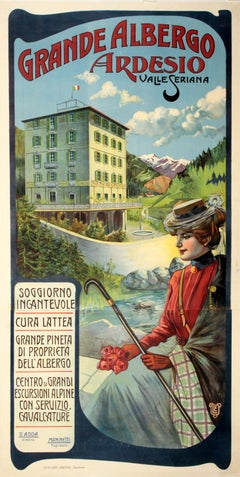
Original Italian Travel Poster circa 1900 - Grande Albergo Ardesio
Located in Boca Raton, FL
The "Grande Albergo Ardesio" opened its doors in the early twentieth century. Originally owned by the Maninetti Family it quickly became a holiday destination for the prestigious Lom...
Category
Early 1900s Art
Materials
Lithograph
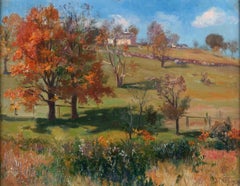
Autumn Landscape in Sunlight - Indian Summer -
Located in Berlin, DE
Frederick Vezin (1859 Torresdale Philadelphia - 1933 Düsseldorf), Autumn Landscape in the Sunlight, oil on canvas, mounted on cardboard, 32 x 41 cm (inside measurement), 44 x 51 cm (frame), signed and dates lower right "F. Vezin. [19]05".
- Cardboard slightly curved, small inconspicuous retouch at the centre of the upper edge of the picture.
About the artwork
Although the painting appears to be a sketch, Frederick Vezin considered it to be a finished work of art, as evidenced by his signature on the lower right. And it is precisely this sketchy quality that leads to an understanding of the painting, which was certainly created in the landscape itself: the natural phenomena were to be depicted artistically at the moment of their observation. This is not done by meticulously sketching nature, but - and here Vezin follows the teaching of French Impressionism - by illustrating nature in its visual fullness. The artist's eye is, as it were, immersed in the visuality of nature, which is made visible by his hand. The painting is therefore not a reflection of the landscape, but its artistic intensification.
This intensification also includes the fact that the foreground of the painting - corresponding to the field of vision - eludes a detail-oriented close-up view. Instead, the spatula-like application of paint, the vertical structure of which corresponds to the structure of the floral growth, has the effect of making nature tangible in its colourful substance.
At the same time, the foreground, which remains indeterminate in its concrete objectivity, creates an atmospheric space that connects with the actual protagonist of the picture, the group of trees, which flares up in shades of red and brown. Here, too, the leaves are more speckled than clearly outlined. It is precisely this 'sketchiness' that opens up a visual experience that makes the landscape accessible in its visual fullness, thus revealing its essence.
In addition to this abundance, the landscape is presented as a structure of order in that the composition of the picture makes the composition of the landscape visible. For example, the group of trees forms a distinct dark green shadow, which is repeated in the shadows cast by the trees behind it. A patterned diagonal axis is created in the picture, which is composed in this way by the landscape itself.
Strictly speaking, this is a cultivated landscape: a fence at the bottom and a low stone wall at the top, running from left to right, are two elements that also have a strong compositional effect. And on the top of the hill, a stone house is embedded in the landscape as the brightest surface in the picture. Nature and culture here form a harmonious synthesis, giving the painting an Arcadian touch.
In order to give the landscape as much space as possible, the horizon line is raised, but the design of the sky is also crucial. The clouds, combined with the shapes of the trees, create a bright blue sky. To the European eye, such a sky is reminiscent of a summer landscape. Accordingly, within the seasonal cycle, the blue sky is reserved for summer, and French Impressionism is also primarily an ode to summer. In Vezin's painting, however, the brilliant blue sky stands above an autumnal landscape, some of the trees even defoliated. It can therefore be assumed that the painting was made not in Europe but in the United States, and that it illustrates the proverbial Indian summer, making Frederick Vezin a pioneer of American landscape painting.
About the artist
Frederick Vezin was the son of a French immigrant to the United States and a German-born mother. This predestined him to promote artistic exchange between the old and new worlds. Having spent part of his schooling in Germany, in 1876, at the age of 20, he enrolled at the Düsseldorf Academy of Art, where he studied with Peter Janssen the Elder, Eduard von Gebhardt and Wilhelm Sohn, among others. He graduated in 1883, settled in Munich and returned to Düsseldorf in 1895, where he lived until his death in 1933.
A native of the United States, he travelled to the country frequently and became a popular portrait and society painter. His artistic talent, however, was most evident in his landscape paintings. Trained in French Impressionism, he developed a virtuoso use of colour and a free brushwork that remained tied to the landscape motif, opening up the landscape itself in a new way. Frederick Vezin turned his attention primarily to the landscape of his homeland, becoming a pioneer of modern American landscape...
Category
Impressionist Early 1900s Art
Materials
Oil, Cardboard
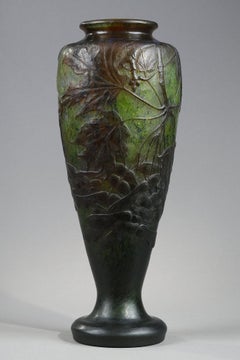
Vase "Erable plane"
By Émile Gallé
Located in PARIS, FR
"Norway maple" Vase
by Émile GALLE (1846-1904)
Rare baluster-shaped vase,
multi-layered glass with powder and gold foil inclusions.
Wheel-carved cameo decoration,
ornated with mapl...
Category
Art Nouveau Early 1900s Art
Materials
Blown Glass
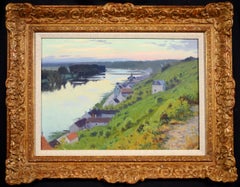
La Seine a Herblay - Impressionist Landscape Oil Painting by Charles Guilloux
Located in Marlow, Buckinghamshire
Signed and dated oil on canvas riverscape by French impressionist painter Charles-Victor Guilloux. The work depicts a view of the houses of the commune Heblay-sur-Seine lining the ba...
Category
Impressionist Early 1900s Art
Materials
Canvas, Oil
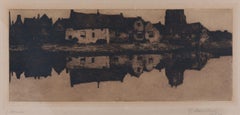
Evening - The depth of the visible -
Located in Berlin, DE
Max Clarenbach (1880 Neuss - Cologne 1952), Evening. Etching, 18 x 41 cm (platemark), 33.5 x 57 cm (frame), inscribed "Abend" in pencil at lower left, signed and dated "M. Clarenbach. 28.III.[19]09". Framed and mounted under glass.
- Somewhat browned and slightly foxed.
About the artwork
The horizontally elongated etching depicts the panoramic view of a small town as seen from the other side of the river. There are gabled houses on the left and a mighty church spire on the right. The bourgeois houses and the large religious building indicate the urban character. These buildings are rendered in dark tones to emphasise the lighter row of houses in the centre of the picture, closer to the water. The chiaroscuro contrast creates two parallel planes that open up a space for the imagination of what the city could be. The imagination is stimulated by the almost entirely dark, barely recognisable buildings, while the arm of the river leading into the city further stimulates the imagination.
However, as the silhouette of the city as a whole is reflected in the water, the parallel planes are perceived as a band of houses that stretches across the entire horizontality of the etching and seems to continue beyond the borders of the picture. The reflection has almost the same intensity as the houses themselves, so that the band of buildings merges with their reflection to form the dominant formal unit of the picture. Only the parallel horizontal hatching creates the convincing impression of seeing water, demonstrating Max Clarenbach's mastery of the etching needle.
The water is completely motionless, the reflection unclouded by the slightest movement of the waves, creating a symmetry within the formal unity of the cityscape and its reflection that goes beyond the motif of a mere cityscape. A pictorial order is established that integrates everything in the picture and has a metaphysical character as a structure of order that transcends the individual things. This pictorial order is not only relevant in the pictorial world, but the picture itself reveals the order of the reality it depicts. Revealing the metaphysical order of reality in the structures of its visibility is what drives Clarenbach as an artist and motivates him to return to the same circle of motifs.
The symmetry described is at the same time inherent an asymmetry that is a reflection on art: While the real cityscape is cut off at the top of the picture, two chimneys and above all the church tower are not visible, the reflection illustrates reality in its entirety. The reflection occupies a much larger space in the picture than reality itself. Since antiquity, art has been understood primarily as a reflection of reality, but here Clarenbach makes it clear that art is not a mere appearance, which can at best be a reflection of reality, but that art has the potential to reveal reality itself.
The revealed structure of order is by no means purely formalistic; it appears at the same time as the mood of the landscape. The picture is filled with an almost sacred silence. Nothing in the picture evokes a sound, and there is complete stillness. There are no people in Clarenbach's landscape paintings to bring action into the picture. Not even we ourselves are assigned a viewing position in the picture, so that we do not become thematic subjects of action. Clarenbach also refrains from depicting technical achievements. The absence of man and technology creates an atmosphere of timelessness. Even if the specific date proves that Clarenbach is depicting something that happened before his eyes, without the date we would not be able to say which decade, or even which century, we are in. The motionless stillness, then, does not result in time being frozen in the picture, but rather in a timeless eternity that is nevertheless, as the title "Abend" (evening), added by Clarenbach himself, makes clear, a phenomenon of transition. The landscape of the stalls is about to be completely plunged into darkness, the buildings behind it only faintly discernible. The slightly darkened state of the sheet is in keeping with this transitional quality, which also lends the scene a sepia quality that underlines its timelessness. And yet the depiction is tied to a very specific time. Clarenbach dates the picture to the evening of 28 March 1909, which does not refer to the making of the etching, but to the capture of the landscape's essence in the landscape itself.
If the real landscape is thus in a state of transition, and therefore something ephemeral, art reveals its true nature in that reality, subject to the flow of phenomena, is transferred to an eternal moment, subject to a supra-temporal structure of order - revealed by art. Despite this supratemporality, the picture also shows the harbingers of night as the coming darkening of the world, which gives the picture a deeply melancholy quality, enhanced by the browning of the leaf.
It is the philosophical content and the lyrical-melancholic effect of the graphic that give it its enchanting power. Once we are immersed in the image, it literally takes a jerk to disengage from it.
This etching, so characteristic of Max Clarenbach's art, is - not least because of its dimensions - a major work in his graphic oeuvre.
About the artist
Born into poverty and orphaned at an early age, the artistically gifted young Max Clarenbach was discovered by Andreas Achenbach and admitted to the Düsseldorf Art Academy at the age of 13.
"Completely penniless, I worked for an uncle in a cardboard factory in the evenings to pay for my studies.”
- Max Clarenbach
At the academy he studied under Arthur Kampf, among others, and in 1897 was accepted into Eugen Dücker...
Category
Realist Early 1900s Art
Materials
Etching
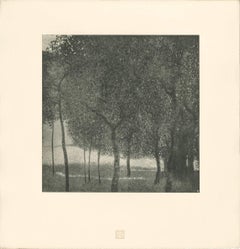
H.O. Miethke Das Werk folio "Fruit Trees" collotype print
Located in Palm Beach, FL
DAS WERK GUSTAV KLIMTS, a portfolio of 50 prints, ten of which are multicolor collotypes on chine colle paper laid down on hand-made heavy cream wove paper with deckled edges; under ...
Category
Vienna Secession Early 1900s Art
Materials
Paper
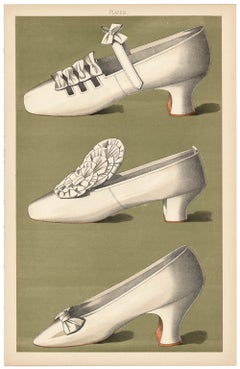
Ladies Dress Shoes. Plate IX.
Located in New York, NY
LADIES DRESS SHOES. Plate IX.
The charming color lithograph from “Ladies’ Dress Shoes of the Nineteenth Century” was assembled by the antiquarian/shoe...
Category
Naturalistic Early 1900s Art
Materials
Lithograph
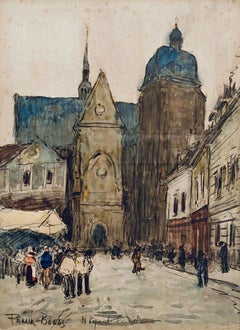
"Nogent-le-Roi" Frank Myers Boggs, Atmospheric French Urban Landscape
Located in New York, NY
Frank Myers Boggs
Nogent-le-Roi
Signed and titled lower left
Graphite and watercolor on paper
13 1/2 x 10 1/4 inches
The Impressionist Frank Myers Boggs spent his formative and mat...
Category
Impressionist Early 1900s Art
Materials
Paper, Watercolor
$960 Sale Price
20% Off
Secessionist Geometric Urn by Paul Dachsel c. 1900
By Paul Dachsel
Located in Chicago, IL
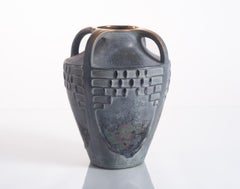
Whereas earlier Art Nouveau pottery focused on asymmetrical design to represent the wild and unpredictable aspects of nature, forward-thinking artists such as Paul Dachsel and those of the Vienna Secession also explored the geometric elements of nature. Four-handled blue and gray urn...
Category
Art Nouveau Early 1900s Art
Materials
Ceramic
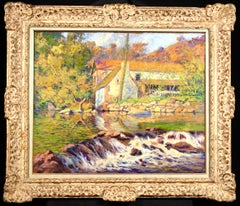
Le Moulin de la Folie a Crozant - Impressionist Landscape Oil by Paul Madeline
Located in Marlow, Buckinghamshire
Signed and dated oil on original canvas by French post impressionist painter Paul Madeline. This beautiful work depicts a mill on the bank of a river - water cascading over the rocks...
Category
Post-Impressionist Early 1900s Art
Materials
Canvas, Oil
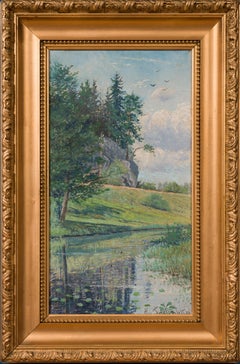
Pond Below a Cliff with Pines, 1906
Located in Stockholm, SE
The painting depicts a tranquil forest landscape rendered in a realist style. In the foreground lies a still pond stretching across the base of the composition, its dark, glassy wate...
Category
Early 1900s Art
Materials
Canvas, Oil
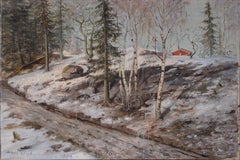
Spring Thaw Landscape Oil Painting 1901 Swedish Artist by Ankarcrona
Located in Stockholm, SE
Signature bottom left - Edvard Alexander (Alexis) Ankarcrona (1825 - 1901), was a Swedish painter and military (this is one of the last works of the artist!). This artwork perfectly ...
Category
Realist Early 1900s Art
Materials
Canvas, Wood, Cotton Canvas, Oil
Mädchen am Fenster. 1906-08.
Located in New York, NY
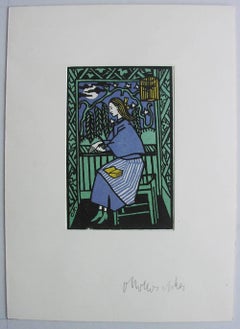
Mädchen am Fenster. 1906-08. Color lithograph printed on smooth card stock. Full margins. , signed by the artist in pencil, on the recto. Published by the Wiener Werkstätte, Vienna, with the printed postcard text on verso. Among Kokoschka's earliest prints were a series of 14 postcards, the current work and the following lot that he produced for the Wiener Werkstätte. Wingler/Welz 4.
Oskar Kokoschka was an Austrian artist, poet and playwright best known for his intense expressionistic portraits...
Category
Vienna Secession Early 1900s Art
Materials
Lithograph
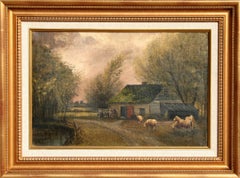
Pastoral Landscape with Sheep, Impressionist Oil Painting by John Parker Davis
Located in Long Island City, NY
Artist: John Parker Davis, American (1832 - 1910)
Title: Cow Farm Landscape
Year: 1905
Medium: Oil on Canvas, signed and dated l.l.
Size: 12 x 18 in...
Category
Post-Impressionist Early 1900s Art
Materials
Oil
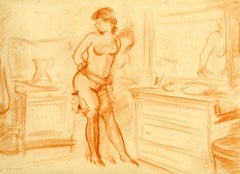
Untitled (Woman in Stockings), Standing Female Nude on reverse, double sided
Located in Fairlawn, OH
Conte crayon on paper, c. 1905-1909
Signed lower right
Archival frame by Graham Gallery, New York, hand carved frame with silk matting and gold fillet (see photo of corner)
Provenanc...
Category
Ashcan School Early 1900s Art
Materials
Chalk
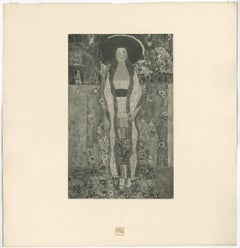
H.O. Miethke Das Werk folio "Portrait of Adele Bloch-Bauer II" collotype print
Located in Palm Beach, FL
DAS WERK GUSTAV KLIMTS, a portfolio of 50 prints, ten of which are multicolor collotypes on chine colle paper laid down on hand-made heavy cream wove paper with deckled edges; under ...
Category
Vienna Secession Early 1900s Art
Materials
Paper
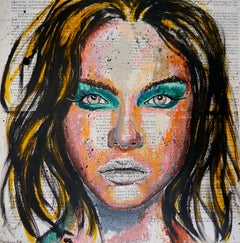
French School - Portrait PS 158 La Lionne a les yx verts Oil Impressionist AUC0
Located in Zofingen, AG
PS 158 la Lionne a les yeux verts
Structural analysis:
Letters and words are part of the face of this closeup. Thus, letters and words are the light part of the composition of the p...
Category
Tonalist Early 1900s Art
Materials
Ink, Oil, Acrylic
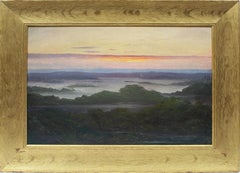
Antique Original Expansive Panoramic Blazing Sunset Stunning Hamptos LI Painting
Located in Buffalo, NY
Antique landscape oil painting with a blazing sunset. Oil on canvas-board, circa 1900. Displayed in a period giltwood frame. Image, 17.5"L x 11.5"H.
Category
Impressionist Early 1900s Art
Materials
Canvas, Oil
$1,996 Sale Price
20% Off
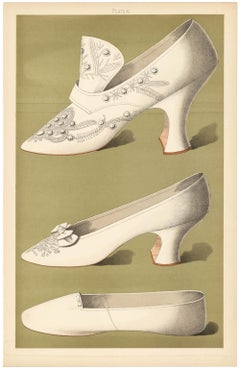
Ladies Dress Shoes. Plate XI.
Located in New York, NY
LADIES DRESS SHOES. Plate XI.
The charming color lithograph is from the collection of “Ladies’ Dress Shoes of the Nineteenth Century” was assembled by...
Category
Naturalistic Early 1900s Art
Materials
Lithograph
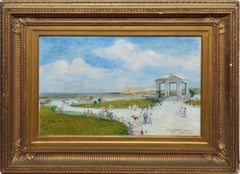
Antique Impressionist Oil Painting of Cuba Castillo De Los Tres Reyes Del Morro
Located in Buffalo, NY
Antique impressionist painting of Castillo De Los Tres Reyes Del Morro in Cuba. Oil on canvas, circa 1908. Signed. Displayed in a period giltwood frame. Image, 18"L x 12"H, overa...
Category
Impressionist Early 1900s Art
Materials
Canvas, Oil
$3,996 Sale Price
20% Off
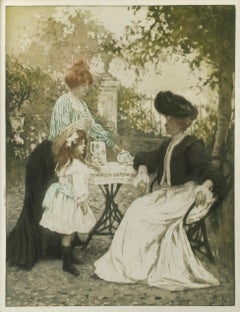
Le Tasse de The (The Cup of Tea)
By Manuel Robbe
Located in Fairlawn, OH
Le Tasse de The (The Cup of Tea)
Color aquatint and etching, c. 1906
Signed in pencil in the image (see photo)
Edition: c. 100
Reference: Merrill Chase, Volume 1, No. 85
Condition: F...
Category
Art Nouveau Early 1900s Art
Materials
Aquatint
St John
s College, Oxford watercolour by T B Miller
Located in London, GB
To see our other views of Oxford and Cambridge, scroll down to "More from this Seller" and below it click on "See all from this Seller" - or send us a message if you cannot find the ...
Category
Early 1900s Art
Materials
Watercolor