Dye Transfer Portrait Photography
to
1
Overall Width
to
Overall Height
to
1
1
16
1
1
1
1
1
1
1
1
1
284
1,824
1,790
785
764
1
1
Style: Modern
Medium: Dye Transfer
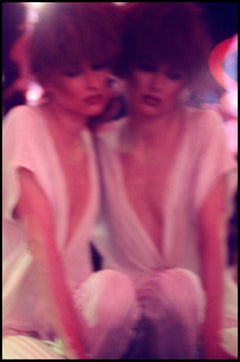
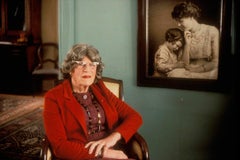
Elaine in Mirror, Club Infinity, New York, NY
By Robin Rice
Located in Hudson, NY
Each year, Robin Rice celebrates a Salon style exhibition to showcase her gallery artists and invite new ones.
With Robin’s extensive experience as a gallery curator, all Robin Rice...
Category
1970s Modern Dye Transfer Portrait Photography
Materials
Dye Transfer
Related Items
Rolling Stones [Avebury Hill]
By David Bailey
Located in London, GB
David Bailey
Rolling Stones [Avebury Hill], 1968
Archival Inkjet on paper
Signed by the artist, on verso
Image: 50.8 x 74.92 cm
Sheet: 58.4 x 82.53 cm
Edition of 10
Category
1960s Modern Dye Transfer Portrait Photography
Materials
Archival Ink, Archival Pigment
![Rolling Stones [Avebury Hill]](https://a.1stdibscdn.com/david-bailey-photography-rolling-stones-avebury-hill-for-sale/a_21542/1666358958319/rolling_stones_avebury_master.jpeg?width=240 "david bailey rolling stones")
Terisa [Tom as Carol]
Located in New York, NY
Vintage dye transfer print from the portfolio "Transformations" (Edition of 50)
Signed and numbered, verso
30 x 24 inches, mount size
22 x 15 inches, image size
This artwork is off...
Category
Late 20th Century Other Art Style Dye Transfer Portrait Photography
Materials
Dye Transfer
![Terisa [Tom as Carol]](https://a.1stdibscdn.com/mariette-pathy-allen-photography-terisa-tom-as-carol-for-sale/a_9323/a_28989911527713315977/Allen_Tom_as_Carol_1stdibs_master.jpg?width=240 "mariette pathy allen")
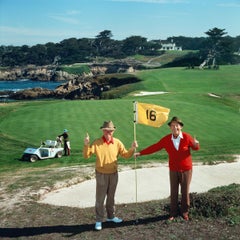
Golfing Pals
(1977) - Slim Aarons Limited Edition Estate Stamped Print
By Slim Aarons
Located in London, GB
Golfing Pals (1977) - Limited Edition Estate Stamped Print
(Photo By Slim Aarons)
At the 16th hole on Pebble Beach golf course, singer and film star Bi...
Category
1970s Modern Dye Transfer Portrait Photography
Materials
C Print, Color
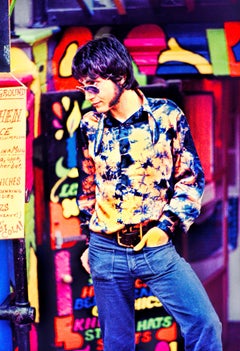
Groovy Portrait. Hippy at Psychedelic Head Shop St. Mark
s Place, East Village
Located in Miami, FL
Groovy portrait of a hippy in from of a Head Shop in St. Mark's Places, East Village. In the 1970s, color photography was still not recognized as fine art. As a street photographer, ...
Category
1970s American Modern Dye Transfer Portrait Photography
Materials
Archival Paper, Archival Pigment
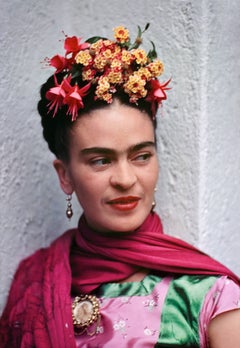
Frida in Pink and Green Blouse by Nickolas Muray, 1938, Carbon Pigment Print
Located in Denton, TX
Frida in Pink and Green Blouse by Nickolas Muray is a colorful portrait of Mexican painter Frida Kahlo. Frida wears a green and pink shirt with a magenta scarf wrapped around her nec...
Category
20th Century Modern Dye Transfer Portrait Photography
Materials
Carbon Pigment

$10,200
H 22 in W 18 in D 0.01 in
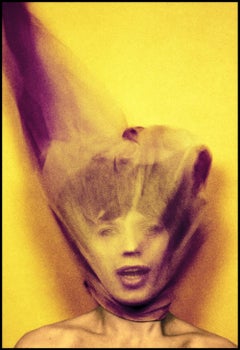
Mick Jagger Goats Head Soup Album Art Version
By David Bailey
Located in London, GB
David Bailey
Mick Jagger Goats Head Soup Album Art Version, 1973
Archival Inkjet on paper
Signed by the artist, on verso
Image: 101 x 148 cm
Sheet: 111 x 158 cm
Edition of 10 + 2 AP
Category
1970s Modern Dye Transfer Portrait Photography
Materials
Archival Ink, Archival Pigment
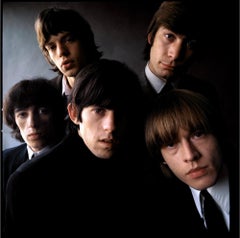
Rolling Stones Colour Out of Our Heads
By David Bailey
Located in London, GB
David Bailey
Rolling Stones Colour Out of Our Heads, 1968
Archival Inkjet on paper
Signed by the artist, on verso
Image: 50.8 x 50.8 cm
Sheet: 58...
Category
1960s Modern Dye Transfer Portrait Photography
Materials
Archival Ink, Archival Pigment
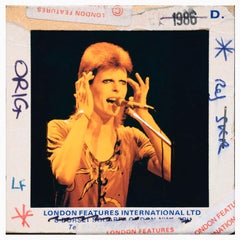
David Bowie 1970 Limited Edition
Located in London, GB
English singer, songwriter and actor David Bowie on stage, 1970s
Photo by Globe Archives
Paper size 40 x 40" / 101 x 101cm
Unframed
Archival Pigment Print
Certificate of authentici...
Category
1970s Modern Dye Transfer Portrait Photography
Materials
Archival Pigment
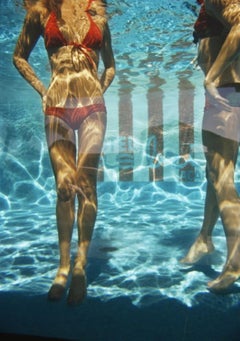
Slim Aarons Official Estate Print - Pool At Las Brisas 1972
By Slim Aarons
Located in London, GB
Pool At Las Brisas
Guests in the pool at the Las Brisas Hotel, Acapulco, Mexico, February 1972.
Paper size 30 x 20" inches / 76 x 51 cm
Estate Stamped Collection Edition to 150...
Category
1970s Modern Dye Transfer Portrait Photography
Materials
Archival Pigment
Felicity Then and Now
Located in New York, NY
Vintage dye transfer print from the portfolio "Transformations" (Edition of 50)
Signed and numbered, verso
24 x 30 inches, mount size
15 x 22 inches, image size
This artwork is off...
Category
Late 20th Century Other Art Style Dye Transfer Portrait Photography
Materials
Dye Transfer
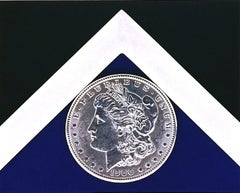
SILVER DOLLAR (COLOR)
Located in Aventura, FL
Dye-transfer print, flush-mounted. The photographer's copyright stamp, signed and dated in ink, and with title, date, and edition 'A. P. #D' in ink on the reverse. Frame size 30 x 33...
Category
1980s Photorealist Dye Transfer Portrait Photography
Materials
Dye Transfer
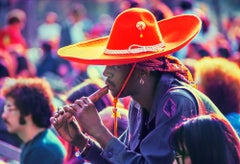
Black Hippie Red Sombrero n
Flute Central Park Music Festival 60
s Celebration
Located in Miami, FL
A black hippie enthroned in a majestic red sombrero is captured playing a flute at a Central Park music festival in 1969. This was the same year the youth "counterculture" celebrat...
Category
1960s American Modern Dye Transfer Portrait Photography
Materials
Archival Ink, Archival Paper, Archival Pigment
Previously Available Items
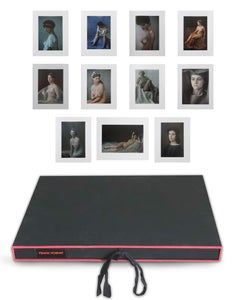
Frank Horvat Portfolio, 1980-1986, 11 Dye Transfer Prints, 1997
By Frank Horvat
Located in Miami Beach, FL
Frank Horvat Portfolio, 1980-1986
11 Dye Transfer Prints (The overall wall size composition of the entire portfolio is 70in x 80in)
Individual image size:...
Category
1990s Modern Dye Transfer Portrait Photography
Materials
C Print, Dye Transfer, Archival Pigment
Veronique P., Dye Transfer Print, 1980
By Frank Horvat
Located in Miami Beach, FL
Veronique P., 1980 by Frank Horvat
Dye Transfer Print
Unframed
Image size: 14 in. H x 9.38 in. W
Sheet size: 22.63 in. H x 19.5 in. W
Signed, titled and dated in pencil on verso.
Frank Horvat (28 April 1928 – 21 October 2020) was an Italian photographer who lived and worked in France. He is best known for his fashion photography, published between the mid 1950s and the late 1980s. Horvat’s photographic opus includes photojournalism, portraiture, landscape, nature, and sculpture. He was the recipient of the Fondazione del Centenario Award in 2010 for his contributions to European culture.
He has collaborated with fellow photographers such as Don McCullin, Robert Doisneau, Sarah Moon, Helmut Newton, and Marc Riboud. In the 1990s, he was one of the first major photographers to experiment with technology including photoshop.
Horvat was born in Abbazia, Italy (now Opatija, Croatia), on 28 April 1928, into a Jewish family from Central Europe. His father, Karl, was a Hungarian general physician, and his mother, Adele, was a psychiatrist from Vienna. At the age of 11, in 1939, his family moved to Lugano in Switzerland, fleeing fascism in Italy. He went on to study fine art at Brera Academy in Milan. Horvat lived in several countries including Switzerland, Italy, Pakistan, India, England, and America) before settling in France in 1955.
Horvat started his career in the mid 1950s as a photojournalist in Paris, working to capture the ‘sleaze and squalor’ of the city, before going on to fashion photography. He acknowledged having been strongly influenced by French humanist photographer Henri Cartier-Bresson. After meeting him in 1950, he followed his advice and replaced his Rollei with a Leica camera and embarked on a two-year journey through Asia as a free-lance photojournalist. His photographs from this trip were published by Life, Réalités, Match, Picture Post, Die Woche, and Revue. His photograph of an Indian bride under a veil, her face reflected in a mirror on her lap, was selected by Edward Steichen for The Family of Man exhibit at the Museum of Modern Art which toured the world to be seen by 9 million visitors.
In 1955, Horvat moved from London to Paris and found that the mood of its streets and its inhabitants had little in common with the somewhat romantic vision of the so-called humanist photographers. In 1957, Horvat shot fashion photographs for Jardin des Modes using a 35-mm camera and available light, which formerly had rarely been used for fashion. This innovation was welcomed by ready-to-wear designers, because it presented their creations in the context of everyday life. In the following years, Horvat was commissioned to do similar work for Elle in Paris, Vogue in London, and Harper’s Bazaar in New York.
Between 1962 and 1963, Horvat turned to photojournalism and took a trip around the world for the German magazine Revue. Then he experimented with cinema and video. In 1976, he decided to “become his own client” by producing three personal projects: Portraits of Trees (1976–82), Very Similar (1982-86) and New York Up and Down (1982–87), which he called his “triptych”.
In this period, Horvat went on towards color photography including his series New York Up and Down, where he extensively shot portraits of passengers on New York’s subway systems and coffee shops. This was also period when his eyesight started to fail from an eye disease. It was then that he began a new project, a series of interviews with fellow photographers, such as Edouard Boubat, Robert Doisneau, Mario Giacomelli, Josef Koudelka, Don McCullin, Sarah Moon, Helmut Newton, Marc Riboud, Jeanloup Sieff and Joel-Peter Witkin. They were published in France under the title Entre Vues.
In the 1990s, Horvat became interested in computer technology and produced Yao the Cat (1993), Bestiary (1994), and Ovid’s Metamorphoses (1995). He transgressed the Cartier-Bressonian rule of the “decisive moment” by combining parts of images shot at different times and in different places. Several years later, he produced A Trip to Carrara. This was also the period that he was one of the first photographers to experiment with Photoshop.
Women played a central thematic role in his fashion journalistic works, with a focus on realism. Speaking about women in his photography and his emphasis on natural looks, he said, “I was interested in women. I wanted to show what I liked about them. They would spend two hours in the makeup chair...
Category
20th Century Modern Dye Transfer Portrait Photography
Materials
Dye Transfer, Archival Pigment, Color
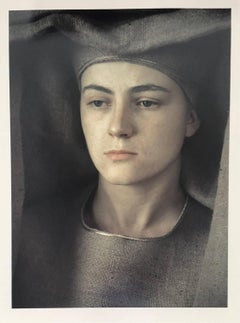
Rebecca, Dye Transfer Print, Framed, 1980
By Frank Horvat
Located in Miami Beach, FL
Rebecca, 1980 by Frank Horvat
Dye Transfer Print
Image size: 14 in. H x 9.38 in. W
Sheet size: 22.63 in. H x 19.5 in. W
Frame size: 31 in. H x 26 in. W x 1 in. D
Signed, titled and dated in pencil on verso.
___________________________________
Frank Horvat (28 April 1928 – 21 October 2020) was an Italian photographer who lived and worked in France. He is best known for his fashion photography, published between the mid 1950s and the late 1980s. Horvat’s photographic opus includes photojournalism, portraiture, landscape, nature, and sculpture. He was the recipient of the Fondazione del Centenario Award in 2010 for his contributions to European culture.
He has collaborated with fellow photographers such as Don McCullin, Robert Doisneau, Sarah Moon, Helmut Newton, and Marc Riboud. In the 1990s, he was one of the first major photographers to experiment with technology including photoshop.
Horvat was born in Abbazia, Italy (now Opatija, Croatia), on 28 April 1928, into a Jewish family from Central Europe. His father, Karl, was a Hungarian general physician, and his mother, Adele, was a psychiatrist from Vienna. At the age of 11, in 1939, his family moved to Lugano in Switzerland, fleeing fascism in Italy. He went on to study fine art at Brera Academy in Milan. Horvat lived in several countries including Switzerland, Italy, Pakistan, India, England, and America) before settling in France in 1955.
Horvat started his career in the mid 1950s as a photojournalist in Paris, working to capture the ‘sleaze and squalor’ of the city, before going on to fashion photography. He acknowledged having been strongly influenced by French humanist photographer Henri Cartier-Bresson. After meeting him in 1950, he followed his advice and replaced his Rollei with a Leica camera and embarked on a two-year journey through Asia as a free-lance photojournalist. His photographs from this trip were published by Life, Réalités, Match, Picture Post, Die Woche, and Revue. His photograph of an Indian bride under a veil, her face reflected in a mirror on her lap, was selected by Edward Steichen for The Family of Man exhibit at the Museum of Modern Art which toured the world to be seen by 9 million visitors.
In 1955, Horvat moved from London to Paris and found that the mood of its streets and its inhabitants had little in common with the somewhat romantic vision of the so-called humanist photographers. In 1957, Horvat shot fashion photographs for Jardin des Modes using a 35-mm camera and available light, which formerly had rarely been used for fashion. This innovation was welcomed by ready-to-wear designers, because it presented their creations in the context of everyday life. In the following years, Horvat was commissioned to do similar work for Elle in Paris, Vogue in London, and Harper’s Bazaar in New York.
Between 1962 and 1963, Horvat turned to photojournalism and took a trip around the world for the German magazine Revue. Then he experimented with cinema and video. In 1976, he decided to “become his own client” by producing three personal projects: Portraits of Trees (1976–82), Very Similar (1982-86) and New York Up and Down (1982–87), which he called his “triptych”.
In this period, Horvat went on towards color photography including his series New York Up and Down, where he extensively shot portraits of passengers on New York’s subway systems and coffee shops. This was also period when his eyesight started to fail from an eye disease. It was then that he began a new project, a series of interviews with fellow photographers, such as Edouard Boubat, Robert Doisneau, Mario Giacomelli, Josef Koudelka, Don McCullin, Sarah Moon, Helmut Newton, Marc Riboud, Jeanloup Sieff and Joel-Peter Witkin. They were published in France under the title Entre Vues.
In the 1990s, Horvat became interested in computer technology and produced Yao the Cat (1993), Bestiary (1994), and Ovid’s Metamorphoses (1995). He transgressed the Cartier-Bressonian rule of the “decisive moment” by combining parts of images shot at different times and in different places. Several years later, he produced A Trip to Carrara. This was also the period that he was one of the first photographers to experiment with Photoshop.
Women played a central thematic role in his fashion journalistic works, with a focus on realism. Speaking about women in his photography and his emphasis on natural looks, he said, “I was interested in women. I wanted to show what I liked about them. They would spend two hours in the makeup chair...
Category
20th Century Modern Dye Transfer Portrait Photography
Materials
Dye Transfer, Archival Pigment, Color
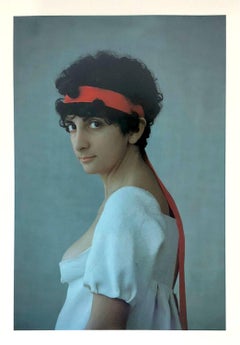
Anne, Portrait. Fashion Color Photograph. Signed, titled and dated on verso
By Frank Horvat
Located in Miami Beach, FL
Anne, 1983 by Frank Horvat
Dye Transfer Print
Unframed
Image size: 14 in. H x 9.38 in. W
Sheet size: 22.63 in. H x 19.5 in. W
Signed, titled and dated in pencil on verso.
Frank Horvat (28 April 1928 – 21 October 2020) was an Italian photographer who lived and worked in France. He is best known for his fashion photography, published between the mid 1950s and the late 1980s. Horvat’s photographic opus includes photojournalism, portraiture, landscape, nature, and sculpture. He was the recipient of the Fondazione del Centenario Award in 2010 for his contributions to European culture.
He has collaborated with fellow photographers such as Don McCullin, Robert Doisneau, Sarah Moon, Helmut Newton, and Marc Riboud. In the 1990s, he was one of the first major photographers to experiment with technology including photoshop.
Horvat was born in Abbazia, Italy (now Opatija, Croatia), on 28 April 1928, into a Jewish family from Central Europe. His father, Karl, was a Hungarian general physician, and his mother, Adele, was a psychiatrist from Vienna. At the age of 11, in 1939, his family moved to Lugano in Switzerland, fleeing fascism in Italy. He went on to study fine art at Brera Academy in Milan. Horvat lived in several countries including Switzerland, Italy, Pakistan, India, England, and America) before settling in France in 1955.
Horvat started his career in the mid 1950s as a photojournalist in Paris, working to capture the ‘sleaze and squalor’ of the city, before going on to fashion photography. He acknowledged having been strongly influenced by French humanist photographer Henri Cartier-Bresson. After meeting him in 1950, he followed his advice and replaced his Rollei with a Leica camera and embarked on a two-year journey through Asia as a free-lance photojournalist. His photographs from this trip were published by Life, Réalités, Match, Picture Post, Die Woche, and Revue. His photograph of an Indian bride under a veil, her face reflected in a mirror on her lap, was selected by Edward Steichen for The Family of Man exhibit at the Museum of Modern Art which toured the world to be seen by 9 million visitors.
In 1955, Horvat moved from London to Paris and found that the mood of its streets and its inhabitants had little in common with the somewhat romantic vision of the so-called humanist photographers. In 1957, Horvat shot fashion photographs for Jardin des Modes using a 35-mm camera and available light, which formerly had rarely been used for fashion. This innovation was welcomed by ready-to-wear designers, because it presented their creations in the context of everyday life. In the following years, Horvat was commissioned to do similar work for Elle in Paris, Vogue in London, and Harper’s Bazaar in New York.
Between 1962 and 1963, Horvat turned to photojournalism and took a trip around the world for the German magazine Revue. Then he experimented with cinema and video. In 1976, he decided to “become his own client” by producing three personal projects: Portraits of Trees (1976–82), Very Similar (1982-86) and New York Up and Down (1982–87), which he called his “triptych”.
In this period, Horvat went on towards color photography including his series New York Up and Down, where he extensively shot portraits of passengers on New York’s subway systems and coffee shops. This was also period when his eyesight started to fail from an eye disease. It was then that he began a new project, a series of interviews with fellow photographers, such as Edouard Boubat, Robert Doisneau, Mario Giacomelli, Josef Koudelka, Don McCullin, Sarah Moon, Helmut Newton, Marc Riboud, Jeanloup Sieff and Joel-Peter Witkin. They were published in France under the title Entre Vues.
In the 1990s, Horvat became interested in computer technology and produced Yao the Cat (1993), Bestiary (1994), and Ovid’s Metamorphoses (1995). He transgressed the Cartier-Bressonian rule of the “decisive moment” by combining parts of images shot at different times and in different places. Several years later, he produced A Trip to Carrara. This was also the period that he was one of the first photographers to experiment with Photoshop.
Women played a central thematic role in his fashion journalistic works, with a focus on realism. Speaking about women in his photography and his emphasis on natural looks, he said, “I was interested in women. I wanted to show what I liked about them. They would spend two hours in the makeup chair...
Category
20th Century Modern Dye Transfer Portrait Photography
Materials
Dye Transfer, Archival Pigment, Color

Claude, Dye Transfer Print, 1984
By Frank Horvat
Located in Miami Beach, FL
Claude, 1984 by Frank Horvat
Dye Transfer Print
Unframed
Image size: 14 in. H x 9.38 in. W
Sheet size: 22.63 in. H x 19.5 in. W
Signed, titled and dated i...
Category
20th Century Modern Dye Transfer Portrait Photography
Materials
Dye Transfer, Color, Archival Pigment
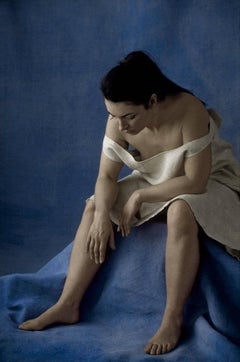
Dye Transfer portrait photography for sale on 1stDibs.
Find a wide variety of authentic Dye Transfer portrait photography available on 1stDibs. While artists have worked in this medium across a range of time periods, art made with this material during the 21st Century is especially popular. If you’re looking to add portrait photography created with this material to introduce a provocative pop of color and texture to an otherwise neutral space in your home, the works available on 1stDibs include elements of pink, red, blue, purple and other colors. There are many well-known artists whose body of work includes ceramic sculptures. Popular artists on 1stDibs associated with pieces like this include Robin Rice, Mariette Pathy Allen, Neil Leifer, and Rollin Leonard. Frequently made by artists working in the Contemporary, Modern, all of these pieces for sale are unique and many will draw the attention of guests in your home. Not every interior allows for large Dye Transfer portrait photography, so small editions measuring 0.63 inches across are also available
Still Thinking About These?
All Recently ViewedMore Ways To Browse
Viggo Pedersen
Vintage Barber Posters
Vintage Beverage Poster
Vintage Colombia Poster
Vintage Denver Poster
Vintage Italian Food Prints
Vintage Ocean Liner Posters
Vintage Poster Istanbul
Vintage Typographic Poster
Virginia Shackles
W Bailey
Wagons Pioneers Used
Walter Griffin
Whippet Oil Painting
Whippet Painting
Willem De Zwart
William Dorsey
William Matthews