Outdoors Portrait Photography

to
13
321
168
86
100
112
Overall Width
to
Overall Height
to
6
496
286
1
3
13
6
38
179
66
47
61
323
192
4
4
1
1
1
1
393
228
166
11,768
5,985
5,984
5,508
4,338
4,311
2,853
1,283
1,282
1,274
1,141
784
773
757
602
583
575
561
560
296
269
245
216
201
271
131
15
12
12
30
409
571
203
Art Subject: Outdoors
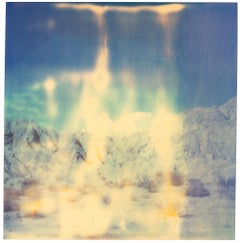
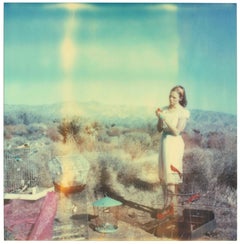
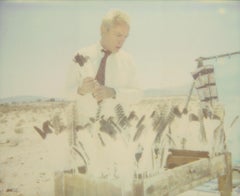
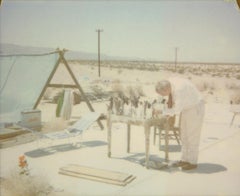
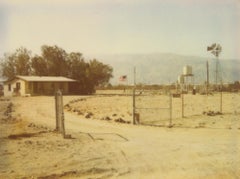
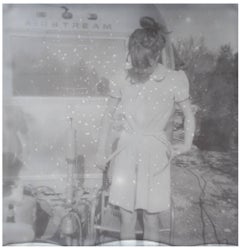
Skylark open trunk (Stranger than Paradise), analog, vintage
Located in Morongo Valley, CA
Skylark open trunk (Stranger than Paradise) - 1997 Edition of 10, 60x80cm, Analog C-Print, printed by the artist, based on a Polaroid. Signature label and Certificate. Not mount...
Category

1990s Contemporary Color Photography

Materials

Archival Paper, Photographic Paper, C Print, Color, Polaroid

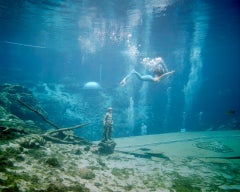
The Mermaid, Weeki Wachi Springs - Florida Lifestyle Landscape Interior Design
Located in Brighton, GB
"The Mermaid. Weeki Wachi Springs. 2017" is a Dye Sublimation Print on Aluminium. This print is available from an Edition of 10 + 2 Artist Proofs in this size. Brown completed Si...
Category

21st Century and Contemporary Contemporary Portrait Photography

Materials

Dye, Color, Photographic Paper, Dye Transfer

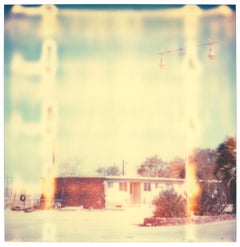
The Lonely Hearts DJ (The Girl...) - including the book A Half Forgotten Dream
Located in Morongo Valley, CA
The Lonely Hearts DJ (The Girl Behind the White Picket Fence) - 2014 including Stefanie Schneider's new monograph "A Half Forgotten Dream" signed. 192 pages, hardcover, published by...
Category

Early 2000s Contemporary Color Photography

Materials

Archival Paper, Photographic Paper, C Print, Color, Polaroid

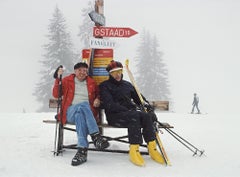
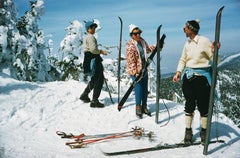
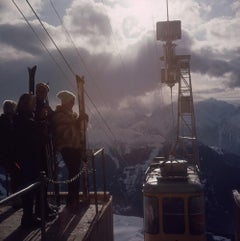
Skiing Holiday - William F Buckley and John Kennedy Galbraith Portrait in Gstaad
Located in Brighton, GB
Skiing Holiday - William F Buckley and John Kennedy Galbraith Portrait in Gstaad by Slim Aarons 16" x 20" print. Limited Edition Estate Stamped Print. Edition of 150. Printed Later....
Category

20th Century Modern Portrait Photography

Materials

C Print, Digital, Photographic Paper, Color

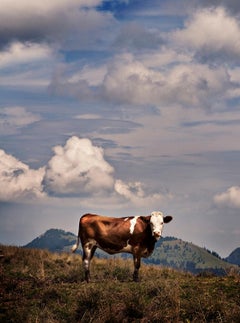
The Cow, Photography, Limited Edition, Animal, Mountain, Portrait
Located in München, BY
The Cow Edition of 25 signed and numbered by the artist A cow on the top of the hills in the German Alps. Every year the cows are taken to the pastures o...
Category

Early 2000s Contemporary Color Photography

Materials

Archival Pigment

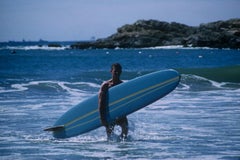
Rhode Island Surfer, 1965 - Surfer Carrying Surfboard Emerging from Ocean Waves
Located in Brighton, GB
Rhode Island Surfer, 1965 - Surfer Carrying Surfboard Emerging from Ocean Waves by Slim Aarons 16" x 20" print. Limited Edition Estate Stamped Print. Edition of 150. Printed Later. ...
Category

20th Century American Modern Nude Photography

Materials

C Print, Photographic Paper, Color, Digital

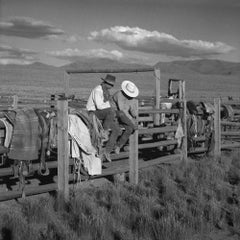
Jaybirds
Located in Sante Fe, NM
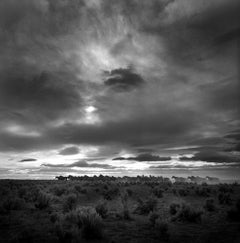
For years, Jahiel has been photographing the cowboys of the Great Basin–perhaps one of the most inhospitable regions of the already rugged West. These people represent one of the l...
Category

21st Century and Contemporary Contemporary Black and White Photography

Materials

Silver Gelatin

The Party Is Over (Oxana’s 30th..) - including the book A Half Forgotten Dream
Located in Morongo Valley, CA
The Party Is Over (Oxana’s 30th Birthday) - 2007 Including Stefanie Schneider's new monograph "A Half Forgotten Dream" signed. 192 pages, hardcover, published by Snap Collective, 20...
Category

Early 2000s Contemporary Color Photography

Materials

Archival Paper, Photographic Paper, C Print, Color, Polaroid

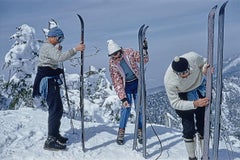
Skiers on the Slopes of Sugarbush - Skiers on Mountain Range in Vermont
Located in Brighton, GB
Skiers on the Slopes of Sugarbush - Skiers on Mountain Range in Vermont by Slim Aarons 16 x 20" print. Limited Edition Estate Stamped Print. Edi...
Category

20th Century American Modern Portrait Photography

Materials

Photographic Paper, Color, Digital

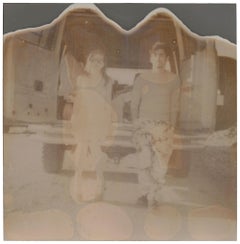
Memory Gaps (The Girl behind the White Picket Fence) - Polaroid, Portrait
Located in Morongo Valley, CA
Memory Gaps (The Girl Behind the White Picket Fence) - 2013 20x24cm, Edition of 10, plus 2 Artist Proofs. Archival C-Print, based on the original Polaroid. Signature label and certificate. Artist Inventory #13359. Not mounted. Offered is a piece from the movie: The Girl Behind the White Picket Fence. Written and directed by Stefanie Schneider A tale told with blemished and expired Polaroid film about the hopes and dreams of a newly orphaned girl after losing her parents who lived in the Californian desert in an old travel trailer. -filmed with Polaroid film stock and Super-8 footage, overlaid with poetic voice-over monologue - this feature film creates a dynamic kaleidoscope of words and pictures, a dreamy tale that channels Terrence Malick, Gus Van Sant, and pages torn from a lonely girl's journal. (Palms Springs life magazine / Caroline Ryder) Stefanie Schneider By Caroline Ryder Travel up a bumpy dirt road in Morongo Valley, the trail strewn with rocks, and you’ll come upon a gigantic 1950s trailer in pristine condition, ringed by a white picket fence, with cottontail rabbits hopping among neat little rose bushes that bloom in spite of the broiling desert heat. Inside the trailer are period accents—a vintage radio, vintage fridge, little crocheted doilies, and dusty gilt-framed photographs. It’s a surreal home-sweet-home, an Americana fantasy as imagined by German artist and experimental filmmaker Stefanie Schneider whose work is so inspired by the desert landscape, she made it her home in 2005. “There’s a completely different light here than in Germany, a beautiful light,” says Schneider, whose property in Morongo is dotted with vintage trailers. They surround her midcentury home and serve as sets for her photoshoots or as guest lodgings for her friends from Hollywood and Berlin. “But what I really love about the desert is the desolation,” she continues. “The sense of hope for something that might or might not come. It’s easy to see our dreams projected in the desert.” Famed for shooting trailer park chic fine art photographs exclusively on vintage Polaroid film, Schneider recently completed her most ambitious project to date—a feature film made entirely of Polaroid stills (4000 images in total), the story set around her magnificent 1950s trailer. The film, called “The Girl Behind The White Picket Fence” tells the story of a broken-hearted girl who lives in the trailer. Her name is Heather, and she is played by model Heather Megan Christie, girlfriend of actor Joaquin Phoenix, and former partner of Red Hot Chili Peppers singer Anthony Kiedis, with whom she has a son. Heather stars opposite Kyle Larson (who plays ‘Hank’), a real-life gypsy fisherman who catches crab in Alaska when he’s not surfing in Southern California. Neither of the two had ever acted before, and never in the history of movie-making has a director shot a film entirely on Polaroid film. “There was great difficulty shooting a film this way,” says Schneider, who, with her long straight hair, wide innocent eyes, and thick-framed glasses, conjures an art-house Gretel. “If I had used a regular camera I would have had 36 exposures per minute, much faster and easier than using the old Polaroid camera which takes a long time to shoot one frame. Also, sometimes it doesn’t shoot at the exact moment you think it’s going to—but that’s really great because then you miss the perfect moment…and often those are the best shots.” Individually, the Polaroid photographs that comprise 29 PALMS, CA stand alone, but together and in sequence, filmed with super 8 and 16mm film stock and overlaid with poetic voice-over monologues, they create a dynamic kaleidoscope of words and pictures, a dreamy tale that channels Terrence Malick. Gus Van Sant, and pages torn from a lonely girl’s journal. The idea to shoot a movie in this way came about in 2004 when Schneider was working with leading German director Mark Forster (Monster’s Ball, Finding Neverland, Quantum of Solace) on his film Stay. She had met Forster at director Wim Wender’s birthday party in Hollywood. A few years later, Forster asked Schneider to shoot Polaroids of scenes from Stay as he filmed; he used those photographs for dream and memory sequences in the movie. For the first time, Schneider saw her Polaroids strung together in sequence, moving with rhythm like a flipbook, in the context of a story. When Forster urged her to consider making a feature film using that technique, the seed of 29 PALMS, CA was sown. She mentioned the idea to her good friend German actor Udo Kier, who also gave the idea a big thumbs up, and agreed to play the part of a mysterious shaman in the film. Thanks to her strong reputation in the art world and her Hollywood connections, getting talented people on board was the easy part (for a while, Charlotte Gainsbourg was pegged to play the starring role, although she pulled out two weeks before shooting commenced because she was pregnant and not fit to travel to the desert.) The hard part was finding the perfect trailer—and bringing it to the desert. “This trailer almost killed us,” says Schneider’s partner Lance Waterman, who lives and works with Schneider in Morongo Valley. After finding it on eBay, the couple drove to Utah to pick it up, the plan being to tow it all the way back to the high desert themselves. Bad idea. “We were driving down a hill with this enormous trailer behind us when we realized that if we wanted to stop, there would be no way to do so without the trailer crushing us,” says Waterman. Adds Schneider: “Lance was even giving me instructions on how to jump out of the truck if we needed to.” Thankfully the road leveled and as soon as they were able to slow down and pull over, they called a professional towing company, which transported the trailer the remaining distance to Morongo Valley. Filming took place in Spring 2011 and 2012. Schneider recently submitted the film to major film festivals in Europe and the US, and it will be broadcast in 2013 by leading German television channel, Arte. While Schneider may come from a long tradition of photographers-turned-filmmakers—Stanley Kubrick started out as a photographer, as did Ken Russell (Tommy, Women in Love) and Larry Clark, who was a controversial fine art photographer before directing smash hit Kids—she does not see her future in Hollywood, directing blockbusters. Not necessarily. “I don’t think I want to make more films,” she says. “The actors were saying they would love to work with me again, and were asking if I would like to make other movies. But being on movie sets is far too stressful, and at least with this, I was in complete power of what was going on creatively. That said, if this gets a lot of acclaims…we can always think again. One should never say never.” Film features original soundtrack with songs by Adam Weiss, Daisy McCrackin, Billy Harvey, Sophie Huber, Zoe Bicat, Max Sharam, Cheyenne Randall...
Category

2010s Contemporary Color Photography

Materials

Archival Paper, Photographic Paper, C Print, Color, Polaroid

Side Effects (The Girl behind the White Picket Fence) - Polaroid, Portrait
Located in Morongo Valley, CA
Side Effects (The Girl Behind the White Picket Fence) - 2013 20x24cm, Edition of 10, plus 2 Artist Proofs. Archival C-Print, based on the original Polaroid. Signature label and certificate. Artist Inventory #13303. Not mounted. Offered is a piece from the movie: The Girl Behind the White Picket Fence. Written and directed by Stefanie Schneider A tale told with blemished and expired Polaroid film about the hopes and dreams of a newly orphaned girl after losing her parents who lived in the Californian desert in an old travel trailer. -filmed with Polaroid film stock and Super-8 footage, overlaid with poetic voice-over monologue - this feature film creates a dynamic kaleidoscope of words and pictures, a dreamy tale that channels Terrence Malick, Gus Van Sant, and pages torn from a lonely girl's journal. (Palms Springs life magazine / Caroline Ryder) Stefanie Schneider By Caroline Ryder Inside the trailer are period accents—a vintage radio, vintage fridge, little crocheted doilies, and dusty gilt-framed photographs. It’s a surreal home-sweet-home, an Americana fantasy as imagined by German artist and experimental filmmaker Stefanie Schneider whose work is so inspired by the desert landscape, she made it her home in 2005. “There’s a completely different light here than in Germany, a beautiful light,” says Schneider, whose property in Morongo is dotted with vintage trailers. They surround her midcentury home and serve as sets for her photoshoots or as guest lodgings for her friends from Hollywood and Berlin. “But what I really love about the desert is the desolation,” she continues. “The sense of hope for something that might or might not come. It’s easy to see our dreams projected in the desert.” Famed for shooting trailer park chic fine art photographs exclusively on vintage Polaroid film, Schneider recently completed her most ambitious project to date—a feature film made entirely of Polaroid stills (4000 images in total), the story set around her magnificent 1950s trailer. The film, called “The Girl Behind The White Picket Fence” tells the story of a broken-hearted girl who lives in the trailer. Her name is Heather, and she is played by model Heather Megan Christie, girlfriend of actor Joaquin Phoenix, and former partner of Red Hot Chili Peppers singer Anthony Kiedis, with whom she has a son. Heather stars opposite Kyle Larson (who plays ‘Hank’), a real-life gypsy fisherman who catches crab in Alaska when he’s not surfing in Southern California. Neither of the two had ever acted before, and never in the history of movie-making has a director shot a film entirely on Polaroid film. “There was great difficulty shooting a film this way,” says Schneider, who, with her long straight hair, wide innocent eyes, and thick-framed glasses, conjures an art-house Gretel. “If I had used a regular camera I would have had 36 exposures per minute, much faster and easier than using the old Polaroid camera which takes a long time to shoot one frame. Also, sometimes it doesn’t shoot at the exact moment you think it’s going to—but that’s really great because then you miss the perfect moment…and often those are the best shots.” Individually, the Polaroid photographs that comprise 29 PALMS, CA stand alone, but together and in sequence, filmed with super 8 and 16mm film stock and overlaid with poetic voice-over monologues, they create a dynamic kaleidoscope of words and pictures, a dreamy tale that channels Terrence Malick. Gus Van Sant, and pages torn from a lonely girl’s journal. The idea to shoot a movie in this way came about in 2004 when Schneider was working with leading German director Mark Forster (Monster’s Ball, Finding Neverland, Quantum of Solace) on his film Stay. She had met Forster at director Wim Wender’s birthday party in Hollywood. A few years later, Forster asked Schneider to shoot Polaroids of scenes from Stay as he filmed; he used those photographs for dream and memory sequences in the movie. For the first time, Schneider saw her Polaroids strung together in sequence, moving with rhythm like a flipbook, in the context of a story. When Forster urged her to consider making a feature film using that technique, the seed of 29 PALMS, CA was sown. She mentioned the idea to her good friend German actor Udo Kier, who also gave the idea a big thumbs up, and agreed to play the part of a mysterious shaman in the film. Thanks to her strong reputation in the art world and her Hollywood connections, getting talented people on board was the easy part (for a while, Charlotte Gainsbourg was pegged to play the starring role, although she pulled out two weeks before shooting commenced because she was pregnant and not fit to travel to the desert.) The hard part was finding the perfect trailer—and bringing it to the desert. “This trailer almost killed us,” says Schneider’s partner Lance Waterman, who lives and works with Schneider in Morongo Valley. After finding it on eBay, the couple drove to Utah to pick it up, the plan being to tow it all the way back to the high desert themselves. Bad idea. “We were driving down a hill with this enormous trailer behind us when we realized that if we wanted to stop, there would be no way to do so without the trailer crushing us,” says Waterman. Adds Schneider: “Lance was even giving me instructions on how to jump out of the truck if we needed to.” Thankfully the road leveled and as soon as they were able to slow down and pull over, they called a professional towing company, which transported the trailer the remaining distance to Morongo Valley. Filming took place in Spring 2011 and 2012. Schneider recently submitted the film to major film festivals in Europe and the US, and it will be broadcast in 2013 by leading German television channel, Arte. While Schneider may come from a long tradition of photographers-turned-filmmakers—Stanley Kubrick started out as a photographer, as did Ken Russell (Tommy, Women in Love) and Larry Clark, who was a controversial fine art photographer before directing smash hit Kids—she does not see her future in Hollywood, directing blockbusters. Not necessarily. “I don’t think I want to make more films,” she says. “The actors were saying they would love to work with me again, and were asking if I would like to make other movies. But being on movie sets is far too stressful, and at least with this, I was in complete power of what was going on creatively. That said, if this gets a lot of acclaims…we can always think again. One should never say never.” Film features original soundtrack with songs by Adam Weiss, Daisy McCrackin, Billy Harvey, Sophie Huber, Zoe Bicat, Max Sharam, Cheyenne Randall...
Category

2010s Contemporary Color Photography

Materials

Archival Paper, Photographic Paper, C Print, Color, Polaroid

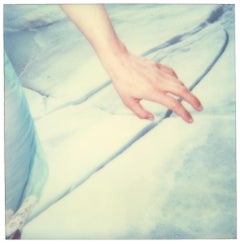
Snow Silence (Stranger than Paradise)
Located in Morongo Valley, CA
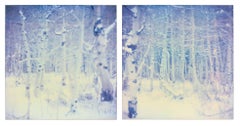
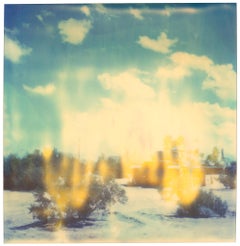
Snow Silence (Stranger than Paradise) - 2005 20x20cm, (each) Edition of 10, plus 2 Artist Proofs. Archival C-Print, based on the Polaroid. Signature label and Certificate. Artis...
Category

Early 2000s Contemporary Color Photography

Materials

Archival Paper, Photographic Paper, C Print, Color, Polaroid

A Vision you can t Capture - including the book A Half Forgotten Dream
Located in Morongo Valley, CA
A Vision you can't Capture (29 Palms, CA) - 2008 including Stefanie Schneider's new monograph "A Half Forgotten Dream" signed. 196 pages, hardcover, published by Snap Collective, 20...
Category

Early 2000s Contemporary Color Photography

Materials

Archival Paper, Photographic Paper, C Print, Color, Polaroid

Joshua Tree National Park (29 Palms, CA)
Located in Morongo Valley, CA
Joshua Tree National Park (29 Palms, CA) - 1999 50x49cm, Edition of 10 plus 2 Artist Proofs. Archival C-Print, based on the original Polaroid. Certificate and Signature label....
Category

1990s Outsider Art Portrait Photography

Materials

Archival Paper, Photographic Paper, C Print, Color, Polaroid

Skiing Starters Slim Aarons Limited Edition Estate Stamped Print
Located in London, GB
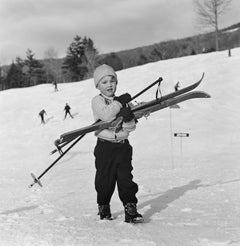
New England Skiing - 'Skiing Starters' (1955) - Limited Edition Estate Stamped - Silver Gelatin Fibre Print (Photo By Slim Aarons/Getty Images Archive) A young skier prefers to ca...
Category

1950s Modern Portrait Photography

Materials

Black and White, Silver Gelatin

Party in Marbella, 1967 - Andalusia Garden Landscape Photograph
Located in Brighton, GB
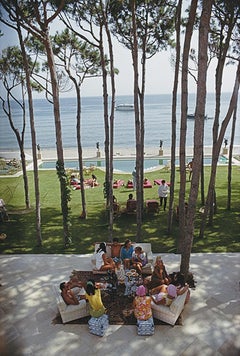
Party in Marbella, 1967 - Andalusia Garden Landscape Photograph by Slim Aarons 16" x 20" print. Limited Edition Estate Stamped Print. Edition of 150. Printed Later. 'Party in Marbe...
Category

20th Century Modern Nude Photography

Materials

C Print, Photographic Paper, Color, Digital

Skiing Starters Slim Aarons Limited Edition Estate Stamped Print
Located in London, GB
New England Skiing - 'Skiing Starters' (1955) - Limited Edition Estate Stamped - Silver Gelatin Fibre Print (Photo By Slim Aarons/Getty Images Archive) A young skier prefers to ca...
Category

1950s Modern Portrait Photography

Materials

Black and White, Silver Gelatin

Frozen XII (Stranger than Paradise)
Located in Morongo Valley, CA
Frozen XII (Stranger than Paradise) - 2001 50x49cm, Edition of 10 plus 2 Artist Proofs. Archival C-Print, based on the Polaroid. Certificate and Signature label. Artist Invent...
Category

Early 2000s Contemporary Portrait Photography

Materials

Archival Paper, Photographic Paper, C Print, Color, Polaroid

Battlefield (29 Palms, CA)
Located in Morongo Valley, CA
Battlefield (29 Palms, CA) - 1999 44x59cm, Edition of 10 plus 2 Artist Proofs. Archival C-Print, based on the original Polaroid. Certificate and Signature label. Artist Invent...
Category

1990s Outsider Art Portrait Photography

Materials

Archival Paper, Photographic Paper, C Print, Color, Polaroid

Time Out (Haley and the Birds)
Located in Morongo Valley, CA
Time Out (Haley and the Birds) - 2013 40x39cm, Edition of 10, plus 2 Artist Proofs. Archival C-Print, based on the Polaroid. Certificate and Signature label. Artist Inventory #1...
Category

Early 2000s Contemporary Portrait Photography

Materials

Archival Paper, Photographic Paper, C Print, Color, Polaroid

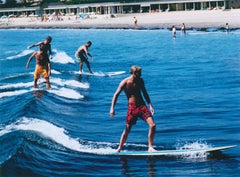
Surfing Brothers - All-American Watersports Surfing Brothers Surf Blue Waves
Located in Brighton, GB
Surfing Brothers - All-American Watersports Surfing Brothers Surf Blue Waves by Slim Aarons 16" x 20" print. Limited Edition Estate Stamped Print. Edition of 150. Printed Later. '...
Category

20th Century Modern Nude Photography

Materials

C Print, Photographic Paper, Color, Digital

Remuda #7, IL Ranch, NV
Located in Sante Fe, NM
For years, Jahiel has been photographing the cowboys of the Great Basin–perhaps one of the most inhospitable regions of the already rugged West. These people represent one of the l...
Category

21st Century and Contemporary Contemporary Black and White Photography

Materials

Silver Gelatin

The Lioness, Lion, black and white photography, Africa, Portrait, Wildlife
Located in München, BY
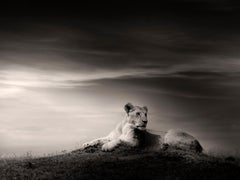
Edition of 7 More sizes on request Portrait of a female Lion in Kenya. Joachim Schmeisser is represented by leading Galleries worldwide. His photographs are among the most sought-a...
Category

2010s Contemporary Black and White Photography

Materials

Archival Pigment

Hidden (The Last Picture Show)
Located in Morongo Valley, CA
Hidden (The last Picture Show) - 1999 50x49cm, Edition of 10 plus 2 Artist Proofs. Archival C-Print, based on the original Polaroid. Certificate and Signature label. Artist In...
Category

1990s Outsider Art Portrait Photography

Materials

Archival Paper, Photographic Paper, C Print, Color, Polaroid

Last Season I (Wastelands) - Polaroid
Located in Morongo Valley, CA
Last Season I - so I walked away from my Valley (Wastelands), diptych - 2003 20x20cm, Edition of 10, plus 2 Artist Proofs. Archival C-Print, based on the original Polaroid. Artist...
Category

Early 2000s Contemporary Portrait Photography

Materials

Archival Paper, Photographic Paper, C Print, Color, Polaroid

Blue Mountains (Wastelands) - Polaroid
Located in Morongo Valley, CA
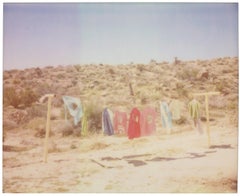
Blue Mountains (Wastelands) - 2003 20x20cm, Edition of 10, plus 2 Artist Proofs. Archival C-Print, based on the original Polaroid. Artist inventory Number 1160. Signature label and Certificate. Not mounted. For sale is a piece from the Wastelands series. Published in: WASTELANDS, published by edition braus, Wachter Verlag, Heidelberg, 2006 (monograph) Exhibited: Wastelands, Städtische Galerie, Waldkraiburg, Germany (S) (2006) / Wastelands, Zephyr, Mannheim, Germany (S) (catalog) (2006) Wastelands, Kunstverein Recklinghausen, Germany (S) (2007), Stranger Than Paradise, Scott White Contemporary, San Diego, (S) (2012) Reality with the Tequila: Stefanie Schneider’s Fertile Wasteland by James Scarborough “How much more than enough for you for I for both of us darling?” (E. E. Cummings) Until he met her, his destiny was his own. Petty and inconsequential but still his own. He was cocksure and free, young and unaccountable, with dark hair and aquiline features. His expression was always pensive, a little troubled, but not of a maniacal sort. He was more bored than anything else. With a heart capable of violence. Until she met him, she was pretty but unappreciated. Her soul had registered no seismic activity. Dust bowl weary, she’d yet to see better days. A languorous body, a sweet face with eyes that could be kind if so inclined. Until she met him, she had not been inclined. It began when he met her. She was struck in an instant by his ennui. The sum of their meeting was greater than the imbroglios and chicaneries of their respective existences. He was struck by the blank slate look in her eyes. They walked, detached and focused on the immediate, obscenely unaware of pending change across a terrain of mountainous desert, their eyes downcast and world-weary, unable to account for the buoyant feeling in her heart. His hard-guy shtick went from potentiality to ruse. The gun was not a weapon but a prop, a way to pass time. Neither saw the dark clouds massing on the horizon. They found themselves alone in the expanses of time, unaware of the calamity that percolated even as they posed like school kids...
Category

Early 2000s Contemporary Portrait Photography

Materials

Archival Paper, Photographic Paper, C Print, Color, Polaroid

Ether, (Stage of Consciousness) - Radha Mitchell
Located in Morongo Valley, CA
Ether, (Stage of Consciousness) - 2007 20x24cm, Edition of 10 plus 2 Artist Proofs. Archival C-Print, based on the Polaroid. Certificate and signature label. Artist Inventory # ...
Category

Early 2000s Contemporary Portrait Photography

Materials

Archival Paper, Photographic Paper, C Print, Color, Polaroid

Star Ship (Zuma Beach)
Located in Morongo Valley, CA
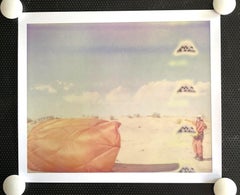
Star Ship (Zuma Beach) - 1999 20x24cm, Edition of 10 plus 2 Artists Proofs. Archival C-Print, based on the Polaroid. Signature Label and Certificate. Artist Inventory # 926. Not mo...
Category

1990s Contemporary Portrait Photography

Materials

Archival Paper, Photographic Paper, C Print, Color, Polaroid

Palm Trees Dive by (Stranger than Paradise) - analog
Located in Morongo Valley, CA
Palm Trees Dive by (Stranger than Paradise) - 1999 44x59cm, Edition 2/10. Analog C-Print, hand-printed by the artist, based on the Polaroid. Certificate and Signature label. A...
Category

1990s Outsider Art Portrait Photography

Materials

Archival Paper, Photographic Paper, C Print, Color, Polaroid

Julia II - Contemporary, Photograph, Portrait, Color
Located in Morongo Valley, CA
Julia (2011)
 from the series 'I am not promising a wonderful World' 50 x 75 cm, Edition of 2/5 plus 2 Artist Proofs. Digital Photography printed on Canson Barita 310gr (not mounted)...
Category

2010s Contemporary Portrait Photography

Materials

Archival Ink, Archival Paper, Color, Archival Pigment

Play among the Stars (Till Death Do Us Part) - Contemporary, Polaroid, Women
Located in Morongo Valley, CA
Play among the Stars (Till Death Do Us Part) - 2005 20x20cm, Edition of 10, plus 2 Artist Proofs. Archival C-Print, based on the original Polaroid. Certificate and Signature labe...
Category

Early 2000s Contemporary Black and White Photography

Materials

Archival Paper, Photographic Paper, C Print, Color, Polaroid

Vacancy (Instantdreams) - 21st Century, Polaroid, Color
Located in Morongo Valley, CA
Vacancy (Instantdreams) - 1998 Edition of 5, 58x57cm. Analog C-Print, hand-printed by the artist on Archive Fuji Chrystal Paper, based on the Polaroid. Artist inventory number: 1...
Category

Early 2000s Contemporary Color Photography

Materials

Archival Paper, Photographic Paper, C Print, Color, Polaroid

Just Landed (Long Way Home) - featuring Radha Mitchell, analog
Located in Morongo Valley, CA
Just Landed (Long Way Home) - 1999 featuring Radha Mitchell 57x56cm, Edition of 10, plus 2 Artist Proofs. Analog C-Print, hand-printed by the artist, based on the original Polaroid. Certificate and Signature label. Artist Inventory #260. Not mounted. Stefanie Schneider received her MFA in Communication Design at the Folkwang Schule Essen, Germany. Her work has been shown at the Museum for Photography, Braunschweig, Museum für Kommunikation, Berlin, the Institut für Neue Medien, Frankfurt, the Nassauischer Kunstverein, Wiesbaden, Kunstverein Bielefeld, Museum für Moderne Kunst Passau, Les Rencontres...
Category

1990s Pop Art Portrait Photography

Materials

Archival Paper, Photographic Paper, C Print, Color, Polaroid

Sugarbush Skiing, 1960 - Skiers on Snowy Sugarbush Mountain in Vermont Winter
Located in Brighton, GB
Sugarbush Skiing, 1960 - Skiers on Snowy Sugarbush Mountain in Vermont Winter by Slim Aarons 16 x 20" print. Limited Edition Estate Stamped Print. Edition of 150. Printed Later. 'S...
Category

20th Century American Modern Portrait Photography

Materials

Photographic Paper, C Print, Color, Digital

Charter Ketch, 1964 - Sailboat in Turquoise Waters off Island in Bahamas
Located in Brighton, GB
Charter Ketch, 1964 - Sailboat in Turquoise Waters off Island in Bahamas by Slim Aarons 16" x 16" print on 16" x 20" paper. Limited Edition Estate Stamped Print. Edition of 150. Pr...
Category

20th Century Modern Nude Photography

Materials

C Print, Photographic Paper, Color, Digital

Sanctuary (Haley and the Birds)
Located in Morongo Valley, CA
Sanctuary (Haley and the Birds) - 2013 50x49cm, Edition of 10, plus 2 Artist Proofs. Archival C-Print, based on the Polaroid. Certificate and Signature label. Artist Inventory #...
Category

Early 2000s Contemporary Portrait Photography

Materials

Archival Paper, Photographic Paper, C Print, Color, Polaroid

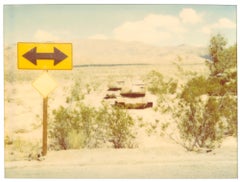
Old Woman Spring Road (29 Palms, CA)
Located in Morongo Valley, CA
Old Woman Spring Road (29 Palms, CA) - 1999 44x59cm, Edition of 10 plus 2 Artist Proofs. Archival C-Print, based on the original Polaroid. Certificate and Signature label. Art...
Category

1990s Outsider Art Portrait Photography

Materials

Archival Paper, Photographic Paper, C Print, Color, Polaroid

On the Road (California Badlands)
Located in Morongo Valley, CA
On the Road (California Badlands) - 1999 44x59cm, Edition of 10 plus 2 Artist Proofs. Archival C-Print, based on the original Polaroid. Certificate and Signature label. Artist...
Category

1990s Outsider Art Portrait Photography

Materials

Archival Paper, Photographic Paper, C Print, Color, Polaroid

Road to Gunsight, Highway 86 Arizona - Landscape Color Photography
Located in Cambridge, GB
Road to Gunsight, part of Richard Heeps 'Dream in Colour' Series, this is the classic American open road photograph, which is a metaphor of a journey throughout Richard's work. The e...
Category

21st Century and Contemporary Contemporary Color Photography

Materials

Photographic Paper, C Print, Color, Silver Gelatin

Four Corners (The Last Picture Show) - 21st Century, Polaroid, Color
Located in Morongo Valley, CA
Four Corners (The Last Picture Show) - 2005 Edition 1/5, 58x57cm. Analog C-Print, hand-printed by the artist on Archive Fuji Chrystal Paper, based on the original Polaroid. Artis...
Category

Early 2000s Contemporary Color Photography

Materials

Metal

Golden (Musica Poetica) - analog
Located in Morongo Valley, CA
Golden (Musica Poetica) - 1997 44x59cm, Edition 4/10. Archival C-Print, based on the original Polaroid. Certificate and Signature label. Artist I...
Category

1990s Outsider Art Portrait Photography

Materials

Archival Paper, Photographic Paper, C Print, Color, Polaroid

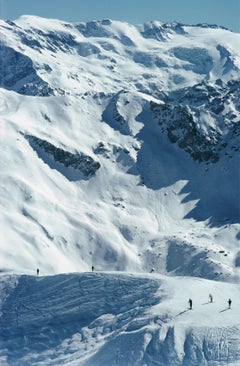
Alpine Skiing - Winter Skiing Sports Photography French Alps
Located in Brighton, GB
16 x 20" print. Limited Edition Estate Stamped Print. Edition of 150. Printed Later. "Alpine Skiing" is a beautiful Limited Edition Estate Stamped Digital C-Type print from 20th Cen...
Category

20th Century American Modern Portrait Photography

Materials

C Print, Photographic Paper, Color, Digital

Predisposed (Stage of Consciousness) - Udo Kier
Located in Morongo Valley, CA
Predisposed (Stage of Consciousness) - 2007 20x24cm, Edition of 10 plus 2 Artist Proofs. Archival C-Print, based on the Polaroid. Certificate and signature label. Artist Invento...
Category

Early 2000s Contemporary Portrait Photography

Materials

Archival Paper, Photographic Paper, C Print, Color, Polaroid

Compose (Stage of Consciousness) - Udo Kier
Located in Morongo Valley, CA
Compose (Stage of Consciousness) - 2007 20x24cm, Edition of 10 plus 2 Artist Proofs. Archival C-Print, based on the Polaroid. Certificate and signature label. Artist Inventory #...
Category

Early 2000s Contemporary Portrait Photography

Materials

Archival Paper, Photographic Paper, C Print, Color, Polaroid

Palm Trees Dive by (Stranger than Paradise) - analog
Located in Morongo Valley, CA
Palm Trees Dive by (Stranger than Paradise) - 1999 44x59cm, Edition 2/10. Analog C-Print, hand-printed by the artist, based on the Polaroid. Certificate and Signature label. A...
Category

1990s Outsider Art Portrait Photography

Materials

Archival Paper, Photographic Paper, C Print, Color, Polaroid

Dust Bowl Farm (American Depression) - analog
Located in Morongo Valley, CA
Dust Bowl Farm (American Depression) - 1997 44x59cm, Edition 3/5. Analog C-Print, hand-printed by the artist, based on the original Polaroid. Certificate and Signature label. ...
Category

1990s Outsider Art Portrait Photography

Materials

Archival Paper, Photographic Paper, C Print, Color, Polaroid

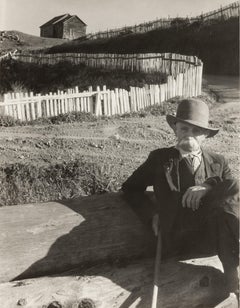
North Coast Native
Located in Pacific Grove, CA
This early silver gelatin print is signed and dated in pencil on the front of the mount with the artist's Green Street label and typed title on the back of the mount. Likely printed ...
Category

1930s Modern Black and White Photography

Materials

Silver Gelatin

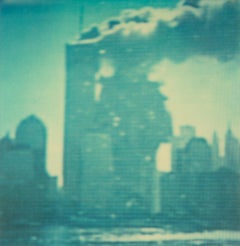
Untitled (9/11) - 21st Century, Polaroid, Color
Located in Morongo Valley, CA
Untitled (9/11) - 2001 Edition of 5, 38x37cm. Archival C-Print, on Archive Fuji Chrystal Paper, based on the Polaroid. Artist inventory number: 1546. Signature label and certifi...
Category

Early 2000s Contemporary Color Photography

Materials

Archival Paper, Photographic Paper, C Print, Color, Polaroid

Untitled (City of Industry)
Located in Morongo Valley, CA
Untitled (City of Industry) - 2004 38x36cm, Edition of 5 plus 2 Artist Proofs. Analog C-Print, hand-printed by the artist, based on the original Polaroid. Certificate and Signatur...
Category

2010s Contemporary Color Photography

Materials

Archival Paper, Photographic Paper, C Print, Color, Polaroid

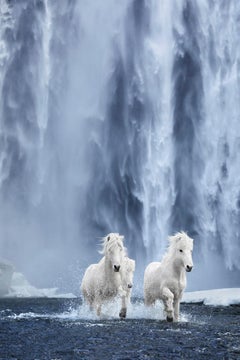
White Horses Running Beneath a Waterfall in Iceland, Color Photography, Vertical
Located in US
"Through the Falls" The famous horses of Iceland pay no attention to the extreme elements of their homeland most would find daunting - including some of the mightiest waterfalls on ...
Category

2010s Contemporary Color Photography

Materials

Archival Pigment

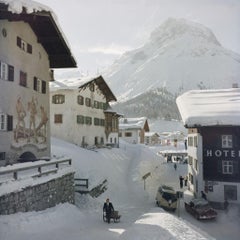
Hotel Krone, Lech - Snowy Winter Landscape near Swiss Mountain Range
Located in Brighton, GB
Hotel Krone, Lech - Snowy Winter Landscape near Swiss Mountain Range by Slim Aarons 16" x 16" print on 16" x 20" paper. Limited Edition Estate Stamped Print. Edition of 150. Printed...
Category

20th Century Modern Nude Photography

Materials

C Print, Photographic Paper, Color, Digital

Ski Jumping (1964) Silver Gelatin Fibre Print - Oversized
Located in London, GB
Ski Jumping (1964) Silver Gelatin Fibre Print - Oversized (Photo by H. Armstrong Roberts/Alamy) A man skiing downhill and jumping into the air, circa 1964...
Category

1960s Modern Portrait Photography

Materials

Black and White, Silver Gelatin

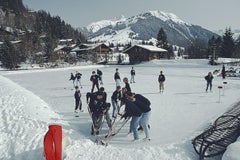
Ice Hockey - Winter Sports on Frozen Lake by Snowy Mountain Landscape
Located in Brighton, GB
Ice Hockey - Winter Sports on Frozen Lake by Snowy Mountain Landscape by Slim Aarons 16 x 20" print. Limited Edition Estate Stamped Print. Edition of 150. Printed Later. 'Ice Hocke...
Category

20th Century American Modern Portrait Photography

Materials

C Print, Digital, Photographic Paper, Color

My own private Travel Diary - Bishop, CA - Walking Lulu - triptych
Located in Morongo Valley, CA
My own private Travel Diary - Bishop, CA - Walking Lulu - triptych - 2001, 20x80cm, Edition of 10, plus 2 Artist Proofs. Archival C-Print, based on the Polaroid Slide. Signatur...
Category

Early 2000s Contemporary Black and White Photography

Materials

Archival Paper, Photographic Paper, C Print, Color, Polaroid

My own private Travel Diary - Bishop, CA - Autumn
Located in Morongo Valley, CA
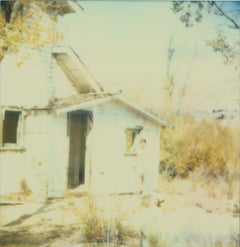
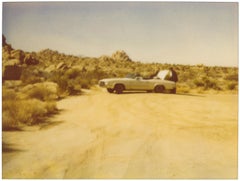
My own private Travel Diary - Bishop, CA - Autumn - 2001, 20x29cm, Edition of 10, plus 2 Artist Proofs. Archival C-Print, based on a Polaroid Slide. Signature label and Certificate. Not mounted. LIFE’S A DREAM (The Personal World of Stefanie Schneider) by Mark Gisbourne Projection is a form of apparition that is characteristic of our human nature, for what we imagine almost invariably transcends the reality of what we live. And, an apparition, as the word suggests, is quite literally ‘an appearing’, for what we appear to imagine is largely shaped by the imagination of its appearance. If this sounds tautological then so be it. But the work of Stefanie Schneider is almost invariably about chance and apparition. And, it is through the means of photography, the most apparitional of image-based media, that her pictorial narratives or photo-novels are generated. Indeed, traditional photography (as distinct from new digital technology) is literally an ‘awaiting’ for an appearance to take place, in line with the imagined image as executed in the camera and later developed in the dark room. The fact that Schneider uses out-of-date Polaroid film stock to take her pictures only intensifies the sense of their apparitional contents when they are realised. The stability comes only at such time when the images are re-shot and developed in the studio, and thereby fixed or arrested temporarily in space and time. The unpredictable and at times unstable film she adopts for her works also creates a sense of chance within the outcome that can be imagined or potentially envisaged by the artist Schneider. But this chance manifestation is a loosely controlled, or, better called existential sense of chance, which becomes pre-disposed by the immediate circumstances of her life and the project she is undertaking at the time. Hence the choices she makes are largely open-ended choices, driven by a personal nature and disposition allowing for a second appearing of things whose eventual outcome remains undefined. And, it is the alliance of the chance-directed material apparition of Polaroid film, in turn explicitly allied to the experiences of her personal life circumstances, that provokes the potential to create Stefanie Schneider’s open-ended narratives. Therefore they are stories based on a degenerate set of conditions that are both material and human, with an inherent pessimism and a feeling for the sense of sublime ridicule being seemingly exposed. This in turn echoes and doubles the meaning of the verb ‘to expose’. To expose being embedded in the technical photographic process, just as much as it is in the narrative contents of Schneider’s photo-novel exposés. The former being the unstable point of departure, and the latter being the uncertain ends or meanings that are generated through the photographs doubled exposure. The large number of speculative theories of apparition, literally read as that which appears, and/or creative visions in filmmaking and photography are self-evident, and need not detain us here. But from the earliest inception of photography artists have been concerned with manipulated and/or chance effects, be they directed towards deceiving the viewer, or the alchemical investigations pursued by someone like Sigmar Polke. None of these are the real concern of the artist-photographer Stefanie Schneider, however, but rather she is more interested with what the chance-directed appearances in her photographs portend. For Schneider’s works are concerned with the opaque and porous contents of human relations and events, the material means are largely the mechanism to achieving and exposing the ‘ridiculous sublime’ that has come increasingly to dominate the contemporary affect(s) of our world. The uncertain conditions of today’s struggles as people attempt to relate to each other - and to themselves - are made manifest throughout her work. And, that she does this against the backdrop of the so-called ‘American Dream’, of a purportedly advanced culture that is Modern America, makes them all the more incisive and critical as acts of photographic exposure. From her earliest works of the late nineties one might be inclined to see her photographs as if they were a concerted attempt at an investigative or analytic serialisation, or, better still, a psychoanalytic dissection of the different and particular genres of American subculture. But this is to miss the point for the series though they have dates and subsequent publications remain in a certain sense unfinished. Schneider’s work has little or nothing to do with reportage as such, but with recording human culture in a state of fragmentation and slippage. And, if a photographer like Diane Arbus dealt specifically with the anomalous and peculiar that made up American suburban life, the work of Schneider touches upon the alienation of the commonplace. That is to say how the banal stereotypes of Western Americana have been emptied out, and claims as to any inherent meaning they formerly possessed has become strangely displaced. Her photographs constantly fathom the familiar, often closely connected to traditional American film genre, and make it completely unfamiliar. Of course Freud would have called this simply the unheimlich or uncanny. But here again Schneider almost never plays the role of the psychologist, or, for that matter, seeks to impart any specific meanings to the photographic contents of her images. The works possess an edited behavioural narrative (she has made choices), but there is never a sense of there being a clearly defined story. Indeed, the uncertainty of my reading here presented, acts as a caveat to the very condition that Schneider’s photographs provoke. Invariably the settings of her pictorial narratives are the South West of the United States, most often the desert and its periphery in Southern California. The desert is a not easily identifiable space, with the suburban boundaries where habitation meets the desert even more so. There are certain sub-themes common to Schneider’s work, not least that of journeying, on the road, a feeling of wandering and itinerancy, or simply aimlessness. Alongside this subsidiary structural characters continually appear, the gas station, the automobile, the motel, the highway, the revolver, logos and signage, the wasteland, the isolated train track and the trailer. If these form a loosely defined structure into which human characters and events are cast, then Schneider always remains the fulcrum and mechanism of their exposure. Sometimes using actresses, friends, her sister, colleagues or lovers, Schneider stands by to watch the chance events as they unfold. And, this is even the case when she is a participant in front of camera of her photo-novels. It is the ability to wait and throw things open to chance and to unpredictable circumstances, that marks the development of her work over the last eight years. It is the means by which random occurrences take on such a telling sense of pregnancy in her work. However, in terms of analogy the closest proximity to Schneider’s photographic work is that of film. For many of her titles derive directly from film, in photographic series like OK Corral (1999), Vegas (1999), Westworld (1999), Memorial Day (2001), Primary Colours (2001), Suburbia (2004), The Last Picture Show (2005), and in other examples. Her works also include particular images that are titled Zabriskie Point, a photograph of her sister in an orange wig. Indeed the tentative title for the present publication Stranger Than Paradise is taken from Jim Jarmusch’s film of the same title in 1984. Yet it would be dangerous to take this comparison too far, since her series 29 Palms (1999) presages the later title of a film that appeared only in 2002. What I am trying to say here is that film forms the nexus of American culture, and it is not so much that Schneider’s photographs make specific references to these films (though in some instances they do), but that in referencing them she accesses the same American culture that is being emptied out and scrutinised by her photo-novels. In short her pictorial narratives might be said to strip films of the stereotypical Hollywood tropes that many of them possess. Indeed, the films that have most inspired her are those that similarly deconstruct the same sentimental and increasingly tawdry ‘American Dream’ peddled by Hollywood. These include films like David Lynch’s Blue Velvet (1986), Wild at Heart (1990) The Lost Highway (1997), John Dahl’s The Last Seduction (1994) or films like Ridley Scott’s Thelma and Louise with all its girl-power Bonny and Clyde-type clichés. But they serve no more than as a backdrop, a type of generic tableau from which Schneider might take human and abstracted elements, for as commercial films they are not the product of mere chance and random occurrence. Notwithstanding this observation, it is also clear that the gender deconstructions that the characters in these films so often portray, namely the active role of women possessed of a free and autonomous sexuality (even victim turned vamp), frequently find resonances within the behavioural events taking place in Schneider’s photographs and DVD sequences; the same sense of sexual autonomy that Stefanie Schneider possesses and is personally committed to. In the series 29 Palms (first begun in 1999) the two women characters Radha and Max act out a scenario that is both infantile and adolescent. Wearing brightly coloured fake wigs of yellow and orange, a parody of the blonde and the redhead, they are seemingly trailer park white trash possessing a sentimental and kitsch taste in clothes totally inappropriate to the locality. The fact that Schneider makes no judgment about this is an interesting adjunct. Indeed, the photographic projection of the images is such that the girls incline themselves to believe that they are both beautiful and desirous. However, unlike the predatory role of women in say Richard Prince’s photographs, which are simply a projection of a male fantasy onto women, Radha and Max are self-contained in their vacuous if empty trailer and motel world of the swimming pool, nail polish, and childish water pistols. Within the photographic sequence Schneider includes herself, and acts as a punctum of disruption. Why is she standing in front of an Officers’ Wives Club? Why is Schneider not similarly attired? Is there a proximity to an army camp, are these would-be Lolita(s) Rahda and Max wives or American marine groupies, and where is the centre and focus of their identity? It is the ambiguity of personal involvement that is set up by Schneider which deliberately makes problematic any clear sense of narrative construction. The strangely virulent colours of the bleached-out girls stand in marked contrast to Schneider’s own anodyne sense of self-image. Is she identifying with the contents or directing the scenario? With this series, perhaps, more than any other, Schneider creates a feeling of a world that has some degree of symbolic order. For example the girls stand or squat by a dirt road, posing the question as to their sexual and personal status. Following the 29 Palms series, Schneider will trust herself increasingly by diminishing the sense of a staged environment. The events to come will tell you both everything and nothing, reveal and obfuscate, point towards and simultaneously away from any clearly definable meaning. If for example we compare 29 Palms to say Hitchhiker (2005), and where the sexual contents are made overtly explicit, we do not find the same sense of simulated identity. It is the itinerant coming together of two characters Daisy and Austen, who meet on the road and subsequently share a trailer together. Presented in a sequential DVD and still format, we become party to a would-be relationship of sorts. No information is given as to the background or social origins, or even any reasons as to why these two women should be attracted to each other. Is it acted out? Are they real life experiences? They are women who are sexually free in expressing themselves. But while the initial engagement with the subject is orchestrated by Schneider, and the edited outcome determined by the artist, beyond that we have little information with which to construct a story. The events are commonplace, edgy and uncertain, but the viewer is left to decide as to what they might mean as a narrative. The disaggregated emotions of the work are made evident, the game or role playing, the transitory fantasies palpable, and yet at the same time everything is insubstantial and might fall apart at any moment. The characters relate but they do not present a relationship in any meaningful sense. Or, if they do, it is one driven the coincidental juxtaposition of random emotions. Should there be an intended syntax it is one that has been stripped of the power to grammatically structure what is being experienced. And, this seems to be the central point of the work, the emptying out not only of a particular American way of life, but the suggestion that the grounds upon which it was once predicated are no longer possible. The photo-novel Hitchhiker is porous and the culture of the seventies which it might be said to homage is no longer sustainable. Not without coincidence, perhaps, the decade that was the last ubiquitous age of Polaroid film. In the numerous photographic series, some twenty or so, that occur between 29 Palms and Hitchhiker, Schneider has immersed herself and scrutinised many aspects of suburban, peripheral, and scrubland America. Her characters, including herself, are never at the centre of cultural affairs. Such eccentricities as they might possess are all derived from what could be called their adjacent status to the dominant culture of America. In fact her works are often sated with references to the sentimental sub-strata that underpin so much of American daily life. It is the same whether it is flower gardens and household accoutrements of her photo-series Suburbia (2004), or the transitional and environmental conditions depicted in The Last Picture Show (2005). The artist’s use of sentimental song titles, often adapted to accompany individual images within a series by Schneider, show her awareness of America’s close relationship between popular film and music. For example the song ‘Leaving on a Jet Plane’, becomes Leaving in a Jet Plane as part of The Last Picture Show series, while the literalism of the plane in the sky is shown in one element of this diptych, but juxtaposed to a blonde-wigged figure first seen in 29 Palms. This indicates that every potential narrative element is open to continual reallocation in what amounts to a story without end. And, the interchangeable nature of the images, like a dream, is the state of both a pictorial and affective flux that is the underlying theme pervading Schneider’s photo-narratives. For dream is a site of yearning or longing, either to be with or without, a human pursuit of a restless but uncertain alternative to our daily reality. The scenarios that Schneider sets up nonetheless have to be initiated by the artist. And, this might be best understood by looking at her three recent DVD sequenced photo-novels, Reneé’s Dream and Sidewinder (2005). We have already considered the other called Hitchhiker. In the case of Sidewinder the scenario was created by internet where she met J.D. Rudometkin, an ex-theologian, who agreed to her idea to live with her for five weeks in the scrubland dessert environment of Southern California. The dynamics and unfolding of their relationship, both sexually and emotionally, became the primary subject matter of this series of photographs. The relative isolation and their close proximity, the interactive tensions, conflicts and submissions, are thus recorded to reveal the day-to-day evolution of their relationship. That a time limit was set on this relation-based experiment was not the least important aspect of the project. The text and music accompanying the DVD were written by the American Rudometkin, who speaks poetically of “Torn Stevie. Scars from the weapon to her toes an accidental act of God her father said. On Vaness at California.” The mix of hip reverie and fantasy-based language of his text, echoes the chaotic unfolding of their daily life in this period, and is evident in the almost sun-bleached Polaroid images like Whisky Dance, where the two abandon themselves to the frenetic circumstances of the moment. Thus Sidewinder, a euphemism for both a missile and a rattlesnake, hints at the libidinal and emotional dangers that were risked by Schneider and Rudometkin. Perhaps, more than any other of her photo-novels it was the most spontaneous and immediate, since Schneider’s direct participation mitigated against and narrowed down the space between her life and the art work. The explicit and open character of their relationship at this time (though they have remained friends), opens up the question as the biographical role Schneider plays in all her work. She both makes and directs the work while simultaneously dwelling within the artistic processes as they unfold. Hence she is both author and character, conceiving the frame within which things will take place, and yet subject to the same unpredictable outcomes that emerge in the process. In Reneé’s Dream, issues of role reversal take place as the cowgirl on her horse undermines the male stereotype of Richard Prince’s ‘Marlboro Country’. This photo-work along with several others by Schneider, continue to undermine the focus of the male gaze, for her women are increasingly autonomous and subversive. They challenge the male role of sexual predator, often taking the lead and undermining masculine role play, trading on male fears that their desires can be so easily attained. That she does this by working through archetypal male conventions of American culture, is not the least of the accomplishments in her work. What we are confronted with frequently is of an idyll turned sour, the filmic clichés that Hollywood and American television dramas have promoted for fifty years. The citing of this in the Romantic West, where so many of the male clichés were generated, only adds to the diminishing sense of substance once attributed to these iconic American fabrications. And, that she is able to do this through photographic images rather than film, undercuts the dominance espoused by time-based film. Film feigns to be seamless though we know it is not. Film operates with a story board and setting in which scenes are elaborately arranged and pre-planned. Schneider has thus been able to generate a genre of fragmentary events, the assemblage of a story without a storyboard. But these post-narratological stories require another component, and that component is the viewer who must bring their own interpretation as to what is taking place. If this can be considered the upside of her work, the downside is that she never positions herself by giving a personal opinion as to the events that are taking place in her photographs. But, perhaps, this is nothing more than her use of the operation of chance dictates. I began this essay by speaking about the apparitional contents of Stefanie Schneider’s pictorial narratives, and meant at that time the literal and chance-directed ‘appearing’ qualities of her photographs. Perhaps, at this moment we should also think of the metaphoric contents of the word apparition. There is certainly a spectre-like quality also, a ghostly uncertainty about many of the human experiences found in her subject matter. Is it that the subculture of the American Dream, or the way of life Schneider has chosen to record, has in turn become also the phantom of it former self? Are these empty and fragmented scenarios a mirror of what has become of contemporary America? There is certainly some affection for their contents on the part of the artist, but it is somehow tainted with pessimism and the impossibility of sustainable human relations, with the dissolute and commercial distractions of America today. Whether this is the way it is, or, at least, the way it is perceived by Schneider is hard to assess. There is a bleak lassitude about so many of her characters. But then again the artist has so inured herself into this context over a long protracted period that the boundaries between the events and happenings photographed, and the personal life of Stefanie Schneider, have become similarly opaque. Is it the diagnosis of a condition, or just a recording of a phenomenon? Only the viewer can decide this question. For the status of Schneider’s certain sense of uncertainty is, perhaps, the only truth we may ever know.

1 Kerry Brougher (ed.), Art and Film Since 1945: Hall of Mirrors, ex. cat., The Museum of Contemporary Art (New York, 1996) 2 Im Reich der Phantome: Fotographie des Unsichtbaren, ex. cat., Städtisches Museum Abteiberg Mönchengladbach/Kunsthalle Krems/FotomuseumWinterthur, (Ostfildern-Ruit, 1997) 3 Photoworks: When Pictures Vanish – Sigmar Polke, Museum of Contemporary Art (Zürich-Berlin-New York, 1995) 4 Slavoj Žižek, The Art of the Ridiculous Sublime: On David Lynch’s Lost Highway, Walter Chapin Simpson Center for the Humanities, University of Washington, Seattle, Occasional Papers, no. 1, 2000. 5 Diane Arbus, eds. Doon Arbus, and Marvin Israel...
Category

1990s Contemporary Landscape Photography

Materials

Archival Paper, Photographic Paper, C Print, Color, Polaroid

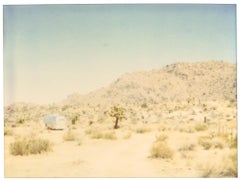
Alphabet Soup (Till Death do us Part) - mounted
Located in Morongo Valley, CA
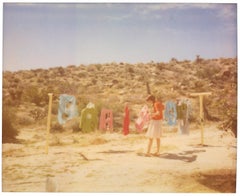
Alphabet Soup (Till Death do us Part) - 2005, 128x127cm, Edition 2/5, analog C-Print, hand-printed by the artist. based on the Polaroid. Artist Inventory No. 9283.02. Mounted o...
Category

Early 2000s Contemporary Portrait Photography

Materials

Metal

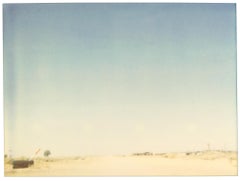
Skiing in Vermont, 1963 - View of Snowy Winter Landscape Sugarbush Mountain
Located in Brighton, GB
Skiing in Vermont, 1963 - View of Snowy Winter Landscape Sugarbush Mountain by Slim Aarons 16" x 20" print Limited Edition Estate Stamped Print. Edition of 150. Printed Later. 'Ski...
Category

20th Century Modern Portrait Photography

Materials

C Print, Digital, Photographic Paper, Color

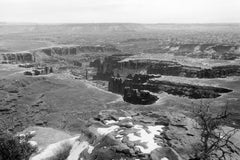
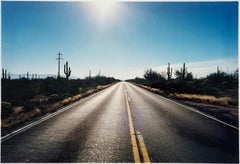
Green River Overlook in Utah, Canyonlands National Park, 1960s.
Located in Cologne, DE
The black-and-white photograph titled *Canyonlands National Park, 1960s* offers a breathtaking view of the rugged, expansive desert landscape in southeastern Utah. The image captures...
Category

1960s Modern Black and White Photography

Materials

Black and White

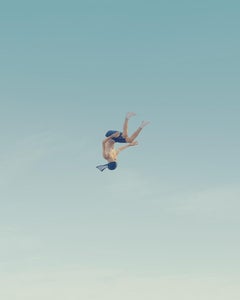
Into the Sky 15, 2022 - Brighton Skyscape Photography English Summer
Located in Brighton, GB
Into the Sky 15 is a C-Type print on Hahnemuhle Photo Rag paper, available in this size in an edition of 15. The 19th July 2022 was the UK's hottest recorded day. When most were abandoning work for nearby cool spots or sun-drenched parks, Brighton-based photographer Andy Lo Pò...
Category

2010s Contemporary Nude Photography

Materials

C Print, Photographic Paper, Color, Digital

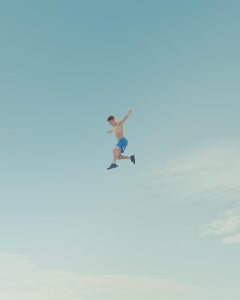
Into the Sky 2 - Summer Sun Landscape Photography London
Located in Brighton, GB
Into the Sky 2 is a C-Type print on Hahnemuhle Photo Rag paper, available in this size in an edition of 15. The 19th July 2022 was the UK's hottest recorded day. When most were abandoning work for nearby cool spots or sun-drenched parks, Brighton-based UK photographer Andy Lo Pò...
Category

2010s Contemporary Nude Photography

Materials

C Print, Photographic Paper, Color, Digital

Read More

This Week-Old Calf Named Bug Is One of Randal Ford’s Most Adorable Models

In a recent collection of animal portraits, he brings fashion photography to the farm.

11 of Annie Leibovitz’s Most Talked-About Photographs

See why the famed photographer's celebrity portraits have graced magazine covers and become headline grabbers in their own right for five decades and counting.

Queen Elizabeth’s Life in Photos

She was one of the most photographed women in history, but the world’s longest-reigning queen remained something of a mystery throughout her decades on the throne.

Photographer to Know: William Klein

The noted lensman brought a bold sense of irony to fashion photography in the 1950s and '60s, transforming the industry. But his work in street photography, documentary filmmaking and abstract art is just as striking.

Chris Levine’s Portrait of a Shut-Eyed Queen Elizabeth Sparkles with Crystals

Celebrate the queen's Platinum Jubilee with a glittering, Pop-art version of the most famous and thought-provoking photo of Her Royal Majesty.

In Milan, La DoubleJ Celebrates Women of Design through Portraiture

During Salone del Mobile, Robyn Lea photographed some of the most powerful creative forces in the European design industry, decked out in J.J. Martin’s maximal fashion line.

Lori Grinker’s Artful Photographs of a Young Mike Tyson Are a Knockout!

The New York photographer tells us how an encounter with the then-13-year-old boxer led to a decade-long project that saw them both go pro.

John Dolan’s Photographs Capture the Art and Soul of a Wedding Day

In a new book compiling 30 years' worth of images, the photographer reveals that it's the in-between moments that make a wedding special.

Still Thinking About These?

All Recently Viewed