Miniature Abstract Prints

to
2,104
3,531
6,250
3,360
2,299
Overall Width
to
Overall Height
to
1,669
1,224
692
521
210
201
51
49
34
24
14
5
244
76
71
63
47
7
78
4,080
1,165
16
50
144
265
573
967
984
405
211
5
3,655
1,026
547
31
22
13
10
7
6
5
5
4
4
4
4
4
4
3
3
3
3
3
3
2,637
848
761
475
244
437
955
3,566
1,506
Size: Miniature
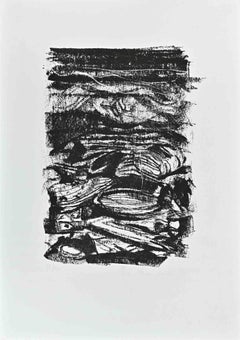
Composition - Lithograph by Pietro Annigoni - 1973
Located in Roma, IT
Composition is an interesting b/w lithograph realized by the Italian artist Pietro Annigoni in 1973. Hand-signed and numbered.Edition,77/100. Good Co...
Category

1970s Abstract Abstract Prints

Materials

Lithograph

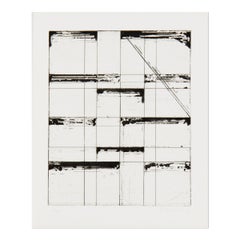
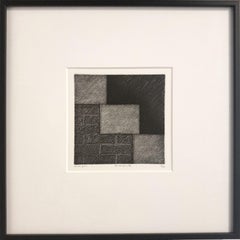
Brice Marden, Etching for Parkett - Signed Print, Minimalism, Abstract Art
Located in Hamburg, DE
Brice Marden (American, b. 1938) Etching for Parkett, 1986 Medium: Sugar lift and aquatint on Rives BFK, bound in Parkett journal no. 7 Dimensions: 25.5 x 21 cm Edition of 100: Hand-...
Category

20th Century Minimalist Abstract Prints

Materials

Aquatint

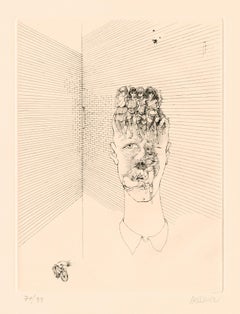
Blue Eyes — Erotic Surrealism
Located in Myrtle Beach, SC
Hans Bellmer, 'Blue Eyes', engraving and drypoint, edition 99, 1971. Flahutez 89. Signed and numbered '74/99' in pencil. A fine impression, on Arches cream wove paper; the full sheet...
Category

1960s Surrealist Abstract Prints

Materials

Engraving, Drypoint

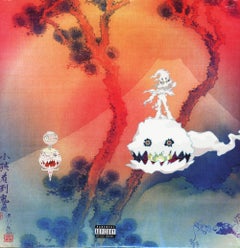
Takashi Murakami record art 2018 (Takashi Murakami Kanye West)
Located in NEW YORK, NY
Takashi Murakami Record Art 2018 (Takashi Murakami Kanye West Kid Cudi): This Takashi Murakami designed cover & record album is for Kids See Ghosts and is the only studio album by t...
Category

21st Century and Contemporary Pop Art Abstract Prints

Materials

Paper, Offset

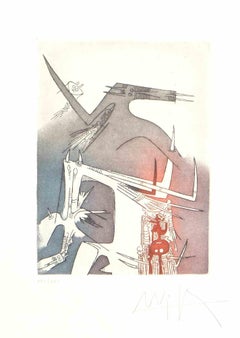
Personages - Etching by Wifredo Lam- 1974
Located in Roma, IT
Personages is print realized by Wifredo Lam (Sagua La Grande 1902 - Paris 1982) Colored etching on paper. Hand-signed and numbered, edition of XXI/XXV lower in pencil.
Category

1970s Surrealist Abstract Prints

Materials

Etching

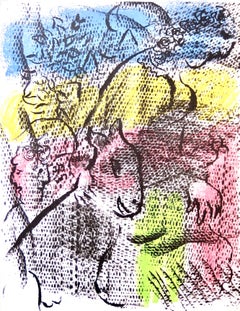
Marc Chagall, The Red Horse, from XXe Siecle, 1970
Located in Southampton, NY
This exquisite lithograph by Marc Chagall (1887–1985), titled Le Cheval Rouge (The Red Horse), from the album XXe Siecle, XXXIIe Annee, Nouvelle serie, No. 34, Juin 1970, originates ...
Category

1970s Expressionist Abstract Prints

Materials

Lithograph

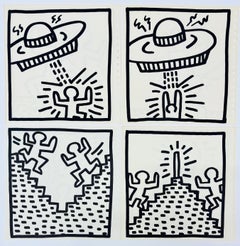
Keith Haring Tony Shafrazi gallery 1982 (set of 4 printed works)
Located in NEW YORK, NY
Keith Haring Tony Shafrazi 1982: set of 6 printed works: A set of six, individual, double-sided lithographic inserts from the seminal, spiral bound 1982 Keith Haring Tony Shafrazi ca...
Category

1980s Pop Art Animal Prints

Materials

Lithograph, Offset

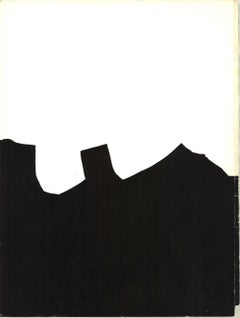
Derriere Le Miroir no.204 Rear Cover
Located in Brooklyn, NY
This rear cover lithograph from Derrière le Miroir No. 204 showcases Eduardo Chillida’s iconic abstract style, emphasizing his mastery of form, balance, and spatial exploration. Publ...
Category

Late 20th Century Abstract Abstract Prints

Materials

Lithograph

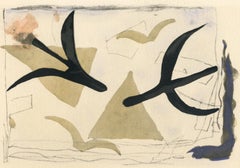
Georges Braque, Study of Birds, from Le Solitaire, XXe siecle, 1959 (after)
Located in Southampton, NY
This exquisite lithograph and pochoir after Georges Braque (1882–1963), titled Etude oiseaux (Study of Birds), from the album Georges Braque, Le Solitaire (The Solitary), originates ...
Category

1950s Cubist Abstract Prints

Materials

Lithograph

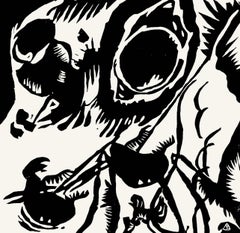
Wassily Kandinsky, Motif from Improvisation 25, from XXe siecle, 1938
Located in Southampton, NY
This exquisite woodcut by Wassily Kandinsky (1866–1944), titled Motiv aus Improvisation 25 (Motif from Improvisation 25), from the album XXe siecle, Chroniques du jour, 13 rue Valett...
Category

1930s Modern Abstract Prints

Materials

Woodcut

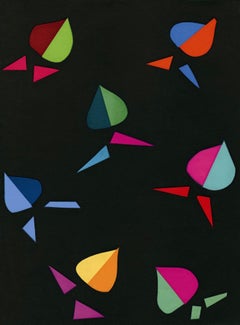
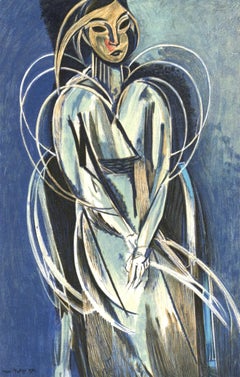
Henri Matisse, Chromatic Symphony, from Verve, Revue Artistique, 1940
Located in Southampton, NY
This exquisite lithograph by Henri Matisse (1869–1954), titled Symphonie chromatique (Chromatic Symphony), from Verve, Revue Artistique et Litteraire, Vol. II, No. 8, originates from...
Category

1940s Fauvist Landscape Prints

Materials

Lithograph

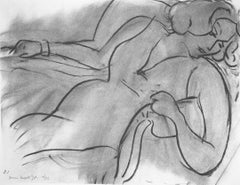
Henri Matisse, Series B, Var. 1, Drawings, Themes and Variations, 1943 (after)
Located in Southampton, NY
This exquisite lithograph after Henri Matisse (1869–1954), titled Serie B, var. 1 (Series B, Variation 1), from the album Henri Matisse, Dessins, Themes et Variations (Drawings, Them...
Category

1940s Fauvist Figurative Prints

Materials

Lithograph

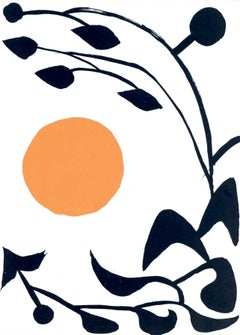
Alexander Calder, Orange Sun, from Derriere le miroir, 1954
Located in Southampton, NY
This exquisite lithograph by Alexander Calder (1898–1976), titled Soleil orange (Orange Sun), from the folio Derriere le miroir, No. 69–70, originates from the 1954 edition published by Maeght Editeur, Paris, and printed by Mourlot Freres, Paris, 1954. This work captures Calder’s mastery of motion, balance, and vibrant color through the spontaneous energy of his abstract forms, embodying the rhythmic harmony and visual poetry that defined his art. Executed as a lithograph on velin paper, this work measures 15 x 11 inches. Unsigned and unnumbered as issued. The edition exemplifies the superb craftsmanship of Mourlot Freres, Paris. Artwork Details: Artist: Alexander Calder (1898–1976) Title: Soleil orange (Orange Sun), from the folio Derriere le miroir, No. 69–70 Medium: Lithograph on velin paper Dimensions: 15 x 11 inches (38.1 x 27.9 cm) Inscription: Unsigned and unnumbered as issued Date: 1954 Publisher: Maeght Editeur, Paris Printer: Mourlot Freres, Paris Condition: Well preserved, consistent with age and medium Provenance: From the folio Derriere le miroir, No. 69–70, published by Maeght Editeur, Paris; printed by Mourlot Freres, Paris, 1954 About the Publication: Derriere le miroir (Behind the Mirror) was one of the most important art publications of the 20th century, created and published by Maeght Editeur in Paris from 1946 to 1982. Founded by the visionary art dealer and publisher Aime Maeght, the series served as both an exhibition catalogue and a work of art in its own right, uniting original lithographs by leading modern and contemporary artists with critical essays, poetry, and design of the highest quality. Printed by master lithographers such as Mourlot Freres and Arte, Derriere le miroir became synonymous with the artistic vanguard of postwar Europe. Each issue was devoted to a single artist or theme and published to accompany exhibitions at the Galerie Maeght in Paris, featuring works by Pablo Picasso, Henri Matisse, Georges Braque, Joan Miro, Marc Chagall, Alexander Calder, Fernand Leger, and Alberto Giacometti, among others. The publication reflected Maeght’s belief that art should be both accessible and elevated—an ideal realized through its luxurious production values, meticulous printing, and collaboration with the greatest creative minds of its time. About the Artist: Alexander Calder (1898–1976) was an American sculptor, painter, and printmaker whose pioneering innovations in kinetic art revolutionized 20th-century sculpture and transformed modern visual language. Born in Lawnton, Pennsylvania, into a family of artists, Calder initially trained as a mechanical engineer at the Stevens Institute of Technology before turning to art at the Art Students League in New York—a combination of technical precision and creative imagination that defined his career. Moving to Paris in 1926, he immersed himself in the avant-garde and formed friendships with Pablo Picasso, Alberto Giacometti, Joan Miro, Wassily Kandinsky, Salvador Dali, Marcel Duchamp, and Man Ray, whose ideas profoundly shaped his artistic philosophy. From Picasso, he absorbed structural invention; from Miro, lyrical abstraction; from Kandinsky, spiritual geometry; and from Duchamp and Man Ray, the courage to merge intellect and play. In Paris, Calder created his famous Cirque Calder, a miniature mechanical circus that introduced motion and performance as central components of sculpture, and by the early 1930s, he invented the mobile—a term coined by Duchamp—to describe his delicately balanced, moving sculptures that responded to air currents. Later, Jean Arp would name his stationary counterparts stabiles. These two inventions—sculptures that could either float and spin gracefully or stand monumentally still—transformed art into a dynamic dialogue between movement, balance, and space. Calder’s signature forms, painted in vivid reds, blacks, blues, and yellows, embodied both joy and precision, creating an art that was at once abstract, organic, and deeply human. Like Kandinsky and Miro, he viewed art as a form of rhythm and emotion; like Duchamp, he embraced innovation and humor; and like Giacometti and Dali, he was fascinated by perception, structure, and the unseen forces of motion. His monumental public sculptures—such as La Grande Vitesse (1969) in Grand Rapids and Flamingo (1973) in Chicago—redefined public art as a symbol of civic optimism and modern progress. A key bridge between European modernism and American abstraction, Calder’s influence extended to artists including Jean Tinguely, George Rickey, Donald Judd, Ellsworth Kelly, Richard Serra, and Olafur Eliasson, whose works in kinetic and spatial art continue to echo his vision. His gouaches, prints, and jewelry carried the same balance and movement as his sculptures, revealing a unified language of rhythm across media. Represented in every major modern museum—including MoMA, the Guggenheim, the Tate, and the Centre Pompidou—Calder remains celebrated for merging engineering, color, and poetry into an art of pure equilibrium. Standing alongside Pablo Picasso, Alexander Calder, Alberto Giacometti, Salvador Dali, Joan Miro, Wassily Kandinsky, Marcel Duchamp, and Man Ray, he remains one of the cornerstones of modern art—a visionary whose works breathe with motion, grace, and joy. His highest auction record was achieved by Poisson Volant (Flying Fish) (1957), which sold for $25.9 million at Christie’s, New York, on May 15, 2014, reaffirming Alexander Calder’s enduring legacy as one of the most inventive, dynamic, and collectible artists in the history of modern art. Alexander Calder Soleil...
Category

1950s Modern Abstract Prints

Materials

Lithograph

UNTITLED (From the ARTSOUNDS Collection)
Located in New York, NY
BURTON VAN DEUSEN Untitled (from the Artsounds Collection), 1986 color offset print, ed. 200 12 x 12 cm. 30.5 x 30.5 cm. Edition 49/100 signed and numbered in pencil by the artist...
Category

1980s Abstract Expressionist Abstract Prints

Materials

Offset

Abstract engraving print
Located in Sitges, Barcelona
Measurements 35x35 Frame 65x55
Category

Early 2000s Abstract Geometric Abstract Prints

Materials

Engraving

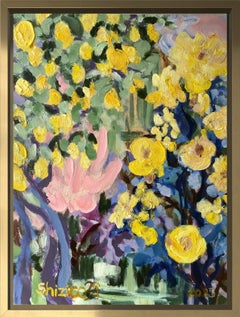
Hand Painted Artist s Proof on aluminium-Tea Time Bloom-British Awarded Artist
Located in London, GB
Tea Time Bloom is a rare hand-painted Artist's Proof by contemporary artist Shizico Yi, created on a deluxe matte-finish giclée aluminium panel. Each edition is 90% hand-painted with...
Category

2010s Abstract Impressionist Landscape Prints

Materials

Metal

“Untitled”
Located in Southampton, NY
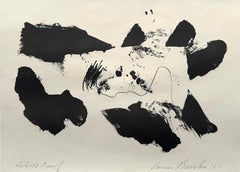
Original black and white abstract lithograph on archival paper by the well known American modernist artist, James Brooks. Signed in pencil by the artist and dated 1961 lower right. ...
Category

1960s Post-Modern Abstract Prints

Materials

Archival Paper, Lithograph

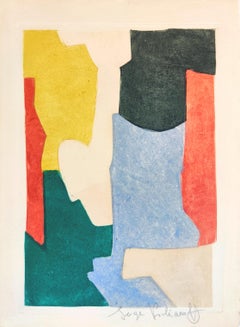
Pierre Soulages, Plate No. 4, from Painters of Today, 1962 (after)
Located in Southampton, NY
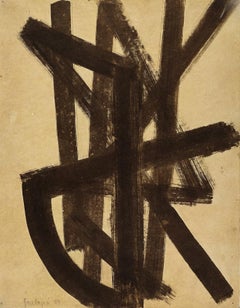
This exquisite heliogravure after Pierre Soulages (1919–2022), titled Planche No. 4 (Plate No. 4), from the folio Pierre Soulages, Peintres d'aujourd'hui (Pierre Soulages, Painters o...
Category

1960s Modern Abstract Prints

Materials

Lithograph

"Juice Coffee", Abstract, Cup, Warm Yellows, Violet, Sepia, Photography, 2020
Located in Franklin, MA
Patty deGrandpre’s “Juice & Coffee” is a 13.5 x 10.75 inch unique abstract inkjet print represented on 17 x 11 inch Awagami Washi paper embracing both digital printmaking and creativ...
Category

2010s Contemporary Abstract Prints

Materials

Color, Digital

A Square with Four Squares Cut Away, rubber stamp print on Cambersand paper #917
Located in New York, NY
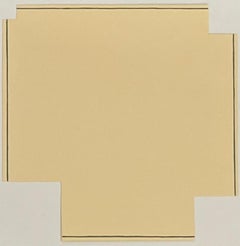
Robert Mangold A Square with Four Squares Cut Away, 1976 Numbered on the back Rubber stamp print on custom cut Cambersand paper Stamp made by Unity Engraving Company, Inc. Printed by...
Category

1970s Minimalist Abstract Prints

Materials

Lithograph

Erebus Sculpture OP ART
Located in CANNES, FR
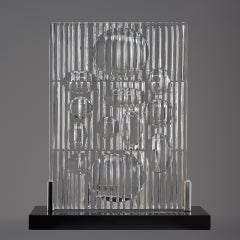
Victor VASARELY 1906 - 1997 EREBUS - 1982 Verre et bois Signature gravée sur le verre et numérotation sous la base "/2000" Edition Rosenthal studio-linie, Allemagne Dans sa boîte...
Category

1980s Op Art Abstract Prints

Materials

Glass

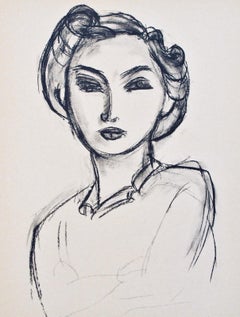
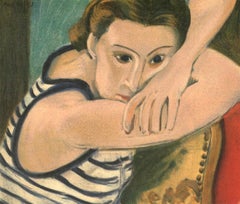
Henri Matisse, Mrs. Dorothy Parley, Portraits by Henri Matisse, 1954 (after)
Located in Southampton, NY
This exquisite heliogravure after Henri Matisse (1869–1954), titled Madame Dorothy Parley (Mrs. Dorothy Parley), from the album Portraits par Henri Matisse (Portraits by Henri Matiss...
Category

1950s Fauvist Abstract Prints

Materials

Lithograph

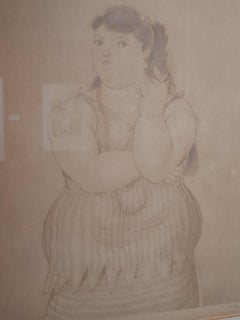
Mujer fumando
Located in BARCELONA, ES
Fernando Botero ''Mujer fumando" 1985 lithograph, signed in lower right corner Numbered in Roman numerals in lower left corner num. XLVI/L, 40 x 33 cm.
Category

1980s Realist Abstract Prints

Materials

Lithograph

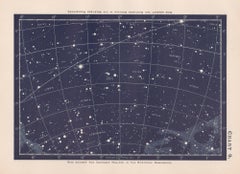
Star Chart. Antique Astronomy celestial print
Located in Melbourne, Victoria
Colour lithograph, 1890. 210mm by 285mm (sheet). From W Peck's 'A Handbook and Atlas of Astronomy', 1890. Sir William Peck FRSE FRAS (1862 – 1925) was a Scottish astronomer and scien...
Category

Late 19th Century Victorian More Prints

Materials

Lithograph

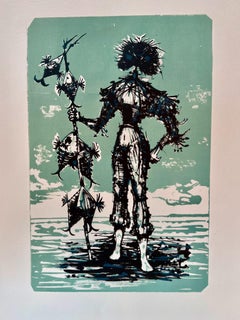
Fisherman
Located in Belgrade, MT
This etching by Lucien Coutard is part of my private collection since the 1970's. It is signed. Lucien Courtard created surrealist depictions of sexuality, he called it Eroticism and...
Category

Mid-20th Century Surrealist Abstract Prints

Materials

Etching, Lithograph

Alberto Giacometti, Georges Braque, August 31, 1963, from Derriere le Miroir
Located in Southampton, NY
This exquisite lithograph by Alberto Giacometti (1901–1966), titled Georges Braque le 31 aout 1963 (Georges Braque, August 31, 1963), originates from the 1964 folio Derriere le Miroi...
Category

1960s Modern Abstract Prints

Materials

Lithograph

Gentleman, shameful woman and reitre
Located in Paris, FR
Etching, 1968 Handsigned by the artist in pencil and numbered 38/50 Publisher : Galerie Louise Leiris (Paris) Printer : Crommelynck (Paris) Catalog : [Baer 175B, p. 538 ; Bloch 1699]...
Category

1960s Abstract Abstract Prints

Materials

Etching

Henri Matisse, Decoupage, from XXe Siecle 1954 (after)
Located in Southampton, NY
This exquisite lithograph after Henri Matisse (1869–1954), titled Decoupage (Decoupage), from the album XXe Siecle, Nouvelle serie N°4 (double) Janvier 1954, originates from the 1954...
Category

1950s Fauvist Abstract Prints

Materials

Lithograph

Nebulae, antique astronomy science diagram illustration print
Located in Melbourne, Victoria
Nebulae. Antique lithograph by W & AK Johnston, famous Scottish cartographers. Central vertical fold as issued. From Thomas Heath's 'The Twentieth Centur...
Category

Early 20th Century Victorian More Prints

Materials

Lithograph

Georges Braque, Profile of a Woman, 1972 (after)
Located in Southampton, NY
This exquisite lithograph after Georges Braque (1882–1963), titled Profil de femme (Profile of a Woman), originates from the 1972 edition published by Editions A. C. Mazo et Cie., Pa...
Category

1970s Cubist Abstract Prints

Materials

Lithograph

Henri Matisse, Decoupage, from XXe Siecle 1954 (after)
Located in Southampton, NY
This exquisite lithograph after Henri Matisse (1869–1954), titled Decoupage (Decoupage), from the album XXe Siecle, Nouvelle serie N°4 (double) Janvier 1954, originates from the 1954...
Category

1950s Fauvist Abstract Prints

Materials

Lithograph

Wassily Kandinsky, Heavy Red, from Derriere le miroir, 1965 (after)
Located in Southampton, NY
This exquisite lithograph after Wassily Kandinsky (1866–1944), titled Schweres Rot (Heavy Red), from the folio Derriere le miroir, No. 154, originates from the 1965 edition published...
Category

1960s Modern Abstract Prints

Materials

Lithograph

Joan Miro, Untitled, from Tarragona Tapestry, 1972 (after)
Located in Southampton, NY
This exquisite lithograph after Joan Miro (1893–1983), titled Sans titre (Untitled), from the folio Tapis De Tarragona (Tarragona Tapestry), illustrations, Joan Miro, 1972, originate...
Category

1970s Modern Abstract Prints

Materials

Lithograph

"Uplifting", Contemporary, Vines, Interior, Blue, White, Brown, Color Photograph
Located in Franklin, MA
Rebecca Skinner’s “Uplifting” is a 12 x 18 inch color photograph of vines growing into the interior of an abandoned building. A natural sculpture from mother nature, the tiny feet of...
Category

2010s Contemporary Color Photography

Materials

Metal

Still Life — Mid-century Modern
Located in Myrtle Beach, SC
Charles Quest, 'Still Life', 1947, wood engraving, edition 8. Signed, dated, and numbered '3/8' in pencil. Titled and annotated 'wood engraving' in the bottom left margin. A fine impression, on off-white wove paper, with full margins (1 to 2 inches), in excellent condition. Scarce. Matted to museum standards, unframed. ABOUT THE ARTIST Charles Quest, painter, printmaker, and fine art instructor, worked in various mediums, including mosaic, stained glass, mural painting, and sculpture. Quest grew up in St. Louis, his talent evident as a teenager when he began copying the works of masters such as Michelangelo on his bedroom walls. He studied at the Washington University School of Fine Arts, where he later taught from 1944 to 1971. He traveled to Europe after his graduation in 1929 and studied at La Grande Chaumière and Academie Colarossi, Paris, continuing to draw inspiration from the works of the Old Masters. After returning to St. Louis, Quest received several commissions to paint murals in public buildings, schools, and churches, including one from Joseph Cardinal Ritter, to paint a replica of Velasquez's Crucifixion over the main altar of the Old Cathedral in St. Louis. Quest soon became interested in the woodcut medium, which he learned through his study of J. J. Lankes' A Woodcut Manual (1932) and Paul Landacre's articles in American Artist magazine ‘since no artists in St. Louis were working in wood’ at that time. Quest also revealed that for him, wood cutting and engraving were ‘more enjoyable than any other means of expression.’ In the late 1940s, his graphic works began attracting critical attention—several of his woodcuts won prizes and were acquired by major American and European museums. His wood engraving entitled ‘Lovers’ was included in the American Federation of Art's traveling print exhibition in 1947. Two years later, Quest's two prize-winning prints, ‘Still Life with Grindstone’ and ‘Break Forth into Singing’, were exhibited in major American museums in a traveling show organized by the Philadelphia Print Club. His work was included in the Chicago Art Institute's exhibition, ‘Woodcut Through Six Centuries’, and the print ‘Still Life with Vise’ was purchased by the Museum of Modern Art in New York. In 1951 he was invited by artist-Curator Jacob Kainen to exhibit thirty wood engravings and color woodcuts in a one-person show at the Smithsonian's National Museum (now known as the American History Museum). Kainen's press release praised the ‘technical refinement’ of Quest's work: ‘He obtains a great variety of textural effects through the use of the graver, and these dense or transparent grays are set off against whites or blacks to achieve sparkling results. His work has the handsome qualities characteristic of the craftsman and designer.’ At the time of the Smithsonian exhibition, Quest's work was represented by three New York galleries in addition to one in his home town. He had won 38 prizes, and his prints were in the collections of the Library of Congress, the Chicago Art Institute, the Metropolitan Museum, and the Philadelphia Museum of Art. In cooperation with the Art in Embassies program, his color woodcuts were displayed at the American Embassy in Paris in 1951. Recognition at home came in 1955 with his first solo exhibition in St. Louis. Press coverage of the show heralded the ‘growth of graphic arts toward rivaling painting and sculpture as a major independent medium’. An exhibition of his prints at the Bethesda Art Gallery in 1983 attracted Curator Emeritus Joseph A. Haller, S.J., who began purchasing his work for Georgetown University's collection. In 1990 Georgetown University Library's Special Collections Division was the recipient of a large body of Quest's work, including prints, drawings, paintings, sculpture, stained glass, and his archive of correspondence and professional memorabilia. These extensive holdings, including some 260 of his fine prints, provide a rich opportunity for further study and appreciation of this versatile and not-to-be-forgotten mid-Western American artist...
Category

1940s American Modern Abstract Prints

Materials

Woodcut

Henri Matisse, Mrs. L.D., from Portraits by Henri Matisse, 1954 (after)
Located in Southampton, NY
This exquisite lithograph after Henri Matisse (1869–1954), titled Madame L.D. (Mrs. L.D.), from the album Portraits par Henri Matisse (Portraits by Hen...
Category

1950s Fauvist Abstract Prints

Materials

Lithograph

The Monster in the Forest (Tribute to Yves Klein)
Located in Paris, FR
Mixed media Silkscreen. Watercoloured proof, with collages, each work being unique and different, hand-enhanced by the artist. Handsigned by the artist in pencil Edition : 34/100 30....
Category

1970s Abstract Abstract Prints

Materials

Silk, Watercolor

Itzchak Tarkay [Café Friends] 2001 Signed Serigraph, Hors Commerce Proof
Located in Miami, FL
ITZCHAK TARKAY – [CAFÉ FRIENDS] ⚜ Serigraph in Color on Wove Paper ⚜ Hand Signed and Annotated HC 27/80 ⚜ Gilt Wood Frame CAFÉ SCENE WITH ELEGANT DETAIL Executed circa 2001, [Café F...
Category

Early 2000s Post-Impressionist Figurative Prints

Materials

Archival Paper, Screen

Henri Matisse, Mrs. Mary Hutchinson, Portraits by Henri Matisse, 1954 (after)
Located in Southampton, NY
This exquisite heliogravure after Henri Matisse (1869–1954), titled Madame Mary Hutchinson (Mrs. Mary Hutchinson), from the album Portraits par Henri Matisse (Portraits by Henri Mati...
Category

1950s Fauvist Abstract Prints

Materials

Lithograph

Henri Matisse, The Fall of Icarus, from Verve, Revue Artistique, 1945
Located in Southampton, NY
This exquisite lithograph by Henri Matisse (1869–1954), titled La Chute d’Icare (The Fall of Icarus), from Verve, Revue Artistique et Litteraire, Vol. IV, No. 13, originates from the...
Category

1940s Fauvist Abstract Prints

Materials

Lithograph

Henri Matisse, Mrs. Dorothy Parley, Portraits by Henri Matisse, 1954 (after)
Located in Southampton, NY
This exquisite heliogravure after Henri Matisse (1869–1954), titled Madame Dorothy Parley (Mrs. Dorothy Parley), from the album Portraits par Henri Matisse (Portraits by Henri Matiss...
Category

1950s Fauvist Abstract Prints

Materials

Lithograph

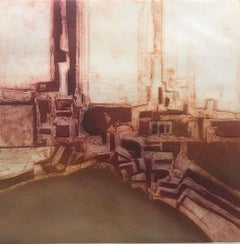
Amsterdam V ed 12/50 black-white canal house facade aquatint etch print
Located in Doetinchem, NL
Amsterdam V is an intriguing early career aquatint dry-needle etch print by renowned French-Dutch artist Olivier Julia. It depicts a detail of an old Amsterdam house facade and is bo...
Category

1980s Contemporary Abstract Prints

Materials

Rag Paper, Etching, Aquatint

Henri Matisse, Of Color, from Verve, Revue Artistique, 1945
Located in Southampton, NY
This exquisite lithograph by Henri Matisse (1869–1954), titled De la couleur (Of Color), from Verve, Revue Artistique et Litteraire, Vol. IV, No. 13, originates from the 1945 issue p...
Category

1940s Fauvist Abstract Prints

Materials

Lithograph

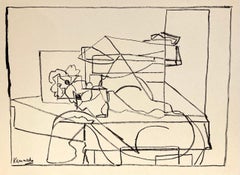
M. Kennedy, (Interior)
Located in New York, NY
This print was made for the American Abstract Artists Portfolio, 1937. All the images were lithographs made on zinc plates. Usually they were signed or initialed in the image -- on t...
Category

1930s Abstract Abstract Prints

Materials

Lithograph

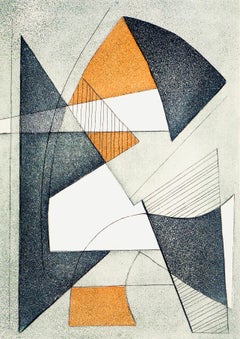
Projets de Pégase, Paroles peintes I, Alberto Magnelli
Located in Southampton, NY
Etching on vélin Johannot d’Arches paper. Inscription: Unsigned and unnumbered, as issued. Good condition. Notes: From the album, Paroles peintes I, 1962. Published by Éditions O. La...
Category

1960s Modern Landscape Prints

Materials

Etching

Amsterdam IX ed 28/50 black-white canal house facade aquatint etch print
Located in Doetinchem, NL
Amsterdam IX is an intriguing early career aquatint dry-needle etch print by renowned French-Dutch artist Olivier Julia. It depicts a detail of an old Amsterdam house facade and is b...
Category

1980s Contemporary Abstract Prints

Materials

Rag Paper, Etching, Aquatint

Green, blue, pink and yellow composition XXV
Located in Paris, FR
Etching and aquatint, 1964 Publisher : La Rose des Vents, Paris Printer : Jean Signovert Catalog : [Schneider XXV] 37.00 cm. x 27.00 cm. 14.57 in. x 10.63 in. (paper) 32.50 cm. x 23...
Category

1960s Abstract Abstract Prints

Materials

Etching, Aquatint

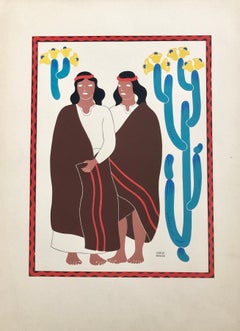
1945 Mexican Modernist Silkscreen Serigraph Print Regional Folk Art Dress Mexico
Located in Surfside, FL
This listing is for the one Silkscreen serigraph piece listed here. Mexico City, 1945. First edition. plate signed, limited edition of 1000, these serigraph plates depict various types of traditional and folk art indigenous clothing...
Category

1940s Folk Art Figurative Prints

Materials

Screen

Henri Matisse, Mrs. L.D., from Portraits by Henri Matisse, 1954 (after)
Located in Southampton, NY
This exquisite lithograph after Henri Matisse (1869–1954), titled Madame L.D. (Mrs. L.D.), from the album Portraits par Henri Matisse (Portraits by Hen...
Category

1950s Fauvist Abstract Prints

Materials

Lithograph

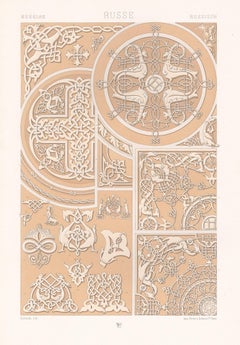
Russian, French antique 19th century Racinet art design lithograph print
Located in Melbourne, Victoria
'Russian - Russe - Russisch' Late 19th century interior design chromolithograph, from Racinet’s ‘L’Ornement Polychrome’, 1887. Published in Paris. Albert Racinet's 'L' Ornement Pol...
Category

Late 19th Century French School Interior Prints

Materials

Lithograph

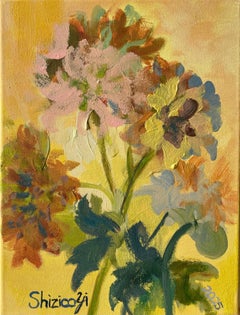
Hand Painted Aluminium Limited Edition#1-Dahlias-Briitish Awarded Artist
Located in London, GB
Shizico painted plein air ; this painting is a part of Summer Bloom Series, it is Shizico Yi's ongoing project in every summer at her garden. She began gardening in 2015 to create a ...
Category

2010s Abstract Impressionist Landscape Prints

Materials

Metal

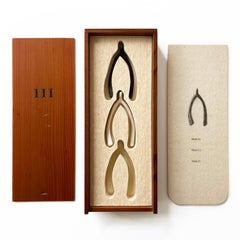
Lorna Simpson, III (Wish #1, Wish #2, Wish #3), Set of 3 Wishbones
Located in Hamburg, DE
Lorna Simpson (b. 1960) III (Wish #1, Wish #2, Wish #3), 1994 Medium: Complete set of three ceramic, rubber and bronze wishbones within molded felt printed with waterless lithography...
Category

20th Century Abstract Sculptures

Materials

Bronze

Henri Matisse, Miss Yvonne Landsberg, Portraits by Henri Matisse, 1954 (after)
Located in Southampton, NY
This exquisite lithograph after Henri Matisse (1869–1954), titled Mademoiselle Yvonne Landsberg (Miss Yvonne Landsberg), from the album Portraits par Henri Matisse (Portraits by Henr...
Category

1950s Fauvist Abstract Prints

Materials

Lithograph

Double Personage
Located in Fairlawn, OH
Double Personage Color lithograph, 1975 (?) Unsigned (as issued) Edition: Large Edition Limited, (estimated to be approximately 2000) Published in: XXe Siecle, No. 52, Juin 1979 Published: G. di San Lazzaro Printer: Mourlot Imprimeur, Paris, France Reference: Lam-Tonneau-Ryckelynck L7513 Condition: Excellent, fresh colors Traces of glue residue along margin edge where it was bound in the book Image/sheet size: 12 1/4 x 9 1/4 inches Wilfredo Lam (1902-1982) Biography Wifredo Lam was born in Sagua la Grande, Cuba, on December 8, 1902. He was the eighth child born to Lam-Yam―born in Canton around 1820, an immigrant to the Americas in 1860―and to Ana Serafina Catilla―born in 1862 in Cuba of mixed African and Spanish ancestry. The luxuriant nature of Sagua la Grande had a strong impact on Lam from early childhood. One night in 1907, he was startled by the strange shadows cast on the wall of his bedroom of a bat in flight. He often recounted the incident as his first magnificent awakening to another dimension to existence. In 1916, Lam and part of his family settled in Havana. He was enrolled in the Escuela Profesional de Pintura y Escultura, Academia de San Alejandro, where he remained a student until 1923. This period, with exhibitions at the Salón de Bellas artes, was determinant in his choice to become a painter. In 1923, the municipality of Sagua la Grande awarded him a grant to study in Europe and by the autumn of that year, at the age of twenty-one, he left the country for Spain. His time in Spain―initially intended as a short stay on his way to Paris―lasted 14 years. In Madrid, he was exposed to the ideas and movements of modern art. He spent long hours at the Archeological Museum and the Prado. He studied the great masters of Spanish painting, Velázquez and Goya, but felt particularly drawn to the works of Bosch and Bruegel the Elder. In 1931, his first wife, Eva (Sébastiana Piriz) and their son Wilfredo Victor died of tuberculosis. The terrible suffering he endured led to numerous paintings of mother and child. Lam found solace in the company of his Spanish friends and made contact with several political organizations. In 1936, with the help of his friend Faustino Cordón, he joined the Republican forces in their fight against Franco. He designed anti-Fascist posters and took part in the struggle by working in a munitions factory. The violence of the struggle inspired his painting La Guerra Civil. In 1938, Lam left Spain for Paris. Shortly before leaving, he met Helena Holzer, who would become his wife in 1944. His meeting Picasso in his studio on the Rue des Grands Augustins proved decisive. Picasso introduced his new “cousin” to his painter, poet and art critic friends, Braque, Matisse, Miró, Léger, Eluard, Leiris, Tzara, Kahnweiler, Zervos. Lam also met Pierre Loeb, the owner of the Galerie Pierre in Paris, which hosted Lam’s first solo exhibition in 1939. Shortly before the Germans arrived, Lam left Paris for Bordeaux and then Marseille, where many of his friends, for the most part surrealists, had gathered around André Breton in the Villa Air Bel: Pierre Mabille, René Char, Max Ernst, Victor Brauner, Oscar Domínguez, André Masson, Benjamin Péret. In the Villa Air Bel, a meeting place for creativity and experimentation, Lam worked and produced, most notably, a series of ink drawings that set the tone for what would become his signature style of hybrid figures, a vocabulary he would develop more fully during his years in Cuba from 1941 to 1947. In January and February 1941, Lam illustrated Breton’s poem Fata Morgana which was censored by the Vichy government. On March 25, Lam and Helena Holzer embarked on the “Capitaine Paul Lemerle” headed for Martinique, in the company of some 300 other artists and intellectuals―André Breton and Claude Lévi-Strauss among them. Upon arrival, the passengers were interred at Trois Îles. It was during this forced passage in Martinique and before leaving for Cuba that Lam and Aimé Césaire met for the first time to become life-long friends. Newly settled in his native land after almost twenty years, Lam delved deeper into his artistic investigations, finding nourishment for his ideas in the surroundings of his childhood and youth. His sister Eloisa, whom he was closest to, explained to him in much detail the workings of Afro-Cuban rituals and he began attending ritual ceremonies with some of his friends. This contact with Afro-Cuban culture brought new impetus to his art. He painted over one hundred canvases, most notably La Jungla, making the year 1942 his most productive of this period. Over the next few years, a number of exhibitions followed in the United States, at the Institute of Modern Art of Boston, at the MoMA of New York, at the Galerie Pierre Matisse, where La Jungla was presented and created a scandal. In 1946, Lam and Helena travel to Haiti and attend voodoo ceremonies in the company of Pierre Mabille and André Breton. Talking about his experience in Haiti, Lam said, “It is often assumed that my work took its final form in Haiti, but my stay there, like the trips I made to Venezuela, Colombia or to the Brazilian Mato Grosso only broadened its scope. I could have been a good painter from the School of Paris, but I felt like a snail out of its shell. What really broadened my painting is the presence of African poetry.” Picasso_Lam_Vallauris_1954_vignette Wifredo Lam et Pablo Picasso, Vallauris, 1954 Lam then went on to New York where he renewed contact with Marcel Duchamp and made new acquaintances: Jeanne Reynal, James Johnson Sweeney, Arshile Gorky, John Cage, Roger Wilcox, Mercedes Matter, Ian Hugo, Jesse Fernández, John Cage, Sonia Sekula and Yves Tanguy. By the end of the 1940s, Lam divided his time between Europe, Havana and New York, where they stayed with Pierre and Teeny Matisse...
Category

1970s Surrealist Abstract Prints

Materials

Lithograph

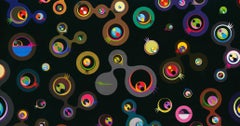
Takashi Murakami Kanye West 2007 (Takashi Murakami Louis Vuitton)
Located in NEW YORK, NY
Takashi Murakami, Kanye West, Louis Vuitton; Los Angeles 2007 (Murakami Gala): Rare folding invitation published on the occasion of a 2007 reception honoring Takashi Murakami and fashion icon Marc Jacobs with a special performance by Kanye West; October 28th, 2007; MOCA Los Angeles; hosted by Louis Vuitton. Front side imagery features a reproduction of Murakami’s ‘Jellyfish...
Category

21st Century and Contemporary Pop Art Abstract Prints

Materials

Offset, Paper

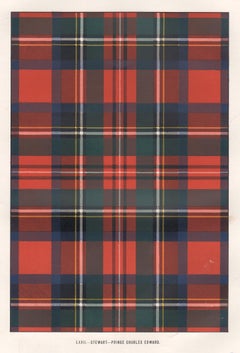
Stewart - Prince Charles Edward (Tartan), Scottish Scotland lithograph print
Located in Melbourne, Victoria
Stewart - Prince Charles Edward. Chromolithograph. 1886. From 'The Tartans of the Clans of Scotland', by James Grant, 1886. 365mm by 265mm (sheet). Accompanied by a sheet of de...
Category

Late 19th Century Victorian Interior Prints

Materials

Lithograph

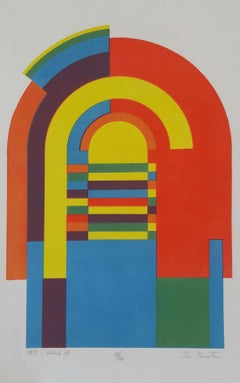
Structure VII - XX century, Abstract print, Colorful, Vibrant, Geometric
Located in Warsaw, PL
JAN PAMUŁA (b. in 1944) A Polish artist, professor of Academy of Fine Arts in Cracow. In 1961-1968 he studied painting and printmaking in Cracow. In 1967 he was studying in École nat...
Category

20th Century Other Art Style Abstract Prints

Materials

Paper, Color

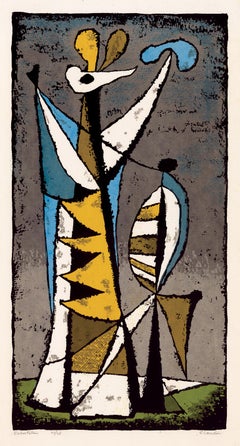
Exhortation (Priest) — Mid-Century Modernism
Located in Myrtle Beach, SC
Edward Landon 'Exhortation (Priest)', color serigraph, 1957, edition 28, Ryan 72. Signed, titled, and numbered '21/28' in pencil. A superb, richly-inked impression, with strong color...
Category

Mid-20th Century American Modern Abstract Prints

Materials

Screen

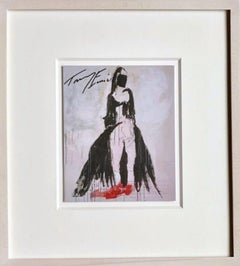
TRACEY EMIN/EDVARD MUNCH, THE LONELINESS OF THE SOUL print, SCARCE, Hand Signed
Located in New York, NY
Tracey Emin Svart katt / Black cat (2008), from the exhibition TRACEY EMIN/EDVARD MUNCH: THE LONELINESS OF THE SOUL (hand signed), 2021 Offset lithograph promotional print on card st...
Category

2010s Contemporary Abstract Prints

Materials

Permanent Marker, Lithograph, Offset

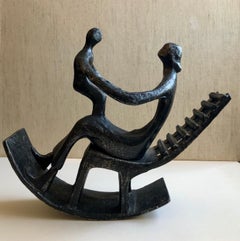
In the style of Henry Moore, Mother and Child in Rocking Chair
Located in Surfside, FL
This is a cast metal sculpture of a woman and child, mother and baby in a rocking chair. It has a patina on a white metal. Not sure if it is steel or aluminum. It is and older vintage piece and has wear to patina where it sits and rocks on table. It is not signed or numbered and there is no foundry mark. Hence it is being sold as being after or in the manner of Henry Moore. Henry Spencer Moore (1898 – 1986) Moore was born in Castleford, the son of a coal miner. He became well-known through his carved marble and larger-scale abstract cast bronze sculptures, and was instrumental in introducing a particular form of modernism to the United Kingdom later endowing the Henry Moore Foundation, which continues to support education and promotion of the arts. After the Great War, Moore received an ex-serviceman's grant to continue his education and in 1919 he became a student at the Leeds School of Art (now Leeds College of Art), which set up a sculpture studio especially for him. At the college, he met Barbara Hepworth, a fellow student who would also become a well-known British sculptor, and began a friendship and gentle professional rivalry that lasted for many years. In Leeds, Moore also had access to the modernist works in the collection of Sir Michael Sadler, the University Vice-Chancellor, which had a pronounced effect on his development. In 1921, Moore won a scholarship to study at the Royal College of Art in London, along with Hepworth and other Yorkshire contemporaries. While in London, Moore extended his knowledge of primitive art and sculpture, studying the ethnographic collections at the Victoria and Albert Museum and the British Museum. Moore's familiarity with primitivism and the influence of sculptors such as Constantin Brâncuși, Jacob Epstein, Henri Gaudier-Brzeska and Frank Dobson led him to the method of direct carving, in which imperfections in the material and marks left by tools became part of the finished sculpture. After Moore married, the couple moved to a studio in Hampstead at 11a Parkhill Road NW3, joining a small colony of avant-garde artists who were taking root there. Shortly afterward, Hepworth and her second husband Ben Nicholson moved into a studio around the corner from Moore, while Naum Gabo, Roland Penrose, Cecil Stephenson and the art critic Herbert Read also lived in the area (Read referred to the area as "a nest of gentle artists"). This led to a rapid cross-fertilization of ideas that Read would publicise, helping to raise Moore's public profile. The area was also a stopping-off point for many refugee artists, architects and designers from continental Europe en route to America—some of whom would later commission works from Moore. In 1932, after six year's teaching at the Royal College, Moore took up a post as the Head of the Department of Sculpture at the Chelsea School of Art. Artistically, Moore, Hepworth and other members of The Seven and Five Society would develop steadily more abstract work, partly influenced by their frequent trips to Paris and their contact with leading progressive artists, notably Pablo Picasso, Georges Braque, Jean Arp and Alberto Giacometti. Moore flirted with Surrealism, joining Paul Nash's modern art movement "Unit One", in 1933. In 1934, Moore visited Spain; he visited the cave of Altamira (which he described as the "Royal Academy of Cave Painting"), Madrid, Toledo and Pamplona. Moore made his first visit to America when a retrospective exhibition of his work opened at the Museum of Modern Art in New York City.[28] Before the war, Moore had been approached by educator Henry Morris, who was trying to reform education with his concept of the Village College. Morris had engaged Walter Gropius as the architect for his second village college at Impington near Cambridge, and he wanted Moore to design a major public sculpture for the site. In the 1950s, Moore began to receive increasingly significant commissions. He exhibited Reclining Figure: Festival at the Festival of Britain in 1951, and in 1958 produced a large marble reclining figure for the UNESCO building in Paris. With many more public works of art, the scale of Moore's sculptures grew significantly and he started to employ an increasing number of assistants to work with him at Much Hadham, including Anthony Caro and Richard Wentworth. Moore produced at least three significant examples of architectural sculpture during his career. In 1928, despite his own self-described "extreme reservations", he accepted his first public commission for West Wind for the London Underground Building at 55 Broadway in London, joining the company of Jacob Epstein and Eric Gill. At an introductory speech in New York City for an exhibition of one of the finest modernist sculptors, Alberto Giacometti, Sartre spoke of "The beginning and the end of history...
Category

1950s Modern Abstract Prints

Materials

Metal

Recently Viewed

View All