1990s Abstract Prints

to
194
211
181
350
196
148
Overall Width
to
Overall Height
to
537
205
118
35
32
28
4
2
2
1
1
53
45
24
17
17
12
95
13,955
6,706
5
24
60
172
317
972
2,357
5,033
2,154
1,086
5
722
289
64
9
7
4
3
3
2
2
2
2
2
1
1
1
1
1
1
1
1
1
1
326
303
224
168
91
145
339
795
265
Period: 1990s
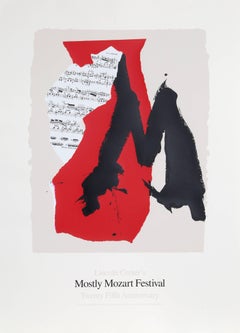
Lincoln Center Mostly Mozart, 25th Anniversary, Lithograph by Robert Motherwell
Located in Long Island City, NY
Artist: Robert Motherwell, American (1915 - 1991) Title: Lincoln Center Mostly Mozart, 25th Anniversary Year: 1991 Medium: Lithograph and Screenprint on ...
Category

Abstract Expressionist 1990s Abstract Prints

Materials

Lithograph, Screen

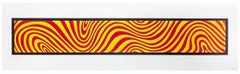
Wavy Irregular Bands - Etching by Sol Lewitt - 1996
Located in Roma, IT
Wavy Irregular Bands is an artwork realized by Sol Lewitt in 1996.  Etching and Aquatint on Arches 88 Paper. Edition of 35 + 8 AP + 8 T + 1 BAT + 1 NB. Edition 19/35. Signed and n...
Category

Abstract 1990s Abstract Prints

Materials

Etching

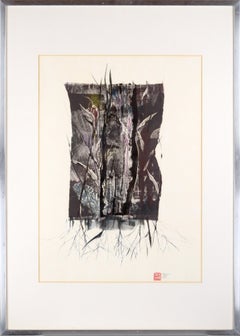
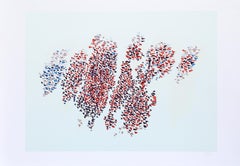
"Roots" Abstract Monoprint in Ink on Paper
Located in Soquel, CA
Bold abstract monoprint by Roxanne Lu (20th Century). This piece is composed of botanical shapes laid across large patches of dark magenta, olive green, black, and pale blue. Extending below the majority of the piece are brushstrokes resembling roots. Signed, dated, titled and marked with the artist's chop in the lower right corner (Roxanne Lu Roots FA 98) Presented in an aluminum frame with an off white mat...
Category

Abstract 1990s Abstract Prints

Materials

Ink, Archival Paper, Lithograph

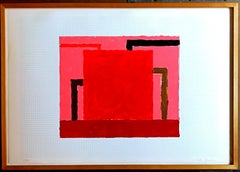
Peter Halley, CORE Geometric Abstraction Silkscreen Lithograph Signed/N Framed
Located in New York, NY
Peter Halley Core, 1991 Limited Edition Silkscreen with lithography on Coventry Rag paper. Pencil signed and numbered 13/50 on the front Publisher: Edition Schellmann Pace Edit...
Category

Abstract Geometric 1990s Abstract Prints

Materials

Lithograph, Screen

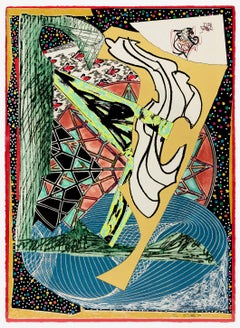
Very Special Arts Gallery photolithograph (Hand Signed by Frank Stella) Framed
Located in New York, NY
Frank Stella (after) Untitled, for the Very Special Arts Gallery (Hand Signed by Frank Stella), 1992 Photo lithograph and offset litho on thin board (hand signed) Frame included:: el...
Category

Abstract Expressionist 1990s Abstract Prints

Materials

Lithograph, Offset

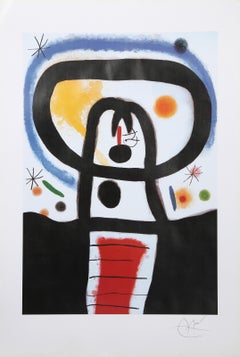
Equinoxe, Modern Offset Lithograph Poster after Joan Miro
Located in Long Island City, NY
Joan Miro, After, Spanish (1893 - 1983) - Equinoxe, Year: 1996, Medium: Offset Lithograph Poster, fascimile signature, Image Size: 29.5 x 20.5 inches, Size: 37.5 x 25.5 in. (95.2...
Category

Modern 1990s Abstract Prints

Materials

Offset

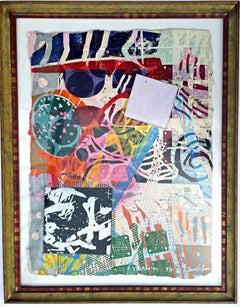
Cuatro, Monoprint with screenprint collage acrylic, stitching embossing Signed
Located in New York, NY
Sam Gilliam Cuatro, 1994 Monoprint with screenprint, collage, acrylic, stitching and embossing in colors on handmade paper Hand signed, dated, titled and annotated P/P by Sam Gilliam...
Category

Abstract Expressionist 1990s Abstract Prints

Materials

Mixed Media, Acrylic, Monoprint, Screen

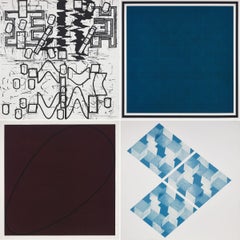
4 x 4 x 4 portfolio by Sol Lewitt, Robert Mangold, Mel Bochner, and Barry Le Va
Located in New York, NY
Set of four screenprints by Mel Bochner, Barry LeVa, Sol LeWitt, and Robert Mangold. Sol Lewitt's tight crosshatching over teal, Mel Bochner's tessellated blue houses, Barry Le Va's...
Category

Minimalist 1990s Abstract Prints

Materials

Screen

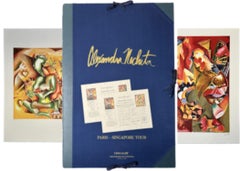
My Journey Portfolio 1998 Mourlot Lithographs Healing Efforts and Big Hearts
Located in Rochester Hills, MI
Artist: Alexandra Nechita Title: My Journey - Blue Portfolio Artworks: Healing Efforts, Big Hearts Are Never Too Big Year: 1998 Lithographs on Arches Archival Paper    Size; 35½'' x...
Category

Abstract 1990s Abstract Prints

Materials

Lithograph

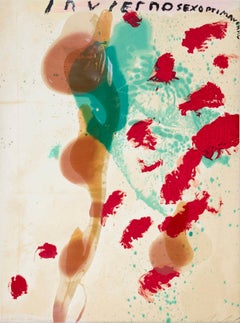
Julian Schnabel Inviernosexoprimaveral (Sexual Spring-like Winter)
Located in New York, NY
Inviernosexoprimaveral 1995 17-color silkscreen with poured resin 40 x 30 inches (102 x 76 cm) Edition of 80 "Sexual Spring-like Winter" is a large painterly work, created with laye...
Category

Abstract 1990s Abstract Prints

Materials

Screen

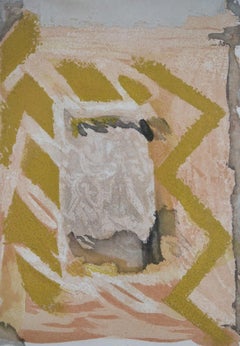
Untitled
Located in Barcelona, BARCELONA
The painting is being offered with a work and authenticity certificate
Category

Abstract 1990s Abstract Prints

Materials

Etching

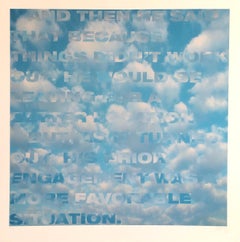
Large Sky Blue Color Iris Print Text Based Conceptual Muse X LA Artist 1 of 2 A
Located in Surfside, FL
Fred Fehlau is an American a Postwar & Contemporary artist. He was born in 1958. Known for his sculpture. EDUCATION ArtCenter College of Design MFA, with Honors 1986–1988 ArtCenter College of Design BFA, with Distinction 1976–1979 Educational Management Program Harvard Graduate School of Education, 2011 Selected Exhibitions: 2014 The Avant-Guard Collection, Orange County Museum of Art, Newport Beach, CA. Curated by Dan Cameron and Fatima Manalili. 2003 The Spirit of White, Beyeler Gallery, Basel, Switzerland. Curated by Urs Albrecht. 2000 New Acquisitions...
Category

Abstract 1990s Abstract Prints

Materials

Digital Pigment

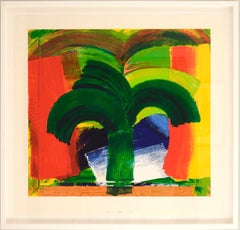
In Tangier
Located in London, GB
Howard Hodgkin In Tangier, 1991 Screenprint in 22 colours on huntsman velvet 300gsm paper Signed with initials HH, numbered (63/72) and dated ('91) in pencil 82 × 86 cm Edition of 7...
Category

Post-Modern 1990s Abstract Prints

Materials

Screen

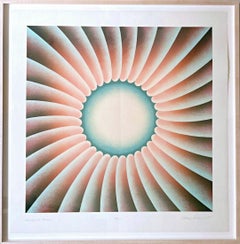
Judy Chicago, Through the Flower Iconic signed/n silkscreen Feminist art, Framed
Located in New York, NY
Judy Chicago Through the Flower, 1991 Silkscreen on Stonehenge natural white paper with deckled edges Publisher: Unified Arts, Albuquerque, New Mexico Signed, titled and numbered 24/...
Category

Feminist 1990s Abstract Prints

Materials

Screen

"Requiem/Let Them Be, " Etching and Aquatint signed by Joan Snyder
Located in Milwaukee, WI
"Requiem" is an original etching and aquatint by Joan Snyder. The artist signed the piece, and the edition is of 120. This piece features abstract, expressionist text and an striking portrait of a woman with red lipstick on a pink background. 25 5/8" x 20" art 32" x 26" frame Joan Snyder was born on April 16, 1940, in Highland Park, New Jersey. She received her AB from Douglass College in New Brunswick, New Jersey (1962), and an MFA from Rutgers University in New Brunswick, New Jersey (1966). She was the recipient of a National Endowment for the Arts Fellowship (1974) and a John Simon Guggenheim Memorial Fellowship (1983). Snyder lives in Brooklyn and Woodstock, New York. Although Snyder’s paintings are often placed under various art-movement umbrellas—Abstract...
Category

Contemporary 1990s Abstract Prints

Materials

Etching, Aquatint

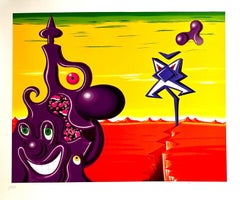
Sajippe Kraka Joujesh
Located in Hollywood, FL
Artist: Kenny Scharf Title: Sajippe Kraka Joujesh Medium: Silkscreen Signed: Hand Signed Measurements: 39" x 46" Edition Number: 26/150 PRINTER: Fine Art Printing Ltd, NYC PUBLIS...
Category

Pop Art 1990s Abstract Prints

Materials

Screen

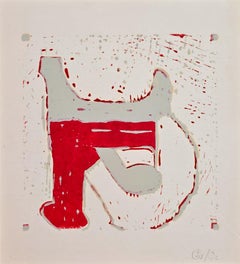
Untitled (XX) (Abstract, Red, Grey) (25% OFF LIST PRICE)
Located in Kansas City, MO
Barbara Keidel Untitled (XX) (Abstract, Red, Grey) Linocut 1996 Edition: 3 Numbered and dated by hand in pencil Size: 9 x 8.25 inches (22.86 x 20.95 cm) COA provided Tags: Abstr...
Category

Abstract 1990s Abstract Prints

Materials

Linocut

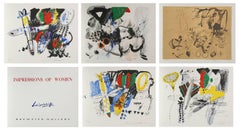
Impressions of Women, Suite of 5 Lithographs by Doo Shik Lee
Located in Long Island City, NY
Artist: Doo Shik Lee, Korean (1947 - 2013) Title: Impressions of Women Year: 1993 Medium: Suite of Five Lithographs on Arches, Each signed and numbered in pencil Edition: 175 Size: ...
Category

Abstract Expressionist 1990s Abstract Prints

Materials

Lithograph

Autumn Leaves Always, Abstract Expressionist Screenprint by Robert Goodnough
Located in Long Island City, NY
Artist: Robert Goodnough Title: Autumn Leaves Always Year: 1992 Medium: Screenprint, signed and numbered in pencil Edition: 150, A/P Image: 23 x 31.5 inches Size: 27.5 x 39.5 in. (6...
Category

Minimalist 1990s Abstract Prints

Materials

Screen

Seascape, Abstract Expressionist Aquatint by Alison Hildreth
Located in Long Island City, NY
Alison Hildreth, American (1934 - ) - Seascape, Year: 1995, Medium: Aquatint, signed, dated and numbered in pencil, Edition: AP, Image Size: 14.5 x 21.5 inches, Size: 15.5 x 22 ...
Category

Abstract Expressionist 1990s Abstract Prints

Materials

Aquatint

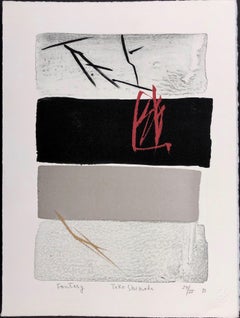
Fantasy, Japanese, limited edition lithograph, black, white, red, signed, titled
Located in Santa Fe, NM
Fantasy, Japanese, limited edition lithograph, black, white, red, signed, titled Shinoda's works have been collected by public galleries and museums, including the Museum of Modern Art, Solomon R. Guggenheim Museum, Brooklyn Museum and Metropolitan Museum (all in New York City), the National Museum of Modern Art in Tokyo, the British Museum in London, the Art Institute of Chicago, Arthur M. Sackler Gallery of the Smithsonian in Washington, D.C., the Singapore Art Museum, the National Museum of Singapore, the Kröller-Müller Museum in Otterlo, Netherlands, the Albright–Knox Art Gallery in Buffalo, New York, the Cincinnati Art Museum, and the Yale University Art Gallery in New Haven, Connecticut. New York Times Obituary, March 3, 2021 by Margalit Fox, Alex Traub contributed reporting. Toko Shinoda, one of the foremost Japanese artists of the 20th century, whose work married the ancient serenity of calligraphy with the modernist urgency of Abstract Expressionism, died on Monday at a hospital in Tokyo. She was 107. Her death was announced by her gallerist in the United States. A painter and printmaker, Ms. Shinoda attained international renown at midcentury and remained sought after by major museums and galleries worldwide for more than five decades. Her work has been exhibited at, among other places, the Metropolitan Museum of Art and the Museum of Modern Art in New York; the Art Institute of Chicago; the British Museum; and the National Museum of Modern Art in Tokyo. Private collectors include the Japanese imperial family. Writing about a 1998 exhibition of Ms. Shinoda’s work at a London gallery, the British newspaper The Independent called it “elegant, minimal and very, very composed,” adding, “Her roots as a calligrapher are clear, as are her connections with American art of the 1950s, but she is quite obviously a major artist in her own right.” As a painter, Ms. Shinoda worked primarily in sumi ink, a solid form of ink, made from soot pressed into sticks, that has been used in Asia for centuries. Rubbed on a wet stone to release their pigment, the sticks yield a subtle ink that, because it is quickly imbibed by paper, is strikingly ephemeral. The sumi artist must make each brush stroke with all due deliberation, as the nature of the medium precludes the possibility of reworking even a single line. “The color of the ink which is produced by this method is a very delicate one,” Ms. Shinoda told The Business Times of Singapore in 2014. “It is thus necessary to finish one’s work very quickly. So the composition must be determined in my mind before I pick up the brush. Then, as they say, the painting just falls off the brush.” Ms. Shinoda painted almost entirely in gradations of black, with occasional sepias and filmy blues. The ink sticks she used had been made for the great sumi artists of the past, some as long as 500 years ago. Her line — fluid, elegant, impeccably placed — owed much to calligraphy. She had been rigorously trained in that discipline from the time she was a child, but she had begun to push against its confines when she was still very young. Deeply influenced by American Abstract Expressionists like Jackson Pollock, Mark Rothko and Robert Motherwell, whose work she encountered when she lived in New York in the late 1950s, Ms. Shinoda shunned representation. “If I have a definite idea, why paint it?,” she asked in an interview with United Press International in 1980. “It’s already understood and accepted. A stand of bamboo is more beautiful than a painting could be. Mount Fuji is more striking than any possible imitation.” Spare and quietly powerful, making abundant use of white space, Ms. Shinoda’s paintings are done on traditional Chinese and Japanese papers, or on backgrounds of gold, silver or platinum leaf. Often asymmetrical, they can overlay a stark geometric shape with the barest calligraphic strokes. The combined effect appears to catch and hold something evanescent — “as elusive as the memory of a pleasant scent or the movement of wind,” as she said in a 1996 interview. Ms. Shinoda’s work also included lithographs; three-dimensional pieces of wood and other materials; and murals in public spaces, including a series made for the Zojoji Temple in Tokyo. The fifth of seven children of a prosperous family, Ms. Shinoda was born on March 28, 1913, in Dalian, in Manchuria, where her father, Raijiro, managed a tobacco plant. Her mother, Joko, was a homemaker. The family returned to Japan when she was a baby, settling in Gifu, midway between Kyoto and Tokyo. One of her father’s uncles, a sculptor and calligrapher, had been an official seal carver to the Meiji emperor. He conveyed his love of art and poetry to Toko’s father, who in turn passed it to Toko. “My upbringing was a very traditional one, with relatives living with my parents,” she said in the U.P.I. interview. “In a scholarly atmosphere, I grew up knowing I wanted to make these things, to be an artist.” She began studying calligraphy at 6, learning, hour by hour, impeccable mastery over line. But by the time she was a teenager, she had begun to seek an artistic outlet that she felt calligraphy, with its centuries-old conventions, could not afford. “I got tired of it and decided to try my own style,” Ms. Shinoda told Time magazine in 1983. “My father always scolded me for being naughty and departing from the traditional way, but I had to do it.” Moving to Tokyo as a young adult, Ms. Shinoda became celebrated throughout Japan as one of the country’s finest living calligraphers, at the time a signal honor for a woman. She had her first solo show in 1940, at a Tokyo gallery. During World War II, when she forsook the city for the countryside near Mount Fuji, she earned her living as a calligrapher, but by the mid-1940s she had started experimenting with abstraction. In 1954 she began to achieve renown outside Japan with her inclusion in an exhibition of Japanese calligraphy at MoMA. In 1956, she traveled to New York. At the time, unmarried Japanese women could obtain only three-month visas for travel abroad, but through zealous renewals, Ms. Shinoda managed to remain for two years. She met many of the titans of Abstract Expressionism there, and she became captivated by their work. “When I was in New York in the ’50s, I was often included in activities with those artists, people like Mark Rothko, Jackson Pollock, Motherwell and so forth,” she said in a 1998 interview with The Business Times. “They were very generous people, and I was often invited to visit their studios, where we would share ideas and opinions on our work. It was a great experience being together with people who shared common feelings.” During this period, Ms. Shinoda’s work was sold in the United States by Betty Parsons, the New York dealer who represented Pollock, Rothko and many of their contemporaries. Returning to Japan, Ms. Shinoda began to fuse calligraphy and the Expressionist aesthetic in earnest. The result was, in the words of The Plain Dealer of Cleveland in 1997, “an art of elegant simplicity and high drama.” Among Ms. Shinoda’s many honors, she was depicted, in 2016, on a Japanese postage stamp. She is the only Japanese artist to be so honored during her lifetime. No immediate family members survive. When she was quite young and determined to pursue a life making art, Ms. Shinoda made the decision to forgo the path that seemed foreordained for women of her generation. “I never married and have no children,” she told The Japan Times in 2017. “And I suppose that it sounds strange to think that my paintings are in place of them — of course they are not the same thing at all. But I do say, when paintings that I have made years ago are brought back into my consciousness, it seems like an old friend, or even a part of me, has come back to see me.” Works of a Woman's Hand Toko Shinoda bases new abstractions on ancient calligraphy Down a winding side street in the Aoyama district, western Tokyo. into a chunky white apartment building, then up in an elevator small enough to make a handful of Western passengers friends or enemies for life. At the end of a hall on the fourth floor, to the right, stands a plain brown door. To be admitted is to go through the looking glass. Sayonara today. Hello (Konichiwa) yesterday and tomorrow. Toko Shinoda, 70, lives and works here. She can be, when she chooses, on e of Japans foremost calligraphers, master of an intricate manner of writing that traces its lines back some 3,000 years to ancient China. She is also an avant-garde artist of international renown, whose abstract paintings and lithographs rest in museums around the world. These diverse talents do not seem to belong in the same epoch. Yet they have somehow converged in this diminutive woman who appears in her tiny foyer, offering slippers and ritual bows of greeting. She looks like someone too proper to chip a teacup, never mind revolutionize an old and hallowed art form She wears a blue and white kimono of her own design. Its patterns, she explains, are from Edo, meaning the period of the Tokugawa shoguns, before her city was renamed Tokyo in 1868. Her black hair is pulled back from her face, which is virtually free of lines and wrinkles. except for the gold-rimmed spectacles perched low on her nose (this visionary is apparently nearsighted). Shinoda could have stepped directly from a 19th century Meji print. Her surroundings convey a similar sense of old aesthetics, a retreat in the midst of a modern, frenetic city. The noise of the heavy traffic on a nearby elevated highway sounds at this height like distant surf. delicate bamboo shades filter the daylight. The color arrangement is restful: low ceilings of exposed wood, off-white walls, pastel rugs of blue, green and gray. It all feels so quintessentially Japanese that Shinoda’s opening remarks come as a surprise. She points out (through a translator) that she was not born in Japan at all but in Darien, Manchuria. Her father had been posted there to manage a tobacco company under the aegis of the occupying Japanese forces, which seized the region from Russia in 1905. She says,”People born in foreign places are very free in their thinking, not restricted” But since her family went back to Japan in 1915, when she was two, she could hardly remember much about a liberated childhood? She answers,”I think that if my mother had remained in Japan, she would have been an ordinary Japanese housewife. Going to Manchuria, she was able to assert her own personality, and that left its mark on me.” Evidently so. She wears her obi low on the hips, masculine style. The Porcelain aloofness she displays in photographs shatters in person. Her speech is forceful, her expression animated and her laugh both throaty and infectious. The hand she brings to her mouth to cover her amusement (a traditional female gesture of modesty) does not stand a chance. Her father also made a strong impression on the fifth of his seven children:”He came from a very old family, and he was quite strict in some ways and quite liberal in others.” He owned one of the first three bicycles ever imported to Japan and tinkered with it constantly He also decided that his little daughter would undergo rigorous training in a procrustean antiquity. “I was forced to study from age six on to learn calligraphy,” Shinoda says, The young girl dutifully memorized and copied the accepted models. In one sense, her father had pushed her in a promising direction, one of the few professional fields in Japan open to females. Included among the ancient terms that had evolved around calligraphy was onnade, or woman's writing. Heresy lay ahead. By the time she was 15, she had already been through nine years of intensive discipline, “I got tired of it and decided to try my own style. My father always scolded me for being naughty and departing from the traditional way, but I had to do it.” She produces a brush and a piece of paper to demonstrate the nature of her rebellion. “This is kawa, the accepted calligraphic character for river,” she says, deftly sketching three short vertical strokes. “But I wanted to use more than three lines to show the force of the river.” Her brush flows across the white page, leaving a recognizable river behind, also flowing.” The simple kawa in the traditional language was not enough for me. I wanted to find a new symbol to express the word river.” Her conviction grew that ink could convey the ineffable, the feeling, "as she says, of wind blowing softly.” Another demonstration. She goes to the sliding wooden door of an anteroom and disappears in back of it; the only trace of her is a triangular swatch of the right sleeve of her kimono, which she has arranged for that purpose. A realization dawns. The task of this artist is to paint that three sided pattern so that the invisible woman attached to it will be manifest to all viewers. Gen, painted especially for TIME, shows Shinoda’s theory in practice. She calls the work “my conception of Japan in visual terms.” A dark swath at the left, punctuated by red, stands for history. In the center sits a Chinese character gen, which means in the present or actuality. A blank pattern at the right suggests an unknown future. Once out of school, Shinoda struck off on a path significantly at odds with her culture. She recognized marriage for what it could mean to her career (“a restriction”) and decided against it. There was a living to be earned by doing traditional calligraphy:she used her free time to paint her variations. In 1940 a Tokyo gallery exhibited her work. (Fourteen years would pass before she got a second show.)War came, and bad times for nearly everyone, including the aspiring artist , who retreated to a rural area near Mount Fuji and traded her kimonos for eggs. In 1954 Shinoda’s work was included in a group exhibit at New York City’s Museum of Modern Art. Two years later, she overcame bureaucratic obstacles to visit the U.S.. Unmarried Japanese women are allowed visas for only three months, patiently applying for two-month extensions, one at a time, Shinoda managed to travel the country for two years. She pulls out a scrapbook from this period. Leafing through it, she suddenly raises a hand and touches her cheek:”How young I looked!” An inspection is called for. The woman in the grainy, yellowing newspaper photograph could easily be the on e sitting in this room. Told this, she nods and smiles. No translation necessary. Her sojourn in the U.S. proved to be crucial in the recognition and development of Shinoda’s art. Celebrities such as actor Charles Laughton and John Lewis of the Modern Jazz Quartet bought her paintings and spread the good word. She also saw the works of the abstract expressionists, then the rage of the New York City art world, and realized that these Western artists, coming out of an utterly different tradition, were struggling toward the same goal that had obsessed her. Once she was back home, her work slowly made her famous. Although Shinoda has used many materials (fabric, stainless steel, ceramics, cement), brush and ink remain her principal means of expression. She had said, “As long as I am devoted to the creation of new forms, I can draw even with muddy water.” Fortunately, she does not have to. She points with evident pride to her ink stone, a velvety black slab of rock, with an indented basin, that is roughly a foot across and two feet long. It is more than 300 years old. Every working morning, Shinoda pours about a third of a pint of water into it, then selects an ink stick from her extensive collection, some dating back to China’s Ming dynasty. Pressing stick against stone, she begins rubbing. Slowly, the dried ink dissolves in the water and becomes ready for the brush. So two batches of sumi (India ink) are exactly alike; something old, something new. She uses color sparingly. Her clear preference is black and all its gradations. “In some paintings, sumi expresses blue better than blue.” It is time to go downstairs to the living quarters. A niece, divorced and her daughter,10,stay here with Shinoda; the artist who felt forced to renounce family and domesticity at the outset of her career seems welcome to it now. Sake is offered, poured into small cedar boxes and happily accepted. Hold carefully. Drink from a corner. Ambrosial. And just right for the surroundings and the hostess. A conservative renegade; a liberal traditionalist; a woman steeped in the male-dominated conventions that she consistently opposed. Her trail blazing accomplishments are analogous to Picasso’s. When she says goodbye, she bows. --by Paul Gray...
Category

Contemporary 1990s Abstract Prints

Materials

Lithograph

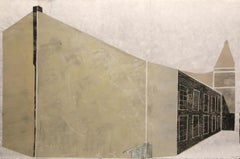
Untitled (Architectural Abstract, Modern, Beige, Brown, ~33% OFF - LIMITED TIME)
Located in Kansas City, MO
Martel Wiegand Untitled (Architectural Abstract, Modern, Beige, Brown, Linocut) Color Linoleum Cut on light Japanese Washi Paper with Centerfold 1990 24.01 x 35.43 inches (61 x 90 cm...
Category

Modern 1990s Abstract Prints

Materials

Linocut, Washi Paper

Pilone Nero - Mezzotint by Piero Ruggeri - 1992
Located in Roma, IT
Hand signed. Edition of 60 pieces. Mezzotint and Carborundum print. Some minor foxing on edges.
Category

Abstract 1990s Abstract Prints

Materials

Mezzotint

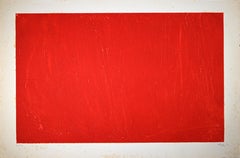
Robert Natkin Abstract Lithograph Signed Numbered
Located in Detroit, MI
SALE ONE WEEK ONLY Soft pastel colors in floating smudges lay between and around lyrical abstract geometric and organic forms giving a diaphanous color and shape harmony to the work...
Category

Abstract Expressionist 1990s Abstract Prints

Materials

Lithograph

Jonah Historically Regarded, from the Moby Dick Domes series (signed)
Located in Aventura, FL
From the Moby Dick Domes series. Aquatint, etching, engraving, relief, screen print and stencil with hand-coloring in acrylic on handmade, shaped TGL paper. Hand signed and dated l...
Category

Contemporary 1990s Abstract Prints

Materials

Paper, Acrylic, Engraving, Etching, Aquatint, Screen, Stencil

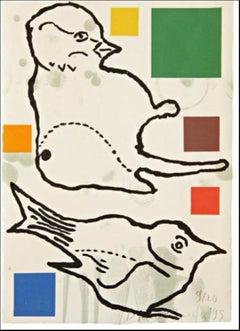
Donald Baechler, Birds, lithograph, signed/N, 9/20 from Fish Wildlife Series
Located in New York, NY
DONALD BAECHLER Birds, 1995 Lithograph on wove paper 11 63/100 × 7 47/50 inches Hand signed, dated and numbered 9/20 on the front; bears the publishers' blind stamp lower left Publis...
Category

Pop Art 1990s Abstract Prints

Materials

Lithograph

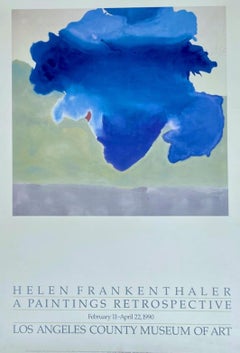
A Paintings Retrospective: vintage LACMA Museum poster depicting her 1963 work
Located in New York, NY
Helen Frankenthaler (after) A Paintings Retrospective: vintage LACMA Museum poster, 1990 Offset lithograph museum poster (Unsigned Unnumbered) 37 × 25 inches Unframed This was printed in the artists lifetime - making it more collectible - on the occasion of the exhibition, "Helen Frankenthaler: A Paintings Retrospective from February to April, 1990 at the Los Angeles County Museum of Art (LACMA) Print is published by Editions Limited Galleries, San Francisco for Los Angeles County Museum of Art (LACMA), LA, CA The work depicted is Helen Frankenthaler, The Bay, 1963, acrylic on canvas, Detroit Institute of Arts, Michigan (Incidentally, this beautiful work is featured on the cover of the book Water and Art' by David Clarke.) “What concerns me when I work is not whether a picture is a landscape… or whether somebody will see a sunset in it. What concerns me is, did I make a beautiful picture?” - - Helen Frankenthaler This is Frankenthaler's first silkscreen, produced for the portfolio New York Ten, which includes works by other New York-based artists at the time such as Roy Lichtenstein, Jim Dine, Tom Wesselmann and Claes Oldenburg. (She created her first lithograph in 1961) Other examples of this edition are found in the permanent collections of the Museum of Modern Art, MOCA Chicago, the Metropolitan Museum, the Philadelphia Museum, the Art Institute of Chicago, and numerous regional museums and institutions in the United States and worldwide. Helen Frankenthaler, A Brief Biography Helen Frankenthaler (1928-2011), whose career spanned six decades, has long been recognized as one of the great American artists of the twentieth century. She was eminent among the second generation of postwar American abstract painters and is widely credited for playing a pivotal role in the transition from Abstract Expressionism to Color Field painting. Through her invention of the soak-stain technique, she expanded the possibilities of abstract painting, while at times referencing figuration and landscape in unique ways. She produced a body of work whose impact on contemporary art has been profound and continues to grow. Frankenthaler was born on December 12, 1928, and raised in New York City. She attended the Dalton School, where she received her earliest art instruction from Rufino Tamayo. In 1949 she graduated from Bennington College, Vermont, where she was a student of Paul Feeley. She later studied briefly with Hans Hofmann. Frankenthaler’s professional exhibition career began in 1950, when Adolph Gottlieb selected her painting Beach (1950) for inclusion in the exhibition titled Fifteen Unknowns: Selected by Artists of the Kootz Gallery. Her first solo exhibition was presented in 1951, at New York’s Tibor de Nagy Gallery, and that year she was also included in the landmark exhibition 9th St. Exhibition of Paintings and Sculpture. In 1952 Frankenthaler created Mountains and Sea, a breakthrough painting of American abstraction for which she poured thinned paint directly onto raw, unprimed canvas laid on the studio floor, working from all sides to create floating fields of translucent color. Mountains and Sea was immediately influential for the artists who formed the Color Field school of painting, notable among them Morris Louis and Kenneth Noland. As early as 1959, Frankenthaler began to be a regular presence in major international exhibitions. She won first prize at the Premiere Biennale de Paris that year, and in 1966 she represented the United States in the 33rd Venice Biennale, alongside Ellsworth Kelly, Roy Lichtenstein, and Jules Olitski. She had her first major museum exhibition in 1960, at New York’s Jewish Museum, and her second, in 1969, at the Whitney Museum of American Art, followed by an international tour. Frankenthaler experimented tirelessly throughout her long career. In addition to producing unique paintings on canvas and paper, she worked in a wide range of media, including ceramics, sculpture, tapestry, and especially printmaking. Hers was a significant voice in the mid-century “print renaissance” among American abstract painters, and she is particularly renowned for her woodcuts. She continued working productively through the opening years of this century. Frankenthaler’s distinguished, prolific career has been the subject of numerous monographic museum exhibitions. The Jewish Museum and Whitney Museum shows were succeeded by a major retrospective initiated by the Modern Art Museum of Fort Worth that traveled to The Museum of Modern Art, New York, the Los Angeles County Museum of Art, and the Detroit Institute of Arts, MI (1989); and those devoted to works on paper and prints organized by the National Gallery of Art, Washington, D.C. (1993), among others. Select recent important exhibitions have included Painted on 21st Street: Helen Frankenthaler from 1950 to 1959 (Gagosian, NY, 2013); Making Painting: Helen Frankenthaler and JMW Turner (Turner Contemporary, Margate, UK, 2014); Giving Up One’s Mark: Helen Frankenthaler in the 1960s and 1970s (Albright-Knox Art Gallery, Buffalo, NY, 2014–15); Pretty Raw: After and Around Helen Frankenthaler (Rose Art Museum, Brandeis University, Waltham, MA, 2015); As in Nature: Helen Frankenthaler, Paintings and No Rules: Helen Frankenthaler Woodcuts...
Category

Abstract Expressionist 1990s Abstract Prints

Materials

Offset, Lithograph

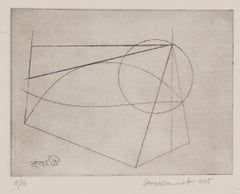
Line Drawing No.1
Located in Bournemouth, Dorset
George Dannatt (1915-2009) Line Drawing No.1 1996 Etching Editions available: 10/16, 14/16, 16/16 signed by George Dannatt Image measures: 12.5 x 16.5 cm Unframed George Dannatt’s...
Category

Abstract 1990s Abstract Prints

Materials

Etching

Rare constructivist etching by renowned modernist sculptor, Signed AP, Framed
Located in New York, NY
Fletcher Benton Etching on wove paper in artist's frame Signed by the artist with his printed signature in graphite, signed by the artist with his hand signature also in graphite, nu...
Category

Constructivist 1990s Abstract Prints

Materials

Etching

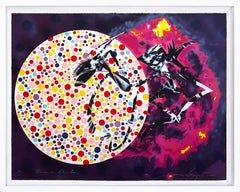
Woman in the Sun (large framed hand signed lithograph)
Located in Aventura, FL
Lithograph in colors on BFK Rives mould-made paper. Hand signed lower left by James Rosenquist. Hand numbered 58/60 and titled lower left. Artwork size: 33 x 42.5 inches. Frame s...
Category

Pop Art 1990s Abstract Prints

Materials

Lithograph

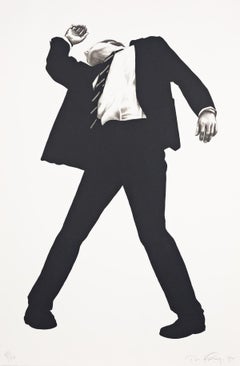
Rick
Located in New York, NY
A very good impression of this large lithograph on Arches Cover. Signed, dated and numbered 44/170 in pencil by Longo. There were also 30 artist’s proofs and 18 hors-commerce Publish...
Category

Contemporary 1990s Abstract Prints

Materials

Lithograph

Prizma VI (Geometric Abstraction)
Located in Kansas City, MO
Prizma VI Color silkscreen Signed and titled by hand Size: 20.3 × 20.3 on 28.9 × 25.0 inches COA provided Marko Spalatin was born in Zagreb, Croatia. He immigrated to the US in his ...
Category

Abstract Geometric 1990s Abstract Prints

Materials

Screen

Grey tinted Rainbow, Geometric Abstract dazzling Op Art Framed assemblage Signed
Located in New York, NY
RICHARD ANUSZKIEWICZ Grey Tinted Rainbow, 1992 Assemblage with 14 Color Silkscreen and Lithograph Pencil signed and numbered 11/40 on the front Frame included: elegantly framed in a ...
Category

Op Art 1990s Abstract Prints

Materials

Mixed Media, Pencil, Lithograph, Screen

Decoupage IX - Original Screen Print - 1996
Located in Paris, IDF
Maurice ESTÈVE (1904-2001) Découpage IX Original screen print (silkscreen) Printed signature in the plate On LanaPrime 250g/m² vellum 20 x 25 cm (c. 8 x 10 in) Limited to 500 copies...
Category

Abstract 1990s Abstract Prints

Materials

Screen

"Lincoln Center" by Sol Lewitt
Located in Hinsdale, IL
SOL LEWITT (1928 – 2007) Lincoln Center Color screenprint on Somerset Satin White,1998. Sheet size: 35 1/2x28 inches, full margins. Signed and numbered 73/108 in pencil, lower ri...
Category

Abstract Geometric 1990s Abstract Prints

Materials

Screen

Untitled (SF-346)
Located in New York, NY
A very good impression of this color lithograph on Waterleaf white wove paper. One of 25 Roman numeral impressions, aside from the Arabic numeral edition of 100. Signed and numbered ...
Category

Abstract 1990s Abstract Prints

Materials

Color, Lithograph

Hinterstoisser - Mezzotint by Piero Ruggeri - 1992
Located in Roma, IT
Hand signed. Edition of 60 pieces. Mezzotint and Carborundum print. Diffused foxing.
Category

Abstract 1990s Abstract Prints

Materials

Mezzotint

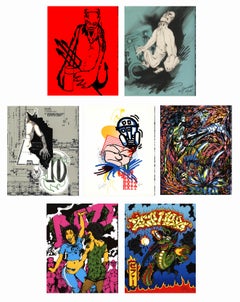
Futura 2000 Lee Quinones Dondi White Celebrating 15 Years Above Ground (7 works)
Located in NEW YORK, NY
Dondi White, Futura, Lee Quinones, Crash, Daze, Lady Pink & Zephyr: Celebrating 15 Years Above Ground (1995): This rare, complete portfolio of 7 hand-signed limited edition screen-prints, was published on the occasion of the 1995 exhibition, Celebrating 15 Years Above Ground: a historic event exploring the evolution of 1980’s New York graffiti legends: Crash, Daze, Dondi, Futura, Lee Quinones, Lady Pink, and Zephyr. The seldom seen complete set of 7 works accompanied by both original portfolio covers, makes for a standout addition to any 1980’s New York graffiti collection. Medium: 7 individual screen-prints in colors on fine, deckle-edged Stonehenge paper; plus a screen-printed portfolio cover on heavy matte paper. 1995. Each work individually measures: 14 x 11 inches (35.6 x 27.9 cm). Each hand-signed & numbered in pencil by the respective artists from an edition of 100 (5 works signed & numbered frontside; with Futura & Lady Pink signed & numbered on the reverse). Condition: Prints: Some very minor signs of handling; rubbing on the right lower edge of Zephyr; in otherwise very good overall vintage condition as pictured. Superb overall print quality & color separation. Fine archival paper. Portfolio casing (last image) contains some minor signs of aging & handling. Collections: The Smithsonian National Museum of African American History and Culture. Dondi White: Dondi was an American graffiti artist best known for his dynamic lettering and stick figures. His work, whether painted on canvas or on walls, is characterized by a dynamic energy and explosive use of color. Dondi became associated with a group of legendary artists working in the East Village, including Futura, Keith Haring, and Jean-Michel Basquiat. His canvas works reiterated the lettering, symbolic icons, and stick figures that were his signature marks on the streets, while his later work from the 1990s included collages that juxtaposed pencil drawings with blueprints of the subway system—which had previously served as his canvas. Futura: Futura 2000 is a contemporary American graffiti artist. Over the course of his career, he transitioned from making New York-based subway graffiti in the early 1970s, to exhibiting at Fun Gallery in the 1980s alongside major artists such as Jean-Michel Basquiat, Keith Haring, and Kenny Scharf. He went on to collaborate with the punk band The Clash, designing their album art and performing live graffiti during their concerts. Today, McGurr’s work can be found in the collections of the Museo de Arte Moderna di Bologna, the Musée de Vire in France, and the Museum of the City of New York. Lee Quinones: Lee Quinones is an American-Puerto Rican artist known for the graffiti he made on New York subway cars during the 1970s and 1980s. Quinones addressed political and cultural issues through his graffiti, with quotes such as “Earth is Hell...
Category

Pop Art 1990s Abstract Prints

Materials

Screen, Lithograph

Spanish 1996 Las Segovias signed limited edition original art print silkscreen
Located in Miami, FL
Antoni Tapies (Spain, 1923-2012) 'Las segovias', 1996 silkscreen on paper 14.2 x 10.2 in. (36 x 26 cm.) Edition of 150 Ref: TAP1205-005-150 Hand-signed by author ____________________...
Category

Contemporary 1990s Abstract Prints

Materials

Screen, Ink

Thistle
Located in Washington, DC
Artist: Donald Baechler Title: Thistle Medium: Lithograph Year: 1999 Edition: 67/75 Sheet Size: 45 1/2" x 22" Signed: Hand signed and numbered in pencil
Category

Abstract 1990s Abstract Prints

Materials

Lithograph

Graphics and Drawings at the Louisiana Museum print, Hand Signed by Jasper Johns
Located in New York, NY
Jasper Johns Graphics and Drawings at the Louisiana Museum, Leo Castelli Collection (Hand Signed by Jasper Johns), 1992 Offset lithograph (Hand Signed and dated by Jasper Johns) Signed and dated 7 March 1997 in black ink on the front (see close up photo) Jasper Johns ink signature and date are on the outer yellow circle - see close up photo Extremely rare collectible...
Category

Pop Art 1990s Abstract Prints

Materials

Lithograph, Offset

Leaving Home (97-301), 5 color lithograph on Rives BFK paper, Signed/N Tamarind
Located in New York, NY
DeLoss McGraw Leaving Home (97-301), 1997 Five color lithograph on tan Rives BFK paper with deckled edges Signed and numbered 3/75 in graphite pencil on the front 17 × 24 3/25 inches...
Category

Outsider Art 1990s Abstract Prints

Materials

Lithograph

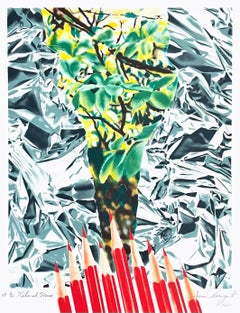
Katonah Muse, James Rosenquist
Located in Fairfield, CT
Artist: James Rosenquist (1933-2017) Title: Katonah Muse Year: 1993 Medium: Lithograph in colors on wove paper Edition: A.P. 6/20; 100 Size: 27.75 x 21.25 inches Inscription: Signed ...
Category

Pop Art 1990s Abstract Prints

Materials

Lithograph

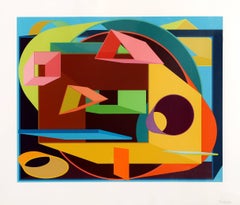
Scholes II, Screenprint by Al Held
Located in Long Island City, NY
Artist: Al Held, American (1928 - 2005) Title: Scholes II Year: 1991 Medium: Silkscreen, signed and numbered in pencil Edition: 80 Image Size: 23 x 29 inches Size: 29 x 34 in. (73.66...
Category

Abstract Geometric 1990s Abstract Prints

Materials

Screen

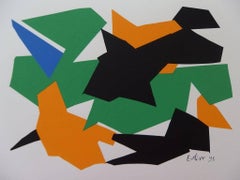
Decoupage VI - Original Signed Screen Print - 1995
Located in Paris, IDF
Maurice ESTÈVE (1904-2001) Découpage VI Original screen print (silkscreen) Plate signed On LanaPrime 250g/m² vellum 20 x 25 cm (c. 8 x 10 in) Limited to 500 copies, numbered on the ...
Category

Abstract 1990s Abstract Prints

Materials

Screen

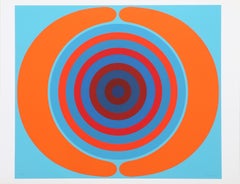
Spiral, Signed Screenprint by Kyohei Inukai
Located in Long Island City, NY
Spiral Kyohei Inukai (aka Earle Goodenow), American (1913–1985) Screenprint, signed and numbered in pencil Edition of 50 Image Size: 21.5 x 25.5 inches Size: 23 x 29.75 in. (58.42 x ...
Category

Op Art 1990s Abstract Prints

Materials

Screen

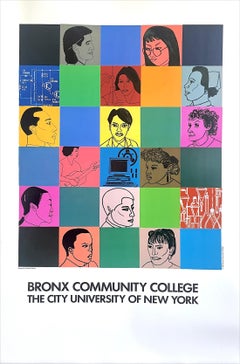
BRONX COMMUNITY COLLEGE Vintage Art Poster 1992, Science Technology Education
Located in Union City, NJ
Elizabeth Catlett (1915-2012) BRONX COMMUNITY COLLEGE THE CITY UNIVERSITY OF NEW YORK Specially commissioned fine art poster designed in 1992 by Elizabeth Catlett, printed in 4-col...
Category

Contemporary 1990s Abstract Prints

Materials

Offset

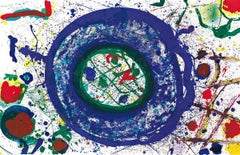
Untitled (SF-351), Abstract Expressionist Lithograph by Sam Francis
Located in Long Island City, NY
Sam Francis, American (1923 - 1994) - Untitled (SF-351), Portfolio: Papierski Portfolio, Year: 1992, Medium: Lithograph on BFK Rives, signed and numbered in pencil, Edition: 50...
Category

Abstract Expressionist 1990s Abstract Prints

Materials

Lithograph

Composition, Heart of Darkness, Sean Scully
Located in Southampton, NY
Etching in colors on vélin de Lana Royal paper. Paper Size: 11.93 x 9.81 inches. Inscription: Unsigned and unnumbered, as issued. Notes: From the album, Heart of Darkness, 1992. Publ...
Category

Contemporary 1990s Abstract Prints

Materials

Etching

Mexican Japanese woman artist 1998 signed original engraving art proof 21x25in
Located in Miami, FL
Namiko Prado Arai (Mexico, 1963) 'Untitled 3 (Buril)', 1998 etching, aquatint on paper Deponte 400g. 20.9 x 24.5 in. (53 x 62 cm.) Unframed ID: PRA-305 Hand-signed by author
Category

Contemporary 1990s Abstract Prints

Materials

Ink, Etching

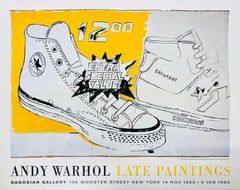
Vintage Andy Warhol Gagosian Exhibition Poster
Located in NEW YORK, NY
Andy Warhol Gagosian Gallery 1992: Rare highly decorative & classic vintage Andy Warhol exhibition poster published on the occasion of: ...
Category

Pop Art 1990s Abstract Prints

Materials

Lithograph, Offset

Wufu Wu, The Five Chinese Blessings Etching on Japanese Kozo paper Signed Framed
Located in New York, NY
Judy Pfaff Wufu Wu (The Five Chinese Blessings), 1995 Signed, dated, numbered and titled in graphite pencil on the front Edition of 120 (unnumbered) Original etching on Japanese Kozo...
Category

Abstract 1990s Abstract Prints

Materials

Etching

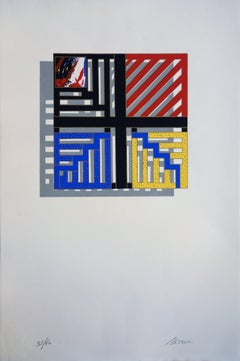
Colored Geometrical Pattern - Original handsigned Screen Print /60ex
By Nivése
Located in Paris, IDF
Oscari NIVESE Colored Geometrical Pattern Original screen print Handsigned in pencil Numbered / 60 ex On vellum 38 x 56 cm (c. 15 x 22 inch) Excellent condition
Category

Abstract Geometric 1990s Abstract Prints

Materials

Screen

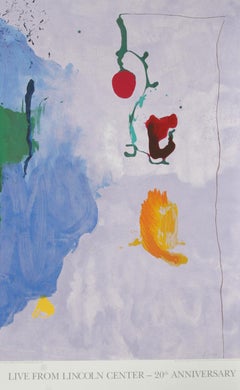
Live from Lincoln Center, Abstract Expressionist Lithograph by Frankenthaler
Located in Long Island City, NY
Artist: Helen Frankenthaler (after), American (1928 - 2011) Title: Live from Lincoln Center, 20th Year (Eve) Year: 1995 Medium: Lithograph Poster, signed in the plate Size: 48 in. x ...
Category

Abstract Expressionist 1990s Abstract Prints

Materials

Lithograph

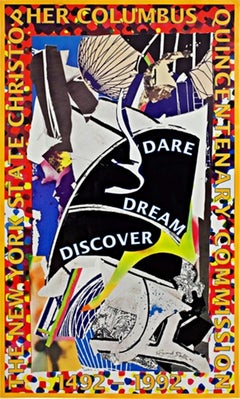
New York State Dare, Dream Discover, Offset lithograph Hand Signed Ed. of 100
Located in New York, NY
Frank Stella The New York State Christopher Columbus Quincentenary Commission, 1991 Offset Lithograph Printed in Colors Signed and dated by the artist in ink on the lower right front in black ink (Edition of 100) Limited Edition of 100 (unnumbered) 39 1/2 × 23 1/2 inches Unframed Accompanied by gallery issued Certificate of Guarantee This vibrant, hand signed offset lithograph poster designed by Frank Stella commemorates The New York State Christopher Columbus Quincentenary Commission. The poster alone is uncommon, but it is extremely rare to find a hand signed edition as this one. Highly collectible and desirable! An uncommon Stella print...
Category

Abstract Expressionist 1990s Abstract Prints

Materials

Ink, Lithograph, Offset

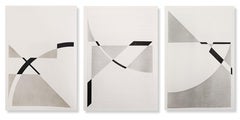
Parmenides: Das Herz der Wahrheit. Fragmente. (Folio with 3 Original Etchings)
Located in Kansas City, MO
Gottfried Honegger Parmenides: Das Herz der Wahrheit. Fragmente. Folio with 3 Original Etchings on handmade Velin d'Arches Year: 1990 Size: 8.25x5.5.5in on 11.625x7.75in Edition 26 S...
Category

Abstract Geometric 1990s Abstract Prints

Materials

Etching

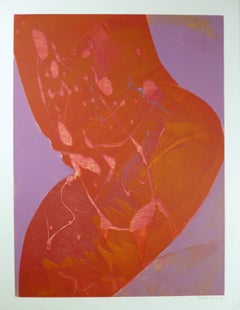
Abstract in Reds Purples
Located in Houston, TX
Vivid monotype abstract in tones of red and purple by American artist Kismine Varner, 1990. Signed lower right. Original artwork on paper displayed on a white mat with a gold bord...
Category

1990s Abstract Prints

Materials

Monotype

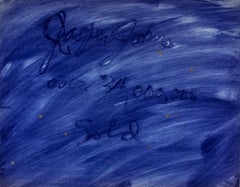
Jasper Johns over 34, 000, 000 sold, by Rene Ricard text art satire
Located in New York, NY
In the center of a royal blue field of color, Ricard has scrawled “Jasper Johns over 34,000,000 sold”.  Ricard’s work brims with cultural references: with this statement he positions...
Category

Abstract 1990s Abstract Prints

Materials

Monoprint, Monotype

Untitled - 1, Minimalist Abstract Woodcut by Charlie Hewitt
Located in Long Island City, NY
Artist: Charlie Hewitt, American (1946 - ) Title: Untitled - I Year: circa 1995 Medium: Woodblock Monoprint, Signed in Pencil Edition: 1/1 Size: 20 x 24 in. (50.8 x 60.96 cm)
Category

Minimalist 1990s Abstract Prints

Materials

Woodcut

A Second Hand II (unique) signed color monotype by contemporary abstract artist
Located in New York, NY
Andrea Belag A Second Hand II, 1990 Monotype on cotton rag paper 42 1/2 × 30 inches Hand-signed by artist, Signed, titled and dated in pencil on the front; bears publishers name and copyright on the back, along with the unique inventory number Unframed Poignant 1990 monotype, in elegant pastel colors. The cotton rag paper has lightly deckled edges so it will look gorgeous when floated and framed. American painter Andrea Belag creates lush and luminous abstractions inspired by the visual and spiritual principles of Zen, as well as artists such as Mary Heilmann, Bernard Frize...
Category

Abstract 1990s Abstract Prints

Materials

Rag Paper, Pencil, Graphite, Monotype

Recently Viewed

View All