Contemporary Abstract Prints

CONTEMPORARY STYLE

Used to refer to a time rather than an aesthetic, Contemporary art generally describes pieces created after 1970 or being made by living artists anywhere in the world. This immediacy means it encompasses art responding to the present moment through diverse subjects, media and themes. Contemporary painting, sculpture, photography, performance, digital art, video and more frequently includes work that is attempting to reshape current ideas about what art can be, from Felix Gonzalez-Torres’s use of candy to memorialize a lover he lost to AIDS-related complications to Jenny Holzer’s ongoing “Truisms,” a Conceptual series that sees provocative messages printed on billboards, T-shirts, benches and other public places that exist outside of formal exhibitions and the conventional “white cube” of galleries.

Contemporary art has been pushing the boundaries of creative expression for years. Its disruption of the traditional concepts of art are often aiming to engage viewers in complex questions about identity, society and culture. In the latter part of the 20th century, contemporary movements included Land art, in which artists like Robert Smithson and Michael Heizer create large-scale, site-specific sculptures, installations and other works in soil and bodies of water; Sound art, with artists such as Christian Marclay and Susan Philipsz centering art on sonic experiences; and New Media art, in which mass media and digital culture inform the work of artists such as Nam June Paik and Rafaël Rozendaal.

The first decades of the 21st century have seen the growth of Contemporary African art, the revival of figurative painting, the emergence of street art and the rise of NFTs, unique digital artworks that are powered by blockchain technology.

Major Contemporary artists practicing now include Ai Weiwei, Cecily Brown, David Hockney, Yayoi Kusama, Jeff Koons, Takashi Murakami and Kara Walker.

Find a collection of Contemporary prints, photography, paintings, sculptures and other art on 1stDibs.

to
440
692
591
1,047
461
499
Overall Width
to
Overall Height
to
9,031
2,276
1,162
1,095
295
246
143
110
108
76
15
14
129
124
68
64
64
2
1,306
1,979
3
16
80
591
294
205
1,694
1,033
535
34
30
19
11
9
9
7
7
6
5
5
5
4
4
3
3
3
3
3
3
949
792
621
530
527
535
1,140
1,930
1,204
Style: Contemporary
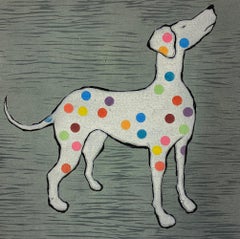
Norcamphor from “40 Woodcut Spots"
Located in Calabasas, CA
Artist: Damien Hirst Title: Norcamphor from “40 Woodcut Spots" Year: 2011 Medium: Woodcut on 410gsm Somerset White Paper Edition: 43/55; signed (recto) and numbered (verso) in penci...
Category

2010s Contemporary Abstract Prints

Materials

Woodcut

Dogwood1, mixed media work on paper, blue flower
Located in New York, NY
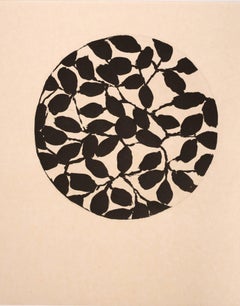
Leaf collagraph with embossing on white BFK Rives Printmaking Paper. Approx. image size: 3" x 3" Paper size: 10" x 8" At the core of the dialogue between the artist and the work ...
Category

2010s Contemporary Abstract Prints

Materials

Paper, Mixed Media, Monotype

John Baldessari - Man With Snake, Pop Art, Conceptual Art, Signed Print
Located in Hamburg, DE
John Baldessari (American, 1931-2020) Man with Snake (Blue and Yellow), 1990 Medium: Lithograph in colors, on wove paper Dimensions: 45.7 x 35.5 cm (18 x 14 in) Edition of 170: Hand-...
Category

20th Century Contemporary Abstract Prints

Materials

Lithograph

French Contemporary Art by Jeremie Faivre - Momentum
Located in Paris, IDF
Screen Print on canvas Jeremie Faivre is a French artist born in 1977 who lives and works in Paris, France. He is graduated from Massachussetts College of Art Design in Bosto...
Category

2010s Contemporary Abstract Prints

Materials

Canvas, Screen

untitled 1 from Album, Etching by Terry Winters
Located in Long Island City, NY
Artist: Terry Winters, American (1949 - ) Title: untitled 1 from Album Year: 1988 Medium: Etching with Aquatint, signed and numbered in pencil Edition: HC 2/2 Image: 20 x 16 inches S...
Category

1980s Contemporary Abstract Prints

Materials

Etching, Aquatint

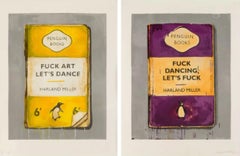
Fuck Art Let s Dance Fuck Dancing Let s Fuck
Located in New York, NY
Diptych screenprint set with bright colors and in excellent condition. Numbered 49/50 and dated on the first plate. Signed by Miller on the second plate. Dimensions of each sheet are...
Category

2010s Contemporary Abstract Prints

Materials

Color, Screen

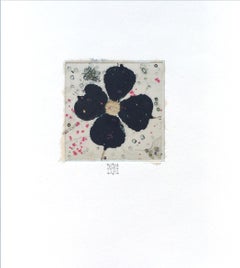
Dogwood2, mixed media work on paper, navy blue flower
Located in New York, NY
Leaf collagraph with embossing on white BFK Rives Printmaking Paper. Approx. image size: 3" x 3" Paper size: 10" x 8" At the core of the dialogue between the artist and the work ...
Category

2010s Contemporary Abstract Prints

Materials

Paper, Mixed Media, Monotype

"the same mysterious animacy", Abstract, Collaged Monoprints, Watercolor, Photos
Located in Philadelphia, PA
This piece titled "the same mysterious animacy" is an original piece by Cassie Normandy White and is made from collaged monoprints, microscopic scans, ...
Category

21st Century and Contemporary Contemporary Abstract Prints

Materials

Paper, Watercolor, Monoprint

Untitled 5 from Album, Abstract Minimalist Etching by Terry Winters
Located in Long Island City, NY
Artist: Terry Winters, American (1949 - ) Title: untitled 5 from Album Year: 1988 Medium: Etching with Aquatint, signed and numbered in pencil Edition: HC 2/2 Image: 20 x 16 inches S...
Category

1980s Contemporary Abstract Prints

Materials

Etching, Aquatint

Untitled V (Geometric Abstraction, Contemporary Minimalism)
Located in Kansas City, MO
Stephan Küthe Untitled V Giclée on Hahnemühle Velvet Year: 2021 Signed, numbered and dated by hand Edition: 15 Size: 13.0 × 19.5 on 18.3 × 23.8 inches COA provided (gallery issued) ...
Category

2010s Contemporary Abstract Prints

Materials

Giclée

Five Locations
Located in Berkeley, CA
Color spitbite aquatint with chine colle. Edition of 50
Category

21st Century and Contemporary Contemporary Abstract Prints

Materials

Etching

LoopDiLoop 4, mixed media monoprint on paper, white, abstract and minimal
Located in New York, NY
3D printed plate from Artist Photograph on white BFK Rives Printmaking Paper. This piece is framed. Plate: 4" x 4", Paper: 9" x 7" At the core of the dialogue between the artist and...
Category

2010s Contemporary Abstract Prints

Materials

Paper, Mixed Media, Monoprint

Swimmer BY CHRIS KEEGAN, Limited Edition Contemporary Print, Affordable Artwork
Located in Deddington, GB
Chris Keegan Swimmer Limited Edition Silkscreen Print Limited Edition of 50 Size: H 40cm x W 56cm x D 0.1cm Sold Unframed Please note that insitu images a...
Category

21st Century and Contemporary Contemporary Abstract Prints

Materials

Paper, Screen

L Explosion Qui Eclaire Mon Abime (framed signed aquatint and etching)
Located in Aventura, FL
Aquatint and etching on paper. Hand signed lower right by Roberto Matta. Hand numbered 90/100 lower left. Image size: 14.1 x 18.6 inches. Sheet size: 26 x 19.6 inches. Frame siz...
Category

Early 2000s Contemporary Abstract Prints

Materials

Paper, Etching, Aquatint

Abstract Italian Woman Artist Modern Metallic Foil Mirror Lithograph Laura Fiume
Located in Surfside, FL
This is not signed or numbered. it is from a folio of prints. Laura Fiume was born in Urbino, central Italy in 1953. Her education took place in Milan at the Liceo Artistico and at the Polytechnic School of Design. In 1976 she moved to Canzo, near Como where she learned serigraphy, ceramics, and painting from the well known artist Salvatore Fiume, her father. At the beginning the main subject of her works was that of fishes. She then extended her interest to the wider world of animals, interpreted through a deliberately naïve style and very bright colours. In 1983 Laura’s works were exhibited both at the Basel Art Fair and at Artexpo in New York. The latter marked the beginning of a collaboration with the Work’s II Gallery In Southampton (NY) which would continue until 1988. Her major exhibitions of those years were in Milan at the Palazzo dell’Arengario, now home of the Museo del Novecento in Piazza Duomo, (1985), and in Venice at the Assicurazioni Generali headquarters in Piazza San Marco (1987). In 1983 Laura began her ceramic production in her father’s workshop of Canzo located in a former silk mill. Between 1990 and 1992 thanks to an exclusive agreement with a Japanese company her paintings and graphic works were distributed throughout Japan. The 1990 exhibition at the Artesanterasmo Gallery of Milan on the theme of mirrors was the only occasion in which she exhibited her paintings with her father. Her collaboration with that gallery has been steady since 1988. In 1992, following a suggestion from the well known architect Pepe Tanzi, Laura collaborated to the launch of the Pozzi & Verga new collection of tables and chairs by including images of those pieces of furniture in her own paintings. Between 1992 and 2000 she had her own showroom in Milan where her collections of ceramics and her creations for leading companies like Ricchetti (tiles), Fede Cheti (home fabrics), Edilkamin (fireplaces and stoves), Kaigai (textiles for clothings and bathroom towels), Rosenthal (china), and Proserpio Arredamenti (furnishings and frabrics) were on display. In 1995 she was chosen as Designer of the Year by Meyer Mayor, the distinguished Swiss company specialising in kitchen and table linen production. In the 1995 exhibition entitled Walls and Terracottas at the Artesanterasmo Gallery of Milan abstract most of the subjects were painted on dirt-like materials. In the same year she also presented her new Tableaux an Terre at the L’Ile en terre Gallery of Saint Paul de Vence, France. Between 1996 and 2005 she collaborated with the Edizioni San Paolo Publishers illustrating children’s books and stories for kids in the G-baby Magazine. In 1999 she increased her show-room space by creating Atelier Produzioni d’Arte where prints, ceramics, and sculptures by various international artists were presented. In 2000 Laura began her collaboration with Raika of Japan designing their fashion collections which have been on display since 2002 in the Showroom Laura Fiume at the Mitsukoshi Department Store in Tokyo. In 2000 Laura designed a collection of coffee cups called The Jungle Collection for Cellini Deutschland. In April 2003, as part of the events that took place during the Salone del Mobile of Milan, Laura held a large exhibition at the Spazio Exté entitled Other Rooms: A Tribute To Philippe Starck. On that occasion Laura enjoyed the collaboration of Alessi, Driade, and Flos who kindly lent her the pieces from their Philippe Starck production represented in her paintings for an installation in that exhibition. In June 2003 Laura held a one-artist exhibition at the Svetog Krševana Gallery in Šibenik, Croatia as part of the International Children’s Festival of that town where she exhibited her early works dedicated to the world of children. In 2005 she gave her contribution to the restyling of the L’Arenella Hotel on the Isola del Giglio, Tuscany, by providing a number of enlarged images of her works which became the characterizing element of the hotel’s interiors. In the summer of the same year she held a retrospective at the Vartai Gallery in Vilnius, Lithuania. In 2005 she also presented an installation within the project Ten Arm-chairs for Ten Artists, an initiative by Molteni & C, a leading company in the furniture field, where Laura was asked to decorate a Molteni arm-chair from the Reversi collection and to carry out a number of paintings using the same fabrics covering their couches and arm-chairs. In 2006 there were as many as three exhibitions of Laura’s. The first one, called Visual Amplifications was held in Fiesole, near Florence, in the museum within the St. Alexander Basilica building. The second one, entitled Private Stories, took place in Sansepolcro, Tuscany at the Piero della Francesca City Museum. The third exhibition, entitled Trame d’interni (Plots in Interiors) was hosted in Milan by the Artesanterasmo Gallery where Laura presented her new paintings on fabrics provided by well known fabric producer Enzo degli Angiuoni. In 2007 she exhibited her works in Rome at the Galleria Margutta 3 and then at the trendy TAD Conceptstore showroom of Via del Babuino. Both exhibitions were strictly connected through the idea of displaying works in harmony with TAD’s furnishings. In 2007 Laura was also invited to take part in Milan’s Cow Parade...
Category

20th Century Contemporary Abstract Prints

Materials

Offset, Screen

Artist Motivation - Mandela, Former South African President, Inspirational Words
Located in Knowle Lane, Cranleigh
Nelson Mandela, Artist's Motivation, Signed Limited Edition Lithograph Many people are unaware that Nelson Mandela turned his hand to art in his 80's as a way of leaving a legacy for his family. He spent time with an art tutor and learnt to draw. In 2002, when creating the The Motivation print, he told Anna and Laura from Belgravia Gallery of his desire to become a full time artist when he retired. This artwork is a handwritten Artist’s Motivation by Nelson Mandela and reads: “Today when I look at Robben Island I see it as a celebration of the struggle and a symbol of the finest qualities of the human spirit, rather than as a monument to the brutal tyranny and oppression of apartheid. Robben Island is a place where courage endured in the face of endless hardship, a place where people kept on believing when it seemed their dreams were hopeless and a place where wisdom and determination overcame fear and human frailty. It is true that Robben Island was once a place of darkness, but out of that darkness has come a wonderful brightness, a light so powerful that it could not be hidden behind prison walls, held back by prison bars...
Category

Early 2000s Contemporary Abstract Prints

Materials

Lithograph

T , Hockney s Alphabet, David Hockney and Stephen Spender, Lithograph, 1991
Located in Manchester, GB
David Hockney, 'T' from 'Hockney's Alphabet', 1991 Edition of 250 Free Delivery to UK Customers From the special edition of Hockney's Alphabet, published in 1991, and signed on th...
Category

1990s Contemporary Abstract Prints

Materials

Paper, Lithograph

M , Hockney s Alphabet, David Hockney and Stephen Spender, Lithograph, 1991
Located in Manchester, GB
David Hockney, 'M' from 'Hockney's Alphabet', 1991 Edition of 250 Free Delivery to UK Customers From the special edition of Hockney's Alphabet, published in 1991, and signed on th...
Category

1990s Contemporary Abstract Prints

Materials

Paper, Lithograph

"Spirits Through Time VII, " Framed Limited Edition Giclee Print, 36" x 24"
Located in Westport, CT
This limited edition print by Ned Martin is a contemporary abstract portrait. Part of his Spirits Through Time series, it features a woman in profile - her face and hair are rendered...
Category

2010s Contemporary Abstract Prints

Materials

Digital, Giclée

Mary Knowland, Poppy 19, Affordable Art, Floral Art, Contemporary Art
Located in Deddington, GB
Mary Knowland Poppy 19 Unique Mono Print Floral Art Image Size: H 28cm x W 19cm Mount Size H 45cm x W 37cm Sold Unframed Please note that insitu images are purely an indication of ho...
Category

21st Century and Contemporary Contemporary Abstract Prints

Materials

Paper, Monoprint

Ex Uno Plures Eight - Geological Neon Yellow Magenta Pink Monotype, 2020
Located in Kent, CT
Laura Moriarty's Ex Uno Plures 8 is a multicolored encaustic monotype on kozo paper. Layers of pigmented beeswax on lightweight paper create an undulating composition suggesting laye...
Category

2010s Contemporary Abstract Prints

Materials

Encaustic, Archival Paper, Monotype

4 Erwin Wurm LITO Hi-Rnd Prints
Located in Lake Worth Beach, FL
Artist/Designer; Manufacturer: Erwin Wurm (Austrian, b. 1954) Marking(s); notes: signed, marking(s); ed. 41/50; 2023 Materials: LITO Hi-Rnd print (high-resolution hybrid process) on ...
Category

2010s Contemporary Abstract Prints

Materials

Mixed Media

Black Lantern Flowers 2025
Located in Fairfield, CT
Color silkscreen with enamel inks and tar-like texture on Rising 2-ply museum board Portfolio of 8: $16,000
Category

2010s Contemporary Abstract Prints

Materials

Ink, Board, Screen

"Blue Skull Large" Print 38 x 40 inch Edition of 300 by Steven Tyler
Located in Culver City, CA
"Blue Skull Large" Print 38 x 40 inch Edition of 300 by Steven Tyler Limited edition of 300 Plate signed by Steven Tyler ABOUT: As the lead singer of Aerosmith, Steven Tyler is con...
Category

21st Century and Contemporary Contemporary Abstract Prints

Materials

Digital Pigment

"Pura Vida" original color woodcut print signed by Carol Summers
Located in Milwaukee, WI
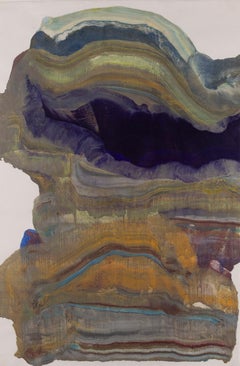
"Pura Vida" is an original color woodcut signed by Carol Summers. A multi-colored piece shows a waterfall with red flames behind it in the middle of the piece. On the left stands a tree with yellow leaves on a hill. To the right is a rainbow. This is an excellent example of Summer's printmaking, not just because of the technique and imagery, but because it numbered 1 of the edition of 125. In addition, it contains a personal inscription to the Milwaukee gallerist David Barnett, who has championed the work of Summers and produced catalogs of his work. Indeed, this print appears as no. 189 in the David Barnett Gallery's 1988 catalogue raisonné of Summer's woodcuts. Feel free to inquire if you would like to purchase a copy of the catalogue raisonné along with your Carol Summers print. Art: 24.25 x 24.75 in Frame: 36 x 35 in signed lower right titled and inscribed to David [Barnett] lower right edition (1/125) lower right Carol Summers (1925-2016) has worked as an artist throughout the second half of the 20th century and into the first years of the next, outliving most of his mid-century modernist peers. Initially trained as a painter, Summers was drawn to color woodcuts around 1950 and it became his specialty thereafter. Over the years he has developed a process and style that is both innovative and readily recognizable. His art is known for it’s large scale, saturated fields of bold color, semi-abstract treatment of landscapes from around the world and a luminescent quality achieved through a printmaking process he invented. In a career that has extended over half a century, Summers has hand-pulled approximately 245 woodcuts in editions that have typically run from 25 to 100 in number. His talent was both inherited and learned. Born in 1925 in Kingston, a small town in upstate New York, Summers was raised in nearby Woodstock with his older sister, Mary. His parents were both artists who had met in art school in St. Louis. During the Great Depression, when Carol was growing up, his father supported the family as a medical illustrator until he could return to painting. His mother was a watercolorist and also quite knowledgeable about the different kinds of papers used for various kinds of painting. Many years later, Summers would paint or print on thinly textured paper originally collected by his mother. From 1948 to 1951, Carol Summers trained in the classical fine and studio arts at Bard College and at the Art Students League of New York. He studied painting with Steven Hirsh and printmaking with Louis Schanker. He admired the shapes and colors favored by early modernists Paul Klee (Sw: 1879-1940) and Matt Phillips (Am: b.1927- ). After graduating, Summers quit working as a part-time carpenter and cabinetmaker (which had supported his schooling and living expenses) to focus fulltime on art. That same year, an early abstract, Bridge No. 1 was selected for a Purchase Prize in a competition sponsored by the Brooklyn Museum. In 1952, his work (Cathedral, Construction and Icarus) was shown the first time at the Museum of Modern Art in New York City in an exhibition of American woodcuts. In 1954, Summers received a grant from the Italian government to study for a year in Italy. Woodcuts completed soon after his arrival there were almost all editions of only 8 to 25 prints, small in size, architectural in content and black and white in color. The most well-known are Siennese Landscape and Little Landscape, which depicted the area near where he resided. Summers extended this trip three more years, a decision which would have significant impact on choices of subject matter and color in the coming decade. After returning from Europe, Summers’ images continued to feature historical landmarks and events from Italy as well as from France, Spain and Greece. However, as evidenced in Aetna’s Dream, Worldwind and Arch of Triumph, a new look prevailed. These woodcuts were larger in size and in color. Some incorporated metal leaf in the creation of a collage and Summers even experimented with silkscreening. Editions were now between 20 and 50 prints in number. Most importantly, Summers employed his rubbing technique for the first time in the creation of Fantastic Garden in late 1957. Dark Vision of Xerxes, a benchmark for Summers, was the first woodcut where Summers experimented using mineral spirits as part of his printmaking process. A Fulbright Grant as well as Fellowships from the Louis Comfort Tiffany Foundation and the Guggenheim Foundation followed soon thereafter, as did faculty positions at colleges and universities primarily in New York and Pennsylvania. During this period he married a dancer named Elaine Smithers with whom he had one son, Kyle. Around this same time, along with fellow artist Leonard Baskin, Summers pioneered what is now referred to as the “monumental” woodcut. This term was coined in the early 1960s to denote woodcuts that were dramatically bigger than those previously created in earlier years, ones that were limited in size mostly by the size of small hand-presses. While Baskin chose figurative subject matter, serious in nature and rendered with thick, striated lines, Summers rendered much less somber images preferring to emphasize shape and color; his subject matter approached abstraction but was always firmly rooted in the landscape. In addition to working in this new, larger scale, Summers simultaneously refined a printmaking process which would eventually be called the “Carol Summers Method” or the “ Carol Summers Technique”. Summers produces his woodcuts by hand, usually from one or more blocks of quarter-inch pine, using oil-based printing inks and porous mulberry papers. His woodcuts reveal a sensitivity to wood especially its absorptive qualities and the subtleties of the grain. In several of his woodcuts throughout his career he has used the undulating, grainy patterns of a large wood plank to portray a flowing river or tumbling waterfall. The best examples of this are Dream, done in 1965 and the later Flash Flood Escalante, in 2003. In the majority of his woodcuts, Summers makes the blocks slightly larger than the paper so the image and color will bleed off the edge. Before printing, he centers a dry sheet of paper over the top of the cut wood block or blocks, securing it with giant clips. Then he rolls the ink directly on the front of the sheet of paper and pressing down onto the dry wood block or reassembled group of blocks. Summers is technically very proficient; the inks are thoroughly saturated onto the surface of the paper but they do not run into each other. The precision of the color inking in Constantine’s Dream in 1969 and Rainbow Glacier in 1970 has been referred to in various studio handbooks. Summers refers to his own printing technique as “rubbing”. In traditional woodcut printing, including the Japanese method, the ink is applied directly onto the block. However, by following his own method, Summers has avoided the mirror-reversed image of a conventional print and it has given him the control over the precise amount of ink that he wants on the paper. After the ink is applied to the front of the paper, Summers sprays it with mineral spirits, which act as a thinning agent. The absorptive fibers of the paper draw the thinned ink away from the surface softening the shapes and diffusing and muting the colors. This produces a unique glow that is a hallmark of the Summers printmaking technique. Unlike the works of other color field artists or modernists of the time, this new technique made Summers’ extreme simplification and flat color areas anything but hard-edged or coldly impersonal. By the 1960s, Summers had developed a personal way of coloring and printing and was not afraid of hard work, doing the cutting, inking and pulling himself. In 1964, at the age of 38, Summers’ work was exhibited for a second time at the Museum of Modern Art. This time his work was featured in a one-man show and then as one of MOMA’s two-year traveling exhibitions which toured throughout the United States. In subsequent years, Summers’ works would be exhibited and acquired for the permanent collections of multiple museums throughout the United States, Europe and Asia. Summers’ familiarity with landscapes throughout the world is firsthand. As a navigator-bombardier in the Marines in World War II, he toured the South Pacific and Asia. Following college, travel in Europe and subsequent teaching positions, in 1972, after 47 years on the East Coast, Carol Summers moved permanently to Bonny Doon in the Santa Cruz Mountains in Northern California. There met his second wife, Joan Ward Toth, a textile artist who died in 1998; and it was here his second son, Ethan was born. During the years that followed this relocation, Summers’ choice of subject matter became more diverse although it retained the positive, mostly life-affirming quality that had existed from the beginning. Images now included moons, comets, both sunny and starry skies, hearts and flowers, all of which, in one way or another, remained tied to the landscape. In the 1980s, from his home and studio in the Santa Cruz mountains, Summers continued to work as an artist supplementing his income by conducting classes and workshops at universities in California and Oregon as well as throughout the Mid and Southwest. He also traveled extensively during this period hiking and camping, often for weeks at a time, throughout the western United States and Canada. Throughout the decade it was not unusual for Summers to backpack alone or with a fellow artist into mountains or back country for six weeks or more at a time. Not surprisingly, the artwork created during this period rarely departed from images of the land, sea and sky. Summers rendered these landscapes in a more representational style than before, however he always kept them somewhat abstract by mixing geometric shapes with organic shapes, irregular in outline. Some of his most critically acknowledged work was created during this period including First Rain, 1985 and The Rolling Sea, 1989. Summers received an honorary doctorate from his alma mater, Bard College in 1979 and was selected by the United States Information Agency to spend a year conducting painting and printmaking workshops at universities throughout India. Since that original sabbatical, he has returned every year, spending four to eight weeks traveling throughout that country. In the 1990s, interspersed with these journeys to India have been additional treks to the back roads and high country areas of Mexico, Central America, Nepal, China and Japan. Travel to these exotic and faraway places had a profound influence on Summers’ art. Subject matter became more worldly and nonwestern as with From Humla to Dolpo, 1991 or A Former Life of Budha, 1996, for example. Architectural images, such as The Pillars of Hercules, 1990 or The Raja’s Aviary, 1992 became more common. Still life images made a reappearance with Jungle Bouquet in 1997. This was also a period when Summers began using odd-sized paper to further the impact of an image. The 1996 Night, a view of the earth and horizon as it might be seen by an astronaut, is over six feet long and only slightly more than a foot-and-a-half high. From 1999, Revuelta A Vida (Spanish for “Return to Life”) is pie-shaped and covers nearly 18 cubic feet. It was also at this juncture that Summers began to experiment with a somewhat different palette although he retained his love of saturated colors. The 2003 Far Side of Time is a superb example of the new direction taken by this colorist. At the turn of the millennium in 1999, “Carol Summers Woodcuts...
Category

1980s Contemporary Abstract Prints

Materials

Woodcut

Abstract Modernist Colorful Bold Monoprint Monotype Painting Print Pierre Obando
Located in Surfside, FL
Pierre Andre Obando creates process oriented abstract paintings. He was born in Belize City, Belize and grew up in the Caribbean, the U.S. Virgin Islands, Miami, Fl and Jackson, MS. Pierre Obando completed his MFA at Hunter College and completed his undergraduate studies at New World School of the Arts, Miami, Fl. His work was featured in the Queens International Biennial in 2004, and 2006 at the Queens Museum of Art. His work has been in group exhibitions at Angela Hanley Gallery, Los Angeles, CA; Rockland Center for the Arts, West Nyack, NY; Rush Arts Gallery, New York, NY; MACO Mexico Art Fair in Mexico City; Nina Freudenheim Gallery, Buffalo, NY; Royale Projects, Indian Wells, CA; The Painting Center, New York, NY; and Dean Project, New York, NY. In 2008, he had a solo exhibition at Heskin Contemporary, New York, NY and in 2009, at project space show at Rush Arts Gallery, New York, NY. He has participated in the Atlantic Center for the Arts Artists-in-Residence Program. In the fall of 2012, he participated in the group show Caribe Now, at the Nathan Cumming Foundation, which was organized by El Museo del Barrio, New York, NY. Contemporary Pattern and Decoration piece, The original movement was championed by the gallery owner Holly Solomon. The P&D movement wanted to revive an interest in minor forms such as patterning which at that point was equated with triviality. The prevailing negative view of decoration was one not generally shared by non-Western cultures, The Pattern and Decoration movement was influenced by sources outside of what was considered to be fine art. Blurring the line between art and design, many P&D works mimic patterns like those on wallpapers, printed fabrics, and quilts. There is a close connection between the Pattern and Decoration movement and the Feminist art movement. The P&D movement arose in opposition to the Minimalist and Conceptualist movements. Mary Grigoriadis, Valerie Jaudon, Joyce Kozloff, Miriam Schapiro, Robert Zakanitch were early proponents of this style. The artist lives and works in New York City. Education: 2001 MFA, Painting, Hunter College, New York, NY 2000 Study Abroad, Slade School, UCL, London, United Kingdom 1997 BFA, Painting, New World School of The Arts, Miami, FL Solo Exhibitions: 2015 ‘Like New’, Thierry Goldberg Gallery, New York, NY 2009 ‘Nowhere’, Rush Arts, New York, NY 2008 ‘Noise’, Heskin Contemporary, New York, NY Group Exhibitions: 2018 ‘Revival: Contemporary Pattern and Decoration’, El Museo at Hostos, Bronx, NY Including artists: Abelardo Cruz Santiago Pierre Obando Antonio Pulgarín Keisha Scarville Mickalene Thomas and others. 2017 Locust Projects Contemporary in Miami benefit auction including artists Dara Friedman, Trenton Doyle Hancock, Larry Bell, and more 2017 ‘Browsing Chamber’, Torch Gallery, Amsterdam, Netherlands 2015 ‘#BemisPainters, 1982-2015’, Bemis Center, Omaha, NE 2015 ‘Spat Spell’, Thierry Goldberg Gallery, New York, NY 2013 ‘Un-Natural Constellations’, Newman Popiashvili Gallery, New York, NY 2012 ‘Caribe Now’, Nathan Cummings Foundation/El Museo del Barrio, New York, NY 2012 ‘Lucid Fence’, Dean Project, New York, NY 2012 ‘Abstract Gambol’, Heskin Contemporary, New York, NY 2012 ‘Reenacting Sense’, Yace Gallery, Long Island City, NY 2010 ‘Continuing Color Abstraction’, The Painting Center, New York, NY 2009 ‘West/East’, Royale Projects, Indian Wells, CA 2009 ‘Alternative Abstraction’, Nina Freudenheim Gallery, Buffalo, NY Including works by Stephen Antonakos, Warren Isensee, Gary Lang, Melissa Meyer and Katherine Sehr...
Category

1990s Contemporary Abstract Prints

Materials

Monoprint, Monotype

Ross Bleckner, Floating Red
Located in New York, NY
Ross Bleckner FLOATING RED Year: 2019 Medium: Archival pigment print on Innova Etching Cotton Rag 315 gsm fine art paper Size: 42 x 70 inches (107 x 178 cm) Edition: 30 Price: $7,000 Also sold as a set with Floating Red Glowing and contemplative, Ross Bleckner’s work blends abstraction with recognizable symbols to create meditations on perception, transcendence and loss. Ross Bleckner was born in 1949 in New York and grew up in the prosperous town of Hewlett Harbor on Long Island. The first art exhibition he saw—The Responsive Eye, a show of Op art on view at the Museum of Modern Art in New York in 1965—had a strong impact on him. He decided to become an artist when he was in college, studying with Sol LeWitt and Chuck Close at New York University, where he earned a BA in 1971. Two years later, he completed an MFA at the California Institute of the Arts in Valencia, where he met David Salle. After moving back to New York, Bleckner purchased and moved into a Tribeca loft building in 1974. Painter Julian Schnabel rented three floors of the building, and the Mudd Club, a nightclub frequented by musicians and artists, occupied space there from 1977 to 1983. Bleckner sold the building in 2004. His first solo exhibition was held in 1975 at Cunningham Ward Gallery in New York. In 1979 he began his long association with Mary Boone Gallery in New York, which championed several of the so-called art stars of the 1980s. In 1981 Bleckner met Thomas Ammann, an important Swiss art dealer who went on to collect his work. Bleckner’s early 1980s Stripe...
Category

2010s Contemporary Abstract Prints

Materials

Archival Pigment

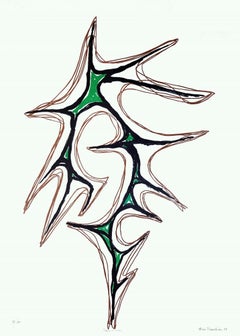
Abstract Composition - Etching by Amintore Fanfani - 1972
Located in Roma, IT
Abstract Composition is a mixed-colored Etching realized by Amintore Fanfani in 1972. Hand-signed and dated on the lower right. Numbered on the lower left. Edition 4/80.  The stat...
Category

1970s Contemporary Abstract Prints

Materials

Etching

The Book of Signals - Lithograph by Leo Guida - 1970s
Located in Roma, IT
The Book of Signals is an original lithograph realized by Leo Guida in the 1970s. Good condition. Titled on the lower. Leo Guida (1992 - 2017). Sensitive to current issues, artis...
Category

1970s Contemporary Abstract Prints

Materials

Lithograph

Venice Seascape Triptych, Blue Lido Island Reflections, Contemporary Cyanotype
Located in Barcelona, ES
This series of cyanotype triptychs showcases the beauty of nature scenes, including stunning beaches and oceans, as well as the intricate textures of water, forests, and skies. These...
Category

2010s Contemporary Abstract Prints

Materials

Lithograph, Monotype, Paper

Stormy - Abstract Geology Encaustic Monotype Blue Green, 2024
Located in Kent, CT
In this contemporary encaustic monotype, layers of pigmented beeswax on a scroll of lightweight Japanese paper create an undulating composition suggesting layers of the earth's crust...
Category

2010s Contemporary Abstract Prints

Materials

Encaustic, Archival Paper, Monotype

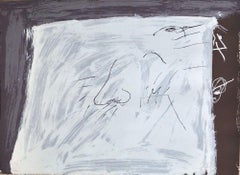
Antoni Tàpies lithograph 1960s
Located in NEW YORK, NY
Antoni Tàpies Lithograph 1969: Lithograph in colors. 9x7 inches. Very good overall vintage condition. Published by: Sala Gaspar - lithographi...
Category

1960s Contemporary Abstract Prints

Materials

Lithograph

Morris-Observatory Earthwork-Project for Sonsbeek 71, Arnhem-Vintage
Located in Brooklyn, NY
This is an original exhibition poster for the show titled Observatory Earthwork – Project for Sonsbeek 71, Arnhem, held at the Tate Gallery from April 28 to June 6, 1971. The poster ...
Category

1970s Contemporary Abstract Prints

Materials

Offset

BAD (silkscreen and lithograph print), unique signed by renowned Chicago artist
By Ed Paschke
Located in New York, NY
Ed Paschke BAD, 1991 Silkscreen and Lithograph on Rising Mirage Paper, accompanied by documentation Pencil signed, titled "BAD", and annotated "Trial Proof" on the front A unique pro...
Category

1990s Contemporary Abstract Prints

Materials

Lithograph, Screen

1960 s Joan Miro lithograph (from Derrière le miroir)
Located in NEW YORK, NY
1960s Joan Miró lithograohic cover from Derrière le miroir: Lithographic cover in colors; 11 x 15 inches (folding out to 15 x 22 inches). Circa 1964. Very good overall vintage cond...
Category

1970s Contemporary Abstract Prints

Materials

Lithograph

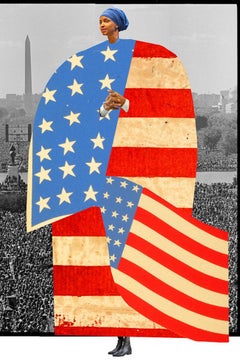
Plate No. 248, The Women s March (Women s History Month, Women Artists)
Located in Brighton, GB
Please be aware that all prints are produced to order. Lead times expected between 15-20 days. Prices may change due to currency fluctuations. Giclée prints on Archival Matte Paper ...
Category

2010s Contemporary Abstract Prints

Materials

Archival Ink, Archival Paper, Giclée

"The Wait" 2020 signed original limited edition silkscreen 12x18in abstract
Located in Miami, FL
Ray Smith (United States, 1959) 'La Espera', 2020 Silkscreen on paper. Edition of 50 11.7 x 17.8 in. (29.5 x 45 cm.) Ref: SMI-101 Ray Smith (American, b.1959) Born in Brownsville, T...
Category

Early 2000s Contemporary Abstract Prints

Materials

Ink, Screen

Donald Sułtan, Mimosa, September 29, 2021
Located in New York, NY
MIMOSA, SEPT 29, 2021 2021 Silkscreen with enamel inks and flocking on Rising 4-ply museum board 42 x 42 inches (107 x 107 cm) Edition of 40 Signed and numbered DONALD SULTAN (b. 1...
Category

21st Century and Contemporary Contemporary Abstract Prints

Materials

Screen

Untitled, 1983 (Eight by Eight to Celebrate the Temporary Contemporary)
Located in Greenwich, CT
Richard Diebenkorn's Untitled from 1983 is one of the prints included in the famed 'Eight by Eight to Celebrate the Temporary Contemporary' portfolio published by MOCA as a fundraise...
Category

20th Century Contemporary Abstract Prints

Materials

Paper, Lithograph

Love is The Drug Study #1
Located in Montreal, Quebec
Heidi Spector is a geometric artist best known for her exploration of minimalism as studied through lines, repetition, color and reflection. Spector’s work has been the subject of nu...
Category

2010s Contemporary Abstract Prints

Materials

Lenticular

Passionate Winner (Seoul Olympics), hand signed silkscreen
Located in Aventura, FL
Silkscreen in colors on paper, from the Official Arts Portfolio of the XXIV Olympiad, held in Seoul, Korea in 1988. Hand signed lower right by Kazuo Shiraga. Hand numbered lower le...
Category

1980s Contemporary Abstract Prints

Materials

Paper, Screen

Untitled
Located in Miami, FL
Mario Carreño Untitled, 1993 Serigraph Ed. 64 of 115 26 x 20 in
Category

Late 20th Century Contemporary Abstract Prints

Materials

Lithograph

Sunset with Reflection, Blue Tones Unique Monotype Cyanotype, Desert Modernism
Located in Barcelona, ES
Sunset with Reflection is a unique cyanotype monotype on watercolor paper, blending the timeless beauty of ocean horizos with the clean, geometric serenity inspired by Desert Moderni...
Category

2010s Contemporary Abstract Prints

Materials

Paper, Monotype

"India, " Abstract Woodcut and Monotype signed by Carol Summers
Located in Milwaukee, WI
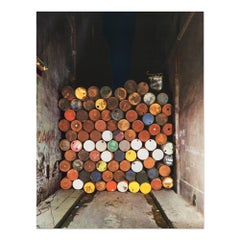
"India" is a woodcut and monotype signed by Carol Summers. Here, Summer's abstract language for landscape imagery is taken to its most extreme: The image offers a view of a highly stylized waterfall, with red water falling down behind green foliage below. A hint of light blue at the lower left suggests a continuation of the water's flow. Above, purples and yellows mist upward from the power of the water. The playfulness of the image is enhanced by Summers' signature printmaking technique, which allows the ink from the woodblock to seep through the paper, blurring the edges of each form. Summers' signature can be found in pencil at the bottom of the rightmost blue form, with the title and edition at the bottom of the leftmost blue form. A copy of this print can be found in the collection of the Fine Arts Museums of San Francisco. 37.25 x 24.88 inches, artwork 48.5 x 35.5 inches, frame Numbered 44 from the edition of 75 Carol Summers (1925-2016) has worked as an artist throughout the second half of the 20th century and into the first years of the next, outliving most of his mid-century modernist peers. Initially trained as a painter, Summers was drawn to color woodcuts around 1950 and it became his specialty thereafter. Over the years he has developed a process and style that is both innovative and readily recognizable. His art is known for it’s large scale, saturated fields of bold color, semi-abstract treatment of landscapes from around the world and a luminescent quality achieved through a printmaking process he invented. In a career that has extended over half a century, Summers has hand-pulled approximately 245 woodcuts in editions that have typically run from 25 to 100 in number. His talent was both inherited and learned. Born in 1925 in Kingston, a small town in upstate New York, Summers was raised in nearby Woodstock with his older sister, Mary. His parents were both artists who had met in art school in St. Louis. During the Great Depression, when Carol was growing up, his father supported the family as a medical illustrator until he could return to painting. His mother was a watercolorist and also quite knowledgeable about the different kinds of papers used for various kinds of painting. Many years later, Summers would paint or print on thinly textured paper originally collected by his mother. From 1948 to 1951, Carol Summers trained in the classical fine and studio arts at Bard College and at the Art Students League of New York. He studied painting with Steven Hirsh and printmaking with Louis Schanker. He admired the shapes and colors favored by early modernists Paul Klee (Sw: 1879-1940) and Matt Phillips (Am: b.1927- ). After graduating, Summers quit working as a part-time carpenter and cabinetmaker (which had supported his schooling and living expenses) to focus fulltime on art. That same year, an early abstract, Bridge No. 1 was selected for a Purchase Prize in a competition sponsored by the Brooklyn Museum. In 1952, his work (Cathedral, Construction and Icarus) was shown the first time at the Museum of Modern Art in New York City in an exhibition of American woodcuts. In 1954, Summers received a grant from the Italian government to study for a year in Italy. Woodcuts completed soon after his arrival there were almost all editions of only 8 to 25 prints, small in size, architectural in content and black and white in color. The most well-known are Siennese Landscape and Little Landscape, which depicted the area near where he resided. Summers extended this trip three more years, a decision which would have significant impact on choices of subject matter and color in the coming decade. After returning from Europe, Summers’ images continued to feature historical landmarks and events from Italy as well as from France, Spain and Greece. However, as evidenced in Aetna’s Dream, Worldwind and Arch of Triumph, a new look prevailed. These woodcuts were larger in size and in color. Some incorporated metal leaf in the creation of a collage and Summers even experimented with silkscreening. Editions were now between 20 and 50 prints in number. Most importantly, Summers employed his rubbing technique for the first time in the creation of Fantastic Garden in late 1957. Dark Vision of Xerxes, a benchmark for Summers, was the first woodcut where Summers experimented using mineral spirits as part of his printmaking process. A Fulbright Grant as well as Fellowships from the Louis Comfort Tiffany Foundation and the Guggenheim Foundation followed soon thereafter, as did faculty positions at colleges and universities primarily in New York and Pennsylvania. During this period he married a dancer named Elaine Smithers with whom he had one son, Kyle. Around this same time, along with fellow artist Leonard Baskin, Summers pioneered what is now referred to as the “monumental” woodcut. This term was coined in the early 1960s to denote woodcuts that were dramatically bigger than those previously created in earlier years, ones that were limited in size mostly by the size of small hand-presses. While Baskin chose figurative subject matter, serious in nature and rendered with thick, striated lines, Summers rendered much less somber images preferring to emphasize shape and color; his subject matter approached abstraction but was always firmly rooted in the landscape. In addition to working in this new, larger scale, Summers simultaneously refined a printmaking process which would eventually be called the “Carol Summers Method” or the “ Carol Summers Technique”. Summers produces his woodcuts by hand, usually from one or more blocks of quarter-inch pine, using oil-based printing inks and porous mulberry papers. His woodcuts reveal a sensitivity to wood especially its absorptive qualities and the subtleties of the grain. In several of his woodcuts throughout his career he has used the undulating, grainy patterns of a large wood plank to portray a flowing river or tumbling waterfall. The best examples of this are Dream, done in 1965 and the later Flash Flood Escalante, in 2003. In the majority of his woodcuts, Summers makes the blocks slightly larger than the paper so the image and color will bleed off the edge. Before printing, he centers a dry sheet of paper over the top of the cut wood block or blocks, securing it with giant clips. Then he rolls the ink directly on the front of the sheet of paper and pressing down onto the dry wood block or reassembled group of blocks. Summers is technically very proficient; the inks are thoroughly saturated onto the surface of the paper but they do not run into each other. The precision of the color inking in Constantine’s Dream in 1969 and Rainbow Glacier in 1970 has been referred to in various studio handbooks. Summers refers to his own printing technique as “rubbing”. In traditional woodcut printing, including the Japanese method, the ink is applied directly onto the block. However, by following his own method, Summers has avoided the mirror-reversed image of a conventional print and it has given him the control over the precise amount of ink that he wants on the paper. After the ink is applied to the front of the paper, Summers sprays it with mineral spirits, which act as a thinning agent. The absorptive fibers of the paper draw the thinned ink away from the surface softening the shapes and diffusing and muting the colors. This produces a unique glow that is a hallmark of the Summers printmaking technique. Unlike the works of other color field artists or modernists of the time, this new technique made Summers’ extreme simplification and flat color areas anything but hard-edged or coldly impersonal. By the 1960s, Summers had developed a personal way of coloring and printing and was not afraid of hard work, doing the cutting, inking and pulling himself. In 1964, at the age of 38, Summers’ work was exhibited for a second time at the Museum of Modern Art. This time his work was featured in a one-man show and then as one of MoMA’s two-year traveling exhibitions which toured throughout the United States. In subsequent years, Summers’ works would be exhibited and acquired for the permanent collections of multiple museums throughout the United States, Europe and Asia. Summers’ familiarity with landscapes throughout the world is firsthand. As a navigator-bombardier in the Marines in World War II, he toured the South Pacific and Asia. Following college, travel in Europe and subsequent teaching positions, in 1972, after 47 years on the East Coast, Carol Summers moved permanently to Bonny Doon in the Santa Cruz Mountains in Northern California. There met his second wife, Joan Ward Toth, a textile artist who died in 1998; and it was here his second son, Ethan was born. During the years that followed this relocation, Summers’ choice of subject matter became more diverse although it retained the positive, mostly life-affirming quality that had existed from the beginning. Images now included moons, comets, both sunny and starry skies, hearts and flowers, all of which, in one way or another, remained tied to the landscape. In the 1980s, from his home and studio in the Santa Cruz mountains, Summers continued to work as an artist supplementing his income by conducting classes and workshops at universities in California and Oregon as well as throughout the Mid and Southwest. He also traveled extensively during this period hiking and camping, often for weeks at a time, throughout the western United States and Canada. Throughout the decade it was not unusual for Summers to backpack alone or with a fellow artist into mountains or back country for six weeks or more at a time. Not surprisingly, the artwork created during this period rarely departed from images of the land, sea and sky. Summers rendered these landscapes in a more representational style than before, however he always kept them somewhat abstract by mixing geometric shapes with organic shapes, irregular in outline. Some of his most critically acknowledged work was created during this period including First Rain, 1985 and The Rolling Sea, 1989. Summers received an honorary doctorate from his alma mater, Bard College in 1979 and was selected by the United States Information Agency to spend a year conducting painting and printmaking workshops at universities throughout India. Since that original sabbatical, he has returned every year, spending four to eight weeks traveling throughout that country. In the 1990s, interspersed with these journeys to India have been additional treks to the back roads and high country areas of Mexico, Central America, Nepal, China and Japan. Travel to these exotic and faraway places had a profound influence on Summers’ art. Subject matter became more worldly and nonwestern as with From Humla to Dolpo, 1991 or A Former Life of Budha, 1996, for example. Architectural images, such as The Pillars of Hercules, 1990 or The Raja’s Aviary, 1992 became more common. Still life images made a reappearance with Jungle Bouquet in 1997. This was also a period when Summers began using odd-sized paper to further the impact of an image. The 1996 Night, a view of the earth and horizon as it might be seen by an astronaut, is over six feet long and only slightly more than a foot-and-a-half high. From 1999, Revuelta A Vida (Spanish for “Return to Life”) is pie-shaped and covers nearly 18 cubic feet. It was also at this juncture that Summers began to experiment with a somewhat different palette although he retained his love of saturated colors. The 2003 Far Side of Time is a superb example of the new direction taken by this colorist. At the turn of the millennium in 1999, “Carol Summers Woodcuts...
Category

1990s Contemporary Abstract Prints

Materials

Monotype, Woodcut

We Are The Square Jocular Clan
Located in Washington , DC, DC
Signed and numbered from an edition of 300 Comes framed and ready to hang
Category

2010s Contemporary Abstract Prints

Materials

Offset

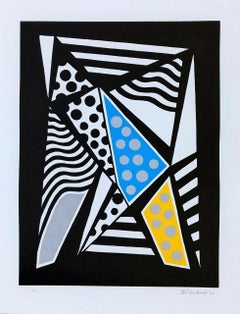
Jasmine - 21st Century Contemporary Photographic Print Color Polaroid
Located in Zürich, CH
Part of the BLOOMY VIEW series taken in Bern 2020 in collaboration with Heym Collections, the images gained new life in their ambiguity, which often stimulates the viewer to project ...
Category

2010s Contemporary Abstract Prints

Materials

Carbon Pigment, Polaroid

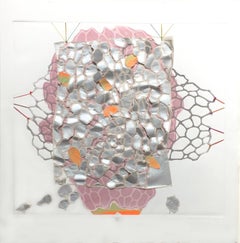
Don Quixote - Lithograph - 1970s
Located in Roma, IT
Don Quixote is a lithograph print on paper realized in the 1970s by an Unknown artist. Hand-signed on the lower in pencil, illegible. Artist's proof. Good conditions. The artwork...
Category

1970s Contemporary Abstract Prints

Materials

Lithograph

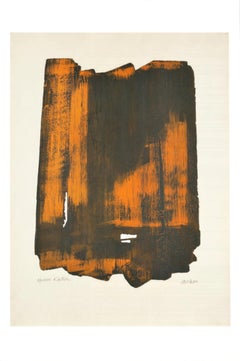
Joan Miró Lithograph Derriere Le Miroir
Located in NEW YORK, NY
1970s Joan Miró Lithograph Portfolio: Derriere Le Miroir, 1973. Off-set lithograph in colors. 15x22 inches. Center fold-line as issued; very good overall vintage condition. Unsign...
Category

1960s Contemporary Abstract Prints

Materials

Lithograph, Offset

Composition, Heart of Darkness, Sean Scully
Located in Southampton, NY
Etching in colors on vélin de Lana Royal paper. Paper Size: 11.93 x 9.81 inches. Inscription: Unsigned and unnumbered, as issued. Notes: From the album, Heart of Darkness, 1992. Publ...
Category

1990s Contemporary Abstract Prints

Materials

Etching

UNTITLED
Located in Aventura, FL
Aquatint on Strathmore Bristol paper. From the 6 + 4 portfolio. Hand signed, dated and numbered by the artist. From the main edition of 35. Artwork size 16 x 13 inches. Custom fra...
Category

Early 2000s Contemporary Abstract Prints

Materials

Paper, Aquatint

UNTITLED
UNTITLED
$10,000 Sale Price
20% Off
Stubborn Truth - Contemporary Abstract Geology Encaustic Monotype Red, 2025
Located in Kent, CT
In this contemporary encaustic monotype, layers of pigmented beeswax on lightweight kozo paper create an undulating composition suggesting layers of the earth's crust and geological ...
Category

2010s Contemporary Abstract Prints

Materials

Encaustic, Archival Paper, Monotype

Esoteric Composition - Screen Print by Mino Meno - 1970s
Located in Roma, IT
Screen print realized by Mino Meno in 1980s. Hand signed lower right. Numbered lower left. Edition of 100. Excellent condition.
Category

1980s Contemporary Abstract Prints

Materials

Screen

December 2020 A
Located in Bristol, GB
Diasec-mounted Giclée print on aluminium composite panel Edition of 25 42 x 60 cm (16.5 x 23.6 in) Signed and numbered 20/25 on a label affixed to the back After original ink drawing...
Category

21st Century and Contemporary Contemporary Abstract Prints

Materials

Polymer, Giclée

Composition - Lithograph by Piero Dorazio - 1972
Located in Roma, IT
Composition is an original lithograph realized by Piero Dorazio in 1972. Hand-signed and dated in pencil on the lower right. Edition 106 of 200 prints. Colorful abstract compositi...
Category

1970s Contemporary Abstract Prints

Materials

Lithograph

SIGNED 1960s Jean DUBUFFET print (Jean Dubuffet exhibition poster)
Located in NEW YORK, NY
Jean Dubuffet Ustensiles Utopiques 1966: Hand-signed Jean Dubuffet lithographic poster published on the occasion of: "Jean Dubuffet, Recent Pa...
Category

1960s Contemporary Abstract Prints

Materials

Offset, Laid Paper, Lithograph

Four Locations
Located in Berkeley, CA
Color spitbite aquatint with chine colle. Edition of 50
Category

21st Century and Contemporary Contemporary Abstract Prints

Materials

Etching

Letter L - Hand-Colored Lithograph by Raphael Alberti - 1972
Located in Roma, IT
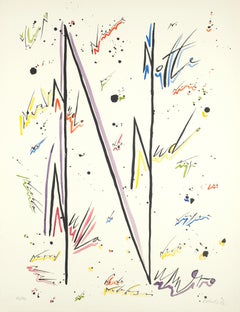
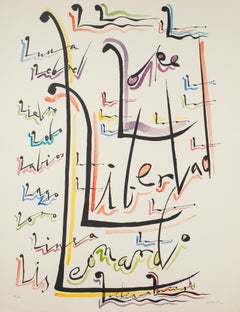
Letter L by Rafael Alberti, from Alphabet series, is an original lithograph, realized by Rafael Alberti in 1972. Hand-signed, dated, numbered, edition of 28/99 prints The state of preservation is very good. The artwork represents alphabet letter L...
Category

1970s Contemporary Abstract Prints

Materials

Watercolor, Lithograph

Tourist Advertising of Kraków - Vintage Polish Poster - 20th Century
Located in Roma, IT
Tourist Advertising of Kraków - Poster is an original offset poster print. The artwork was realized to promote Polish turism. Good conditions except for some foldings.
Category

1980s Contemporary Abstract Prints

Materials

Paper, Offset

Westerplatte - Vintage Polish Manifesto - 1973 ca.
Located in Roma, IT
Westerplatte - Polish Manifesto is an original offset poster print in 1973 ca. The artwork was realized for the memoir of 1939 . Good conditions except for some folding and consume...
Category

1980s Contemporary Abstract Prints

Materials

Paper, Offset

Composition - Lithograph - Late 20th century
Located in Roma, IT
Composition is an original artwork realized by an artist of the late 20th century. Lithograph on ivory paper. Good conditions. Illegible signature in pencil on the lower right mar...
Category

Late 20th Century Contemporary Abstract Prints

Materials

Lithograph

Contemporary abstract prints for sale on 1stDibs.

Find a wide variety of authentic Contemporary abstract prints available for sale on 1stDibs. Works in this style were very popular during the 21st Century and Contemporary, but contemporary artists have continued to produce works inspired by this movement. If you’re looking to add abstract prints created in this style to introduce contrast in an otherwise neutral space in your home, the works available on 1stDibs include elements of blue, purple, red, orange and other colors. Many Pop art paintings were created by popular artists on 1stDibs, including Roger Mudre, Rafael Alberti, Johanna Goodman, and Leo Guida. Frequently made by artists working with Paper, and Lithograph and other materials, all of these pieces for sale are unique and have attracted attention over the years. Not every interior allows for large Contemporary abstract prints, so small editions measuring 0.02 inches across are also available. Prices for abstract prints made by famous or emerging artists can differ depending on medium, time period and other attributes. On 1stDibs, the price for these items starts at $50 and tops out at $195,622, while the average work sells for $1,000.

Recently Viewed

View All