Drypoint Animal Prints
to
13
Overall Width
to
Overall Height
to
12
13
10
6
4
3
13
1
13
6
4
3
3
2
2
2
2
1
1
1
1
1
21
17
15
13
13
12
1
12
1
Artist: Pablo Picasso
Medium: Drypoint
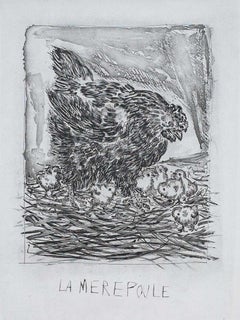
The Mother Hen, 1942 (Histoire Naturelle - Textes de Buffon, B.345)
Located in Greenwich, CT
The Mother Hen is an aquatint and drypoint print on chine from one of the deluxe copies of Picasso's 1942 Histoire Naturelle - Textes de Buffon series. The image size is 10.6 x 8 inc...
Category
20th Century Modern Drypoint Animal Prints
Materials
Drypoint, Aquatint
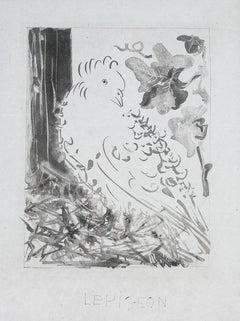
The Pigeon, 1942 (Histoire Naturelle - Textes de Buffon, B.347)
Located in Greenwich, CT
The Pigeon is an aquatint and drypoint print on chine from one of the deluxe copies of Picasso's 1942 Histoire Naturelle - Textes de Buffon series. The image size is 10.75x 8 inches, unsigned as issued, and framed in a contemporary silver and gray moulding. One of about 36 prints that exist with Picasso's remarqued title in French, from the edition of 262 (there were 226 portfolios, some with additional sets on varying papers).
Catalogue - Cramer #37
The exceptional etchings from Picasso’s Histoire Naturelle – Textes de Buffon are a masterful combination of sugar-lift aquatint and drypoint, showcasing a full range of gray tonalities. The etchings of animals, birds and insects are considered some of the most beautiful and most unusual examples of Picasso’s graphic work.
Roger Lacourière, Picasso’s master printer, pulled the prints for each etching between 1939-1942. It was Lacourière who taught Picasso the sugar-lift aquatint technique which allowed him to mimic the effect of brushstrokes in these etched images. Picasso first explored the technique in his plates for the Vollard Suite, but it was in the creation of the Buffon images that he fully realized its stunning, painterly potential.
For the edition, 226 portfolios were produced with the first thirty-six counting as deluxe compilations. These rare deluxe sets were on diverse papers (chine, japon or vergé ancien) and each included a complete additional suite showing Picasso’s title remarques along the bottom. As such, the remarqued versions of the prints are quite rare with just thirty-six of each produced for the edition (with the exception of The Wolf which is never remarqued – the image always fills the entire etching plate).
These prints are based on the writings of French naturalist Georges-Louis Leclerc, Comte de Buffon, who extensively documented the natural world in his monumental work Histoire Naturelle. Picasso’s association with the project to illustrate parts of the Buffon came during a tumultuous time in European history – the prelude to, and early years of, World War II. As the continent was ravaged, Picasso lived through the disaster in Paris, which the Germans occupied in 1940. These prints could be seen as a political statement – Picasso channeling his artistic expression into a form of resistance art...
Category
20th Century Modern Drypoint Animal Prints
Materials
Drypoint, Aquatint
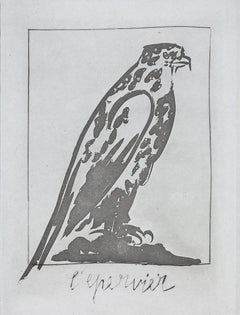
The Sparrow Hawk, 1942 (Histoire Naturelle - Textes de Buffon, B.342)
Located in Greenwich, CT
The Sparrow Hawk is an aquatint and drypoint print on chine from one of the deluxe copies of Picasso's 1942 Histoire Naturelle - Textes de Buffon series. The image size is 10.5 x 8 inches, unsigned as issued, and framed in a contemporary silver and gray moulding. One of about 36 prints that exist with Picasso's remarqued title in French, from the edition of 262 (there were 226 portfolios, some with additional sets on varying papers).
Catalogue - Cramer #37
The exceptional etchings from Picasso’s Histoire Naturelle – Textes de Buffon are a masterful combination of sugar-lift aquatint and drypoint, showcasing a full range of gray tonalities. The etchings of animals, birds and insects are considered some of the most beautiful and most unusual examples of Picasso’s graphic work.
Roger Lacourière, Picasso’s master printer, pulled the prints for each etching between 1939-1942. It was Lacourière who taught Picasso the sugar-lift aquatint technique which allowed him to mimic the effect of brushstrokes in these etched images. Picasso first explored the technique in his plates for the Vollard Suite, but it was in the creation of the Buffon images that he fully realized its stunning, painterly potential.
For the edition, 226 portfolios were produced with the first thirty-six counting as deluxe compilations. These rare deluxe sets were on diverse papers (chine, japon or vergé ancien) and each included a complete additional suite showing Picasso’s title remarques along the bottom. As such, the remarqued versions of the prints are quite rare with just thirty-six of each produced for the edition (with the exception of The Wolf which is never remarqued – the image always fills the entire etching plate).
These prints are based on the writings of French naturalist Georges-Louis Leclerc, Comte de Buffon, who extensively documented the natural world in his monumental work Histoire Naturelle. Picasso’s association with the project to illustrate parts of the Buffon came during a tumultuous time in European history – the prelude to, and early years of, World War II. As the continent was ravaged, Picasso lived through the disaster in Paris, which the Germans occupied in 1940. These prints could be seen as a political statement – Picasso channeling his artistic expression into a form of resistance art...
Category
20th Century Modern Drypoint Animal Prints
Materials
Drypoint, Aquatint
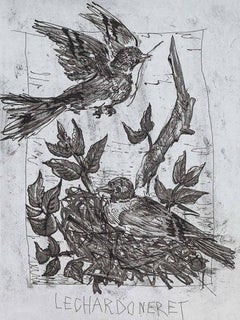
The Goldfinch, 1942 (Histoire Naturelle - Textes de Buffon, B.348 )
Located in Greenwich, CT
The Goldfinch is an aquatint and drypoint print on chine from one of the deluxe copies of Picasso's 1942 Histoire Naturelle - Textes de Buffon series. The image size is 11.2 x 8.25 inches, unsigned as issued, and framed in a contemporary silver and gray moulding. One of about 36 prints that exist with Picasso's remarqued title in French, from the edition of 262 (there were 226 portfolios, some with additional sets on varying papers).
Catalogue - Cramer #37
The exceptional etchings from Picasso’s Histoire Naturelle – Textes de Buffon are a masterful combination of sugar-lift aquatint and drypoint, showcasing a full range of gray tonalities. The etchings of animals, birds and insects are considered some of the most beautiful and most unusual examples of Picasso’s graphic work.
Roger Lacourière, Picasso’s master printer, pulled the prints for each etching between 1939-1942. It was Lacourière who taught Picasso the sugar-lift aquatint technique which allowed him to mimic the effect of brushstrokes in these etched images. Picasso first explored the technique in his plates for the Vollard Suite, but it was in the creation of the Buffon images that he fully realized its stunning, painterly potential.
For the edition, 226 portfolios were produced with the first thirty-six counting as deluxe compilations. These rare deluxe sets were on diverse papers (chine, japon or vergé ancien) and each included a complete additional suite showing Picasso’s title remarques along the bottom. As such, the remarqued versions of the prints are quite rare with just thirty-six of each produced for the edition (with the exception of The Wolf which is never remarqued – the image always fills the entire etching plate).
These prints are based on the writings of French naturalist Georges-Louis Leclerc, Comte de Buffon, who extensively documented the natural world in his monumental work Histoire Naturelle. Picasso’s association with the project to illustrate parts of the Buffon came during a tumultuous time in European history – the prelude to, and early years of, World War II. As the continent was ravaged, Picasso lived through the disaster in Paris, which the Germans occupied in 1940. These prints could be seen as a political statement – Picasso channeling his artistic expression into a form of resistance art...
Category
20th Century Modern Drypoint Animal Prints
Materials
Drypoint, Aquatint
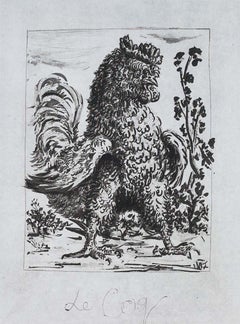
The Rooster, 1942 (Histoire Naturelle - Textes de Buffon, B.344)
Located in Greenwich, CT
The Rooster is an aquatint and drypoint print on chine from one of the deluxe copies of Picasso's 1942 Histoire Naturelle - Textes de Buffon series. The image size is 10.6 x 8.15 inc...
Category
20th Century Modern Drypoint Animal Prints
Materials
Drypoint, Aquatint
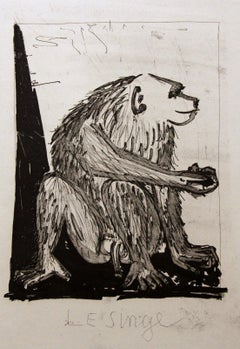
Le Singe - Etching by Pablo Picasso - 1940s
Located in Roma, IT
Etching, aquatint and drypoint. Not Signed and not Numbered as issued.
Edition of 226 pieces.
Belongs to the Suite "Histoire Naturelle de Buffon" (plate p. 86).
Printed by Lacourièr...
Category
1940s Cubist Drypoint Animal Prints
Materials
Paper, Etching, Drypoint, Aquatint
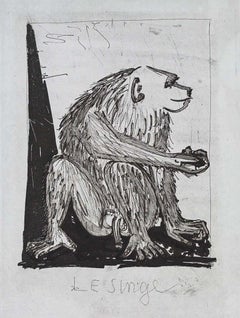
The Monkey, 1942 (Histoire Naturelle - Textes de Buffon, B.339)
Located in Greenwich, CT
The Monkey is an aquatint and drypoint print on chine from one of the deluxe copies of Picasso's 1942 Histoire Naturelle - Textes de Buffon series. The image size is 10.5 x 7.9 inche...
Category
20th Century Modern Drypoint Animal Prints
Materials
Drypoint, Aquatint
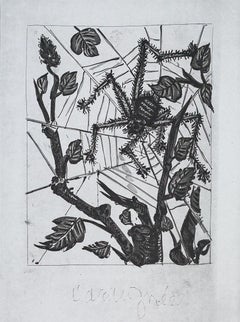
The Spider, 1942 (Histoire Naturelle - Textes de Buffon, B.353)
Located in Greenwich, CT
The Spider is an aquatint and drypoint print on chine from one of the deluxe copies of Picasso's 1942 Histoire Naturelle - Textes de Buffon series. The image size is 10.5 x 8 inches, unsigned as issued, and framed in a contemporary silver and gray moulding. One of about 36 prints that exist with Picasso's remarqued title in French, from the edition of 262 (there were 226 portfolios, some with additional sets on varying papers).
Catalogue - Cramer #37
The exceptional etchings from Picasso’s Histoire Naturelle – Textes de Buffon are a masterful combination of sugar-lift aquatint and drypoint, showcasing a full range of gray tonalities. The etchings of animals, birds and insects are considered some of the most beautiful and most unusual examples of Picasso’s graphic work.
Roger Lacourière, Picasso’s master printer, pulled the prints for each etching between 1939-1942. It was Lacourière who taught Picasso the sugar-lift aquatint technique which allowed him to mimic the effect of brushstrokes in these etched images. Picasso first explored the technique in his plates for the Vollard Suite, but it was in the creation of the Buffon images that he fully realized its stunning, painterly potential.
For the edition, 226 portfolios were produced with the first thirty-six counting as deluxe compilations. These rare deluxe sets were on diverse papers (chine, japon or vergé ancien) and each included a complete additional suite showing Picasso’s title remarques along the bottom. As such, the remarqued versions of the prints are quite rare with just thirty-six of each produced for the edition (with the exception of The Wolf which is never remarqued – the image always fills the entire etching plate).
These prints are based on the writings of French naturalist Georges-Louis Leclerc, Comte de Buffon, who extensively documented the natural world in his monumental work Histoire Naturelle. Picasso’s association with the project to illustrate parts of the Buffon came during a tumultuous time in European history – the prelude to, and early years of, World War II. As the continent was ravaged, Picasso lived through the disaster in Paris, which the Germans occupied in 1940. These prints could be seen as a political statement – Picasso channeling his artistic expression into a form of resistance art...
Category
20th Century Modern Drypoint Animal Prints
Materials
Drypoint, Aquatint
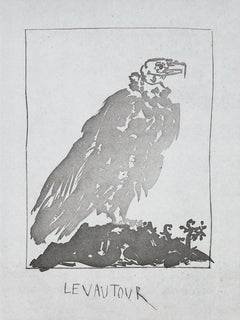
The Vulture. 1942 (Histoire Naturelle - Textes de Buffon, B.341)
Located in Greenwich, CT
The Vulture is an aquatint and drypoint print on chine from one of the deluxe copies of Picasso's 1942 Histoire Naturelle - Textes de Buffon series. The image size is 10.6 x 8 inches, unsigned as issued, and framed in a contemporary silver and gray moulding. One of about 36 prints that exist with Picasso's remarqued title in French, from the edition of 262 (there were 226 portfolios, some with additional sets on varying papers).
Catalogue - Cramer #37
The exceptional etchings from Picasso’s Histoire Naturelle – Textes de Buffon are a masterful combination of sugar-lift aquatint and drypoint, showcasing a full range of gray tonalities. The etchings of animals, birds and insects are considered some of the most beautiful and most unusual examples of Picasso’s graphic work.
Roger Lacourière, Picasso’s master printer, pulled the prints for each etching between 1939-1942. It was Lacourière who taught Picasso the sugar-lift aquatint technique which allowed him to mimic the effect of brushstrokes in these etched images. Picasso first explored the technique in his plates for the Vollard Suite, but it was in the creation of the Buffon images that he fully realized its stunning, painterly potential.
For the edition, 226 portfolios were produced with the first thirty-six counting as deluxe compilations. These rare deluxe sets were on diverse papers (chine, japon or vergé ancien) and each included a complete additional suite showing Picasso’s title remarques along the bottom. As such, the remarqued versions of the prints are quite rare with just thirty-six of each produced for the edition (with the exception of The Wolf which is never remarqued – the image always fills the entire etching plate).
These prints are based on the writings of French naturalist Georges-Louis Leclerc, Comte de Buffon, who extensively documented the natural world in his monumental work Histoire Naturelle. Picasso’s association with the project to illustrate parts of the Buffon came during a tumultuous time in European history – the prelude to, and early years of, World War II. As the continent was ravaged, Picasso lived through the disaster in Paris, which the Germans occupied in 1940. These prints could be seen as a political statement – Picasso channeling his artistic expression into a form of resistance art...
Category
20th Century Modern Drypoint Animal Prints
Materials
Aquatint, Drypoint
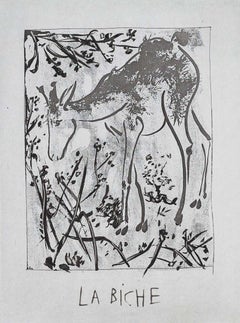
The Deer, 1942 (Histoire Naturelle - Textes de Buffon, B.336)
Located in Greenwich, CT
The Deer is an aquatint and drypoint print on chine from one of the deluxe copies of Picasso's 1942 Histoire Naturelle - Textes de Buffon series. The image size is 10.5 x 8.15 inches, unsigned as issued, and framed in a contemporary silver and gray moulding. One of about 36 prints that exist with Picasso's remarqued title in French, from the edition of 262 (there were 226 portfolios, some with additional sets on varying papers).
Catalogue - Cramer #37
The exceptional etchings from Picasso’s Histoire Naturelle – Textes de Buffon are a masterful combination of sugar-lift aquatint and drypoint, showcasing a full range of gray tonalities. The etchings of animals, birds and insects are considered some of the most beautiful and most unusual examples of Picasso’s graphic work.
Roger Lacourière, Picasso’s master printer, pulled the prints for each etching between 1939-1942. It was Lacourière who taught Picasso the sugar-lift aquatint technique which allowed him to mimic the effect of brushstrokes in these etched images. Picasso first explored the technique in his plates for the Vollard Suite, but it was in the creation of the Buffon images that he fully realized its stunning, painterly potential.
For the edition, 226 portfolios were produced with the first thirty-six counting as deluxe compilations. These rare deluxe sets were on diverse papers (chine, japon or vergé ancien) and each included a complete additional suite showing Picasso’s title remarques along the bottom. As such, the remarqued versions of the prints are quite rare with just thirty-six of each produced for the edition (with the exception of The Wolf which is never remarqued – the image always fills the entire etching plate).
These prints are based on the writings of French naturalist Georges-Louis Leclerc, Comte de Buffon, who extensively documented the natural world in his monumental work Histoire Naturelle. Picasso’s association with the project to illustrate parts of the Buffon came during a tumultuous time in European history – the prelude to, and early years of, World War II. As the continent was ravaged, Picasso lived through the disaster in Paris, which the Germans occupied in 1940. These prints could be seen as a political statement – Picasso channeling his artistic expression into a form of resistance art...
Category
20th Century Modern Drypoint Animal Prints
Materials
Drypoint, Aquatint
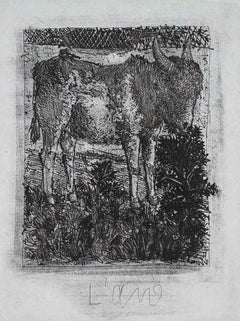
The Donkey, 1942 (Histoire Naturelle - Textes de Buffon, B.329)
Located in Greenwich, CT
The Donkey is an aquatint and drypoint print on chine from one of the deluxe copies of Picasso's 1942 Histoire Naturelle - Textes de Buffon series. The image size is 10.5 x 8 inches,...
Category
20th Century Modern Drypoint Animal Prints
Materials
Drypoint, Aquatint
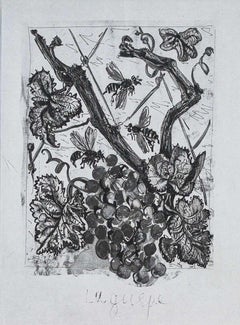
The Wasp, 1942 (Histoire Naturelle - Textes de Buffon, B.351)
Located in Greenwich, CT
The Wasp is an aquatint and drypoint print on chine from one of the deluxe copies of Picasso's 1942 Histoire Naturelle - Textes de Buffon series. The image size is 10.6 x 8 inches, u...
Category
20th Century Modern Drypoint Animal Prints
Materials
Drypoint, Aquatint
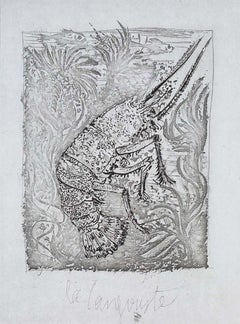
The Lobster, 1942 (Histoire Naturelle - Textes de Buffon, B.352)
Located in Greenwich, CT
The Lobster is an aquatint and drypoint print on chine from one of the deluxe copies of Picasso's 1942 Histoire Naturelle - Textes de Buffon series. The image size is 10.6 x 7.9 inches, unsigned as issued, and framed in a contemporary silver and gray moulding. One of about 36 prints that exist with Picasso's remarqued title in French, from the edition of 262 (there were 226 portfolios, some with additional sets on varying papers).
Catalogue - Cramer #37
The exceptional etchings from Picasso’s Histoire Naturelle – Textes de Buffon are a masterful combination of sugar-lift aquatint and drypoint, showcasing a full range of gray tonalities. The etchings of animals, birds and insects are considered some of the most beautiful and most unusual examples of Picasso’s graphic work.
Roger Lacourière, Picasso’s master printer, pulled the prints for each etching between 1939-1942. It was Lacourière who taught Picasso the sugar-lift aquatint technique which allowed him to mimic the effect of brushstrokes in these etched images. Picasso first explored the technique in his plates for the Vollard Suite, but it was in the creation of the Buffon images that he fully realized its stunning, painterly potential.
For the edition, 226 portfolios were produced with the first thirty-six counting as deluxe compilations. These rare deluxe sets were on diverse papers (chine, japon or vergé ancien) and each included a complete additional suite showing Picasso’s title remarques along the bottom. As such, the remarqued versions of the prints are quite rare with just thirty-six of each produced for the edition (with the exception of The Wolf which is never remarqued – the image always fills the entire etching plate).
These prints are based on the writings of French naturalist Georges-Louis Leclerc, Comte de Buffon, who extensively documented the natural world in his monumental work Histoire Naturelle. Picasso’s association with the project to illustrate parts of the Buffon came during a tumultuous time in European history – the prelude to, and early years of, World War II. As the continent was ravaged, Picasso lived through the disaster in Paris, which the Germans occupied in 1940. These prints could be seen as a political statement – Picasso channeling his artistic expression into a form of resistance art...
Category
20th Century Modern Drypoint Animal Prints
Materials
Drypoint, Aquatint
Related Items
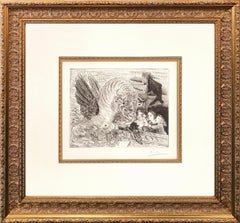
TAUREAU AILE CONTEMPLE PAR QUATRE ENFANTS (BLOCH 229)
Located in Aventura, FL
Plate 13 from La Suite Vollard. Bloch 229. Baer 444. Etching on Montval paper. Signed in pencil, from the edition of 260 (there was also an edition of 50 with larger margins). Printe...
Category
1930s Cubist Drypoint Animal Prints
Materials
Paper, Engraving

$31,600 Sale Price
29% Off
H 13.375 in W 17.5 in
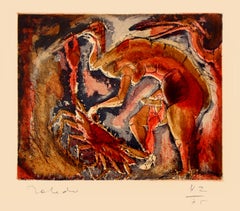
CANGREJO MANO LARGA
Located in New York, NY
paper: 22 x 15 in.
printed image: 4 3/4 x 6 in.
english translation: Long Hand Crab
Latin
Category
Late 20th Century Post-Modern Drypoint Animal Prints
Materials
Archival Paper, Drypoint, Etching, Aquatint
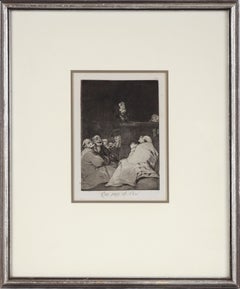
"Que pico de Oro" (What a Golden Beak) - Etching and Aquatint on Paper
Located in Soquel, CA
"Que pico de Oro" (What a Golden Beak) - Etching and Aquatint on Paper
5th or 8th edition print of "Que pico de Oro" from the Los Caprichos with burnished aquatints, drypoints etchi...
Category
1790s Northern Renaissance Drypoint Animal Prints
Materials
Engraving, Etching, Aquatint, Laid Paper
$3,850
H 20 in W 16 in D 0.5 in
A Fierce Bull
By James McBey
Located in Plano, TX
A Fierce Bull. 1911. Drypoint. Hardie 108. 5 3/8 x 8 (sheet 8 5/16 x 11 7/8). Edition 8. An exceptional impression with rich drypoint burr printed on antique laid paper. A proof of t...
Category
1910s Modern Drypoint Animal Prints
Materials
Drypoint, Etching
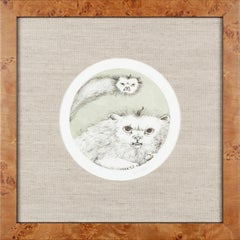
Chimera No. 1
By Leonor Fini
Located in Columbia, MO
Leonor Fini (Argentine-French, 1907 - 1996) was an independent and visionary artist whose work defied categorization within Surrealism, despite her association with its key figures i...
Category
20th Century Surrealist Drypoint Animal Prints
Materials
Paper, Etching, Aquatint
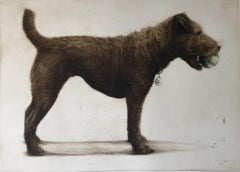
Izzy with her Ball, Dog Art, Affordable Art, Contemporary Animal Art Print
Located in Deddington, GB
Izzy, a charming characterful terrier stands alert, holding her ball in her mouth. Colour etching hand made and printed by the artist.
Helen Fay's art for sale online and in our gall...
Category
2010s Contemporary Drypoint Animal Prints
Materials
Paper, Drypoint, Etching
$548
H 25.2 in W 32.29 in D 0.06 in
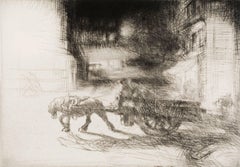
Night Time, Dieppe.
Located in Plano, TX
Night Time, Dieppe. 1926-27. Drypoint. Appleby 123. 7 7/8 x 11/ Edition 100. A fine impression printed on cream laid paper with full margins. Signed in penc...
Category
1920s Modern Drypoint Animal Prints
Materials
Drypoint, Etching
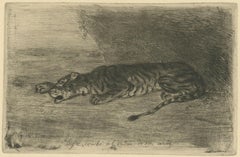
Tigre couché à l
entrée de son antre (Tiger Lying at the Entrance to its Lair)
Located in Middletown, NY
Etching, drypoint, and roulette on watermarked Hallines cream laid paper, 3 3/4 x 5 7/8 inches (95 x 148 mm), full margins. A very good impression of this charming image, with all of...
Category
Early 19th Century Realist Drypoint Animal Prints
Materials
Laid Paper, Drypoint, Etching
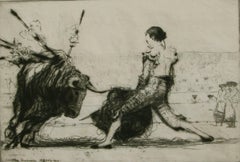
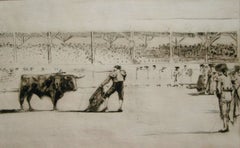
The Matador.
By James McBey
Located in Plano, TX
The Matador. 1911. Drypoint. Hardie 109. 6 7/8 x 10 7/8 (sheet 7 7/8 x 12). Edition 15. A few scattered foxing marks and slight mat line; otherwise fine o...
Category
1910s Modern Drypoint Animal Prints
Materials
Drypoint, Etching
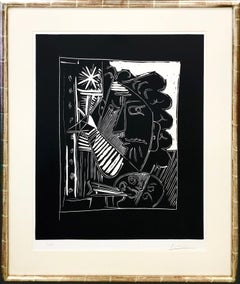
LE PEINTRE A LA PALETTE (BLOCH 1153)
Located in Aventura, FL
Linocut on Arches wove paper. Hand signed and numbered by the artist in pencil. Image size 25 x 20.75 inches. Sheet size 29.6 x 24.5 inches. Frame size approx 34.5 x 29.5 inches. Pri...
Category
1960s Cubist Drypoint Animal Prints
Materials
Paper, Linocut
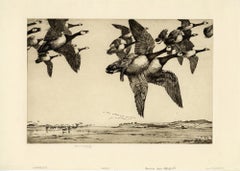
Barnacle Geese Affrighted
Located in Middletown, NY
Etching and drypoint on cream wove paper, full margins. Signed and numbered 59/75 in pencil, lower margin. Notations in pencil along the lower sheet edge, recto, well outside of ima...
Category
Mid-20th Century Modern Drypoint Animal Prints
Materials
Handmade Paper, Drypoint, Etching
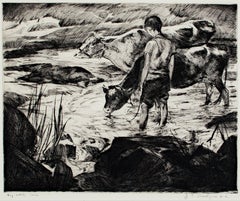
20th century drypoint etching figurative animal print black and white signed
Located in Milwaukee, WI
"Boy With Cows" is an original drypoint etching by John Edward Costigan. It depicts a young boy with three cows standing in a watering hole. The artist si...
Category
1930s American Realist Drypoint Animal Prints
Materials
Drypoint, Etching
Previously Available Items
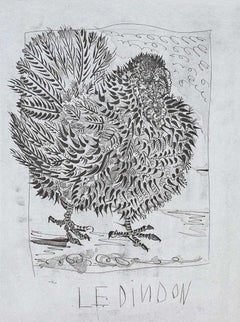
The Turkey, 1942 (Histoire Naturelle - Textes de Buffon, B.346)
Located in Greenwich, CT
The Turkey is an aquatint and drypoint print on chine from one of the deluxe copies of Picasso's 1942 Histoire Naturelle - Textes de Buffon series. The image size is 10.8 x 7.9 inches, unsigned as issued, and framed in a contemporary silver and gray moulding. One of about 36 prints that exist with Picasso's remarqued title in French, from the edition of 262 (there were 226 portfolios, some with additional sets on varying papers).
Catalogue - Cramer #37
The exceptional etchings from Picasso’s Histoire Naturelle – Textes de Buffon are a masterful combination of sugar-lift aquatint and drypoint, showcasing a full range of gray tonalities. The etchings of animals, birds and insects are considered some of the most beautiful and most unusual examples of Picasso’s graphic work.
Roger Lacourière, Picasso’s master printer, pulled the prints for each etching between 1939-1942. It was Lacourière who taught Picasso the sugar-lift aquatint technique which allowed him to mimic the effect of brushstrokes in these etched images. Picasso first explored the technique in his plates for the Vollard Suite, but it was in the creation of the Buffon images that he fully realized its stunning, painterly potential.
For the edition, 226 portfolios were produced with the first thirty-six counting as deluxe compilations. These rare deluxe sets were on diverse papers (chine, japon or vergé ancien) and each included a complete additional suite showing Picasso’s title remarques along the bottom. As such, the remarqued versions of the prints are quite rare with just thirty-six of each produced for the edition (with the exception of The Wolf which is never remarqued – the image always fills the entire etching plate).
These prints are based on the writings of French naturalist Georges-Louis Leclerc, Comte de Buffon, who extensively documented the natural world in his monumental work Histoire Naturelle. Picasso’s association with the project to illustrate parts of the Buffon came during a tumultuous time in European history – the prelude to, and early years of, World War II. As the continent was ravaged, Picasso lived through the disaster in Paris, which the Germans occupied in 1940. These prints could be seen as a political statement – Picasso channeling his artistic expression into a form of resistance art...
Category
20th Century Modern Drypoint Animal Prints
Materials
Drypoint, Aquatint
H 24.125 in W 20.5 in
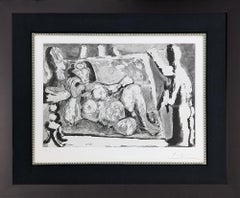
PEINTRE AU TRAVAIL (BLOCH 1157)
Located in Aventura, FL
Etching, aquatint, drypoint and scraper, on Rives BFK paper. Hand signed and numbered by Pablo Picasso. Published by Galerie Louise Leiris, Paris. Image size 12.125 x 18.125 inches. ...
Category
1960s Cubist Drypoint Animal Prints
Materials
Paper, Engraving, Drypoint, Aquatint
Drypoint animal prints for sale on 1stDibs.
Find a wide variety of authentic Drypoint animal prints available on 1stDibs. While artists have worked in this medium across a range of time periods, art made with this material during the 21st Century is especially popular. If you’re looking to add animal prints created with this material to introduce a provocative pop of color and texture to an otherwise neutral space in your home, the works available on 1stDibs include elements of yellow and other colors. There are many well-known artists whose body of work includes ceramic sculptures. Popular artists on 1stDibs associated with pieces like this include Salvador Dalí, Pablo Picasso, Edmund Blampied, and James McBey.. Frequently made by artists working in the Modern, Surrealist, all of these pieces for sale are unique and many will draw the attention of guests in your home. Not every interior allows for large Drypoint animal prints, so small editions measuring 0.5 inches across are also available
More Ways To Browse
Le Singe Et Le Leopard
Leon Danchin On Sale
Louis Prang Chromolithograph
Man O War Horse
Manetti Saverio
Natural History Museum Vintage Prints
Penguin Lithograph
Peter Klucik
Pheasant Engraving
Picasso Dove Of Peace
Picasso Le Taureau
Picasso Rooster
Ronald Smith
Rooster Print Picasso
Salvador Dali Argus
Salvador Dali Unicorn
Sam Savitt
Shore Bird Print