1850s Animal Prints
to
2
490
6
1
1
Overall Width
to
Overall Height
to
481
77
4
4
1
1
709
1,434
2,634
1,824
32
29
67
168
101
136
245
605
363
336
678
323
162
13
346
176
143
120
69
59
55
50
38
38
36
35
34
33
32
30
22
21
19
16
494
236
5
5
1
1
286
51
15
Period: 1850s
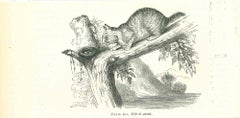
The Cat - Original Lithograph by Paul Gervais - 1854
By Paul Gervais
Located in Roma, IT
The Cat is an original lithograph on ivory-colored paper, realized by Paul Gervais (1816-1879). The artwork is from The Series of "Les Trois Règnes de la Nature", and was published i...
Category
Modern 1850s Animal Prints
Materials
Lithograph, Paper
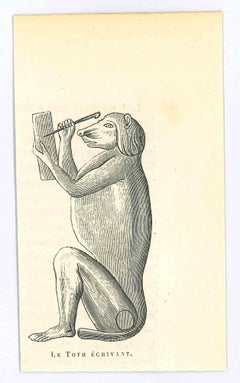
Le Toth Engraving - Original Lithograph by Paul Gervais - 1854
By Paul Gervais
Located in Roma, IT
Le Toth Engraving is an original lithograph on ivory-colored paper, realized by Paul Gervais (1816-1879). The artwork is from The Series of "Les Trois Règnes de la Nature", and was p...
Category
Modern 1850s Animal Prints
Materials
Lithograph, Paper
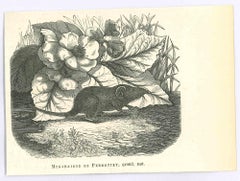
The Mouse - Original Lithograph by Paul Gervais - 1854
By Paul Gervais
Located in Roma, IT
The Mouse is an original lithograph on ivory-colored paper, realized by Paul Gervais (1816-1879). The artwork is from The Series of "Les Trois Règnes de la Nature", and was published...
Category
Modern 1850s Animal Prints
Materials
Lithograph, Paper
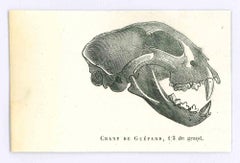
The Skull - Original Lithograph by Paul Gervais - 1854
By Paul Gervais
Located in Roma, IT
The Skull is an original lithograph on ivory-colored paper, realized by Paul Gervais (1816-1879). The artwork is from The Series of "Les Trois Règnes de la Nature", and was published...
Category
Modern 1850s Animal Prints
Materials
Lithograph, Paper
The Mouse of Madagascar - Original Lithograph by Paul Gervais - 1854
By Paul Gervais
Located in Roma, IT
The Mouse of Madagascar is an original lithograph on ivory-colored paper, realized by Paul Gervais (1816-1879). The artwork is from The Series of "Les Trois Règnes de la Nature", and...
Category
Modern 1850s Animal Prints
Materials
Lithograph, Paper
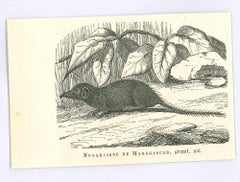
The Monkey - Original Lithograph by Paul Gervais - 1854
By Paul Gervais
Located in Roma, IT
The Monkey is an original lithograph on ivory-colored paper, realized by Paul Gervais (1816-1879). The artwork is from The Series of "Les Trois Règnes de la Nature", and was publishe...
Category
Modern 1850s Animal Prints
Materials
Lithograph, Paper
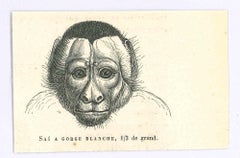
Animals
Napping And Pleasurable Rest - Lithograph by J.J Grandville - 1852
Located in Roma, IT
Animals' Napping And Pleasurable Rest is an original lithograph on ivory-colored paper realized by J.J. Grandville from Scènes de la vie privée et publique des animaux, 1852. Publish...
Category
Modern 1850s Animal Prints
Materials
Paper, Lithograph
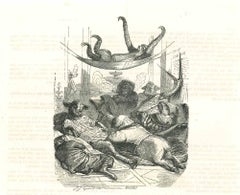
The Fisher-Bird - Original Lithograph by J.J Grandville - 1852
Located in Roma, IT
The Fisher-Bird is an original lithograph on ivory-colored paper realized by J.J. Grandville from Scènes de la vie privée et publique des animaux, 1852. Published by Manesq & Harvard...
Category
Modern 1850s Animal Prints
Materials
Lithograph, Paper
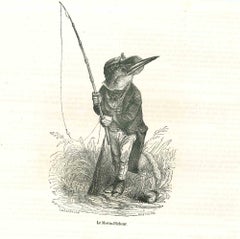
Mr. Cat And Miss. Fox Playing Rope Game With ... by J.J Grandville - 1852
Located in Roma, IT
Mr. Cat and Miss. Fox Playing Rope Game With Little Cricket and Beetles is an original lithograph on ivory-colored paper realized by J.J. Grandville from Scènes de la vie privée et p...
Category
Modern 1850s Animal Prints
Materials
Paper, Lithograph
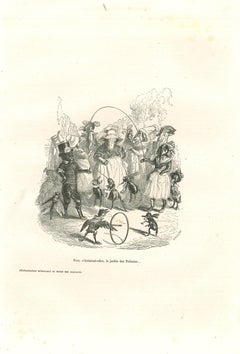
Flies Soldiers Guarding In The Wood - Lithograph by J.J Grandville - 1852
Located in Roma, IT
Flies Soldiers Guarding In The Wood is an original lithograph on ivory-colored paper realized by J.J. Grandville from Scènes de la vie privée et publique des animaux, 1852. Published...
Category
Modern 1850s Animal Prints
Materials
Paper, Lithograph
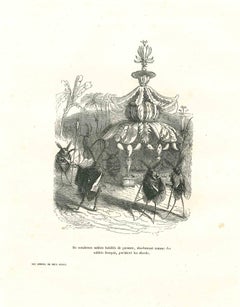
The Benediction - Original Lithograph by J.J Grandville - 1852
Located in Roma, IT
The Benediction is an original lithograph by J.J. Grandville from "Scènes de la vie privée et publique des animaux, 1852. Published by Manesq & Harvard, Paris.
Good Conditions but ...
Category
Modern 1850s Animal Prints
Materials
Paper, Lithograph
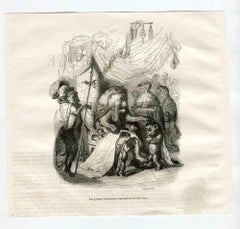
The Competition - Original Lithograph by J.J Grandville - 1852
Located in Roma, IT
The Competition is an original lithograph by J.J. Grandville from "Scènes de la vie privée et publique des animaux, 1852. Published by Manesq & Harvard, Paris.
Good Conditions but ...
Category
Modern 1850s Animal Prints
Materials
Paper, Lithograph
The Colonel - Original Lithograph by J.J Grandville - 1852
Located in Roma, IT
The Colonel is an original lithographs by J.J. Grandville from "Scènes de la vie privée et publique des animaux, 1852. Published by Manesq & Harvard, Paris.
Good Conditions.
The a...
Category
Modern 1850s Animal Prints
Materials
Paper, Lithograph
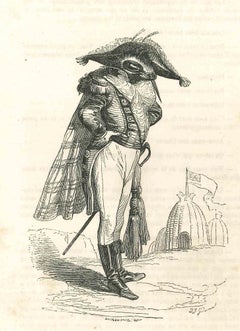
The Diseuse - Original Lithograph by J.J Grandville - 1852
Located in Roma, IT
The Diseuse is an original lithographs by J.J. Grandville from "Scènes de la vie privée et publique des animaux, 1852. Published by Manesq & Harvard, Paris.
Good Conditions but age...
Category
Modern 1850s Animal Prints
Materials
Paper, Lithograph
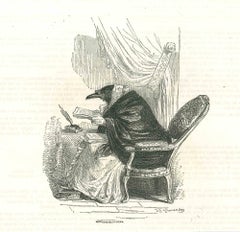
Au Bois de Boulogne - Original Lithograph by J.J Grandville - 1852
Located in Roma, IT
Au Bois de Boulogne is an original lithographs by J.J. Grandville from "Scènes de la vie privée et publique des animaux, 1852. Published by Manesq & Harvard, Paris.
Good Conditions...
Category
Modern 1850s Animal Prints
Materials
Paper, Lithograph
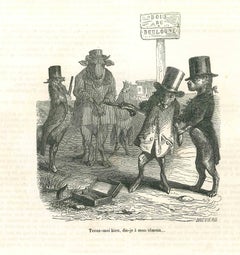
The Judgement - Lithograph by J.J Grandville - 1852
Located in Roma, IT
The Judgement is an original lithograph by J.J. Grandville from "Scènes de la vie privée et publique des animaux, 1852. Published by Manesq & Harvard, Paris.
Good Conditions.
The ...
Category
Modern 1850s Animal Prints
Materials
Paper, Lithograph
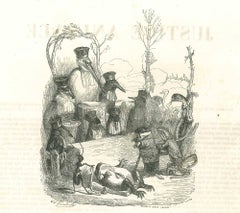
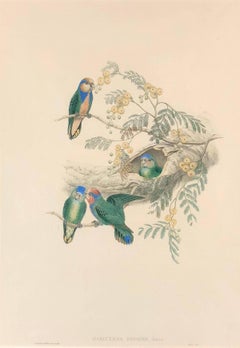
Nasiterna Bruijni
By John Gould
Located in Missouri, MO
John Gould (British, 1804-1881)
Nasiterna Bruijni c. 1849-1861
Hand Colored Lithograph
Image Size: approx 19.5 x 13.5 inches
Framed Size: 27 3/8 x 21 1/2 inches
John Gould was an English ornithologist and bird artist. The Gould League in Australia was named after him. His identification of the birds now nicknamed "Darwin's finches" played a role in the inception of Darwin's theory of evolution by natural selection. Gould's work is referenced in Charles Darwin's book, On the Origin of Species.
Gould was born in Lyme Regis, Dorset, the son of a gardener, and the boy probably had a scanty education. Shortly afterwards his father obtained a position on an estate near Guildford, Surrey, and then in 1818 became foreman in the Royal Gardens of Windsor. He was for some time under the care of J T Aiton, of the Royal Gardens of Windsor. The young Gould started training as a gardener, being employed under his father at Windsor from 1818 to 1824, and he was subsequently a gardener at Ripley Castle in Yorkshire. He became an expert in the art of taxidermy, and in 1824 he set himself up in business in London as a taxidermist, and his skill led to him becoming the first Curator and Preserver at the museum of the Zoological Society of London in 1827.
Gould's position brought him into contact with the country's leading naturalists, and also meant that he was often the first to see new collections of birds given to the Society. In 1830 a collection of birds arrived from the Himalayas, many not previously described. Gould published these birds in A Century of Birds from the Himalaya Mountains (1830-1832). The text was by Nicholas Aylward Vigors, and the illustrations were lithographed by Gould's wife Elizabeth, daughter of Nicholas Coxen of Kent.
This work was followed by four more in the next seven years including Birds of Europe in five volumes - completed in 1837, with the text written by Gould himself, edited by his clerk Edwin Prince. Some of the illustrations were made by Edward Lear as part of his Illustrations of the Family of Psittacidae in 1832. Lear however was in financial difficulty, and he sold the entire set of lithographs to Gould. The books were published in a very large size, imperial folio, with magnificent coloured plates. Eventually 41 of these volumes were published with about 3000 plates. They appeared in parts at £3 3s. a number, subscribed for in advance, and in spite of the heavy expense of preparing the plates, Gould succeeded in making his ventures pay and in realizing a fortune. In 1838 he and his wife moved to Australia to work on the Birds of Australia and shortly after his return to England, his wife died in 1841.
When Charles Darwin presented his mammal and bird specimens collected during the second voyage of HMS Beagle to the Geological Society of London at their meeting on 4 January 1837, the bird specimens were given to Gould for identification. He set aside his paying work and at the next meeting on 10 January reported that birds from the Galápagos Islands, which Darwin had thought were blackbirds, "gross-bills" and finches were in fact "a series of ground Finches which are so peculiar" as to form "an entirely new group, containing 12 species." This story made the newspapers.
In March, Darwin met Gould again, learning that his Galápagos "wren" was another species of finch and the mockingbirds he had labeled by island were separate species rather than just varieties, with relatives on the South American mainland. Subsequently Gould advised that the smaller southern Rhea specimen that had been rescued from a Christmas dinner...
Category
Naturalistic 1850s Animal Prints
Materials
Lithograph

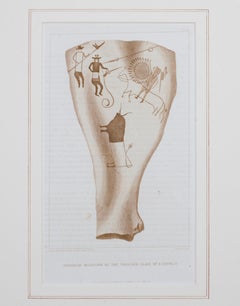
"Camanche Inscription on the Shoulder Blade of a Buffalo, " after S. Eastman
By Seth Eastman
Located in Milwaukee, WI
"Camanche Inscription on the Shoulder Blade of a Buffalo" is a lithograph after an original drawing by Seth Eastman. It depicts Native American inscriptions on an animal bone. It was...
Category
1850s Animal Prints
Materials
Lithograph
Still Thinking About These?
All Recently ViewedMore Ways To Browse
Penguin Lithograph
Peter Klucik
Pheasant Engraving
Picasso Dove Of Peace
Picasso Le Taureau
Picasso Rooster
Ronald Smith
Rooster Print Picasso
Salvador Dali Argus
Salvador Dali Unicorn
Sam Savitt
Shore Bird Print
Space Elephant Dali
Szabolcs Bozo
The Toad Picasso
Vintage Forest Service Posters
Vintage Posters Coppertone
Warhol Siberian Tiger