Surrealist Animal Prints

SURREALIST STYLE

In the wake of World War I’s ravaging of Europe, artists delved into the unconscious mind to confront and grapple with this reality. Poet and critic André Breton, a leader of the Surrealist movement who authored the 1924 Surrealist Manifesto, called this approach “a violent reaction against the impoverishment and sterility of thought processes that resulted from centuries of rationalism.” Surrealist art emerged in the 1920s with dreamlike and uncanny imagery guided by a variety of techniques such as automatic drawing, which can be likened to a stream of consciousness, to channel psychological experiences.

Although Surrealism was a groundbreaking approach for European art, its practitioners were inspired by Indigenous art and ancient mysticism for reenvisioning how sculptures, paintings, prints, performance art and more could respond to the unsettled world around them.

Surrealist artists were also informed by the Dada movement, which originated in 1916 Zurich and embraced absurdity over the logic that had propelled modernity into violence. Some of the Surrealists had witnessed this firsthand, such as Max Ernst, who served in the trenches during World War I, and Salvador Dalí, whose otherworldly paintings and other work responded to the dawning civil war in Spain.

Other key artists associated with the revolutionary art and literary movement included Man Ray, Joan Miró, René Magritte, Yves Tanguy, Frida Kahlo and Meret Oppenheim, all of whom had a distinct perspective on reimagining reality and freeing the unconscious mind from the conventions and restrictions of rational thought. Pablo Picasso showed some of his works in “La Peinture Surréaliste” — the first collective exhibition of Surrealist painting — which opened at Paris’s Galerie Pierre in November of 1925. (Although Magritte is best known as one of the visual Surrealist movement’s most talented practitioners, his famous 1943 painting, The Fifth Season, can be interpreted as a formal break from Surrealism.)

The outbreak of World War II led many in the movement to flee Europe for the Americas, further spreading Surrealism abroad. Generations of modern and contemporary artists were subsequently influenced by the richly symbolic and unearthly imagery of Surrealism, from Joseph Cornell to Arshile Gorky.

Find a collection of original Surrealist paintings, sculptures, prints and multiples and more art on 1stDibs.

to
33
133
42
65
30
5
Overall Width
to
Overall Height
to
1,999
1,408
397
214
154
117
79
39
36
33
13
11
8
82
37
26
8
7
258
17
9
10
34
112
12
8
153
115
6
140
97
88
64
46
43
29
25
22
17
10
10
9
8
7
7
7
6
5
5
158
85
22
17
12
35
50
207
65
Style: Surrealist
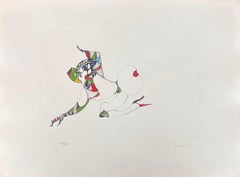
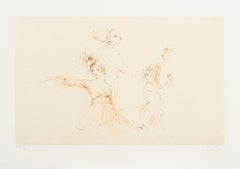
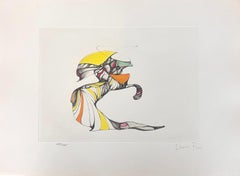
Infelicia - Hand-signed and numbered lithograph Leonor Fini Surrealist, 1975
Located in New York, NY
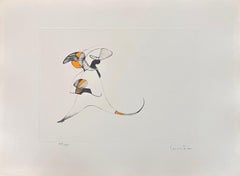
Leonor Fini Infelicia, 1975 Colored etching on Arches paper 11 × 15 in 28 × 38 cm Limited edition of 185
Category

1970s Surrealist Animal Prints

Materials

Lithograph

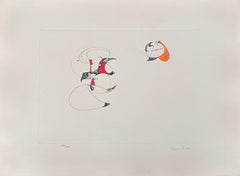
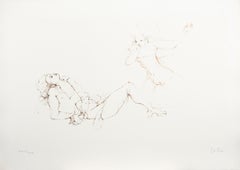
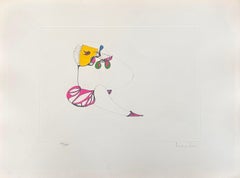
Surrealist composition - Hand-signed lithograph Leonor Fini Surrealist, 1975
Located in New York, NY
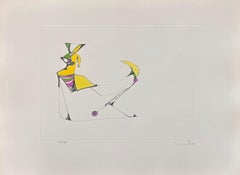
Leonor Fini Surrealist composition, 1975 Colored etching on Arches paper 11 × 15 in 28 × 38 cm Limited edition of 185
Category

1970s Surrealist Animal Prints

Materials

Lithograph

Francois-Xavier Lalanne (1927-2008) The Geese (in french : les oies), 2004
Located in Saint Ouen, FR
Francois-Xavier Lalanne (1927-2008) The Geese (in french : les oies), 2004 This extremely rare print by François Xavier Lalanne depicts three geese. It is an edition of only 10 copi...
Category

Early 2000s Surrealist Animal Prints

Materials

Paper

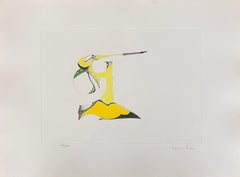
Surrealist composition - Hand-signed lithograph Leonor Fini Surrealist, 1975
Located in New York, NY
Leonor Fini Surrealist composition, 1975 Colored etching on Arches paper 11 × 15 in 28 × 38 cm Limited edition of 185
Category

1970s Surrealist Animal Prints

Materials

Lithograph

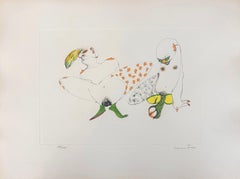
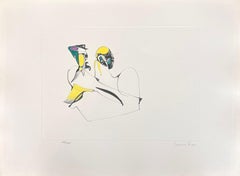
The Seduction - Hand-signed and numbered lithograph Leonor Fini Surrealist, 1975
Located in New York, NY
Leonor Fini The Seduction, 1975 Colored etching on Arches paper 11 × 15 in 28 × 38 cm Limited edition of 185
Category

1970s Surrealist Animal Prints

Materials

Lithograph

Francois-Xavier Lalanne PIG
Located in Saint Ouen, FR
Francois-Xavier Lalanne (1927-2008) The pig (in french : le cochon), 2004 This extremely rare print by François Xavier Lalanne depicts a pig, more precisely a sow and her babies. It...
Category

Early 2000s Surrealist Animal Prints

Materials

Paper

Surrealist composition - Hand-signed lithograph Leonor Fini Surrealist, 1975
Located in New York, NY
Leonor Fini Surrealist composition, 1975 Colored etching on Arches paper 11 × 15 in 28 × 38 cm Limited edition of 185
Category

1970s Surrealist Animal Prints

Materials

Lithograph

Ma fortune - Hand-signed numbered lithograph by Leonor Fini, Surrealist, 1975
Located in New York, NY
Leonor Fini Ma fortune, 1975 Colored etching on Arches paper 11 × 15 in 28 × 38 cm Limited edition of 185 Condition: Excellent condition
Category

1970s Surrealist Animal Prints

Materials

Lithograph

Air, Surrealist Etching by Douglas C. Backhaus
Located in Long Island City, NY
Douglas C. Backhaus - Air, Year: 1978, Medium: Hand colored Etching, signed, dated, titled and numbered in pencil, Edition: AP, Image Size: 9.25 x 7 inches, Size: 13.25 x 11 in. (33....
Category

1970s Surrealist Animal Prints

Materials

Etching

Henry Moore - Original Lithograph
Located in Collonge Bellerive, Geneve, CH
Henry Moore - Original Lithograph 1977 Dimensions: 32 x 24 cm From the art review XXe siècle Unsigned and unumbered as issued
Category

1970s Surrealist Animal Prints

Materials

Lithograph

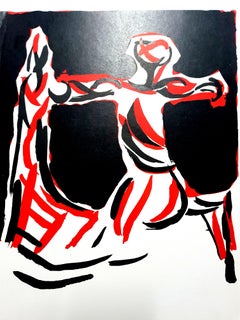
Marino Marini - Horse and Rider - Original Lithograph
Located in Collonge Bellerive, Geneve, CH
Marino Marini - Horse and Rider - Original Lithograph 1963 Dimensions: 32 x 24 cm From the art review XXe siècle Unsigned and unumbered as issued
Category

1960s Surrealist Animal Prints

Materials

Lithograph

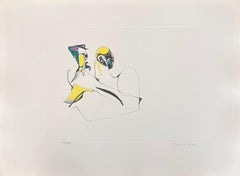
Gesture (B)
Located in Columbia, MO
Leonor Fini was born in Argentina in 1907 but travelled and lived in Europe with her mother from a young age. By 1931, she was in Paris, in the full swing of the Surrealist movement....
Category

Mid-20th Century Surrealist Animal Prints

Materials

Etching

Duet (B)
Located in Columbia, MO
Leonor Fini was born in Argentina in 1907 but travelled and lived in Europe with her mother from a young age. By 1931, she was in Paris, in the full swing of the Surrealist movement....
Category

Mid-20th Century Surrealist Animal Prints

Materials

Etching

Duet (A)
Located in Columbia, MO
Leonor Fini was born in Argentina in 1907 but travelled and lived in Europe with her mother from a young age. By 1931, she was in Paris, in the full swing of the Surrealist movement....
Category

Mid-20th Century Surrealist Animal Prints

Materials

Etching

Coup de pied (B)
Located in Columbia, MO
Leonor Fini was born in Argentina in 1907 but travelled and lived in Europe with her mother from a young age. By 1931, she was in Paris, in the full swing of the Surrealist movement....
Category

Mid-20th Century Surrealist Animal Prints

Materials

Etching

Three Dancers (B)
Located in Columbia, MO
Leonor Fini was born in Argentina in 1907 but travelled and lived in Europe with her mother from a young age. By 1931, she was in Paris, in the full swing of the Surrealist movement....
Category

Mid-20th Century Surrealist Animal Prints

Materials

Etching

The Repose (A)
Located in Columbia, MO
Leonor Fini was born in Argentina in 1907 but travelled and lived in Europe with her mother from a young age. By 1931, she was in Paris, in the full swing of the Surrealist movement....
Category

Mid-20th Century Surrealist Animal Prints

Materials

Etching

Metamorphosis Owl (B)
Located in Columbia, MO
Leonor Fini was born in Argentina in 1907 but travelled and lived in Europe with her mother from a young age. By 1931, she was in Paris, in the full swing of the Surrealist movement....
Category

Mid-20th Century Surrealist Animal Prints

Materials

Etching

Du fil à retordre - Hand-signed numbered lithograph Leonor Fini Surrealist, 1975
Located in New York, NY
Leonor Fini Du fil à retordre, 1975 Colored etching on Arches paper 11 × 15 in 28 × 38 cm Limited edition of 185 Condition: Excellent condition
Category

1970s Surrealist Animal Prints

Materials

Lithograph

Jean Arp - Original Lithograph
Located in Collonge Bellerive, Geneve, CH
Jean Arp - Original Lithograph 1962 Dimensions: 32 x 24 cm From the art review XXe siècle Unsigned and unumbered as issued
Category

1960s Surrealist Animal Prints

Materials

Lithograph

Max Ernst - Abstract Birds - Original Lithograph
Located in Collonge Bellerive, Geneve, CH
Max Ernst - Birds - Original Lithograph Birds, 1962 Dimensions: 32 x 24 cm From the art review XXe siècle Unsigned and unumbered as issued
Category

1960s Surrealist Animal Prints

Materials

Lithograph

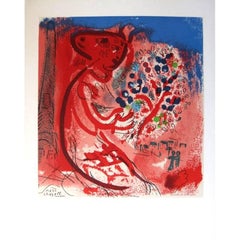
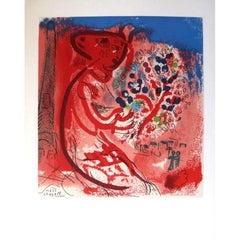
Femme au bouquet de fleurs (Lady with Flower Bouquet)
Located in Collonge Bellerive, Geneve, CH
This vintage color lithograph on paper is after a watercolor by Marc Chagall titled Femme au bouquet de fleurs (Lady with Flower Bouquet). Signed on ...
Category

1960s Surrealist Animal Prints

Materials

Lithograph

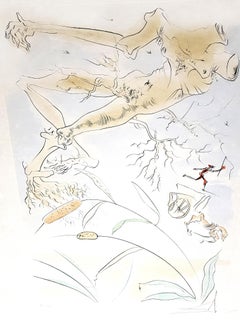
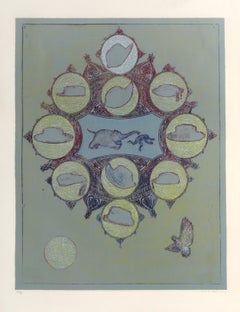
Monkey Pursued by an Elephant for a Flight of Hat, Dada Lithograph by Max Ernst
Located in Long Island City, NY
Artist: Max Ernst, German (1891 - 1976) Title: Monkey Pursued by an Elephant for a Flight of Hat Year: 1974 Medium: Lithograph, signed and numbered in pencil Edition: 78/99 Image Siz...
Category

1970s Surrealist Animal Prints

Materials

Lithograph

Max Ernst - Composition - Original Lithograph
Located in Collonge Bellerive, Geneve, CH
Max Ernst - Composition - Original Lithograph 1958 Dimensions: 32 x 24 cm XXe siècle Unsigned and unnumbered, as issued Max Ernst was born in Bruhl, a place near Cologne, in Germany. He was raised in a strict Catholic family, and both of his parents were disciplinarians who were dedicated to training their children into God-fearing and talented individuals. Although his father was deaf, Ernst learned so much from him, particularly when it comes to painting. In fact, much of his early years were lived under the inspiration of his father who was also a teacher. He was the one who introduced painting to Ernst at an early age. In 1914, Ernst attended the University of Bonn where he studied philosophy. However, he eventually dropped out of school because he was more interested in the arts. He claimed that his primary sources of interest included anything that had something to do with painting. Moreover, he became fascinated with psychology, among other subjects in school. Primarily, Ernst's love for painting was the main reason why he became deeply interested with this craft and decided to pursue it later on in his life. During his early years, he became familiar with the works of some of the greatest artists of all time including Claude Monet, Paul Cezanne and Vincent van Gogh. He was also drawn to themes such as fantasy and dream imagery, which were among the common subjects of the works of Giorgio de Chirico. During World War I, Ernst was forced to join the German Army, and he became a part of the artillery division that exposed him greatly to the drama of warfare. A soldier in the War, Ernst emerged deeply traumatized and highly critical of western culture. These charged sentiments directly fed into his vision of the modern world as irrational, an idea that became the basis of his artwork. Ernst's artistic vision, along with his humor and verve come through strongly in his Dada and Surrealists works; Ernst was a pioneer of both movements. It was Ernst's memories of the war and his childhood that helps him create absurd, yet interesting scenes in his artworks. Soon, he took his passion for the arts seriously when he returned to Germany after the war. With Jean Arp, a poet and artist, Ernst formed a group for artists in Cologne. He also developed a close relationship with fellow artists in Paris who propagated Avant-Garde artworks. In 1919, Ernst started creating some of his first collages, where he made use of various materials including illustrated catalogs and some manuals that produced a somewhat futuristic image. His unique masterpieces allowed Ernst to create his very own world of dreams and fantasy, which eventually helped heal his personal issues and trauma. In addition to painting and creating collages, Ernst also edited some journals. He also made a few sculptures that were rather queer in appearance. In 1920s, influenced by the writings of psychologist Sigmund Freud, the literary, intellectual, and artistic movement called Surrealism sought a revolution against the constraints of the rational mind; and by extension, they saw the rules of a society as oppressive. Surrealism also embraces a Marxist ideology that demands an orthodox approach to history as a product of the material interaction of collective interests, and many renown Surrealism artists later on became 20th century Counterculture symbols such as Marxist Che Guevara. In 1922 Ernst moved to Paris, where the surrealists were gathering around Andre Breton. In 1923 Ernst finished Men Shall Know Nothing of This, known as the first Surrealist painting. Ernst was one of the first artists who apply The Interpretation of Dreams by Freud to investigate his deep psyche in order to explore the source of his own creativity. While turning inwards unto himself, Ernst was also tapping into the universal unconscious with its common dream imagery. Despite his strange styles, Ernst gained quite a reputation that earned him some followers throughout his life. He even helped shape the trend of American art during the mid-century, thanks to his brilliant and extraordinary ideas that were unlike those of other artists during his time. Ernst also became friends with Peggy Guggenheim, which inspired him to develop close ties with the abstract expressionists. When Ernst lived in Sedona, he became deeply fascinated with the Southwest Native American navajo art. In fact, the technique used in this artwork inspired him and paved the way for him to create paintings that depicted this style. Thus, Ernst became a main figure of this art technique, including the rituals and spiritual traditions included in this form of art. Pollock, aside from the other younger generations of abstract expressionists, was also inspired by sand painting of the Southwest...
Category

1960s Surrealist Animal Prints

Materials

Lithograph

Max Ernst - Birds - Original Lithograph
Located in Collonge Bellerive, Geneve, CH
Max Ernst - Birds - Original Lithograph Birds, 1964 (BNF, 63) Dimensions: 32 x 24 cm Revue Art de France ax Ernst was born in Bruhl, a place near Cologne, in Germany. He was raised in a strict Catholic family, and both of his parents were disciplinarians who were dedicated to training their children into God-fearing and talented individuals. Although his father was deaf, Ernst learned so much from him, particularly when it comes to painting. In fact, much of his early years were lived under the inspiration of his father who was also a teacher. He was the one who introduced painting to Ernst at an early age. In 1914, Ernst attended the University of Bonn where he studied philosophy. However, he eventually dropped out of school because he was more interested in the arts. He claimed that his primary sources of interest included anything that had something to do with painting. Moreover, he became fascinated with psychology, among other subjects in school. Primarily, Ernst's love for painting was the main reason why he became deeply interested with this craft and decided to pursue it later on in his life. During his early years, he became familiar with the works of some of the greatest artists of all time including Claude Monet, Paul Cezanne and Vincent van Gogh. He was also drawn to themes such as fantasy and dream imagery, which were among the common subjects of the works of Giorgio de Chirico. During World War I, Ernst was forced to join the German Army, and he became a part of the artillery division that exposed him greatly to the drama of warfare. A soldier in the War, Ernst emerged deeply traumatized and highly critical of western culture. These charged sentiments directly fed into his vision of the modern world as irrational, an idea that became the basis of his artwork. Ernst's artistic vision, along with his humor and verve come through strongly in his Dada and Surrealists works; Ernst was a pioneer of both movements. It was Ernst's memories of the war and his childhood that helps him create absurd, yet interesting scenes in his artworks. Soon, he took his passion for the arts seriously when he returned to Germany after the war. With Jean Arp, a poet and artist, Ernst formed a group for artists in Cologne. He also developed a close relationship with fellow artists in Paris who propagated Avant-Garde artworks. In 1919, Ernst started creating some of his first collages, where he made use of various materials including illustrated catalogs and some manuals that produced a somewhat futuristic image. His unique masterpieces allowed Ernst to create his very own world of dreams and fantasy, which eventually helped heal his personal issues and trauma. In addition to painting and creating collages, Ernst also edited some journals. He also made a few sculptures that were rather queer in appearance. In 1920s, influenced by the writings of psychologist Sigmund Freud, the literary, intellectual, and artistic movement called Surrealism sought a revolution against the constraints of the rational mind; and by extension, they saw the rules of a society as oppressive. Surrealism also embraces a Marxist ideology that demands an orthodox approach to history as a product of the material interaction of collective interests, and many renown Surrealism artists later on became 20th century Counterculture symbols such as Marxist Che Guevara. In 1922 Ernst moved to Paris, where the surrealists were gathering around Andre Breton. In 1923 Ernst finished Men Shall Know Nothing of This, known as the first Surrealist painting. Ernst was one of the first artists who apply The Interpretation of Dreams by Freud to investigate his deep psyche in order to explore the source of his own creativity. While turning inwards unto himself, Ernst was also tapping into the universal unconscious with its common dream imagery. Despite his strange styles, Ernst gained quite a reputation that earned him some followers throughout his life. He even helped shape the trend of American art during the mid-century, thanks to his brilliant and extraordinary ideas that were unlike those of other artists during his time. Ernst also became friends with Peggy Guggenheim, which inspired him to develop close ties with the abstract expressionists. When Ernst lived in Sedona, he became deeply fascinated with the Southwest Native American navajo art. In fact, the technique used in this artwork inspired him and paved the way for him to create paintings that depicted this style. Thus, Ernst became a main figure of this art technique, including the rituals and spiritual traditions included in this form of art. Pollock, aside from the other younger generations of abstract expressionists, was also inspired by sand painting of the Southwest...
Category

1960s Surrealist Animal Prints

Materials

Lithograph

Marino Marini - Knight - Original Lithograph
Located in Collonge Bellerive, Geneve, CH
Marino Marini - Knight - Original Lithograph 1967 Dimensions: 32 x 24 cm From the art review XXe siècle Unsigned and unumbered as issued
Category

1960s Surrealist Animal Prints

Materials

Lithograph

Marino Marini - Horses - Original Lithograph
Located in Collonge Bellerive, Geneve, CH
Marino Marini - Horses - Original Lithograph 1951 Dimensions: 32 x 24 cm From the art review XXe siècle Unsigned and unumbered as issued
Category

1950s Surrealist Animal Prints

Materials

Lithograph

Marino Marini - Knight - Original Lithograph
Located in Collonge Bellerive, Geneve, CH
Marino Marini - Knight - Original Lithograph 1968 Dimensions: 32 x 48 cm From the art review XXe siècle Unsigned and unumbered as issued
Category

1960s Surrealist Animal Prints

Materials

Lithograph

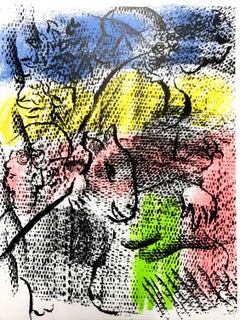
Marc Chagall (after) - Lettre à mon peintre Raoul Dufy
Located in Collonge Bellerive, Geneve, CH
(after) Marc Chagall Lithograph after a watercolor, published in the book "Lettre à mon peintre Raoul Dufy." Paris, Librairie Académique Perrin, 1965. Printed signature Dimensions:...
Category

1960s Surrealist Animal Prints

Materials

Lithograph

Little Jungle, Katie Edwards, Limited Edition Print, Surrealist Landscape Art
Located in Deddington, GB
Katie Edwards Little Jungle Limited Edition 3 Colour Silkscreen Print Edition of 100 Mounted Size: H 40.5cm x W 30.5cm x D 0.5cm Sold Unframed (Please note that in situ images are pu...
Category

21st Century and Contemporary Surrealist Animal Prints

Materials

Paper, Screen

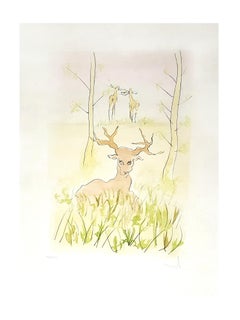
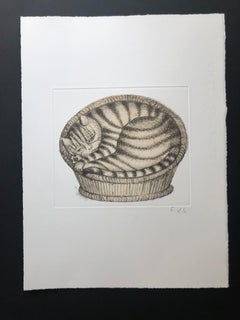
Francois-Xavier Lalanne (1927-2008) Le Chat, 2004
Located in Saint Ouen, FR
Francois-Xavier Lalanne (1927-2008) Le Chat, 2004 Original print (aquatint and soft varnish) hand signed in pencil by François Xavier Lalanne and untitled "Le Chat" ("The Cat"), in perfect condition This rare print is a variation over one of the iconic subject of the artist. It is the print version of the sculpture "Chat qui dort" ("Cat Sleeping", in a stylistic way which recalls Pierre Le Tan...
Category

Early 2000s Surrealist Animal Prints

Materials

Paper

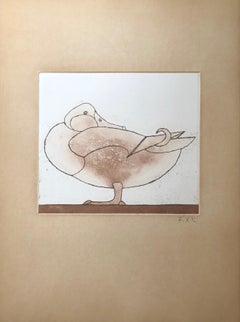
Francois-Xavier Lalanne (1927-2008) Le Canard, 2004
Located in Saint Ouen, FR
Francois-Xavier Lalanne (1927-2008) Le Canard, 2004 Original print (aquatint and soft varnish) hand signed in pencil by François Xavier Lalanne and untitle...
Category

Early 2000s Surrealist Animal Prints

Materials

Paper

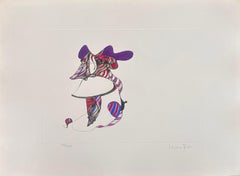
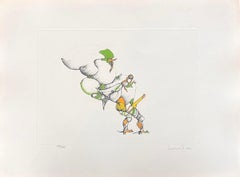
Fantastical character - Hand-signed lithograph Leonor Fini Surrealist, 1975
Located in New York, NY
Leonor Fini Fantastical character, 1975 Colored etching on Arches paper 11 × 15 in 28 × 38 cm Limited edition of 185
Category

1970s Surrealist Animal Prints

Materials

Lithograph

(after) Max Ernst - Blue Bird - Stencil
Located in Collonge Bellerive, Geneve, CH
Max Ernst (after) - Blue Bird - Stencil Published in the deluxe art review, XXe Siecle, 1958 Dimensions: 32 x 25 cm Publisher: G. di San Lazzaro. Max Ernst was born in Bruhl, a place near Cologne, in Germany. He was raised in a strict Catholic family, and both of his parents were disciplinarians who were dedicated to training their children into God-fearing and talented individuals. Although his father was deaf, Ernst learned so much from him, particularly when it comes to painting. In fact, much of his early years were lived under the inspiration of his father who was also a teacher. He was the one who introduced painting to Ernst at an early age. In 1914, Ernst attended the University of Bonn where he studied philosophy. However, he eventually dropped out of school because he was more interested in the arts. He claimed that his primary sources of interest included anything that had something to do with painting. Moreover, he became fascinated with psychology, among other subjects in school. Primarily, Ernst's love for painting was the main reason why he became deeply interested with this craft and decided to pursue it later on in his life. During his early years, he became familiar with the works of some of the greatest artists of all time including Claude Monet, Paul Cezanne and Vincent van Gogh. He was also drawn to themes such as fantasy and dream imagery, which were among the common subjects of the works of Giorgio de Chirico. During World War I, Ernst was forced to join the German Army, and he became a part of the artillery division that exposed him greatly to the drama of warfare. A soldier in the War, Ernst emerged deeply traumatized and highly critical of western culture. These charged sentiments directly fed into his vision of the modern world as irrational, an idea that became the basis of his artwork. Ernst's artistic vision, along with his humor and verve come through strongly in his Dada and Surrealists works; Ernst was a pioneer of both movements. It was Ernst's memories of the war and his childhood that helps him create absurd, yet interesting scenes in his artworks. Soon, he took his passion for the arts seriously when he returned to Germany after the war. With Jean Arp, a poet and artist, Ernst formed a group for artists in Cologne. He also developed a close relationship with fellow artists in Paris who propagated Avant-Garde artworks. In 1919, Ernst started creating some of his first collages, where he made use of various materials including illustrated catalogs and some manuals that produced a somewhat futuristic image. His unique masterpieces allowed Ernst to create his very own world of dreams and fantasy, which eventually helped heal his personal issues and trauma. In addition to painting and creating collages, Ernst also edited some journals. He also made a few sculptures that were rather queer in appearance. In 1920s, influenced by the writings of psychologist Sigmund Freud, the literary, intellectual, and artistic movement called Surrealism sought a revolution against the constraints of the rational mind; and by extension, they saw the rules of a society as oppressive. Surrealism also embraces a Marxist ideology that demands an orthodox approach to history as a product of the material interaction of collective interests, and many renown Surrealism artists later on became 20th century Counterculture symbols such as Marxist Che Guevara. In 1922 Ernst moved to Paris, where the surrealists were gathering around Andre Breton. In 1923 Ernst finished Men Shall Know Nothing of This, known as the first Surrealist painting. Ernst was one of the first artists who apply The Interpretation of Dreams by Freud to investigate his deep psyche in order to explore the source of his own creativity. While turning inwards unto himself, Ernst was also tapping into the universal unconscious with its common dream imagery. Despite his strange styles, Ernst gained quite a reputation that earned him some followers throughout his life. He even helped shape the trend of American art during the mid-century, thanks to his brilliant and extraordinary ideas that were unlike those of other artists during his time. Ernst also became friends with Peggy Guggenheim, which inspired him to develop close ties with the abstract expressionists. When Ernst lived in Sedona, he became deeply fascinated with the Southwest Native American navajo art. In fact, the technique used in this artwork inspired him and paved the way for him to create paintings that depicted this style. Thus, Ernst became a main figure of this art technique, including the rituals and spiritual traditions included in this form of art. Pollock, aside from the other younger generations of abstract expressionists, was also inspired by sand painting of the Southwest...
Category

1950s Surrealist Animal Prints

Materials

Stencil

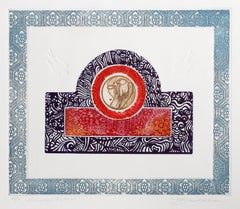
Space Eagles
Located in Dallas, TX
In The New York Times Arts in America column, Edward M. Gomez wrote of Valton Tyler, "visionary seems the right word for describing his vivid, unusual and technically refined paintin...
Category

1970s Surrealist Animal Prints

Materials

Paper, Etching

Surrealist animal prints for sale on 1stDibs.

Find a wide variety of authentic Surrealist animal prints available for sale on 1stDibs. Works in this style were very popular during the 21st Century and Contemporary, but contemporary artists have continued to produce works inspired by this movement. If you’re looking to add animal prints created in this style to introduce contrast in an otherwise neutral space in your home, the works available on 1stDibs include elements of blue, orange, purple, pink and other colors. Many Pop art paintings were created by popular artists on 1stDibs, including Salvador Dalí, Leonor Fini, Graham Sutherland, and Max Ernst. Frequently made by artists working with Lithograph, and Etching and other materials, all of these pieces for sale are unique and have attracted attention over the years. Not every interior allows for large Surrealist animal prints, so small editions measuring 5.5 inches across are also available. Prices for animal prints made by famous or emerging artists can differ depending on medium, time period and other attributes. On 1stDibs, the price for these items starts at $60 and tops out at $22,800, while the average work sells for $1,500.

Recently Viewed

View All