Horizontal Figurative Prints
to
1,770
6,864
2,881
2,772
1,133
744
Overall Width
to
Overall Height
to
5,265
2,884
945
732
537
296
227
206
155
78
64
58
9
9
150
131
122
106
99
1,531
3,188
7,603
2,072
111
194
351
324
301
392
671
1,658
1,143
624
1,172
27,090
14,394
1,801
8,620
4,235
3,375
2,677
2,052
1,761
1,377
1,347
947
841
683
616
584
516
467
464
410
354
311
308
5,354
4,731
2,099
1,113
830
1,393
7,204
6,636
5,424
Orientation: Horizontal
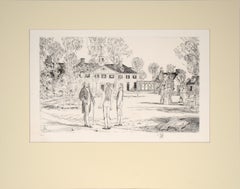
Bowling on the Green (from the Bicentennial Pageant of George Washington)
Located in Soquel, CA
Bowling on the Green (from the Bicentennial Pageant of George Washington)
'Bowling on the Green', by printmaker Frederick Childe Hassam, depicts George Washington and friends lawn b...
Category
1930s American Impressionist Figurative Prints
Materials
Ink, Etching, Laid Paper
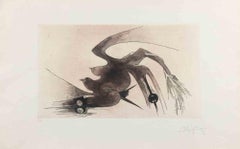
Apostroph - Etching by Wifredo Lam - 1967
By Wifredo Lam
Located in Roma, IT
Etching and aquatint realized by Lam in 1967.
Hand signed in pencil.
Artist proof printed by Giorgio Upiglio.
Very good condition.
Category
1960s Surrealist Figurative Prints
Materials
Etching
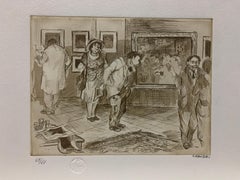
Gallery
Located in Toronto, ON
8" x 10" Unframed
Limited Edition Etching of 69
Hand Signed by Chauski
Category
21st Century and Contemporary Figurative Prints
Materials
Etching
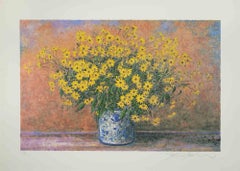
Vase of Jerusalem Artichoke Flowers - Screen Print by Franco Bocchi - 1980s
Located in Roma, IT
Screen print on paper realized by Franco Bocchi in 1980s.
Hand signed and numbered in pencil.
Edition of 200 prints.
Excellent condition.
Franco Bocchi was born in Cologne (BS) o...
Category
1980s Contemporary Figurative Prints
Materials
Screen
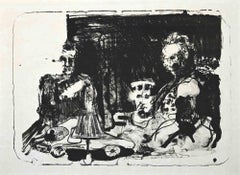
Imaginary Characters - Original Lithograph by Pierre Chaput - 1960
Located in Roma, IT
Imaginary Characters is an original litograph realized by Jean Pierre Chaput (1935) in 1960.
Good condition, no signature.
Category
1960s Contemporary Figurative Prints
Materials
Lithograph
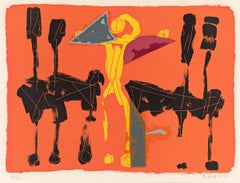
Chevaux et Cavaliers IV
Located in New York, NY
A very good impression of this color lithograph with strong colors. Signed and numbered 38/50 in pencil by Marini. Printed by Mourlot, Paris. Published by XXe Siècle, Paris.
Category
1970s Modern Abstract Prints
Materials
Color, Lithograph
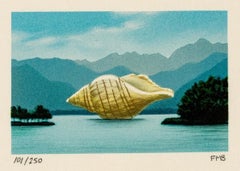
The Visitor
Located in New York, NY
Created by Surrealist Fanny Brennan from 1992-96, The Visitor is an original lithograph in colors on wove paper, hand-monogrammed by the artist in pencil and numbered from the editio...
Category
Late 20th Century Surrealist Figurative Prints
Materials
Lithograph
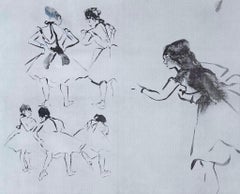
Edgar Degas, Sketch of Dancers, 1945 (after)
By Edgar Degas
Located in Southampton, NY
This exquisite lithograph after Edgar Degas (1834–1917), titled Croquis de danseurs (Sketch of Dancers), originates from the 1945 folio Degas, Ten Ballet Sketches. Published by The Studio Publications, Inc., New York, rendered and printed by Albert Carman, City Island, 1945, this work reflects Degas’s sensitive mastery of line, movement, and the intimate psychological nuances of the ballet studio.
Executed as a lithograph and pochoir on velin paper, this work measures 13 x 17 inches (33.02 x 43.18 cm). Signed in the plate and unnumbered as issued. Rendered and printed by Albert Carman, City Island.
Artwork Details:
Artist: After Edgar Degas (1834–1917)
Title: Croquis de danseurs (Sketch of Dancers), from Degas, Ten Ballet Sketches, 1945
Medium: Lithograph and pochoir on velin paper
Dimensions: 13 x 17 inches (33.02 x 43.18 cm)
Inscription: Signed in the plate and unnumbered as issued
Date: 1945
Publisher: The Studio Publications, Inc., New York
Printer: Albert Carman, City Island
Condition: Well preserved, consistent with age and medium
Provenance: From the 1945 folio Degas, Ten Ballet Sketches, published by The Studio Publications, Inc., New York
Notes:
Excerpted from the album, Born in Paris in 1834, Edgar Degas lived, and surely loved the life of that city during most of his years. These continued somewhat sadly beyond those of most of his friends— into the debacle of the first World War, during which he died in 1917. Judging by the frequency with which he used them as models, he must have had an especial admiration for the ballet girls who followed a profession that at the time brought none of the glory and prosperity which attend it today. New aspects of the human body, revealed in movement, fascinated him. But his occupation with the simply anatomical side of his subjects never resulted in a cold interpretation. On the contrary there is a warmth and sympathy that pervades all of his work. The drawings here represent the painter in one important phase of his multi-sensitive view of life; and permit an insight which a more ambitious work might not do-into the operation of the creative process, the artist's transformation of reality as it passes through the mesh of his sensibilities. The Edition of this Portfolio is limited to MMMD examples. Rendered by Albert Carman.
About the Publication:
Degas, Ten Ballet Sketches (1945) is one of the earliest and most significant American postwar fine art portfolios devoted to Edgar Degas’s intimate works on paper. Published by The Studio Publications, Inc., New York, and rendered and printed by Albert Carman at City Island, the album sought to faithfully reproduce a group of Degas’s ballet-related drawings through a combination of lithography and hand-applied pochoir coloring. This hybrid technique allowed the edition to preserve the immediacy, tonal subtlety, and gestural delicacy central to Degas’s draftsmanship. Conceived as a fine art publication rather than a commercial book, the portfolio provided American audiences unprecedented access to Degas’s private, spontaneous studies—images that reveal the artist’s fascination with movement, anatomy, and the psychological atmosphere of the rehearsal studio. The album exemplifies the mid-20th-century revival of pochoir as a means of recreating the texture and coloristic nuance of original works on paper, and it remains an important document of how Degas’s legacy was translated into high-quality printed form for collectors, museums, and connoisseurs.
About the Artist:
Edgar Degas (1834–1917) was a French painter, draughtsman, printmaker, and sculptor whose groundbreaking fusion of classical draftsmanship, modern experimentation, and psychological depth helped define the trajectory of Western art, positioning him as one of the most influential figures of the nineteenth and early twentieth centuries; renowned for his depictions of ballet dancers, racehorses, theater scenes, cafe life, domestic interiors, milliners, laundresses, and women at their toilette, Degas reimagined observational realism through radical compositional innovation—employing extreme cropping, asymmetrical framing, oblique viewpoints, and dramatic lighting that anticipated photographic and cinematic language long before these technologies shaped visual culture, and although associated with Impressionism, he rejected plein-air spontaneity in favor of studio-based discipline rooted in the linear precision of Jean-Auguste-Dominique Ingres, the expressive chromaticism of Eugene Delacroix, and the modernity of Edouard Manet while also drawing inspiration from Japanese ukiyo-e prints, classical sculpture, and early photography; his independent artistic philosophy resonated with and helped shape the innovations of Pablo Picasso, Alexander Calder, Alberto Giacometti, Salvador Dali, Joan Miro, Wassily Kandinsky, Marcel Duchamp, and Man Ray, whose explorations of movement, form, dream logic, abstraction, and conceptualism all find antecedents in Degas’s investigations into seriality, temporality, and the fragmented figure, and his pioneering use of pastel, monotype, and wax sculpture fundamentally transformed each medium, influencing artists from Henri Matisse, Francis Bacon, Lucian Freud, and Giacomo Manzu to Paula Rego, contemporary realists, experimental photographers, and choreographers; his works are held in nearly every major museum collection worldwide—including the Musee dOrsay, the Louvre, the Metropolitan Museum of Art, the National Gallery of Art, the Art Institute of Chicago, the Courtauld Institute, and the National Gallery, London—affirming his central place in the history of art, and the highest auction record for Degas was achieved at Sothebys London on February 3, 2015, when Danseuses en Bleu sold for 37,033,000 GBP, cementing his status as one of the most sought-after and enduringly significant artists of the Western canon.
Degas pochoir, Degas lithograph...
Category
1940s Impressionist Figurative Prints
Materials
Lithograph

$796 Sale Price
20% Off
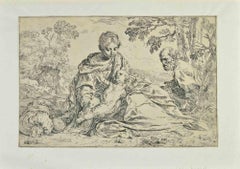
Rest on the flight into Egypt - Etching by Simome Cantarini - 1640 ca
Located in Roma, IT
Rest on the flight into Egypt is an etching by Simone Cantarini executed around 1640. Cantarini also made a painting with the same subject now at the Louvre Museum.
The dimension...
Category
1640s Old Masters Figurative Prints
Materials
Etching
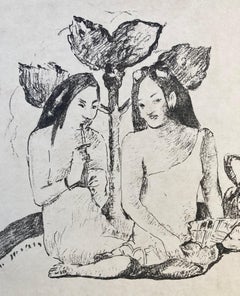
DEAUX FEMMES MAORIES ACCROUPIES
By Paul Gauguin
Located in Santa Monica, CA
PAUL GAUGUIN (French 1848 - 1903)
DEAUX FEMMES MAORIES ACCROUPIES. 1894-5 (Kornfield 26: Guerin 87 )
Zincograph (Lithograph) on smooth, cream imitation Japan paper, edition 200. Pu...
Category
1890s French School Figurative Prints
Materials
Lithograph
$3,700 Sale Price
22% Off
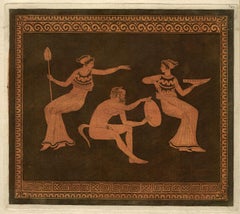
William Hamilton Classical Greek Vase-Painting Engraving
Located in Melbourne, Victoria
Subject : Ancient Greek vase-painting from depicting a Silenus with tambourine and two maenads from a Campanian bell-krater.
Technique : Copper-line engraving with original hand-col...
Category
Early 1800s Other Art Style Figurative Prints
Materials
Engraving
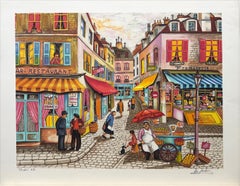
NOTRE QUARTIER Signed Lithograph, Nostalgic French Street Market Scene
By Ari Gradus
Located in Union City, NJ
NOTRE QUARTIER is a hand drawn original lithograph by the artist Ari Gradus printed in 13 colors using traditional hand printmaking techniques on archival Arches paper 100% acid free...
Category
1970s Contemporary Landscape Prints
Materials
Lithograph
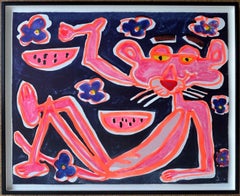
Katherine Bernhardt - African Violets - Pink Panther, Pop
Located in London, GB
10-colour lithograph on Somerset Velvet White 300 gsm paper
23 3/5 × 29 9/10 in 60 × 76 cm - sheet size
Edition 48 of 200
hand-signed and numbered by the artist in the bottom right ...
Category
2010s Contemporary Animal Prints
Materials
Lithograph
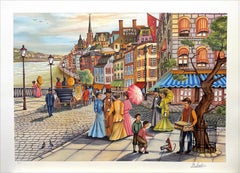
AFTERNOON STROLL Signed Lithograph Nostalgic City Street Scene Victorian Fashion
By Ari Gradus
Located in Union City, NJ
AFTERNOON STROLL is a hand drawn original lithograph by the artist Ari Gradus printed in 13 colors using traditional hand printmaking techniques on archival Arches paper 100% acid fr...
Category
1970s Contemporary Landscape Prints
Materials
Lithograph
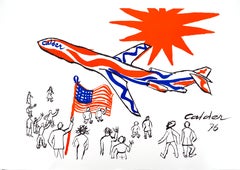
Calder, Composition, Braniff International Airways Flying Colors (after)
Located in Southampton, NY
Lithograph on vélin paper. Inscription: Signed in the plate and unnumbered, as issued. Good condition. Notes: From the [Braniff International Airways] Flying Colors Collection, 1976....
Category
1970s Modern Figurative Prints
Materials
Lithograph
$1,596 Sale Price
20% Off
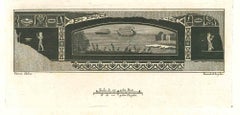
Ancient Roman Fresco - Original Etching by Niccolò Vanni - 18th Century
Located in Roma, IT
Ancient Roman Fresco, from the series "Antiquities of Herculaneum", is an original etching on paper realized from a design by Niccolò Vanni in the 18th century.
Signed on the plate....
Category
18th Century Old Masters Figurative Prints
Materials
Etching
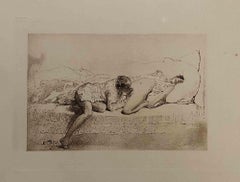
Erotic Scene - Héliogravure by Micheal Von Zichy - 1911
Located in Roma, IT
Erotic scene is an original Héliogravure artwork on ivory-colored paper, realized by Micheal Von Zichy in 1911. Printed in only 300 copies, Leipzig; Privatdruck, from the Catalogue ...
Category
1910s Modern Figurative Prints
Materials
Paper, Engraving
l
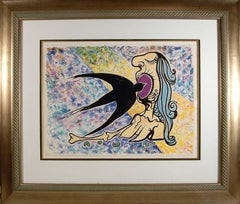
Hirondelle
Located in San Francisco, CA
Artist: Salvador Dali (Spanish surrealist, 1904-1989)
Title: L'Hirondelle
Year: 1973
Medium: Color lithograph
Edition: Numbered XLVI/CCL in pencil
Paper: Arches watermarked
Image size: 18.5 x 25 inches
paper size: 19 x 25.5 inches
Signature: Hand signed in pencil by the artist
Publisher: Martin Lawrence and Jacques Carpentier...
Category
1970s Surrealist Figurative Prints
Materials
Lithograph
Rowboat
By Alex Katz
Located in New York, NY
Although best known for his portraits, Katz has depicted landscapes both inside the studio and out of doors since the beginning of his career. This print of a boat on the water feat...
Category
1990s Contemporary Landscape Prints
Materials
Aquatint

$10,000
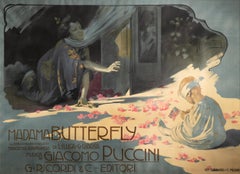
Art Nouveau "Madame Butterfly" original poster by Aldolfo Hohenstein
Located in Palm Beach, FL
Note: Due to the size, weight, and value of this piece, we require shipping through 1stDibs, for its cost effectiveness, full insurance coverage, and reliable handling. While standar...
Category
Early 1900s Art Nouveau Figurative Prints
Materials
Lithograph
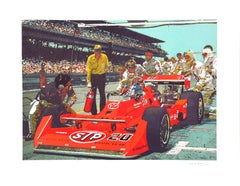
Red Formula, Photorealist Racing Screenprint by Ron Kleemann
By Ron Kleemann
Located in Long Island City, NY
Artist: Ron Kleemann, American (1937 - )
Title: Red Formula
Year: 1979
Medium: Screenprint, signed and numbered in pencil
Edition: 195
Image Size: 17.25 x 24 inches
Paper Size: 23....
Category
1970s Photorealist Figurative Prints
Materials
Screen
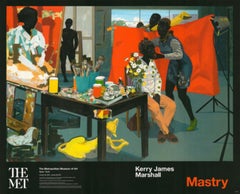
Mastry By Kerry James Marshall
Located in Dubai, Dubai
Mastry
By Kerry James Marshall
2016
Medium: Offset Lithograph
Paper Size: 26.5 x 32.75 inches ( 67 x 83 cm )
Image Size: 21 x 30.75 inches ( 53 x 78 cm )
Edition Size: Unknown
Category
2010s Contemporary Figurative Prints
Materials
Lithograph, Offset
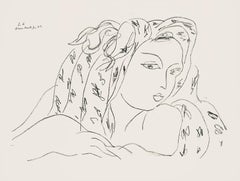
Henri Matisse, Series L, Var. 6, Drawings, Themes and Variations, 1943 (after)
Located in Southampton, NY
This exquisite lithograph after Henri Matisse (1869–1954), titled Serie L, var. 6 (Series L, Variation 6), from the album Henri Matisse, Dessins, Themes et Variations (Drawings, Them...
Category
1940s Modern Figurative Prints
Materials
Lithograph
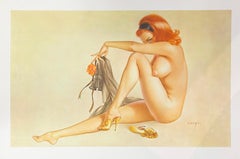
$796 Sale Price
20% Off
From the Vargas Portfolio
Located in Missouri, MO
From the Vargas Portfolio **Portfolio Cover Not Included**
Lithograph Only
Alberto Vargas (1896-1982) was born in Arequipa, Peru, in 1896, the son of...
Category
20th Century Realist Nude Prints
Materials
Lithograph
772-772, 2015
Located in Greenwich, CT
772-772 is an offset lithograph on paper by Takashi Murakami, 25.5 x 38" image size and 38.25 x 51" framed size. From the edition of 300, signed lower right and numbered 77/300. Fram...
Category
21st Century and Contemporary Contemporary Prints and Multiples
Materials
Paper, Offset

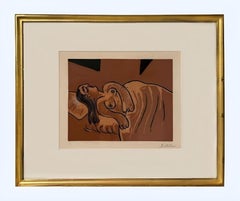
Femme endormie (Dormeuse), By Pablo Picasso
Located in Dubai, Dubai
Femme endormie [Dormeuse]
By Pablo Picasso
Pablo Picasso, a pioneering Spanish artist, co-founded the Cubist movement and played a pivotal role in the development of modern art dur...
Category
1960s Contemporary Figurative Prints
Materials
Archival Paper, Linocut
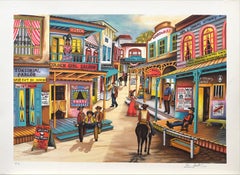
OUT WEST Signed Lithograph, Nostalgic Wild West Town Scene, Cowboys
By Ari Gradus
Located in Union City, NJ
OUT WEST is a hand drawn original lithograph by the artist Ari Gradus printed in 13 colors using traditional hand printmaking techniques on archival Arches paper 100% acid free. OUT ...
Category
1970s Contemporary Landscape Prints
Materials
Lithograph
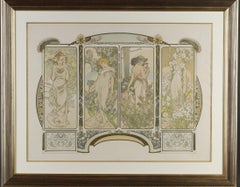
Flowers
Located in PARIS, FR
"Flowers "
Variante 2
by Alphonse MUCHA (1860-1939)
Rare original lithograph
Each flower, carnation, iris, lily and rose, is signed at the lower part of the plate "Mucha".
This lith...
Category
Early 20th Century Art Nouveau Figurative Prints
Materials
Lithograph
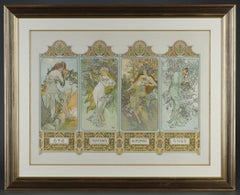
The Seasons
Located in PARIS, FR
Alphonse MUCHA (1860-1939)
"The Seasons"
Variante 3
Rare original lithograph
Each Season is signed at the lower part of the plate "Mucha".
This lithograph is rare, since it was neve...
Category
Late 19th Century Art Nouveau Figurative Prints
Materials
Lithograph
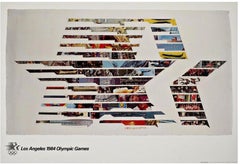
Los Angeles 1984 Olympic Games w/COA from Olympic Committee offset lithograph
Located in New York, NY
Robert Rauschenberg
Star In Motion, 1982
for the Los Angeles Summer 1984 Olympic Games (with COA from Olympic Committee)
Offset Lithograph on Parson's Diploma paper
Stamp signed (aut...
Category
1980s Pop Art Abstract Prints
Materials
Lithograph, Offset
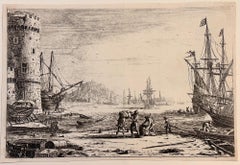
Harbour with a Round Tower
Located in Middletown, NY
1641. Etching on cream wove paper, 5 1/16 x 7 11/16 inches (128 x 195 mm), narrow margins. Printed 19th century on a remainder which has a partially trimmed, printed image of a Virgi...
Category
Mid-17th Century French School Figurative Prints
Materials
Handmade Paper, Etching
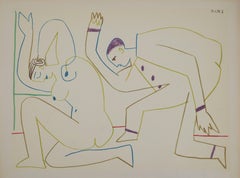
Nude Woman and Servant - Original Lithograph (Mourlot)
Located in Paris, IDF
Pablo PICASSO (1881-1973),
Nude Woman and Servant, 1954
Original lithography (Mourlot workshop)
Unsigned
Printed date in the plate
On paper 26 .5 x 35.5 cm (c. 10,2 x 13.7 in)
INF...
Category
Mid-20th Century Modern Figurative Prints
Materials
Lithograph
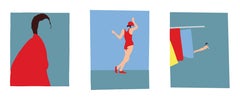
Coat, Swing and Lawn, From the Series "Why This Restlessness?"
Located in Miami Beach, FL
By removing parts of the image, he explores the tension between what is present and what is omitted, focusing on the reasons behind these choices and their implications. The cutouts ...
Category
2010s Contemporary More Prints
Materials
Archival Ink, Color
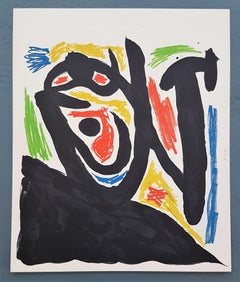
"Untitled" (one plate from "Maitres-Graveurs Contemporains" - Berggruen
Cie)
By Joan Miró
Located in Kansas City, MO
Joan Miró
"Untitled" (one plate from "Maitres-Graveurs Contemporains" - Berggruen & Cie, 1970)
Color lithograph
Year: 1970
Size: 9.0 × 9.8 on 9.4 × 11.1 inches
Catalogue raisonné: C...
Category
1980s Abstract Expressionist Prints and Multiples
Materials
Lithograph
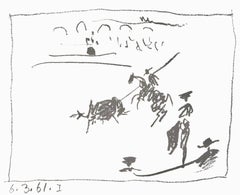
Pablo Picasso, The Pike I, from To the Bulls with Picasso, 1961
Located in Southampton, NY
This exquisite lithograph by Pablo Picasso (1881–1973), titled La Pique I (The Pike I), from the album A Los Toros Avec Picasso (To the Bulls with Picasso), originates from the 1961 ...
Category
1960s Modern Landscape Prints
Materials
Lithograph
$1,036 Sale Price
20% Off
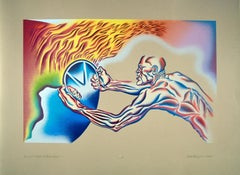
Judy Chicago - Driving the World to Destruction iconic silkscreen signed/N Frame
By Judy Chicago
Located in New York, NY
Judy Chicago
Driving the World to Destruction, 1988
Silkscreen on wove paper
Pencil signed, titled, dated and numbered 35/50 on the front
Included with this work is an elegant hand ...
Category
1980s Contemporary Figurative Prints
Materials
Screen
Kaleidoscope III, Pop Art Screenprint by John Grillo
By John Grillo
Located in Long Island City, NY
Artist: John Grillo, American (1917 - 2014)
Title: Kaleidoscope III
Year: 1980
Medium: Screenprint, signed and numbered in pencil
Edition: 200
Image Size: 22 x 30 inches
Size: ...
Category
1980s Pop Art Figurative Prints
Materials
Screen

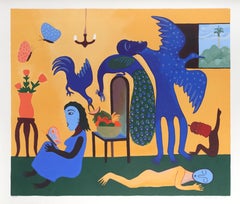
El reposo
Located in Miami, FL
Beautiful Serigraph print on paper by the Cuban artist Manuel Mendive.
El Reposo, 2021
Lithograph
23,5 x 29 in
Ed. 10 of 100
Signed and numbered by the artist.
Manuel Mendive is an ...
Category
21st Century and Contemporary Contemporary Figurative Prints
Materials
Laid Paper, Screen
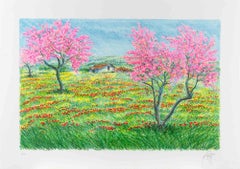
Spring Landscape - Lithograph by Franco Azzinari - 1980s
Located in Roma, IT
Lithograph on paper realized by Franco Azzinari in 1980s.
Hand signed and numbered in pencil.
Edition of 130.
Excellent condition.
Category
1980s Contemporary Figurative Prints
Materials
Lithograph
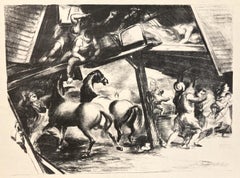
Jon Corbino, Montana Earthquake, 1936, lithograph
By Jon Corbino
Located in New York, NY
Works by Jon Corbino (1905-1964) feature drama. Here he's showing us the chaos produced by a major earthquake in rural Montana in 1936 -- an actual historical event.
The horses (ear...
Category
1930s American Modern Figurative Prints
Materials
Lithograph
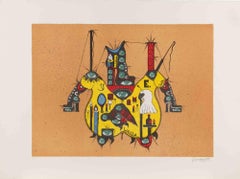
Untitled- Screenprint by Guy Harloff - 1970s
Located in Roma, IT
Screen print realized by Guy Harloff in 1970s.
Hand signed and numbered in pencil.
Edition of 90.
Very good condition.
Category
1970s Contemporary Figurative Prints
Materials
Screen
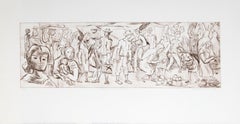
Mercado de la Soledad, Cubist Etching by Alfredo Zalce
Located in Long Island City, NY
Artist: Alfredo Zalce, Mexican (1908 - 2003)
Title: Mercado de la Soledad
Year: 1990
Medium: Etching, signed and numbered in pencil
Edition: 100
Image Size: 8.25 x 25 inches
Size: 16...
Category
1990s Modern Figurative Prints
Materials
Etching
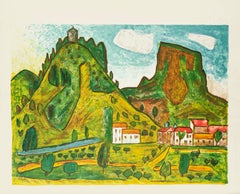
Landscape - Offset and Lithograph by Unknown Master Late 20th Century
Located in Roma, IT
Landscape is an original print on paper realized by an Anonymous artist of XX century.
In good condition except for some foxes that shows the trace of time.
Sheet dimension:44.5 x 52 cm
The artwork represents a beautiful scenery of a village down below the green mountain, dream-like peaceful village with red roof houses beside the yellow road.
Category
Late 20th Century Landscape Prints
Materials
Lithograph, Offset
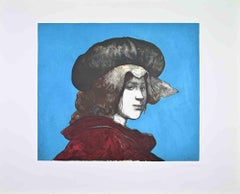
Portrait - Lithograph by Armando De Stefano - 1981
Located in Roma, IT
Screen print realized in 1981
Hand signed and numbered in pencil.
Edition of 150.
Very good condition.
Category
1980s Contemporary Figurative Prints
Materials
Lithograph
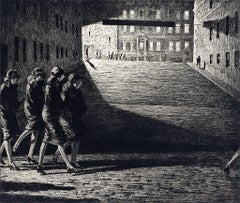
Shadows on the Ramp
By Martin Lewis
Located in Plano, TX
Shadows on the Ramp. 1927. Drypoint and sand ground. McCarron 64. 9 x 10 1/2 (sheet 12 3/8 x 14). Edition 75 recorded impressions. A rich, tonal impression with drypoint burr, printe...
Category
1920s American Modern Landscape Prints
Materials
Drypoint, Etching
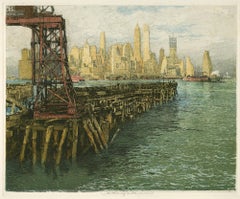
The Magical Island, New York
Located in Middletown, NY
Vienna: Robert Kasimir, 1935. Color etching and aquatint on Robert Kasimir watermarked white wove paper, 11 3/8 x 13 3/4 inches (288 x 350 mm); sheet 19 x 21 inches (483 x 534 mm), f...
Category
Mid-20th Century Modern Figurative Prints
Materials
Etching, Aquatint
Leonor Fini, Untitled, from Parallelement, 1969
By Leonor Fini
Located in Southampton, NY
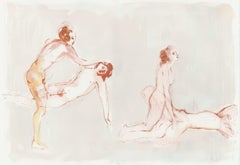
This exquisite lithograph, titled Sans titre (Untitled), by Leonor Fini, from the folio Parallelement (Parallel), Illustre de lithographies originales de Leonor Fini (Illustrated wit...
Category
1960s Modern Figurative Prints
Materials
Lithograph
$956 Sale Price
20% Off
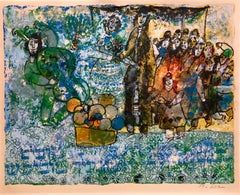
Large French Judaica Lithograph Colorful Jewish Wedding Hebrew Calligraphy
Located in Surfside, FL
Theo Tobiasse
Title "On the Shores of the Circus"
Suite: Song of Songs of King Solomon
Year: 1975
Medium: Original lithograph in colors on paper (deckle edged paper)
Publisher: Leon Amiel, Paris & New York
Signature: Hand signed by the artist
Theo Tobiasse, born Tobias Eidesas, 1927 in Jaffa then in British Mandate Palestine, died 2012 in Cagnes-sur-Mer in France. Well known painter, engraver, draftsman and sculptor. French Jewish artist.
The youngest son of Chaim (Charles) Eidesas and Brocha (Berthe) Slonimsky from Kaunas, Lithuania, Théo Tobiasse was born in Mandatory Palestine in 1927, where his Jewish parents lived since 1925, far from the threat of pogroms and upheavals of East European policies. The family encountered material difficulties and decided to return to Lithuania, ultimately leaving for Paris in 1931 where his father typographer finds work in a Russian printing press.
Theo Tobiasse shows very early talent for drawing and painting, and during a visit to the Special Exhibition of 1937 held in Paris, he is enchanted by Raoul Dufy.
The death of his mother (in June 1939) followed by the outbreak of the Second World War, Paris under the German Nazi occupation, the wearing of the yellow star and his registration at the National School of Decorative Arts denied for racist reasons upsets his life. He enrolled in a private advertising design course on the boulevard Saint-Michel, which he abandoned nine months later because his family, narrowly escaping the Winter Vélodrome roundup in July 1942 was forced to hide in an apartment in Paris for two years. At the Liberation of Paris, he quickly began a career as an advertising graphic designer with the Draeger art printer and also produced tapestry cartoons, stage sets and Hermes showcases at the Hermès boutique on rue du Faubourg Saint-Honoré.
In 1950, he obtained French nationality and moved to Nice in the Alpes-Maritimes, where he continued his advertising graphic design career.
His first paintings were exhibited at the Salon des peintres du Sud-Est in 1960. He was laureate in 1961 the "prize of the young Mediterranean painting" and Armand Drouant offers him a first contract and exhibited at the Faubourg Saint-Honoré Gallery in Paris in 1962.
Théo Tobiasse also won the Dorothy Gould Prize in 1961. He decided to devote himself solely to the visual arts. Numerous exhibitions are dedicated to him all over the world, in Paris at the Drouant Gallery, in Geneva, Montreal or Tokyo, then London, Zurich, Lausanne, Los Angeles, Kiev, and then a first personal exhibition in New York (1968). Self-taught, he studied the technique of grand masters in museums during his travels. The reliefs, glazes and colors of Rembrandt's Jewish Fiancee at the Rijksmuseum in Amsterdam, in particular, open up new technical possibilities that he explores in his canvases back to his studio.
The figurative subjects without narrative or symbolism (cat, bird, kite, velocipede, etc.) of his first paintings, allow him to focus on the techniques, the color and the texture of oil painting and gouache.
From 1964, Theo Tobiasse develops a more personal iconography drawn from his own memories of his childhood in Lithuania, the wanderings of a family seeking a land of asylum and the Holocaust. The train, the one which drove his family from Kaunas to Paris, or the Jews to the camps, becomes a recurring motif and memory a major theme in his work.
A visit to Jerusalem, Israel in 1970 brings him closer to his Israeli Jewish origins. He created his first Judaic stained-glass windows on the theme of "Jewish Feasts" for the Jewish Community Center in Nice and a monumental oil painting titled " Que tentes sont beau", O Jacob (1982). He continues to travel and immerse himself in the cultures he meets, New Orleans jazz, Mexican archaeological sites and Native American totems . In New York, he meets Elie Wiesel (1982). While Josy Eisenberg makes a film about Théo Tobiasse, entitled Tell me who you are painting, for French television in 1977, many personal exhibitions are devoted to him in France and abroad, notably at the Passali gallery in Paris, France. Atheneum Museum in Geneva and the Nahan Gallery in New Orleans. In 1983, a retrospective exhibition of his work was organized in Nice , at the Museum of Contemporary Art in Ponchettes.
Carborundum engraving, lithography, stained glass, mosaic, pottery, bronze and ceramic sculpture are all tools of expression he first explored in the studio he had built at his home on the heights of Nice (1954 -1972), then to the Rauba Capeu wharf in Nice (1971-1976).
He leaves Nice to install his main workshop on his property in Saint-Paul-de-Vence in 1976.
In collaboration with Pierre Chave, lithographer in Saint-Paul-de-Vence, Théo Tobiasse is developing a technique for making lithographs of eighteen to twenty colors that he produces for many original portfolio editions published in France, Sweden and the United States.
In addition to the theme of memory of the wanderings and exodus of his family and the Jewish people, the personal iconography of Tobiasse comprises three other major themes that recur in his work: The cities that are dear to him (Paris and Jerusalem, first, then New York and Venice from the 1980s); twenty-eight monochrome gouaches, From Notre-Dame to Saint-Germain-des-Près (1969).
The Hebrew Bible, an endless source of human dramas, which he re-imagines in contemporary times. Rachel (1978), Sarah and the three messengers (1981),Bathsheba in the Garden of Pomegranates (1982).
The woman, lover, erotic and shameless, Daphnis and Chloé (1978), Portrait of a woman immobile in ecstasy , (1978), a creature-sex apple whose skin burns and arms twist (1980).
To explore the theme of the erotic woman, Tobiasse adopts nude drawing in graphite, ink and pastel on paper, as well as the writing of poetic texts he inscribed in his drawings and notebooks.
The American merchant, Kenneth Nahan Sr., met in 1978, encourages Théo Tobiasse to join in the United States other French painters he represents, including Max Papart and James Coignard. Tobiasse moved to New York in 1984. He first worked at the Chelsea Hotel and then set up his studio in Manhattan. He decides to split his time and his work between Saint-Paul-de-Vence and New York.
The first paintings painted in America are distinguished from their European production by their scale and their bright themes. Oil-painted canvases are filled with family portraits, children, and biblical characters. My family came from Lithuania, Little Girl Sitting , Saul and David (1984). In these paintings, families no longer flee the pogroms in the trains, but land in New York, new host country according to his imagination, as in America (1984). He also created the Myriam sculpture in New York, which became the model for the Venus, a monumental bronze sculpture to be installed at the entrance of Saint-Paul-de-Vence in 2007 15. New York joins the inspiring cities of Theo Tobiasse and the woman now personifies freedom. Along with Marc Chagall, Raya Sorkine, Zamy Steynovitz and Yoel Benharrouche, Tobiasse becomes one of the pillars of modern French Judaica...
Category
1970s Modern Figurative Prints
Materials
Lithograph
Fireside Christmas
Located in San Francisco, CA
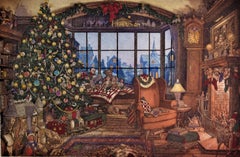
This artwork titled "Fireside Christmas" c. 1985 is an original color etching by American artist Scott Fitzgerald. It is hand signed, titled and numbered 158/250 in pencil by the artist. Published and printed by the artist. The image (plate mark) size is 11.5 x 17.65 inches, sheet size is 19.25 x 25.25 inches. it is in excellent condition, has never been framed.
About the artist:
Scott Fitzgerald received his Master’s Degree in Arts from California State University Fullerton, and went on to teach drawing and printmaking for 2 years at the university.
During his college years, he focused his study in contemporary art and photography, creating mixed media works often with social comments. It was not until the sophomore year, he discovered the traditional art of etching in his printmaking class. Immediately, he embraced the complex and difficult technical process of making prints from etching on copper plates.
Scott Fitzgerald established himself as a prominent printmaker in the next few years. With a strong interest in history, he accepted a commission to produce a series of etching depicting 15 Orange County historical landmarks. Besides producing very intricate prints in various sizes, he has engaged in many special projects. He worked with renowned English printer John Randle to produce a group of etchings...
Category
Late 20th Century American Realist Figurative Prints
Materials
Etching
Pablo Picasso, Minotaur and Nude, from The Double Flute, 1967 (after)
Located in Southampton, NY
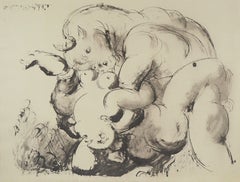
This exquisite lithograph and pochoir after Pablo Picasso (1881–1973), titled Minotaure et nue (Minotaur and Nude), from the folio Picasso, La flute double, 16 Dessins, Aquarelles La...
Category
1960s Cubist Figurative Prints
Materials
Lithograph, Stencil
$2,636 Sale Price
20% Off
Erotic Scene - Héliogravure by Micheal Von Zichy - 1911
Located in Roma, IT
Erotic scene is an original Héliogravure artwork on ivory-colored paper, realized by Micheal Von Zichy in 1911. Printed in only 300 copies, Leipzig; Privatdruck, from the Catalogue ...
Category
1910s Modern Figurative Prints
Materials
Paper, Engraving

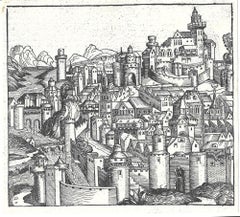
Tolosa (Toulouse); Leaf LXXI from Hartmann Schedel
s Nuremberg Chronicle
Located in Middletown, NY
Woodcut on laid paper, 8 3/8 x 9 1/8 inches (212 x 233 mm), the full sheet. In excellent condition with text and portraits of Empedocles, Sapho, Zeuxis and others on the verso, as is...
Category
15th Century and Earlier Old Masters Figurative Prints
Materials
Ink, Handmade Paper, Laid Paper, Woodcut
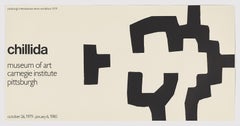
Eduardo Chillida Spanish Artist 1980 Original Poster lithograph Unsigned
Located in Miami, FL
"Eduardo Chillida (Spain, 1924-2002)
'Museum of Art Carneige Institute Pittsburg', 1980
Original poster from 1980
lithograph on paper
12.6 x 25.6 in. (32 x 65 cm.)
Unsigned
Unframed
...
Category
1980s Abstract Figurative Prints
Materials
Lithograph
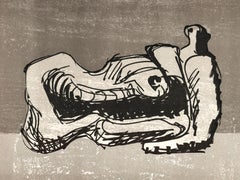
Henry Moore, Reclining Figure, from San Lazzaro et ses Amis, 1975
By Henry Moore
Located in Southampton, NY
This exquisite lithograph by Henry Moore (1898–1986), titled Reclining Figure, from the album San Lazzaro et ses Amis, Hommage au fondateur de la revue XXe siecle (San Lazzaro and His Friends, Tribute to the Founder of the Journal XXe Siecle), originates from the 1975 edition published by XXe siecle, Paris, and printed by Curwen Studio, London, October 1975. Reclining Figure embodies Moore’s lifelong fascination with the human form in repose—a theme that became central to his sculptural and graphic work. Through elegant contours and balanced abstraction, the composition captures the harmony between body, landscape, and spirit that defined Moore’s artistic vision.
Executed as a lithograph on velin d'Arches paper, this work measures 10.5 x 14 inches (26.67 x 35.56 cm). Unsigned and unnumbered as issued. The edition exemplifies the exceptional craftsmanship of the Curwen Studio in London, a distinguished atelier celebrated for its collaborations with the leading modern artists of the postwar period.
Artwork Details:
Artist: Henry Moore (1898–1986)
Title: Reclining Figure, from San Lazzaro et ses Amis, Hommage au fondateur de la revue XXe siecle, 1975
Medium: Lithograph on velin d'Arches paper
Dimensions: 10.5 x 14 inches (26.67 x 35.56 cm)
Inscription: Unsigned and unnumbered as issued
Date: 1975
Publisher: XXe siecle, Paris
Printer: Curwen Studio, London
Catalogue raisonne references: Moore, Henry, et al. Henry Moore, Catalogue of Graphic Work. Gerald Cramer, 1986, illustration 366.
Condition: Well preserved, consistent with age and medium
Provenance: From the album San Lazzaro et ses Amis, Hommage au fondateur de la revue XXe siecle, published by XXe siecle, Paris, October 1975
Notes:
Excerpted from the folio (translated from French), Finished printing in Paris in October 1975. This album has been printed on velin d'Arches in DLXXV numbered examples. The LXXV original examples include a series of VIII original lithographs, signed and numbered by the artists. In addition, LV examples were printed for artists, authors, friends and collaborators of XXe siecle. The typography is from l'Imprimerie Union in Paris; the lithographs of Max Bill, Marc Chagall, Hans Hartung, Braque, Fontana, Magnelli, Picasso, Magritte and Poliakoff were printed by Fernand Mourlot in Paris; those of Alexander Calder and Joan Miro by l'imprimerie Arte in Paris; that of Max Ernst by Pierre Chave in Vence; that of Zao Wou-Ki by ateliers Bellin in Paris; and that of Henry Moore by the Curwen Studio in London.
About the Publication:
San Lazzaro et ses Amis, Hommage au fondateur de la revue XXe siecle (San Lazzaro and His Friends, Tribute to the Founder of the Journal XXe Siecle), published in 1975 by XXe siecle, Paris, represents one of the most significant collaborative tributes in modern art publishing. Created in honor of Gualtieri di San Lazzaro, the visionary editor and founder of the journal XXe Siecle, the folio unites original lithographs by the greatest modern masters—Picasso, Chagall, Miro, Calder, Hartung, Moore, and others. Printed by premier ateliers such as Mourlot, Arte, Bellin, and Curwen, the portfolio celebrates the spirit of artistic collaboration and innovation that defined mid-20th-century modernism.
About the Artist:
Henry Moore (1898–1986) was a British sculptor, draftsman, and modernist pioneer whose monumental bronzes and organic abstractions revolutionized 20th-century sculpture and made him one of the most influential artists of his time. Renowned for his reclining figures, mother-and-child compositions, and pierced biomorphic forms inspired by nature, Moore transformed traditional carving into a universal language of rhythm, balance, and humanity. Born in Castleford, Yorkshire, he studied at the Leeds School of Art and the Royal College of Art in London, absorbing the influences of classical sculpture, African and Pre-Columbian art, and the radical innovations of the European avant-garde. Inspired by Pablo Picasso’s Cubist fragmentation of form, Joan Miro’s lyrical biomorphism, Wassily Kandinsky’s spiritual abstraction, and Constantin Brancusi’s purity of shape, Moore developed a style rooted in the harmony between mass and void, structure and space. During the interwar years, he became part of an international circle that included Alexander Calder, Alberto Giacometti, Salvador Dali, Marcel Duchamp, and Man Ray—artists who, like Moore, expanded art’s boundaries through abstraction, surrealism, and conceptual experimentation. Like Calder, Moore explored balance and movement; like Giacometti, he sought the spiritual essence of humanity; and like Dali and Duchamp, he challenged perception and redefined modern form. His sculptures, carved in stone or cast in bronze, evoke both ancient and modern sensibilities—forms that appear to breathe with natural vitality while engaging directly with their surrounding landscapes. Moore’s “Shelter Drawings” (1940–41), created during the London Blitz, revealed his deep empathy for the human condition, marking a pivotal moment in his exploration of resilience and vulnerability. By the mid-20th century, Moore’s monumental bronzes had become landmarks around the world, from the Lincoln Center in New York to the UNESCO headquarters in Paris, embodying timeless symbols of endurance, renewal, and unity. His synthesis of organic abstraction and humanism influenced generations of sculptors including Barbara Hepworth, Isamu Noguchi, Eduardo Paolozzi, Antony Gormley, Anish Kapoor, and Rachel Whiteread. Like Kandinsky and Miro, he believed abstraction could transcend culture and time, while like Duchamp and Man Ray, he embraced experimentation as a pathway to new truths. Moore’s works, housed in major collections including the Museum of Modern Art in New York, the Tate in London, the Guggenheim Museum, and the Art Institute of Chicago, continue to define the landscape of modern sculpture for their elegance, power, and emotional depth. Standing alongside Pablo Picasso, Alexander Calder, Alberto Giacometti, Salvador Dali, Joan Miro, Wassily Kandinsky, Marcel Duchamp, and Man Ray, Henry Moore remains a cornerstone of modern art—a sculptor whose vision united nature, form, and spirit into a universal language of beauty and meaning. His highest auction record was achieved by Reclining Figure: Festival (1951), which sold for $33.1 million USD at Christie’s, London, on June 30, 2016, reaffirming Henry Moore’s enduring legacy as one of the most visionary, influential, and collectible sculptors in the history of modern art.
Henry Moore Reclining Figure...
Category
1970s Surrealist Figurative Prints
Materials
Lithograph
$1,756 Sale Price
20% Off
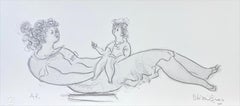
MOTHER AND CHILD Signed Lithograph, Woman with Young Girl, Portrait Drawing
By Chaim Gross
Located in Union City, NJ
MOTHER and CHILD is an original hand drawn lithograph by the American artist/sculptor Chaim Gross printed using hand lithography techniques on archival Arches printmaking paper, 100% acid free. MOTHER and CHILD is an endearing figurative portrait drawing of a mother with her young daughter hand printed from lithographic plates in shades of pale lavender and dark graphite gray. Sensitive sculptural composition of a reclining curly haired woman, balancing her cherub faced child on her lap.
Print size - 7.5 x 17 inches, unframed in excellent condition, hand signed in pencil by Chaim Gross
Edition size - 75, plus proofs
Year published - 1985
Printer - JK Fine Art Editions Co., NY
Chaim Gross,(1904 - 1991) was a sculptor, artist, and teacher, known for his wood carvings, sculptures of moving human figures, religious imagery, acrobats, mothers and children. Chaim was born on March 17, 1904 to a Jewish family in Austrian Galicia, in the village of Wolowa in the Carpathian Mountains...
Category
1980s Contemporary Portrait Prints
Materials
Lithograph
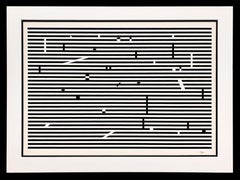
V (from Double Metamorphosis Series) Large Abstract Screen Print
By Yaacov Agam
Located in Aventura, FL
Screen print on arches paper. From Double Metamorphosis Series. Hand signed and numbered by Yaacov Agam. From the edition of 180. Sheet size 36.25 x 49.75 inches. Image size 29 ...
Category
1970s Abstract Abstract Prints
Materials
Paper, Screen
$3,400 Sale Price
20% Off
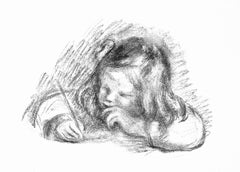
Pierre-Auguste Renoir, Claude Renoir Writing, 1951 (after)
Located in Southampton, NY
This exquisite lithograph after Pierre-Auguste Renoir (1841–1919), titled Claude Renoir ecrivant (Claude Renoir Writing), from the album Les Lithographies de Renoir (The Lithographs ...
Category
1950s Impressionist Figurative Prints
Materials
Lithograph
$716 Sale Price
20% Off
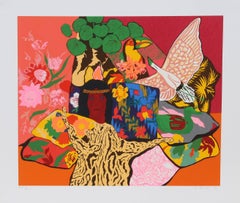
Pillow Jungle, Pop Art Screenprint by Hunt Slonem 1980
By Hunt Slonem
Located in Long Island City, NY
This serigraph was created by contemporary American artist Hunt Slonem. Slonem is best known for his Neo-Expressionist paintings and bright tropical palette, and his subject matter o...
Category
1980s Contemporary Figurative Prints
Materials
Screen
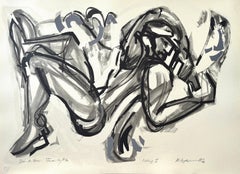
ICARUS I Signed Lithograph, Abstract Male Figure, Greek Mythology, Black, Grey
Located in Union City, NJ
ICARUS I is an original hand-drawn lithograph created in 1986 by the French American artist Marius Sznajderman, printed in neutral warm grays and intense black on archival Arches pap...
Category
1980s Abstract Figurative Prints
Materials
Lithograph
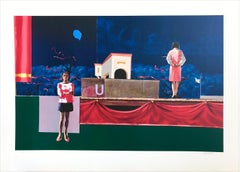
NOCTURNE Signed Lithograph, Black Women Theater Stage Night Sky Balloon Ribbons
Located in Union City, NJ
Nocturne is an original limited edition lithograph by the African American artist Hughie Lee-Smith printed using hand lithography techniques on archival Arches paper, 100% acid free. Nocturne is a mysterious, surreal stage-like theatrical scene featuring a dramatic deep midnight blue night sky with two young black women each wearing pink clothing...
Category
1990s Contemporary Figurative Prints
Materials
Lithograph