Stencil Figurative Prints
to
12
1
2
Overall Width
to
Overall Height
to
255
51
17
15
10
9
4
3
2
1
6
5
2
15
2
7
6
8
7
7
5
4
2
2
2
2
2
1
1
1
1
1
1
1
1
1,065
184
105
92
21
2
2
12
2
Style: Art Deco
Medium: Stencil
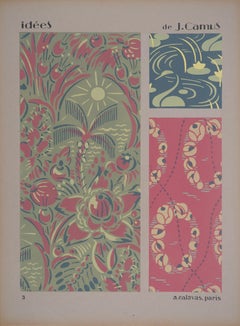
Art Deco : The Palm Tree under the Sun, 1933 - Original Lithograph
Located in Paris, IDF
Jacques Camus
The Palm Tree under the Sun, 1933
Original lithograph and stencil
Unsigned
On paper 39 x 29 cm (c. 15.3 x 11.4 inch)
INFORMATION : This lithograph is part of the "Idé...
Category
1930s Art Deco Stencil Figurative Prints
Materials
Lithograph, Stencil
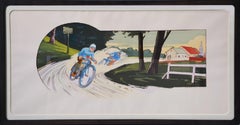
Cycles Motos Alcyon.
Located in London, London
GAMY and MONTAUT, Ernest.
Cycles Motos Alcyon.
[Paris: Mabileau & Co., c. 1914].
Hand-coloured pochoir print. Framed and glazed, overall size: 93.6cm x 49.2cm.
The Gamy-Montaut ...
Category
1910s Art Deco Stencil Figurative Prints
Materials
Screen, Stencil
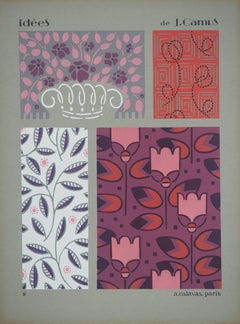
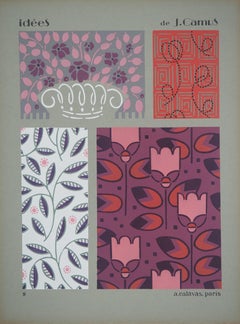
Art Deco : Pink Tulips, 1933 - Original Lithograph
Located in Paris, IDF
Jacques Camus
Pink Tulips, 1933
Original lithograph and stencil
Unsigned
On paper 39 x 29 cm (c. 15.3 x 11.4 inch)
INFORMATION : This lithograph is part of the "Idées" portfolio pr...
Category
1930s Art Deco Stencil Figurative Prints
Materials
Lithograph, Stencil
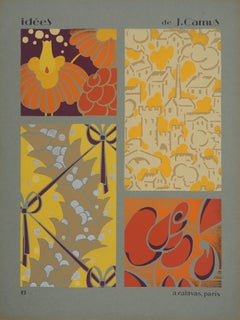
The Yellow Castle, 1933 - Original Lithograph
Located in Paris, IDF
Jacques Camus
The Yellow Castle, 1933
Original lithograph and stencil
Unsigned
On paper 39 x 29 cm (c. 15.3 x 11.4 inch)
INFORMATION : This lithograph is part of the "Idées" portfo...
Category
1930s Art Deco Stencil Figurative Prints
Materials
Lithograph, Stencil
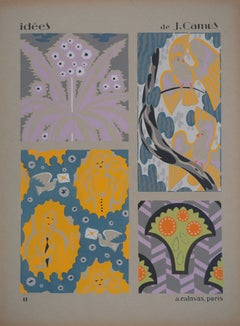
The Dove and the Snake, 1933 - Original Lithograph
Located in Paris, IDF
Jacques Camus
The Dove and the Snake, 1933
Original lithograph and stencil
Unsigned
On paper 39 x 29 cm (c. 15.3 x 11.4 inch)
INFORMATION : This lithograph is part of the "Idées" p...
Category
1930s Art Deco Stencil Figurative Prints
Materials
Lithograph, Stencil
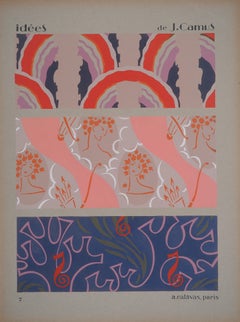
Art Deco : The Vine Woman with her Arrows, 1933 - Original Lithograph
Located in Paris, IDF
Jacques Camus
The Vine Woman with her Arrows, 1933
Original lithograph and stencil
Unsigned
On paper 39 x 29 cm (c. 15.3 x 11.4 inch)
INFORMATION : This lithograph is part of the "...
Category
1930s Art Deco Stencil Figurative Prints
Materials
Lithograph, Stencil
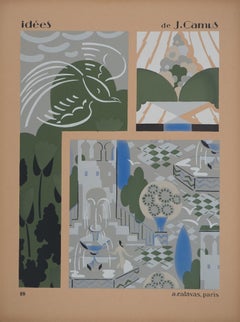
The Grey City, 1933 - Original Lithograph
Located in Paris, IDF
Jacques Camus
The Grey City, 1933
Original lithograph and stencil
Unsigned
On paper 39 x 29 cm (c. 15.3 x 11.4 inch)
INFORMATION : This lithograph is part of the "Idées" portfolio ...
Category
1930s Art Deco Stencil Figurative Prints
Materials
Lithograph, Stencil
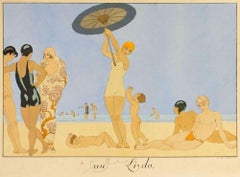
Au Lido - Pochoir by G. Barbier - 1920
Located in Roma, IT
This pochoir belongs to the portfolio 'Le Bonheur du Jour', by George Barbier.
A very fine work of one of the most important and famous european illustrators of Art Deco, whose infl...
Category
1920s Art Deco Stencil Figurative Prints
Materials
Stencil
Le Bonheur du Jour - Pochoir by George Barbier - 1929
Located in Roma, IT
Le Bonheur du Jour by George Barbie (Nantes, 1889 - Paris, 1932) is an original artwork realized in 1929 cover of the homonymous suite of pochoir realized b...
Category
1920s Art Deco Stencil Figurative Prints
Materials
Stencil

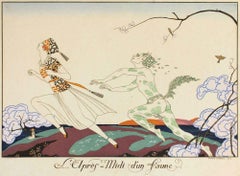
L
apres-midi d
un Faune - Pochoir by G. Barbier - 1920
Located in Roma, IT
This is one of the artworks in the portfolio 'Le Bonheur du Jour', by George Barbier.
A very fine work of one of the most important and famous european illustrators of Art Deco, who...
Category
1920s Art Deco Stencil Figurative Prints
Materials
Stencil
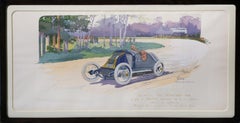
La Voiture Th. Schneider, Car - 1912
Located in London, London
GAMY and MONTAUT, Ernest.
La Voiture Th. Schneider, 1912 gagne à Dieppe Dinant et à la Sarthe vitesse et régularité / Magneto Bosch Corburateur Claudel Roues Riley.
Mabileau & Co., ...
Category
1910s Art Deco Stencil Figurative Prints
Materials
Screen, Stencil
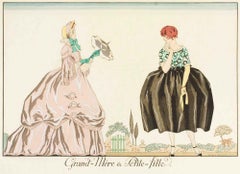
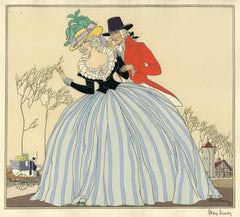
Grand-mere et Petite-fille - Pochoir by G. Barbier - 1920
Located in Roma, IT
This pochoir belongs to the portfolio 'Le Bonheur du Jour', by George Barbier.
A very fine work of one of the most important and famous european illustrators of Art Deco, whose infl...
Category
1920s Art Deco Stencil Figurative Prints
Materials
Stencil
Coquette
Located in Fairlawn, OH
Coquette
Pochoir (silk screen) printed in colors, c. 1923-1925
Signed by the artist in pencil lower right; numbered in ink on the image, (see photo)
Edition: 250 (100/250) in pencil in image (see photo)
Image size: 10-1/2 x 12-3/4"
The artist won a gold medal in Paris in 1925 for his porchoirs
Victor Max Ninon (Vittorio Accornero de Testa, Italian, 1896-1982)
Biography
Vittorio Accornero de Testa was born in Casale Monferrato in 1896. He completed his first studies at the "Leardi" institute, but was forced to interrupt them due to the war events of the First World War . At 19 he was second lieutenant of the Alpine troops and in 1916 he took one of the first pilot's licenses. During the war he knows the bitterness of shooting down in air combat (for which he is decorated), but also the good fortune to stay alive, albeit with a disability. His art blossomed in the postwar period, first signing his works simply Ninon and then, probably at the suggestion of a French publisher, under the pseudonym of "Victor Max Ninon" (Victor and Max indicate strength and masculinity, Ninon boyhood) .In 1919 and 1924 he made illustrations for theGiornalino della Domenica , also together with his first wife Edina Altara , for Ardita and La Lettura . In 1923 he won the cover competition organized by the magazine El Hogar of Buenos Aires and in 1925 with his pochoirs he imposed himself in Paris at the international exhibition of modern decorative and industrial arts , obtaining a gold medal. In the same year he made two covers for the US magazine The Smart Set . In the 1920s he made numerous series of art deco style postcards for the Milanese publishing house Degami . On June 4, 1929, aGenoa embarks on the Conte Grande together with his wife Edina Altara , for New York . The two stayed in the American metropolis for a few months: in this period Accornero worked on the creation of theatrical sets and created some covers for Country Life magazine . Accornero gets awards and prizes, but the great economic crisis of the time and the nostalgia for Italy convince the two to return to their homeland, where they resume their activity as illustrators.
In 1934 Accornero moved to Milan, separated amicably from his wife and continued to dedicate himself to the illustration of children's books, abandoning the pseudonym Victor Max Ninon. It illustrates about 60 books, from the fables of Andersen , Perrault and Grimm , to the tales of Poe , as well as the famous Pinocchio and Cuore published by Mondadori, Mursia, Hoepli, Martello. Several books illustrated by Accornero have been published in French, Spanish, German and English. In addition to the periodicals already mentioned, he collaborates on the first edition of the Encyclopedia of Boys , Mondadori, and with the Italian magazines Lidel , Il Secolo XX, The Italian Illustration , Fantasies of Italy , The Woman , Cordelia , For You Lady , Grace , Metropolis , La Domenica del Corriere , The Corriere dei Piccoli .
In 1936 enters the world of cinema, creating sets and costumes for Wedding Vagabonde of Guido Brignone and The White Squadron of Augustus Genina . From 1935 to 1950 he also devoted himself to the theater, taking care of sets and costumes for numerous operettas, ballets and performances at the Scala in Milan and for the Milanese theaters Manzoni, Lirico and Olympia. Stages Marcello di Giordano, Nina pazza d'amore by Paisiello, I cantori di Nurimberga by Wagner, La Bohème by Puccini and other works. For this activity he is also cited in the Theater encyclopedia.
In the 1940s and 1950s he wrote and illustrated six books for children for Mondadori: Tomaso (1944), Giacomino (1949), Tomaso Cacciatore (1950), Zio Stefano (1950), In Campagna che delizia! (1953), Tomaso, dear Tomaso (1955). His illustrations of Perrault's Tales published in those years by Hoepli are famous.
His art in the fifties evolves towards hyperrealism . There are many personal exhibitions in Italy and abroad, including those at the Gallerie Gussoni (1959) and Bolzani (1963 and 1966) in Milan and Walcheturm (1962) in Zurich. Eminent critics praise his work, from Orio Vergani to Enrico Piceni, from Reto Roedel to De Chirico himself. On the Domenica del Corriere , the journalist, writer and painter Dino Buzzati...
Category
1920s Art Deco Stencil Figurative Prints
Materials
Stencil
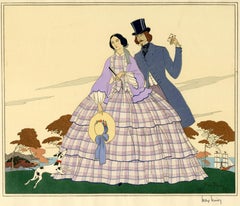
Robe Grise
Located in Fairlawn, OH
Robe Grise
Pochoir (silk screen) printed in colors, 1923
Signed by the artist in pencil lower right (see photo)
The artist won a gold medal in Paris in 1925 for his pochoirs
Condition: Two spots in the upper left corner associated with the printing.
Victor Max Ninon (Vittorio Accornero de Testa, Italian, 1896-1982)
Biography
Vittorio Accornero de Testa was born in Casale Monferrato in 1896. He completed his first studies at the "Leardi" institute, but was forced to interrupt them due to the war events of the First World War . At 19 he was second lieutenant of the Alpine troops and in 1916 he took one of the first pilot's licenses. During the war he knows the bitterness of shooting down in air combat (for which he is decorated), but also the good fortune to stay alive, albeit with a disability. His art blossomed in the postwar period, first signing his works simply Ninon and then, probably at the suggestion of a French publisher, under the pseudonym of "Victor Max Ninon" (Victor and Max indicate strength and masculinity, Ninon boyhood) .In 1919 and 1924 he made illustrations for theGiornalino della Domenica , also together with his first wife Edina Altara , for Ardita and La Lettura . In 1923 he won the cover competition organized by the magazine El Hogar of Buenos Aires and in 1925 with his pochoirs he imposed himself in Paris at the international exhibition of modern decorative and industrial arts , obtaining a gold medal. In the same year he made two covers for the US magazine The Smart Set . In the 1920s he made numerous series of art deco style postcards for the Milanese publishing house Degami . On June 4, 1929, aGenoa embarks on the Conte Grande together with his wife Edina Altara , for New York . The two stayed in the American metropolis for a few months: in this period Accornero worked on the creation of theatrical sets and created some covers for Country Life magazine . Accornero gets awards and prizes, but the great economic crisis of the time and the nostalgia for Italy convince the two to return to their homeland, where they resume their activity as illustrators.
In 1934 Accornero moved to Milan, separated amicably from his wife and continued to dedicate himself to the illustration of children's books, abandoning the pseudonym Victor Max Ninon. It illustrates about 60 books, from the fables of Andersen , Perrault and Grimm , to the tales of Poe , as well as the famous Pinocchio and Cuore published by Mondadori, Mursia, Hoepli, Martello. Several books illustrated by Accornero have been published in French, Spanish, German and English. In addition to the periodicals already mentioned, he collaborates on the first edition of the Encyclopedia of Boys , Mondadori, and with the Italian magazines Lidel , Il Secolo XX, The Italian Illustration , Fantasies of Italy , The Woman , Cordelia , For You Lady , Grace , Metropolis , La Domenica del Corriere , The Corriere dei Piccoli .
In 1936 enters the world of cinema, creating sets and costumes for Wedding Vagabonde of Guido Brignone and The White Squadron of Augustus Genina . From 1935 to 1950 he also devoted himself to the theater, taking care of sets and costumes for numerous operettas, ballets and performances at the Scala in Milan and for the Milanese theaters Manzoni, Lirico and Olympia. Stages Marcello di Giordano, Nina pazza d'amore by Paisiello, I cantori di Nurimberga by Wagner, La Bohème by Puccini and other works. For this activity he is also cited in the Theater encyclopedia.
In the 1940s and 1950s he wrote and illustrated six books for children for Mondadori: Tomaso (1944), Giacomino (1949), Tomaso Cacciatore (1950), Zio Stefano (1950), In Campagna che delizia! (1953), Tomaso, dear Tomaso (1955). His illustrations of Perrault's Tales published in those years by Hoepli are famous.
His art in the fifties evolves towards hyperrealism . There are many personal exhibitions in Italy and abroad, including those at the Gallerie Gussoni (1959) and Bolzani (1963 and 1966) in Milan and Walcheturm (1962) in Zurich. Eminent critics praise his work, from Orio Vergani to Enrico Piceni, from Reto Roedel to De Chirico himself. On the Domenica del Corriere , the journalist, writer and painter Dino...
Category
1920s Art Deco Stencil Figurative Prints
Materials
Stencil
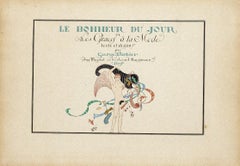
Frontispiece for Le Bonheur du Jour - Pochoir by G. Barbier - 1929
Located in Roma, IT
Le Bonheur du Jour by George Barbie (Nantes, 1889 - Paris, 1932) is an artwork realized in 1929.
Original colored pochoir on cardboard.
Perfect conditions.
Le Bonheur du Jour is...
Category
1920s Art Deco Stencil Figurative Prints
Materials
Stencil
Related Items
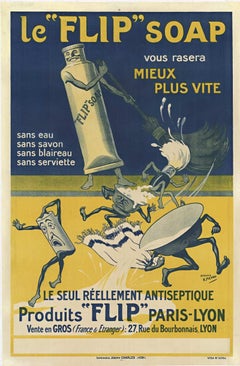
Le "FLIP" Soap original vintage French antique poster
Located in Spokane, WA
Original French vintage poster.
le "Flip" Soap.
This fun image shows the tube of 'Flip" pushing away the shaving bowl, towel, and shaving brush. I...
Category
1920s Art Deco Stencil Figurative Prints
Materials
Lithograph

$1,279 Sale Price
20% Off
H 47.5 in W 31.5 in D 0.12 in
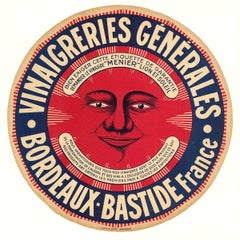
Original Vinaigreries Generals Bordeaux Bastide vintage vinegar poster, round
Located in Spokane, WA
Original vintage poster: VINAIGRERIES GENERALS BORDEAUX BASTIDE, FRANCE. A more unique vintage poster that is round. The poster features a sun in the middle in deep red, with th...
Category
Mid-20th Century Art Deco Stencil Figurative Prints
Materials
Lithograph
$385
H 15 in W 15 in D 0.05 in
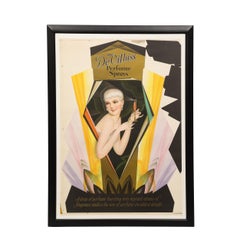
DeVilbiss Purfume Art Deco Poster by George Petty for the A.C. Schultz Company
Located in New York, NY
This beautiful Art Deco poster was realized by the esteemed American Artist George Petty for the A.C. Schultz Company in 1926. The work is an advertisement for DeVilbiss Perfume, which depicts a "Petty Girl" (as they came to be known) in the center of the composition floating in a pentagonal black color block. With short cropped silvery white hair and red lipstick, the female figure in center (suggestive of a stylized flapper) squeezes the atomizer of her perfume bottle misting herself in fragrance. Skyscraper style geometric forms suggesting elaborately faceted gemstones- in hues of rose, lavender, orange sapphire and yellow diamond- explode around her, suggesting the stage design for the set of the iconic film "Metropolis". The top of the composition features a bronze color block reading "DeVilbiss Perfume sprays" and in scrolling Deco lettering text reads “A drop of perfume bursting into myriad atoms of fragrance makes the use of perfume an added delight” near the bottom of the piece. Additionally, there is a solid black color block with crystalline black forms emanating outwards at the base of the composition, as well as a geometric abstract form on the right side of the piece imbuing it with a distinctly modernist inflection. With its quintessentially Art Deco sensibility, this piece is sure to delight discerning collectors of the period as well as those with a distinct appreciation for unusual (and stunning) fine art pieces. its vibrant palate and clean modernist lines make this piece a winning addition to any style of interior from classic Deco to contemporary. The piece comes presented in a custom gallery frame and is in excellent vintage condition.
George Petty was an American illustrator known for his series of pin-ups known as "Petty Girls" which he created for Esquire magazine. The Petty Girl were coquettish women whose legs were elongated to create idealized female forms. They were featured on magazine centerfolds, billboards, and calendars for companies such as Ridgid Tools. Born George Brown Petty IV on April 27, 1894 in Abbeville, LA, Petty received his formal training at the School of the Art Institute of Chicago under Ruth Van Sickle Ford...
Category
1920s Art Deco Stencil Figurative Prints
Materials
Lithograph
$2,975
H 42 in W 29 in D 1 in
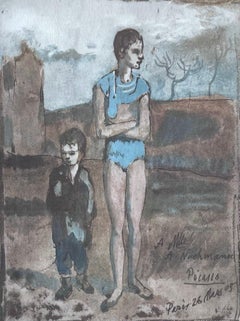
Pablo Picasso, Harlequin and Boy, from Fifteen Drawings, 1946 (after)
Located in Southampton, NY
This exquisite lithograph and pochoir after Pablo Picasso (1881–1973), titled Harlequin and Boy, from the folio Picasso, Fifteen Drawings, 1946, originates from the 1946 edition published by Pantheon Books, Inc., New York, and rendered and printed by Albert Carman, City Island...
Category
1940s Modern Stencil Figurative Prints
Materials
Lithograph, Stencil
$3,996 Sale Price
20% Off
H 18.75 in W 12.625 in
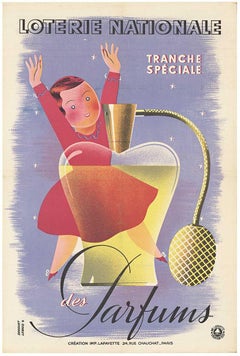
Original LOTERIE NATIONALE des PARFUMS vintage French poster lithograph
Located in Spokane, WA
LOTERIE NATIONALE des PARFUMS. Original vintage French poster, 1939 lithograph. Professional acid-free archival linen-backed, fine condition. Read...
Category
1930s Art Deco Stencil Figurative Prints
Materials
Lithograph
$398 Sale Price
20% Off
H 23.5 in W 16 in D 0.05 in
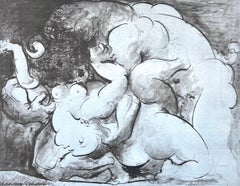
Pablo Picasso, Minotaur, from Fifteen Drawings, 1946 (after)
Located in Southampton, NY
This exquisite lithograph and pochoir after Pablo Picasso (1881–1973), titled Minotaur, from the folio Picasso, Fifteen Drawings, 1946, originates from the 1946 edition published by Pantheon Books, Inc., New York, and rendered and printed by Albert Carman, City Island, New York, 1946. Minotaur captures Picasso’s lifelong fascination with the ancient myth of the half-man, half-bull—a symbol of passion, violence, and the dual nature of human instinct. Through bold yet economical linework, the artist transforms the mythical figure into an expression of psychological struggle and creative power, a recurring theme in his postwar works that reconciles strength with vulnerability.
Executed as a lithograph and pochoir on velin paper, this work measures 12.63 x 18.75 inches. Signed in the plate and unnumbered as issued. The edition exemplifies the exemplary standards and artistic integrity of the fine art publishing and printmaking of Pantheon Books, Inc., and Albert Carman whose next collaborative project following this edition was with Marc Chagall in the creation of his monumental suite, Four Tales from the Arabian Nights in 1948.
Artwork Details:
Artist: After Pablo Picasso (1881–1973)
Title: Minotaur, from the folio Picasso, Fifteen Drawings, 1946
Medium: Lithograph and pochoir on velin paper
Dimensions: 12.63 x 18.75 inches (32.1 x 47.6 cm)
Inscription: Signed in the plate and unnumbered as issued
Date: 1946
Edition: D, primary edition; L, out of commerce, hand signed by Pablo Picasso
Publisher: Pantheon Books, Inc., New York
Printer: Albert Carman, City Island, New York
Catalogue raisonne reference: Orozco, Miguel. Picasso Interpretation Prints II - Etchings, Pochoirs
Woodcuts. Catalogue Raisonne. 2023, illustration 388–402
Condition: Well preserved, consistent with age and medium
Provenance: From the folio Picasso, Fifteen Drawings, 1946, published by Pantheon Books, Inc., New York; printed by Albert Carman, City Island, New York, 1946
About the Publication:
Picasso, Fifteen Drawings (1946) was one of the earliest fine art portfolios issued in the United States to feature the work of Pablo Picasso in the mediums of lithography and pochoir. Published by Pantheon Books, Inc., New York—a press renowned for its pioneering role in introducing European modernism to American audiences—the portfolio marked an important cultural bridge between postwar Paris and the emerging art scene in New York. The suite comprised fifteen images selected from Picasso’s prolific oeuvre, including depictions of mythological figures, musicians, and introspective portraits. Each work was rendered using a combination of lithography and pochoir, printed by Albert Carman at his atelier in City Island, New York, whose craftsmanship ensured a remarkable fidelity to the tonal and chromatic nuances of Picasso’s originals. The portfolio was produced in an edition of D, primary edition; L, out of commerce, hand signed by Pablo Picasso, issued unbound within a printed paper folder, and distributed primarily through Pantheon’s art book division under the direction of Kurt Wolff and Monroe Wheeler—key figures in shaping the intellectual reception of modern art in the United States. Picasso, Fifteen Drawings helped establish the artist’s postwar reputation among American collectors, scholars, and institutions, introducing a generation of viewers to the expressive immediacy and psychological depth of his draftsmanship. The publication also exemplified Pantheon’s broader mission to make modern European art accessible to an American audience, alongside their landmark editions devoted to Henri Matisse, Georges Rouault, and Marc Chagall. Technically refined and historically significant, the portfolio stands as a testament to the transatlantic exchange of modernist aesthetics during the mid-20th century and remains one of the most sought-after Picasso print editions issued in the United States before 1950.
About the Artist:
Pablo Picasso (1881–1973) was a Spanish painter, sculptor, printmaker, and ceramicist whose extraordinary vision revolutionized modern art and defined the visual language of the 20th century. A child prodigy from Malaga, Spain, Picasso's career spanned more than seven decades and encompassed an astonishing range of styles and innovations—from the melancholic Blue and romantic Rose periods to his pioneering invention of Cubism with Georges Braque, which shattered conventional notions of perspective and form. Influenced by the bold expressiveness of El Greco, the structure of Cezanne, and the vitality of African and Iberian sculpture, Picasso became a central figure of the Paris avant-garde, working in creative dialogue with contemporaries such as Henri Matisse, Alexander Calder, Alberto Giacometti, Salvador Dali, Joan Miro, Wassily Kandinsky, Marcel Duchamp, and Man Ray. His insatiable experimentation extended across painting, drawing, printmaking, ceramics, and sculpture, forever expanding the boundaries of artistic expression. A master of reinvention, Picasso profoundly shaped generations of artists who followed—from Andy Warhol, Roy Lichtenstein, David Hockney, and Jean-Michel Basquiat to Jeff Koons and Banksy—cementing his status as a timeless cultural icon whose works remain among the most sought after worldwide. His landmark painting Les Femmes d'Alger (Version O) achieved a record-breaking sale of 179,365,000 USD at Christie's, New York, on May 11, 2015, affirming Picasso's enduring legacy as one of the most influential and valuable artists in history.
Pablo Picasso Minotaur...
Category
1940s Modern Stencil Figurative Prints
Materials
Lithograph, Stencil
$3,996 Sale Price
20% Off
H 12.625 in W 18.75 in
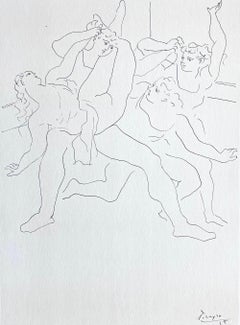
Pablo Picasso, Four Ballet Dancers, from Fifteen Drawings, 1946 (after)
Located in Southampton, NY
This exquisite lithograph and pochoir after Pablo Picasso (1881–1973), titled Four Ballet Dancers, from the folio Picasso, Fifteen Drawings, 1946, originates from the 1946 edition published by Pantheon Books, Inc., New York, and rendered and printed by Albert Carman, City Island...
Category
1940s Modern Stencil Figurative Prints
Materials
Lithograph, Stencil
$3,996 Sale Price
20% Off
H 18.75 in W 12.625 in
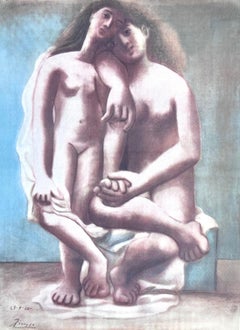
Pablo Picasso, Two Nudes, from Fifteen Drawings, 1946 (after)
Located in Southampton, NY
This exquisite lithograph and pochoir after Pablo Picasso (1881–1973), titled Two Nudes, from the folio Picasso, Fifteen Drawings, 1946, originates from the 1946 edition published by Pantheon Books, Inc., New York, and rendered and printed by Albert Carman, City Island...
Category
1940s Modern Stencil Figurative Prints
Materials
Lithograph, Stencil
$3,996 Sale Price
20% Off
H 18.75 in W 12.625 in
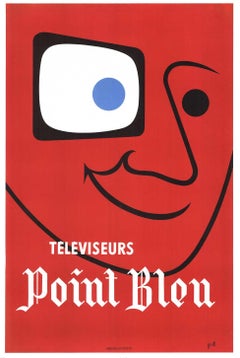
Original Televiseurs Point Bleu (Red) - Mid Century vintage poster, linen-backed
Located in Spokane, WA
Original Vintage French Point Bleu Television Advertisement Poster, linen-backed in A-condition, ready to frame. Artist: signed with initials P.D.
An outstanding example of mid-cent...
Category
1950s Art Deco Stencil Figurative Prints
Materials
Lithograph
$850
H 46 in W 30 in D 0.3 in
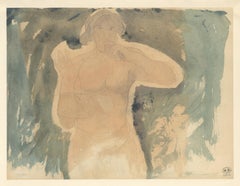
pochoir
Located in Henderson, NV
Medium: pochoir (after the watercolor). Printed in 1944 at the Rene Kieffer atelier and published by Rombaldi in an edition of 300 for the rare "La Varende" portfolio. Size: 9 1/2 x ...
Category
1940s Stencil Figurative Prints
Materials
Lithograph, Stencil
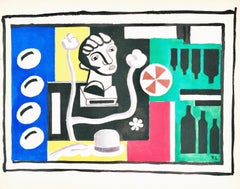
Fernand Leger, Still Life with Bust, from Contrastes, 1959 (after)
Located in Southampton, NY
This exquisite lithograph and pochoir after Fernand Leger (1881–1955), titled Nature morte au buste (Still Life with Bust), from the folio Contrastes, 13 Aquarelles, Gouache, Lavis, ...
Category
1950s Modern Stencil Figurative Prints
Materials
Lithograph, Stencil
$2,396 Sale Price
20% Off
H 15.25 in W 20.25 in
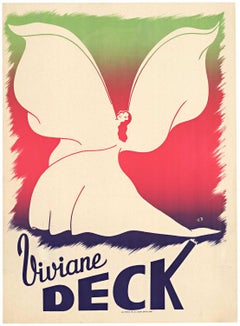
Original "Viviane Deck" personality vintage poster
Located in Spokane, WA
Original VIVIANE DECK linen-backed vintage poster. The artist signed the poster with the initials V. D. Printed by Lacrois, Paris, France.
She is shown dancing as a butterfly w...
Category
Mid-20th Century Art Deco Stencil Figurative Prints
Materials
Lithograph
$631 Sale Price
20% Off
H 31.5 in W 23.5 in D 0.05 in
Previously Available Items
Art Deco : The Vine Woman with her Arrows, 1933 - Original Lithograph
Located in Paris, IDF
Jacques Camus
The Vine Woman with her Arrows, 1933
Original lithograph and stencil
Unsigned
On paper 39 x 29 cm (c. 15.3 x 11.4 inch)
INFORMATION : This lithograph is part of the "...
Category
1930s Art Deco Stencil Figurative Prints
Materials
Lithograph, Stencil
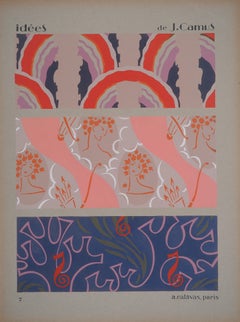
Pink Tulips, 1933 - Original Lithograph
Located in Paris, IDF
Jacques Camus
Pink Tulips, 1933
Original lithograph and stencil
Unsigned
On paper 39 x 29 cm (c. 15.3 x 11.4 inch)
INFORMATION : This lithograph is part of the "Idées" portfolio pr...
Category
1930s Art Deco Stencil Figurative Prints
Materials
Lithograph, Stencil
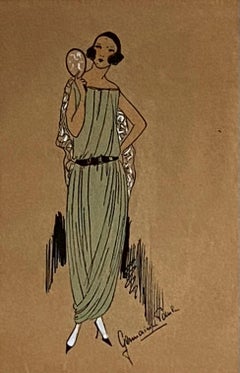
“Sylvia”
Located in Southampton, NY
Original fashion illustration for Tres Parisien, December, 1921
Moroccan Crepe Dress by Germaine-Paule Joumard, Fashion Art Deco Pochoir on Chinese Paper...
Category
1920s Art Deco Stencil Figurative Prints
Materials
Archival Paper, Stencil
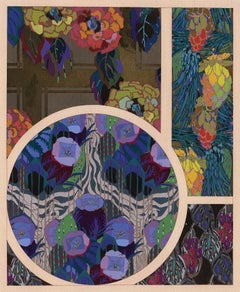
Variations, 2
— 1920s French Art Deco Pochoir
Located in Myrtle Beach, SC
Edouard Benedictus, 'Variations, plate 2' from the portfolio 'Variations Quatre-Vingt-Six Motifs Décoratifs en Vingt Planches', color pochoir, 1923. Signed in the matrix, in the left bottom margin. A superb, richly-inked impression, with fresh, vibrant colors and metallic silver ink, on heavy, cream wove paper with margins (1 to 1 3/4 inches), in good condition. Image size 14 5/16 x 11 9/16 inches; sheet size 17 1/4 x 14 inches. Archivally sleeved, unmatted.
The pochoir production is by Jean Saudé, the French printmaker known for his mastery of the technique and the author of the first how-to book on the pochoir process. Published by Éditions Albert Levy, Librairie Centrale des Beaux-Arts, Paris.
Collections: Metropolitan Museum of Art, Minneapolis Institute of Art, New York Public Library, Victoria and Albert Museum.
Additional works from this stunning suite of vibrant Art Deco floral designs are available from Keith Sheridan LLC...
Category
1920s Art Deco Stencil Figurative Prints
Materials
Stencil
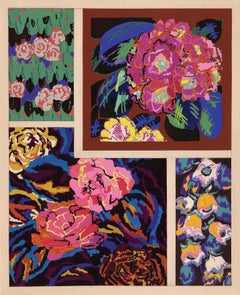
Variations, 3
— 1920s French Art Deco Pochoir
Located in Myrtle Beach, SC
Edouard Benedictus, 'Variations, plate 3' from the portfolio 'Variations Quatre-Vingt-Six Motifs Décoratifs en Vingt Planches', color pochoir, 1923. Signed in the matrix, in the left bottom margin. A superb, painterly impression, with fresh, vivid colors and metallic silver, cream wove paper with margins (1 to 1 3/4 inches), in good condition. Image size 14 5/16 x 11 1/2 inches; sheet size 17 1/4 x 14 inches. Archivally sleeved, unmatted.
The pochoir production is by Jean Saudé, the French printmaker known for his mastery of the technique and the author of the first how-to book on the pochoir process. Published by Éditions Albert Levy, Librairie Centrale des Beaux-Arts, Paris.
Collections: Metropolitan Museum of Art, Minneapolis Institute of Art, New York Public Library, Victoria and Albert Museum.
Additional works from this suite of vibrant Art Deco floral designs are available from Keith Sheridan LLC...
Category
1920s Art Deco Stencil Figurative Prints
Materials
Stencil
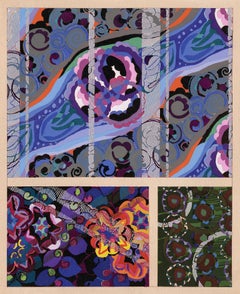
Variations, 7
— 1920s French Art Deco Pochoir
Located in Myrtle Beach, SC
Edouard Benedictus, 'Variations, plate 7' from the portfolio 'Variations Quatre-Vingt-Six Motifs Décoratifs en Vingt Planches', color pochoir, 1923. Signed in the matrix, in the left bottom margin. A superb, painterly impression, with fresh, vivid colors and metallic silver, on heavy, cream wove paper with margins (1 to 1 3/4 inches), in good condition. Image size 14 3/8 x 11 9/16 inches; sheet size 17 1/4 x 14 inches. Archivally sleeved, unmatted.
The pochoir production is by Jean Saudé, the French printmaker known for his mastery of the technique and the author of the first how-to book on the pochoir process. Published by Éditions Albert Levy, Librairie Centrale des Beaux-Arts, Paris.
Published by Éditions Albert Levy, Librairie Centrale des Beaux-Arts, Paris.
Collections: Metropolitan Museum of Art, Minneapolis Institute of Art, New York Public Library, Victoria and Albert Museum.
Additional works from this suite of vibrant Art Deco floral designs are available from Keith Sheridan LLC...
Category
1920s Art Deco Stencil Figurative Prints
Materials
Stencil
Variations, 10
— 1920s French Art Deco Pochoir
Located in Myrtle Beach, SC
Edouard Benedictus, 'Variations, plate 10' from the portfolio 'Variations Quatre-Vingt-Six Motifs Décoratifs en Vingt Planches', color pochoir, edition not stated, 1923. Signed in the matrix, in the left bottom margin. A superb, painterly impression, with fresh, vivid colors and metallic silver, on heavy, cream wove paper with margins (1 to 1 3/4 inches). A repaired tear in the center left margin, not affecting the image, in good condition. Archivally sleeved, unmatted.
Image size 14 3/8 x 11 9/16 inches; sheet size 17 3/8 x 13 7/8 inches.
The pochoir production is by Jean Saudé, the French printmaker known for his mastery of the technique and the author of the first how-to book on the pochoir process. Published by Éditions Albert Levy, Librairie Centrale des Beaux-Arts, Paris.
Collections: Metropolitan Museum of Art, Minneapolis Institute of Art, New York Public Library, Victoria and Albert Museum.
Additional works from this suite of vibrant Art Deco floral designs are available from Keith Sheridan LLC...
Category
1920s Art Deco Stencil Figurative Prints
Materials
Stencil
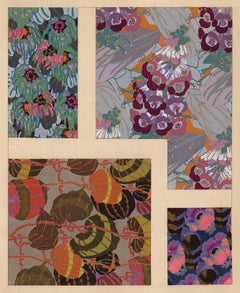
Variations, 16
— 1920s French Art Deco Pochoir
Located in Myrtle Beach, SC
Edouard Benedictus, 'Variations, plate 16' from the portfolio 'Variations Quatre-Vingt-Six Motifs Décoratifs en Vingt Planches', color pochoir, edition not stated, 1923. Signed in the matrix, in the left bottom margin. A superb, painterly impression, with fresh, vivid colors and metallic silver, on heavy, cream wove paper, with margins (1 to 1 3/4 inches), in good condition. Image size 14 3/8 x 11 9/16 inches; sheet size 17 1/4 x 14 inches. Archivally sleeved, unmatted.
The pochoir production is by Jean Saudé, the French printmaker known for his mastery of the technique and the author of the first how-to book on the pochoir process. Published by Éditions Albert Levy, Librairie Centrale des Beaux-Arts, Paris.
Collections: Metropolitan Museum of Art, Minneapolis Institute of Art, New York Public Library, Victoria and Albert Museum.
Additional works from this stunning suite of vibrant Art Deco floral designs are available from Keith Sheridan LLC...
Category
1920s Art Deco Stencil Figurative Prints
Materials
Stencil
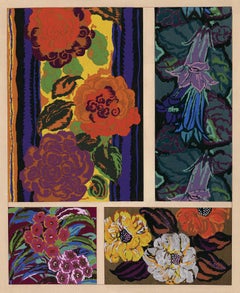
Art Deco : Underwater Flowers, 1926 - Original Lithograph
Located in Paris, IDF
E.H. Raskin
Underwater Flowers, 1926
Original lithograph and stencil
Printed signature in the plate
On paper, 37,5 x 27,5 cm (c. 14,7 x 10,8 inch)
...
Category
1920s Art Deco Stencil Figurative Prints
Materials
Lithograph, Stencil
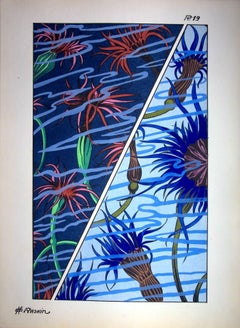
Underwater Panorama, 1926 - Original Lithograph
Located in Paris, IDF
E.H. Raskin
Underwater Panorama, 1926
Original lithograph and stencil
Printed signature in the plate
On paper, 37,5 x 27,5 cm (c. 14,7 x 10,8 inch)
INFORMATION : This lithograph is...
Category
1920s Art Deco Stencil Figurative Prints
Materials
Lithograph, Stencil
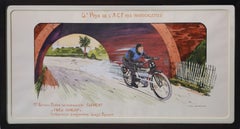
Grand Prix de l’A.C.F. 1913 (Motocyclettes).
Located in London, London
GAMY and MONTAUT, Ernest.
Grand Prix de l’A.C.F. 1913 (Motocyclettes), 1er. Greame Fenton sur autocyclette CLEMENT - PNEU DUNLOP - Carburateur Longuemare bougie Eyquem.
Mabileau & ...
Category
1910s Art Deco Stencil Figurative Prints
Materials
Screen, Stencil
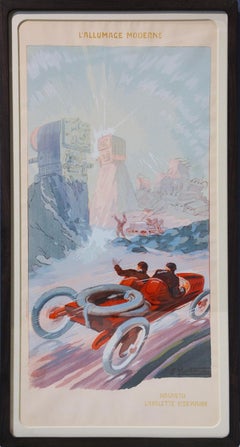
L’Allumage Moderne.
Located in London, London
GAMY and MONTAUT, Ernest.
L’Allumage Moderne. Magneto Lavalette Eisemann.
[Paris: Mabileau & Co., c. 1910].
Hand-coloured pochoir print. Framed and glazed, overall size: 93.6cm x ...
Category
1910s Art Deco Stencil Figurative Prints
Materials
Screen, Stencil
Stencil figurative prints for sale on 1stDibs.
Find a wide variety of authentic Stencil figurative prints available on 1stDibs. While artists have worked in this medium across a range of time periods, art made with this material during the 21st Century is especially popular. If you’re looking to add figurative prints created with this material to introduce a provocative pop of color and texture to an otherwise neutral space in your home, the works available on 1stDibs include elements of orange, blue, yellow and other colors. There are many well-known artists whose body of work includes ceramic sculptures. Popular artists on 1stDibs associated with pieces like this include George Barbier, Salvador Dalí, Fernand Léger, and (after) Maurice Utrillo. Frequently made by artists working in the Modern, Art Deco, all of these pieces for sale are unique and many will draw the attention of guests in your home. Not every interior allows for large Stencil figurative prints, so small editions measuring 0.04 inches across are also available
More Ways To Browse
Edmund F Ward
Edna Manley
Eduardo Roca
Edward B Gay
Edward Hopper Oil Painting
Edward Simmons
Edwin Lord Weeks
Elizabeth Enders
Elizabeth Horning
Emil Holzhauer
England Church Oil Painting
English Deer Painting
English Fox Hunt Painting
English Toy Terrier
Enrique Martinez Celaya
Eric Aho
Eritrea Art
Ernest Chateignon