Woodcut Figurative Prints
to
611
1,718
97
39
6
4
Overall Width
to
Overall Height
to
1,864
254
203
181
85
39
23
19
18
16
1
111
29
26
15
11
6
537
1,307
14
13
19
102
149
61
85
62
40
27
13
5
1,323
511
29
1,072
575
421
364
331
321
304
238
233
196
178
174
138
118
118
84
70
68
64
54
7,350
4,757
1,864
1,186
514
60
1,450
784
186
Style: Modern
Medium: Woodcut
Elwood W. Bartlett, Wisconsin Farm, about 1945, mid-century wood engraving
Located in New York, NY
Elwood Warren Bartlett is a Wisconsin native who also worked in Indiana.
Largely self taught as a printmaker, Bartlett worked in a style that once identified as his, immediately t...
Category
1940s American Modern Woodcut Figurative Prints
Materials
Woodcut

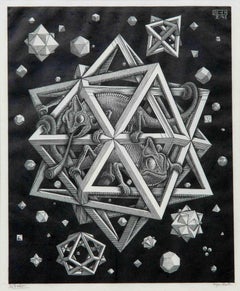
Stars/Sterren - Woodcut by Maurits Cornelis Escher - 1948
Located in Roma, IT
Woodcut print realized by Escher in 1948.
Hand signed in pencil and annotated in pencil lower right "eigen druck".
Monogrammed and dated in the plate "MCE/X-'48 upper right.
One o...
Category
1940s Modern Woodcut Figurative Prints
Materials
Woodcut
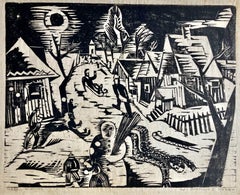
Werner Drewes, Winter, 1933, modernist woodcut
Located in New York, NY
A modernist fantasy winter scene created by Werner Drewes, this print brings key aspects of the period together. His cubist-inspired woodcut technique is utilized here to bring the s...
Category
1930s American Modern Woodcut Figurative Prints
Materials
Woodcut
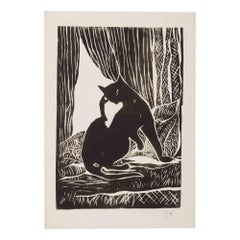
Cat - Woodcut by Giselle Halff - Mid 20th Century
Located in Roma, IT
Black Cat is an Original Woodcut Print realized in the Mid-20th Century by Giselle Halff (1899-1971).
Good condition, monogrammed on the lower right corner.
Giselle Halff (1899-197...
Category
Mid-20th Century Modern Woodcut Figurative Prints
Materials
Woodcut
$249 Sale Price
25% Off
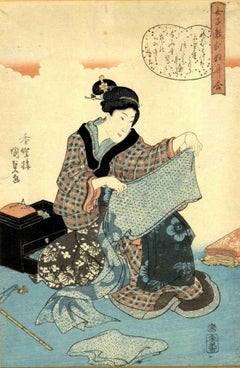
Bijinga - Woodcut Print by Utagawa Kunisada - 1842
Located in Roma, IT
Bijinga is an original modern artwork realized by Utagawa Kunisada in 1842.
Woodcut Print Oban Format.
From the series "Joshi kyôkun kyôka awase" (A collection of comic poems for t...
Category
1840s Modern Woodcut Figurative Prints
Materials
Woodcut
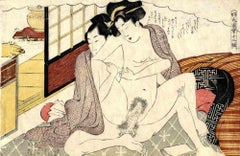
Shunga - Woodcut by Katsukawa Schuncho - Mid-18th Century
Located in Roma, IT
Shunga is an original modern artwork realized by Katsukawa Schuncho (1726 – 1793) in the half of the 18th Century.
Oban yokoe.
Erotic scene from the series "Koshuko zue juni ko" (Erotic pictures...
Category
1750s Modern Woodcut Figurative Prints
Materials
Paper, Woodcut
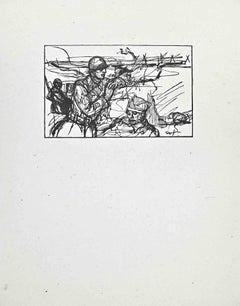
The Disastrous War - Woodcut Print by Paul Baudier - 1930s
Located in Roma, IT
The Disastrous War is a woodcut print on ivory-colored paper realized by Paul Baudier (1881-1962) in the 1930s.
Good conditions.
Paul Baudier, (born October 18, 1881 in Paris and d...
Category
1930s Modern Woodcut Figurative Prints
Materials
Woodcut
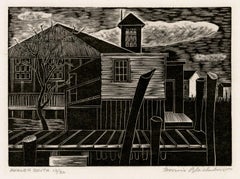
Avalon South
—— Mid-Century Modernism
Located in Myrtle Beach, SC
Morris Blackburn, 'Avalon South', wood engraving, 1951, edition 30. Signed, titled, and numbered '12/30' in pencil. A fine black impression on cream wove Japan paper, with wide margins (1 3/8 to 2 1/4 inches), in excellent condition. Archivally sleeved, unmatted.
Image size 5 x 7 inches (127 x 178 mm); sheet size 8 5/8 x 10 7/8 inches (219 x 276 mm).
ABOUT THE ARTIST
Morris Blackburn was a prominent painter, printmaker, and graphic artist, as well as a respected teacher at the Philadelphia Museum School of Industrial Art and the Pennsylvania Academy of Fine Arts.
Born in Philadelphia, where he spent most of his career, Blackburn was a descendant of the notable colonial portrait artist Joseph J. Blackburn (c. 1700–1780). He developed an interest in art early on and studied architectural drawing at the Philadelphia Trade School. In 1922, he took classes at the Graphic Sketch Club and later attended the School of Industrial Art. While working for the well-known Philadelphia furniture designer Oscar Mertz, he studied at the Pennsylvania Academy of the Fine Arts from 1925 to 1929. During his studies, he learned painting from Henry Bainbridge McCarter...
Category
1950s Modern Woodcut Figurative Prints
Materials
Woodcut
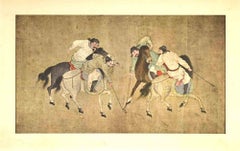
Polo Players - Woodcut - Mid 20th century
Located in Roma, IT
Polo Players is a print realized by an anonymous in the mid-20th century.
Woodcut print on paper.
Good conditions.
Category
Mid-20th Century Modern Woodcut Figurative Prints
Materials
Woodcut
Drop of Life
— from
Solitude
for Henry David Thoreau
s
Walden
Located in Myrtle Beach, SC
Naoko Matsubara, 'Drop of Life' for the portfolio 'Solitude', color woodcut, 1971. A fine impression with fresh, vivid colors, on cream laid Japan paper, the full sheet with margins,...
Category
1970s Modern Woodcut Figurative Prints
Materials
Woodcut
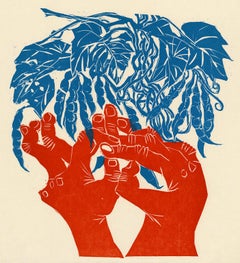
Jonah
Located in Santa Monica, CA
SADAO WATANABE (Japanese 1913-1996)
JONAH, 1959
Color stencil, signed, numbered and dated in white ink. Sheet, 25 5/8 x 22 5/8 inches. Edition: 44/50. Good color and generally good ...
Category
1950s Modern Woodcut Figurative Prints
Materials
Woodcut, Stencil
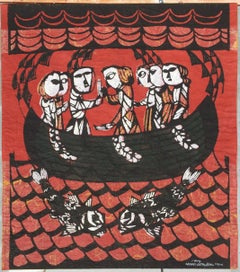

$1,200 Sale Price
20% Off
Annunciation - Original Woodcut by Ettore di Giorgio - Early 20th Century
Located in Roma, IT
Annunciation is an Original Woodcut Print on paper realized by Ettore di Giorgio in the Early 20th Century
Good Conditions.
The artwork is depicted through strong strokes in well-b...
Category
Early 20th Century Modern Woodcut Figurative Prints
Materials
Woodcut
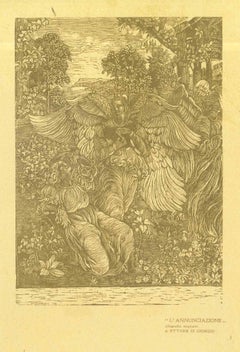
Toadstool - Woodcut by Maurits Cornelis Escher - 1931
Located in Roma, IT
Woodcut print realized by Escher in 1931.
It belongs to the series "Emblemata".
Monogrammed in the plate lower left.
Excellent condition.
Ref. F.H. Bool, J.R. Kist, J.L. Locher a...
Category
1930s Modern Woodcut Figurative Prints
Materials
Woodcut
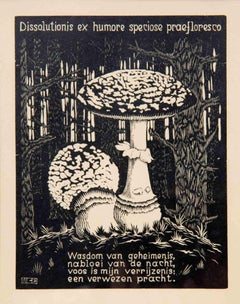
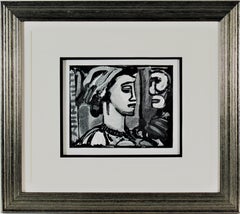
From the suite La Passion
Located in San Francisco, CA
This artwork from the suite "La Passion" 1932, published 1939 is a wood engraving by French artist Georges Rouault, 1871-1958. (Block engraved by Georges Aubert) It is signed and dat...
Category
Early 20th Century Modern Woodcut Figurative Prints
Materials
Woodcut
Shunga - Woodcut by Katsukawa Schuncho - Mid-18th Century
Located in Roma, IT
Shunga is an original modern artwork realized by Katsukawa Schuncho (1726 – 1793) in the half of the 18th Century.
Erotic scene from the series "Koshuko zue juni ko".
A courtesan with a customer under a kimono stand...
Category
Mid-18th Century Modern Woodcut Figurative Prints
Materials
Paper, Woodcut
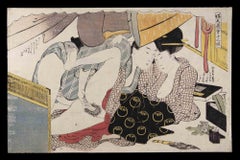
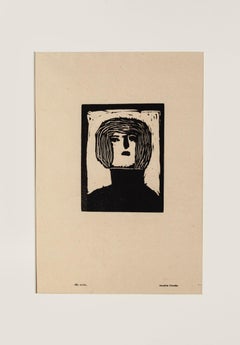
Figure - Original Woodcut Print by Amadore Porcella - Early 20th Century
Located in Roma, IT
Figure is an original woodcut print realized by Amadore Porcella.
The state of preservation of the artwork is very good.
Passepartout dimension: ...
Category
Early 20th Century Modern Woodcut Figurative Prints
Materials
Woodcut
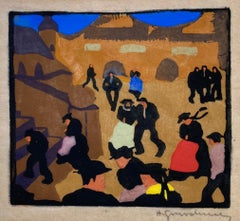
VILLAGE SCENE / TOWN FESTIVAL
By Herbert Gurschner
Located in Santa Monica, CA
HERBERT GURSCHNER (Austrian / English (1901-1975)
VILLAGE SCENE / TOWN FESTIVAL ca.1924
Color woodcut 4 ¾ x 5 3/8” Signed in pencil. Good strong colors. On thin paper. Faint darkeni...
Category
1920s Modern Woodcut Figurative Prints
Materials
Woodcut, Linocut
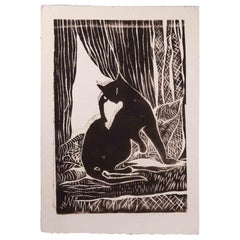
Black Cat by the Window - Woodcut Print by Giselle Halff - Early 20th century
Located in Roma, IT
Black Cat by the Window is a woodcut print on paper realized by Giselle Halff in the early 20th century.
Good conditions.
The delicate and beautiful fine strokes of the artwork sho...
Category
Early 20th Century Modern Woodcut Figurative Prints
Materials
Woodcut
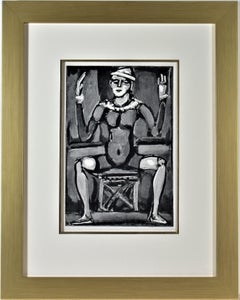
Clown Assis, from Cirque de l
Etoile Filante
Located in San Francisco, CA
This artwork "Clown Assis, from Cirque de l'Etoile Filante" 1932, is a wood engraving by French artist Georges Rouault 1871-1958 (Block engraved by Georges Aubert) It is signed in t...
Category
Early 20th Century Modern Woodcut Figurative Prints
Materials
Woodcut
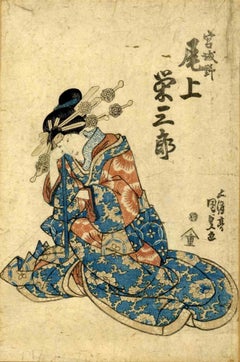
The Actor Onoe Eisaburo - Woodcut Print by Utagawa Kunisada - 1830s
Located in Roma, IT
The actor Onoe Eisaburo is an modern artwork realized by Utagawa Kunisada in 1830s.
Woodcut Print Oban Format.
The actor Onoe Eisaburo in the role of the high-ranking courtesan Miy...
Category
19th Century Modern Woodcut Figurative Prints
Materials
Woodcut
Shunga, Love Plays - Woodcut by Utagawa Kunisada - 1850s
Located in Roma, IT
Shunga, Love plays is an original artwork realized in the 1850s by Utagawa Kunisada (1786-1865).
Good print with gold. Backed, restored wormholes and missing oarts, glued at upper ...
Category
1850s Modern Woodcut Figurative Prints
Materials
Woodcut
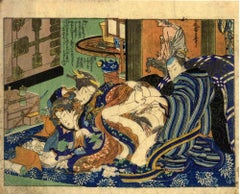
Shunga - Woodcut attr. Keisai Eisen - Mid-19th Century
By Keisai Eisen
Located in Roma, IT
Woodcut shunga print attributed to Keisai Eisen and realized in the early 19th century.
Good condition except for some signs of time.
Category
Mid-19th Century Modern Woodcut Figurative Prints
Materials
Woodcut
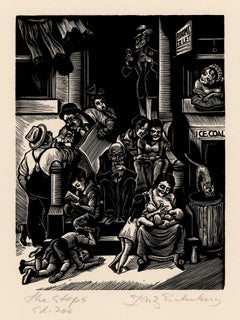
The Steps
— WPA Era Graphic Modernism
Located in Myrtle Beach, SC
Fritz Eichenberg, 'The Steps', wood engraving, 1933, edition 200. Signed, titled, and annotated 'Ed. 200' in pencil. Initialed in the block, lower right. A superb, richly-inked impr...
Category
1930s American Modern Woodcut Figurative Prints
Materials
Woodcut
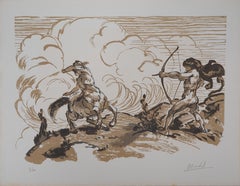
Mythology : Fight with a Centaur - Original wooodcut, Handsigned
Numbered
Located in Paris, IDF
Jules CHADEL (1870-1941)
Mythology : Fight with a Centaur, 1929
Original woodcut
Handsigned in pencil
Numbered /160
On Perrigot vellum 32.5 x 25.5 cm (c. 13 x 10 in)
Bears the blind...
Category
1920s Modern Woodcut Figurative Prints
Materials
Woodcut
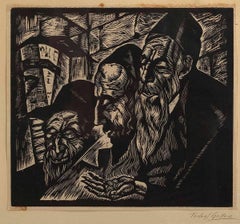
3 Jewish Men Judaica Woodblock Woodcut Engraving Print Chicago 1930s WPA Artist
Located in Surfside, FL
Todros Geller (1889 – 1949) was a Jewish American artist and teacher best known as a master printmaker and a leading artist among Chicago’s art community.Geller was born in Vinnytsia, the Russian Empire (now Ukraine) in 1889.[2] He studied art in Odessa and continued his studies after moving to Montreal in 1906 where he immigrated to Canada. He married and moved to Chicago in 1918, where he studied at the School of the Art Institute of Chicago until 1923.
Geller produced paintings, woodcuts, woodcarvings, and etchings. His work focused on Jewish tradition, often including moralistic themes and social commentary, shtetl, ghetto life, and the intersection of Jewish tradition with modern-day Chicago. He regarded art as a tool for social reform and he spent a large part of his career teaching art. His work was commissioned for stained glass windows, bookplates, community centers and Yiddish and English books. He was regarded as a leader in the field of synagogue and religious art. He designed stained glass window for synagogues in Omaha, Fort Worth, Dayton, Stamford, and Chicago Heights. Over the course of his career he illustrated more than 40 books.
In addition to conducting classes in his studio, Geller was head of art at the Jewish People’s Institute (JPI), supervisor of art for the Board of Jewish Education and director of art for the College of Jewish Studies (which became the Spertus Institute for Jewish Learning and Leadership) and taught at Hull House. Many prominent Chicago artists studied drawing and painting under Geller. Geller was a source of inspiration to Aaron Bohrod and Mitchell Siporin...
Category
Early 20th Century Modern Woodcut Figurative Prints
Materials
Paper, Woodcut
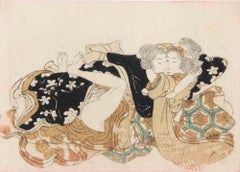
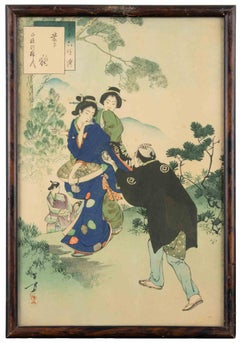
Sanjûroku Kasen... - Woodcut by Mizuno Toshikata - 1893
Located in Roma, IT
Nishiki-e (woodcut print), in vertical oban format (31x20.5) realized by Mizuno Toshikata in 1893 (Meiji 26).
Belongs to the Series "Sanjûroku Kasen" (Thirty-Six Beauties in Compari...
Category
1890s Modern Woodcut Figurative Prints
Materials
Woodcut
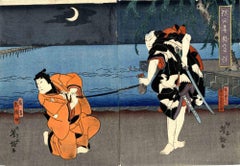
Sumida Haru - Kakutai - Woodcut by Utagawa Yoshitaki - 1860
Located in Roma, IT
Sumida haru - kakutai is an original artwork realized in 1860 by Utagawa Yoshitaki (April 13, 1841 – June 28, 1899) also known as Ichiyosai Yoshitaki.
Two Chuban from a Triptych.
M...
Category
1860s Modern Woodcut Figurative Prints
Materials
Woodcut
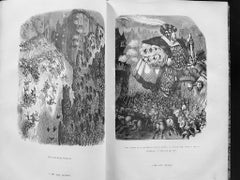
Gargantua - Rare Book Illustrated by Gustave Dorè - 1854
By Gustave Doré
Located in Roma, IT
Gargantua is an original modern rare book by François Rabelais illustrated for the first time by Gustave Doré (Strasbourg, 1832 – 23 January 1883) in 1854...
Category
1850s Modern Woodcut Figurative Prints
Materials
Woodcut
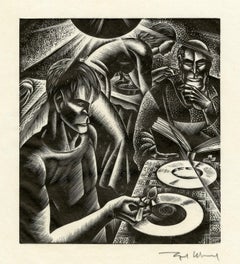
Wild Pilgrimage
(Contemplation) —
Story Without Words
Graphic Modernism
By Lynd Ward
Located in Myrtle Beach, SC
Lynd Ward, 'Wild Pilgrimage', No. 26, wood engraving, 1932, edition not stated but very small. Signed in pencil. A fine, black impression, with full margins (1 1/16 to 3 3/16 inches), on tissue-thin cream Japan paper, in very good condition. A scarce, artist-printed, hand-signed proof impression before the published edition. Matted to museum standards, unframed.
Created by Lynd Ward for his narrative book of illustrations without words, 'Wild Pilgrimage', published by Harrison Smith...
Category
1930s American Modern Woodcut Figurative Prints
Materials
Woodcut
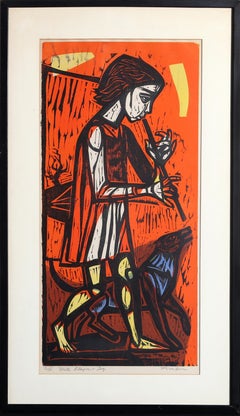
Flute Player and Dog, Modern Woodblock by Irving Amen
By Irving Amen
Located in Long Island City, NY
Irving Amen, American (1918 - 2011) - Flute Player and Dog, Year: circa 1965, Medium: Woodblock, signed and numbered in pencil, Edition: 74/100, Image Size: 29 x 14 inches, Size:...
Category
1960s Modern Woodcut Figurative Prints
Materials
Woodcut
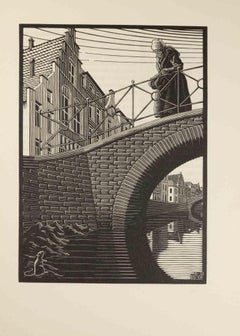
The Bridge - Woodcut by Maurits Cornelis Escher - 1932
Located in Roma, IT
Woodcut print from the Series "Der vreeselijke avonturen vas Scholastica" (The Terrible Adventures of Scholastica).
Edition of 300, published by A. J. van Dishoeck.
Unsigned, ass i...
Category
1930s Modern Woodcut Figurative Prints
Materials
Woodcut
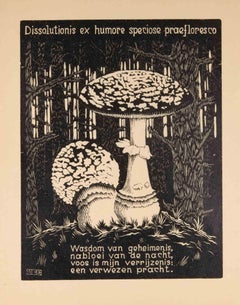
Toadstool - Woodcut by Maurits Cornelis Escher - 1931
Located in Roma, IT
Woodcut print realized by Escher for the series "Emblemata", and published in 1931.
On Hollande van Gelder paper.
Edition of 300.
Unsigned, as issued. Excellent condition, matted....
Category
1930s Modern Woodcut Figurative Prints
Materials
Woodcut
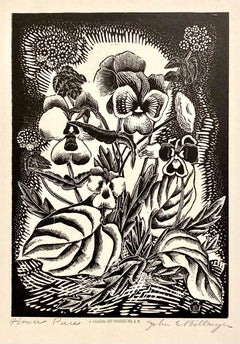
John E. Billmyer, Flower Piece, WPA wood engraving
Located in New York, NY
'Flower Piece' shows the artist, John Billmyer, to be a highly accomplished wood engraver. There are endless patterns and created details -- all executed flawlessly. Mostly made up o...
Category
Mid-20th Century American Modern Woodcut Figurative Prints
Materials
Woodcut
Sanjûroku Kasen ... - Woodcut by Mizuno Toshikata - 1893
Located in Roma, IT
Nishiki-e (woodcut print), in vertical oban format (31x20.5) realized by Mizuno Toshikata in 1893 (Meiji 26).
Belongs to the Series "Sanjûroku Kasen" (Thirty-Six Beauties in Compari...
Category
1890s Modern Woodcut Figurative Prints
Materials
Woodcut
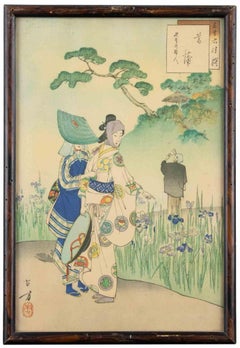
"Lendas Africanas Da Bahia" from the suite.
Located in San Francisco, CA
This artwork titled " Lendas Africanas Da Bahia" from the suite, 1978, is an original colors woodcut by renown Brazilian/Argentinian artist Hector Julio Paride Barnabo Carybe, 1911-1997. It is hand signed and numbered 83/200 in pencil by the artist. The Wood block mark (image) is 23.65 x 15.75 inches, sheet size is 26.75 x 19 inches. It is in excellent condition, has never been framed. It will be shipped in a 8 inches diameter heavy duty tube.
About the artist:
Héctor Julio Páride Bernabó (7 February 1911 – 2 October 1997) was an Argentine-Brazilian artist, researcher, writer, historian and journalist. His nickname and artistic name, Carybé, a type of piranha, comes from his time in the scouts. He died of heart failure after the meeting of a candomblé community's lay board of directors, the Cruz Santa Opô Afonjá Society, of which he was a member.
Quick Facts Born, Died ...
Carybé
Born
Héctor Julio Páride Bernabó
7 February 1911
Lanús, Argentina
Died
2 October 1997 (aged 86)
Salvador, Bahia, Brazil
Nationality
Brazilian
Known for
Painter, engraver, draughtsman, illustrator, potter, sculptor, mural painter, researcher, historian and journalist
Close
He produced thousands of works, including paintings, drawings, sculptures and sketches. He was an Obá de Xangô, an honorary position at Ilê Axé Opô Afonjá.
Orixá Panels in the Afro-Brazilian Museum in Salvador
Some of Carybé's work can be found in the Afro-Brazilian Museum in Salvador: 27 cedar panels representing different orixás or divinities of the Afro-Brazilian religion candomblé. Each panel shows a divinity with their associated implements and animal. The work was commissioned by the former Banco da Bahia S.A., now Banco BBM S.A., which originally installed them in its branch on Avenida Sete de Setembro in 1968.
Murals at Miami International Airport
American Airlines, Odebrecht and the Miami-Dade Aviation Department partnered to install two of Carybé's murals at Miami International Airport. They have been displayed in the American Airlines terminal at John F. Kennedy International Airport in New York since 1960. The 16.5 x 53-foot murals were accredited when Carybé won the first and the second prize in a contest of public art pieces for JFK airport.
As its terminal at that airport was due for demolition, American Airlines donated the murals to Miami-Dade County, and Odebrecht invested in a project to remove, restore, transport and install the murals at Miami International Airport.
The mural "Rejoicing and Festival of the Americas" portrays colorful scenes from popular festivals throughout the Americas, and "Discovery and Settlement of the West" depicts the pioneers’ journey into the American West.
Carybé's Woodcuts in Gabriel García Márquez's Books
Carybé illustrated four books by the Colombian writer Gabriel García Márquez, including One Hundred Years of Solitude, The Autumn of the Patriarch, Chronicle of a Death Foretold, and Love in the Time of Cholera "Carybé: um mestre da cultura baiana". ArqBahia Arquitetura, design, arte e lifestyle (in Brazilian Portuguese). 26 April 2023.. In particular, the woodcuts in One Hundred Years of Solitude are well-known for providing a visual image of the fictional town of Macondo, where the story takes place. The illustrations depict the colorful and winding houses, the railway bridge, and the hot and humid climate of the region, contributing to the reader's immersion in the story.
Carybé's woodcuts are, therefore, an important part of Gabriel García Márquez's literary legacy, bringing a visual dimension to his stories that further enriches the reader's experience.
Timeline
1911 — Birth in Lanús, Argentina.
1919 — Moved to Brazil.
1921 — The name Carybé is first given to him by the Clube do Flamengo scouts group, in Rio de Janeiro.
1925 — Beginning of his artistic endeavours, going to the pottery workshop of his elder brother, Arnaldo Bernabó, in Rio de Janeiro.
1927–1929 — Studies at the National School of Fine Arts, in Rio de Janeiro.
1930 — Worked for the newspaper Noticias Gráficas, in Buenos Aires, Argentina.
1935–1936 — Works with the writer Julio Cortázar and as a draughtsman for the El Diario newspaper.
1938 — Sent to Salvador by newspaper Prégon.
1939 — First collective exhibition, with the artist Clemente Moreau, at the Buenos Aires City Museum of Fine Arts, Argentina; illustrates the book Macumba, Relatos de la Tierra Verde, by Bernardo Kardon, published by Tiempo Nuestro.
1940 — Illustrates the book Macunaíma, by Mário de Andrade.
1941 — Draws the Esso Almanach, the payment for which allows him to set on a long journey through Uruguay, Brazil, Bolivia, and Argentina.
1941–1942 — Study trip around several South American countries.
1942 — Illustration for the book La Carreta by Henrique Amorim, published by El Ateneo (Buenos Aires, Argentina).
1943 — Together with Raul Brié, translates the book Macunaíma, by Mário de Andrade, into Spanish; produces the illustrations for the works Maracatu, Motivos Típicos y Carnavalescos, by Newton Freitas, published by Pigmaleon, Luna Muerta, by Manoel Castilla, published by Schapire, and Amores de Juventud, by Casanova Callabero; also publishes and illustrates Me voy al Norte, for the quarterly magazine Libertad Creadora; awarded First Prize by the Cámara Argentina del Libro (Argentine Book Council) for the illustration of the book Juvenília, by Miguel Cané (Buenos Aires, Argentina).
1944 — Illustrates the books The Complete Poetry of Walt Whitmann and A Cabana do Pai Tomás, both published by Schapire ; as well as and Los Quatro Gigantes del Alma by Mira y Lopez, Salvador BA; attends capoeira classes, visits candomblé meetings and makes drawings and paintings.
1945 — Does the illustrations for Daniel Defoe's Robinson Crusoe, for the Viau publishing house.
1946 — Helps in setting up the Tribuna da Imprensa newspaper, in Rio de Janeiro.
1947 — Works for the O Diário Carioca newspaper, in Rio de Janeiro.
1948 — Produces texts and illustrations for the book Ajtuss, Ediciones Botella al Mar (Buenos Aires, Argentina).
1949–1950 — Invited by Carlos Lacerda to work at the Tribuna da Imprensa, in Rio de Janeiro.
1950 — Invited by the Education Secretary Anísio Teixeira, moves to Bahia, and produces two panels for the Carneiro Ribeiro Education Center (Park School), in Salvador, Bahia.
1950–1997 — Settles in Salvador, Bahia.
1950–1960 — Actively participate in the plastic arts renewal movement, alongside Mário Cravo Júnior, Genaro de Carvalho, and Jenner Augusto.
1951 — Produces texts and illustrations for the works of the Coleção Recôncavo, published by Tipografia Beneditina and illustrations for the book, Bahia, Imagens da Terra e do Povo, by Odorico Tavares, published by José Olímpio in Rio de Janeiro; for the latter work he receives the gold medal at the 1st Biennial of Books and Graphic Arts.
1952 — Makes roughly 1,600 drawings for the scenes of the movie O Cangaceiro, by Lima Barreto; also works as the art director and as an extra on the film (São Paulo, SP).
1953 — Illustrations for the book A Borboleta Amarela, by Rubem Braga, published by José Olímpio (Rio de Janeiro, RJ).
1955 — Illustrates the work O Torso da Baiana, edited by the Modern Art Museum of Bahia.
1957 — Produces etchings, with original designs, for the special edition of Mário de Andrade's Macunaíma, published by the Sociedade dos 100 Bibliófilos do Brasil.
1958 — Makes an oil painting mural for the Petrobras Office in New York, USA; illustrates the book As Três Mulheres de Xangô, by Zora Seljan, published by Editora G. R. D. (Rio de Janeiro, RJ); Receives a scholarship grant in New York, USA.
1959 — Takes part in the competition for the New York International Airport panels project, in New York, USA, winning first and second prizes.
1961 — Illustrates the book Jubiabá, by Jorge Amado, published by Martins Fontes (São Paulo, SP).
1963 — Awarded the title of Honorary Citizen of Salvador, Bahia.
1965 — Illustrates A Muito Leal e Heróica Cidade de São Sebastião do Rio de Janeiro, published by Raymundo Castro Maya (Rio de Janeiro, RJ).
1966 — With Jorge Amado, co-authors Bahia, Boa Terra Bahia, published by Image (Rio de Janeiro, RJ); writes and illustrates the book Olha o Boi, published by Cultrix (São Paulo, SP).
1967 — Receives the Odorico Tavares Prize – Best Plastic Artist of 1967, in a competition ran by the state government to stimulate the development of plastic arts in Bahia; makes the Orixás Panels for the Banco da Bahia (currently at the UFBA Afro-Brazilian Museum) (Salvador, BA).
1968 — Illustrates the books Carta de Pero Vaz de Caminha ao Rei Dom Manuel, published by Sabiá (Rio de Janeiro) and Capoeira Angolana, by Waldeloir Rego, published by Itapoã (Bahia).
1969 — Produces the illustrations for the book Ninguém Escreve ao Coronel, by Gabriel Garcia Marquez, published by Sabiá (Rio de Janeiro, RJ).
1970 — Illustrates the books O Enterro do Diabo and Os Funerais de Mamãe Grande, published by Sabiá (Rio de Janeiro, RJ), Agotimé her Legend, by Judith Gleason, published by Grossman Publishers (New York, USA).
1971 — Illustrates the books One Hundred Years of Solitude, by Gabriel Garcia Marquez and A Casa Verde by Mario Vargas Llosa, both published by Sabiá (Rio de Janeiro, RJ); produces texts and illustrations for the book Candomblé da Bahia, published by Brunner (São Paulo, SP).
1973 — Illustrations for Gabriel Garcia Marquez's A Incrível e Triste História de Cândida Erendira e sua Avó Desalmada (Rio de Janeiro, RJ); paints the mural for the Legislative Assembly and the panel for the Bahia State Secretary of the Treasury.
1974 — Produces woodcuts for the book Visitações da Bahia, published by Onile.
1976 — Illustrates the book O Gato Malhado e a Andorinha Sinhá: uma história de amor, by Jorge Amado (Salvador, BA); receives the title of Knight of the Order of Merit of Bahia.
1977 — Certified with the Honor for Afro-Brazilian Cult Spiritual Merit, Xangô das Pedrinhas ao Obá de Xangô Carybé (Magé, RJ).
1978 — Makes the concrete sculpture Oxóssi, in the Catacumba Park; illustrates the book A Morte e a Morte de Quincas Berro D´Água, by Jorge Amado, published by Edições Alumbramento (Rio de Janeiro, RJ).
1979 — Produces woodcuts for the book Sete Lendas Africanas da Bahia, published by Onile.
1980 — Designs the costumes and scenery for the ballet Quincas Berro D´Água, at the Teatro Municipal in Rio de Janeiro.
1981 — Publication of the book Iconografia dos Deuses Africanos no Candomblé da Bahia (Ed. Raízes), following thirty years of research.
1982 — Receives the title of Honorary Doctor of the Federal University of Bahia.
1983 — Makes the panel for the Brazilian Embassy in Lagos, Nigeria.
1984 — Receives the Jerônimo Monteiro Commendation – Level of Knight (Espírito Santo); receives the Castro Alves Medal of Merit, granted by the UFBA Academy of Arts and Letters; makes the bronze sculpture Homenagem à mulher baiana (Homage to the Bahian woman), at the Iguatemi Shopping Center (Salvador, BA).
1985 — Designs the costumes and sets for the spectacle La Bohème, at the Castro Alves Theater; illustrates the book Lendas Africanas dos Orixás, by Pierre Verger, published by Currupio.
1992 — Illustrates the book O sumiço da santa: uma história de feitiçaria, by Jorge Amado (Rio de Janeiro, RJ).
1995 — Illustration of the book O uso das plantas na sociedade iorubá, by Pierre Verger (São Paulo, SP).
1996 — Making of the short film Capeta Carybé, by Agnaldo Siri Azevedo, adapted from the book O Capeta Carybé, by Jorge Amado, about the artist Carybé, who was born in Argentina and became the most Bahian of all Brazilians.
1997 — Illustration of the book Poesias de Castro Alves.
Exhibitions
ммIndividual Exhibitions:
1943 — Buenos Aires (Argentina) — First individual exhibition, at the Nordiska Gallery
1944 — Salta (Argentina) — at the Consejo General de Educacion
1945 — Salta (Argentina) — Amigos del Arte, Buenos Aires (Argentina) — Motivos de América, at the Amauta Gallery, Rio de Janeiro RJ — individual exhibition at the IAB/RJ
1947 — Salta (Argentina) — Agrupación Cultural Femenina
1950 — Salvador BA — First individual exhibit in Bahia, at the Bar Anjo Azul; São Paulo SP — MASP.
1952 — São Paulo SP — MAM/SP
1954 — Salvador BA — Oxumaré Gallery
1957 — New York (USA) — Bodley Gallery; Buenos Aires (Argentina) — Bonino Gallery * 1958 - New York (USA) — Bodley Gallery
1962 — Salvador BA - MAM/BA
1963 — Rio de Janeiro RJ — Bonino Gallery
1965 — Rio de Janeiro RJ — Bonino Gallery
1966 — São Paulo SP — Astrea Gallery
1967 — Rio de Janeiro RJ — Santa Rosa Gallery
1969 — London (England) — Varig Airlines
1970 — Rio de Janeiro RJ — Galeria da Praça
1971 — Rio de Janeiro RJ — MAM/RJ, São Paulo SP — A Galeria; Belo Horizonte MG, Brasília DF, Curitiba PR, Florianopolis SC, Porto Alegre RS, Rio de Janeiro RJ and São Paulo SP — The Orixás Panel (exhibition tour), at the Casa da Cultura in Belo Horizonte, MAM/DF, the Public Library of Paraná, the Legislative Assembly of Santa Catarina State, the Legislative Assembly of Rio Grande do Sul, MAM/RJ and MAM/SP
1972 — The Orixás Panel in Fortaleza CE — at the Ceará Federal University Art Museum, and in Recife PE — at the Santa Isabel Theater
1973 — São Paulo SP — A Galeria
1976 — Salvador BA — at the Church of the Nossa Senhora do Carmo Convent
1980 — São Paulo SP — A Galeria
1981 — Lisbon (Portugal) — Cassino Estoril
1982 — São Paulo SP — Renot Art Gallery, São Paulo SP — A Galeria
1983 — New York (USA) — Iconografia dos Deuses Africanos no Candomblé da Bahia, The Caribbean Cultural Center
1984 — Philadelphia (USA) — Art Institute of Philadelphia; Mexico — Museo Nacional de Las Culturas; São Paulo SP — Galeria de Arte André
1986 — Lisbon (Portugal) — Cassino Estoril; Salvador BA — As Artes de Carybé, Núcleo de Artes Desenbanco
1989 — Lisbon (Portugal) — Cassino Estoril; São Paulo SP — MASP
1995 — São Paulo SP — Documenta Galeria de Arte, São Paulo SP — Casa das Artes Galeria, Campinas SP — Galeria Croqui, Curitiba PR — Galeria de Arte Fraletti e Rubbo, Belo Horizonte MG — Nuance Galeria de Arte, Foz do Iguaçu PR — Ita Galeria de Arte, Porto Alegre RS — Bublitz Decaedro Galeria de Artes, Cuiabá MT — Só Vi Arte Galeria, Goiânia GO — Época Galeria de Arte, São Paulo SP — Artebela Galeria Arte Molduras, Fortaleza CE — Galeria Casa D'Arte, Salvador BA — Oxum Casa de Arte
Collective Exhibitions:
1939 — Buenos Aires (Argentina) — Carybé and Clemente Moreau Exhibition, at the Museo Municipal de Belas Artes
1943 — Buenos Aires (Argentina) — 29th Salon de Acuarelistas y Grabadores — first prize
1946 — Buenos Aires (Argentina) — Drawings by Argentine Artists, at the Kraft Gallery
1948 — Washington (USA) — Artists of Argentina, at the Pan American Union Gallery
1949 — Buenos Aires (Argentina) — Carybé and Gertrudis Chale, at the Viau Gallery; Salvador BA — Bahian Showroom of Fine Arts, at the Hotel Bahia
1950 — Salvador BA — 2nd Bahian Showroom of Fine Arts; São Paulo SP — MAM/SP
1951 — São Paulo SP — 1st São Paulo Art Biennial, Trianon Pavilion.
1952 — Salvador BA — 3rd Bahian Showroom of Fine Arts, at Belvedere da Sé; São Paulo SP — MAM/SP
1953 — Recife PE — Mario Cravo Júnior and Carybé, at the Santa Isabel Theater; São Paulo SP — 2nd São Paulo Art Biennial, at MAM/SP
1954 — Salvador BA — 4th Bahian Showroom of Fine Arts, at the Hotel Bahia. — Bronze medal
1955 — São Paulo SP — 3rd São Paulo Art Biennial, at MAM/SP — first prize for drawing
1956 — Salvador BA — Modern Artists of Bahia, at the Oxumaré Gallery; Venice (Italy) — 28th Venice Biennial
1957 — Rio de Janeiro RJ — 6th National Modern Art Show — exemption from the jury; São Paulo SP — Artists from Bahia, at the MAM/SP
1958 — San Francisco (USA) — Works by Brazilian Artists, at the Fine Arts Museums of San Francisco, Washington and New York (USA) — Works by Brazilian Artists, at the Pan American Union and the MoMA
1959 — Seattle (USA) — 30th International Exhibition, at the Seattle Art Museum; Salvador BA — Modern Artists of Bahia, at the Dentistry School.
1961 — São Paulo SP — 6th São Paulo Art Biennial, at MAM/SP — special room
1963 — Lagos (Nigeria) — Brazilian Contemporary Artists, at the Nigerian Museum; São Paulo SP — 7th São Paulo Art Biennial Bienal, at the Fundação Bienal
1964 — Salvador BA — Christmas Exhibition, at the Galeria Querino
1966 — Baghdad (Iraq) — collective exhibition sponsored by the Calouste Gulbenkian Foundation; Madrid (Spain) — Artists of Bahia, at the Hispanic Culture Institute; Rome (Italy) — Piero Cartona Palace; Salvador BA — 1st National Biennial of Plastic Arts (Bienal da Bahia) — special room; Salvador BA — Draughtsmen of Bahia, at the Convivium Gallery
1967 — Salvador BA — Christmas Exhibition at the Panorama Art Gallery; São Paulo SP — Artists of Bahia, at the A Gallery
1968 — São Paulo SP — Bahian Artists, at the A Gallery
1969 — London (England) — Tryon Gallery; São Paulo SP — 1st Panorama of Current Brazilian Art at the MAM/SP; São Paulo SP — Carybé, Carlos Bastos...
Category
Late 20th Century Modern Woodcut Figurative Prints
Materials
Woodcut
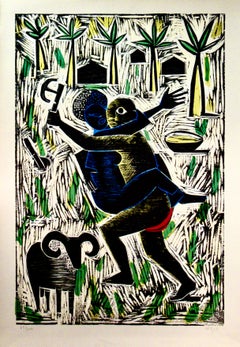
Okitsu-gawa - Woodcut by Utagawa Hiroshige - 1832
Located in Roma, IT
Okitsu-gawa is a woodcut print realized by Utagawa Hiroshige in 1832.
It is part of the suite "The Fifty-three Stations of the Tokaido - Okitsu".
Very good condition.
Category
1830s Modern Woodcut Figurative Prints
Materials
Woodcut
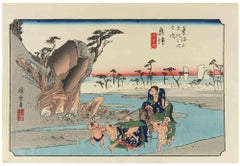
Quartet No. 1
By Eugene Larkin
Located in Kansas City, MO
Eugene Larkin
Quartet No. 1
Woodcut in two colors
Signed and titled by hand
Size: 20 x 29.5 inches
COA provided
Eugene Larkin (1921-2010)
The late Eugene Larkin was an artist who worked in the Twin Cities area for many years and needs little introduction. His works have been shown, collected and appreciated by numerous galleries, museums and collectors throughout the United States.
Larkin was influential both as an artist and as a teacher. He taught at the Minneapolis College of Art and Design between 1954 and 1969, where he was head of printmaking and Chairman of the Division of Fine Arts. From 1969-1991 he was a professor in the Design Department at the University of Minnesota.
Eugene Larkin, a lithographer, teacher and artist who left behind scores of works, some of them in the permanent collections of the Library of Congress and the Museum of Modern Art. He was considered an early promoter of lithography education, Larkin introduced it into arts programs while teaching at the Minneapolis College of Art and Design and the University of Minnesota. He held a prominent place in the art world through decades of working and teaching in Minneapolis. His work depicted a wide range of subjects, from musicians to nature, including a series of woodcuts based on William Blake's ""Songs of Innocence and Experience."
Larkin also wrote a textbook, ""Design: The Search for Unity."" It was his work with lithography, an 18th-century printmaking process, for which he was best known.
His last local exhibit was a retrospective at The University of Minnesota Weisman Museum in 2005. ""Sometimes I start the artistic process from a literary source - Adam and Eve, the Egyptian nature gods, or classical Greek themes but sometimes I start from nature. Trees have always been a favorite subject. I see trees as people, as vertical objects...
Category
15th Century and Earlier Modern Woodcut Figurative Prints
Materials
Woodcut
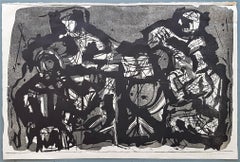
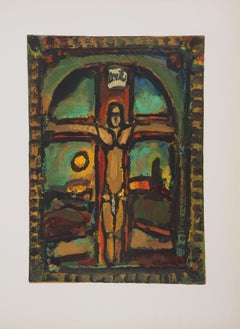
Easter : Crucifixion - Woodcut on Arches vellum - Printed signature
Located in Paris, IDF
Georges Rouault
Crucifixion
Woodcut and embossing (Raymond Jacquet workshop)
Printed signature in the plate
On Arches vellum
15 x 11" (38 x 28 cm)
INFORMATION : Woodcut published i...
Category
Mid-20th Century Modern Woodcut Figurative Prints
Materials
Woodcut
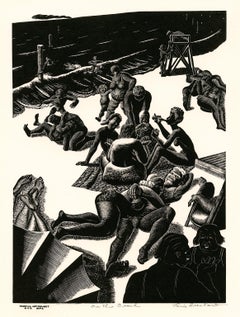
On the Beach (Coney Island, New York) — 1930s Graphic Modernism, WPA
By Lou Barlow
Located in Myrtle Beach, SC
Lou Barlow (Louis Breslow), 'On the Beach' (Coney Island) wood engraving, c. 1937, edition c. 25. Signed and titled in pencil. Stamped 'FEDERAL ART PROJECT NYC WPA' in the bottom left margin. A fine, richly-inked impression, with all the fine lines printing clearly, on cream wove paper, with full margins (1 1/2 to 3 inches), in excellent condition. Matted to museum standards, unframed. Scarce.
Image size 11 x 8 1/8 inches; sheet size 16 x 11 3/8 inches.
Created during the Great Depression for the Works Progress Administration (WPA), Federal Art Project, New York City.
Impressions of this work are in the permanent collections of the Amon Carter Museum of Art, Illinois State Museum, and the New York Public Library.
ABOUT THE IMAGE
Due to Coney Island's proximity to Manhattan, Brooklyn, and other New York boroughs, it began attracting vacationers in the 1830s and 1840s. Most of the vacationers were wealthy and went by carriage roads and steamship services that reduced travel time from a formerly half-day journey to two hours. By the late 1870s, the development of Coney Island's amusement park attractions and hotels drew people from all social classes. When the Brooklyn Rapid Transit Company electrified the steam railroads and connected Brooklyn to Manhattan via the Brooklyn Bridge at the beginning of the 20th century, Coney Island turned rapidly from a resort to an accessible location for day-trippers seeking to escape the summer heat in New York City's tenements. In 1915, the Sea Beach Line was upgraded to a subway line, and the opening of the Stillwell Avenue station in 1919 ushered in Coney Island's busiest era. On the peak summer days, over a million people would travel to Coney Island. In 1937, New York City purchased a 400-foot-wide strip of land along the shoreline to allow the boardwalk to be moved 300 feet inland. At this point, Coney Island was so crowded on summer weekends that parks commissioner Robert Moses...
Category
1930s American Modern Woodcut Figurative Prints
Materials
Woodcut
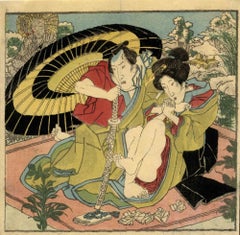
Shunga - Woodcut by Utagawa Kunisada - 1850s
Located in Roma, IT
Shunga is an original artwork realized in the 1850s by Utagawa Kunisada (1786-1865).
Making love in the winter on a terrace, behind the couple stone sculpture of the Jizo-Bosatsu.
...
Category
1850s Modern Woodcut Figurative Prints
Materials
Woodcut
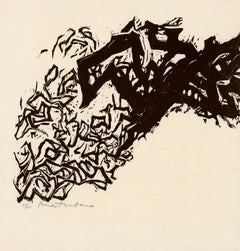
Winter Serenity
—from
Solitude
for Henry David Thoreau
s
Walden
Located in Myrtle Beach, SC
Naoko Matsubara, 'Winter Serenity' for the portfolio 'Solitude', woodcut, 1971, edition 100. Signed and numbered '58/100' in pencil. A fine, richly-inked impression, on cream laid J...
Category
1970s Modern Woodcut Figurative Prints
Materials
Woodcut
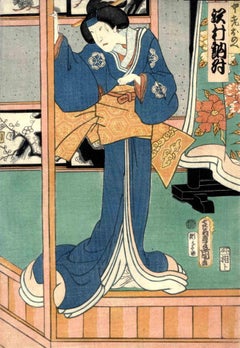
Sawamura Tosho - Woodcut Print by Utagawa Kunisada - 1862
Located in Roma, IT
Sawamura Tosho is an original modern artwork realized by Utagawa Kunisada in 1862.
Woodcut print Oban from a tryptich
Signature Kio Toyokuni ga (77 Toyokuni). Publisher: Soshuya. ...
Category
19th Century Modern Woodcut Figurative Prints
Materials
Woodcut
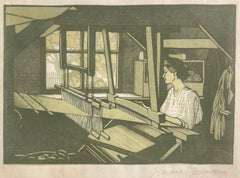
THE RUG WEAVER
Located in Santa Monica, CA
GUSTAVE BAUMANN (1881 – 1971)
THE RUG WEAVER, 1910 (Chamberlain 26)
Color woodcut signed in pencil. Unnumbed from an edition 100 as published in the Hills o’ Brown...
Category
1910s American Modern Woodcut Figurative Prints
Materials
Woodcut
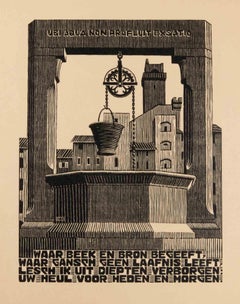
Well - Woodcut by Maurits Cornelis Escher - 1931
Located in Roma, IT
Woodcut print realized by Escher for the series "Emblemata", and published in 1931.
On Hollande van Gelder paper.
Edition of 300.
Unsigned, as issued. Excellent condition, matted....
Category
1930s Modern Woodcut Figurative Prints
Materials
Woodcut
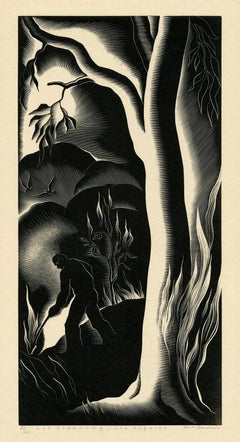
Lot Cleaning, Los Angeles
— 1930s Modernism
Located in Myrtle Beach, SC
'Lot Cleaning, Los Angeles', wood engraving, edition 60, Zeitlin & Ver Brugge 69. Signed, titled and numbered '51/60' in pencil. A brilliant, black impression, on Kitakata Japan pape...
Category
1930s American Modern Woodcut Figurative Prints
Materials
Woodcut
Composition (Arntz 148-175; Hagenbach A 25; Bolliger 54), Dreams and Projects
By Jean Arp
Located in Southampton, NY
Woodcut on vélin d’Arches paper. Inscription: Unsigned and unnumbered, as issued. Good condition. Notes: From the folio, Jean Arp, Dreams and Projects, 1951-1952. Published by Curt V...
Category
1950s Modern Woodcut Figurative Prints
Materials
Woodcut
$5,996 Sale Price
20% Off
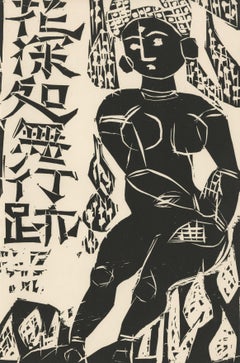
No Footprints Show, Where the Flowers Grow Deep
Located in Fairlawn, OH
No Footprints Show, Where the Flowers Grow Deep
Woodcut, 1961
Unsigned (as isssued)
From: The "Way" of the Woodcut, three woodcuts, 1961
Publisher: Pratt Adlib Press, Brooklyn, New Y...
Category
1960s Modern Woodcut Figurative Prints
Materials
Woodcut
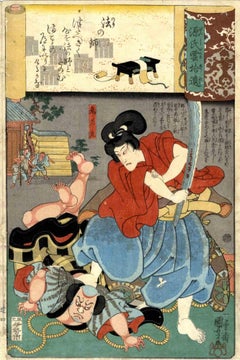
Mushae - Woodcut by Utagawa Kuniyoshi - 1846
Located in Roma, IT
Mushae is an original modern artwork realized by Utagawa Kuniyoshi (1798 – 1861) in the half of the 19th Century.
Original woodcut print rom the se...
Category
1840s Modern Woodcut Figurative Prints
Materials
Paper, Woodcut
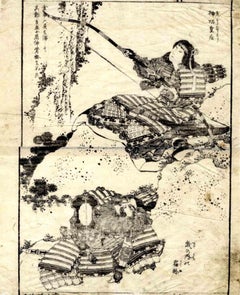
The Stirrups of Musashi- Original Woodcut Print by Katsushika Hokusai - 1836
Located in Roma, IT
The Stirrups of Musashi is an original modern artwork realized by Katsushika Hokusai in 1836.
Mushae (double page, book 1836).
B/W print. From the book "Ehon Musashi abumi" (The St...
Category
19th Century Modern Woodcut Figurative Prints
Materials
Woodcut
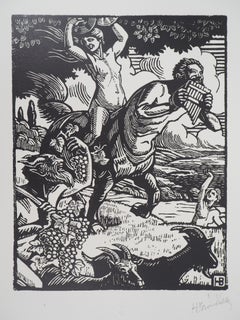
Mythology : Grape Harvest with Faun and Centaur - Original wooodcut, Handsigned
Located in Paris, IDF
Honoré BROUTELLE (1866-1929)
Mythology : Grape Harvest with Faun and Centaur, 1921
Original woodcut
Handsigned in pencil
Numbered /125
On vellum 32.5 x 25.5 cm (c. 13 x 10 in)
Bears...
Category
1920s Modern Woodcut Figurative Prints
Materials
Woodcut
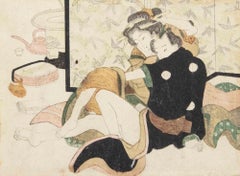
Shunga - Woodcut attr. Keisai Eisen - Mid-19th Century
By Keisai Eisen
Located in Roma, IT
Woodcut shunga print attributed to Keisai Eisen and realized in the early 19th century.
Good condition except for some signs of time.
Category
Mid-19th Century Modern Woodcut Figurative Prints
Materials
Woodcut
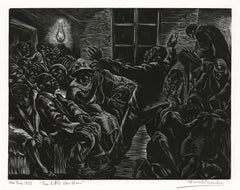
Run Little Chillun
also
Revival
— African American Subject
Located in Myrtle Beach, SC
Isac Friedlander, 'Run Little Chillun' also 'Revival', wood engraving, 1933, edition 50. Signed, titled and annotated 'New York 1933' in pencil. A sup...
Category
1930s American Modern Woodcut Figurative Prints
Materials
Woodcut
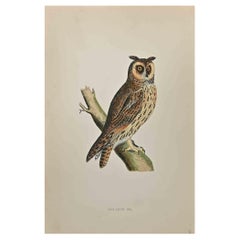
Long-Eared Owl - Woodcut Print by Alexander Francis Lydon - 1870
Located in Roma, IT
Long-Eared Owl is a modern artwork realized in 1870 by the British artist Alexander Francis Lydon (1836-1917) .
Woodcut print, hand colored, published by London, Bell & Sons, 1870....
Category
1870s Modern Woodcut Figurative Prints
Materials
Woodcut
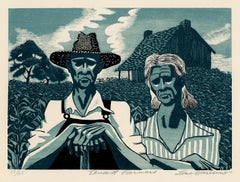
Tenant Farmers
— Depression Era, WPA
By Lou Barlow
Located in Myrtle Beach, SC
Lou Barlow (Louis Breslow), 'Tenant Farmers', color wood engraving, 1936, edition 25. Signed, titled, and numbered '15/25' in pencil. A superb, richly-inked impression, with fresh c...
Category
1930s American Modern Woodcut Figurative Prints
Materials
Woodcut
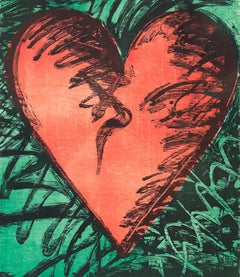
Rancho Woodcut Heart, 1982
By Jim Dine
Located in Palo Alto, CA
One of Jim Dine’s most iconic motifs, the romantic Rancho Woodcut Heart work illustrates the story of hope and love through a symbolic image of a large red heart. With the contrast o...
Category
1980s Modern Woodcut Figurative Prints
Materials
Woodcut
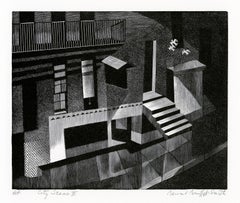
City Scene II — Mid-Century Modernism, Precisionism
Located in Myrtle Beach, SC
Bernard Brussel-Smith, 'City Scene II', wood engraving, 1949, artist's proof, edition 100. Signed, titled, and annotated 'A.P.' in pencil. A superb, richly-inked impression, on whit...
Category
1940s American Modern Woodcut Figurative Prints
Materials
Woodcut
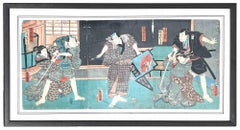
Kabuki Scene- Woodcut Print by Utagawa Kunisada - 1850s
Located in Roma, IT
Kabuki Scene is an original artwork realized in the mid 19th century by the Japanese master Utagawa Kunisada (1786-1865).
Color woodcut print. The artwork is a rare triptych (each ...
Category
Mid-19th Century Modern Woodcut Figurative Prints
Materials
Woodcut
"Lendas Africanas Da Bahia" from the suite.
Located in San Francisco, CA
This artwork titled " Lendas Africanas Da Bahia" from the suite, 1978, is an original colors woodcut by renown Brazilian/Argentinian artist Hector Julio Paride Barnabo Carybe, 1911-1997. It is hand signed and numbered 83/200 in pencil by the artist. The Wood block mark (image) is 23.65 x 15.75 inches, sheet size is 26.75 x 19 inches. It is in excellent condition, has never been framed. It will be shipped in a 8 inches diameter heavy duty tube.
About the artist:
Héctor Julio Páride Bernabó (7 February 1911 – 2 October 1997) was an Argentine-Brazilian artist, researcher, writer, historian and journalist. His nickname and artistic name, Carybé, a type of piranha, comes from his time in the scouts. He died of heart failure after the meeting of a candomblé community's lay board of directors, the Cruz Santa Opô Afonjá Society, of which he was a member.
Quick Facts Born, Died ...
Carybé
Born
Héctor Julio Páride Bernabó
7 February 1911
Lanús, Argentina
Died
2 October 1997 (aged 86)
Salvador, Bahia, Brazil
Nationality
Brazilian
Known for
Painter, engraver, draughtsman, illustrator, potter, sculptor, mural painter, researcher, historian and journalist
Close
He produced thousands of works, including paintings, drawings, sculptures and sketches. He was an Obá de Xangô, an honorary position at Ilê Axé Opô Afonjá.
Orixá Panels in the Afro-Brazilian Museum in Salvador
Some of Carybé's work can be found in the Afro-Brazilian Museum in Salvador: 27 cedar panels representing different orixás or divinities of the Afro-Brazilian religion candomblé. Each panel shows a divinity with their associated implements and animal. The work was commissioned by the former Banco da Bahia S.A., now Banco BBM S.A., which originally installed them in its branch on Avenida Sete de Setembro in 1968.
Murals at Miami International Airport
American Airlines, Odebrecht and the Miami-Dade Aviation Department partnered to install two of Carybé's murals at Miami International Airport. They have been displayed in the American Airlines terminal at John F. Kennedy International Airport in New York since 1960. The 16.5 x 53-foot murals were accredited when Carybé won the first and the second prize in a contest of public art pieces for JFK airport.
As its terminal at that airport was due for demolition, American Airlines donated the murals to Miami-Dade County, and Odebrecht invested in a project to remove, restore, transport and install the murals at Miami International Airport.
The mural "Rejoicing and Festival of the Americas" portrays colorful scenes from popular festivals throughout the Americas, and "Discovery and Settlement of the West" depicts the pioneers’ journey into the American West.
Carybé's Woodcuts in Gabriel García Márquez's Books
Carybé illustrated four books by the Colombian writer Gabriel García Márquez, including One Hundred Years of Solitude, The Autumn of the Patriarch, Chronicle of a Death Foretold, and Love in the Time of Cholera "Carybé: um mestre da cultura baiana". ArqBahia Arquitetura, design, arte e lifestyle (in Brazilian Portuguese). 26 April 2023.. In particular, the woodcuts in One Hundred Years of Solitude are well-known for providing a visual image of the fictional town of Macondo, where the story takes place. The illustrations depict the colorful and winding houses, the railway bridge, and the hot and humid climate of the region, contributing to the reader's immersion in the story.
Carybé's woodcuts are, therefore, an important part of Gabriel García Márquez's literary legacy, bringing a visual dimension to his stories that further enriches the reader's experience.
Timeline
1911 — Birth in Lanús, Argentina.
1919 — Moved to Brazil.
1921 — The name Carybé is first given to him by the Clube do Flamengo scouts group, in Rio de Janeiro.
1925 — Beginning of his artistic endeavours, going to the pottery workshop of his elder brother, Arnaldo Bernabó, in Rio de Janeiro.
1927–1929 — Studies at the National School of Fine Arts, in Rio de Janeiro.
1930 — Worked for the newspaper Noticias Gráficas, in Buenos Aires, Argentina.
1935–1936 — Works with the writer Julio Cortázar and as a draughtsman for the El Diario newspaper.
1938 — Sent to Salvador by newspaper Prégon.
1939 — First collective exhibition, with the artist Clemente Moreau, at the Buenos Aires City Museum of Fine Arts, Argentina; illustrates the book Macumba, Relatos de la Tierra Verde, by Bernardo Kardon, published by Tiempo Nuestro.
1940 — Illustrates the book Macunaíma, by Mário de Andrade.
1941 — Draws the Esso Almanach, the payment for which allows him to set on a long journey through Uruguay, Brazil, Bolivia, and Argentina.
1941–1942 — Study trip around several South American countries.
1942 — Illustration for the book La Carreta by Henrique Amorim, published by El Ateneo (Buenos Aires, Argentina).
1943 — Together with Raul Brié, translates the book Macunaíma, by Mário de Andrade, into Spanish; produces the illustrations for the works Maracatu, Motivos Típicos y Carnavalescos, by Newton Freitas, published by Pigmaleon, Luna Muerta, by Manoel Castilla, published by Schapire, and Amores de Juventud, by Casanova Callabero; also publishes and illustrates Me voy al Norte, for the quarterly magazine Libertad Creadora; awarded First Prize by the Cámara Argentina del Libro (Argentine Book Council) for the illustration of the book Juvenília, by Miguel Cané (Buenos Aires, Argentina).
1944 — Illustrates the books The Complete Poetry of Walt Whitmann and A Cabana do Pai Tomás, both published by Schapire ; as well as and Los Quatro Gigantes del Alma by Mira y Lopez, Salvador BA; attends capoeira classes, visits candomblé meetings and makes drawings and paintings.
1945 — Does the illustrations for Daniel Defoe's Robinson Crusoe, for the Viau publishing house.
1946 — Helps in setting up the Tribuna da Imprensa newspaper, in Rio de Janeiro.
1947 — Works for the O Diário Carioca newspaper, in Rio de Janeiro.
1948 — Produces texts and illustrations for the book Ajtuss, Ediciones Botella al Mar (Buenos Aires, Argentina).
1949–1950 — Invited by Carlos Lacerda to work at the Tribuna da Imprensa, in Rio de Janeiro.
1950 — Invited by the Education Secretary Anísio Teixeira, moves to Bahia, and produces two panels for the Carneiro Ribeiro Education Center (Park School), in Salvador, Bahia.
1950–1997 — Settles in Salvador, Bahia.
1950–1960 — Actively participate in the plastic arts renewal movement, alongside Mário Cravo Júnior, Genaro de Carvalho, and Jenner Augusto.
1951 — Produces texts and illustrations for the works of the Coleção Recôncavo, published by Tipografia Beneditina and illustrations for the book, Bahia, Imagens da Terra e do Povo, by Odorico Tavares, published by José Olímpio in Rio de Janeiro; for the latter work he receives the gold medal at the 1st Biennial of Books and Graphic Arts.
1952 — Makes roughly 1,600 drawings for the scenes of the movie O Cangaceiro, by Lima Barreto; also works as the art director and as an extra on the film (São Paulo, SP).
1953 — Illustrations for the book A Borboleta Amarela, by Rubem Braga, published by José Olímpio (Rio de Janeiro, RJ).
1955 — Illustrates the work O Torso da Baiana, edited by the Modern Art Museum of Bahia.
1957 — Produces etchings, with original designs, for the special edition of Mário de Andrade's Macunaíma, published by the Sociedade dos 100 Bibliófilos do Brasil.
1958 — Makes an oil painting mural for the Petrobras Office in New York, USA; illustrates the book As Três Mulheres de Xangô, by Zora Seljan, published by Editora G. R. D. (Rio de Janeiro, RJ); Receives a scholarship grant in New York, USA.
1959 — Takes part in the competition for the New York International Airport panels project, in New York, USA, winning first and second prizes.
1961 — Illustrates the book Jubiabá, by Jorge Amado, published by Martins Fontes (São Paulo, SP).
1963 — Awarded the title of Honorary Citizen of Salvador, Bahia.
1965 — Illustrates A Muito Leal e Heróica Cidade de São Sebastião do Rio de Janeiro, published by Raymundo Castro Maya (Rio de Janeiro, RJ).
1966 — With Jorge Amado, co-authors Bahia, Boa Terra Bahia, published by Image (Rio de Janeiro, RJ); writes and illustrates the book Olha o Boi, published by Cultrix (São Paulo, SP).
1967 — Receives the Odorico Tavares Prize – Best Plastic Artist of 1967, in a competition ran by the state government to stimulate the development of plastic arts in Bahia; makes the Orixás Panels for the Banco da Bahia (currently at the UFBA Afro-Brazilian Museum) (Salvador, BA).
1968 — Illustrates the books Carta de Pero Vaz de Caminha ao Rei Dom Manuel, published by Sabiá (Rio de Janeiro) and Capoeira Angolana, by Waldeloir Rego, published by Itapoã (Bahia).
1969 — Produces the illustrations for the book Ninguém Escreve ao Coronel, by Gabriel Garcia Marquez, published by Sabiá (Rio de Janeiro, RJ).
1970 — Illustrates the books O Enterro do Diabo and Os Funerais de Mamãe Grande, published by Sabiá (Rio de Janeiro, RJ), Agotimé her Legend, by Judith Gleason, published by Grossman Publishers (New York, USA).
1971 — Illustrates the books One Hundred Years of Solitude, by Gabriel Garcia Marquez and A Casa Verde by Mario Vargas Llosa, both published by Sabiá (Rio de Janeiro, RJ); produces texts and illustrations for the book Candomblé da Bahia, published by Brunner (São Paulo, SP).
1973 — Illustrations for Gabriel Garcia Marquez's A Incrível e Triste História de Cândida Erendira e sua Avó Desalmada (Rio de Janeiro, RJ); paints the mural for the Legislative Assembly and the panel for the Bahia State Secretary of the Treasury.
1974 — Produces woodcuts for the book Visitações da Bahia, published by Onile.
1976 — Illustrates the book O Gato Malhado e a Andorinha Sinhá: uma história de amor, by Jorge Amado (Salvador, BA); receives the title of Knight of the Order of Merit of Bahia.
1977 — Certified with the Honor for Afro-Brazilian Cult Spiritual Merit, Xangô das Pedrinhas ao Obá de Xangô Carybé (Magé, RJ).
1978 — Makes the concrete sculpture Oxóssi, in the Catacumba Park; illustrates the book A Morte e a Morte de Quincas Berro D´Água, by Jorge Amado, published by Edições Alumbramento (Rio de Janeiro, RJ).
1979 — Produces woodcuts for the book Sete Lendas Africanas da Bahia, published by Onile.
1980 — Designs the costumes and scenery for the ballet Quincas Berro D´Água, at the Teatro Municipal in Rio de Janeiro.
1981 — Publication of the book Iconografia dos Deuses Africanos no Candomblé da Bahia (Ed. Raízes), following thirty years of research.
1982 — Receives the title of Honorary Doctor of the Federal University of Bahia.
1983 — Makes the panel for the Brazilian Embassy in Lagos, Nigeria.
1984 — Receives the Jerônimo Monteiro Commendation – Level of Knight (Espírito Santo); receives the Castro Alves Medal of Merit, granted by the UFBA Academy of Arts and Letters; makes the bronze sculpture Homenagem à mulher baiana (Homage to the Bahian woman), at the Iguatemi Shopping Center (Salvador, BA).
1985 — Designs the costumes and sets for the spectacle La Bohème, at the Castro Alves Theater; illustrates the book Lendas Africanas dos Orixás, by Pierre Verger, published by Currupio.
1992 — Illustrates the book O sumiço da santa: uma história de feitiçaria, by Jorge Amado (Rio de Janeiro, RJ).
1995 — Illustration of the book O uso das plantas na sociedade iorubá, by Pierre Verger (São Paulo, SP).
1996 — Making of the short film Capeta Carybé, by Agnaldo Siri Azevedo, adapted from the book O Capeta Carybé, by Jorge Amado, about the artist Carybé, who was born in Argentina and became the most Bahian of all Brazilians.
1997 — Illustration of the book Poesias de Castro Alves.
Exhibitions
ммIndividual Exhibitions:
1943 — Buenos Aires (Argentina) — First individual exhibition, at the Nordiska Gallery
1944 — Salta (Argentina) — at the Consejo General de Educacion
1945 — Salta (Argentina) — Amigos del Arte, Buenos Aires (Argentina) — Motivos de América, at the Amauta Gallery, Rio de Janeiro RJ — individual exhibition at the IAB/RJ
1947 — Salta (Argentina) — Agrupación Cultural Femenina
1950 — Salvador BA — First individual exhibit in Bahia, at the Bar Anjo Azul; São Paulo SP — MASP.
1952 — São Paulo SP — MAM/SP
1954 — Salvador BA — Oxumaré Gallery
1957 — New York (USA) — Bodley Gallery; Buenos Aires (Argentina) — Bonino Gallery * 1958 - New York (USA) — Bodley Gallery
1962 — Salvador BA - MAM/BA
1963 — Rio de Janeiro RJ — Bonino Gallery
1965 — Rio de Janeiro RJ — Bonino Gallery
1966 — São Paulo SP — Astrea Gallery
1967 — Rio de Janeiro RJ — Santa Rosa Gallery
1969 — London (England) — Varig Airlines
1970 — Rio de Janeiro RJ — Galeria da Praça
1971 — Rio de Janeiro RJ — MAM/RJ, São Paulo SP — A Galeria; Belo Horizonte MG, Brasília DF, Curitiba PR, Florianopolis SC, Porto Alegre RS, Rio de Janeiro RJ and São Paulo SP — The Orixás Panel (exhibition tour), at the Casa da Cultura in Belo Horizonte, MAM/DF, the Public Library of Paraná, the Legislative Assembly of Santa Catarina State, the Legislative Assembly of Rio Grande do Sul, MAM/RJ and MAM/SP
1972 — The Orixás Panel in Fortaleza CE — at the Ceará Federal University Art Museum, and in Recife PE — at the Santa Isabel Theater
1973 — São Paulo SP — A Galeria
1976 — Salvador BA — at the Church of the Nossa Senhora do Carmo Convent
1980 — São Paulo SP — A Galeria
1981 — Lisbon (Portugal) — Cassino Estoril
1982 — São Paulo SP — Renot Art Gallery, São Paulo SP — A Galeria
1983 — New York (USA) — Iconografia dos Deuses Africanos no Candomblé da Bahia, The Caribbean Cultural Center
1984 — Philadelphia (USA) — Art Institute of Philadelphia; Mexico — Museo Nacional de Las Culturas; São Paulo SP — Galeria de Arte André
1986 — Lisbon (Portugal) — Cassino Estoril; Salvador BA — As Artes de Carybé, Núcleo de Artes Desenbanco
1989 — Lisbon (Portugal) — Cassino Estoril; São Paulo SP — MASP
1995 — São Paulo SP — Documenta Galeria de Arte, São Paulo SP — Casa das Artes Galeria, Campinas SP — Galeria Croqui, Curitiba PR — Galeria de Arte Fraletti e Rubbo, Belo Horizonte MG — Nuance Galeria de Arte, Foz do Iguaçu PR — Ita Galeria de Arte, Porto Alegre RS — Bublitz Decaedro Galeria de Artes, Cuiabá MT — Só Vi Arte Galeria, Goiânia GO — Época Galeria de Arte, São Paulo SP — Artebela Galeria Arte Molduras, Fortaleza CE — Galeria Casa D'Arte, Salvador BA — Oxum Casa de Arte
Collective Exhibitions:
1939 — Buenos Aires (Argentina) — Carybé and Clemente Moreau Exhibition, at the Museo Municipal de Belas Artes
1943 — Buenos Aires (Argentina) — 29th Salon de Acuarelistas y Grabadores — first prize
1946 — Buenos Aires (Argentina) — Drawings by Argentine Artists, at the Kraft Gallery
1948 — Washington (USA) — Artists of Argentina, at the Pan American Union Gallery
1949 — Buenos Aires (Argentina) — Carybé and Gertrudis Chale, at the Viau Gallery; Salvador BA — Bahian Showroom of Fine Arts, at the Hotel Bahia
1950 — Salvador BA — 2nd Bahian Showroom of Fine Arts; São Paulo SP — MAM/SP
1951 — São Paulo SP — 1st São Paulo Art Biennial, Trianon Pavilion.
1952 — Salvador BA — 3rd Bahian Showroom of Fine Arts, at Belvedere da Sé; São Paulo SP — MAM/SP
1953 — Recife PE — Mario Cravo Júnior and Carybé, at the Santa Isabel Theater; São Paulo SP — 2nd São Paulo Art Biennial, at MAM/SP
1954 — Salvador BA — 4th Bahian Showroom of Fine Arts, at the Hotel Bahia. — Bronze medal
1955 — São Paulo SP — 3rd São Paulo Art Biennial, at MAM/SP — first prize for drawing
1956 — Salvador BA — Modern Artists of Bahia, at the Oxumaré Gallery; Venice (Italy) — 28th Venice Biennial
1957 — Rio de Janeiro RJ — 6th National Modern Art Show — exemption from the jury; São Paulo SP — Artists from Bahia, at the MAM/SP
1958 — San Francisco (USA) — Works by Brazilian Artists, at the Fine Arts Museums of San Francisco, Washington and New York (USA) — Works by Brazilian Artists, at the Pan American Union and the MoMA
1959 — Seattle (USA) — 30th International Exhibition, at the Seattle Art Museum; Salvador BA — Modern Artists of Bahia, at the Dentistry School.
1961 — São Paulo SP — 6th São Paulo Art Biennial, at MAM/SP — special room
1963 — Lagos (Nigeria) — Brazilian Contemporary Artists, at the Nigerian Museum; São Paulo SP — 7th São Paulo Art Biennial Bienal, at the Fundação Bienal
1964 — Salvador BA — Christmas Exhibition, at the Galeria Querino
1966 — Baghdad (Iraq) — collective exhibition sponsored by the Calouste Gulbenkian Foundation; Madrid (Spain) — Artists of Bahia, at the Hispanic Culture Institute; Rome (Italy) — Piero Cartona Palace; Salvador BA — 1st National Biennial of Plastic Arts (Bienal da Bahia) — special room; Salvador BA — Draughtsmen of Bahia, at the Convivium Gallery
1967 — Salvador BA — Christmas Exhibition at the Panorama Art Gallery; São Paulo SP — Artists of Bahia, at the A Gallery
1968 — São Paulo SP — Bahian Artists, at the A Gallery
1969 — London (England) — Tryon Gallery; São Paulo SP — 1st Panorama of Current Brazilian Art at the MAM/SP; São Paulo SP — Carybé, Carlos Bastos...
Category
Late 20th Century Modern Woodcut Figurative Prints
Materials
Woodcut
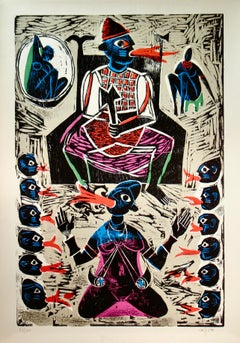
Life in the Sea : Mermaid Maternity - Original wooodcut, Handsigned
Numbered
Located in Paris, IDF
Henri AMEDEE-WETTER (1869-1929)
Life in the Sea : Mermaid Maternity, 1922
Original woodcut
Handsigned in pencil
Numbered /105
On vellum 32.5 x 25.5 cm (c. 13 x 10 in)
Bears the blin...
Category
1920s Modern Woodcut Figurative Prints
Materials
Woodcut
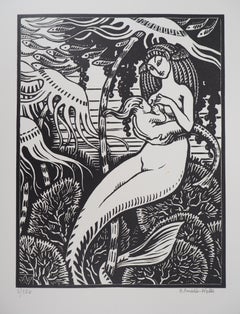
Bijinga - Woodcut print by Utagawa Kunisada - 1844
Located in Roma, IT
Bijinga is an original artwork realized in 1844 by Utagawa Kunisada (1786-1865).
From the series "Hyakunin isshu esho" (Girl's pictures and 100 poets' card games), 14th sheet.
You...
Category
1840s Modern Woodcut Figurative Prints
Materials
Woodcut
Woodcut figurative prints for sale on 1stDibs.
Find a wide variety of authentic Woodcut figurative prints available on 1stDibs. While artists have worked in this medium across a range of time periods, art made with this material during the 21st Century is especially popular. If you’re looking to add figurative prints created with this material to introduce a provocative pop of color and texture to an otherwise neutral space in your home, the works available on 1stDibs include elements of orange, yellow, blue, green and other colors. There are many well-known artists whose body of work includes ceramic sculptures. Popular artists on 1stDibs associated with pieces like this include Salvador Dalí, Mino Maccari, Michel Fingesten, and Utagawa Kunisada (Toyokuni III). Frequently made by artists working in the Modern, Surrealist, all of these pieces for sale are unique and many will draw the attention of guests in your home. Not every interior allows for large Woodcut figurative prints, so small editions measuring 0.04 inches across are also available
Recently Viewed
View AllMore Ways To Browse
Edmund F Ward
Edna Manley
Eduardo Roca
Edward B Gay
Edward Hopper Oil Painting
Edward Simmons
Edwin Lord Weeks
Elizabeth Enders
Elizabeth Horning
Emil Holzhauer
England Church Oil Painting
English Deer Painting
English Fox Hunt Painting
English Toy Terrier
Enrique Martinez Celaya
Eric Aho
Eritrea Art
Ernest Chateignon