1910s Figurative Prints
to
44
372
63
83
18
19
Overall Width
to
Overall Height
to
180
64
22
14
6
2
1
1
1
102
34
22
17
17
3,663
7,758
25,337
6,712
287
586
1,469
1,206
1,098
2,064
3,053
5,176
3,154
1,616
3,110
359
193
3
511
252
235
197
158
122
118
68
68
64
47
39
36
25
24
22
18
16
16
14
195
169
130
111
76
39
191
255
234
Period: 1910s
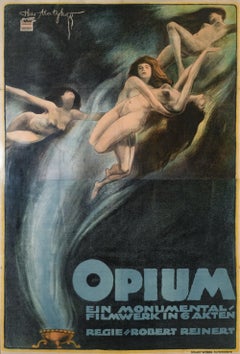
"Opium" Lithograph Poster by Theo Matejko
By Theo Matejko
Located in Palm Beach, FL
Frame is handmade by artist Gail Potocki.
WEAG-Matejko, Printer, Vienna
"In 1919, artist Theo Matejko created this lithograph for Robert Reinert's silent film Opium (starring Conra...
Category
Expressionist 1910s Figurative Prints
Materials
Lithograph
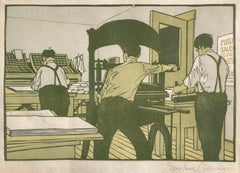
The Print Shop
Located in Santa Monica, CA
GUSTAVE BAUMANN (1881 – 1971)
THE PRINT SHOP 1910 (Chamberlain 27)
Color woodcut signed in pencil. Unnumbed from an edition 100 as published in the
Hills o’ Brown Portfolio, (plate 11 of 12). Image 9 x 13 1/8, sheet 10 ¼ x 13 7/8 with
deckle edge at the bottom. The print portrays the Brown County...
Category
American Modern 1910s Figurative Prints
Materials
Lithograph
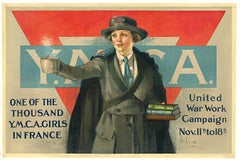
Original YMCA United War Work Campaign vintage World War 1 poster
By Neysa McMein
Located in Spokane, WA
Original 1918 YMCA, One of the Thousands of YMCA Girls in France. United War Work Campaign vintage poster. Archival linen backed and ready to frame. Some touch up in the lower b...
Category
American Realist 1910s Figurative Prints
Materials
Lithograph
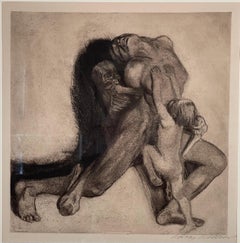
TOD UND FRAU (DEATH AND WOMAN)
Located in Portland, ME
Kollwitz, Kathe. TOD UND FRAU (DEATH AND WOMAN). Knesebeck 107, State VII; Klipstein 103. Line etching, drypoint, sandpaper, soft ground with imprint of granulated tone paper and Zie...
Category
1910s Figurative Prints
Materials
Drypoint, Etching
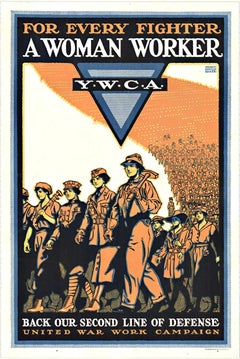
Original For Every Fighter A Woman Worker, Y.W.C.A. vintage poster WW1
Located in Spokane, WA
For Every Fighter a Woman Worker. Original vintage poster. Linen Lined. Very good condition. Artist: Ernest Hamlin Baker. Size: 28" x 42". Year: 1918 Linen backed trimme...
Category
American Modern 1910s Figurative Prints
Materials
Lithograph

$1,000 Sale Price
20% Off
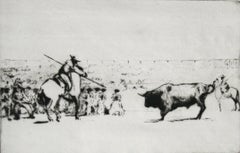
The Picador Incites the Bull.
By James McBey
Located in Plano, TX
The Picador Incites the Bull. 1911. Drypoint. Hardie 104. 6 1/4 x 9 7/8 (sheet 8 1/4 x 11 7/8). Edition 30, #5. Slight mat line, 1 hinge stain in the lower margin, well outside the i...
Category
Modern 1910s Figurative Prints
Materials
Drypoint
$1,200 Sale Price
27% Off
Pablo Picasso, L
Abreuvoir from La Suite Saltimbanques
Located in Chatsworth, CA
This piece is an original drypoint created by Pablo Picasso in 1905 and printed by Ambroise Vollard after steel-facing in 1913. It is from a series entitled La Suite des Saltimbanque...
Category
Surrealist 1910s Figurative Prints
Materials
Drypoint
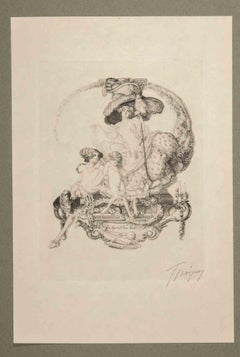
Bayros-Mappe III - Héliogravure by Fraz von Bayros - 1913
Located in Roma, IT
Héliogravure on japanese paper realized by Fraz von Bayros in 1913 for Ex Libris Verlag K. Th. Senger, Munich.
Mounted on passepartout. Edition of 260, hand signed in pencil by the ...
Category
Symbolist 1910s Figurative Prints
Materials
Photogravure
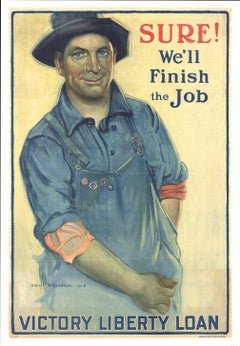
Original 1918, Sure! We
ll Finish the Job, Victory Liberty Loan, vintage poster
Located in Spokane, WA
Original 1918 Gerrit A. Beneker "Sure! We'll Finish the Job" Victory Liberty Loan Poster, archival linen-backed in good condition, ready to frame. Grade B+
An iconic and authentic ...
Category
American Modern 1910s Figurative Prints
Materials
Lithograph
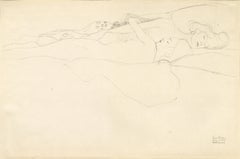
Gustav Klimt "Woman in Boa" collotype from Funfundzwanzig Handzeichnungen
By Gustav Klimt
Located in Palm Beach, FL
Title page numbered: 263/450. Includes handmade, gold-leaf frame.
Category
Vienna Secession 1910s Figurative Prints
Materials
Paper

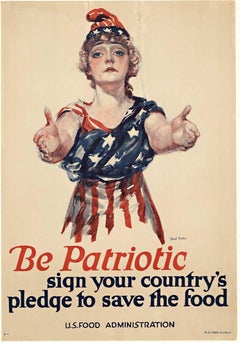
Original "Be Patriotic sign your country
s pledge to save the food" poster
Located in Spokane, WA
Original WW1 poster: "Be Patriotic sign your country's pledge to save the food." U. S. Food Administration. Miss Liberty calls with outstretch...
Category
American Realist 1910s Figurative Prints
Materials
Lithograph
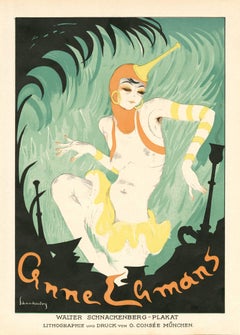
Kostume, Plakate, und Dekorationen, "Anne Lemans"
Located in Palm Beach, FL
Walter Schnackenberg’s style changed several times during his long and successful career. Having studied in Munich, the artist traveled often to Paris where he fell under the spell of the Henri de Toulouse-Lautrec’s colorful and sensuous posters depicting theatrical and decadent subjects. Schnackenberg became a regular contributor of similar compositions to the German magazines Jugend and Simplicissimus before devoting himself to the design of stage scenery and costumes. In the artist’s theatrical work, his mastery of form, ornamentation, and Orientalism became increasingly evident. He excelled at combining fluid Art Nouveau outlines, with spiky Expressionist passages, and the postures and patterns of the mysterious East.
In his later years, Schnackenberg explored the unconscious, using surreal subject matter and paler colors that plainly portrayed dreams and visions, some imbued with political connotations. His drawings, illustrations, folio prints, and posters are highly sought today for their exceedingly imaginative qualities, enchanting subject matter, and arresting use of color.
SCHNACKENBERG: KOSTUME, PLAKATE UND DEKORATIONEN, a cardboard bound art book consisting of 43 prints of work by Walter Schnackenberg, 30 of which are color lithographs that are signed and some are titled and dated in the plate, as well as black and white prints and photographs with accompanying text by Oskar Bie; lithographs printed at Kunstanstalt Oskar Consee in Munich, other images printed by Gesellschaft Pick & Co. in Munich, the text and cover with color images by Schnackenberg front and verso printed by R. Oldenbourg in Munich; published by Musarion Verlag, Munich, 1920.
The majority of Walter Schnackenberg’s artistic output was destroyed by bomb attacks in Munich in 1944. The highly publicized 2013 auction in New York of the recovered pre-war poster collection once belonging to German poster aficionado, Hans Sachs has reintroduced the world to Walter Schnackenberg’s graphic genius and priceless ephemeral art from a lost era. Besides the museum world, designer Karl Lagerfeld is one of the most prodigious collectors of Schnackenberg. Flipping through the pages of Kostume, Plakate und Dekorationen, it becomes quite clear that Schnackenberg’s collection is ground zero at the crossroads of early modern fashion where the cult of celebrity meets up with dance, music, theater and cabaret, film and the graphic medium. Berlin and Munich under Germany’s Weimar Republic in the first quarter of the 20th century produced just the atmosphere to feed this burgeoning industry. Rising inflation sparked a recklessness to live large for the moment and heightened a desire for escapism. An influx of Indian and East Asian dancers and musicians added to the artsy bohemian cultural mix. A new decadence and tolerance resulted. Film boldly featured provocative subject matter. Cabarets became popular venues giving rise to the demi-monde in which people from all social stations mixed more freely in a thriving underground economy and culture where there was a blurring of boundaries and of social codes. Noted art historian and cultural doyen, Oskar Bie astutely observes in his introduction to Schnackenberg’s publication that what unites the images is fantasy and advertisement. Schnackenberg uses the eye as an instrument to brilliantly construct and convey this double message. His personages never directly confront the viewer. Their eyes gaze off in the distance like those of the screenplayer and film star Hedamaria Scholz in Schnackenberg’s “Die Rodelhexe” movie poster. Their eyes follow the path of a dance composition or become a transfixed and ogling male gaze such as the iconic 1911 Odeon Casino...
Category
Expressionist 1910s Figurative Prints
Materials
Lithograph
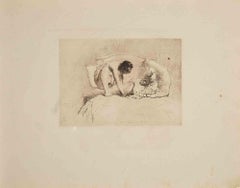
Erotic Scene - Héliogravure by Micheal Von Zichy - 1911
Located in Roma, IT
Erotic scene is an original Héliogravure artwork on ivory-colored paper, realized by Micheal Von Zichy in 1911. Printed in only 300 copies, Leipzig; Privatdruck, from the Catalogue "Liebe" (Dear), Text in German on the plate, The drawing created unusually bold erotic subjects through deft strokes.
Good conditions.
Mihály Zichy...
Category
Modern 1910s Figurative Prints
Materials
Paper, Engraving
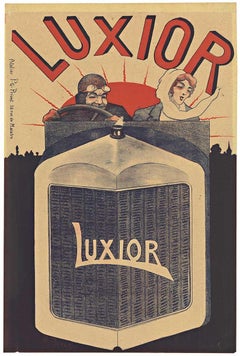
LUXIOR Automobile early automotive original vintage poster
Located in Spokane, WA
LUXIOR. Original antique French turn of the century rare antique automobile poster. Printer / atelier:: Henri Privat Livemont. Size: 15.75" ...
Category
Art Nouveau 1910s Figurative Prints
Materials
Lithograph
$1,036 Sale Price
20% Off
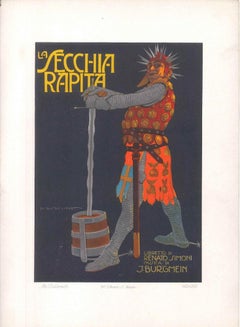
La Secchia Rapita - Original Advertising Lithograph by Marcello Dudovich - 1910s
Located in Roma, IT
Image dimensions. 26x18 cm.
La Secchia Rapita is a beautiful and rare color lithograph printed by Ricordi, Milan, in 1910.
A nice poster for "La Secchia Rapita", by Alessandro Tass...
Category
Art Nouveau 1910s Figurative Prints
Materials
Lithograph
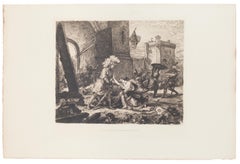
La Delivrance De La Princesse Olga - Etching by M.Roux after E. Delacroix - 1911
Located in Roma, IT
Image dimensions: 24 x 28 cm.
La Delivrance De La Princesse Olga is an original print in etching technique on ivory-colored paper, realized by M. Roux after Eugène Delacroix .
In v...
Category
Romantic 1910s Figurative Prints
Materials
Lithograph
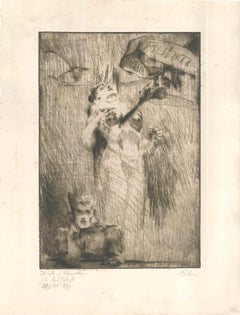
Mein Weg mit dem Weib, plate 7
Located in Roma, IT
Drypoint and aquatint (brown ink) on cream paper.
Signed in pencil on the lower right margin. Titled and numbered in pencil on the lower left margin. Edition of 25 prints. From the s...
Category
Modern 1910s Figurative Prints
Materials
Aquatint, Drypoint
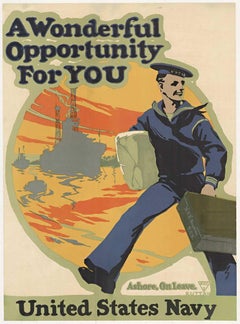
Original A Wonderful Opportunity for You, United States Navy 1917 vintage poster
Located in Spokane, WA
Original WW1 poster: A Wonderful Opportunity for You. Ashore, on leave. United States Navy. A pre-war recruiting lithographic poster features an ebullient sailor going home o...
Category
American Modern 1910s Figurative Prints
Materials
Lithograph
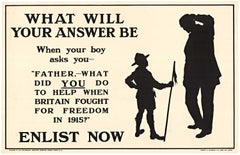
"What Will Your Answer Be" What did YOU do to help. original vintage poster
Located in Spokane, WA
Original, WHAT WILL YOUR ANSWER BE when your boy asks you -- "Father, - what did you do to help when Britain fought for freedom in 1916?" horizontal, linen-backed, excellent condition ENLIST NOW.
Poster showing, in silhouette, a boy in scout uniform addressing his father. This poster was also printed with the same text but using "Ireland" in the text. Iconic British World War 1...
Category
American Impressionist 1910s Figurative Prints
Materials
Lithograph
$1,000 Sale Price
20% Off
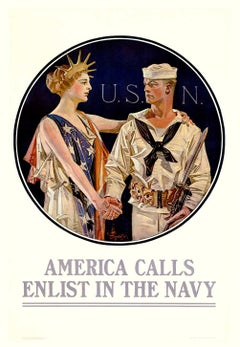
Original America Calls Enlist in the Navy, U. S. N. vintage WW1 poster linen
Located in Spokane, WA
Original 1917 J.C. Leyendecker "America Calls – Enlist in the Navy" WWI Recruitment Authentic vintage poster. Archival linen-backed and ready to frame. Reference: Rawls p. 74, Theofi...
Category
Art Deco 1910s Figurative Prints
Materials
Lithograph
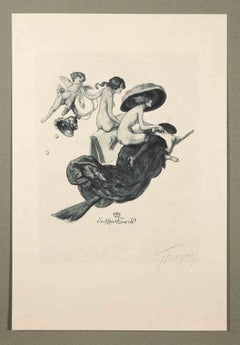
Bayros-Mappe III - Héliogravure by Fraz von Bayros - 1913
Located in Roma, IT
Héliogravure on japanese paper realized by Fraz von Bayros in 1913 for Ex Libris Verlag K. Th. Senger, Munich.
Mounted on passepartout. Edition of 260, hand signed in pencil by the ...
Category
Symbolist 1910s Figurative Prints
Materials
Photogravure
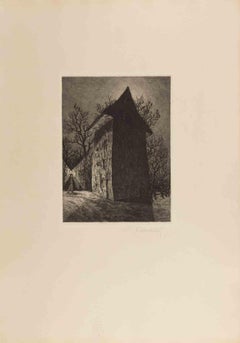
Verlassene Muhle - Etching by Fritz Schwimbeck - 1918
Located in Roma, IT
Etching realized by Fritz Schwimbeck in 1918.
Edition of 125 realized in Munich on mulberry paper.
Hand signed in pencil.
Category
Symbolist 1910s Figurative Prints
Materials
Etching
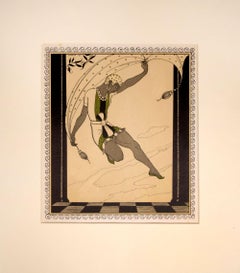
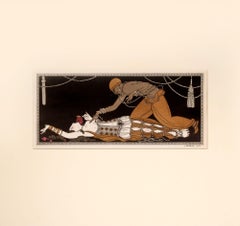
Nijinsky in Cleopatre.
Located in London, London
BARBIER, George.
Nijinsky in Cleopatre.
London, C. W. Beaumont, 1913.
‘The designs, although somewhat fantastic in treatment, do convey the impression produced by Nijinsky in hi...
Category
Art Nouveau 1910s Figurative Prints
Materials
Lithograph
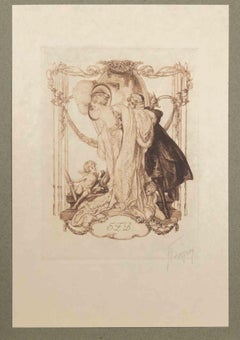
Bayros-Mappe III - Héliogravu by Fraz von Bayros - 1913
Located in Roma, IT
Héliogravure on japanese paper realized by Fraz von Bayros in 1913 for Ex Libris Verlag K. Th. Senger, Munich.
Mounted on passepartout. Edition of 260, hand signed in pencil by the ...
Category
Symbolist 1910s Figurative Prints
Materials
Photogravure
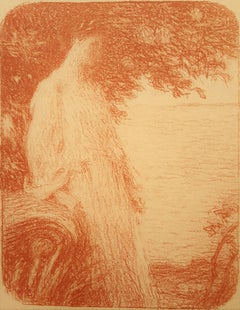
Sicile (Sicily) /// French Impressionist Lithograph Modern Figurative Lady Art
Located in Saint Augustine, FL
Artist: Ernest Joseph Laurent (French, 1859-1929)
Title: "Sicile (Sicily)"
Portfolio: Gazette Des Beaux-Arts
*Issued unsigned, though monogram signed by Laurent in the plate (printed...
Category
Impressionist 1910s Figurative Prints
Materials
Lithograph
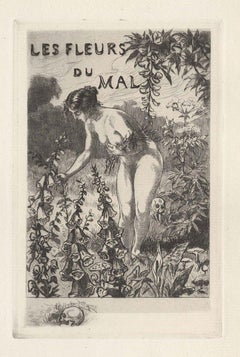
Les Fleurs du Mal - Complete Series of 12 etchings by M. Van Maele - 1917
By Martin Van Maele
Located in Roma, IT
Les Fleurs du Mal is an original series of 12 etching, realized by Martin Van Maele in 1917, illustrations for Charles Baudelaire’s poems, printed by La Bibliothèque des Curieux, loose leaves each of them.
The artworks are illustreting of Les Fleurs du mal "The Flowers of Evil" that is well-known poetry written by Charles Baudelaire, Which first published in 1857 that was important in the symbolist and has a great impact on modernist movement of the era.
In very good conditions.
Maurice François...
Category
Symbolist 1910s Figurative Prints
Materials
Etching
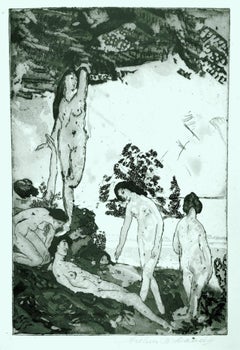
Against Green
Located in New York, NY
Arthur B. Davies (1862-1928), Against Green (also Three Figure Composition, Figures Against Green), soft ground etching and aquatint, 1918, signed in pencil lower right; also titled ...
Category
American Impressionist 1910s Figurative Prints
Materials
Etching, Aquatint
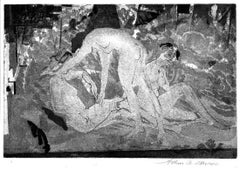
By the Sea (aka Idyll)
Located in New York, NY
Arthur B. Davies (1862-1928), By the Sea (aka Idyll), soft ground etching and aquatint, 1919, signed in pencil lower right. Reference: Czestochowski 72, fourth state (of 5; see disc...
Category
American Impressionist 1910s Figurative Prints
Materials
Etching, Aquatint
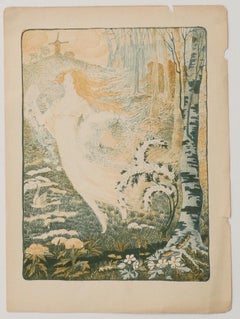
Fairy - Original Lithograph on Paper by Gérard Roojen - 1918
Located in Roma, IT
Fairy is an original lithograph on paper realized by Gérard Roojen (1869-1935), in 1918.
Signed on the plate on the rear with description" le Musée du Livre 43-46-1918"
In good con...
Category
Contemporary 1910s Figurative Prints
Materials
Lithograph
Bayros-Mappe III - Héliogravure by Fraz von Bayros - 1913
Located in Roma, IT
Héliogravure on japanese paper realized by Fraz von Bayros in 1913 for Ex Libris Verlag K. Th. Senger, Munich.
Mounted on passepartout. Edition of 260, hand signed in pencil by the ...
Category
Symbolist 1910s Figurative Prints
Materials
Photogravure
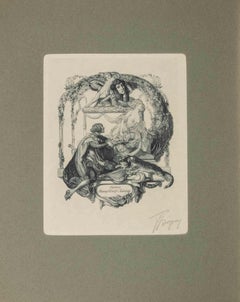
Bayros-Mappe III - Héliogravure by Fraz von Bayros - 1913
Located in Roma, IT
Héliogravure on japanese paper realized by Fraz von Bayros in 1913 for Ex Libris Verlag K. Th. Senger, Munich.
Mounted on passepartout. Edition of 260, hand signed in pencil by the ...
Category
Symbolist 1910s Figurative Prints
Materials
Photogravure

Bayros-Mappe III - Héliogravure by Fraz von Bayros - 1913
Located in Roma, IT
Héliogravure on japanese paper realized by Fraz von Bayros in 1913 for Ex Libris Verlag K. Th. Senger, Munich.
Mounted on passepartout. Edition of 260, hand signed in pencil by the ...
Category
Symbolist 1910s Figurative Prints
Materials
Photogravure
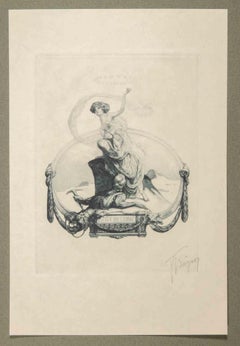
Bayros-Mappe III - Héliogravure by Fraz von Bayros - 1913
Located in Roma, IT
Héliogravure on japanese paper realized by Fraz von Bayros in 1913 for Ex Libris Verlag K. Th. Senger, Munich.
Mounted on passepartout. Edition of 260, hand signed in pencil by the ...
Category
Symbolist 1910s Figurative Prints
Materials
Photogravure
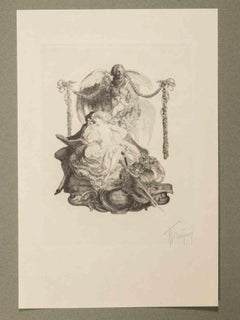
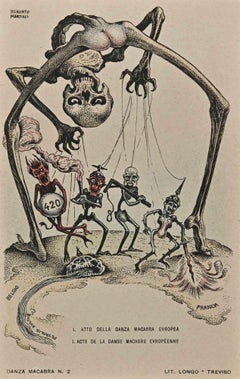
The European Macabre Dance N.2 - Lithograph by A. Martini - 1915
Located in Roma, IT
The European Macabre Dance N.2 is an hand-colored lithograph, from the Series "La Danza Macabra Europea" illustrated by Alberto Martini (Oderzo, 1876 – Milan, 1954) in 1915.
Signed...
Category
Symbolist 1910s Figurative Prints
Materials
Lithograph
Melanie Schiele
By Egon Schiele
Located in Roma, IT
This lithograph from the portfolio "Egon Schiele" is a reproduction of "Melanie Schiele", an original artwork realized by Egon Schiele in 1906. The portfolio, that includes 10 lithog...
Category
Modern 1910s Figurative Prints
Materials
Lithograph
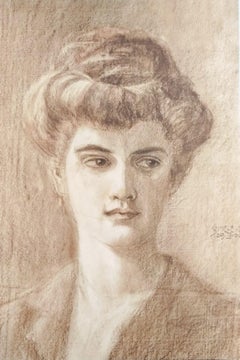
Liegender Weiblicher Akt Mit Kuh Und Ziege Expressionist Woodcut
Located in Eltville am Rhein, DE
Heinrich Campendonk
Krefeld 1889 - 1957 Amsterdam
Reclining female nude with cow and goat, 1918
Woodcut on Japanese paper
Signed and dedicated in pencil lower left "for Lasar Segall ...
Category
Blue Rider 1910s Figurative Prints
Materials
Woodcut
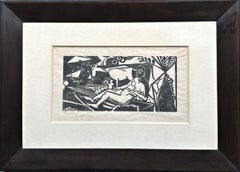
Nijinsky as
the poet
in Les Sylphides.
Located in London, London
BARBIER, George.
Nijinsky as 'the poet' in Les Sylphides.
London, C. W. Beaumont, 1913.
‘The designs, although somewhat fantastic in treatment, do convey the impression produced b...
Category
Art Nouveau 1910s Figurative Prints
Materials
Lithograph
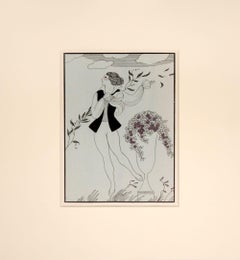
Sur la Grève - Original Lithograph by L. von Hoffmann - 1910 ca.
Located in Roma, IT
Sur la Grève is a red lithograph realized by the German artist Ludwig von Hofmann. It was published in the Gazette des Beaux Arts in 1910 (cfr.n. 1910.12 of the catalog Sanchez Seydo...
Category
1910s Figurative Prints
Materials
Lithograph
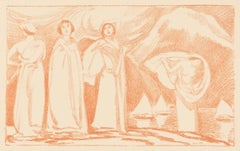
Nijinsky in Scheherazade.
Located in London, London
BARBIER, George.
Nijinsky in Scheherazade.
London, C. W. Beaumont, 1913.
‘The designs, although somewhat fantastic in treatment, do convey the impression produced by Nijinsky in h...
Category
Art Nouveau 1910s Figurative Prints
Materials
Lithograph
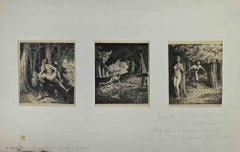
Echo et Narcisse - Lithograph by Auguste Roubille - 1911
Located in Roma, IT
Echo et Narcisse is an artwok realized in 1911, by the French Artist Auguste Roubille (1872-1955).
Three Lithographs print on paper, cm 20x15 cad. Signed in plate. The artwork is p...
Category
Modern 1910s Figurative Prints
Materials
Lithograph
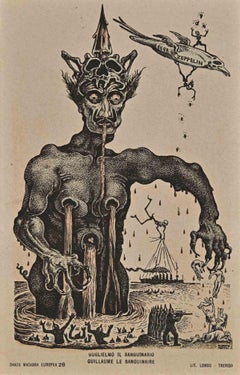
The European Macabre Dance N.28 - Lithograph by A. Martini - 1915
Located in Roma, IT
The European Macabre Dance N.28 is a hand-colored lithograph, from the Series "La Danza Macabra Europea" illustrated by Alberto Martini (Oderzo, 1876 – Milan, 1954) in 1915.
Signed...
Category
Symbolist 1910s Figurative Prints
Materials
Lithograph
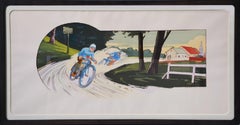
Cycles Motos Alcyon.
Located in London, London
GAMY and MONTAUT, Ernest.
Cycles Motos Alcyon.
[Paris: Mabileau & Co., c. 1914].
Hand-coloured pochoir print. Framed and glazed, overall size: 93.6cm x 49.2cm.
The Gamy-Montaut ...
Category
Art Deco 1910s Figurative Prints
Materials
Screen, Stencil
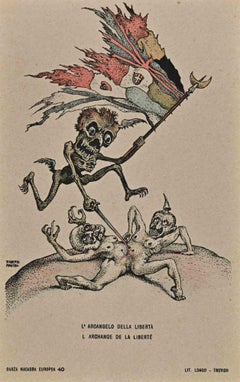
The European Macabre Dance N.40 - Lithograph by A. Martini - 1915
Located in Roma, IT
The European Macabre Dance N.40 is a hand-colored lithograph, from the Series "La Danza Macabra Europea" illustrated by Alberto Martini (Oderzo, 1876 – Milan, 1954) in 1915.
Signed on the plate, Original Edition.
Published by Domenico Longo, Treviso.
Handcolored lithographic postcards.
Very good conditions.
Alberto Martini (Oderzo, 1876 - Milan, 1954); was an Italian draftsman, painter, engraver and illustrator, forerunner of the surrealist movement...
Category
Symbolist 1910s Figurative Prints
Materials
Lithograph
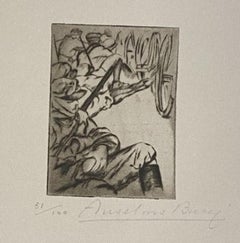
Military - Etching by Anselmo Bucci - 1917
Located in Roma, IT
"Military" 1917s is a beautiful print in etching technique, realized by Anselmo Bucci (1887-1955).
Hand signed. Numbered 61/100 of prints on the lower left. On the lower left corner...
Category
Modern 1910s Figurative Prints
Materials
Etching
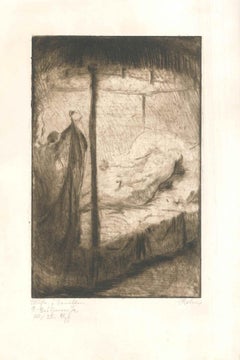
Mein Weg mit dem Weib - Original Etching by W.R. Rehn
Located in Roma, IT
Etching and aquatint on cream paper.
Signed in pencil on the lower right margin. Titled and numbered in pencil on the lower left margin. Edition of 25 prints.
Plate in excellent co...
Category
Symbolist 1910s Figurative Prints
Materials
Drypoint, Aquatint
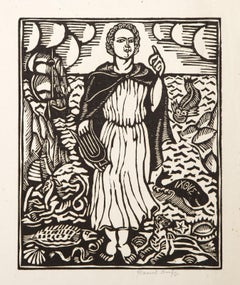
L
Amour La Danse, Impressionist Woodcut by Raoul Dufy
By Raoul Dufy
Located in Long Island City, NY
Raoul Dufy, French (1877 - 1953) - L'Amour La Danse, Year: 1915, Medium: Woodcut on laid paper, signed in pencil, Image Size: 10 x 8 inches, Size: 14.25 x 13.5 in. (36.2 x 34.29 cm...
Category
Impressionist 1910s Figurative Prints
Materials
Woodcut
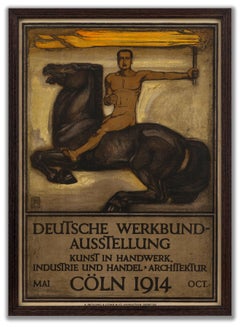
Deutsche Werkbund-Ausstellung (German Workers Union Exhibition Art)
Located in London, GB
Peter Behrens, (German 1868-1940), Deutsche Werkbund-Ausstellung, 1914, Deutsche Werkbund-Ausstellung, Kunst in Handwerk, Industrie und Handel Archit...
Category
Art Deco 1910s Figurative Prints
Materials
Paper, Lithograph
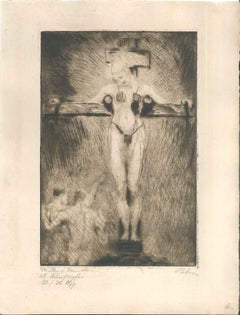
Mein Weg mit dem Weib, plate 10
Located in Roma, IT
Drypoint and aquatint (brown ink) on cream paper.
Signed "Rehn" in pencil on the lower right margin. Titled and numbered in pencil on the lower left margin. Edition of 25 prints. Fro...
Category
Modern 1910s Figurative Prints
Materials
Drypoint, Etching, Aquatint
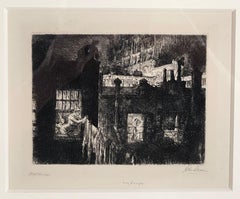
NIGHT WINDOWS
By John Sloan
Located in Portland, ME
Sloan, John (American, 1871-1951). NIGHT WINDOWS. Morse 152. Etching and drypoint, 1910. The 5th state of 5. Edition of 100. Titled, signed, and inscribed...
Category
1910s Figurative Prints
Materials
Drypoint, Etching
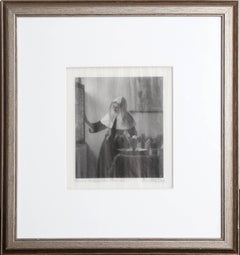
Woman with Water Jug, Old Masters Photogravure by Timothy Cole After Vermeer
By Timothy Cole
Located in Long Island City, NY
Artist: Timothy Cole after Johannes Vermeer
Title: Woman with Water Jug
Year: 1912
Medium: Photolithograph, signed in pencil, marked Vermeer, Metr...
Category
Old Masters 1910s Figurative Prints
Materials
Photogravure
Gustav Klimt "Study for Water Serpents" collotype from Funfundzwanzig folio
By Gustav Klimt
Located in Palm Beach, FL
Title page numbered: 263/450
Category
Vienna Secession 1910s Figurative Prints
Materials
Paper
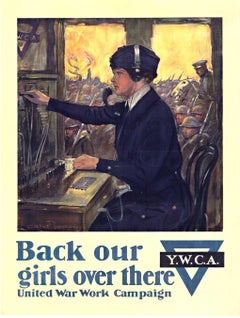
Original "Back Our Girls Over There, YWCA vintage WW1 poster
Located in Spokane, WA
Original Back Our Girls Over There Y.W.C.A. WW1 antique poster: Linen-backed original Beautiful Y.W.C.A. Telephone operator sitting at the control pane...
Category
American Modern 1910s Figurative Prints
Materials
Lithograph
$500 Sale Price
20% Off
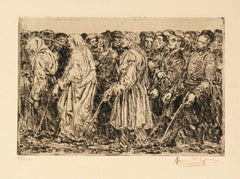
Les Aveugles ( The Blind )
Located in Paonia, CO
Henri DeGroux (1866-1930) was a Belgian Symbolist painter, sculptor and lithographer. He was known for his allegorical, religious and historical subject matter. He became an inspired...
Category
Symbolist 1910s Figurative Prints
Materials
Lithograph
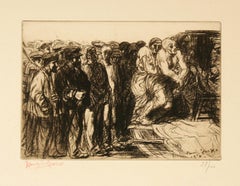
Ambulkance
Located in Paonia, CO
Henri DeGroux (1866-1930) was a Belgian Symbolist painter, sculptor and lithographer. He was known for his allegorical, religious and historical subject matter. He became an inspired...
Category
Symbolist 1910s Figurative Prints
Materials
Lithograph
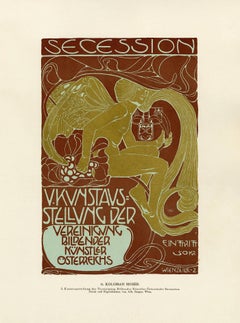
Ottokar Mascha Folio: plate 11 "5th Secession Exhibition Poster" by Kolo Moser
Located in Palm Beach, FL
after KOLOMAN MOSER (1868-1918) 5TH SECESSION EXHIBITION POSTER, 1899, (In Mascha, no. 11) A pivotal figure in early-20th century Austrian ...
Category
Vienna Secession 1910s Figurative Prints
Materials
Lithograph
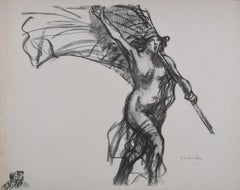
“La Rèpublique nous appelle…” (The Republic calls us…)
Located in Fairlawn, OH
La République Nous Appelle (The Republic Calls Us)
Transfer lithograph with an etching Remarque in the lower left corner, 1915
Signed in pencil lower right (see photo)
Edition: 100 (...
Category
1910s Figurative Prints
Materials
Lithograph
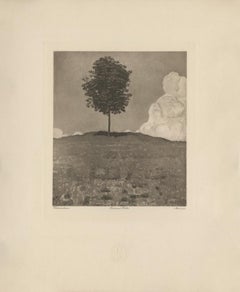
"Chestnut Tree" Copper Plate Heliogravure
Located in Palm Beach, FL
2018 marks the centenary anniversary of Ferdinand Hodler’s death. In that 100 years time, the art world’s esteem of this important artist has proved fickle. It has shifted from extolling his artistic merits during his lifetime to showing something of a feigned disdain- more reflective of the world political order than a true change of heart for Hodler’s work. After years of Hodler being all but a footnote in the annals of art history and generally ignored, finally, the pendulum has righted itself once again. Recent retrospective exhibitions in Europe and the United States have indicated not only a joyful rediscovery of Hodler’s art but a firm conviction that his work and world view hold particular relevance today. DAS WERK FERDINAND HODLERS is not only a collection of printed work reflecting the best of all of his painted work created up to 1914 just before the outbreak of World War I, the portfolio itself is an encapsulation of Hodler’s ethos, Parallelisme.
Hodler developed his philosophy of Parallelisme as a unifying approach to art which strips away detail in search of harmony. By means of abstraction, symmetry and repetition, Hodler sought ways to depict Nature’s essence and her fundamental, universal order. He believed these universal laws governing the natural, observable world extend to the spiritual realm. Symbolist in nature with Romantic undertones, his works are equally portraits of these universal concepts and feelings governing all life as they are a visual portrait in the formal sense. Whether his subject is a solitary tree, a moment in battle, mortal fear, despair, the awe inspired by a vast mountain range, a tender moment or even the collective conviction in a belief, Hodler unveils this guiding principle of Parallelisme.
Several aspects of Hodler’s portfolio reinforce his tenets of Parallelisme. The Table of Contents clearly preferences a harmonious design over detail. The two columns, consisting of twenty lines each, list the images by order of appearance using their German titles. The abbreviated titles are somewhat cryptic in that they obscure the identities of the sitters. Like the image Hodler presents, they are distillations of the sitter without any extraneous details. This shortening was also done in an effort to maintain a harmonious symmetry of the Table of Contents, themselves, and keep titles to a one-line limit. The twenty-fourth title: “Bildnis des Schweizerischen Gesandten C.” was so long, even with abbreviation, that it required two lines; so, for the sake of maintaining symmetry, the fortieth title: “Bauernmadchen” was omitted from the list. This explains why the images are not numbered. Hodler’s reasoning is not purely esoteric. Symmetry and pattern reach beyond mere formal design principles. Finding sameness and imposing it over disorder goes to the root of Hodler’s identity and his art. A Swiss native, Hodler was bi-lingual and spoke German and French. Each printed image, even number forty, have titles in both of Hodler’s languages. Certainly, there was a market for Hodler’s work among francophones and this inclusion may have been a polite gesture to that end; however, this is the only place in the portfolio which includes French. With German titles at the lower left of each image, Hodler’s name at bottom center and corresponding French titles at the lower right of each image, there is a harmony and symmetry woven into all aspects of the portfolio. This holds true for the page design, as it applies to each printed image and as it describes the Swiss artist himself. Seen in this light, Hodler’s portfolio of printed work is the epitome of Hodler’s Parallelisme. DAS WERK FERDINAND HODLERS is also one of the most significant documents to best tell the story of how Hodler, from Switzerland, became caught between political cross-hairs and how the changing tides of nations directly impacted the artist during his lifetime as well as the accessibility of his art for generations to come.
The Munich-based publisher of the portfolio, R. Piper & Co., Verlag, plays a crucial role in this story. Publishing on a wide range of subjects from philosophy and world religion to music, literature and the visual arts; the publisher’s breadth of inquiry within any one genre was equal in scope. Their marketing strategy to publish multiple works on Hodler offers great insight as to what a hot commodity Hodler was at that time. R.Piper & Co.’s Almanach, which they published in 1914 in commemoration of their first ten years in business, clearly illustrates the rapid succession- strategically calculated for achieving the deepest and broadest impact - in which they released three works on Hodler to hit the market by the close of 1914. DAS WERK FERDINAND HODLERS was their premier publication. It preceded C.A. Loosli’s Die Zeichnungen Ferdinand Hodlers, a print portfolio after 50 drawings by Hodler which was released in Autumn of 1914 at the mid-level price-point of 75-150 Marks; and a third less expensive collection of prints after original works by Hodler, which had not been included in either of the first two portfolios, was released at the end of that year entitled Ferdinand Hodler by Dr. Ewald Bender.
The title and timing of DAS WERK FERDINAND HODLERS' debut leaves little doubt as to the connection it has with another avant-garde portfolio of art prints, Das Werk Gustav Klimts, released in 5 installments from 1908 -1914 by Galerie Miethke in Vienna. Hodler, himself, was involved in Klimt’s ground-breaking project. As the owner of Klimt’s 1901 painting, “Judith with the Head of Holifernes” which appears as the ninth collotype print in the second installment of Das Werk Gustav Klimts, Hodler was obliged to grant access of the painting to the art printers in Vienna for them to create the collotype sometime before 1908. Hodler had been previously invited in 1904 to take part in what would be the last exhibition of the Vienna Secession before Klimt and others associated with Galerie Miethke broke away. In an interview that same year, Hodler indicated that he respected and was impressed by Klimt. Hodler’s esteem for Klimt went beyond the art itself; he emulated Klimt’s method aimed at increasing his market reach and appeal to a wider audience by creating a print portfolio of his painted work. By 1914, Hodler and his publisher had the benefit of hindsight to learn from Klimt’s Das Werk publication.
Responding to the sluggish sales of Klimt’s expensive endeavor, Hodler’s publisher devised the same diversified 1-2-3 strategy for selling Hodler’s Das Werk portfolio as they did with regards to all three works on Hodler they published that year. For their premium tier of DAS WERKS FERDINAND HODLERS, R. Piper & Co. issued an exclusive Museum quality edition of 15 examples on which Hodler signed each page. At a cost of 600 Marks, this was generally on par with Klimt’s asking price of 600 Kronen for his Das Werk portfolio. A middle-tiered Preferred edition of 30, costing somewhat less and with Hodler’s signature only on the Title Page, was also available. The General edition, targeting the largest audience with its much more affordable price of 150 Marks, is distinguishable by its smaller size.
Rather than use the subscription format Miethke had chosen for Klimt’s portfolios which proved to have had its challenges, R. Piper & Co. employed a different strategy. In addition to instantly gratifying the buyer with all 40 of the prints comprising DAS WERK FERDINAND HODLERS and the choice among three price points, they advertised in German journals a fourth possibility of ordering single prints from them directly. These printed images are easily discernible from the three complete folio editions. The paper size of the single purchased images is of the larger format like the Museum and Preferred editions, measuring 65 h x 50 w cm; however, the paper itself is the same copper print paper used in the General edition and then mounted on poster board. The publishing house positioned itself to be a direct retailer of Hodler’s art. They astutely recognized the potential for profitability and the importance, therefore, of having proprietary control over his graphic works.
R. Piper & Co. owned the exclusive printing rights to Hodler’s best work found in their three publications dating from 1914. That same year, a competing publication out of Weimar entitled Ferdinand Hodler: Ein Deutungsversuch von Hans...
Category
Symbolist 1910s Figurative Prints
Materials
Paper
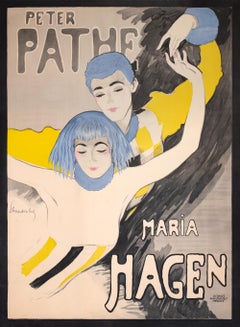
"Peter Pathe Marie Hagan" Original Lithograph Poster by Walter Schnackenberg
Located in Palm Beach, FL
Original vintage lithograph poster with depiction of Munich-based balletic duo Peter Pathe and Maria Hagen. Design by Walter Schnackenberg (German, 1880-1961). A very scarce example....
Category
Art Nouveau 1910s Figurative Prints
Materials
Lithograph
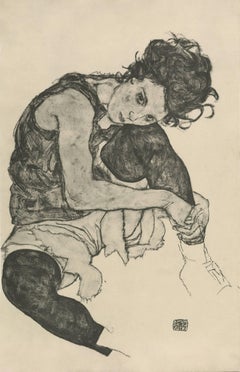
R. Layni, Zeichnungen folio, "Seated Woman with Bent Knee" Collotype plate I
Located in Palm Beach, FL
After Egon Schiele (1890 – 1918), AUSTRIA
“ART CANNOT BE MODERN, ART IS PRIMORDIALLY ETERNAL.” -SCHIELE
Defiantly iconoclastic in life and art, Egon Schiele is esteemed for his mas...
Category
Vienna Secession 1910s Figurative Prints
Materials
Paper
Erotic Scene - Héliogravure by Micheal Von Zichy - 1911
Located in Roma, IT
Erotic scene is an original Héliogravure artwork on ivory-colored paper, realized by Micheal Von Zichy in 1911. Printed in only 300 copies, Leipzig; Privatdruck, from the Catalogue ...
Category
Modern 1910s Figurative Prints
Materials
Paper, Engraving
More Ways To Browse
Edmund F Ward
Edna Manley
Eduardo Roca
Edward B Gay
Edward Hopper Oil Painting
Edward Simmons
Edwin Lord Weeks
Elizabeth Enders
Elizabeth Horning
Emil Holzhauer
England Church Oil Painting
English Deer Painting
English Fox Hunt Painting
English Toy Terrier
Enrique Martinez Celaya
Eric Aho
Eritrea Art
Ernest Chateignon