19th Century Figurative Prints
to
1,324
6,340
1,130
184
49
38
Overall Width
to
Overall Height
to
5,586
344
112
57
35
25
16
6
3
267
121
110
109
98
3,634
7,755
24,980
6,705
286
584
1,429
1,208
1,244
2,168
2,968
5,154
2,931
1,445
3,102
4,518
3,179
42
5,362
2,710
2,099
1,803
1,563
1,064
864
581
558
514
503
503
437
289
248
245
231
224
217
203
4,438
2,174
709
677
436
336
5,757
4,277
765
Period: 19th Century
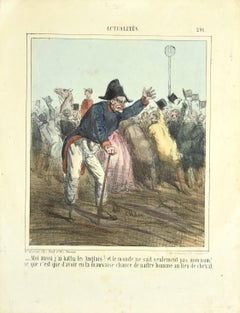
Actualités - Original Lithograph by Cham - 1840
Located in Roma, IT
Actualités is an amusing satirical illustration by the French illustrator and caricaturist, Cham (alias Count Amédée de Noé, 1818-1879) realized in 1840.
Beautiful Hand-colored lith...
Category
19th Century Figurative Prints
Materials
Lithograph
Fairy - Lithograph by Hégésippe Moreau - 1838
Located in Roma, IT
Fairy is a lithograph on paper realized by Hégésippe Moreau in 1838.
The artwork is in good conditions.
Hégésippe Moreau (1810-1838) was a French ly...
Category
Modern 19th Century Figurative Prints
Materials
Lithograph
$124 Sale Price
30% Off
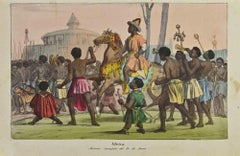
Ancient African Customs - Lithograph by Auguste Wahlen - 1844
Located in Roma, IT
Africa is a lithograph realized by Auguste Wahlen in 1844.
Hand colored.
Good condition.
At the center of the artwork is the original title "Africa" and subtitle "Marcia trionfale...
Category
Modern 19th Century Figurative Prints
Materials
Lithograph
$193 Sale Price
35% Off
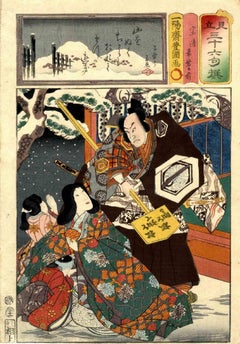
Taira no Munekiyo Captures -Woodcut Print by Utagawa Hirosada - 1856
Located in Roma, IT
Taira no Munekiyo Captures Tokiwa no Mae is an original modern artwork realized by Utagawa Hirosada (Japanese, active 1825–75) in 1856.
Woodcut print oban format. Signature Ichiyosa...
Category
Modern 19th Century Figurative Prints
Materials
Woodcut
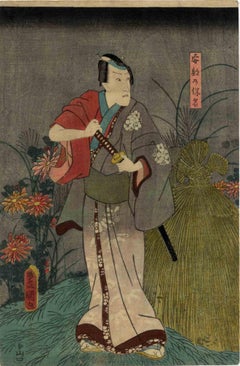
Kabukie - Woodcut by Utagawa Kunisada - 1850s
Located in Roma, IT
Kabukie is an original artwork realized in the 1850s by Utagawa Kunisada (1786-1865).
Oban from a triptych.
An actor in the role of Otokodate Abe no Homei stands ready at night in...
Category
Modern 19th Century Figurative Prints
Materials
Woodcut
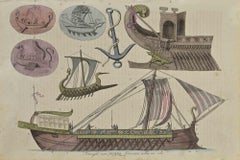
Ancient Ships - Lithograph - 1862
Located in Roma, IT
Ancient Ships is a lithograph on paper realized in 1862.
The artwork belongs to the Suite Uses and customs of all the peoples of the universe: " History of the government, of the la...
Category
Modern 19th Century Figurative Prints
Materials
Lithograph
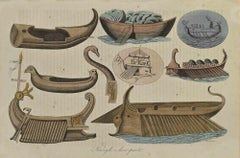
Ancient Ships - Lithograph - 1862
Located in Roma, IT
Ancient Ships is a lithograph on paper realized in 1862.
The artwork belongs to the Suite Uses and customs of all the peoples of the universe: " History of the government, of the la...
Category
Modern 19th Century Figurative Prints
Materials
Lithograph
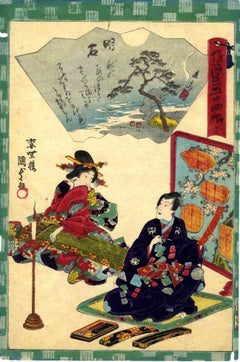
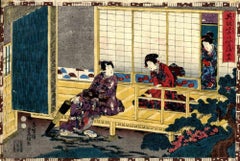
Meeting in Akashi - Woodcut Print by Utagawa Kunisada II - 1864
Located in Roma, IT
Meeting in Akashi is an original modern artwork realized by Utagawa Kunisada II and Hiroshige II in 1864.
Woodcut Print Oban Format.
From the series "Omo...
Category
Modern 19th Century Figurative Prints
Materials
Woodcut
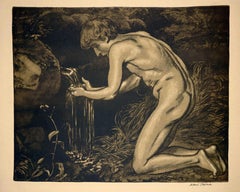
Boy at the source / - Elixir of Life -
Located in Berlin, DE
Hans Thoma (1839 Bernau - 1924 Karlsruhe), Boy at the source, 1897. Algraph on strong wove paper after a drawing from 1897, published by Breitkopf und Härtel in Leipzig as ‘Zeitgenös...
Category
Realist 19th Century Figurative Prints
Materials
Paper

$266 Sale Price
20% Off
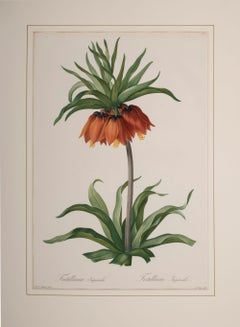
Fritillaria Imperialis
Located in London, GB
REDOUTÉ, Pierre-Joseph.
Fritillaria Imperialis
Paris, Chez L’Auteur, 1802-16
The highest peak of Redoute's artistic and botanical achievement... Among the most important monument...
Category
Naturalistic 19th Century Figurative Prints
Materials
Handmade Paper, Engraving
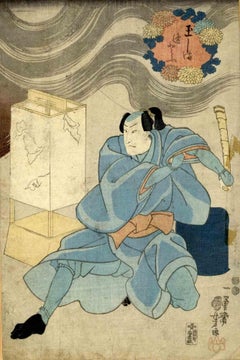
Yakushae Aizurie - Woodcut Print by Utagawa Kuniyoshi - 1840s
Located in Roma, IT
Yakushae Aizurie is an original artwork realized in 1840-1843 by Utagawa Kuniyoshi (January 1, 1798– April 14, 1861).
Woodcut Print.
Actor in the r...
Category
Modern 19th Century Figurative Prints
Materials
Woodcut
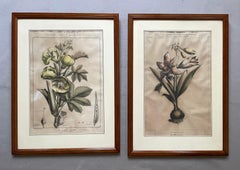
Two Botanical Lithographs, Flora Of America
Located in SAINT-OUEN-SUR-SEINE, FR
Étienne DENISSE (1785-1861)
Gombeau Edible and Trompette.
Collection of the most remarkable Flowers and Fruits, natural size.
Two lithographs enhanced with watercolor.
Around 1830.
F...
Category
19th Century Figurative Prints
Materials
Paper, Watercolor
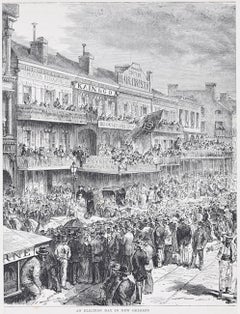
An Election Day in New Orleans - Original Lithograph by H.-T. Hildibrand - 1880
Located in Roma, IT
Image dimensions: 18 x 14.9 cm.
An Election Day in New Orleans is a wonderful black and white lithograph on paper, realized in 1880 by Henry Théophile Hildibrand...
Category
Modern 19th Century Figurative Prints
Materials
Lithograph
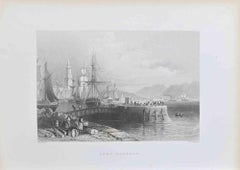
Port Glasgow - Lithograph By W.H. Bartlett - 19th Century
Located in Roma, IT
Port Glasgow is a lithograph on paper realized by the artist W.H. Bartlett .
Signed on the plate on the lower left. Titled on the lower center.
The state of preservation is good, only a yellowed paper along the edge.
William Henry Bartlett...
Category
Modern 19th Century Figurative Prints
Materials
Lithograph
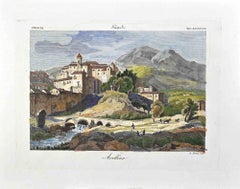
View of Avellino - Etching by Tommaso Piroli - Mid-19th century
Located in Roma, IT
View of Avellino is a print realized by Tommaso Piroli in the mid-19th century.
Etching Hand-watercolored on paper.
Signed and titled on the plate.
Good conditions with foxing
Category
Contemporary 19th Century Figurative Prints
Materials
Etching
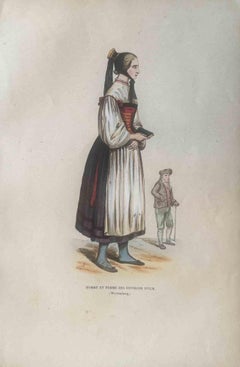
Uses and Customs - Wurtemberg - Lithograph - 1862
Located in Roma, IT
Uses and Customs - Wurtemberg is a lithograph on paper realized in 1862.
The artwork belongs to the Suite Uses and customs of all the peoples of the universe: " History of the gover...
Category
Modern 19th Century Figurative Prints
Materials
Lithograph
Harvesting Young Cedars - Woodcut by Utagawa Hiroshige - 19th Century
Located in Roma, IT
Harvesting Young Cedars is a lovely original woodcut print from the work of the famous Japanese master Utagawa Hiroshige from an early 19th century edition. It represents an agricult...
Category
Modern 19th Century Figurative Prints
Materials
Woodcut
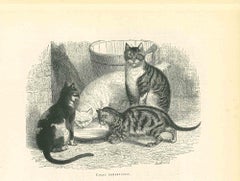
The Cats and Kitty - Lithograph by Paul Gervais - 1854
By Paul Gervais
Located in Roma, IT
The Cats and Kitty is an original lithograph on ivory-colored paper, realized by Paul Gervais (1816-1879). The artwork is from The Series of "Les Trois Règnes de la Nature", and was ...
Category
Modern 19th Century Figurative Prints
Materials
Lithograph
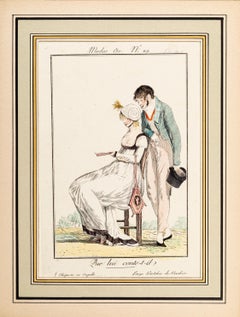
Que lui conte-t-il? - From Modes et Manières du jour à Paris...
Located in Roma, IT
Que lui conte-t-il? is a hand-watercolored etching on paper realized in 1800 by the French artist Louis-Philibert Debucourt (1755-1832).
This is an original illustration (plate n. ...
Category
Modern 19th Century Figurative Prints
Materials
Etching
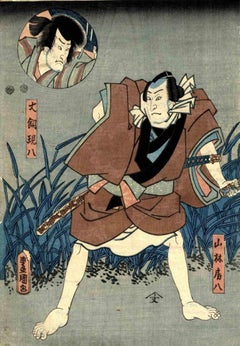
Yamabayashi Fusahachi - Woodcut Print by Utagawa Kunisada - 1860s
Located in Roma, IT
Yamabayashi Fusahachi is an original modern artwork realized by Utagawa Kunisada in 1861.
Woodcut print Oban from a multi-heet, 1861
Actor in the role of Yamabayashi Fusahachi sta...
Category
Modern 19th Century Figurative Prints
Materials
Woodcut
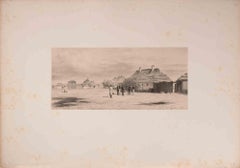
Crimée – Le Quartier Tatar à Moudjou - Lithograph by Auguste Raffet - 1840
Located in Roma, IT
Lithograph on wove paper.
Signed and dated in the stone lower right.
This lithograph by Auguste Raffet, one of the most celebrated French lithographers of the 19th century, depicts...
Category
Modern 19th Century Figurative Prints
Materials
Lithograph
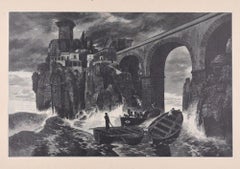
Pirates attack the Castle on the Sea - Original Woodcut by J.J. Weber - 1898
Located in Roma, IT
Image dimensions: 23 x 35 cm.
Original Title: Von Piraten überfallene Burg am Meer
Pirates attack the Castle on the sea is a black and white xylograph on Japon applied on ivory-colored paper, after Arnold Böcklin...
Category
Symbolist 19th Century Figurative Prints
Materials
Woodcut
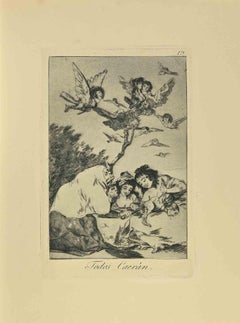
Todos Caeran - Etching by Francisco Goya - 1881
Located in Roma, IT
Todos Caeran is a black and White aquatint, drypoint, and etching printed in blue-black ink on laid paper from Caprichos realized after Francisco Goya in 1881-1886.
6th Edition.
T...
Category
Modern 19th Century Figurative Prints
Materials
Etching
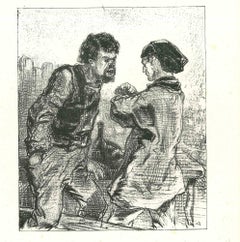
The Attention - Original Lithograph by Paul Gavarni - 1881
By Paul Gavarni
Located in Roma, IT
The Attention is an original lithograph artwork on ivory-colored paper, realized by the French draftsman Paul Gavarni (after) (alias Guillaume Sulpice Chevalier Gavarni, 1804-1866) i...
Category
Modern 19th Century Figurative Prints
Materials
Lithograph
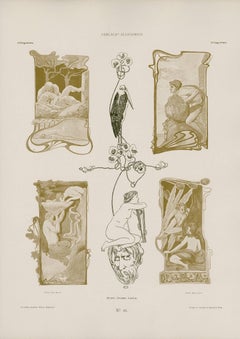
Gerlach
s Allegorien Plate #116: "Force, Thirst, Love" Lithograph
Located in Palm Beach, FL
after Carl Otto Czeschka, (1878-1960), Austrian
A leading member of the Vienna Secession and later the Wiener Werkstätte (Viennese Workshop), Carl Otto Czeschka was a vital figu...
Category
Vienna Secession 19th Century Figurative Prints
Materials
Lithograph
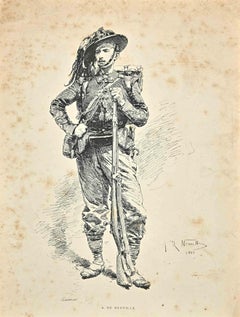
Soldier - Lithograph by Alphonse de Neuville - 1883
Located in Roma, IT
Soldier is an lithograph realized by Alphonse de Neuville in 1883.
Signed on Plate.
Good conditions.
The Artwork is depicted through soft strokes.
Category
Modern 19th Century Figurative Prints
Materials
Lithograph
Wakana (Gengjie) - Original Woodcut Print by Utagawa Kunisada - 1850s
Located in Roma, IT
Wakana (Gengjie) is an original modern artwork realized by Utagawa Kunisada in 1850s.
Woodcut print Oban yokoe format
From the series "Sono sugata yukari no utsushie" (Faithful im...
Category
Modern 19th Century Figurative Prints
Materials
Woodcut
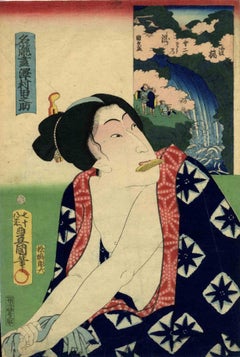
Famous Waterfalls - Woodcut by Utagawa Kunisada - 1850s
Located in Roma, IT
Famous Waterfalls is an original artwork realized in the 1850s by Utagawa Kunisada (1786-1865).
From the series "Meitaki ga". Bust portrait of the actor Sawamura Tanosuke in Onnaga...
Category
Modern 19th Century Figurative Prints
Materials
Woodcut
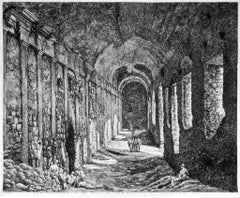
Veduta interna delle Sostruzioni ... - Etching by Luigi Rossini - 1824
Located in Roma, IT
Veduta interna delle Sostruzioni dei Portici del tempio d'Ercole in Tivoli (...) is an original etching realized by Luigi Rossini.
From the series “Le antichità de’ contorni di Roma (...)” it is an artist's proof with real technical virtuosity, with sharp details, representing the walkways under the portici of Hercules Temple in Tivoli.
Signed on plate “Rossini dis. e inc.” lower-left corner, with indication of date and place “Roma, 1824”.
In very good conditions.
Luigi Rossini (1790 – 1857)
Like Giovanni Battista Piranesi, Luigi Rossini was an architect and his etchings have the same tendency to emphasize the massive constructions of the Ancient Rome. He became famous thanks to his etchings representing Roman landscapes and antique monuments...
Category
Modern 19th Century Figurative Prints
Materials
Etching
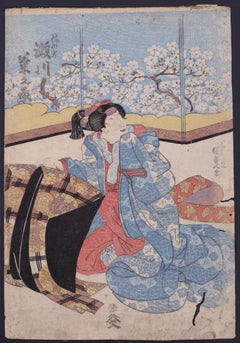
Kabuki Theatre Scene - Original Woodblock print by Utagawa Toyokuni II - 1810 ca
Located in Roma, IT
Kabuki Theatre Scene is a color woodblock print on paper, realized by Utagawa Toyokuni II around 1810 ca.
This lovely ukiyo-e print depicts a kneeling actress, more precisely a geis...
Category
19th Century Figurative Prints
Materials
Paper
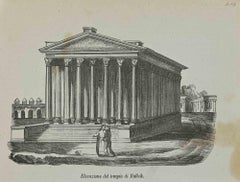
Elevation of the Temple of Balbek - Lithograph - 1862
Located in Roma, IT
Elevation of the Temple of Balbek is a lithograph realized in 1864.
Good conditions.
The artwork belongs to the Suite Uses and customs of all the peoples of the universe, or Histo...
Category
Modern 19th Century Figurative Prints
Materials
Lithograph
$139 Sale Price
35% Off
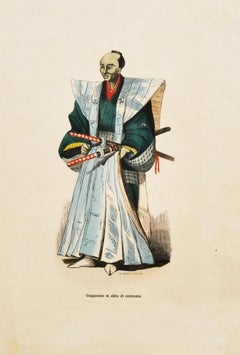
Samurai - Original Lithography - 19th Century
Located in Roma, IT
Samurai, " Japanese man in the costume of ceremony", is an original Hand-colored lithograph on paper, realized by an Anonymous artist of the 19th Century....
Category
Modern 19th Century Figurative Prints
Materials
Lithograph
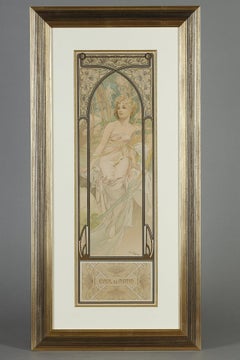
Morning Awakening
Located in PARIS, FR
Morning Awakening
by Alfons MUCHA (1860-1939)
"Morning Awakening"
from the series "The Times of the Day"
Variant 1
Original lithograph
Signed "Mucha" and dated "99" for 1899, at t...
Category
Art Nouveau 19th Century Figurative Prints
Materials
Lithograph
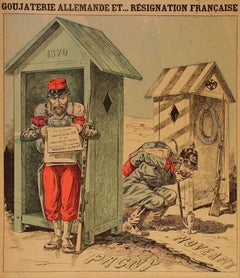
Goujaterie Allemande et... Résignation Française - Original Lithograph 1888
Located in Roma, IT
Goujaterie Allemande et... Résignation Française is an satyrical original lithograph realized by the italian illustrator and engraver Giuseppe Tarantino...
Category
19th Century Figurative Prints
Materials
Lithograph
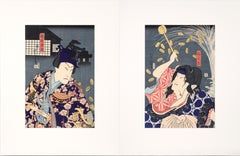
The Samurai Genta Kajiwara - Japanese Woodblock Diptych in Ink on Paper
Located in Soquel, CA
The Samurai Genta Kajiwara - Japanese Woodblock Diptych in Ink on Paper
Boldly colored woodblock by Utagawa Yoshitora (Japanese, active c.1840-1880)...
Category
Edo 19th Century Figurative Prints
Materials
Paper, Ink, Woodcut
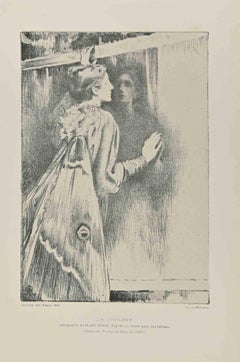
La Phalane - Lithograph by Mary Renan - 1895
Located in Roma, IT
La Phalane is a print realized by Mary Renan in 1895.
Lithograph on paper.
Stamped on the plate on the lower.
Good condition with slight foxing.
Category
Modern 19th Century Figurative Prints
Materials
Lithograph
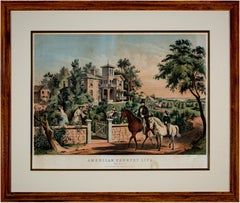
19th century color lithograph landscape figures horseback house scene trees sky
Located in Milwaukee, WI
The present print is one of several examples produced for Nathaniel Currier by his longtime collaborator Frances F. "Fanny" Palmer. Harry T. Peters wrote of her: "There is no more interesting and appealing character among the group of artists who worked for Currier & Ives than Fanny Palmer. In an age when women, well-bred women in particular, did not generally work for a living Fanny Palmer for years did exacting, full-time work in order to support a large and dependent family ... Her work ... had great charm, homeliness, and a conscientious attention to detail."
One of a series of four prints showing American country life in different seasons, the image presents the viewer with a picturesque view of a successful American farm. In the foreground, a gentleman rides a horse with a young boy before a respectable Italianate country house. Two women and a young girl pick flowers in the garden and several farm workers attend to their duties. Beyond are other homes and a city on the coast.
16.63 x 23.75 inches, artwork
28.13 x 33.38 inches, frame
Entitled bottom center "American Country Life - May Morning"
Signed in the stone, lower left "F.F. Palmer, Del."
Signed in the stone, lower right "Lith. by N. Currier"
Copyrighted lower center "Entered according to Act of Congress in the year 1855 by N. Currier in the Clerk's office of the Southern District of N.Y."
Inscribed bottom center "New York, Published by N. Currier 152 Nassau Street"
Framed to conservation standards using silk-lined 100 percent rag matting and Museum Glass with a gold gilded liner, all housed in a stained wood moulding.
Nathaniel Currier was a tall introspective man with a melancholy nature. He could captivate people with his piercing stare or charm them with his sparkling blue eyes. Nathaniel was born in Roxbury, Massachusetts on March 27th, 1813, the second of four children. His parents, Nathaniel and Hannah Currier, were distant cousins who lived a humble yet spartan life. When Nathaniel was eight years old, tragedy struck. Nathaniel’s father unexpectedly passed away leaving Nathaniel and his eleven-year-old brother Lorenzo to provide for the family. In addition to their mother, Nathaniel and Lorenzo had to care for six-year-old sister Elizabeth and two-year-old brother Charles. Nathaniel worked a series of odd jobs to support the family, and at fifteen, he started what would become a life-long career when he apprenticed in the Boston lithography shop of William and John Pendleton.
A Bavarian gentleman named Alois Senefelder invented lithography just 30 years prior to young Nat Currier’s apprenticeship. While under the employ of the brothers Pendleton, Nat was taught the art of lithography by the firm’s chief printer, a French national named Dubois, who brought the lithography trade to America.
Lithography involves grinding a piece of limestone flat and smooth then drawing in mirror image on the stone with a special grease pencil. After the image is completed, the stone is etched with a solution of aqua fortis leaving the greased areas in slight relief. Water is then used to wet the stone and greased-ink is rolled onto the raised areas. Since grease and water do not mix, the greased-ink is repelled by the moisture on the stone and clings to the original grease pencil lines. The stone is then placed in a press and used as a printing block to impart black on white images to paper.
In 1833, now twenty-years old and an accomplished lithographer, Nat Currier left Boston and moved to Philadelphia to do contract work for M.E.D. Brown, a noted engraver and printer. With the promise of good money, Currier hired on to help Brown prepare lithographic stones of scientific images for the American Journal of Sciences and Arts. When Nat completed the contract work in 1834, he traveled to New York City to work once again for his mentor John Pendleton, who was now operating his own shop located at 137 Broadway. Soon after the reunion, Pendleton expressed an interest in returning to Boston and offered to sell his print shop to Currier. Young Nat did not have the financial resources to buy the shop, but being the resourceful type he found another local printer by the name of Stodart. Together they bought Pendleton’s business.
The firm ‘Currier & Stodart’ specialized in "job" printing. They produced many different types of printed items, most notably music manuscripts for local publishers. By 1835, Stodart was frustrated that the business was not making enough money and he ended the partnership, taking his investment with him. With little more than some lithographic stones, and a talent for his trade, twenty-two year old Nat Currier set up shop in a temporary office at 1 Wall Street in New York City. He named his new enterprise ‘N. Currier, Lithographer’
Nathaniel continued as a job printer and duplicated everything from music sheets to architectural plans. He experimented with portraits, disaster scenes and memorial prints, and any thing that he could sell to the public from tables in front of his shop. During 1835 he produced a disaster print Ruins of the Planter's Hotel, New Orleans, which fell at two O’clock on the Morning of the 15th of May 1835, burying 50 persons, 40 of whom Escaped with their Lives. The public had a thirst for newsworthy events, and newspapers of the day did not include pictures. By producing this print, Nat gave the public a new way to “see” the news. The print sold reasonably well, an important fact that was not lost on Currier.
Nat met and married Eliza Farnsworth in 1840. He also produced a print that same year titled Awful Conflagration of the Steamboat Lexington in Long Island Sound on Monday Evening, January 18, 1840, by which melancholy occurrence over One Hundred Persons Perished. This print sold out very quickly, and Currier was approached by an enterprising publication who contracted him to print a single sheet addition of their paper, the New York Sun. This single page paper is presumed to be the first illustrated newspaper ever published.
The success of the Lexington print launched his career nationally and put him in a position to finally lift his family up. In 1841, Nat and Eliza had their first child, a son they named Edward West Currier. That same year Nat hired his twenty-one year old brother Charles and taught him the lithography trade, he also hired his artistically inclined brother Lorenzo to travel out west and make sketches of the new frontier as material for future prints. Charles worked for the firm on and off over the years, and invented a new type of lithographic crayon which he patented and named the Crayola. Lorenzo continued selling sketches to Nat for the next few years.
In 1843, Nat and Eliza had a daughter, Eliza West Currier, but tragedy struck in early 1847 when their young daughter died from a prolonged illness. Nat and Eliza were grief stricken, and Eliza, driven by despair, gave up on life and passed away just four months after her daughter’s death.
The subject of Nat Currier’s artwork changed following the death of his wife and daughter, and he produced many memorial prints and sentimental prints during the late 1840s. The memorial prints generally depicted grief stricken families posed by gravestones (the stones were left blank so the purchasers could fill in the names of the dearly departed). The sentimental prints usually depicted idealized portraits of women and children, titled with popular Christian names of the day.
Late in 1847, Nat Currier married Lura Ormsbee, a friend of the family. Lura was a self-sufficient woman, and she immediately set out to help Nat raise six-year-old Edward and get their house in order. In 1849, Lura delivered a son, Walter Black Currier, but fate dealt them a blow when young Walter died one year later. While Nat and Lura were grieving the loss of their new son, word came from San Francisco that Nat’s brother Lorenzo had also passed away from a brief illness. Nat sank deeper into his natural quiet melancholy. Friends stopped by to console the couple, and Lura began to set an extra place at their table for these unexpected guests. She continued this tradition throughout their lives.
In 1852, Charles introduced a friend, James Merritt Ives, to Nat and suggested he hire him as a bookkeeper. Jim Ives was a native New Yorker born in 1824 and raised on the grounds of Bellevue Hospital where his father was employed as superintendent. Jim was a self-trained artist and professional bookkeeper. He was also a plump and jovial man, presenting the exact opposite image of his new boss.
Jim Ives met Charles Currier through Caroline Clark, the object of Jim’s affection. Caroline’s sister Elizabeth was married to Charles, and Caroline was a close friend of the Currier family. Jim eventually proposed marriage to Caroline and solicited an introduction to Nat Currier, through Charles, in hopes of securing a more stable income to support his future wife.
Ives quickly set out to improve and modernize his new employer’s bookkeeping methods. He reorganized the firm’s sizable inventory, and used his artistic skills to streamline the firm’s production methods. By 1857, Nathaniel had become so dependent on Jims’ skills and initiative that he offered him a full partnership in the firm and appointed him general manager. The two men chose the name ‘Currier & Ives’ for the new partnership, and became close friends.
Currier & Ives produced their prints in a building at 33 Spruce Street where they occupied the third, fourth and fifth floors. The third floor was devoted to the hand operated printing presses that were built by Nat's cousin, Cyrus Currier, at his shop Cyrus Currier & Sons in Newark, NJ. The fourth floor found the artists, lithographers and the stone grinders at work. The fifth floor housed the coloring department, and was one of the earliest production lines in the country. The colorists were generally immigrant girls, mostly German, who came to America with some formal artistic training. Each colorist was responsible for adding a single color to a print. As a colorist finished applying their color, the print was passed down the line to the next colorist to add their color. The colorists worked from a master print displayed above their table, which showed where the proper colors were to be placed. At the end of the table was a touch up artist who checked the prints for quality, touching-in areas that may have been missed as it passed down the line. During the Civil War, demand for prints became so great that coloring stencils were developed to speed up production.
Although most Currier & Ives prints were colored in house, some were sent out to contract artists. The rate Currier & Ives paid these artists for coloring work was one dollar per one hundred small folios (a penny a print) and one dollar per one dozen large folios. Currier & Ives also offered uncolored prints to dealers, with instructions (included on the price list) on how to 'prepare the prints for coloring.' In addition, schools could order uncolored prints from the firm’s catalogue to use in their painting classes.
Nathaniel Currier and James Merritt Ives attracted a wide circle of friends during their years in business. Some of their more famous acquaintances included Horace Greeley, Phineas T. Barnum, and the outspoken abolitionists Rev. Henry Ward, and John Greenleaf Whittier (the latter being a cousin of Mr. Currier).
Nat Currier and Jim Ives described their business as "Publishers of Cheap and Popular Pictures" and produced many categories of prints. These included Disaster Scenes, Sentimental Images, Sports, Humor, Hunting Scenes, Politics, Religion, City and Rural Scenes, Trains, Ships, Fire Fighters, Famous Race Horses, Historical Portraits, and just about any other topic that satisfied the general public's taste. In all, the firm produced in excess of 7500 different titles, totaling over one million prints produced from 1835 to 1907.
Nat Currier retired in 1880, and signed over his share of the firm to his son Edward. Nat died eight years later at his summer home 'Lion’s Gate' in Amesbury, Massachusetts. Jim Ives remained active in the firm until his death in 1895, when his share of the firm passed to his eldest son, Chauncey.
In 1902, faced will failing health from the ravages of Tuberculosis, Edward Currier sold his share of the firm to Chauncey Ives...
Category
Romantic 19th Century Figurative Prints
Materials
Watercolor, Lithograph
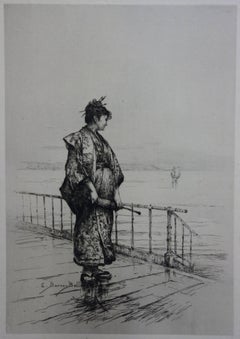
Woman in Traditional Japanese Suit Looking at the Sea - Original etching
By Étienne Prosper Berne-Bellecour
Located in Paris, IDF
Etienne Prosper BERNE BELLECOUR (1838-1910)
Woman in Traditional Japanese Suit Looking at the Sea
Original etching
Printed signature i...
Category
Realist 19th Century Figurative Prints
Materials
Etching
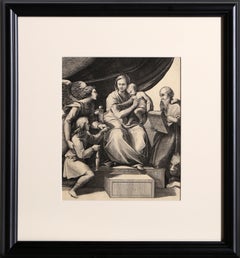
La Vierge au Poisson (d
apres Raphael), Old Masters Heliogravure by Marco Dente
Located in Long Island City, NY
Marco Dente, After by Amand Durand, Italian (1493 - 1527) - La Vierge au Poisson (d'apres Raphael), Year: circa 1878, Medium: Heliogravure, Image Size: 10...
Category
Old Masters 19th Century Figurative Prints
Materials
Etching
$1,440 Sale Price
20% Off
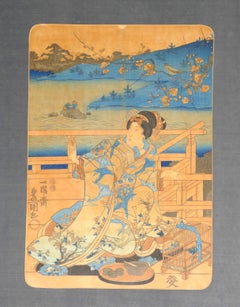
Woman - Woodcut by Utagawa Kunisada - 1830 ca.
Located in Roma, IT
Japanese Woman is a beautiful print realized around 1830 by Utagawa Kunisada.
Original colored woodblock print.
This wonderful modern artwork represents a portrait of a Japan woman...
Category
Modern 19th Century Figurative Prints
Materials
Woodcut
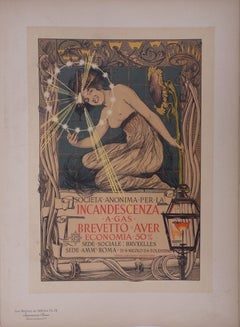
Incandescence - Lithograph, 1897
Located in Paris, IDF
Giovanni Mataloni
Incandescence, 1897
Original lithograph
Printed signature in the plate
Printed on paper vélin
Size 40 x 29 cm (c. 15.7 x 11.4")
INFORMATION : Plate 72 of "Les Maîtres de l'Affiche", Paris, 1897, printed by l'Imprimerie Chaix. Bears the blind stamp of the editor bottom right.
This image was created for an Italian advertisement...
Category
Art Nouveau 19th Century Figurative Prints
Materials
Lithograph
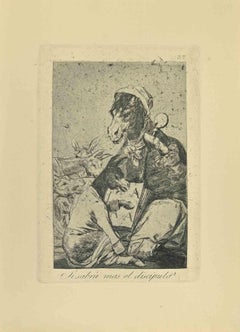
Si Sabrá Mas - Etching by Francisco Goya - 1881
Located in Roma, IT
Si Sabrá Mas is a black and White aquatint, drypoint, and etching printed in blue-black ink on laid paper from Caprichos realized after Francisco Goya in 1881-1886.
6th Edition.
T...
Category
Modern 19th Century Figurative Prints
Materials
Etching
Chiton - Etching by Francisco Goya - 1868
Located in Roma, IT
Chiton is an original etching realized by Francisco Goya and published for the first time in 1799.
Etching on paper.
The plate belongs the Third Edition of "Los Caprichos" that has...
Category
Old Masters 19th Century Figurative Prints
Materials
Etching, Aquatint

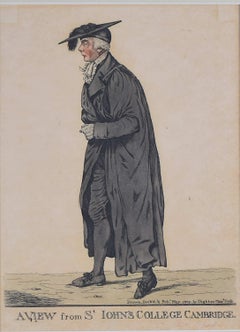
A View from St John
s College, Cambridge (1809), engraving by Richard Dighton
Located in London, GB
Richard Dighton (1795-1880)
A View from St John's College (1809)
Hand coloured engraving
28 x 22 cm
Richard Dighton (1795–1880) was a prominent Engl...
Category
Realist 19th Century Figurative Prints
Materials
Engraving
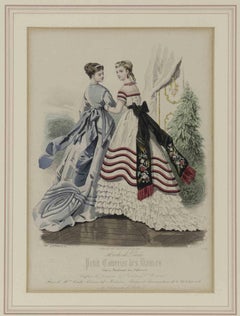
Journal Des Demoiselles - Original Lithograph by Paul Lacourière - 19th Century
Located in Roma, IT
Plate from Journal Des Demoiselles is an original artwrok realized in the 19th century by Paul Lacourière
Mixed colored lithograph from the Le...
Category
Modern 19th Century Figurative Prints
Materials
Lithograph
The Conversation - Original Lithograph by Paul Gavarni - 1881
By Paul Gavarni
Located in Roma, IT
The conversation is an original lithograph artwork on ivory-colored paper, realized by the French draftsman Paul Gavarni (after) (alias Guillaume Sulpice Chevalier Gavarni, 1804-1866...
Category
Modern 19th Century Figurative Prints
Materials
Paper, Lithograph
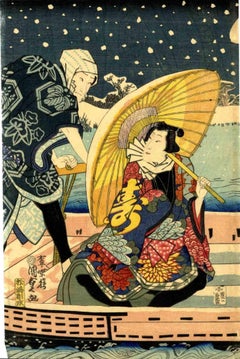
Kabuki - Woodcut by Utagawa Kunisada II - 1862
Located in Roma, IT
Kabuki is an original artwork realized in 1862 by Utagawa Kunisada II (1823-1880).
Boatman with elegant passenger in snowy landscape.
Sign: Kochoro Kuni...
Category
Modern 19th Century Figurative Prints
Materials
Woodcut
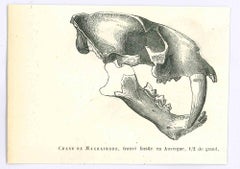
The Skull - Original Lithograph by Paul Gervais - 1854
By Paul Gervais
Located in Roma, IT
The Skull is an original lithograph on ivory-colored paper, realized by Paul Gervais (1816-1879). The artwork is from The Series of "Les Trois Règnes de la Nature", and was published...
Category
Modern 19th Century Figurative Prints
Materials
Lithograph, Paper
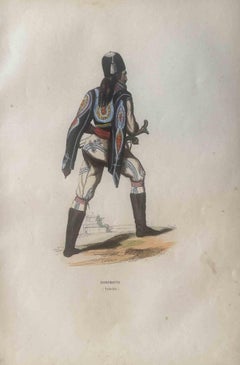
Uses and Customs - Valachie - Lithograph - 1862
Located in Roma, IT
Uses and Customs - Valachie is a lithograph on paper realized in 1862.
The artwork belongs to the Suite Uses and customs of all the peoples of the universe: " History of the governm...
Category
Modern 19th Century Figurative Prints
Materials
Lithograph
Baigneuses - Original Etching by L. Lacouteux - 1899
By Lionel Lecouteux
Located in Roma, IT
Baigneuses is an original artwork realized by the French artist Lionel Lecouteux in 1899. Original etching on paper.
The original dry hallmark on the lower right corner is present....
Category
19th Century Figurative Prints
Materials
Etching
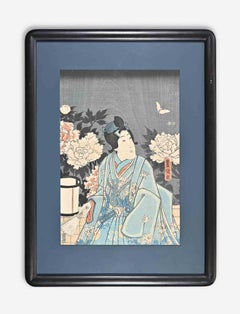
Kabuki Actor - Woodblock Print attr. to Utagawa Kunisada - Mid-19th Century
Located in Roma, IT
Kabuki Actor is an original Woodcut print realized in mid 19 century and attributed to Utagawa Kunisada.
Beautiful colored woodblock print, included a cardboard passpartout.
Includ...
Category
Modern 19th Century Figurative Prints
Materials
Woodcut
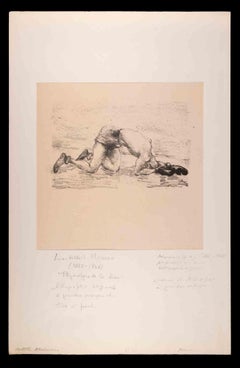
Physiology of Boxing - Original Lithograph by Luc-Albert Moreau - 19th Century
Located in Roma, IT
Physiology of Boxing is an Original Litograph realized by Luc Albert Moreau (1882-1948).
The artwork is in good condition included a cream colored cardboard passpartout (49x32 cm).
No signature.
In the 1920s, French painter Luc-Albert Moreau created a suite of 60 lithographs of the many aspects of boxing, which he considered a noble sport. Physiologie de la Boxe featured paintings and drawings of boxing winners and losers, as well as spectators and managers. Moreau was a painter with the Cubists up to 1912, but soon reverted to a more traditional style. He also produced lithographs of Parisian bars...
Category
Post-Impressionist 19th Century Figurative Prints
Materials
Lithograph
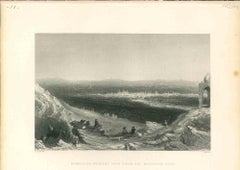
Ancient View of Damascus - Original Lithograph - 1830s
Located in Roma, IT
Ancient View of Damascus is an original modern artwork realizedin the first half of the 19th Century.
Original B/W Lithograph on Ivory Paper.
Inscripted on the lower margin: Damas...
Category
Modern 19th Century Figurative Prints
Materials
Lithograph
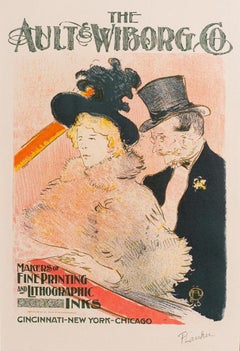
Au Concert
Located in Palm Beach, FL
Commissioned by The Ault & Wiborg Co., USA. Color Zincograph on wove paper, 1896. Hand-signed in black crayon. Wittrock C (of C) edition.
Reference: Wittrock; P28, vol. 2 pg 810.
...
Category
Art Nouveau 19th Century Figurative Prints
Materials
Paper
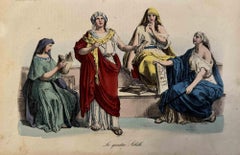
Uses and Customs - Four Sibyls - Lithograph - 1862
Located in Roma, IT
Uses and Customs - Four Sibyls is a lithograph on paper realized in 1862.
The artwork belongs to the Suite Uses and customs of all the peoples of the universe: " History of the gove...
Category
Modern 19th Century Figurative Prints
Materials
Lithograph
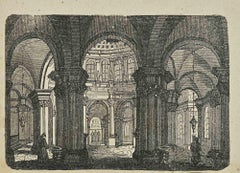
Uses and Customs - Interior - Lithograph - 1862
Located in Roma, IT
Interior is a lithograph on paper realized in 1862.
The artwork belongs to the Suite Uses and customs of all the peoples of the universe: " History of the government, of the laws, o...
Category
Modern 19th Century Figurative Prints
Materials
Lithograph
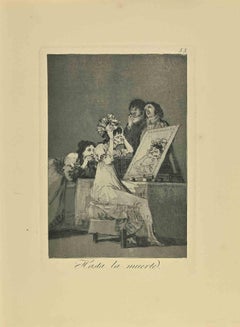
Hasta La Muerte - Etching by Francisco Goya - 1881
Located in Roma, IT
Hasta La Muerte is a black and White aquatint, drypoint, and etching printed in blue-black ink on laid paper from Caprichos realized after Francisco Goya in 1881-1886.
6th Edition. ...
Category
Modern 19th Century Figurative Prints
Materials
Etching
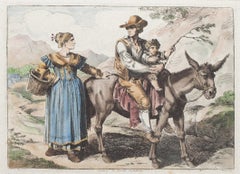
Costume of Civita Castella - Original Etching by Bartolomeo Pinelli - 1819
Located in Roma, IT
Costume of Civita Castellana is original Hand-colored etching artwork realized by Bartolomeo Pinelli in 1819.
Good conditions.
Included a white Passepartout: 34 x 49
The artwork r...
Category
19th Century Figurative Prints
Materials
Etching
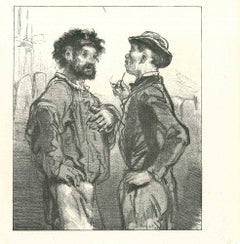
The Delightful Chit-Chat - Original Lithograph - 1881
By Paul Gavarni
Located in Roma, IT
The delightful chit-chatis an original lithograph artwork on ivory-colored paper, realized by the French draftsman Paul Gavarni (after) (alias Guillaume Sulpice Chevalier Gavarni, 18...
Category
Modern 19th Century Figurative Prints
Materials
Lithograph
$142 Sale Price
40% Off
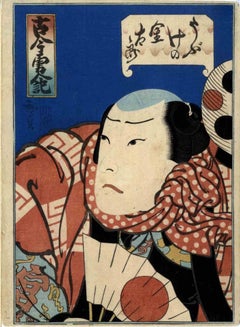
Arashi Rinosuke II - Woodcut Print by Utagawa Hirosada - 1848
Located in Roma, IT
Arashi Rinosuke II is an original modern artwork realized by Utagawa Hirosada (Japanese, active 1825–75) in 1848.
Woodcut Print Chuban format, 1848
From the series "Kokon yujin ki"...
Category
Modern 19th Century Figurative Prints
Materials
Woodcut
$463 Sale Price
40% Off
Recently Viewed
View AllMore Ways To Browse
Eduardo Roca
Edward B Gay
Edward Hopper Oil Painting
Edward Simmons
Edwin Lord Weeks
Elizabeth Enders
Elizabeth Horning
Emil Holzhauer
England Church Oil Painting
English Deer Painting
English Fox Hunt Painting
English Toy Terrier
Enrique Martinez Celaya
Eric Aho
Eritrea Art
Ernest Chateignon
Erotic Art Animal
Eugene Chigot