Early 20th Century Figurative Prints
to
786
2,415
541
242
76
80
Overall Width
to
Overall Height
to
1,401
265
244
141
125
36
25
11
3
2
1
1
170
102
57
56
43
3,634
7,757
25,007
6,702
285
584
1,429
1,208
1,244
2,180
2,983
5,154
2,931
1,445
3,102
2,360
973
19
2,711
1,469
1,303
1,063
806
795
550
272
202
177
173
162
152
143
125
124
117
82
71
59
1,151
1,100
597
447
365
337
1,253
1,531
1,303
Period: Early 20th Century
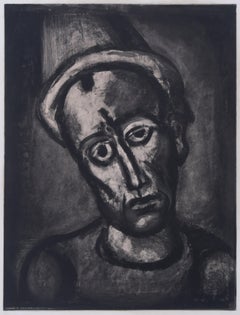
Qui ne se grime pas? (Who does not wear a mask?)
Located in Fairlawn, OH
Qui ne se grime pas?
(Who does not wear a mask?)
Aquatint, roulette, drypoint, acid bite, and scorper, 1923
Signed in the plate loweer left (see photo)
Dated in pencil
Series: Miser...
Category
French School Early 20th Century Figurative Prints
Materials
Aquatint
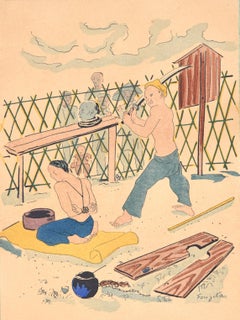
The Public Execution - Lithograph after L.T. Foujita - 1928
Located in Roma, IT
Image dimensions: 20 x 15.2 cm.
After Leonard Tsuguharu Foujita Lithographic reproduction in colors, from the set of sixteen illustrations from Propos d’un intoxiqué, by Jules Boiss...
Category
Modern Early 20th Century Figurative Prints
Materials
Lithograph
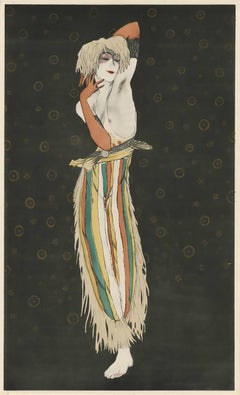
Ballet und Pantomime "Scherzo I", plate #4.
Located in Palm Beach, FL
Walter Schnackenberg’s style changed several times during his long and successful career. Having studied in Munich, the artist traveled often to Paris where he fell under the spell of the Henri de Toulouse-Lautrec’s colorful and sensuous posters depicting theatrical and decadent subjects. Schnackenberg became a regular contributor of similar compositions to the German magazines Jugend and Simplicissimus before devoting himself to the design of stage scenery and costumes. In the artist’s theatrical work, his mastery of form, ornamentation, and Orientalism became increasingly evident. He excelled at combining fluid Art Nouveau outlines, with spiky Expressionist passages, and the postures and patterns of the mysterious East.
In his later years, Schnackenberg explored the unconscious, using surreal subject matter and paler colors that plainly portrayed dreams and visions, some imbued with political connotations. His drawings, illustrations, folio prints, and posters are highly sought today for their exceedingly imaginative qualities, enchanting subject matter, and arresting use of color.
SCHNACKENBERG BALLET UND PANTOMIME...
Category
Art Deco Early 20th Century Figurative Prints
Materials
Paper
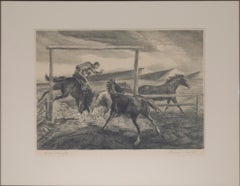
"Horse Wrangler, " Original Black
White Lithograph by Lawrence Barrett
By Lawrence Barrett
Located in Milwaukee, WI
"Horse Wrangler" is an original lithograph by the artist Lawrence Barrett signed in the lower right hand corner. Four beautifully drawn horses use a moment of commotion to escape a corral. Low hills and an expansive sky serve as a background.
Image: 8.75" x 12.25"
Framed: 11.9" x 16.5"
Lawrence Barrett was an etcher, lithographer, teacher, illustrator, sculptor, writer, and painter. Born in Guthrie, Oklahoma, Barrett was a student at the Broadmoor Academy...
Category
Realist Early 20th Century Figurative Prints
Materials
Lithograph
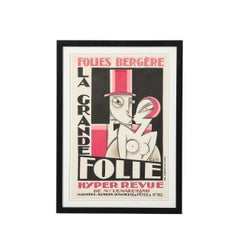
Art Deco Folies Bergere La Grande Folie Lithograph Poster
Located in New York, NY
Add a piece of Parisian glamour to your collection with this Art Deco "Folies Bergere La Grande Folie" Lithograph Poster Print from France, circa 1927. This striking poster captures ...
Category
Early 20th Century Figurative Prints
Materials
Lithograph
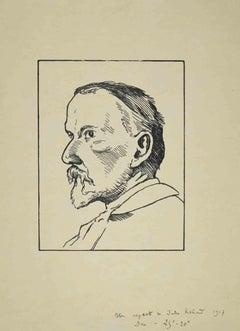
Portrait of Jules Lenard - Woodcut by Paul Emile Colin - 1907
Located in Roma, IT
Woodcut print realized by Paul Emile Colin in the 1907.
Not signed.
Very good condition.
Category
Modern Early 20th Century Figurative Prints
Materials
Woodcut
$213 Sale Price
25% Off
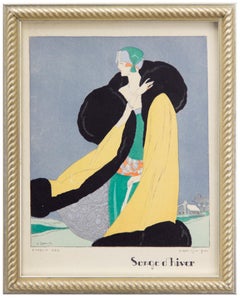
Lady in a Fur Cloak.
Located in New York, NY
Original pochoir process print (hand-colored stencil). Paris, ca. 1925. Displayed in a custom silver giltwood frame.
Category
Early 20th Century Figurative Prints
Materials
Paper
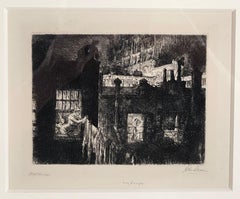
NIGHT WINDOWS
By John Sloan
Located in Portland, ME
Sloan, John (American, 1871-1951). NIGHT WINDOWS. Morse 152. Etching and drypoint, 1910. The 5th state of 5. Edition of 100. Titled, signed, and inscribed...
Category
Early 20th Century Figurative Prints
Materials
Drypoint, Etching
E. Strache, Handzeichnungen folio, "Female Nude, Back View" Collotype plate
Located in Palm Beach, FL
after Egon Schiele (1890 – 1918), AUSTRIA
“ART CANNOT BE MODERN, ART IS PRIMORDIALLY ETERNAL.” -SCHIELE
Defiantly iconoclastic in life and art, Egon Schiele is esteemed for his mas...
Category
Vienna Secession Early 20th Century Figurative Prints
Materials
Paper
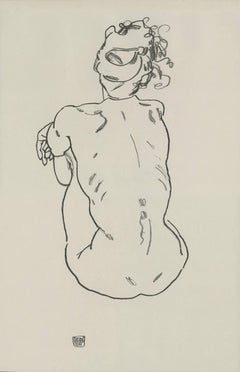
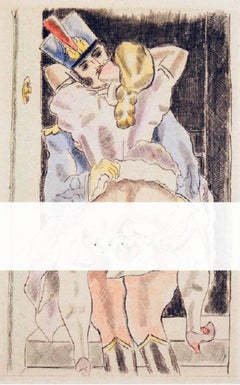
Illustration for "Les Chanson Erotiques" - Original Etching by Chas Laborde
Located in Roma, IT
Illustration for "Les Chanson Erotiques" by Pierre-Jean de Beranger.
Image Dimensions :15 x 13.5 cm
This artwork is shipped from Italy. Under existing legislation, any artwork in It...
Category
Post-Impressionist Early 20th Century Figurative Prints
Materials
Etching
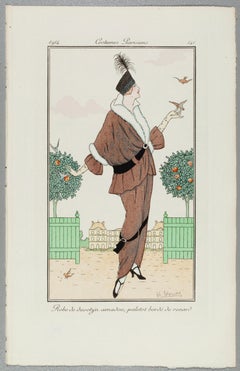
Fashionable Dress 141
Located in Columbia, MO
Artist Unknown
"Fashionable Dress, 141"
1914
Etching
Category
Art Nouveau Early 20th Century Figurative Prints
Materials
Etching
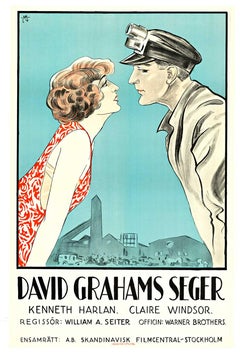
Original David Grahams Seger (Victory) 1924 Swedish silent movie poster
Located in Spokane, WA
Original 1924 "David Grahams Seger" Swedish Silent Movie Poster, also called Little Church Around the Corner. This silent film poster is professionally linen-backed in very fine con...
Category
Art Deco Early 20th Century Figurative Prints
Materials
Lithograph
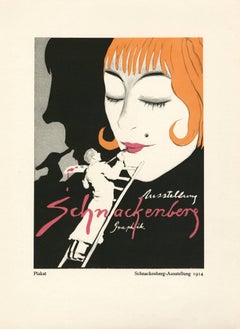
Kostume, Plakate, und Dekorationen, "Schnackenberg-Ausstellung 1914""
Located in Palm Beach, FL
Walter Schnackenberg’s style changed several times during his long and successful career. Having studied in Munich, the artist traveled often to Paris where he fell under the spell o...
Category
Expressionist Early 20th Century Figurative Prints
Materials
Lithograph
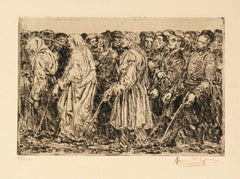
Les Aveugles ( The Blind )
Located in Paonia, CO
Henri DeGroux (1866-1930) was a Belgian Symbolist painter, sculptor and lithographer. He was known for his allegorical, religious and historical subject matter. He became an inspired...
Category
Symbolist Early 20th Century Figurative Prints
Materials
Lithograph
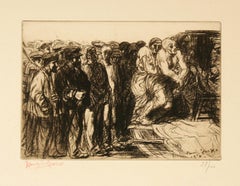
Ambulkance
Located in Paonia, CO
Henri DeGroux (1866-1930) was a Belgian Symbolist painter, sculptor and lithographer. He was known for his allegorical, religious and historical subject matter. He became an inspired...
Category
Symbolist Early 20th Century Figurative Prints
Materials
Lithograph
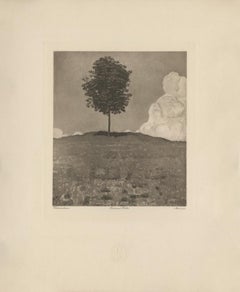
"Chestnut Tree" Copper Plate Heliogravure
Located in Palm Beach, FL
2018 marks the centenary anniversary of Ferdinand Hodler’s death. In that 100 years time, the art world’s esteem of this important artist has proved fickle. It has shifted from extolling his artistic merits during his lifetime to showing something of a feigned disdain- more reflective of the world political order than a true change of heart for Hodler’s work. After years of Hodler being all but a footnote in the annals of art history and generally ignored, finally, the pendulum has righted itself once again. Recent retrospective exhibitions in Europe and the United States have indicated not only a joyful rediscovery of Hodler’s art but a firm conviction that his work and world view hold particular relevance today. DAS WERK FERDINAND HODLERS is not only a collection of printed work reflecting the best of all of his painted work created up to 1914 just before the outbreak of World War I, the portfolio itself is an encapsulation of Hodler’s ethos, Parallelisme.
Hodler developed his philosophy of Parallelisme as a unifying approach to art which strips away detail in search of harmony. By means of abstraction, symmetry and repetition, Hodler sought ways to depict Nature’s essence and her fundamental, universal order. He believed these universal laws governing the natural, observable world extend to the spiritual realm. Symbolist in nature with Romantic undertones, his works are equally portraits of these universal concepts and feelings governing all life as they are a visual portrait in the formal sense. Whether his subject is a solitary tree, a moment in battle, mortal fear, despair, the awe inspired by a vast mountain range, a tender moment or even the collective conviction in a belief, Hodler unveils this guiding principle of Parallelisme.
Several aspects of Hodler’s portfolio reinforce his tenets of Parallelisme. The Table of Contents clearly preferences a harmonious design over detail. The two columns, consisting of twenty lines each, list the images by order of appearance using their German titles. The abbreviated titles are somewhat cryptic in that they obscure the identities of the sitters. Like the image Hodler presents, they are distillations of the sitter without any extraneous details. This shortening was also done in an effort to maintain a harmonious symmetry of the Table of Contents, themselves, and keep titles to a one-line limit. The twenty-fourth title: “Bildnis des Schweizerischen Gesandten C.” was so long, even with abbreviation, that it required two lines; so, for the sake of maintaining symmetry, the fortieth title: “Bauernmadchen” was omitted from the list. This explains why the images are not numbered. Hodler’s reasoning is not purely esoteric. Symmetry and pattern reach beyond mere formal design principles. Finding sameness and imposing it over disorder goes to the root of Hodler’s identity and his art. A Swiss native, Hodler was bi-lingual and spoke German and French. Each printed image, even number forty, have titles in both of Hodler’s languages. Certainly, there was a market for Hodler’s work among francophones and this inclusion may have been a polite gesture to that end; however, this is the only place in the portfolio which includes French. With German titles at the lower left of each image, Hodler’s name at bottom center and corresponding French titles at the lower right of each image, there is a harmony and symmetry woven into all aspects of the portfolio. This holds true for the page design, as it applies to each printed image and as it describes the Swiss artist himself. Seen in this light, Hodler’s portfolio of printed work is the epitome of Hodler’s Parallelisme. DAS WERK FERDINAND HODLERS is also one of the most significant documents to best tell the story of how Hodler, from Switzerland, became caught between political cross-hairs and how the changing tides of nations directly impacted the artist during his lifetime as well as the accessibility of his art for generations to come.
The Munich-based publisher of the portfolio, R. Piper & Co., Verlag, plays a crucial role in this story. Publishing on a wide range of subjects from philosophy and world religion to music, literature and the visual arts; the publisher’s breadth of inquiry within any one genre was equal in scope. Their marketing strategy to publish multiple works on Hodler offers great insight as to what a hot commodity Hodler was at that time. R.Piper & Co.’s Almanach, which they published in 1914 in commemoration of their first ten years in business, clearly illustrates the rapid succession- strategically calculated for achieving the deepest and broadest impact - in which they released three works on Hodler to hit the market by the close of 1914. DAS WERK FERDINAND HODLERS was their premier publication. It preceded C.A. Loosli’s Die Zeichnungen Ferdinand Hodlers, a print portfolio after 50 drawings by Hodler which was released in Autumn of 1914 at the mid-level price-point of 75-150 Marks; and a third less expensive collection of prints after original works by Hodler, which had not been included in either of the first two portfolios, was released at the end of that year entitled Ferdinand Hodler by Dr. Ewald Bender.
The title and timing of DAS WERK FERDINAND HODLERS' debut leaves little doubt as to the connection it has with another avant-garde portfolio of art prints, Das Werk Gustav Klimts, released in 5 installments from 1908 -1914 by Galerie Miethke in Vienna. Hodler, himself, was involved in Klimt’s ground-breaking project. As the owner of Klimt’s 1901 painting, “Judith with the Head of Holifernes” which appears as the ninth collotype print in the second installment of Das Werk Gustav Klimts, Hodler was obliged to grant access of the painting to the art printers in Vienna for them to create the collotype sometime before 1908. Hodler had been previously invited in 1904 to take part in what would be the last exhibition of the Vienna Secession before Klimt and others associated with Galerie Miethke broke away. In an interview that same year, Hodler indicated that he respected and was impressed by Klimt. Hodler’s esteem for Klimt went beyond the art itself; he emulated Klimt’s method aimed at increasing his market reach and appeal to a wider audience by creating a print portfolio of his painted work. By 1914, Hodler and his publisher had the benefit of hindsight to learn from Klimt’s Das Werk publication.
Responding to the sluggish sales of Klimt’s expensive endeavor, Hodler’s publisher devised the same diversified 1-2-3 strategy for selling Hodler’s Das Werk portfolio as they did with regards to all three works on Hodler they published that year. For their premium tier of DAS WERKS FERDINAND HODLERS, R. Piper & Co. issued an exclusive Museum quality edition of 15 examples on which Hodler signed each page. At a cost of 600 Marks, this was generally on par with Klimt’s asking price of 600 Kronen for his Das Werk portfolio. A middle-tiered Preferred edition of 30, costing somewhat less and with Hodler’s signature only on the Title Page, was also available. The General edition, targeting the largest audience with its much more affordable price of 150 Marks, is distinguishable by its smaller size.
Rather than use the subscription format Miethke had chosen for Klimt’s portfolios which proved to have had its challenges, R. Piper & Co. employed a different strategy. In addition to instantly gratifying the buyer with all 40 of the prints comprising DAS WERK FERDINAND HODLERS and the choice among three price points, they advertised in German journals a fourth possibility of ordering single prints from them directly. These printed images are easily discernible from the three complete folio editions. The paper size of the single purchased images is of the larger format like the Museum and Preferred editions, measuring 65 h x 50 w cm; however, the paper itself is the same copper print paper used in the General edition and then mounted on poster board. The publishing house positioned itself to be a direct retailer of Hodler’s art. They astutely recognized the potential for profitability and the importance, therefore, of having proprietary control over his graphic works.
R. Piper & Co. owned the exclusive printing rights to Hodler’s best work found in their three publications dating from 1914. That same year, a competing publication out of Weimar entitled Ferdinand Hodler: Ein Deutungsversuch von Hans...
Category
Symbolist Early 20th Century Figurative Prints
Materials
Paper
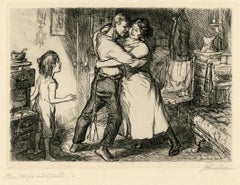
Man, Wife and Child
Located in Fairlawn, OH
Man, Wife and Child
Etching, 1905
Signed and titled in pencil by the artist below image (see photo)
Annotated in pencil by the artist "100 proofs"
Signed and dated in the plate lower...
Category
Ashcan School Early 20th Century Figurative Prints
Materials
Etching
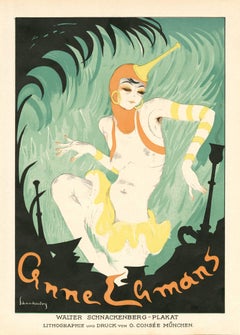
Kostume, Plakate, und Dekorationen, "Anne Lemans"
Located in Palm Beach, FL
Walter Schnackenberg’s style changed several times during his long and successful career. Having studied in Munich, the artist traveled often to Paris where he fell under the spell of the Henri de Toulouse-Lautrec’s colorful and sensuous posters depicting theatrical and decadent subjects. Schnackenberg became a regular contributor of similar compositions to the German magazines Jugend and Simplicissimus before devoting himself to the design of stage scenery and costumes. In the artist’s theatrical work, his mastery of form, ornamentation, and Orientalism became increasingly evident. He excelled at combining fluid Art Nouveau outlines, with spiky Expressionist passages, and the postures and patterns of the mysterious East.
In his later years, Schnackenberg explored the unconscious, using surreal subject matter and paler colors that plainly portrayed dreams and visions, some imbued with political connotations. His drawings, illustrations, folio prints, and posters are highly sought today for their exceedingly imaginative qualities, enchanting subject matter, and arresting use of color.
SCHNACKENBERG: KOSTUME, PLAKATE UND DEKORATIONEN, a cardboard bound art book consisting of 43 prints of work by Walter Schnackenberg, 30 of which are color lithographs that are signed and some are titled and dated in the plate, as well as black and white prints and photographs with accompanying text by Oskar Bie; lithographs printed at Kunstanstalt Oskar Consee in Munich, other images printed by Gesellschaft Pick & Co. in Munich, the text and cover with color images by Schnackenberg front and verso printed by R. Oldenbourg in Munich; published by Musarion Verlag, Munich, 1920.
The majority of Walter Schnackenberg’s artistic output was destroyed by bomb attacks in Munich in 1944. The highly publicized 2013 auction in New York of the recovered pre-war poster collection once belonging to German poster aficionado, Hans Sachs has reintroduced the world to Walter Schnackenberg’s graphic genius and priceless ephemeral art from a lost era. Besides the museum world, designer Karl Lagerfeld is one of the most prodigious collectors of Schnackenberg. Flipping through the pages of Kostume, Plakate und Dekorationen, it becomes quite clear that Schnackenberg’s collection is ground zero at the crossroads of early modern fashion where the cult of celebrity meets up with dance, music, theater and cabaret, film and the graphic medium. Berlin and Munich under Germany’s Weimar Republic in the first quarter of the 20th century produced just the atmosphere to feed this burgeoning industry. Rising inflation sparked a recklessness to live large for the moment and heightened a desire for escapism. An influx of Indian and East Asian dancers and musicians added to the artsy bohemian cultural mix. A new decadence and tolerance resulted. Film boldly featured provocative subject matter. Cabarets became popular venues giving rise to the demi-monde in which people from all social stations mixed more freely in a thriving underground economy and culture where there was a blurring of boundaries and of social codes. Noted art historian and cultural doyen, Oskar Bie astutely observes in his introduction to Schnackenberg’s publication that what unites the images is fantasy and advertisement. Schnackenberg uses the eye as an instrument to brilliantly construct and convey this double message. His personages never directly confront the viewer. Their eyes gaze off in the distance like those of the screenplayer and film star Hedamaria Scholz in Schnackenberg’s “Die Rodelhexe” movie poster. Their eyes follow the path of a dance composition or become a transfixed and ogling male gaze such as the iconic 1911 Odeon Casino...
Category
Expressionist Early 20th Century Figurative Prints
Materials
Lithograph
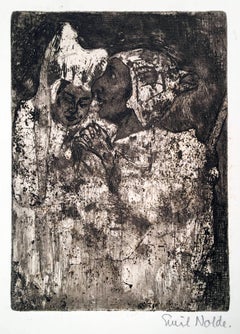
Abschied (Parting)
By Emil Nolde
Located in New York, NY
Emil Nolde (1876-1956), Abschied (Parting), etching and aquatint (tonal effects), 1906, signed in pencil lower right. Reference: Schiefler/Mosel 20, third state (of 3). One of only...
Category
Expressionist Early 20th Century Figurative Prints
Materials
Etching, Aquatint
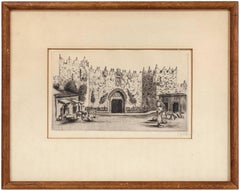
Sha
ar Shchem Damascus Gate Old City Jerusalem 1930s Bezalel School
Located in Surfside, FL
Genre: Israeli
Subject: Cityscape
Medium: Etching, Drypoint
Surface: Paper
Country: Israel
Dimensions: 11" x 14"
Dimensions w/Frame: 11 3/4" x 14 3/4"
Jacob Eisenberg (1897–1965) (a...
Category
Modern Early 20th Century Figurative Prints
Materials
Etching
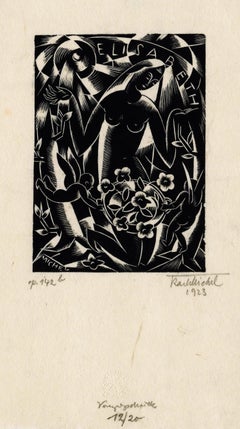
Elisabeth
— German Expressionism
By Karl Michel
Located in Myrtle Beach, SC
Karl Michel, 'Elisabeth', woodcut, edition 20, 1923. Signed, dated, and numbered 'op.142b' and '12/20' in pencil. Signed in the block, lower left. Annotated 'Vorgesdruck' [artist’s proof] in pencil.
A fine impression, on heavy fibrous Japan paper, with full margins (1 3/16 to 3 1/2 inches),
in good condition. Printed by the artist, With the artist’s blindstamp in the bottom center margin. Scarce. Matted to museum standards, unframed.
Image size 4 15/16 x 6 inches (131 x 152 mm); sheet size 10 x 6 inches (254 x 152 mm).
ABOUT THE ARTIST
Karl Michel (1889-1984) was a noted graphic designer and expressionist printmaker during Germany's pre-Nazi Weimar Republic (1919-1933). Michel’s work was the subject of a feature article in the influential German graphic design magazine Das Plakat (The Poster) in 1920. An anti-war advocate, Michel created a suite of 12 wood engravings depicting his impressions of the humanitarian toll of WWII entitled ‘Humanitas’ (Humanity). The German publishing house Greifenverlag published the series in a reduced folio of unsigned prints.
Michel’s graphic work is held in the permanent collections of the Auckland War Memorial Museum (New Zealand), Frederikshavn Kunstmuseum & Exlibrissamling (Denmark), Museum of Applied Arts (Budapest), The Robert Gore Rifkind Center for German Expressionist Studies at the Los Angeles County Museum of Art, and the German Expressionism...
Category
Expressionist Early 20th Century Figurative Prints
Materials
Woodcut
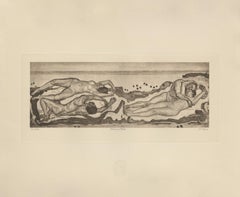
"Love" Copper Plate Heliogravure
Located in Palm Beach, FL
2018 marks the centenary anniversary of Ferdinand Hodler’s death. In that 100 years time, the art world’s esteem of this important artist has proved fickle. It has shifted from extolling his artistic merits during his lifetime to showing something of a feigned disdain- more reflective of the world political order than a true change of heart for Hodler’s work. After years of Hodler being all but a footnote in the annals of art history and generally ignored, finally, the pendulum has righted itself once again. Recent retrospective exhibitions in Europe and the United States have indicated not only a joyful rediscovery of Hodler’s art but a firm conviction that his work and world view hold particular relevance today. DAS WERK FERDINAND HODLERS is not only a collection of printed work reflecting the best of all of his painted work created up to 1914 just before the outbreak of World War I, the portfolio itself is an encapsulation of Hodler’s ethos, Parallelisme.
Hodler developed his philosophy of Parallelisme as a unifying approach to art which strips away detail in search of harmony. By means of abstraction, symmetry and repetition, Hodler sought ways to depict Nature’s essence and her fundamental, universal order. He believed these universal laws governing the natural, observable world extend to the spiritual realm. Symbolist in nature with Romantic undertones, his works are equally portraits of these universal concepts and feelings governing all life as they are a visual portrait in the formal sense. Whether his subject is a solitary tree, a moment in battle, mortal fear, despair, the awe inspired by a vast mountain range, a tender moment or even the collective conviction in a belief, Hodler unveils this guiding principle of Parallelisme.
Several aspects of Hodler’s portfolio reinforce his tenets of Parallelisme. The Table of Contents clearly preferences a harmonious design over detail. The two columns, consisting of twenty lines each, list the images by order of appearance using their German titles. The abbreviated titles are somewhat cryptic in that they obscure the identities of the sitters. Like the image Hodler presents, they are distillations of the sitter without any extraneous details. This shortening was also done in an effort to maintain a harmonious symmetry of the Table of Contents, themselves, and keep titles to a one-line limit. The twenty-fourth title: “Bildnis des Schweizerischen Gesandten C.” was so long, even with abbreviation, that it required two lines; so, for the sake of maintaining symmetry, the fortieth title: “Bauernmadchen” was omitted from the list. This explains why the images are not numbered. Hodler’s reasoning is not purely esoteric. Symmetry and pattern reach beyond mere formal design principles. Finding sameness and imposing it over disorder goes to the root of Hodler’s identity and his art. A Swiss native, Hodler was bi-lingual and spoke German and French. Each printed image, even number forty, have titles in both of Hodler’s languages. Certainly, there was a market for Hodler’s work among francophones and this inclusion may have been a polite gesture to that end; however, this is the only place in the portfolio which includes French. With German titles at the lower left of each image, Hodler’s name at bottom center and corresponding French titles at the lower right of each image, there is a harmony and symmetry woven into all aspects of the portfolio. This holds true for the page design, as it applies to each printed image and as it describes the Swiss artist himself. Seen in this light, Hodler’s portfolio of printed work is the epitome of Hodler’s Parallelisme. DAS WERK FERDINAND HODLERS is also one of the most significant documents to best tell the story of how Hodler, from Switzerland, became caught between political cross-hairs and how the changing tides of nations directly impacted the artist during his lifetime as well as the accessibility of his art for generations to come.
The Munich-based publisher of the portfolio, R. Piper & Co., Verlag, plays a crucial role in this story. Publishing on a wide range of subjects from philosophy and world religion to music, literature and the visual arts; the publisher’s breadth of inquiry within any one genre was equal in scope. Their marketing strategy to publish multiple works on Hodler offers great insight as to what a hot commodity Hodler was at that time. R.Piper & Co.’s Almanach, which they published in 1914 in commemoration of their first ten years in business, clearly illustrates the rapid succession- strategically calculated for achieving the deepest and broadest impact - in which they released three works on Hodler to hit the market by the close of 1914. DAS WERK FERDINAND HODLERS was their premier publication. It preceded C.A. Loosli’s Die Zeichnungen Ferdinand Hodlers, a print portfolio after 50 drawings by Hodler which was released in Autumn of 1914 at the mid-level price-point of 75-150 Marks; and a third less expensive collection of prints after original works by Hodler, which had not been included in either of the first two portfolios, was released at the end of that year entitled Ferdinand Hodler by Dr. Ewald Bender.
The title and timing of DAS WERK FERDINAND HODLERS' debut leaves little doubt as to the connection it has with another avant-garde portfolio of art prints, Das Werk Gustav Klimts, released in 5 installments from 1908 -1914 by Galerie Miethke in Vienna. Hodler, himself, was involved in Klimt’s ground-breaking project. As the owner of Klimt’s 1901 painting, “Judith with the Head of Holifernes” which appears as the ninth collotype print in the second installment of Das Werk Gustav Klimts, Hodler was obliged to grant access of the painting to the art printers in Vienna for them to create the collotype sometime before 1908. Hodler had been previously invited in 1904 to take part in what would be the last exhibition of the Vienna Secession before Klimt and others associated with Galerie Miethke broke away. In an interview that same year, Hodler indicated that he respected and was impressed by Klimt. Hodler’s esteem for Klimt went beyond the art itself; he emulated Klimt’s method aimed at increasing his market reach and appeal to a wider audience by creating a print portfolio of his painted work. By 1914, Hodler and his publisher had the benefit of hindsight to learn from Klimt’s Das Werk publication.
Responding to the sluggish sales of Klimt’s expensive endeavor, Hodler’s publisher devised the same diversified 1-2-3 strategy for selling Hodler’s Das Werk portfolio as they did with regards to all three works on Hodler they published that year. For their premium tier of DAS WERKS FERDINAND HODLERS, R. Piper & Co. issued an exclusive Museum quality edition of 15 examples on which Hodler signed each page. At a cost of 600 Marks, this was generally on par with Klimt’s asking price of 600 Kronen for his Das Werk portfolio. A middle-tiered Preferred edition of 30, costing somewhat less and with Hodler’s signature only on the Title Page, was also available. The General edition, targeting the largest audience with its much more affordable price of 150 Marks, is distinguishable by its smaller size.
Rather than use the subscription format Miethke had chosen for Klimt’s portfolios which proved to have had its challenges, R. Piper & Co. employed a different strategy. In addition to instantly gratifying the buyer with all 40 of the prints comprising DAS WERK FERDINAND HODLERS and the choice among three price points, they advertised in German journals a fourth possibility of ordering single prints from them directly. These printed images are easily discernible from the three complete folio editions. The paper size of the single purchased images is of the larger format like the Museum and Preferred editions, measuring 65 h x 50 w cm; however, the paper itself is the same copper print paper used in the General edition and then mounted on poster board. The publishing house positioned itself to be a direct retailer of Hodler’s art. They astutely recognized the potential for profitability and the importance, therefore, of having proprietary control over his graphic works.
R. Piper & Co. owned the exclusive printing rights to Hodler’s best work found in their three publications dating from 1914. That same year, a competing publication out of Weimar entitled Ferdinand Hodler: Ein Deutungsversuch von Hans...
Category
Symbolist Early 20th Century Figurative Prints
Materials
Paper
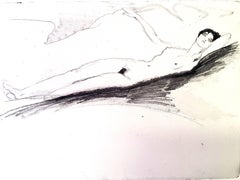
Jean Gabriel Domergue - Lying Naked - Original Etching
Located in Collonge Bellerive, Geneve, CH
Original Etching by Jean-Gabriel Domergue
Dimensions: 33 x 25 cm
1924
Edition of 100
This artwork is part of the famous portfolio The Afternoon of a Faun.
Jean-Gabriel Domergue
Jea...
Category
Impressionist Early 20th Century Figurative Prints
Materials
Lithograph
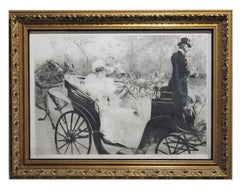
"La Promanade" Black and White Print of a Women in a Carriage Edition
Located in Houston, TX
Black and white print of an upper class women in a carriage. There are other figures in the back riding in a carriage as well. Edition 17 of 58. Painting is signed by the artist and ...
Category
Expressionist Early 20th Century Figurative Prints
Materials
Engraving
Palais de la Femme, Art Nouveau Lithograph by Georges Henri Privat-Livemont
Located in Long Island City, NY
Vintage poster by Henri Privat-Livemont created for the Exposition Universelle (the 1900 Paris Exposition) before the lettering was added on the upper portion of the image.
Palais d...
Category
Art Nouveau Early 20th Century Figurative Prints
Materials
Lithograph
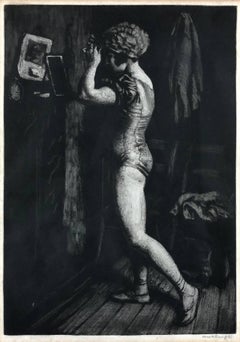
The Circus Dressing Room
Located in Missouri, MO
Dame Laura Knight
"The Circus Dressing Room" 1925
Etching
Ed. 20
Signed Lower Right
Image Size: approx. 14 x 10 inches
Framed Size: approx. 23.5 x 17.75 inches
An English impressio...
Category
Realist Early 20th Century Figurative Prints
Materials
Aquatint
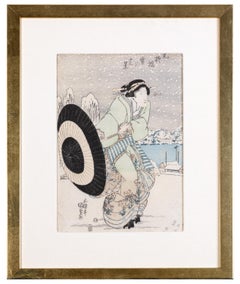
"Yanagibashi in Snow, " Color Woodcut Portrait with Umbrella
Located in Milwaukee, WI
"Yanagibashi in Snow" is an original color woodcut by Utagawa Kunisada. This woodblock print depicts a woman walking in the snow near the Motoyanagi canal, which was located in Tokyo...
Category
Early 20th Century Figurative Prints
Materials
Woodcut
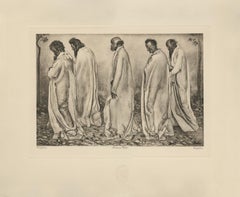
"Eurhythmie" Copper Plate Heliogravure
Located in Palm Beach, FL
2018 marks the centenary anniversary of Ferdinand Hodler’s death. In that 100 years time, the art world’s esteem of this important artist has proved fickle. It has shifted from extolling his artistic merits during his lifetime to showing something of a feigned disdain- more reflective of the world political order than a true change of heart for Hodler’s work. After years of Hodler being all but a footnote in the annals of art history and generally ignored, finally, the pendulum has righted itself once again. Recent retrospective exhibitions in Europe and the United States have indicated not only a joyful rediscovery of Hodler’s art but a firm conviction that his work and world view hold particular relevance today. DAS WERK FERDINAND HODLERS is not only a collection of printed work reflecting the best of all of his painted work created up to 1914 just before the outbreak of World War I, the portfolio itself is an encapsulation of Hodler’s ethos, Parallelisme.
Hodler developed his philosophy of Parallelisme as a unifying approach to art which strips away detail in search of harmony. By means of abstraction, symmetry and repetition, Hodler sought ways to depict Nature’s essence and her fundamental, universal order. He believed these universal laws governing the natural, observable world extend to the spiritual realm. Symbolist in nature with Romantic undertones, his works are equally portraits of these universal concepts and feelings governing all life as they are a visual portrait in the formal sense. Whether his subject is a solitary tree, a moment in battle, mortal fear, despair, the awe inspired by a vast mountain range, a tender moment or even the collective conviction in a belief, Hodler unveils this guiding principle of Parallelisme.
Several aspects of Hodler’s portfolio reinforce his tenets of Parallelisme. The Table of Contents clearly preferences a harmonious design over detail. The two columns, consisting of twenty lines each, list the images by order of appearance using their German titles. The abbreviated titles are somewhat cryptic in that they obscure the identities of the sitters. Like the image Hodler presents, they are distillations of the sitter without any extraneous details. This shortening was also done in an effort to maintain a harmonious symmetry of the Table of Contents, themselves, and keep titles to a one-line limit. The twenty-fourth title: “Bildnis des Schweizerischen Gesandten C.” was so long, even with abbreviation, that it required two lines; so, for the sake of maintaining symmetry, the fortieth title: “Bauernmadchen” was omitted from the list. This explains why the images are not numbered. Hodler’s reasoning is not purely esoteric. Symmetry and pattern reach beyond mere formal design principles. Finding sameness and imposing it over disorder goes to the root of Hodler’s identity and his art. A Swiss native, Hodler was bi-lingual and spoke German and French. Each printed image, even number forty, have titles in both of Hodler’s languages. Certainly, there was a market for Hodler’s work among francophones and this inclusion may have been a polite gesture to that end; however, this is the only place in the portfolio which includes French. With German titles at the lower left of each image, Hodler’s name at bottom center and corresponding French titles at the lower right of each image, there is a harmony and symmetry woven into all aspects of the portfolio. This holds true for the page design, as it applies to each printed image and as it describes the Swiss artist himself. Seen in this light, Hodler’s portfolio of printed work is the epitome of Hodler’s Parallelisme. DAS WERK FERDINAND HODLERS is also one of the most significant documents to best tell the story of how Hodler, from Switzerland, became caught between political cross-hairs and how the changing tides of nations directly impacted the artist during his lifetime as well as the accessibility of his art for generations to come.
The Munich-based publisher of the portfolio, R. Piper & Co., Verlag, plays a crucial role in this story. Publishing on a wide range of subjects from philosophy and world religion to music, literature and the visual arts; the publisher’s breadth of inquiry within any one genre was equal in scope. Their marketing strategy to publish multiple works on Hodler offers great insight as to what a hot commodity Hodler was at that time. R.Piper & Co.’s Almanach, which they published in 1914 in commemoration of their first ten years in business, clearly illustrates the rapid succession- strategically calculated for achieving the deepest and broadest impact - in which they released three works on Hodler to hit the market by the close of 1914. DAS WERK FERDINAND HODLERS was their premier publication. It preceded C.A. Loosli’s Die Zeichnungen Ferdinand Hodlers, a print portfolio after 50 drawings by Hodler which was released in Autumn of 1914 at the mid-level price-point of 75-150 Marks; and a third less expensive collection of prints after original works by Hodler, which had not been included in either of the first two portfolios, was released at the end of that year entitled Ferdinand Hodler by Dr. Ewald Bender.
The title and timing of DAS WERK FERDINAND HODLERS' debut leaves little doubt as to the connection it has with another avant-garde portfolio of art prints, Das Werk Gustav Klimts, released in 5 installments from 1908 -1914 by Galerie Miethke in Vienna. Hodler, himself, was involved in Klimt’s ground-breaking project. As the owner of Klimt’s 1901 painting, “Judith with the Head of Holifernes” which appears as the ninth collotype print in the second installment of Das Werk Gustav Klimts, Hodler was obliged to grant access of the painting to the art printers in Vienna for them to create the collotype sometime before 1908. Hodler had been previously invited in 1904 to take part in what would be the last exhibition of the Vienna Secession before Klimt and others associated with Galerie Miethke broke away. In an interview that same year, Hodler indicated that he respected and was impressed by Klimt. Hodler’s esteem for Klimt went beyond the art itself; he emulated Klimt’s method aimed at increasing his market reach and appeal to a wider audience by creating a print portfolio of his painted work. By 1914, Hodler and his publisher had the benefit of hindsight to learn from Klimt’s Das Werk publication.
Responding to the sluggish sales of Klimt’s expensive endeavor, Hodler’s publisher devised the same diversified 1-2-3 strategy for selling Hodler’s Das Werk portfolio as they did with regards to all three works on Hodler they published that year. For their premium tier of DAS WERKS FERDINAND HODLERS, R. Piper & Co. issued an exclusive Museum quality edition of 15 examples on which Hodler signed each page. At a cost of 600 Marks, this was generally on par with Klimt’s asking price of 600 Kronen for his Das Werk portfolio. A middle-tiered Preferred edition of 30, costing somewhat less and with Hodler’s signature only on the Title Page, was also available. The General edition, targeting the largest audience with its much more affordable price of 150 Marks, is distinguishable by its smaller size.
Rather than use the subscription format Miethke had chosen for Klimt’s portfolios which proved to have had its challenges, R. Piper & Co. employed a different strategy. In addition to instantly gratifying the buyer with all 40 of the prints comprising DAS WERK FERDINAND HODLERS and the choice among three price points, they advertised in German journals a fourth possibility of ordering single prints from them directly. These printed images are easily discernible from the three complete folio editions. The paper size of the single purchased images is of the larger format like the Museum and Preferred editions, measuring 65 h x 50 w cm; however, the paper itself is the same copper print paper used in the General edition and then mounted on poster board. The publishing house positioned itself to be a direct retailer of Hodler’s art. They astutely recognized the potential for profitability and the importance, therefore, of having proprietary control over his graphic works.
R. Piper & Co. owned the exclusive printing rights to Hodler’s best work found in their three publications dating from 1914. That same year, a competing publication out of Weimar entitled Ferdinand Hodler: Ein Deutungsversuch von Hans Muhlestein appeared. Its author, a young scholar, expressed his frustration with the limited availability of printable work by Hodler. In his Author’s Note on page 19, dated Easter, 1914, Muhlestein confirms that the publisher of Hodler’s three works from that same year owned the exclusive reproductive rights to Hodler’s printed original work. He goes further to explain that even after offering to pay to use certain of those images in his book, the publisher refused. Clearly, a lot of jockeying for position in what was perceived as a hot market was occurring in 1914.
Instead, their timing couldn’t have been more ill-fated, and what began with such high hopes suddenly found a much different market amid a hostile climate. The onset of WWI directly impacted sales. Many, including Ferdinand Hodler, publicly protested the September invasion by Germany of France in which the Reims Cathedral, re-built in the 13th century, was shelled, destroying priceless stained glass and statuary and burning off the iron roof and badly damaging its wooden interior. Thomas Gaehtgens, Director of the Getty Research Institute describes how the bombing of Reims Cathedral triggered blindingly powerful and deeply-felt ultra-nationalistic responses: “The event profoundly shocked French intellectuals, who for the most part had an intense admiration for German literature, music and art. By relying on press accounts and abstracting from the visual propagandistic content, they were unable to interpret the siege of Reims without turning away from German culture in disgust. Similarly, the German intelligentsia and bourgeoisie were also shocked to find themselves described as vandals and barbarians. Ninety-three writers, scientists, university professors, and artists signed a protest, directed against the French insults, that defended the actions of the German army.”
In similar fashion, a flurry of open letters published in German newspapers and journals as well as telegrams and postcards sent directly to Hodler following his outcry in support of Reims reflected the collectively critical reaction to Hodler’s position. Loosli documents that among the list of telegrams Hodler received was one from none other than his publisher in Germany, R.Piper & Co. Allegiances were questioned. The market for Hodler in Germany immediately softened. Matters worsened for the publisher beyond the German backlash to Hodler and his loss of appeal in the home market; with the war in full swing until 1918, there was little chance a German publisher would have much interest coming from outside of Germany and Austria. Following the war and Hodler’s death in 1918, the economy in Germany continued to spiral out and just 5 years later, hyper-inflation had rendered its currency worthless vis-a-vis its value in the pre-war years. Like the economy, Hodler’s reputation was slow to find currency in these difficult times. Even many French art fans had turned sour on Hodler as they considered his long-standing relationship in German and Austrian art circles. Thus, the portfolio’s rarity in Hodler’s lifetime and, consequently, the availability of these printed images from DAS WERK FERDINAND HODLERS since his death has been scarce.
In many ways, Hodler and his portfolios were casualties of war. Thwarted from their intended purpose of reaching a wide audience and show-casing Parallelisme, Hodler’s unique approach to art, this important, undated work has been both elusive and shrouded in mystery. Perhaps DAS WERK FERDINAND HODLERS was left undated as a means of affirming the timelessness of Hodler’s art. Digging back into the past, Hodler’s contemporaries, like R. Piper, C.A. Loosli and Hans Muhlestein, indeed provide the keys to unequivocally clarify what has largely been mired in obscurity. Just after Hodler’s death, the May, 1918 issue of the Burlington Review ran a small column which opined hope for better access to R.Piper & Co.’s DAS WERK FERDINAND HODLERS; 100 years later, it is finally possible. Hodler’s voice rings out through these printed works. Once more, his modern approach to depicting portraits, landscapes and grand scale scenes of Swiss history speak to us of what is universal. Engaging with any one of these images is the chance to connect to Hodler’s vision and his world view- weltanschauung in German, vision du monde in French- however one expresses these concepts through language, its message embedded in his work is the same: “We differ from one another, but we are like each other even more. What unifies us is greater and more powerful than what divides us.” Today, Hodler’s art couldn’t be more timely.
FERDINAND HODLER (SWISS, 1853-1918) explored Parallelisme through figurative poses evocative of music, dance and ritual. His images of sex, night, desertion and death as well as his many landscapes exploring the universal longing for harmony with Nature are unique and important works embodying a Symbolist paradigm. Truly a Modern Master, Hodler’s influence can be felt in the work of Gustav Klimt and Kolomon Moser...
Category
Symbolist Early 20th Century Figurative Prints
Materials
Paper
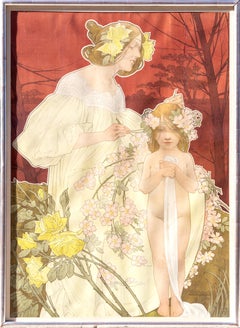
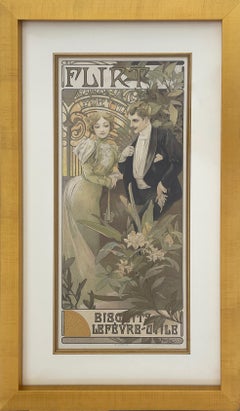
Flirt Biscuits by Alphonse Mucha
Located in Hinsdale, IL
ALPHONSE MUCHA
(1860 – 1939)
Flirt Biscuits
Rennert/Weill 72
Lithograph in colors c. 1900
Signed in stone, lower right margin
Image: 24” x 11”, Paper: 25 ¼” x 11 ¾”
F...
Category
Art Nouveau Early 20th Century Figurative Prints
Materials
Lithograph
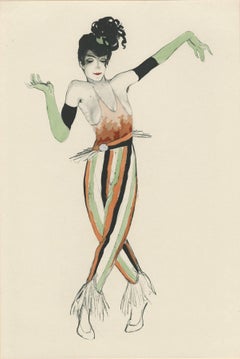
Ballet und Pantomime "Scherzo II", plate #15.
Located in Palm Beach, FL
Walter Schnackenberg’s style changed several times during his long and successful career. Having studied in Munich, the artist traveled often to Paris where he fell under the spell o...
Category
Art Deco Early 20th Century Figurative Prints
Materials
Paper
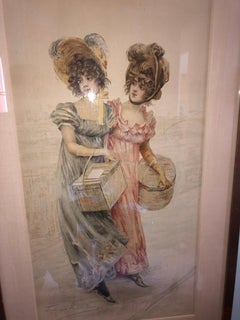
Frederique Vallet Bisson 2 Elegant Ladies
Located in San Francisco, CA
Frederique Vallet Bisson: 1862-1948. Well listed French artist with some auction prices for his paintings over $30,000. This beautiful lithograph was pr...
Category
Early 20th Century Figurative Prints
Materials
Lithograph
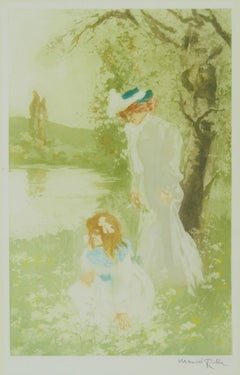
Avril
By Manuel Robbe
Located in Fairlawn, OH
Avril (April)
Color aquatint and etching, c. 1906
Signed in pencil lower right
Edition: c. 100
Excellent impression, fresh colors
Reference: Merrill Chase Volume 1, No. 9
Condition: ...
Category
Impressionist Early 20th Century Figurative Prints
Materials
Aquatint
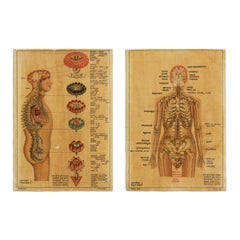
Antique Indian Kundalini Hindu Sanskrit Chakras // Set of 2 Anatomical Prints
Located in Hamburg, DE
Set of two antique Hindu / Indian anatomical prints, emphasizing the seven chakras with Sanskrit text.
Original handmade prints on antique paper.
Category
Other Art Style Early 20th Century Figurative Prints
Materials
Paper
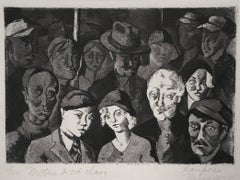
Metro 2nd Class
By Clement Haupers
Located in New York, NY
Clement Haupers (1900-1982), Metro 2nd Class, aquatint and etching, 1928, signed, titled, numbered (6/20), dated and inscribed “Paris.” In very good condition, slight toning and rema...
Category
American Realist Early 20th Century Figurative Prints
Materials
Etching, Aquatint
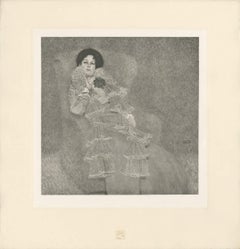
H.O. Miethke Das Werk folio "Portrait of Marie Henneberg" collotype print
Located in Palm Beach, FL
DAS WERK GUSTAV KLIMTS, a portfolio of 50 prints, ten of which are multicolor collotypes on chine colle paper laid down on hand-made heavy cream wove paper with deckled edges; under ...
Category
Vienna Secession Early 20th Century Figurative Prints
Materials
Paper
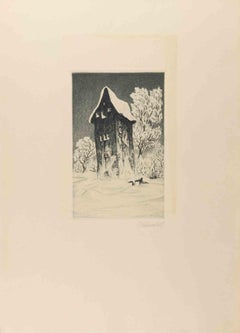
In Schnee - Etching by Fritz Schwimbeck - 1918
Located in Roma, IT
Etching realized by Fritz Schwimbeck in 1918.
Edition of 125 realized in Munich on mulberry paper.
Hand signed in pencil.
Category
Symbolist Early 20th Century Figurative Prints
Materials
Etching
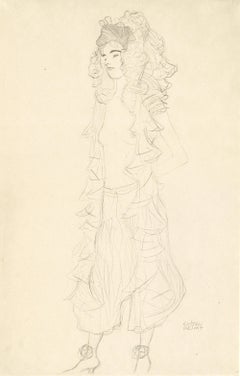
Gustav Klimt "Standing Girl w/Lace Headdress" collotype - Funfundzwanzig folio
By Gustav Klimt
Located in Palm Beach, FL
Title page numbered: 263/450
Category
Vienna Secession Early 20th Century Figurative Prints
Materials
Paper
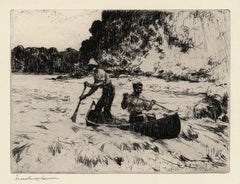
Running the Rapids
By Frank Benson
Located in New York, NY
The etching "Running the Rapids" was created by Frank Benson in 1927. Printed in an edition of 150, this impression is signed in pencil, lower left. The image size is 5 13/16 x 7 7/8" (14.8 x 20 cm) and sheet size 8 1/16 x 10 5/16" (20.3 x 26.2 cm).
Frank Weston Benson (1862-1951), well known for his American impressionist paintings, also produced an incredible body of prints - etchings, drypoints, and a few lithographs. Born and raised on the North Shore of Massachusetts, Benson, a natural outdoorsman, grew up sailing, fishing, and hunting. From a young age, he was fascinated with drawing and birding – this keen interest continued throughout his life.
His first art instruction was with Otto Grundman at the Museum of Fine Arts in Boston, and then in 1883 in Paris at the Academie Julian where he studied the rigorous ‘ecole des beaux arts’ approach to drawing and painting for two years.
During the early 1880’s Seymour Haden visited Boston giving a series of lectures on etching. This introduction to the European etching...
Category
American Impressionist Early 20th Century Figurative Prints
Materials
Etching
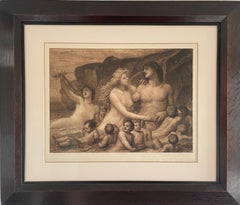
A Greek Idyll - Proof Etching by Robert Walker MacBeth after G F Watts
Located in London, GB
ROBERT WALKER MACBETH
(British 1848-1910)
After GEORGE FREDERIC WATTS
(British 1817-1904)
A Greek Idyll
Proof etching
Signed in pencil by both the artist l.l. and engraver l.r.
Framed
Plate size 42 by 54 cm., 16 ½ by 21 ¼ in.
(frame size 72.5 by 85 cm., 28 ½ by 33 ½ in.)
After Watt’s 1894 painting...
Category
Pre-Raphaelite Early 20th Century Figurative Prints
Materials
Etching
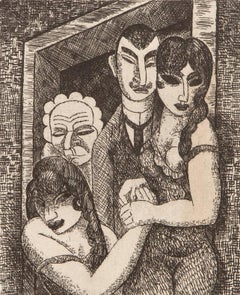
Composition, Vers un monde volage, Marcel Gromaire
Located in Southampton, NY
Etching on vélin d'Arches paper. Unsigned and unnumbered, as issued. Good condition. Published by Éditions Marcel Seheur, Paris; printed by Atelier d'art Paul Haasen, Paris, Septembe...
Category
Modern Early 20th Century Figurative Prints
Materials
Etching

$1,436 Sale Price
20% Off
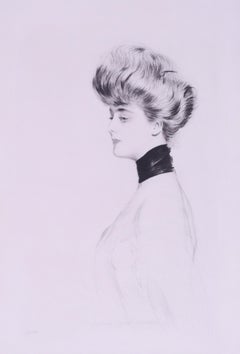
Portrait de femme en buste, de profil a gauche, un tres large ruban noir du cou
Located in Fairlawn, OH
Portrait de femme en buste, de profil a gauche, un tres large ruban noir du cou, Mme Marthe Letellier
Drypoint, 1900-1901
Signed in pencil lower left (see photo)
Titled in pencil low...
Category
Impressionist Early 20th Century Figurative Prints
Materials
Drypoint
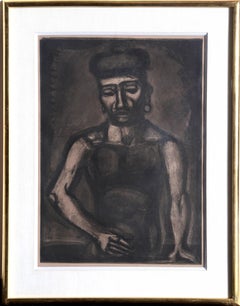
Jean-Francois ne Chante Alleluia no. 25, Aquatint Etching by Georges Rouault
Located in Long Island City, NY
Artist: Georges Rouault
Title: Jean-Francois ne Chante Alleluia (Jean-Francois Never Sings Alleluia) no. 25 from the Miserere et Guerre series
Year: 1923 (published 1948)
Medium: Aqu...
Category
Modern Early 20th Century Figurative Prints
Materials
Etching, Aquatint, Photogravure
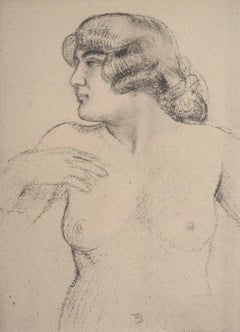
Portrait of a Model - Original lithograph
Located in Paris, IDF
Maurice DENIS (1870 - 1943)
Portrait of a Model, Study for the Bacchanale, 1918
Original lithograph enhanced in pastel
On light cream tinted vellum 35 x 26 cm (c. 13,7 x 10,2 inch)
...
Category
Academic Early 20th Century Figurative Prints
Materials
Lithograph
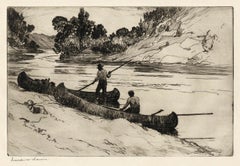
On the Kedgwick
By Frank Benson
Located in New York, NY
Frank Benson created the etching "On the Kedgwick" in 1923, in an edition of 150. This impression is the second state of four. There are five known impressions of the second state. It is signed in pencil and inscribed "B-1" and "1 or 5" at the lower left paper edge (pencil). The image size 7 13/16 x 11 7/8" (19.9 x 30.2 cm) and sheet size 15 3/8 x 11 1/2" )29.3 x 39 cm). It is listed in the Frank W. Benson catalogue raisonne by Paff #222.
FRANK W. BENSON (1862-1951)
Frank Weston Benson, well known for his American impressionist paintings, also produced an incredible body of prints - etchings, drypoints, and a few lithographs. Born and raised on the North Shore of Massachusetts, Benson, a natural outdoorsman, grew up sailing, fishing, and hunting. From a young age, he was fascinated with drawing and birding – this keen interest continued throughout his life.
His first art instruction was with Otto Grundman at the Museum of Fine Arts in Boston, and then in 1883 in Paris at the Academie Julian where he studied the rigorous ‘ecole des beaux arts’ approach to drawing and painting for two years.
During the early 1880’s Seymour Haden visited Boston giving a series of lectures on etching. This introduction to the European etching...
Category
Impressionist Early 20th Century Figurative Prints
Materials
Etching
Le Tasse de The (The Cup of Tea)
By Manuel Robbe
Located in Fairlawn, OH
Le Tasse de The (The Cup of Tea)
Color aquatint and etching, c. 1906
Signed in pencil in the image (see photo)
Edition: c. 100
Reference: Merrill Chase, Volume 1, No. 85
Condition: F...
Category
Art Nouveau Early 20th Century Figurative Prints
Materials
Aquatint
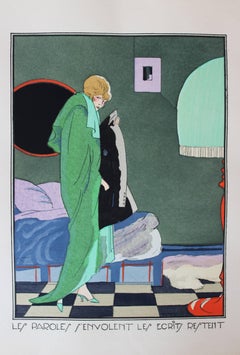
Ettore Tito: Quatres Proverbes Par Tito - four hand-coloured pochoir prints
By Ettore Tito
Located in London, GB
After Ettore Tito (1859-1941)
c.1920s
A set of four pochoir prints: 'Les paroles s'envolent les ecrits restent'; 'On a souvent besoin d'un plus petit que soi'; 'Qui trop embrasse...'...
Category
Modern Early 20th Century Figurative Prints
Materials
Color
L
Éventail rose
Located in New York, NY
A very good impression of this scarce color etching and drypoint. Fourth state (of 4). Signed and numbered 54/100 in pencil, lower margin.
Category
Cubist Early 20th Century Figurative Prints
Materials
Color, Drypoint, Etching

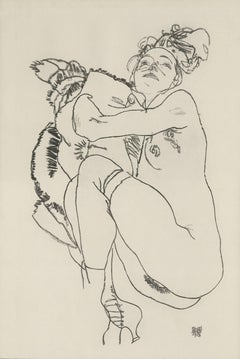
E. Strache, Handzeichnungen folio, "Reclining Female Nude Glancing Up" Collotype
Located in Palm Beach, FL
after Egon Schiele (1890 – 1918), AUSTRIA
“ART CANNOT BE MODERN, ART IS PRIMORDIALLY ETERNAL.” -SCHIELE
Defiantly iconoclastic in life and art, Egon Schiele is esteemed for his mas...
Category
Vienna Secession Early 20th Century Figurative Prints
Materials
Paper
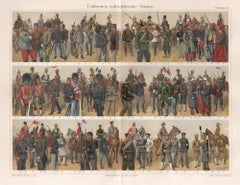
Military Uniforms, German antique army soldier chromolithograph print.
Located in Melbourne, Victoria
'Uniformen ausserdeutscher Staaten'
(Uniforms of non-German states)
German chromolithograph, circa 1910. Central vertical fold as issued.
245mm by 305mm (sheet)
Category
Naturalistic Early 20th Century Figurative Prints
Materials
Lithograph
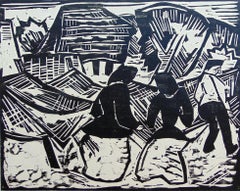
By the Nets - German Expressionism Woodcut Schmidt-Rottluff
Located in London, GB
KARL SCHMIDT-ROTTLUFF 1884-1976
Rottluff, Germany 1884 - 1976 Berlin (German)
Title: By the Nets Bei den Netzen, 1914
Technique: Original Hand Signed Woodcut on Laid Paper
Paper size: 51.2 x 62.4 cm. / 20.2 x 24.6 in.
Additional Information: This original woodcut is hand signed in pencil by the artist "S. Rottluff" at the lower right margin.
This is the fifth woodcut of the portfolio "Zehn Holzschnitte von Schmidt-Rottluff" [Ten Woodcuts by Schmidt-Rottluff] that was published in 1919.
It was published by Graphisches Kabinett J. B. Neumann, Berlin in a limited unnumbered edition of 75 plus some proofs.
The printer was Fritz Voigt...
Category
Expressionist Early 20th Century Figurative Prints
Materials
Woodcut
Henri Matisse, Plume, from Drawings by Henri Matisse, 1925 (after)
Located in Southampton, NY
This exquisite lithograph after Henri Matisse (1869–1954), titled Plume (Feather), from the album Dessins de Henri-Matisse (Drawings by Henri Matisse), originates from the 1925 editi...
Category
Modern Early 20th Century Figurative Prints
Materials
Lithograph
$956 Sale Price
20% Off
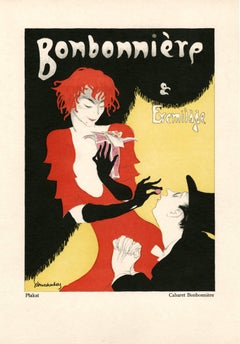
Kostume, Plakate, und Dekorationen, "Cabaret Bonbonniere"
Located in Palm Beach, FL
Walter Schnackenberg’s style changed several times during his long and successful career. Having studied in Munich, the artist traveled often to Paris where he fell under the spell o...
Category
Expressionist Early 20th Century Figurative Prints
Materials
Lithograph
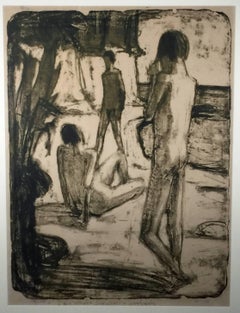
BADENDE MANNER: (THREE MALE BATHERS AT THE SHORE)
By Max Kaus
Located in Portland, ME
Kaus, Max. BADENDE MANNER: (THREE MALE BATHERS AT THE SHORE). Lithograph, c. 1924. Signed, lower left, in pencil, and numbered 6-10, further inscribed, lo...
Category
Expressionist Early 20th Century Figurative Prints
Materials
Lithograph
Henri Laurens “Tete de Femme a L’eventail’
Located in San Francisco, CA
Henri Laurens: 1885-1954. Well listed French artist with Auction records in the millions of dollars and over $8000 for a print. This rare print came in a small edition of Which I bel...
Category
Cubist Early 20th Century Figurative Prints
Materials
Etching
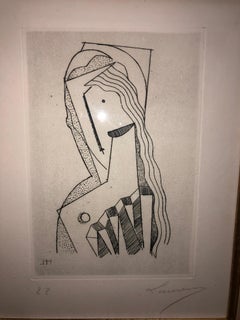
Bayros-Mappe III - Héliogravure by Fraz von Bayros - 1913
Located in Roma, IT
Héliogravure on japanese paper realized by Fraz von Bayros in 1913 for Ex Libris Verlag K. Th. Senger, Munich.
Mounted on passepartout. Edition of 260, hand signed in pencil by the ...
Category
Symbolist Early 20th Century Figurative Prints
Materials
Photogravure
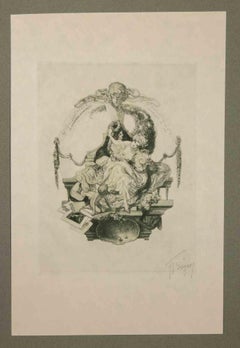
H.O. Miethke Das Werk folio "Beethovan Frieze 1
2" set of collotype prints
Located in Palm Beach, FL
DAS WERK GUSTAV KLIMTS, a portfolio of 50 prints, ten of which are multicolor collotypes on chine colle paper laid down on hand-made heavy cream wove paper with deckled edges; under ...
Category
Vienna Secession Early 20th Century Figurative Prints
Materials
Paper
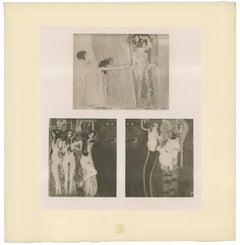
Modes et Manières d
Aujourd
hui
Located in Wilton, CT
7 volumes, complete. Six 8vo volumes (292 x 190 mm), and one 4to (Huitieme année, 1919, 310 x 245 mm). Publisher's pictorial paper board portfolios, patterned endpapers, housing loos...
Category
Art Deco Early 20th Century Figurative Prints
Materials
Gouache
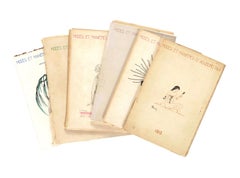
Ouverture de la Chasse ua Bois de Boulogne
Located in New York, NY
Sem, (George Goursart). Ouverture de la Chasse ua Bois de Boulogne..
Ca 1900. Signed in the stone. Slight center vertical fold, otherwise in
very good condition.
Signed in the sto...
Category
Art Nouveau Early 20th Century Figurative Prints
Materials
Lithograph
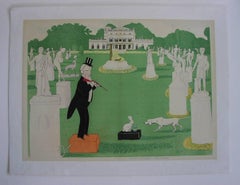
"Woman Desired by Man" original woodcut
Located in Henderson, NV
Medium: original woodcut. Printed in 1920 for the Deutsche Graphiker der Gegenwart portfolio, and published in Leipzig by Klinkhardt & Biermann in an edition of 500. Catalogue refere...
Category
Expressionist Early 20th Century Figurative Prints
Materials
Woodcut
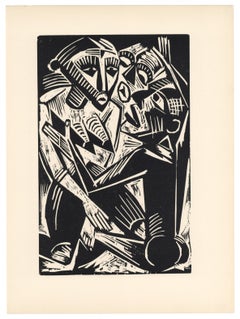
Composition, Vers un monde volage, Marcel Gromaire
Located in Southampton, NY
Etching on vélin d'Arches paper. Unsigned and unnumbered, as issued. Good condition. Published by Éditions Marcel Seheur, Paris; printed by Atelier d'art Paul Haasen, Paris, Septembe...
Category
Modern Early 20th Century Figurative Prints
Materials
Etching

$1,436 Sale Price
20% Off
Recently Viewed
View AllMore Ways To Browse
Eduardo Roca
Edward B Gay
Edward Hopper Oil Painting
Edward Simmons
Edwin Lord Weeks
Elizabeth Enders
Elizabeth Horning
Emil Holzhauer
England Church Oil Painting
English Deer Painting
English Fox Hunt Painting
English Toy Terrier
Enrique Martinez Celaya
Eric Aho
Eritrea Art
Ernest Chateignon
Erotic Art Animal
Eugene Chigot